Fossil Collection Search
Check out our collection! Filter through time period and other categories and click on entries to learn more about them.
Check out our collection! Filter through time period and other categories and click on entries to learn more about them.
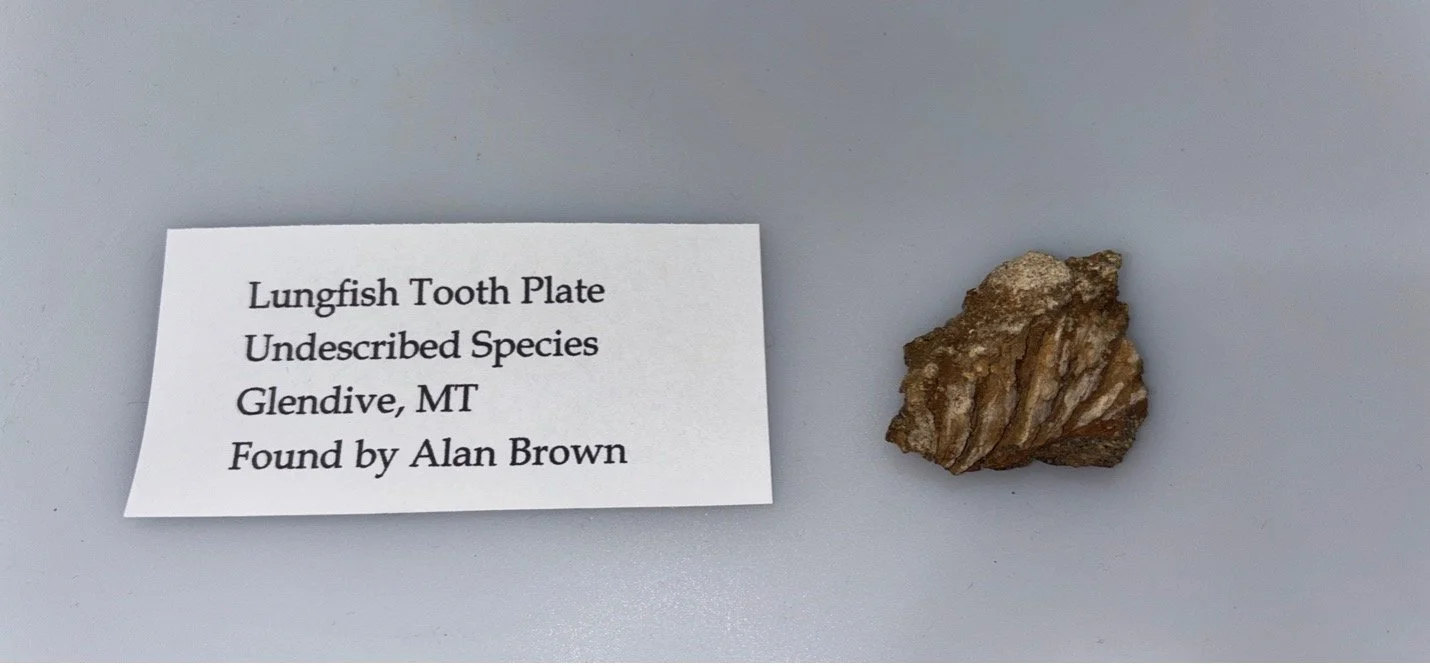
(Early Devonian – Present)
Lungfish are long, eel-shaped fish that can breathe air. While some species of lungfish possess both lungs and gills, they have an advantage over gill-exclusive fish types because they are able to survive in oxygen poor waters and withstand droughts, which may explain why they have managed to stay relatively unchanged over the last 400 million years. Lungfish are considered a “missing link” in the evolution of mammals, reptiles, amphibians, and birds as they are the closest relative to early tetrapods (or all vertebrate animals with four limbs).
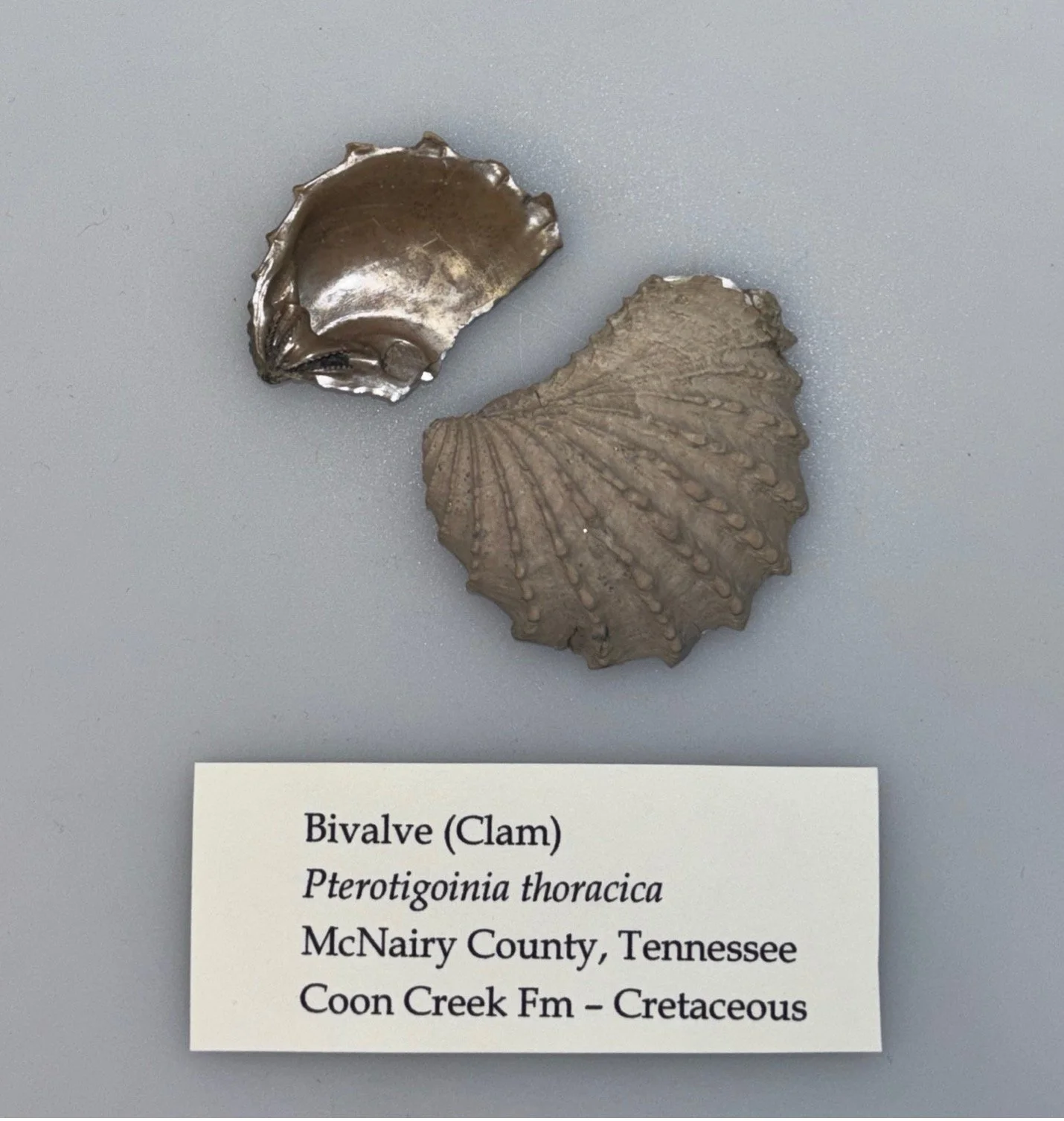
Did you know Tennessee has a state fossil? Pterotrigonia thoracica was a bivalve that lived in the shallow seas that covered much of the middle of North America during the Cretaceous (Western Interior Seaway). Pterotrigonia thoracica was chosen as the state fossil due to its abundant fossils found in the Coon Creek Formation in West Tennessee.
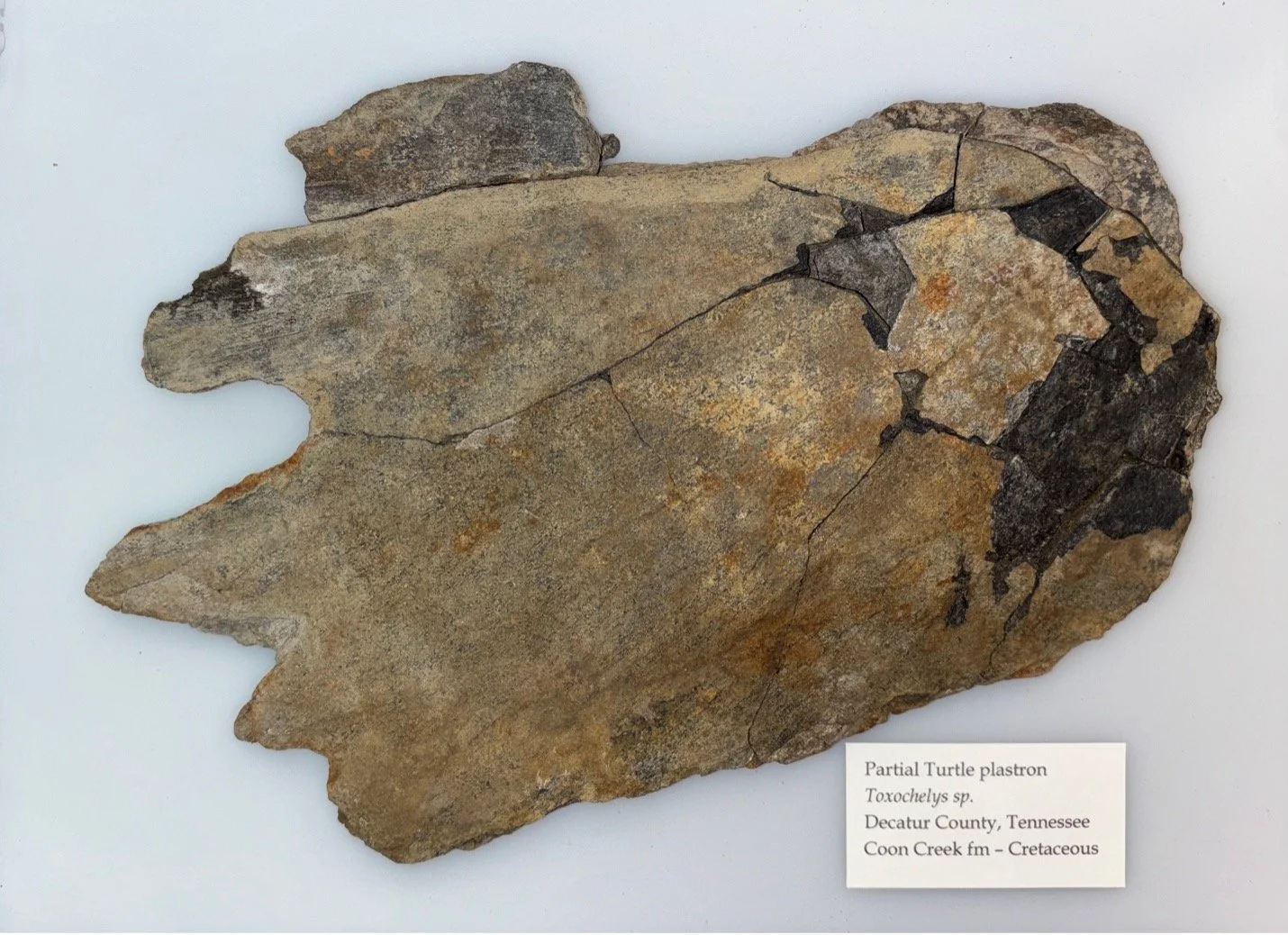
Toxochelys was a genus of sea turtle that live in the Western Interior Seaway, and its fossils are found in the United States and Canada. Toxochelys lived a similar life as modern sea turtles, feeding mostly on jellyfish, squids, mollusks, crustaceans, and marine vegetation. However, Toxochelys was larger, growing up to 6 feet in length.
This specimen was found by museum staff in the Coon Creek Formation in Tennessee.
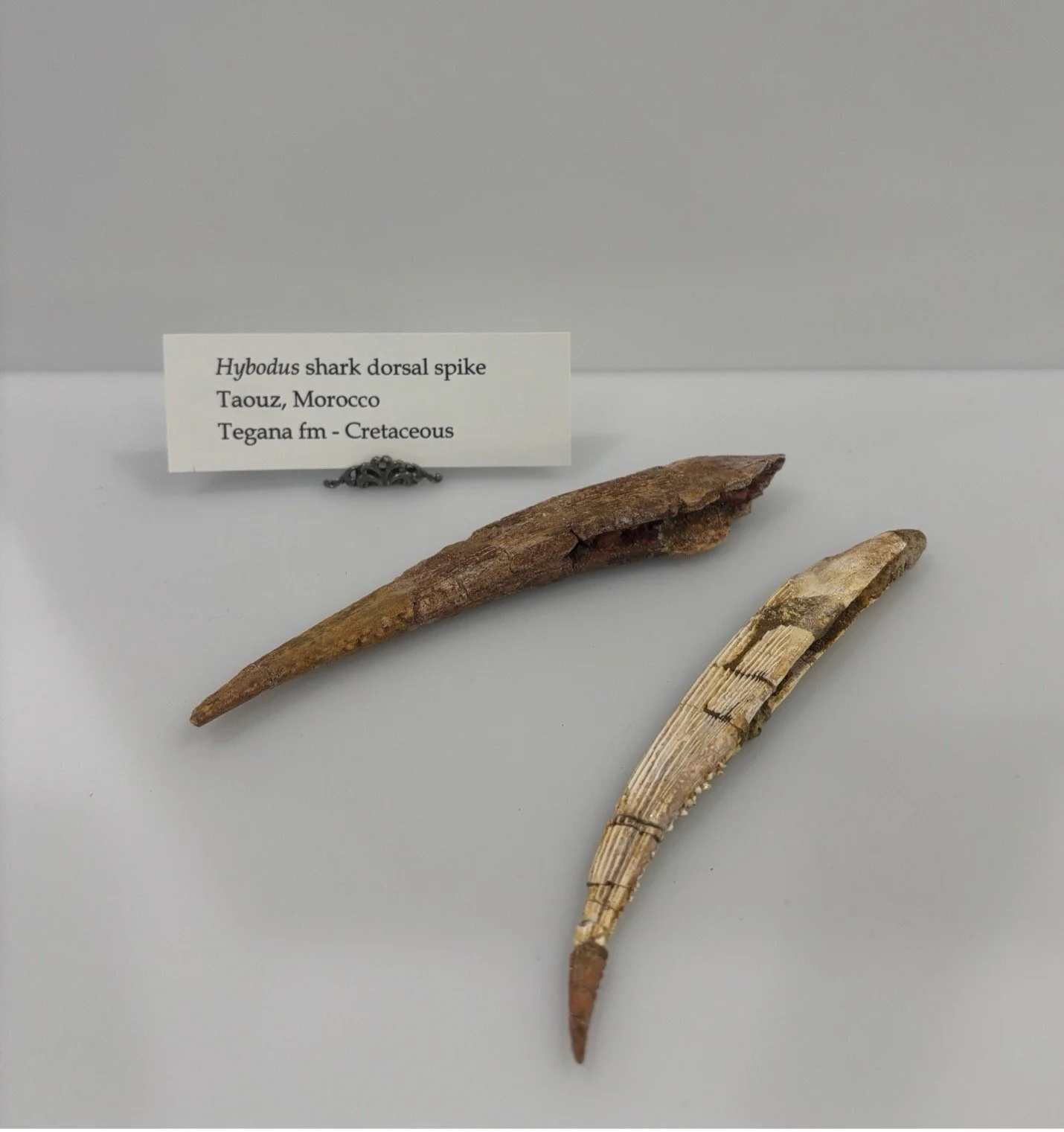
Hybodus (Permian – Cretaceous)
Hybodus was a genus of shark that had great success in the ancient oceans. It was about 6 feet long and had small crown of spikes on its head and two more larger spikes by its dorsal fins. These spikes would have protected the shark from bigger predators, which partly contributed to its success. Another trait Hybodus had was two types of teeth for two types of prey. The teeth at the front of its mouth were sharp, used to bite down on prey, while the teeth in the back of its mouth were flat and could crush and break down hard shells and bones—a little like your own molars.
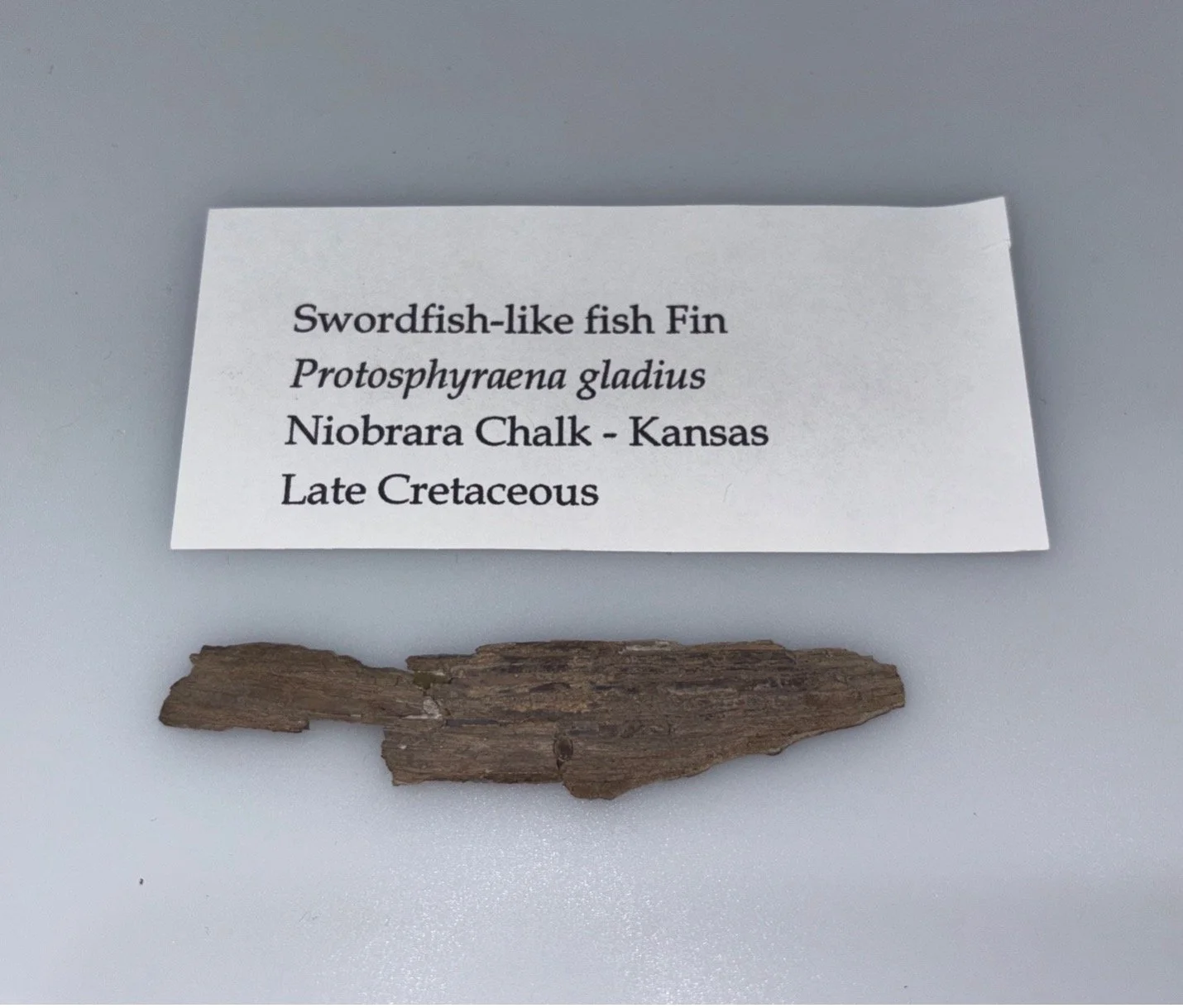
Protosphyraena gladius (Cretaceous)
Protosphyraena gladius was a giant, predatory fish that lived during the Cretaceous period. It grew to 6.5 to 10 feet in length and bore a resemblance to modern swordfish despite belonging to a different evolutionary lineage. The long rostrum (the sword-looking part) on its upper jaw was likely used to incapacitate prey.
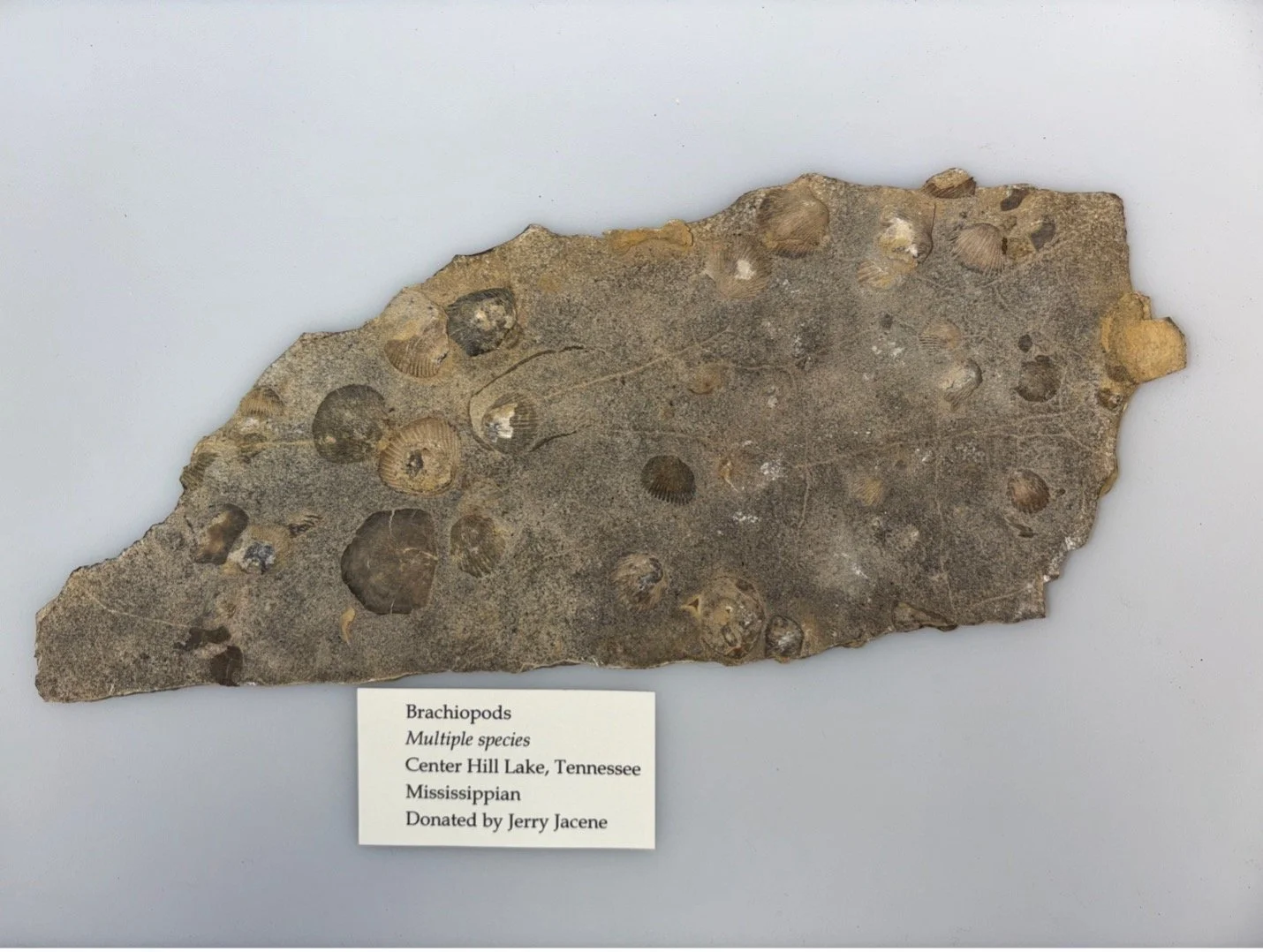
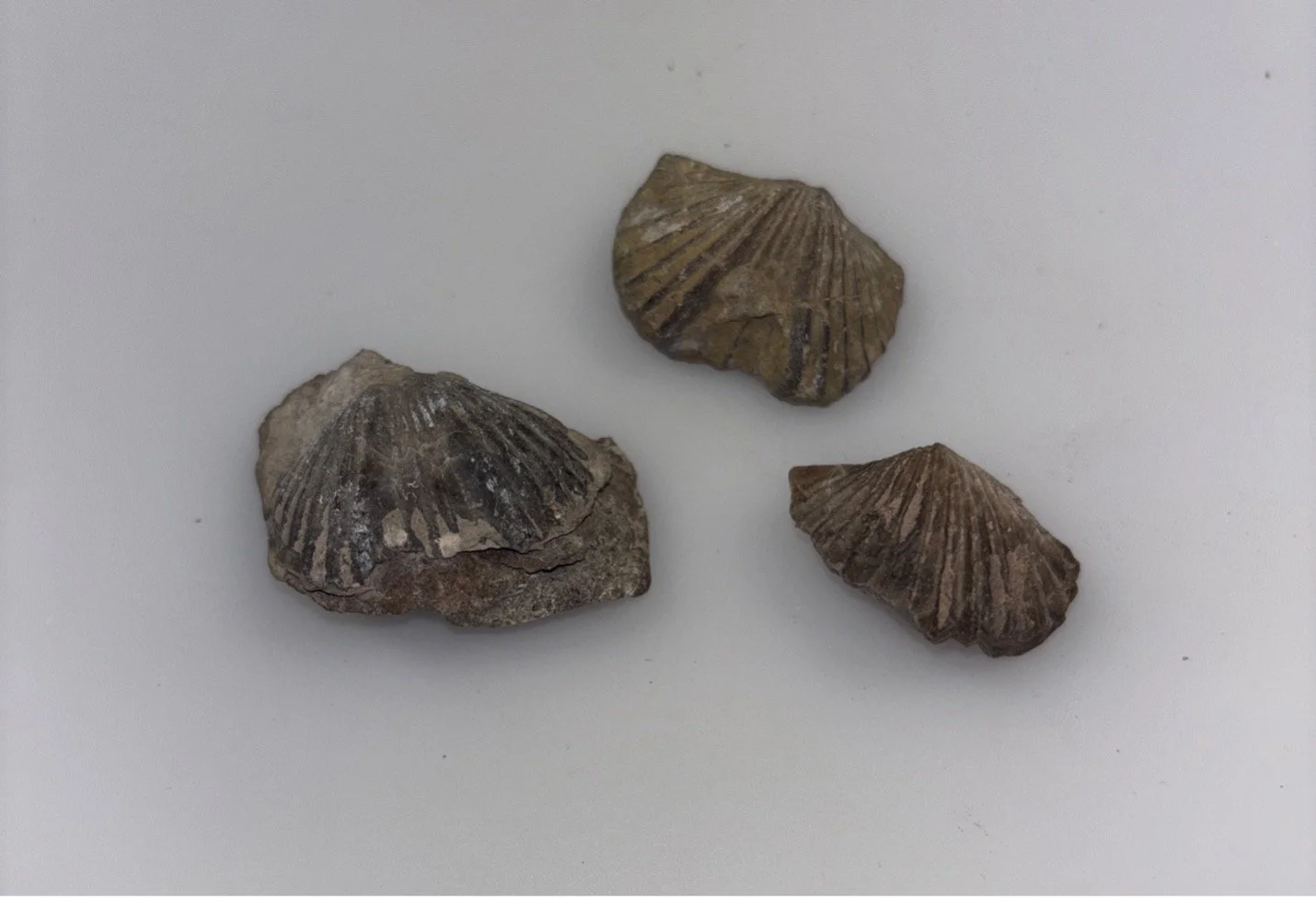
Brachiopods (Cambrian – Present)
Brachiopods are aquatic soft-bodied invertebrates who typically live inside a symmetrical two-halved shell. Though similar to bivalves in design, Brachiopods are deceptively unique, belonging to their own phylum, Brachiopoda. Brachiopods are generally stationary and are typically anchored in one spot, relying on filter feeding.
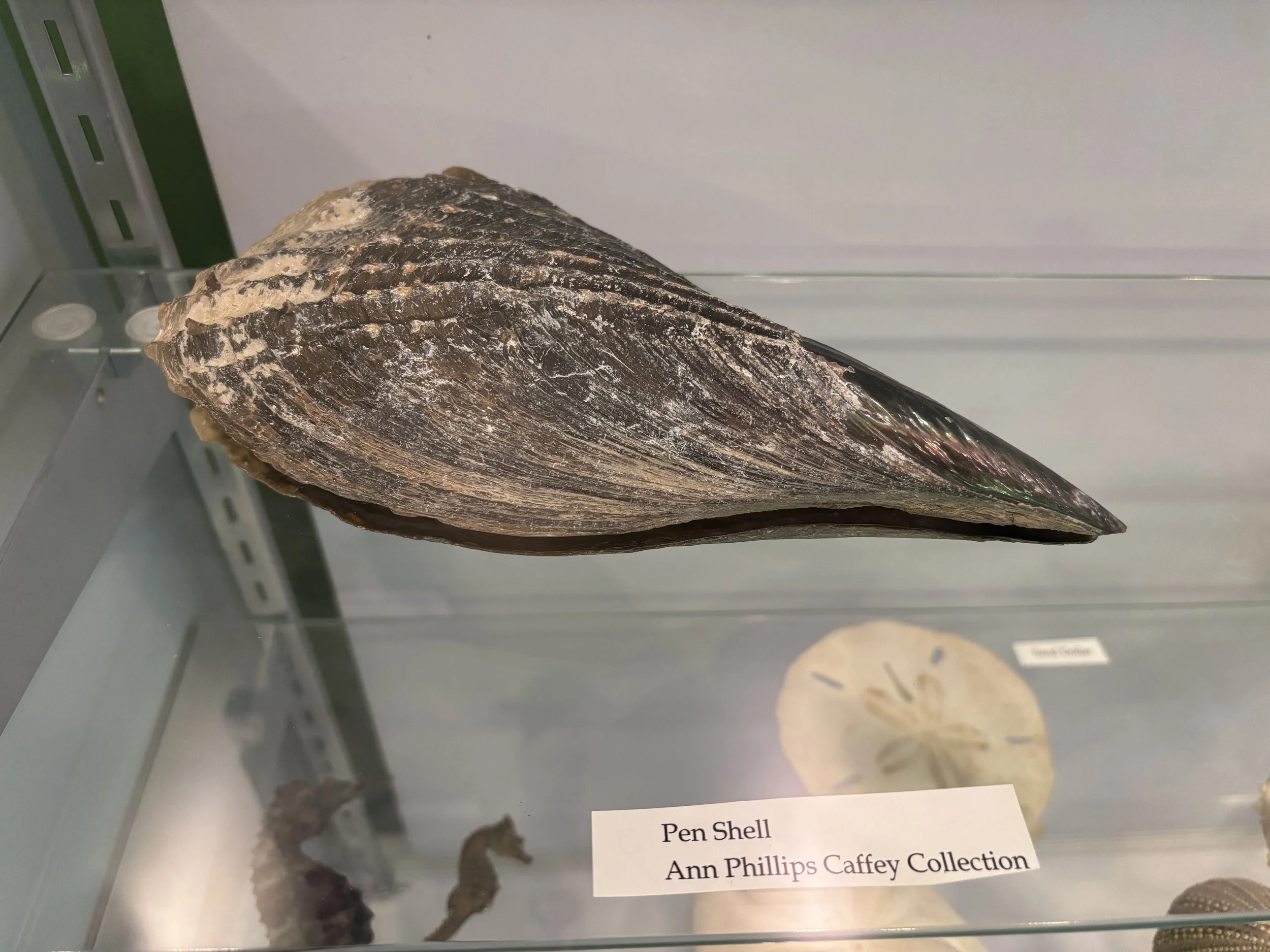
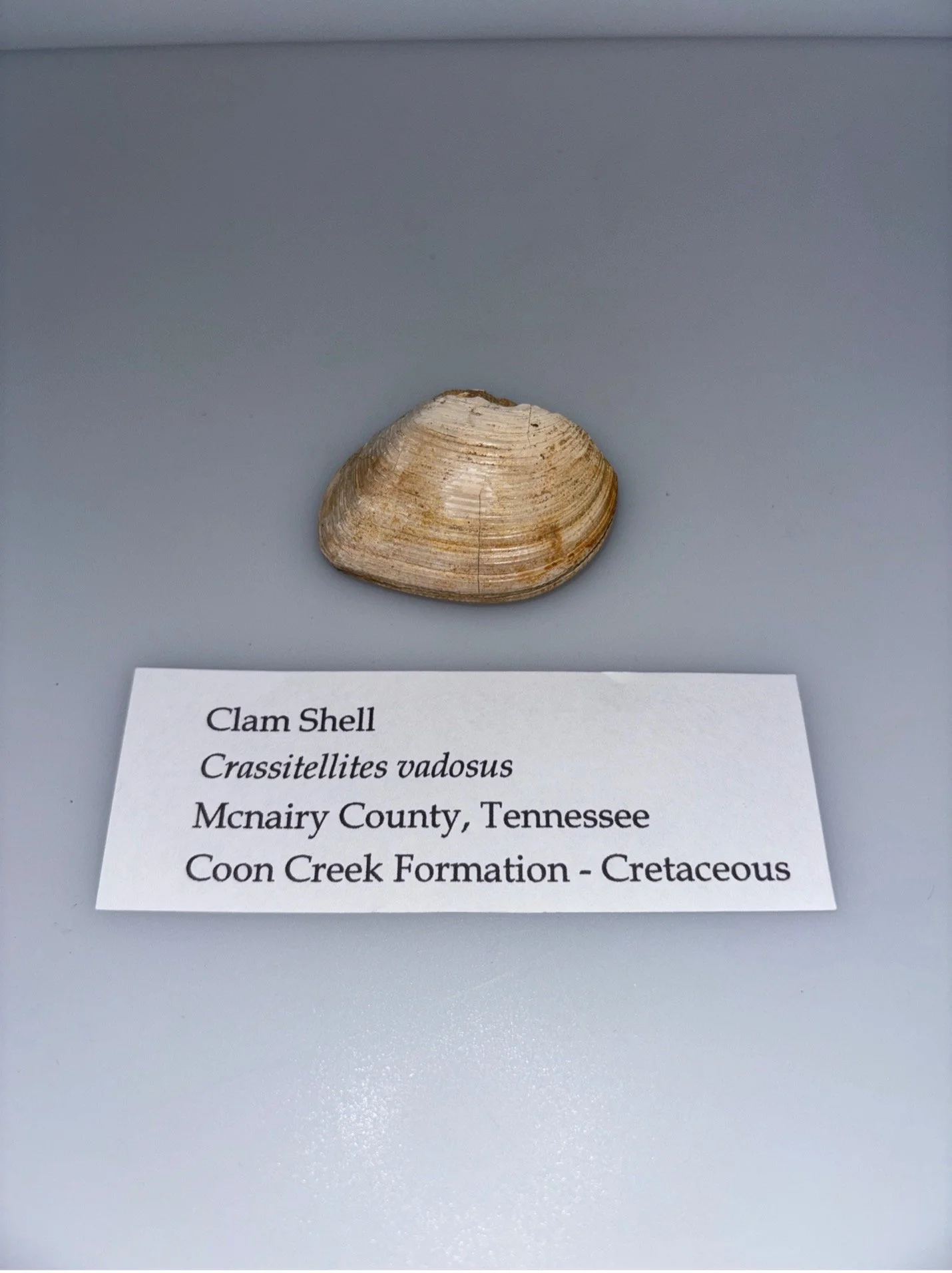
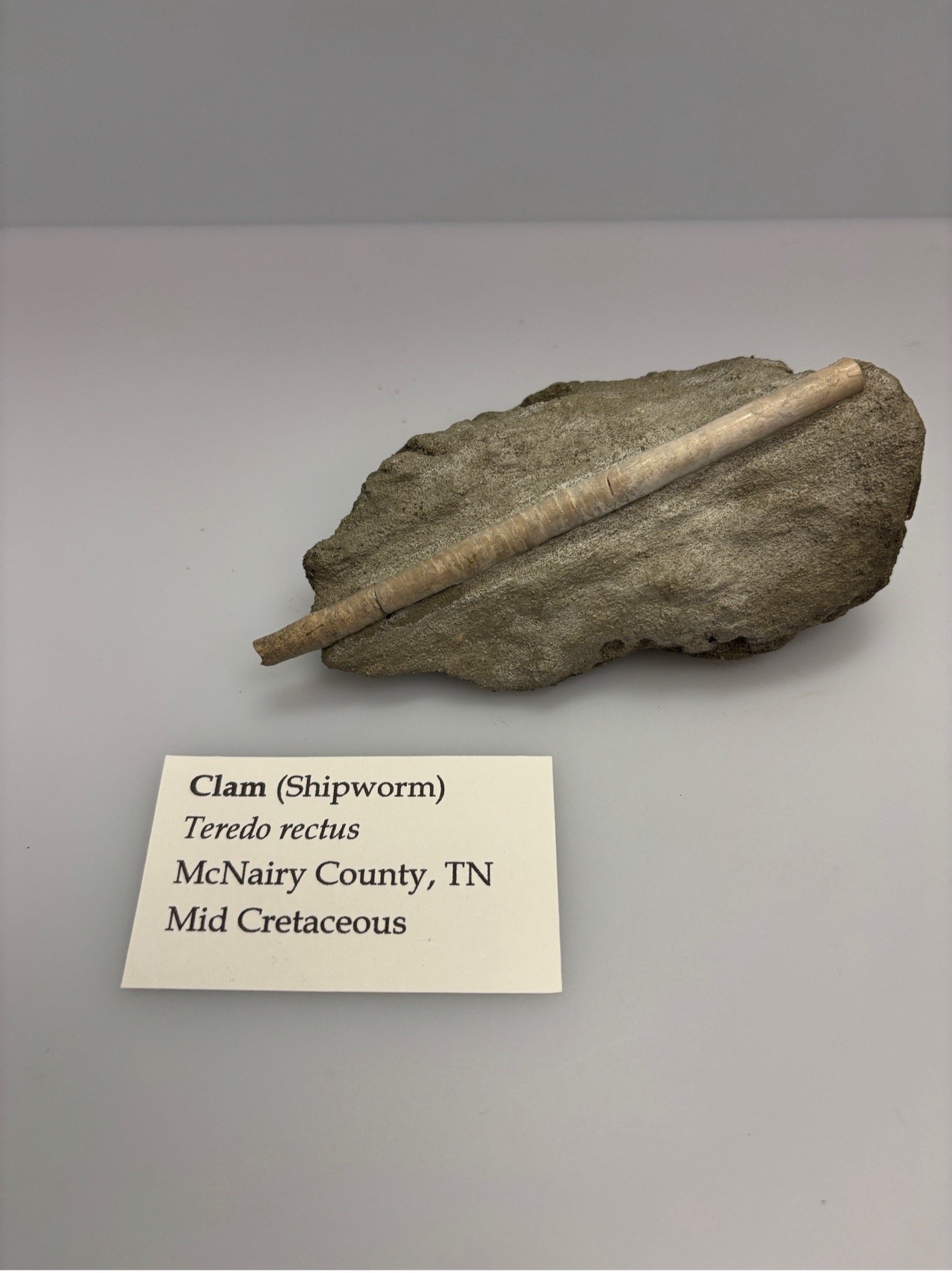
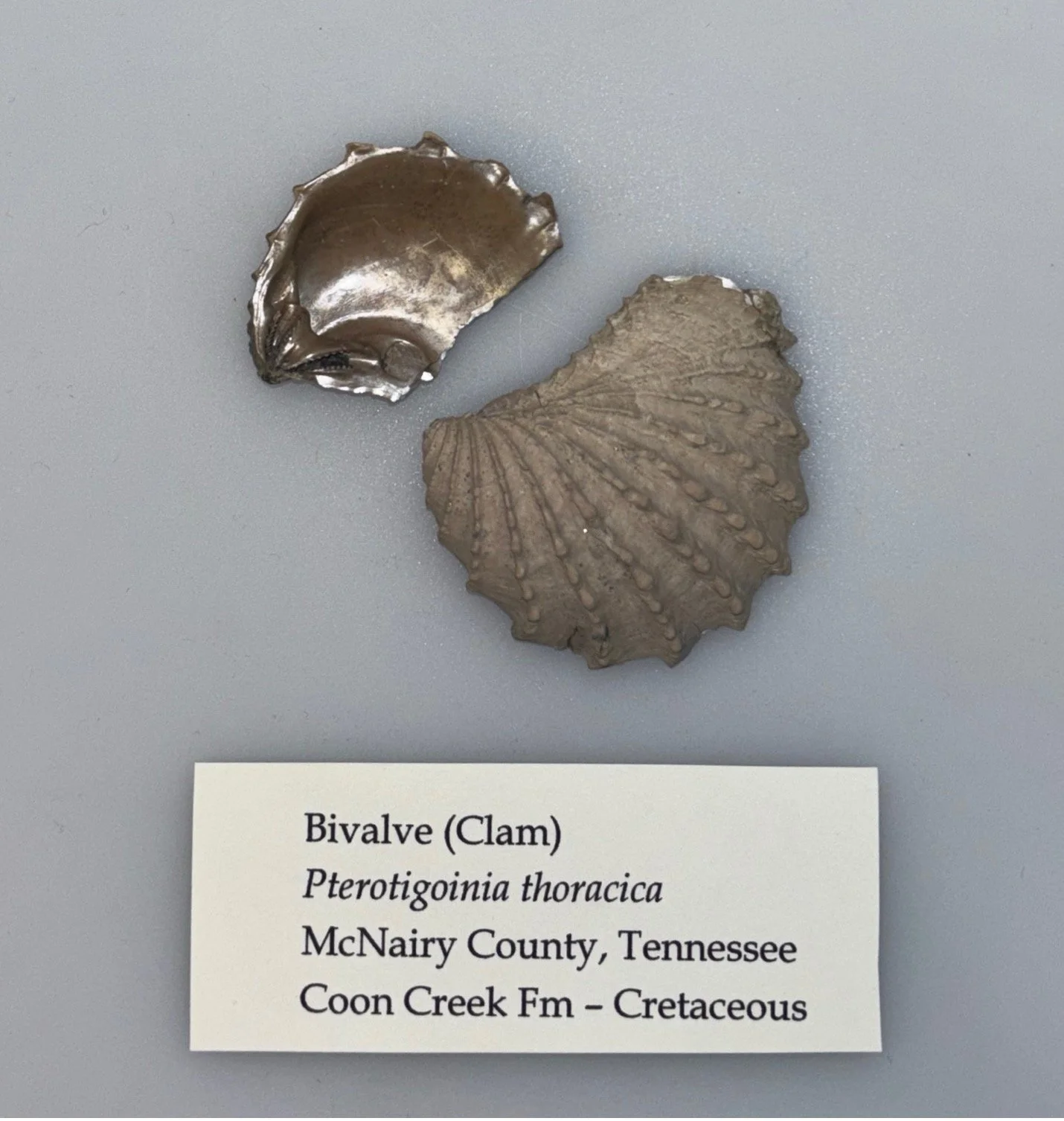
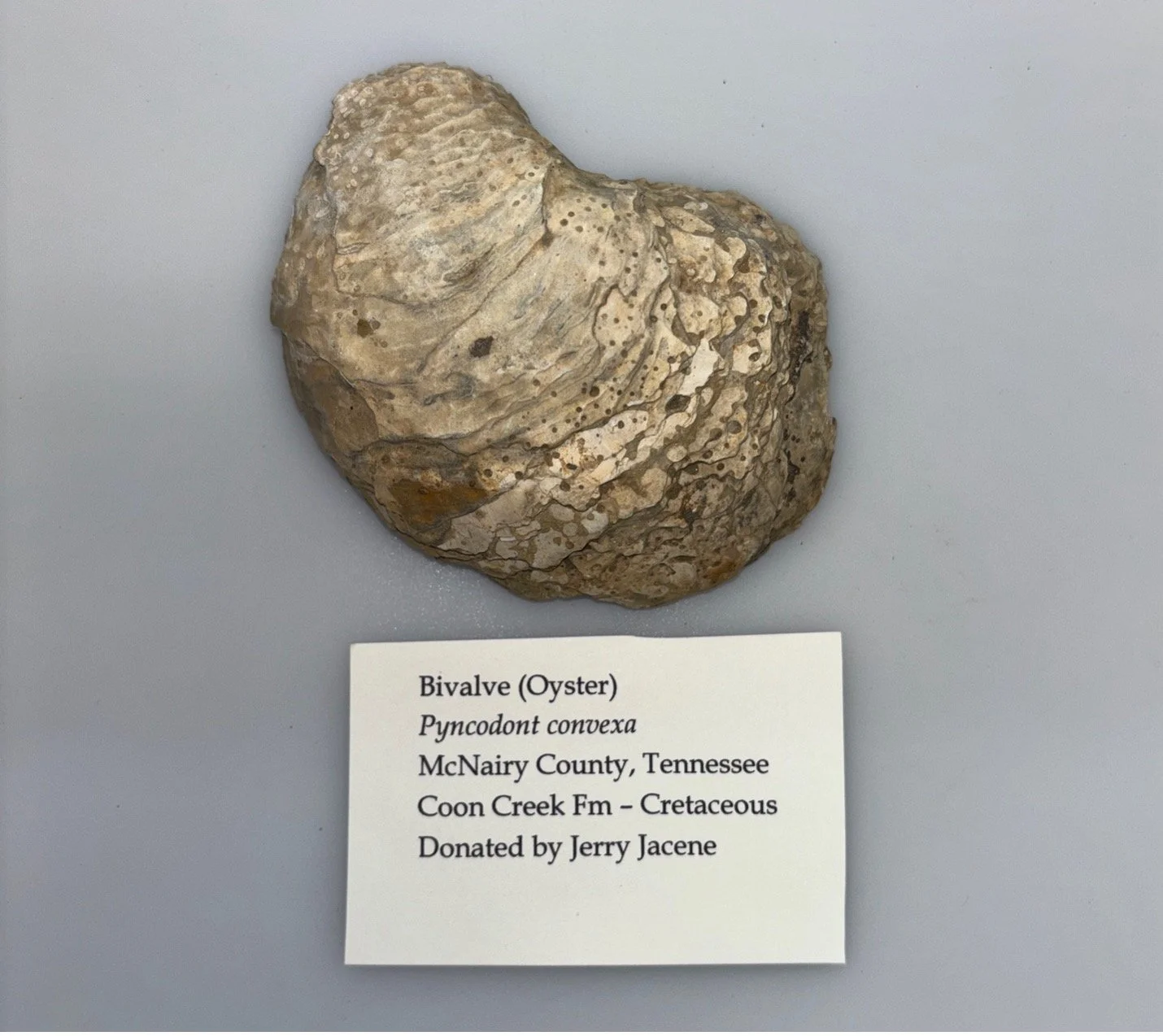
Bivalves are aquatic soft-bodied invertebrates who typically live inside a vertically symmetrical two-halved shell. They are similar to brachiopods, who are symmetrical both laterally and vertically, but the two are not actually very closely related. Today, bivalves vastly outnumber brachiopods, but during earlier periods, the inverse was true.
Bivalves are more mobile than they look, often burying themselves in sediment with the help of a muscular organ called a ‘foot’, and some can even swim by clapping their shell open and closed. Their shells have historically been used as jewelry, tools, and even money in certain cultures.
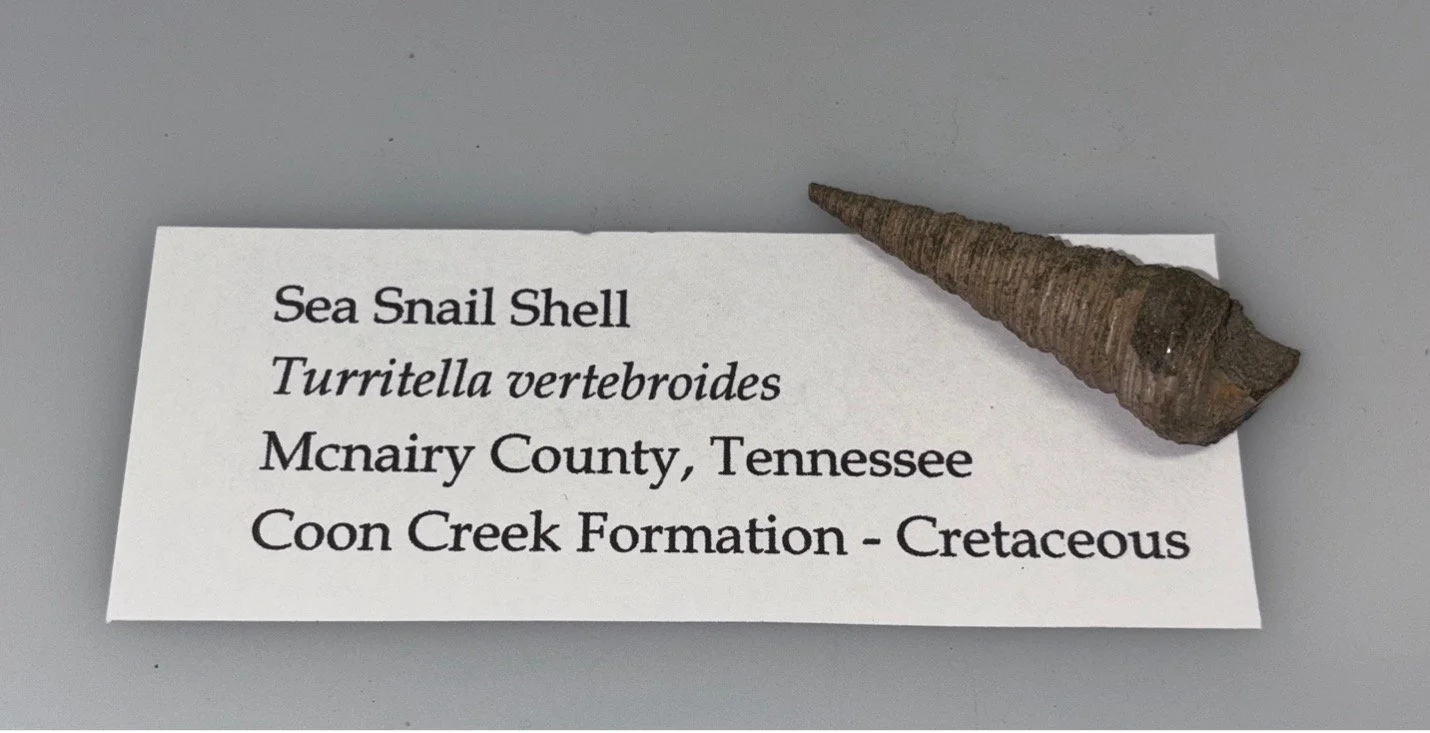
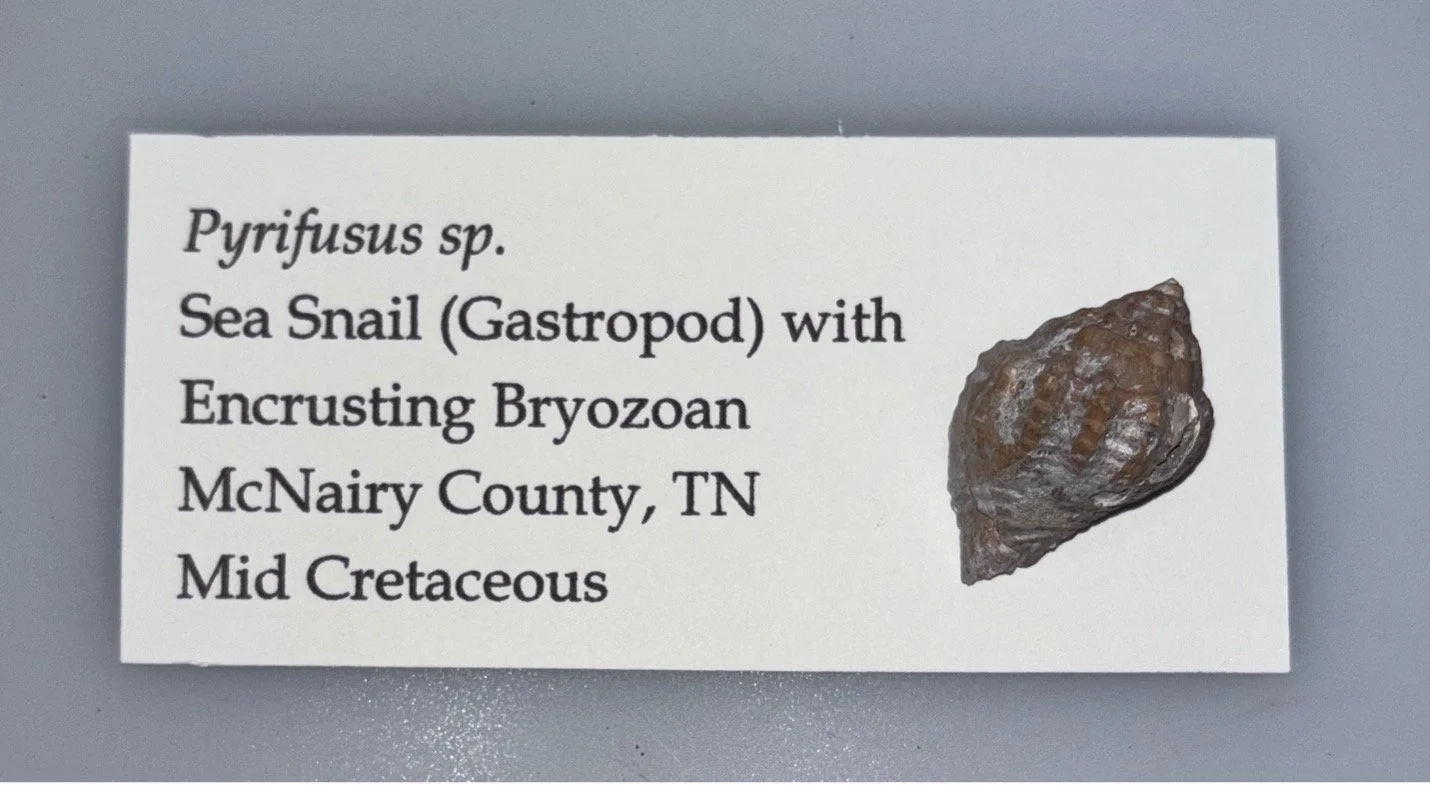
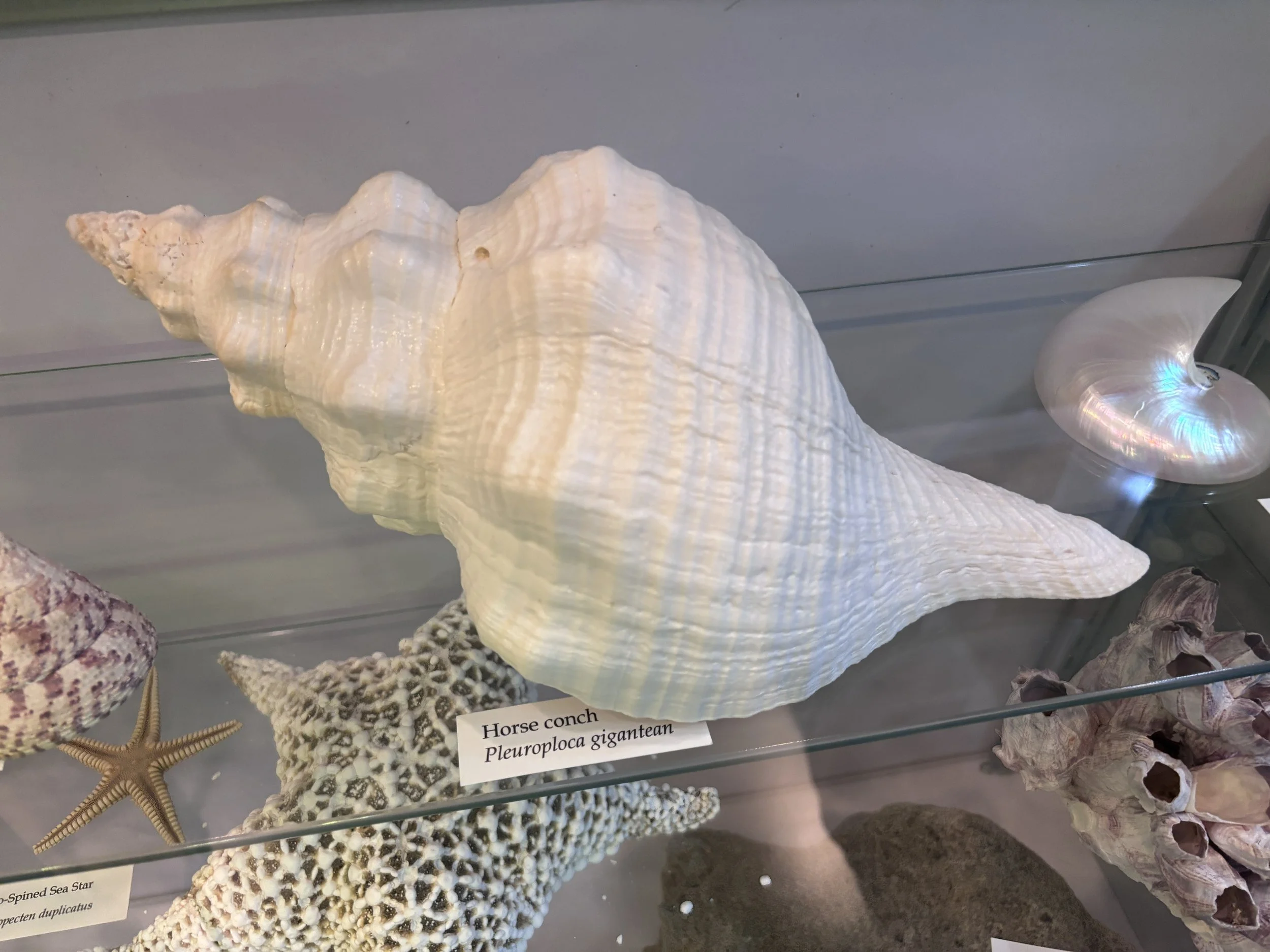
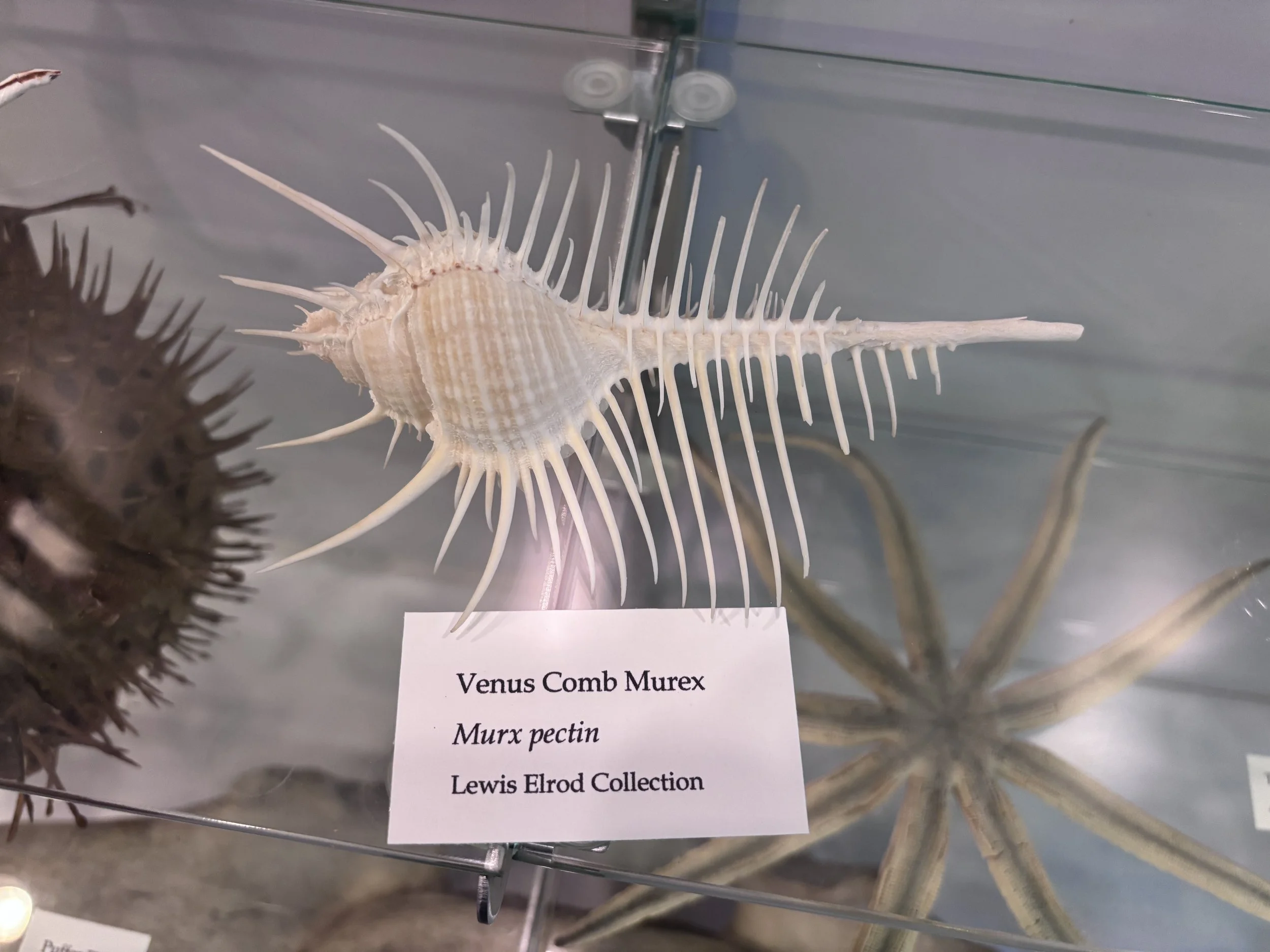
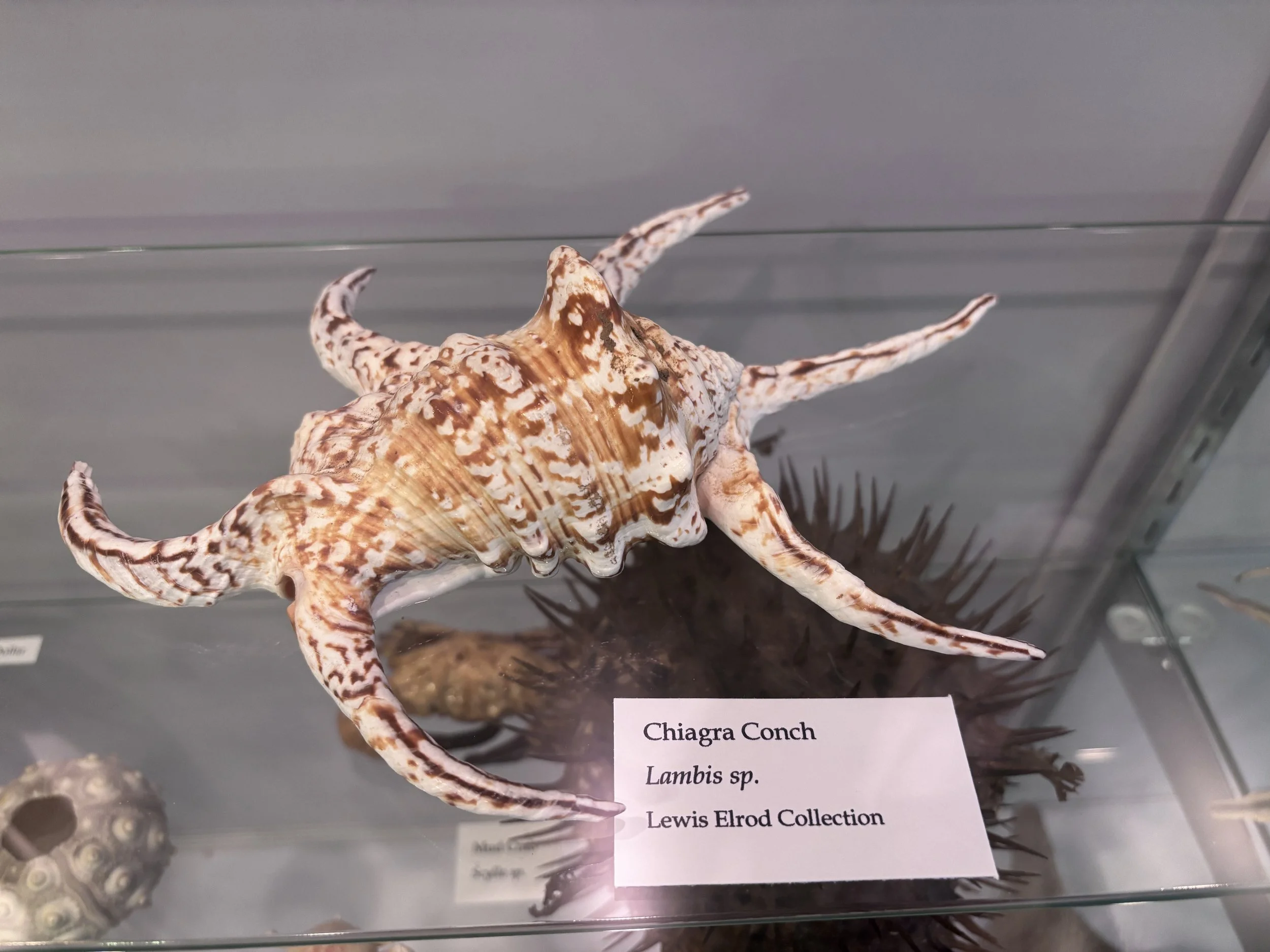
Gastropods (Late Cambrian – Present)
Gastropods are a class of soft-bodied invertebrates and are members of the phylum Mollusca, including things like snails and slugs. Gastropods have been around since almost the beginning of the fossil record, developing all the way back in the oceans of the Cambrian Period (485- 541 million years ago). Gastropod’s bodies are simple but highly adaptable, and have diversified far past marine living. Today there are species in the oceans, in rivers, on land, and even hydrothermal vents.
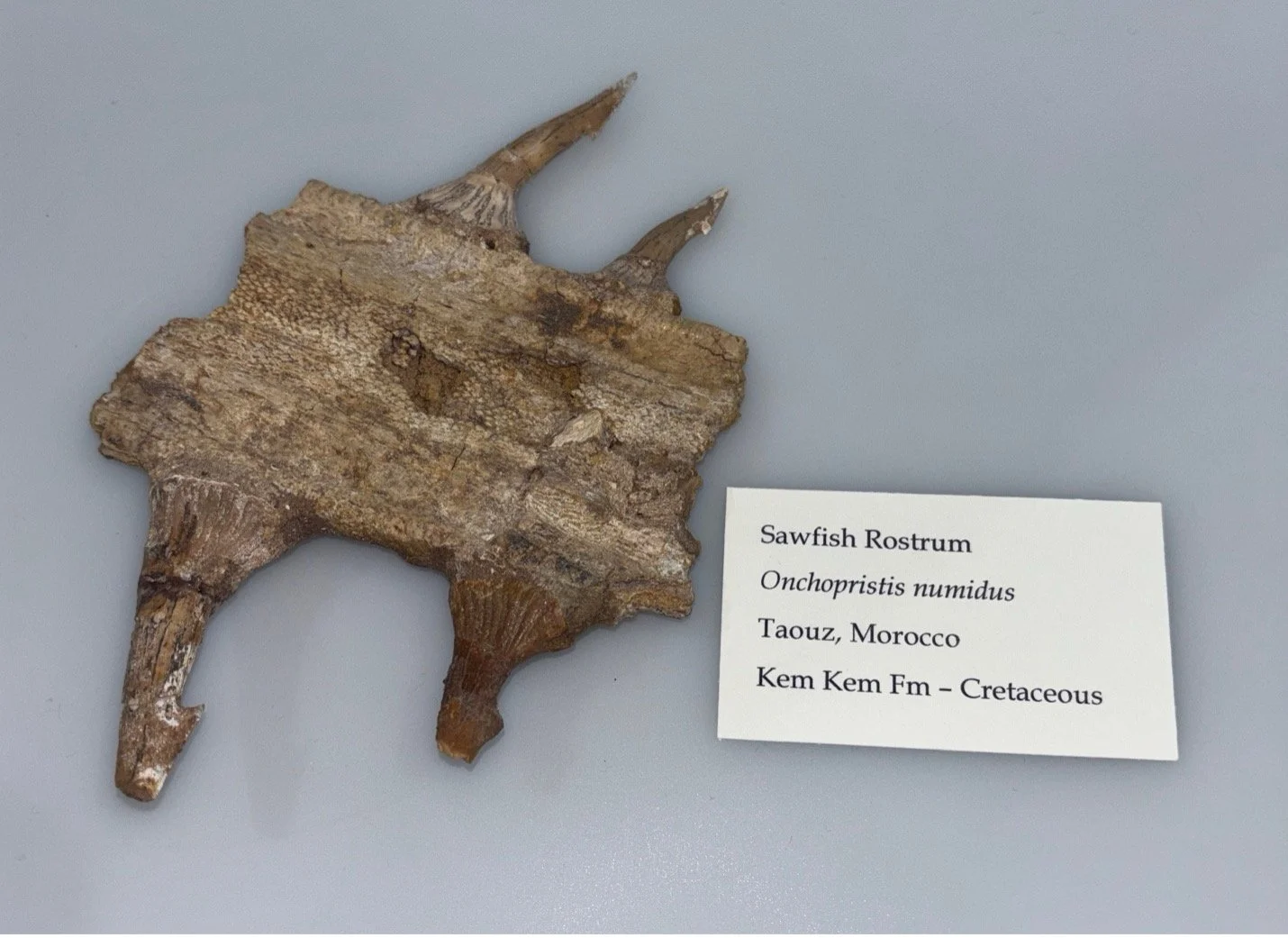
Onchopristis numidus, or the ancient sawfish, was a large, odd-looking fish with teeth all along a long protruding rostrum (or snout), resembling a chainsaw. To hunt, the sawfish would swipe its snout at prey, impaling fish along the bottom of the ocean floor. Though they resemble modern sawfish, they are not closely related. This is an example of convergent evolution, in which both animals adapt similar solutions to survive in their environment.
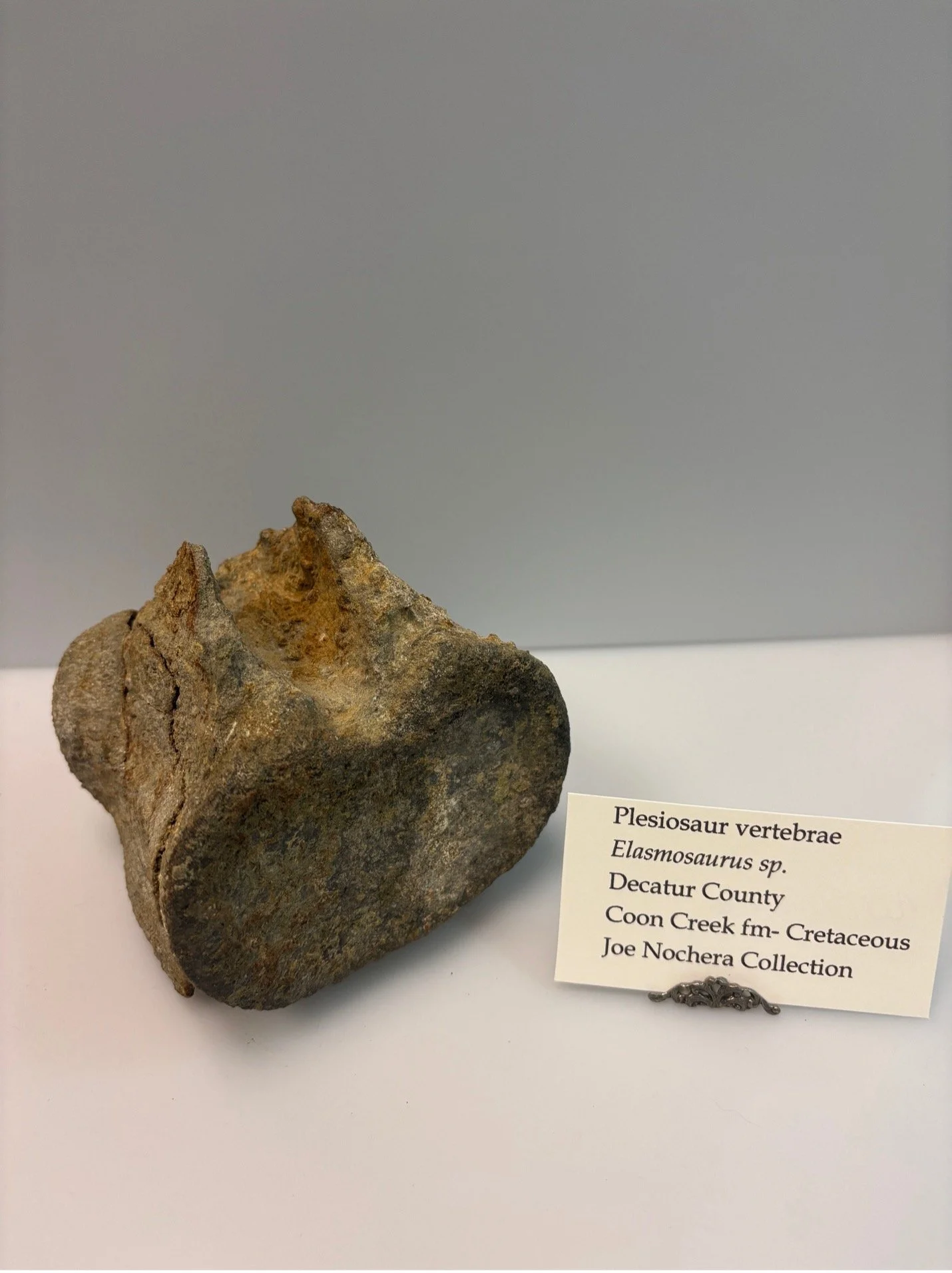
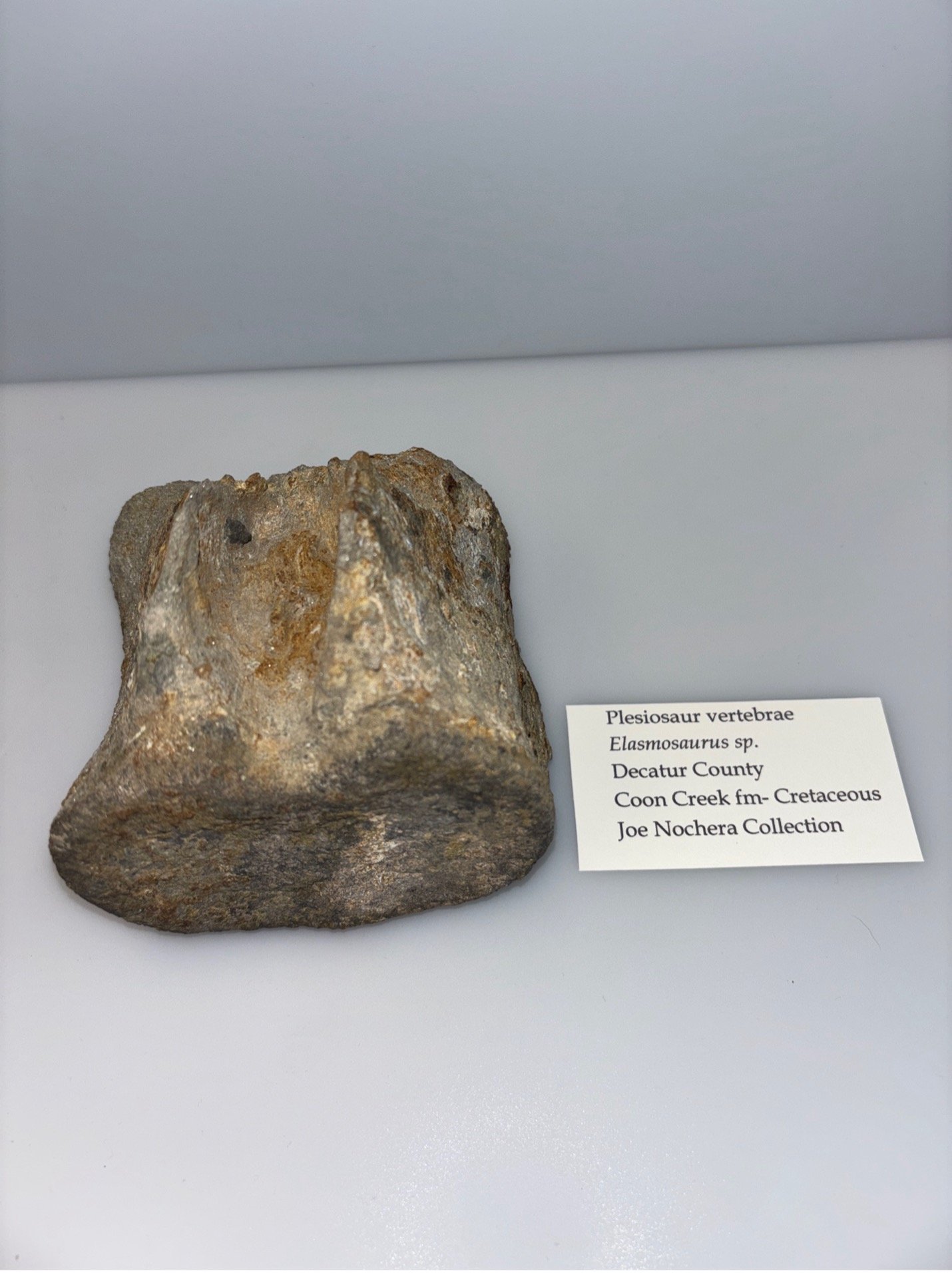
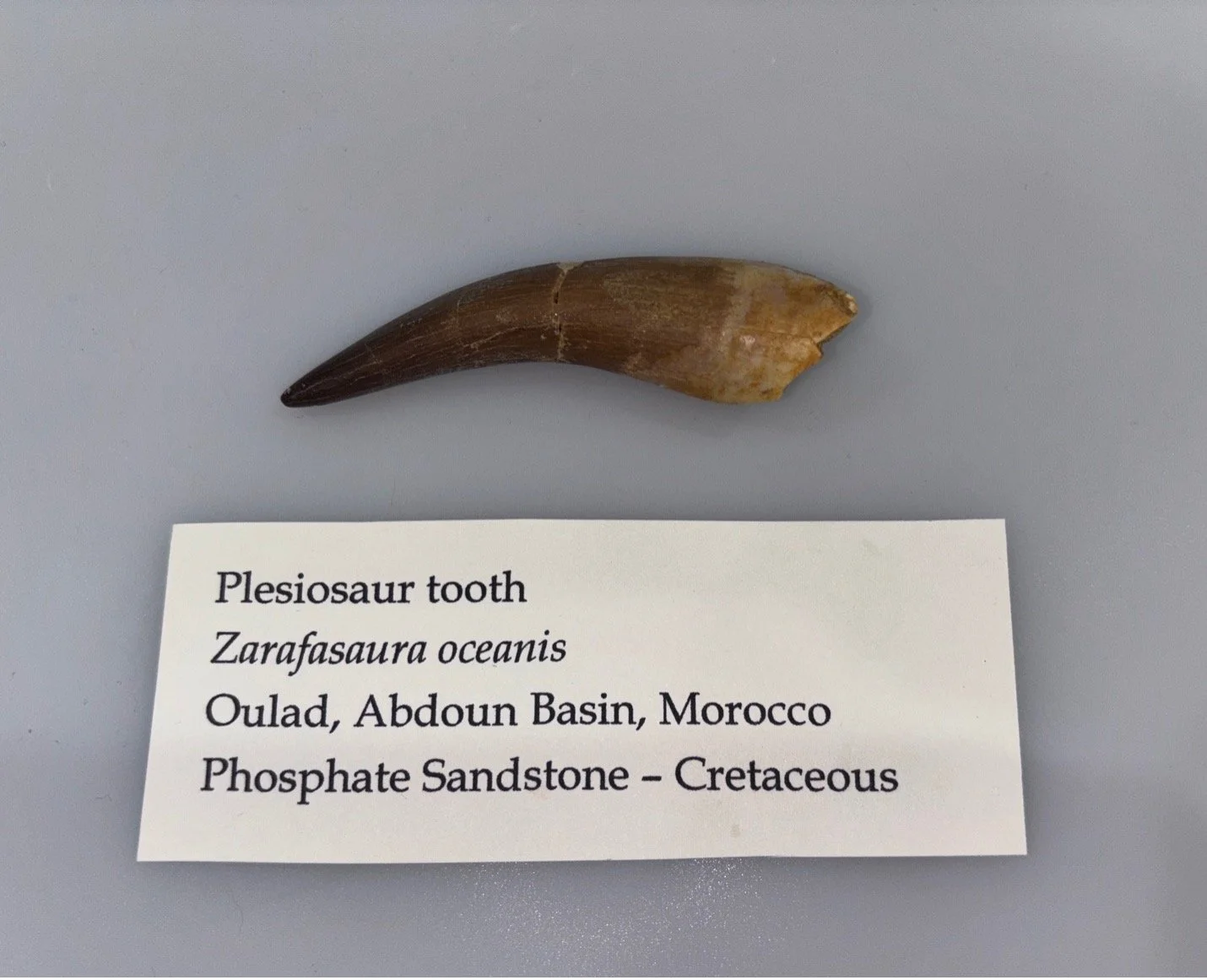
Plesiosaurs (Late Triassic – Late Cretaceous)
Plesiosaurs were marine reptiles that lived during the age of the dinosaurs. Though not a dinosaur itself, Plesiosaurs are well-known for their distinctive body shape which inspired the famous cryptid, the Loch Ness Monster. While many believers argue that a Plesiosaur could still be in Loch Ness in Scotland, they unfortunately all went extinct at the same time at the non-avian dinosaurs following the K-Pg Impact. Their diet was comprised of fish and cephalopods. Plesiosaurs came in different shapes and sizes; some where large and long-necked like the Zarafasaurus oceanis who were generally pacifistic and solitary animals, while some like the Pliosaurus had short necks and large heads and were much more aggressive hunters.
The first complete Plesiosaur fossil was found by famous female paleontologist Mary Anning in 1823.
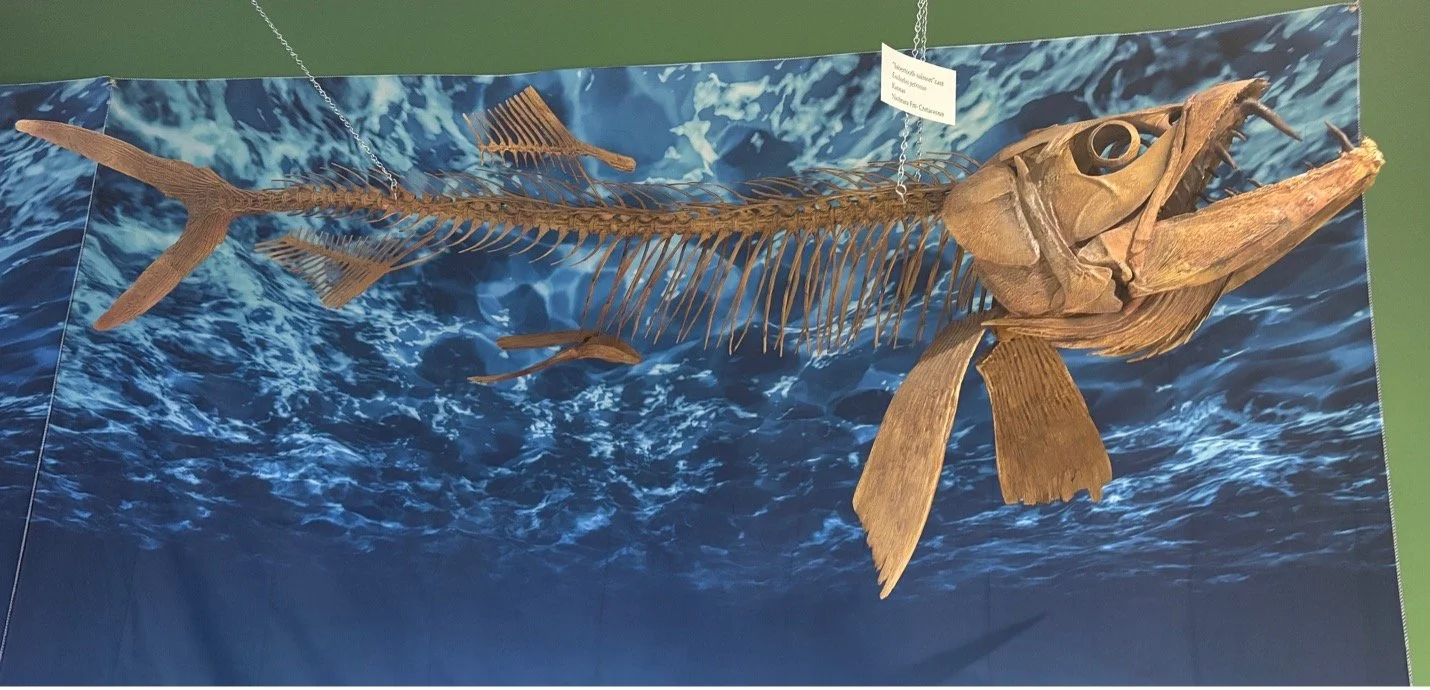
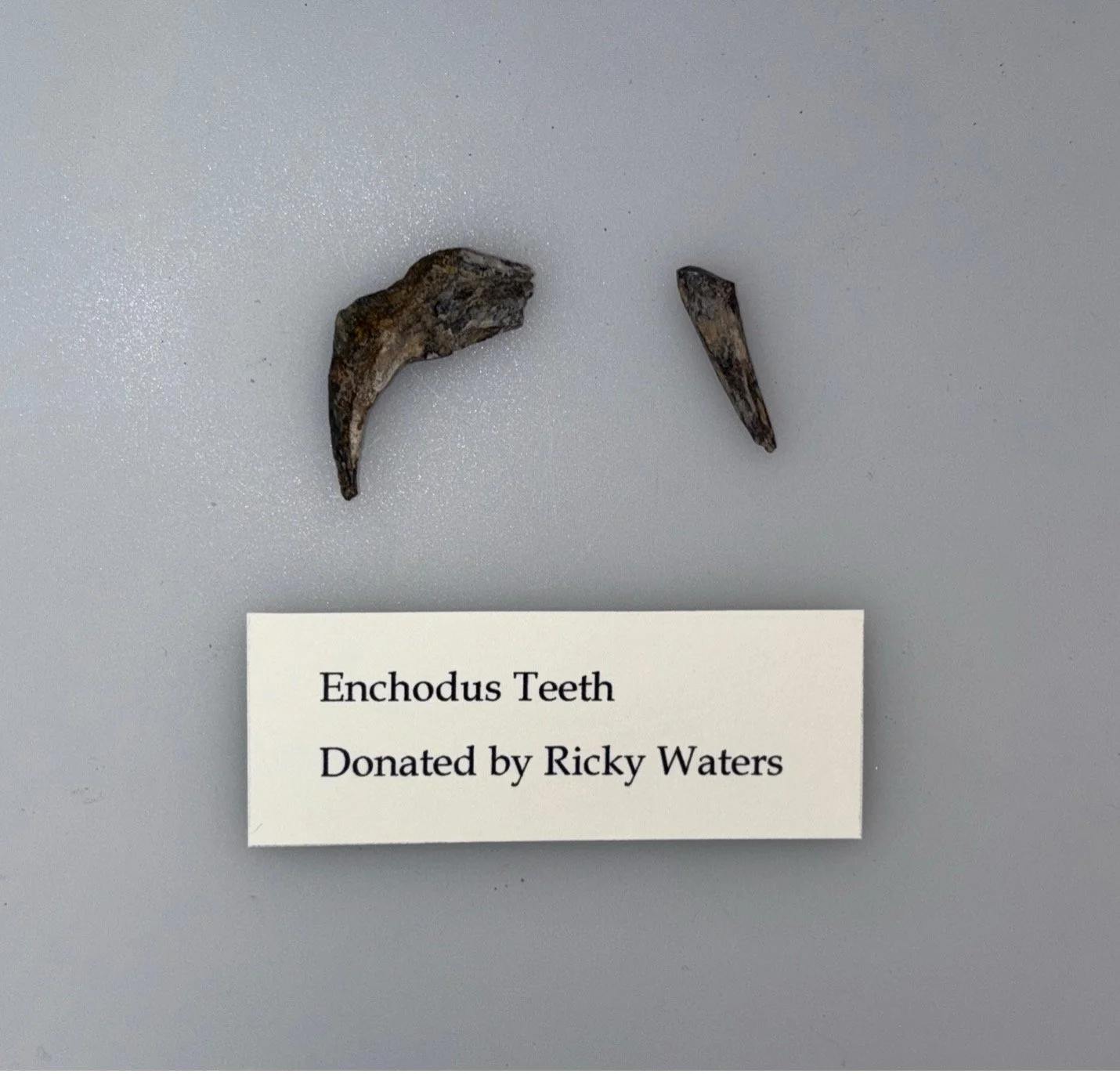
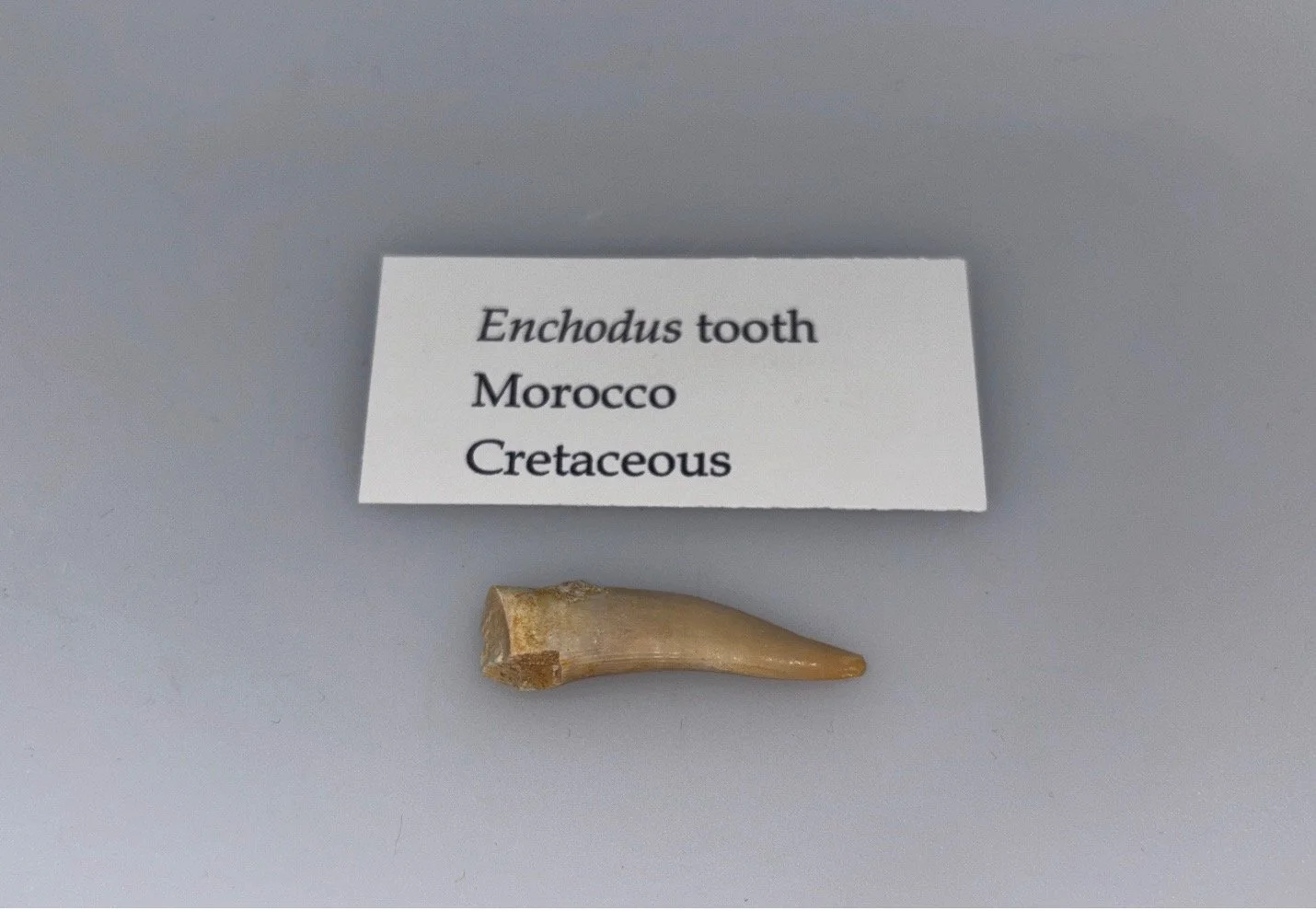
Enchodus was a genus of carnivorous fish that made the Cretaceous oceans their hunting ground. Different species in the Enchodus genus ranged in size, some adapting to hunt larger prey than other, but all had a mouth full of sharp teeth and a powerful bite. Enchodus petrosus was the largest species of its kind, growing to about 5 feet in length. Its diet included smaller fish, cephalopods like squids and mollusks, and crustaceans.
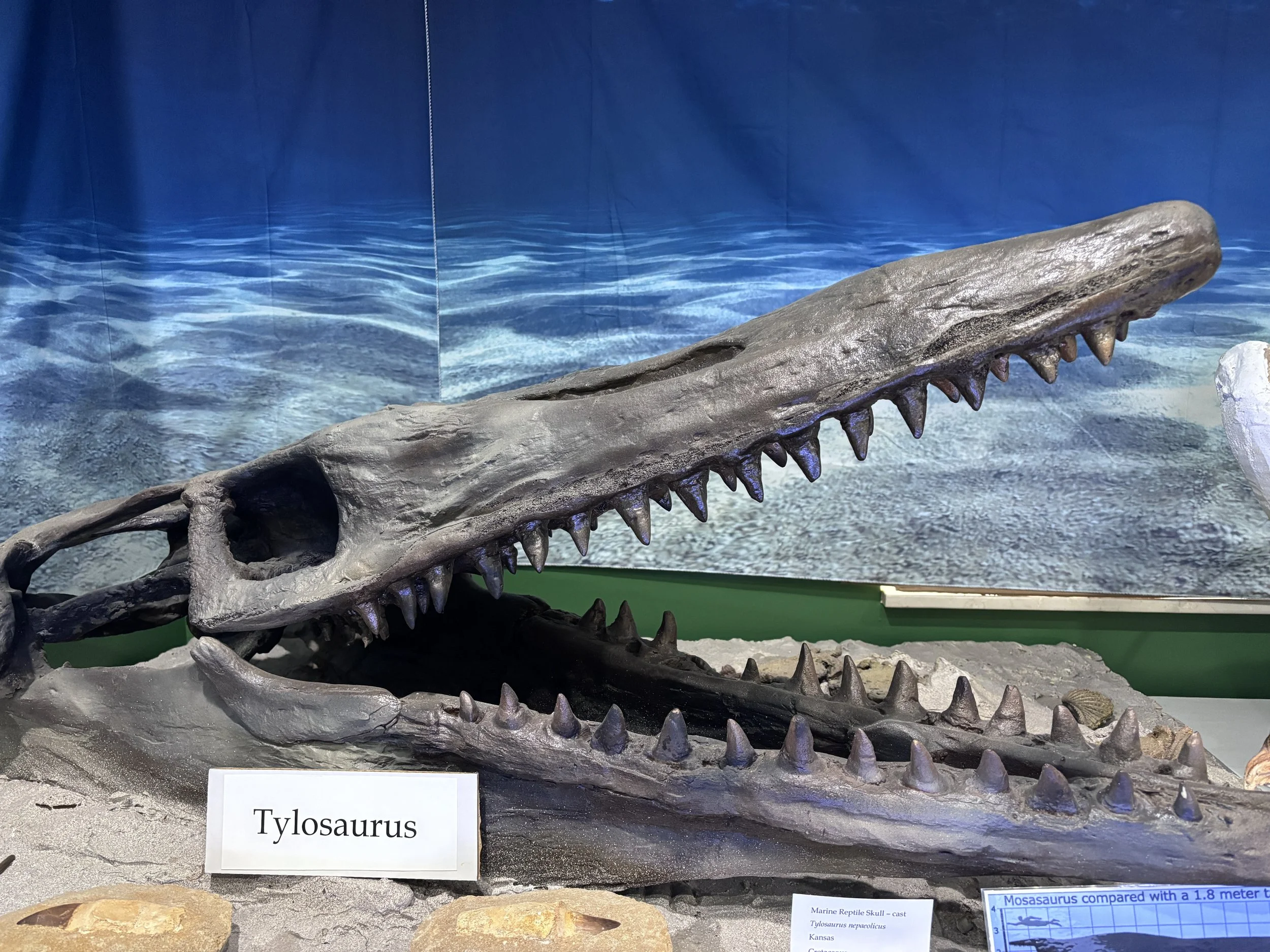
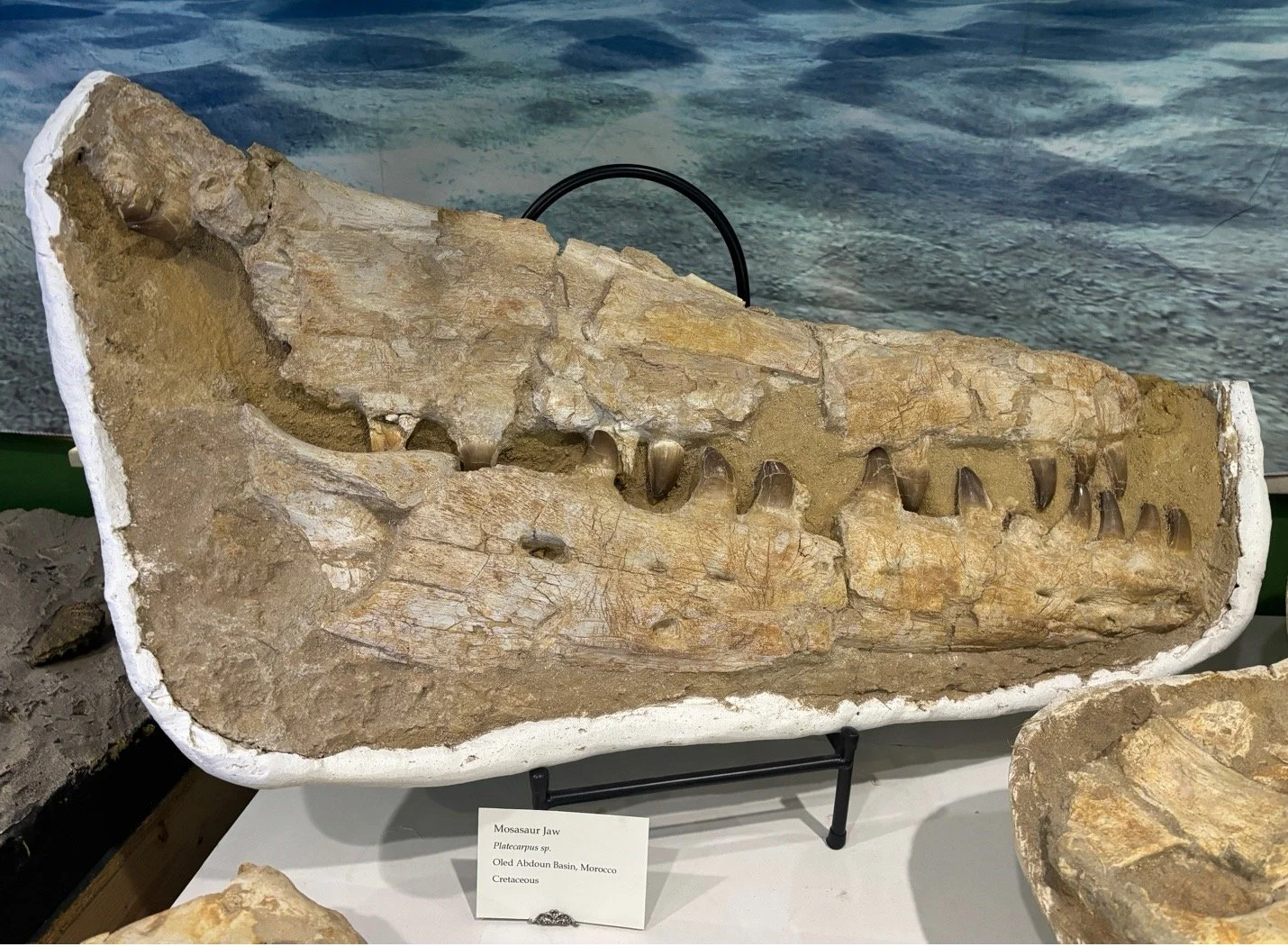
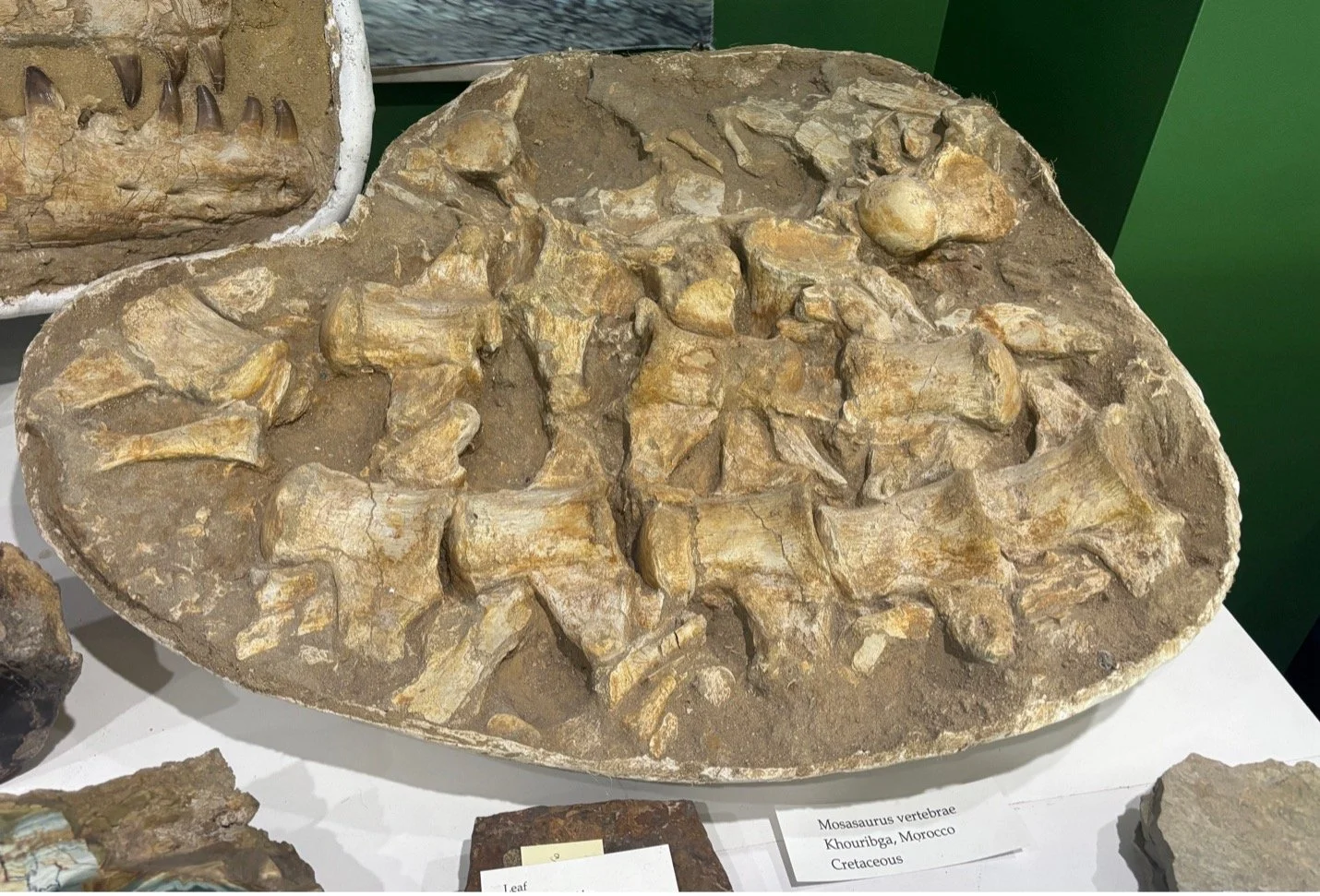
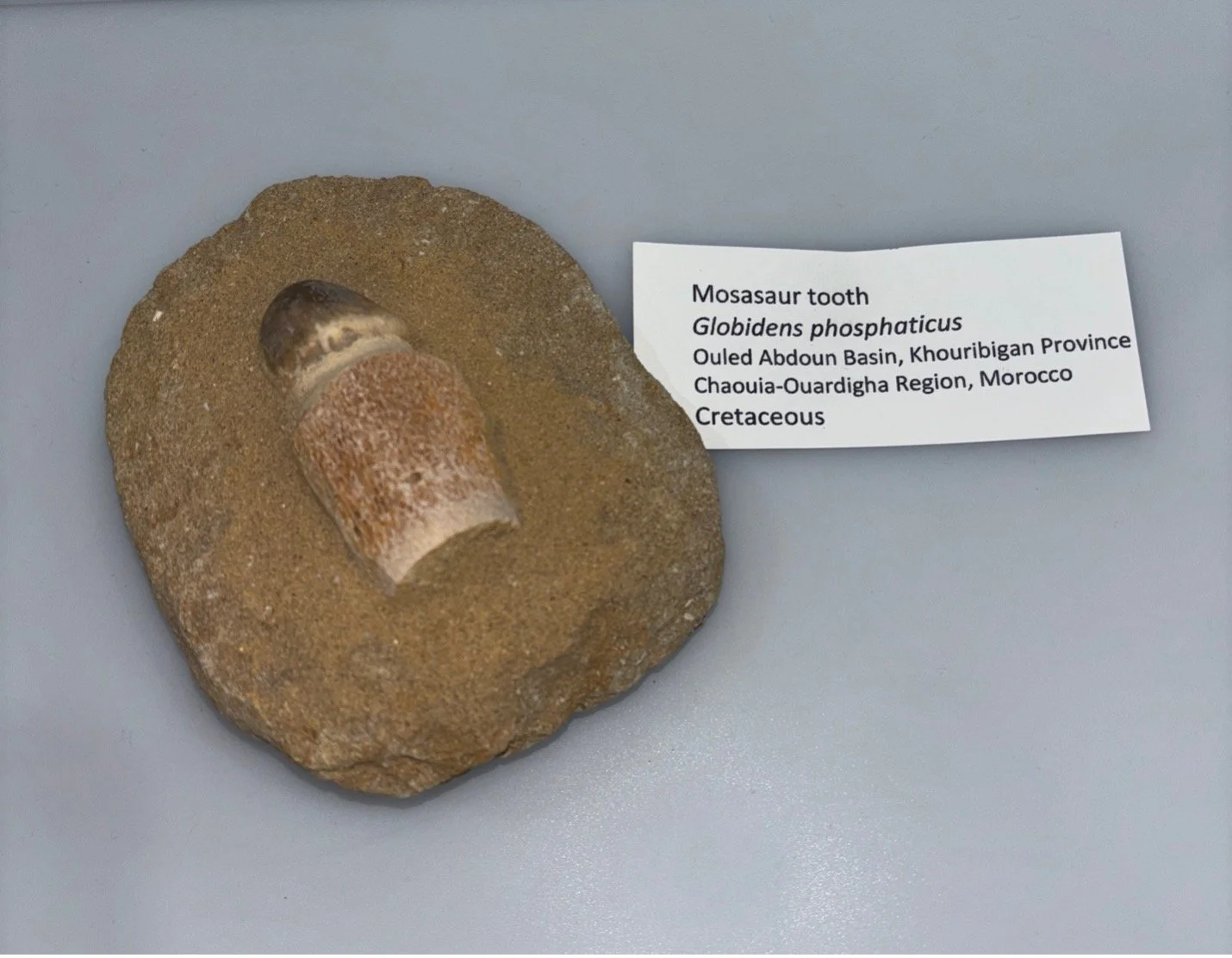
Mosasaurs were large marine reptiles that dominated the oceans of the Cretaceous period. Though they lived at the same time as many dinosaurs and have a name reminiscent of a dinosaur’s, Mosasaurs are not dinosaurs at all. In fact, they closest living relatives are monitor lizards and snakes. Mosasaurs gained popular fame with the release of Jurassic World (2015), which depicts them as gargantuan, bulky-bodied giants. However, Mosasaurs in reality were sleeker and generally far smaller than the film’s depiction. The longest type of Mosasaur was the Tylosaurus, which reached up to 45-50 feet in length.
As ocean dwellers, Mosasaur fossils are found throughout the world. One freshwater variation was even found in Hungary. They were formidable predators whose diet included all types of smaller marine creatures like ammonites, fish, smaller mosasaurs, and even sea birds. While Mosasaurs stalked the ocean similar to modern sharks, as reptiles they still had to breach the surface for air like whales or sea turtles. Also similar to whales, it is likely that Mosasaurs had live births.
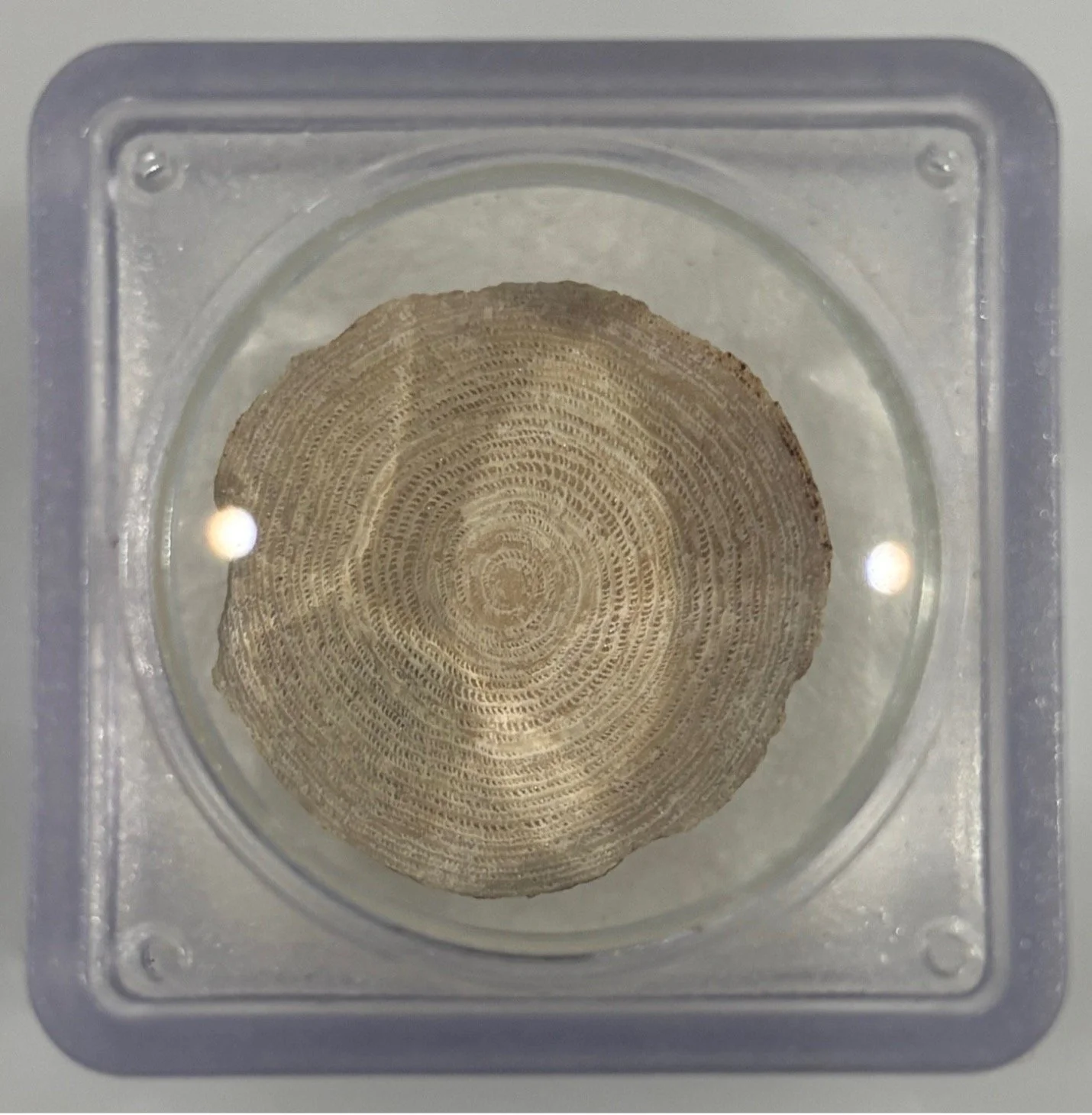
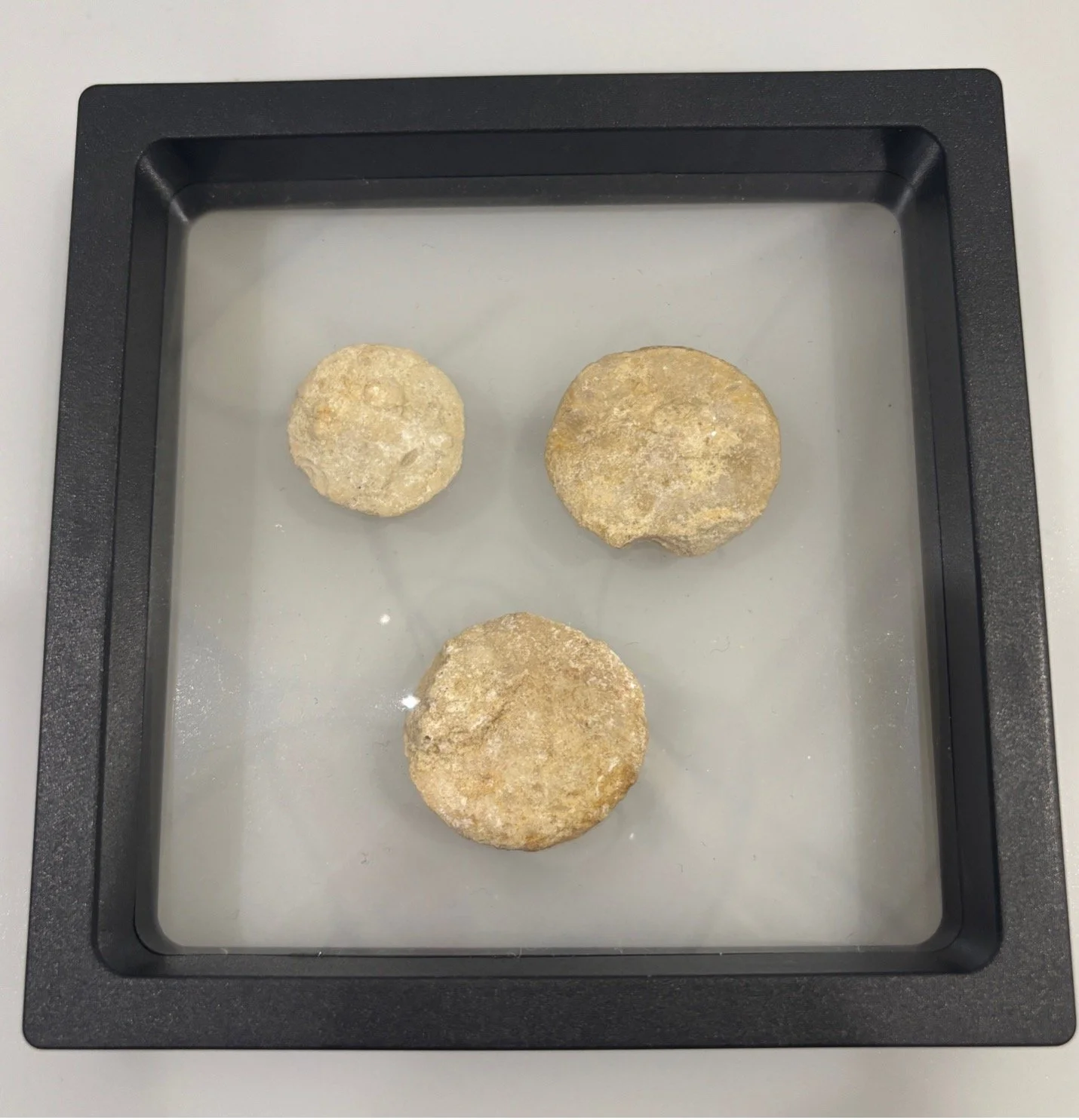
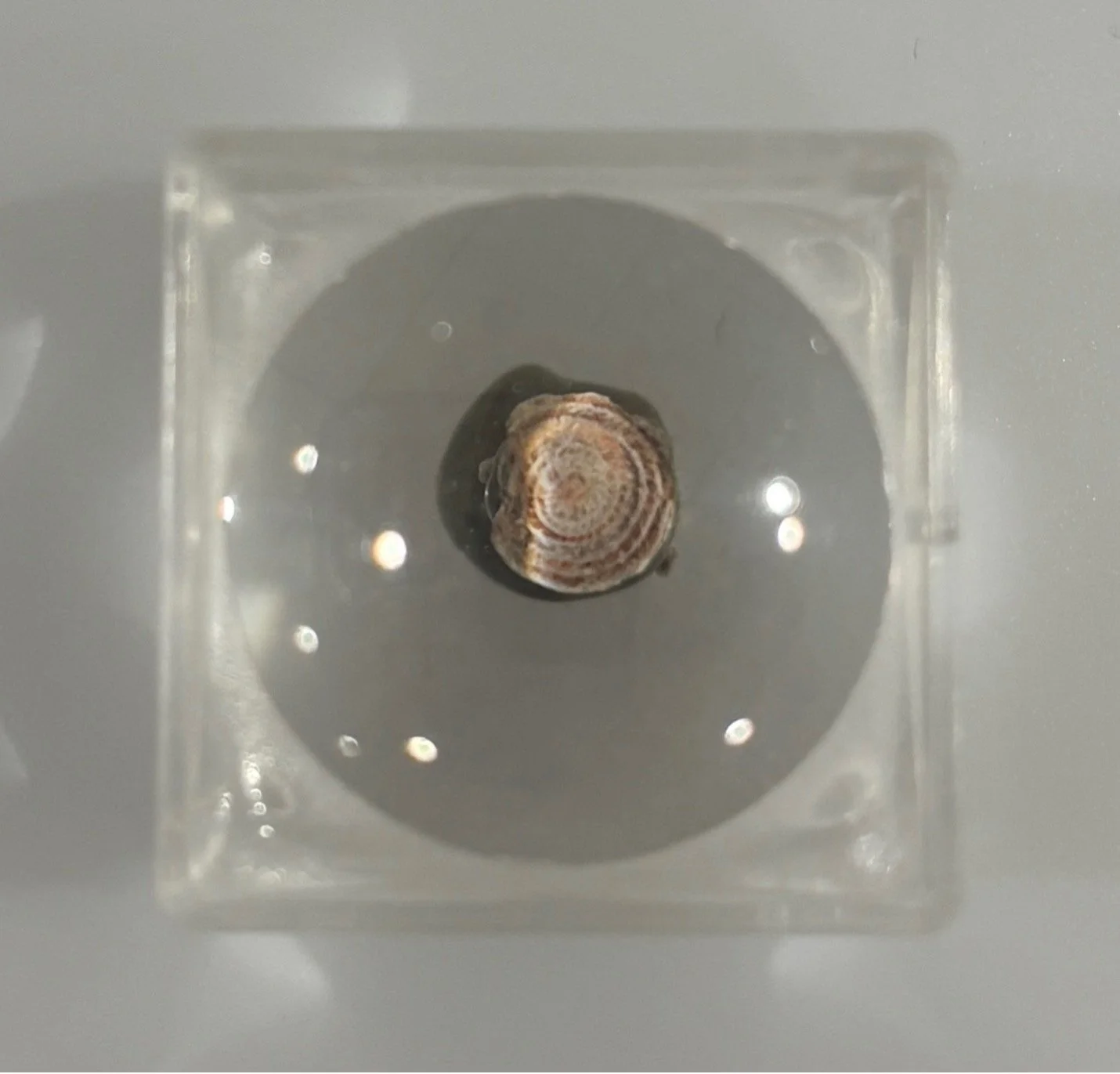
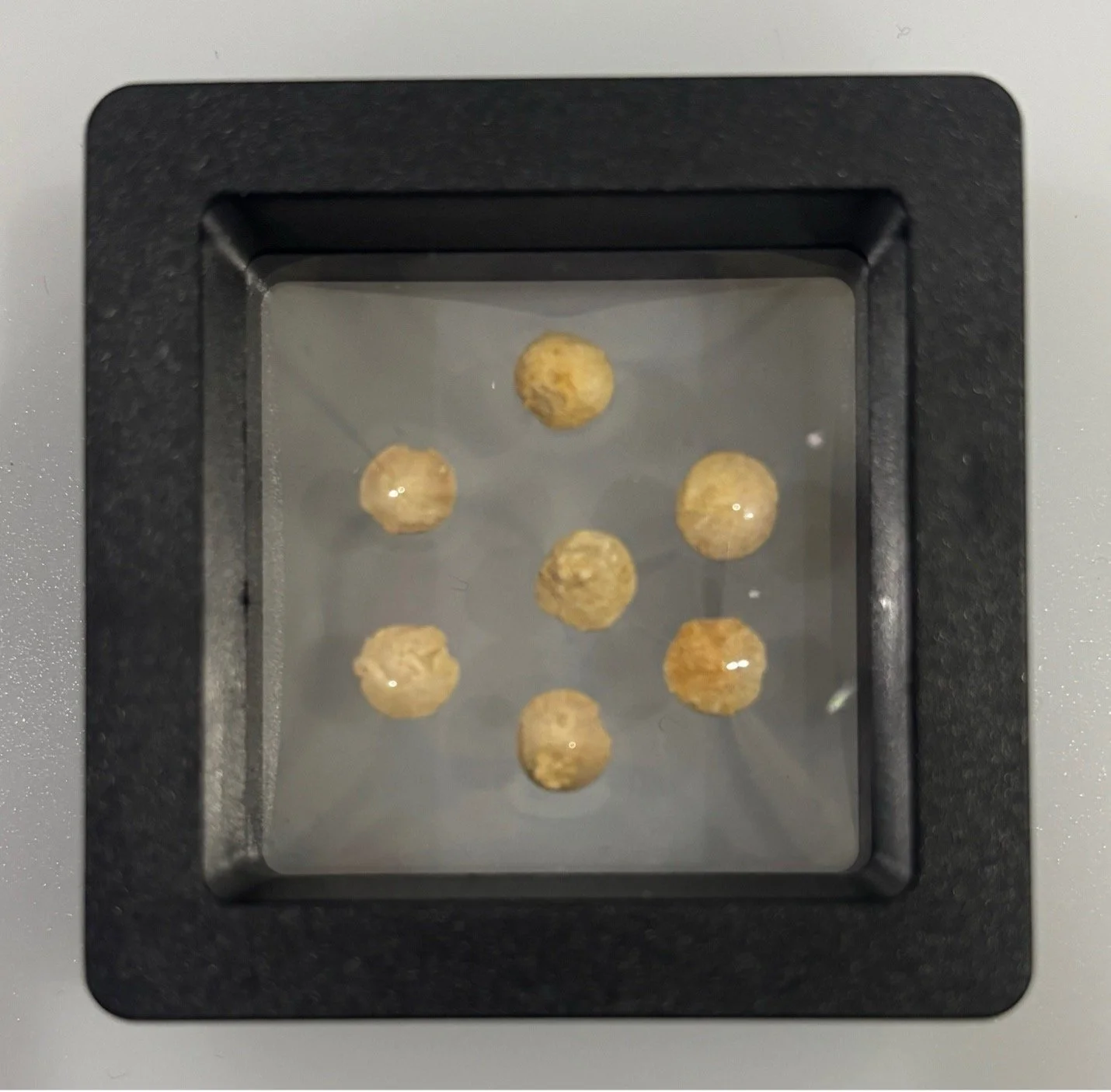
Nummulites are a type of foraminiferan (a type of single-celled organism) that develop disc shaped tests (shells) made up of connected chambers in a spiral arrangement. This species, Nummulites gizehensis, lived during the Eocene epoch and dwelled at the bottom of a shallow ocean around what is now Northern Africa and Southern Europe. The fossils of nummulites can be seen in the very stones that make up the Pyramids of Giza, hence their name.
Nummulites have an ‘alternation of generations’ life cycle, making both the large, coin shaped specimens, and the small, lentil shaped specimens, the same species. The large, coin shaped forms reproduced asexually after reaching maturity, producing the smaller form. The small, lentil shaped forms reproduced sexually after reaching maturity, producing the larger form.
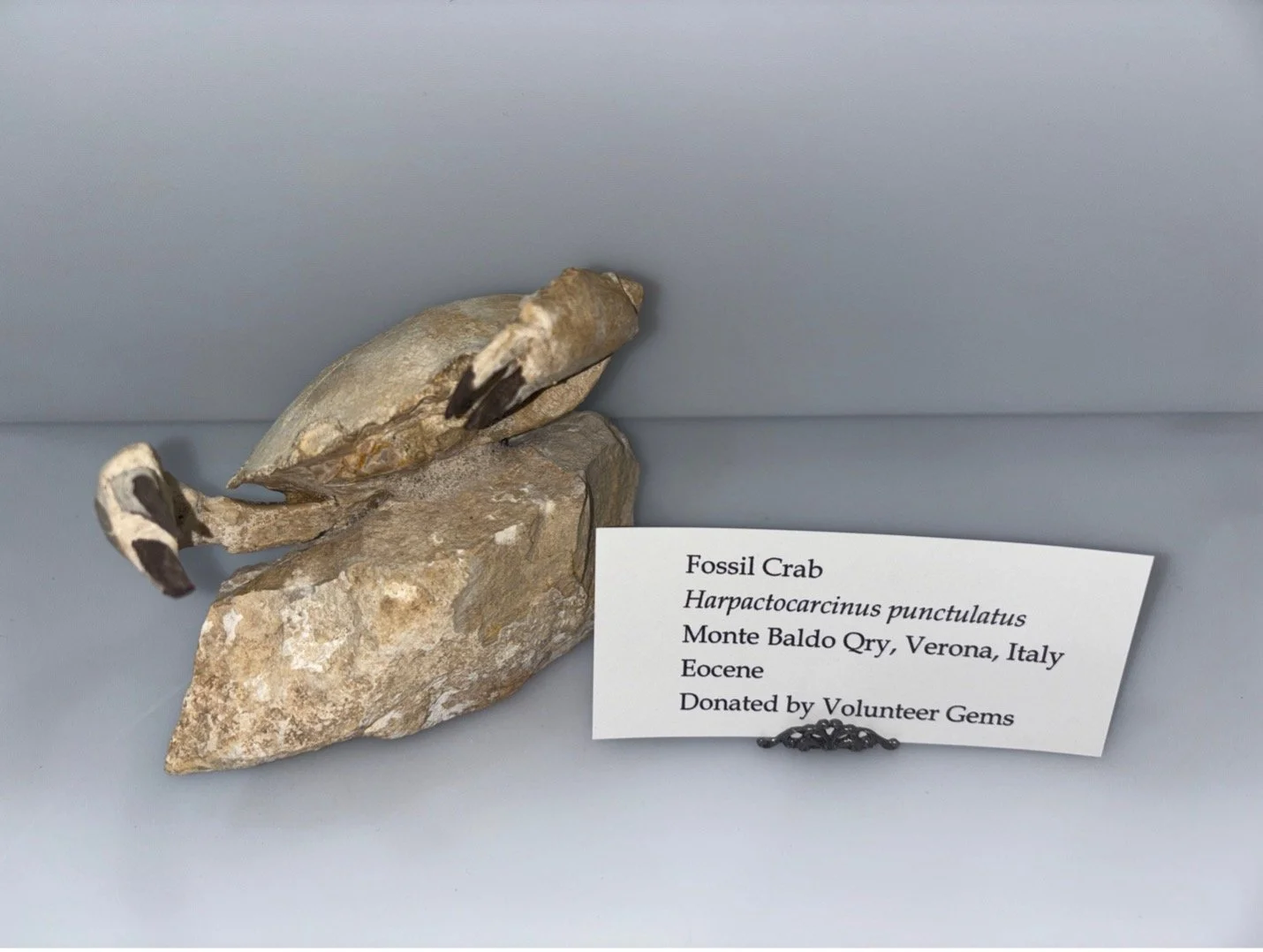
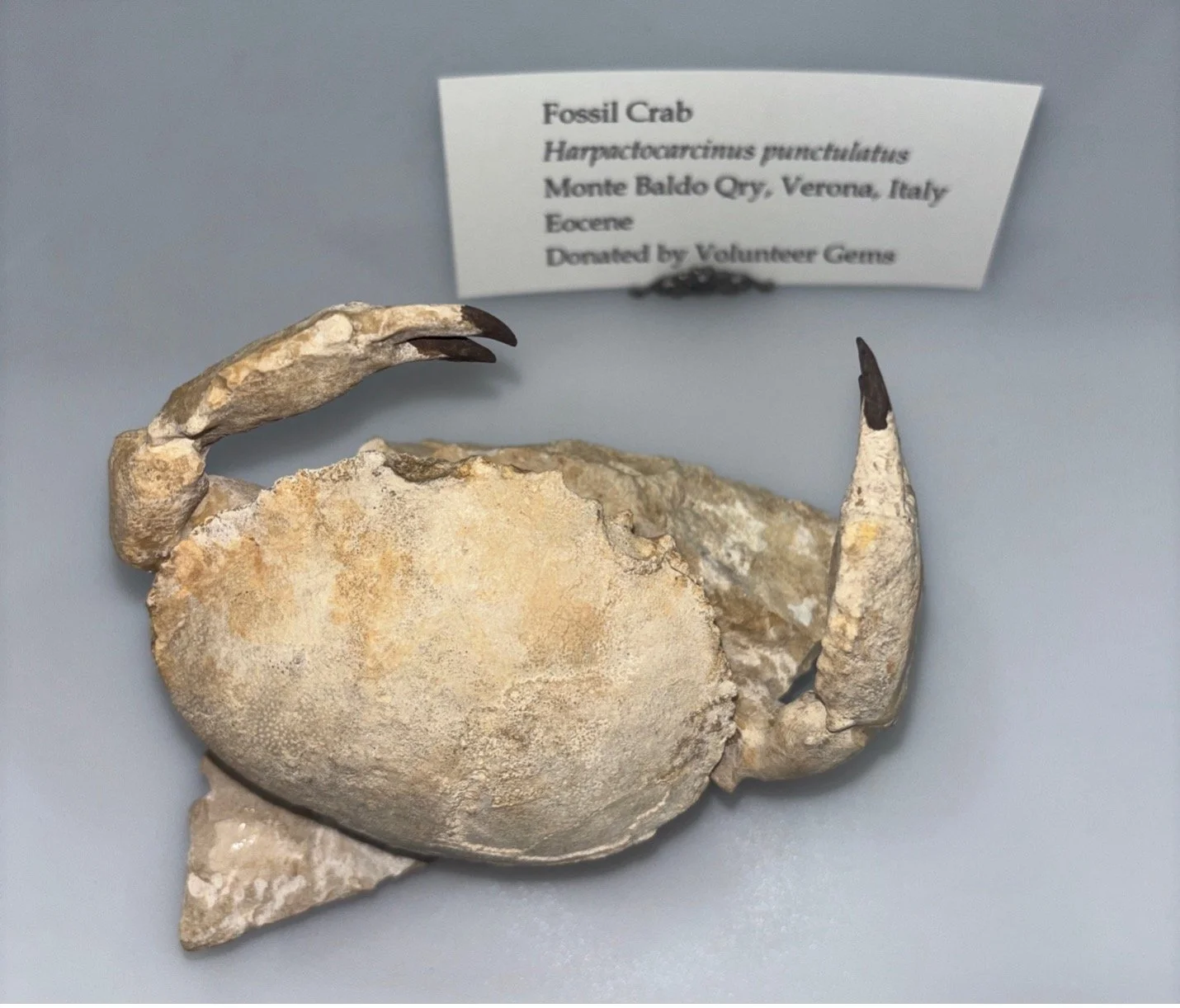
Harpactocarcinus punctulatus was a type of mud crab whose incredibly well-preserved fossils can be found in Europe and North America. These crabs fossilize astoundingly well because of their hard carapaces, which make their remains look a bit like statues instead of fossils.
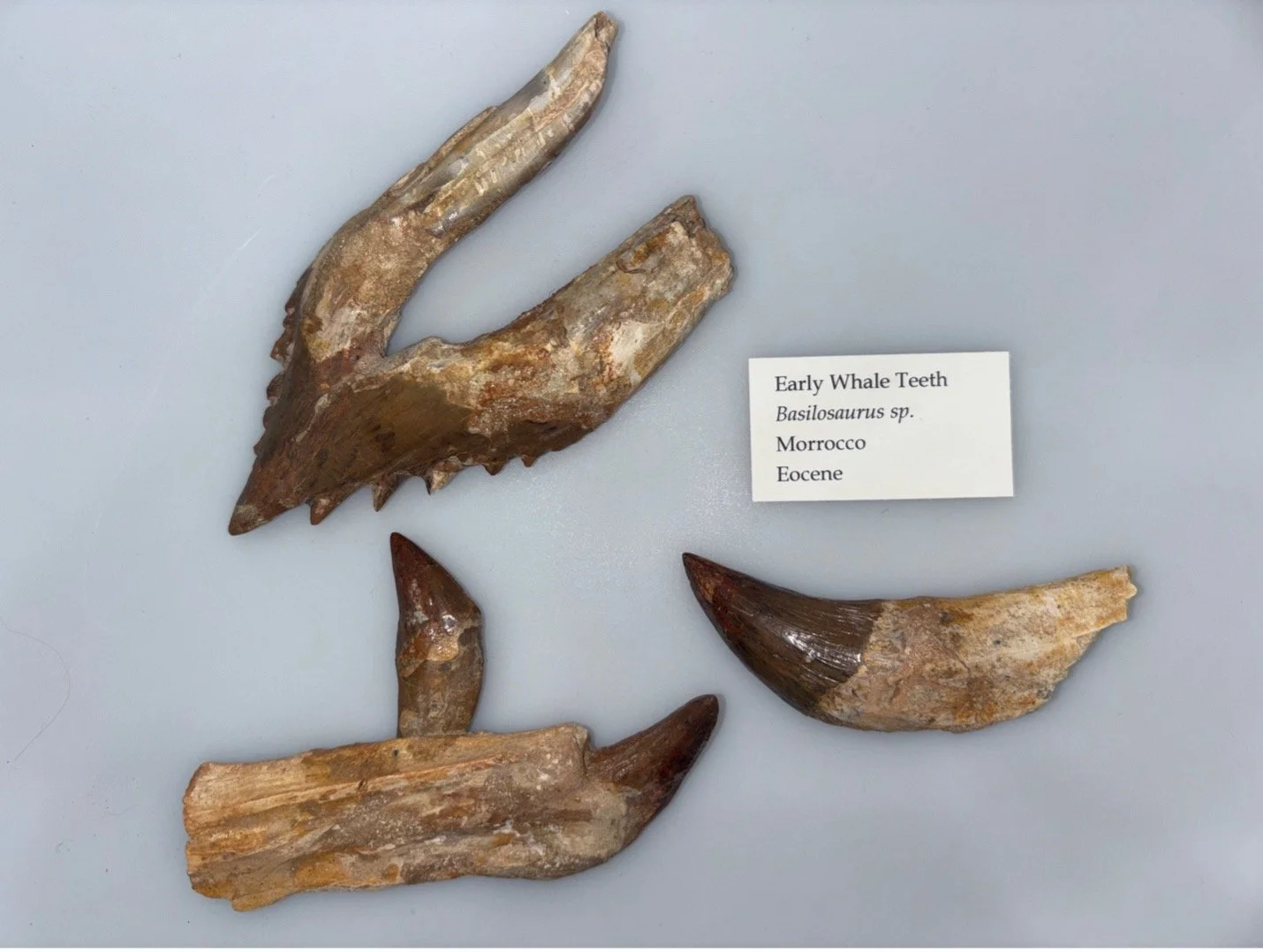
The Basilosaurus was an apex predator of the Eocene seas. It is known for its prominent and intimidating teeth, which it used to hunt fish, sharks, and likely marine mammals. The Basilosaurus was long and slender, ranging between about 50-65 feet full grown. An interesting feature of their anatomy was their vestigial hind legs, which were not even attached to the skeleton and completely useless to the whale itself. Those legs do however tell paleontologists more about whale evolution, proving that whales’ ancestors once walked on land before returning to the water.
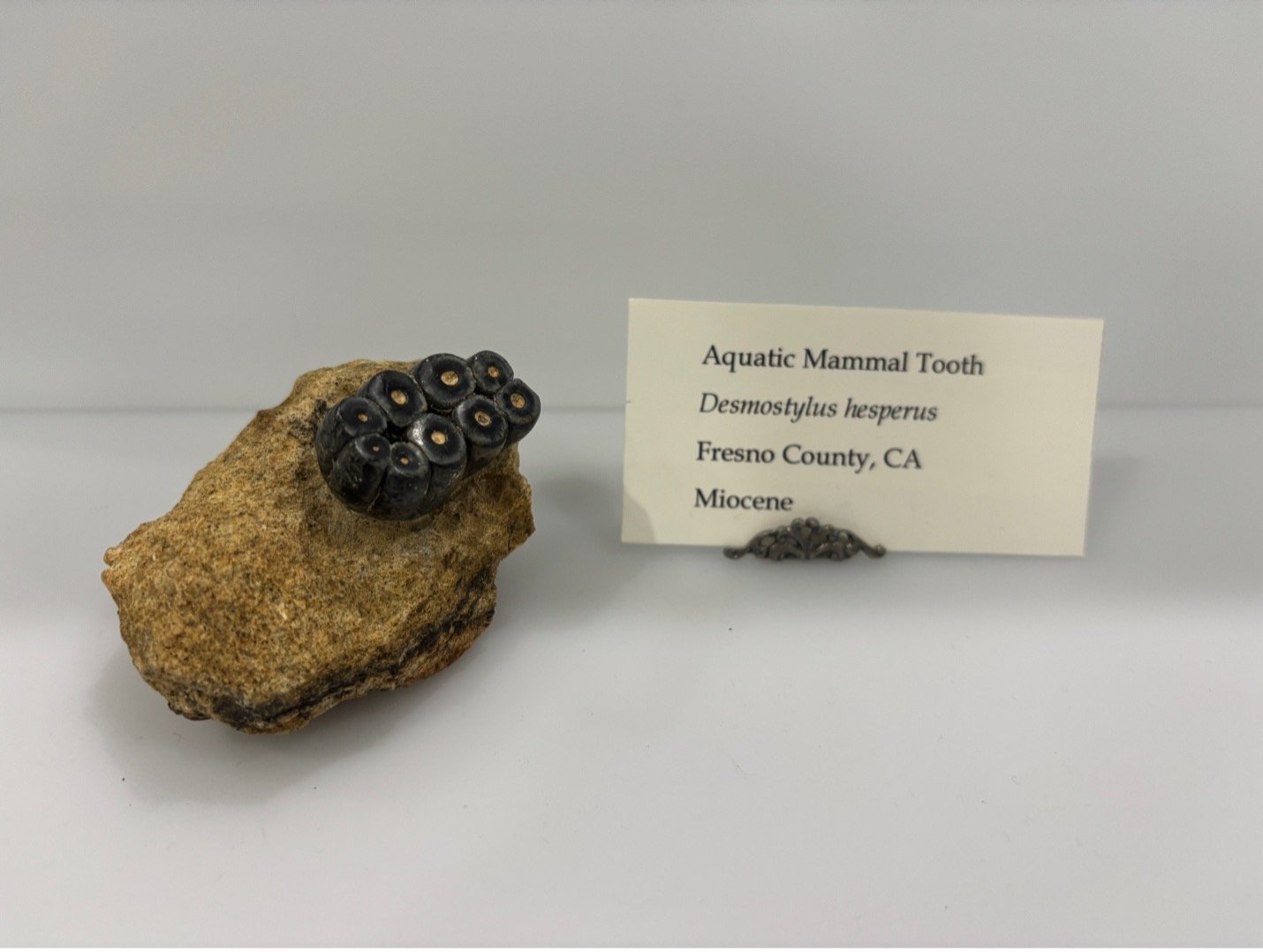
Desmostylus herspersus was bit like a hippopotamus, living all along the North Pacific Rim. They were herbivores who ate aquatic vegetation like seaweed. The Desmostylus is not a direct ancestor to any current living species, but they are distantly related to manatees, dugongs, and elephants.
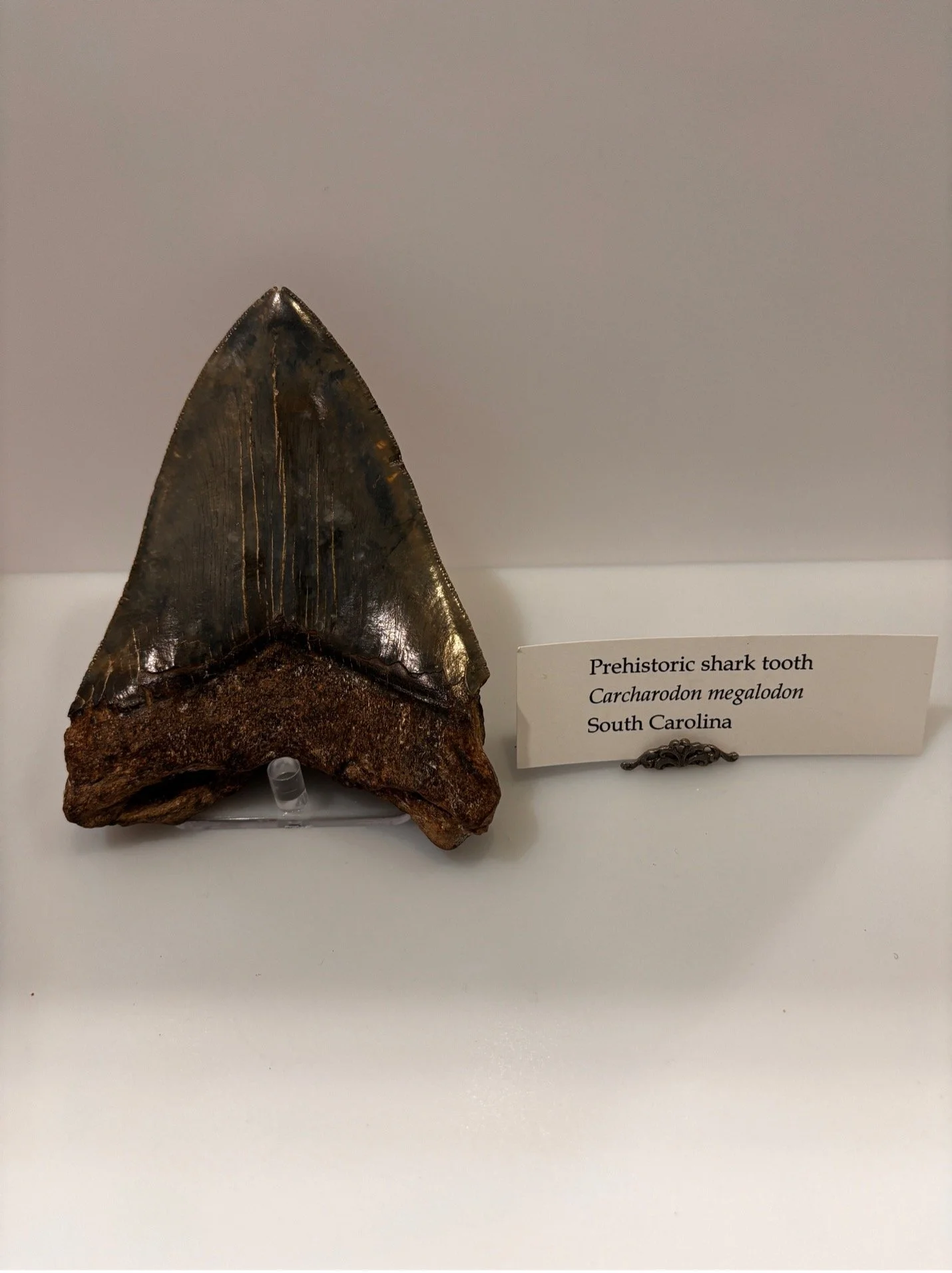
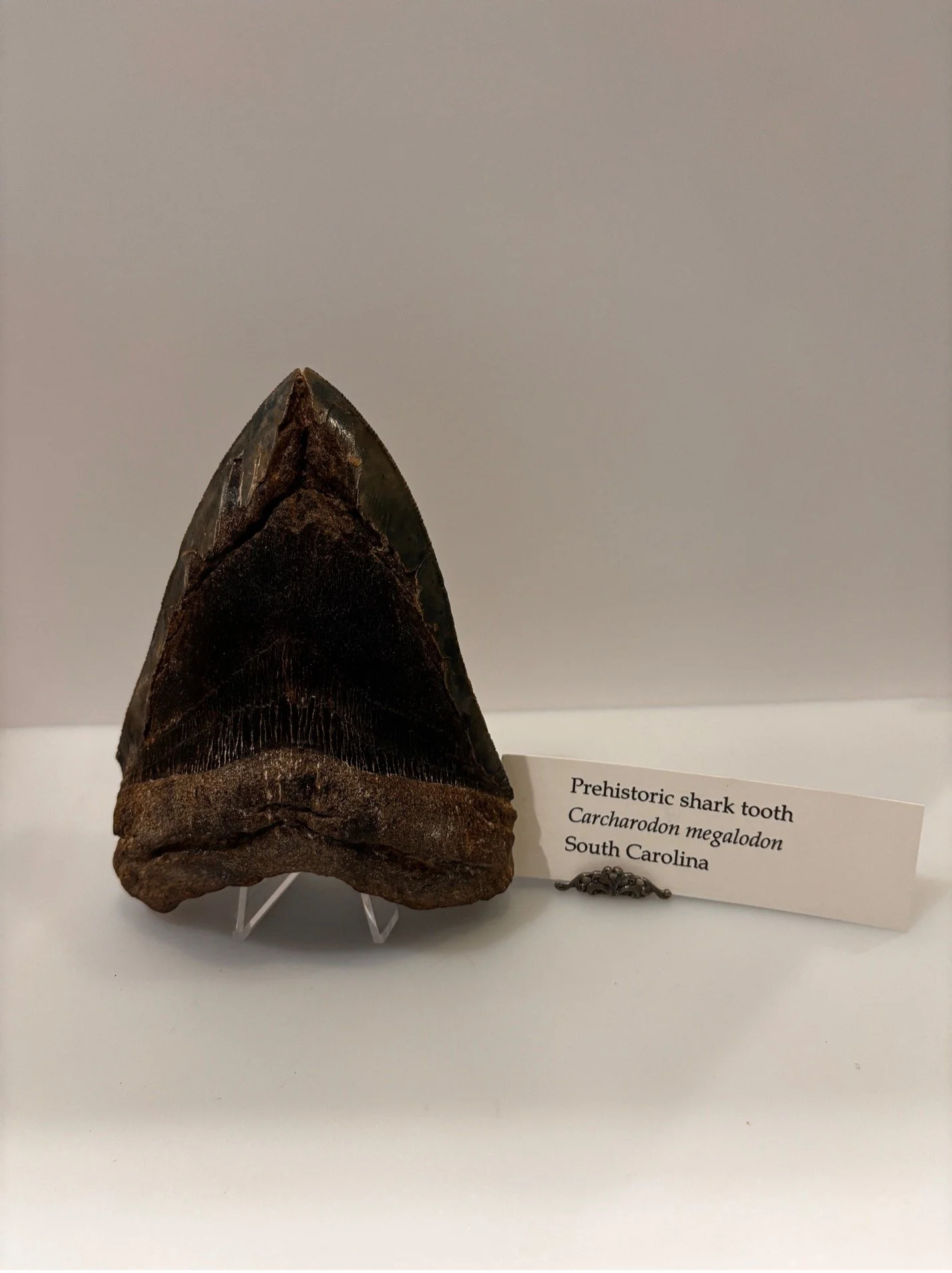
Megalodons were the largest shark to ever live, and one of the largest fishes. Our understanding of the Megalodon is limited, as most of its cartilaginous skeleton does not preserve like normal bone, therefore most size estimations come from comparing their tooth size with modern sharks. The current estimation places Megalodons at about 80 feet long (for reference, that’s about an entire lane at the bowling alley). Megalodons were wide spread across the planet’s oceans, and their teeth have been found washed up on every continent but Antarctica.
No results match your search. Try removing a few filters.