
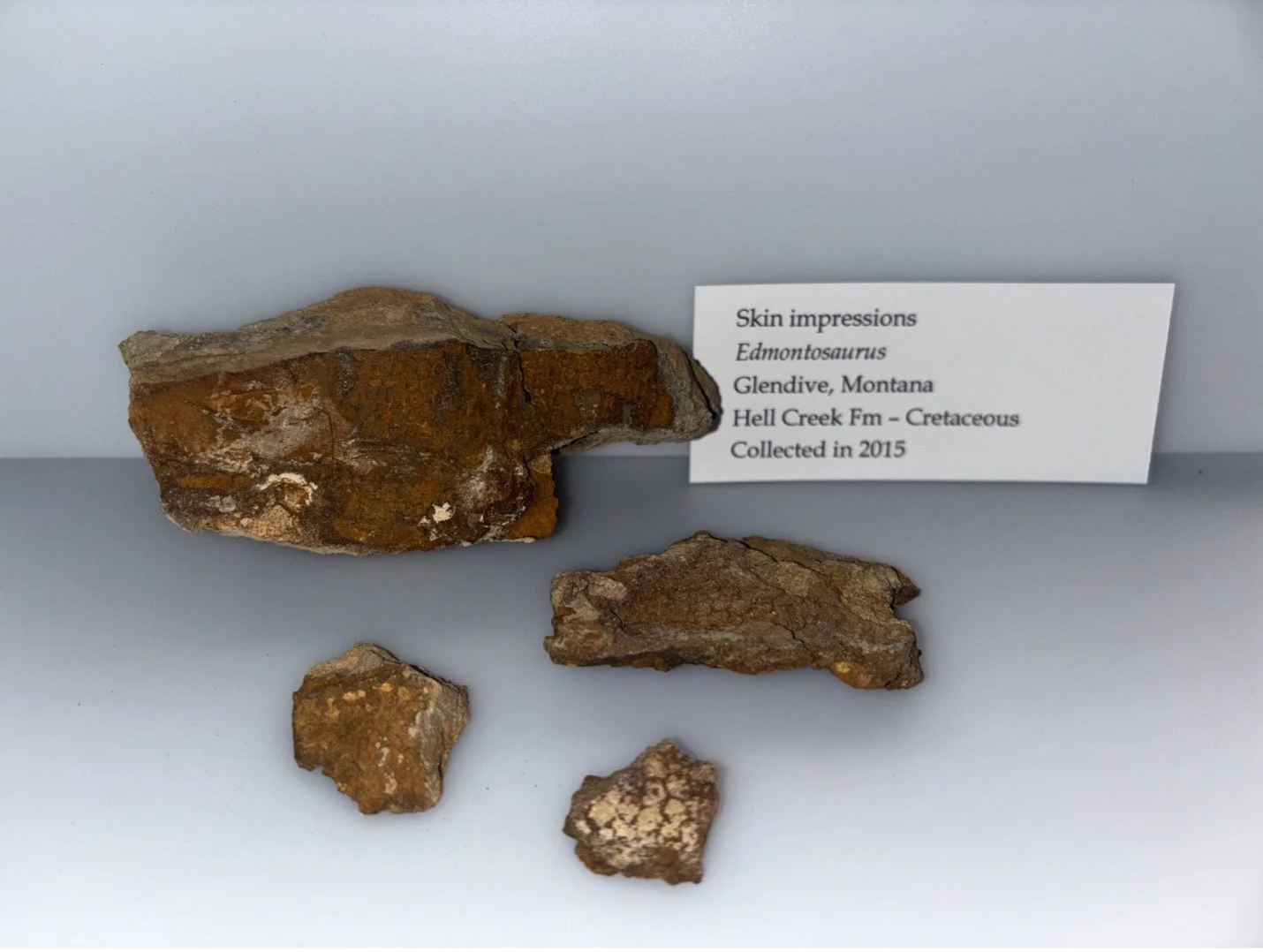
Hadrosaurs, often called “duck-billed dinosaurs”, were herbivorous herding dinosaurs that lived in North America, Europe, and Asia during the late Cretaceous period. Hadrosaurs were grazers and had ‘dental batteries’ or stores of new teeth that would replace the old ones as they wore down. Paleontologists have been able to study Hadrosaur skin impressions to descern that their skin was scaly and bumpy. Many hadrosaurs had large head crests, some of which having hollow chambers inside. Some scientists think that species like the Parasaurolophus used its hollow head crest to amplify verbalizations, creating a loud horn-like call. Hadrosaurs typically walked on all for legs, but they were able to stand up on the larger hind legs at will.
Hadrosaurs, often called “duck-billed dinosaurs”, were herbivorous herding dinosaurs that lived in North America, Europe, and Asia during the late Cretaceous period. Hadrosaurs were grazers and had ‘dental batteries’ or stores of new teeth that would replace the old ones as they wore down. Paleontologists have been able to study Hadrosaur skin impressions to descern that their skin was scaly and bumpy. Many hadrosaurs had large head crests, some of which having hollow chambers inside. Some scientists think that species like the Parasaurolophus used its hollow head crest to amplify verbalizations, creating a loud horn-like call. Hadrosaurs typically walked on all for legs, but they were able to stand up on the larger hind legs at will.