
Whip-tail Stingray (Eocene)
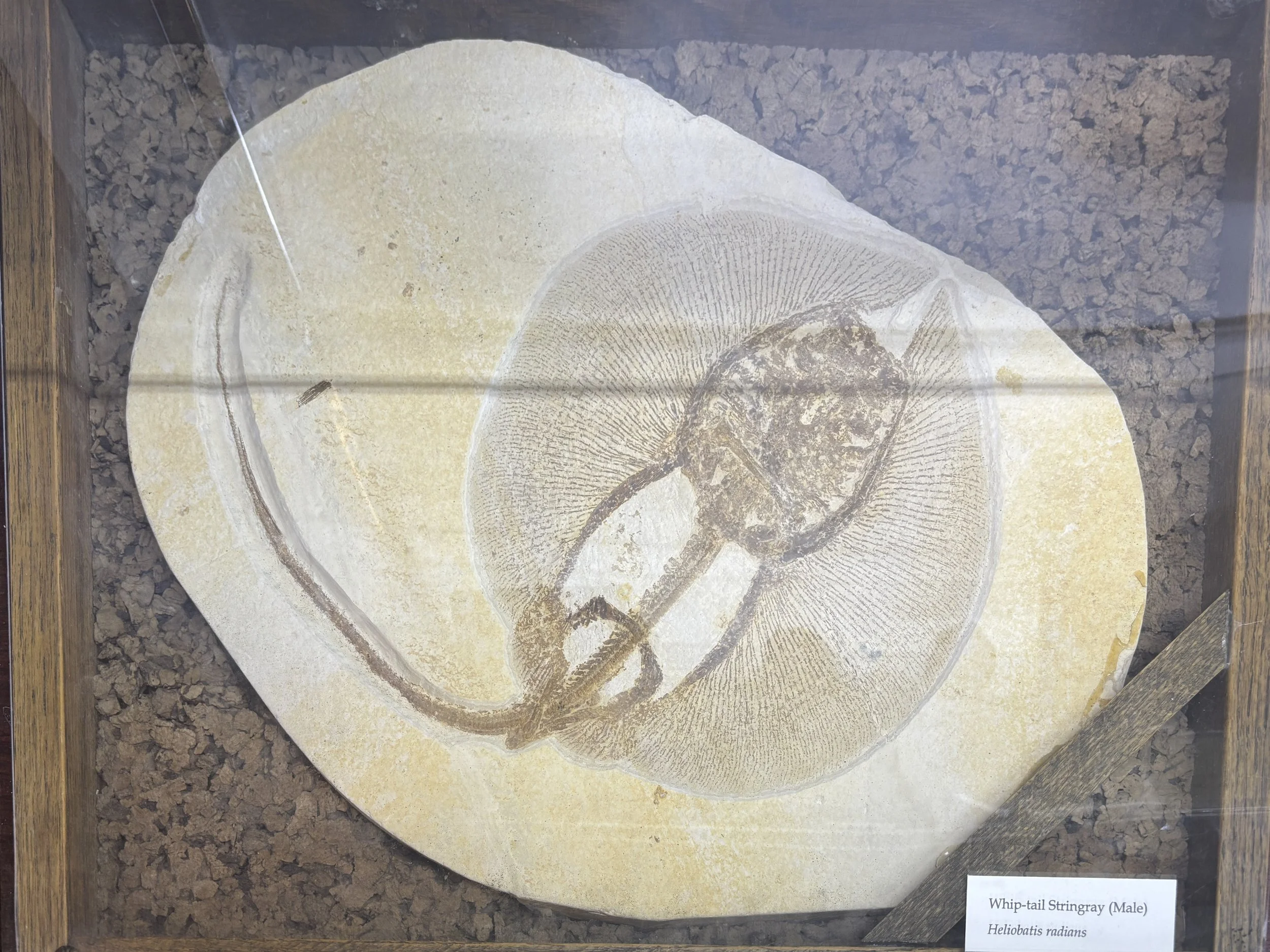
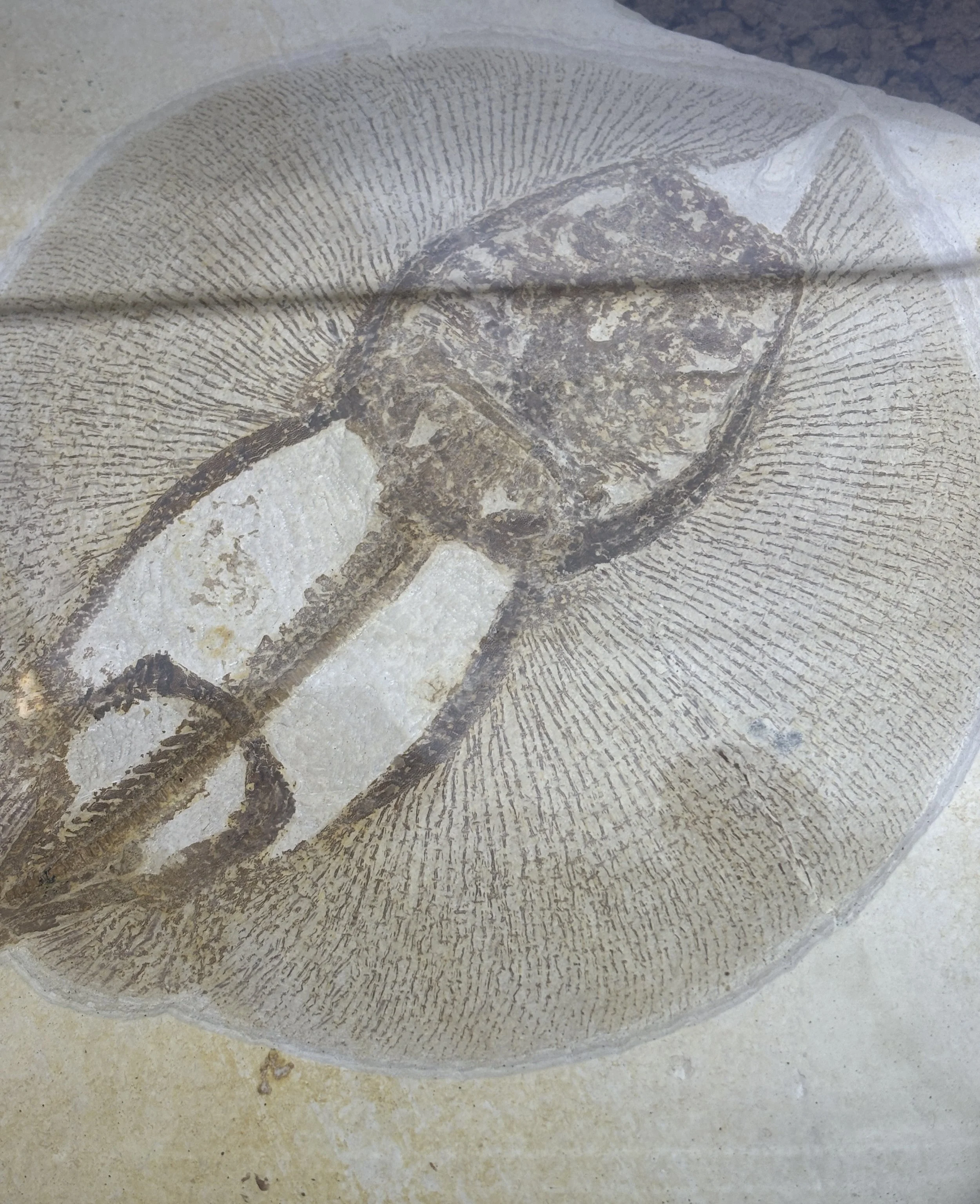
Heliobatis radians was a freshwater stingray found exclusively in the fossil lakebeds of the Green River Formation in the Western United States. Like modern marine stingray species, Heliobatis radians has a flat body and barbed stingers on their long tails for defense. When not searching for food, these stingrays buried themselves in the fine-grained mud at the bottom of the lakes, which served to preserve a handful of these unique stingrays. The conditions for preservation were so optimal that even the radial pattern of their fin supports are sometimes present in the fossils. This striking pattern provided inspiration for their name, “Heliobatis”, which translates to “sun rays” in latin.
Whip-tail Stingray (Eocene)
Heliobatis radians was a freshwater stingray found exclusively in the fossil lakebeds of the Green River Formation in the Western United States. Like modern marine stingray species, Heliobatis radians has a flat body and barbed stingers on their long tails for defense. When not searching for food, these stingrays buried themselves in the fine-grained mud at the bottom of the lakes, which served to preserve a handful of these unique stingrays. The conditions for preservation were so optimal that even the radial pattern of their fin supports are sometimes present in the fossils. This striking pattern provided inspiration for their name, “Heliobatis”, which translates to “sun rays” in latin.