
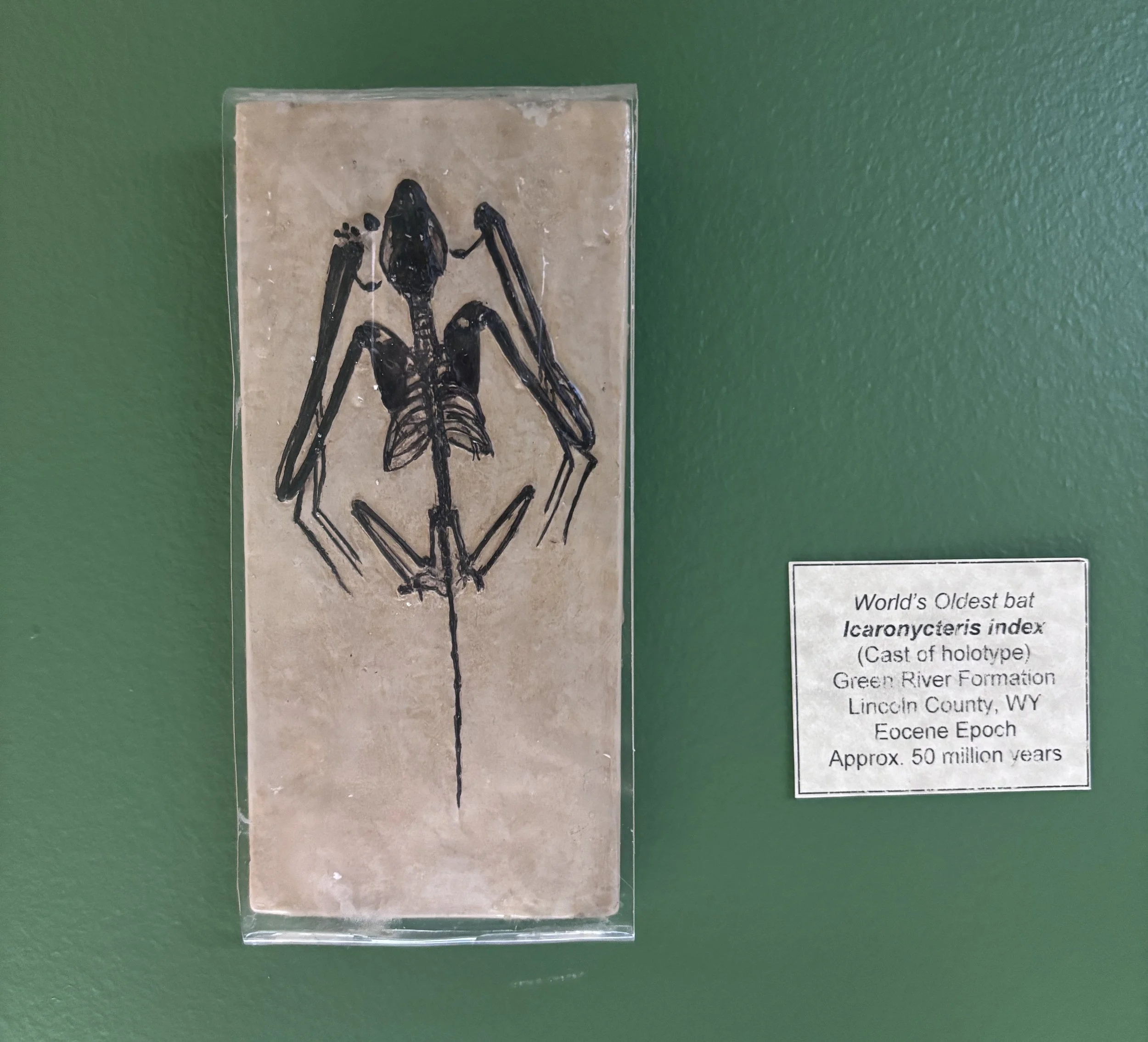
Icaronycteris index is an extinct species of bat that is found exclusively in the Green River Formation in the American West. The genus Icaronycteris contains the oldest species of bats ever found (about 50 million years old) and has been instrumental in teaching us about the evolution of bats. Because bat bones are lightweight and delicate, there are currently no complete specimens of older relatives of the Icaronycteris index (and the slightly older Icaronycteris gunnelli), which shrouds the bat lineage in mystery. The fine grain of the Green River Formation’s sediment has allowed for a few complete preserved skeletons of these early bats, and hopefully their prior lineage will be discovered in future excavations.
What is known is that these first true bats were small, used echolocation to hunt insects in midair, had long tails, a claw on their thumb and index ‘fingers’, and had membranous wings.
Icaronycteris index is an extinct species of bat that is found exclusively in the Green River Formation in the American West. The genus Icaronycteris contains the oldest species of bats ever found (about 50 million years old) and has been instrumental in teaching us about the evolution of bats. Because bat bones are lightweight and delicate, there are currently no complete specimens of older relatives of the Icaronycteris index (and the slightly older Icaronycteris gunnelli), which shrouds the bat lineage in mystery. The fine grain of the Green River Formation’s sediment has allowed for a few complete preserved skeletons of these early bats, and hopefully their prior lineage will be discovered in future excavations.
What is known is that these first true bats were small, used echolocation to hunt insects in midair, had long tails, a claw on their thumb and index ‘fingers’, and had membranous wings.