
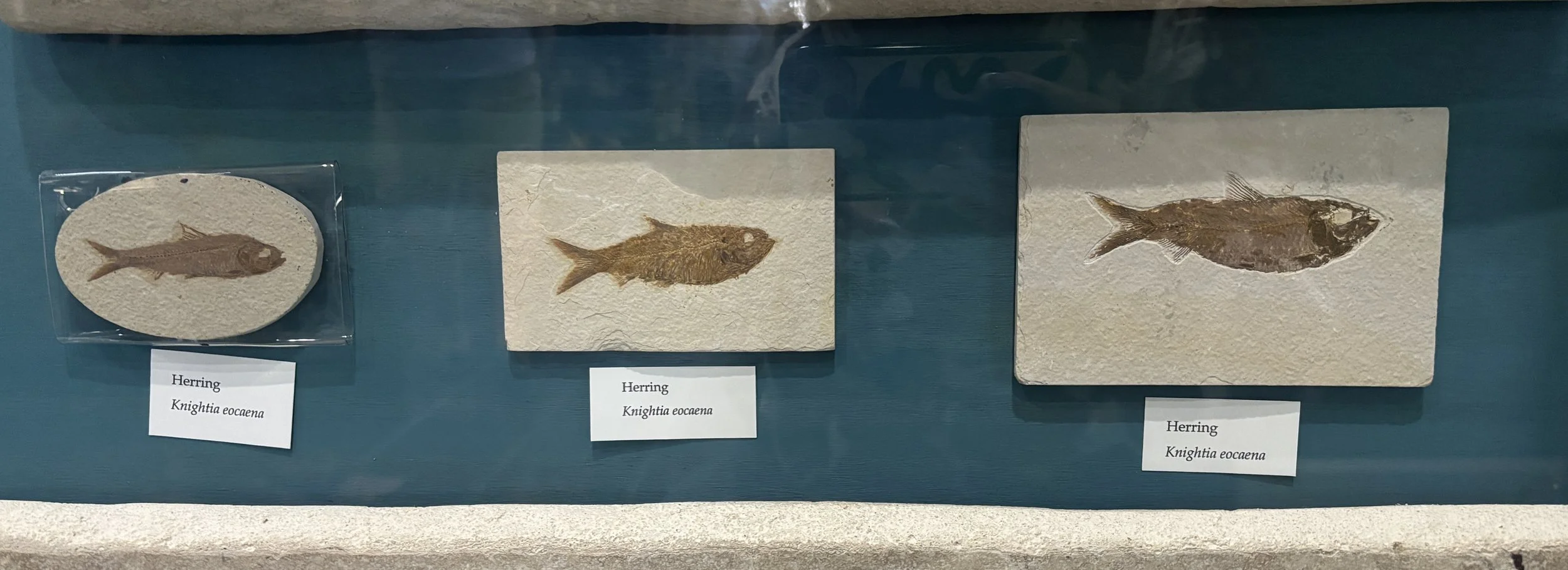
Knightia eocaena were small (typically 3 to 6 inches long) schooling fish whose fossils are largely found in the Green River Formation of the Western United States. Knightia eocaena were an integral part of the ecology of the region during the Eocene as they were the primary prey item for larger fish like Diplomystus dentatus as well as the various birds, snakes, and turtles that lived in or near the lakes. As such, their fossils are plentiful in the rock quarries of the Green River Formation and easily accessible for fossil collectors. Modern relatives of the Knightia eocaena like herring, sardines, and shads remain vital to commercial fish markets and marine food chains.
Knightia eocaena were small (typically 3 to 6 inches long) schooling fish whose fossils are largely found in the Green River Formation of the Western United States. Knightia eocaena were an integral part of the ecology of the region during the Eocene as they were the primary prey item for larger fish like Diplomystus dentatus as well as the various birds, snakes, and turtles that lived in or near the lakes. As such, their fossils are plentiful in the rock quarries of the Green River Formation and easily accessible for fossil collectors. Modern relatives of the Knightia eocaena like herring, sardines, and shads remain vital to commercial fish markets and marine food chains.