
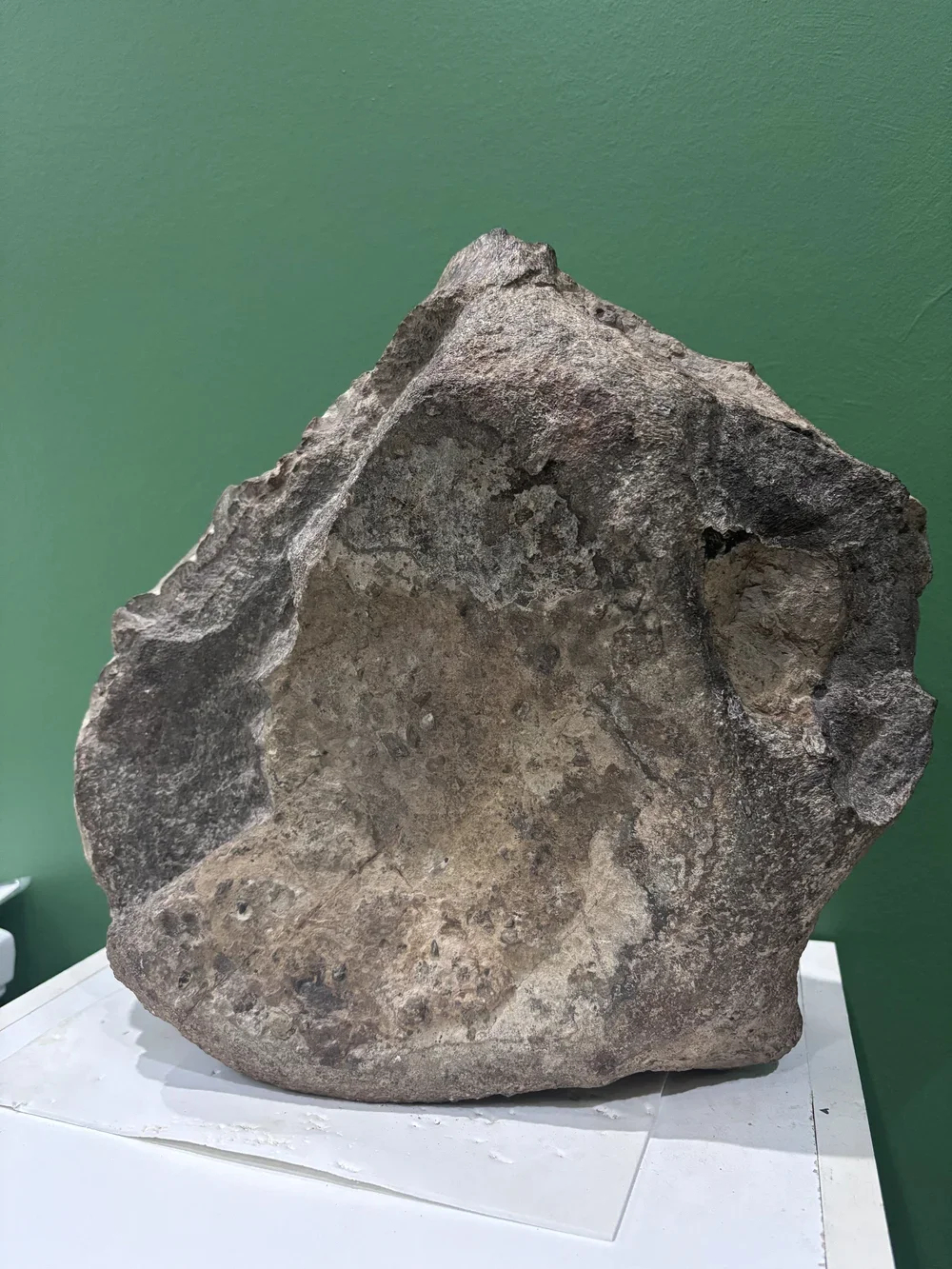
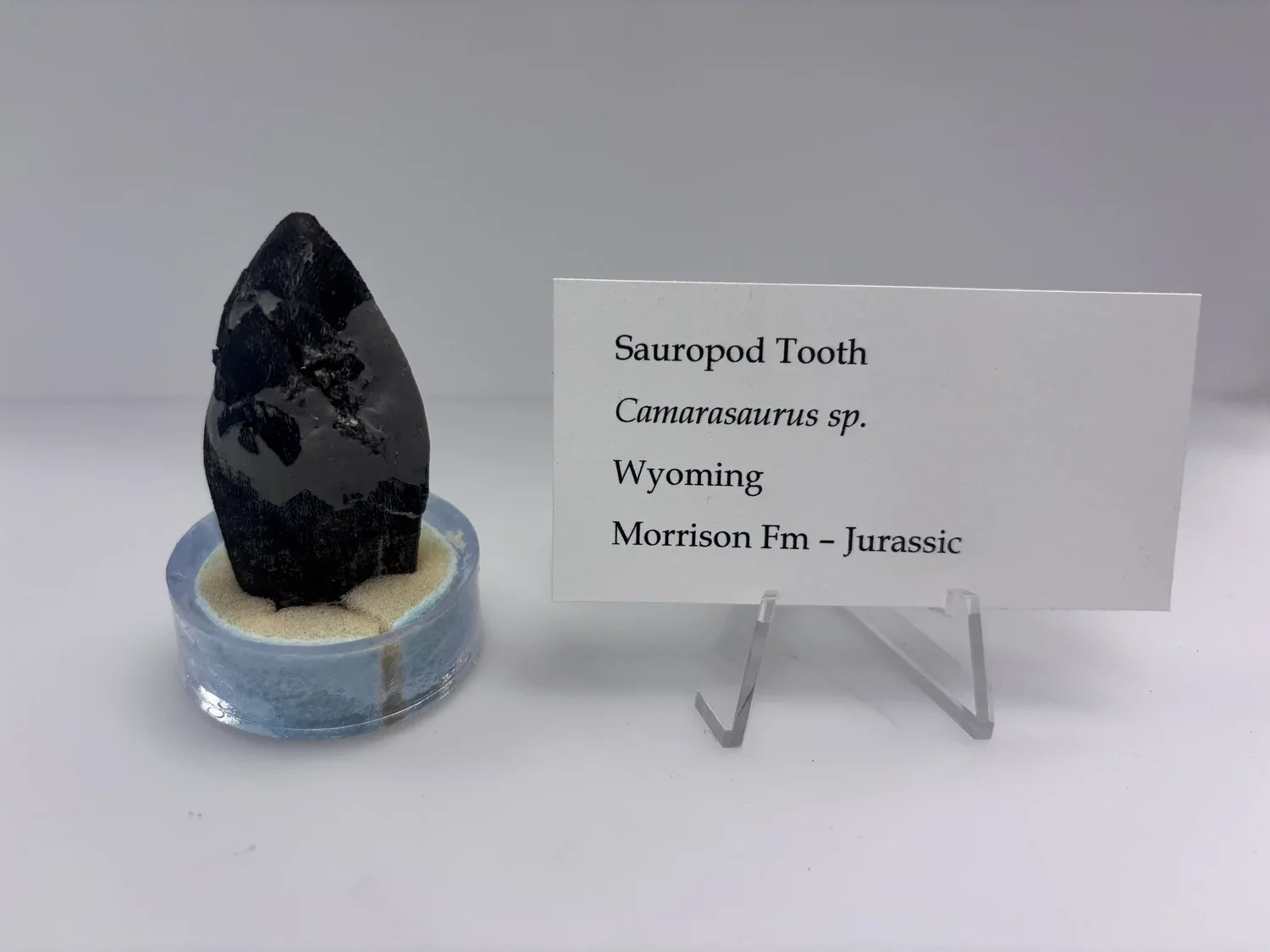
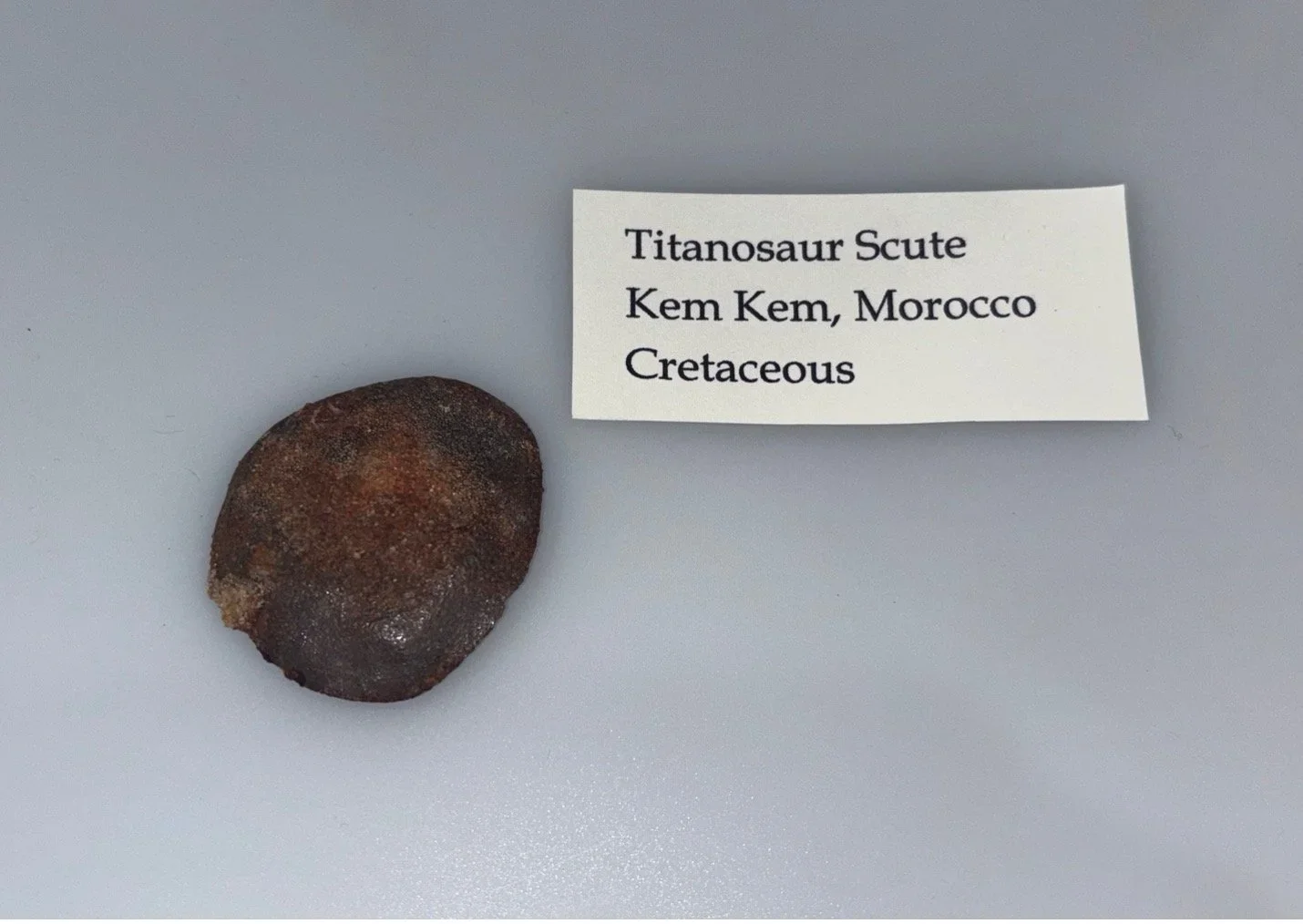
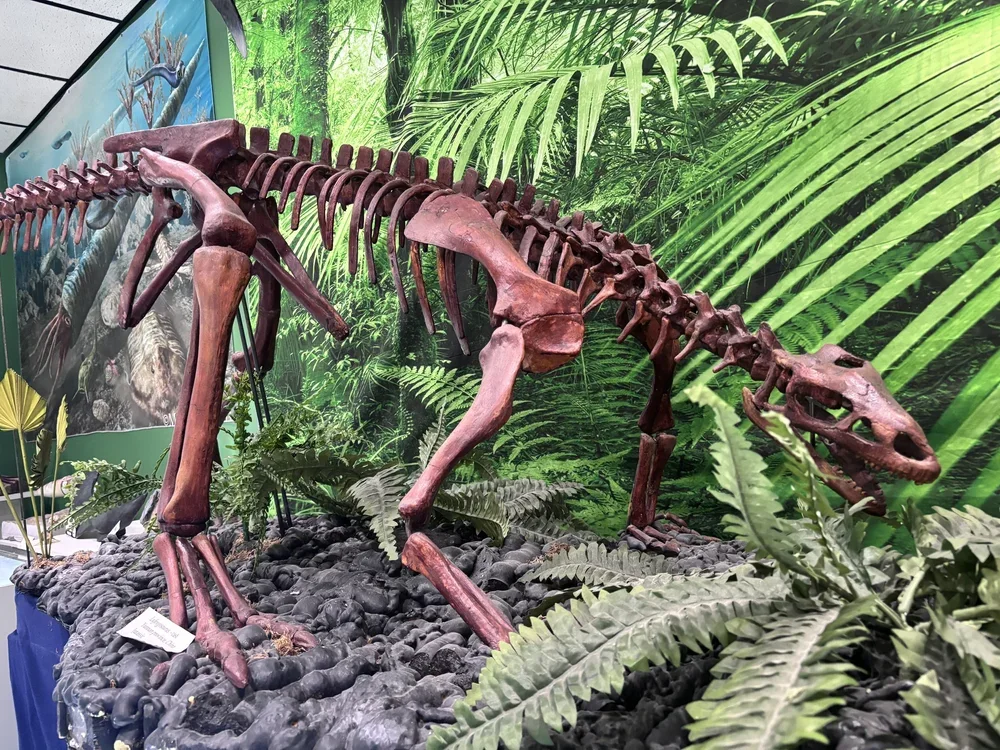
The Sauropod family is mainly comprised of quadrupedal (walking on four feet), slow moving, long-necked dinosaurs. Sauropods are known for their calm and generally pacifistic demeanor, and were generally herbivorous. Sauropods species came in a wide range of sizes from the diminutive Ohmdenosaurus, which only grew about 13 feet long to the biggest of the Titanosaurs like the Patagotitan mayorum which grew up to a whopping 121 feet long (that’s longer than a blue whale).
Sauropods were big eaters, requiring literal tons of fresh vegetation per day to survive. Their long necks allowed them to reach leaves from tall trees and low growing shrubbery before swallowing their food without stopping to chew it. Their long necks also helped them keep an eye out for predators. Fossil evidence also suggests that sauropods moved in herds and utilized a somewhat complex social structure arranged by age. A site of Mussaurus patagonicus fossils showed evidence of communal egg-laying grounds as well as proof that juveniles congregated into ‘schools’ while adults grazed near the herd alone or in pairs.
The Sauropod family is mainly comprised of quadrupedal (walking on four feet), slow moving, long-necked dinosaurs. Sauropods are known for their calm and generally pacifistic demeanor, and were generally herbivorous. Sauropods species came in a wide range of sizes from the diminutive Ohmdenosaurus, which only grew about 13 feet long to the biggest of the Titanosaurs like the Patagotitan mayorum which grew up to a whopping 121 feet long (that’s longer than a blue whale).
Sauropods were big eaters, requiring literal tons of fresh vegetation per day to survive. Their long necks allowed them to reach leaves from tall trees and low growing shrubbery before swallowing their food without stopping to chew it. Their long necks also helped them keep an eye out for predators. Fossil evidence also suggests that sauropods moved in herds and utilized a somewhat complex social structure arranged by age. A site of Mussaurus patagonicus fossils showed evidence of communal egg-laying grounds as well as proof that juveniles congregated into ‘schools’ while adults grazed near the herd alone or in pairs.