
Fossil Collection Search
Check out our collection! Filter through time period and other categories and click on entries to learn more about them.
Check out our collection! Filter through time period and other categories and click on entries to learn more about them.
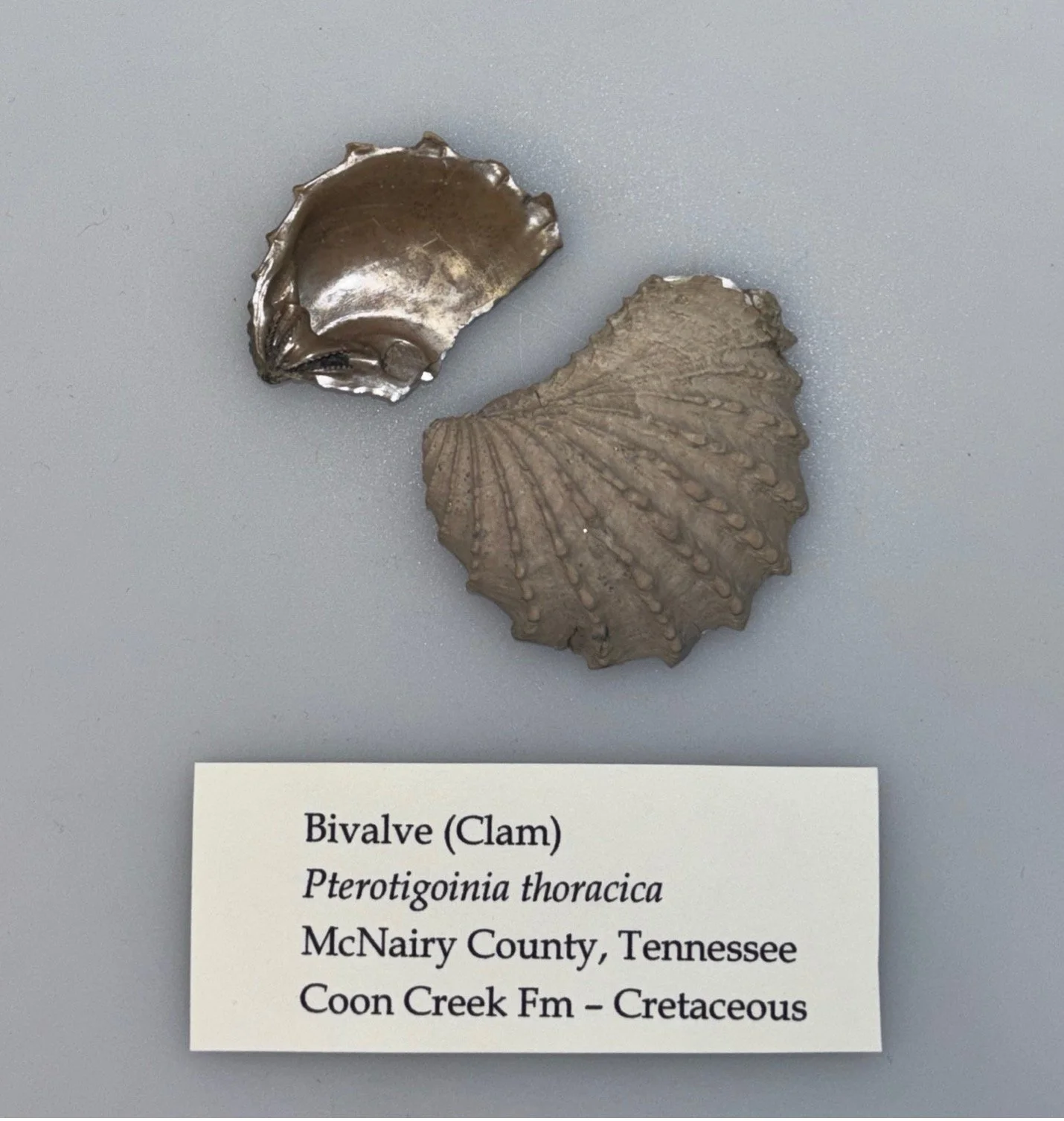
Did you know Tennessee has a state fossil? Pterotrigonia thoracica was a bivalve that lived in the shallow seas that covered much of the middle of North America during the Cretaceous (Western Interior Seaway). Pterotrigonia thoracica was chosen as the state fossil due to its abundant fossils found in the Coon Creek Formation in West Tennessee.
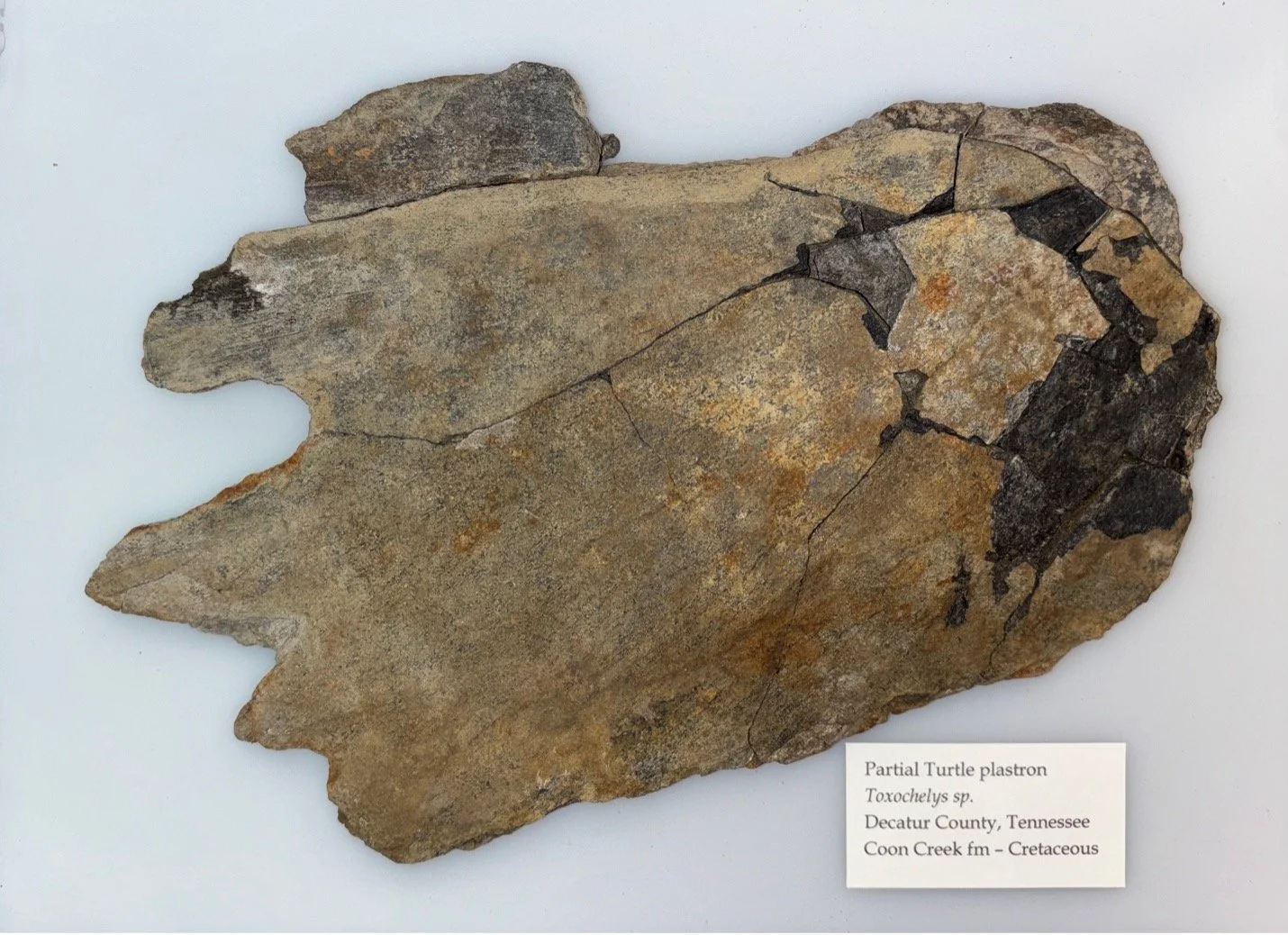
Toxochelys was a genus of sea turtle that live in the Western Interior Seaway, and its fossils are found in the United States and Canada. Toxochelys lived a similar life as modern sea turtles, feeding mostly on jellyfish, squids, mollusks, crustaceans, and marine vegetation. However, Toxochelys was larger, growing up to 6 feet in length.
This specimen was found by museum staff in the Coon Creek Formation in Tennessee.
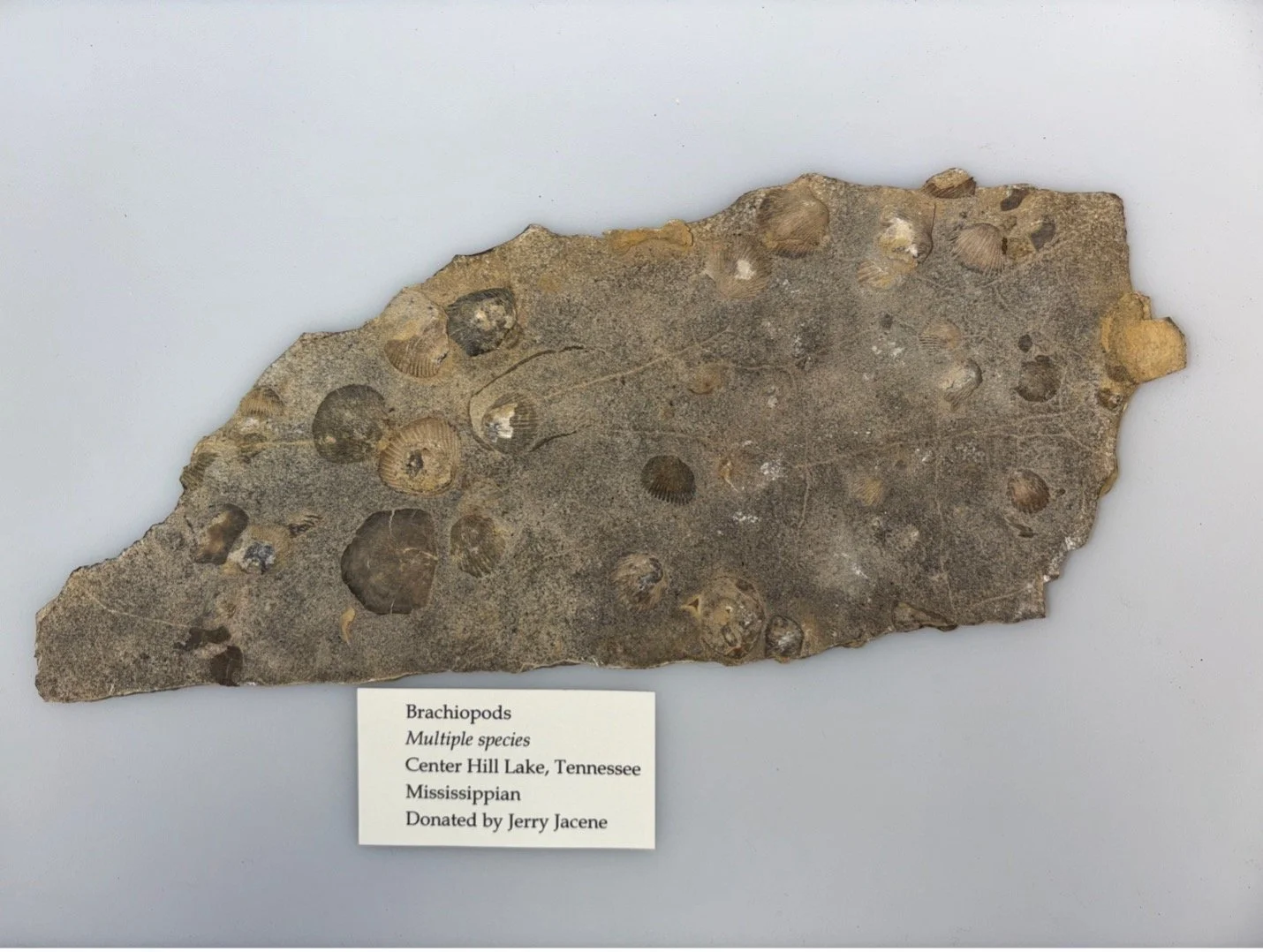
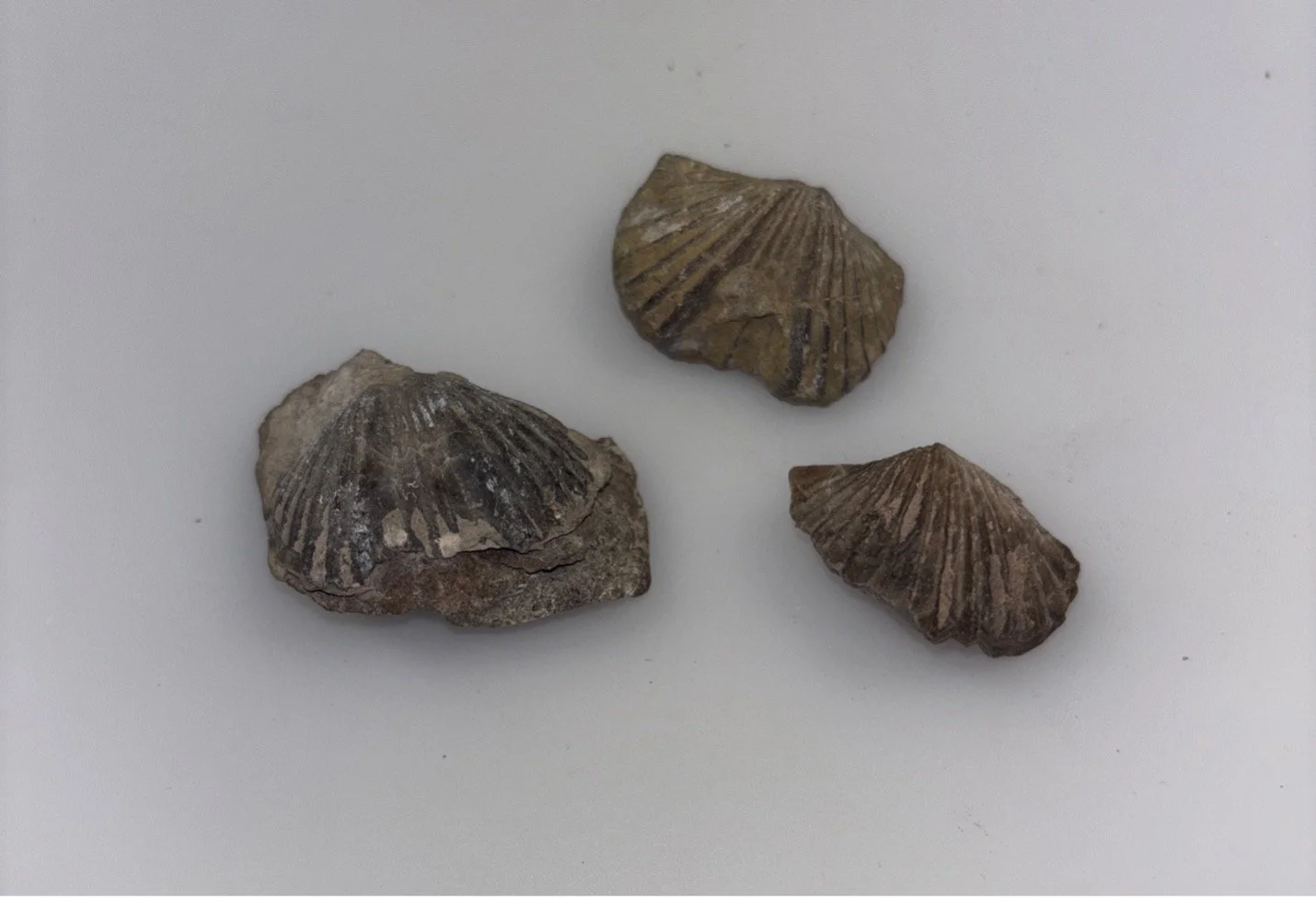
Brachiopods (Cambrian – Present)
Brachiopods are aquatic soft-bodied invertebrates who typically live inside a symmetrical two-halved shell. Though similar to bivalves in design, Brachiopods are deceptively unique, belonging to their own phylum, Brachiopoda. Brachiopods are generally stationary and are typically anchored in one spot, relying on filter feeding.
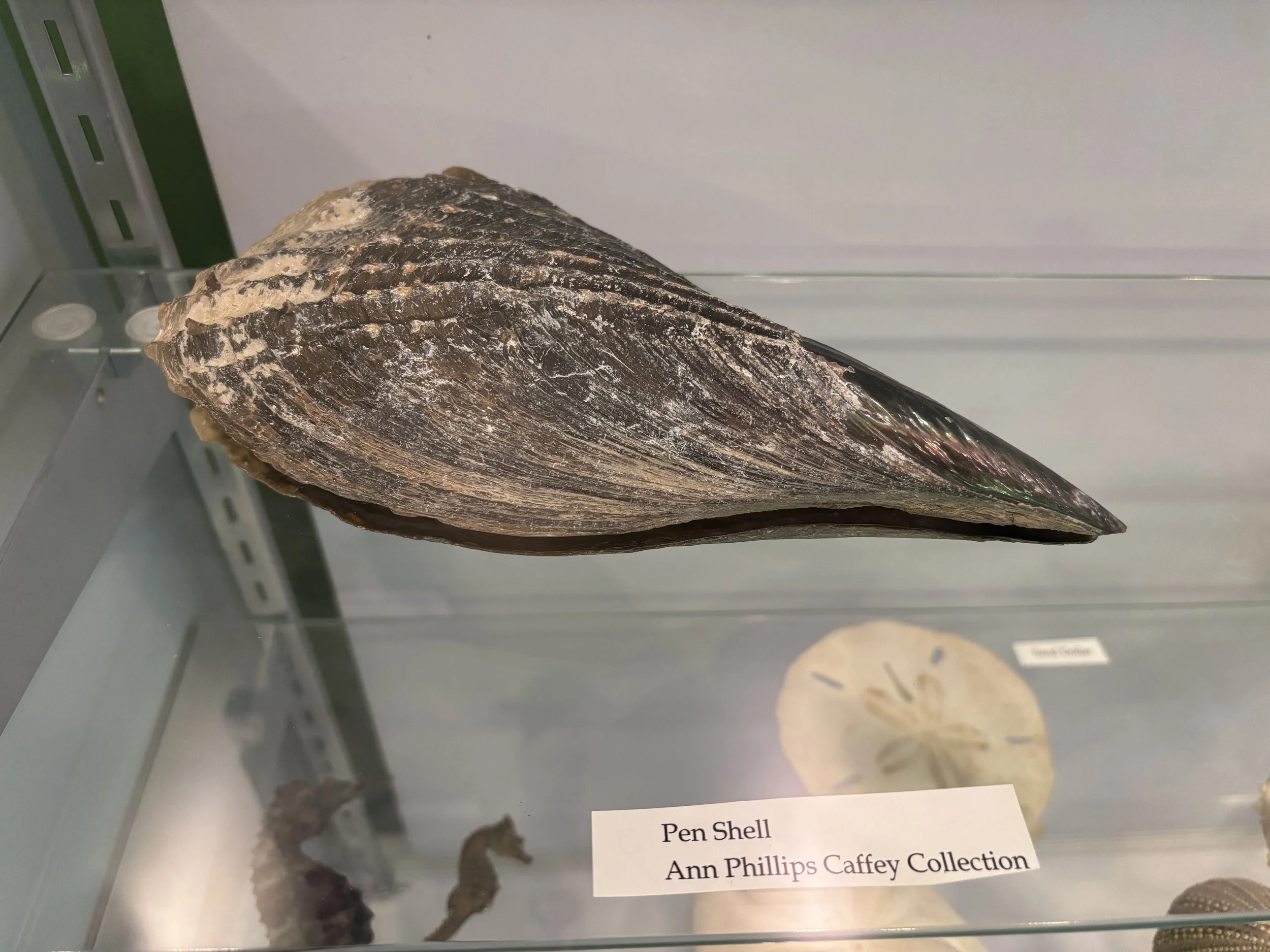
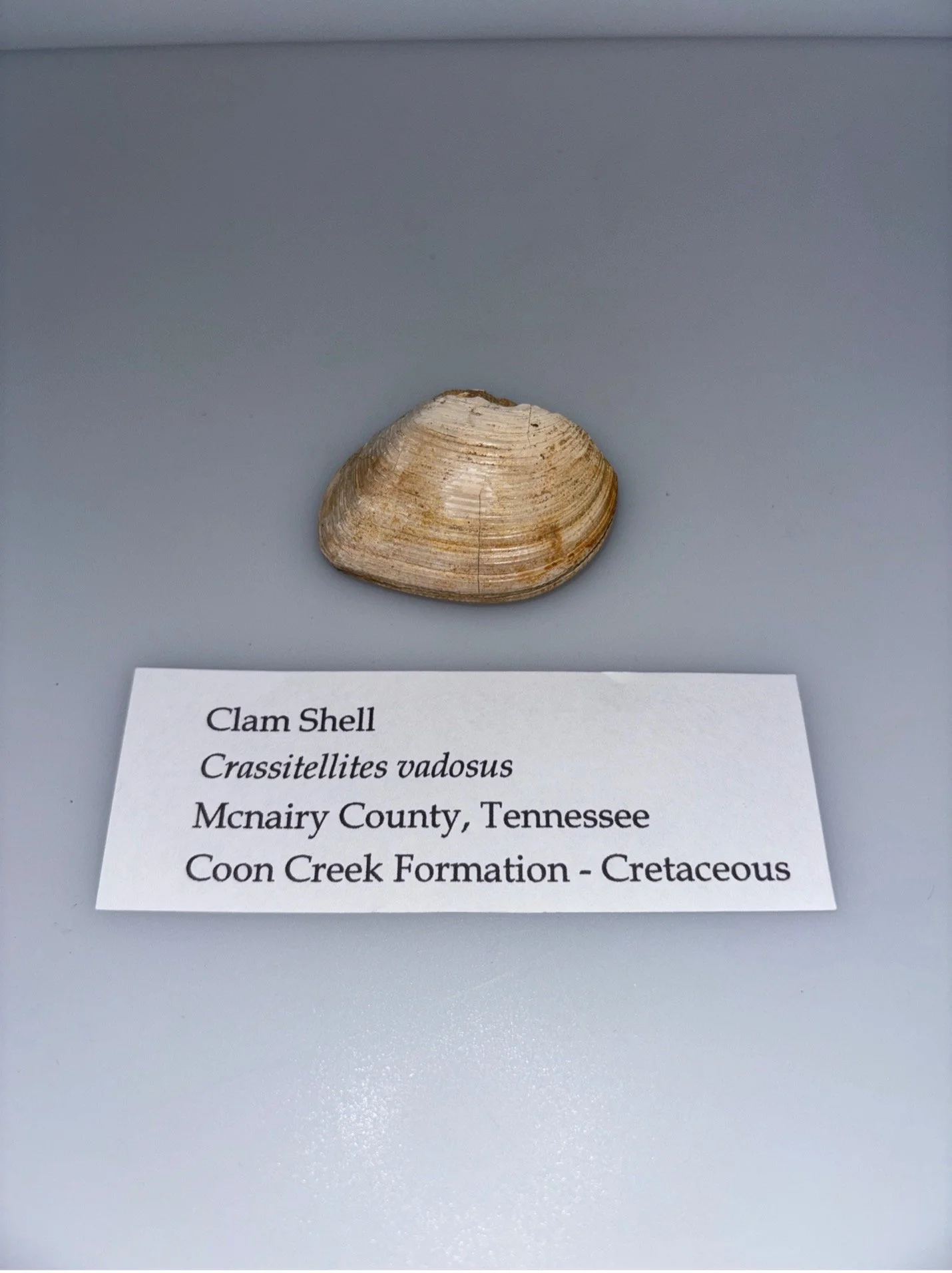
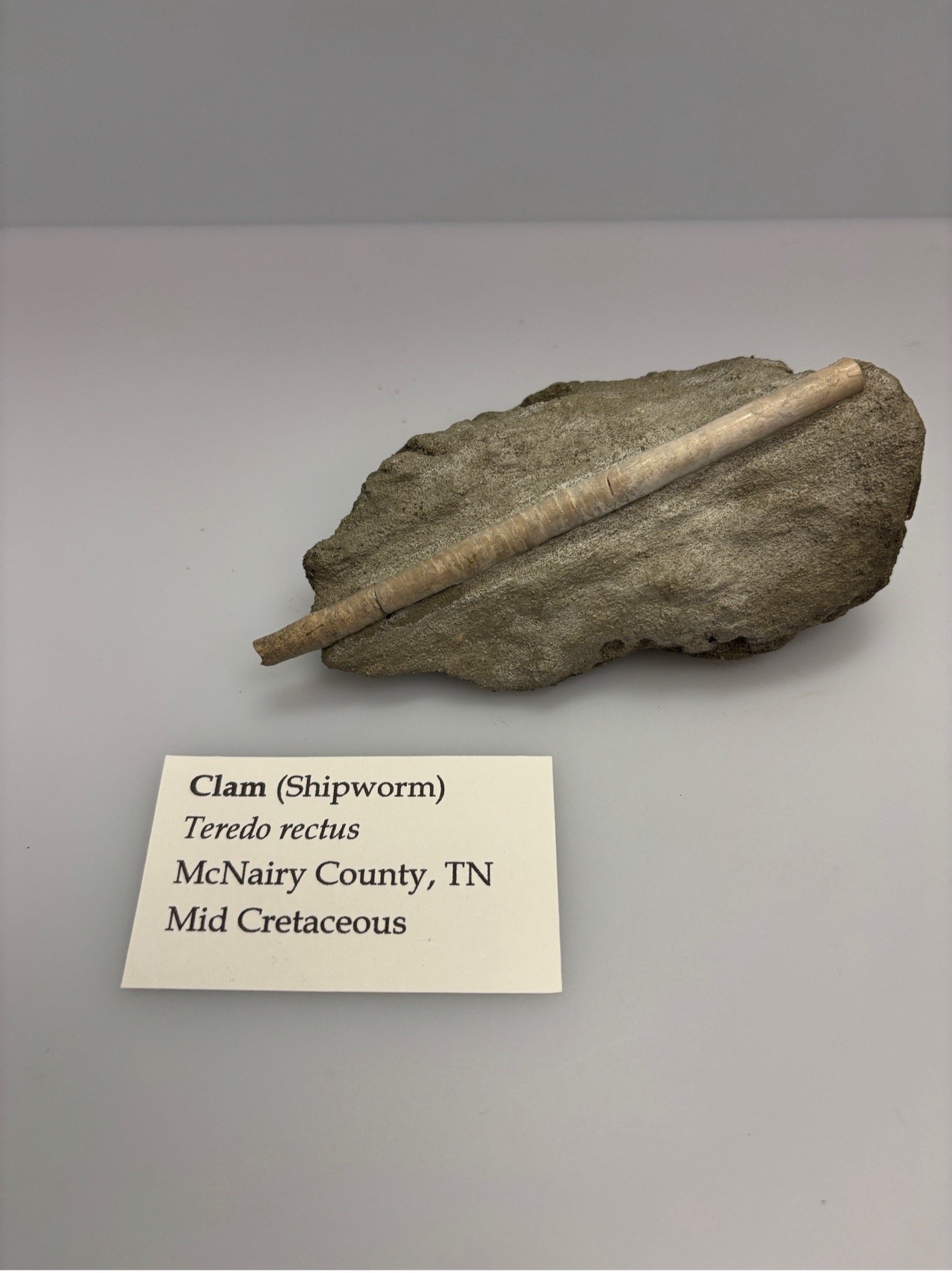
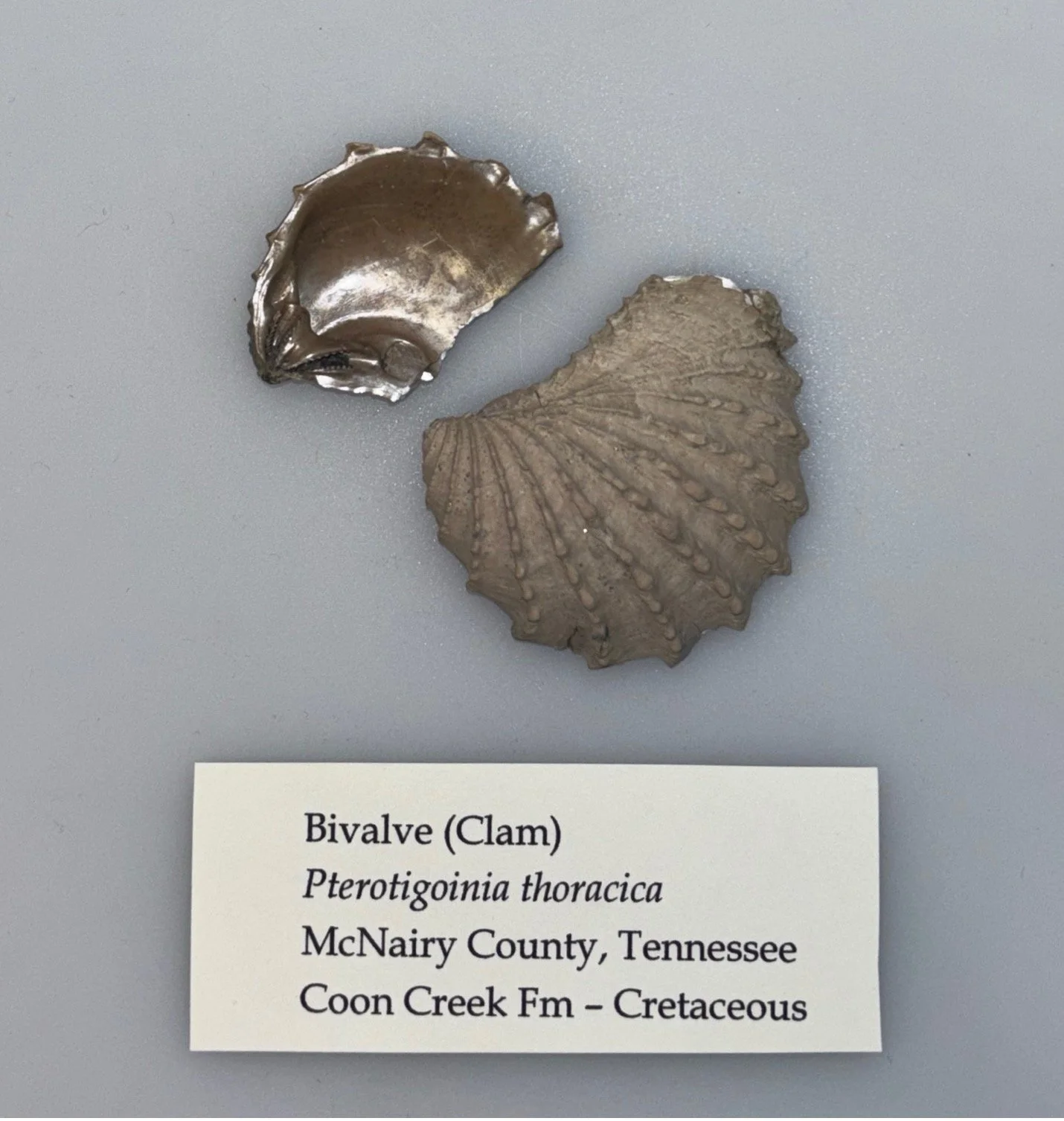
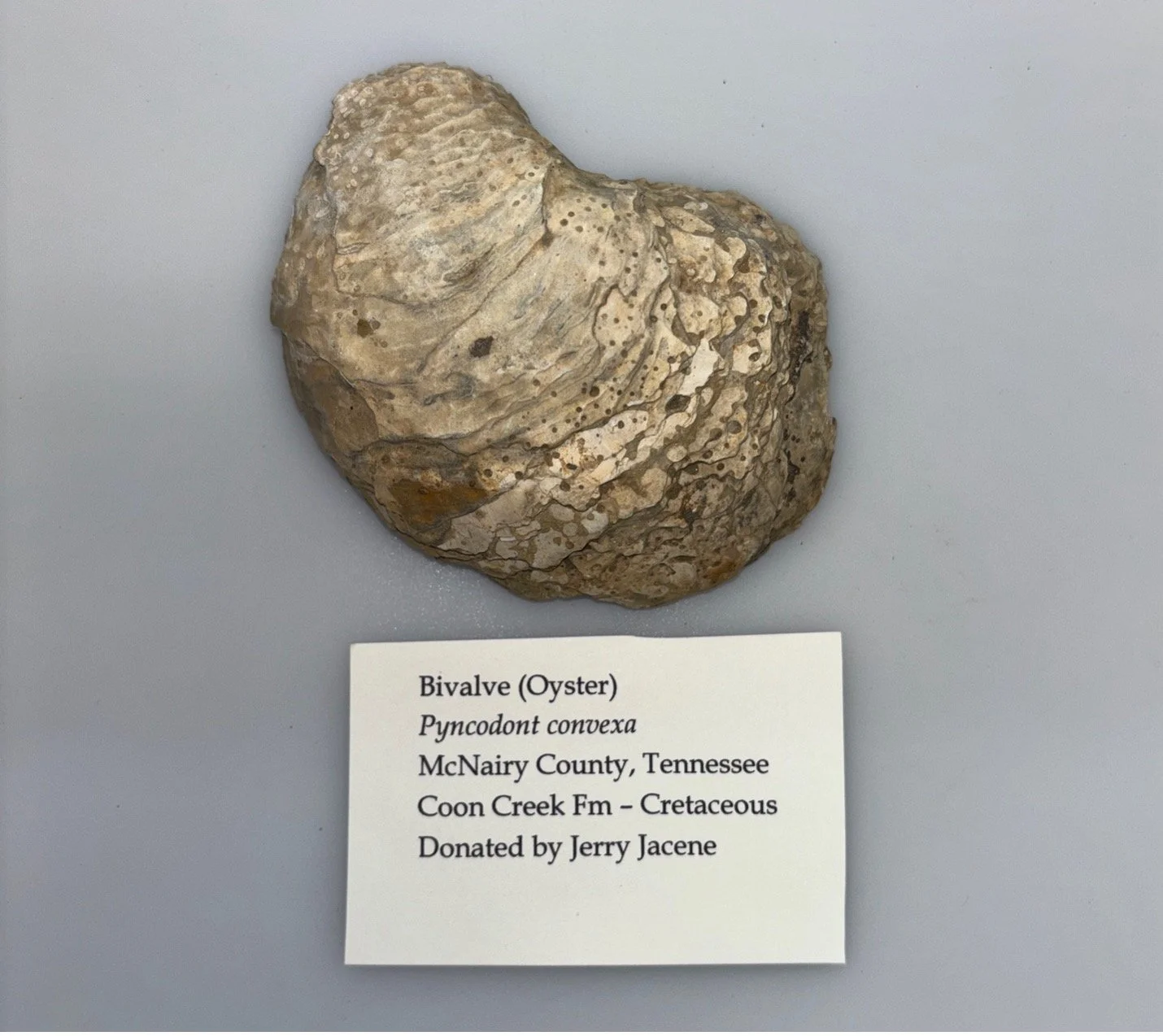
Bivalves are aquatic soft-bodied invertebrates who typically live inside a vertically symmetrical two-halved shell. They are similar to brachiopods, who are symmetrical both laterally and vertically, but the two are not actually very closely related. Today, bivalves vastly outnumber brachiopods, but during earlier periods, the inverse was true.
Bivalves are more mobile than they look, often burying themselves in sediment with the help of a muscular organ called a ‘foot’, and some can even swim by clapping their shell open and closed. Their shells have historically been used as jewelry, tools, and even money in certain cultures.
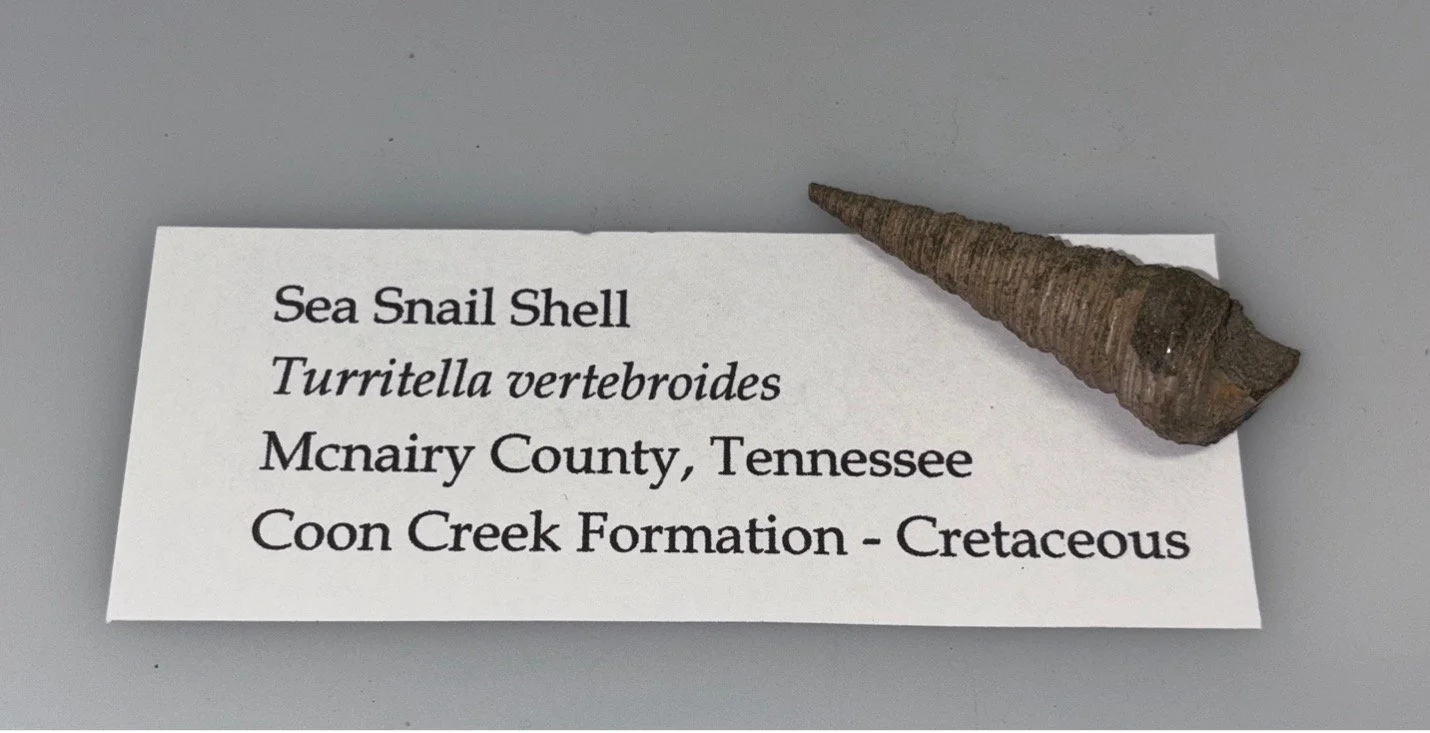
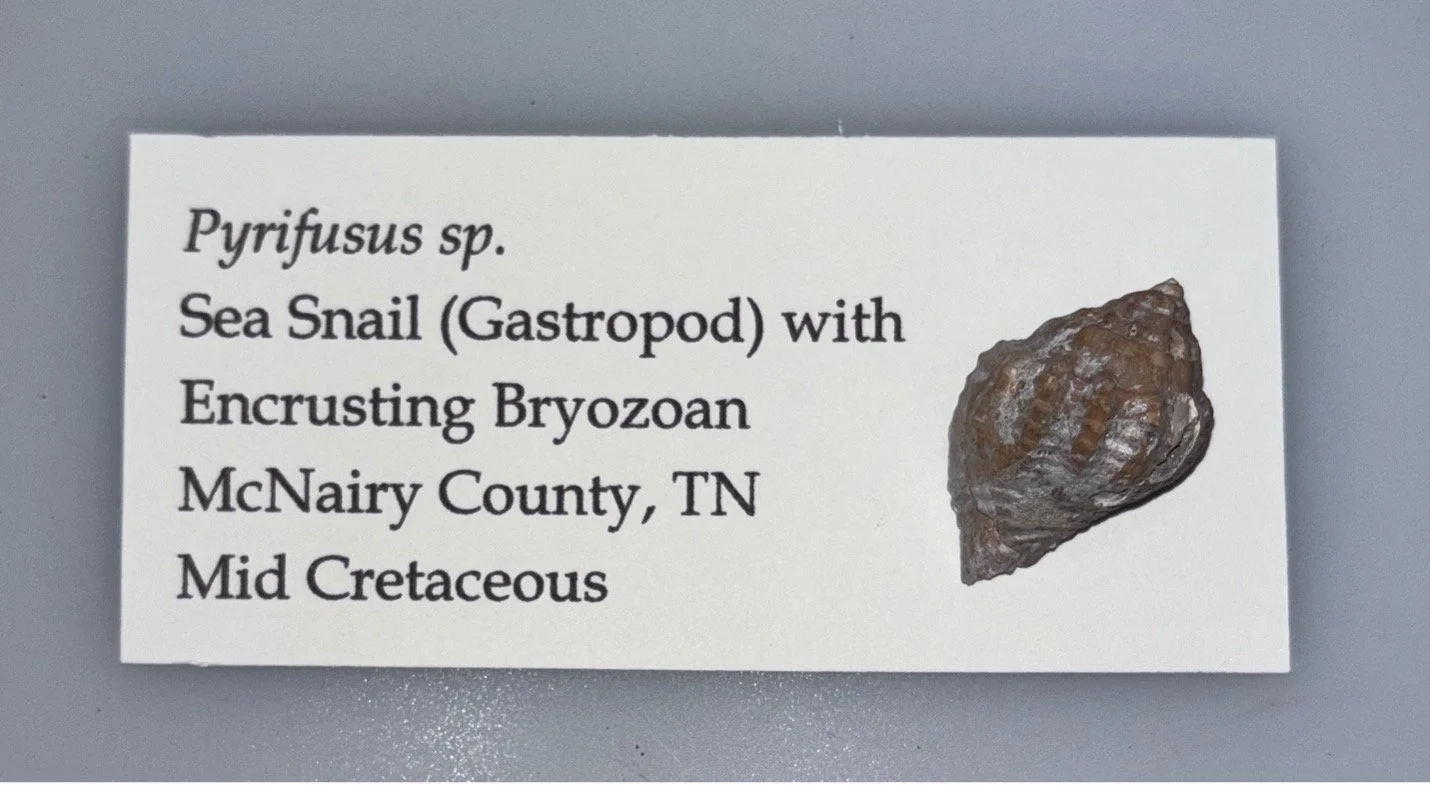
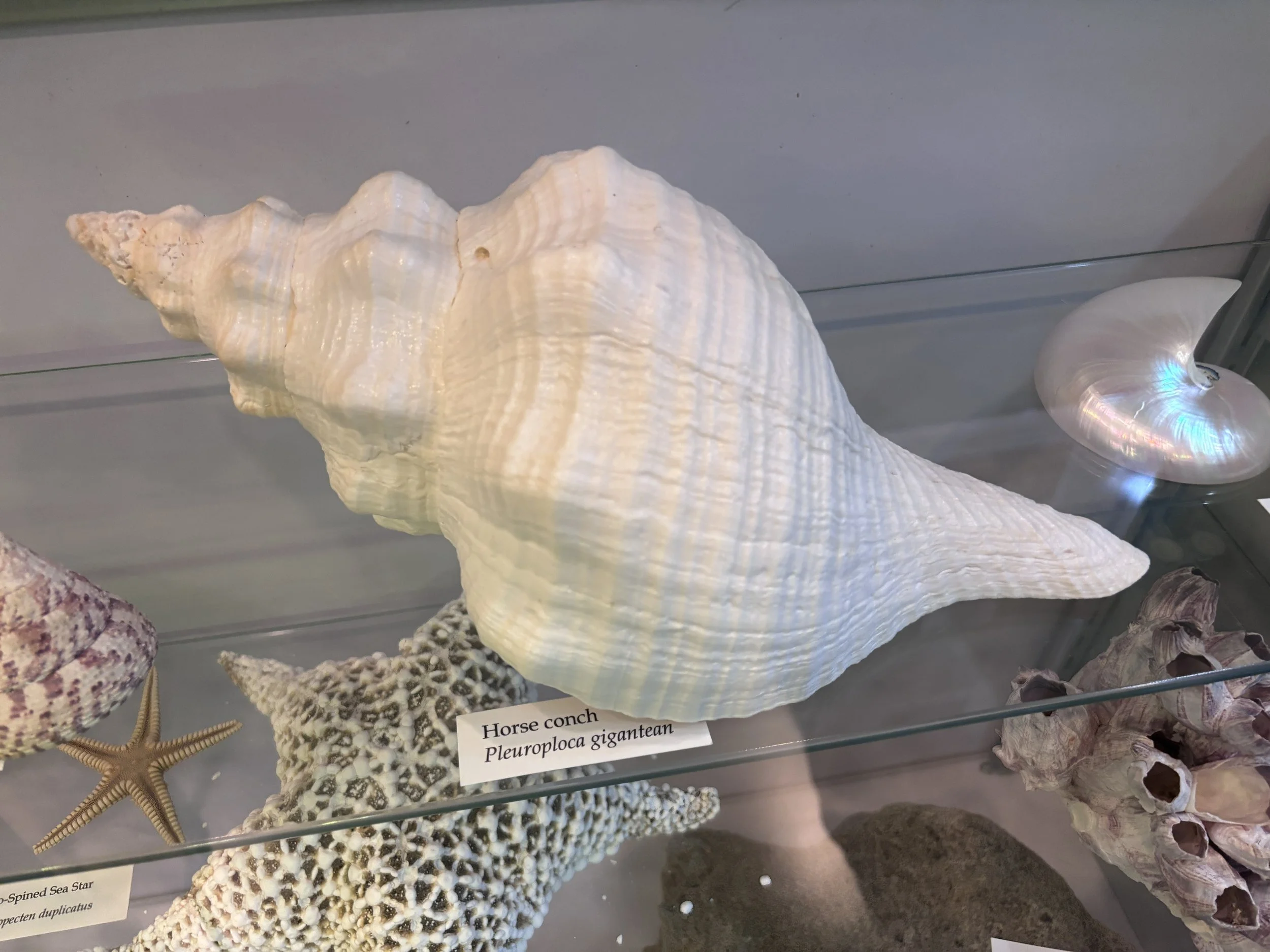
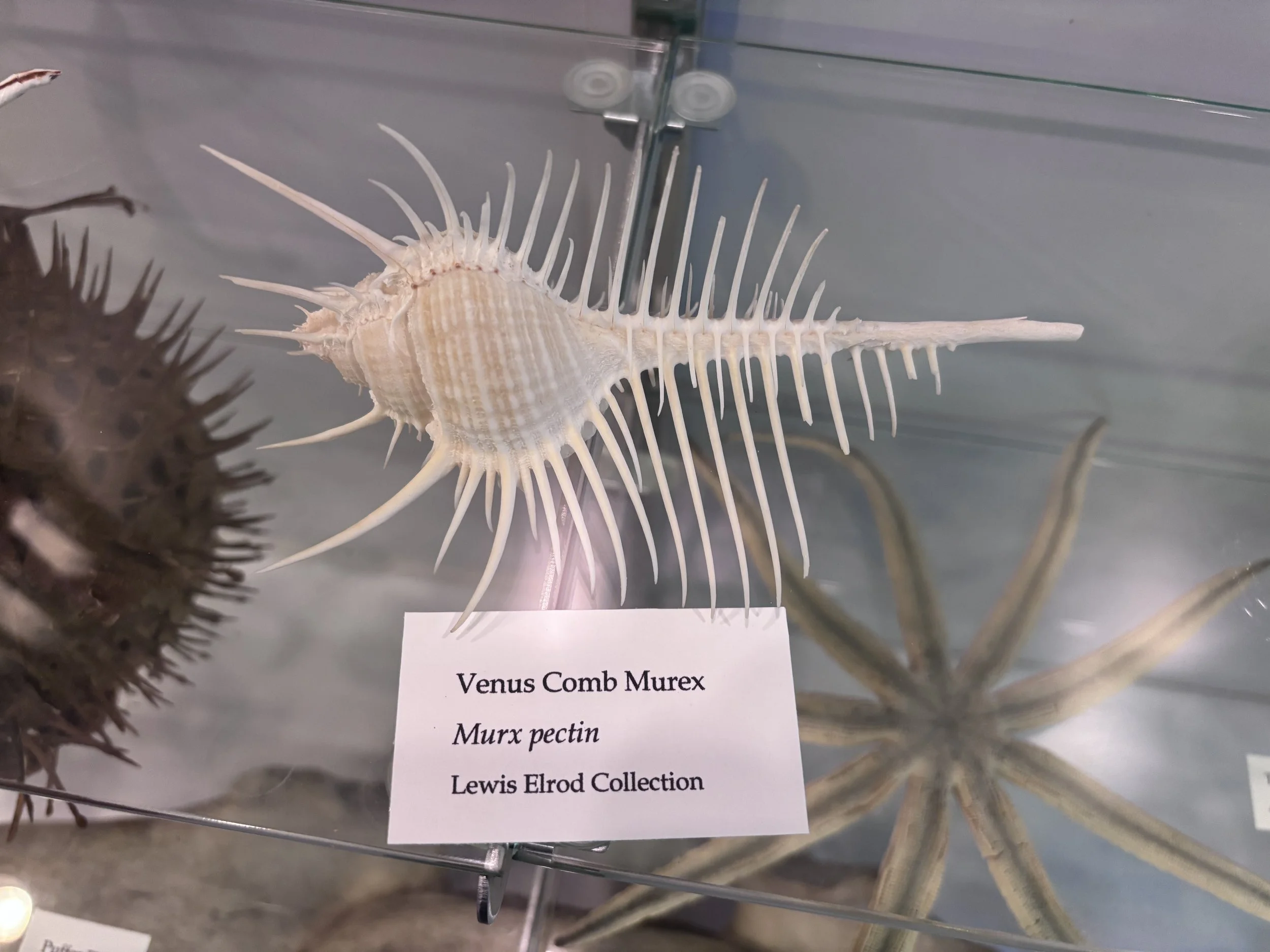
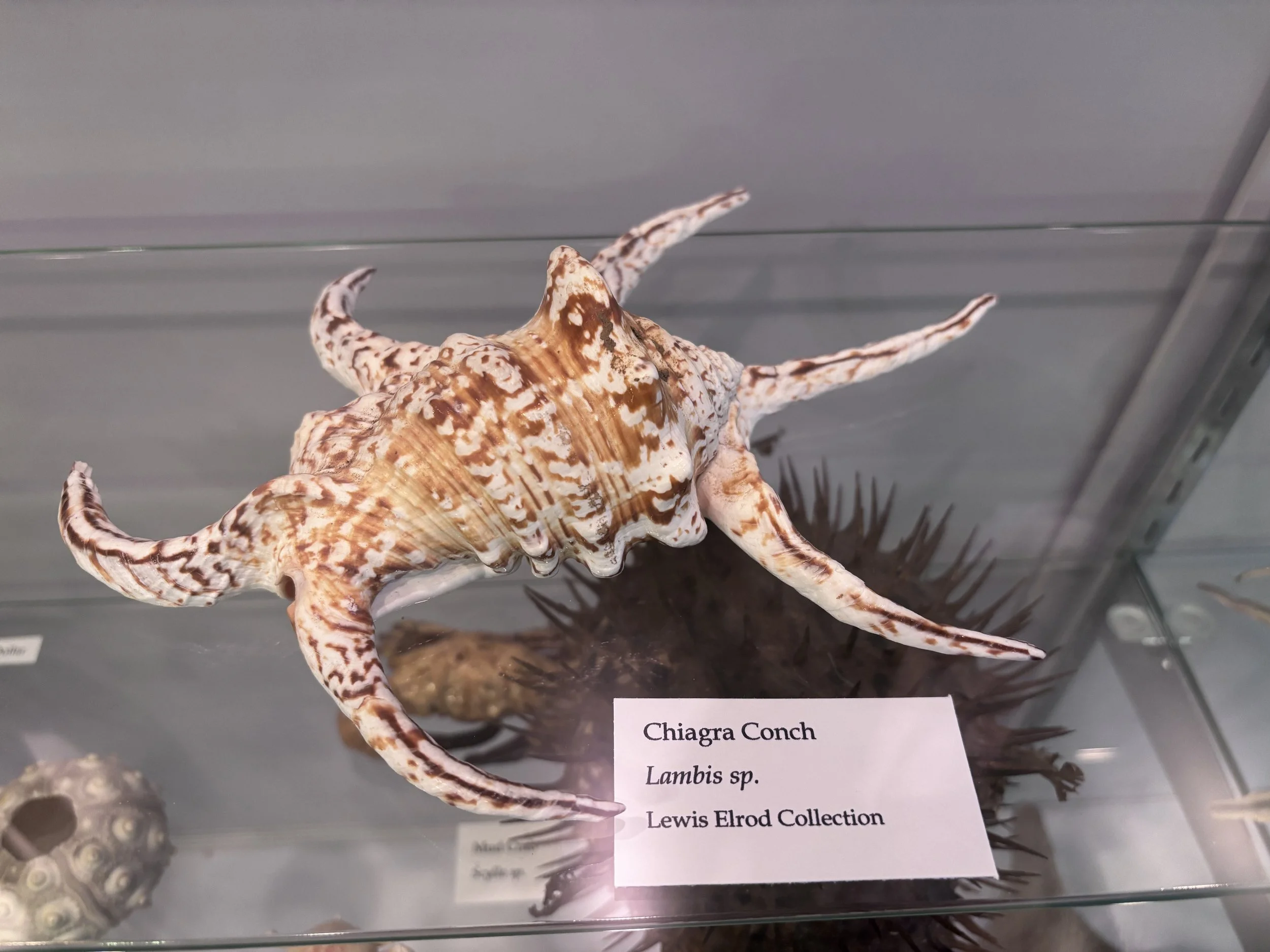
Gastropods (Late Cambrian – Present)
Gastropods are a class of soft-bodied invertebrates and are members of the phylum Mollusca, including things like snails and slugs. Gastropods have been around since almost the beginning of the fossil record, developing all the way back in the oceans of the Cambrian Period (485- 541 million years ago). Gastropod’s bodies are simple but highly adaptable, and have diversified far past marine living. Today there are species in the oceans, in rivers, on land, and even hydrothermal vents.
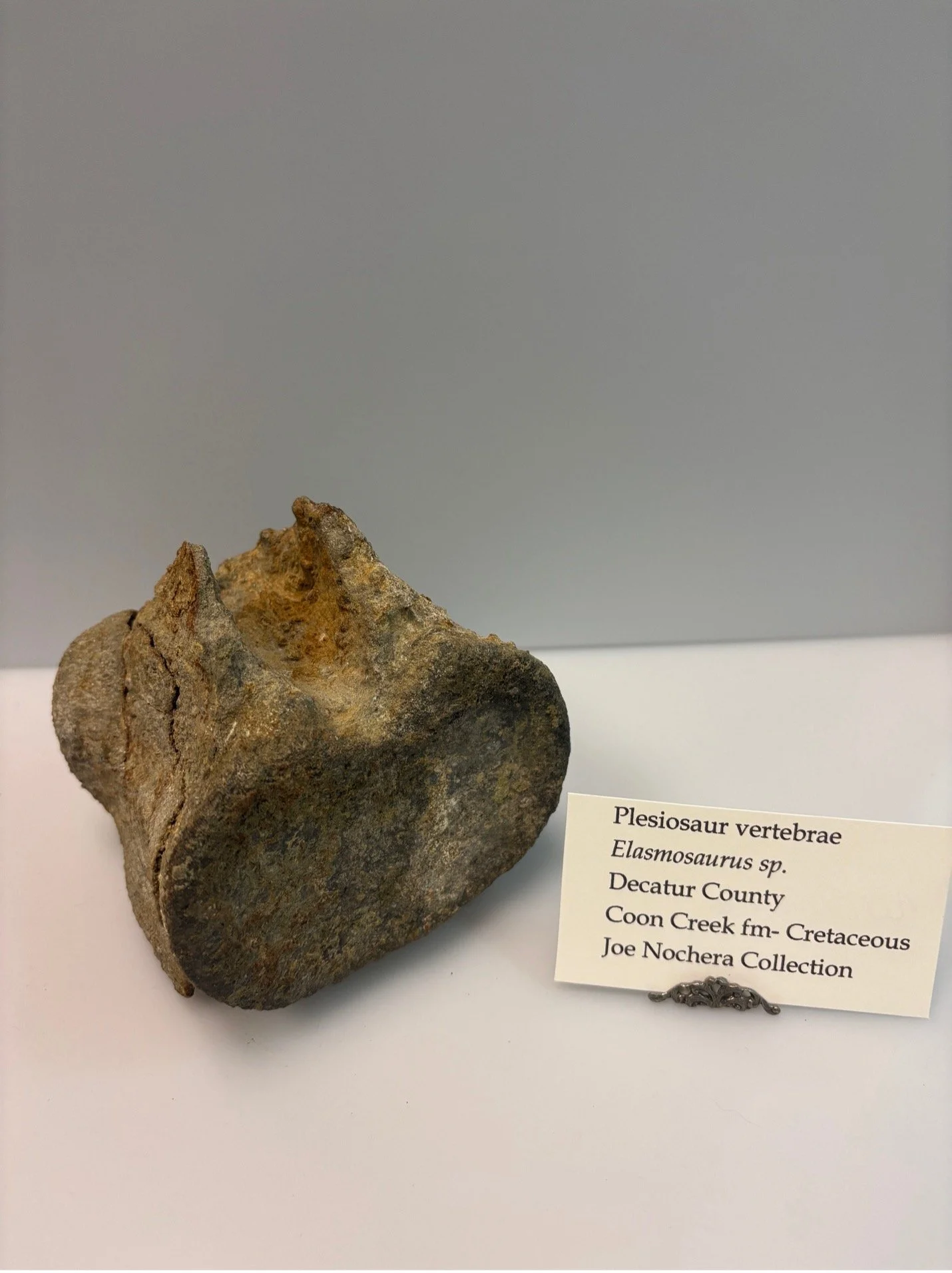
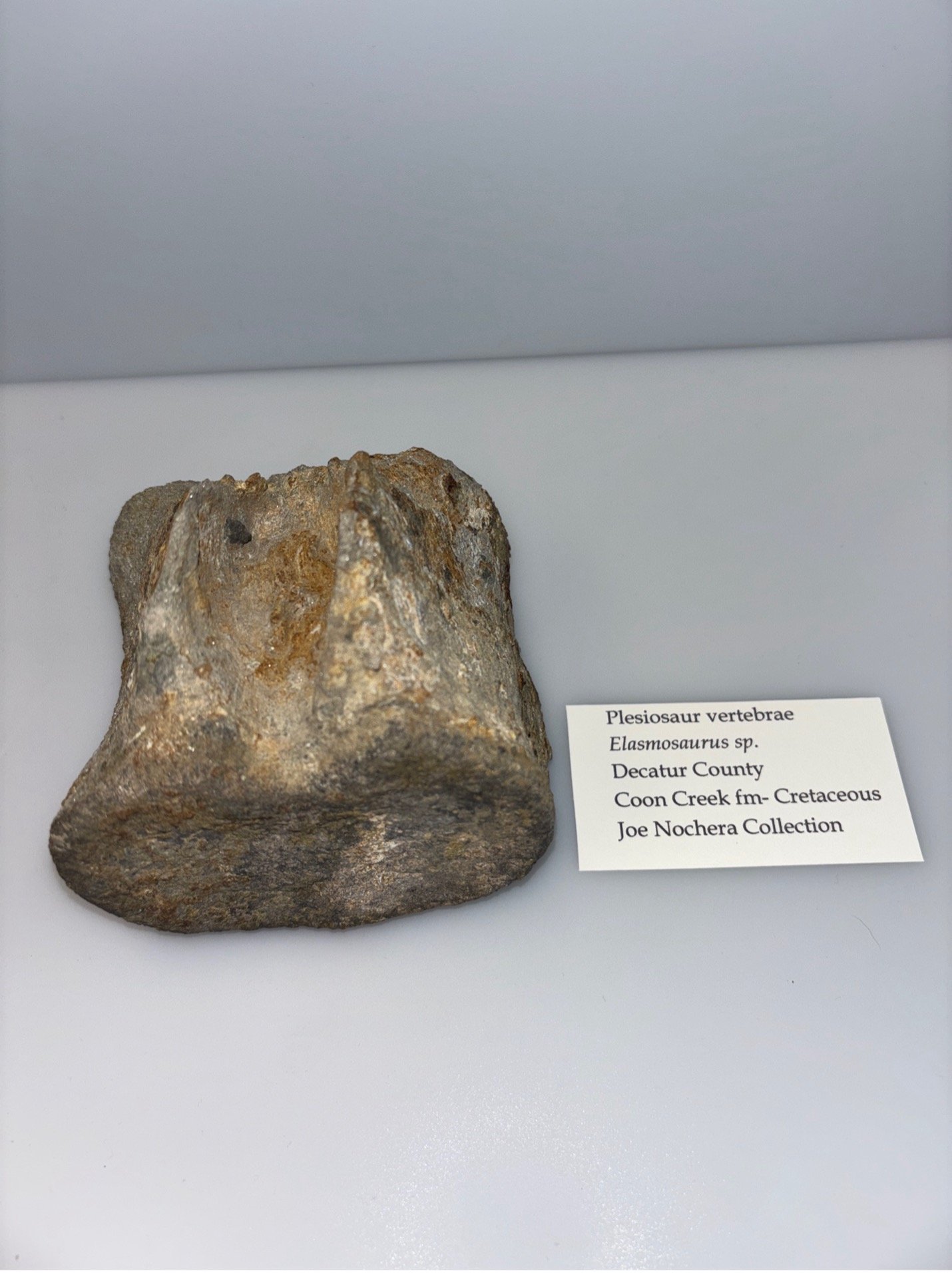
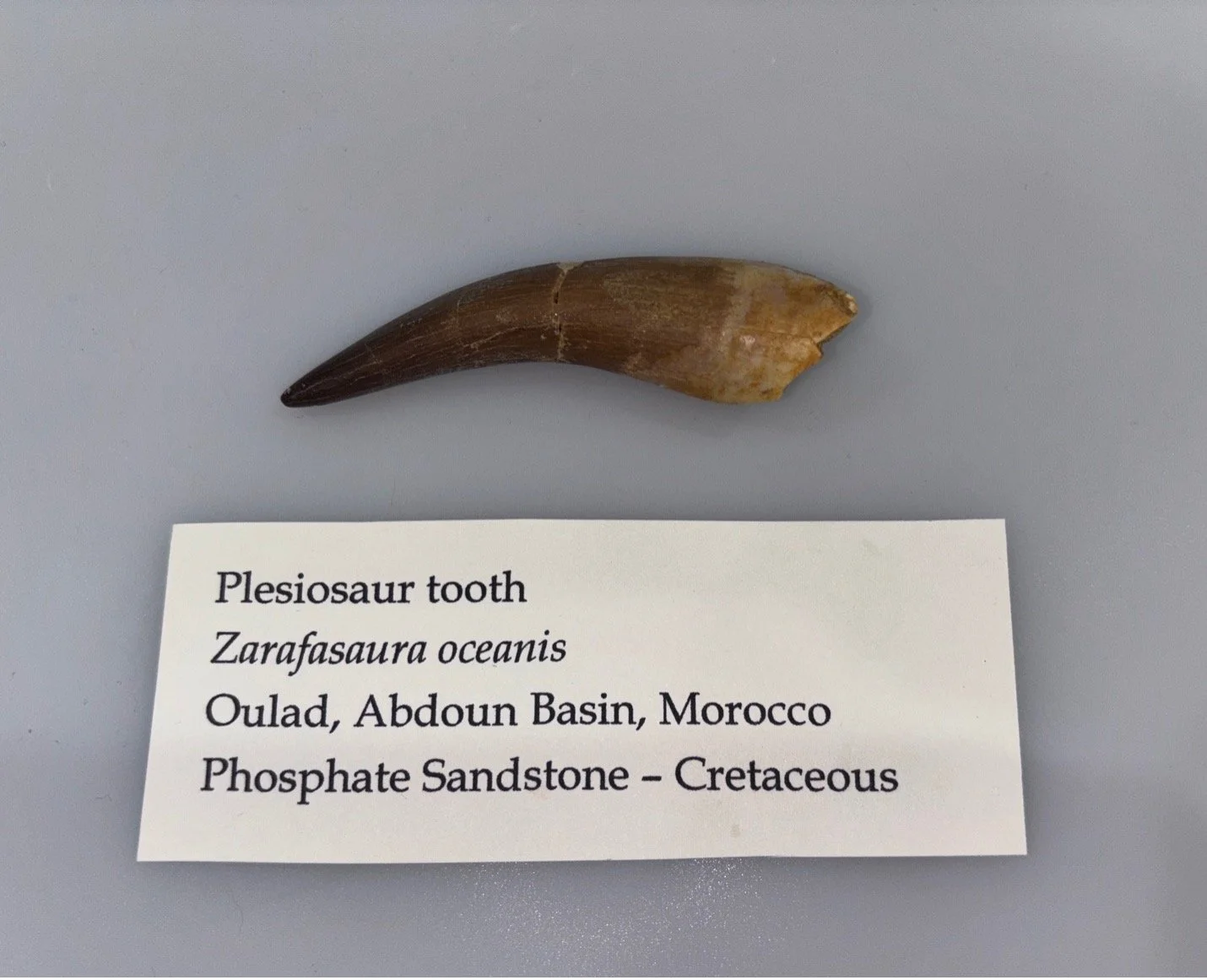
Plesiosaurs (Late Triassic – Late Cretaceous)
Plesiosaurs were marine reptiles that lived during the age of the dinosaurs. Though not a dinosaur itself, Plesiosaurs are well-known for their distinctive body shape which inspired the famous cryptid, the Loch Ness Monster. While many believers argue that a Plesiosaur could still be in Loch Ness in Scotland, they unfortunately all went extinct at the same time at the non-avian dinosaurs following the K-Pg Impact. Their diet was comprised of fish and cephalopods. Plesiosaurs came in different shapes and sizes; some where large and long-necked like the Zarafasaurus oceanis who were generally pacifistic and solitary animals, while some like the Pliosaurus had short necks and large heads and were much more aggressive hunters.
The first complete Plesiosaur fossil was found by famous female paleontologist Mary Anning in 1823.
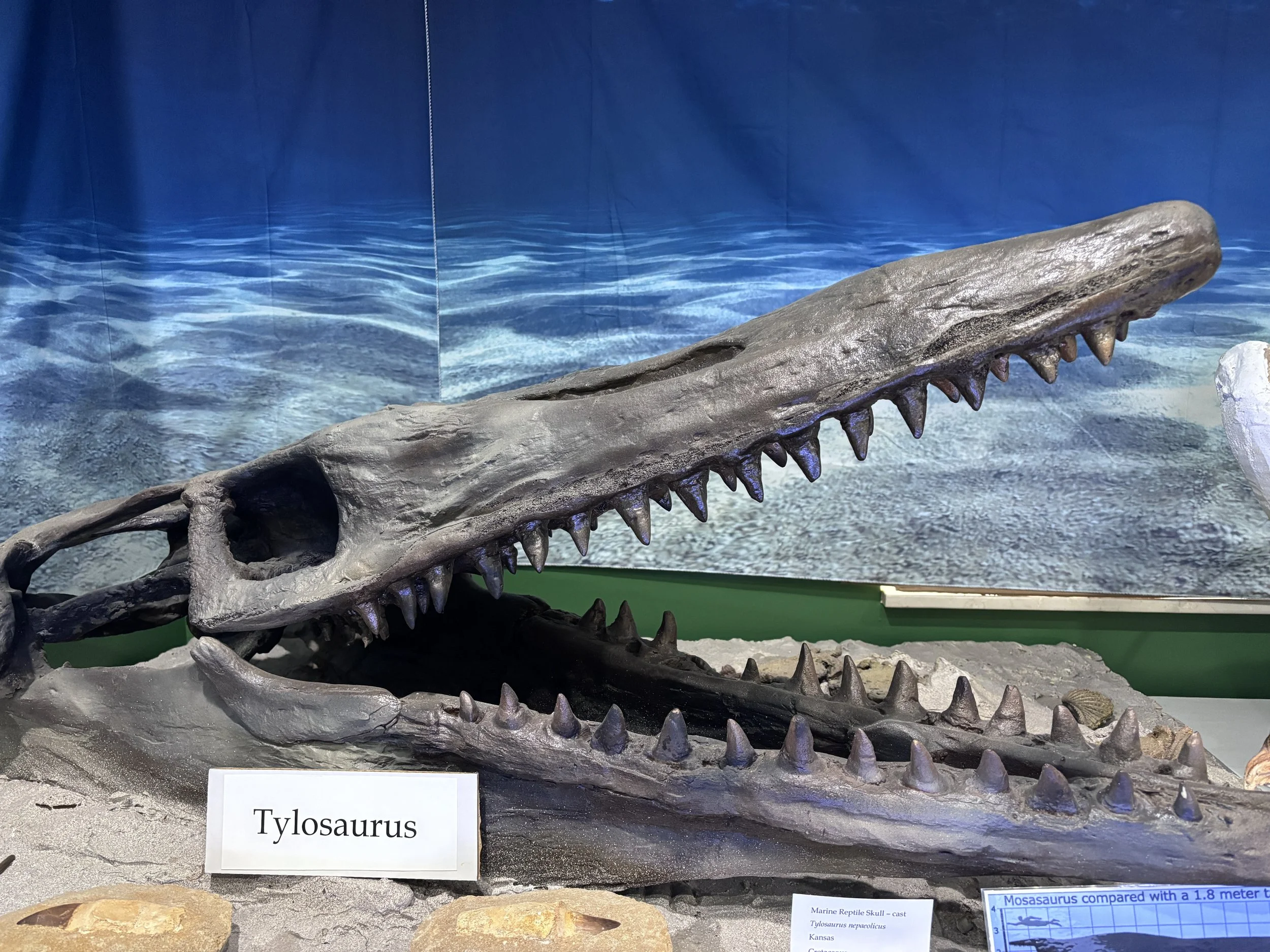
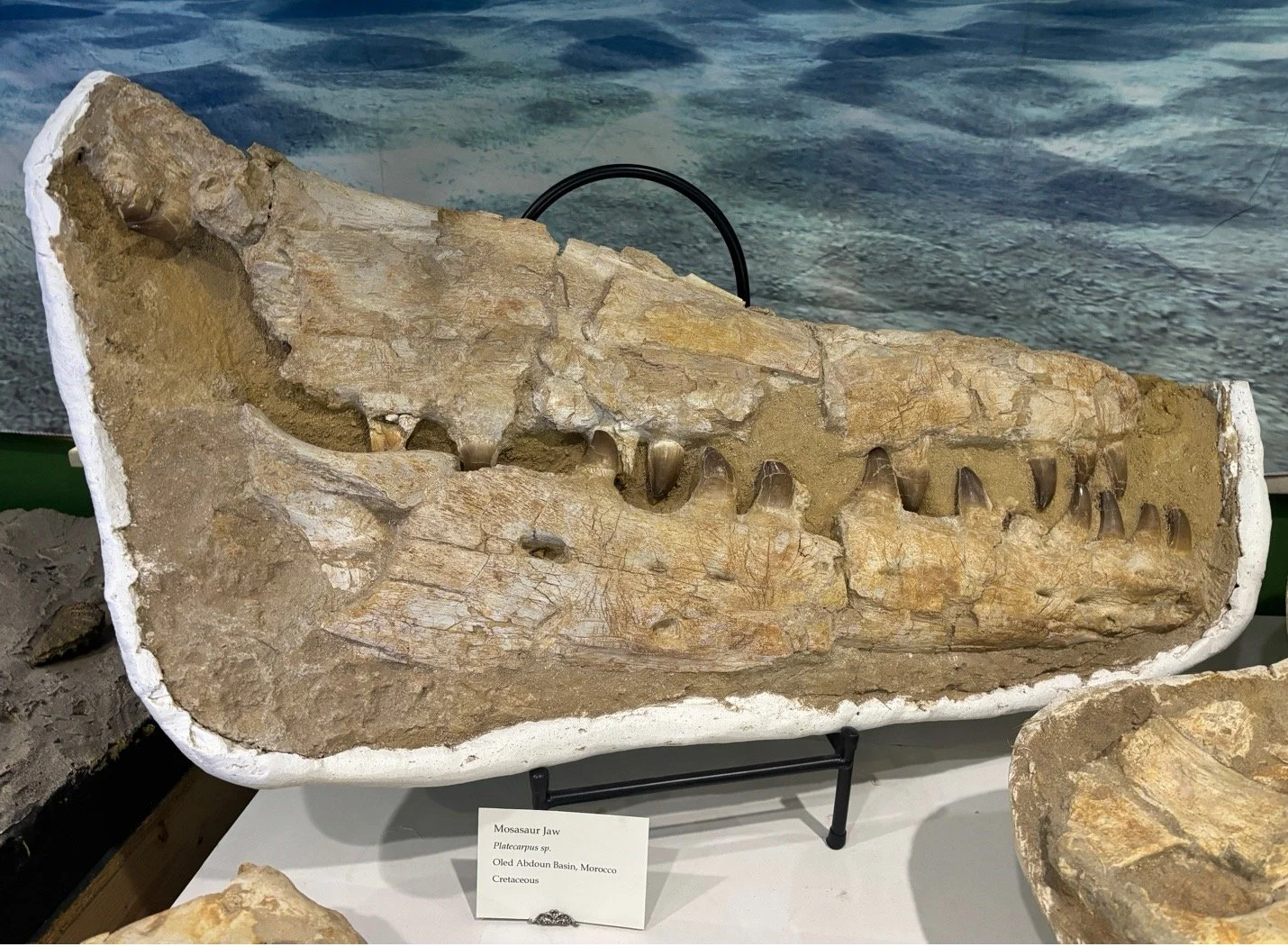
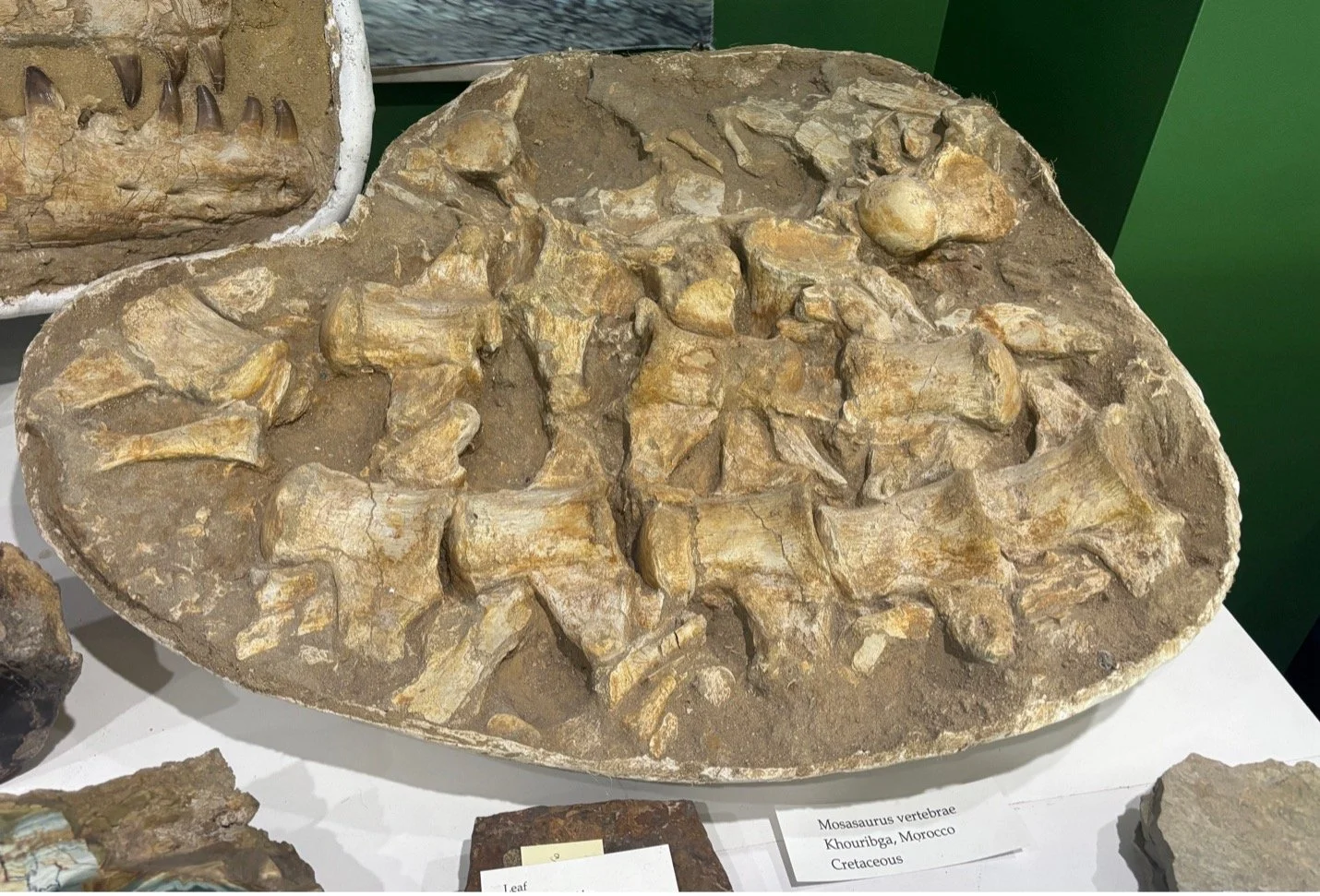
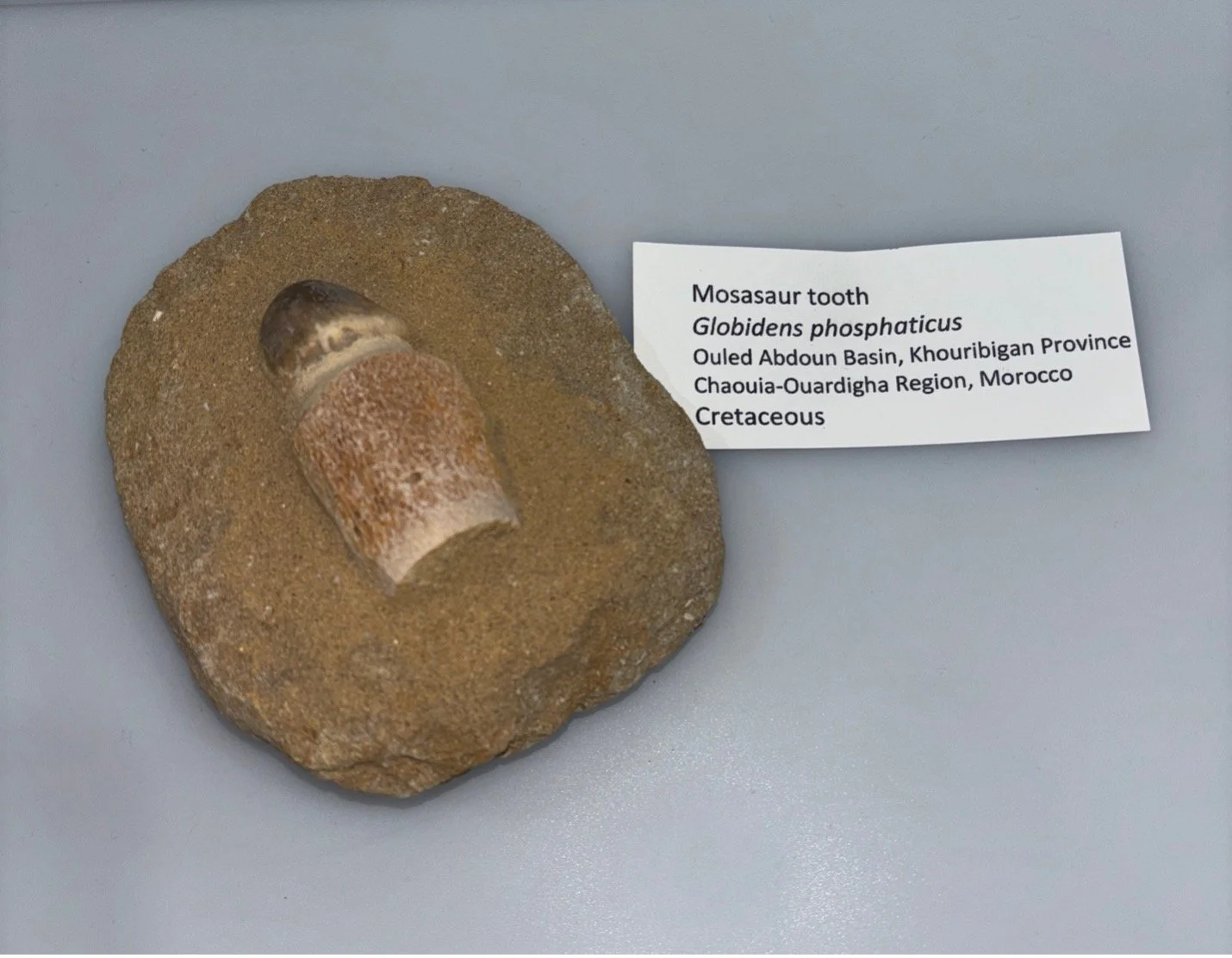
Mosasaurs were large marine reptiles that dominated the oceans of the Cretaceous period. Though they lived at the same time as many dinosaurs and have a name reminiscent of a dinosaur’s, Mosasaurs are not dinosaurs at all. In fact, they closest living relatives are monitor lizards and snakes. Mosasaurs gained popular fame with the release of Jurassic World (2015), which depicts them as gargantuan, bulky-bodied giants. However, Mosasaurs in reality were sleeker and generally far smaller than the film’s depiction. The longest type of Mosasaur was the Tylosaurus, which reached up to 45-50 feet in length.
As ocean dwellers, Mosasaur fossils are found throughout the world. One freshwater variation was even found in Hungary. They were formidable predators whose diet included all types of smaller marine creatures like ammonites, fish, smaller mosasaurs, and even sea birds. While Mosasaurs stalked the ocean similar to modern sharks, as reptiles they still had to breach the surface for air like whales or sea turtles. Also similar to whales, it is likely that Mosasaurs had live births.
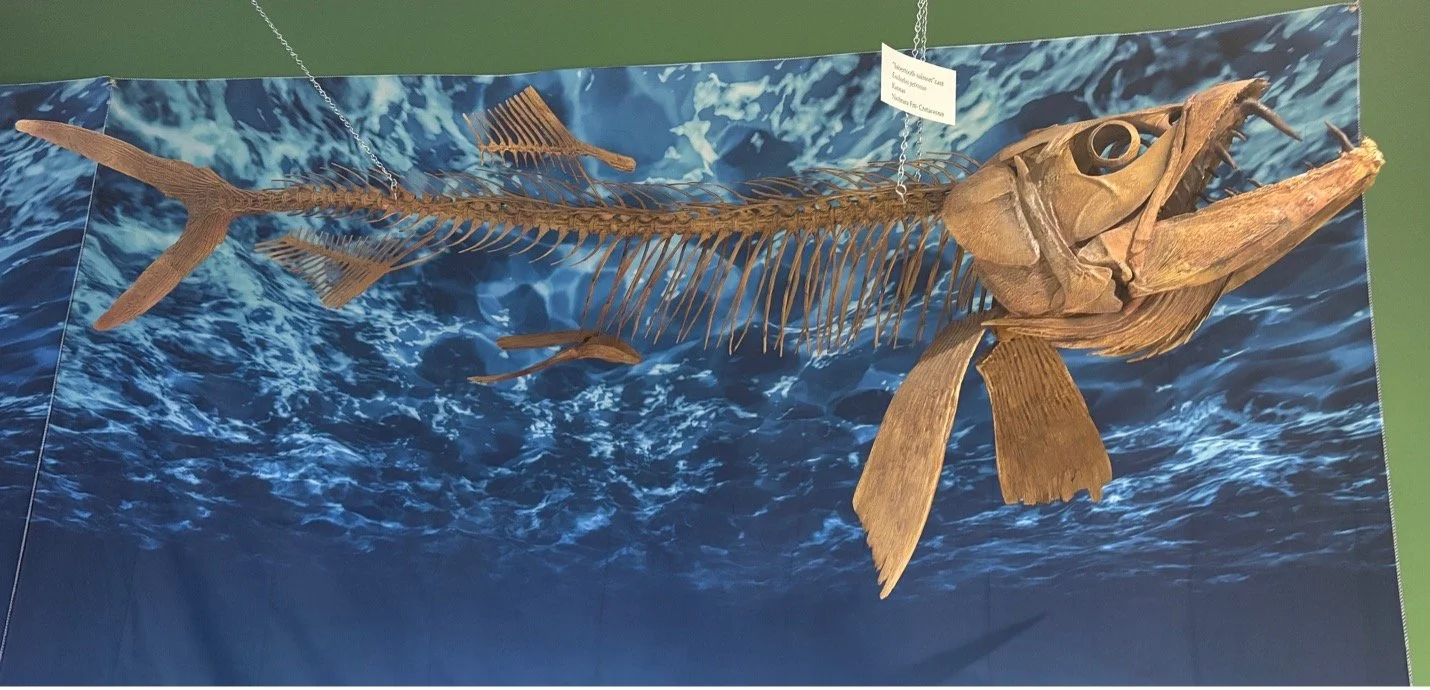
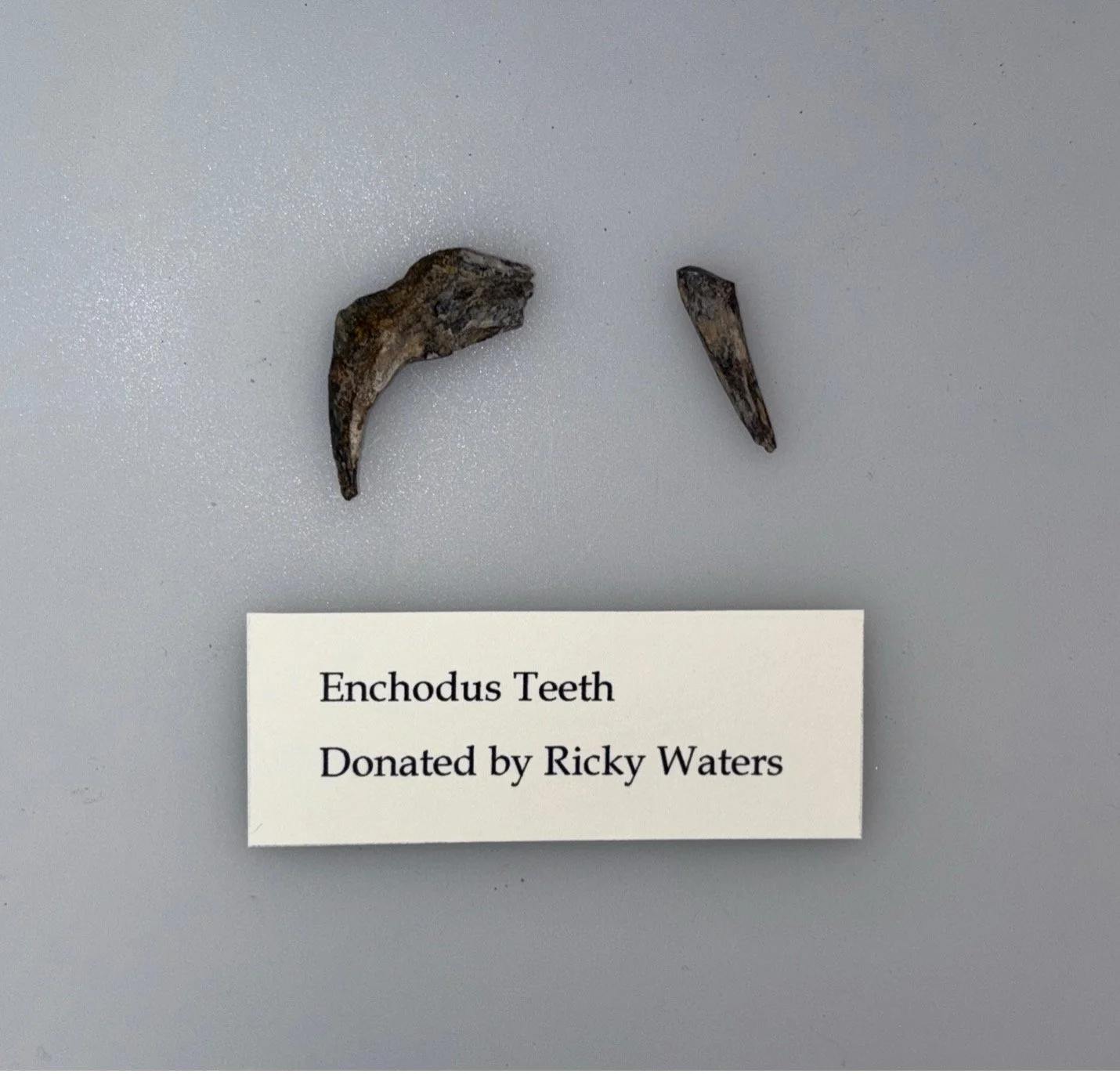
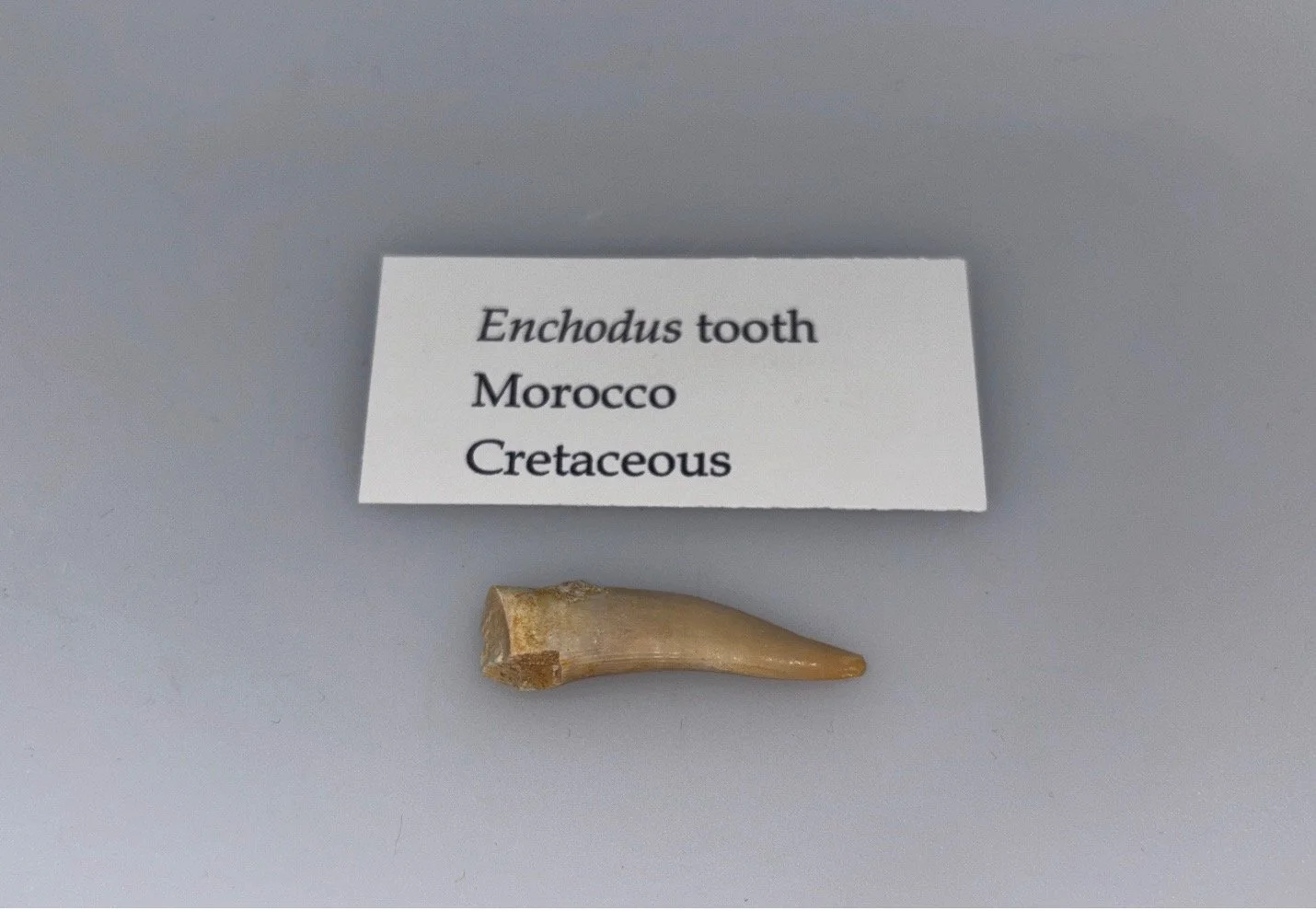
Enchodus was a genus of carnivorous fish that made the Cretaceous oceans their hunting ground. Different species in the Enchodus genus ranged in size, some adapting to hunt larger prey than other, but all had a mouth full of sharp teeth and a powerful bite. Enchodus petrosus was the largest species of its kind, growing to about 5 feet in length. Its diet included smaller fish, cephalopods like squids and mollusks, and crustaceans.
No results match your search. Try removing a few filters.