
Fossil Collection Search
Check out our collection! Filter through time period and other categories and click on entries to learn more about them.
Check out our collection! Filter through time period and other categories and click on entries to learn more about them.
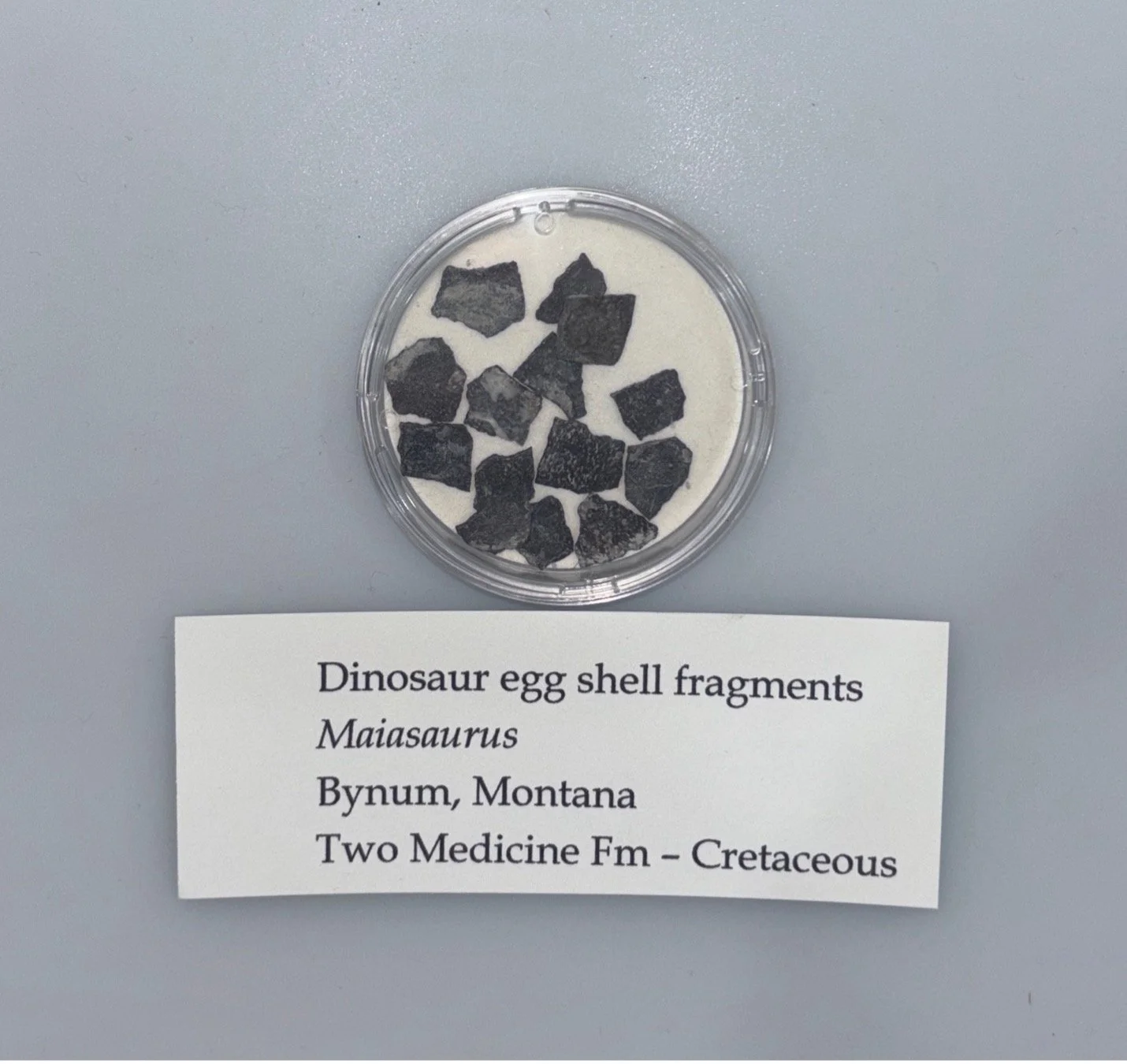
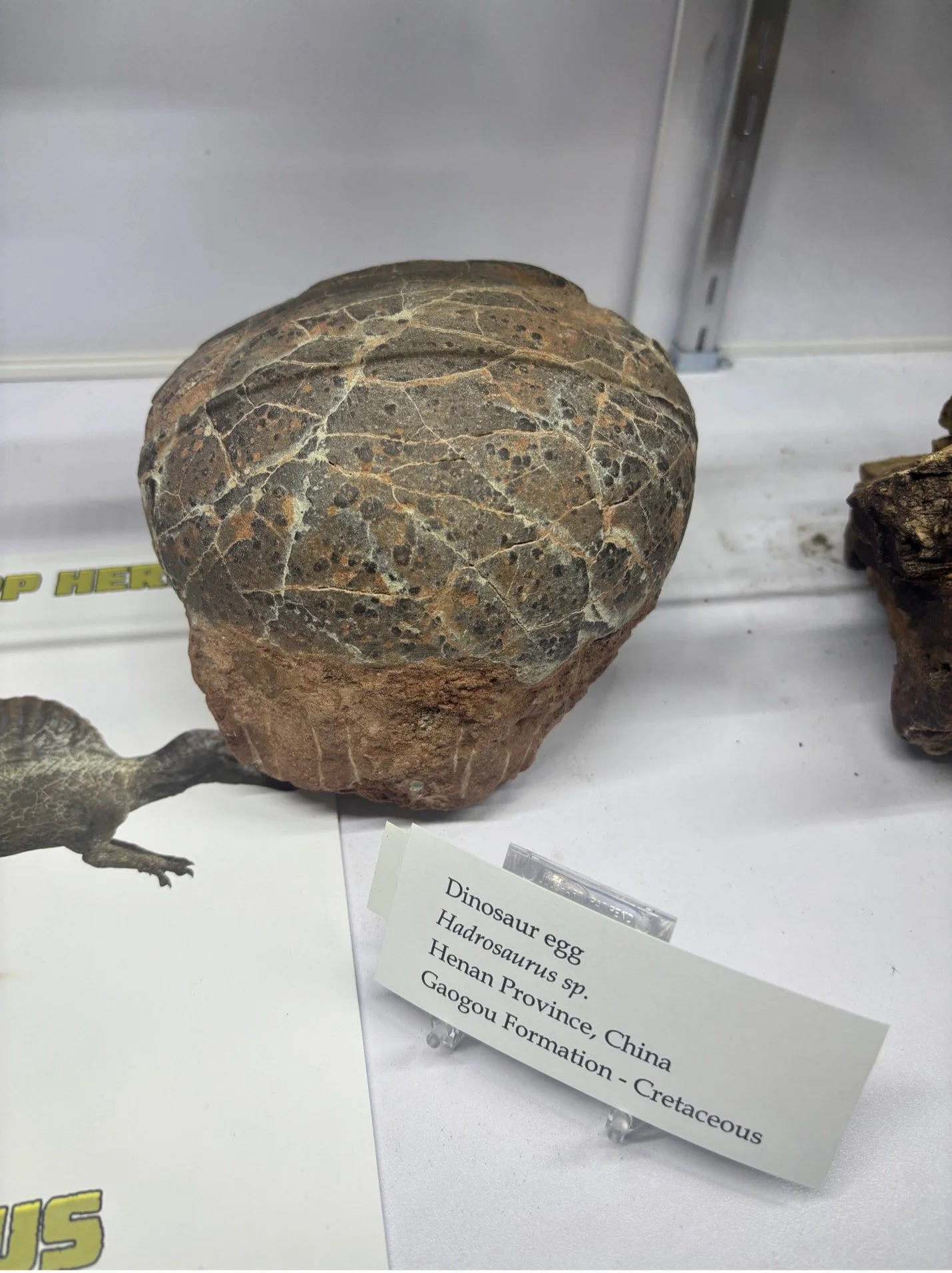
Amongst the fossil bones and teeth of dinosaurs, paleontologists occasionally find fossilized dinosaur egg material. As you might expect, dinosaur eggs are rarely found due to their delicate nature, and it is generally hard to determine what type of dinosaur may have once been inside. However, finding the eggs, or better yet, the nests tell us a lot about dinosaur behavior. Some fossils of Oviraptor dinosaurs have been found on top of their eggs, indicating that they cared for their eggs like modern birds. Other larger species buried their eggs rather than brood as their weight would have done more harm than good.
With modern technology, our understanding of dinosaur eggs has improved further. It is possible to perform a CT scan on dinosaur eggs, which makes it possible for scientists to learn more about dinosaur embryos and their development.
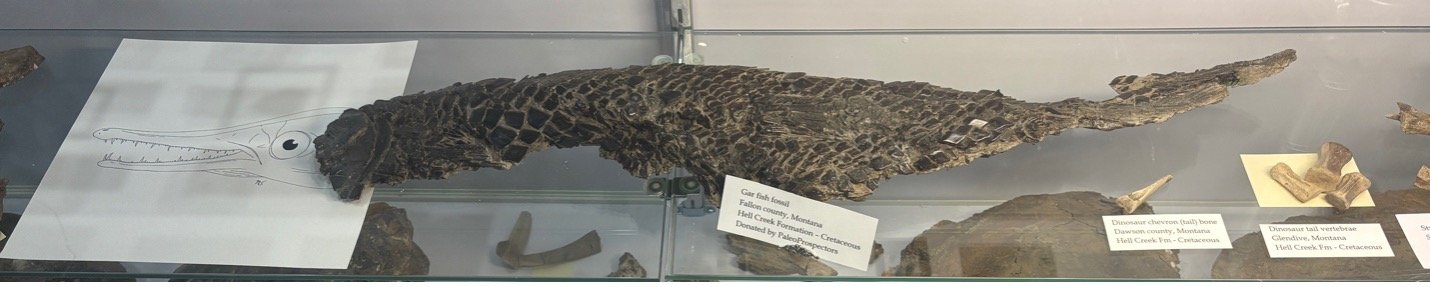
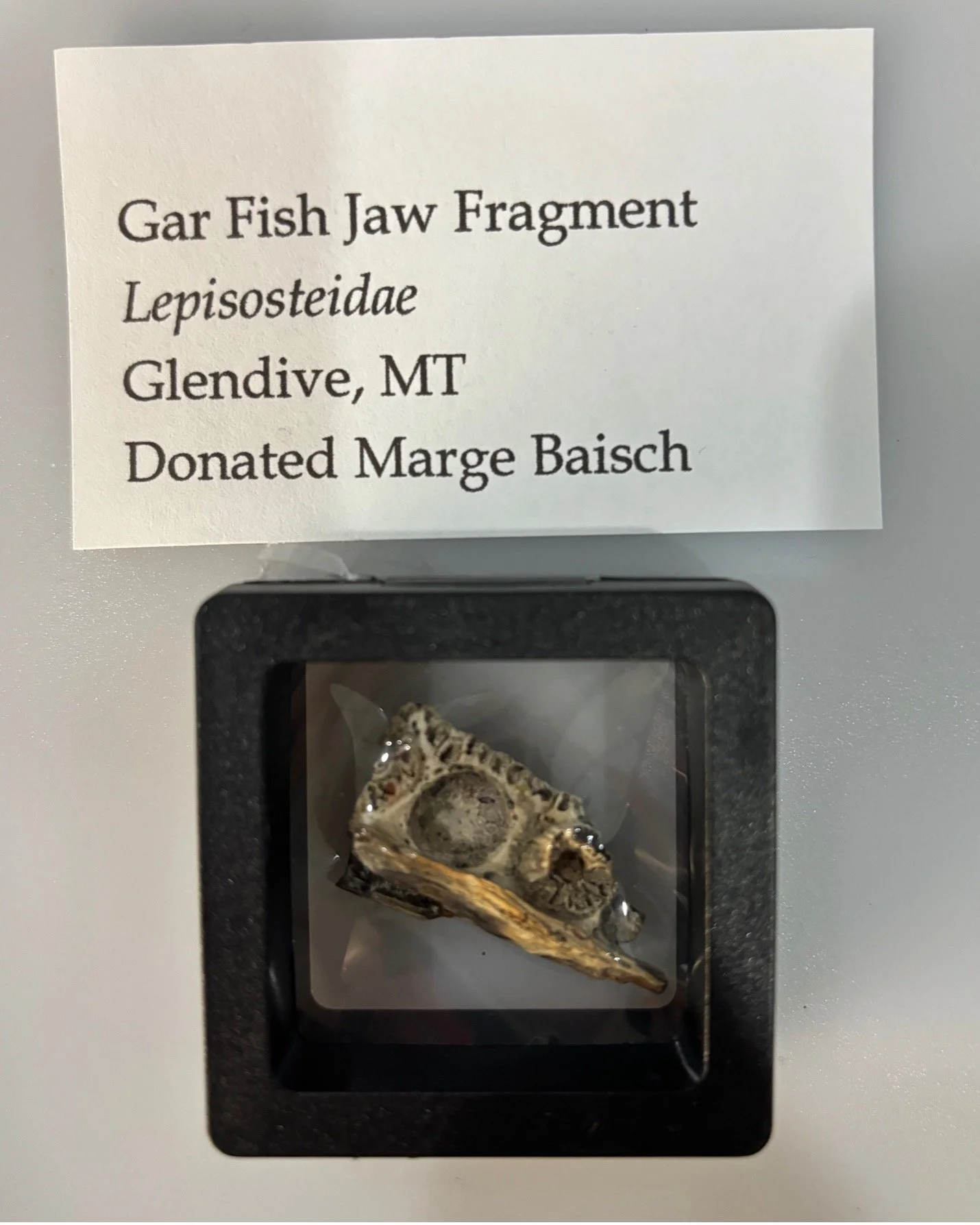
Gar fish are long-bodied freshwater fish who possess armored scales along their bodies. Gars belonging to Lepisosteidae first developed in the early Cretaceous, but ancestors to these Gar first show up in the fossil record during the Jurassic Period. Gars are often called ‘living fossils’ as they have gone virtually unchanged over the last 100 million years. There is plenty of fossil evidence for the Gar in the Hell Creek Formation; their armored scales fossilize very well and appear a bit like shards of obsidian among the dirt.
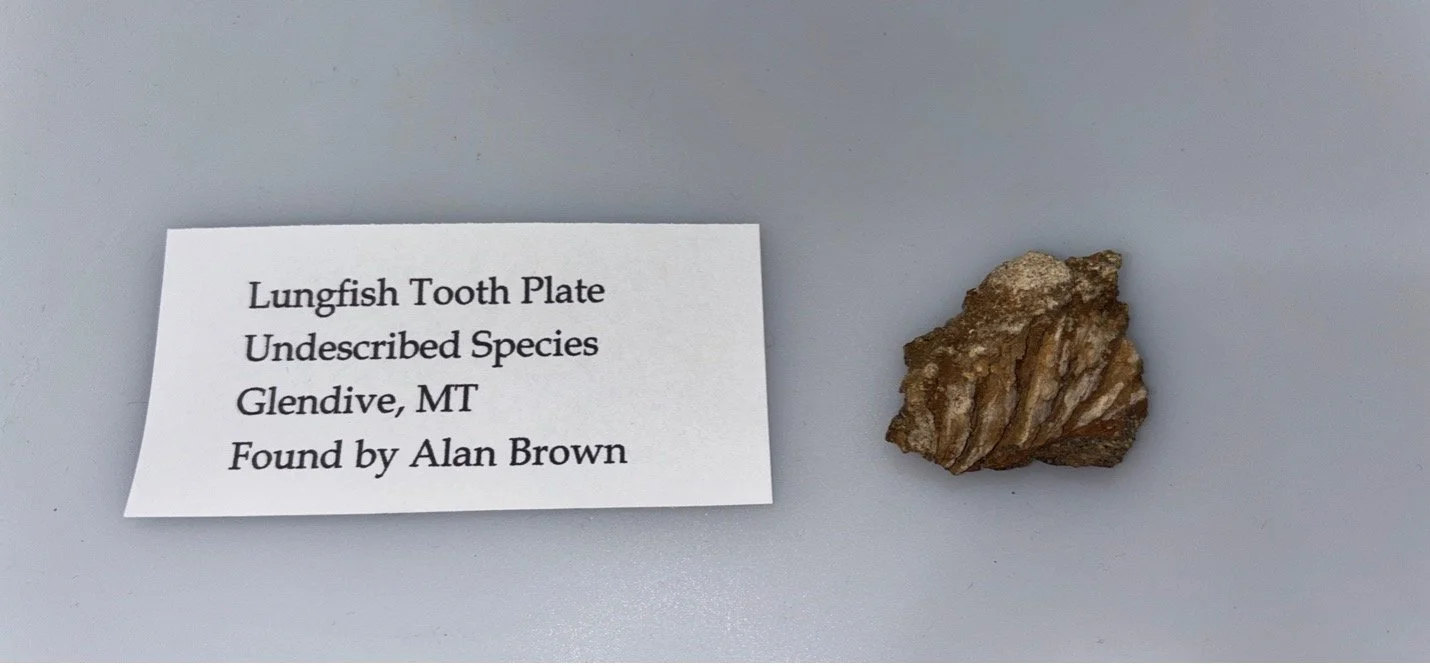
(Early Devonian – Present)
Lungfish are long, eel-shaped fish that can breathe air. While some species of lungfish possess both lungs and gills, they have an advantage over gill-exclusive fish types because they are able to survive in oxygen poor waters and withstand droughts, which may explain why they have managed to stay relatively unchanged over the last 400 million years. Lungfish are considered a “missing link” in the evolution of mammals, reptiles, amphibians, and birds as they are the closest relative to early tetrapods (or all vertebrate animals with four limbs).
(Late Triassic – End Cretaceous)
During the age of the dinosaurs, flying reptiles called Pterosaurs ruled skies. Some mistakenly lump pterosaurs like the famous Pterodactyl in with dinosaurs, but pterosaurs belonged to their own order Pterosauria. Pterosauria and Dinosauria belong to the same clade called Archosauria, whose only two groups still living are birds and crocodilians.
Pterosaurs came in a wide range of sizes. The smallest pterosaur species was Nemicolopterus crypticus, which was about the size of a modern American Robin, and the largest was the colossal Quetzalcoatlus northropi, who was about as tall as a giraffe (but lot more viscous).
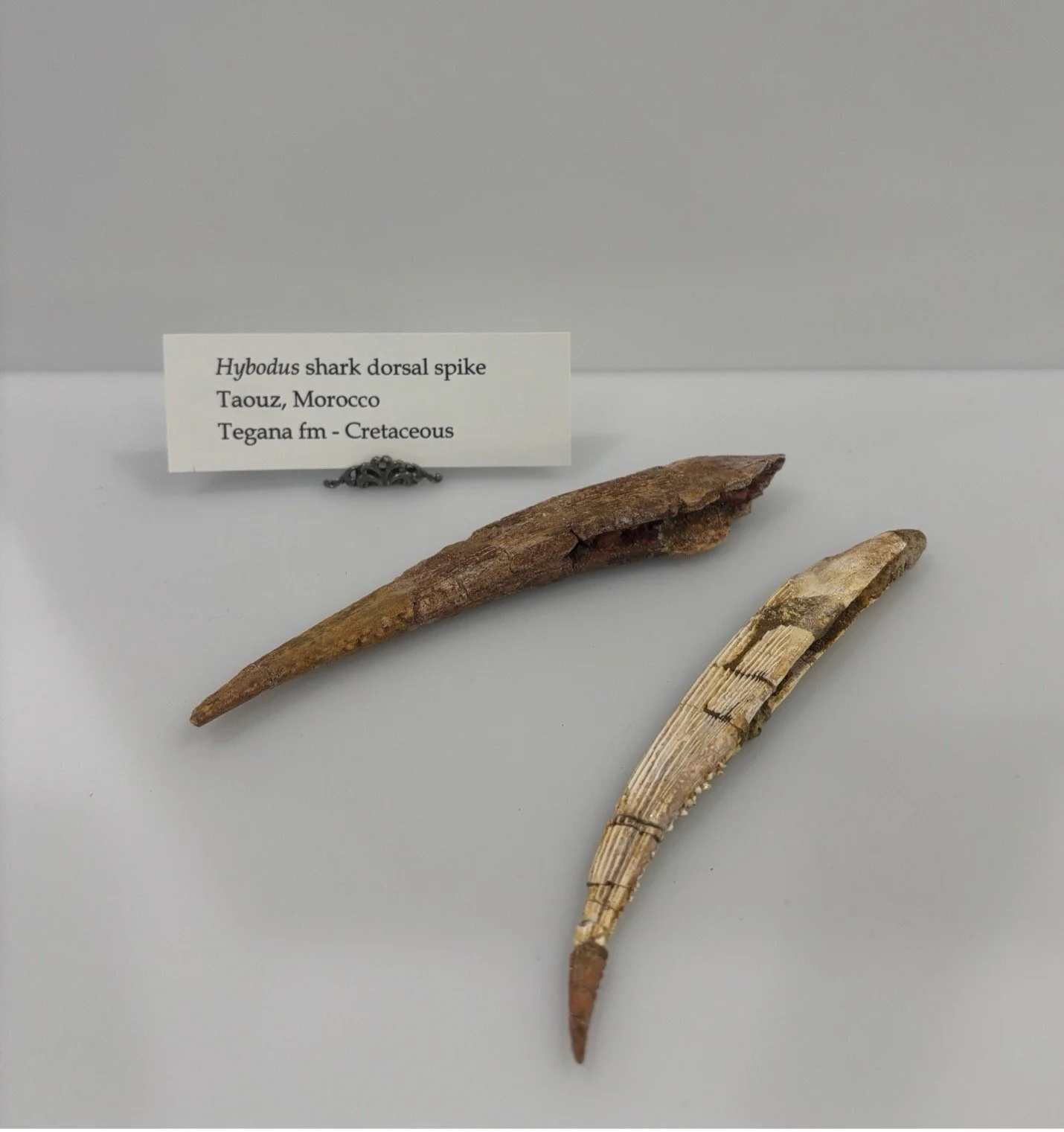
Hybodus (Permian – Cretaceous)
Hybodus was a genus of shark that had great success in the ancient oceans. It was about 6 feet long and had small crown of spikes on its head and two more larger spikes by its dorsal fins. These spikes would have protected the shark from bigger predators, which partly contributed to its success. Another trait Hybodus had was two types of teeth for two types of prey. The teeth at the front of its mouth were sharp, used to bite down on prey, while the teeth in the back of its mouth were flat and could crush and break down hard shells and bones—a little like your own molars.
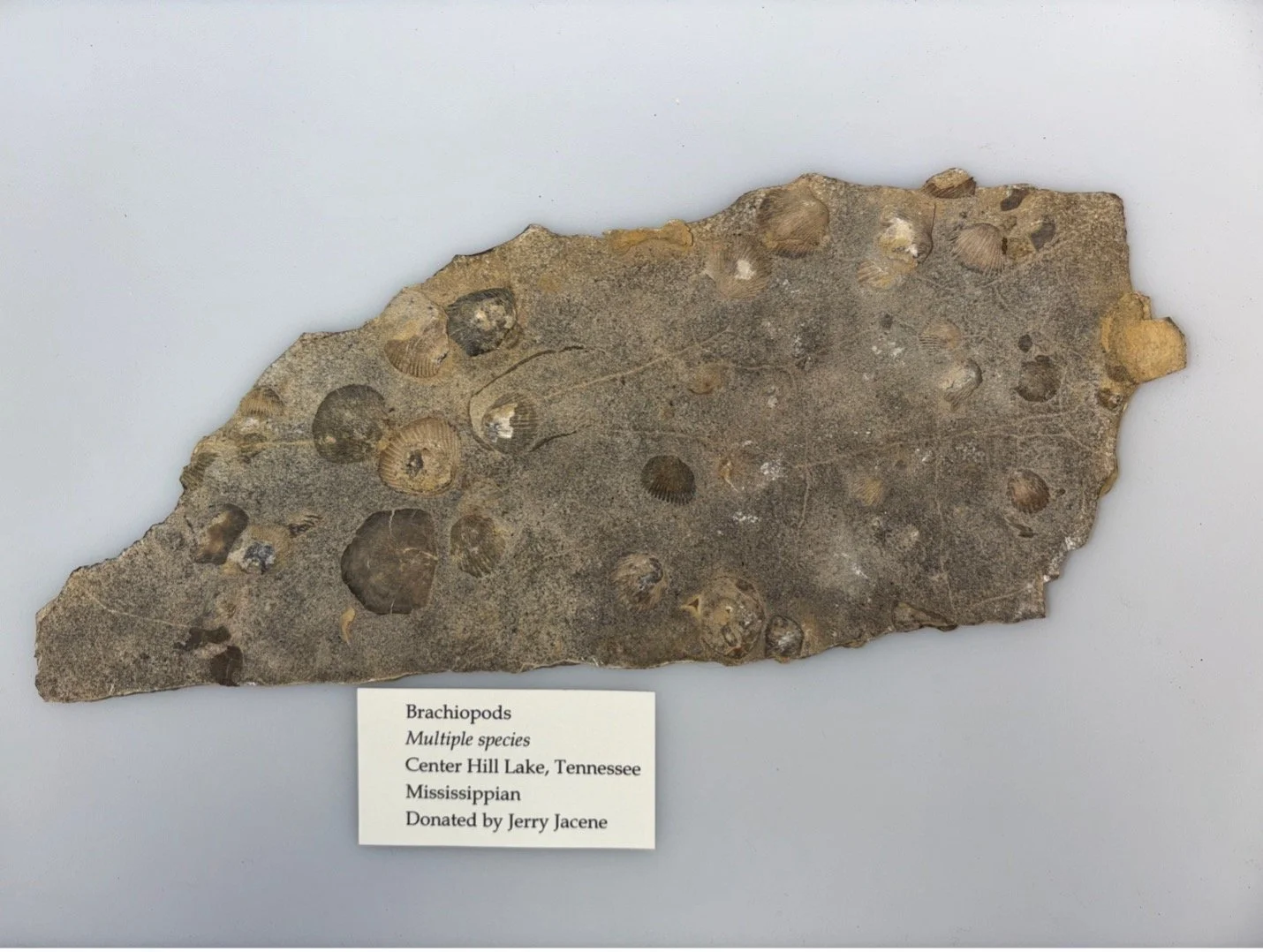
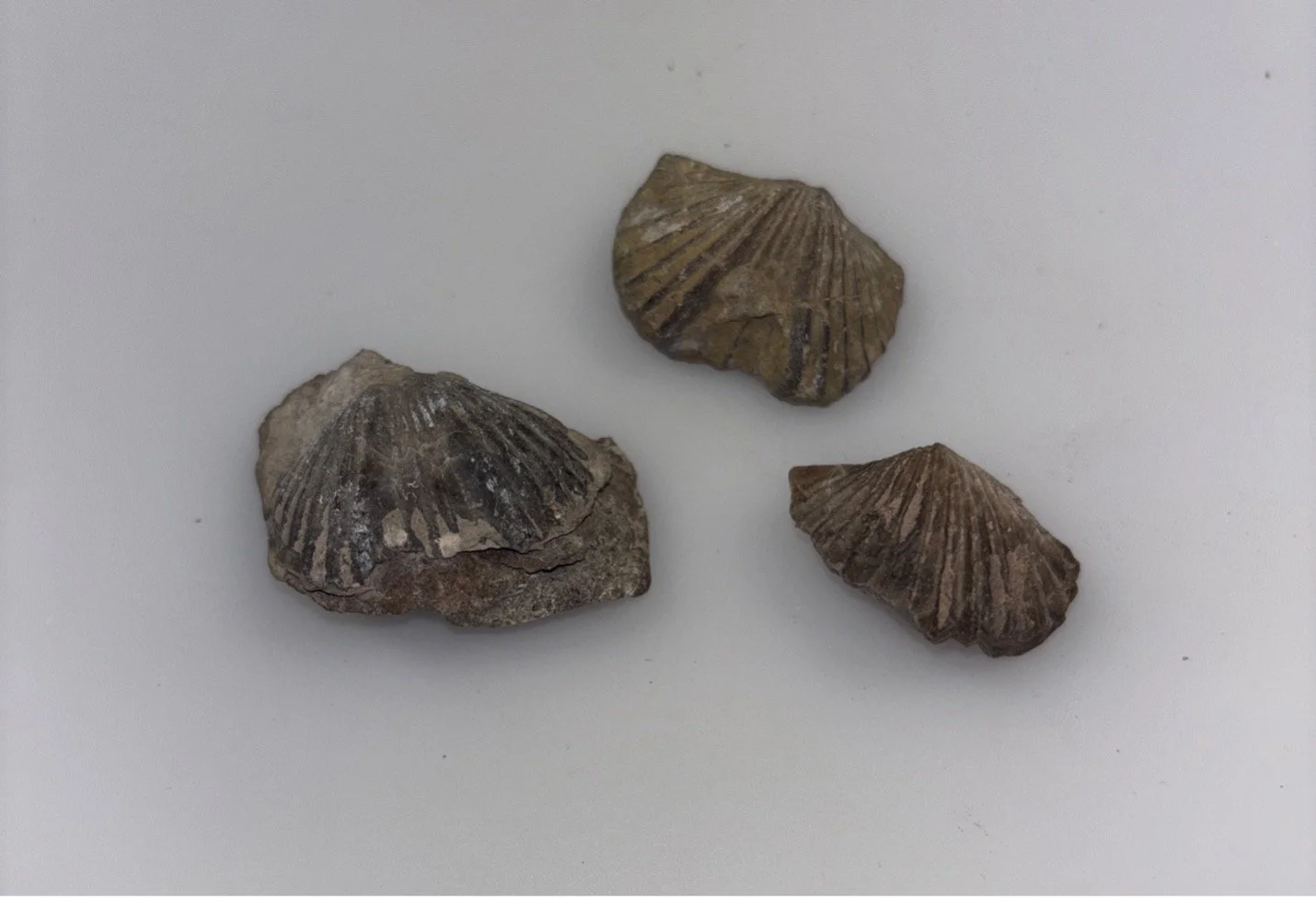
Brachiopods (Cambrian – Present)
Brachiopods are aquatic soft-bodied invertebrates who typically live inside a symmetrical two-halved shell. Though similar to bivalves in design, Brachiopods are deceptively unique, belonging to their own phylum, Brachiopoda. Brachiopods are generally stationary and are typically anchored in one spot, relying on filter feeding.
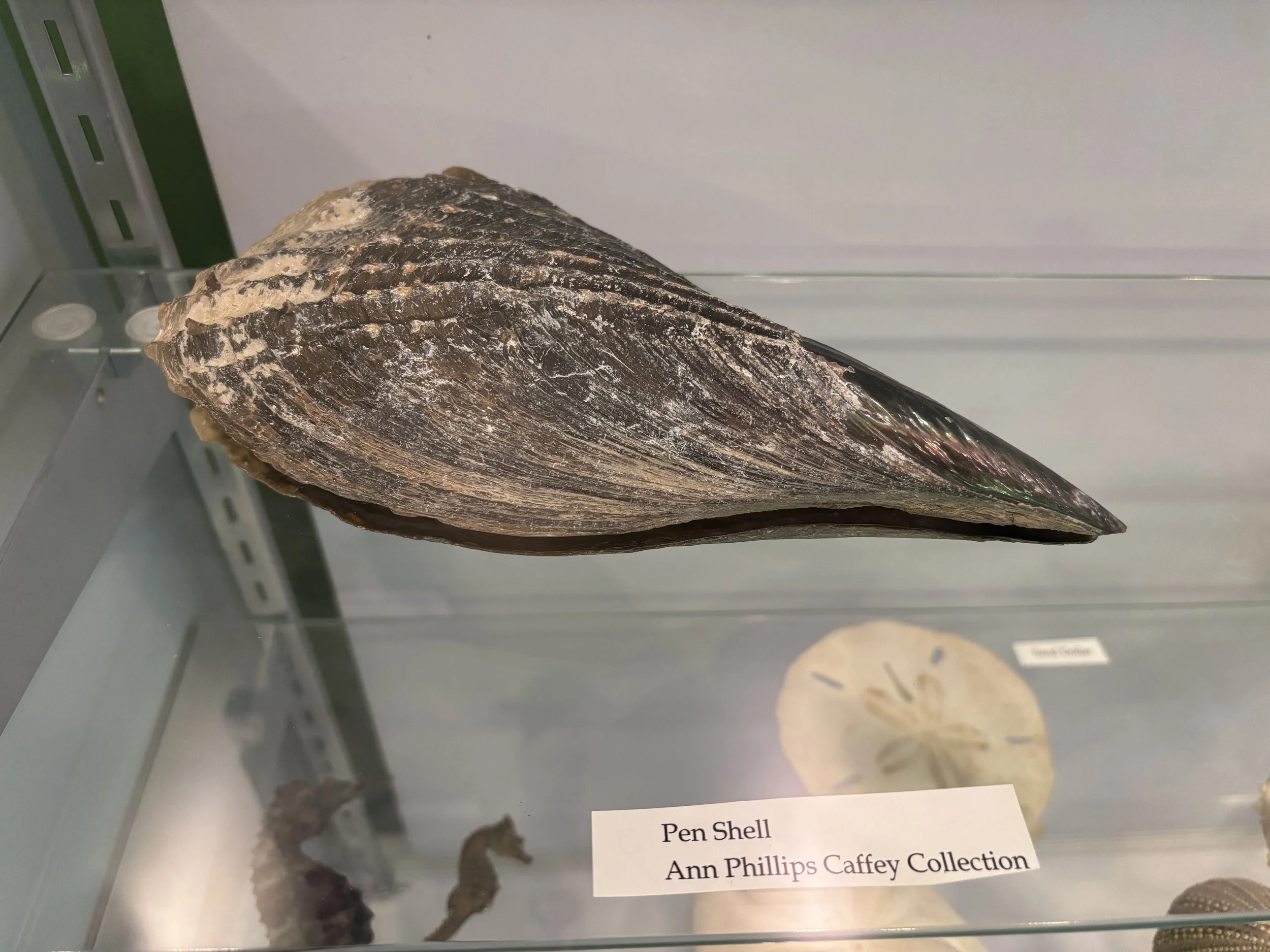
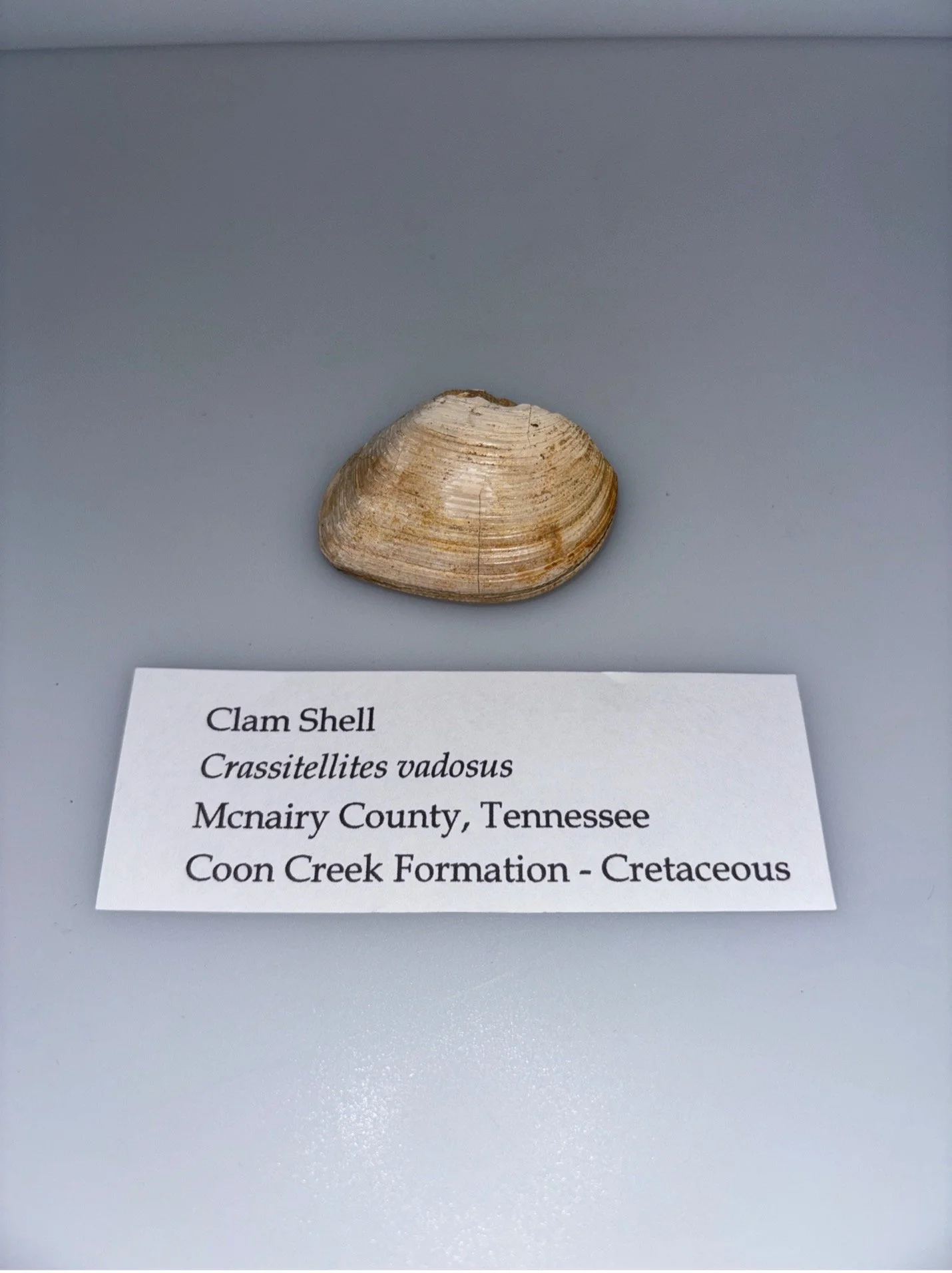
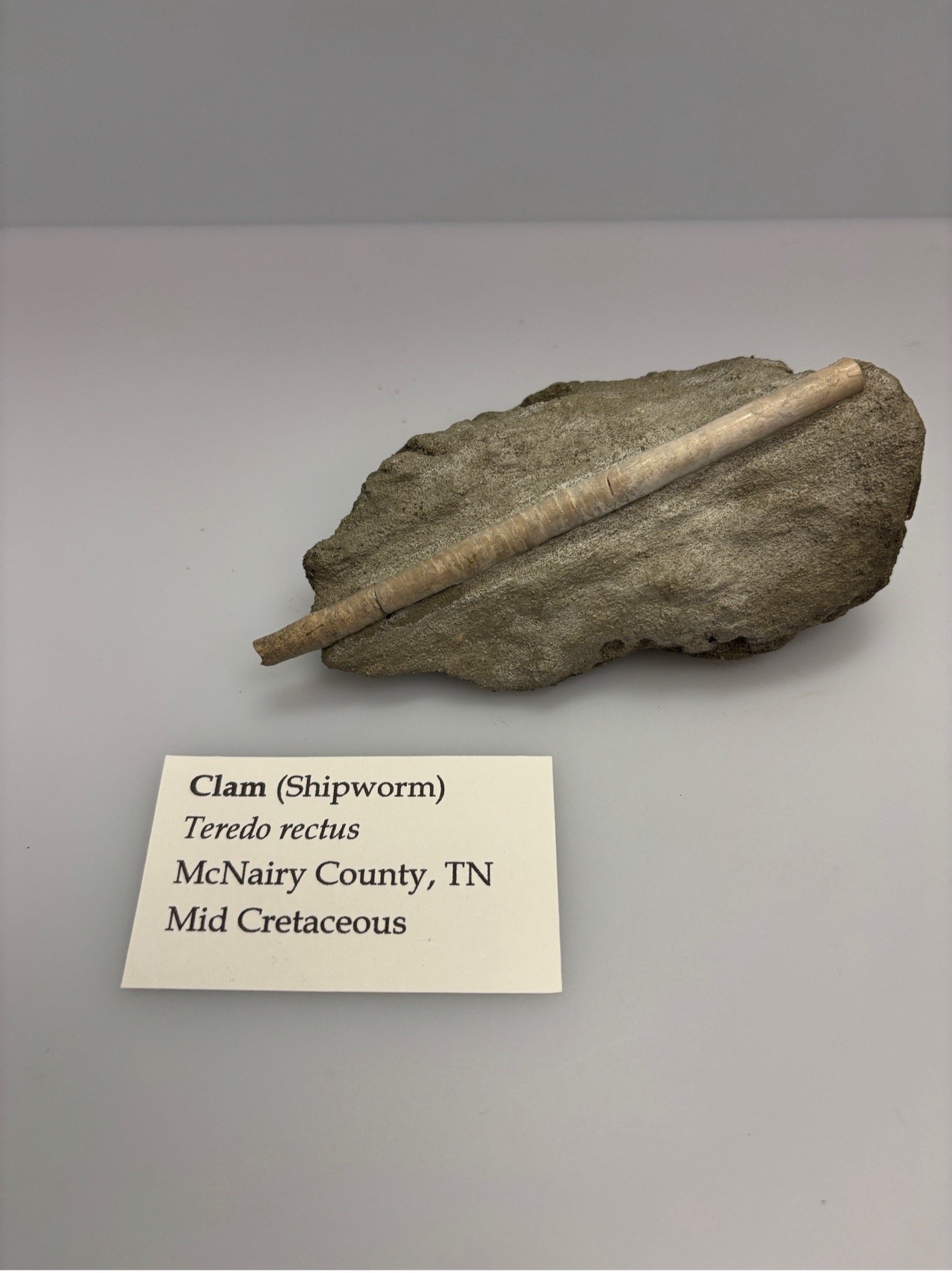
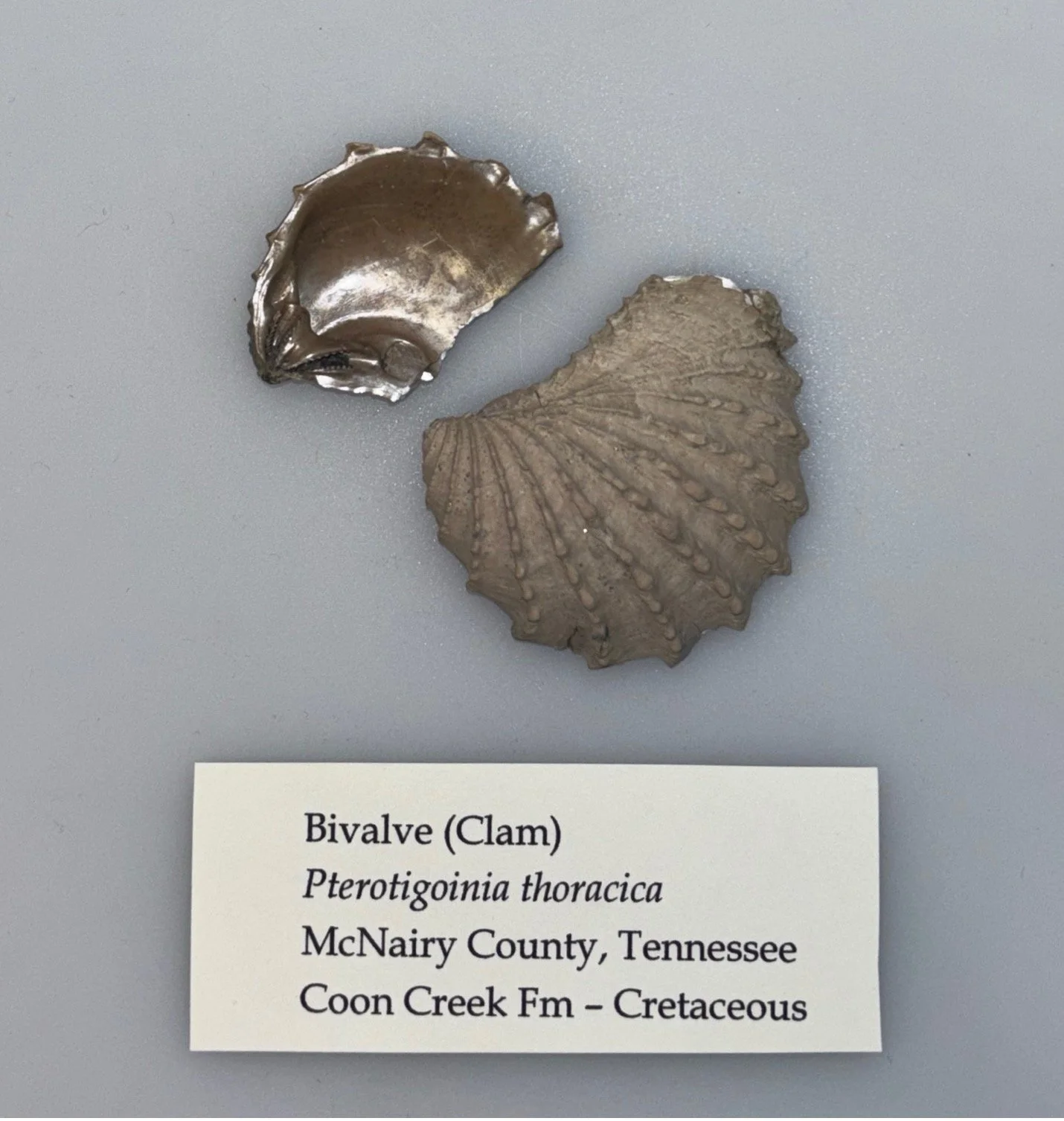
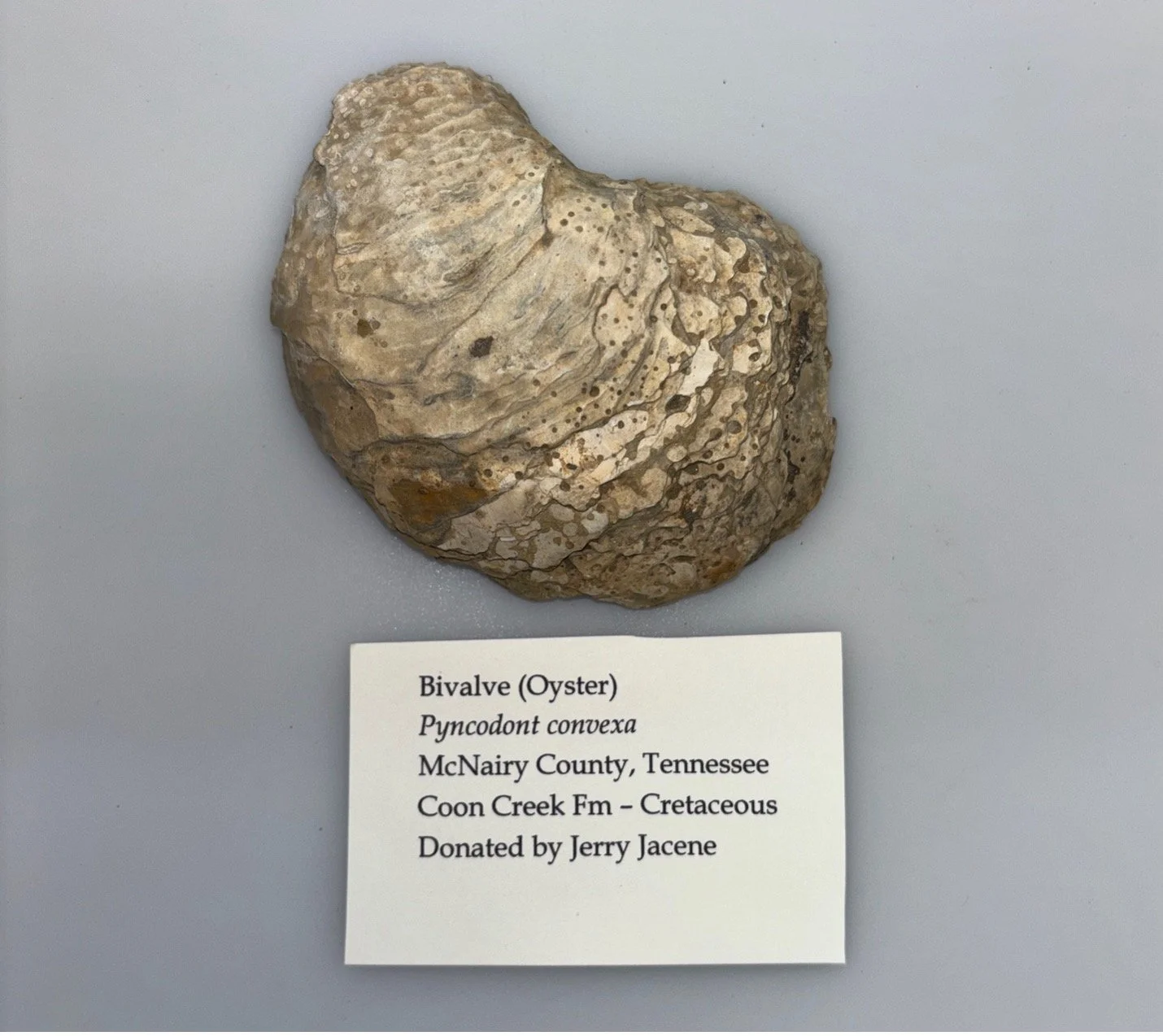
Bivalves are aquatic soft-bodied invertebrates who typically live inside a vertically symmetrical two-halved shell. They are similar to brachiopods, who are symmetrical both laterally and vertically, but the two are not actually very closely related. Today, bivalves vastly outnumber brachiopods, but during earlier periods, the inverse was true.
Bivalves are more mobile than they look, often burying themselves in sediment with the help of a muscular organ called a ‘foot’, and some can even swim by clapping their shell open and closed. Their shells have historically been used as jewelry, tools, and even money in certain cultures.
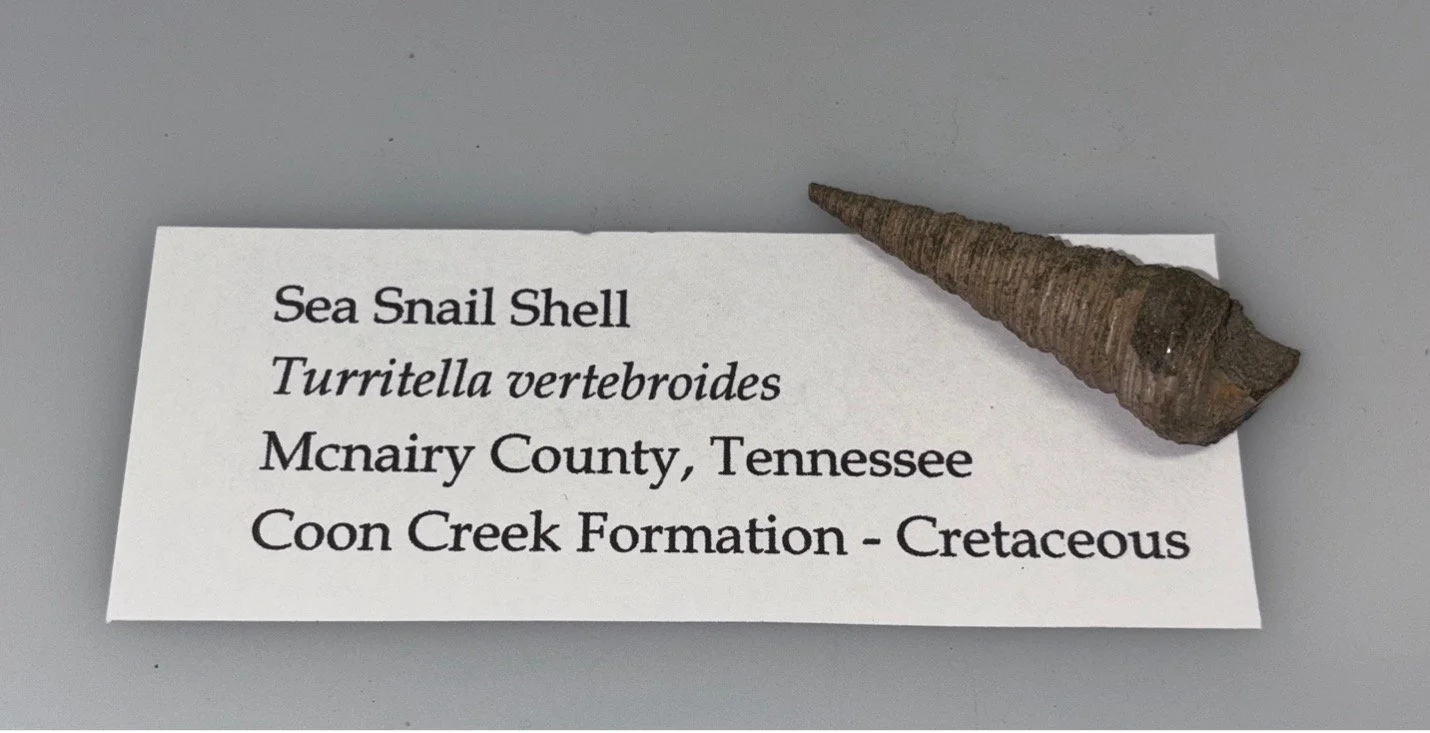
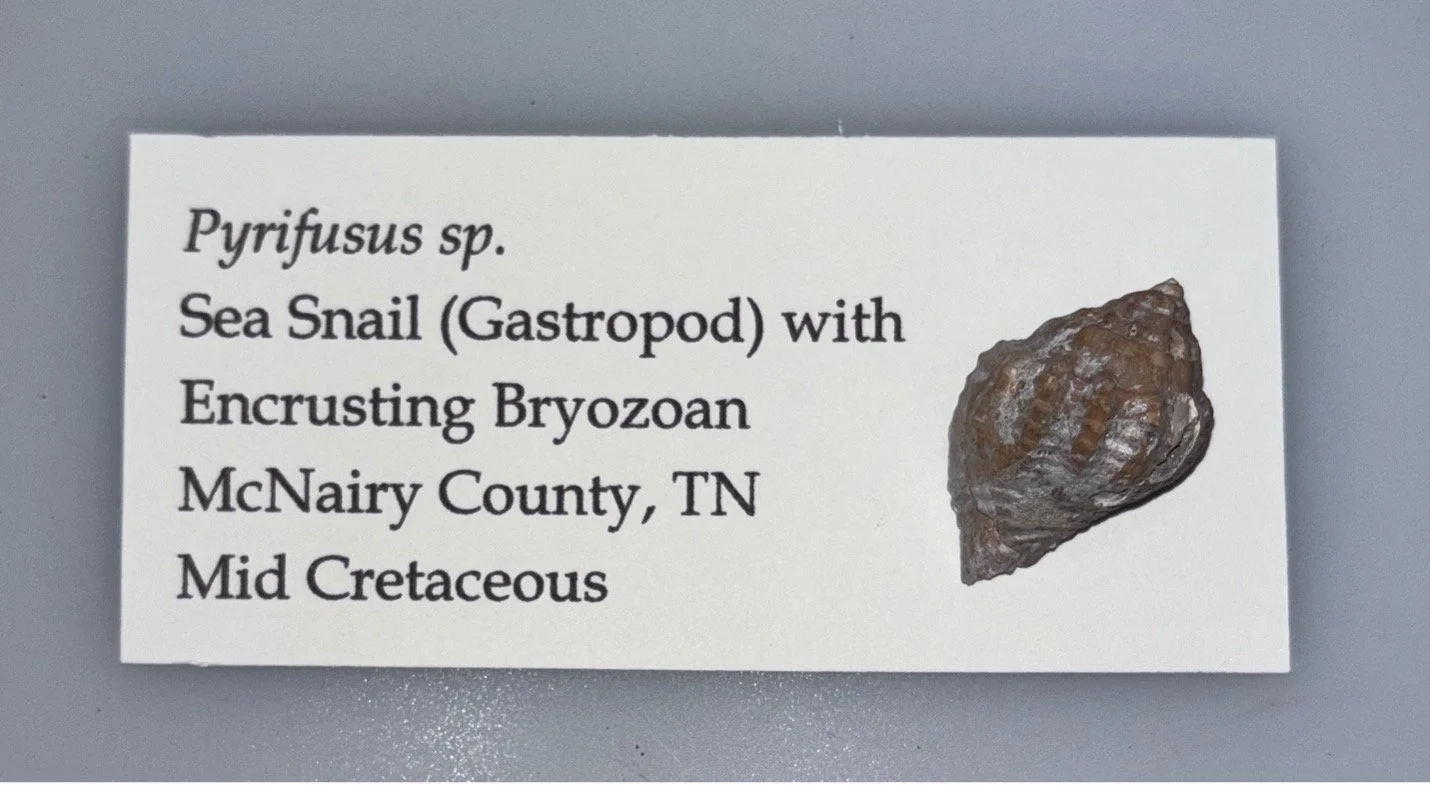
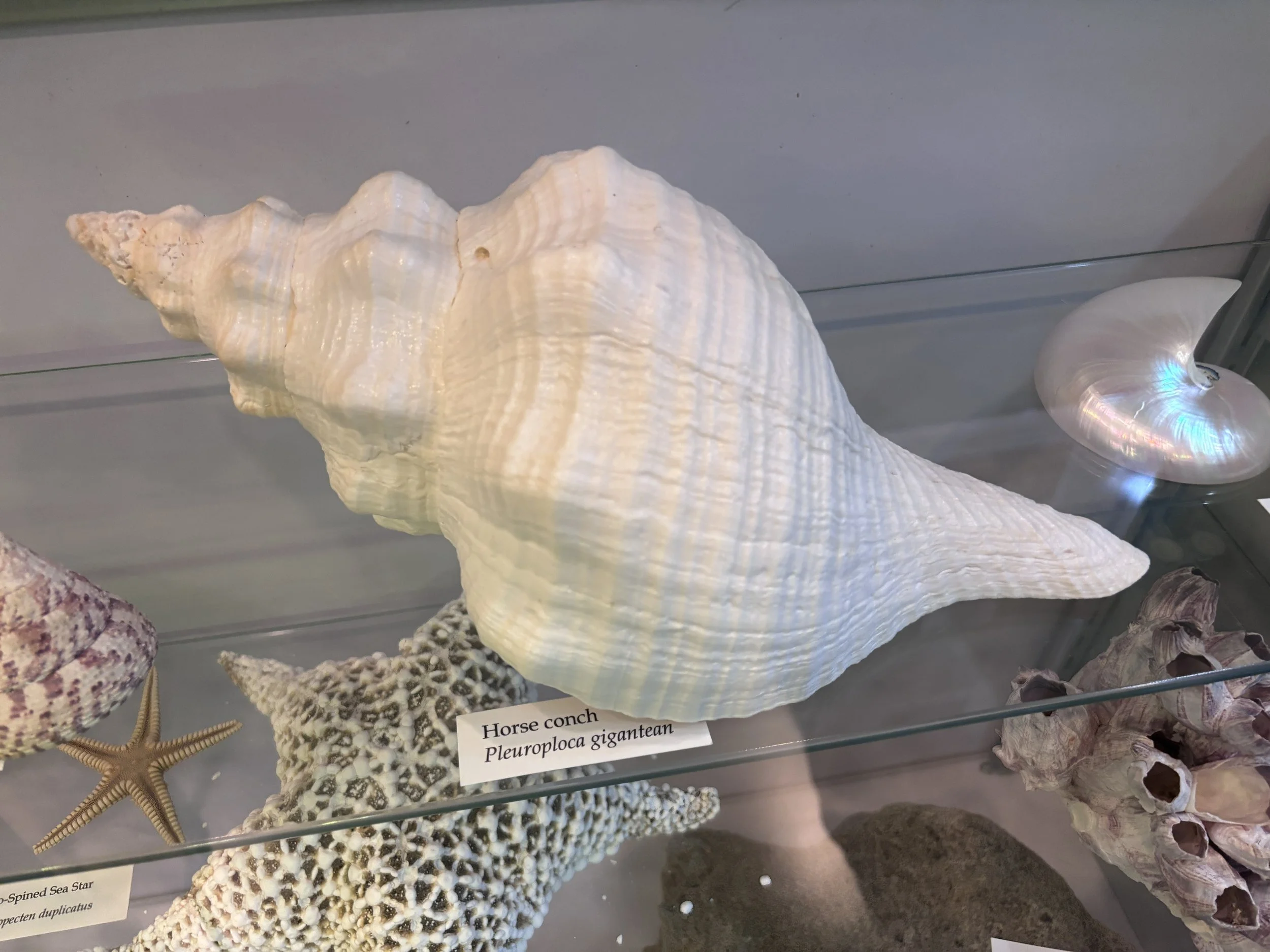
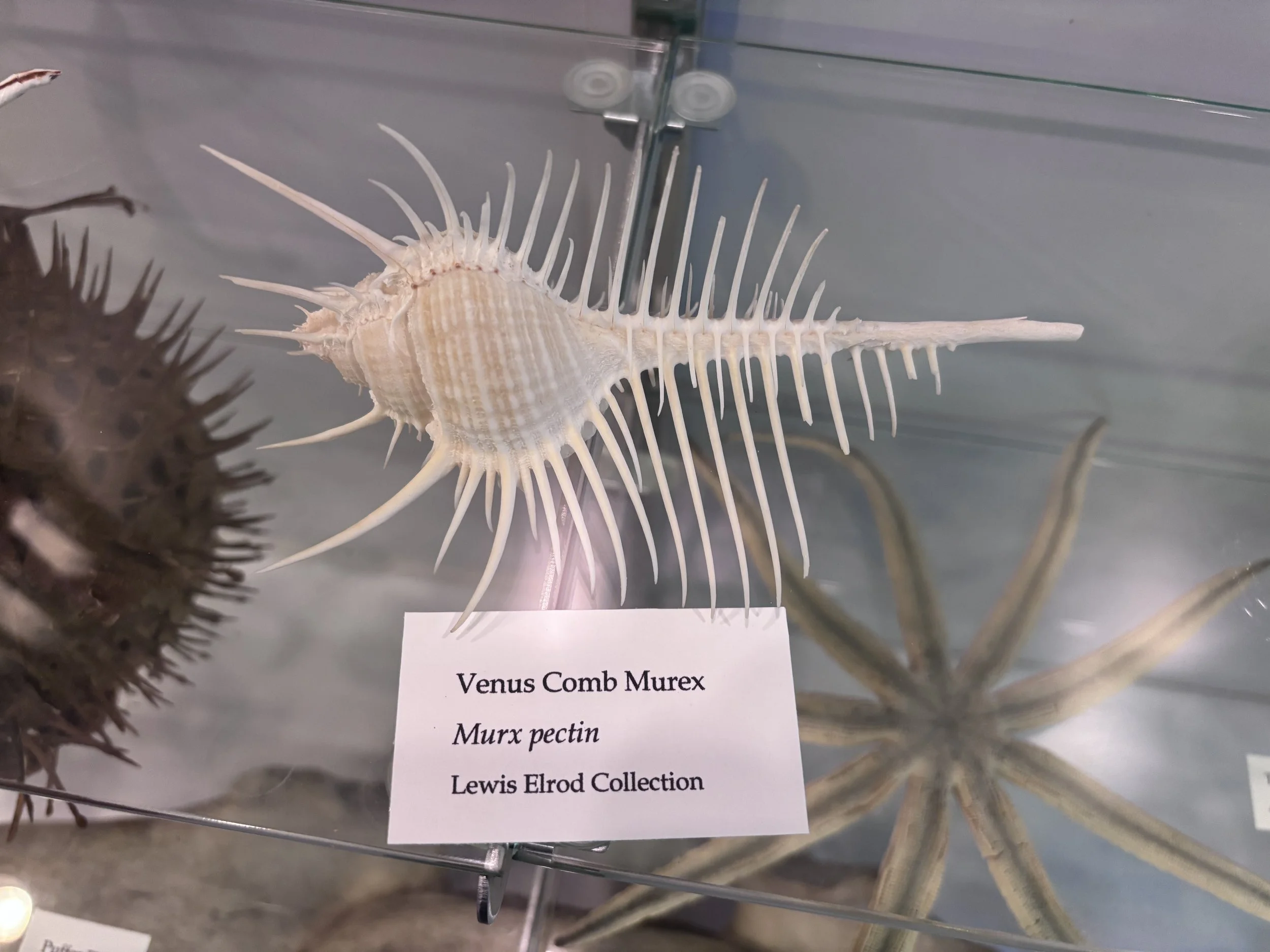
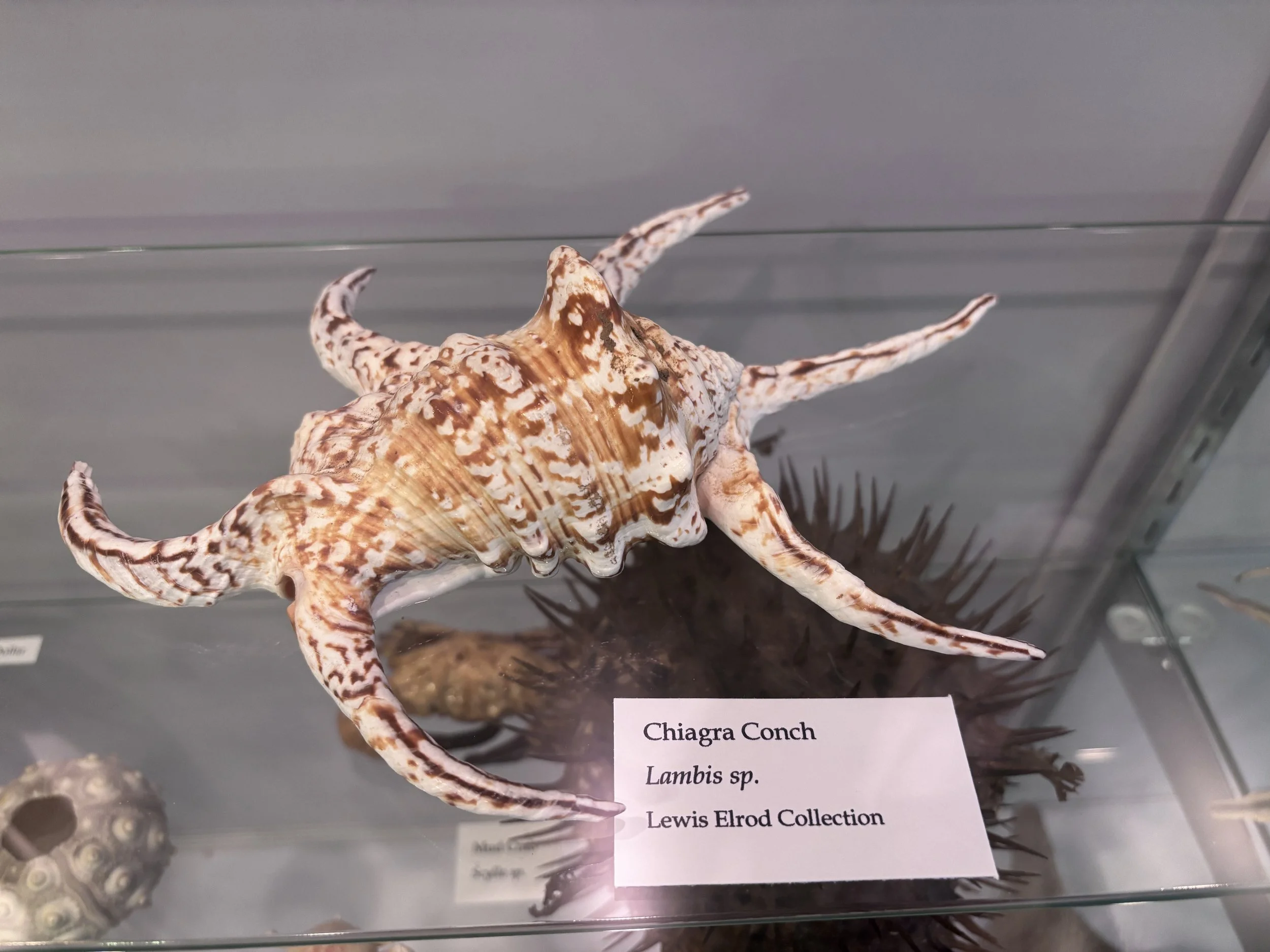
Gastropods (Late Cambrian – Present)
Gastropods are a class of soft-bodied invertebrates and are members of the phylum Mollusca, including things like snails and slugs. Gastropods have been around since almost the beginning of the fossil record, developing all the way back in the oceans of the Cambrian Period (485- 541 million years ago). Gastropod’s bodies are simple but highly adaptable, and have diversified far past marine living. Today there are species in the oceans, in rivers, on land, and even hydrothermal vents.
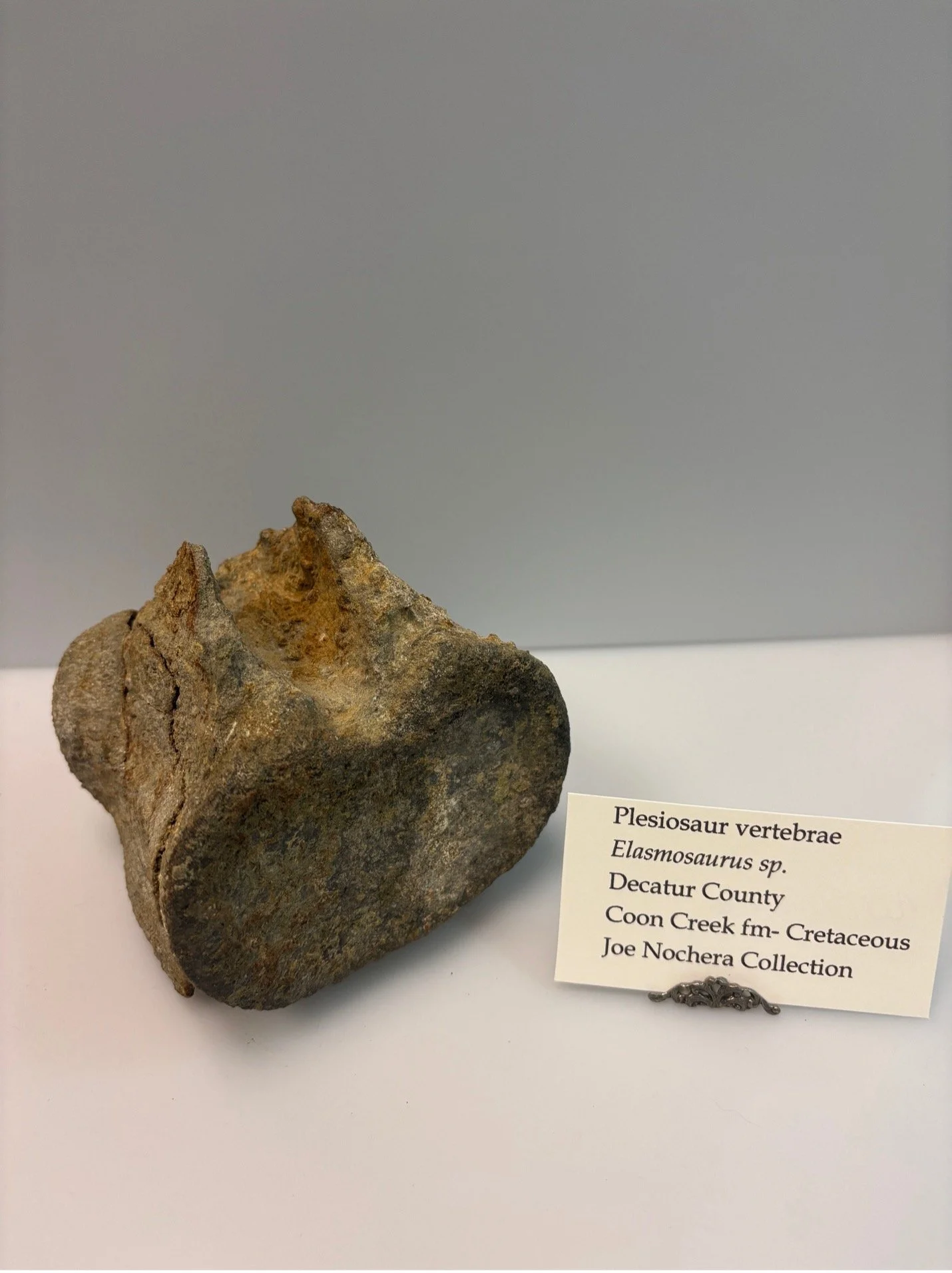
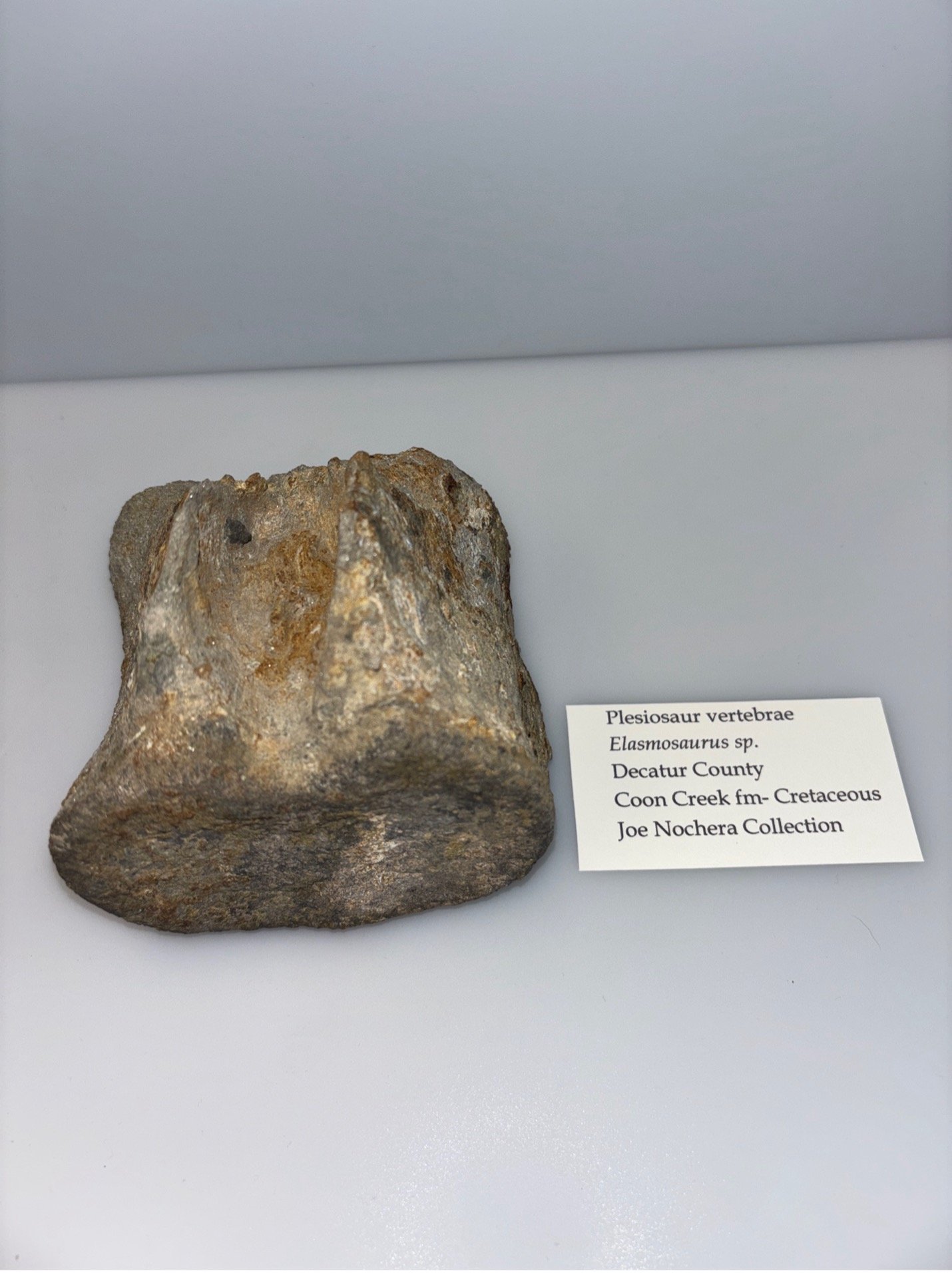
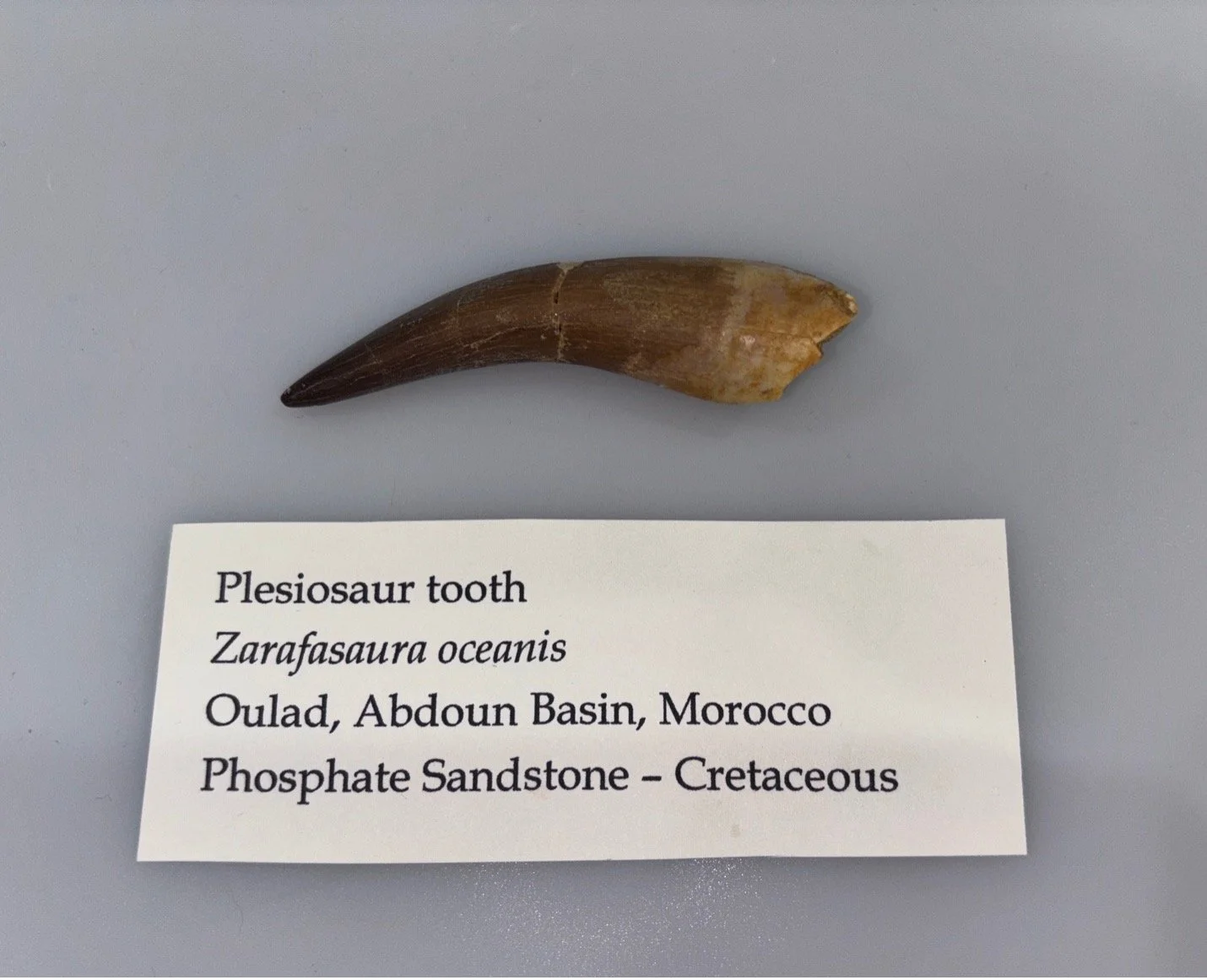
Plesiosaurs (Late Triassic – Late Cretaceous)
Plesiosaurs were marine reptiles that lived during the age of the dinosaurs. Though not a dinosaur itself, Plesiosaurs are well-known for their distinctive body shape which inspired the famous cryptid, the Loch Ness Monster. While many believers argue that a Plesiosaur could still be in Loch Ness in Scotland, they unfortunately all went extinct at the same time at the non-avian dinosaurs following the K-Pg Impact. Their diet was comprised of fish and cephalopods. Plesiosaurs came in different shapes and sizes; some where large and long-necked like the Zarafasaurus oceanis who were generally pacifistic and solitary animals, while some like the Pliosaurus had short necks and large heads and were much more aggressive hunters.
The first complete Plesiosaur fossil was found by famous female paleontologist Mary Anning in 1823.
No results match your search. Try removing a few filters.