Fossil Collection Search
Check out our collection! Filter through time period and other categories and click on entries to learn more about them.
Check out our collection! Filter through time period and other categories and click on entries to learn more about them.
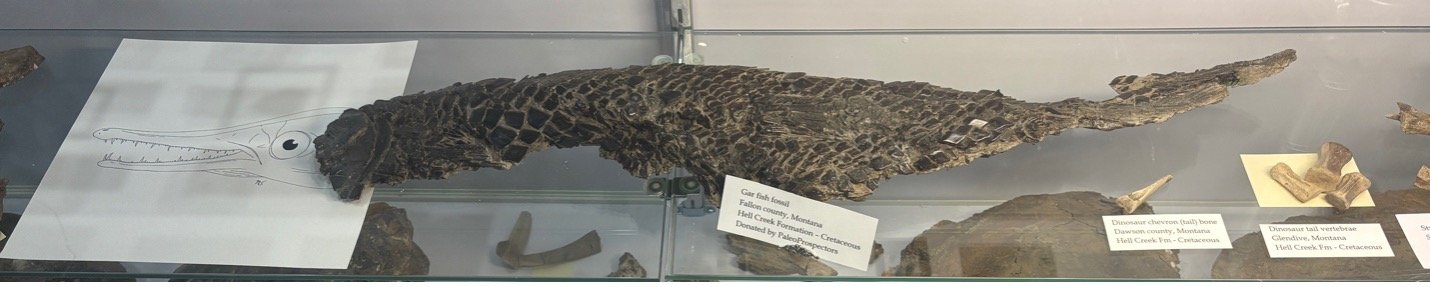
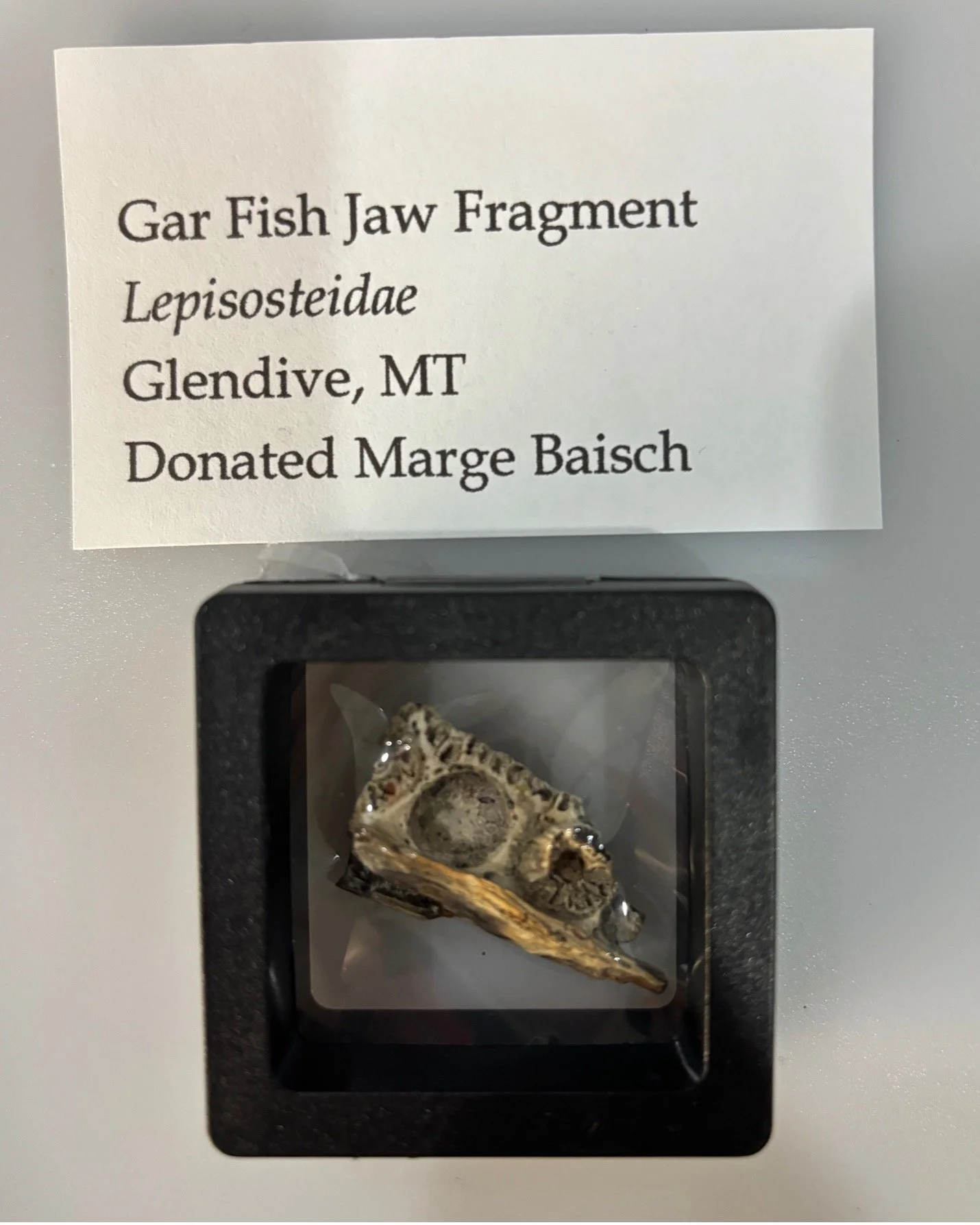
Gar fish are long-bodied freshwater fish who possess armored scales along their bodies. Gars belonging to Lepisosteidae first developed in the early Cretaceous, but ancestors to these Gar first show up in the fossil record during the Jurassic Period. Gars are often called ‘living fossils’ as they have gone virtually unchanged over the last 100 million years. There is plenty of fossil evidence for the Gar in the Hell Creek Formation; their armored scales fossilize very well and appear a bit like shards of obsidian among the dirt.
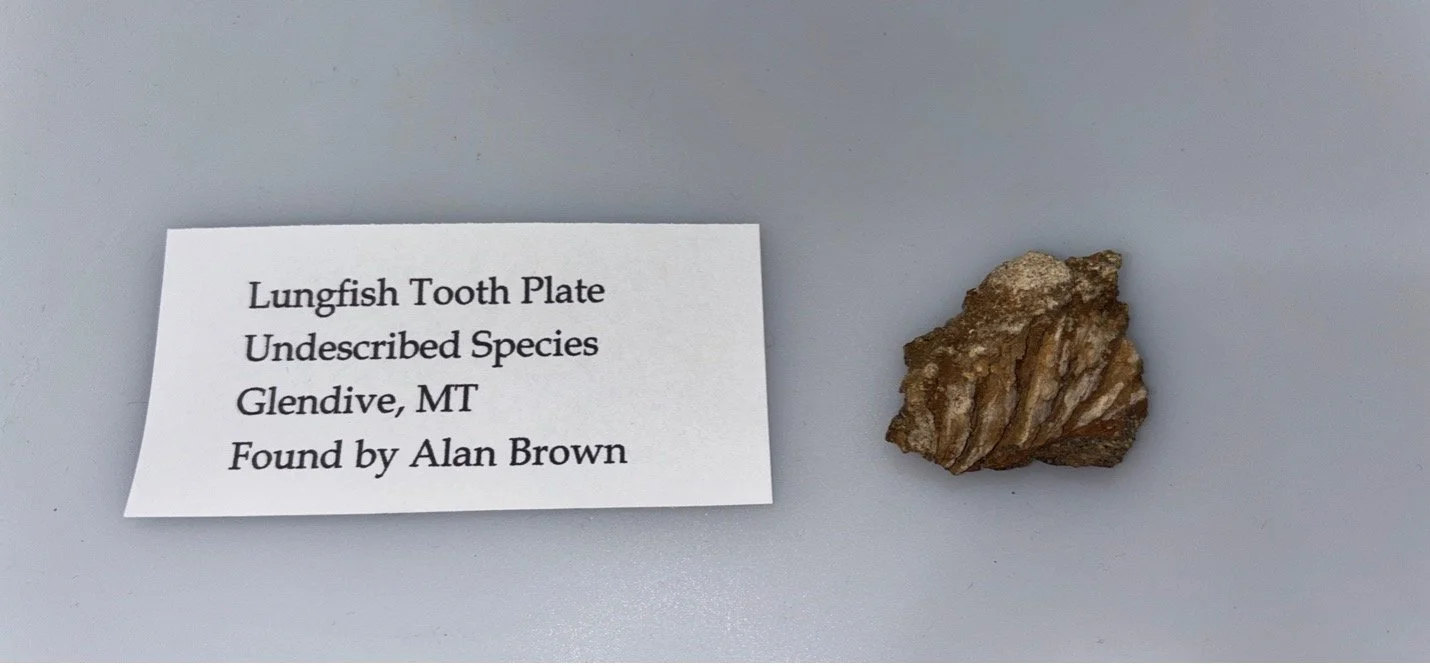
(Early Devonian – Present)
Lungfish are long, eel-shaped fish that can breathe air. While some species of lungfish possess both lungs and gills, they have an advantage over gill-exclusive fish types because they are able to survive in oxygen poor waters and withstand droughts, which may explain why they have managed to stay relatively unchanged over the last 400 million years. Lungfish are considered a “missing link” in the evolution of mammals, reptiles, amphibians, and birds as they are the closest relative to early tetrapods (or all vertebrate animals with four limbs).
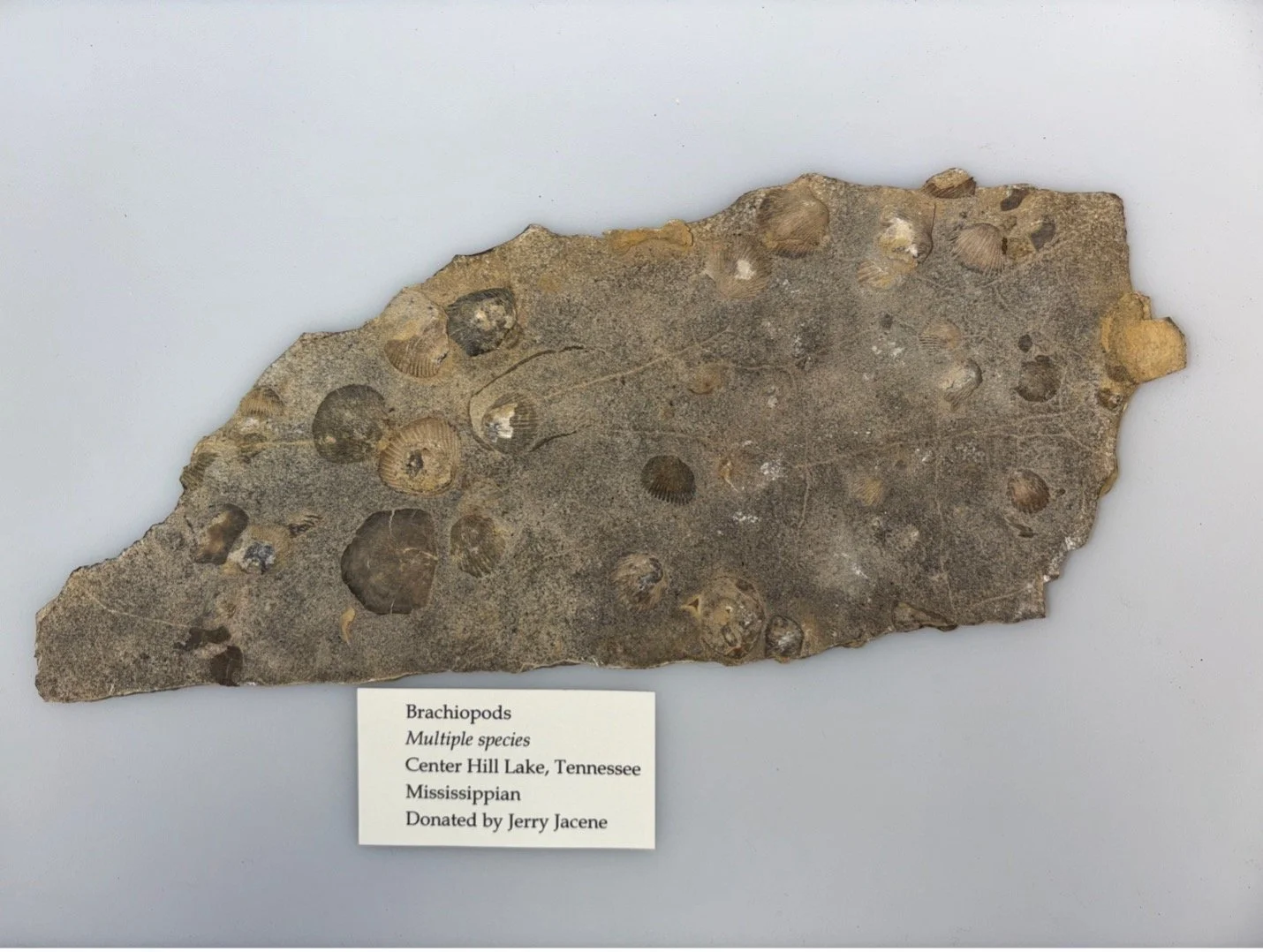
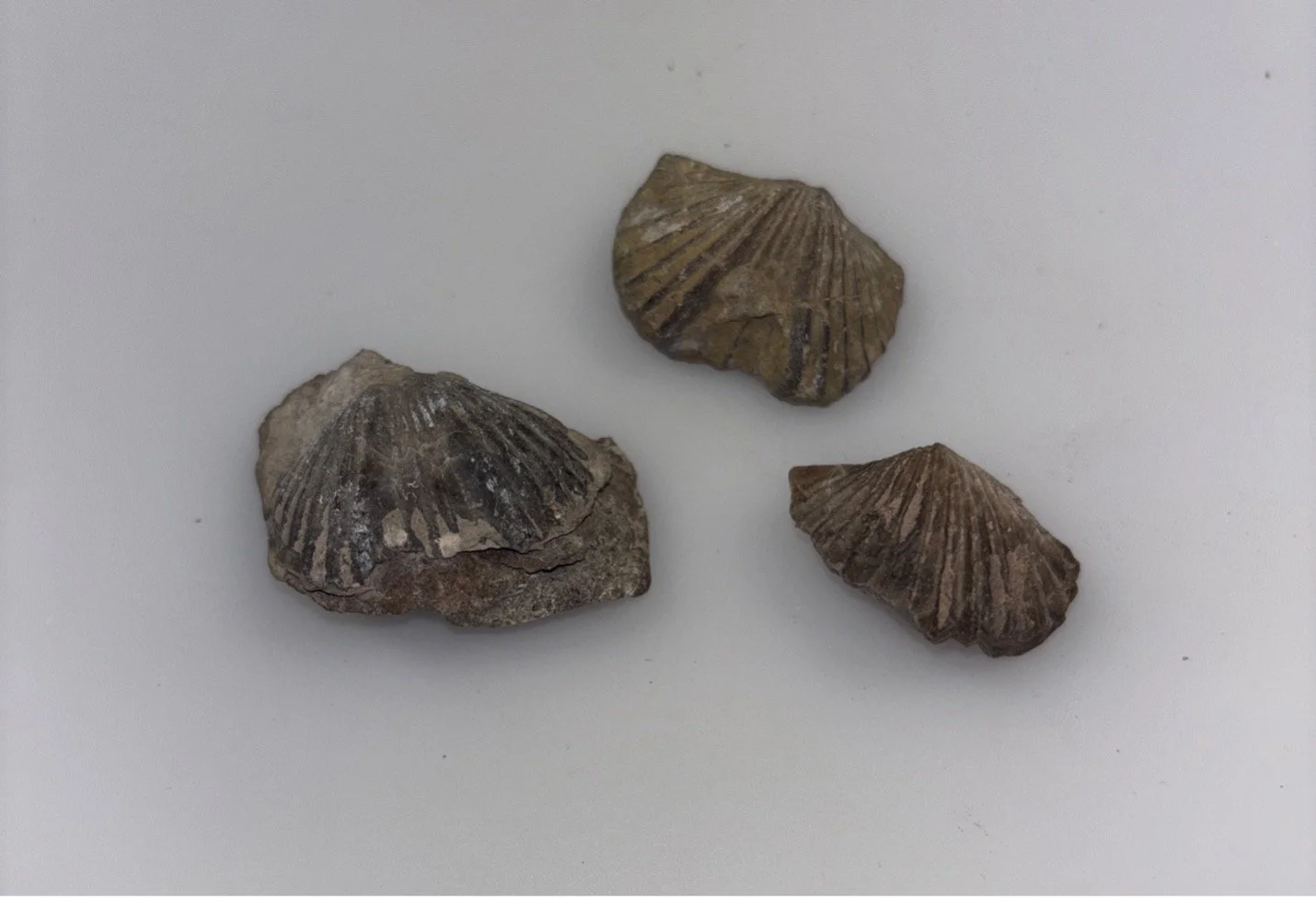
Brachiopods (Cambrian – Present)
Brachiopods are aquatic soft-bodied invertebrates who typically live inside a symmetrical two-halved shell. Though similar to bivalves in design, Brachiopods are deceptively unique, belonging to their own phylum, Brachiopoda. Brachiopods are generally stationary and are typically anchored in one spot, relying on filter feeding.
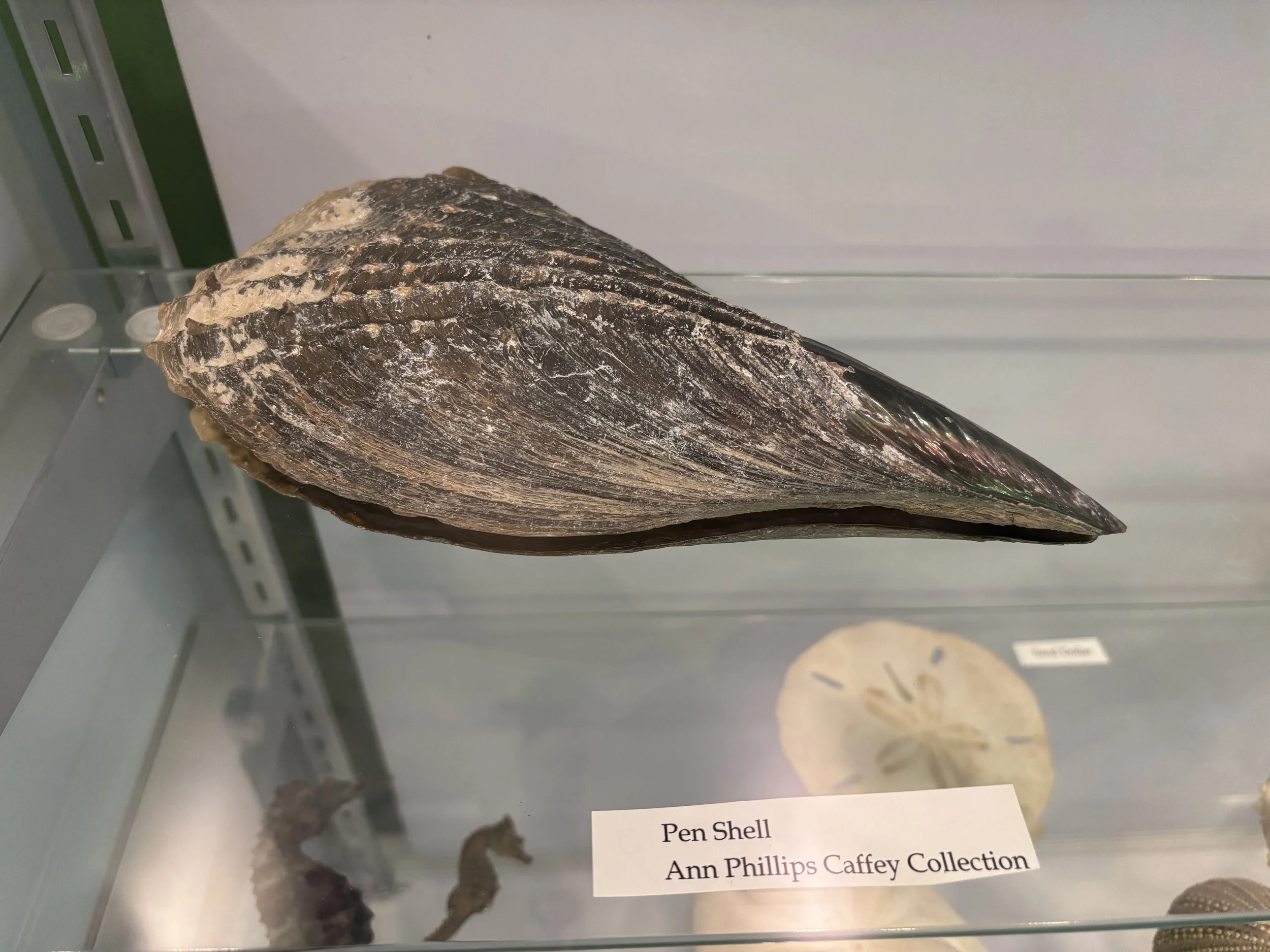
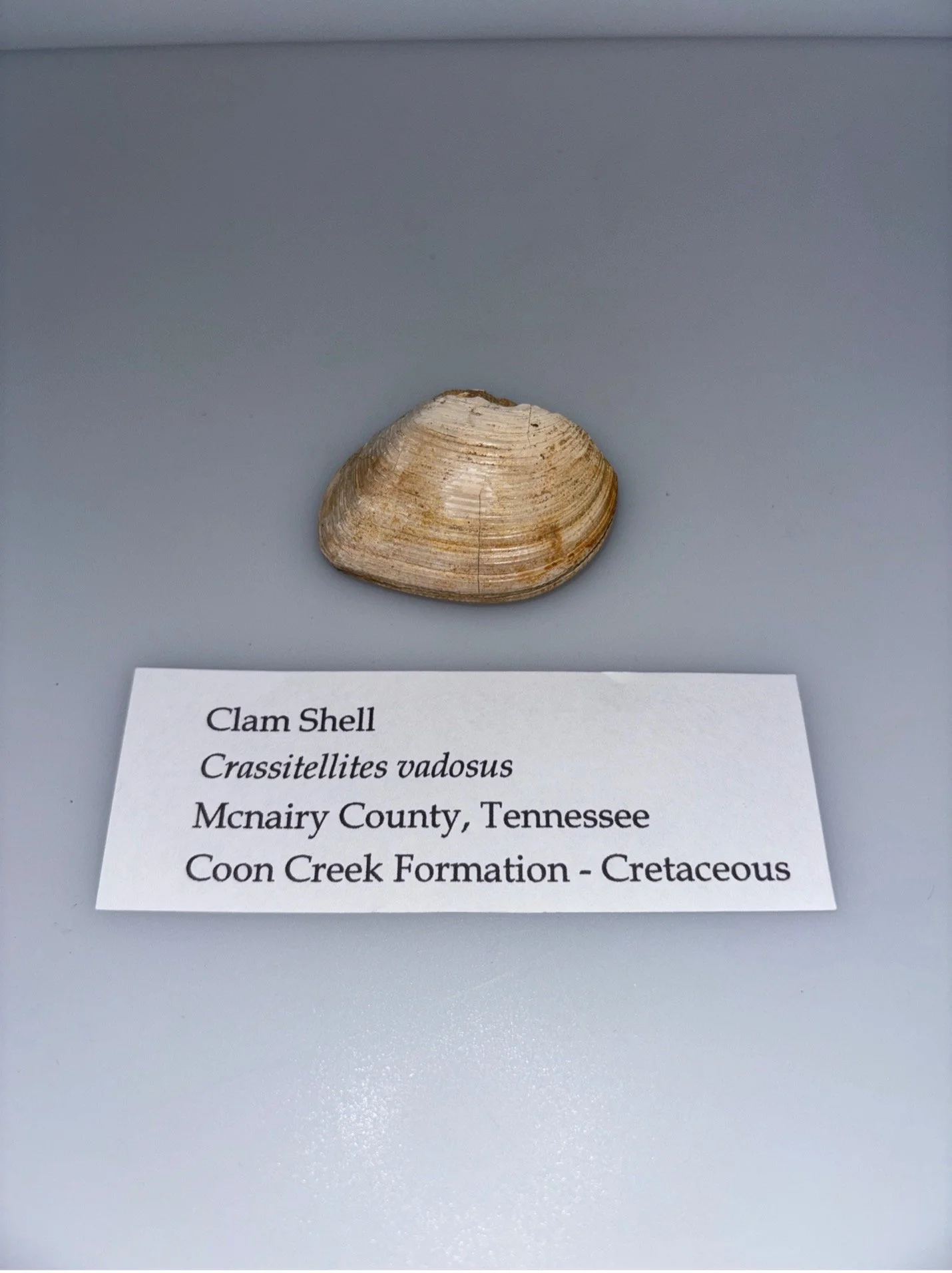
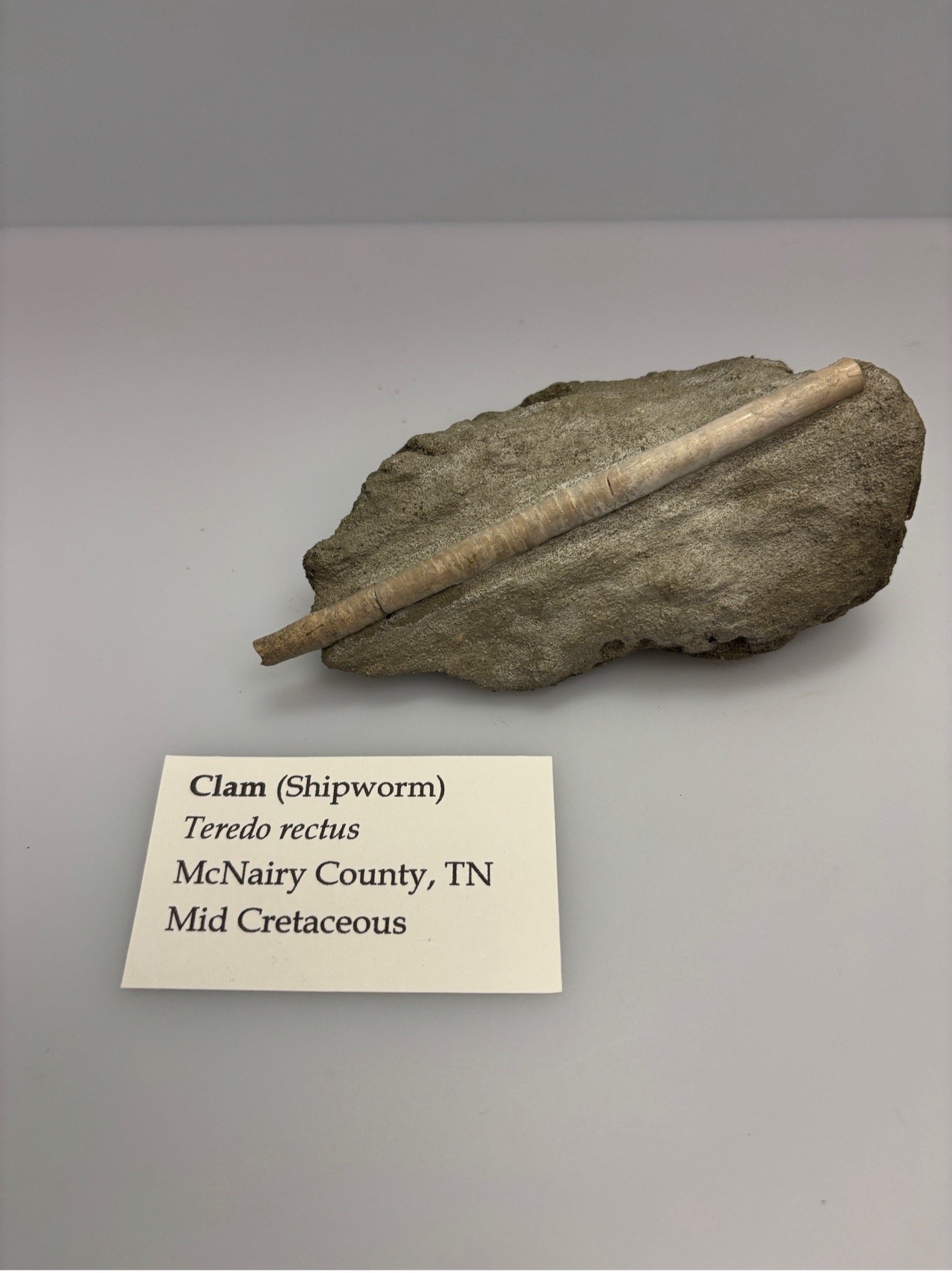
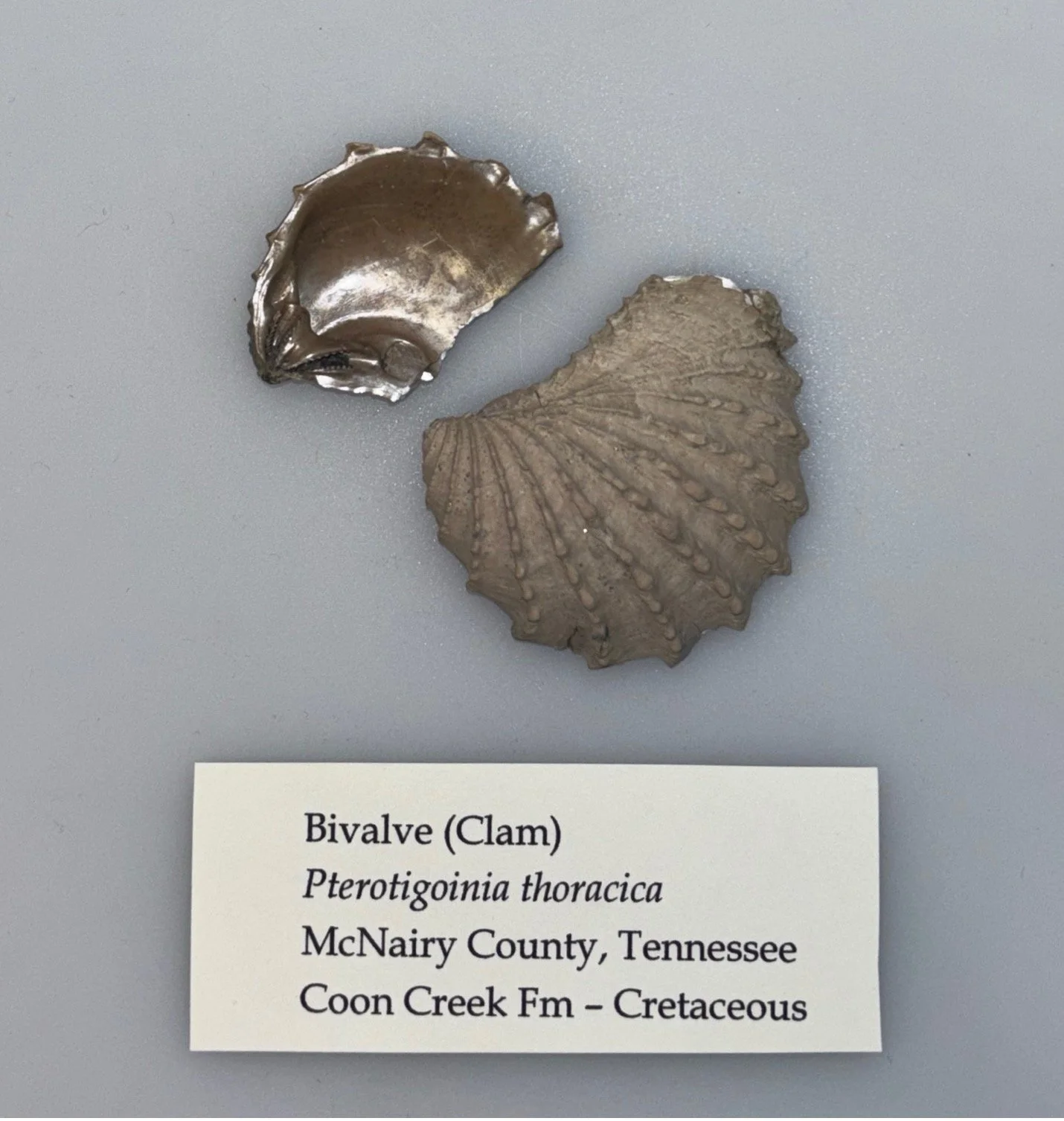
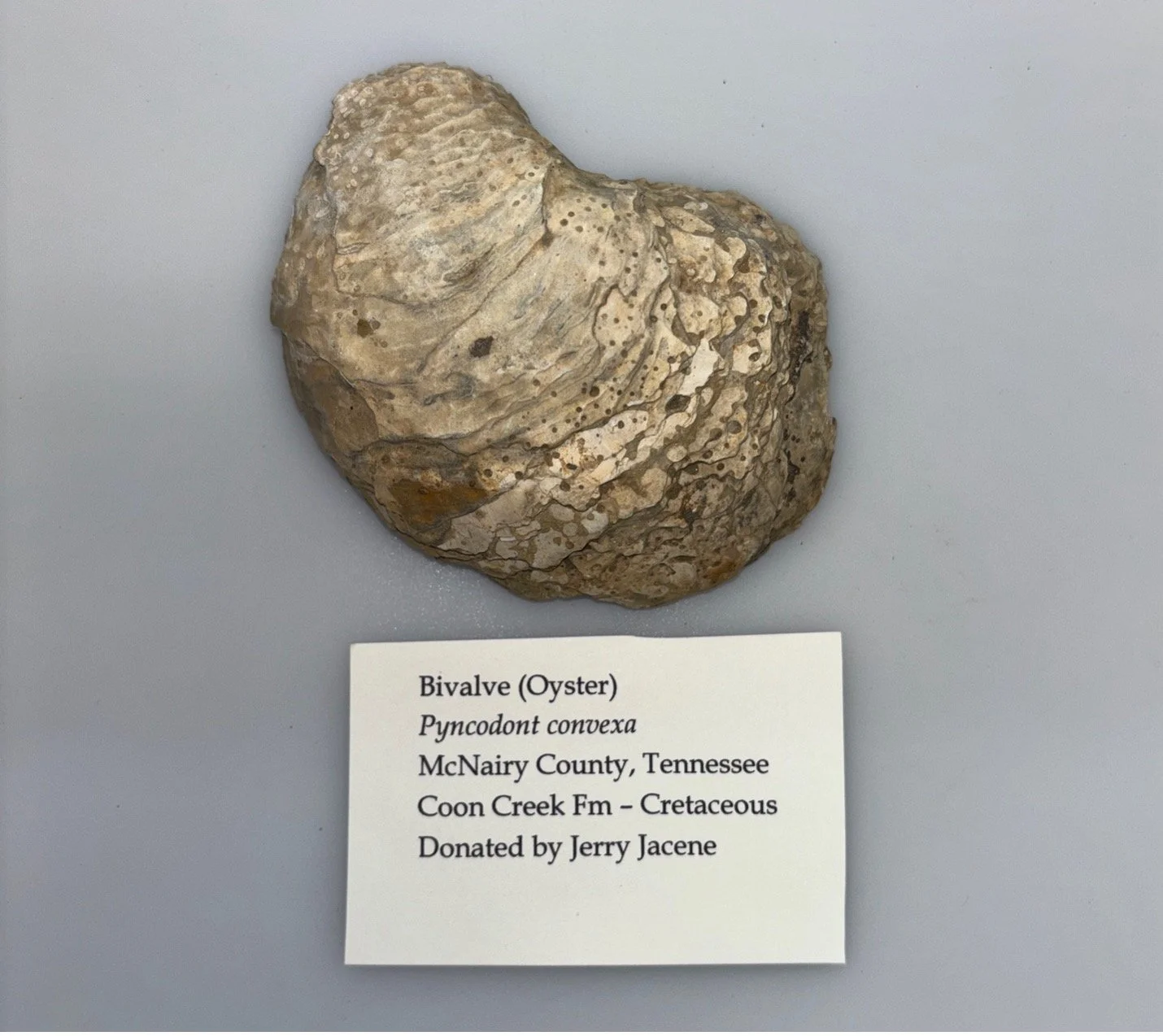
Bivalves are aquatic soft-bodied invertebrates who typically live inside a vertically symmetrical two-halved shell. They are similar to brachiopods, who are symmetrical both laterally and vertically, but the two are not actually very closely related. Today, bivalves vastly outnumber brachiopods, but during earlier periods, the inverse was true.
Bivalves are more mobile than they look, often burying themselves in sediment with the help of a muscular organ called a ‘foot’, and some can even swim by clapping their shell open and closed. Their shells have historically been used as jewelry, tools, and even money in certain cultures.
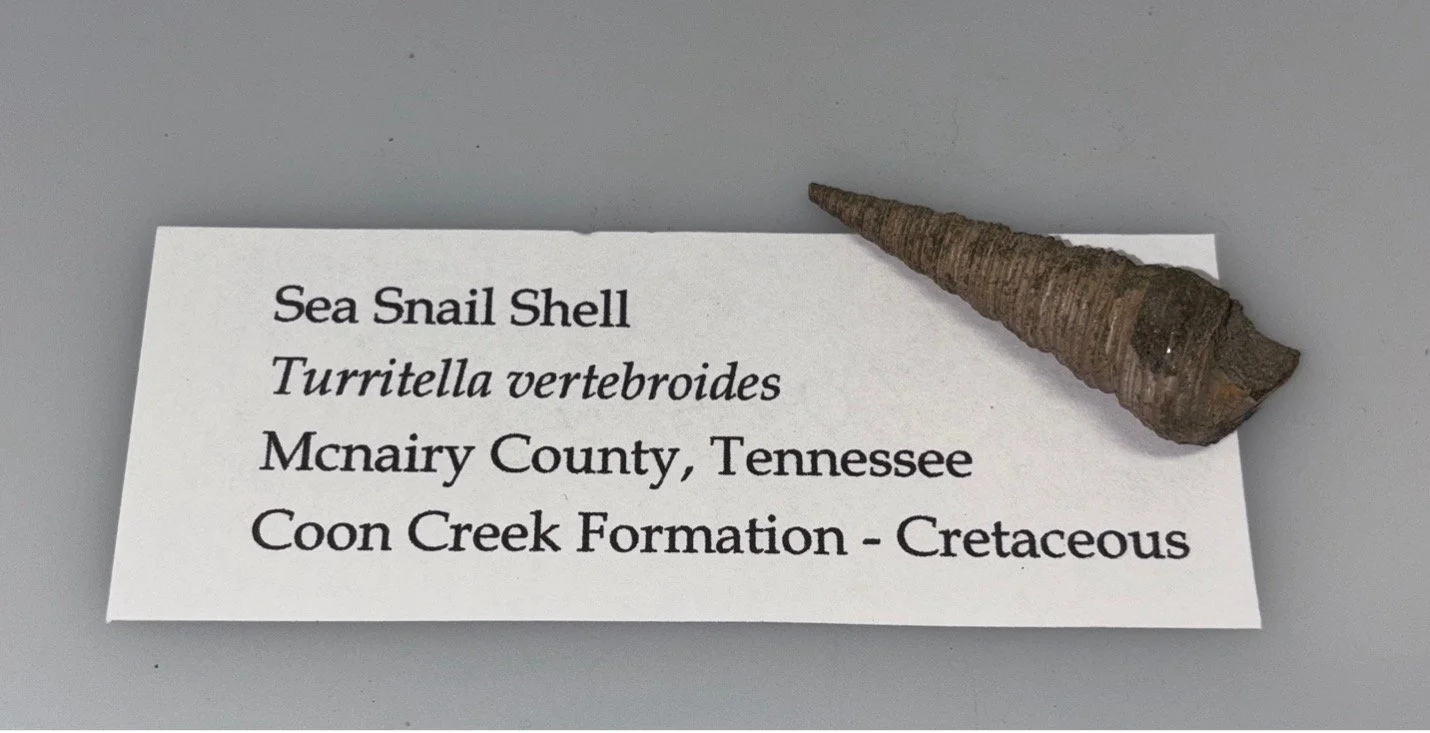
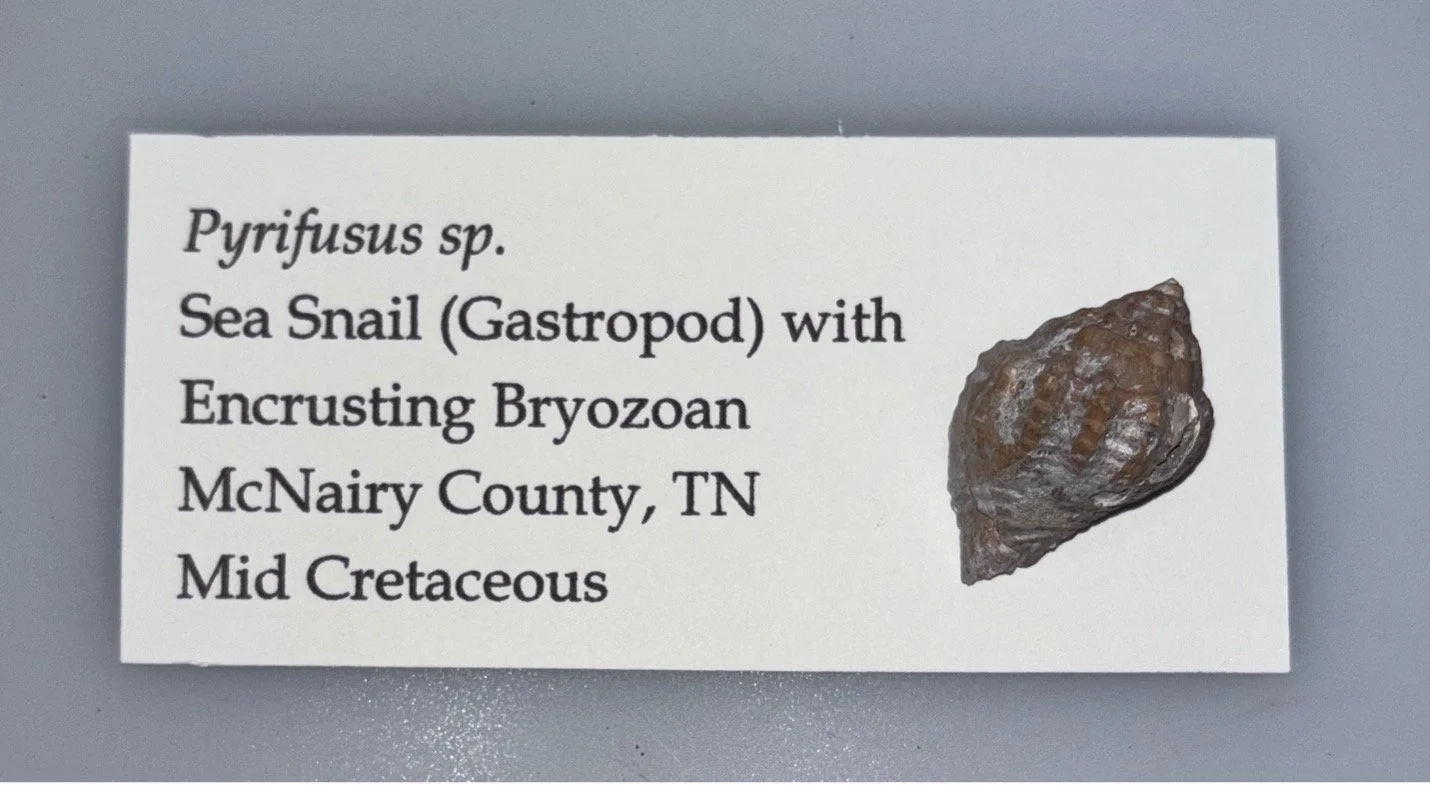
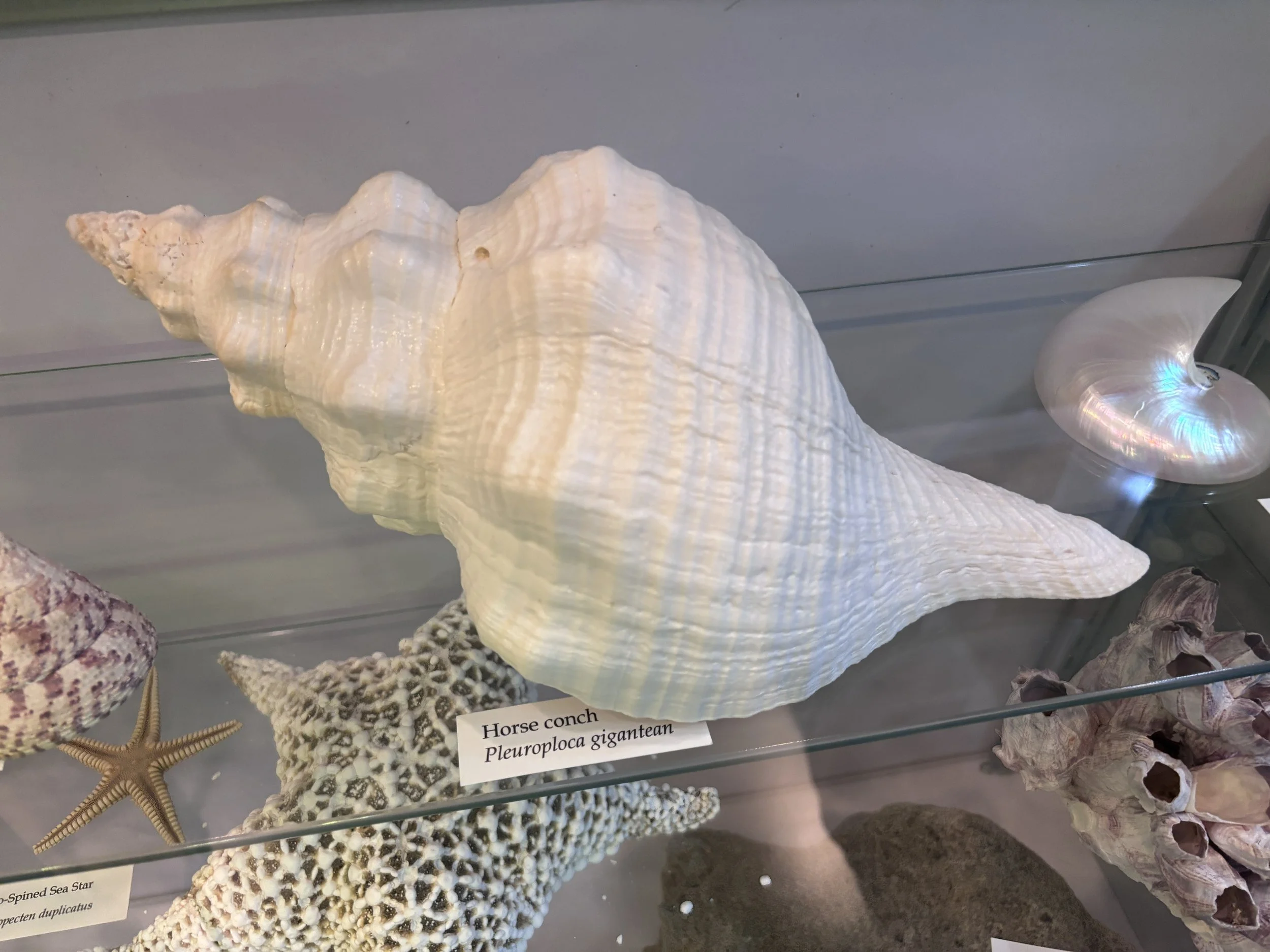
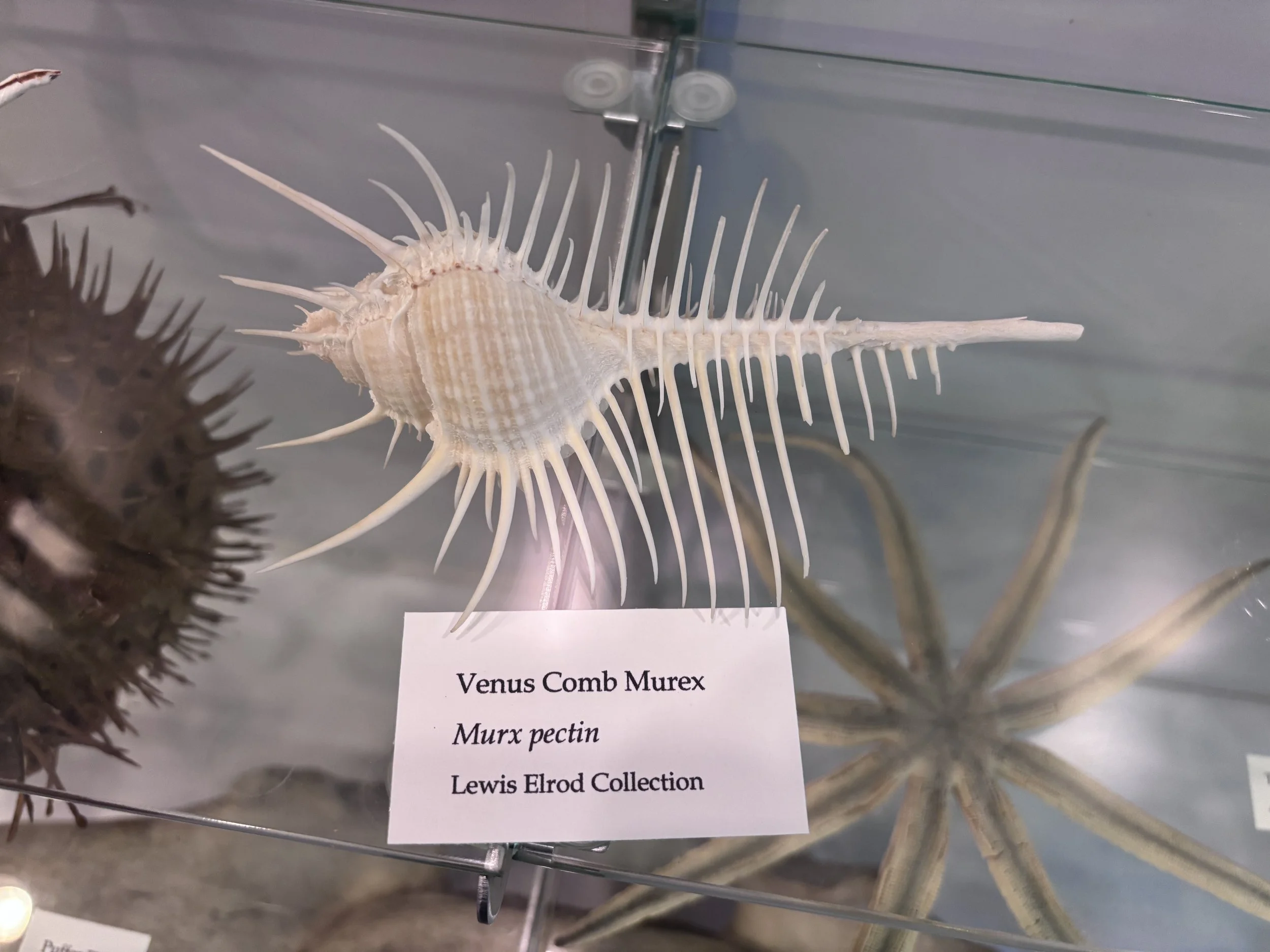
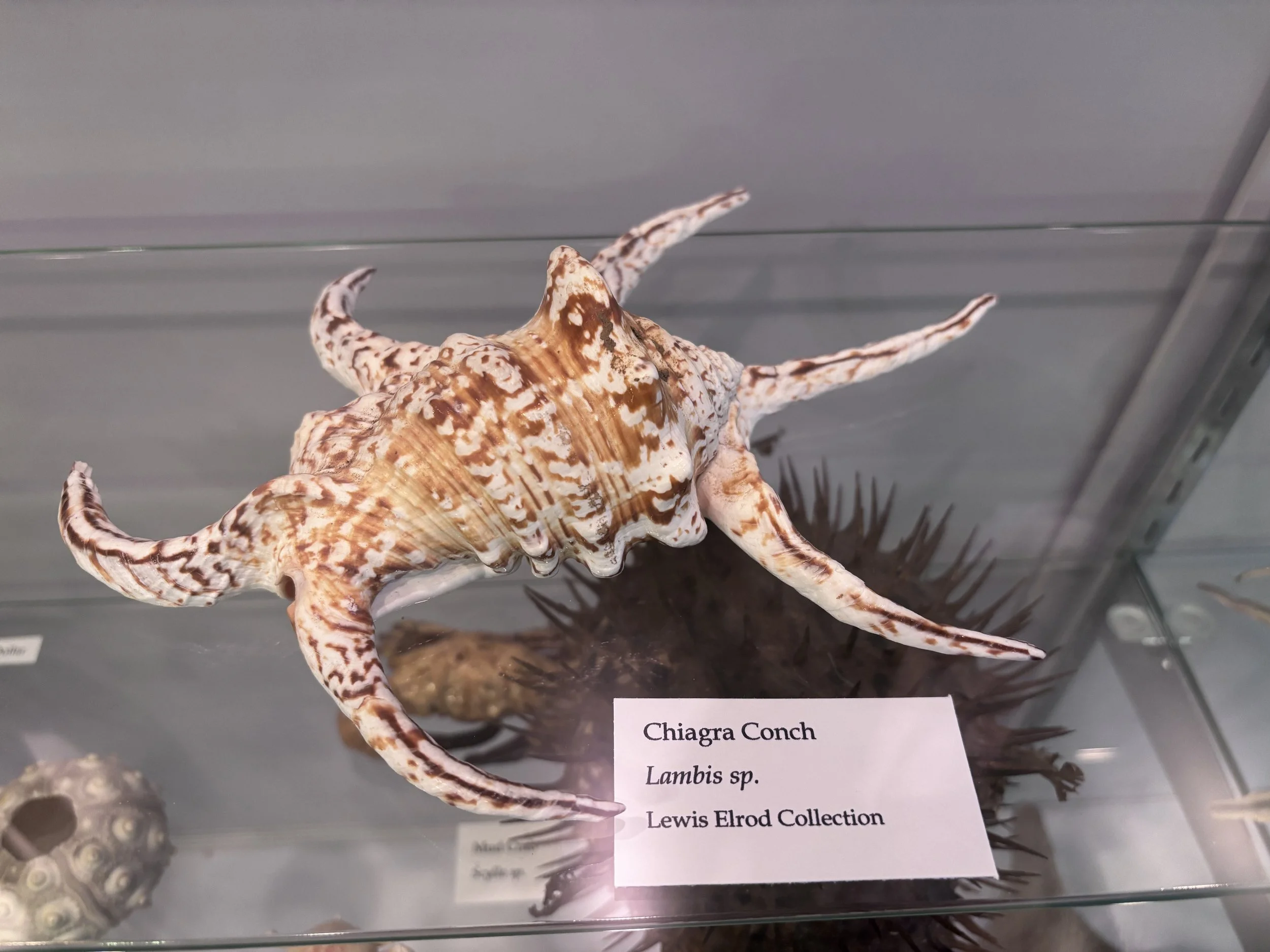
Gastropods (Late Cambrian – Present)
Gastropods are a class of soft-bodied invertebrates and are members of the phylum Mollusca, including things like snails and slugs. Gastropods have been around since almost the beginning of the fossil record, developing all the way back in the oceans of the Cambrian Period (485- 541 million years ago). Gastropod’s bodies are simple but highly adaptable, and have diversified far past marine living. Today there are species in the oceans, in rivers, on land, and even hydrothermal vents.
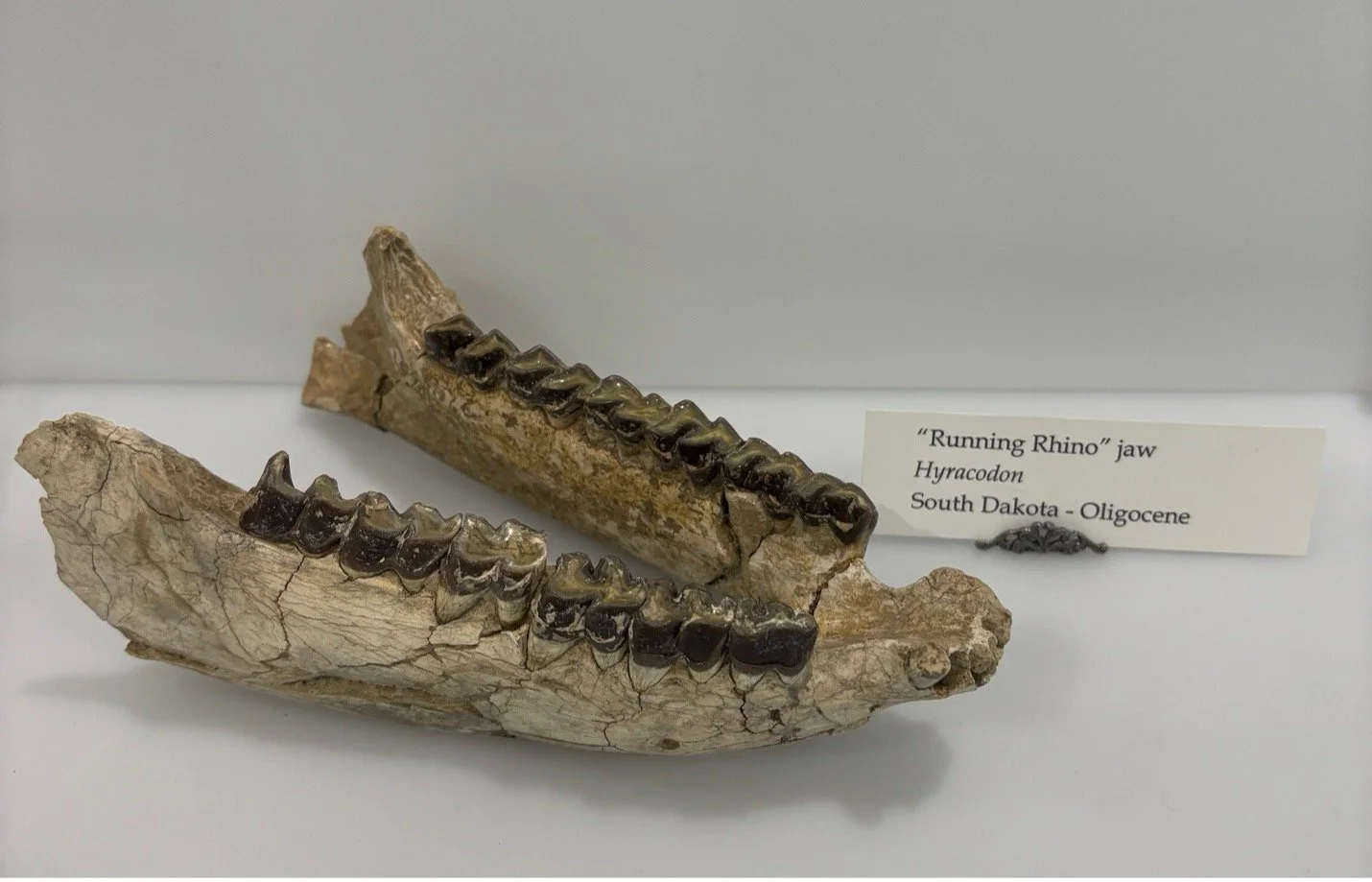
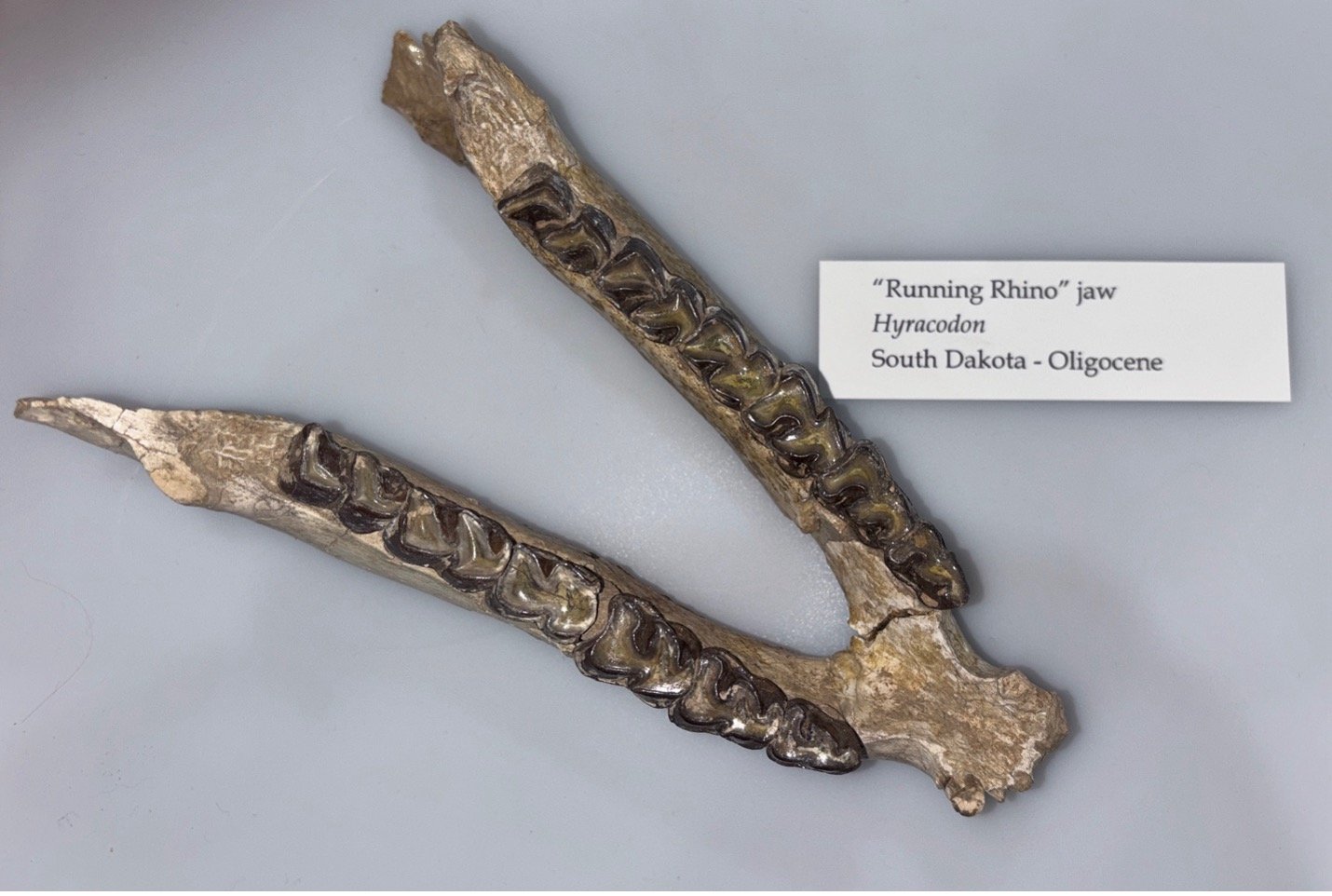
Hyracodon, or the Running Rhino, was a small and graceful member of the rhino family. They functioned more like horses than their modern rhino counterparts, as they were hornless with long, slender legs. They were about the size of a pony, and likely used their agility to flee from predators rather than fight them. Hyracodons lived throughout North America and Asia, only going extinct from climate change and loss of habitat.
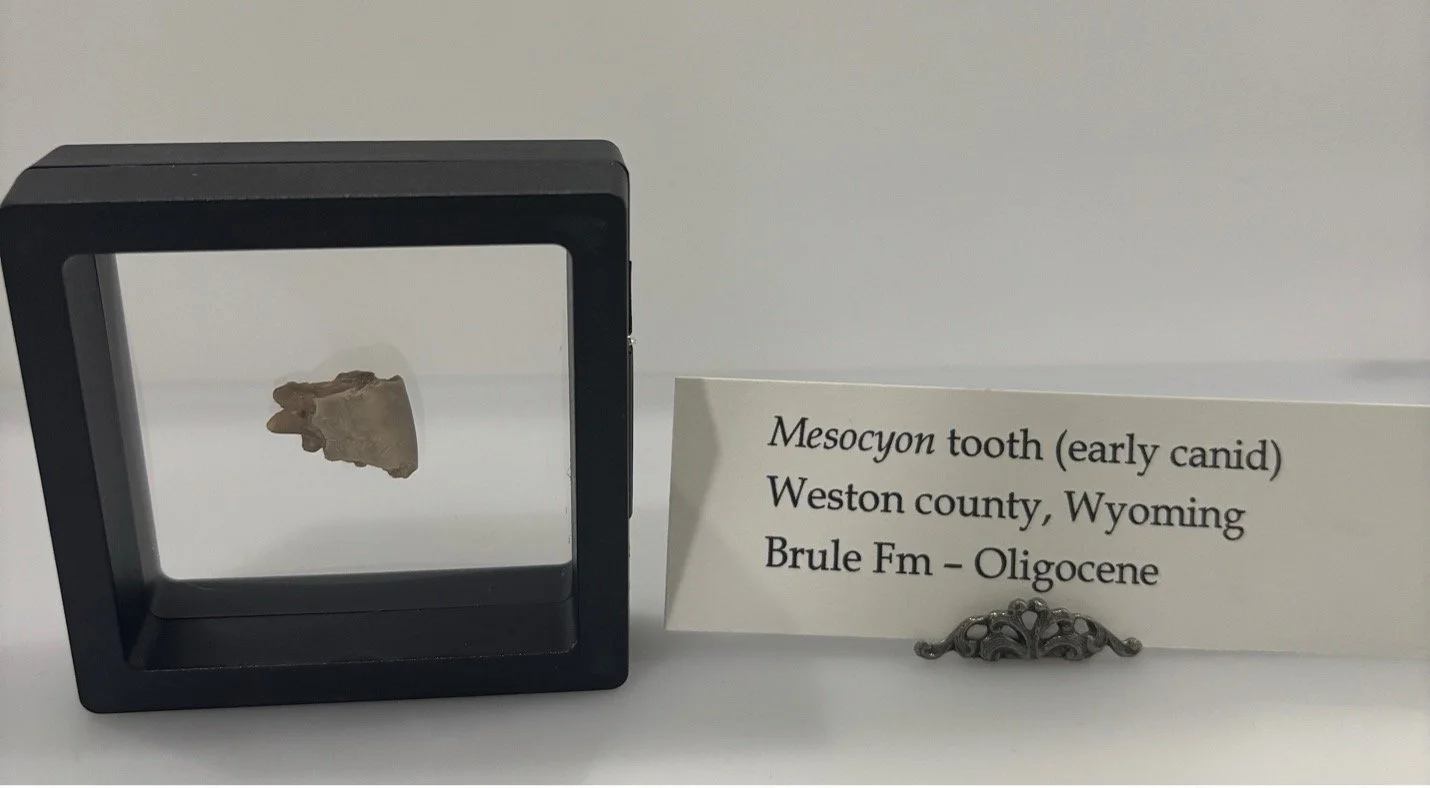
Canid species within the Mesocyon genus, sometimes called the “middle dog” or “short-faced dog”, were part of a now extinct genus of canids and are therefore not ancestors to modern dogs. However, it is believed the Mesocyon canids hunted in packs in open spaces like modern canids, likely relied on a strong sense of smell and sharp hearing and were about the size of a modern coyote. The major difference between Mesocyon lifestyle and modern canids is their diets: Mesocyons were carnivorous while modern dogs are omnivorous.
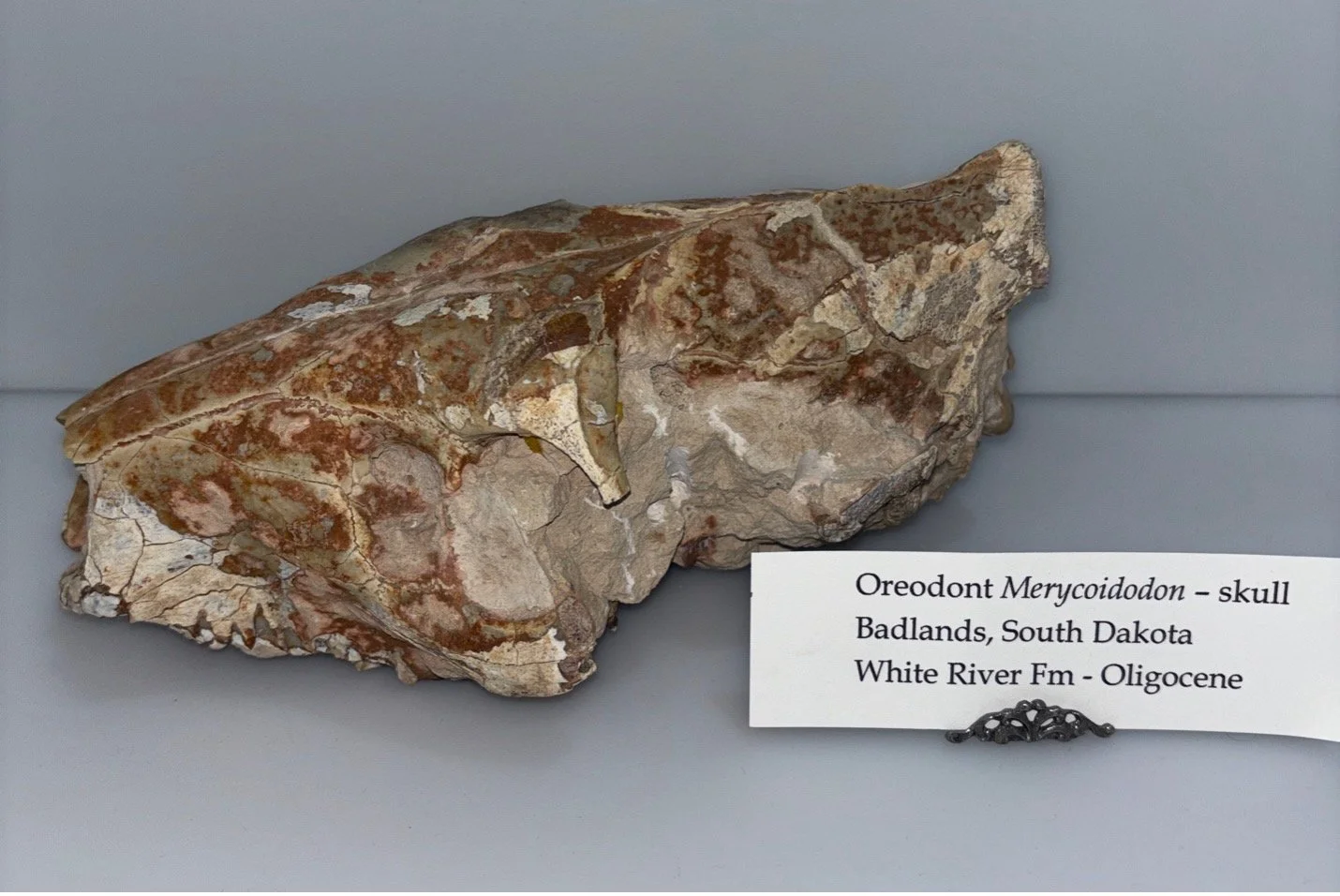
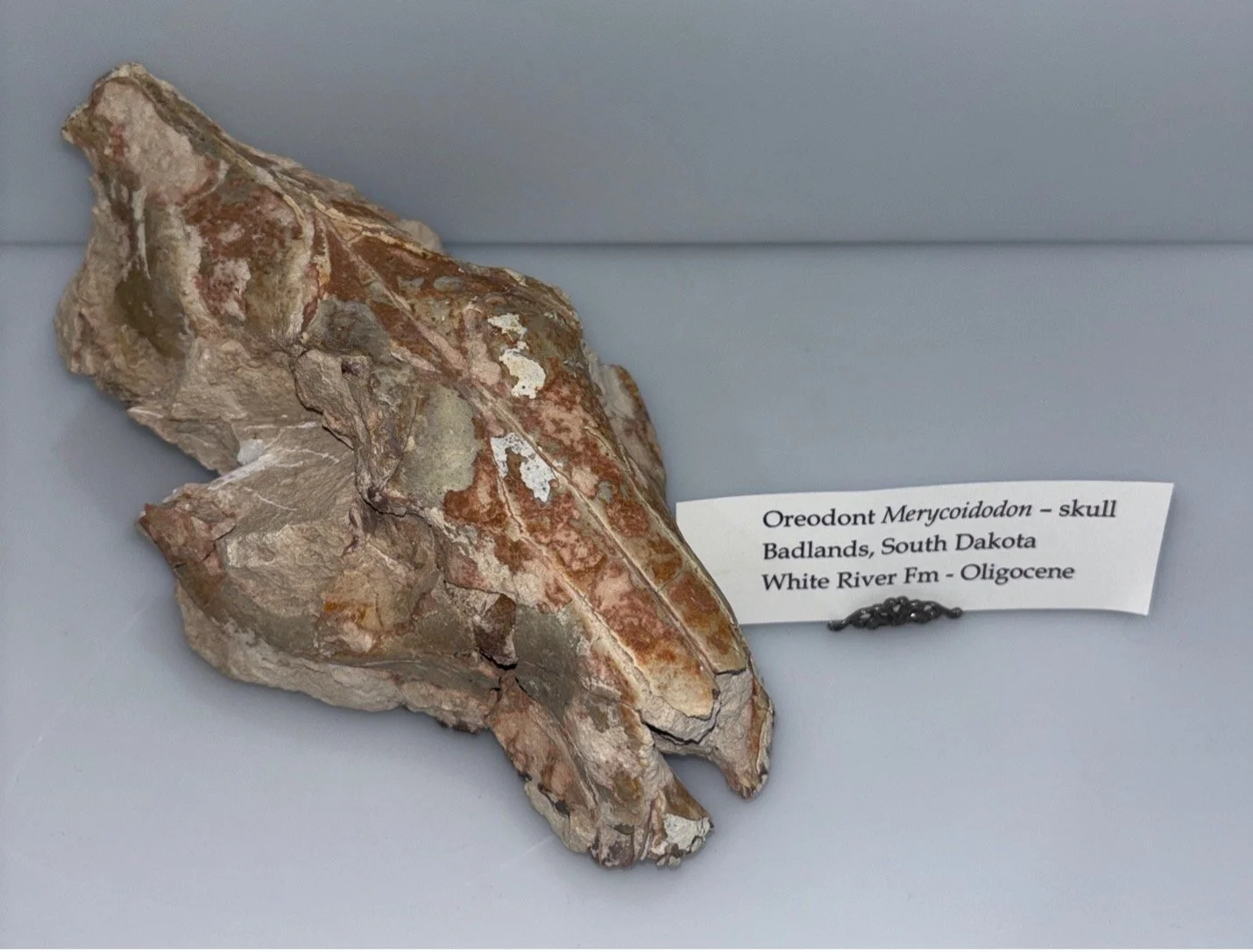
Merycoidodon, or more commonly known as Oreodonts, were grazing mammals that resembled pigs or sheep. They are famous both for their teeth (the name Oreodont translates to “mountain teeth”) and the sheer number of their fossils people have found. Oreodonts populations were outlandishly abundant, so much so that their fossils are a common find in places like Badlands National Park. They moved in herds, which protected them from predators like saber-tooth cats. Despite their numbers, they were not adaptable to changes in food availability and went extinct as a result of major climate change and being outcompeted by other foraging species.
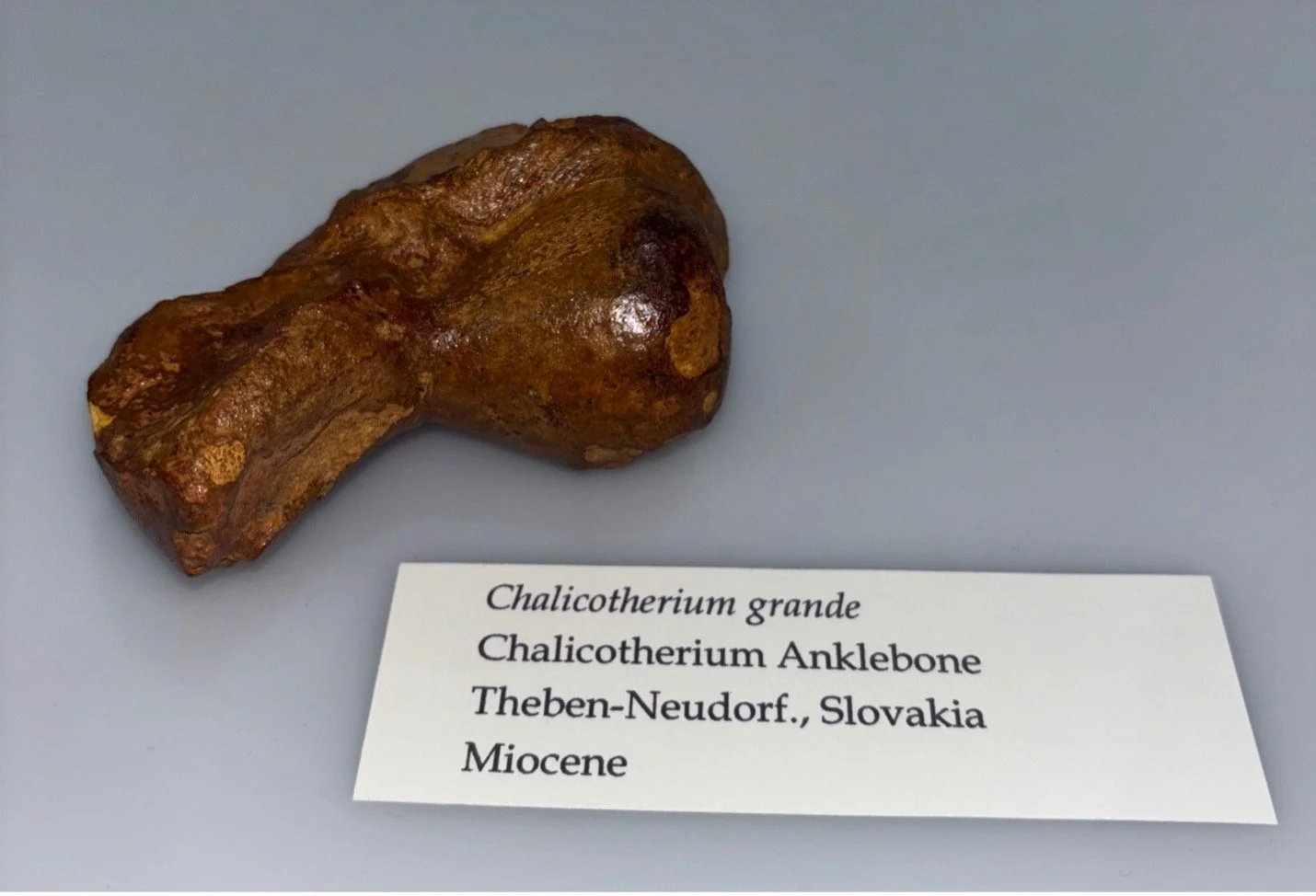
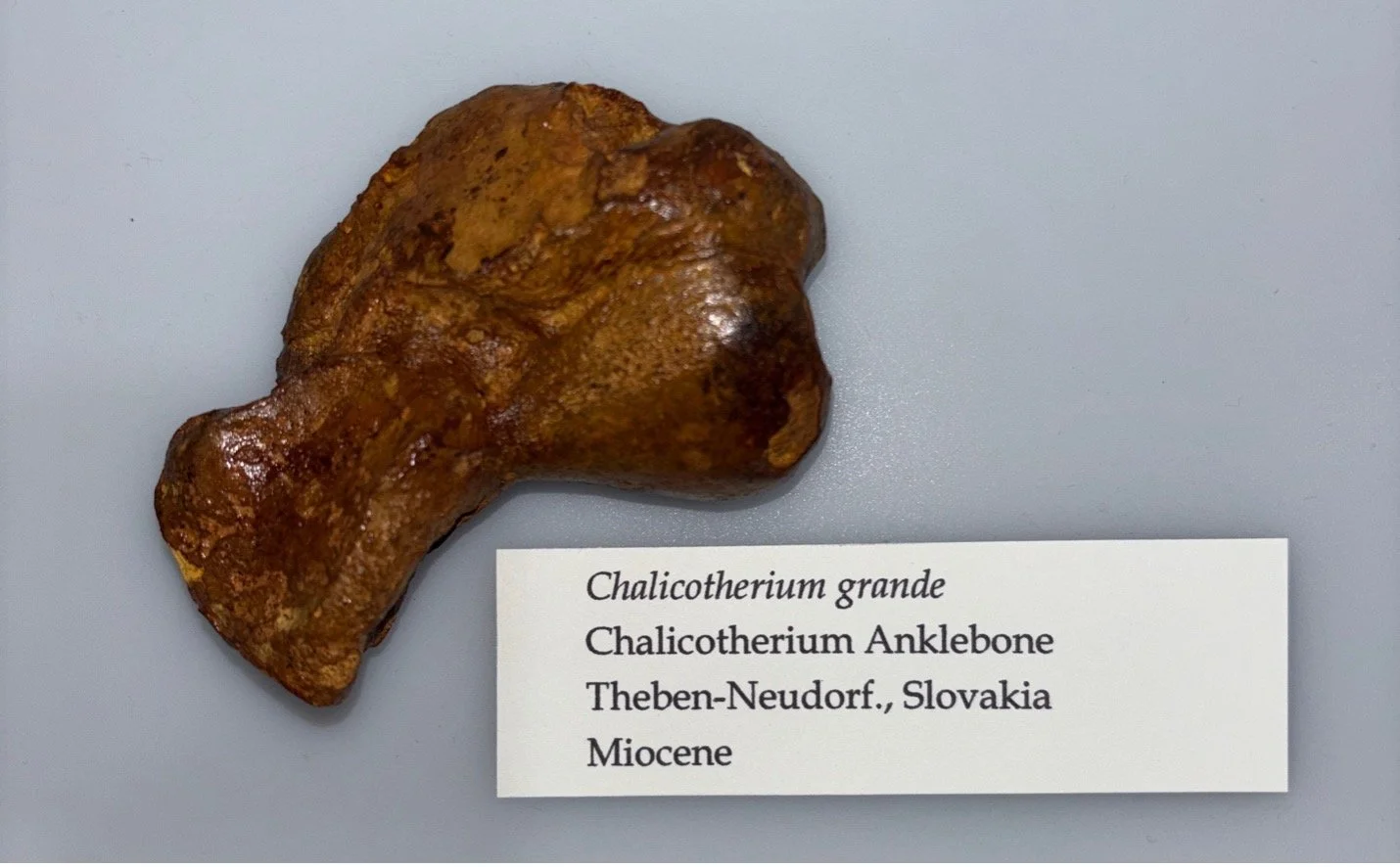
Chalicotherium were large herbivores that lived during the Miocene epoch. They had a distinct body plan that somehow resembled both a modern horse and an ape. It had long, arms that they would use for both walking and reaching for foliage from trees. It is believed that they would sit back on their haunches, like modern primates. Despite this, they were most closely related to modern horses, rhinoceroses, and tapirs.
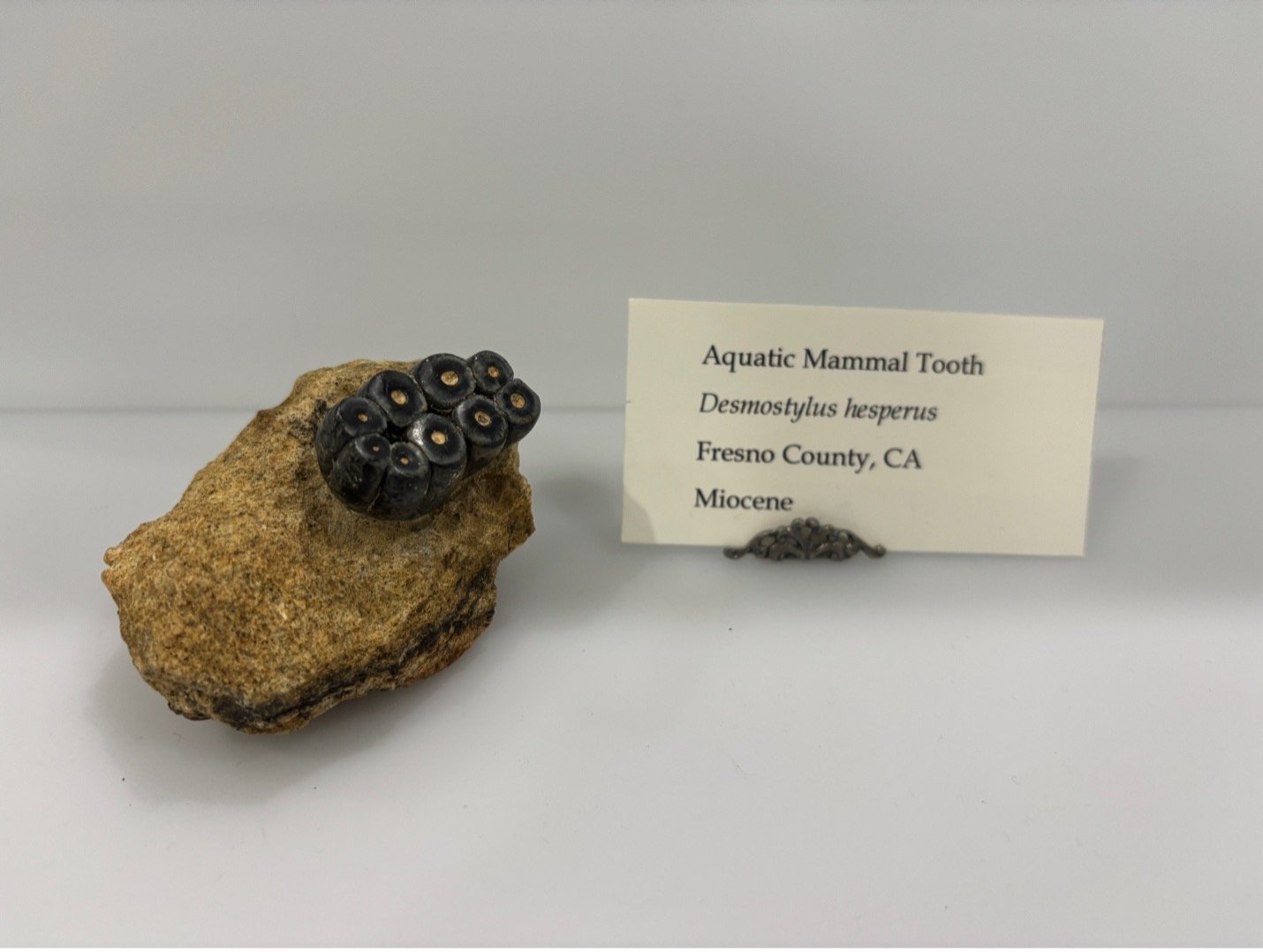
Desmostylus herspersus was bit like a hippopotamus, living all along the North Pacific Rim. They were herbivores who ate aquatic vegetation like seaweed. The Desmostylus is not a direct ancestor to any current living species, but they are distantly related to manatees, dugongs, and elephants.
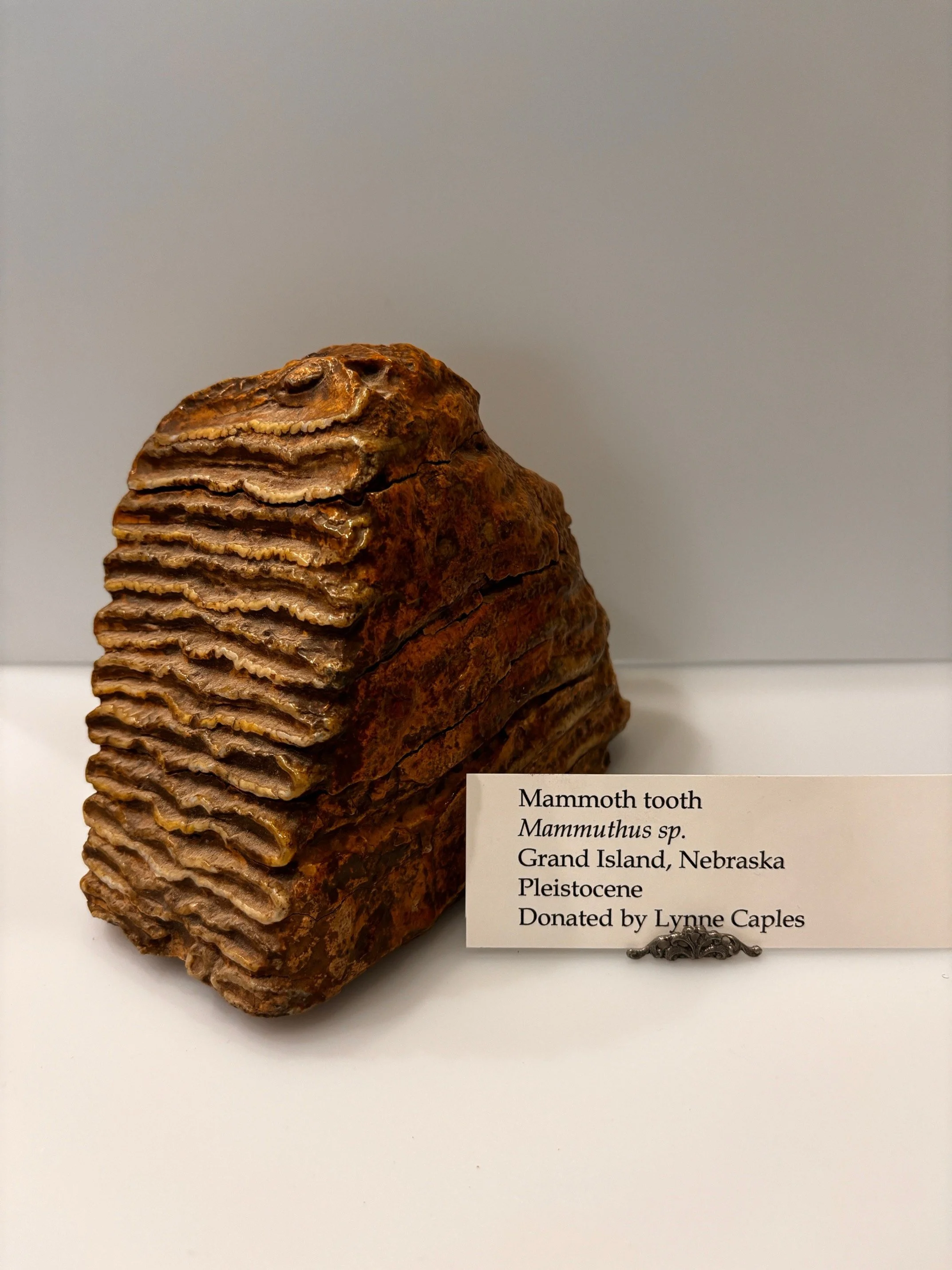
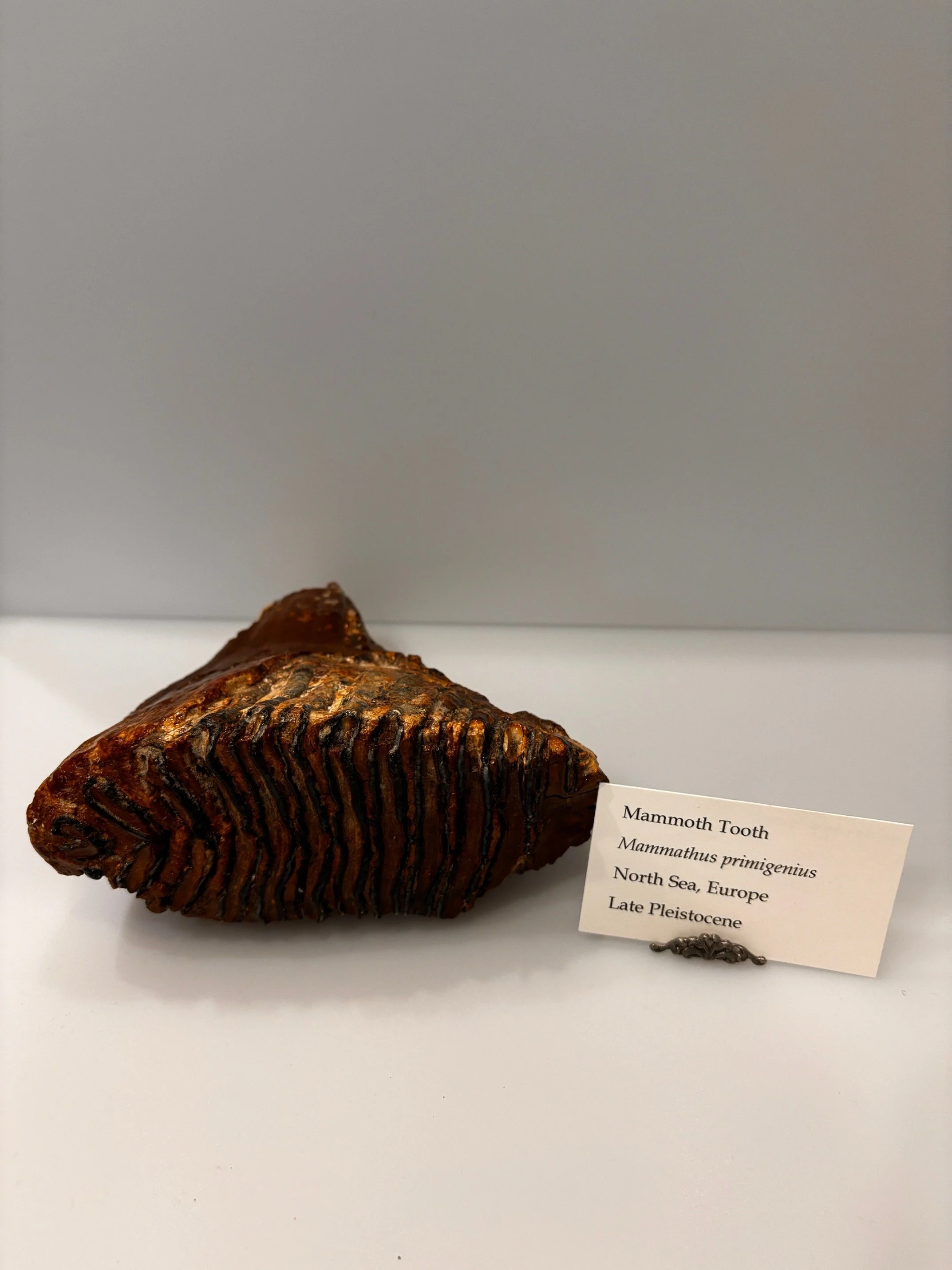
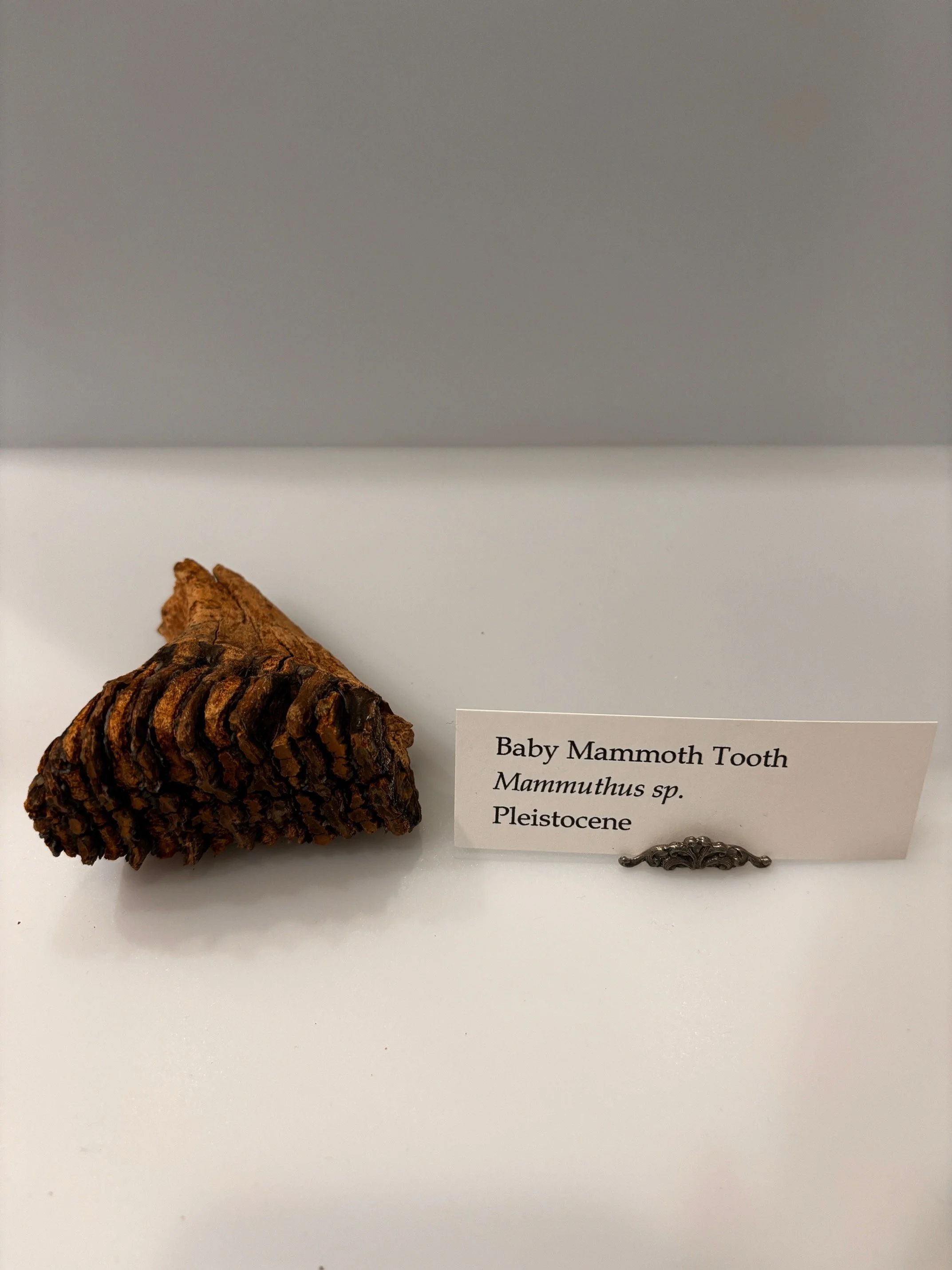
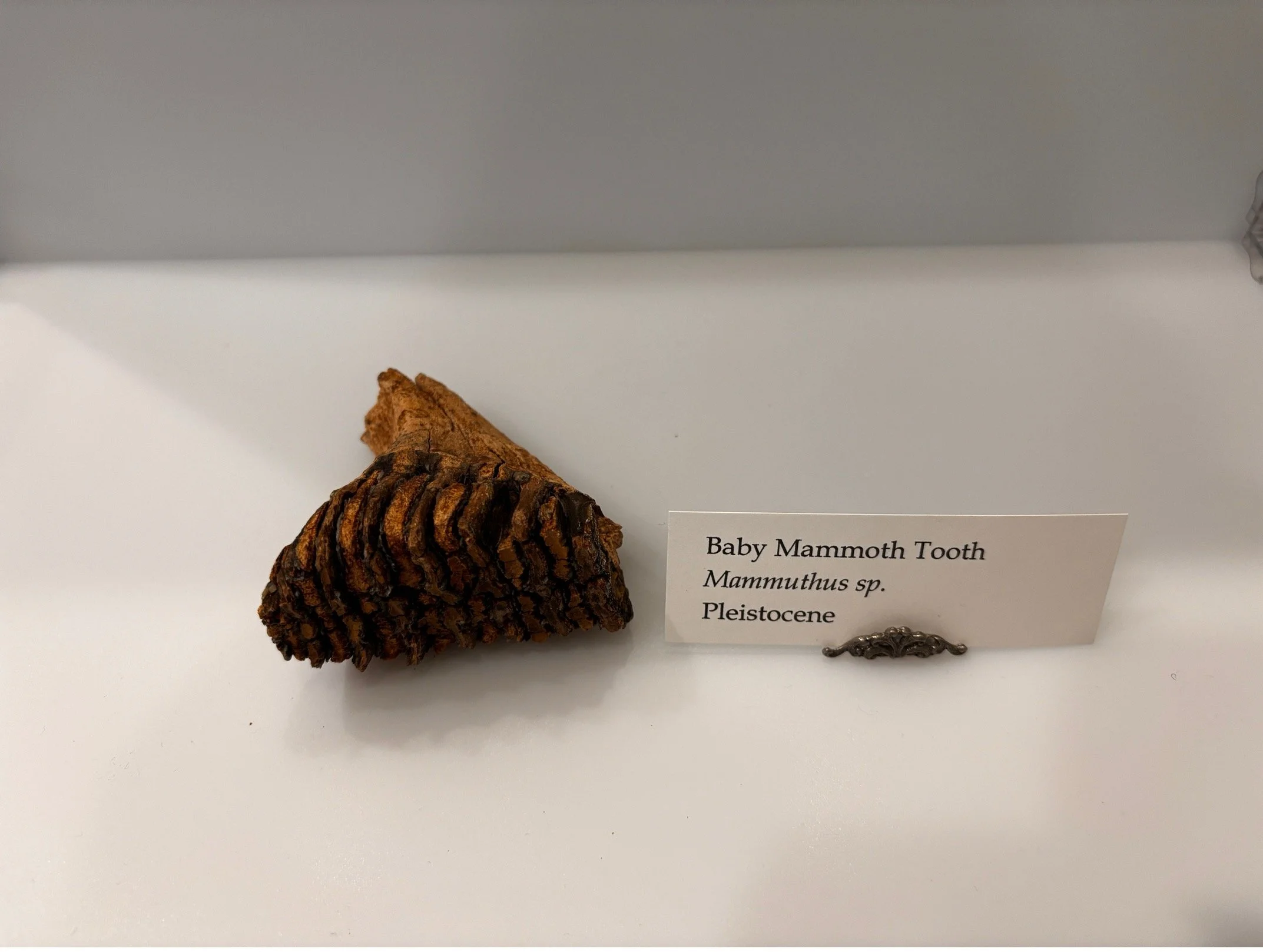
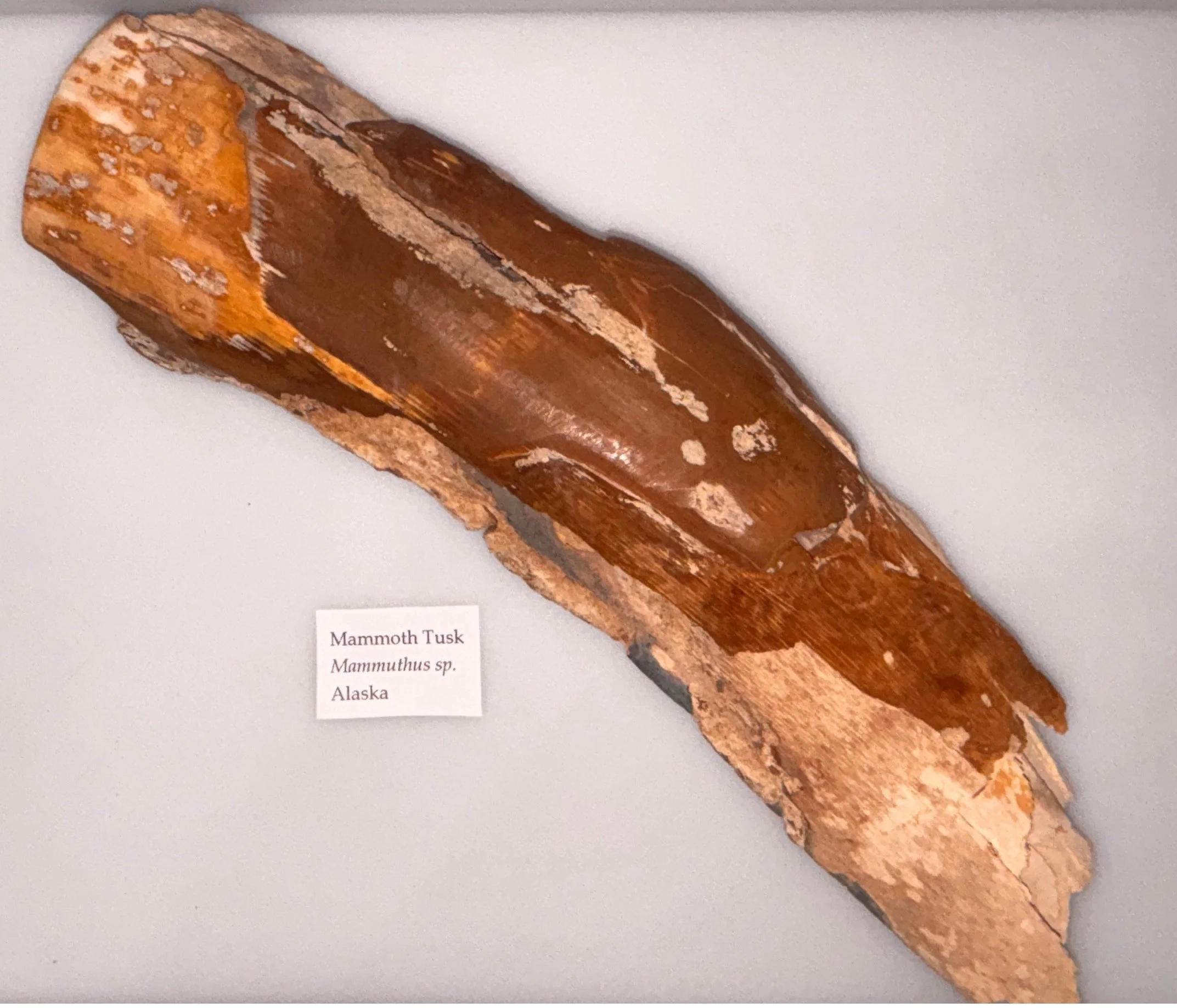
Woolly Mammoths were large, furry, herbivorous members of the family Elephantidae, and were relatives to Mastodons and the modern African and Asian Elephants. Their thick fur protected them from the extreme colds of the Ice Age, while modern elephants need to stay mostly naked to protect from high heat. Different species of Woolly Mammoths lived during the Pleistocene, making their homes in both Eurasia and the Americas. Mammoths went extinct from a combination of rising global temperatures and human hunting practices.
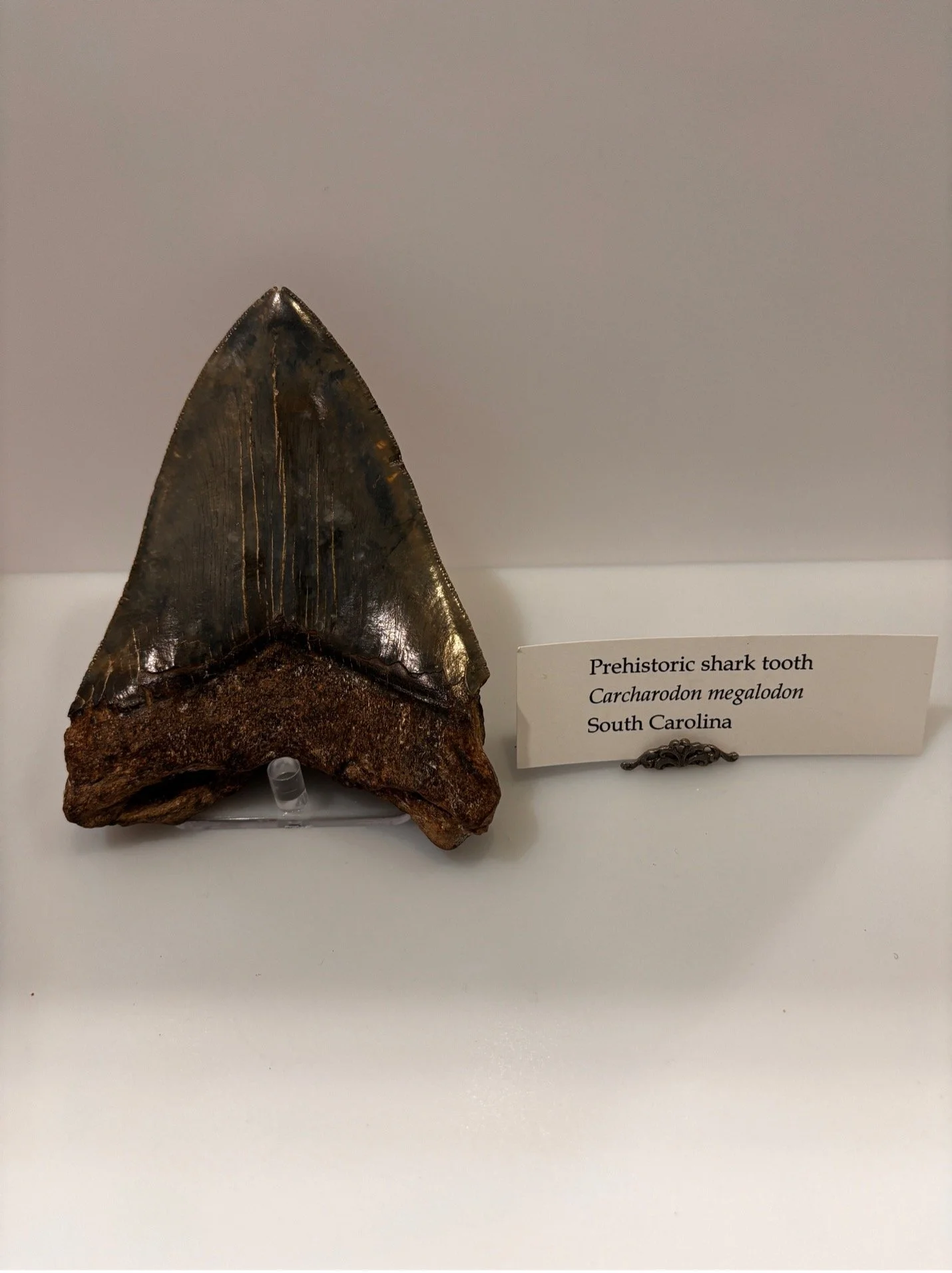
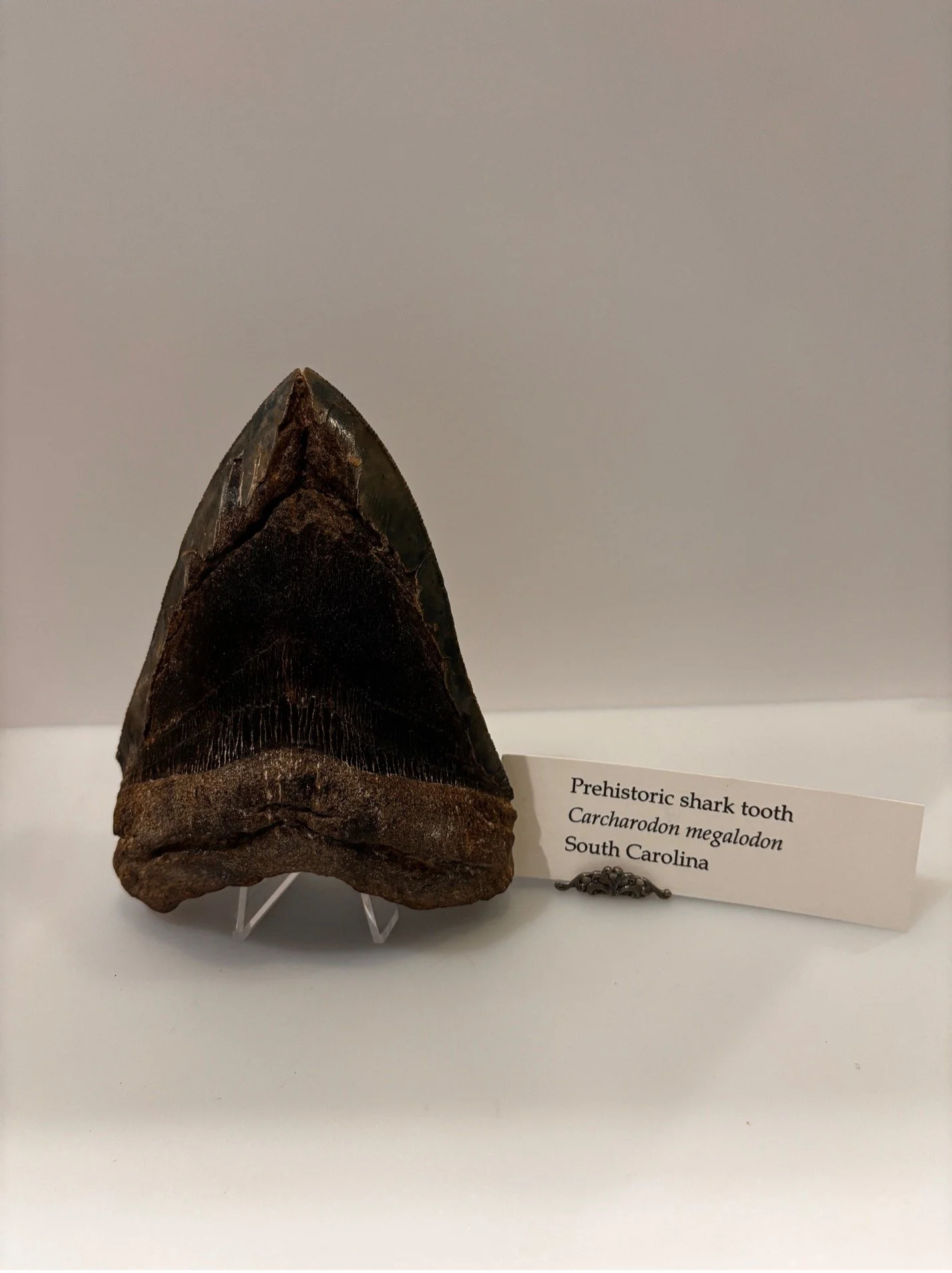
Megalodons were the largest shark to ever live, and one of the largest fishes. Our understanding of the Megalodon is limited, as most of its cartilaginous skeleton does not preserve like normal bone, therefore most size estimations come from comparing their tooth size with modern sharks. The current estimation places Megalodons at about 80 feet long (for reference, that’s about an entire lane at the bowling alley). Megalodons were wide spread across the planet’s oceans, and their teeth have been found washed up on every continent but Antarctica.
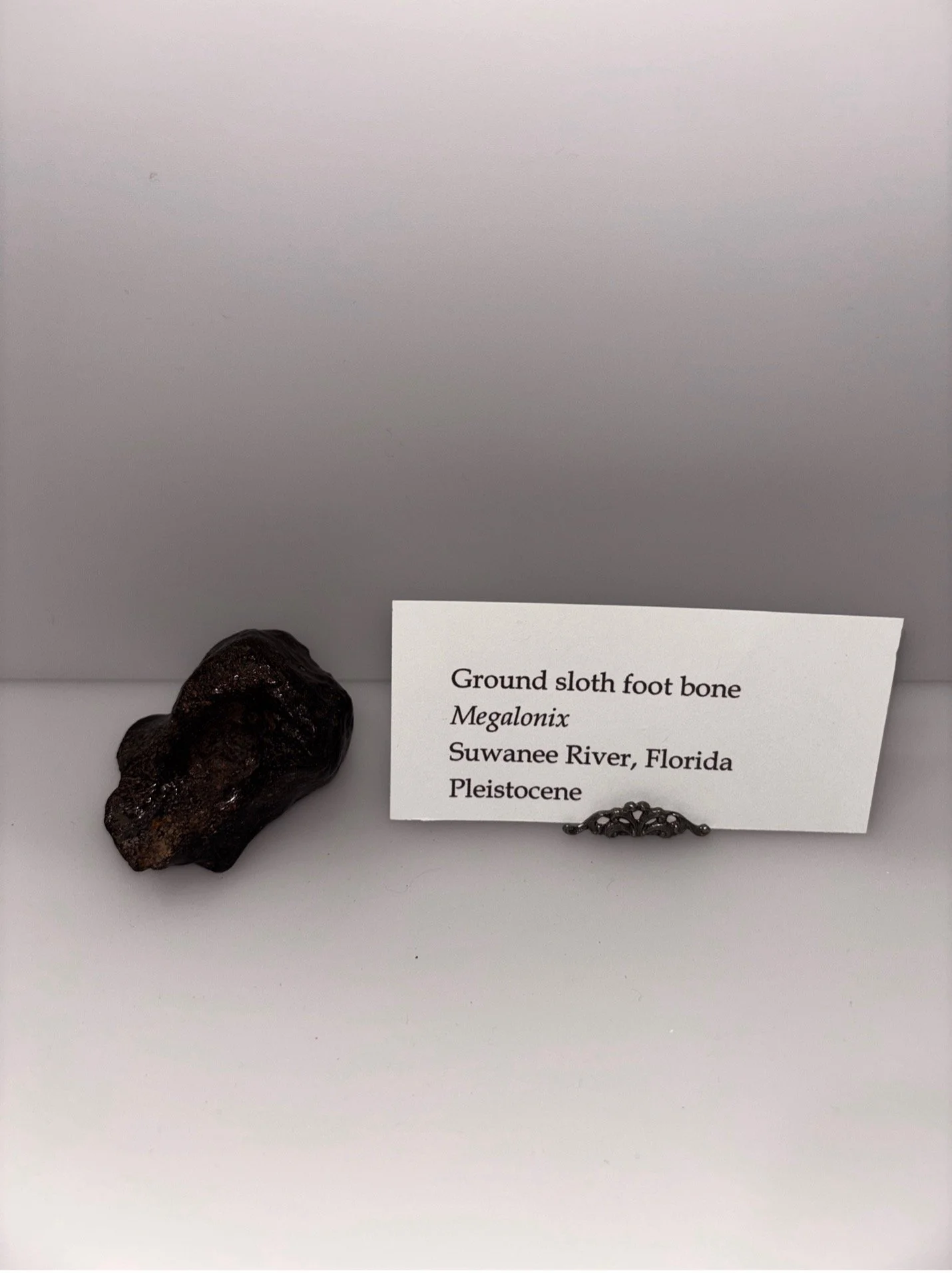
The Giant Ground Sloths lived across North and South America. Unlike their modern relatives, Giant Ground Sloths did not live in trees, and instead stuck mostly to grasslands where they ate plants like yucca and agave. There were many different species of the Giant Ground Sloths, the largest reaching up to 20 feet in length. Megalonyx jeffersoni was a smaller species, but still reached nearly 10 feet in length and weighed about 2200 lbs.
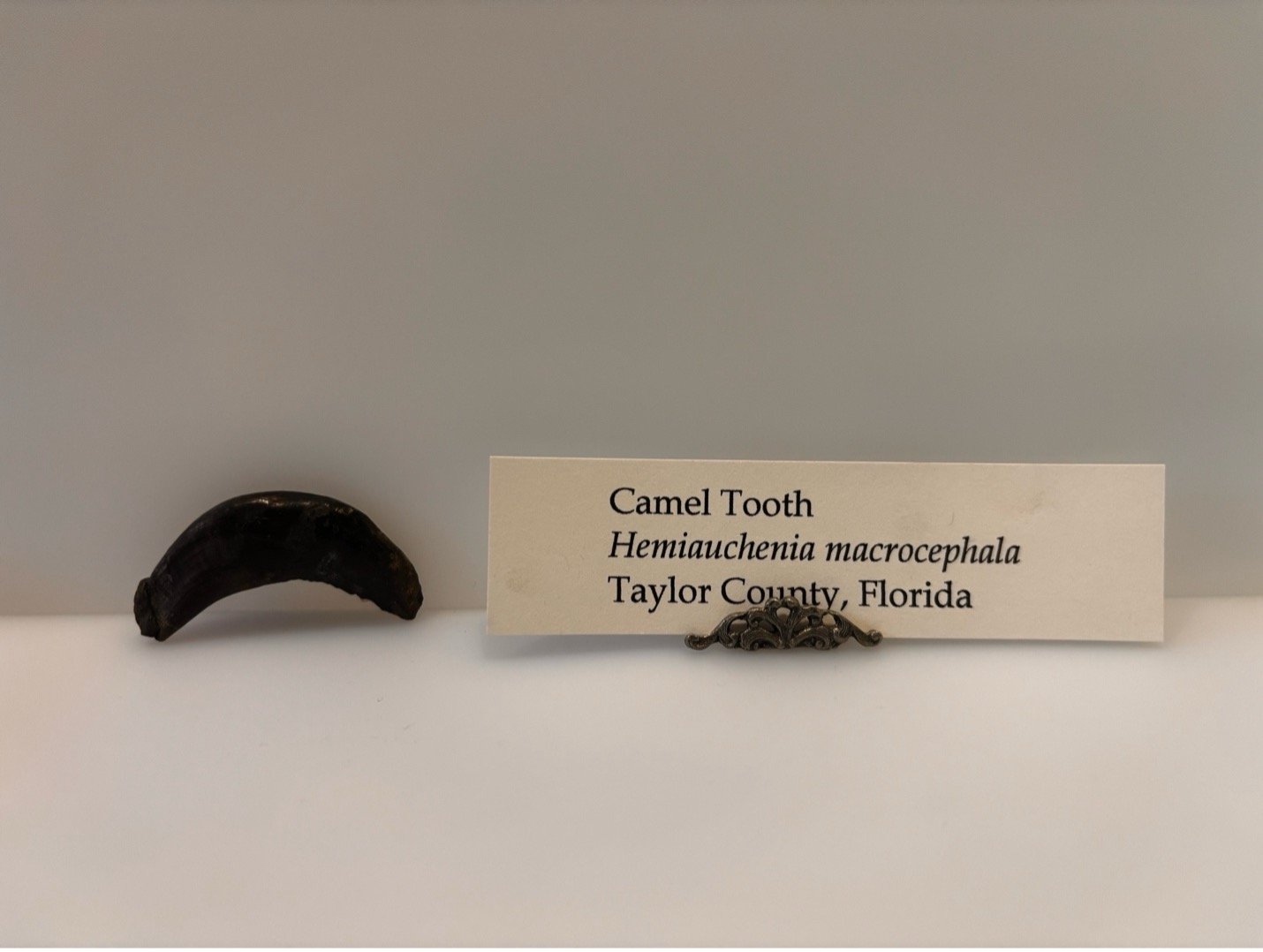
A small, sheep-sized member of the camelids family which contains modern camels, llamas, and alpacas. Like modern camels, Hemiauchenia macrocephalus was able to survive in dry conditions across the Great Plains region of the modern United States and some places in South America. Hemiauchenia macrocephalus was likely an ancestor to the modern South American llamas.
No results match your search. Try removing a few filters.