Pterodactylus kochi was a small pterosaur that lived in southern Germany during the Jurassic period. Often depicted as giant avian terror, pterodactyls in reality were a smaller variety of pterosaur, with a wingspan of 1 to 4 feet. The Pterodactylus kochi was particularly small with a 18 inch wingspan.
Pterodactylus kochi lived and hunted amongst the lagoons and archipelagos of ancient Germany. They ate small schooling fish, insects, crustaceans, and any other small animal they could catch. Much of what we know about this species is thanks to the incredibly well- preserved specimen from the Solnhofen Limestone.
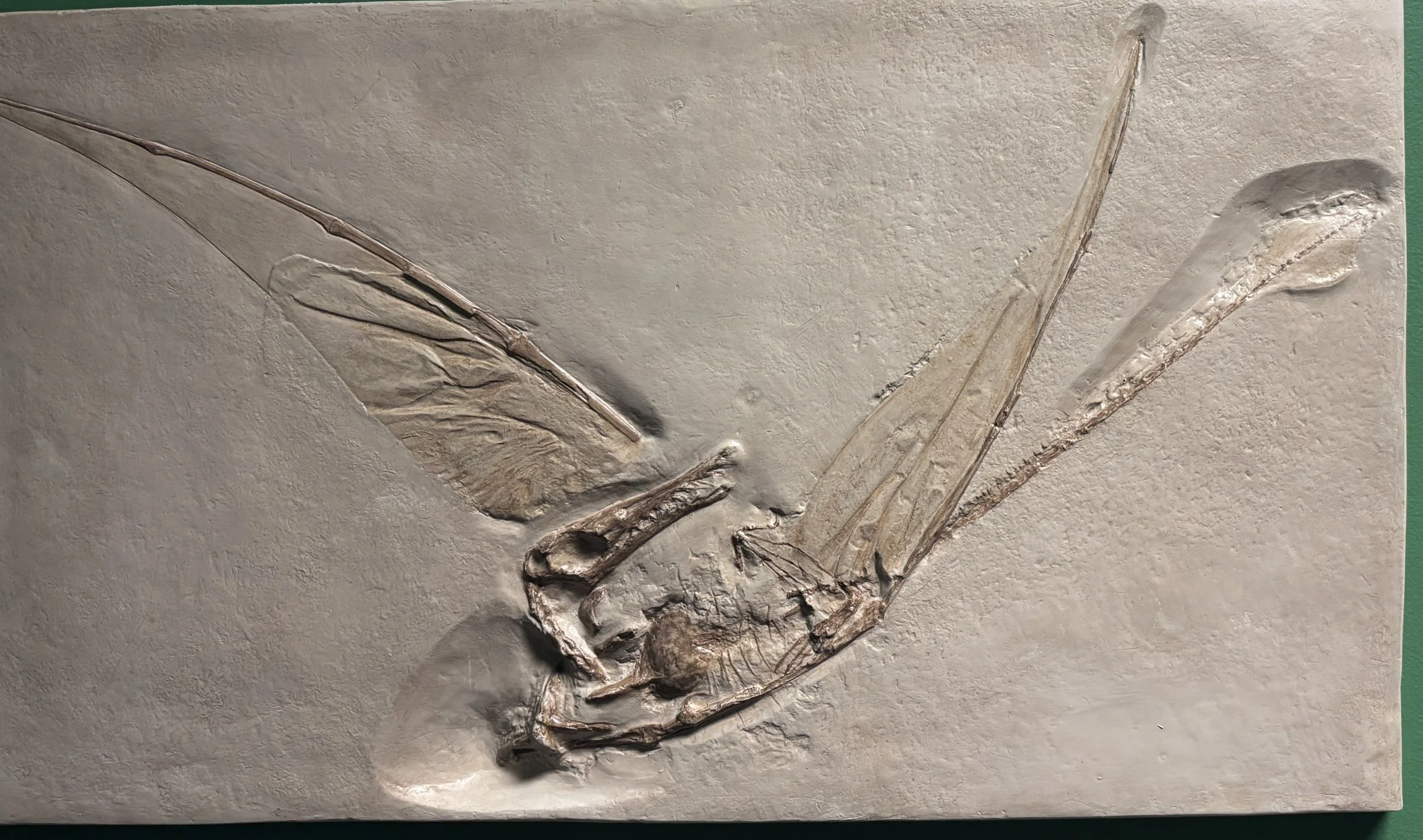


Rhamphorhynchus was a small pterosaur that lived in Europe during the Jurassic, most often found in the Solnhofen Limestone of Germany. Rhamphorhynchus is one of the best understood pterosaurs due to the excellent preservation in some of the fossils found, even including the wing membranes, skin, and stomach contents. Rhamphorhynchus had sharp teeth which it used to catch fish and other sea creatures and was an agile flier with an approximately 3-foot wingspan.

Alanqa saharica was a mid-sized pterosaur whose fossils have been found in North Africa. It had a wingspan of 13 to 20 feet and could both walk and fly. The Alanqa saharica had a similar body plan to the more famous Quetzalcoatlus from North America but was only half the size. The Alanqa made their home near water and used their long, pointed beaks to snatch up small animals and stranded fish, and likely scavenged larger animals like dinosaurs.
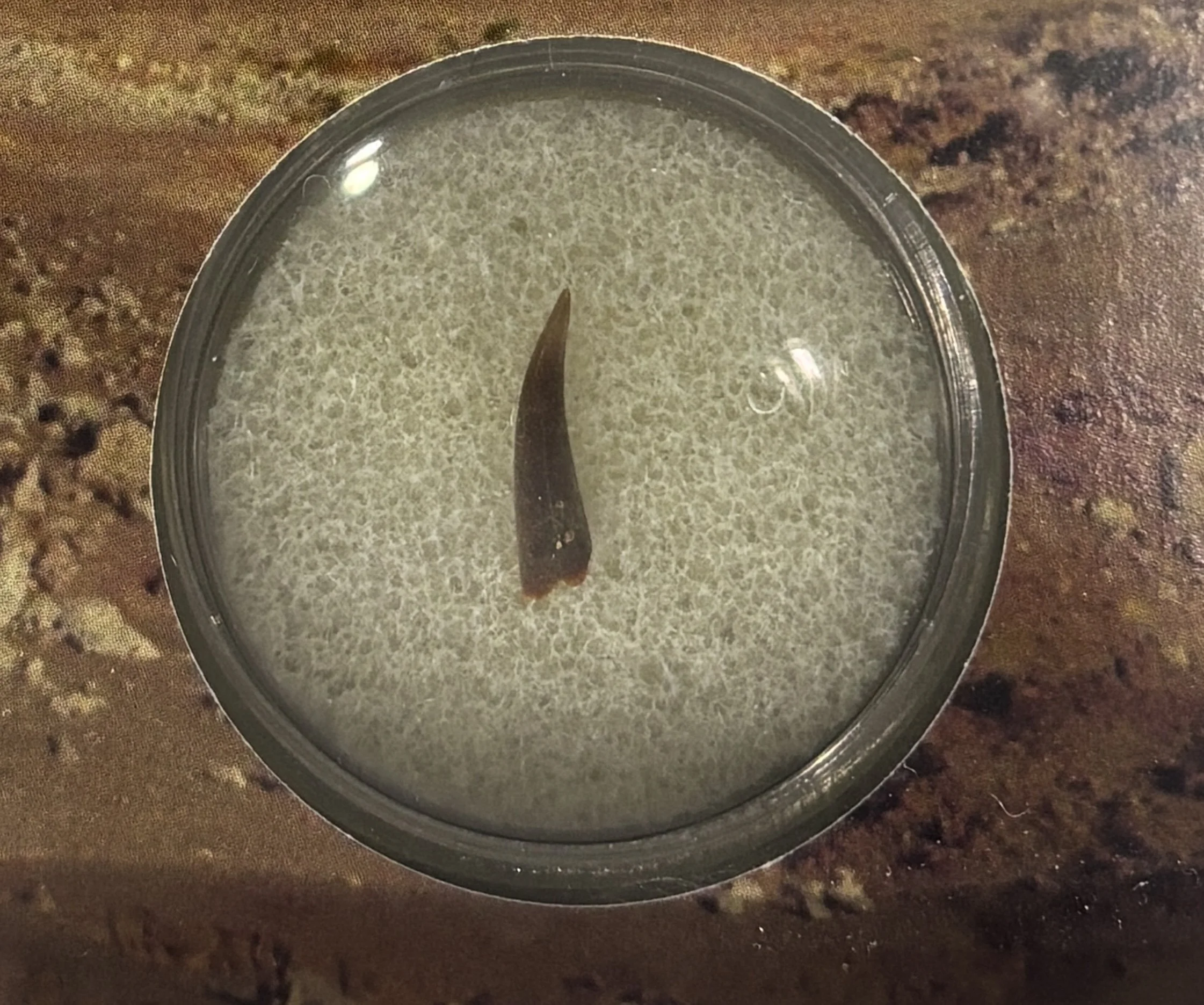
The fossil pictured here is the fourth phalanx, or one of the finger/wing bones.
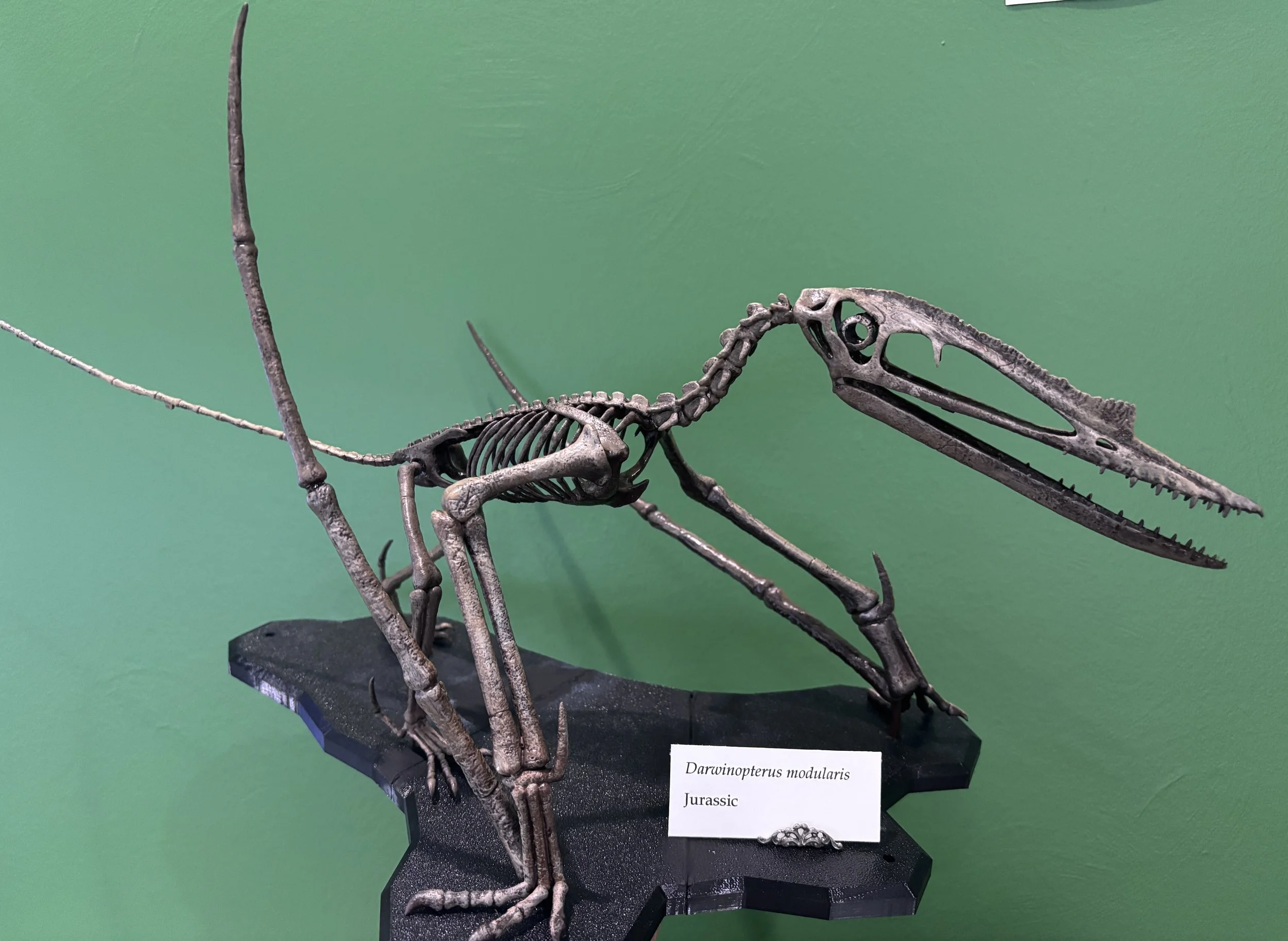
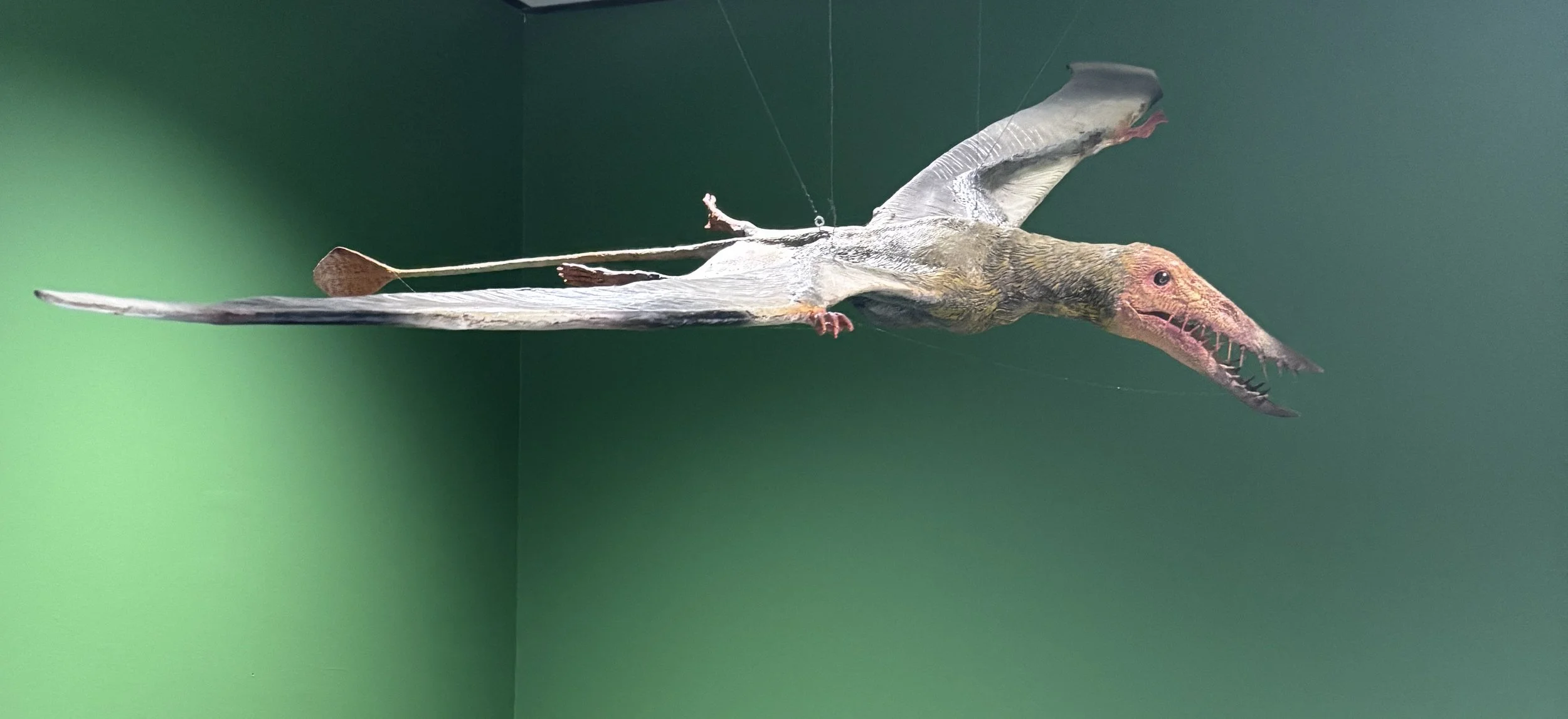
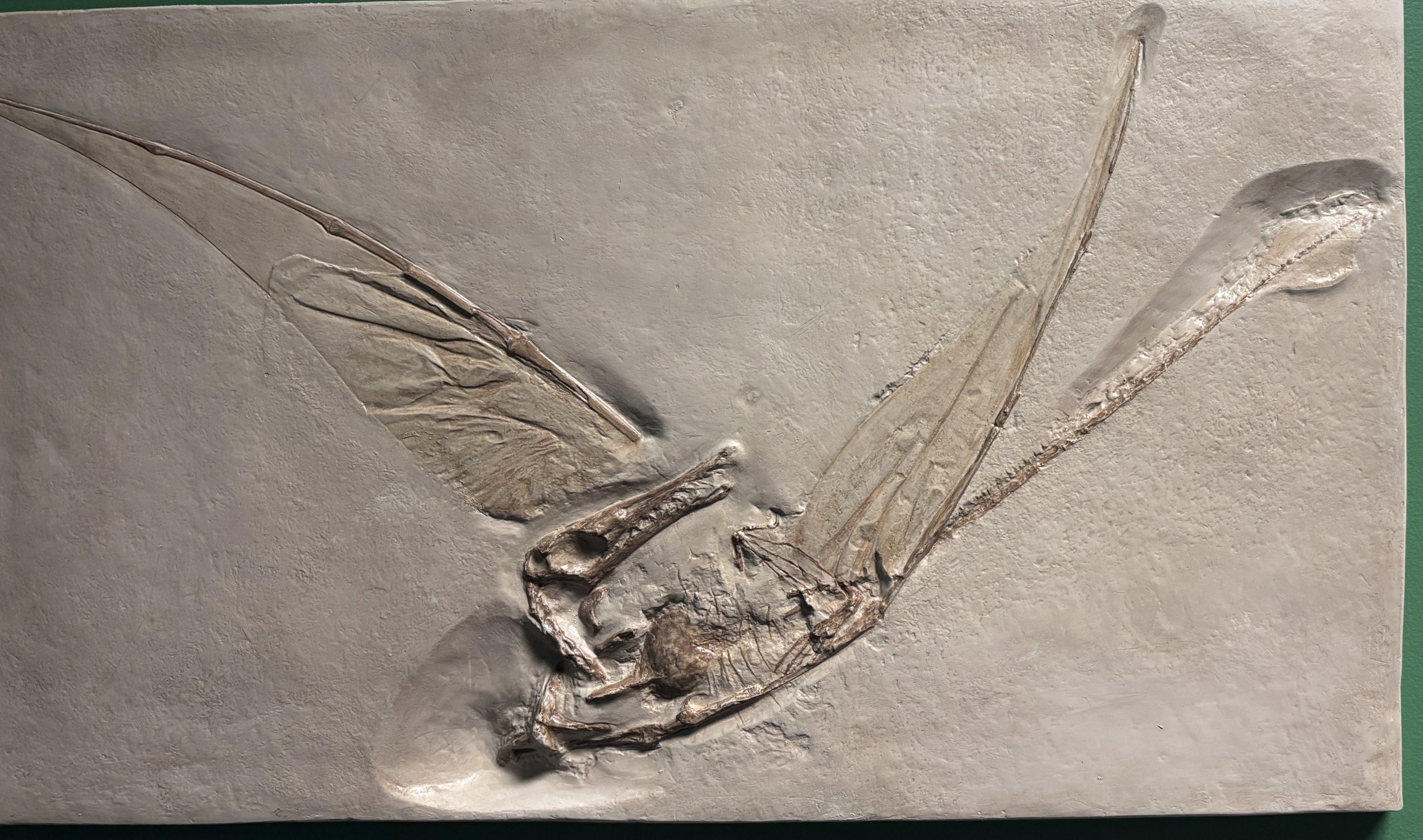
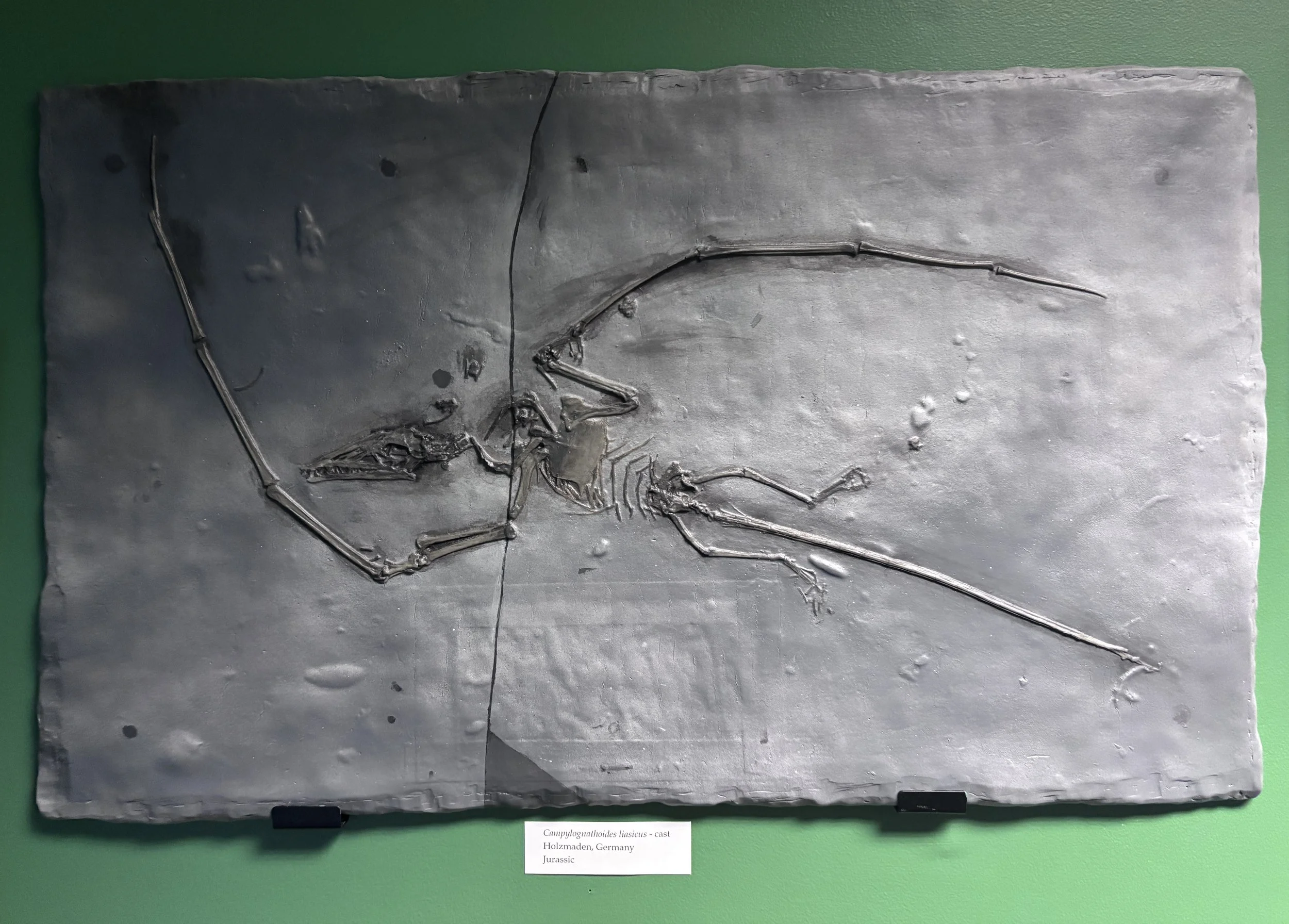
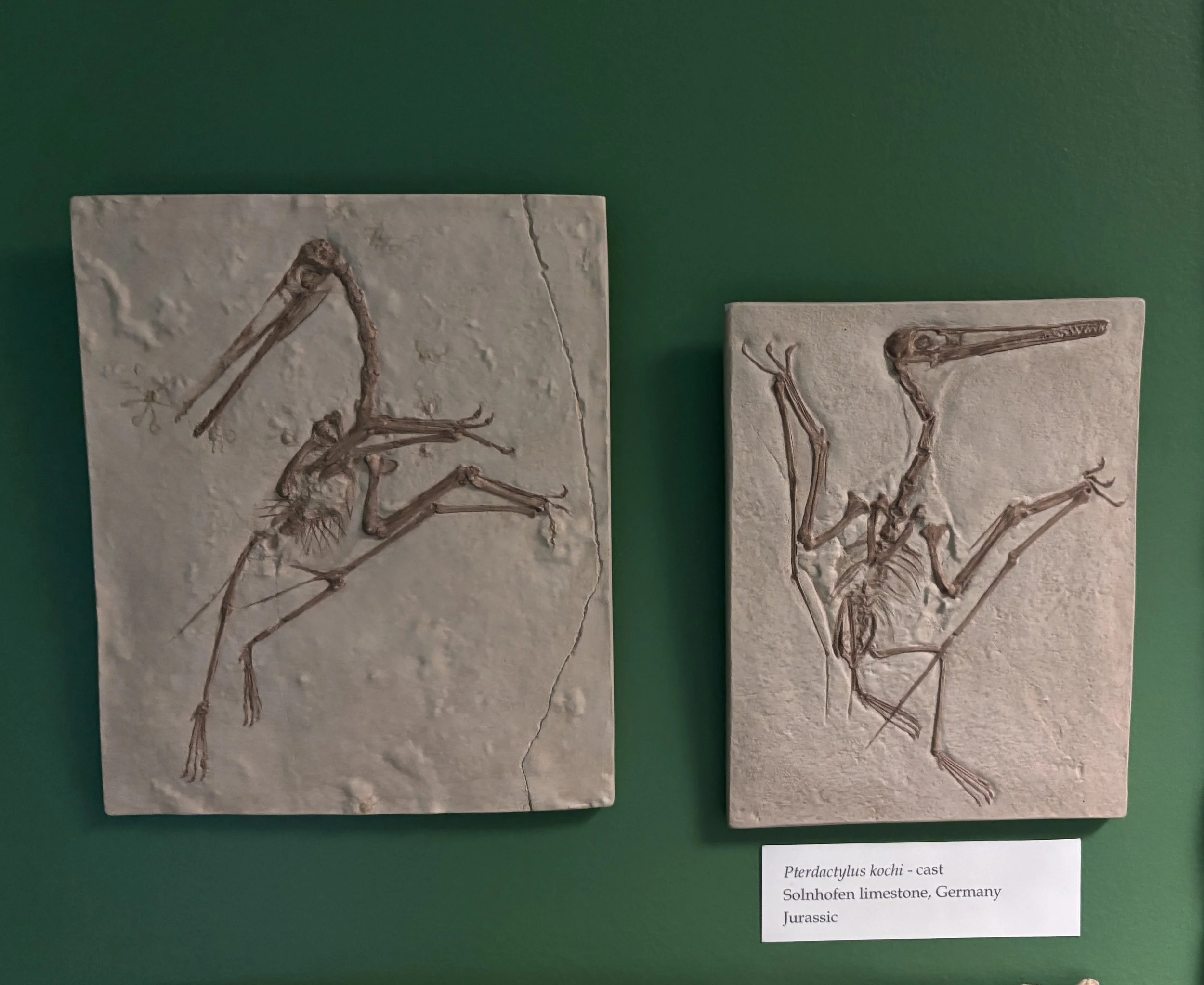
During the age of the dinosaurs, flying reptiles called Pterosaurs ruled skies. Some mistakenly lump pterosaurs like the famous Pterodactyl in with dinosaurs, but pterosaurs belonged to their own order Pterosauria. Pterosauria and Dinosauria belong to the same clade called Archosauria, whose only two groups still living are birds and crocodilians.
Pterosaurs came in a wide range of sizes. The smallest pterosaur species was Anurognathus ammoni, which was about the size of a songbird, and the largest was the colossal Quetzalcoatlus northropi, who was about as tall as a giraffe (but lot more vicous).
No results match your search. Try removing a few filters.