
History of Paleontology
Explore some important breakthroughs in the field of Paleontology from throughout the last few centuries.
Early Discoveries
Human beings have been finding evidence of ancient life for millennia. We’ve been trying to better understand what fossil could tell us about the ancient world since the time of Greek Antiquity.
In the Americas, Native Americans have incorporated fossils into jewelry, tools, and ceremonial items. Before any formal study of Paleontology was established, most fossil discoveries came from African slaves. While digging, several slaves unearthed a mammoth tooth in South Carolina, correctly identifying it as being related to elephants. Though their contributions are not well-known, black and indigenous-made discoveries helped our modern understanding of our continent’s pre-history.
1811: Mary and Joseph Anning Discover the Ichthyosaur
Mary Anning was instrumental in the development of early Paleontology. Her family home was situated on the cliffs of the English Channel in the town of Lyme Regis, England. Her father was a cabinet maker and amateur fossil hunter and sold his finds for extra money for the family. Unfortunately, her father died when Mary was only eleven years old, and her and her family had to rely on charity to survive without her father’s income. Mary, her mother (also named Mary) and her brother Joseph continued searching the coasts for fossils to sell to make some meager income. Thus began a lifetime of fossil-hunting for young Mary Anning.
Anning is most famous for a few major discoveries: one of which was the Ichthyosaurus.
One day, her brother Joseph showed her a strange fossil he’d found on the coast. She set to work excavating it and discovered that it was a species that no other fossil hunter had ever found before. The fossil was an Ichthyosaur, a marine reptile from the Jurassic period that resembled a modern dolphin. When they made this discovery, Mary was only twelve years old.
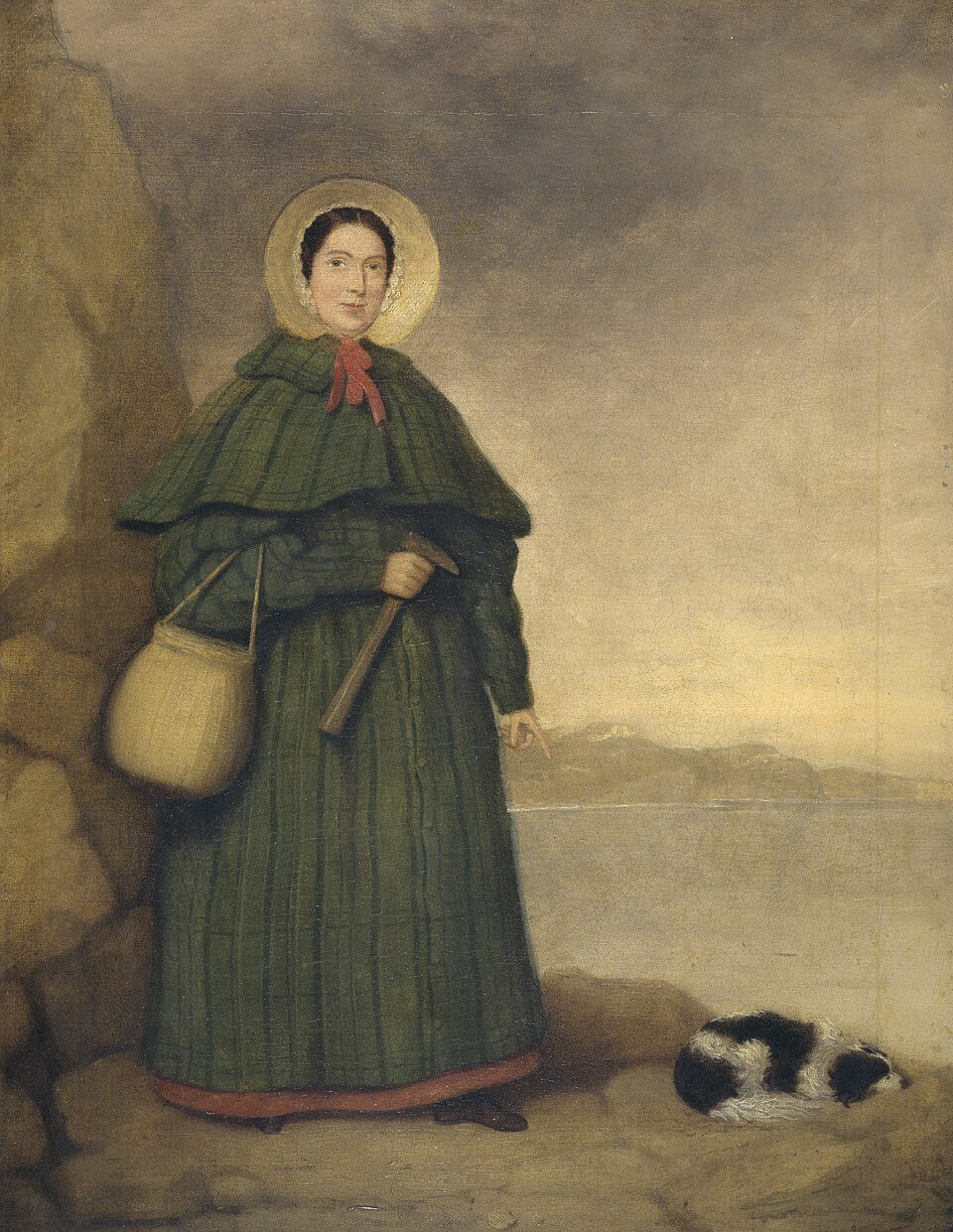
Portrait of Mary Anning and her dog Tray
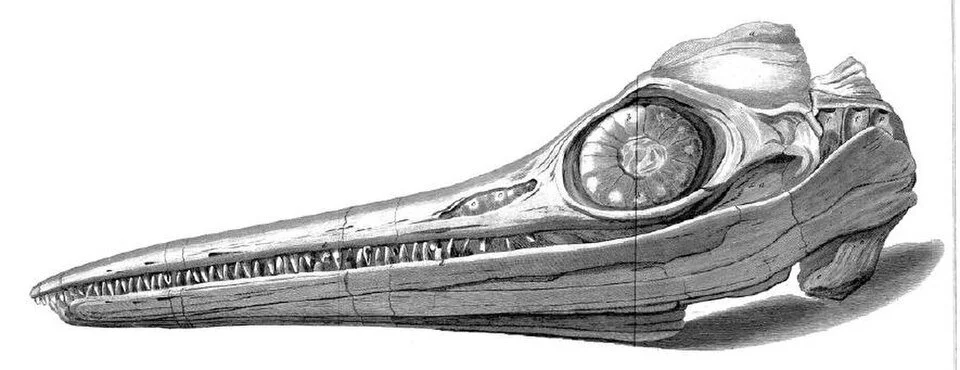
Drawing of the skull of the Ichthyosaur found by Joseph and Mary Anning
1830s and 1840s:
Paleontology becomes professionalized and museums start housing large natural history collections
1824: First Dinosaurs Described
In 1824, geologist William Buckland discovered the first dinosaur fossil, the lower jaw of a theropod dinosaur he named Megalosaurus, which means “big lizard.” Later that year, more dinosaur fossils were discovered by Gideon Mantell, who found large teeth that resembled an iguana’s. Therefore, the second dinosaur ever described was named Iguanodon, or “iguana-tooth”.
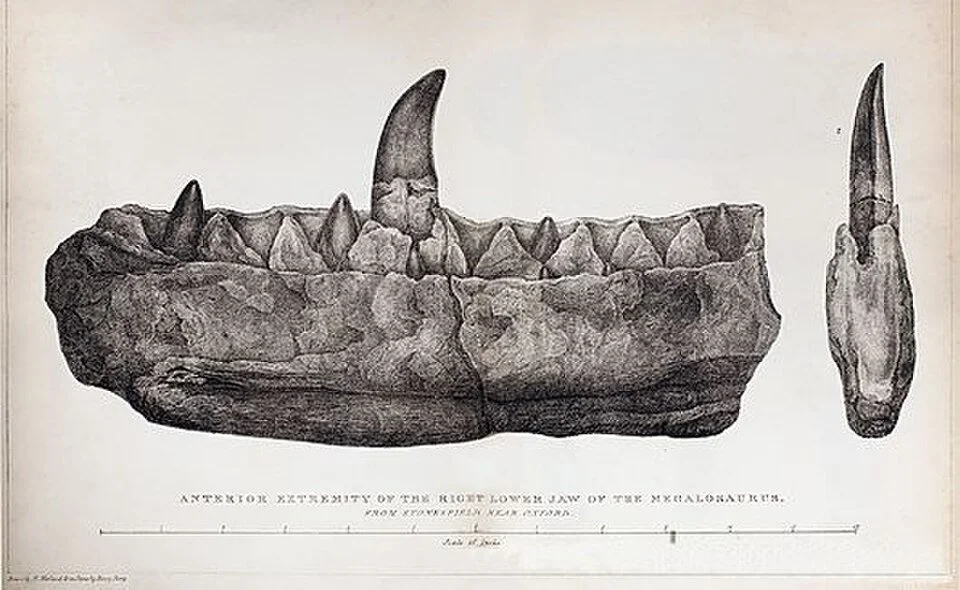
Drawing by Mary Buckland of the Megalosaurus jaw fossil found by husband William Buckland.
1842: Richard Owens coined the term “Dinosaur”
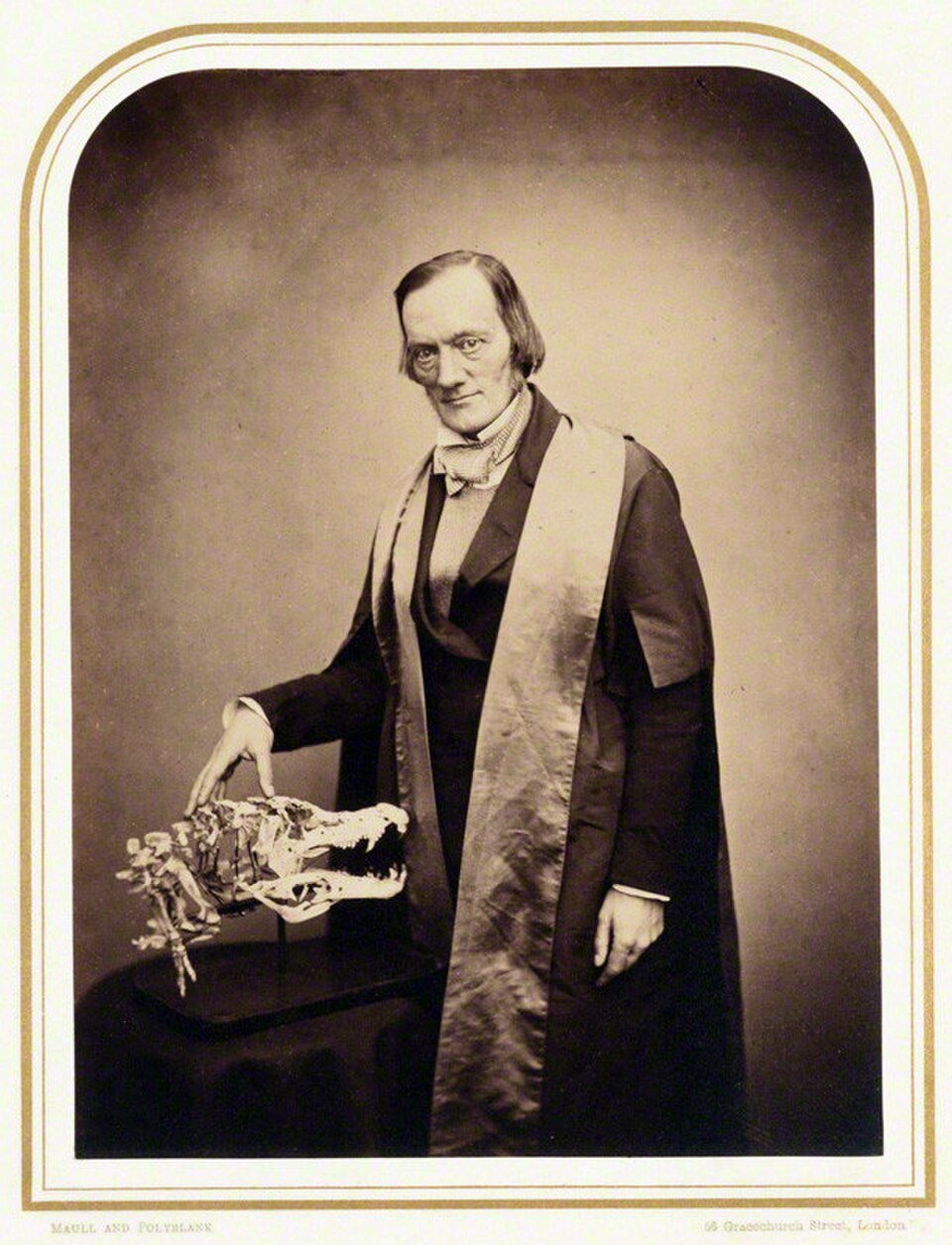
After examining the large, unusual fossils that were being discovered in Southern England, Sir Richard Owens noticed that these strange fossils belonged to a distinct group of animals. He dubbed species within this group “Dinosauria”, which means “Terrible Lizards”.
Photograph of Sir Richard Owens, 1855
1859: Charles Darwin publishes The Origin of Species
Before Darwin published his book The Origin of Species, scientists were not in agreement of how different species came to be. By studying the fossil record and observing animal populations on the Galápagos Islands, Darwin realized that different species emerge due to a series of adaptations to their environment. The members whose traits allow them to live long enough to reproduce pass on their genes to the next generation, while members of the same population with less advantageous traits are less likely to reproduce. This is called natural selection and is demonstrated in the graphic below.
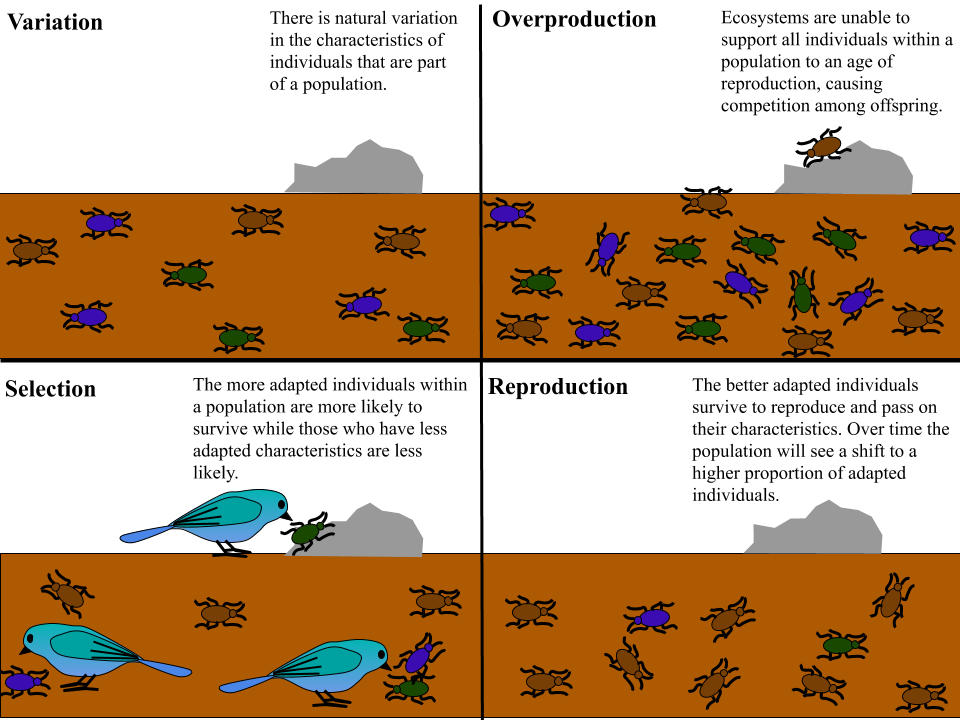
NicholasToal, CC BY-SA 4.0 <https://creativecommons.org/licenses/by-sa/4.0>, via Wikimedia Commons
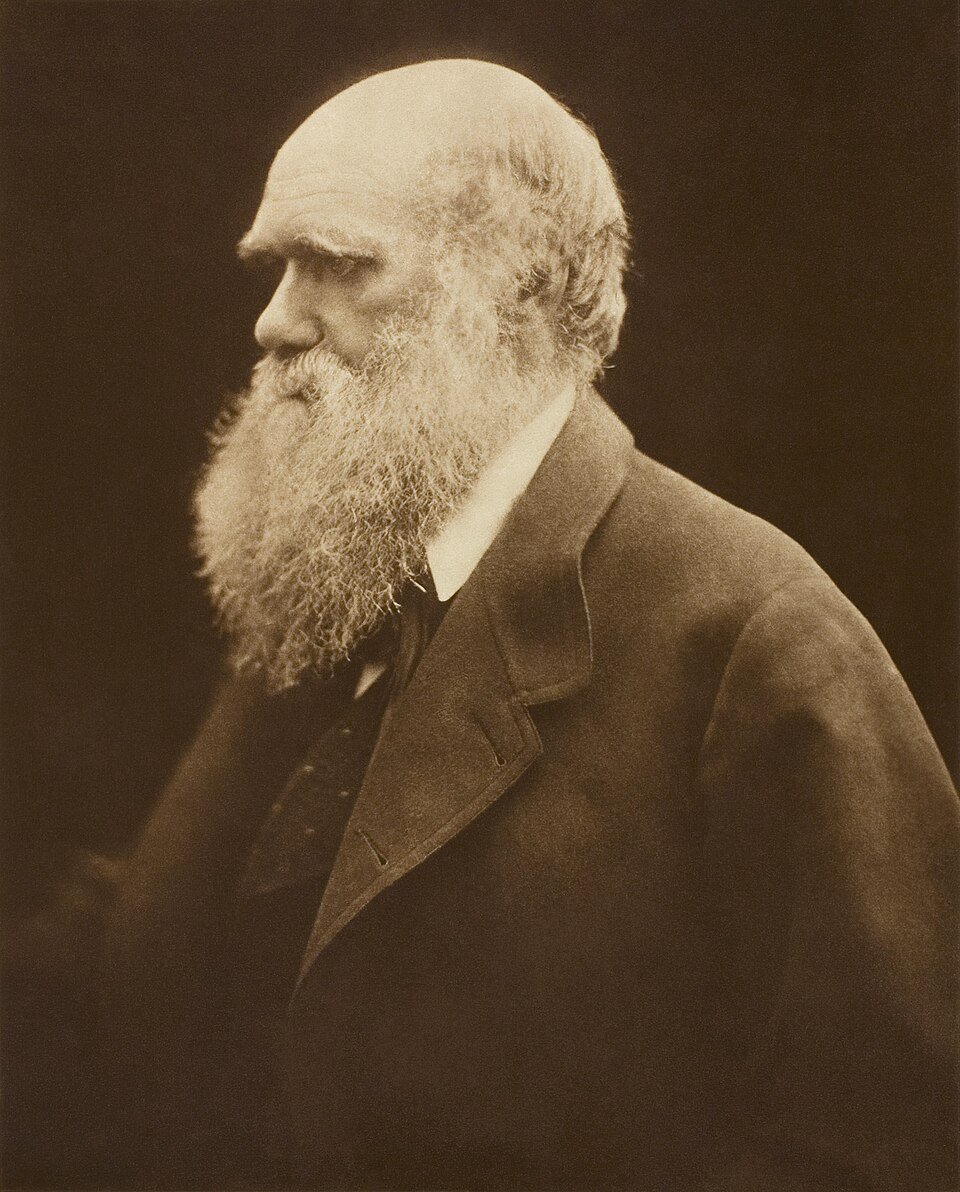
Thanks to Darwin, paleontologists were better able to understand how both living and extinct species are related to each other, and why certain features might have been useful for the extinct species’ survival.
1870: Owens Discovers the Archaeopteryx
Sir Richard Owens (the guy who coined the term “dinosaur”) found the first fossil of the Archaeopteryx in Bavaria, Germany. The Archaeopteryx ‘s relationship to birds was proposed soon after its discovery, but it would not be until the 1990s that scientists finally came to an agreement that this small, winged theropod was a transitionary species between the theropod dinosaurs and the modern bird.
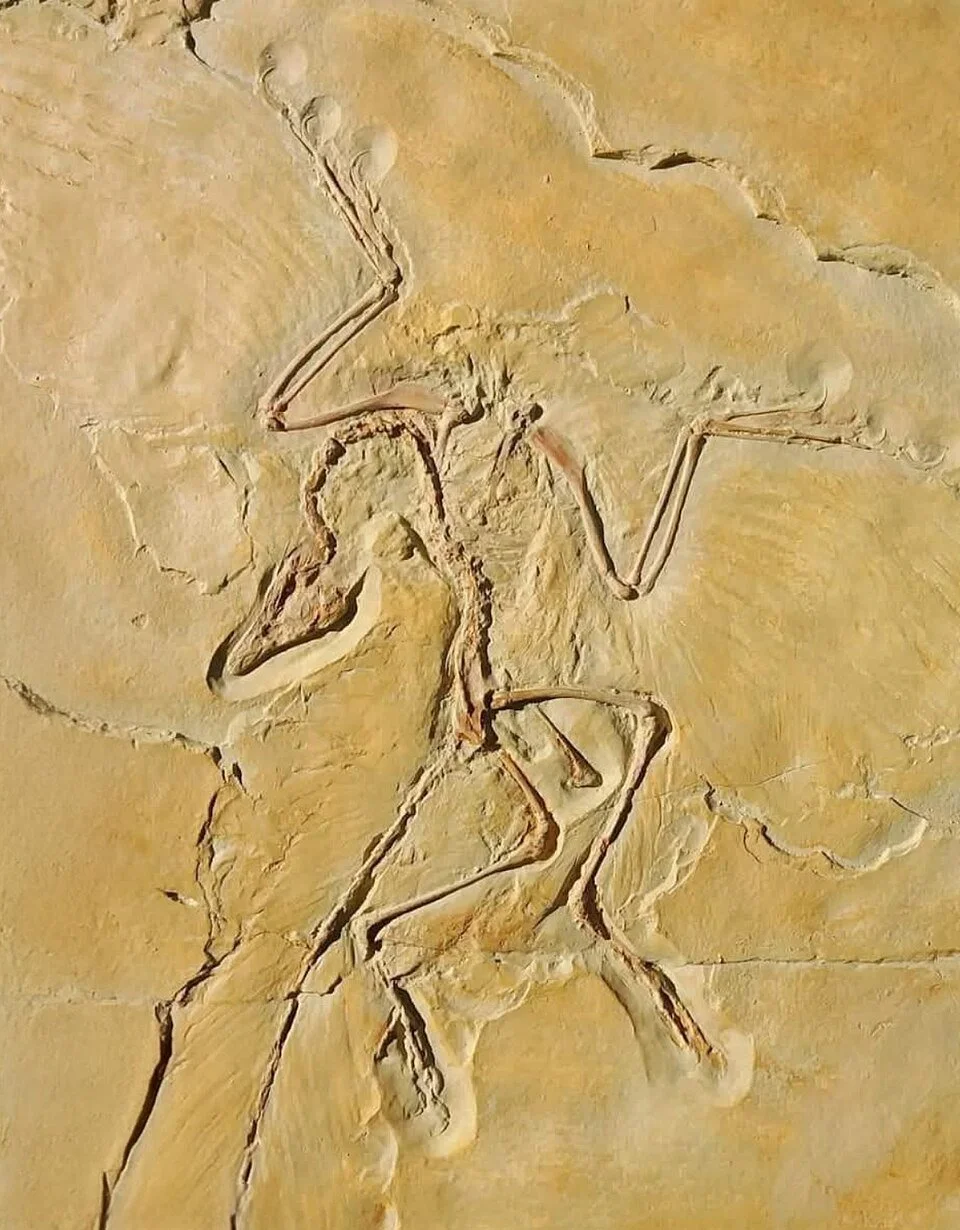
Archaeopterys lithographica fossil discovered by Owens.
Evobio12a, CC BY 4.0 <https://creativecommons.org/licenses/by/4.0>, via Wikimedia Commons

Reconstruction of the Archaeopteryx lithographica
TB0815, CC BY 4.0 <https://creativecommons.org/licenses/by/4.0>, via Wikimedia Commons
1877-1892: The Bone Wars

Edward Drinker Cope
Some of Cope’s discoveries include: The Coelophysis, Camarasaurus, Monoclonius, and Dimetrodon
Many landmark discoveries of North American dinosaurs were made by two rivals determined to be find and name the most fossils. Edward Drinker Cope and Othniel Marsh made hundreds of discoveries collectively, but also resorted to bribes, trickery, and even theft. The rivalry began when Marsh corrected Cope’s attempt to piece together an Elasmosaurus skeleton, placing its skull on the tip of its tail instead its neck. Cope was humiliated, Marsh was smug, and thus the two spent decades trying to outdo each other until both fell into financial ruin from their respective shenanigans.
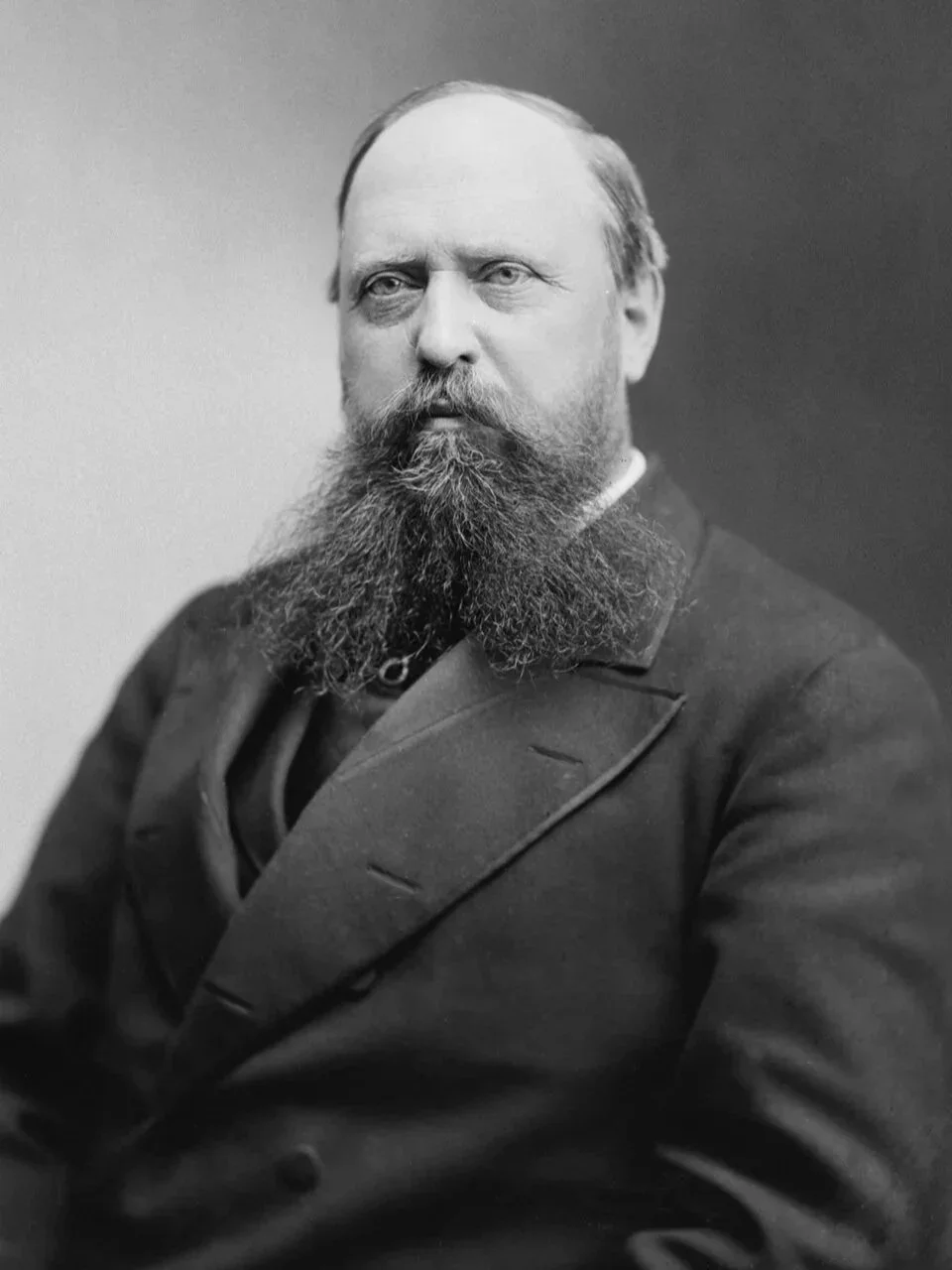
Othniel Marsh
Some of Marsh’s discoveries include: The Triceratops, Stegosaurus, Allosaurus, and Apatosaurus
Barnum Brown had one of the coolest jobs ever: professional fossil hunter. The American Museum of Natural History (AMNH) in New York hired the paleontologist to find and collect fossils for their collection, and collect fossil he did. Brown’s biggest discovery came in 1902 when he found a partial skeleton of a Tyrannosaurus rex in the Hell Creek Formation in Montana. Six years later, he would find a more complete T. rex skeleton, and today that specimen is one display at the AMNH.
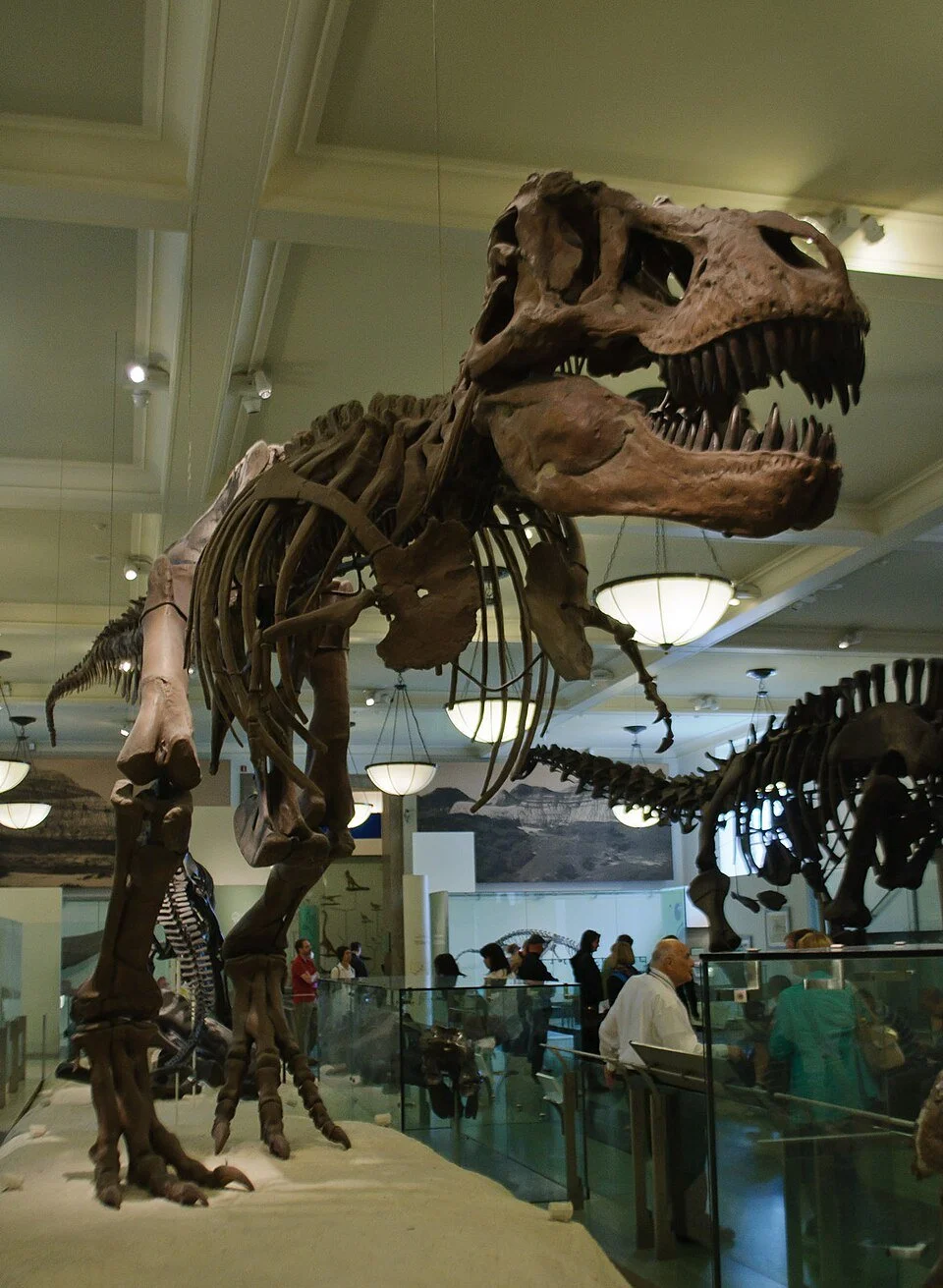
1902: Barnum Brown Discovers the Tyrannosaurus Rex
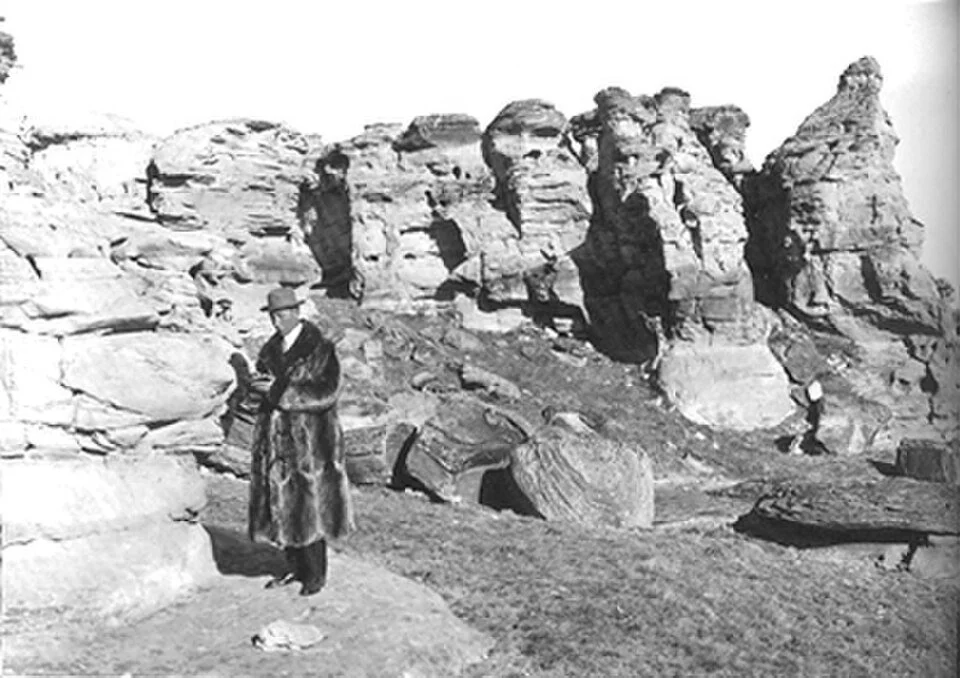
Barnum Brown conducting field work in the Hell Creek Formation.
Brown’s 1908 T. rex specimen
InSapphoWeTrust from Los Angeles, California, USA, CC BY-SA 2.0 <https://creativecommons.org/licenses/by-sa/2.0>, via Wikimedia Commons
1908: Charles Sternberg finds Edmontosaurus Mummy
While Sternberg made many discoveries in his long career, perhaps his most famous was the “Trachodon mummy”, an exquisitely preserved mummified Hadrosaur (Edmontosaurus annectens). His three sons followed in Charles’ footsteps and became successful fossil hunters of their own. His son, George Sternberg, famously discovered the first “Fish within a Fish” fossil. Today, the Sternberg Museum of Natural History carries on Charles Sternberg’s legacy.

Sternberg preparing a fossil.
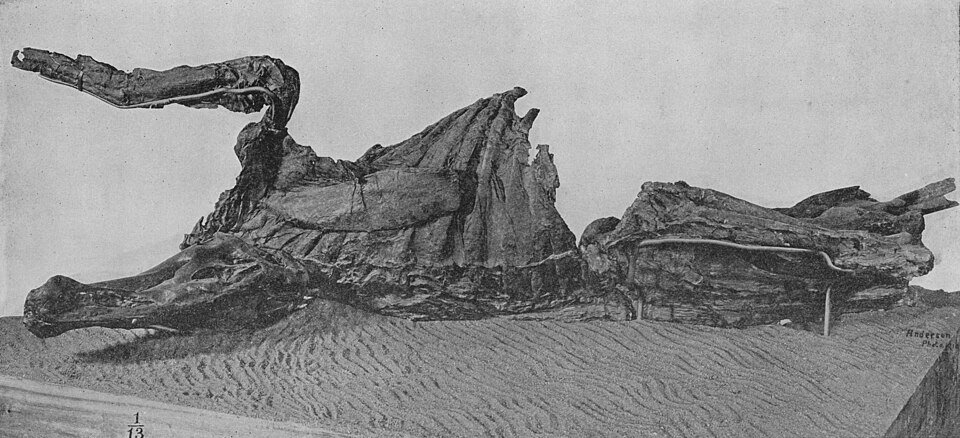
Photo of the mummified Edmontosaurus found by Charles Sternberg. This specimen still has soft tissue impressions and informed paleontologists that hadrosaurs had scaly skin comparable to a modern bird’s foot.
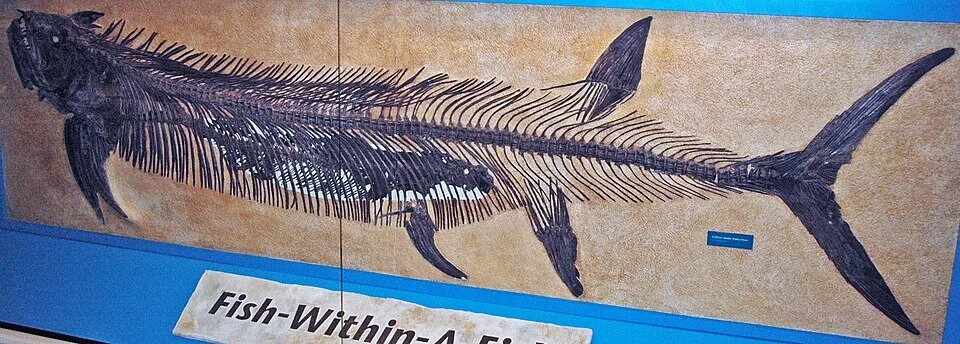
The “Fish-Within-a-Fish” fossil displayed at the Sternberg Museum
James St. John, CC BY 2.0 <https://creativecommons.org/licenses/by/2.0>, via Wikimedia Commons
1922-1930: Gobi Desert Expeditions
American Adventurer Roy Chapman Andrews was a pioneer of fossil hunting in the early 20th Century. He, like Barnum Brown, made his claim to fame by acting a professional explorer for the American Museum of Natural History in New York City, and for his expeditions into the Gobi Desert where he and his team found the first dinosaur nests, several new species of dinosaur, and evidence of mammals who lived among the dinosaurs.
Fun fact: Roy Chapman Andrews was also the inspiration for fictional adventurer Indiana Jones.

Andrews and team unearthing Paraceratherium bones in 1928, Mongolia.
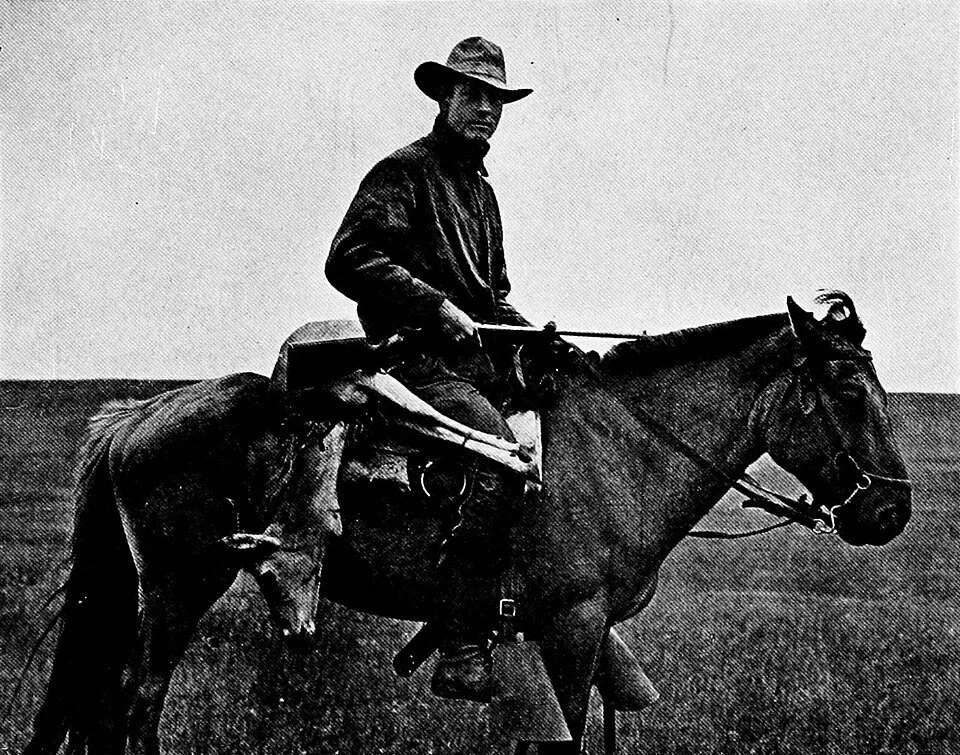
Andrews on his horse Kublai khan in Mongolia
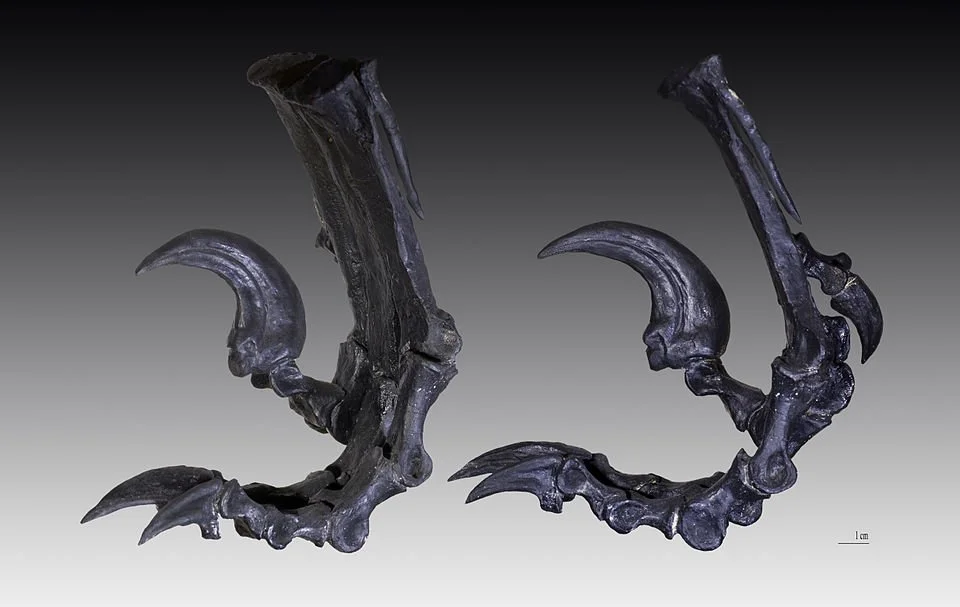
Deinonychus hind feet. Ostrom observed that the anatomy of these feet allow for quick, nimble movement, far different from the tail-dragging image of dinosaurs up until this discovery.
Didier Descouens, CC BY-SA 4.0 <https://creativecommons.org/licenses/by-sa/4.0>, via Wikimedia Commons
1969: John Ostrom discovers that dinosaurs are fast, nimble, and exciting!
Previously, the idea had been that dinosaurs were lumbering and slow, which made them quite boring subjects of study. Ostrom, by studying the anatomy of a Deinonychus foot, realized that dinosaurs must have been quick, agile, and undeniably active animals. This began what was later dubbed “The Dinosaur Renaissance”, a time when dinosaurs as a pop-culture phenomenon really took off.
1986: The Dinosaur Heresies
In 1986, Dr. Robert T. Bakker, prolific paleontologist, published his book The Dinosaur Heresies on dinosaur eggs and nests. His research on dinosaur nesting grounds informed new theories on how dinosaur parents, particularly theropods, cared for their hatchlings, likening them more to birds than other reptiles, who typically leave their eggs unattended. Conversely, he theorized that large dinosaurs like theropods likely gave birth to live young due to their tremendous size. His observations also led to the now commonly accepted theory that dinosaurs, like birds, were warm blooded.
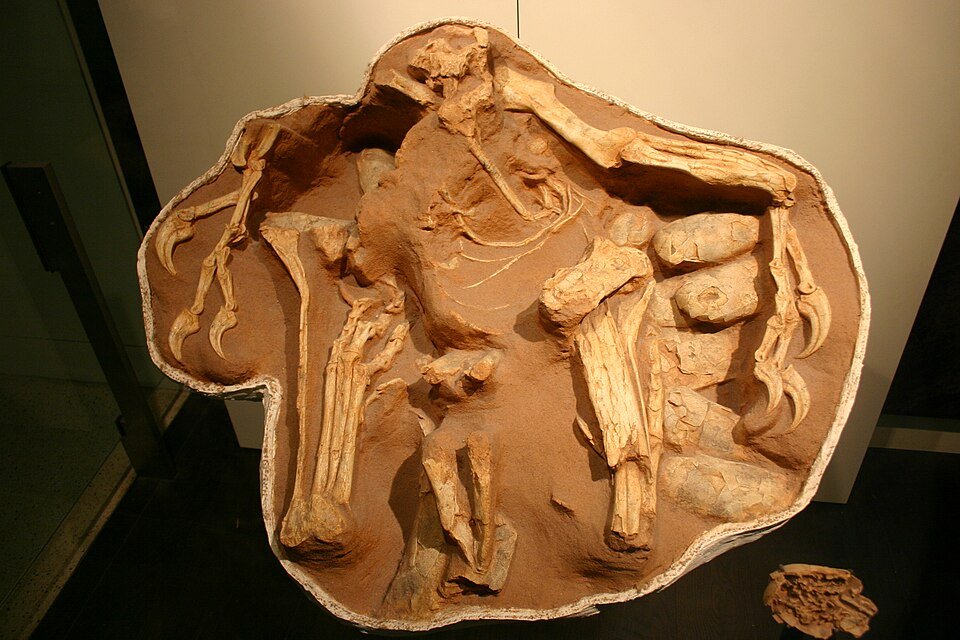
The nest of a Citipati (raptor) specimen and its eggs.
Ryan Somma, CC BY-SA 2.0 <https://creativecommons.org/licenses/by-sa/2.0>, via Wikimedia Commons
Trademark Universal City Studios LLC
1993: Jurassic Park is a block buster hit!
Based on a novel by the same name, Jurassic Park introduced a whole new generation to the exciting world of dinosaurs and went on to inspire many current day paleontologists to join the field. Though not entirely accurate in its depictions, Jurassic Park sparked a fascination with dinosaurs for millions around the world.
1980s-2000s: Philip Currie
Canadian paleontologist Philip Currie made so many contributions to paleontology that he’s got a whole museum named after him (Philip J. Currie Dinosaur Museum in Alberta, Canada). He discovered dozens of dinosaur species, described some of the first feathered dinosaurs, advanced our understanding of the connection between birds and raptor dinosaurs, and more. He was also the inspiration for Jurassic Park protagonist “Dr. Alan Grant”.
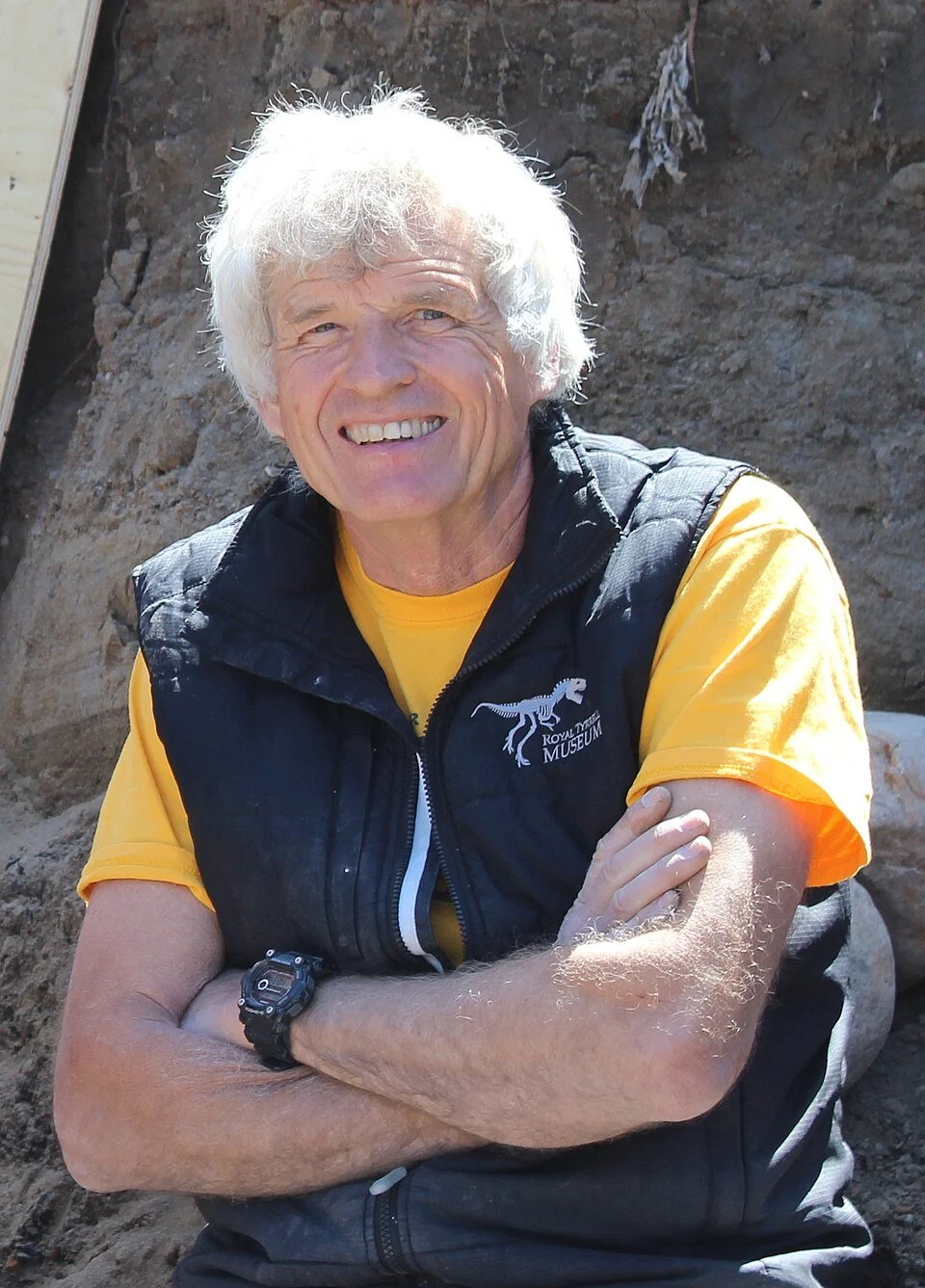
jasonwoodhead23, CC BY 2.0 <https://creativecommons.org/licenses/by/2.0>, via Wikimedia Commons
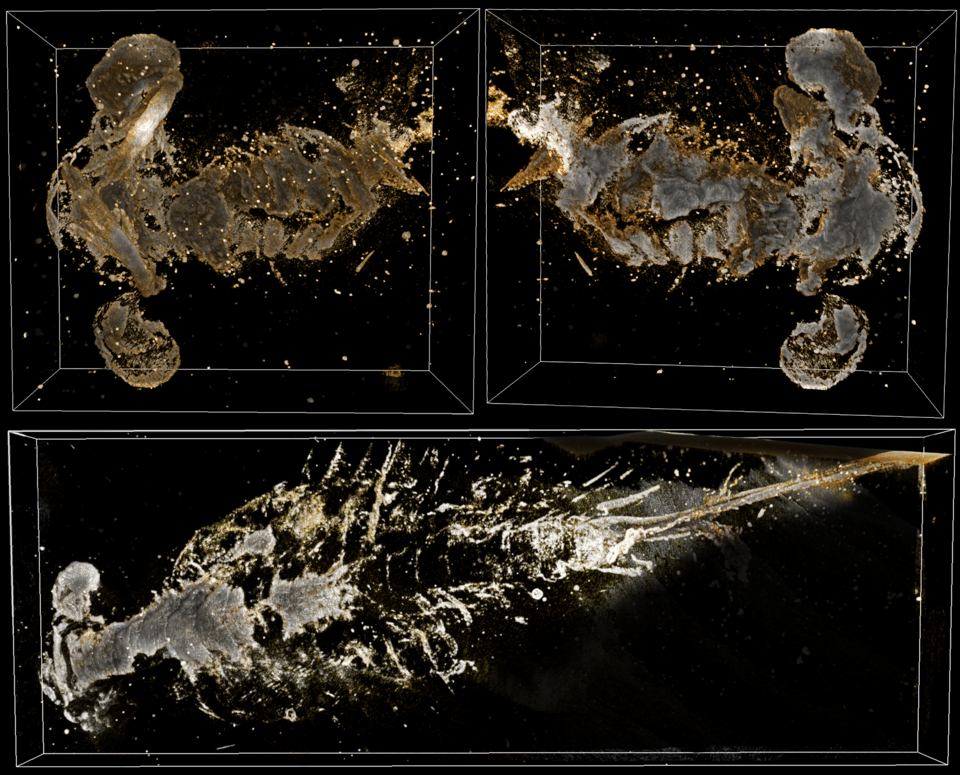
CT Scan of a Cambrian-era arthropod fossil Oreinorema.
Prehistorica CM, CC0, via Wikimedia Commons
1990s: CT Scanning Revolutionizes Paleontology
IN the 1990s, CT scanning, imaging, and modeling became another tool for paleontologists to preserve delicate structures like soft tissue and feathers without the need for careful preparation.
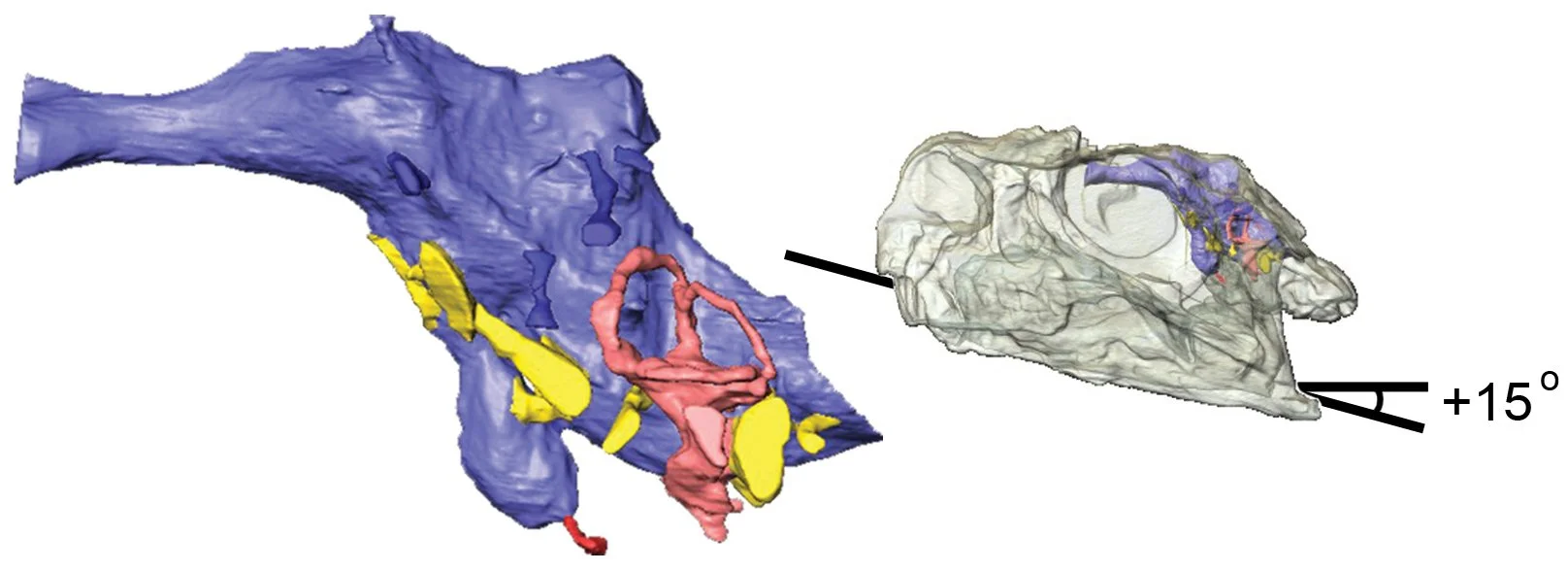
Endocast (or a 3D model of the braincase) of a Massospondylus skull.
Sereno PC, Wilson JA, Witmer LM, Whitlock JA, Maga A, et al. "Structural Extremes in a Cretaceous Dinosaur". PLoS ONE. 2, 11, e1230. 2007. DOI:10.1371/journal.pone.0001230, CC BY 2.5 <https://creativecommons.org/licenses/by/2.5>, via Wikimedia Commons
2003: New Feathered Dinosaurs Discovered
In China, paleontologists like Dr. Xu Xing have been discovering droves of feathered dinosaur remains. Xing has discovered nearly a hundred new species, including the four-winged Microraptor and the Yutyrannus huali.
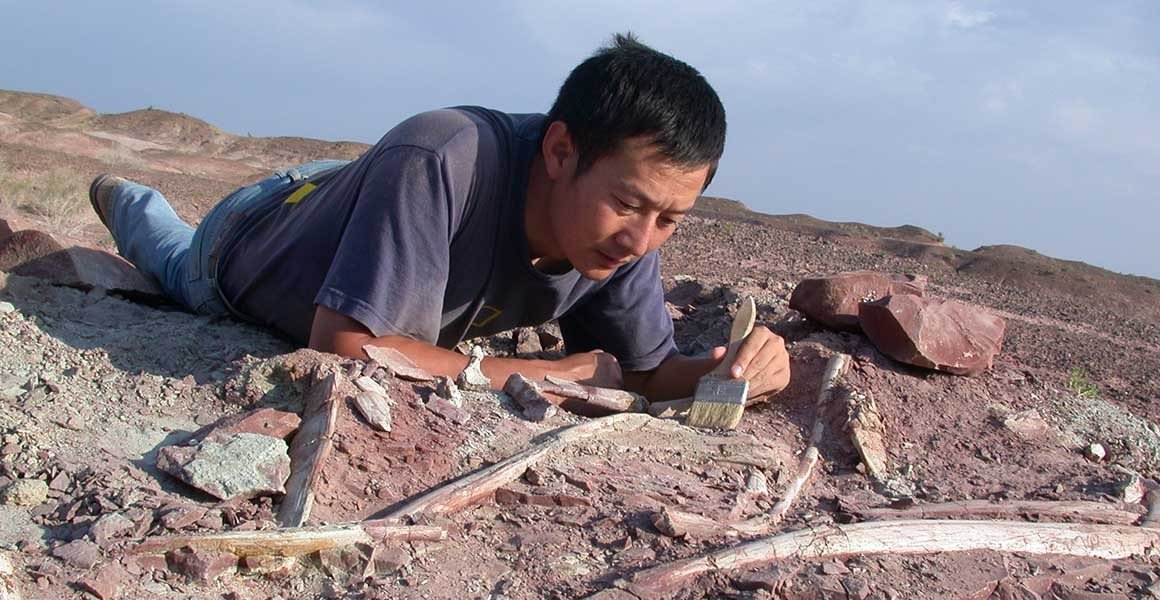
Photo: [Xu Xing] / [Natural History Museum]. Available at: [https://www.nhm.ac.uk/discover/xu-xing-the-palaeontologist-whos-named-the-most-dinosaurs.html]
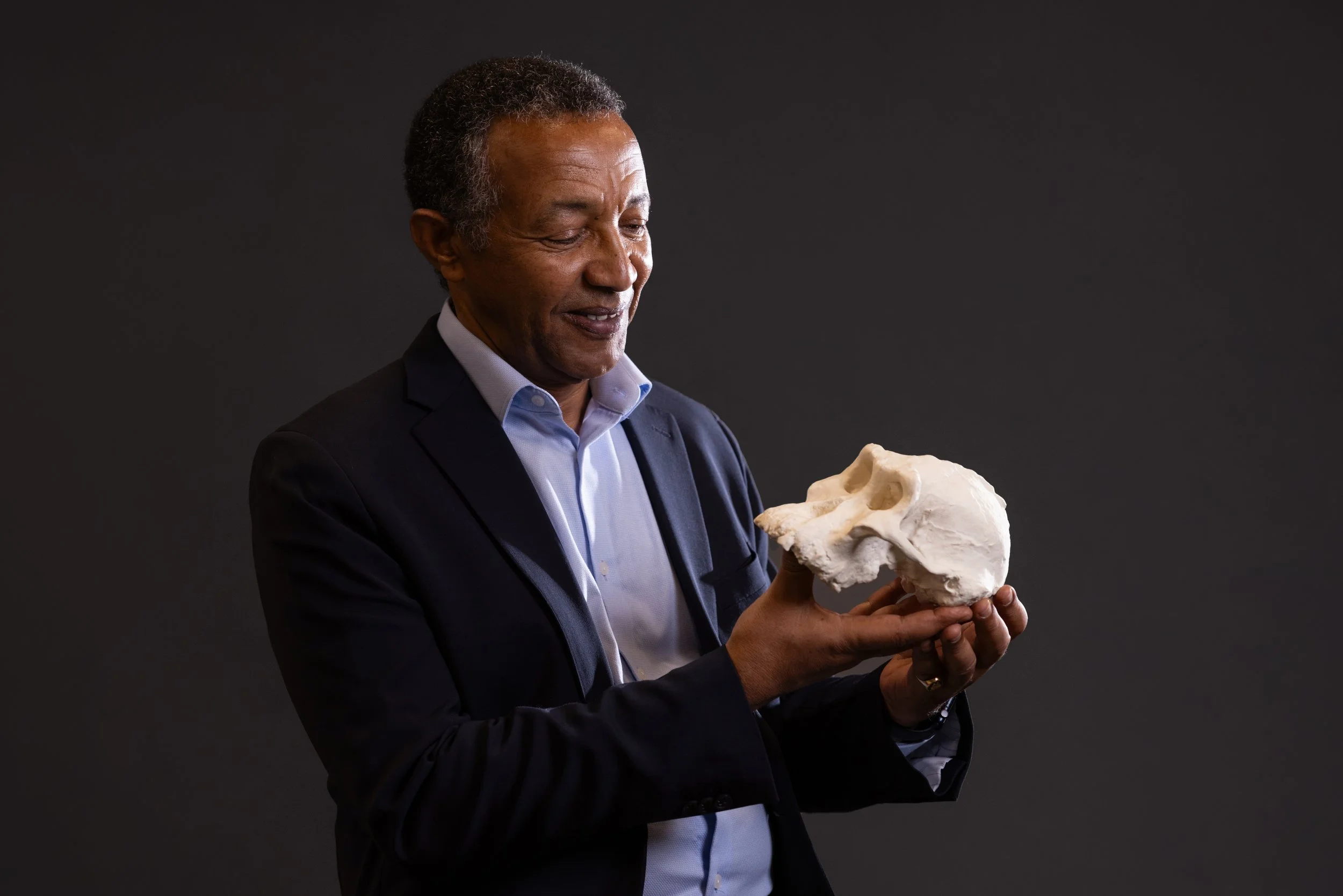
Photo Credit: Arizona State University. https://newsroom.asu.edu/experts/yohannes-haile-selassie
2015: Complete Australopithecus Skull Discovered
In 2015, Ethiopian Paleontologist Dr. Yohannes Haile-Selassie and his team discovered the first complete skull of Australopithecus deyiremeda in the Afar region of Ethiopia. This discovery reshaped our understanding of early human development. Before Haile-Selassie’s discovery, scientists had a linear understanding of human ancestry in which each confirmed species evolved into the next, but Australopithecus deyiremeda’s existence proved that there were multiple species of early humans living at the same time.
2026: Nanotyrannus Confirmed
In 2026, Paleontologist Dr. Lindsay Zanno and Dr. James Napoli confirmed the hotly contested claim that the theropod in the famous “Dueling Dinosaurs” was not a teenage T. Rex, but in fact a new species entirely: The Nanotyrannus. As you might have picked up from the name (Translation: “Little Tyrant”), this carnivorous theropod was smaller than its larger cousin, the Tyrannosaurus rex.
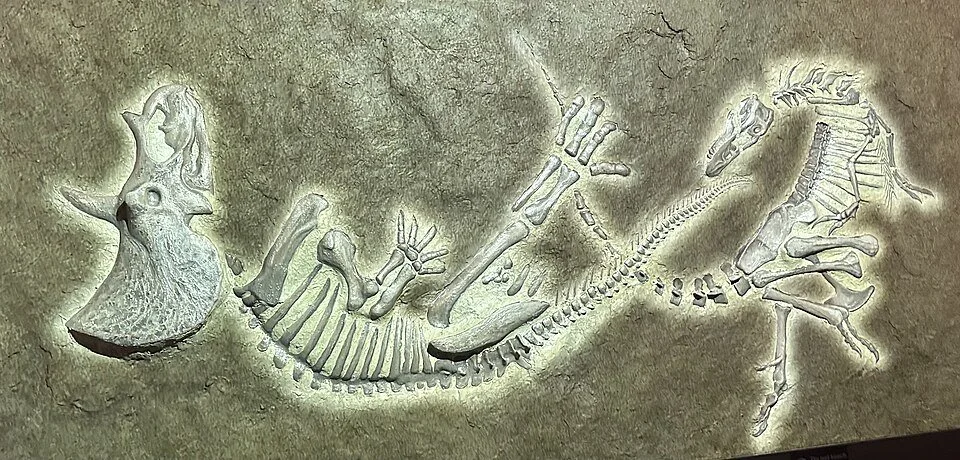
Pictured here is a rendering of the “Dueling Dinosaurs” before the specimens were further prepared and removed from the matrix.
Geekgecko, CC0, via Wikimedia Commons
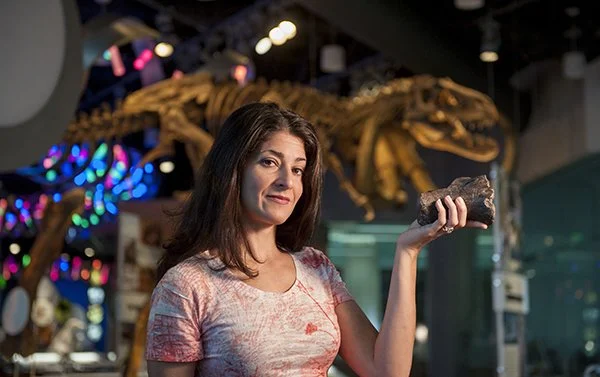

Dr. James Napoli, North Carolina State University
Dr. Lindsay Zanno, North Carolina Museum of Natural Sciences
Photo Credits: North Carolina State University. Available at https://www.lib.ncsu.edu/events/fabulous-faculty-dr-lindsay-zanno, EurekAlert. Available at https://www.eurekalert.org/multimedia/1098453
The history of Paleontology is still being written everyday by dedicated scientists all around the world. More discoveries are always just around the corner.