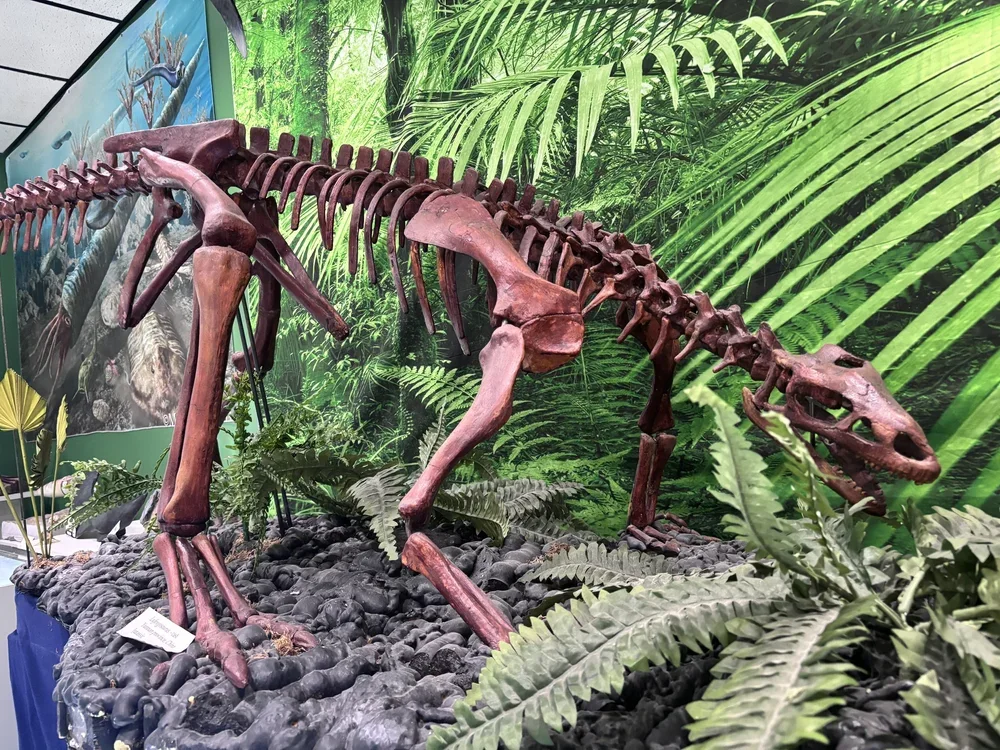
The Sauropod family is mainly comprised of quadrupedal (walking on four feet), slow moving, long-necked dinosaurs. Sauropods are known for their calm and generally pacifistic demeanor, and were generally herbivorous. Sauropods species came in a wide range of sizes from the diminutive Ohmdenosaurus, which only grew about 13 feet long to the biggest of the Titanosaurs like the Patagotitan mayorum which grew up to a whopping 121 feet long (that’s longer than a blue whale).
Sauropods were big eaters, requiring literal tons of fresh vegetation per day to survive. Their long necks allowed them to reach leaves from tall trees and low growing shrubbery before swallowing their food without stopping to chew it. Their long necks also helped them keep an eye out for predators. Fossil evidence also suggests that sauropods moved in herds and utilized a somewhat complex social structure arranged by age. A site of Mussaurus patagonicus fossils showed evidence of communal egg-laying grounds as well as proof that juveniles congregated into ‘schools’ while adults grazed near the herd alone or in pairs.
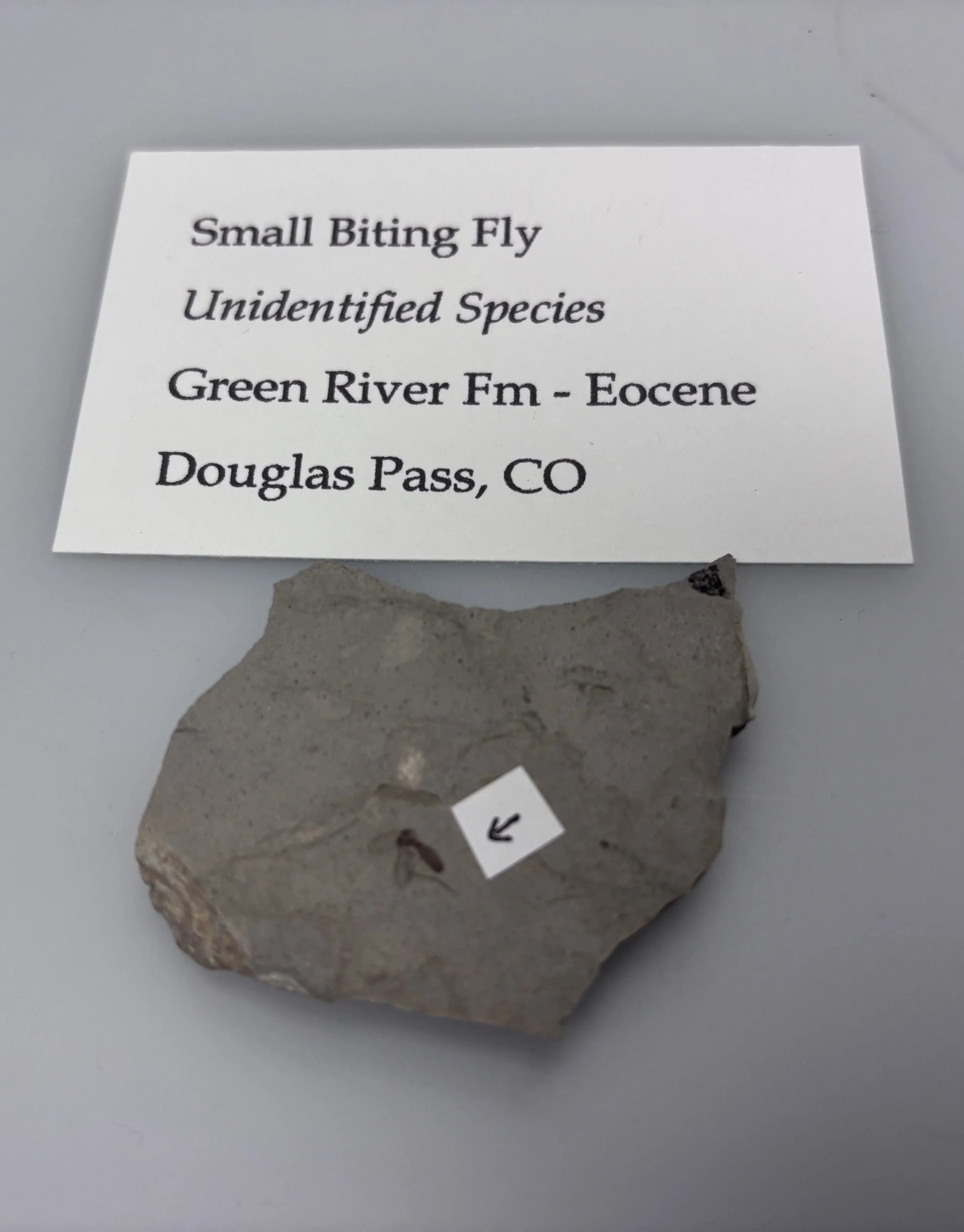
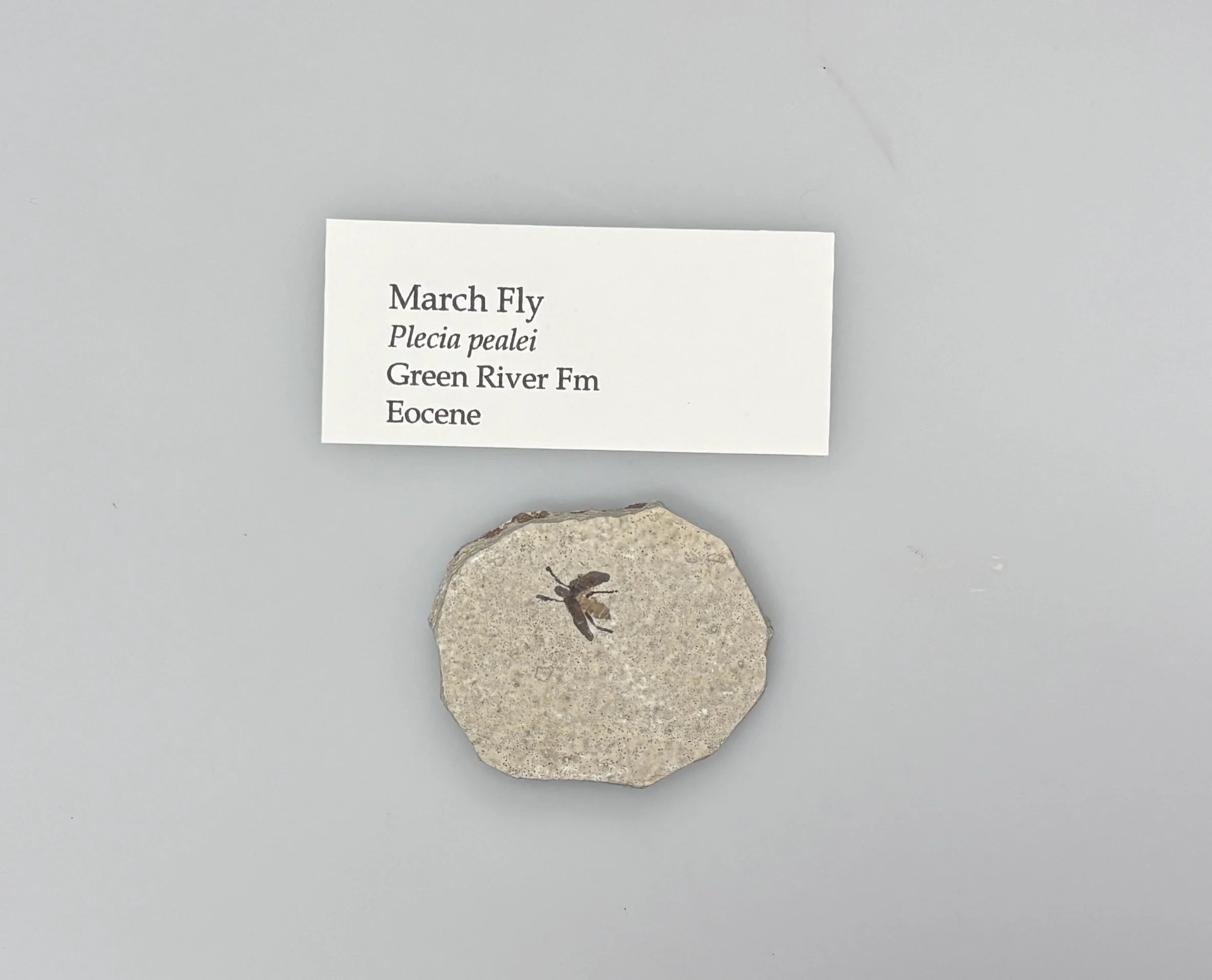
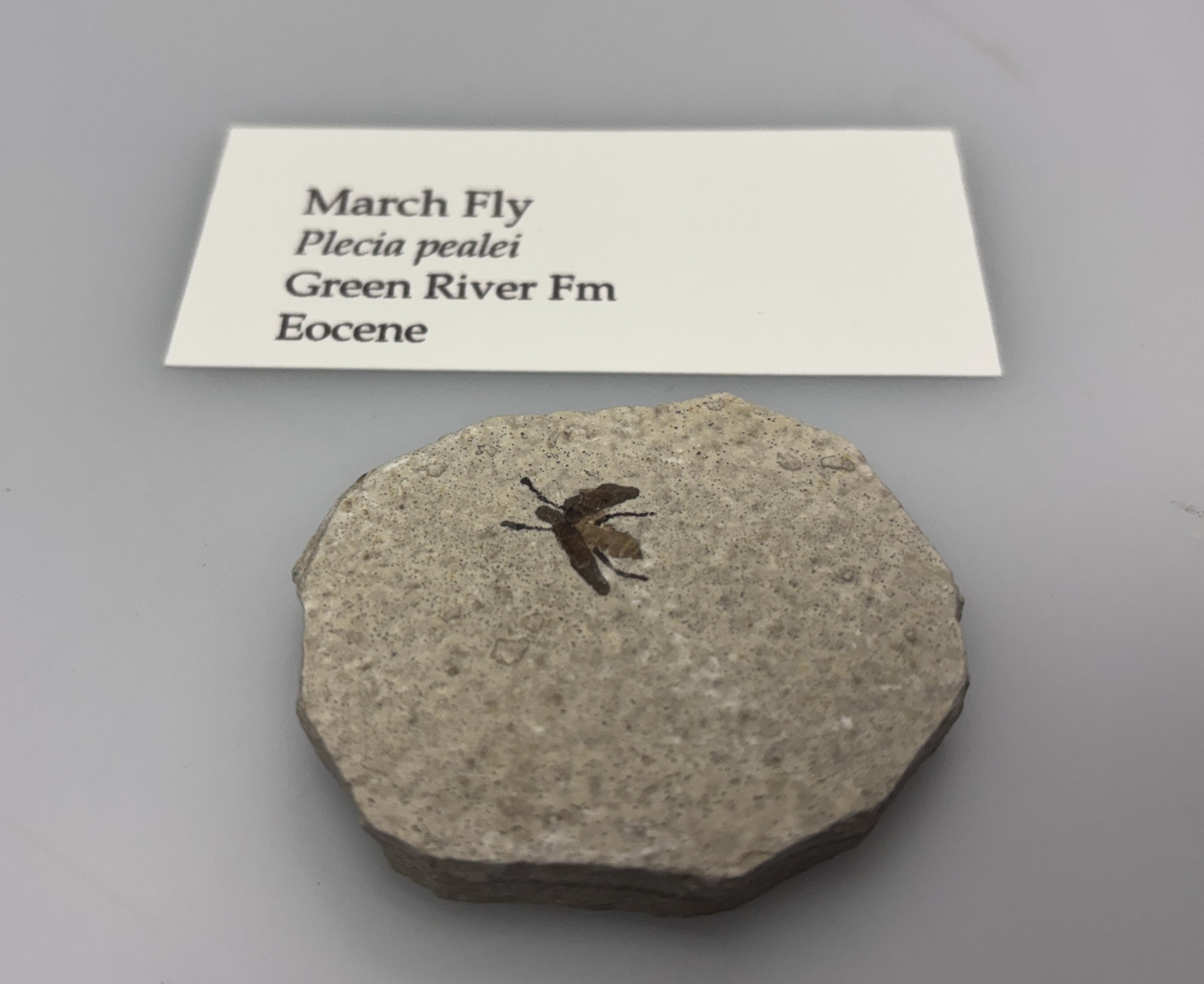
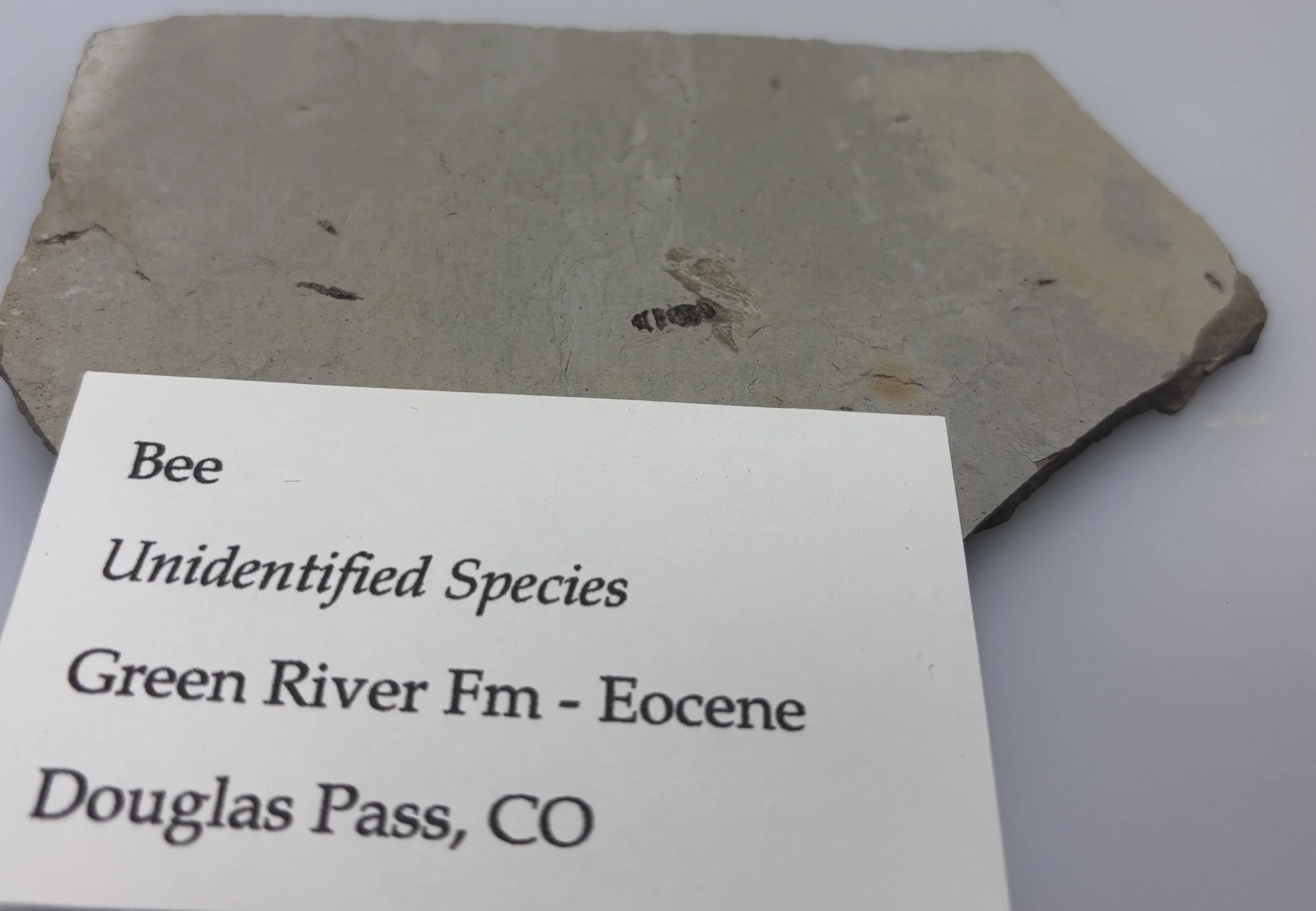
The Green River Formation is famous for the many fish, birds, and mammal species immaculately preserved in the fine lakebed sediment, but perhaps more impressively, that fine grain sediment was also perfect for preserving the many insects that made these ancient lakes their home. Among the insects found are flies, crickets, dragonflies, beetles, and more. Some of these specimens are so well preserved, patterns and pigments can be seen in the fossils themselves.
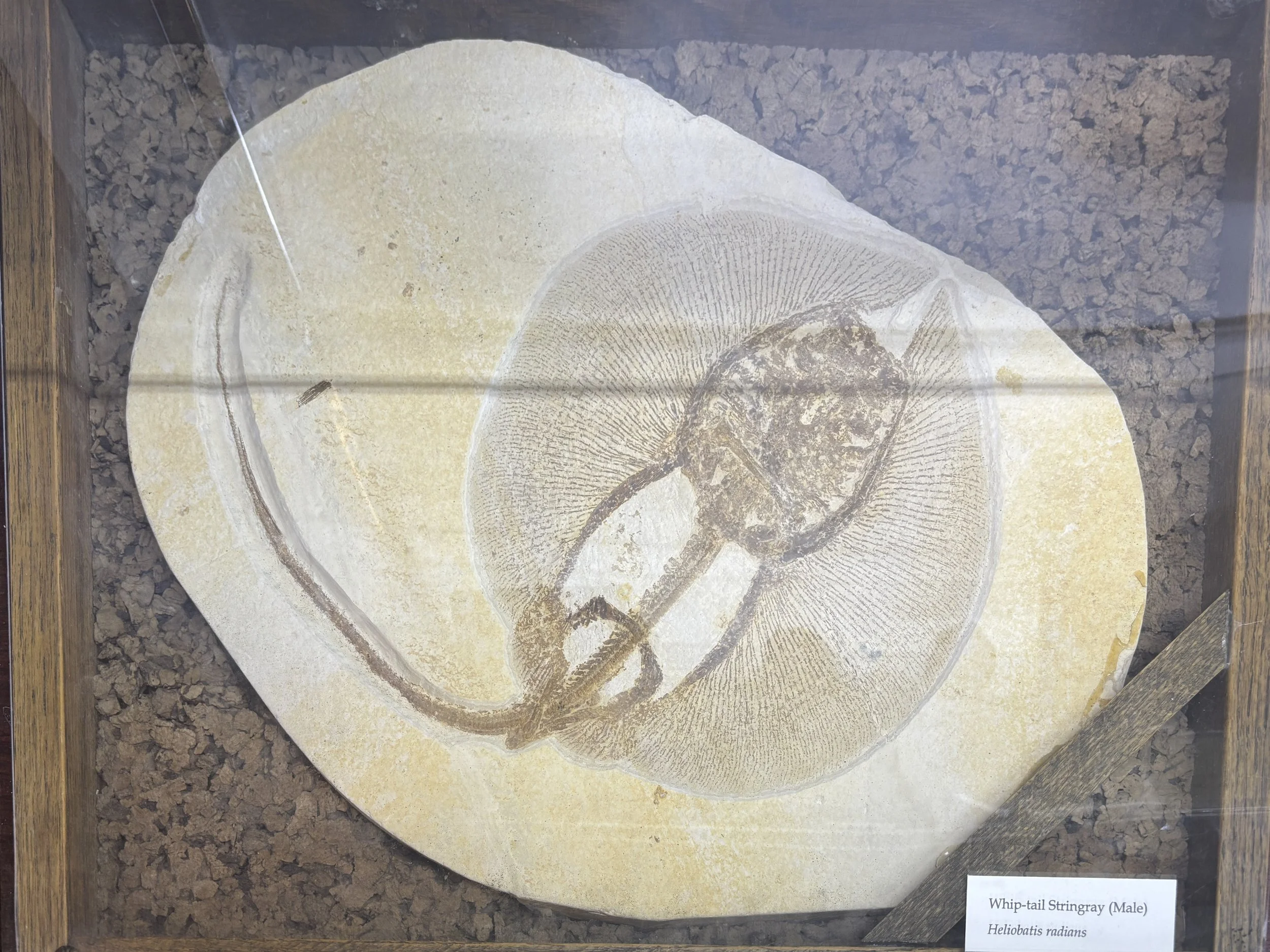
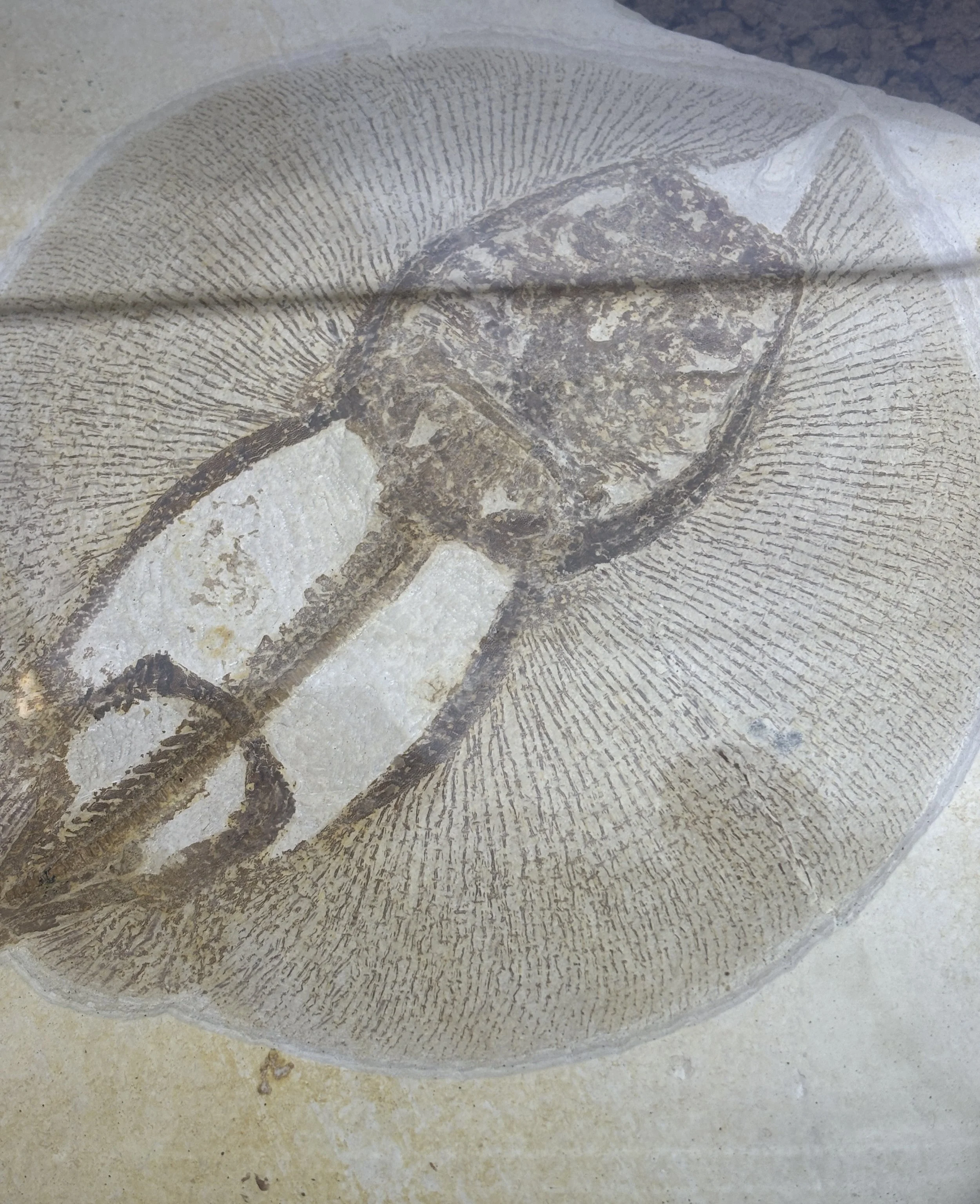
Whip-tail Stingray (Eocene)
Heliobatis radians was a freshwater stingray found exclusively in the fossil lakebeds of the Green River Formation in the Western United States. Like modern marine stingray species, Heliobatis radians has a flat body and barbed stingers on their long tails for defense. When not searching for food, these stingrays buried themselves in the fine-grained mud at the bottom of the lakes, which served to preserve a handful of these unique stingrays. The conditions for preservation were so optimal that even the radial pattern of their fin supports are sometimes present in the fossils. This striking pattern provided inspiration for their name, “Heliobatis”, which translates to “sun rays” in latin.
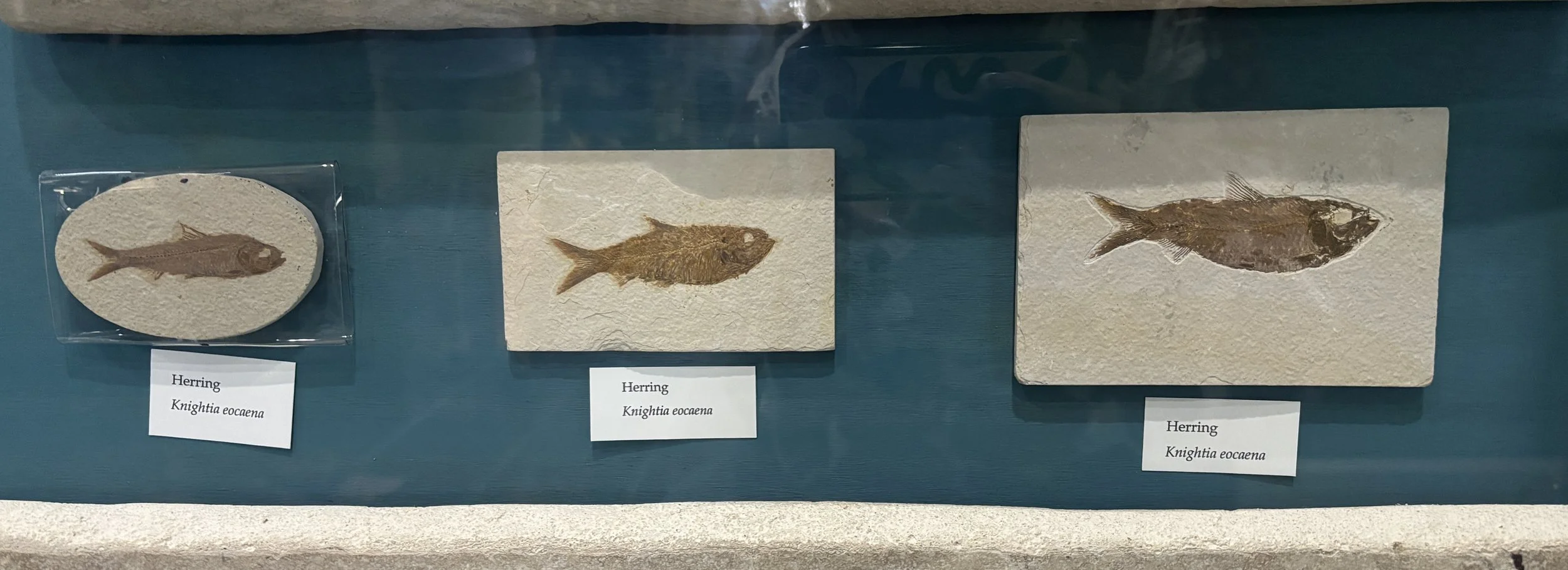
Knightia eocaena were small (typically 3 to 6 inches long) schooling fish whose fossils are largely found in the Green River Formation of the Western United States. Knightia eocaena were an integral part of the ecology of the region during the Eocene as they were the primary prey item for larger fish like Diplomystus dentatus as well as the various birds, snakes, and turtles that lived in or near the lakes. As such, their fossils are plentiful in the rock quarries of the Green River Formation and easily accessible for fossil collectors. Modern relatives of the Knightia eocaena like herring, sardines, and shads remain vital to commercial fish markets and marine food chains.
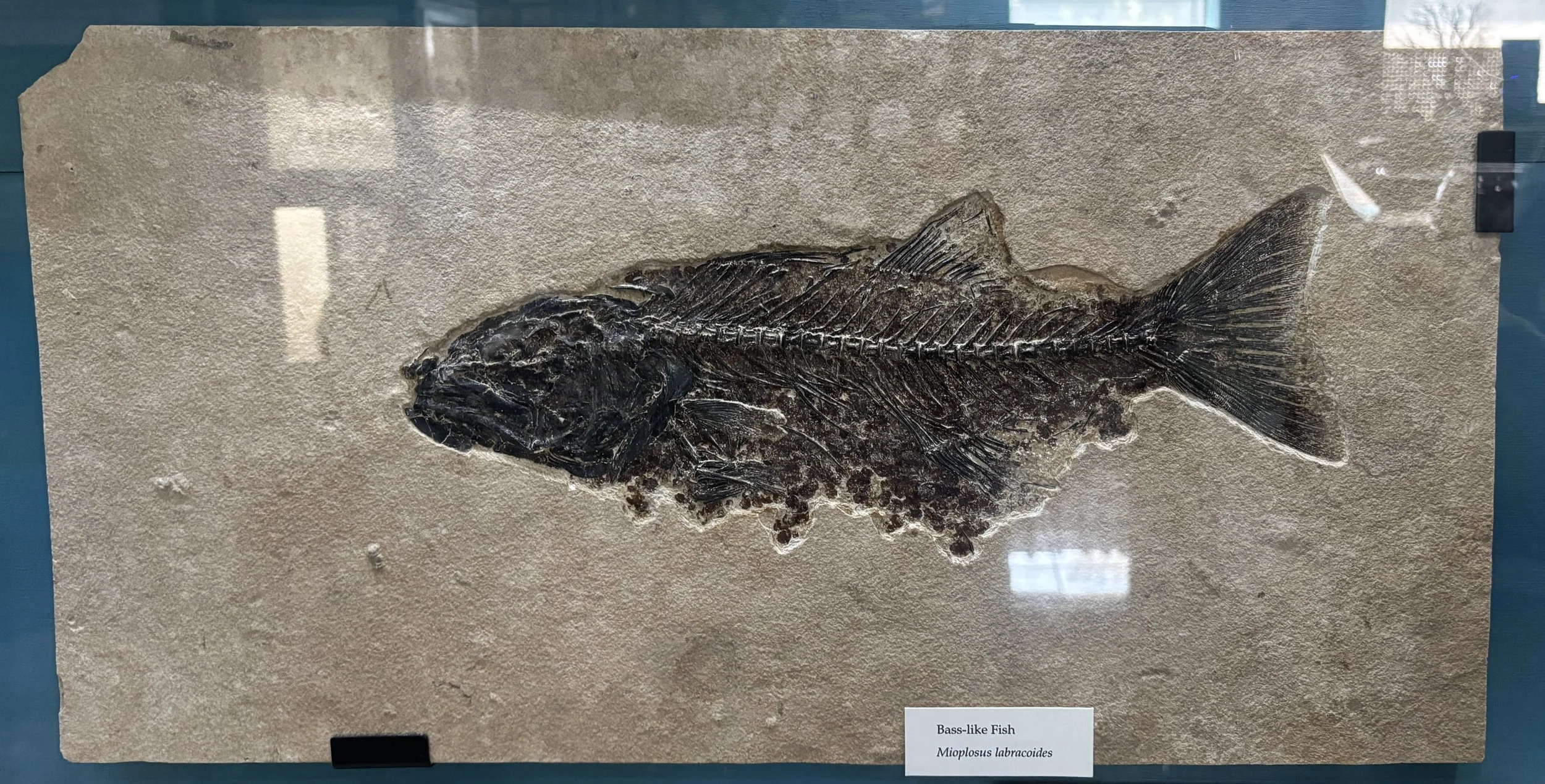
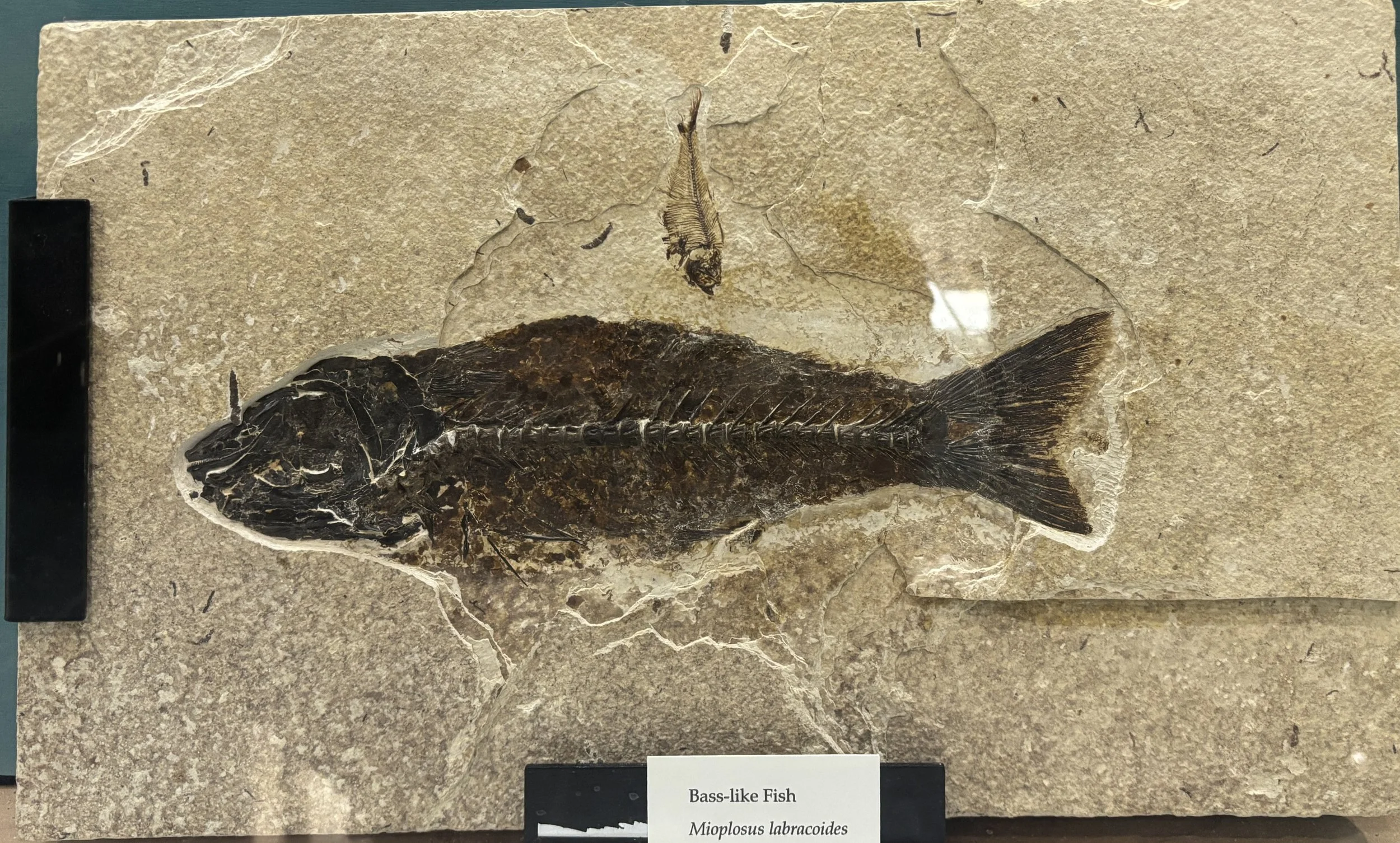
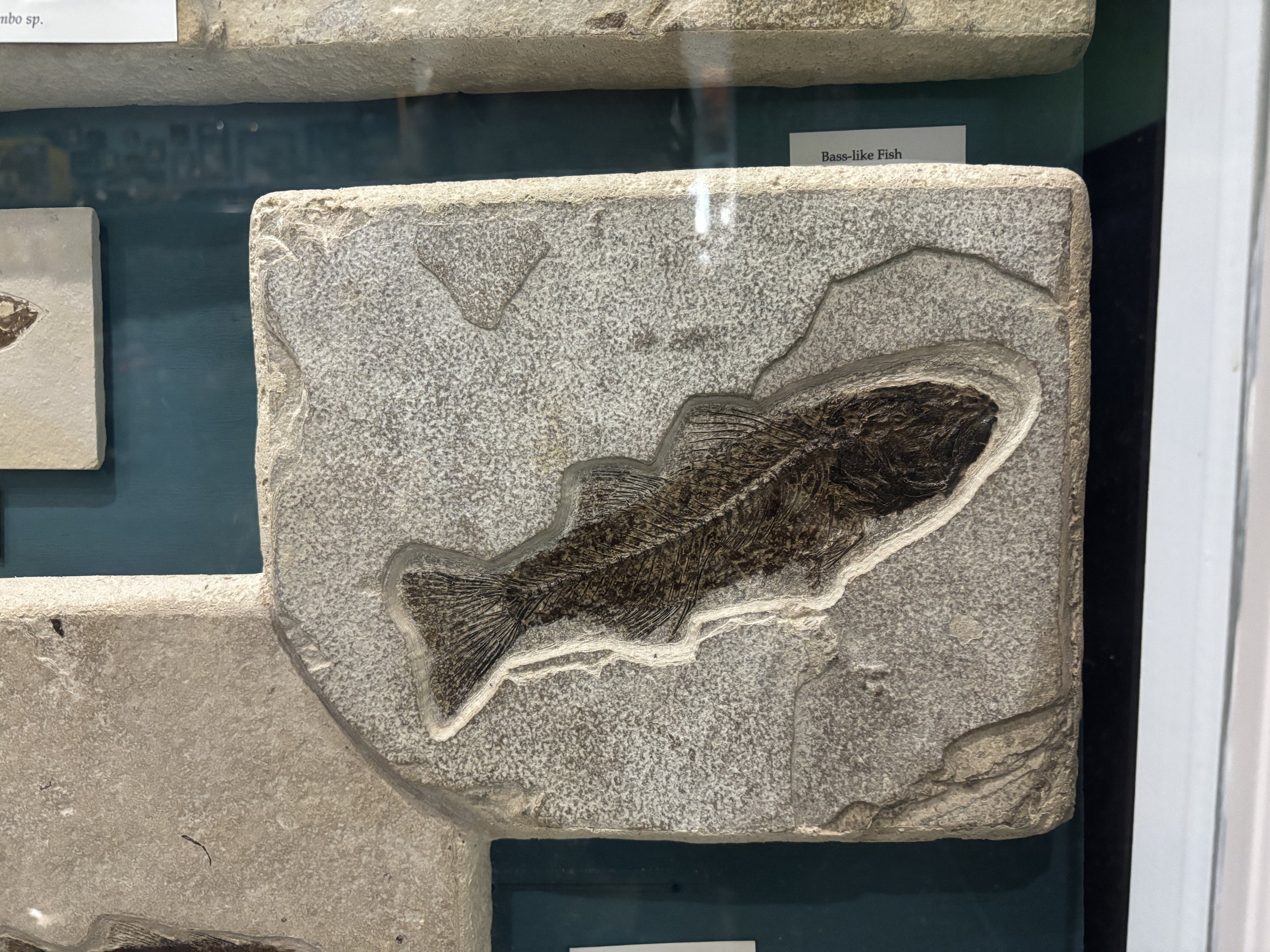
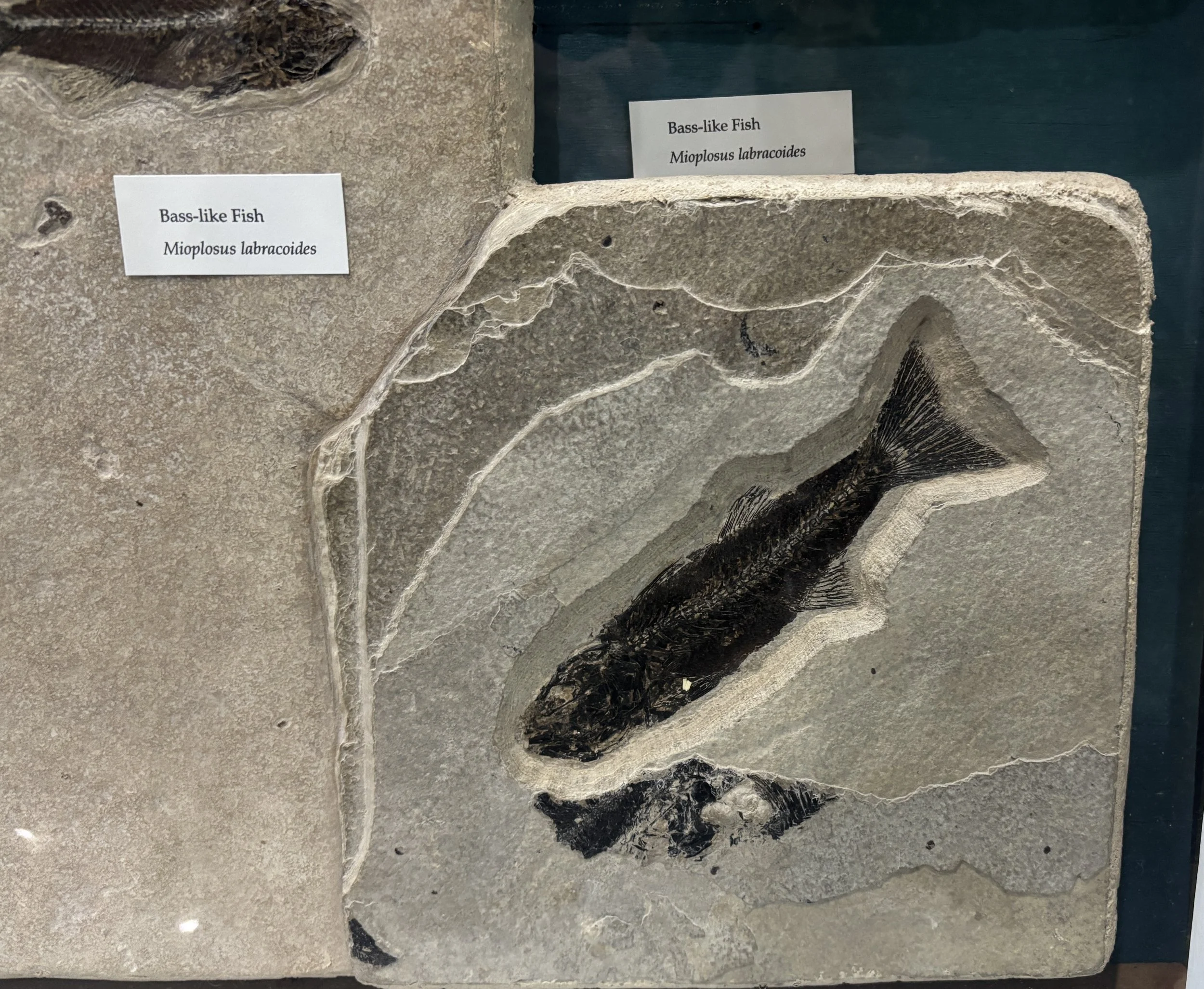
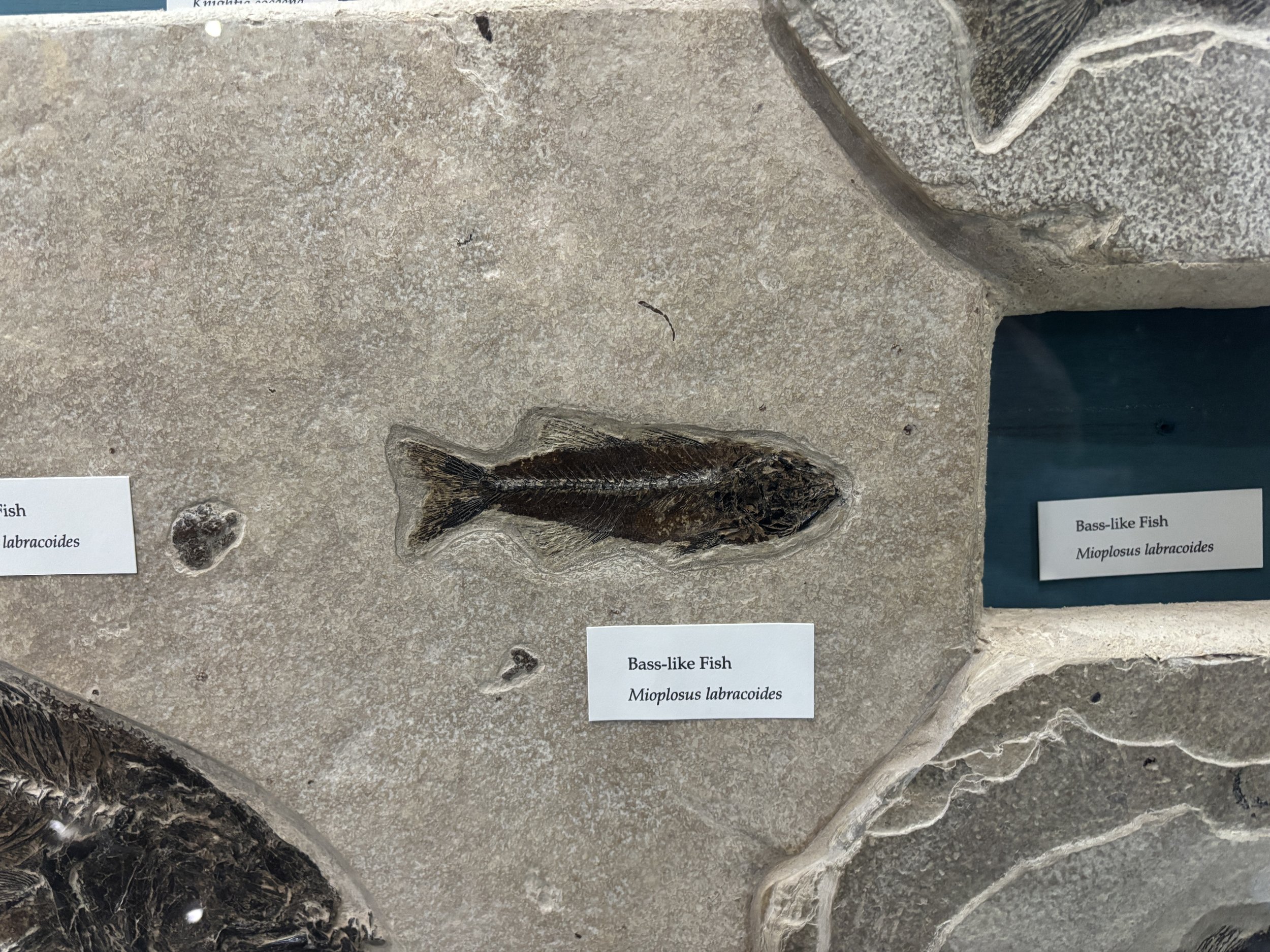
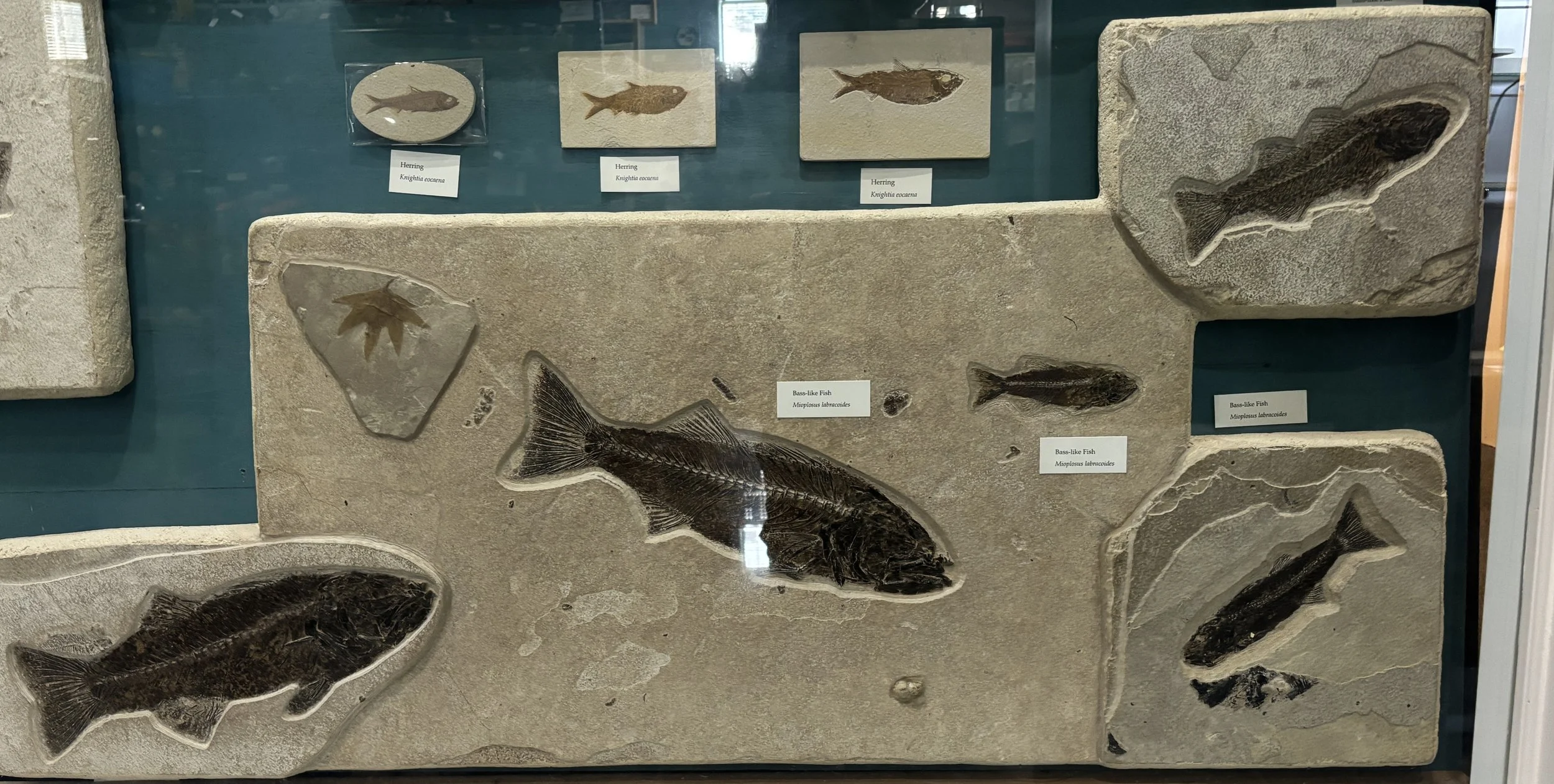
Mioplosus labracoides was a freshwater fish whose fossils are found almost exclusively in the ancient lakebeds of the Green River Formation. They grew to about 16 inches and are easily recognized by their elongated body shape and forked tailfins. Adult Mioplosus labracoides were likely solitary animals, as their fossils are not typically found near others of their species, but juvenile specimens of Mioplosus are often found within schools.
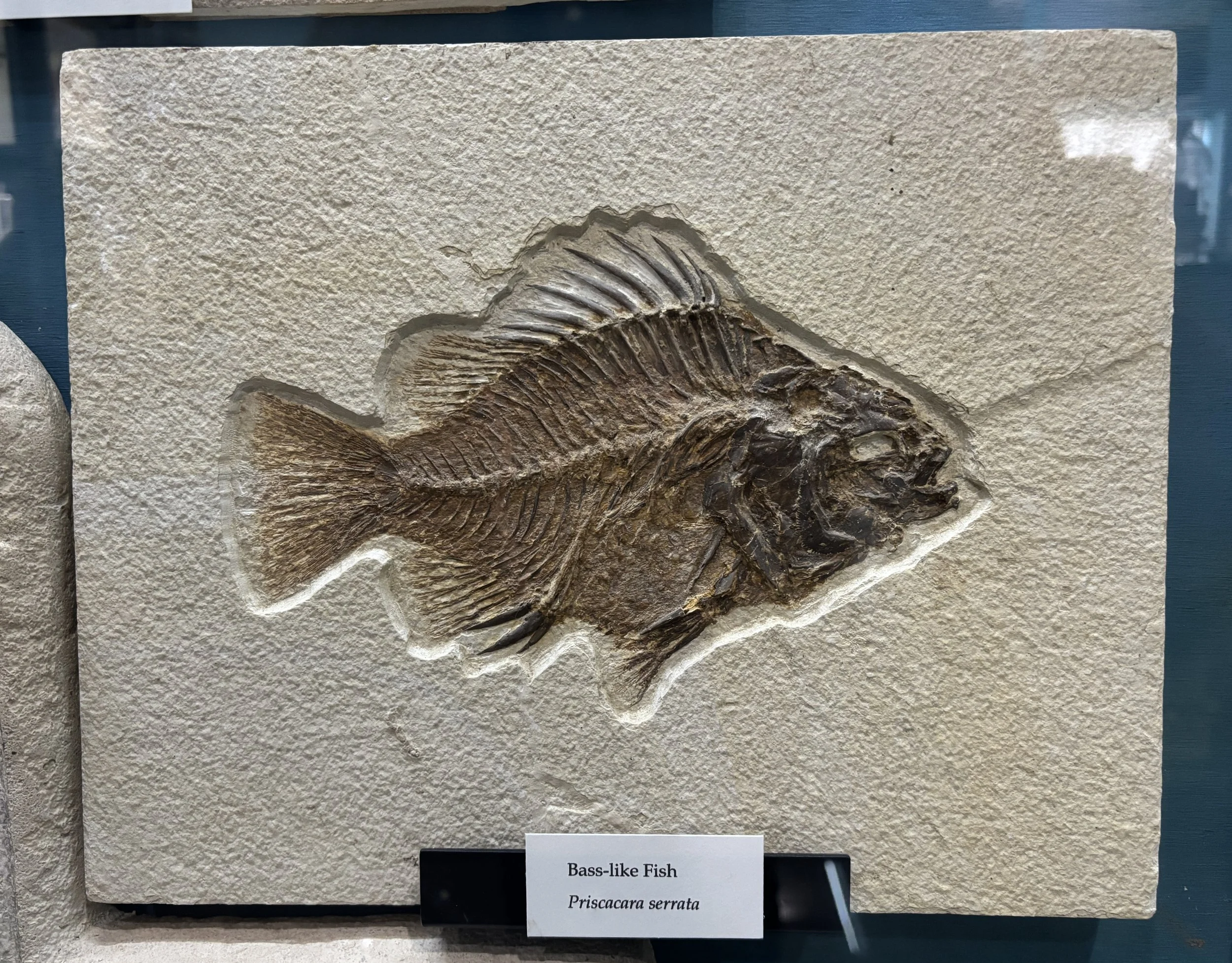
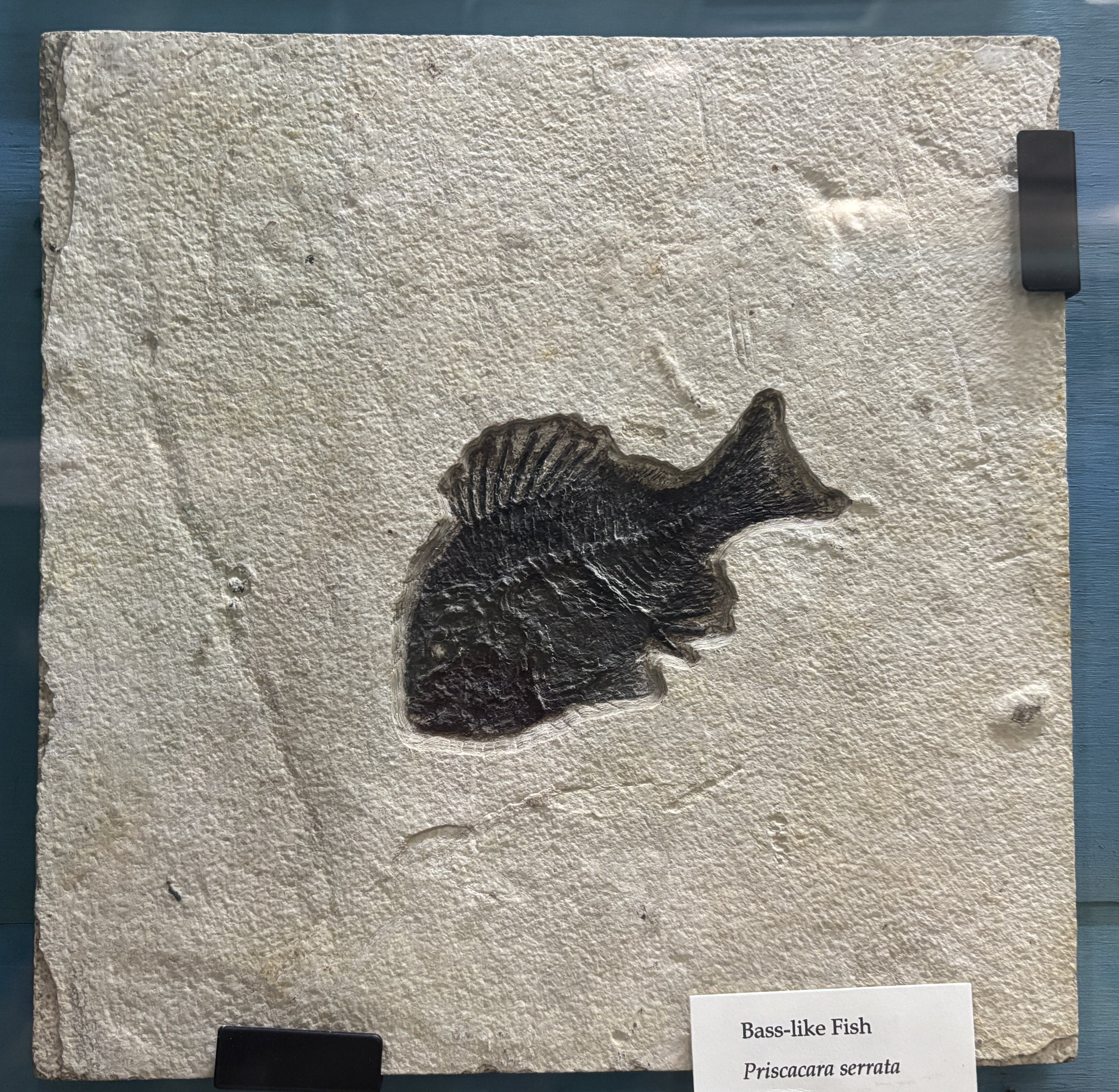
Priscacara serrata is an extinct species of bass-like fish whose fossils are found almost exclusively in the Green River Formation located in Western United States. These fish had striking dorsal spikes that make them a favorite among fossil collectors. They grew up to 16 inches and occasionally are found with smaller fish lodged in their mouth or throats, suggesting that they had a tendency to choke on larger food items. Their primary source of food was small arthropods and mollusks and possessed tooth-pads in their throats that helped grind up the hard components of their prey.
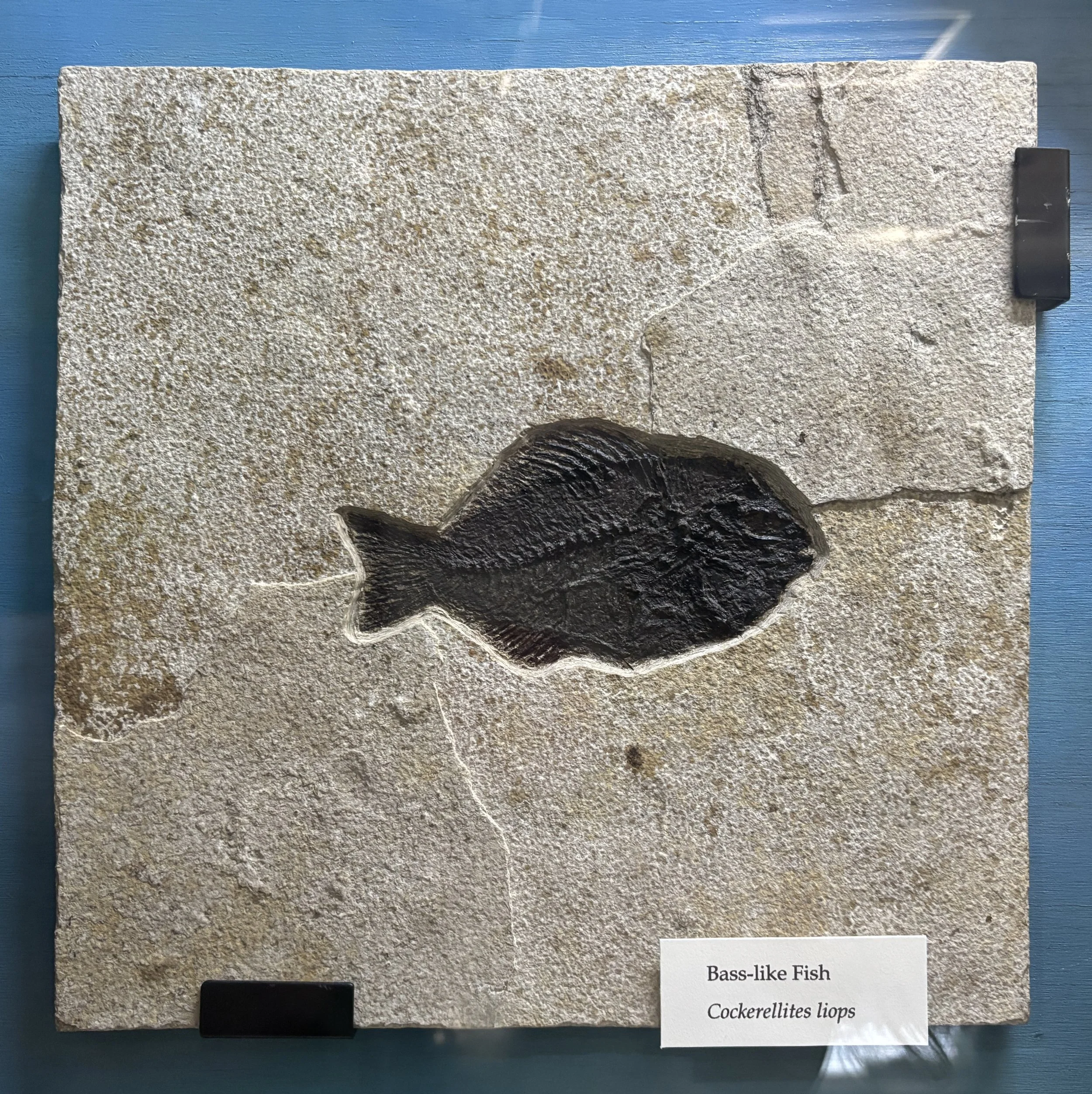
Cockerellites liops is an extinct species of schooling fish that lived in the lakes of the Green River Formation during the Eocene epoch. These fish were small with rounded, sunfish-like profiles, growing up to 6 inches in length. They had small mouths and are assumed to have fed on zooplankton and insects. They are known for their prominent spiny dorsal fins that were likely used both for defense and stabilization while swimming.
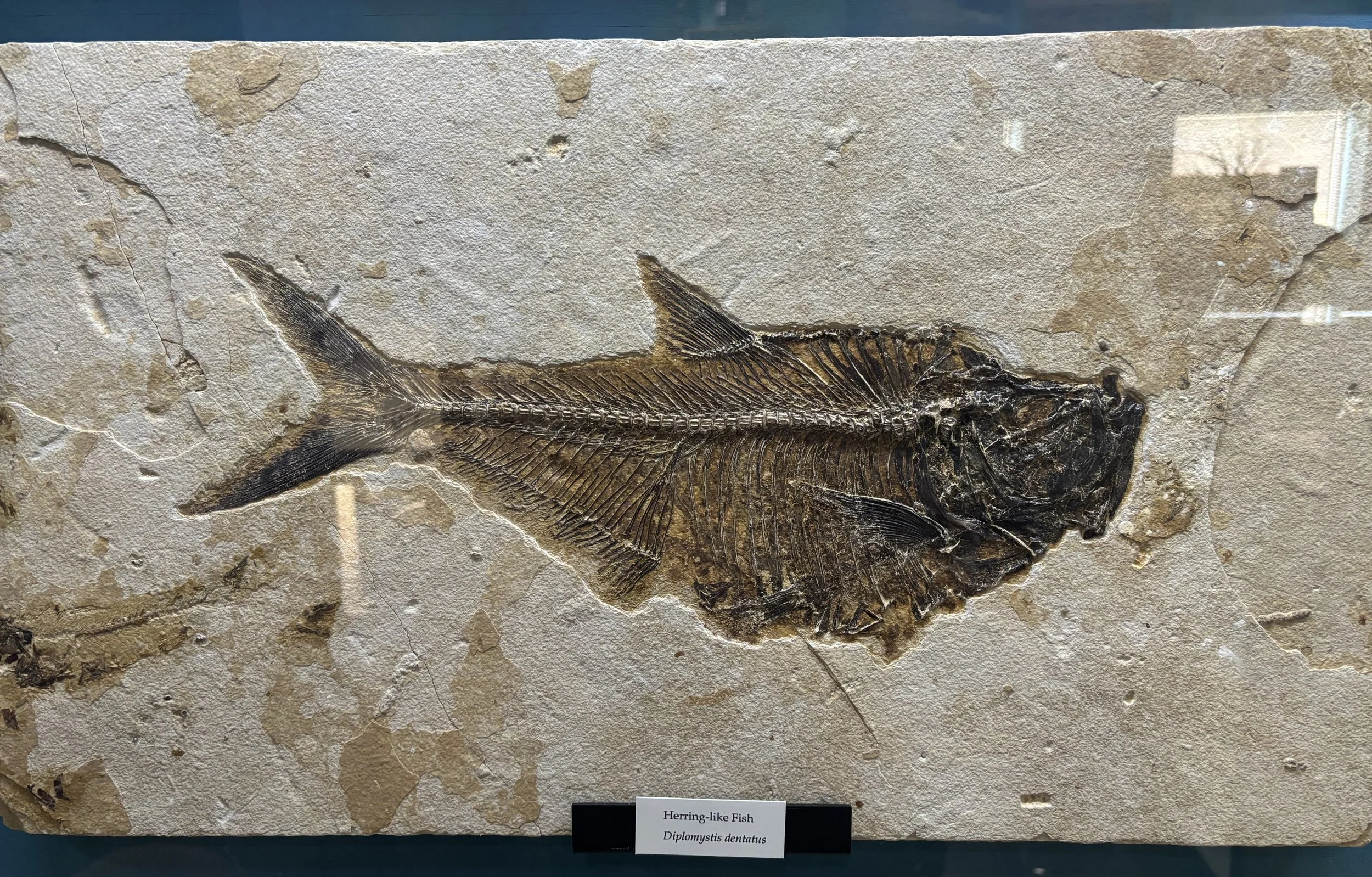
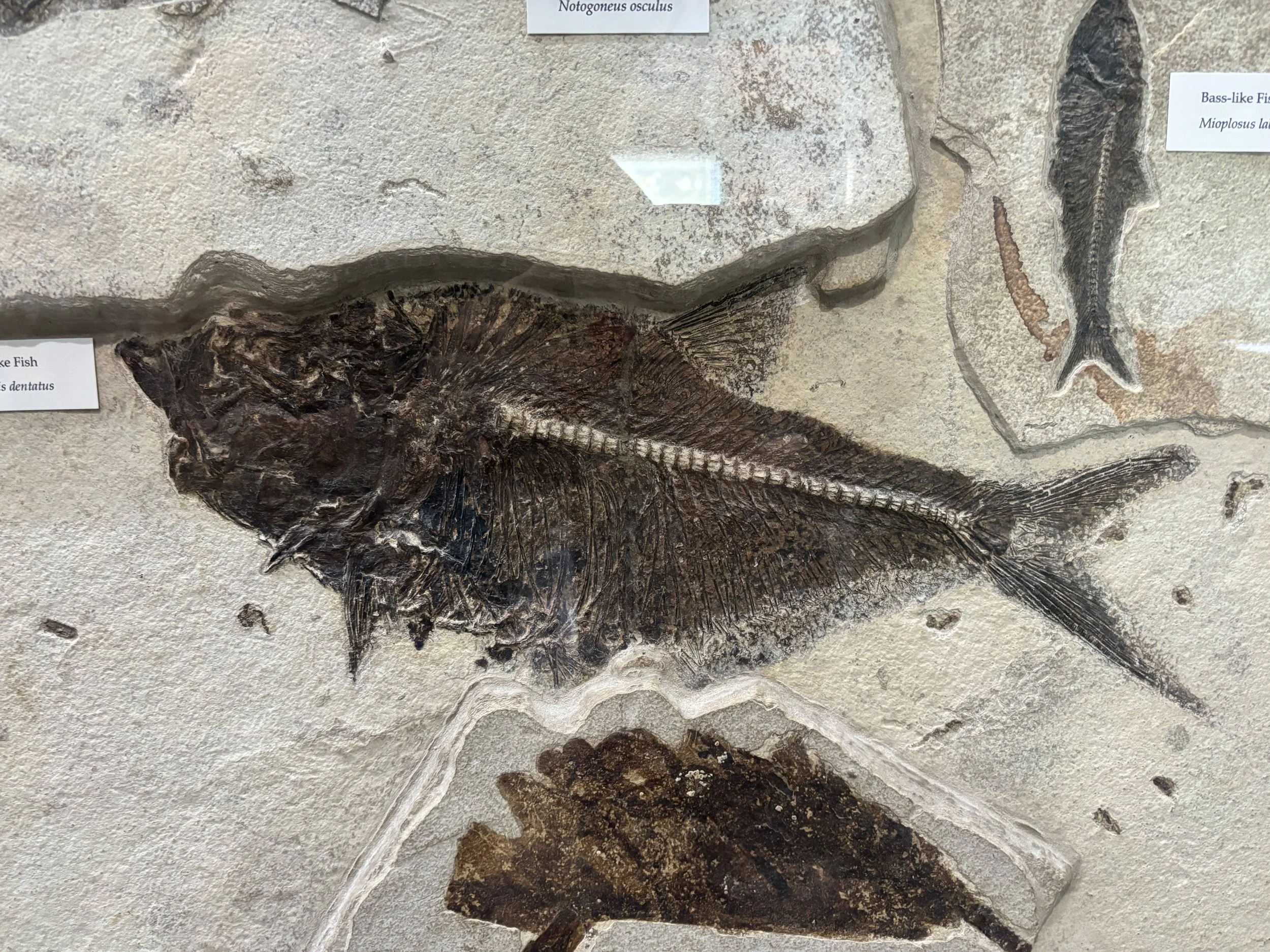
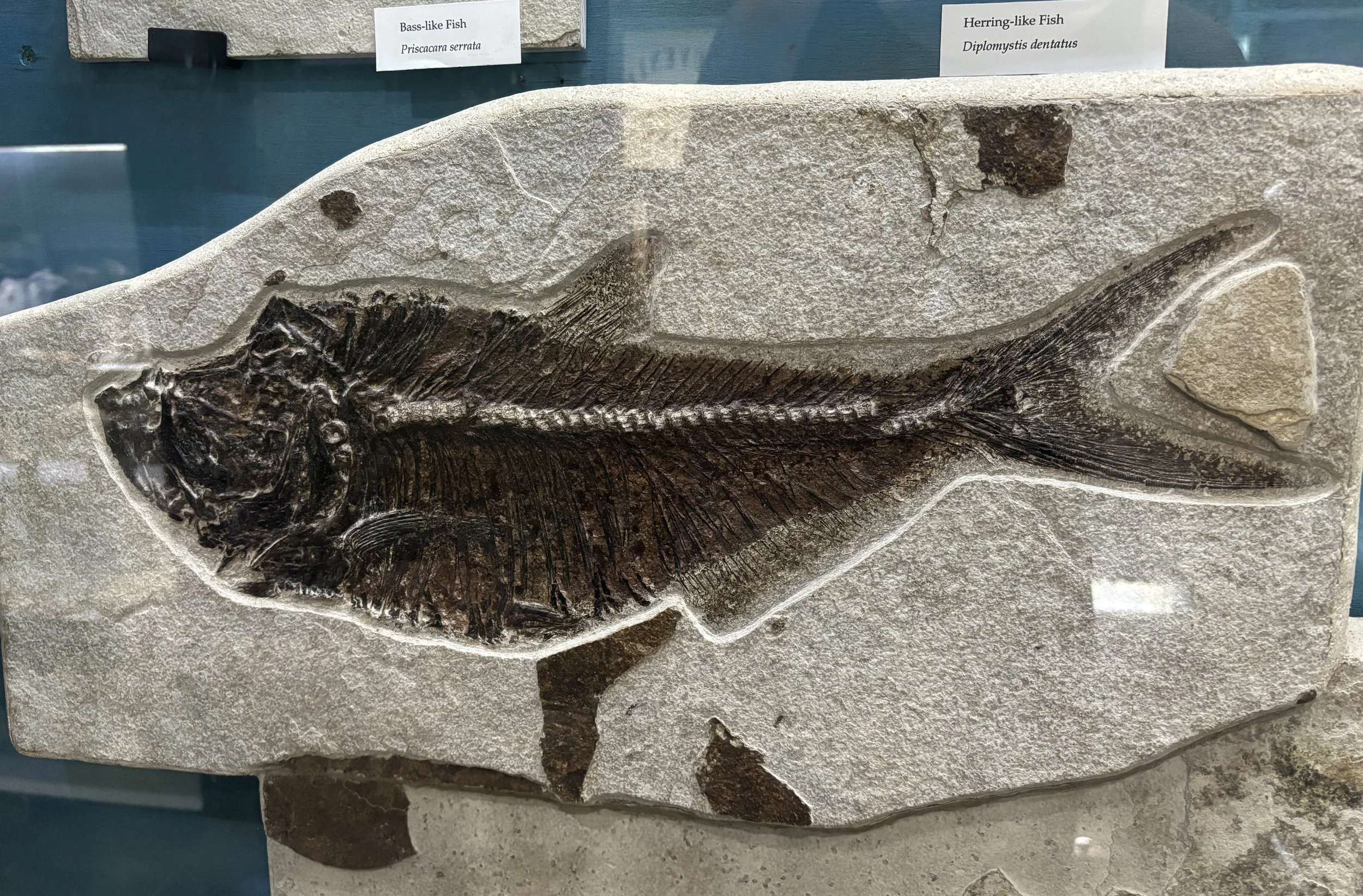
Diplomystus dentatus was a freshwater fish whose fossils are commonly found in the Green River Formation of the American West. It was distantly related to modern herrings, sardines, and anchovies. Their upturned mouths were perfectly shaped for feeding on smaller fish that congregated near the surface of the water from below. In fact, the fossils of Diplomystus dentatus are often found with Knightia eocaena fossils in their mouths, throats, and stomachs.
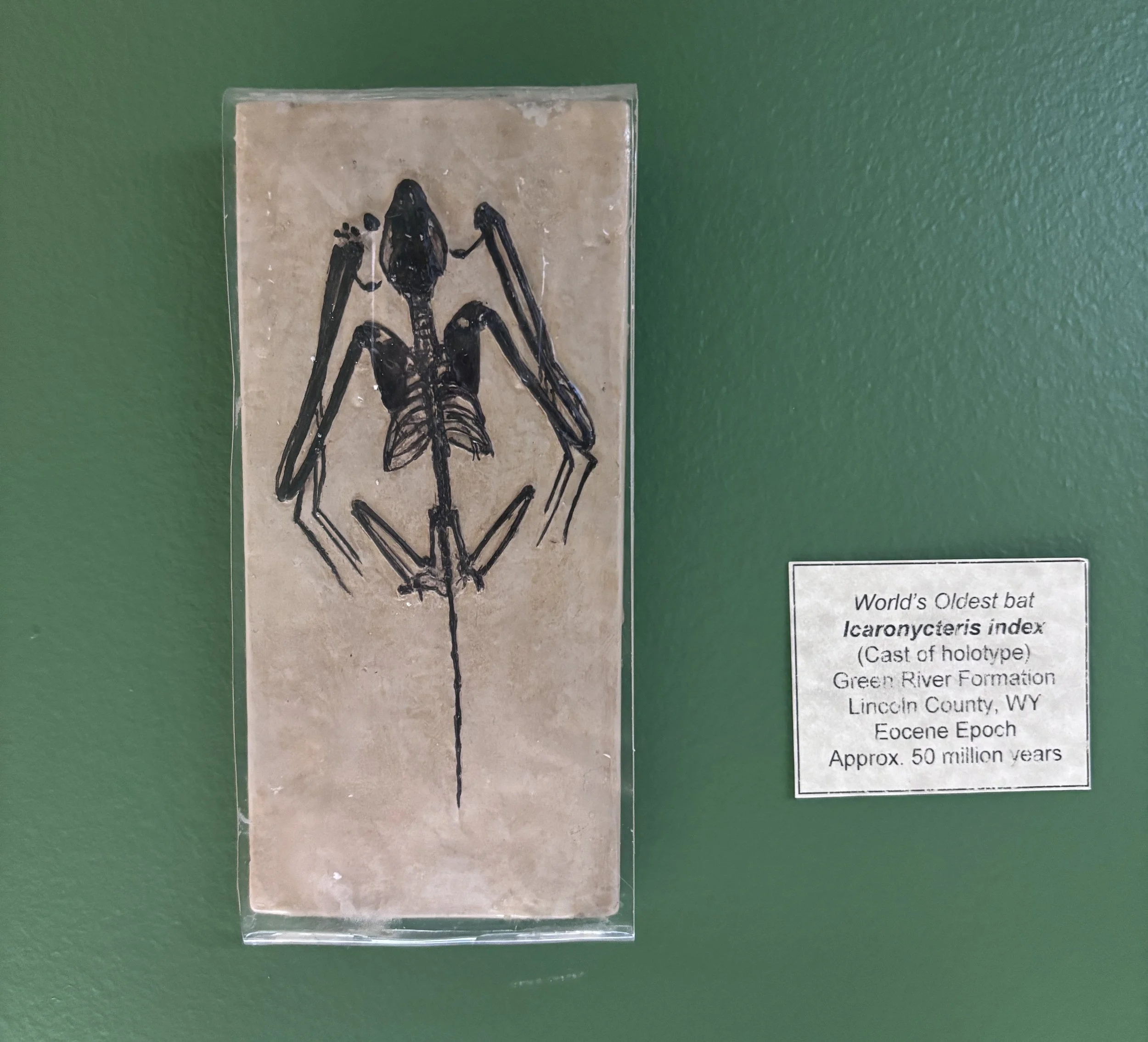
Icaronycteris index is an extinct species of bat that is found exclusively in the Green River Formation in the American West. The genus Icaronycteris contains the oldest species of bats ever found (about 50 million years old) and has been instrumental in teaching us about the evolution of bats. Because bat bones are lightweight and delicate, there are currently no complete specimens of older relatives of the Icaronycteris index (and the slightly older Icaronycteris gunnelli), which shrouds the bat lineage in mystery. The fine grain of the Green River Formation’s sediment has allowed for a few complete preserved skeletons of these early bats, and hopefully their prior lineage will be discovered in future excavations.
What is known is that these first true bats were small, used echolocation to hunt insects in midair, had long tails, a claw on their thumb and index ‘fingers’, and had membranous wings.
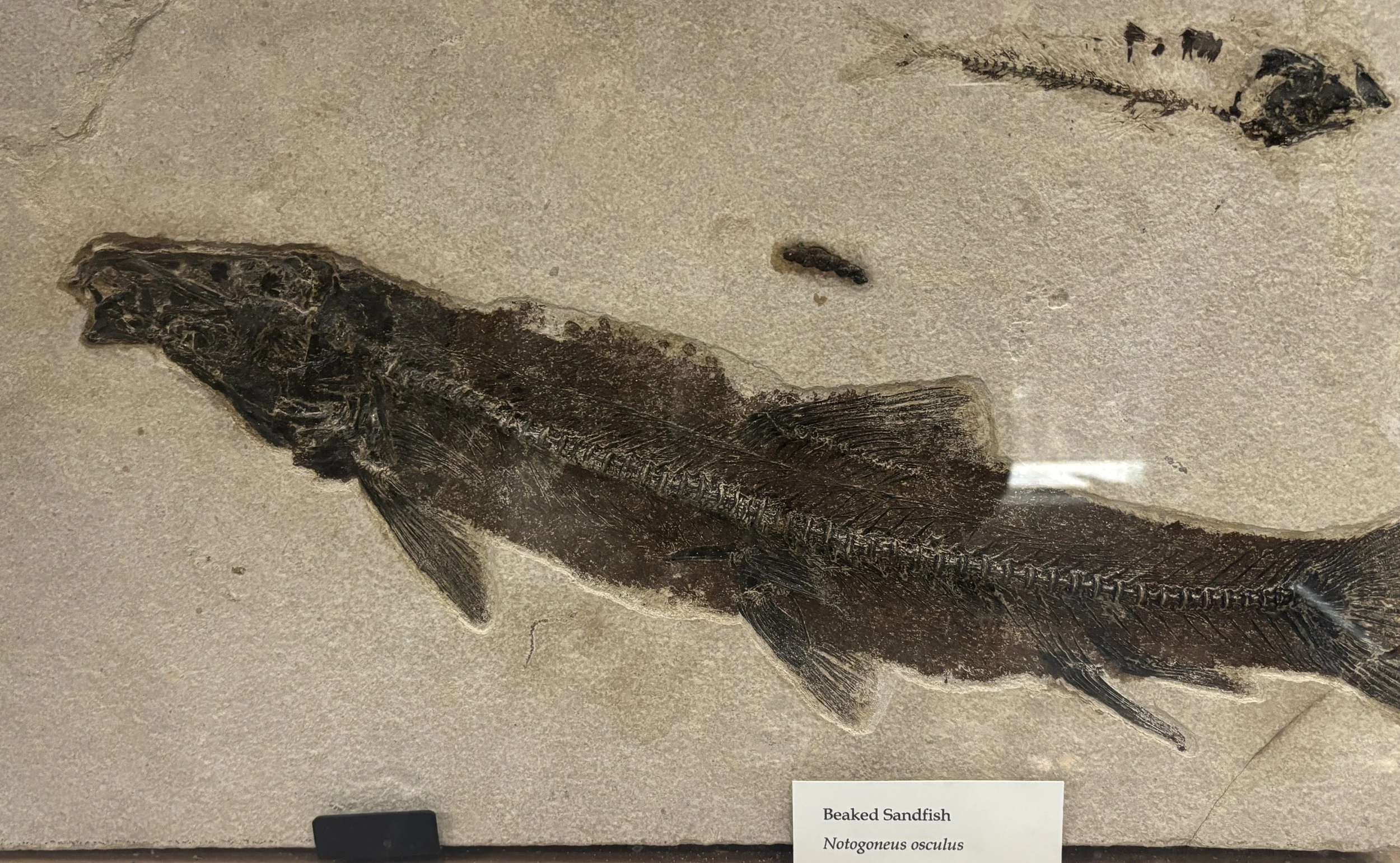
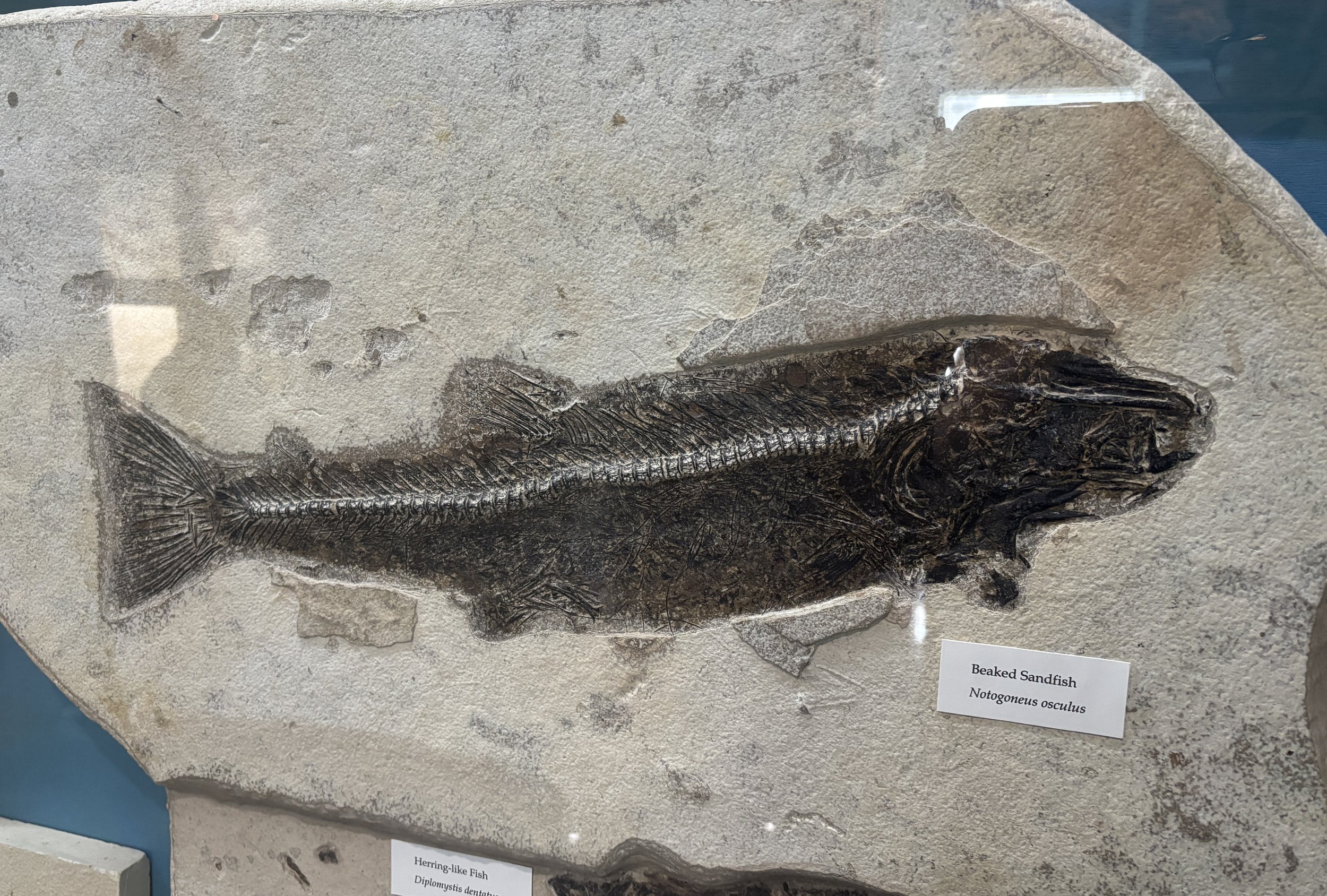
The Notogenus osculus was a bottom feeding fish found in the Green River Formation of the American West. It had a toothless mouth that essentially vacuumed detritus off the lake floors and grew up to about 35 inches long. The large quantity of sub adult fossils (about 18 inches long) of Notogenus osculus found in the ancient lakebeds of the Green River Formation suggest that these fish likely spawned in the lakes before continuing their journey down connecting streams and rivers for the rest of their life cycle.
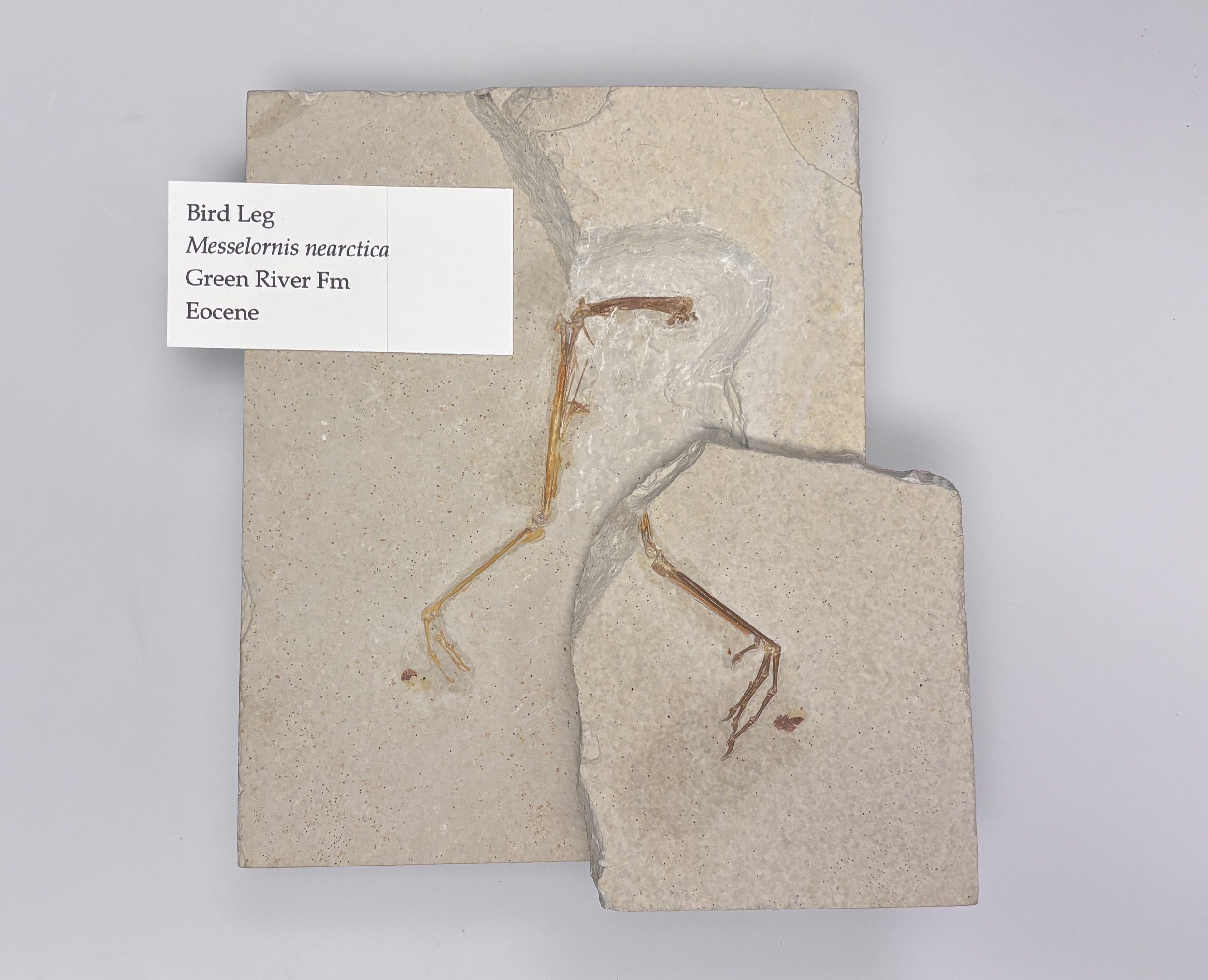
Messelornis nearctica was a terrestrial bird which was likely non-adept at flight. It was omnivorous and ate fish, fruits, and seeds. Messelornis nearctica is one of several bird species associated with in the Green River Formation in the American West.
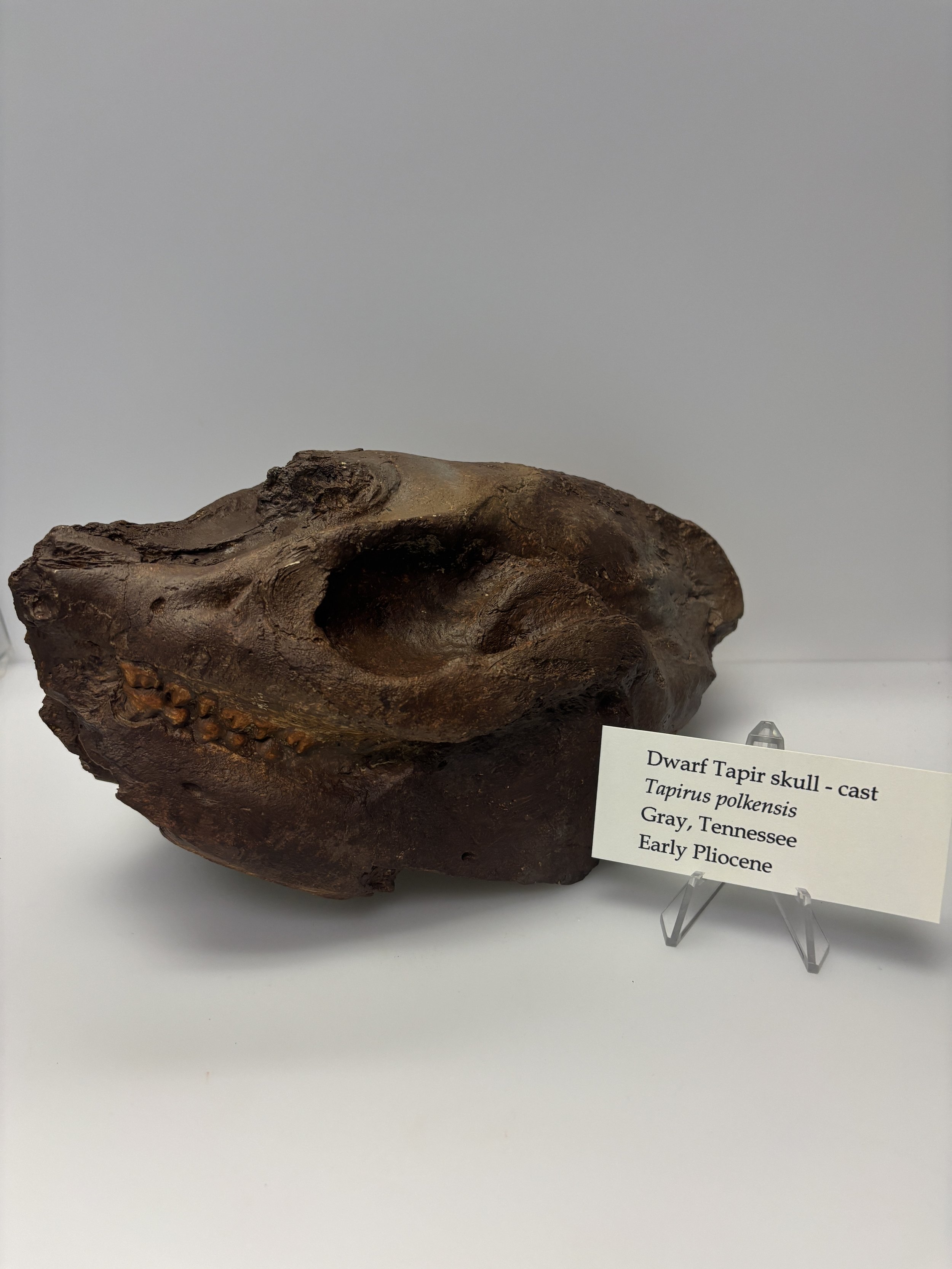
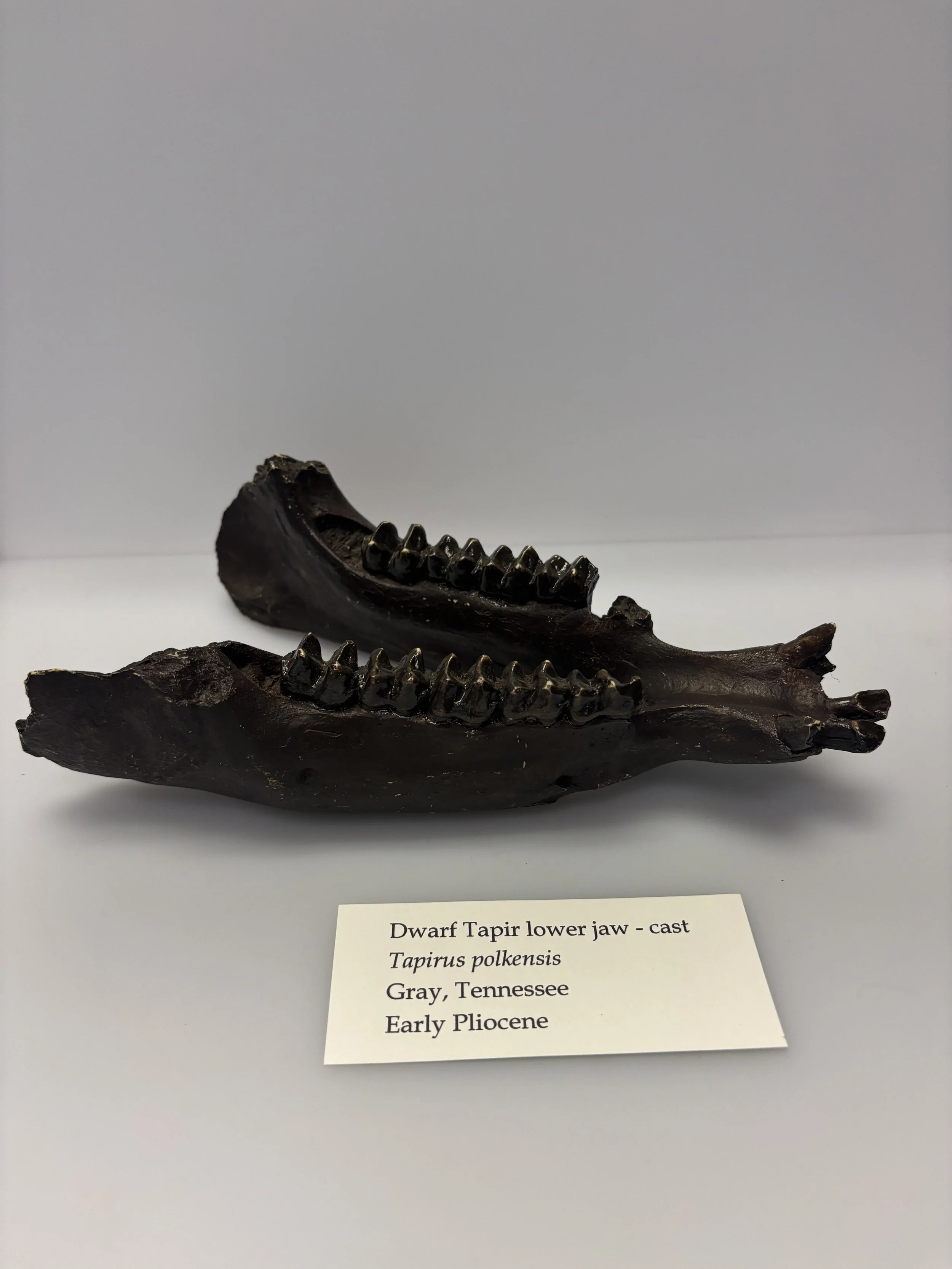
Tapirs are a type of animal that have gone largely unchanged over the years. Tapirus polkensis, an extinct species of tapirs whose fossils are regularly found at the Gray Fossil Site in Tennessee, are very similar to their modern relatives. These animals sported compact, sturdy bodies; hooved toes; and a proboscis or ‘trunk’ similar to an elephant’s. Tapirus polkensis, however, was much smaller than a modern tapir, the extinct species weighed around 276 lbs., as opposed to modern tapir species which can weigh anywhere between 330-880lbs.
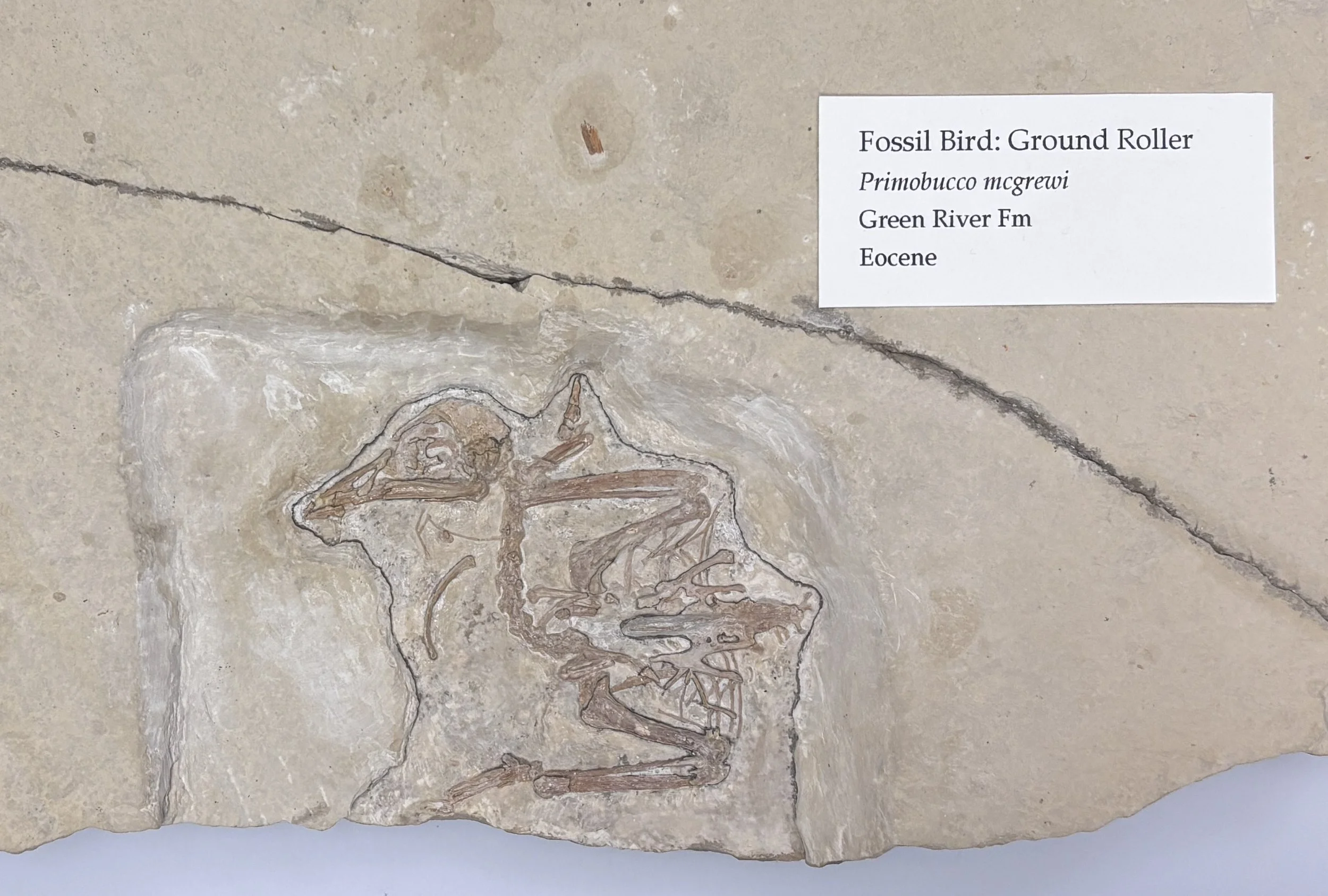
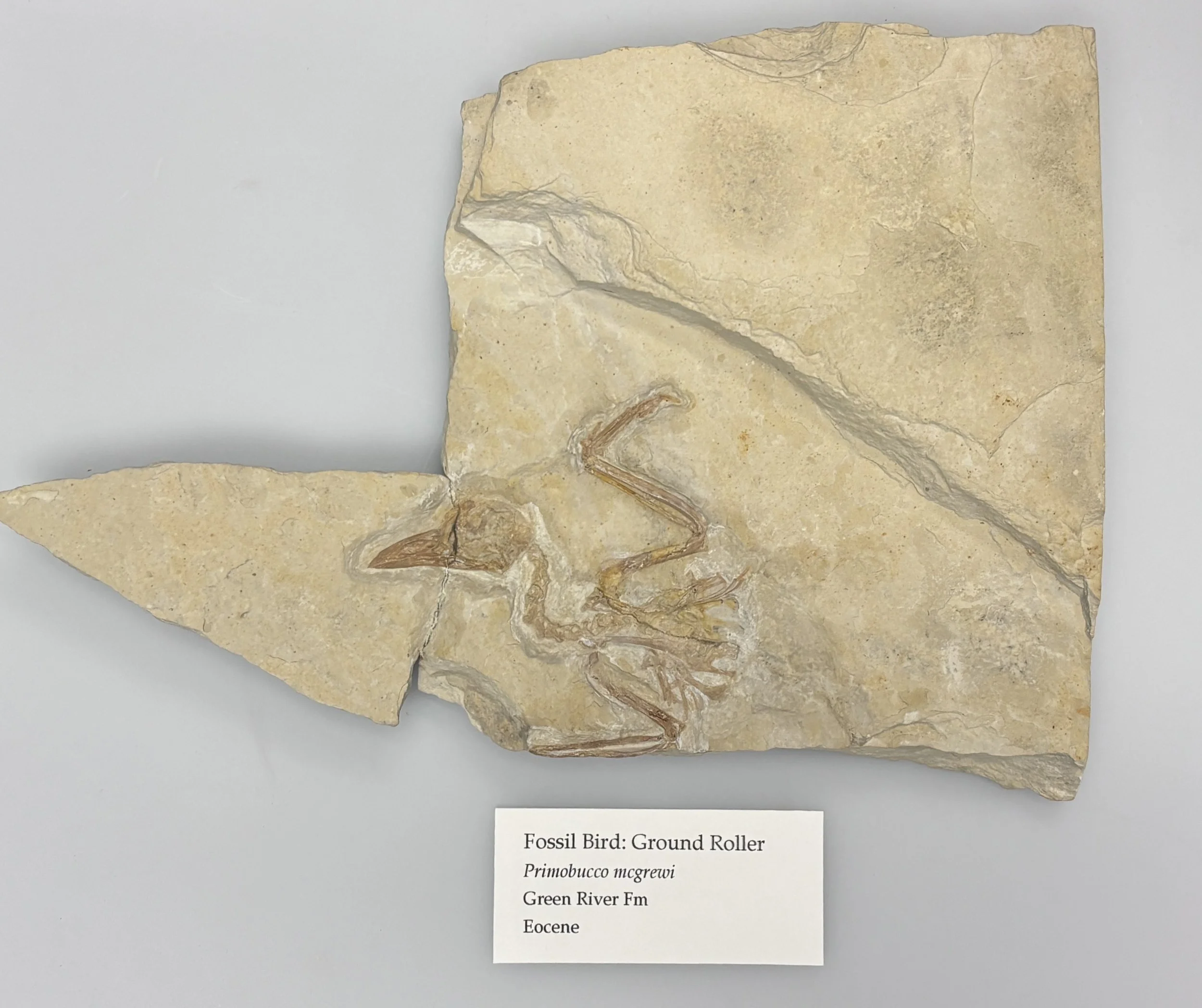
Primobucco mcgrewi was a small, long-legged roller (a bird group defined by their intricate arial maneuvers during courtship). Rollers like Primobucco hunt insects mid-flight, as well as small amphibians and snakes.
The specimens pictured here were prepared by hand in the Earth Experience Paleo Lab.
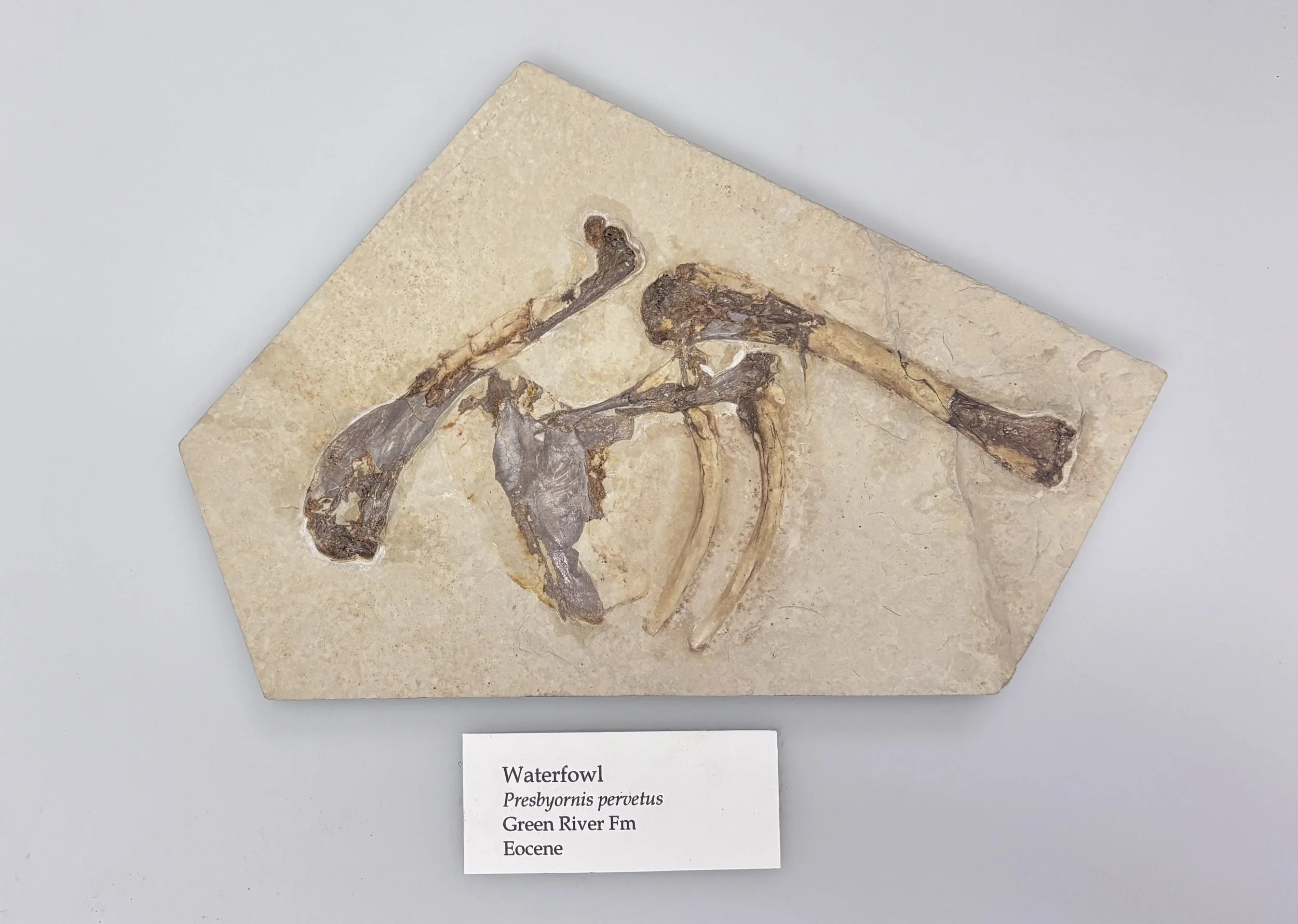
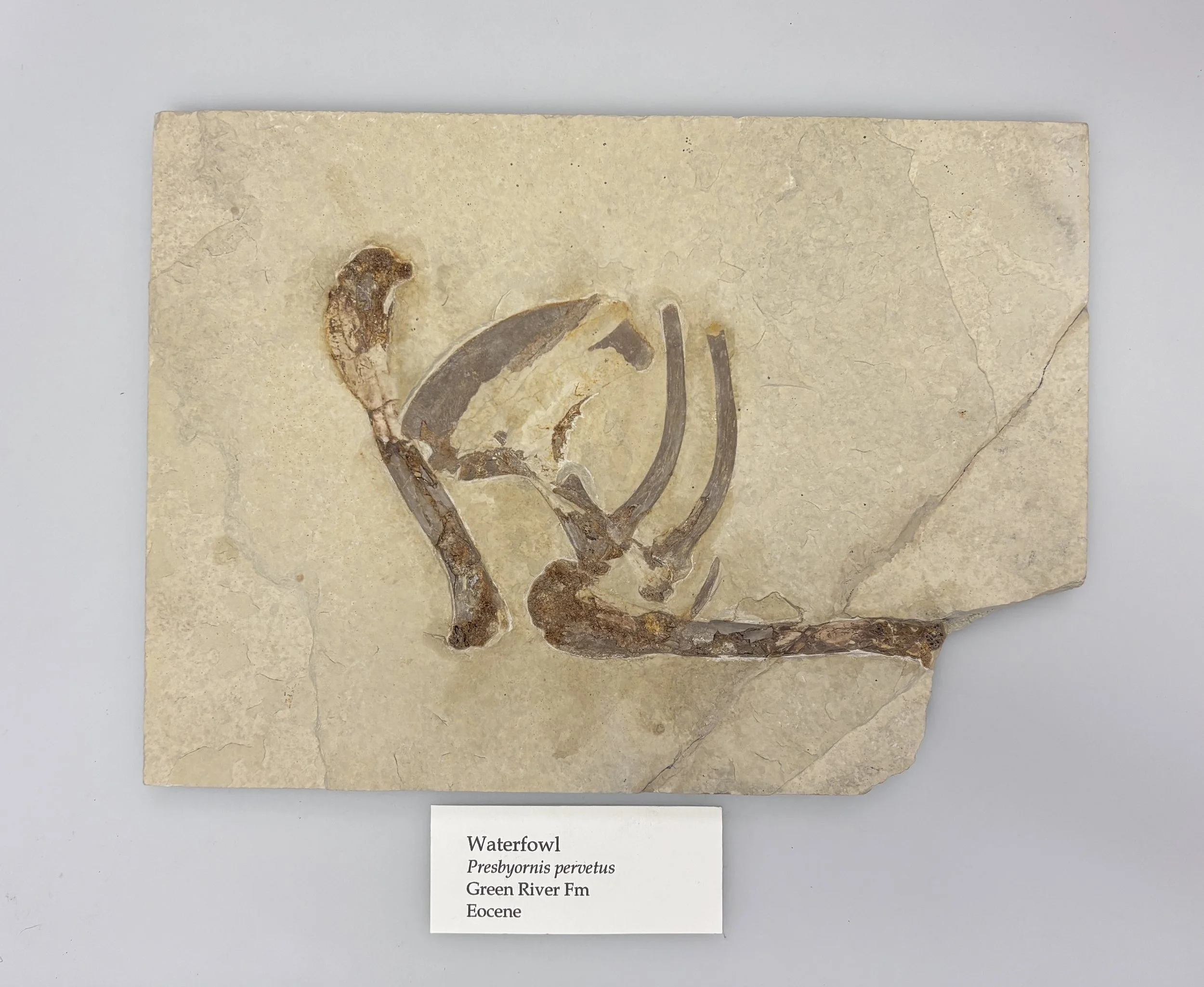
Presbyornis pervetus was a long-legged waterfowl that filter fed along the shorelines of the lakes that made up the Green River Formation environment with its duck-like beak. It was a member of the Anseriformes family, meaning it was related to modern ducks, geese, and swans.
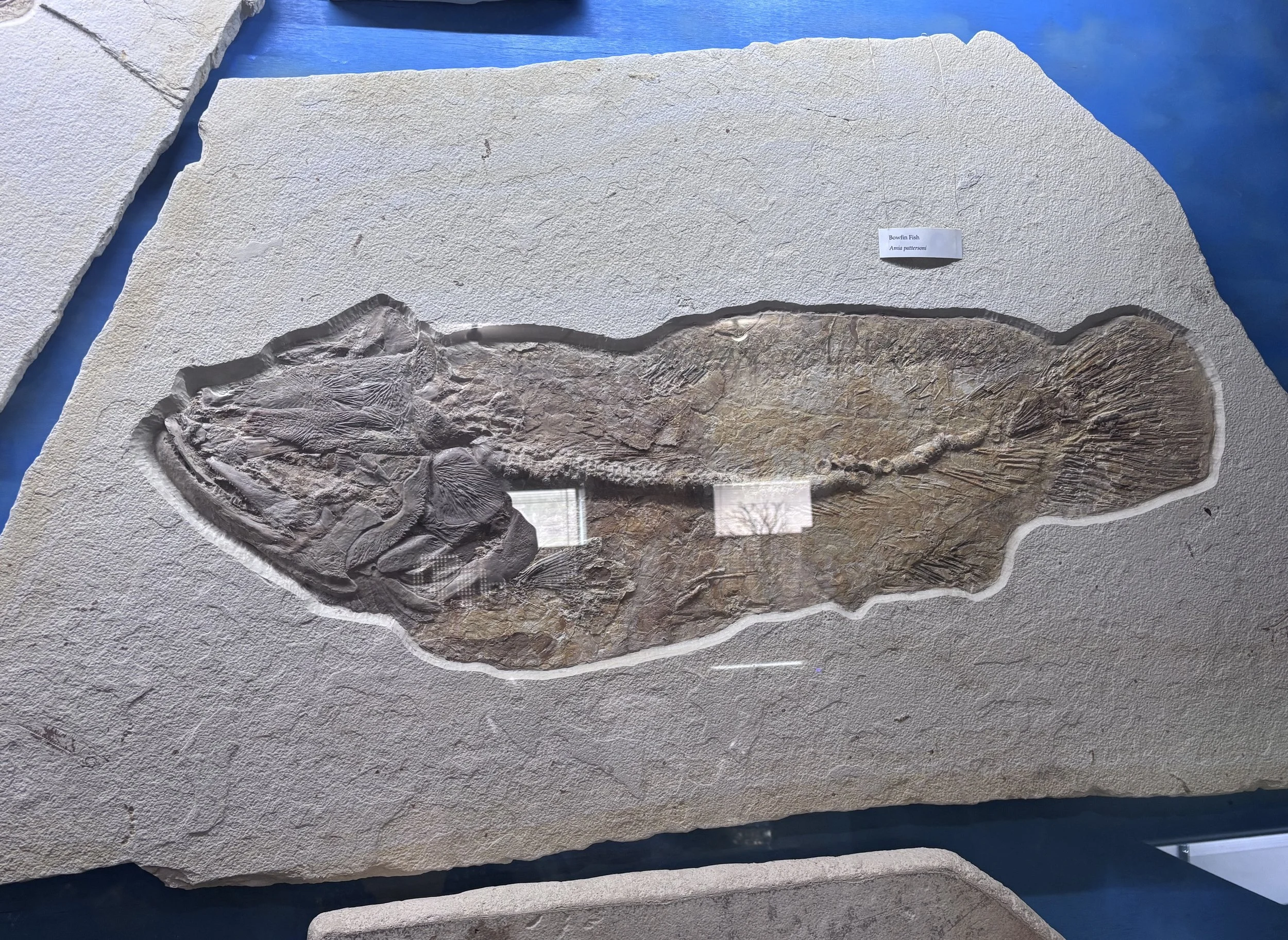
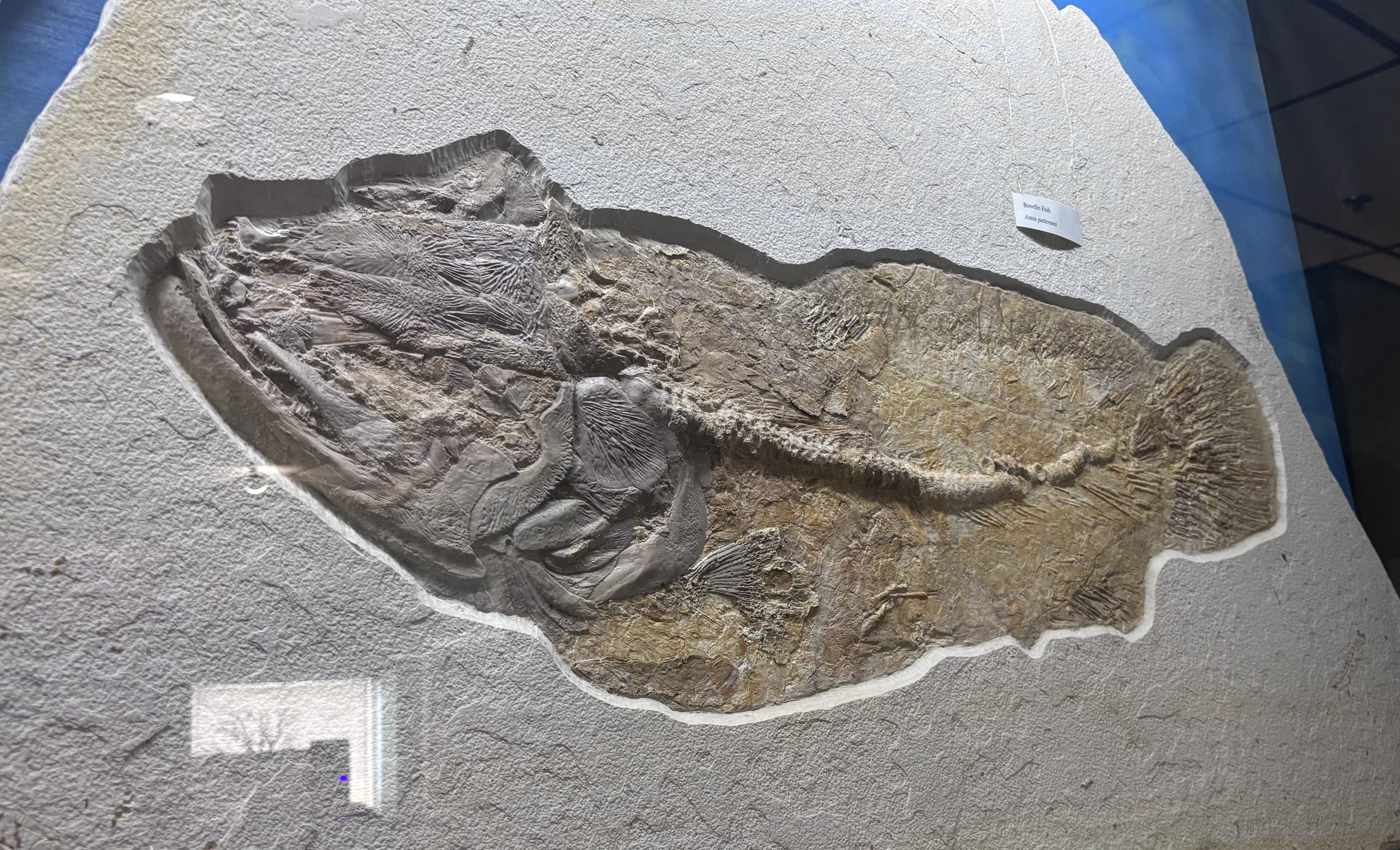
Amia pattersoni was a large bowfin fish–– so called because of the arcing curve of their dorsal fin –– that lived throughout North America, Asia, and Europe from the late Cretaceous to the early Eocene. They are one of several bowfin species found in the Green River Formation. They were predators of the freshwater environs of Green River and are often found fossilized with smaller fish in their mouths or stomachs.
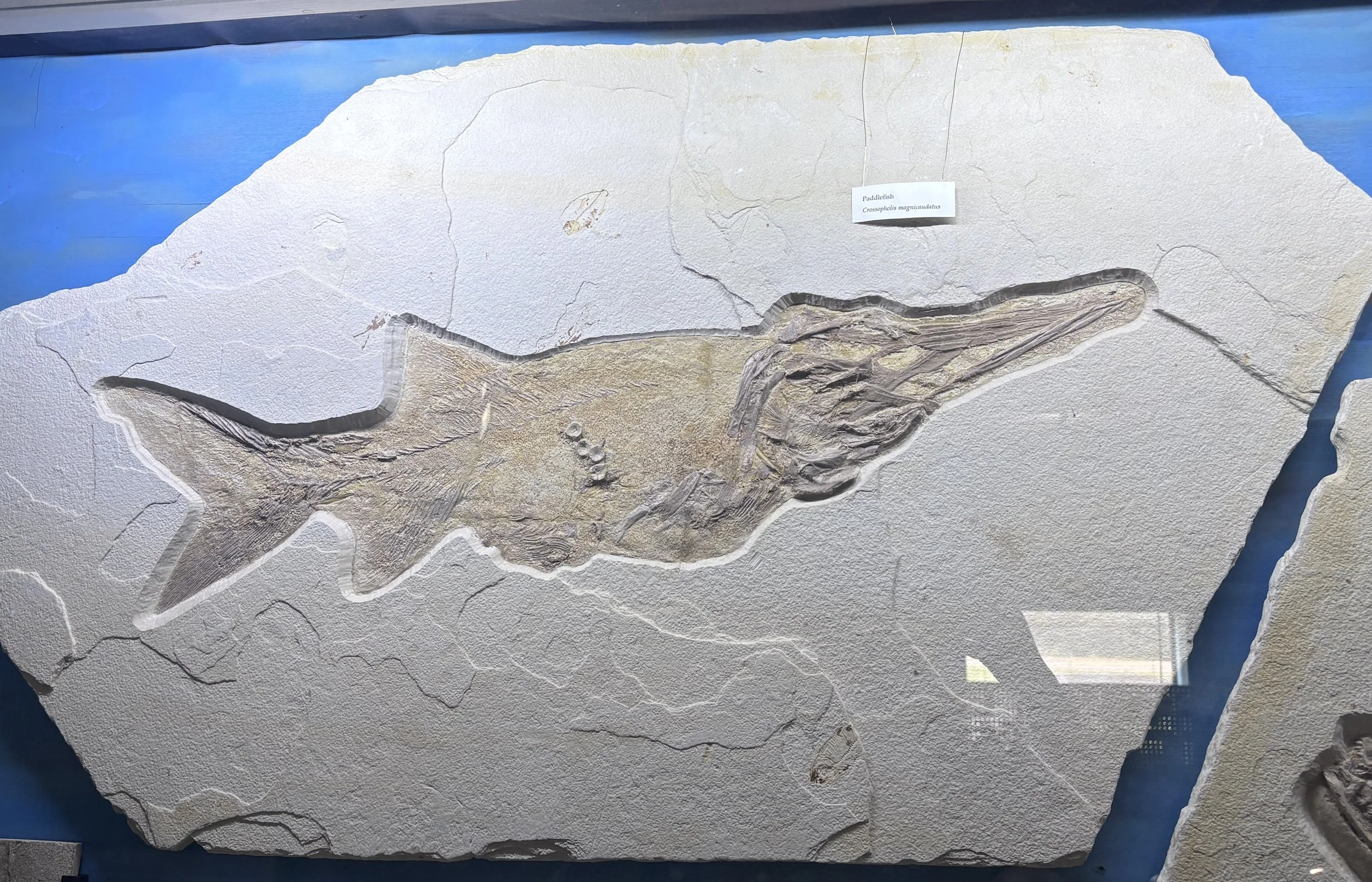
Paddlefish are a relatively rare find in the Green River Formation, making up only 0.02% of the fish fossils excavated there. Specimens of the Crossopholis magnicaudatus range from about 1 to 5 feet in length and had a bony protrusible jaw (jaws that lunge forward independently of the skull) used to hunt smaller fish, unlike its closest modern relative, the Polyodon, which exclusively filter feeds.

Toxochelys was a genus of sea turtle that lived in the Western Interior Seaway, and its fossils are found in the United States and Canada. Toxochelys lived a similar life as modern sea turtles, feeding mostly on jellyfish, squids, mollusks, crustaceans, and marine vegetation. However, Toxochelys was larger than most modern sea turtles, growing up to 6 feet in length.
This specimen was found by museum staff in the Coon Creek Formation in Tennessee.

Brittle Stars are echinoderms (related to sea stars, urchins, crinoids, etc.) which use their long, serpent-like arms to crawl across the ocean floor or swim through the water. They can look very similar to sea stars but can be differentiated by their distinct central body disk and thin flexible arms, which are often covered in spines. If attacked, Brittle Stars can defensively drop their arms to make their escape and live to regenerate them another day.

Blastoids were a type of echinoderm (relative to starfish and sea urchins) that lived on the bottom of the ancient ocean’s floors. The were close relatives to the crinoids and, like them, relied on filter feeding. Unlike crinoids, Blastoids went extinct at the end of the Permian period due to the ecologic fallout from extreme climate change.


Stromatolites form when carpets of microbial life (usually cyanobacteria) are covered with a layer of sediment. That layer is then repeatedly covered by more cyanobacteria, which is covered by more sediment, and so on and so forth. When this structure fossilizes, we can see the layers formed in stone. Stromatolites can have different colors due to the type of minerals that made up the sediment. Sometimes Stromatolites are cut into slices so that those layers are visible, as pictured here.
Stromatolites have been forming for as long as cyanobacteria have existed, which is a really long time (about 3.5 billion years ago), and continue to do so in certain marine environments today.


Behold: the oldest animal ever (on record, at least)! The Dickinsonia may not look like much, but this little dollop of creature represents one of the first true animals to ever live on planet earth. The Dickinsonia lived before there was any need for defensive adaptations because it had no predators, resulting in this slow-moving, soft body plan. They ranged in size between a few millimeters to 4.5 feet in length, and it is believed that they lived a peaceful life creeping over the ocean floor and fed on algae and bacteria.


The Marrella splendens was a small arthropod that lived in the Cambrian oceans. The Marrella splendens had many thin appendages that served as both its means of movement and its means of respiration, as the upper section of its legs possessed gills. It also had two pairs of antennae, one set for helping maneuver around the bottom of the ocean floor and the other set to aid in propulsion.
Marrella splendens is heavily associated with the Burgess Shale fossil deposit in British Columbia, Canada as it is the most plentiful fossil found there.


Bryozoans are a type of filter-feeding colonial marine animal that has been living in the oceans since near the beginning of life on the planet. An individual Bryozoa is plant-like in appearance, but the colonies often form round, blobby masses that tether to various surfaces.
Bryozoan fossils can also look like tree branches and can be found all over the world, including here in Tennessee!

Anomalocaris, whose name means ‘weird shrimp’, were one of many odd marine species that came from the Cambrian Explosion. Anomalocaris species ranged in size, but the most famous Anomalocaris canadensis was about 2 feet long. They swam by propelling themselves with overlapping flaps running down either side of their bodies and latched onto prey with two barbed appendages by their mouths. The Anomalocaris is considered an apex predator of its time, largely feeding on soft-bodied animals like jellyfish and worms.
It was long believed that the Anomalocaris went extinct at the end of the Cambrian period, but some species like the one pictured here actually lasted into the Ordovician period.

The most famous of the placoderms was the Dunkleosteus, one of the first apex predators of the ancient oceans. The Dunkleosteus did not have teeth, instead using its armored jaw pieces to slice into prey like a large, very powerful pair of scissors (jaw cast pictured here) . Like all placoderms, the fossil evidence for the Dunkleosteus is generally limited to the fossil armored plates, which has left the “Dunk”’s true size up for debate. The current consensus is that they were comparable in size to a modern Great White Shark with stout, chunky proportions. Ultimately, the Dunkleosteus went extinct at the end of the Devonian due to extreme climate change


Placoderms were a class of prehistoric fish which sported bony amor plating over their heads and chests. These plated fish dominated in the early oceans but were eventually out competed by sharks and other non-plated fish. While their plating offered protection, it also made their energy needs higher and their swimming less agile and quick. Eventually, the last of placoderms went extinct due to extreme climate change and lower oxygen levels in the oceans.


Graptolites are a type of colonial marine animal that developed in the Cambrian oceans. A Graptolite colony is made of many singular zooids that asexually reproduce to make more zooids. The Graptolites of old formed somewhat complex structures that initially left paleontologists head scratching, as they often resembled a pair of thin saw blades connected at one end. They also often have a shiny appearance like graphite pencil markings (the name Graptolites means “writing in the rocks”). It was not until scientists were able to remove the fossil from the rock that they could learn more about its shape and what it was actually made of.

Also known as Sea Scorpions, Eurypterids were arthropods that first developed in the sea and later made their home in brackish and freshwater environments. Eurypterids get their nickname from their scorpion-like body shape, especially with their spiked tail. Despite some visual similarities, Eurypterids were more closely related to other ocean-dwelling arthropods like the horseshoe crab. Though most species of Eurypterid were small (under 8 inches long), the largest species Jaekelopterus rhenaniae grew up to 8 feet and somewhere between 440 and 660 lbs., making it the largest arthropod over discovered.


Nautiloids are an entire group of armored or shelled cephalopods that were prevalent during the Mesozoic Era, but still have some living members today. Many nautiloid species had long, conical shells that protected them from predators. Others resembled their cousins Ammonites with a curled, spiral shell. The only living members of the Nautiloid family are the nine living species of Nautiluses, which sport a spiral shell and live deep in the Pacific Ocean.

Also called Rugose Corals, Horn Corals were plentiful in the ancient oceans. At first glance, it is easy to mistake a horn coral for a horn or even a tooth, but that was simply how they were shaped. Horn corals were carnivorous and presumably had small tentacles that emerged from the larger end of its body that could sting and incapacitate microscopic prey. Solitary Horn Corals ranged in size; the small, common varieties were about 1-4 inches long, while larger species could reach up to 3 feet long.


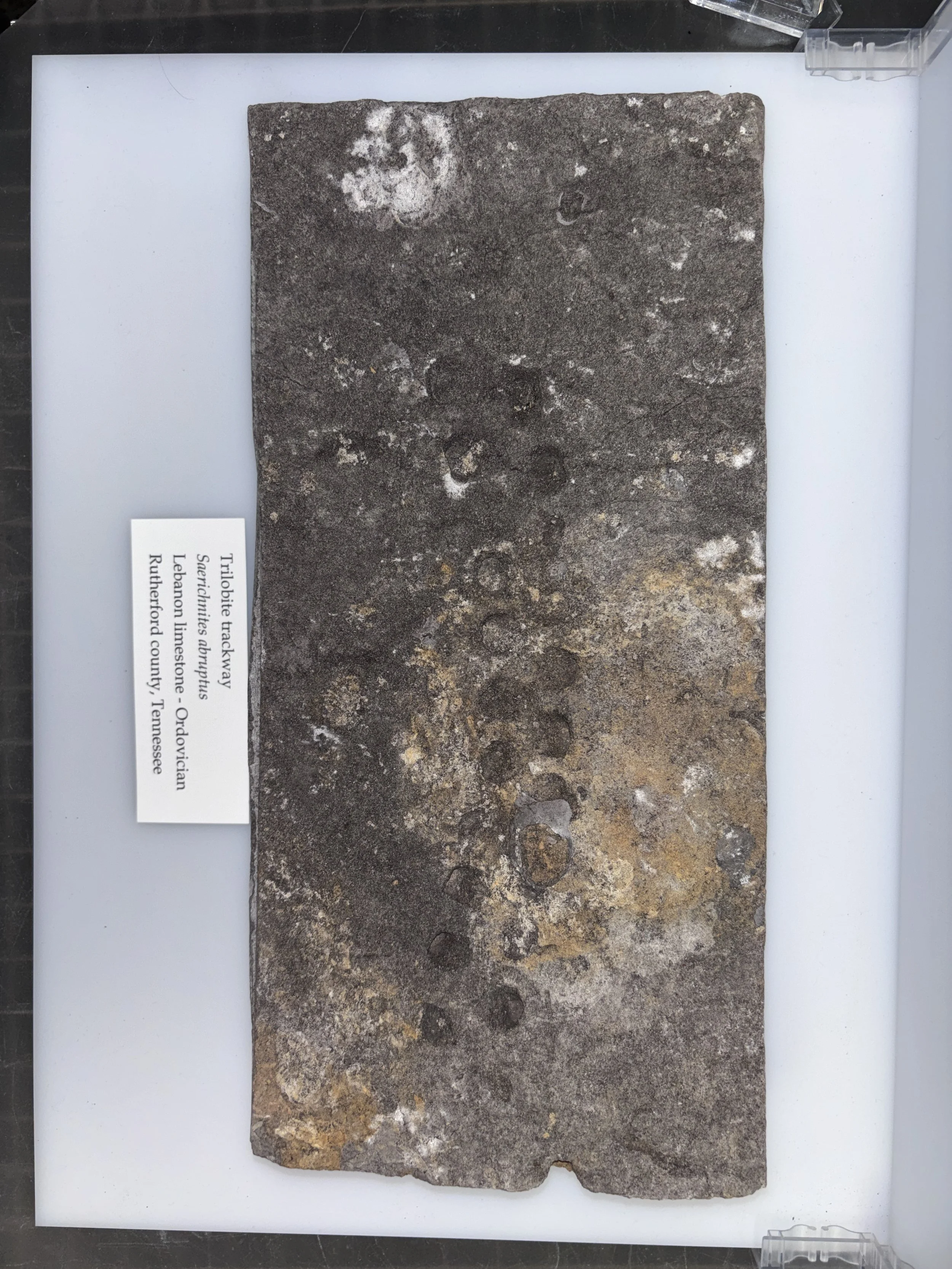
Trilobites were marine arthropods that lived on earth for 300 million years. They were generally small, had a segmented exoskeleton, and crawled around on the bottom of the oceans floor. Most Trilobites had eyes or eye-like structures that were positioned atop their heads and ate detritus that had settled into the sediment (a little like a living Roomba).
Because Trilobites were around for so long and were so prolific, their fossils are found all over the world. The smallest species were mere millimeters long, and the largest was almost 30 inches long. They often died in odd positions, similar to a bug, which you can see demonstrated here.


Crinoids are marine echinoderms (the group that contains urchins and starfish) that have been a part of Earth’s history for about 500 million years. They first developed during the Cambrian period, and some species still live in the oceans today. Despite appearing plant-like at times, crinoids are animals. Older crinoid species typically had a stem which anchored them to the ocean floor, a calyx or cup on top of that stem which contained its organs, and arms branching out from the calyx to help it filter feed. Crinoids have diversified a lot in the last half eon; some still anchor down in coral reefs, while some have evolved to swim around using their feathery arms for propulsion.
Fossils of crinoids can be found all over the world, even in Tennessee. Sometimes, you’ll hear these fossils called ‘Indian money’, and while Native Americans did not use crinoid fossils for currency, they were sometimes used as beads for jewelry. To find crinoid fossils, keep an eye out for something that looks like a stack of coins or a disk with the middle cut out –– that’s a fossil crinoid stem!


Tullimonstrum, better known as the Tully Monster, was a small marine creature that lived during the Pennsylvanian. The Tully Monster was an enigmatic little creature for several reasons. One, it is only found in the Mazon Creek Formation in Illinois; two, scientists aren’t really sure what it even is. What is known is that it had a soft, torpedo-shaped body, an eyebar (eyes on stalks looking in two directions), and a clawed proboscis (an elongated appendage containing its mouth) jutting out of the front of its body. Scientists have not reached a consensus on whether the Tully Monster is a vertebrate or invertebrate, nor who its closest relative is. Some argue that it is related to jawless fish like lampreys, while others think its related to cephalopods like squids. For now, this oddball remains a mystery.

Edestus heinrichi was a large shark-like fish that lived in the shallow seas on the Pennsylvanian. They were formidable predators, growing up to 22 feet and had mouth full of bizarrely positioned teeth. The Edestus did not simply shed its teeth like more modern sharks, it instead had a ‘tooth whorl’ which acted a bit like a conveyer belt of teeth–– the old teeth would migrate forward to make room for new ones. Near the front of its mouth, its jaws curled outward, resulting in a strange but effective tool for catching prey.


Pleuracanthus robustus was a freshwater shark that lived during the Pennsylvanian period. They were eel-like in appearance and grew to be about 1.5 feet long. They are most famous for their long spine that protruded from their head and their two-pronged teeth that helped them grab and hold onto food.


Arthropleura was a giant millipede and was the largest land-based arthropod to ever exist. The largest fossil ever found was a staggering 8 feet in length. It lived in the oxygen-rich forests of the carboniferous, and like modern millipedes, it likely ate detritus that accumulated on the forest floors. Its body was covered in segmented armor plates, yet the Arthropleura had no real predators because of its size (at the time, it would have been the largest land animal).


The Mesosaurus brasiliensis was a small aquatic reptile that lived during the early Permian.
The Mesosaurus was actually used as proof by Alfred Wegener in 1912 to argue his theory that the planet once had a supercontinent we call Pangea that split into the continents we know today. The fossils of the Mesosaurus brasiliensis are found in two places: the Irati Formation of Brazil in South America, and the Whitehill Formation of southern Africa. As you might have noticed, these two locations are separated by an entire ocean. The little Mesosaurus brasiliensis did not swim across an entire ocean, but instead, its old habitat was split in two due to continental drift.


(Early Permian)
Captorhinus was a genus of early reptiles that lived during the Early Permian period. They were omnivorous and similar in size to a bearded dragon. Though they may not look like much, Captorhinus is incredibly important to the fossil record. These excellently-preserved reptiles possess one of the earliest known rib-powered breathing systems. Unlike their predecessors who breathed by absorbing oxygen through their skin or by lowering their jaws (a bit like a frog breathes for visual reference), the Captorhinus’ ribs expanded with each breath. This new breathing system was better suited for more active lifestyles of these new land-dwelling animals and allowed for more diversification over time.
Captorhinus also had a parietal eye, or a third light-sensing structure on the top of their heads, which certain fish, amphibian, and reptile species also possess.


The Edaphosaurus was a large herbivorous synapsid that lived during the end of the Pennsylvanian period and into the Permian period. Like the Dimetrodon, the Edaphosaurus had a large back sail, likely for thermoregulation and social display. The species in the Edaphosaurus genus could grow anywhere between 1.6- 11.5 feet in length, but each had a round body, stocky legs, and a small head.

Though often confused for a dinosaur, the Dimetrodon predates the first dinosaurs by 10 million years. Better yet, the Dimetrodon was a synapsid, which was a group of animals that would eventually evolve into mammals. One of the Dimetrodon’s most striking features was the large sail on its back supported by long vertebral spines. The sail was likely used for thermoregulation and social display (I.e. attracting mates and species identification) and was likely brightly colored with distinct patterns.
Dimetrodons were the apex predators of their time and utilized an ambush hunting style. The name “Dimetrodon” means “two kinds of teeth” because it was one of the first animals to evolve two different types of teeth; its larger, sharper front teeth caught its prey while the side teeth were better suited for shearing off bite-sized pieces of meat.

Eryops was a temnospondyl (precursor to amphibians) that first developed during the Carboniferous (Pennsylvanian period) and persisted until the early Permian. The Eryops was a squat, rotund amphibious animal that walked on all fours. It ate fish, smaller amphibians, and arthropods. The Eryops had a large, flat head with strong jaws which made it an effective hunter.

Coelophysis was a genus of early dinosaurs in the theropod family. They were relatively small, growing at about 9 feet long from nose to tail and only 3 feet tall. They were long and slender with very light, hollow bones, indicating that they were quick, agile and had sharp, serrated teeth. They hunted small reptiles and were likely opportunistic scavengers.
Coelophysis fossils have been found in North America and in Southern Africa. The more complete skeletons are often found in this ‘death pose’ in which the head and neck are curled backwards. This is common state in which to find theropod remains, not only Coelophysis. Some theorize that the death pose is cause by the shrinking of the tendons in the animal’s neck post-death. Others think the pose occurs because the animal was experiencing a nervous system disorder called opisthotonos, which can occur before death brought about by asphyxiation, brain damage, or some other disease.


Phytosaurs were large crocodile-like reptiles from the Triassic period. Phytosaurs had a wide range of lengths, all the way from 6 feet to 40 feet depending on species, making the largest Phytosaurus the largest predators outside of the ocean during the Triassic. They ate fish and small reptiles in lakes and rivers, but also ambushed prey from the water’s edge, similar to a modern crocodile. While not a crocodilian, the Phytosaurs were part of the same larger group called Archosaurs, which includes crocodilians and dinosaurs.


The Metaposaur was a large temnospondyl (precursors to modern amphibians) that lived across Pangaea during the Triassic period. The Metaposaur lived most of its life in water as it possessed small, weak limbs and a large, flat head with needle-like teeth perfect for catching fish. Fossils of Metaposaurs are sometimes found in groups, leading paleontologists to believe that they were gathered in lakebeds and died from the lakes drying out during drought.


Aetosaurs were herbivorous reptiles that lived during the Triassic period. There are 26 species within the genus Aetosaur, ranging from 3 feet long to 10 feet long. All of the Aetosaurs sported armored plating made of body plates called osteoderms, similar to a modern armadillo. Their body shape resembled crocodiles, but their skulls resemble a bird’s, which is why they were given the name Aetosaur (translation: “eagle lizard”). They also had a pig-like snout which probably functioned as a shovel for digging up tubers and roots.

Keichousaurus was a marine reptile who lived during the Triassic Period. This tiny reptile was a quick and agile swimmer who resided in swamps, lakes, and brackish water, sustaining itself on small fish. Fossils of the Keichousaurus are commonly found in modern day China and are also typically found complete and still articulated.

Pterodactylus kochi was a small pterosaur that lived in southern Germany during the Jurassic period. Often depicted as giant avian terror, pterodactyls in reality were a smaller variety of pterosaur, with a wingspan of 1 to 4 feet. The Pterodactylus kochi was particularly small with a 18 inch wingspan.
Pterodactylus kochi lived and hunted amongst the lagoons and archipelagos of ancient Germany. They ate small schooling fish, insects, crustaceans, and any other small animal they could catch. Much of what we know about this species is thanks to the incredibly well- preserved specimen from the Solnhofen Limestone.
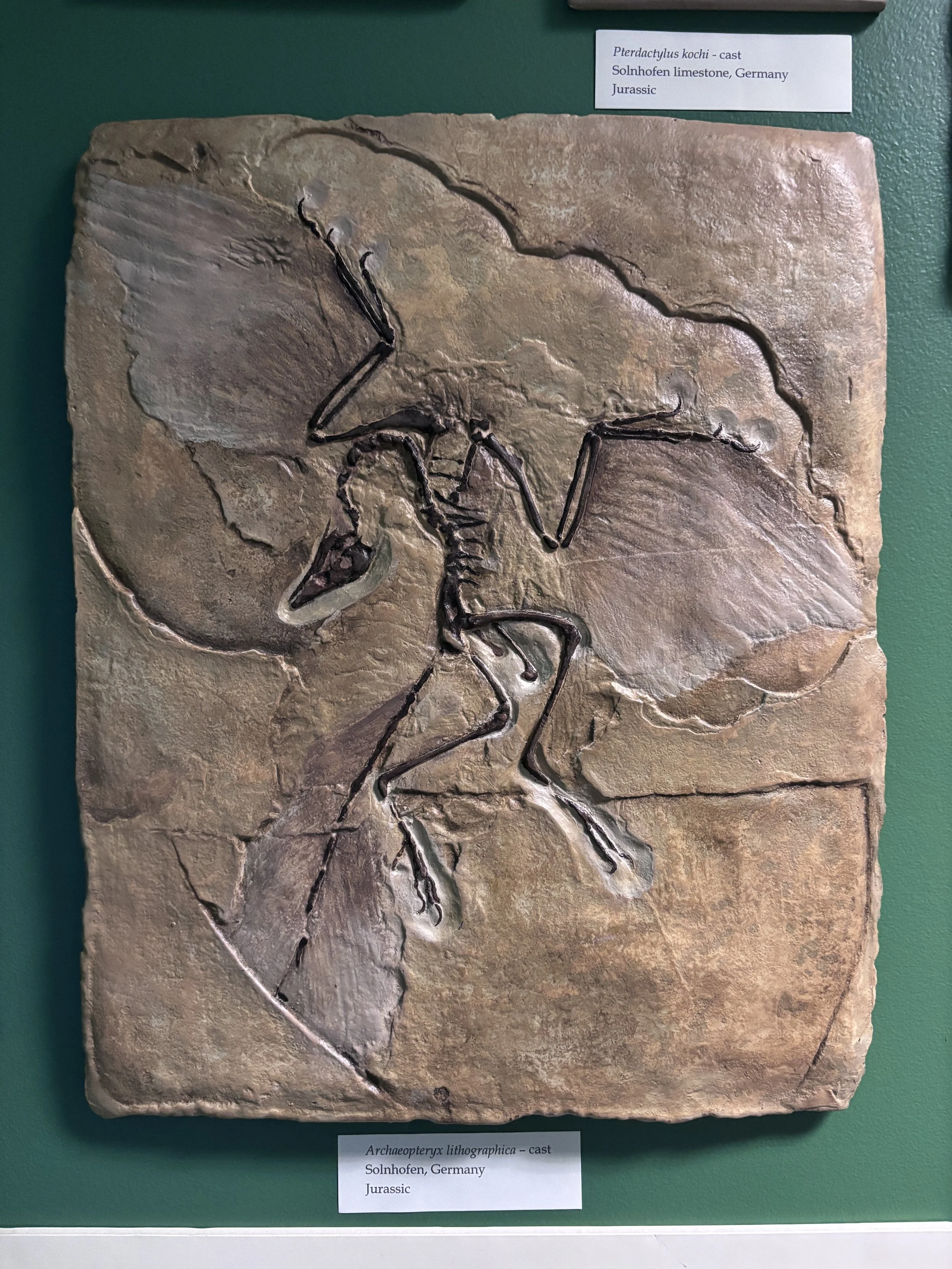
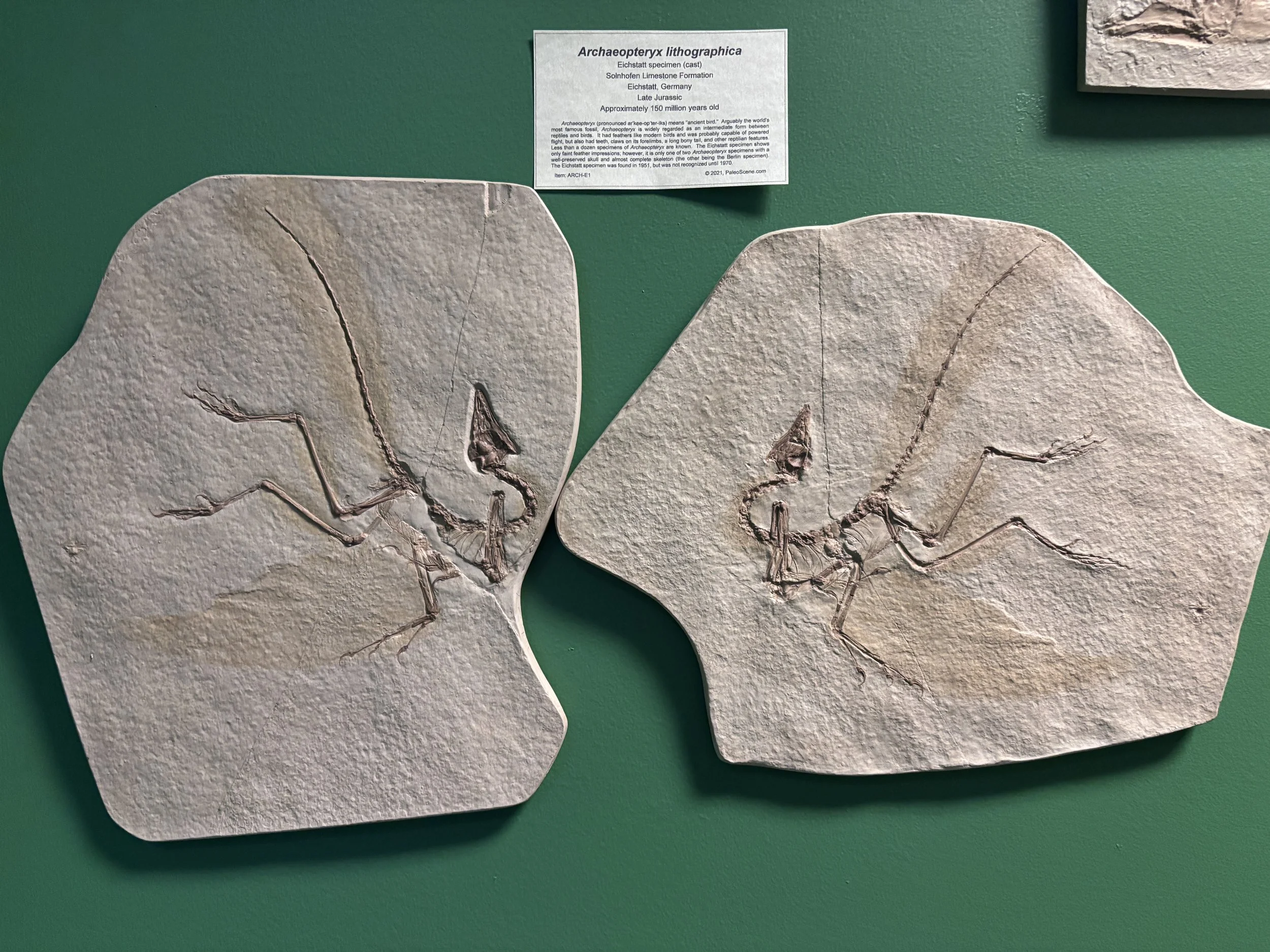
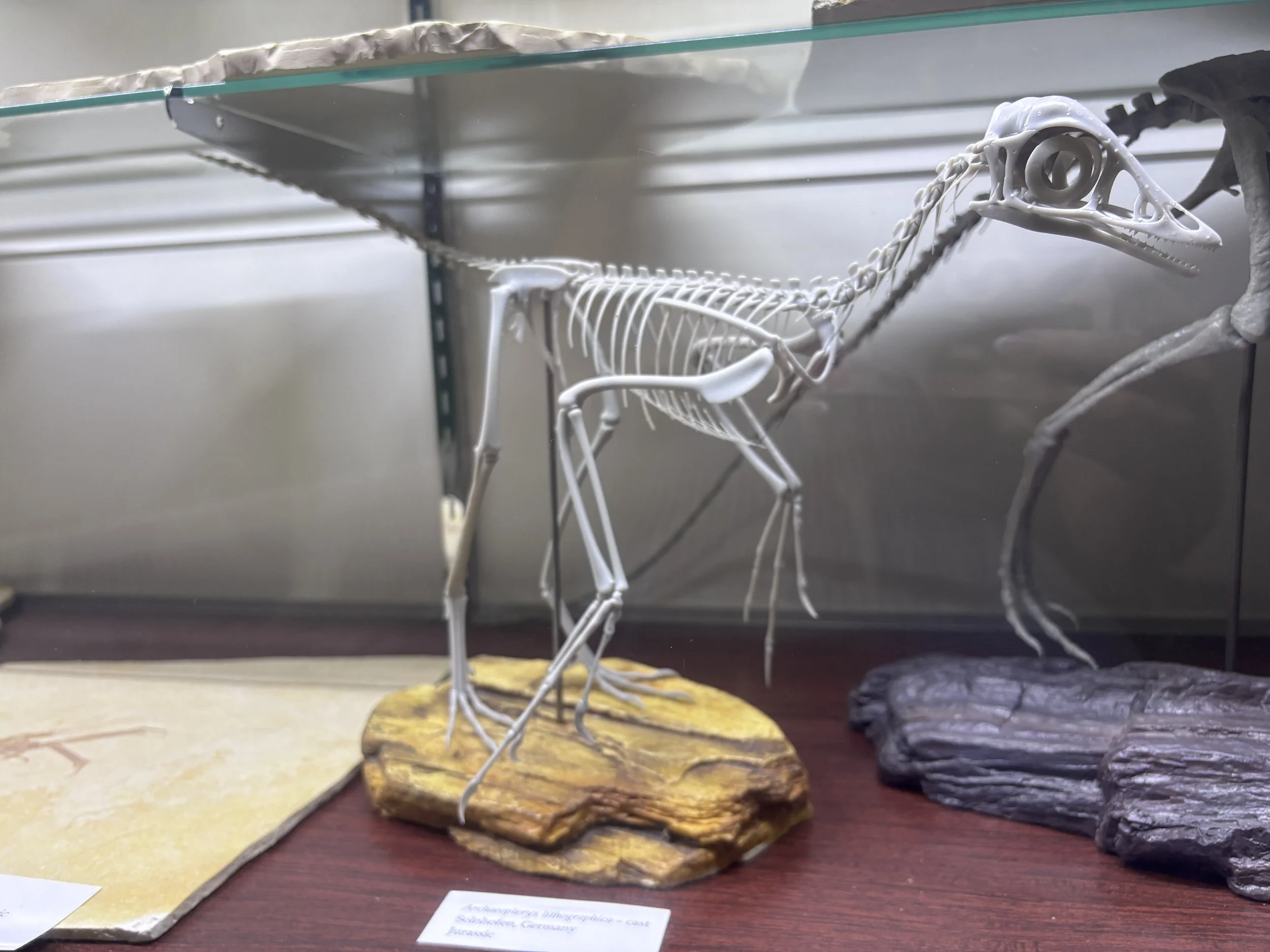
The idea that birds are dinosaurs is still relatively fresh in the general zeitgeist, but paleontologists have been investigating this connection since the discovery of the first fossils of Archaeopteryx lithographica were unearthed in 1861. Since then, more fossils have been found which further support the link between birds and theropod dinosaurs of old.
Like some modern birds, they ate small mammals, lizards, amphibians, and insects. Unlike modern birds, the Archaeopteryx had teeth instead of a hard beak. It also had claws at the bend of its wings that scientists think they used to grab onto trees as they glided through the canopy. As for flight, there is still a debate over whether they could truly take flight as easily as modern birds. It is possible that they relied on gliding from tree to tree like a sugar glider or required a running start with little hops to take off flying.


Compsognathus was a genus of small theropod dinosaur that lived in Europe during the Jurassic period. Compsognathus, sometimes nicknamed ‘Compie’, is among the smallest dinosaurs, not accounting for modern birds, growing anywhere between 2 and 3 feet in length and weighing up to 8 lbs. The Solnhofen specimen was even smaller, about 30 inches long from nose to tail and weighing between 1 and 3 lbs, but this specimen was later determined to be a juvenile. It is thought that the Compsognathus would use its speed, agility, and sharp teeth to ambush small prey like lizards, insects, and possibly even small pterosaurs. Unlike their depiction in popular media, it is unlikely that they hunted in socially active groups.

In the waters of old Baravia, Germany, the Tharsis dubius, a small carnivorous ray-finned fish made their home. These tiny fish fed by sucking plankton and other tiny prey items into their mouths. Fossils of the Tharsis have shown that they often choked on their prey and died of suffocation.


The Mecochirus longimanatus is an extinct species of lobster-like crustacean whose fossils can be found in the Solnhofen Limestone of Bavaria, Germany. It is named for its extra long appendages that were likely used for feeding.

Horseshoe crabs have been around for about 450 million years, surviving all five major extinction events. You may notice that this particular species found in the Solnhofen Limestone, Mesolimulus walchi, looks a lot like modern horseshoe crabs. Their body plan has been so successful that they have not had to change very much at all to survive into the modern era. While Mesolimulus walchi may be extinct, its modern relative still thrive in the oceans today.
The Solnhofen Limestone has not only preserved the bodies of the crabs, but also their footprints!

Aeger tipularius was a species of shrimp that lived in the waters of the archipelago of modern Bavaria Germany. These shrimps are very well preserved by the fine grain of the Solnhofen Limestone.

Unlike stalked crinoids, the Saccocoma pectinata was a free-floating species that fed on plankton. It is believed that the Saccocoma pectinata could swim using its feathered arms to propel itself through the water. These crinoids have been excellently preserved in the Solnhofen Limestone with some specimens even retaining their feathery arm structures.


The Solnhofen Limestone is responsible for some of the best-preserved insect fossils from the Mesozoic. The fine grained sediment allowed for immaculate preservation of wing structures, body segments, and even coloration patterns. The preservation of insect species tells us about the type of environment of ancient Germany. For example, the presence of dragonflies and water striders tells us that the area was had laden with lagoons and bodies of freshwater.


(Late Jurassic)
The Brachiosaurus was a large sauropod dinosaur from the late Jurassic famous for its long, upright neck. Brachiosaurus were herbivorous and likely moved in herds which helped keep them safe from predators. They used their high vantage point to keep an eye out for danger and to access vegetation that grew higher up in the trees. They ate hundreds of pounds of leaves, branches, and other plant matter a day to sustain their large size. It is theorized that a Brachiosaurus could live around 100 years due to its size and slow-moving lifestyle.
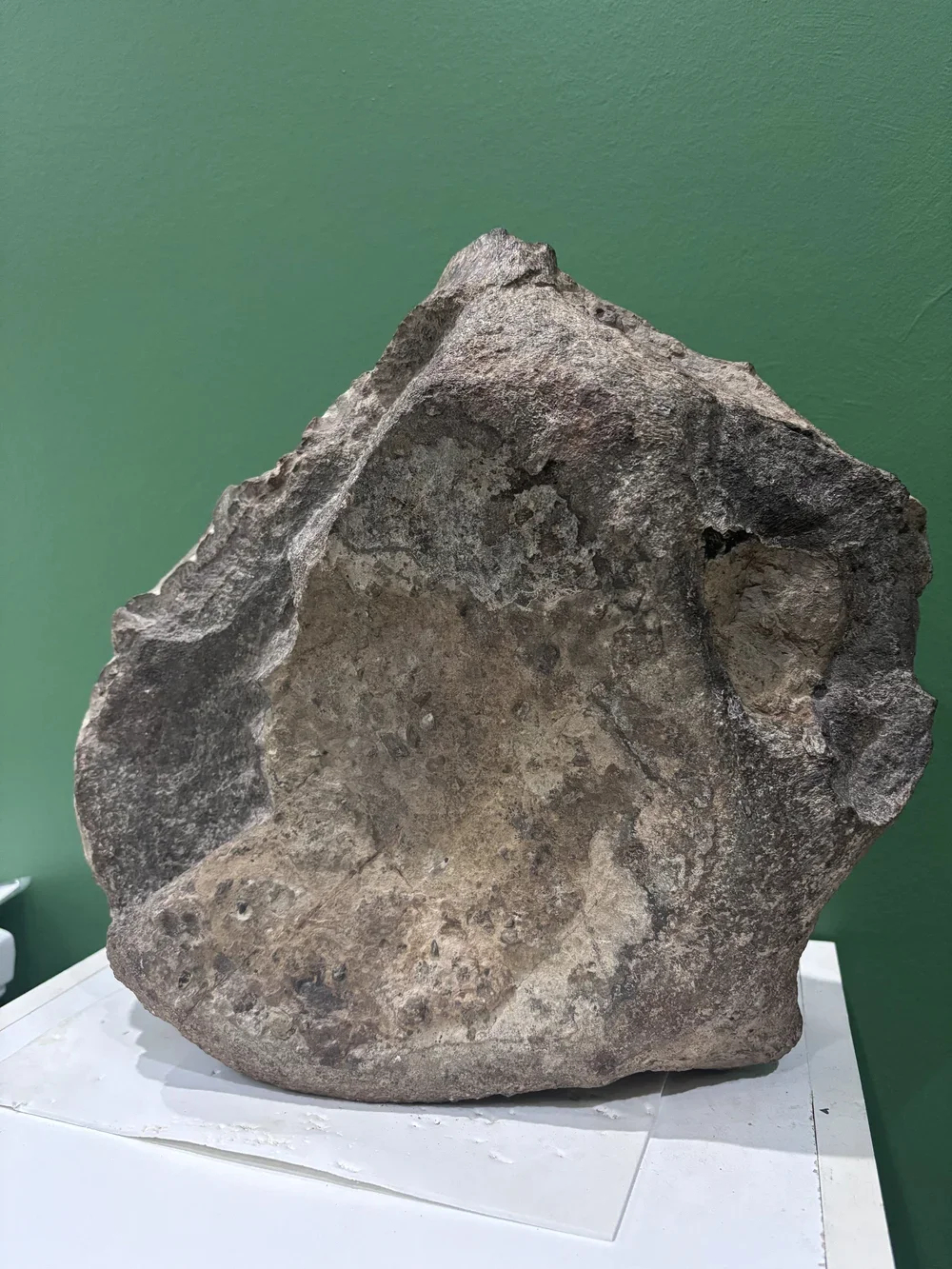
Pictured here is the centrum of a Brachiosaurus vertebra.


The Lufengosaurus was a relative to the larger sauropods like Brachiosaurs but was smaller with a shorter neck and tail. Despite their smaller size (about 30 feet from nose to tail), they were still able to reach vegetation from the trees by standing up on their hind legs for short periods of time.
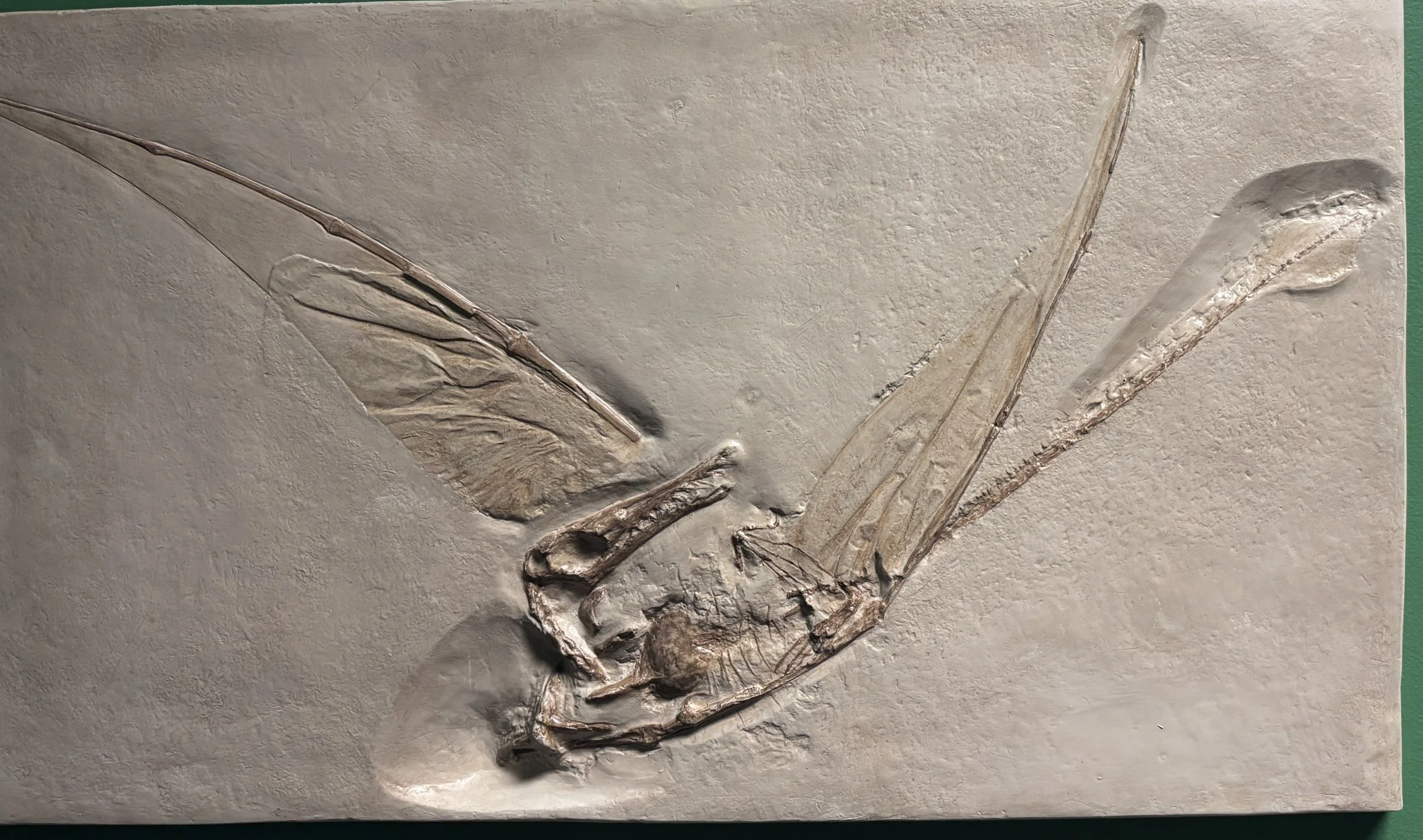


Rhamphorhynchus was a small pterosaur that lived in Europe during the Jurassic, most often found in the Solnhofen Limestone of Germany. Rhamphorhynchus is one of the best understood pterosaurs due to the excellent preservation in some of the fossils found, even including the wing membranes, skin, and stomach contents. Rhamphorhynchus had sharp teeth which it used to catch fish and other sea creatures and was an agile flier with an approximately 3-foot wingspan.


The Ichthyosaurus was a marine reptile known for its dolphin-like appearance and large eyes that lived during the early Jurassic through the early Cretaceous period. They were part of the larger Ichthyosaur family but were rather small compared to its relatives (its larger relative, Ichthyotitan could reach lengths up to 80 feet). Unlike most reptiles, the ichthyosaurus did not lay eggs and instead gave birth to live young. Evidence for this can be seen in the fossil record, as the bones of young have been found inside the body cavity.
The Ichthyosaurus was one of the first fossilized marine reptiles to be uncovered, and hundreds of remains have been found in England, Germany, Greenland, and Alberta. The earliest complete fossil was found by Mary Anning in 1811, though remains had been discovered as early as 1699.


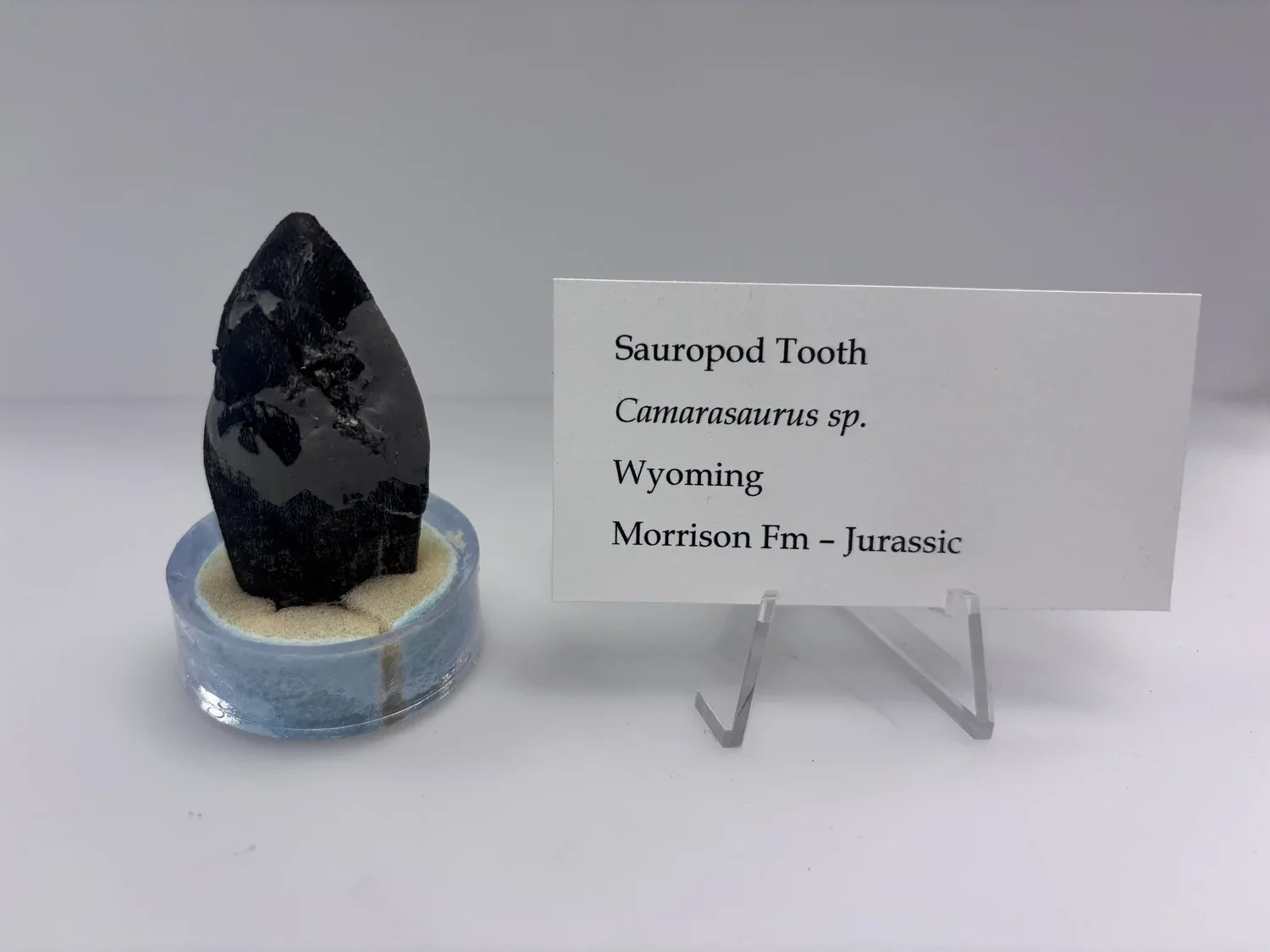
The Camarasaurus was a medium to large sauropod genus from North America. The name Camarasaurus references the animal’s unique chambered vertebrae which aided in its respiratory system. The Camarasaurus had a slightly shorter neck and tail relative to other sauropods and had a boxy head and powerful jaw. It is believed that Camarasaurus’ bite force was among the strongest of all the sauropods and was used to break twigs and eat tough conifers.


The Allosaurus was a large (28 to 30 feet) predatory theropod dinosaur that lived in North America, Europe, and possibly even Africa and Australia. These apex predators had sharp teeth with which could bite and tear at soft tissue rather than rely on a strong bite force like some other theropods like T. rex. They also had large claws on its ‘hands’ used to grapple and subdue prey items. Allosaurus possessed two horns or crests on their brow, likely used as visual display or species recognition as opposed to fighting.

Gymnocidaris was a spiny sea urchin that lived during the Jurassic period. They had distinctive club-shaped spines that were used to protect from predators and to help wedge themselves into tight spaces to hide. They fed on microalgae and small, slow moving invertebrates like sponges or bryozoans.
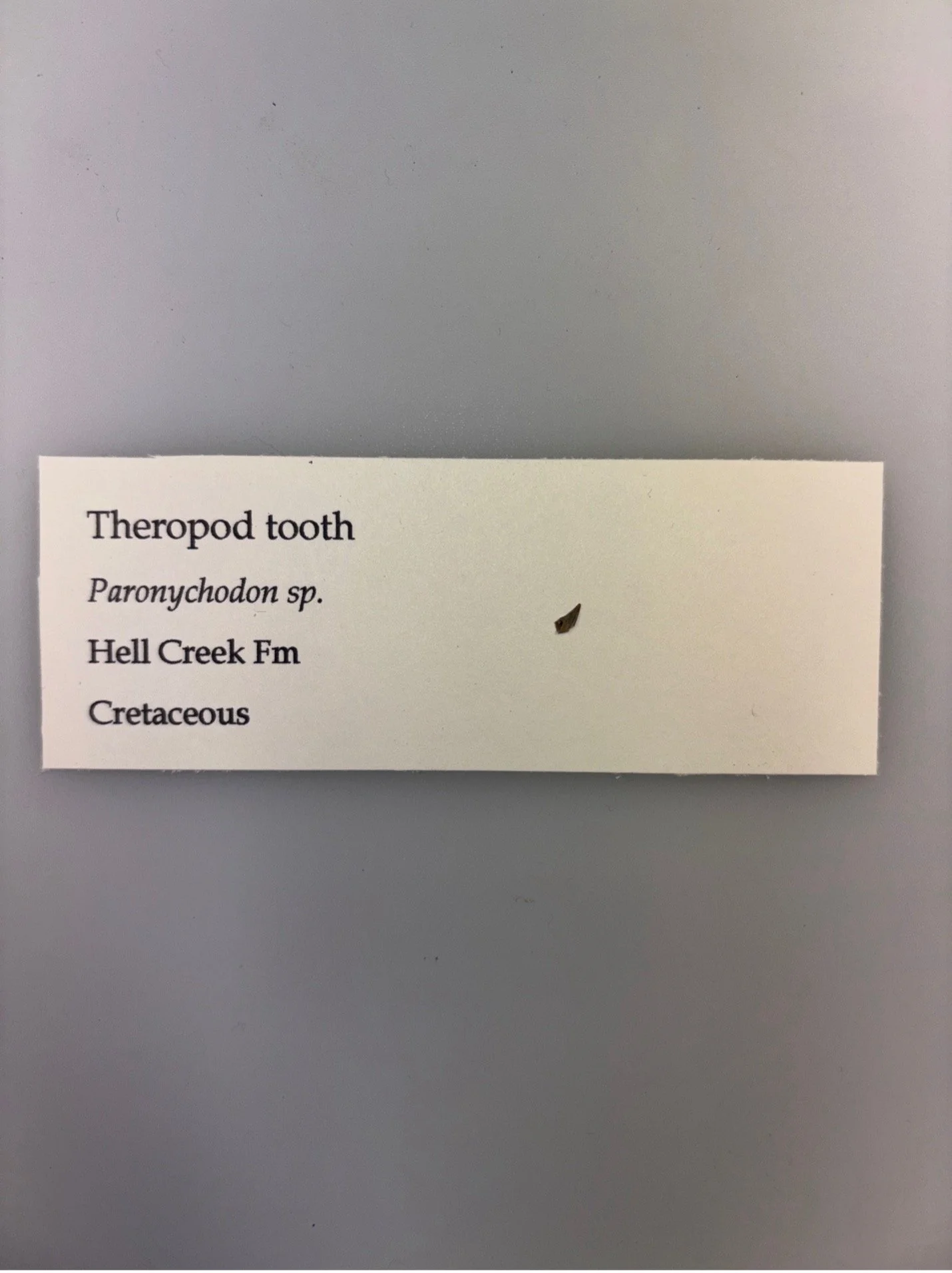
Little is known about the Paronychodon. The only fossils found as of yet of this group of theropds are teeth like the one pictured here. These mysterious carnivorous dinosaurs lived in North America during the late Cretaceous, and similar teeth have also been found in Eurasia, which may indicate that this genus could have been fairly far spread.

Alanqa saharica was a mid-sized pterosaur whose fossils have been found in North Africa. It had a wingspan of 13 to 20 feet and could both walk and fly. The Alanqa saharica had a similar body plan to the more famous Quetzalcoatlus from North America but was only half the size. The Alanqa made their home near water and used their long, pointed beaks to snatch up small animals and stranded fish, and likely scavenged larger animals like dinosaurs.
The fossil pictured here is the fourth phalanx, or one of the finger/wing bones.
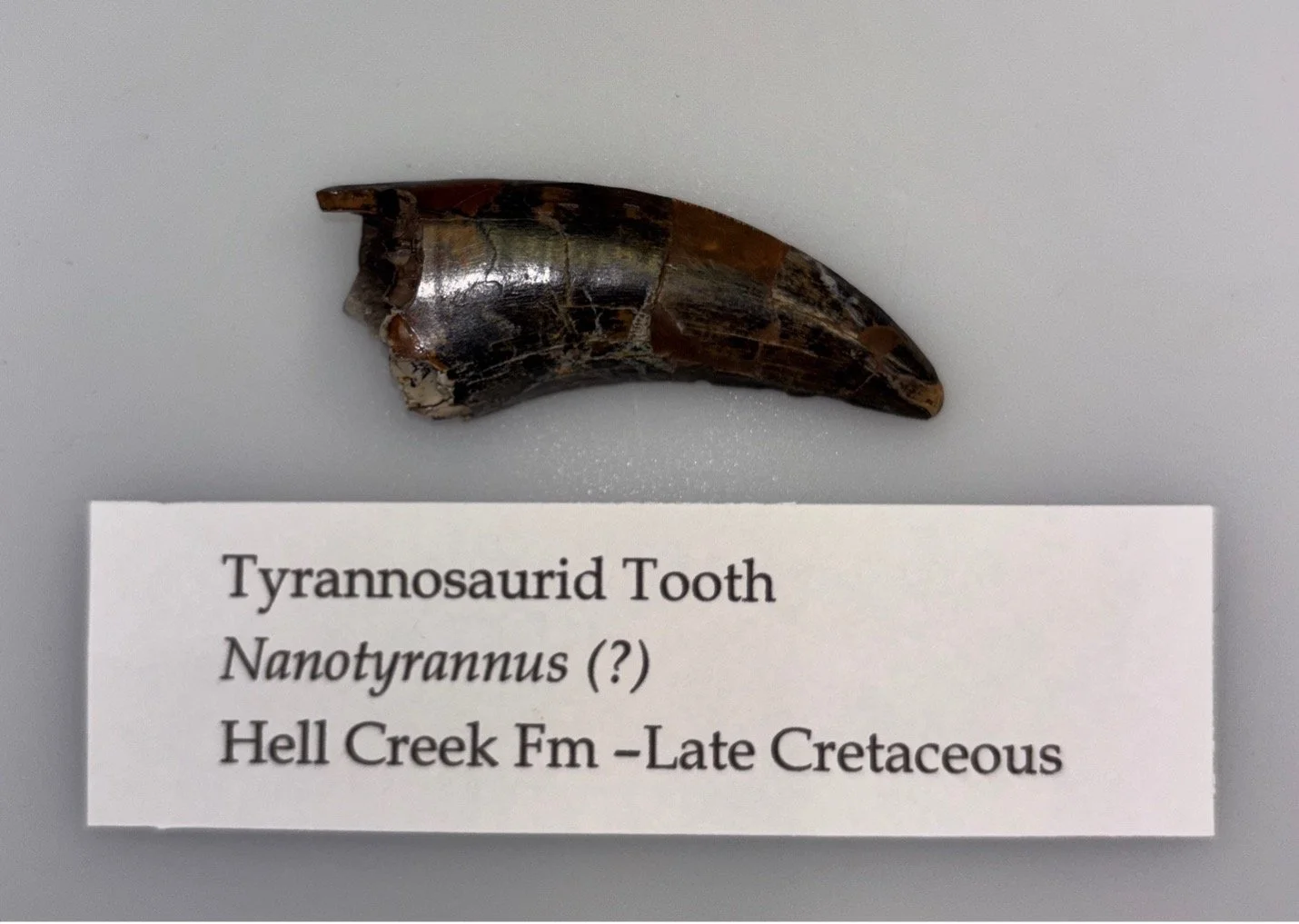
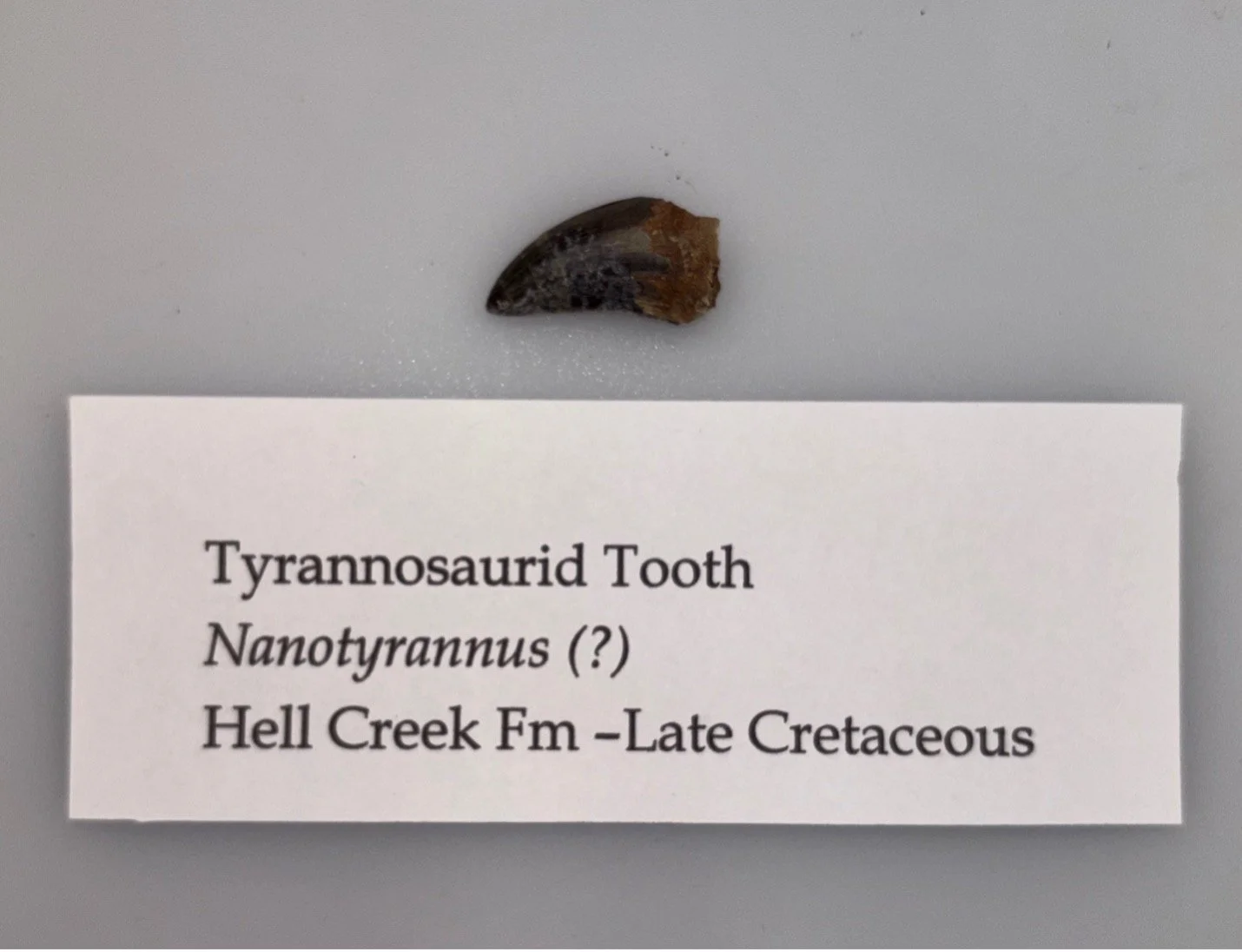
The Nanotyrannus is a newly confirmed genus of therapod dinosaur that lived alongside the Tyrannosaurus rex at the end of the Cretaceous period. For years, scientists debated over whether this smaller was a teenage T. rex or its own distinct species. In 2025, the researchers at North Carolina Museum of Natural Sciences determined that the theropod in their famous fossil “The Dueling Dinosaurs” was fully-grown at the time of death. This discovery settled the debate once and for all. Now that the two species are officially split, our understanding of both the Nanotyrannus and the T. rex are forever changed.
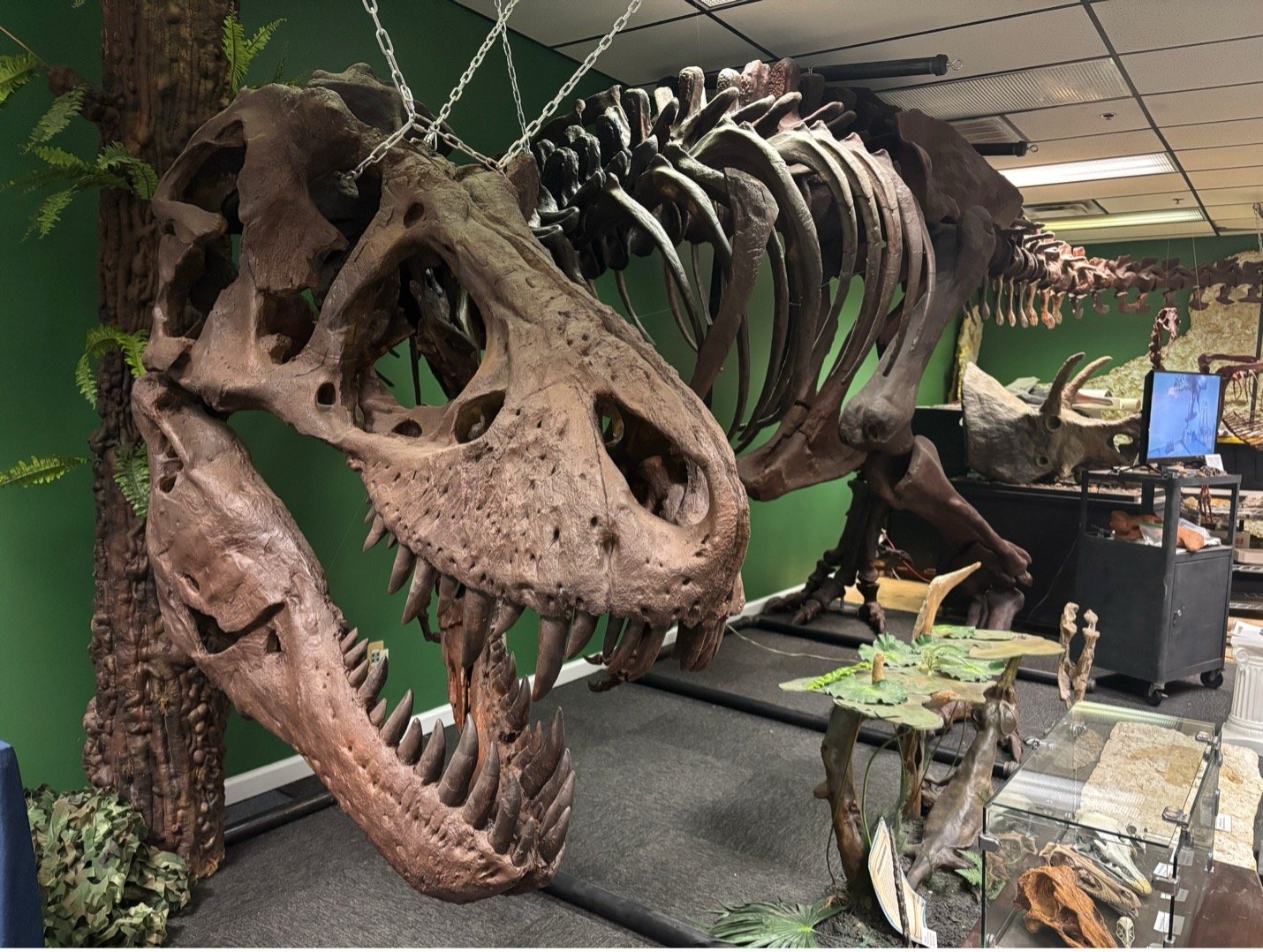
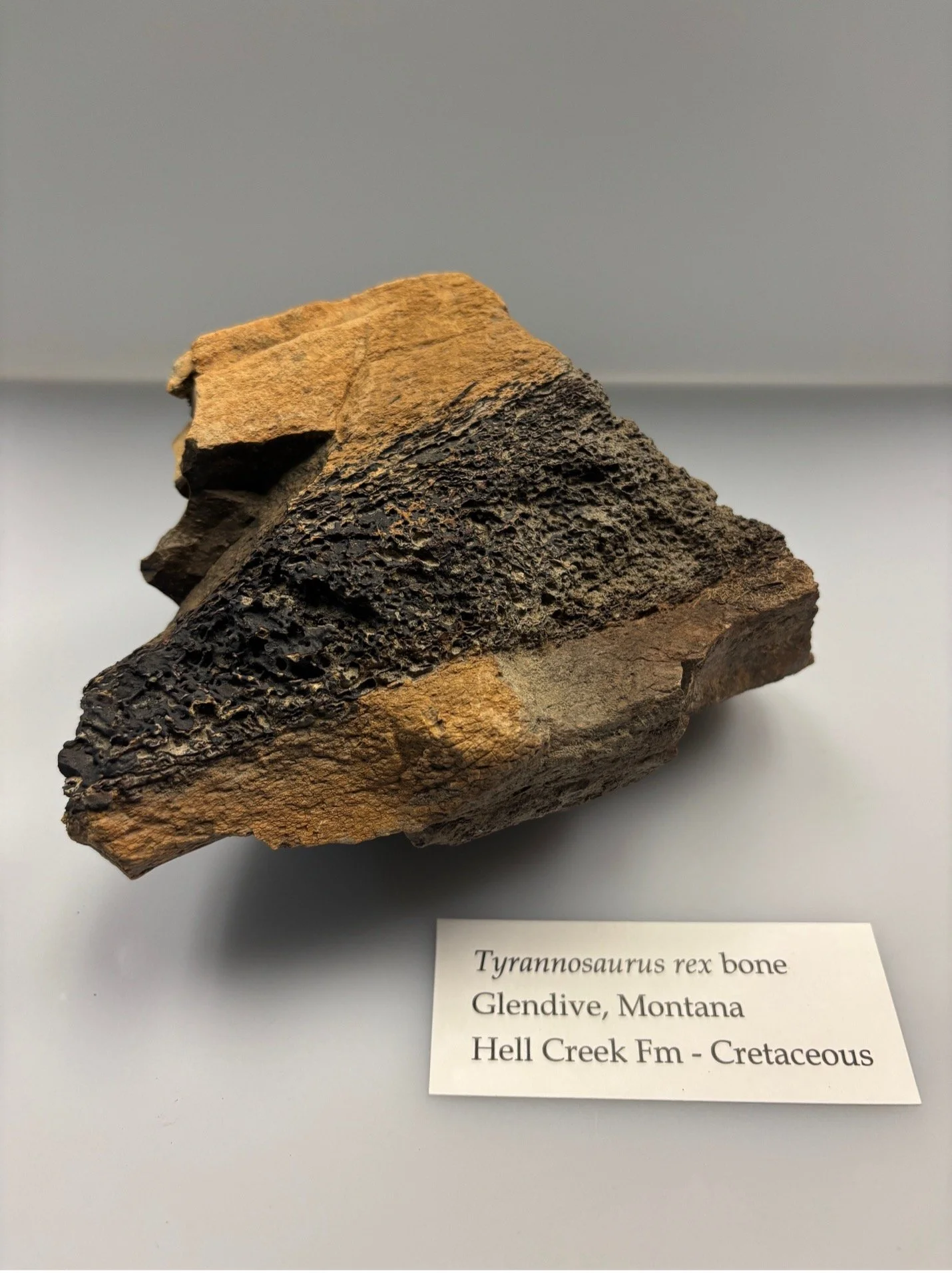
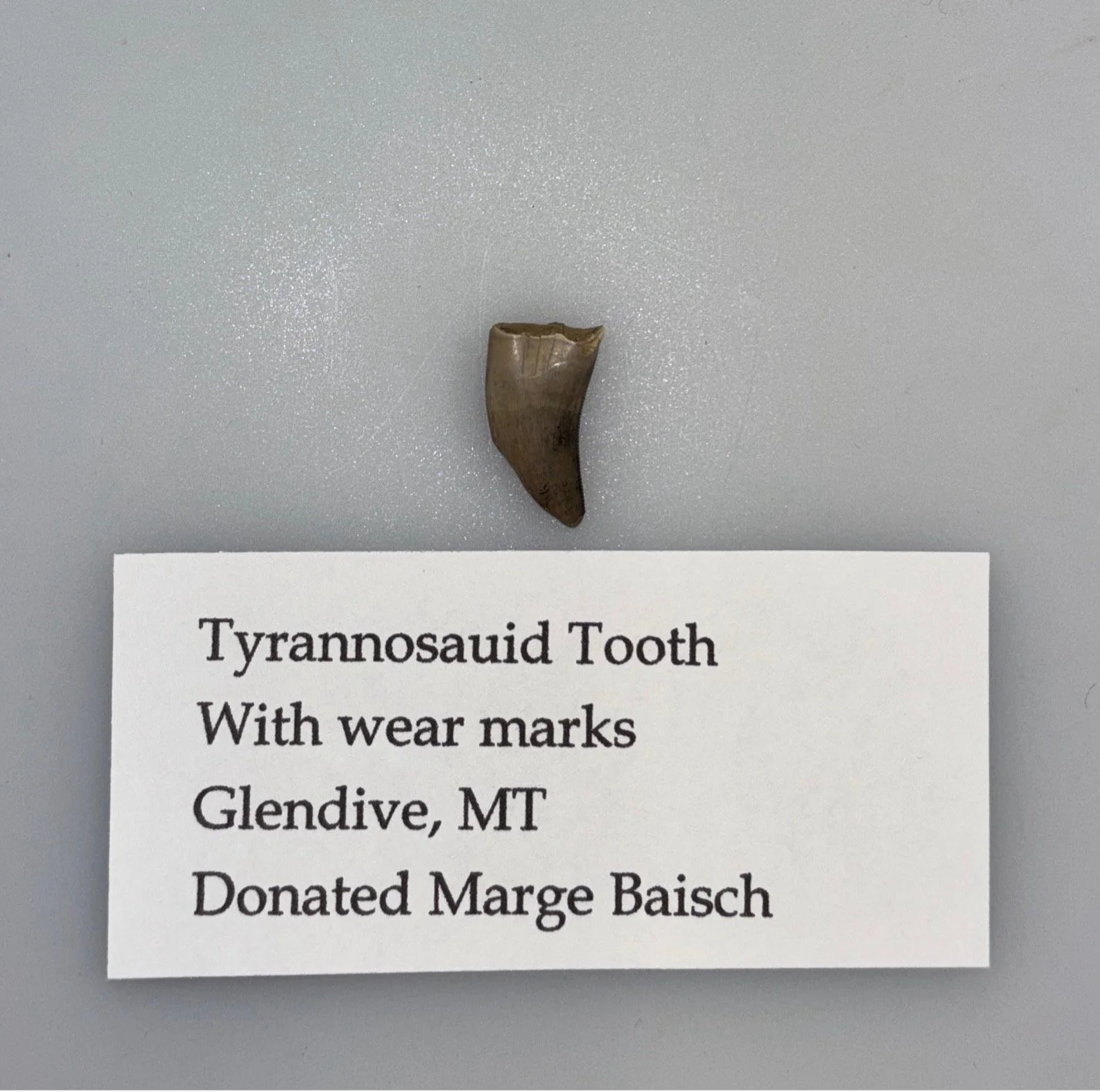
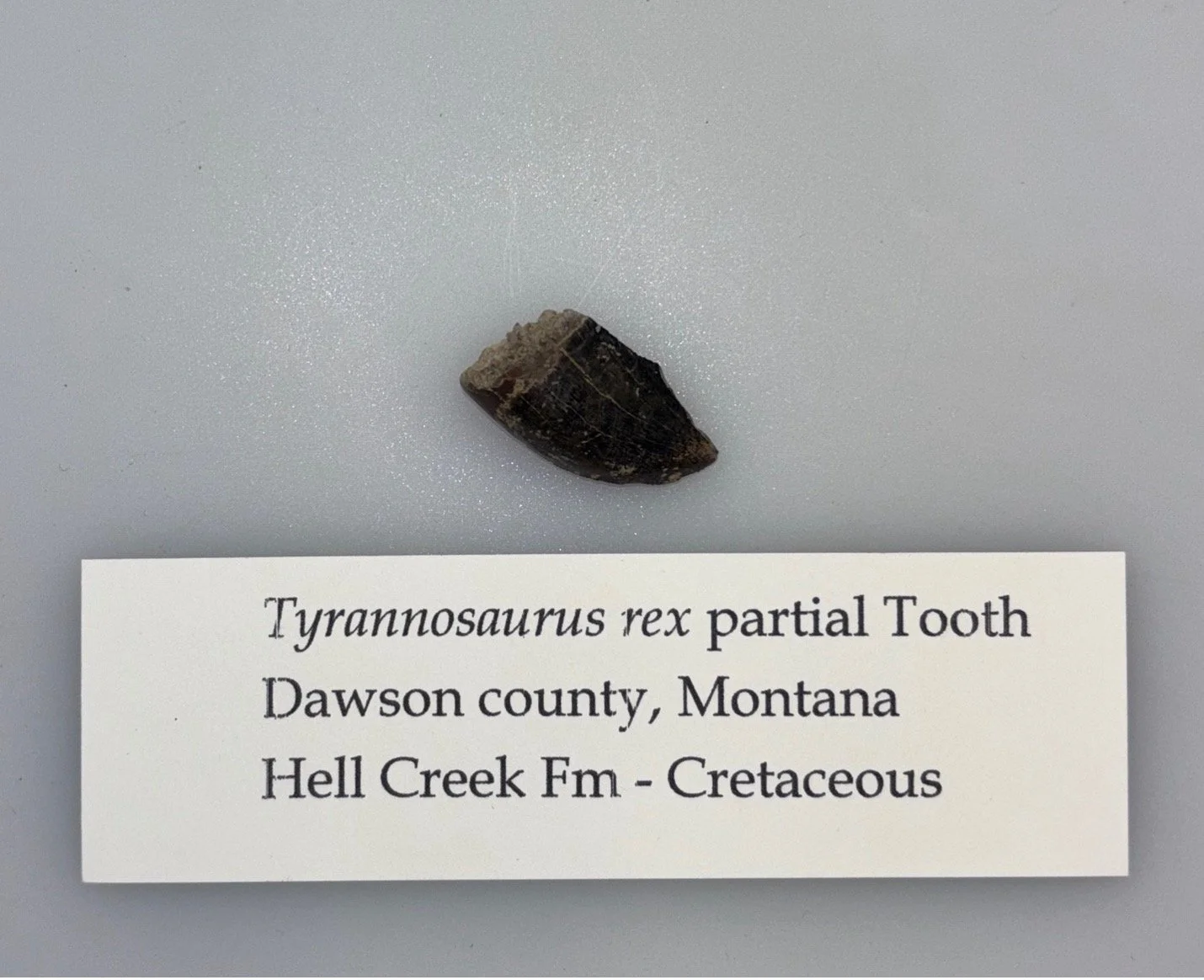
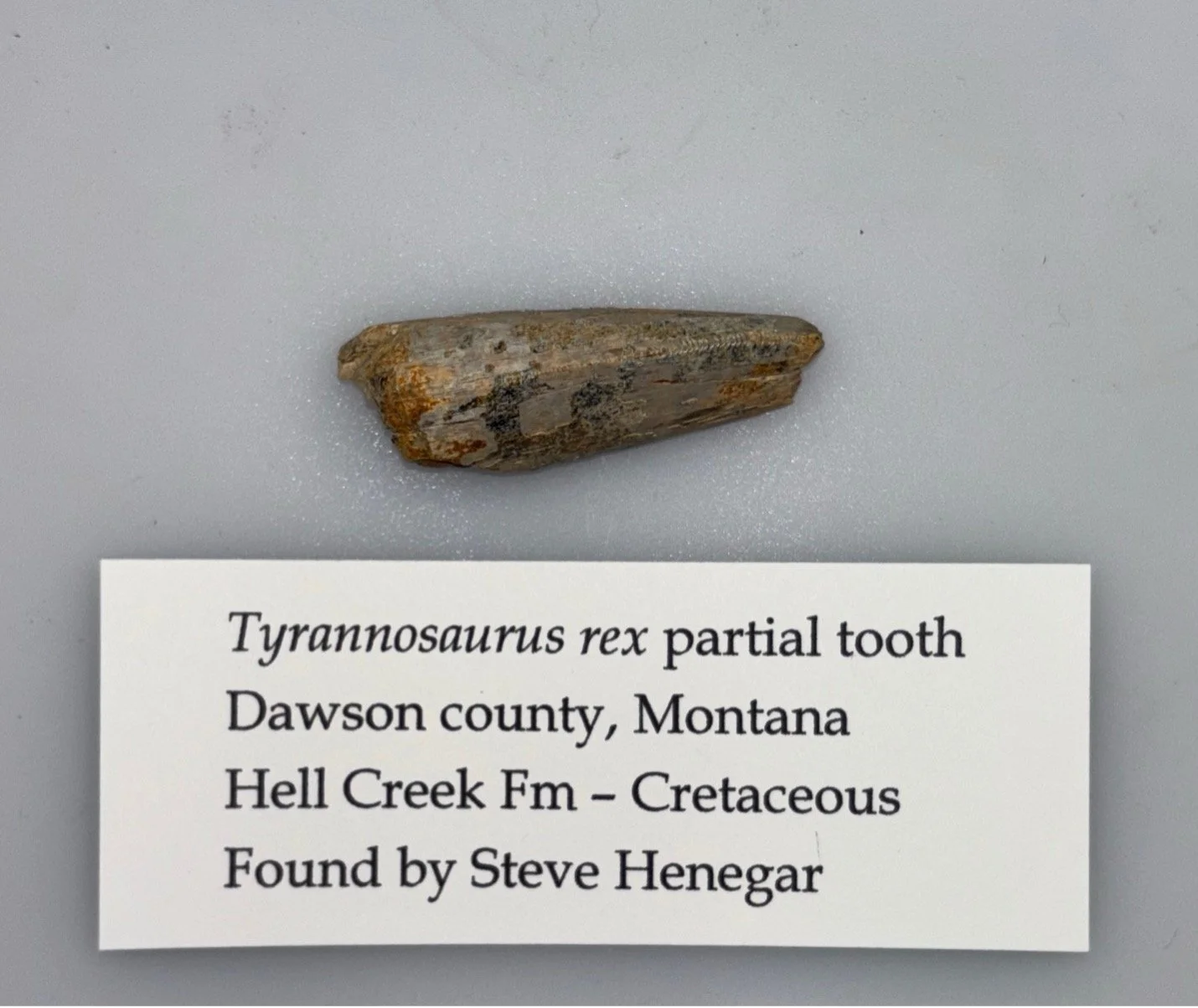
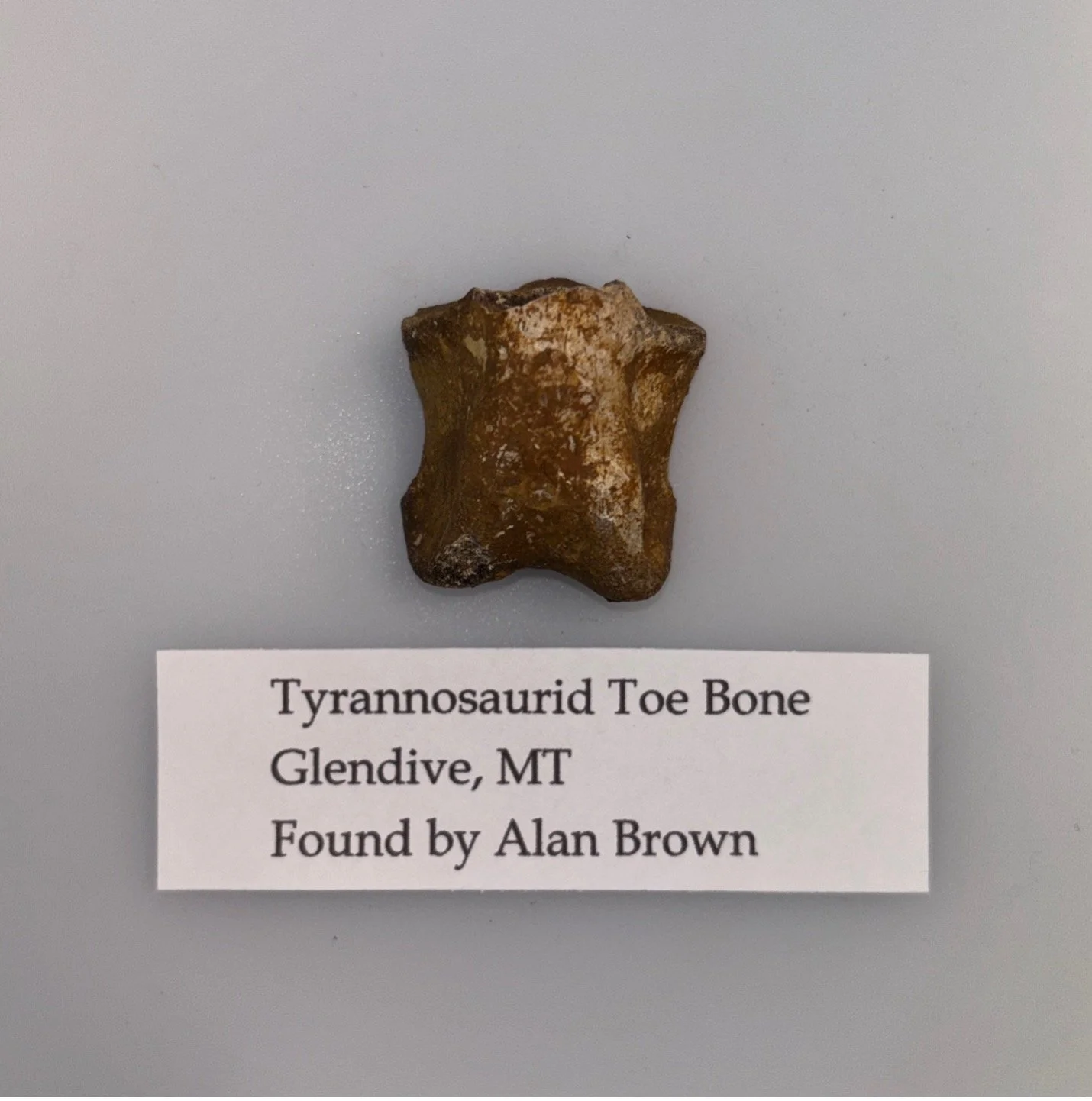
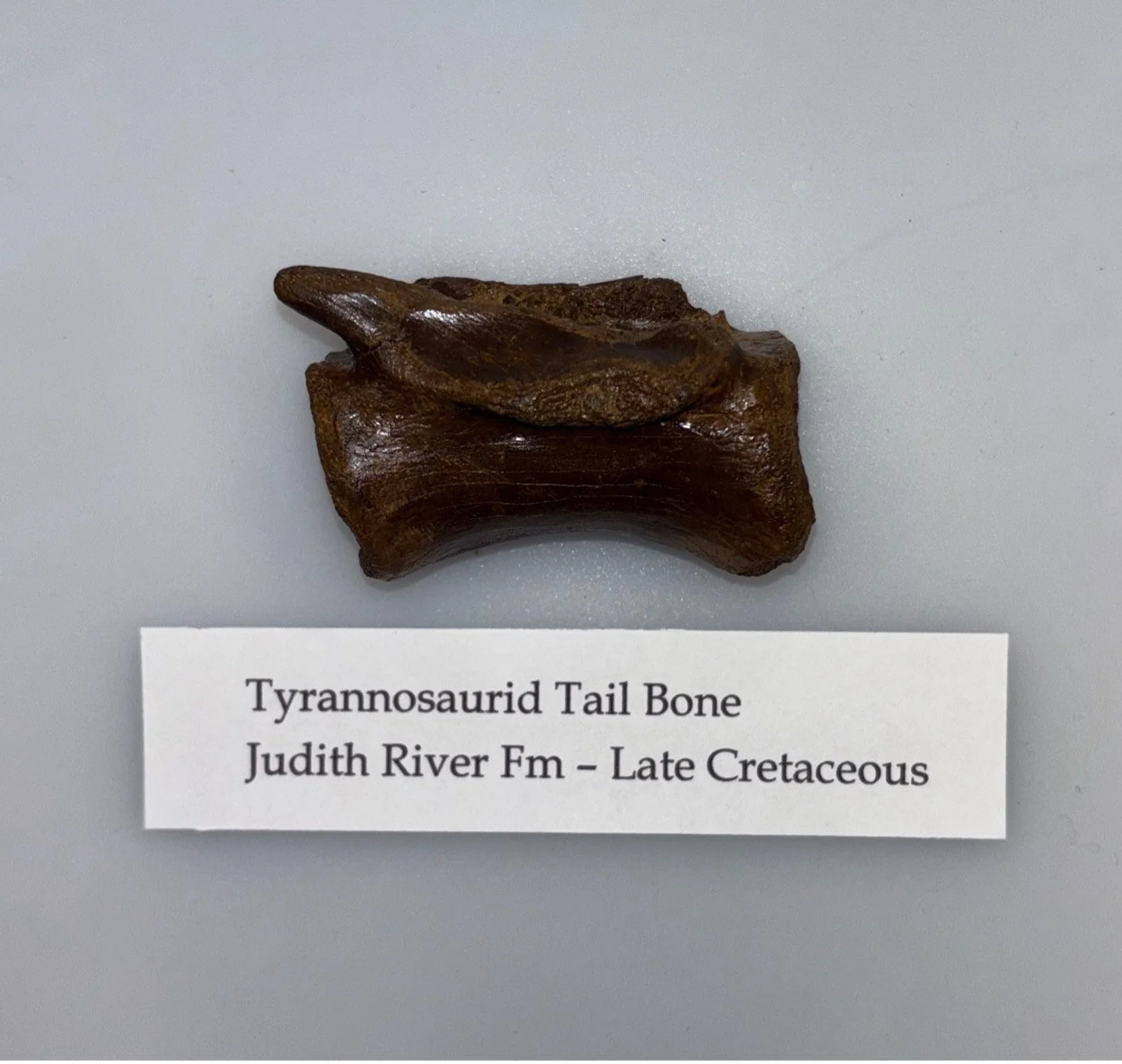
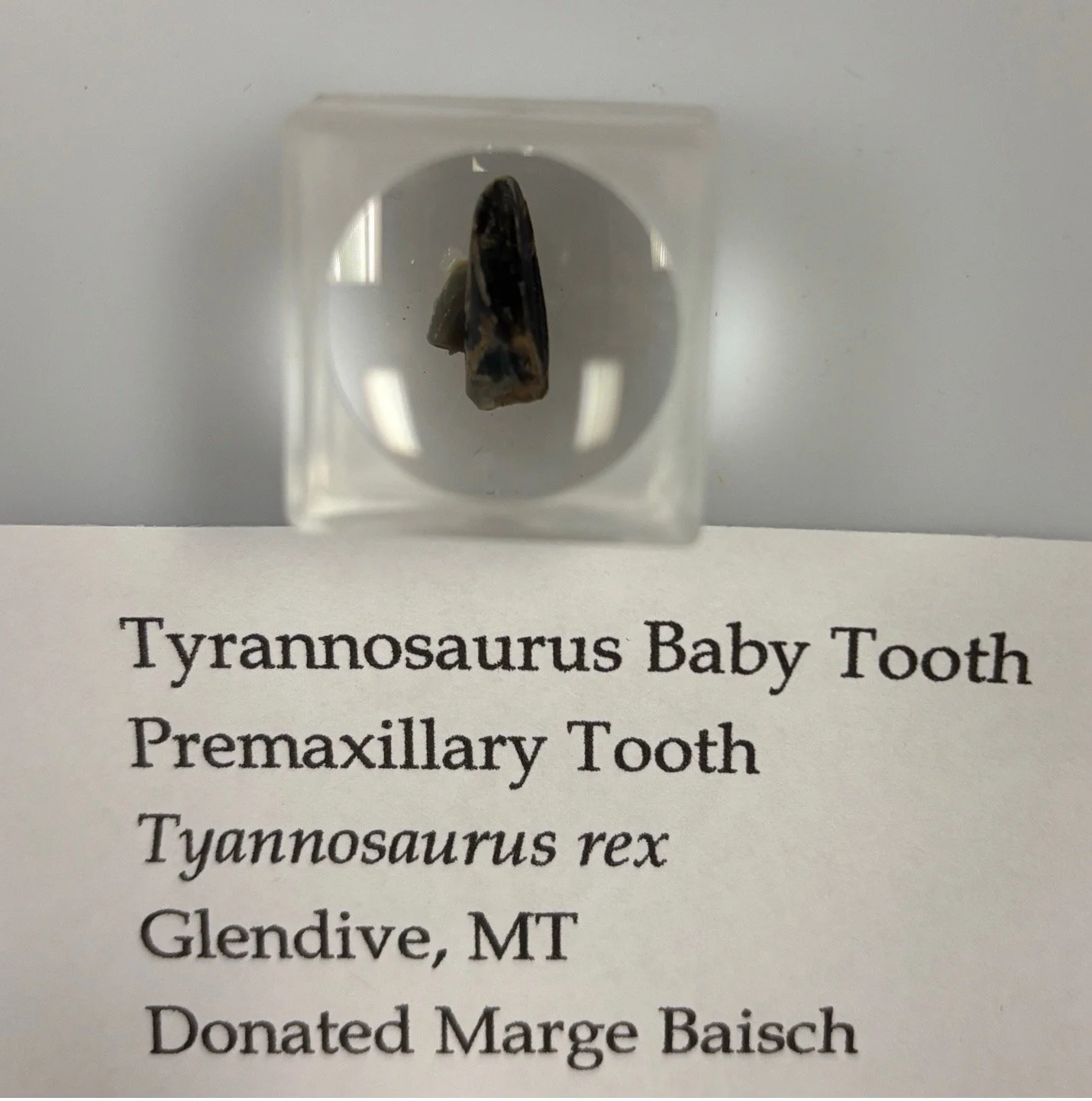
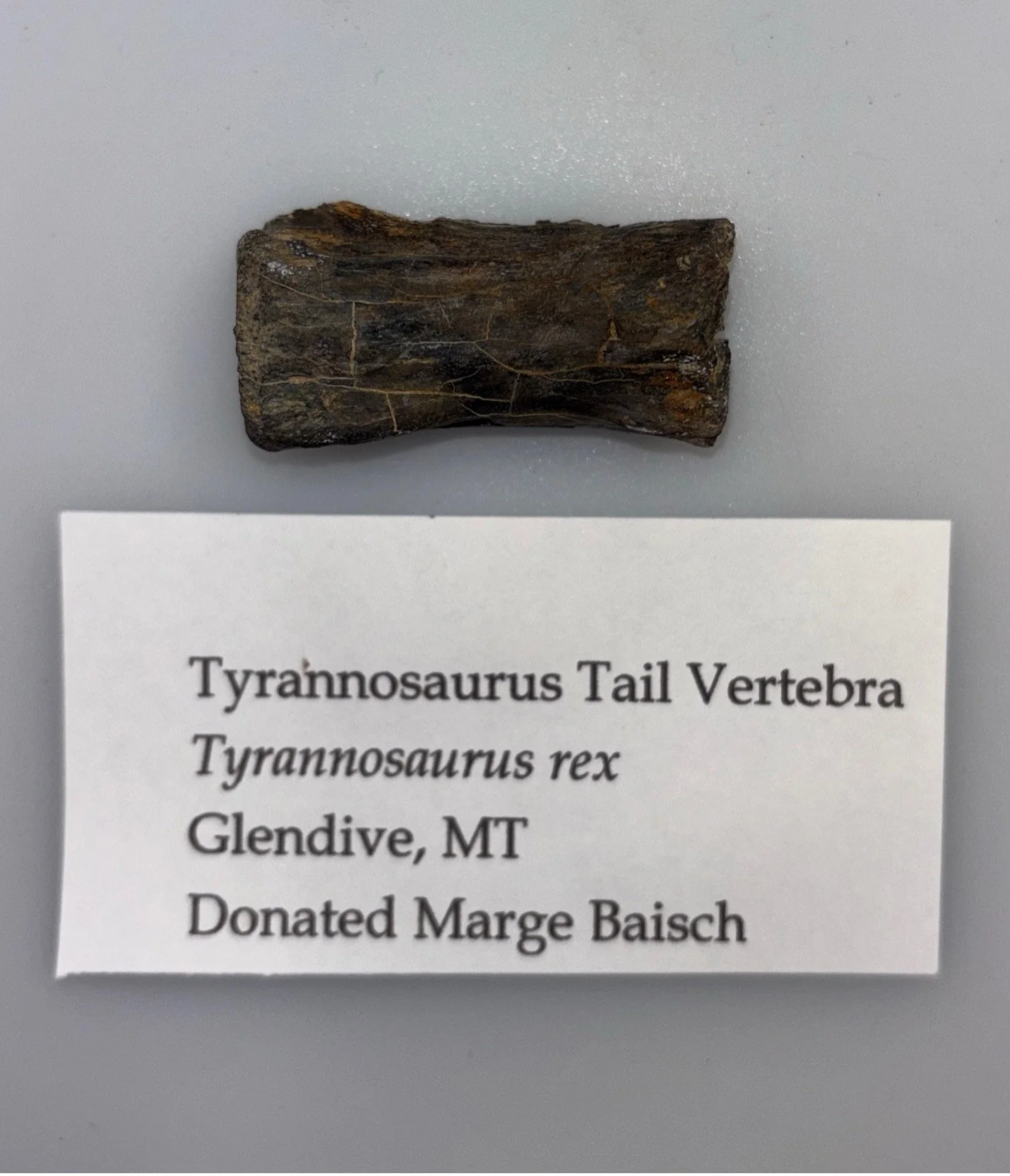
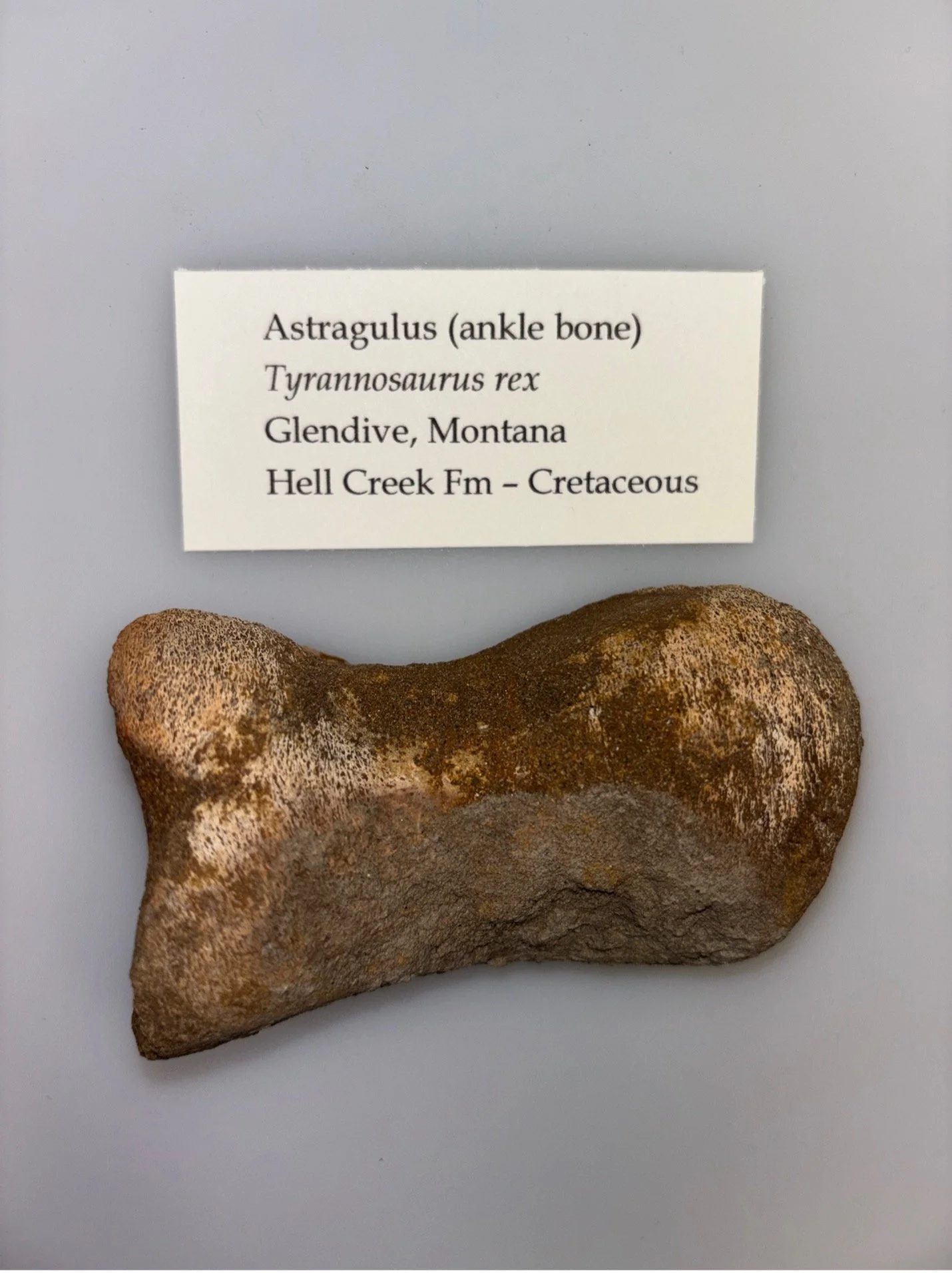
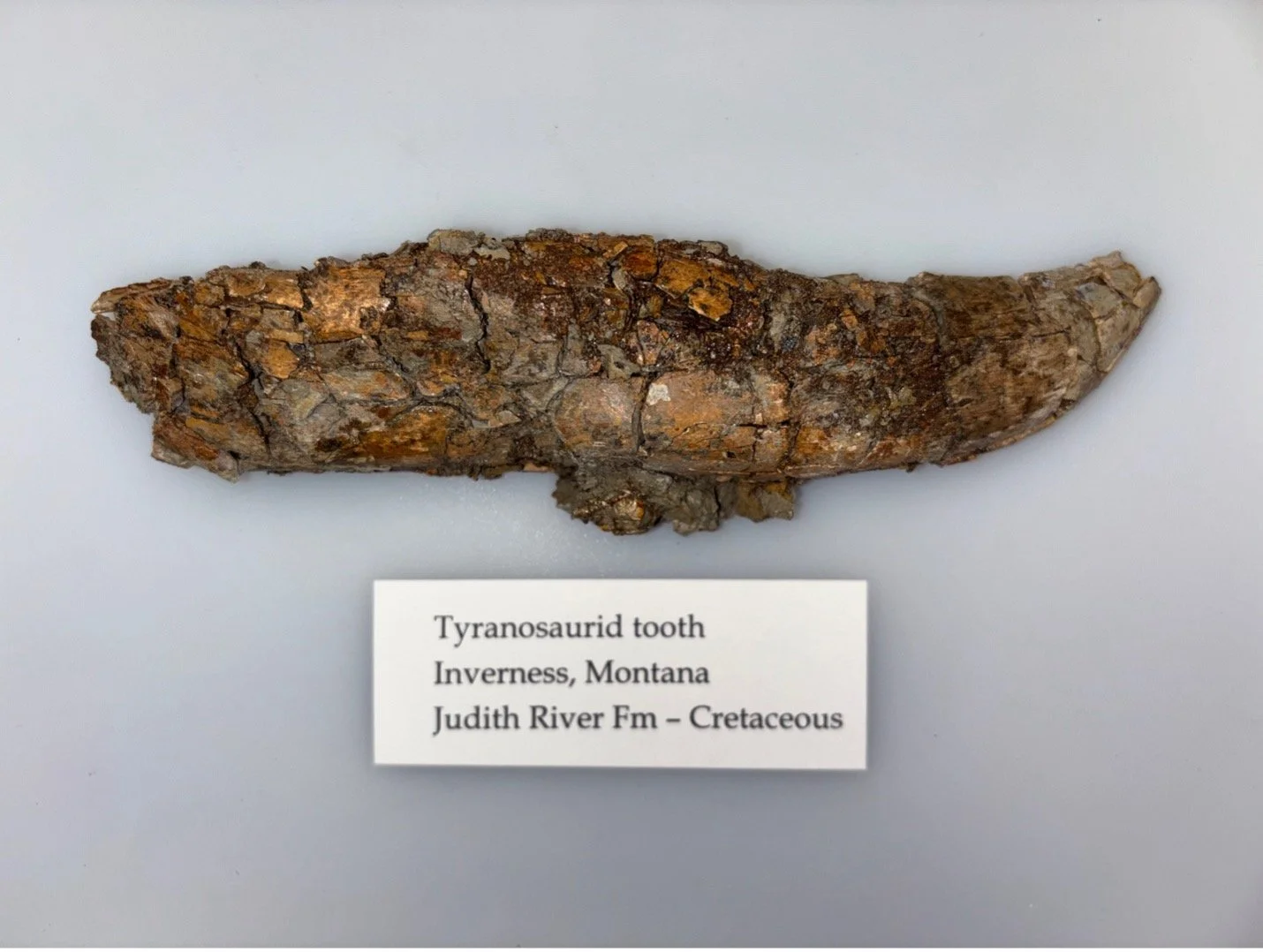
One of the most famous and beloved dinosaurs, the Tyrannosaurus rex, was the king of Hell Creek back during the late Cretaceous. Its name translates to “king of the tyrant lizards”, which it earned by being one of the biggest theropod dinosaurs (12 feet tall and 40 feet long) and possessing the greatest bite force of any land animal ever (8,000 – 12,800 lbs. per square inch). The T. rex is often noted for its large head full of long sharp teeth which was ideal for taking big bites out of its big prey like the Triceratops or Edmontosaurus.Its small arms are also cause for conversation; some scientists think their small (approx. 3 feet) arms were a trade-off for its large head, which was much more useful than long arms would have been considering its very large prey items. It is also possible that T. rex simply ‘grew out’ of their arms, as younger T. Rex specimens have for more proportional limbs.
At Earth Experience, you can see a full-scale T. rex model named Frank and get a feel for just how big these tyrants were.
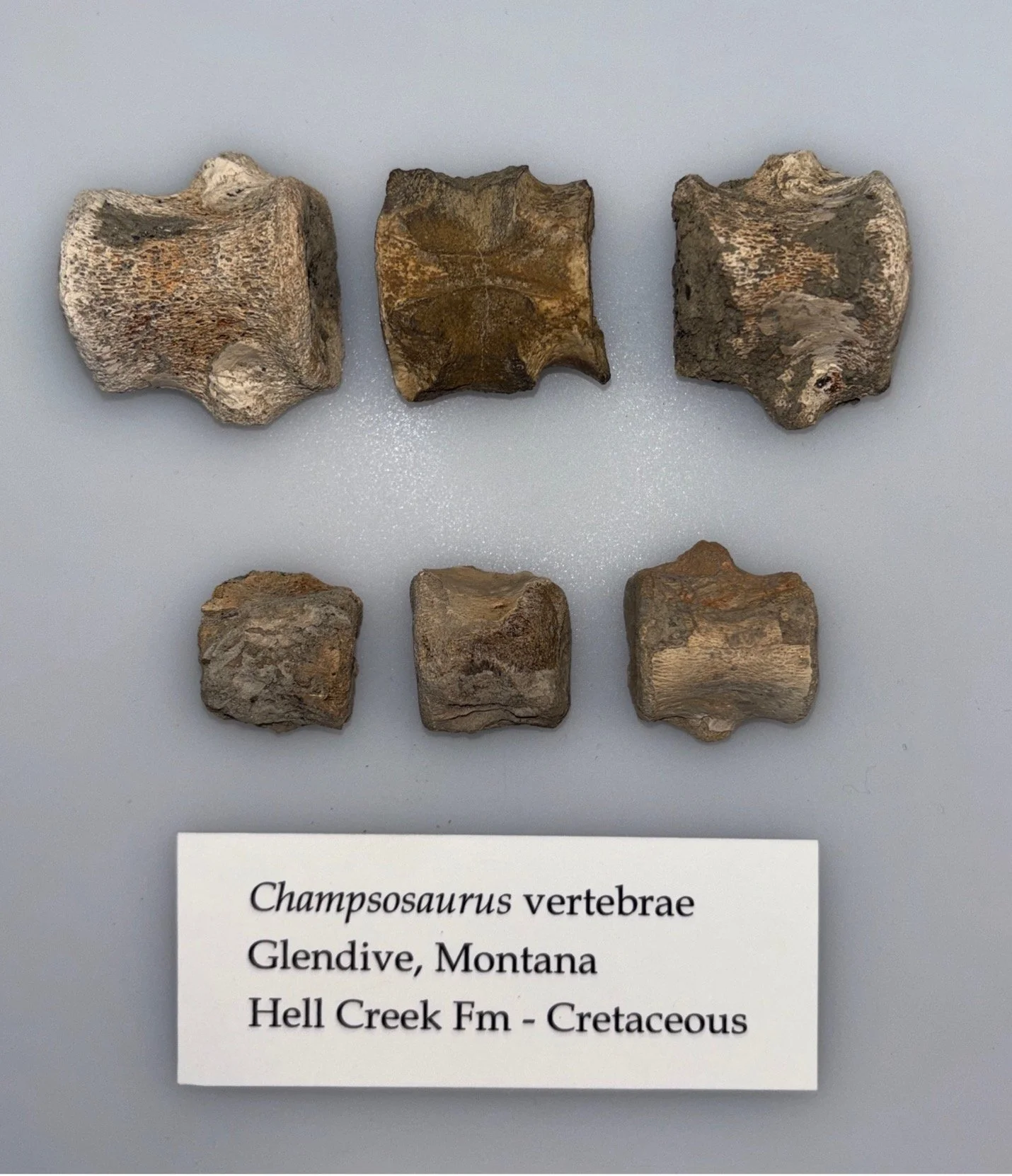
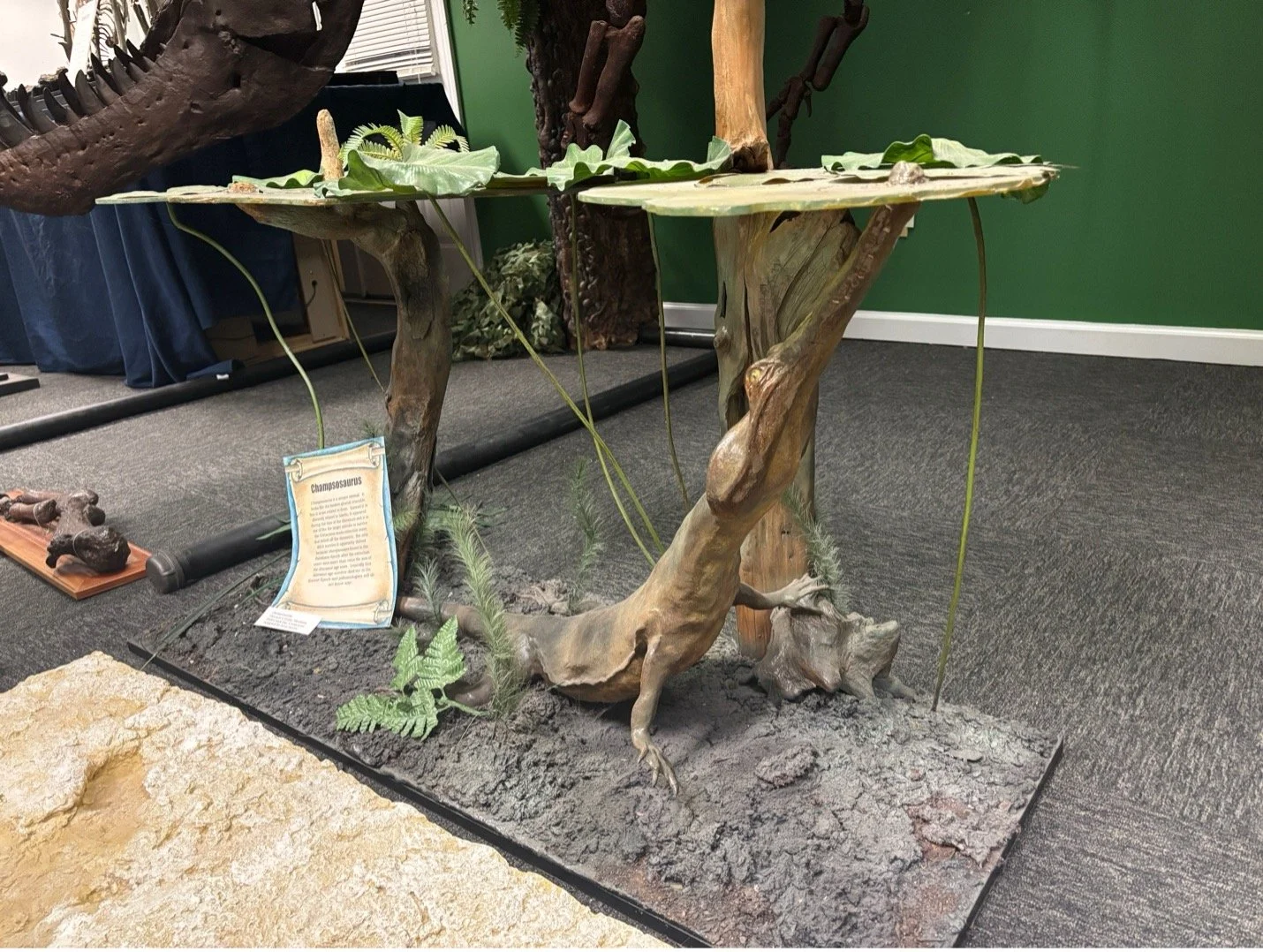
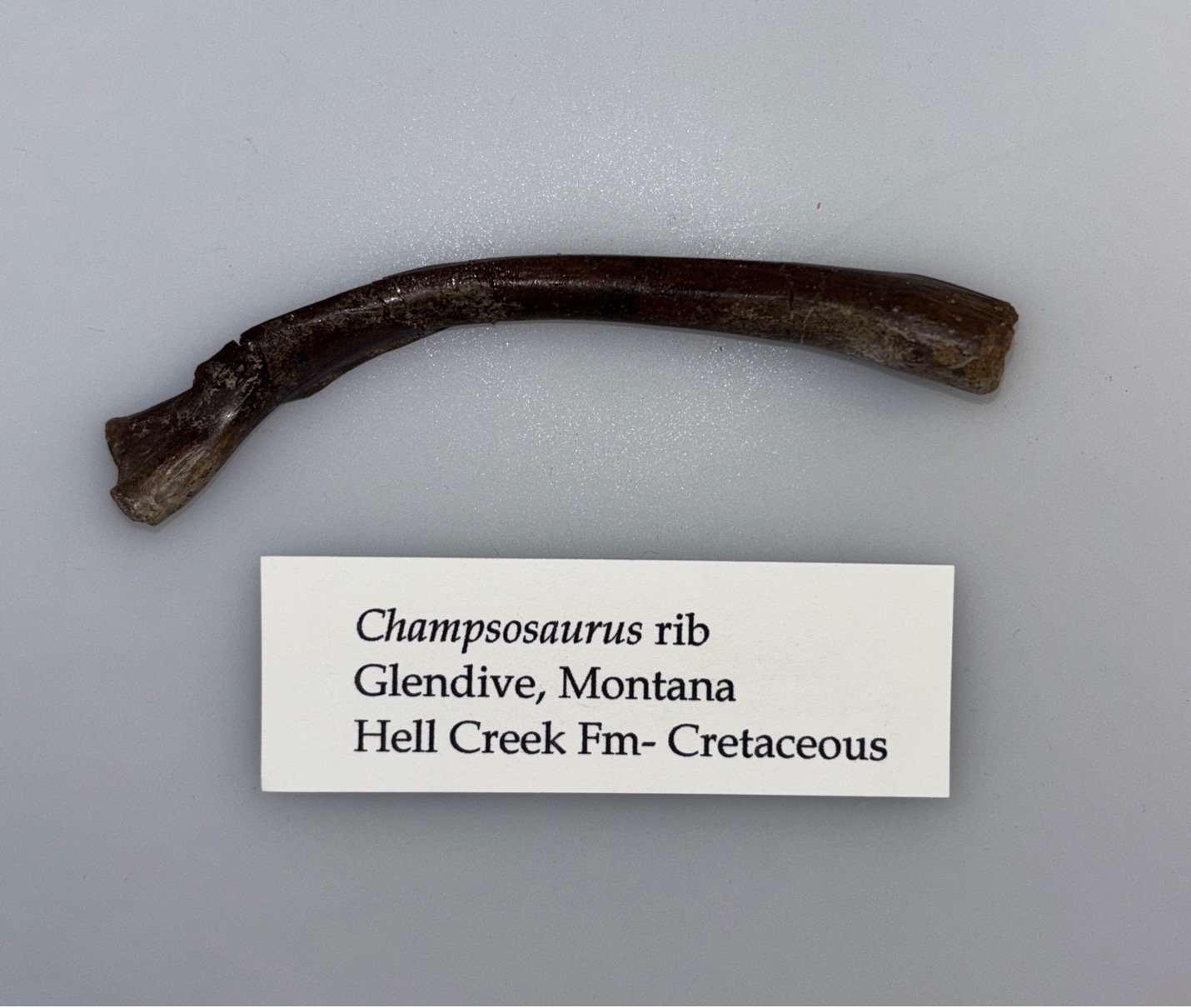
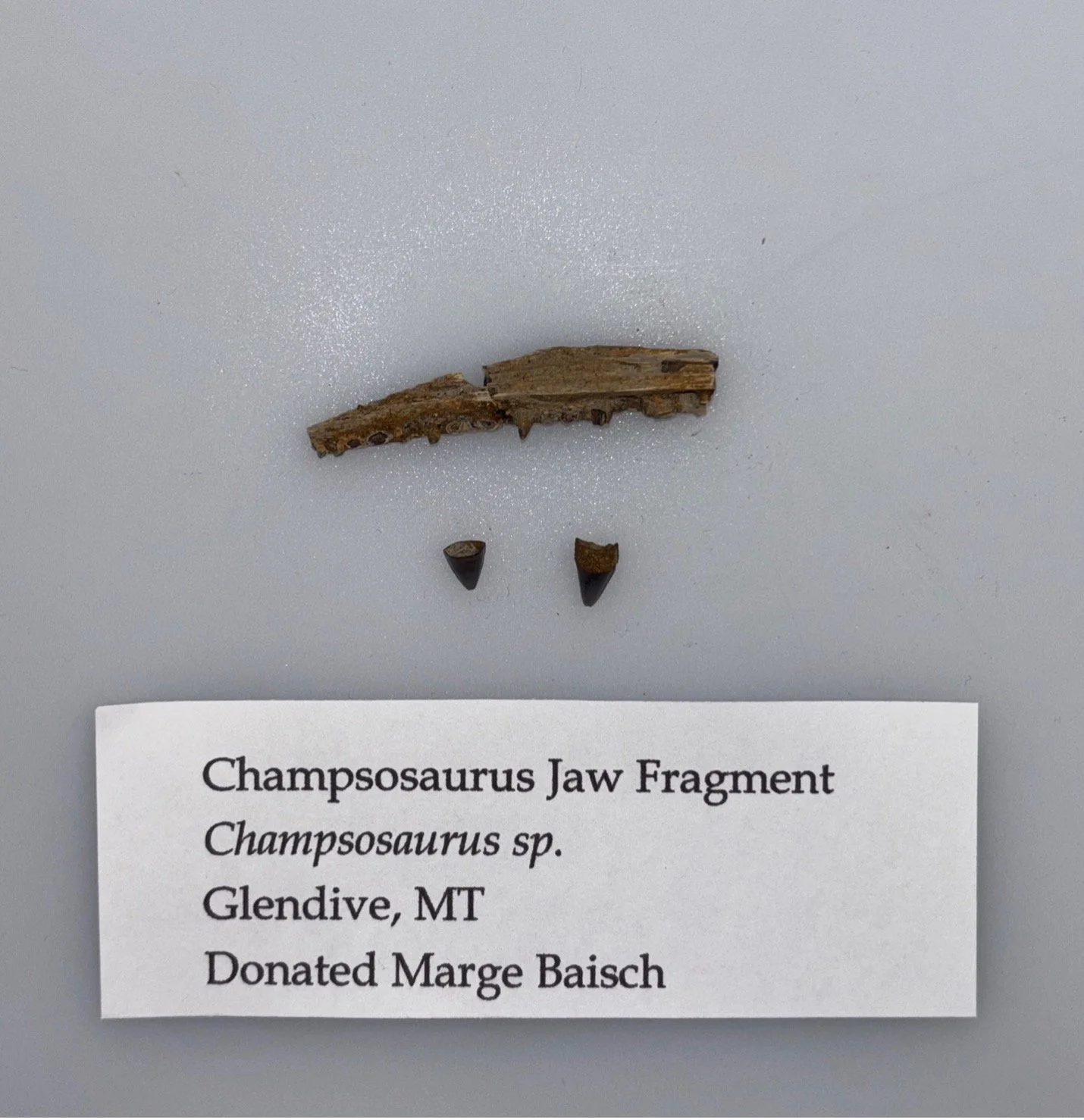
The Champsosaurus was a large aquatic reptile that lived in slow-moving freshwater rivers, swamps, and ponds during the Cretaceous period and into the Paleogene epoch. Champsosaurus was an odd-looking animal, with a crocodile-like body and an elongated snout which was useful in ambush hunting for fish. Despite their similarities to crocodilians, they are not closely related.
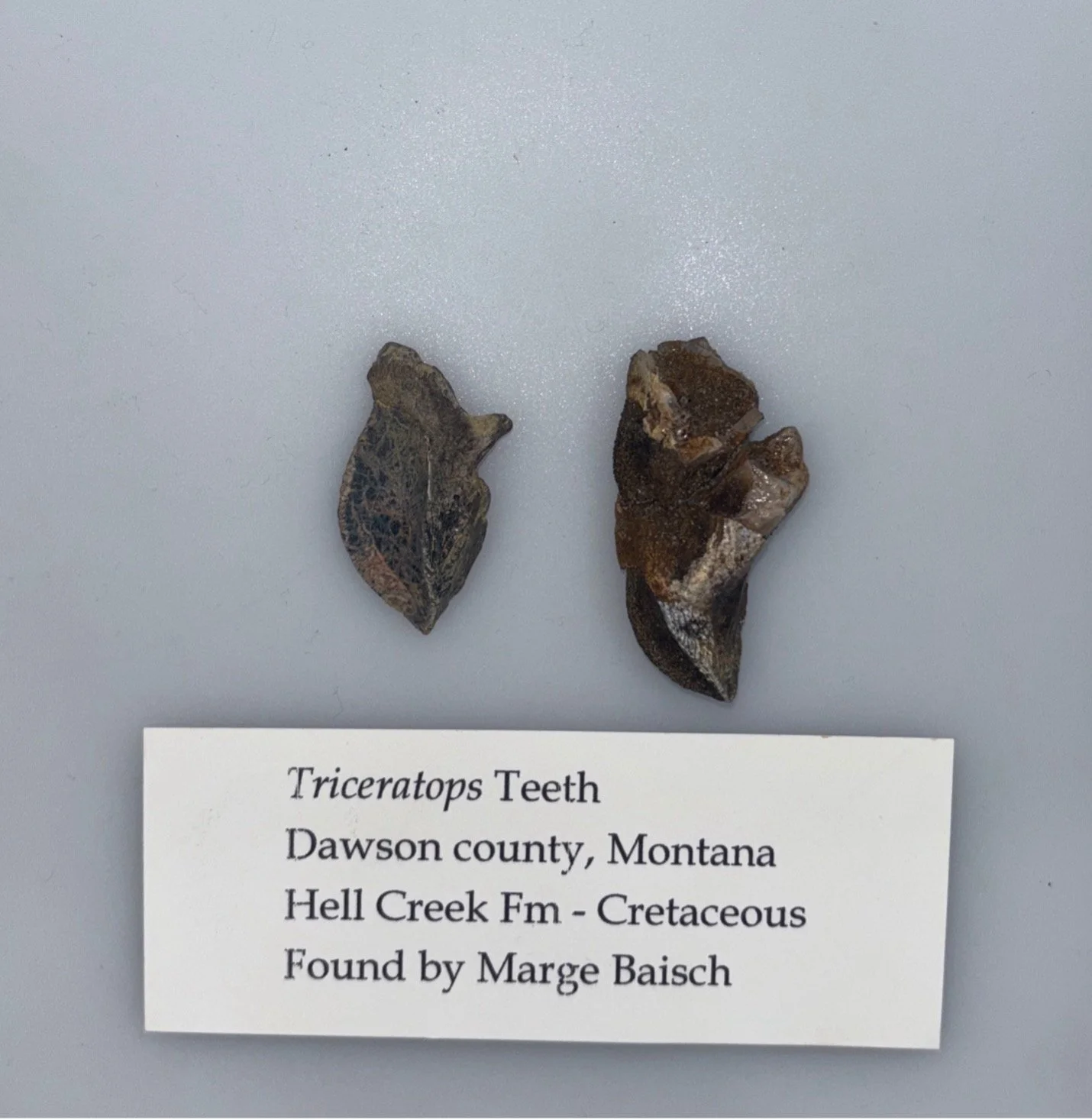
The Triceratops was a tank-sized herbivore that lived up to the end of the age of the dinosaurs. The Triceratops had several defining features like its three horns used to defend against T. rex attacks and a beak it used to shear tough plants to eat. The purpose of its large fan-like structure on the back of its head called the ‘frill’ is still a matter of debate. Some think the frill was a defensive measure to protect its neck from the devastating bite of a T. rex, while others think it likely displayed distinctive colors or patterns to attract mates and be recognizable to other Triceratops. There are even theories that it was used as thermoregulation, as the frill was full of veins that could have allowed the animal’s blood to cool.
At Earth Experience, we have been lucky enough to be able to work on a Triceratops skull from the Hell Creek Formation in Montana. Our specimen is likely a subadult, meaning that even with its large size, full grown Triceratops would still be slightly bigger. Due to erosion, our skull is missing its horns, which is unfortunately common with Triceratops fossils. It does still have a lot of its frill still protected in its plaster jacket until more of the base skull is prepared and stabilized. Come see this work-in-progress in person!
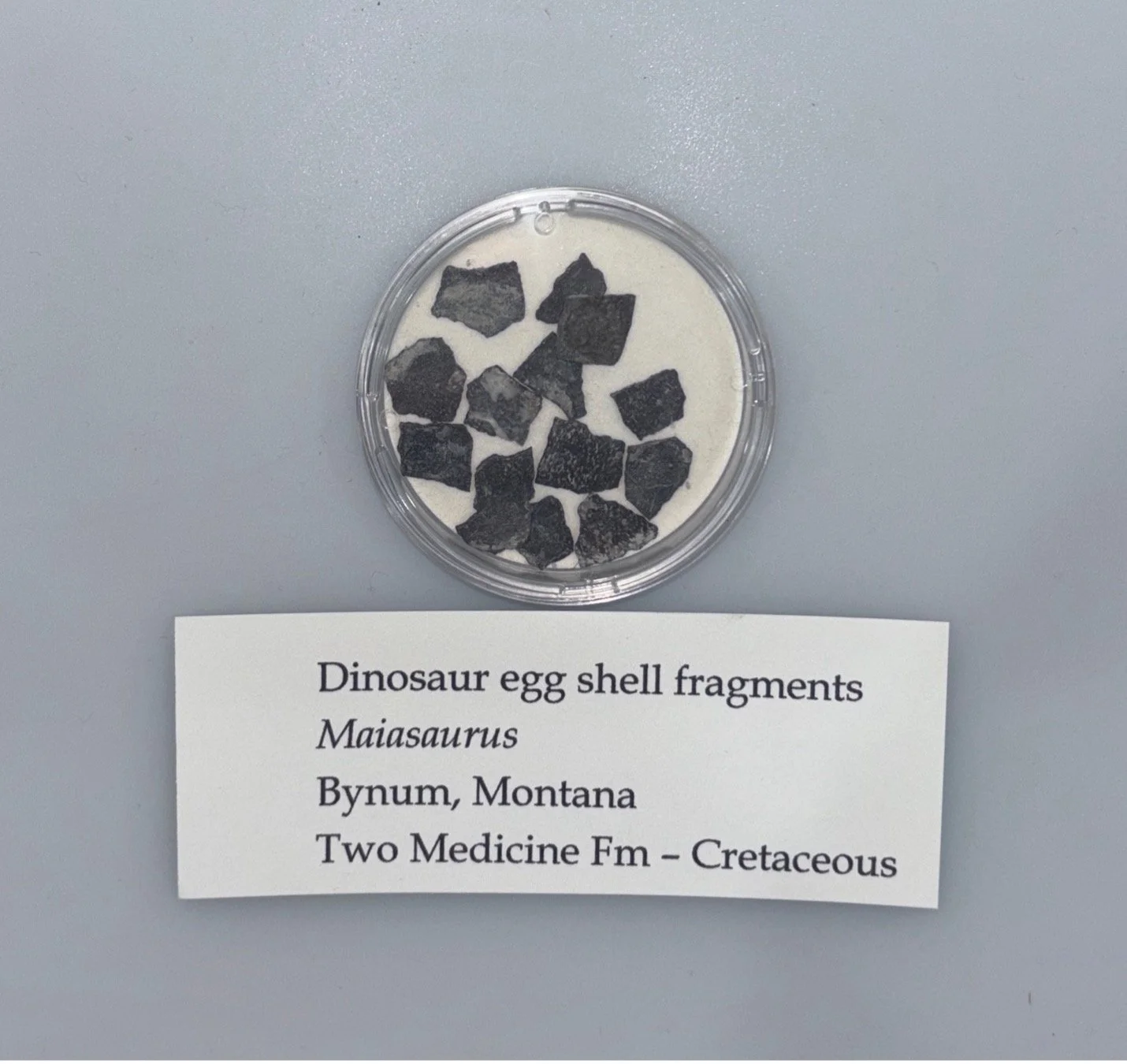
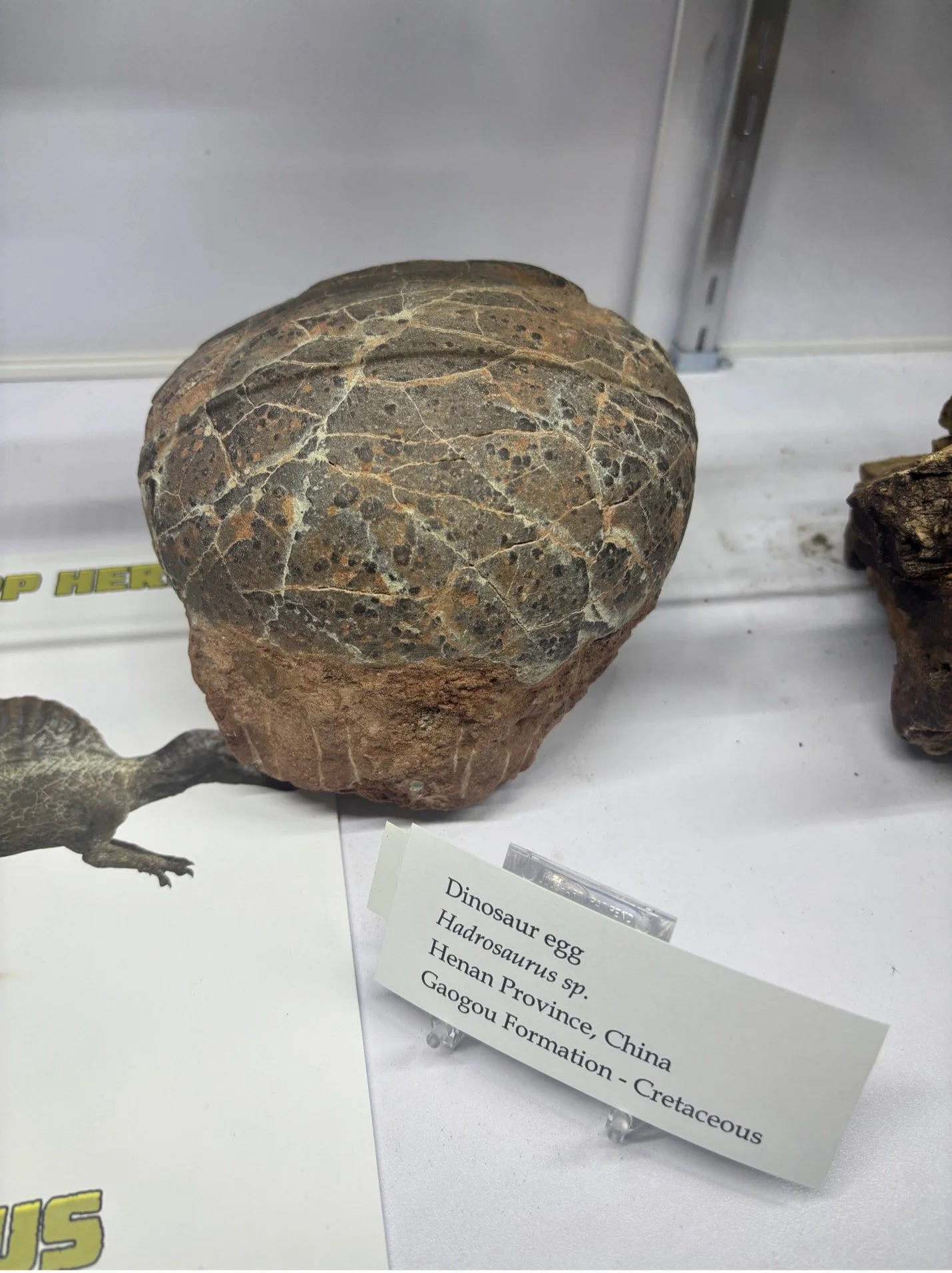
Amongst the fossil bones and teeth of dinosaurs, paleontologists occasionally find fossilized dinosaur egg material. As you might expect, dinosaur eggs are rarely found due to their delicate nature, and it is generally hard to determine what type of dinosaur may have once been inside. However, finding the eggs, or better yet, the nests tell us a lot about dinosaur behavior. Some fossils of Oviraptor dinosaurs have been found on top of their eggs, indicating that they cared for their eggs like modern birds. Other larger species buried their eggs rather than brood as their weight would have done more harm than good.
With modern technology, our understanding of dinosaur eggs has improved further. It is possible to perform a CT scan on dinosaur eggs, which makes it possible for scientists to learn more about dinosaur embryos and their development.
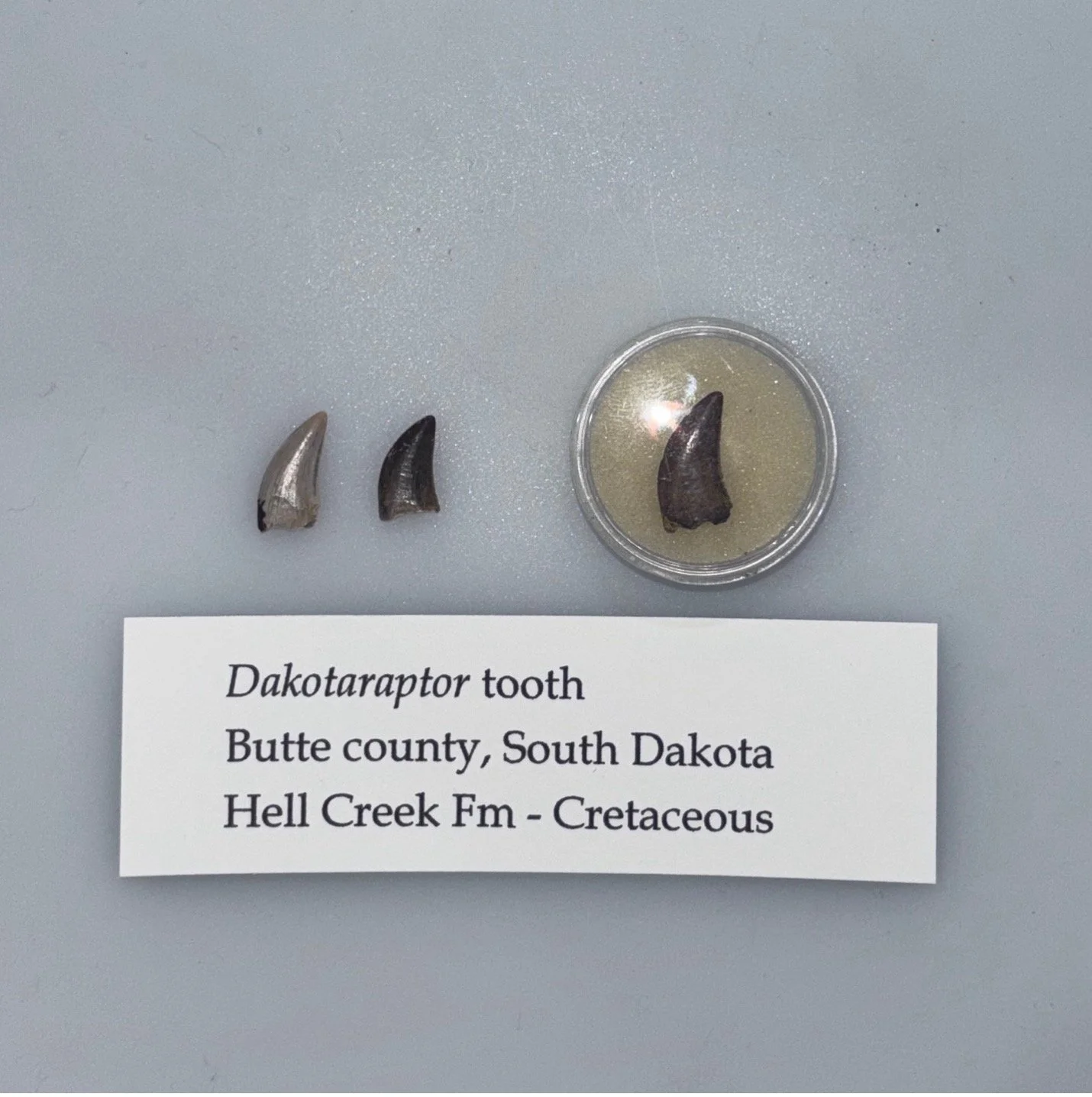
Dakotaraptor was a mid-sized carnivorous theropod dinosaur discovered in the South Dakota region of the Hell Creek Formation. At an estimated 16 feet in length from nose to long feathered tail, the Dakotaraptor bridges the gap between the gigantic tyrannosaurids like the Nanotyrannus and smaller theropods like the Pectinodon. The Dakotaraptor is the second largest raptor species discovered, only dwarfed by the Utahraptor. Most of fossils found of this animal are individual teeth.
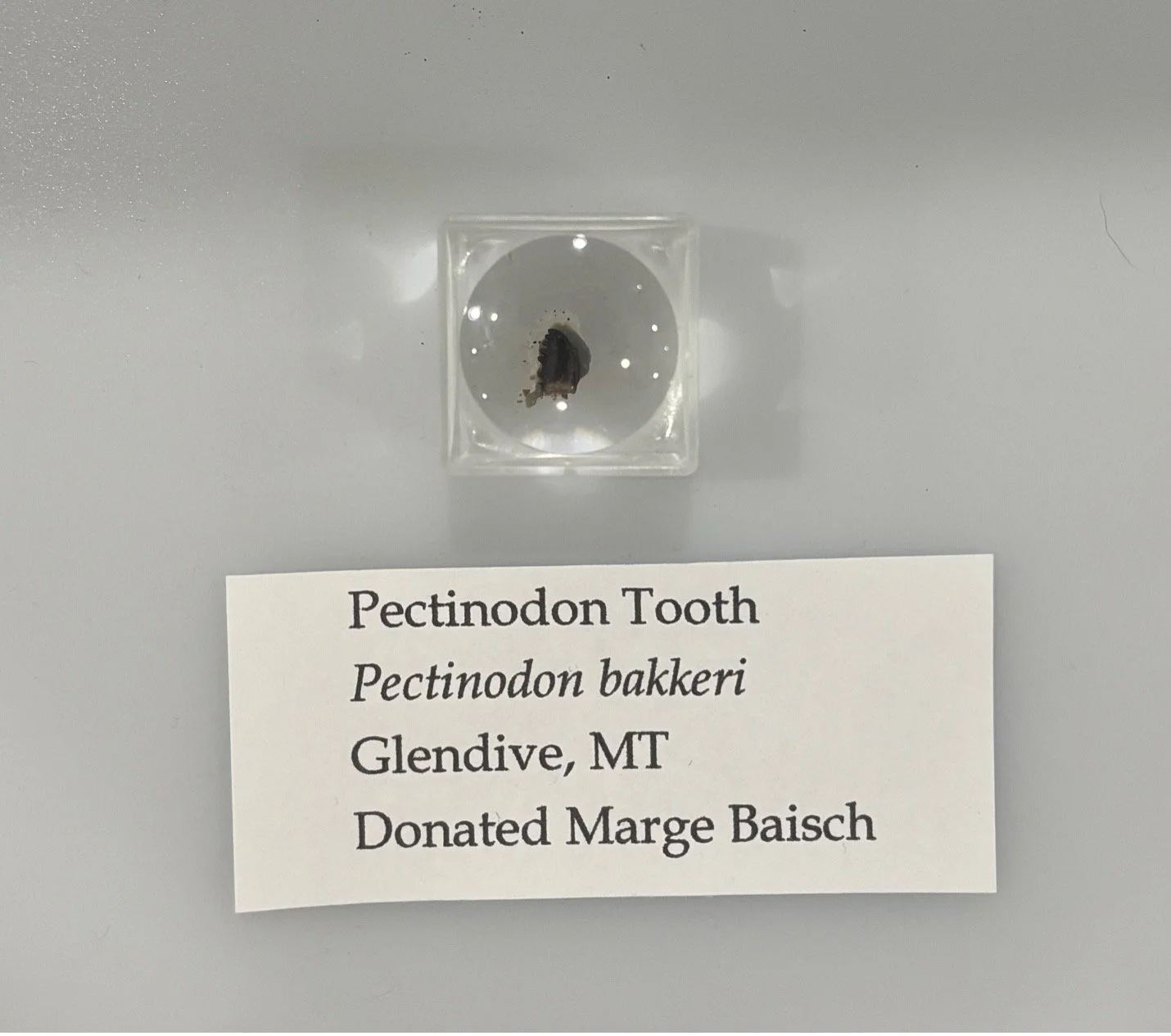
Pectinodon bakkeri was a small bird-like dinosaur in the theropod family. Little is known for certain about the Pectinodon due to scant fossil evidence aside from the animal’s comb-like teeth. By comparing the teeth to other small theropods, it is assumed that Pectinodons was a small, agile, feathered predator. Its few fossils have largely come from the Lance Formation in Wyoming.
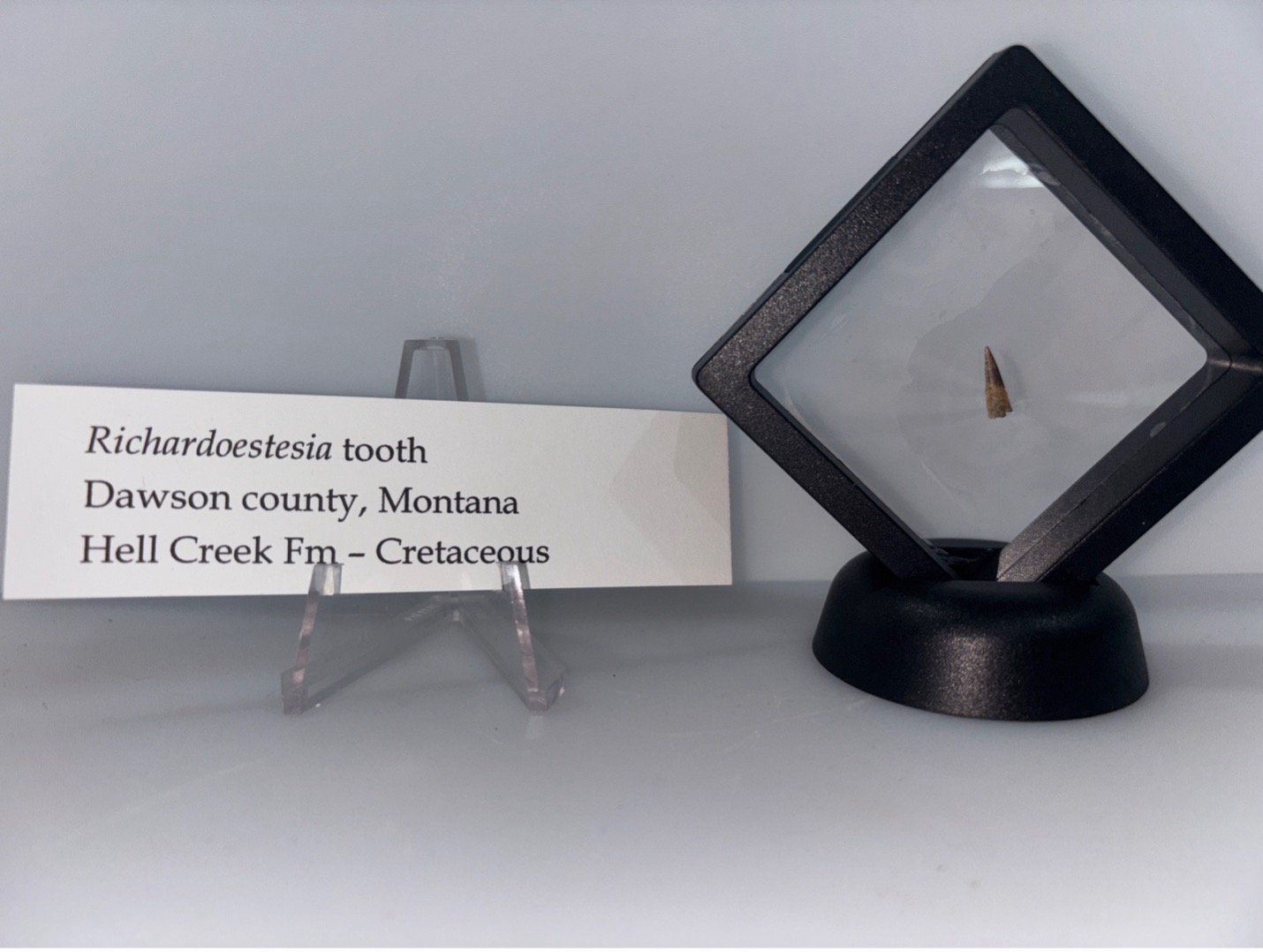
Little is known about the Richardoestesia because there has not been a lot of fossil evidence for this morphogenus. What is known about this group comes from fossil teeth like the one pictured here, which have been found in Southern Canada, Northwest United States, and even in some locations in Asia and Europe. From the teeth found, scientists believe this group of dinosaurs were carnivorous theropods. More fossil evidence needs to be found before more conclusions can be drawn about this mysterious group.
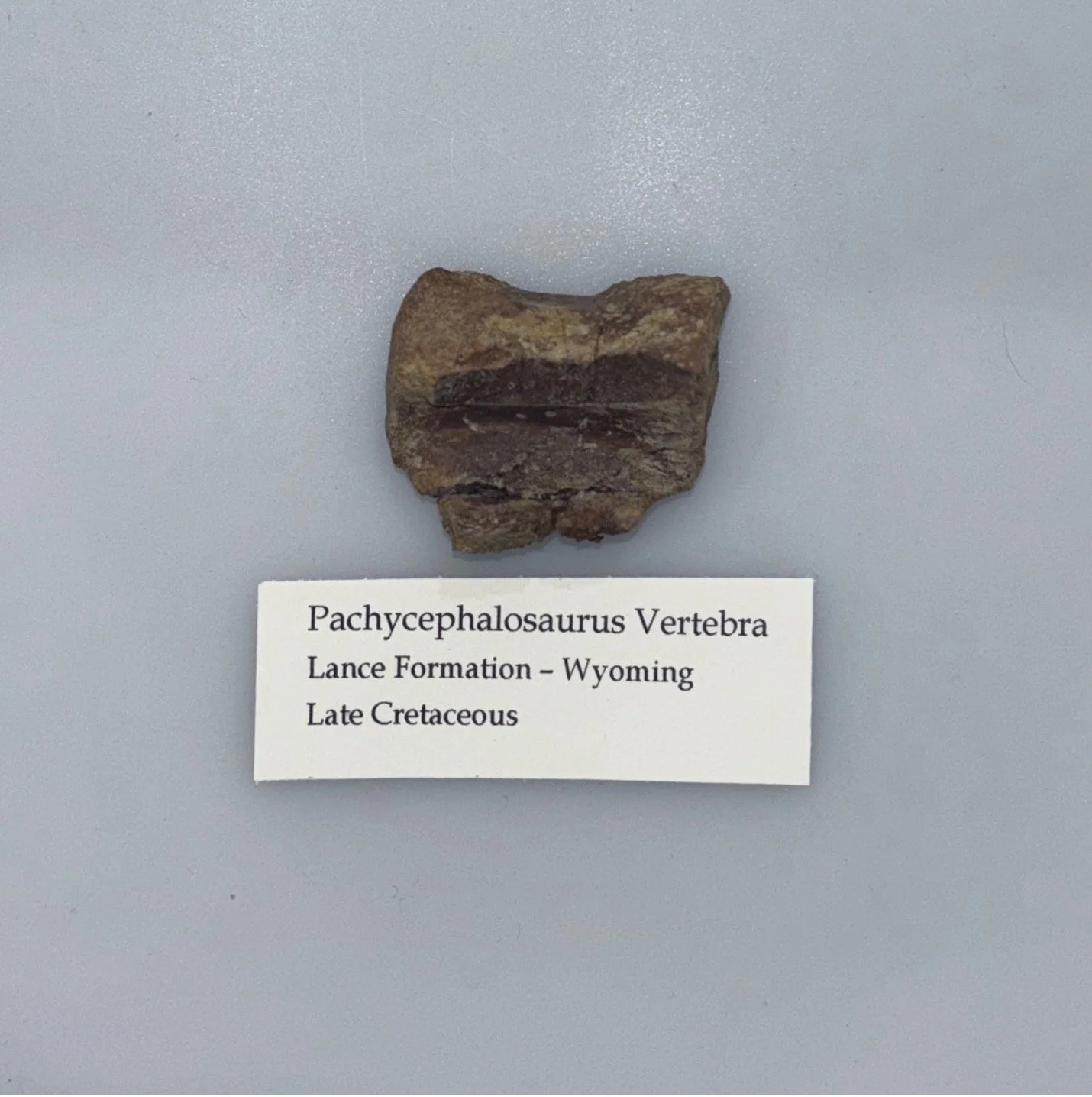
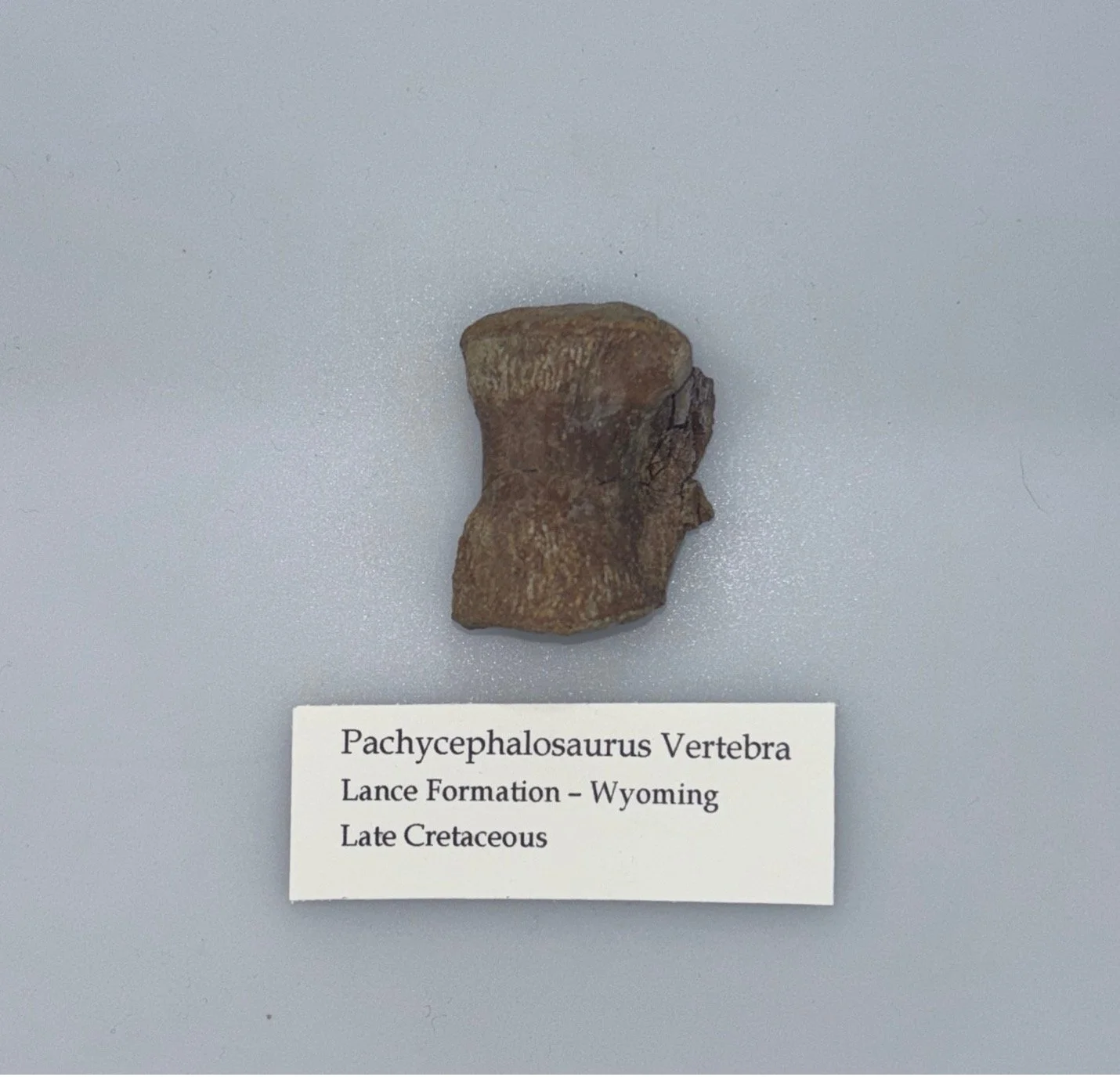
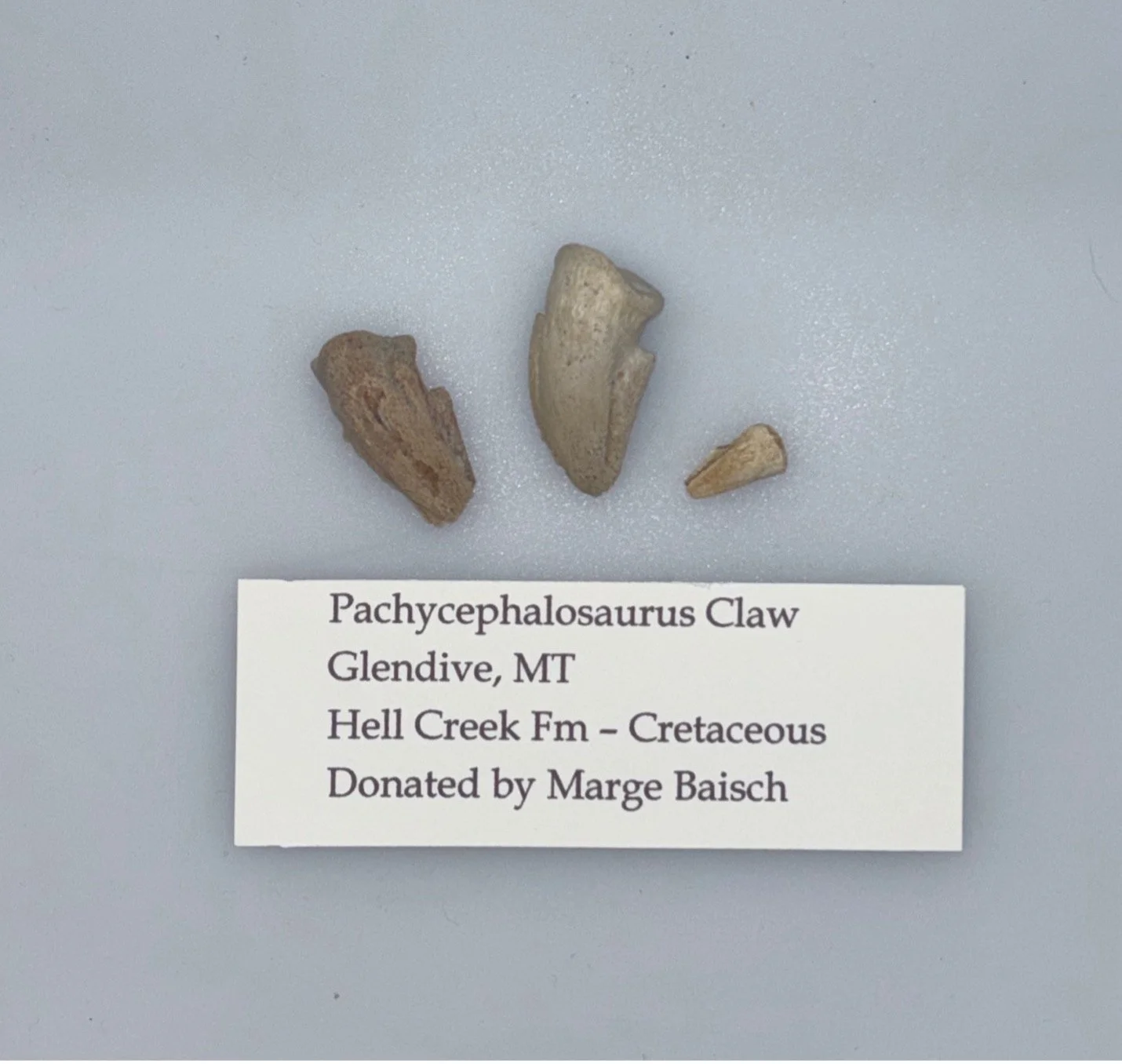
Pachycephalosaurus was a bipedal herbivorous dinosaur which is best known for its odd, dome-shaped growth on top of its head. Scientists have not yet come to an agreement on what their hard heads were used for; some think they may have used them to ram others of their species, while others think it was for display to impress potential mates. Others yet think their noggins were used for a combination of the two.
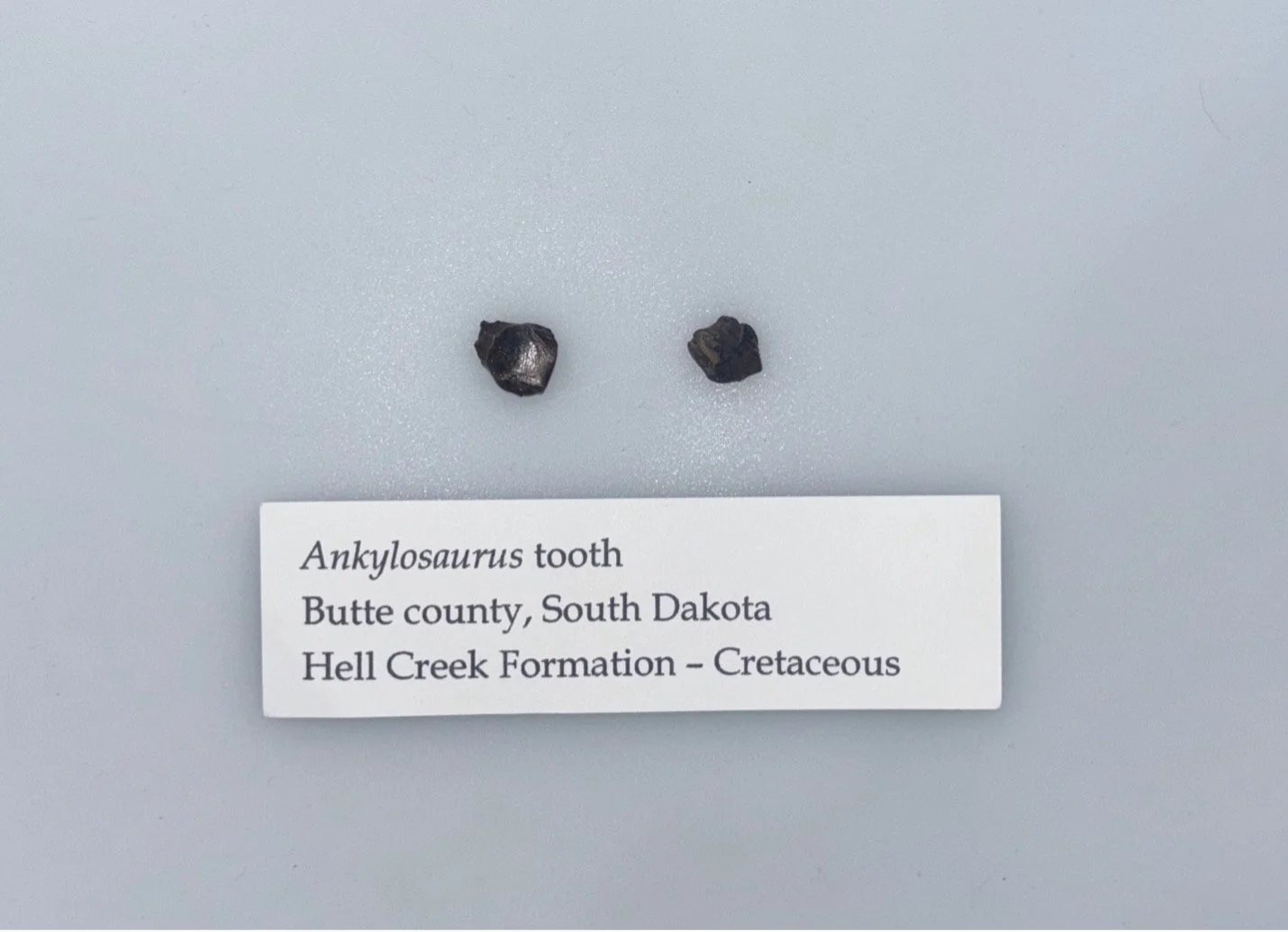
The Ankylosaurus was a large, armored dinosaur that lived in North American during the Cretaceous period. The Ankylosaurus was like a living tank, covered in spiky osteoderms (bony-plates) which protected it from large predators like the T. rex, and had a large club tail which they would use as a bone-cracking weapon against predators or fellow Ankylosaurus. Ankylosaurus were herbivores and ate low growing vegetation like ferns, horsetails, and fallen fruit.
One of the best-preserved dinosaur specimens ever found was a Borealopelta, another genus of Ankylosaur, which still has the osteoderms, some skin, and even the stomach contents of its last meal preserved. You can learn more about this specimen and even see it in person at the Royal Tyrell Museum in Alberta, Canada.
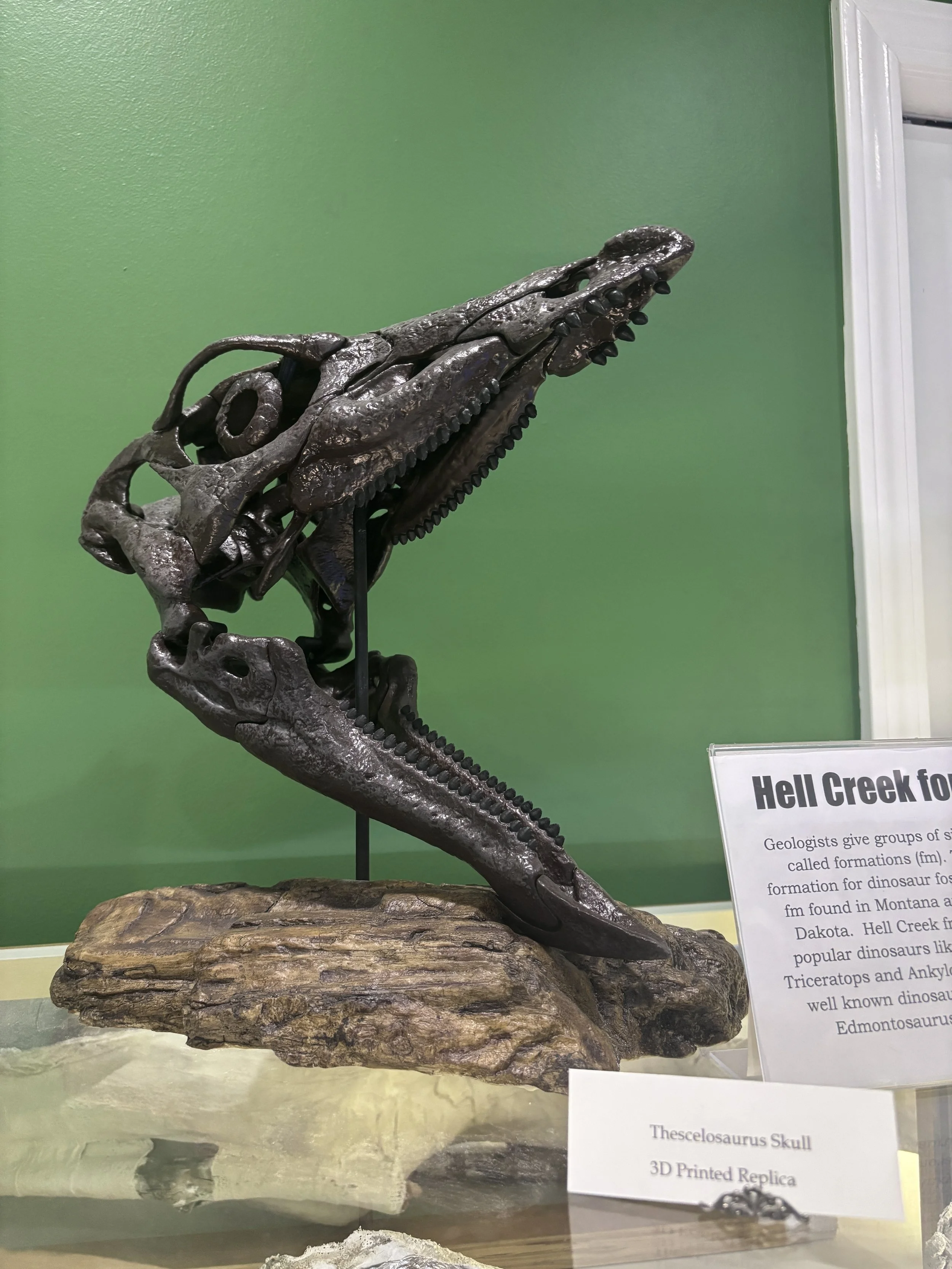
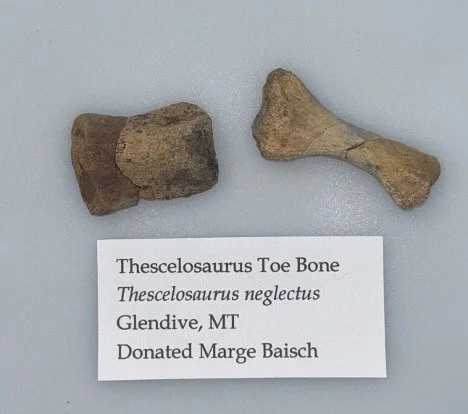
Thescelosaurus was a genus of ornithischian (bird-hipped) dinosaurs that made its home in North America. Thescelosaurs were beaked herbivores that grew to be 10-13 feet long. By studying its cranial structure, scientists have come to believe that the Thescelosaurus relied on a keen sense of smell to find buried roots and tubers to eat.
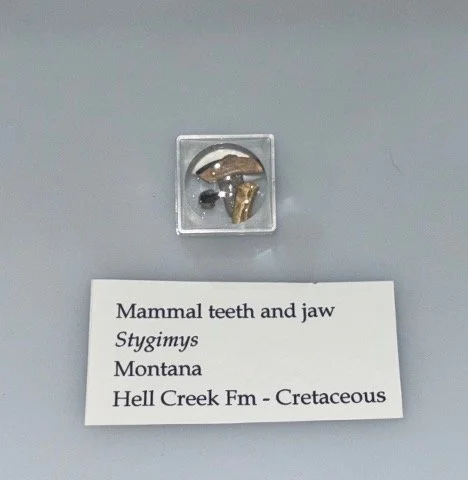
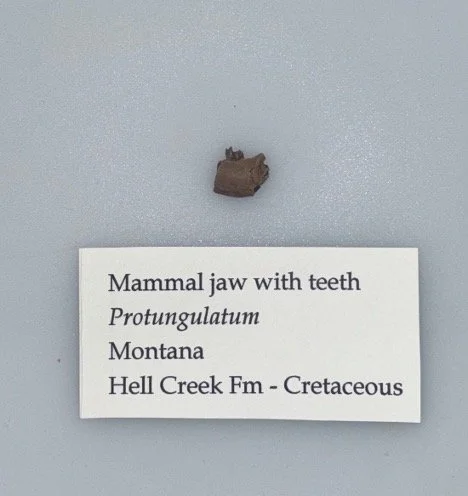
Stygimys is a genus of extinct mammals that originated in the Late-Cretaceous and lived in North America and Northeastern Asia. Like most mammals of the time, they were small and rodent-like in nature and belonged to the multituberculates, which is a now extinct order of mammals defined by their unique, knobby teeth.
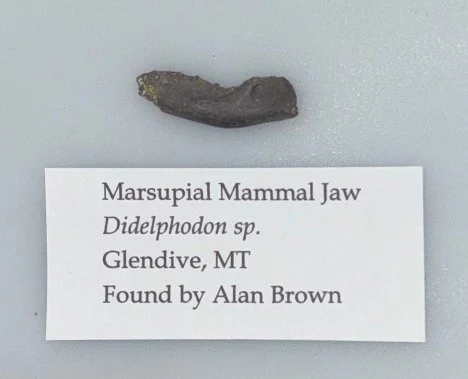
Didelphodon was an omnivorous and likely scavenging mammal that lived during the Cretaceous period. It was one of the largest mammals at the time, yet only grew about 3 feet long. It had sharp teeth and a strong bite force, which helped it crack the shells of turtles, clams, and snails. It also likely ate eggs, aquatic vegetation, and the carcasses of dinosaurs.
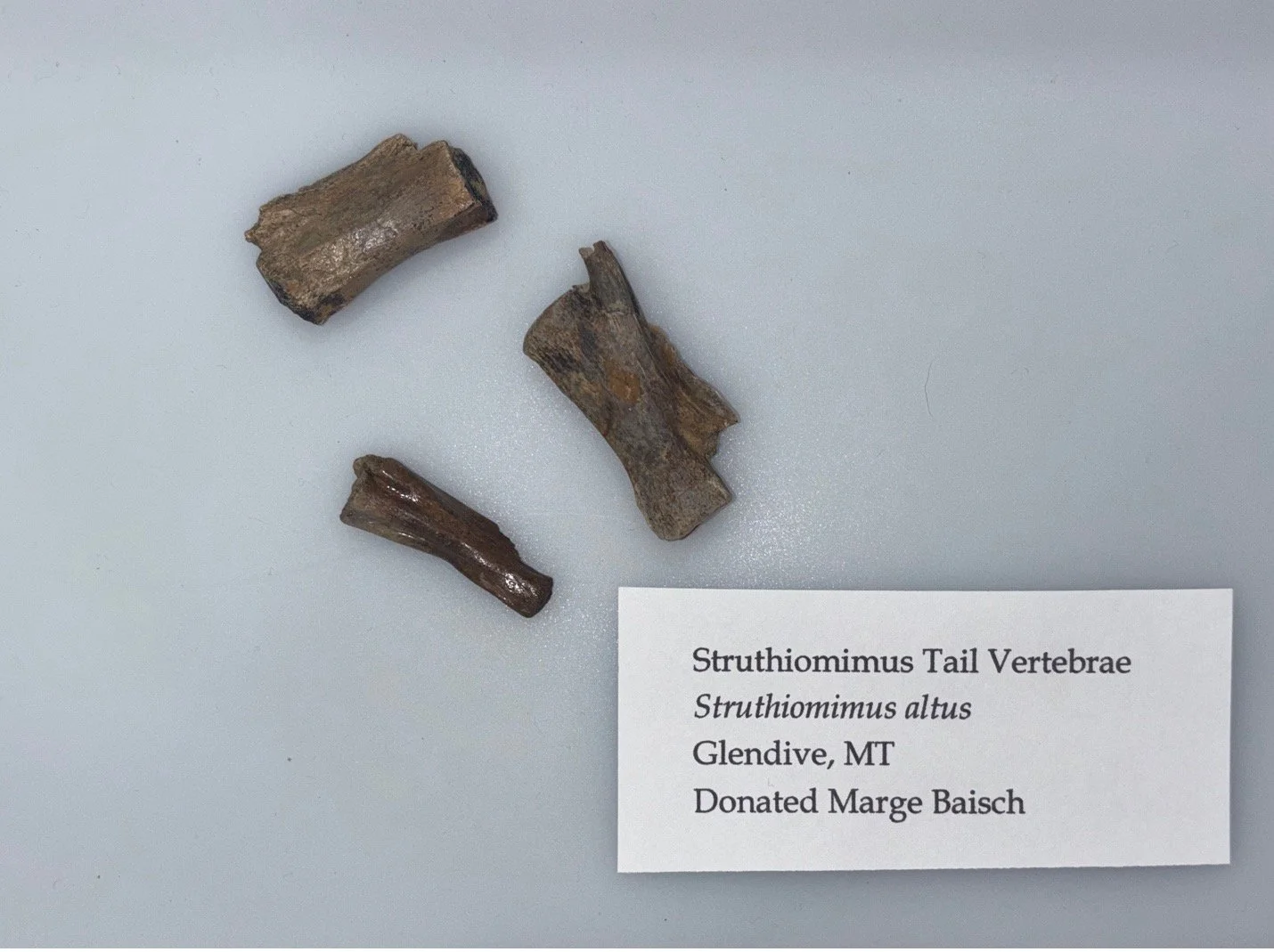
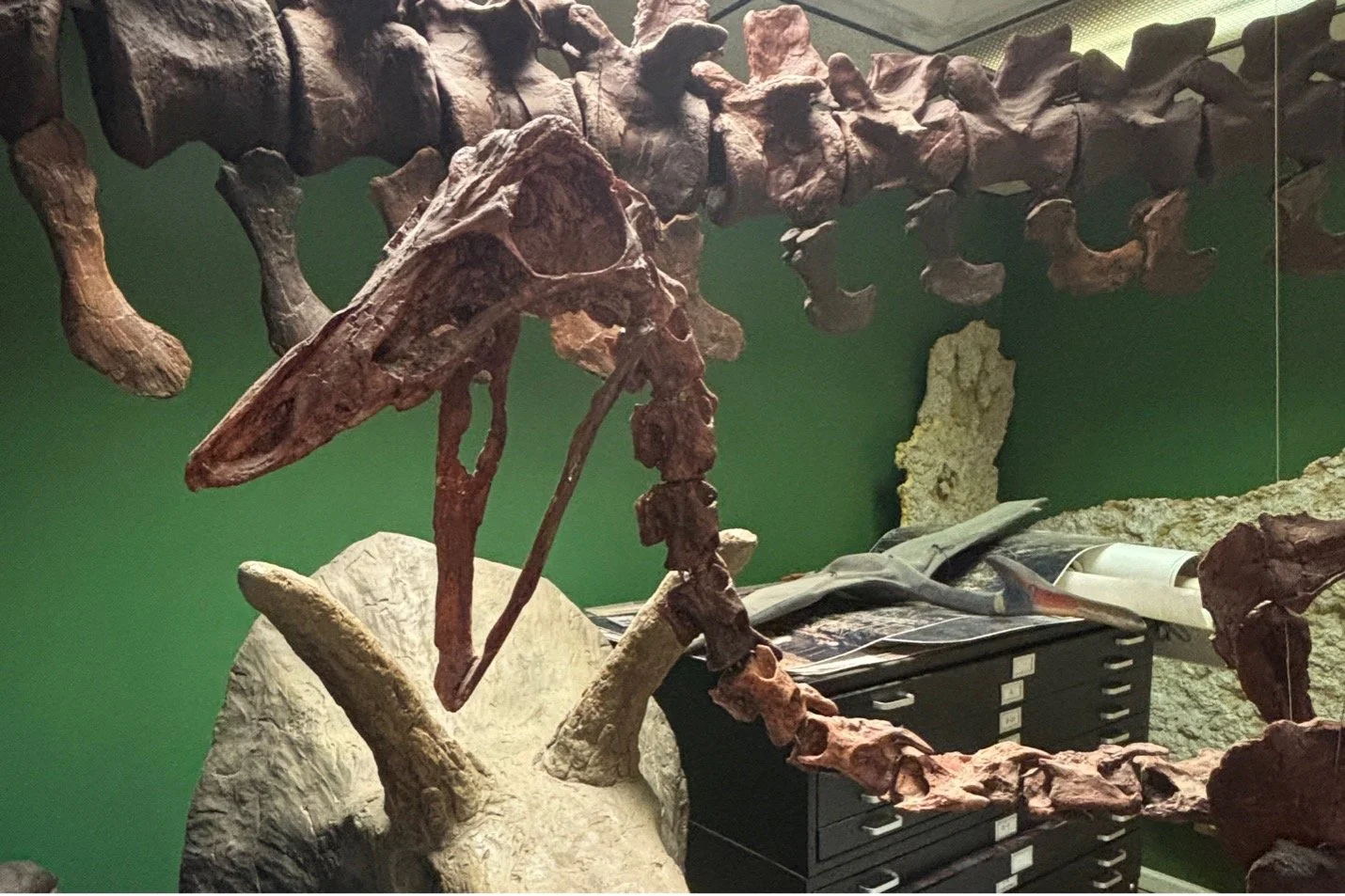
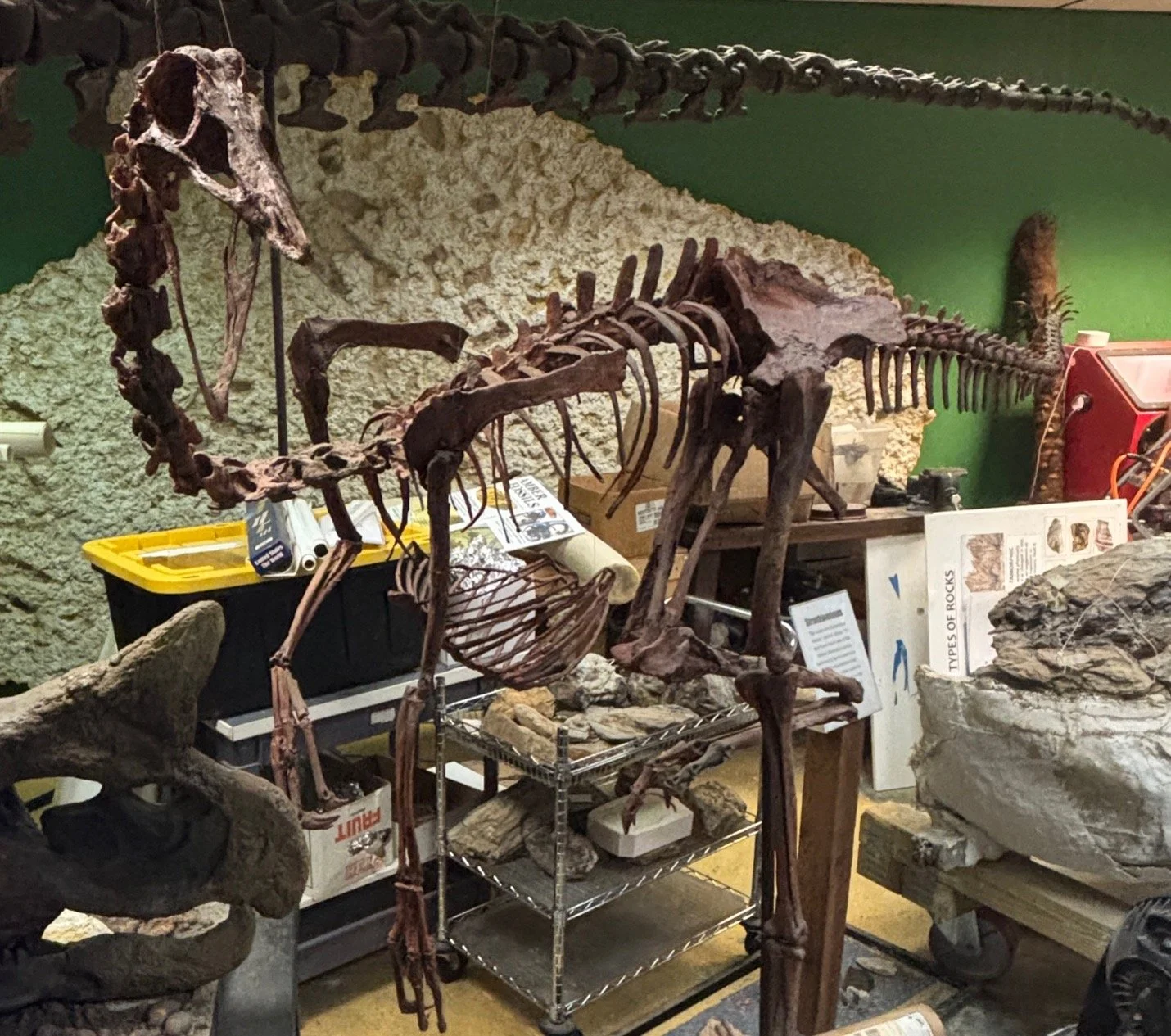
Struthiomimus was a mid-sized theropod dinosaur (about 13 feet from beak to tail). The name Struthiomimus literally translates to “ostrich mimic”, which is an apt name, as this dinosaur heavily resembled modern flightless birds. Besides its ostrich-like appearance, the Struthiomimus is perhaps best known for its estimated speed. Scientists think these animals could run 30-50 miles per hour, similar to modern Grizzly Bears, Lions, and conveniently, ostriches.
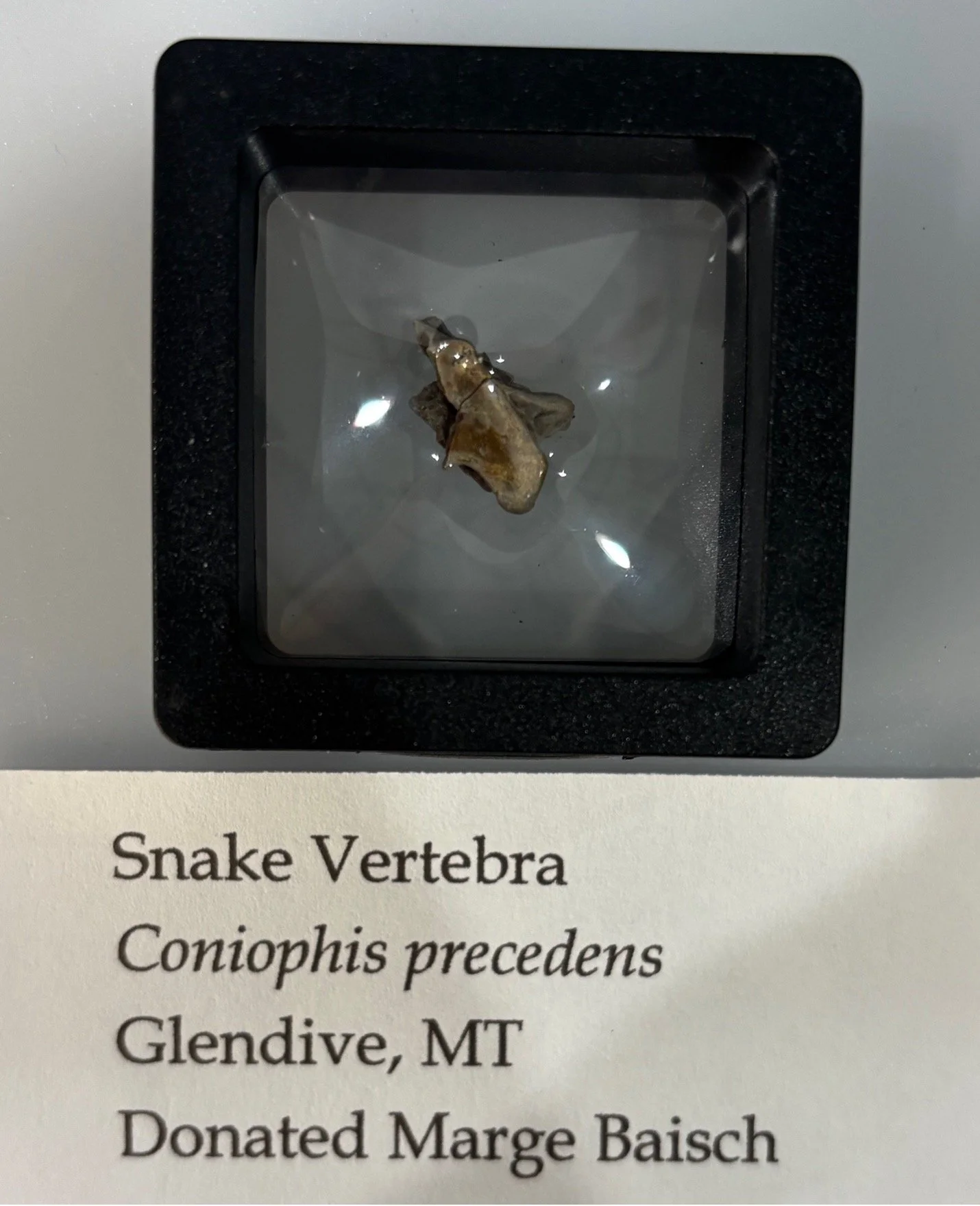
Coniophis precedens was roughly 7cm long and one of – if not the – first ever snake species. Coniophis precedens acts as a ‘missing-link’ species, demonstrating that snakes diverged from terrestrial lizards as opposed to marine reptiles. Like modern snakes, it had no limbs, but it had not yet developed the jaw structure found in modern snakes which allows them to eat larger prey. This means that Coniophis precedens would have had to eat smaller prey items like salamanders and lizards.
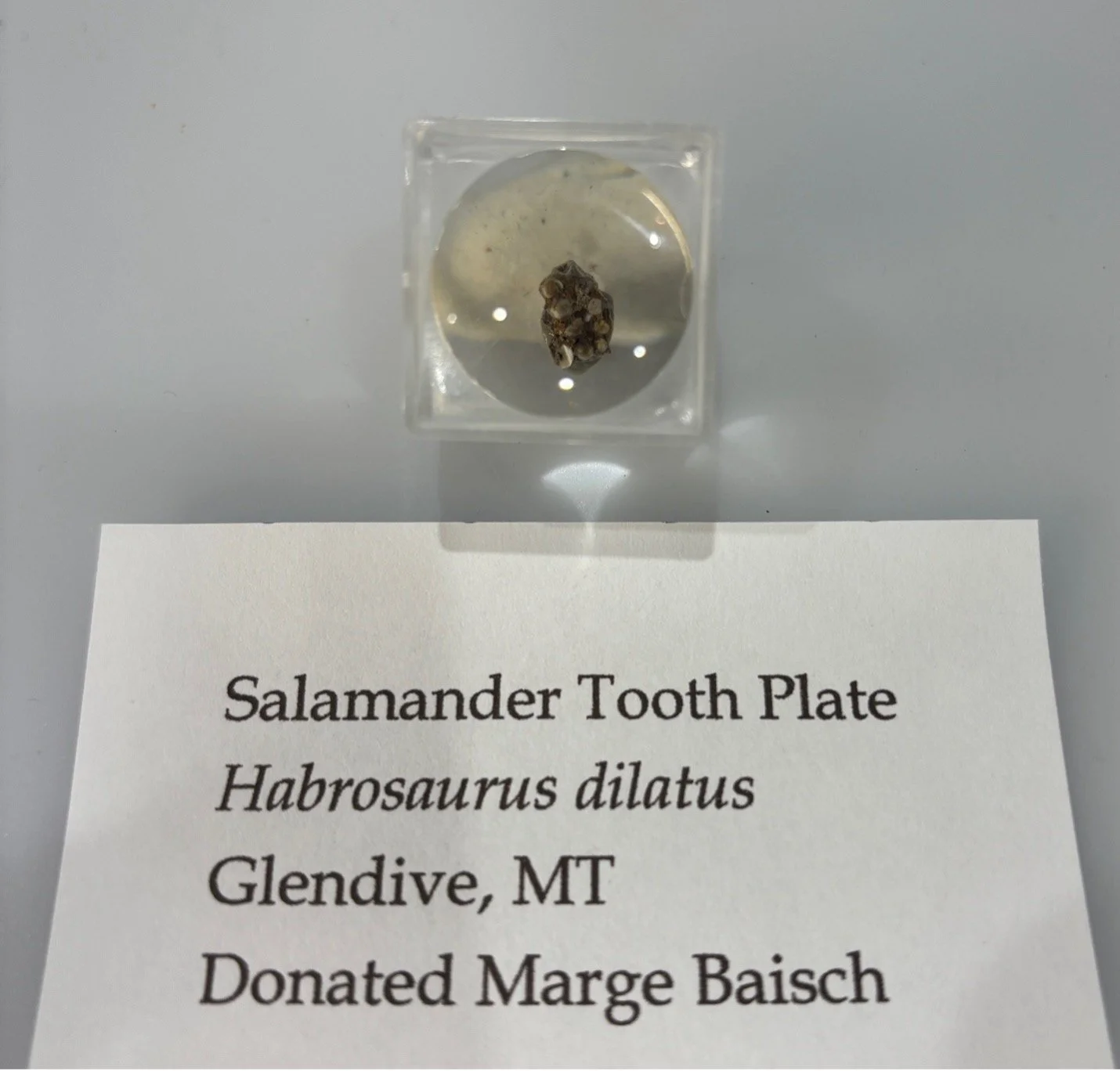
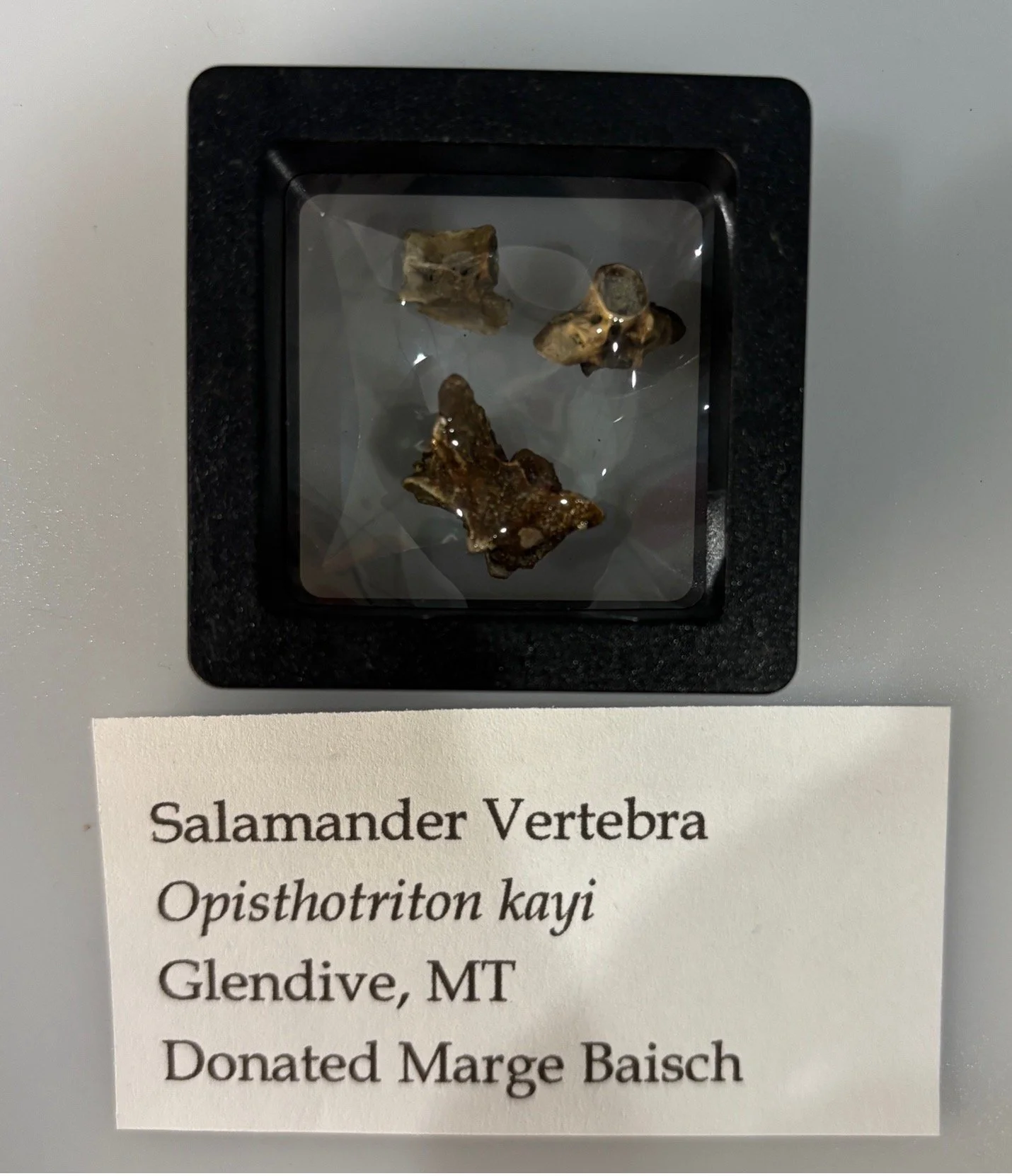
Habrosaurus dilates is an extinct type of salamander whose fossils are commonly found in the Lance and Hell Creek Formations in the Western United States and Southern Part of Canada. It was about the size of a modern Hellbender salamander and munched on small, shelled animals like crayfish or snails. Habrosaurus dilates was one of the lucky species that survived the K-pg Impact extinction event.
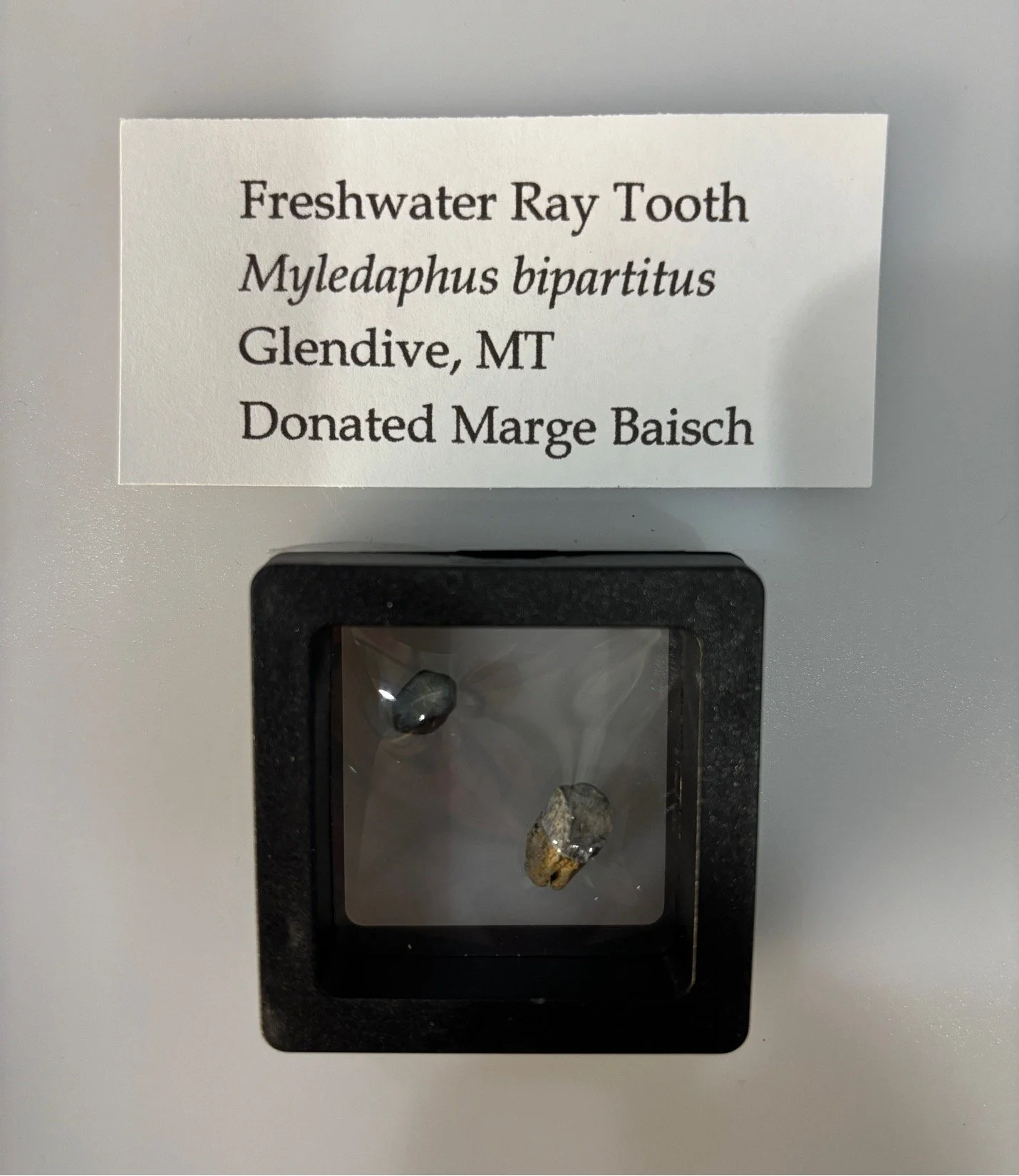
Myledaphus bipartitus was a freshwater ray whose fossils have been found in Western United States and Canada. Myledaphus bipartitus was related to modern rays and guitarfish. Most of the fossils found have been fossil teeth which were used to crush the shells of clams and other bivalves.
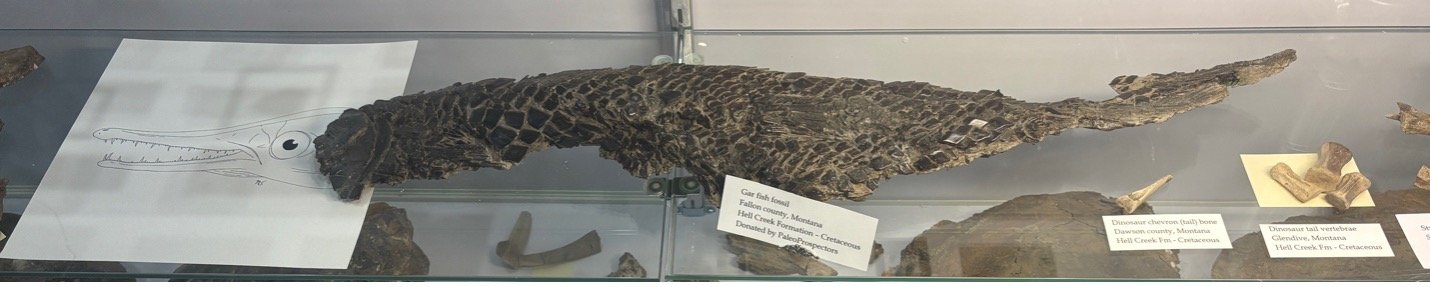
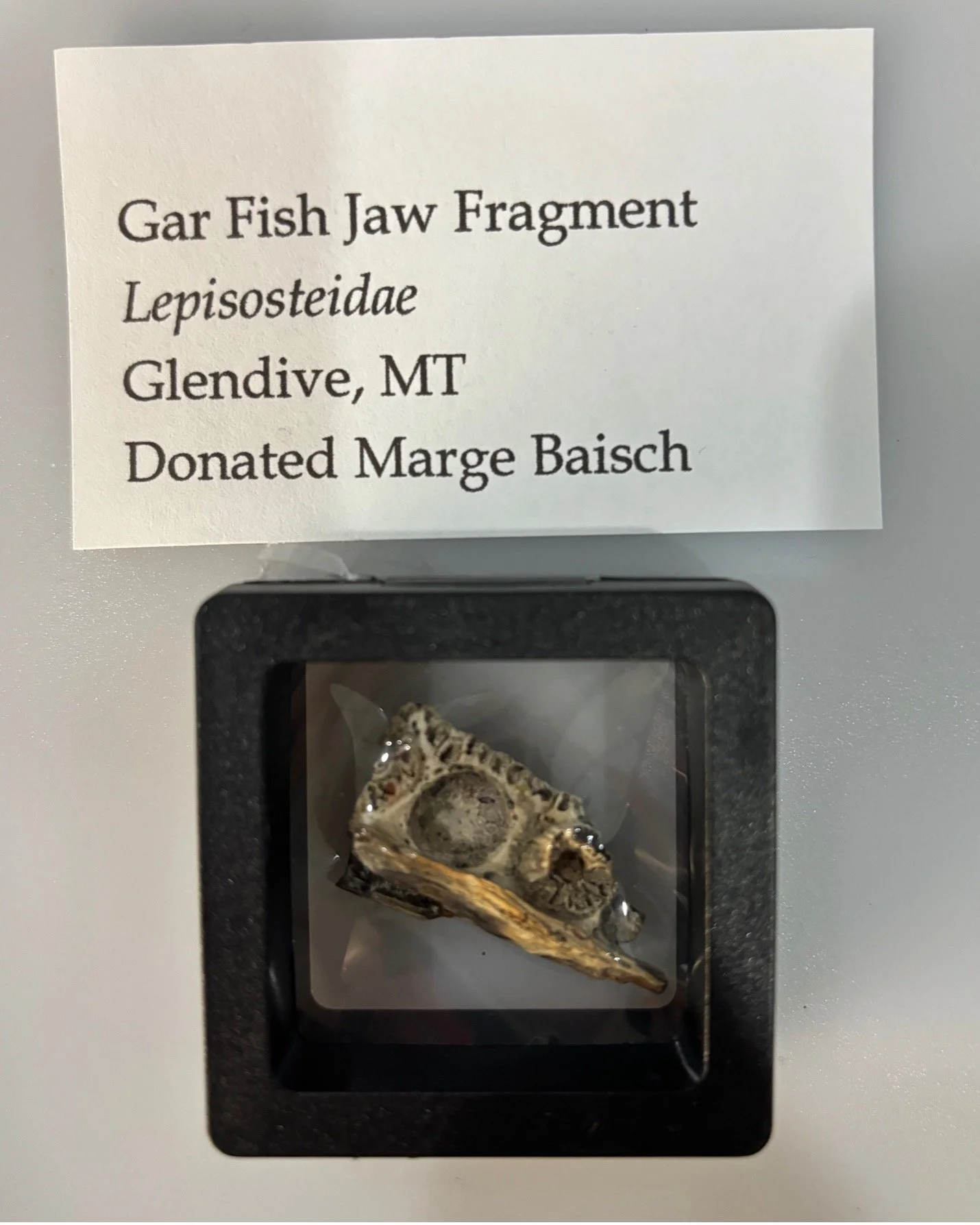
Gar fish are long-bodied freshwater fish who possess armored scales along their bodies. Gars belonging to Lepisosteidae first developed in the early Cretaceous, but ancestors to these Gar first show up in the fossil record during the Jurassic Period. Gars are often called ‘living fossils’ as they have gone virtually unchanged over the last 100 million years. There is plenty of fossil evidence for the Gar in the Hell Creek Formation; their armored scales fossilize very well and appear a bit like shards of obsidian among the dirt.
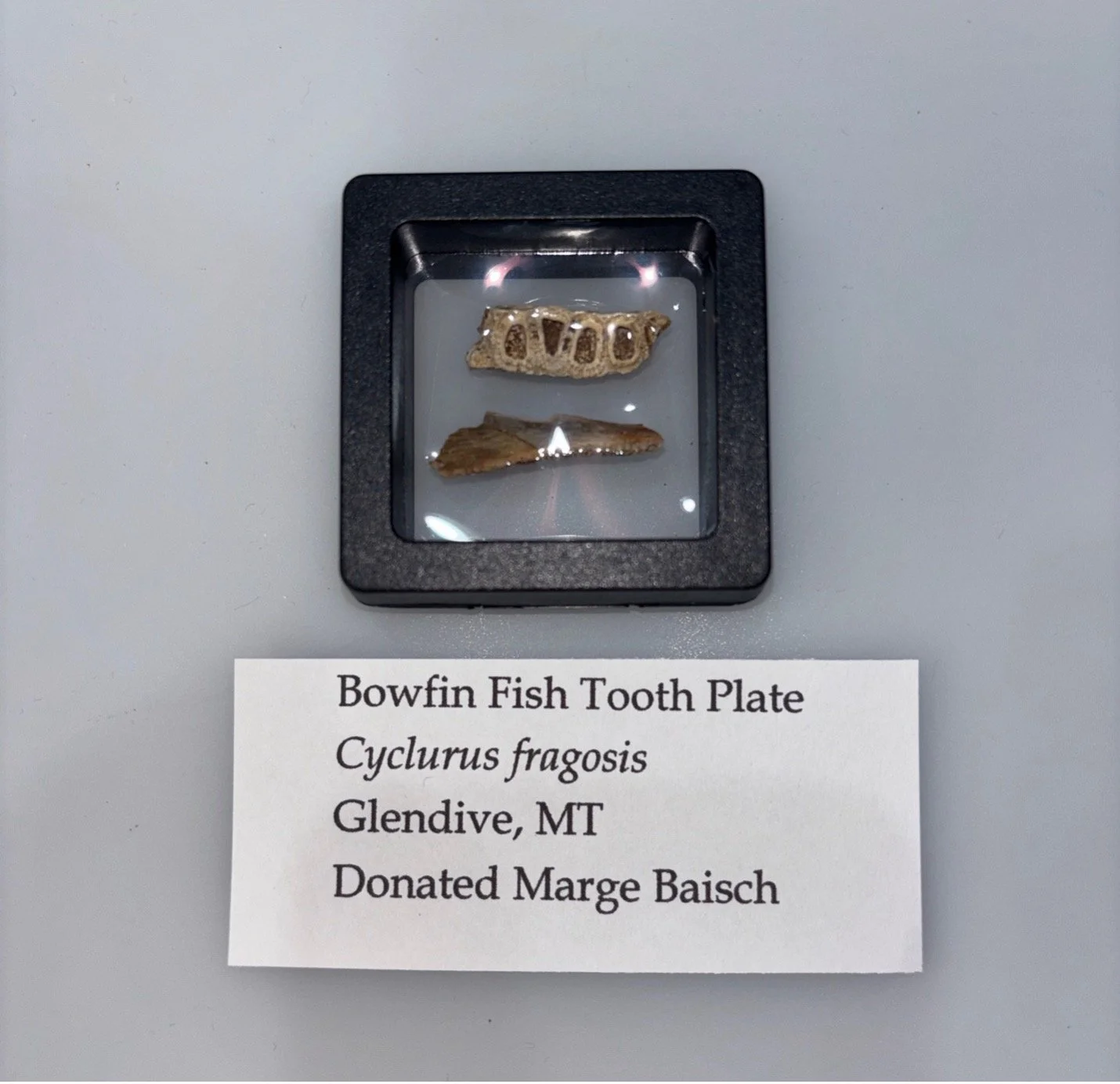
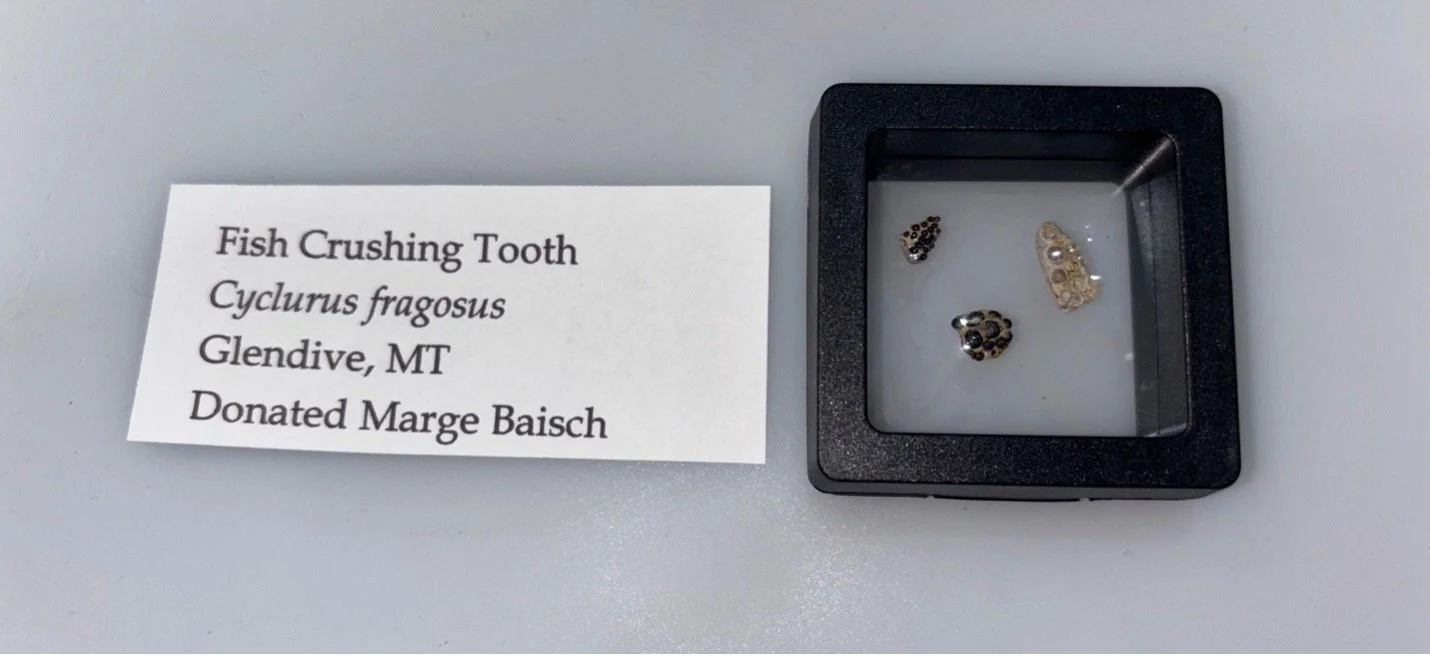
Cyclurus fragosus was a species of bowfin fish that is most often found in the Hell Creek Formation.Cyclurus are thought to be the closest relatives of modern bowfins, but much smaller than their extant counterparts, only growing between 4 and 12 inches long.
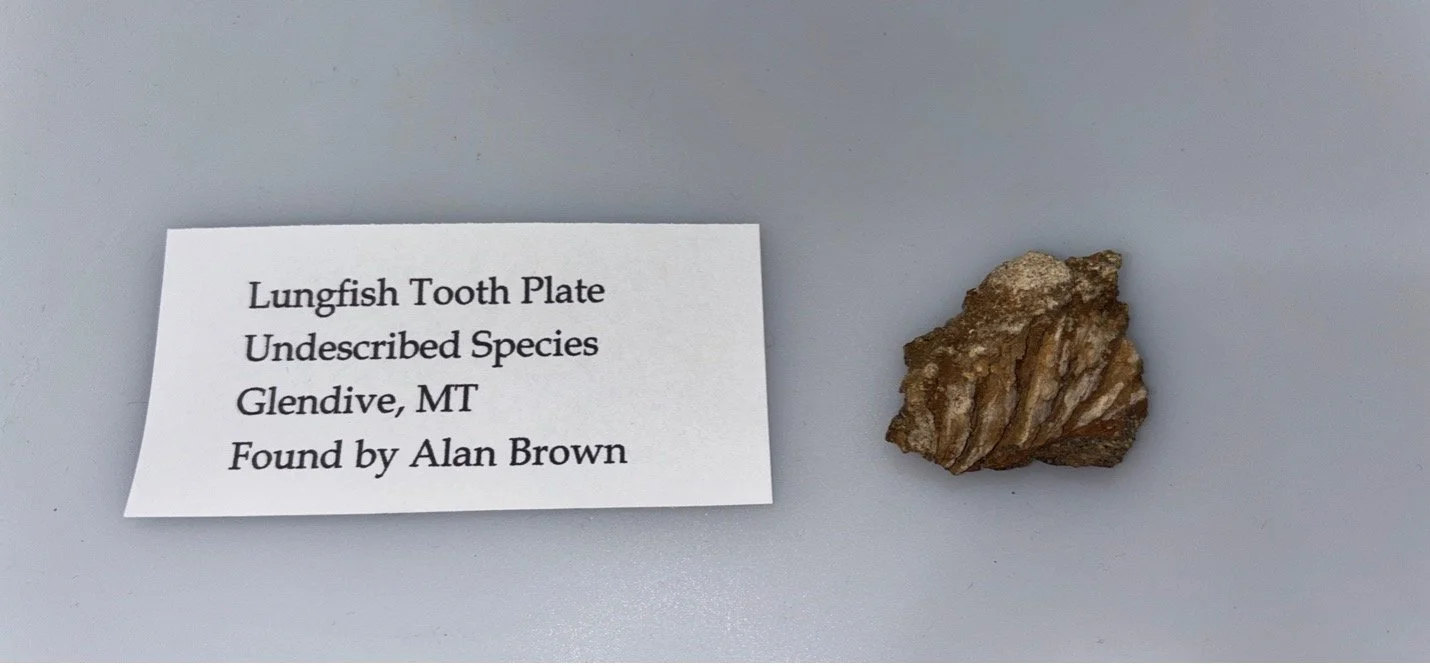
(Early Devonian – Present)
Lungfish are long, eel-shaped fish that can breathe air. While some species of lungfish possess both lungs and gills, they have an advantage over gill-exclusive fish types because they are able to survive in oxygen poor waters and withstand droughts, which may explain why they have managed to stay relatively unchanged over the last 400 million years. Lungfish are considered a “missing link” in the evolution of mammals, reptiles, amphibians, and birds as they are the closest relative to early tetrapods (or all vertebrate animals with four limbs).

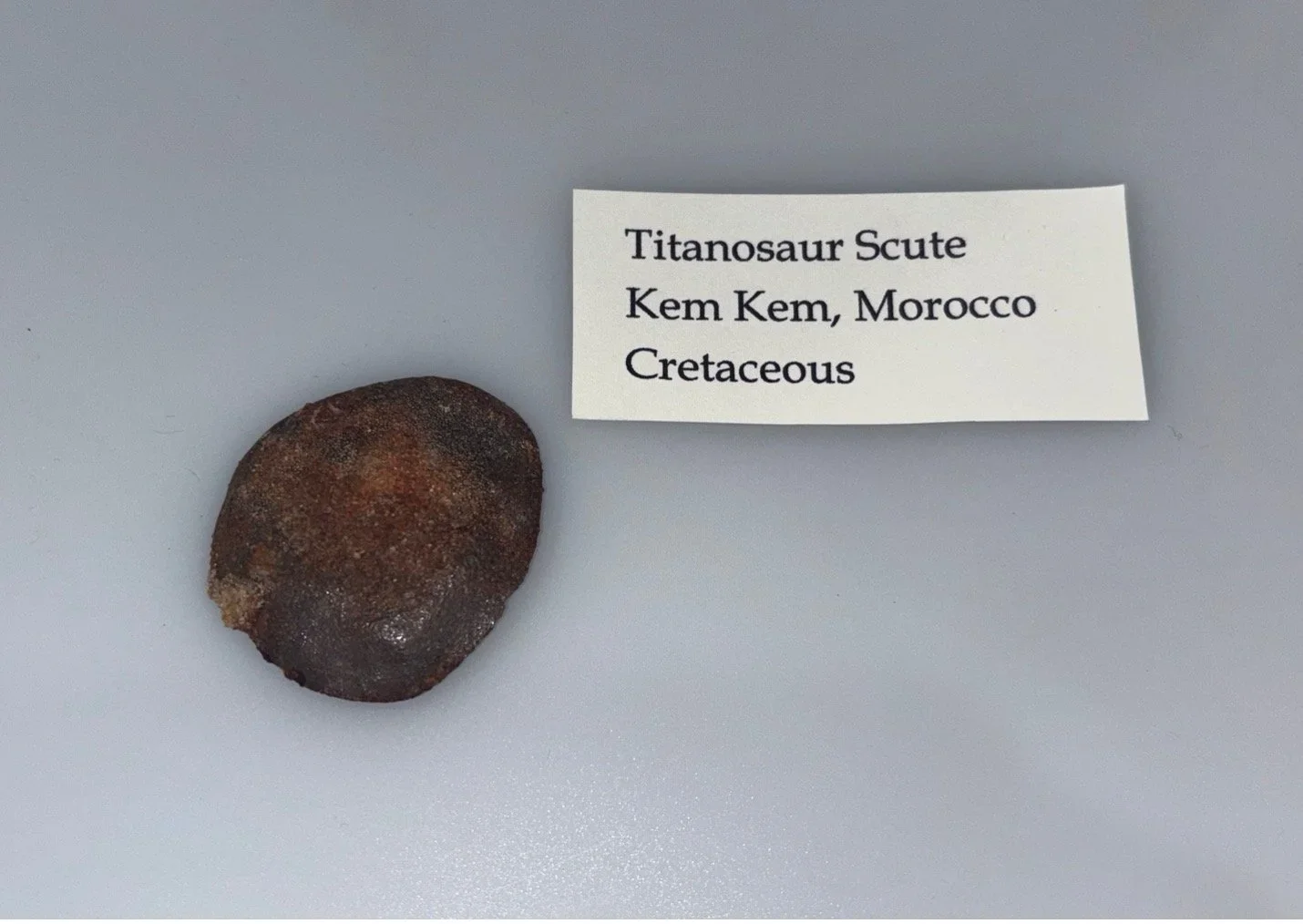
Titanosaurs were a group of large, long-necked dinosaurs in the Sauropod family that contained the largest land animals the world has ever seen. Even the smallest Titanosaurs were huge, growing about 23 feet long and weighing about 11 tons (22,000 lbs.) Amongst the largest Titanosaurs, Patagotitan mayorum could grow to 137 feet and weighed 70-77 tons (about as heavy as 10 to 14 African Elephants). Suffice it to say, these things were big.
Titanosaurs were widespread and their fossils have been found on all continents (even antarctica!), but the largest species lived primarily in modern Patagonia (hence the name Patagotitan) and Argentina.
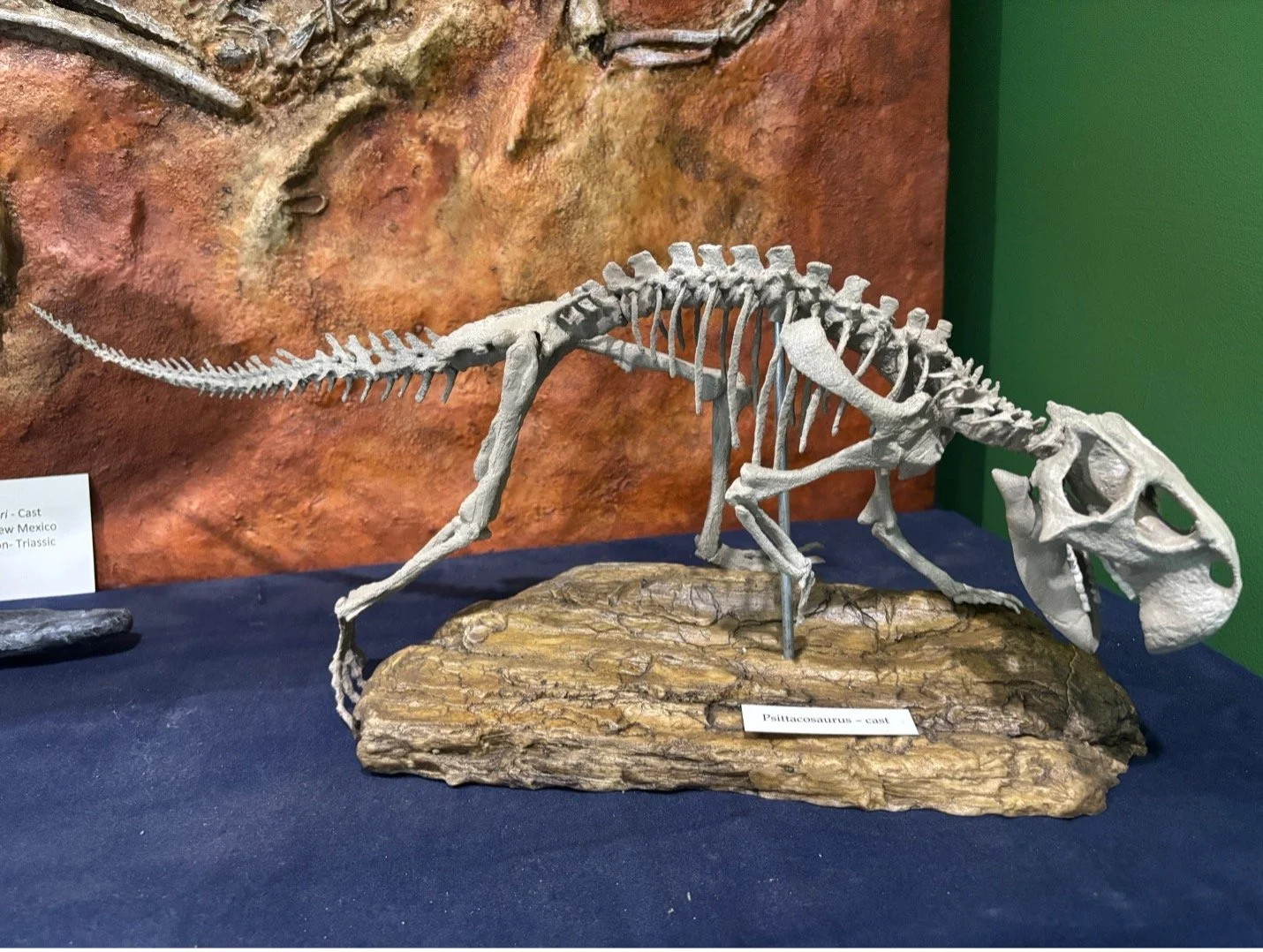
Psittacosaurus was a genus of small Ceratopsian dinosaurs from the Early Cretaceous. On average, members of the Psittacosaurus genus grew to about 6.5 feet long and walked on its hind legs similar to a Theropod dinosaur. The Psittacosaurus has been well preserved and studied, leading paleontologists to make conclusions about them and their behaviors. For example, fossils of congregated young Psittacosaurus hatchlings show that baby Psittacosaurus may have stayed in groups, similar to modern ducklings. One Psittacosaur specimen was so well preserved that it still possessed a cloaca, an anatomic structure shared by reptiles and birds which acts as the single opening for their urinary, digestion, and reproductive tracks. This same fossil also provided evidence for skin coloration and the presence of quills that ran along the base of their tails.

The Squalicorax falcatus, or the Crow Shark, was a mid-sized predatorial shark species that lived during the Cretaceous period, whose fossil teeth are found in North America, Europe, and North Africa. It grew to be about 16 feet long and preyed on fish, mosasaurs, and sea turtles. A Crow Shark tooth was found imbedded in the foot bone of a hadrosaur, showing that they even scavenged land animals that were swept out to sea.


(Late Pennsylvanian – Miocene)
It may look like glass or a type of mineral, but amber is fossilized tree resin formed from the hardening of tree sap over time. Amber is a type of trace fossil but sometimes small animals, insects, or plant matter is preserved inside the resin, frozen in time for millions of years. These are called inclusions, and they are valuable to scientists as they can show what ancient life looked like more accurately than a normal fossil.
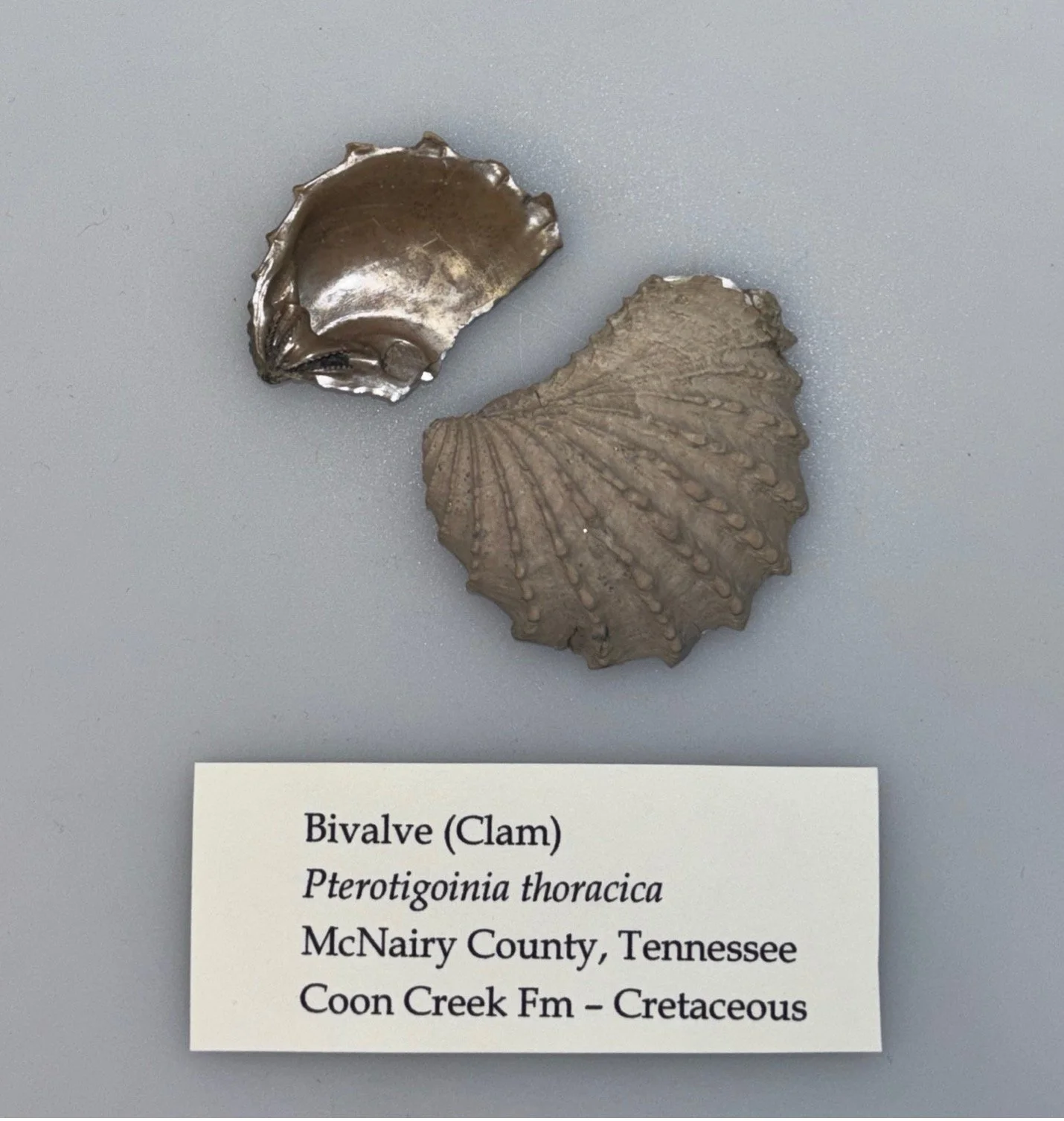
Did you know Tennessee has a state fossil? Pterotrigonia thoracica was a bivalve that lived in the shallow seas that covered much of the middle of North America during the Cretaceous (Western Interior Seaway). Pterotrigonia thoracica was chosen as the state fossil due to its abundant fossils found in the Coon Creek Formation in West Tennessee.
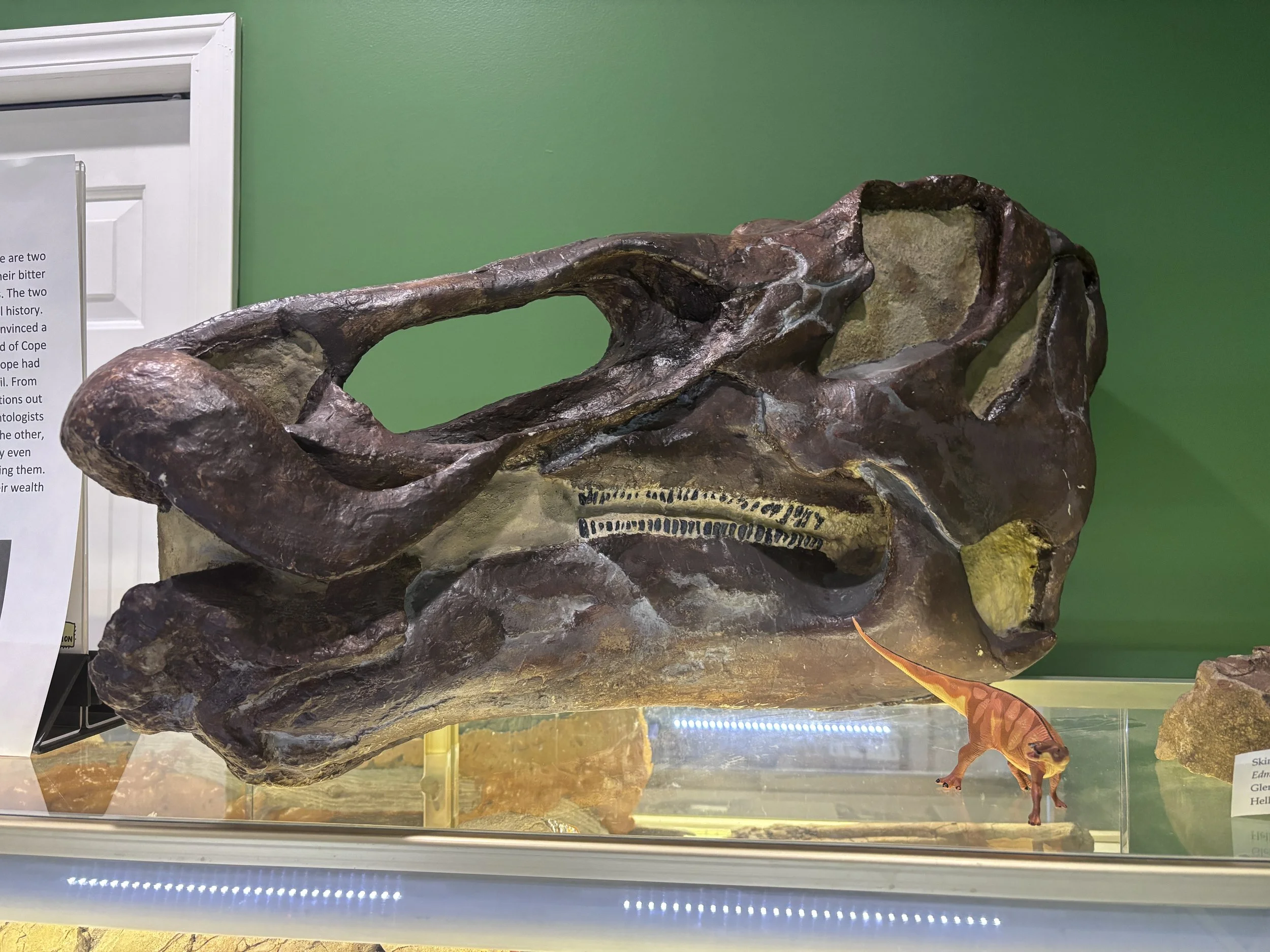
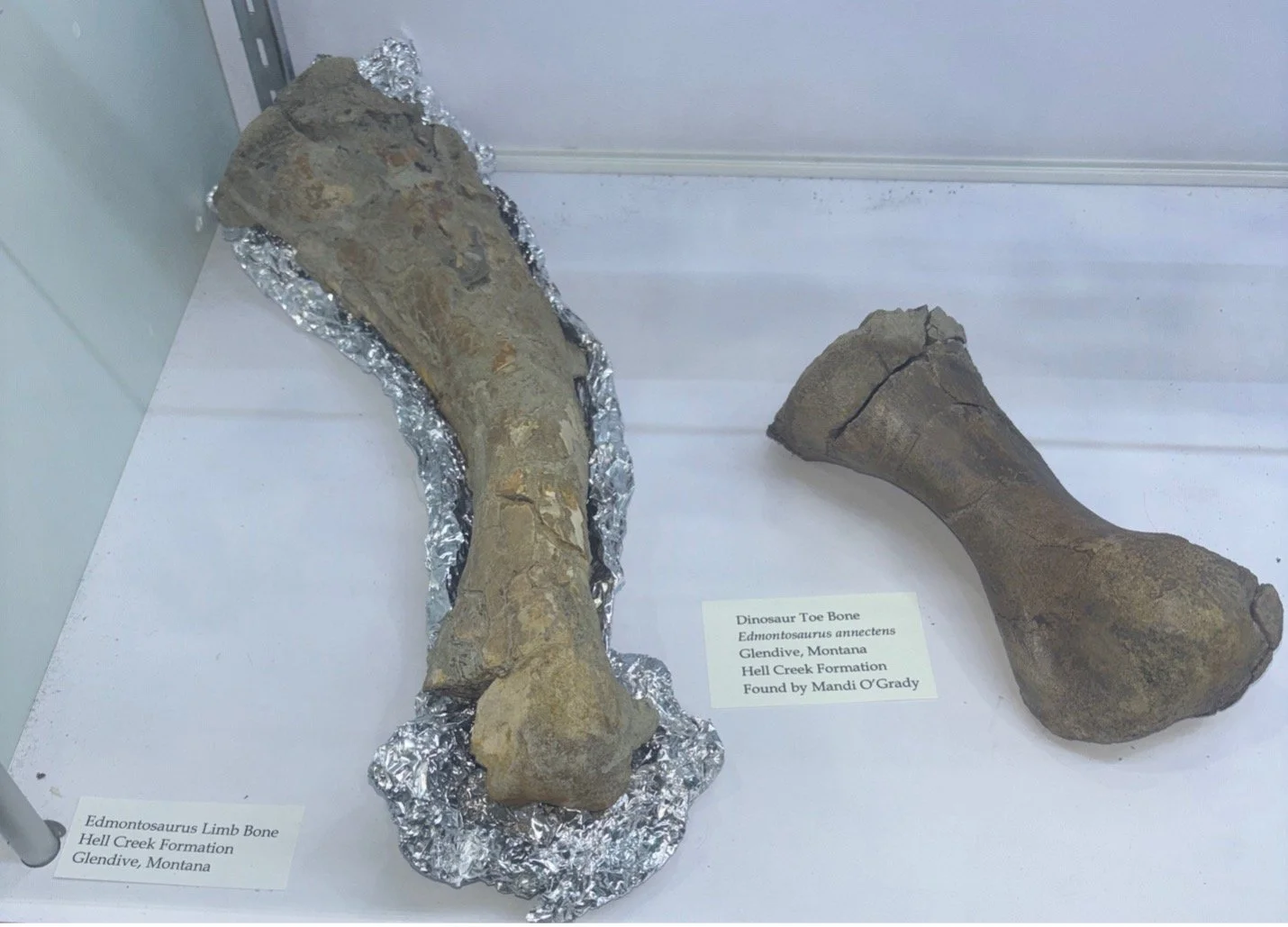
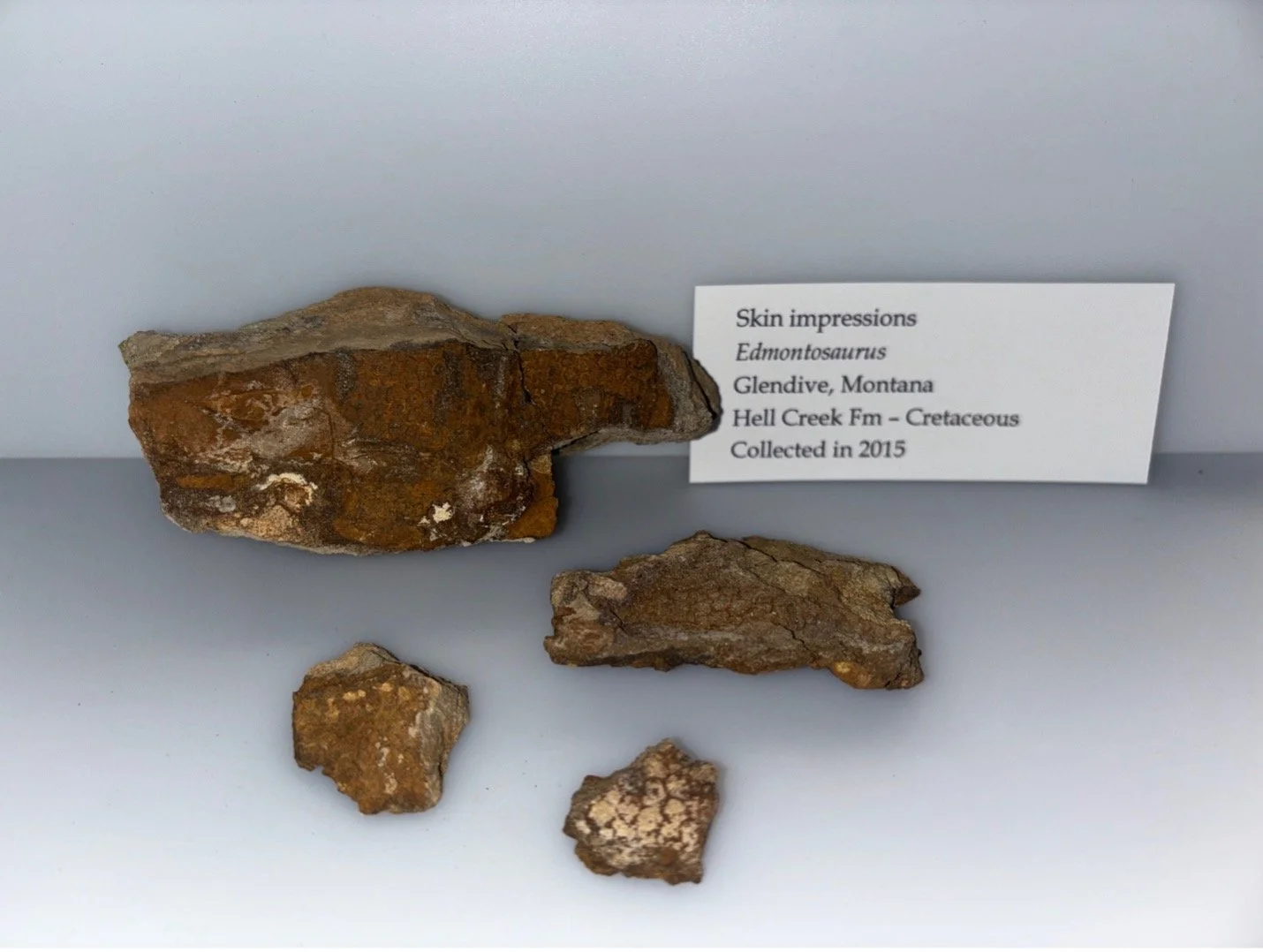
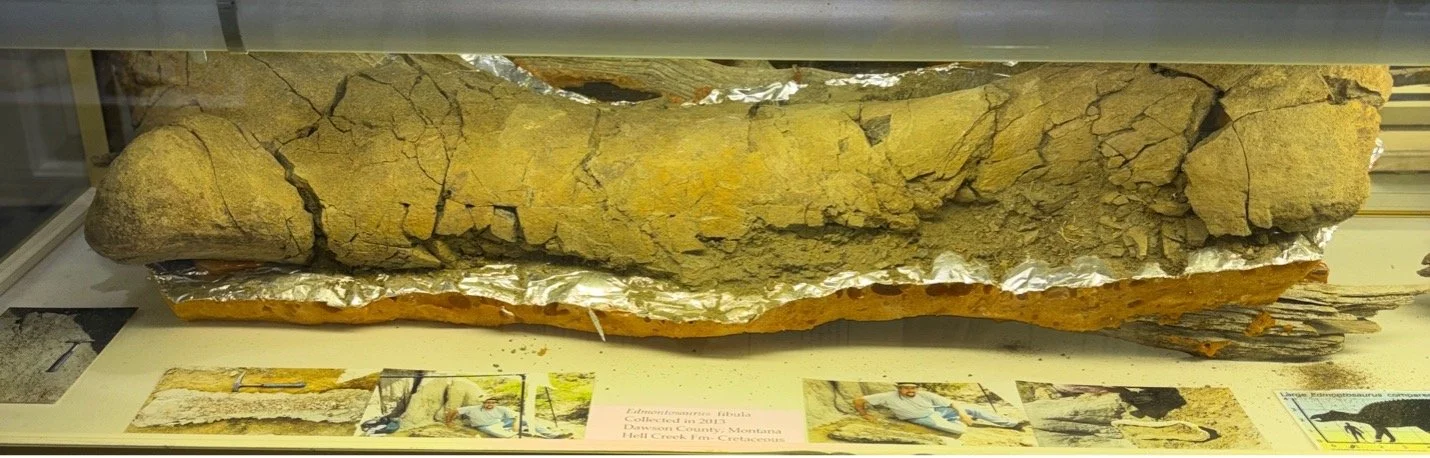
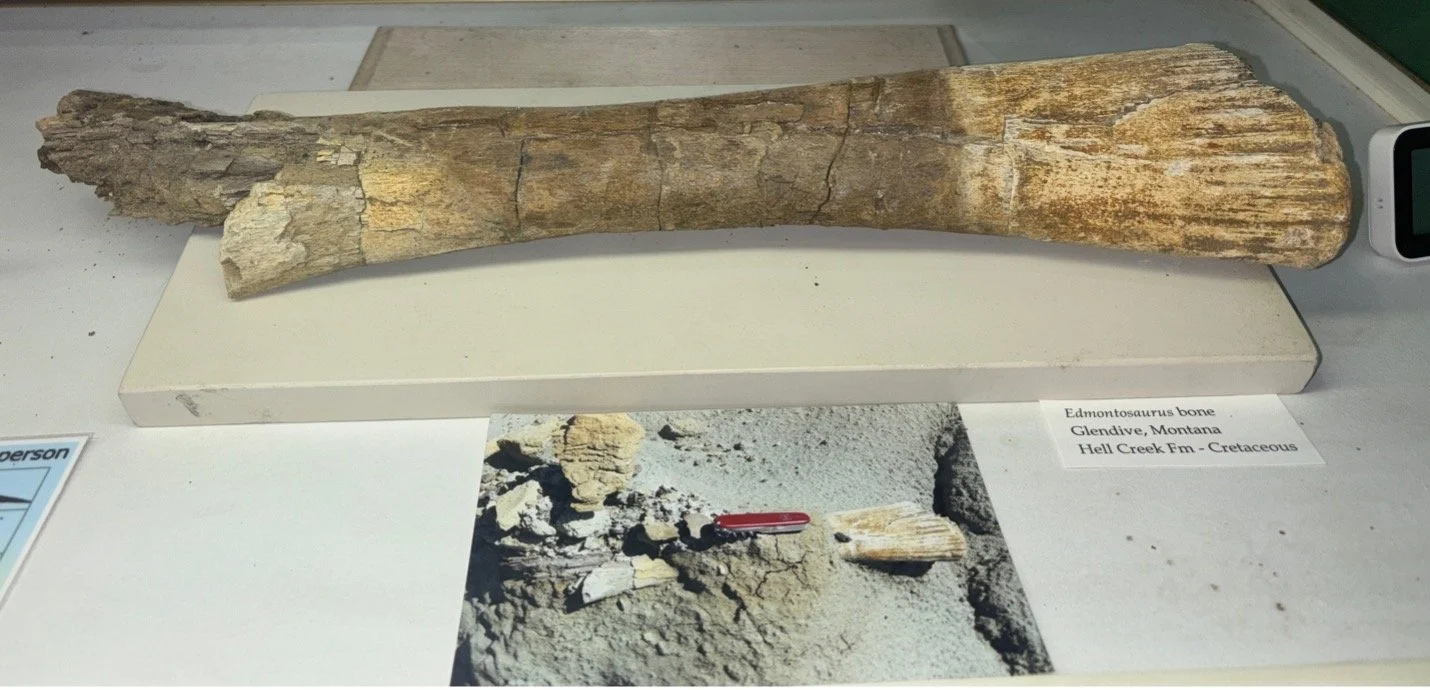
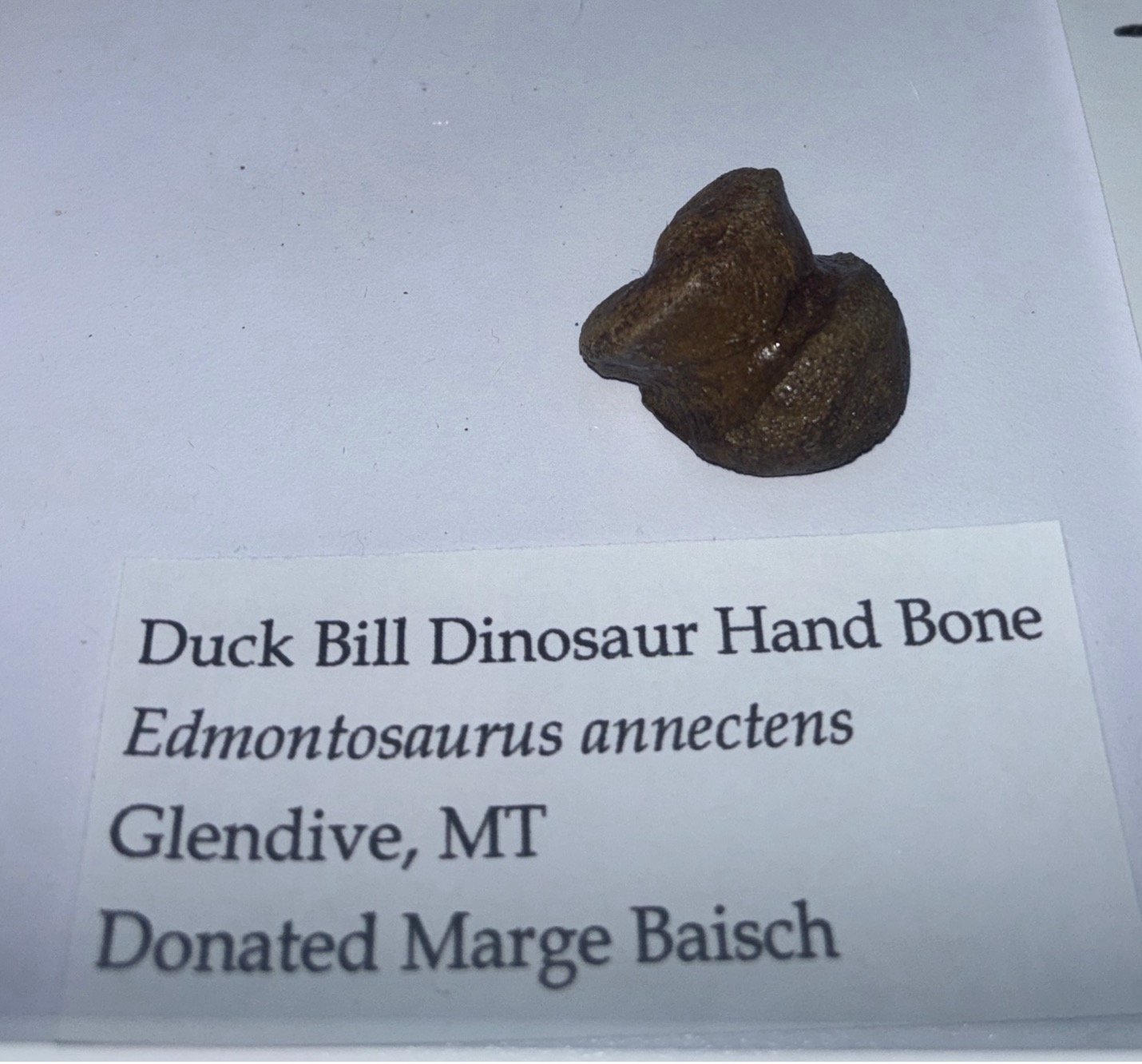
The Edmontosaurus annectens was a species of Hadrosaur that lived during the Cretaceous period in the modern US and Canada. Many Edmontosaurus annectens fossils come from the Hell Creek Formation, where they lived among Triceratops, T. rex, and other smaller ceratopsians and theropods.
One of the only dinosaur fossils ever found in Tennessee was a chevron (a part of the spine) from what is thought to be Edmontosaurus annectens. It is likely that the animal had died near or in a river and was washed out into the Western Interior Seaway where it fossilized. You can see this chevron at Earth Experience Museum.
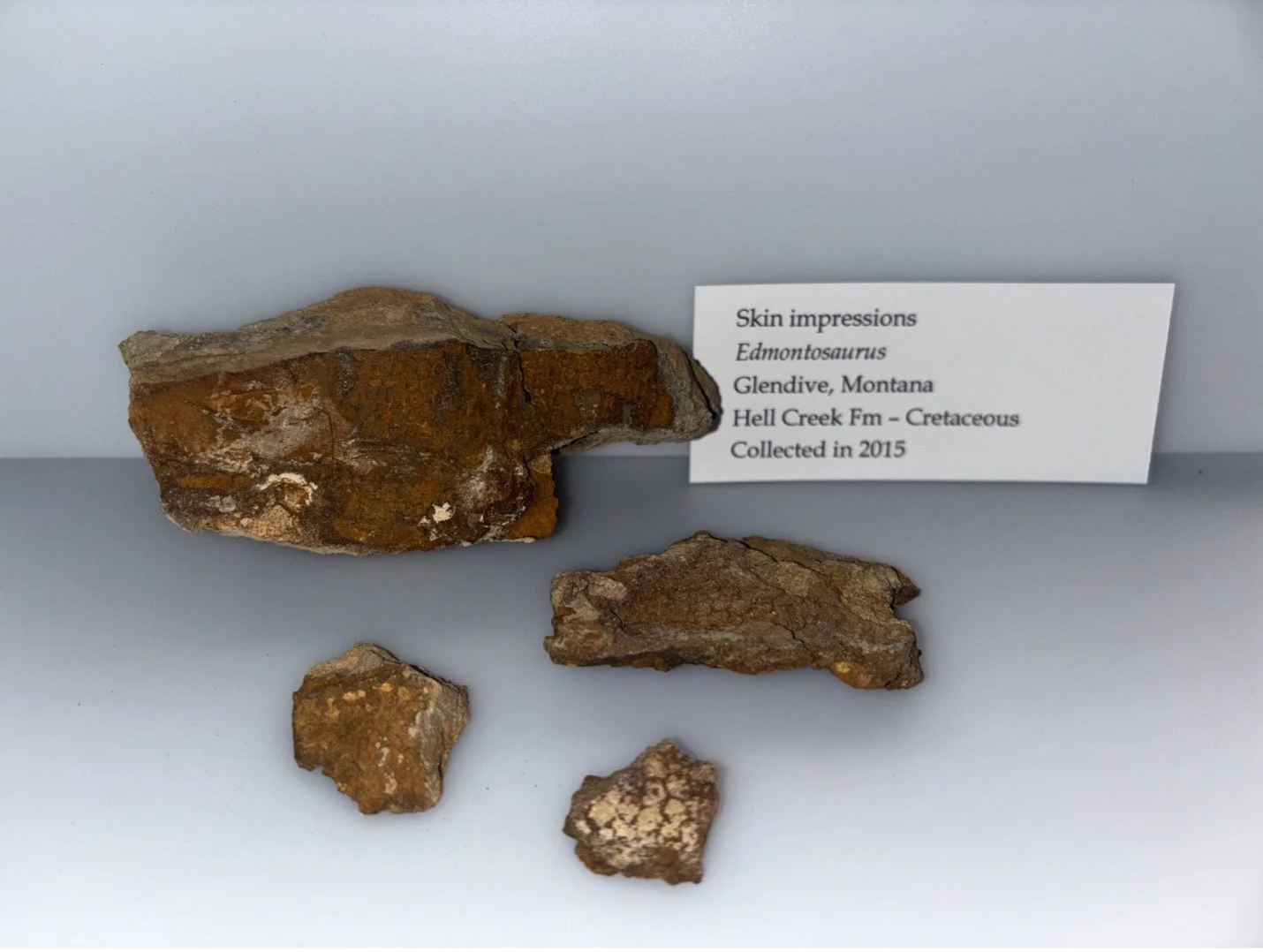
Hadrosaurs, often called “duck-billed dinosaurs”, were herbivorous herding dinosaurs that lived in North America, Europe, and Asia during the late Cretaceous period. Hadrosaurs were grazers and had ‘dental batteries’ or stores of new teeth that would replace the old ones as they wore down. Paleontologists have been able to study Hadrosaur skin impressions to discern that their skin was scaly and bumpy. Many hadrosaurs had large head crests, some of which had hollow chambers inside. Some scientists think that species like the Parasaurolophus used its hollow head crest to amplify verbalizations, creating a loud horn-like call. Hadrosaurs typically walked on all four legs, but they were able to stand up on the larger hind legs at will.
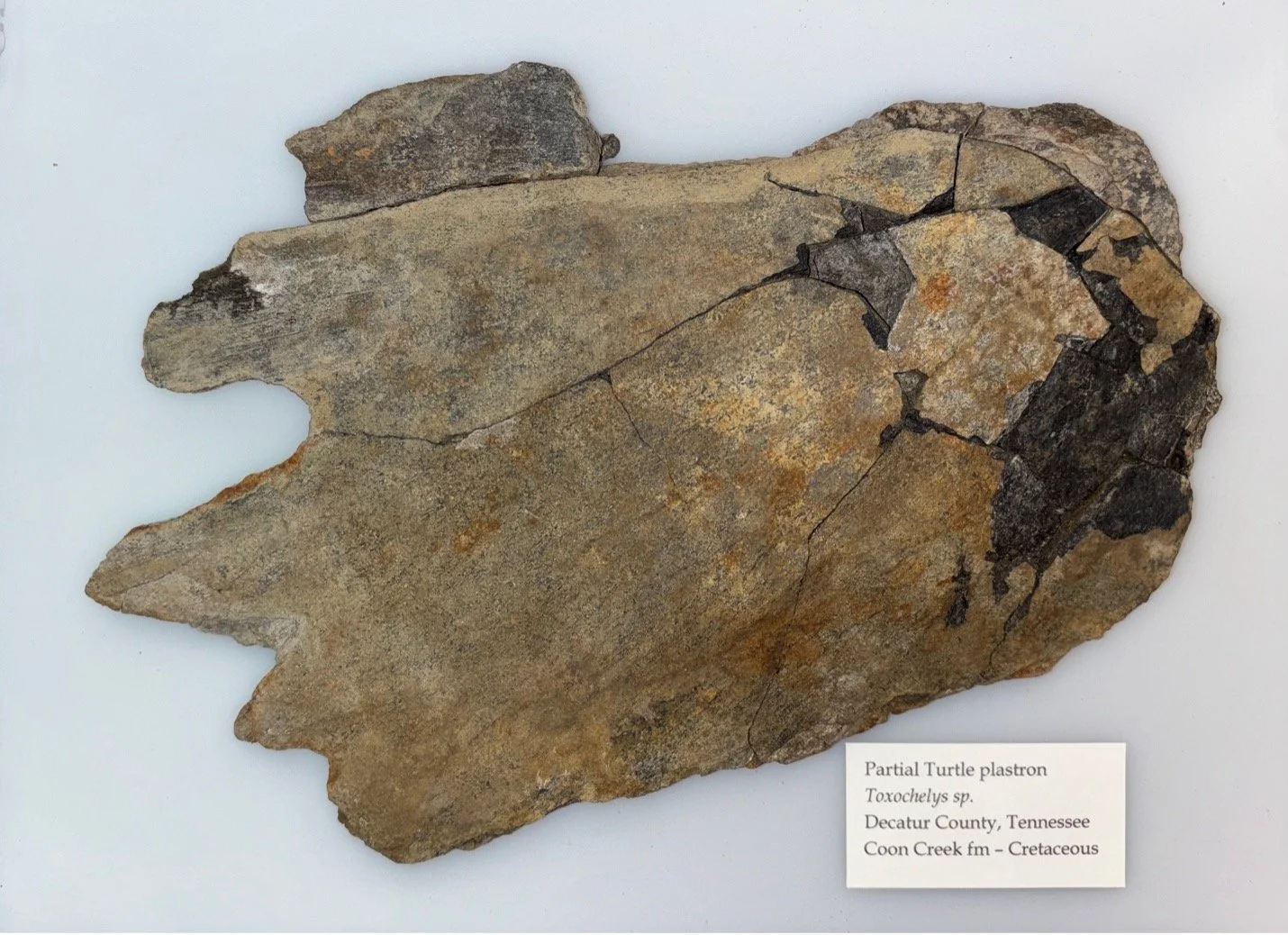
Toxochelys was a genus of sea turtle that live in the Western Interior Seaway, and its fossils are found in the United States and Canada. Toxochelys lived a similar life as modern sea turtles, feeding mostly on jellyfish, squids, mollusks, crustaceans, and marine vegetation. However, Toxochelys was larger, growing up to 6 feet in length.
This specimen was found by museum staff in the Coon Creek Formation in Tennessee.


Spinosaurus was a large theropod dinosaur whose fossils are found in modern-day Morocco and Egypt. Spinosaurus spent a lot of time near, and possibly in, the waters of the Mediterranean Sea. From its long and conical teeth, we can tell that it ate mostly fish, and many scientists think it possessed a large sail down its spine that may have attracted potential mates. Spinosaurus was at least semi-aquatic as it had a paddle-shaped tail that might have been used to propel itself like a modern crocodile, but scientists haven’t yet come to an agreement on whether they were good swimmers or if they spent much time in deep water.

Charcharodontosaurus was a very large meat-eating theropod dinosaur that lived in the northern part of Africa. This dino was big—slightly taller and longer than the T. rex but with a smaller body mass with more slender skeletal structures. The name Charcharodontosaurus is a reference to Charcharodon, the genus of sharks that contains the Great White Shark because they have similar shaped teeth.
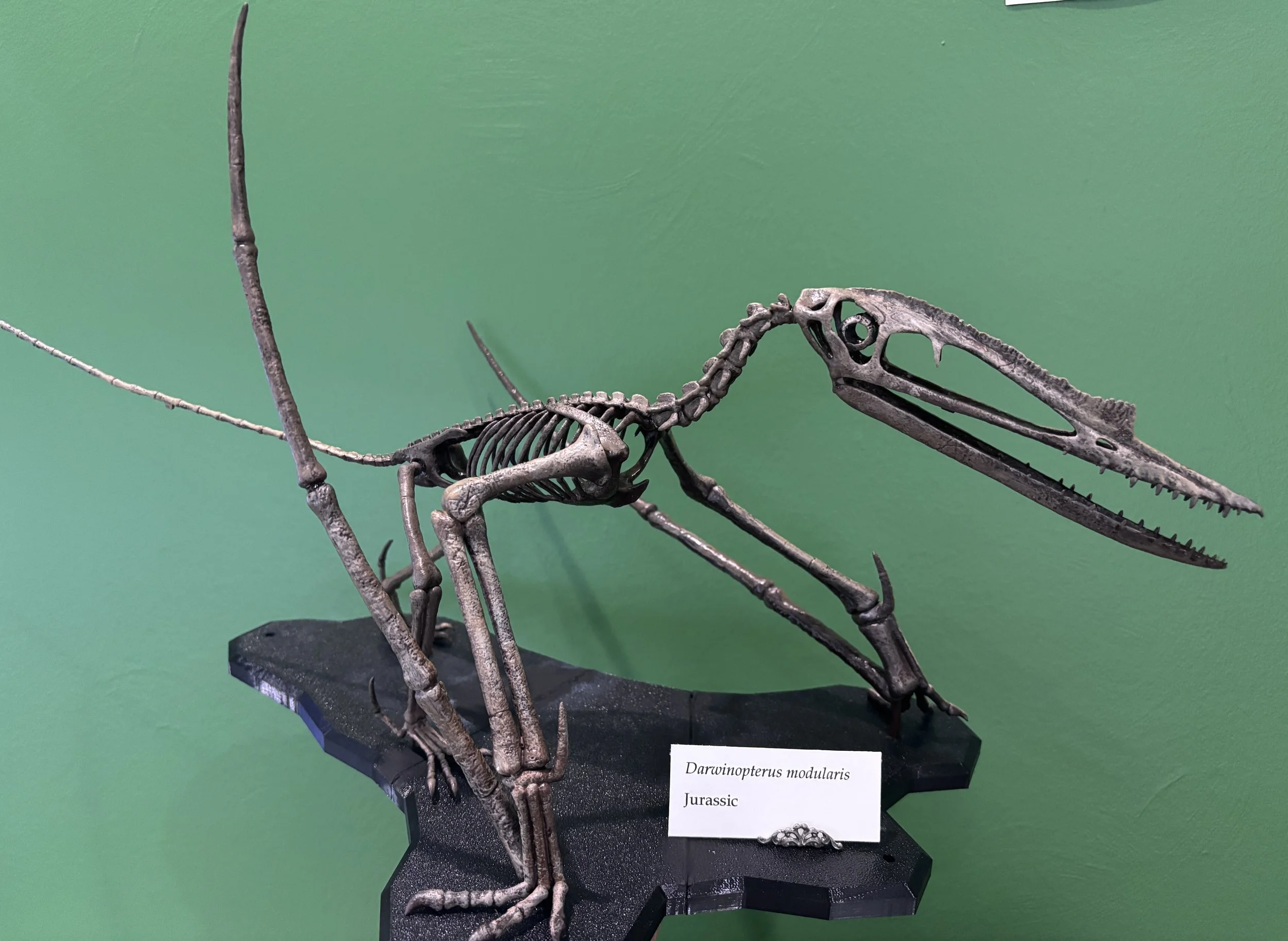
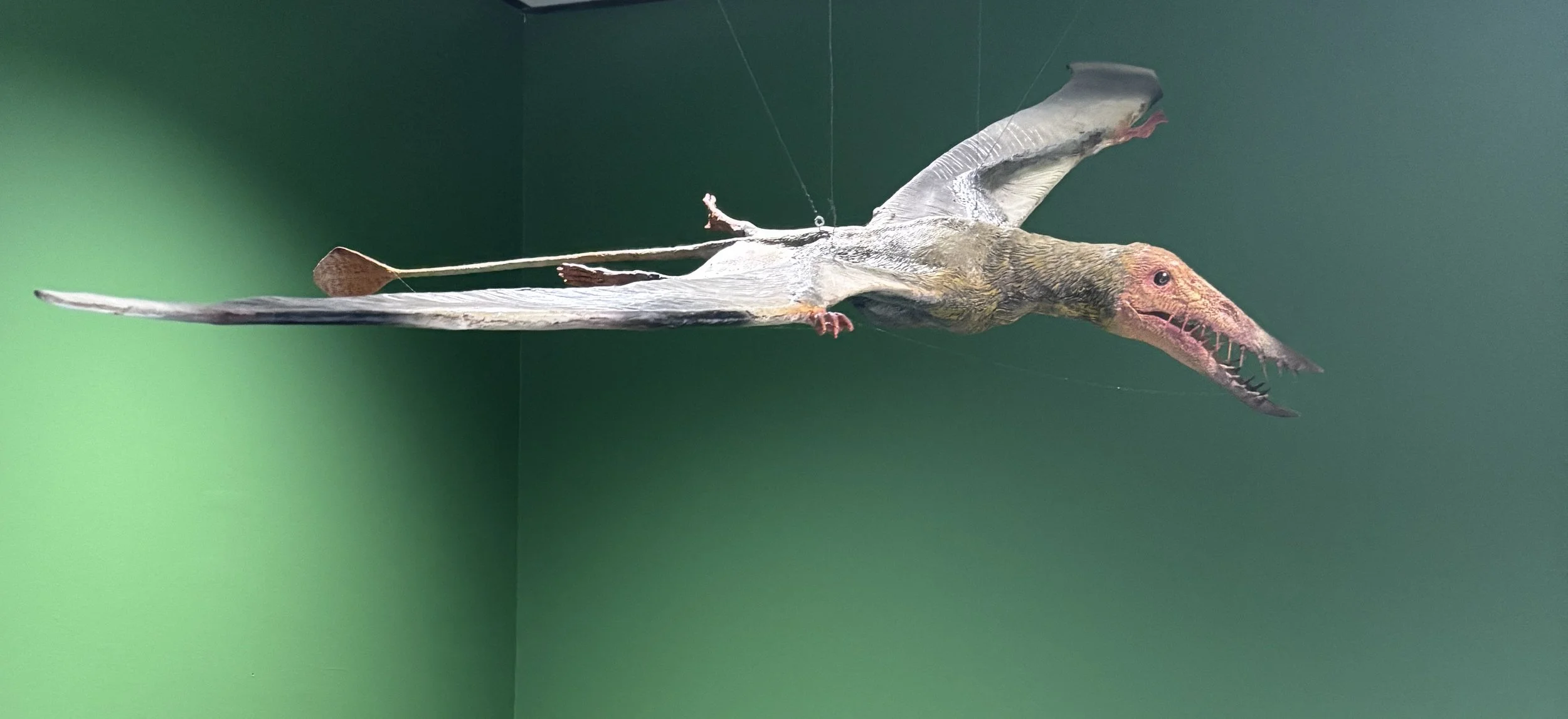
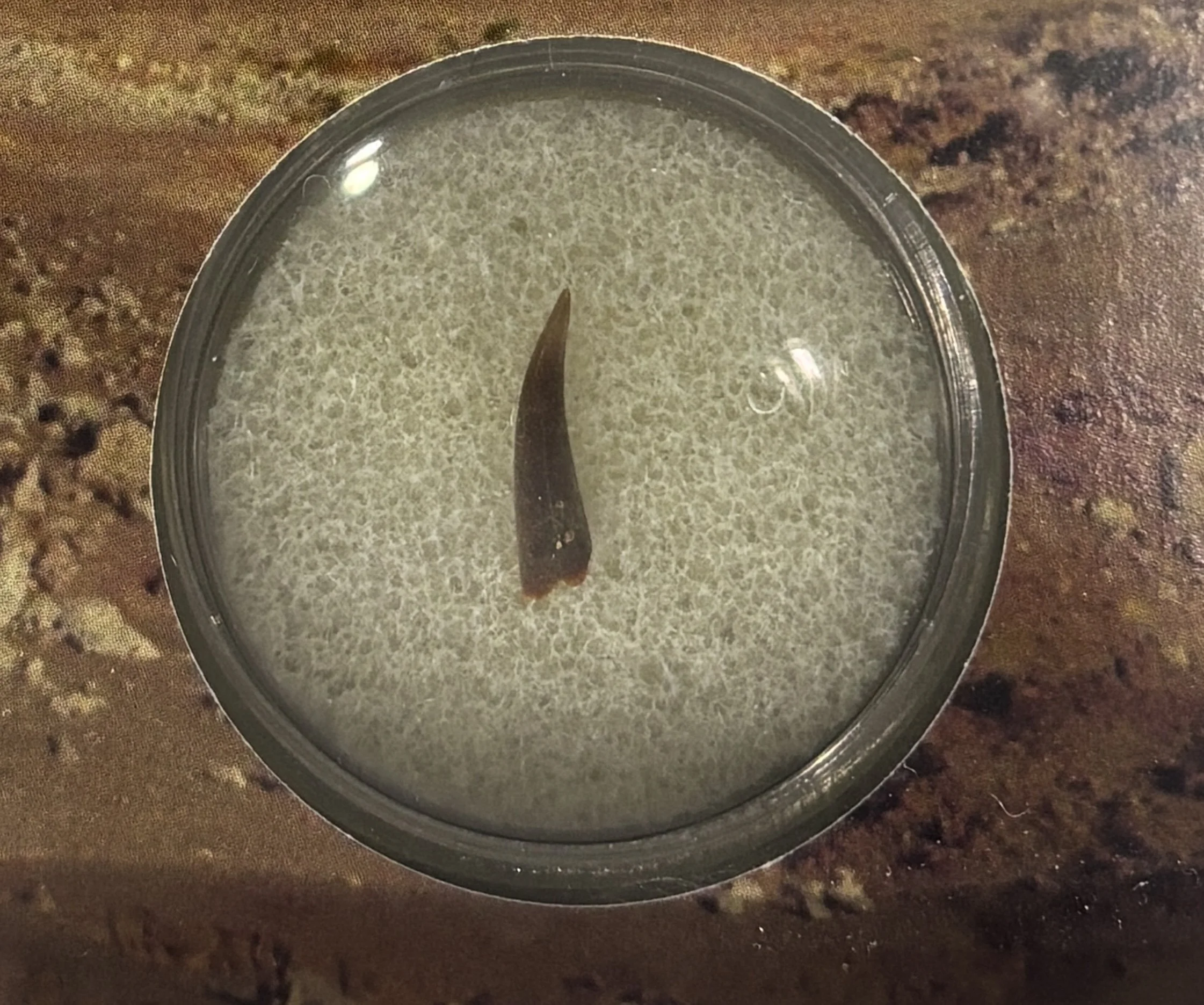
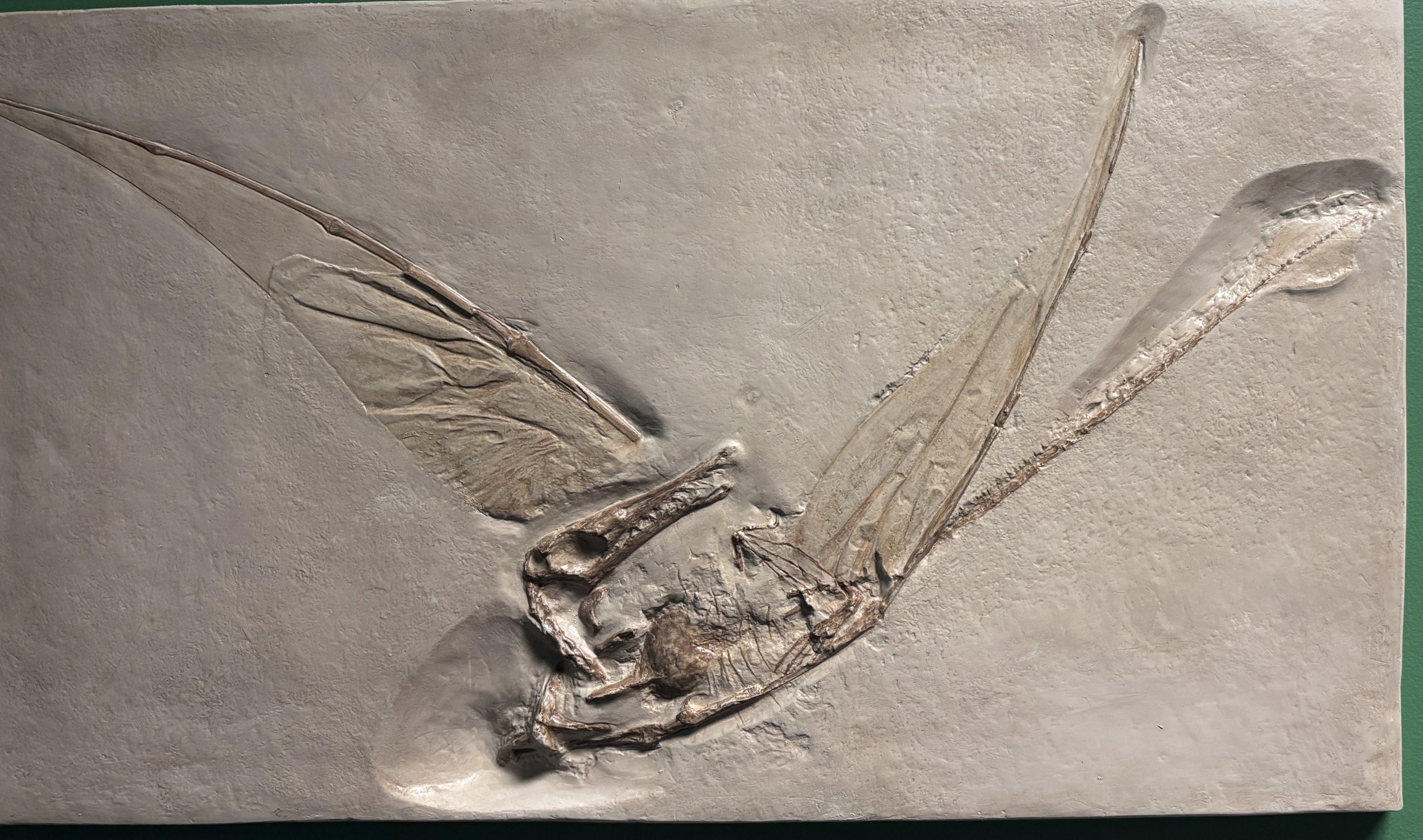
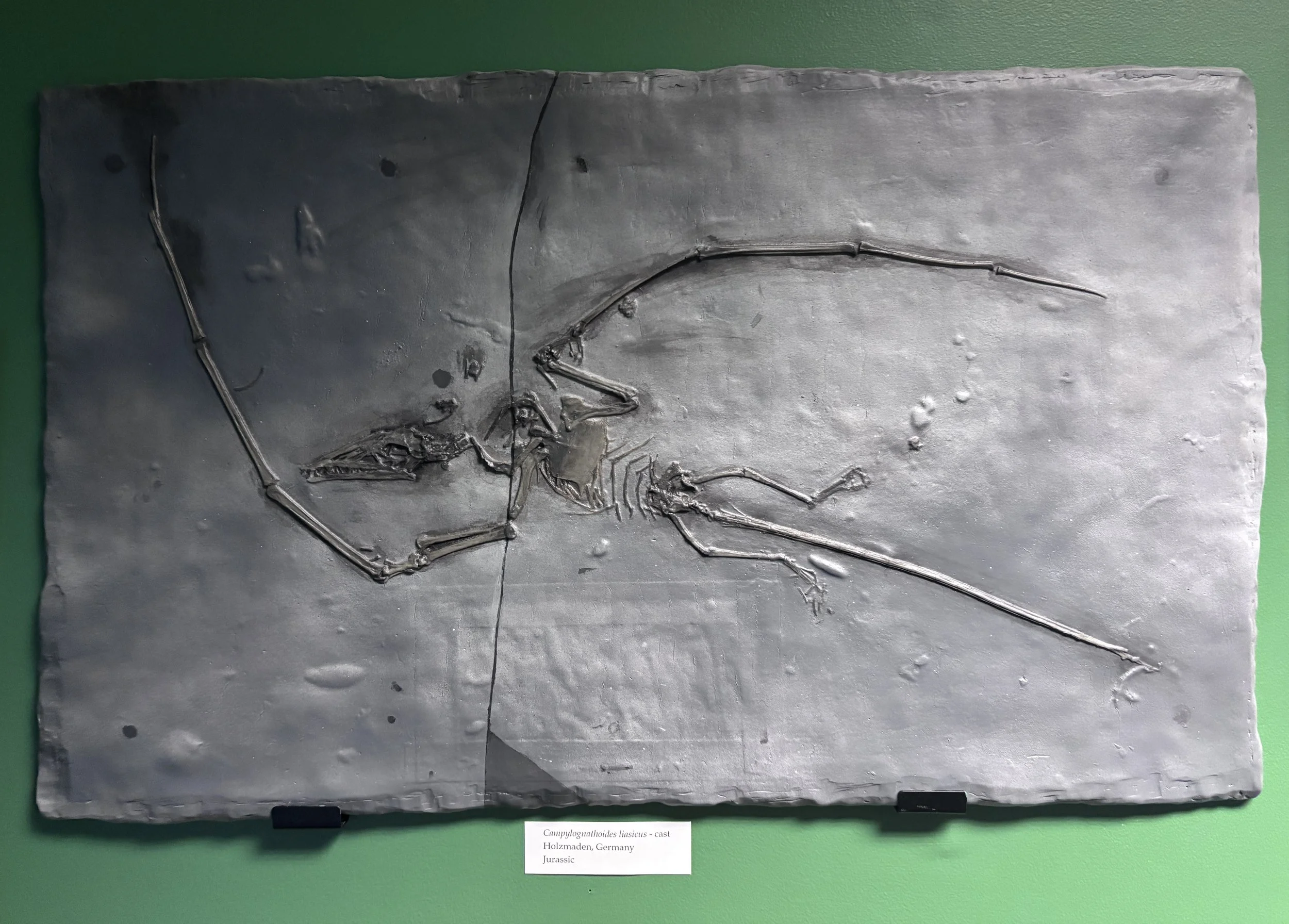
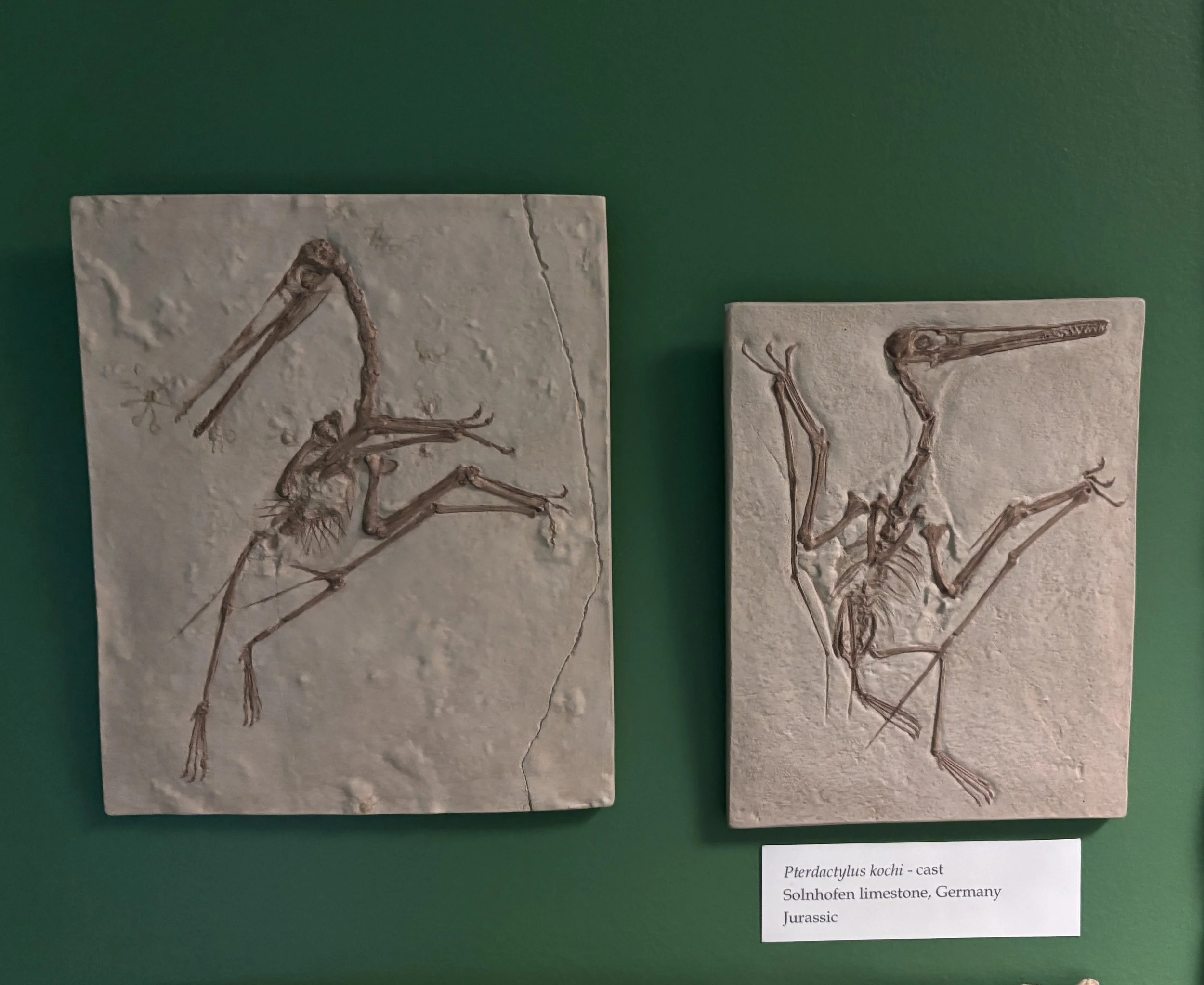
During the age of the dinosaurs, flying reptiles called Pterosaurs ruled skies. Some mistakenly lump pterosaurs like the famous Pterodactyl in with dinosaurs, but pterosaurs belonged to their own order Pterosauria. Pterosauria and Dinosauria belong to the same clade called Archosauria, whose only two groups still living are birds and crocodilians.
Pterosaurs came in a wide range of sizes. The smallest pterosaur species was Anurognathus ammoni, which was about the size of a songbird, and the largest was the colossal Quetzalcoatlus northropi, who was about as tall as a giraffe (but lot more vicous).
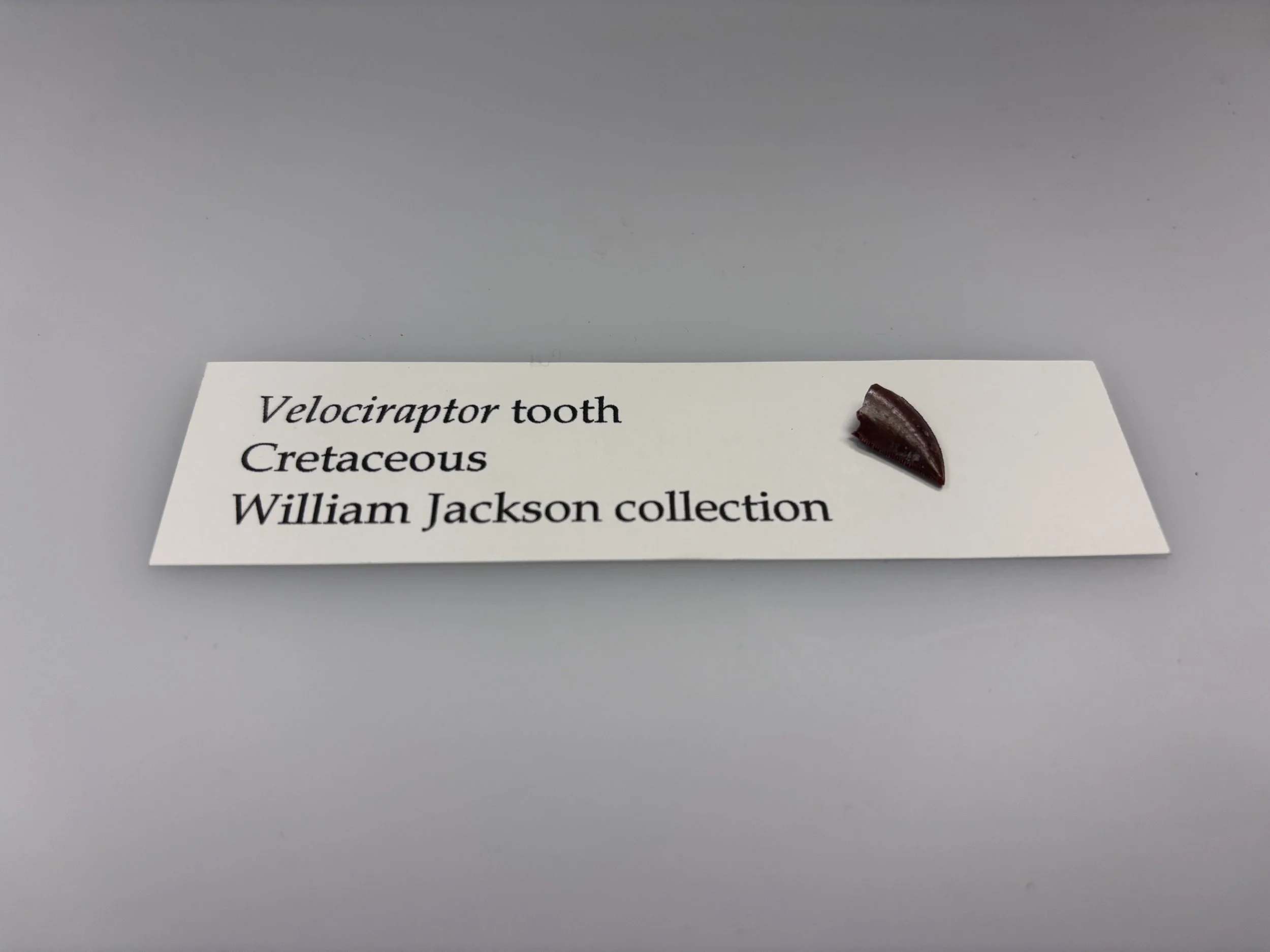
Velociraptors have been heavily featured in the Jurassic Park and Jurassic World sagas and are depicted as scaly, mid-sized terrors of the dinosaur world. This depiction is not strictly accurate, at least in regard to appearance. Velociraptors were considerably smaller than you might think (3 feet tall and 5 feet long) and possessed feathers much like their modern bird relatives. Velociraptors, like all raptors, had a large specialized toe claw on each foot which they would have used to hold down prey, similar to modern predatory birds.


Coprolites are the scientific term for fossil poop. Really. It may seem gross, but paleontologists can actually learn a lot from studying droppings about extinct animals’ diets, movement patters, and even things about their environment. Coprolites are sometimes identified by surface texture, size and shape, and even undigested food content. As all organic matter has been replaced with rock (See our Basics of Paleontology page for more info on fossilization), coprolites are not any less sanitary than any other fossil.
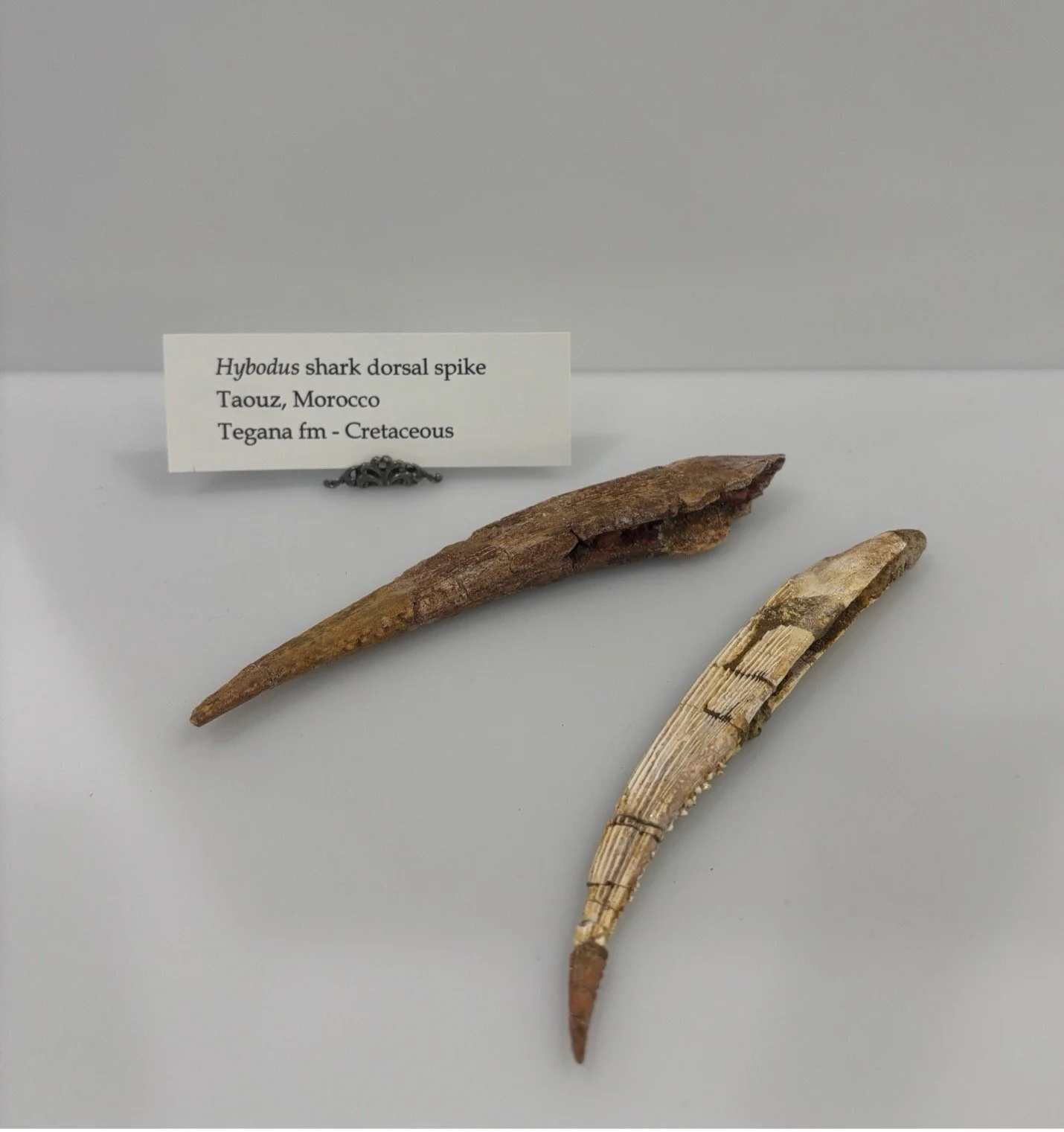
Ancient Shark (Permian – Cretaceous)
Hybodus was a genus of shark that had great success in the ancient oceans. It was about 6 feet long and had small crown of spikes on its head and two more larger spikes by its dorsal fins. These spikes would have protected the shark from bigger predators, which partly contributed to its success. Another trait Hybodus had was two types of teeth for two types of prey. The teeth at the front of its mouth were sharp, used to bite down on prey, while the teeth in the back of its mouth were flat and could crush and break down hard shells and bones—a little like your own molars.
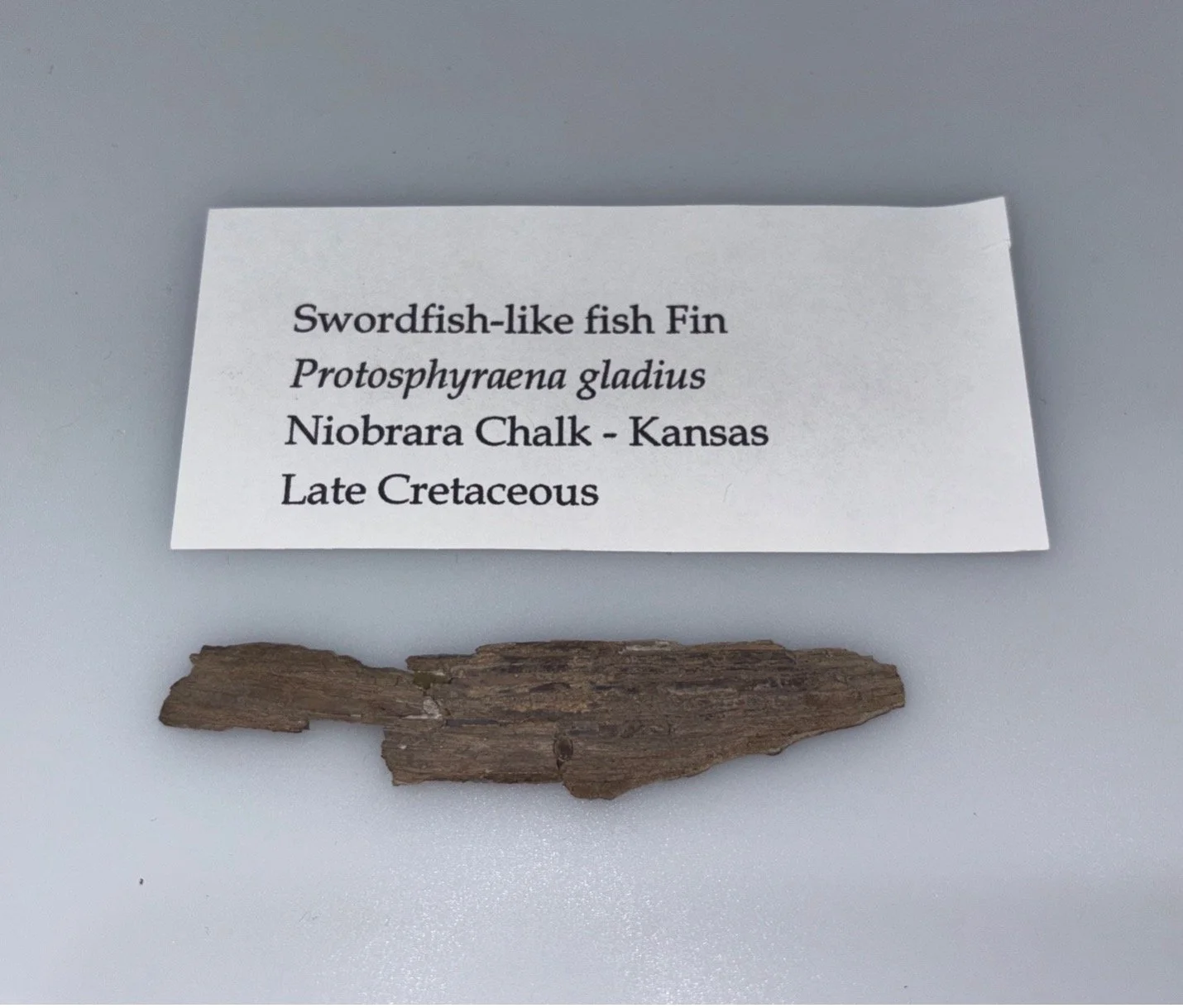
Swordfish-like Fish (Cretaceous)
Protosphyraena gladius was a giant, predatory fish that lived during the Cretaceous period. It grew to 6.5 to 10 feet in length and bore a resemblance to modern swordfish despite belonging to a different evolutionary lineage. The long rostrum (the sword-looking part) on its upper jaw was likely used to incapacitate prey.
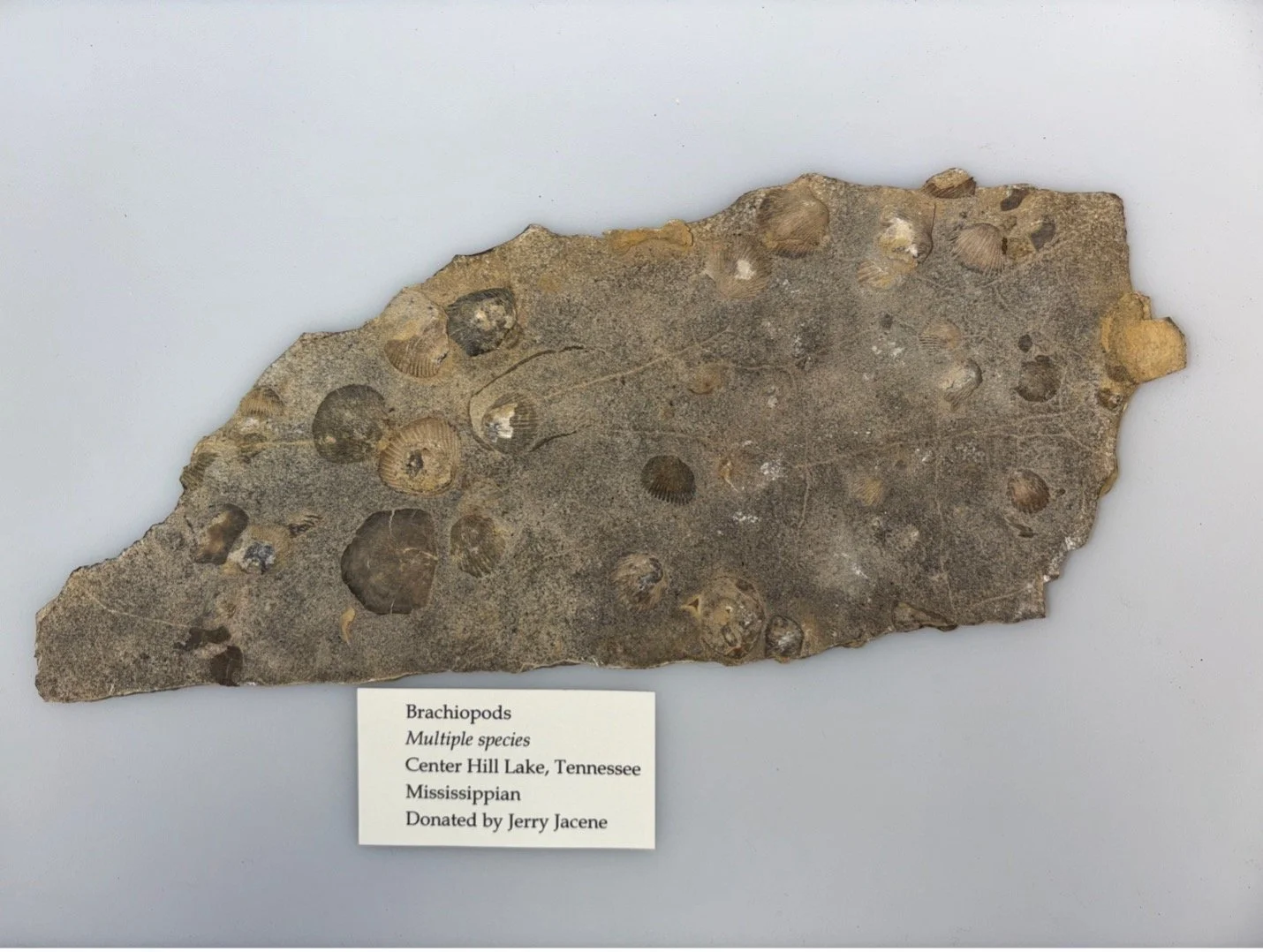
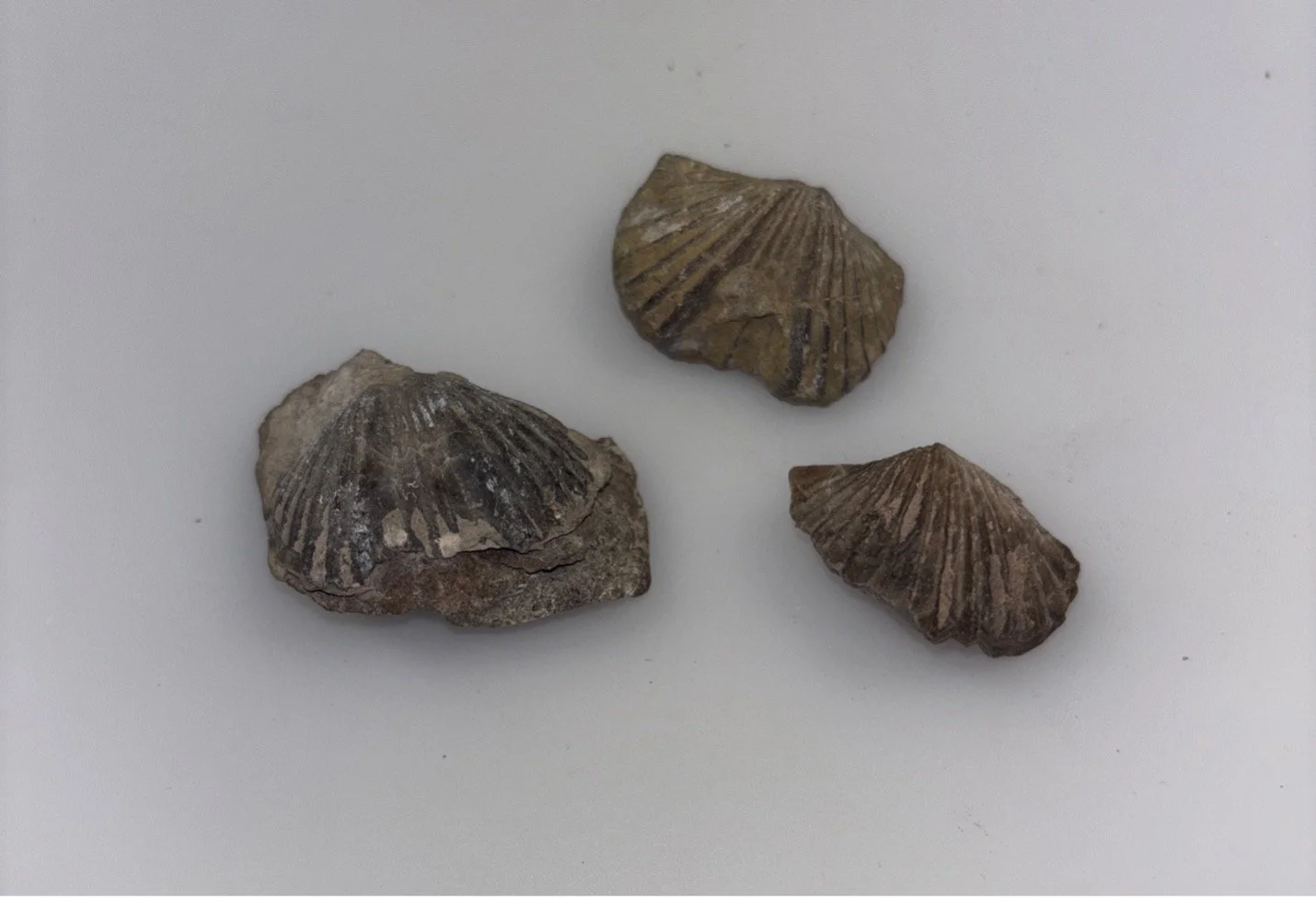
Brachiopods (Cambrian – Present)
Brachiopods are aquatic soft-bodied invertebrates who typically live inside a symmetrical two-halved shell. Though similar to bivalves in design, Brachiopods are deceptively unique, belonging to their own phylum, Brachiopoda. Brachiopods are generally stationary and are typically anchored in one spot, relying on filter feeding.
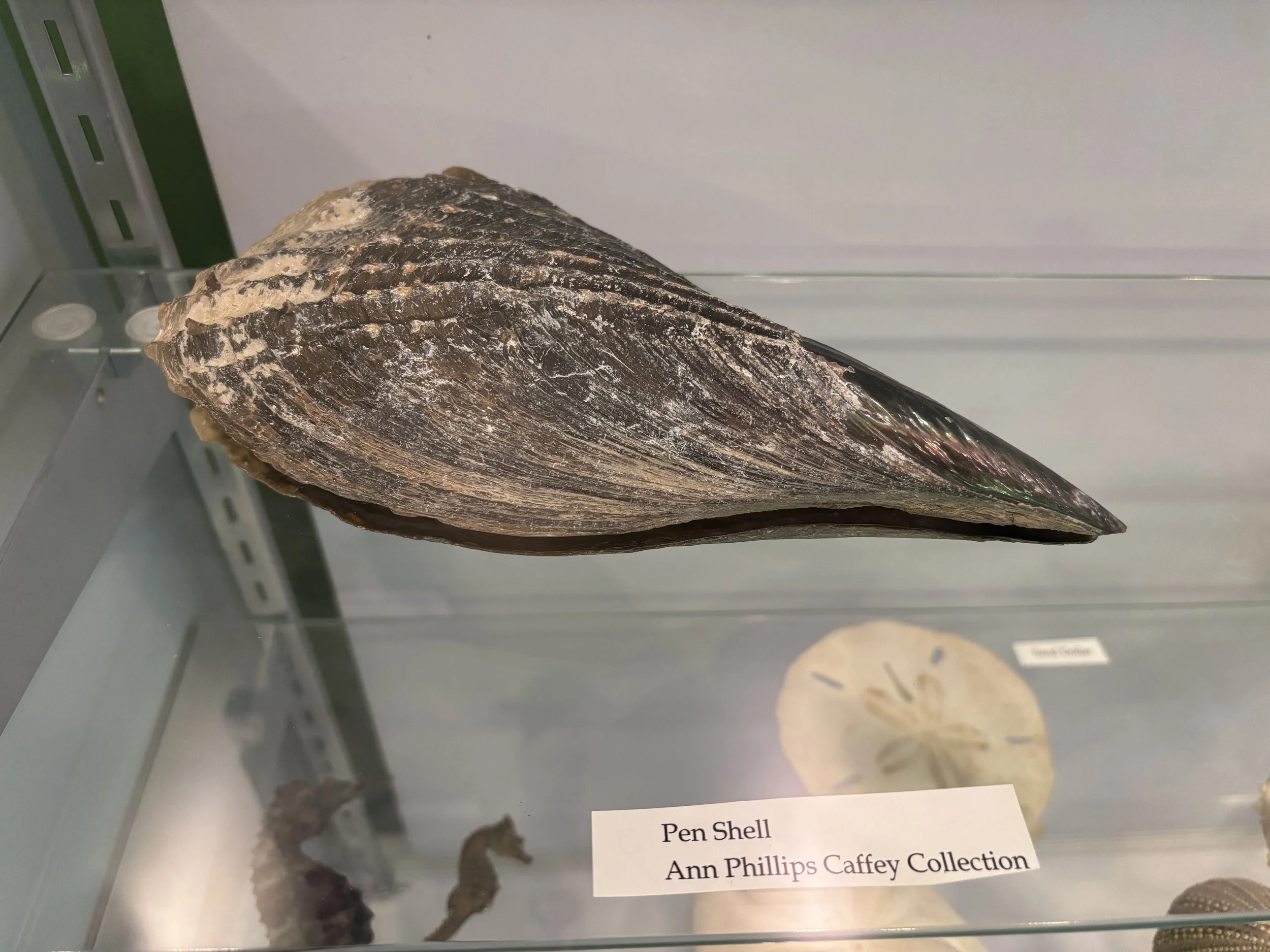
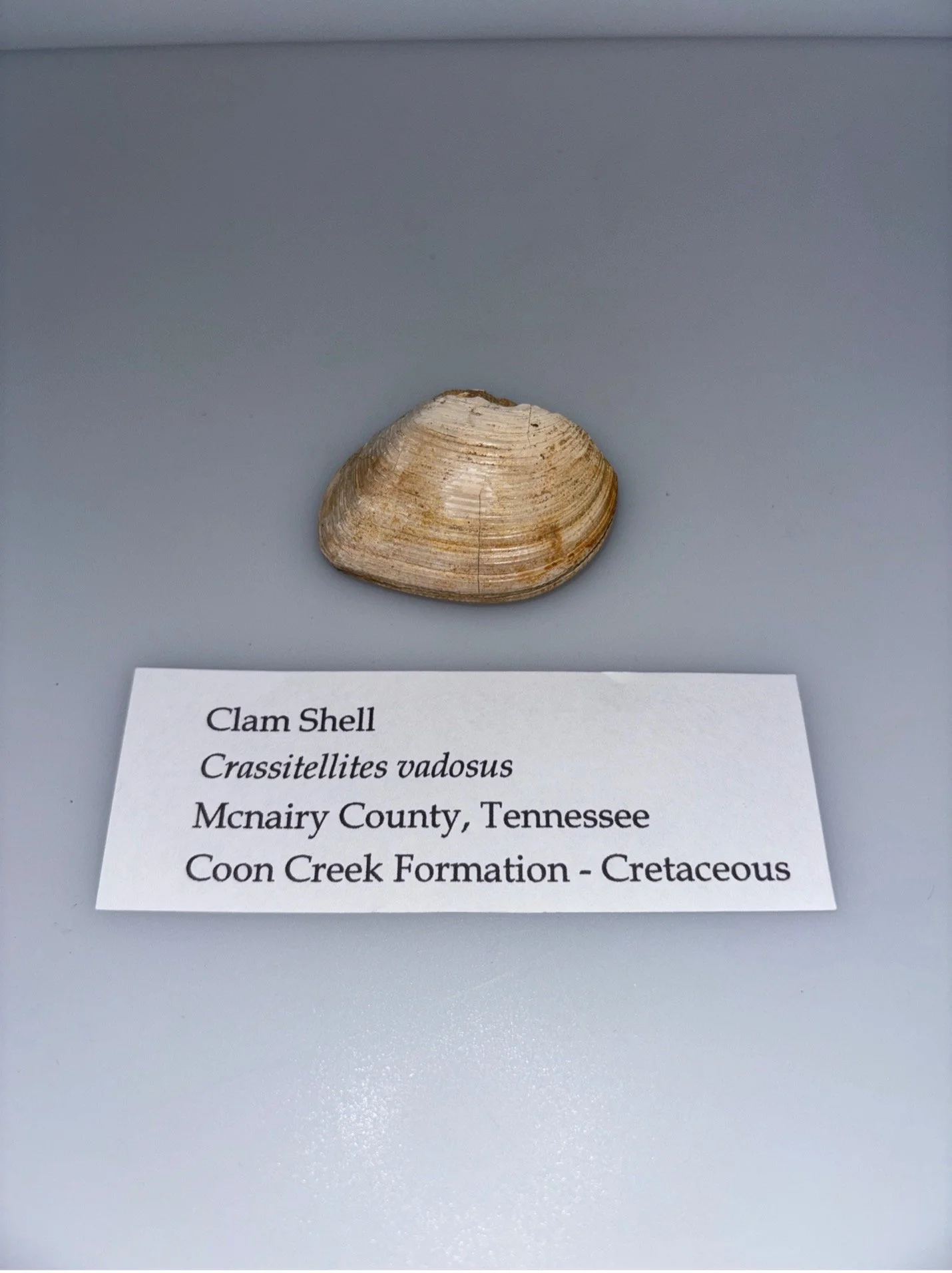
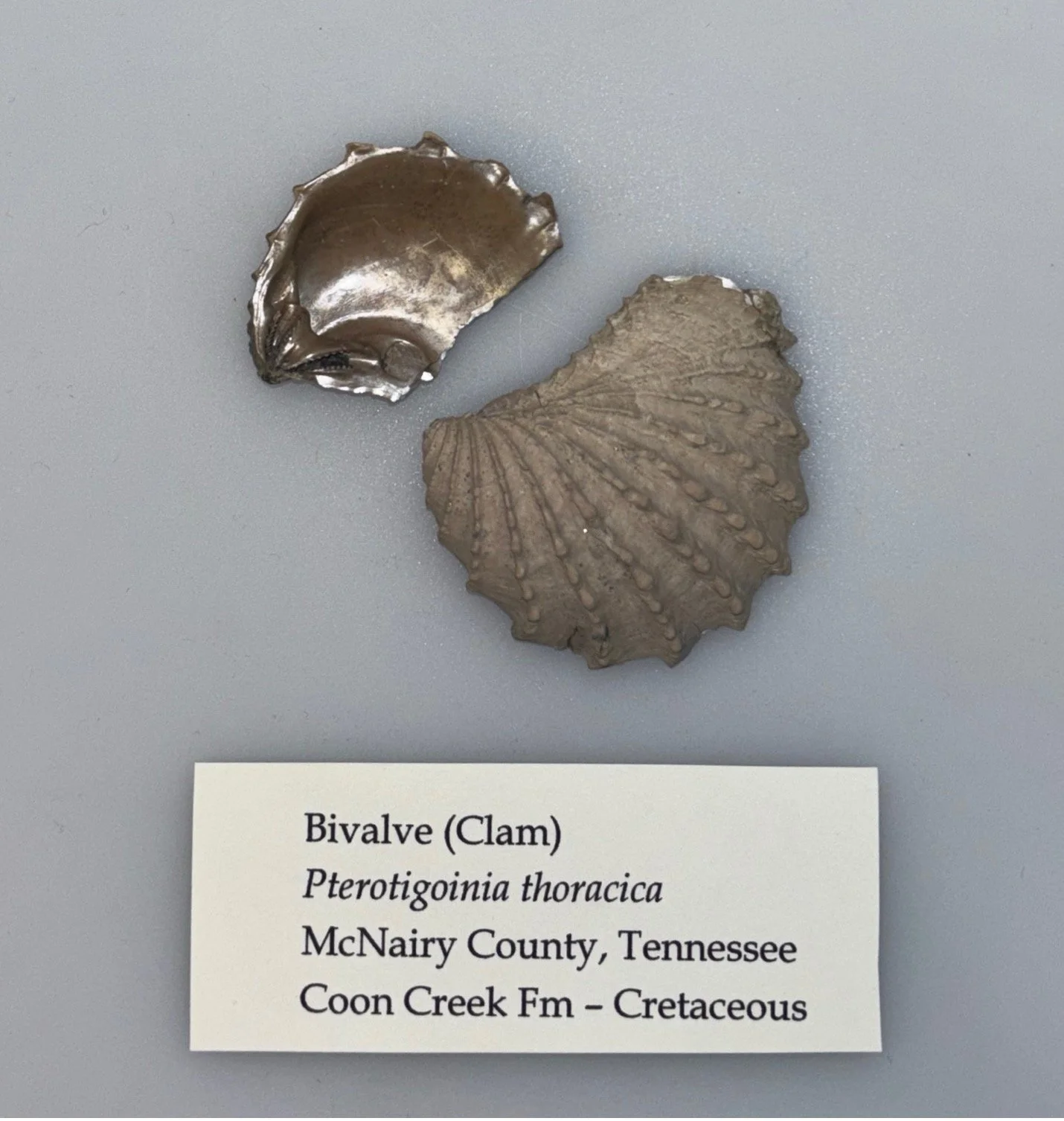
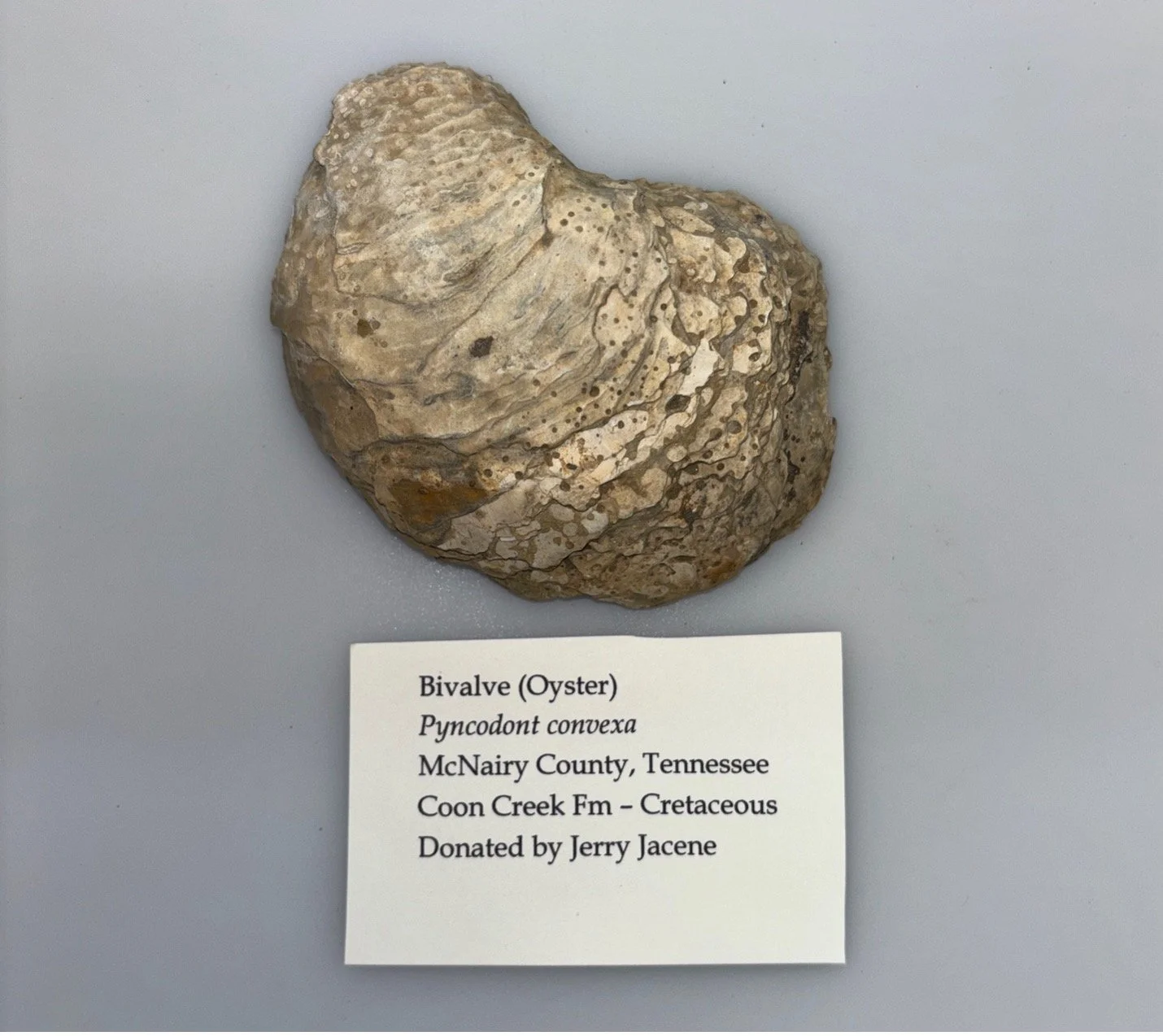
Bivalves are aquatic soft-bodied invertebrates who typically live inside a vertically symmetrical two-halved shell. They are similar to brachiopods, who are symmetrical both laterally and vertically, but the two are not actually very closely related. Today, bivalves vastly outnumber brachiopods, but during earlier periods, the inverse was true.
Bivalves are more mobile than they look, often burying themselves in sediment with the help of a muscular organ called a ‘foot’, and some can even swim by clapping their shell open and closed. Their shells have historically been used as jewelry, tools, and even money in certain cultures.


Ammonites (Devonian – Cretaceous)
At some point, most everyone has seen the fossil of an ammonite, perhaps thinking it was some kind of fossil snail shell. However, Ammonites were not gastropods, but cephalopods. Essentially a type of shelled squid, Ammonites and their cousins nautiloids populated the ancient seas eating small, slow moving organisms like plankton or jellyfish. Ammonites went extinct during the K-Pg extinction event, the same that killed the non-avian dinosaurs, alongside many other shallow water marine creatures due to chain reactions of the asteroid strike. The Ammonite’s still-living relative, the Nautilus, survived this extinction event thanks to its much deeper ocean habitat which was less effected by the issues on the surface.
Fossilization:
Ammonites are much beloved fossils for collectors, often cut down the middle and displayed in pairs as the empty chambers of the shell can fill with beautiful minerals. Ammonites can be mineralized with pyrite, agate, calcite, and even opal. Opalized Ammonites are nicknamed ‘Ammolites’.
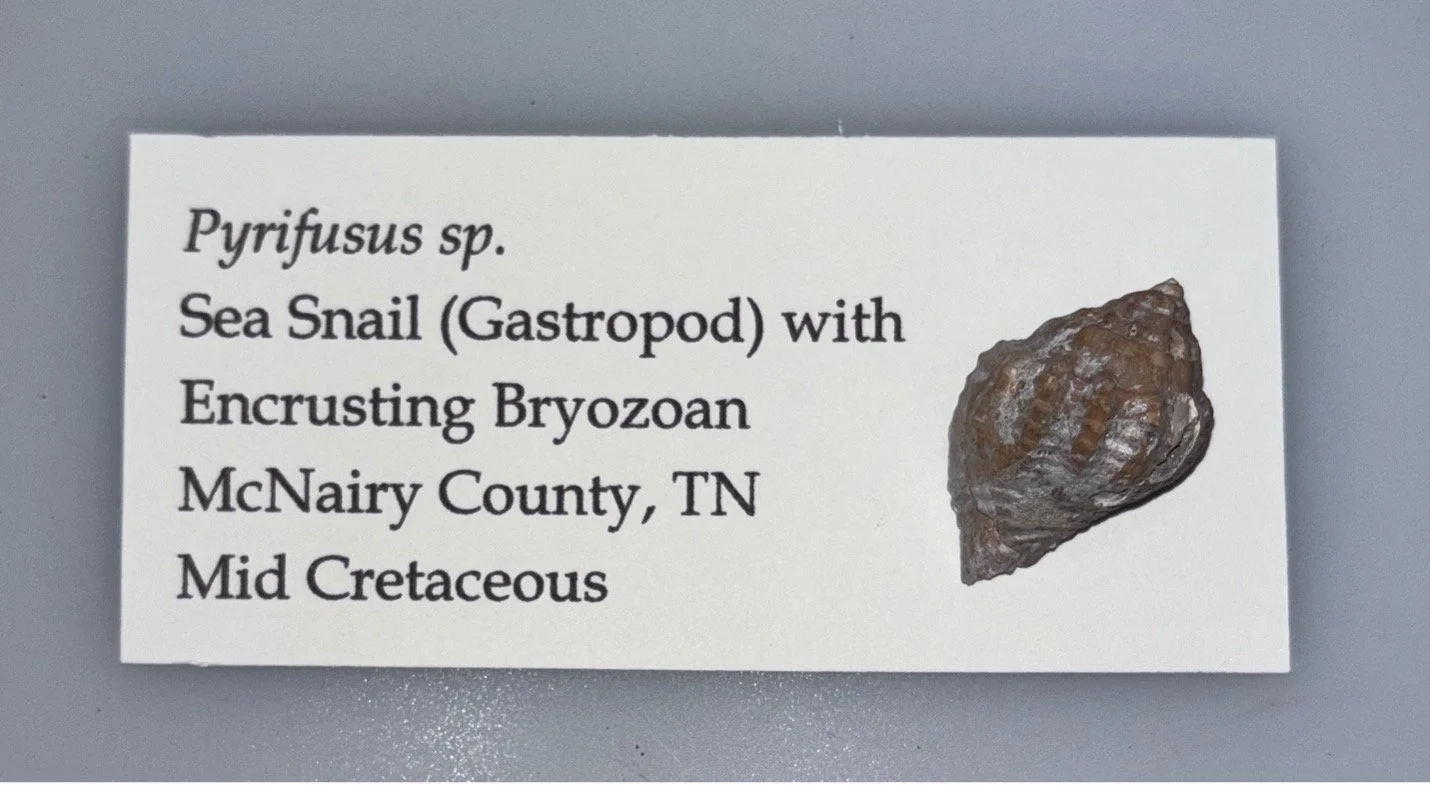
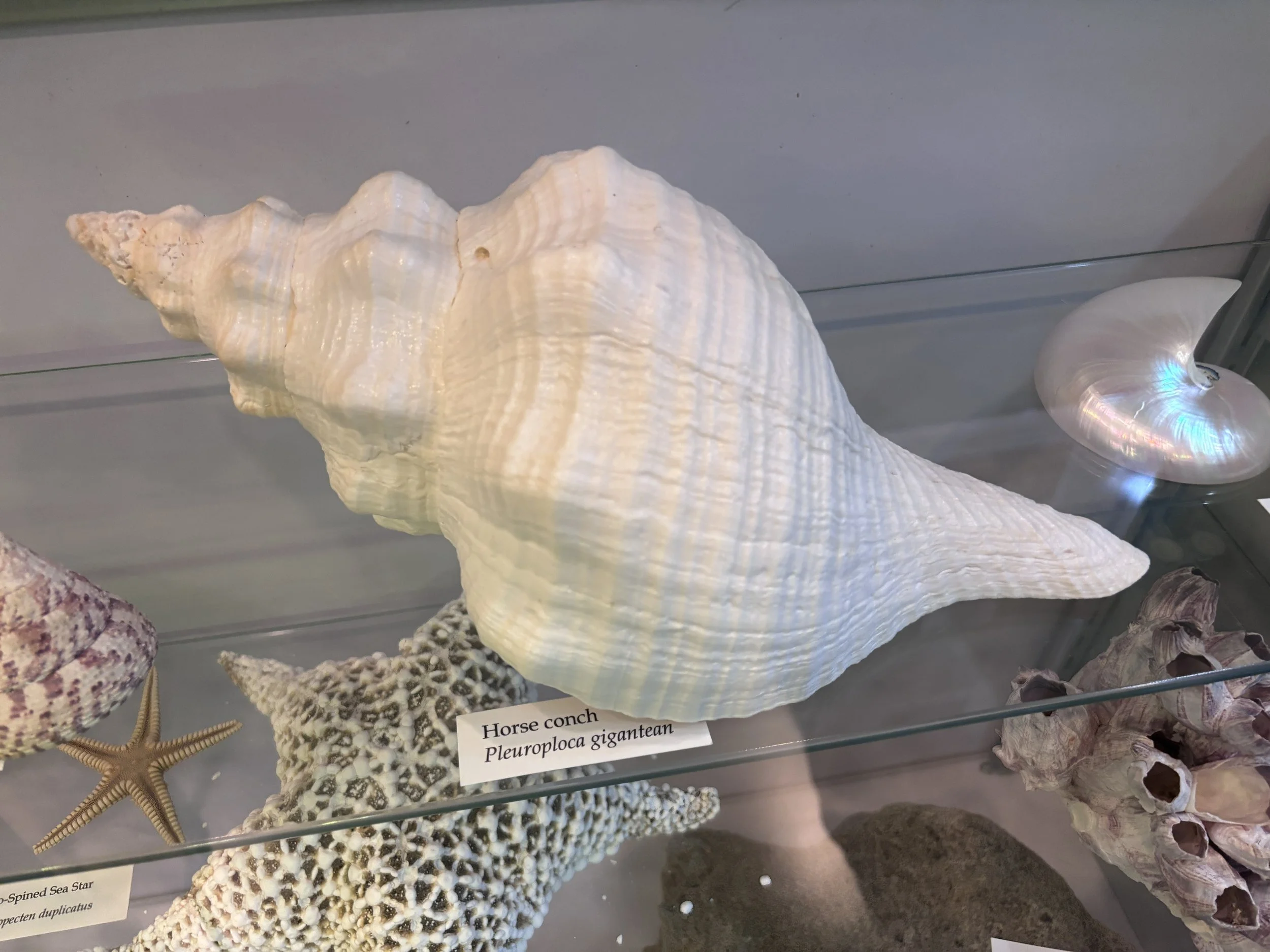
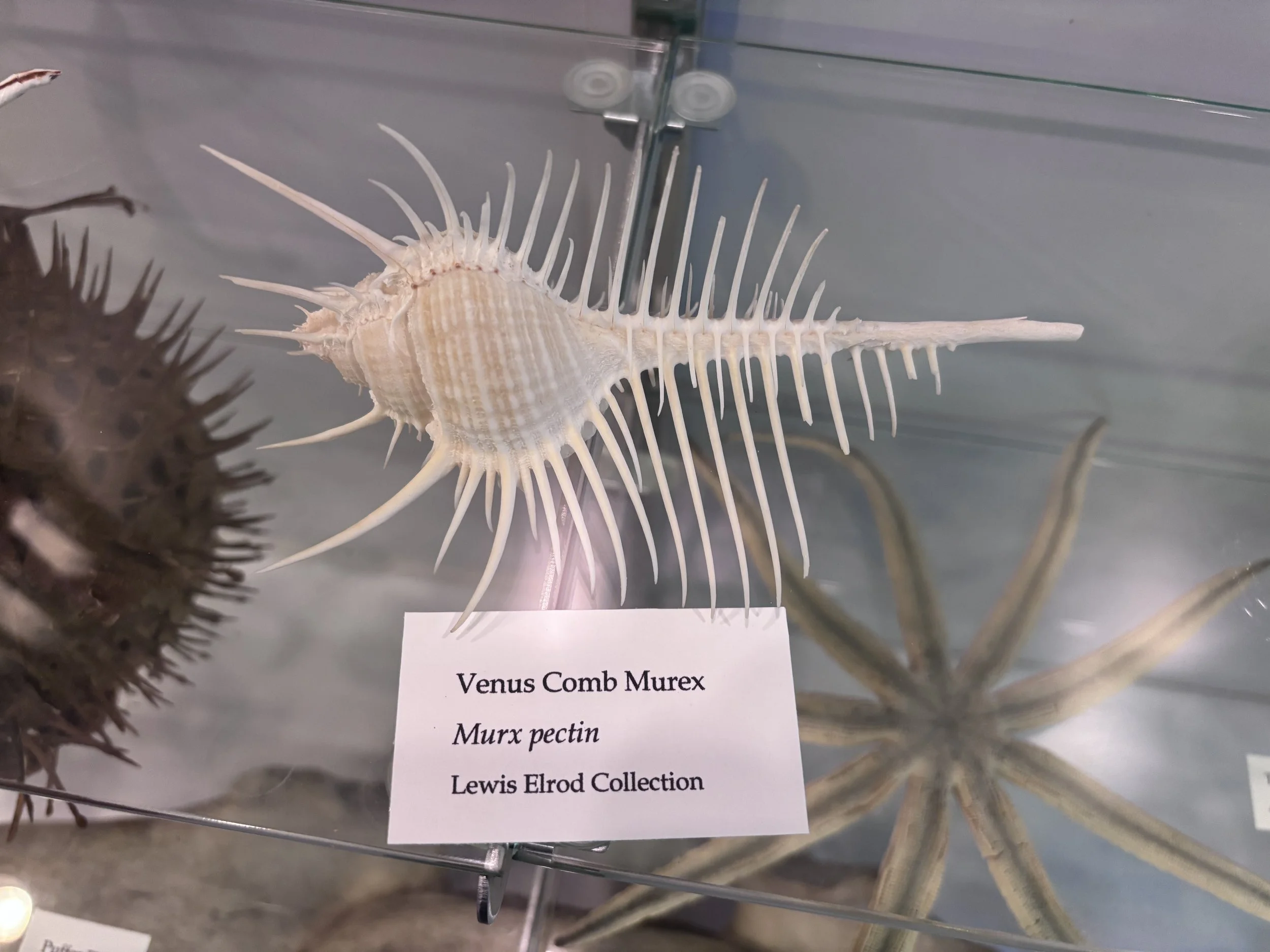
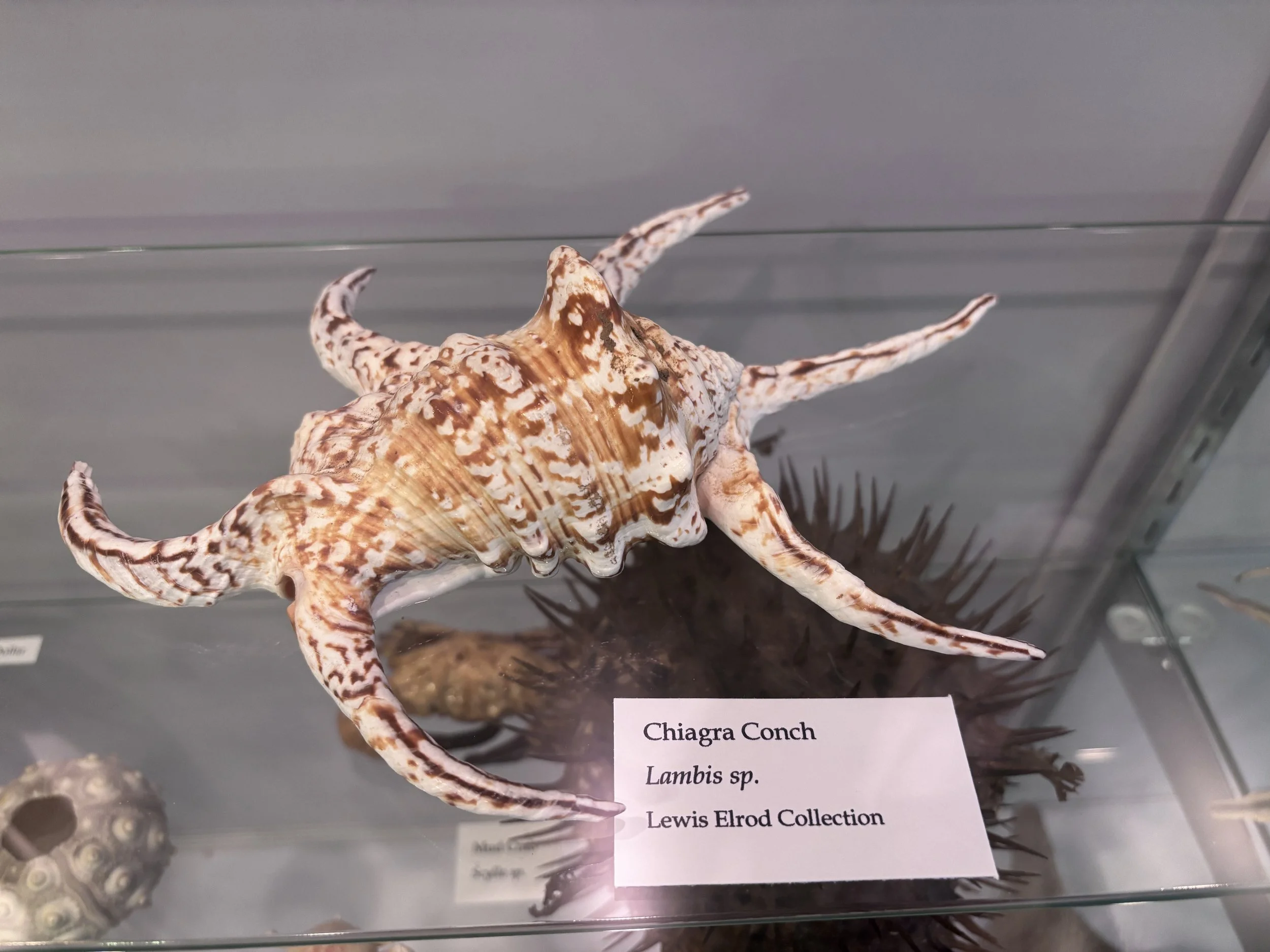
Gastropods (Late Cambrian – Present)
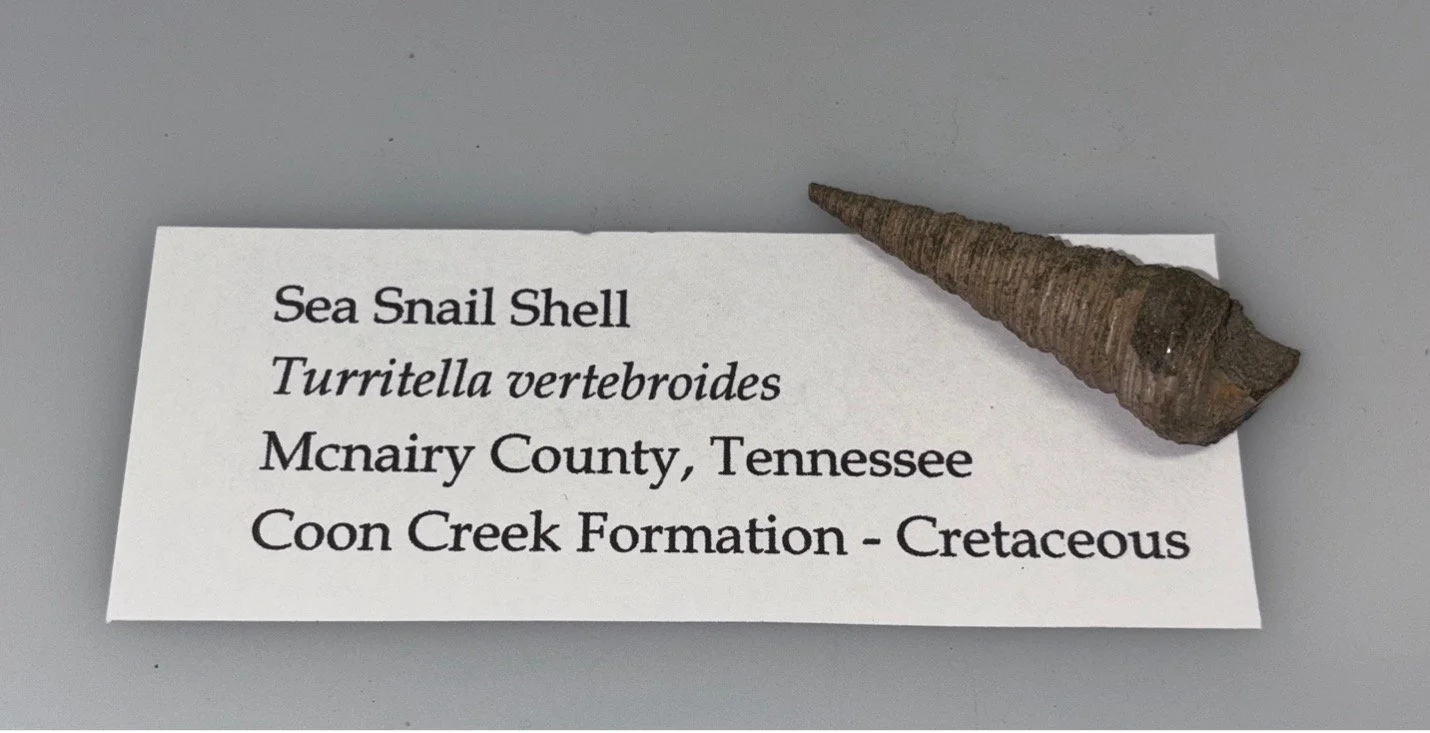
Gastropods are a class of soft-bodied invertebrates and are members of the phylum Mollusca, including things like snails and slugs. Gastropods have been around since almost the beginning of the fossil record, developing all the way back in the oceans of the Cambrian Period (485- 541 million years ago). Gastropod bodies are simple but highly adaptable, and have diversified far past marine living. Today there are species in the oceans, in rivers, on land, and even on hydrothermal vents.
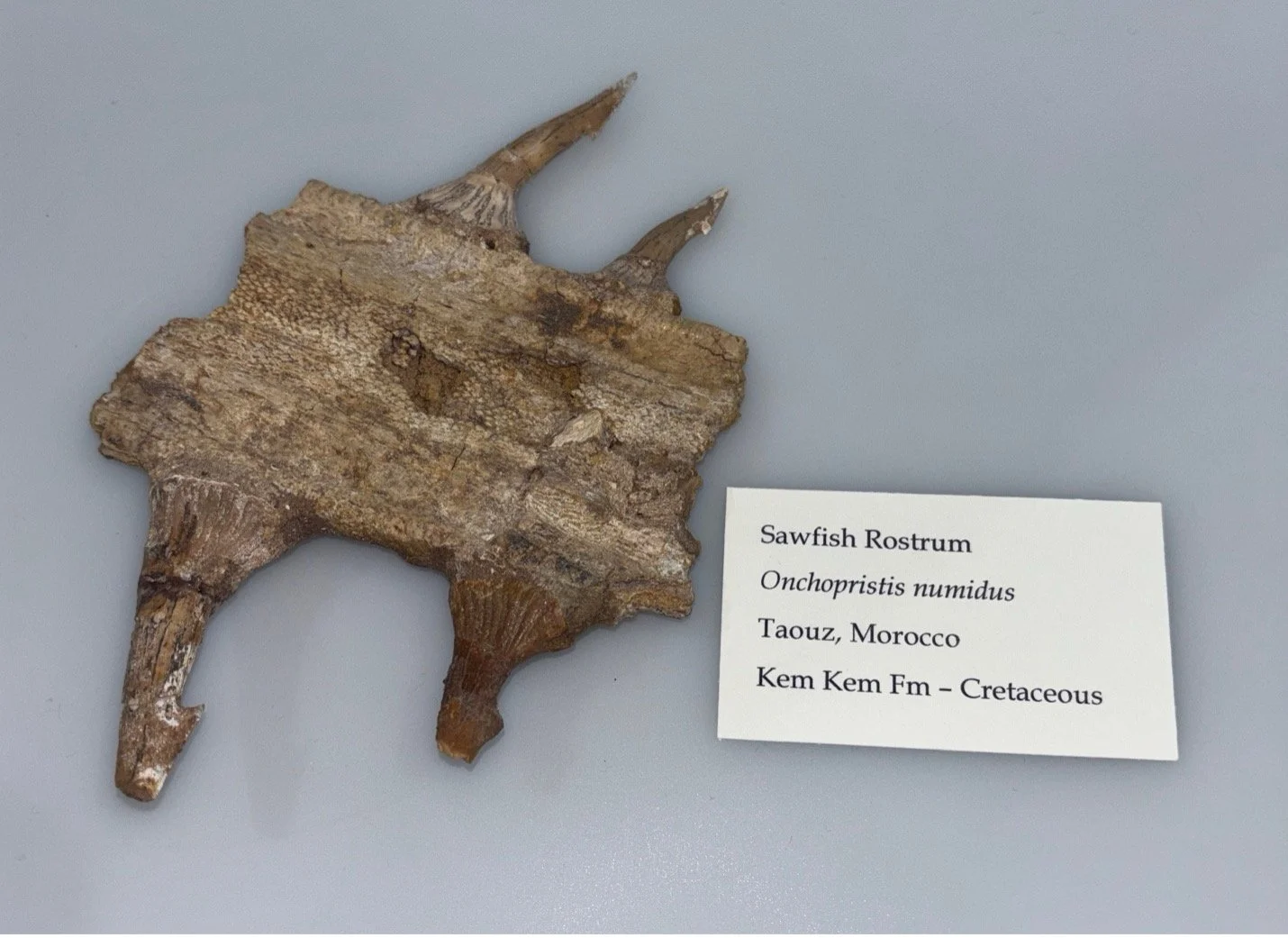
Onchopristis numidus, or the ancient sawfish, was a large, odd-looking fish with teeth all along their rostrum (or snout), resembling a chainsaw. To hunt, the sawfish would swipe its snout at prey, impaling fish along the bottom of the ocean floor. Though they resemble modern sawfish, they are not closely related. This is an example of convergent evolution, in which multiple animals adapt similar solutions to survive in their environment.
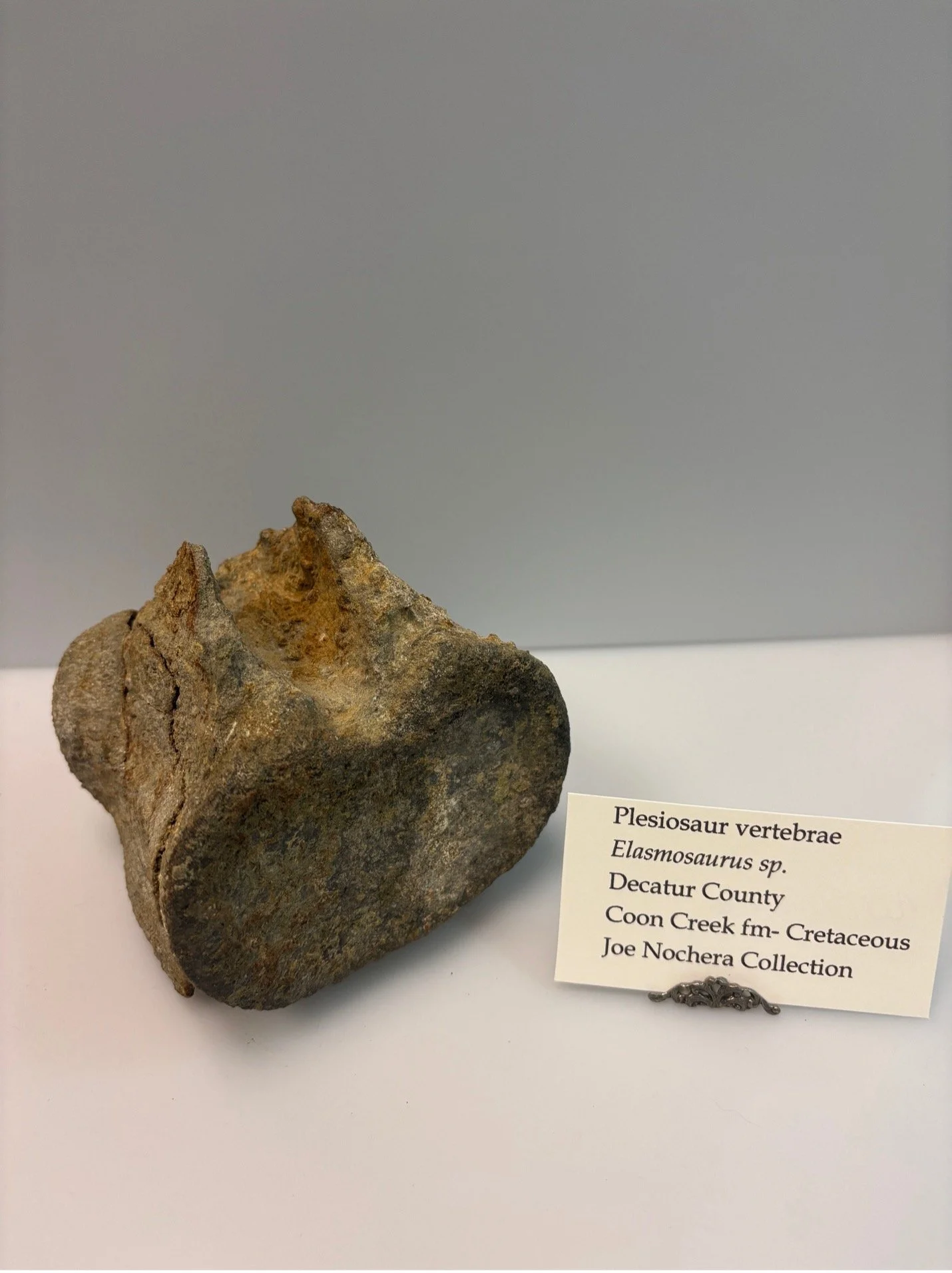
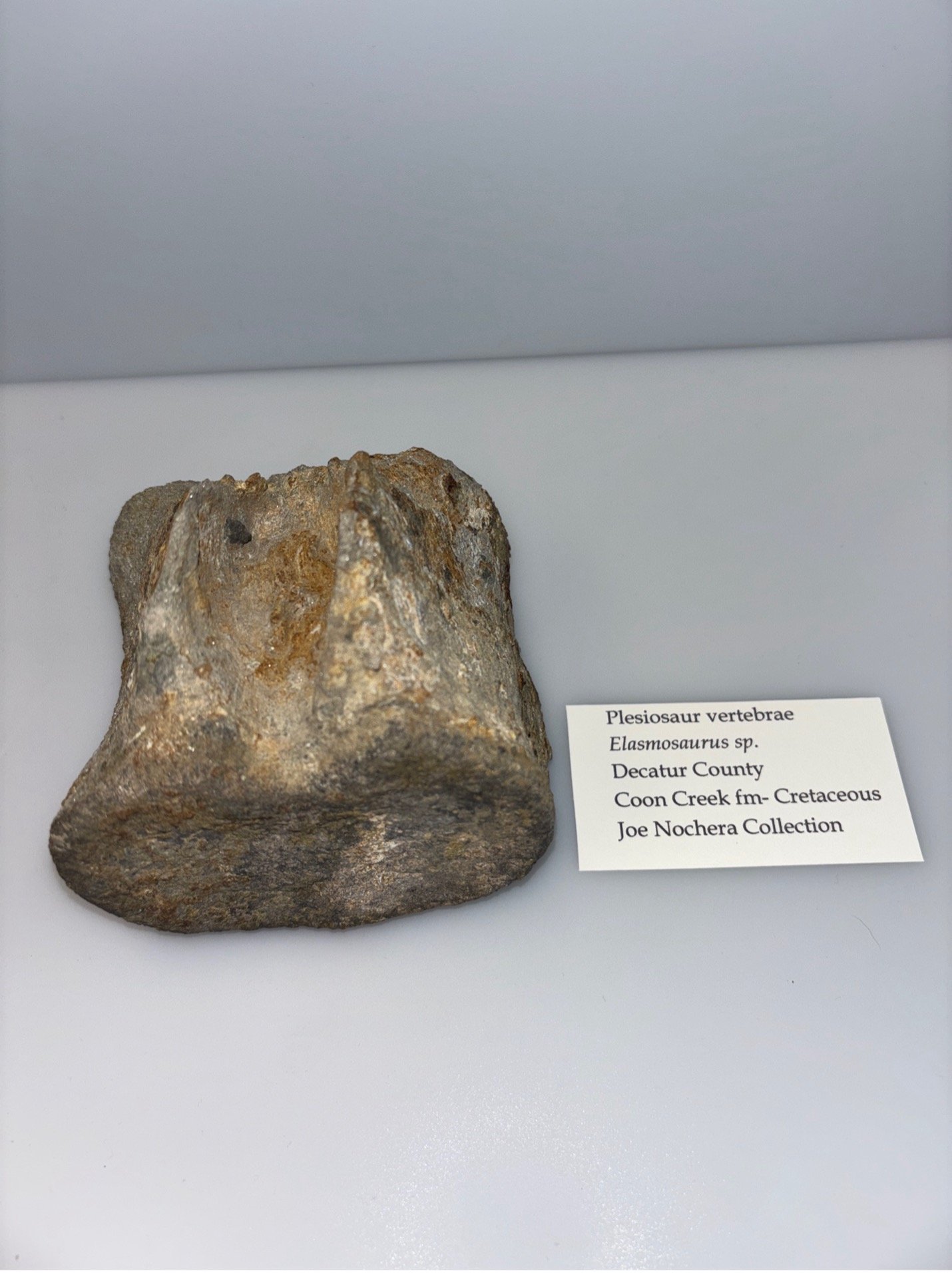
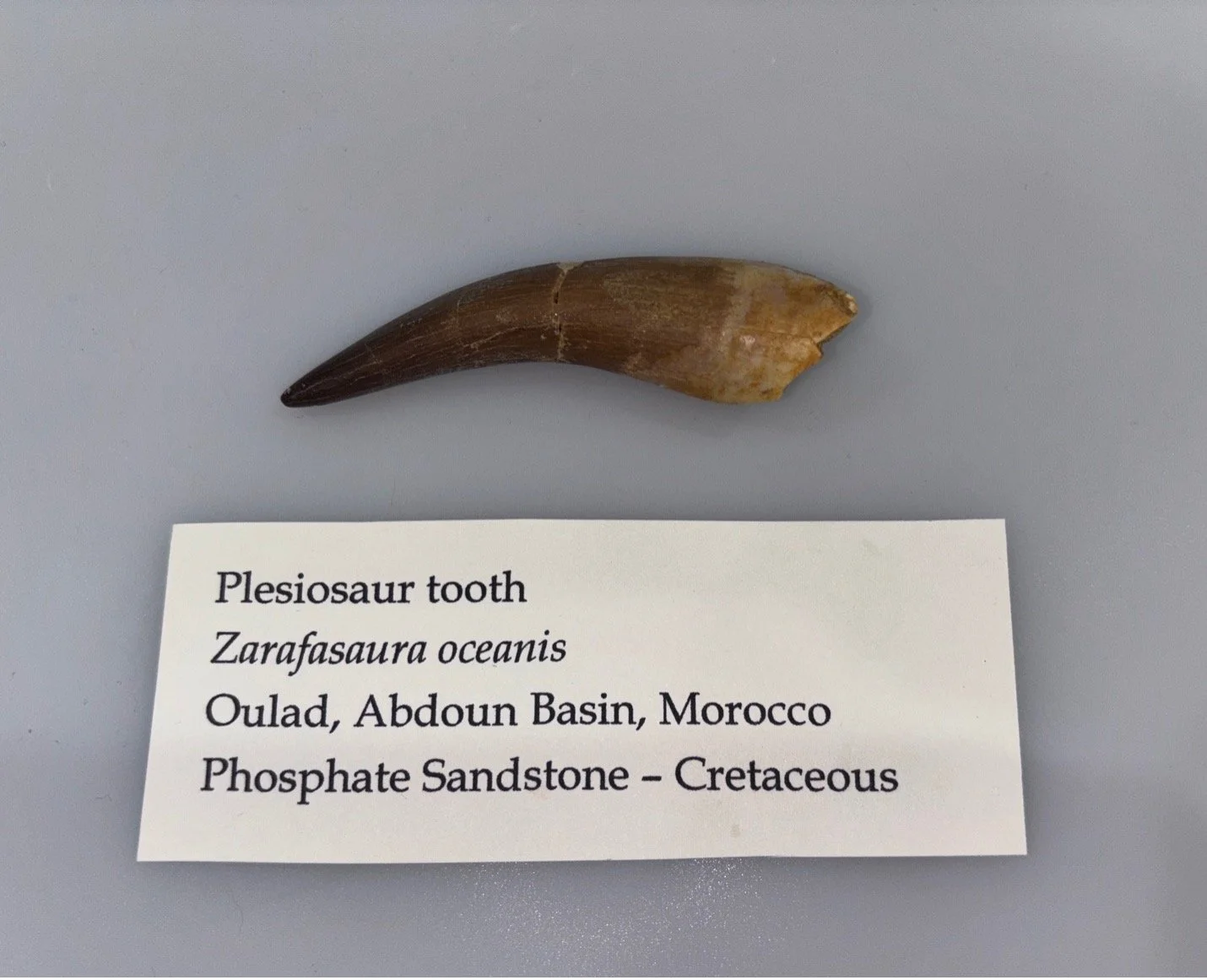
Plesiosaurs were marine reptiles that lived during the age of the dinosaurs. Though not dinosaurs themselves, Plesiosaurs are well-known for their distinctive body shape which inspired the famous cryptid, the Loch Ness Monster. While many believers argue that a Plesiosaur could still be in Loch Ness in Scotland, they all unfortunately went extinct at the same time at the non-avian dinosaurs following the K-Pg Impact. Their diet was comprised of fish and cephalopods. Plesiosaurs came in different shapes and sizes; some where large and long-necked like the Zarafasaura oceanis who had short faces with long necks, while some like the Pliosaurus had short necks and large heads.
The first complete Plesiosaur fossil was found by famous female paleontologist Mary Anning in 1823.
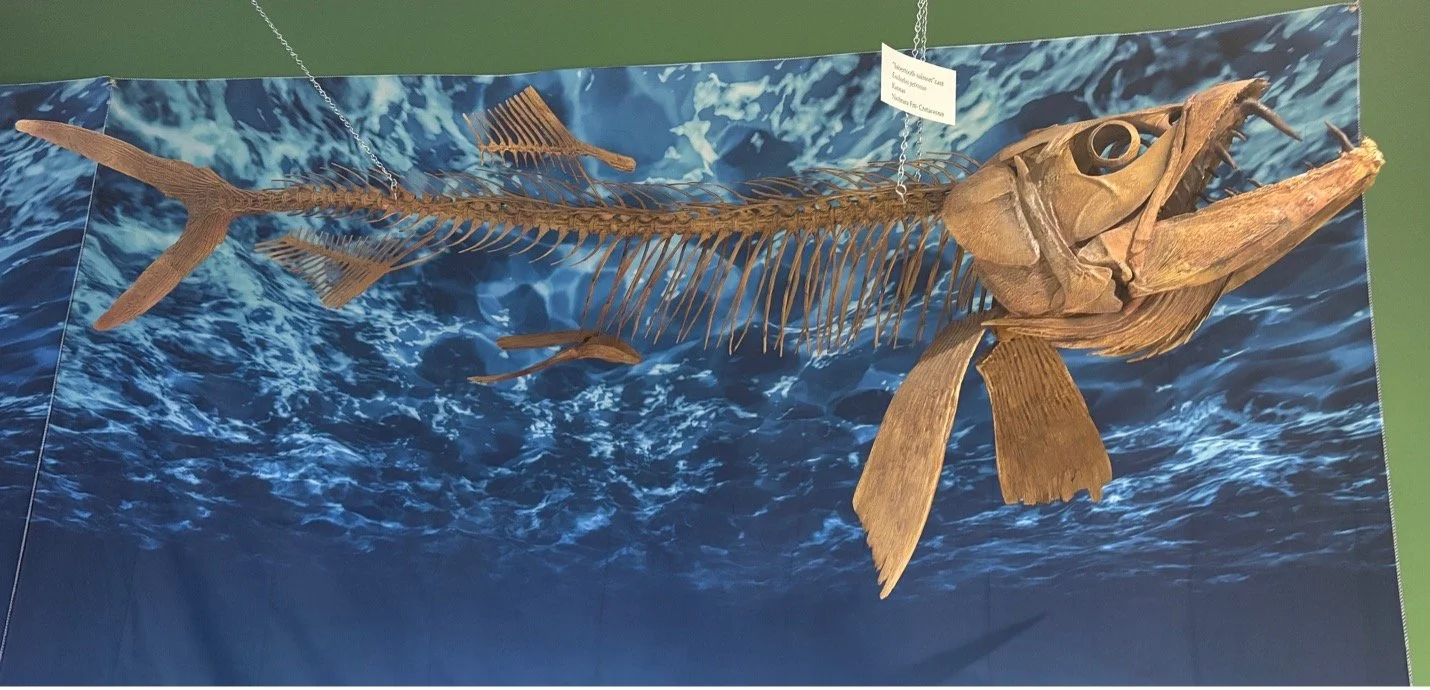
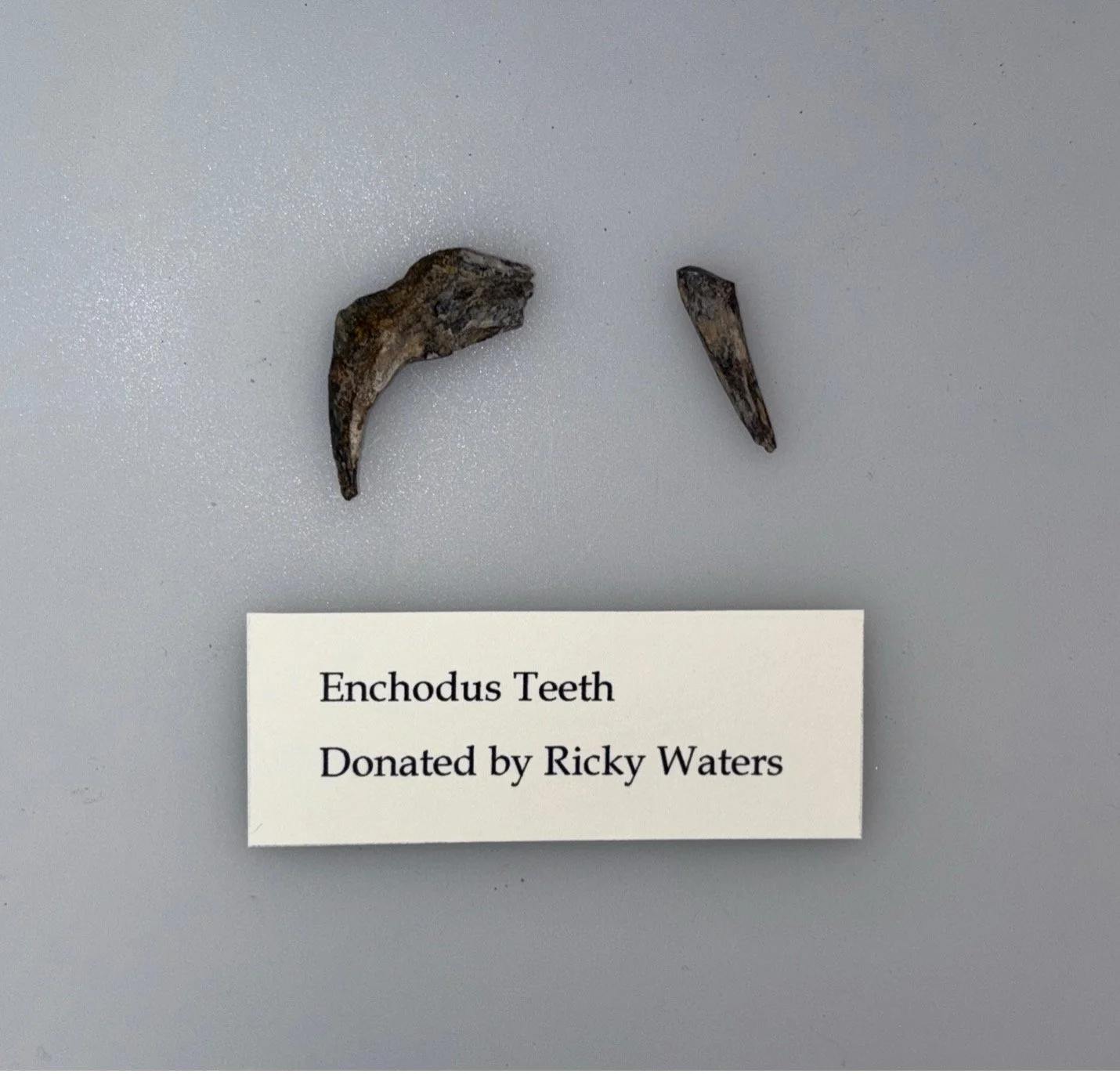
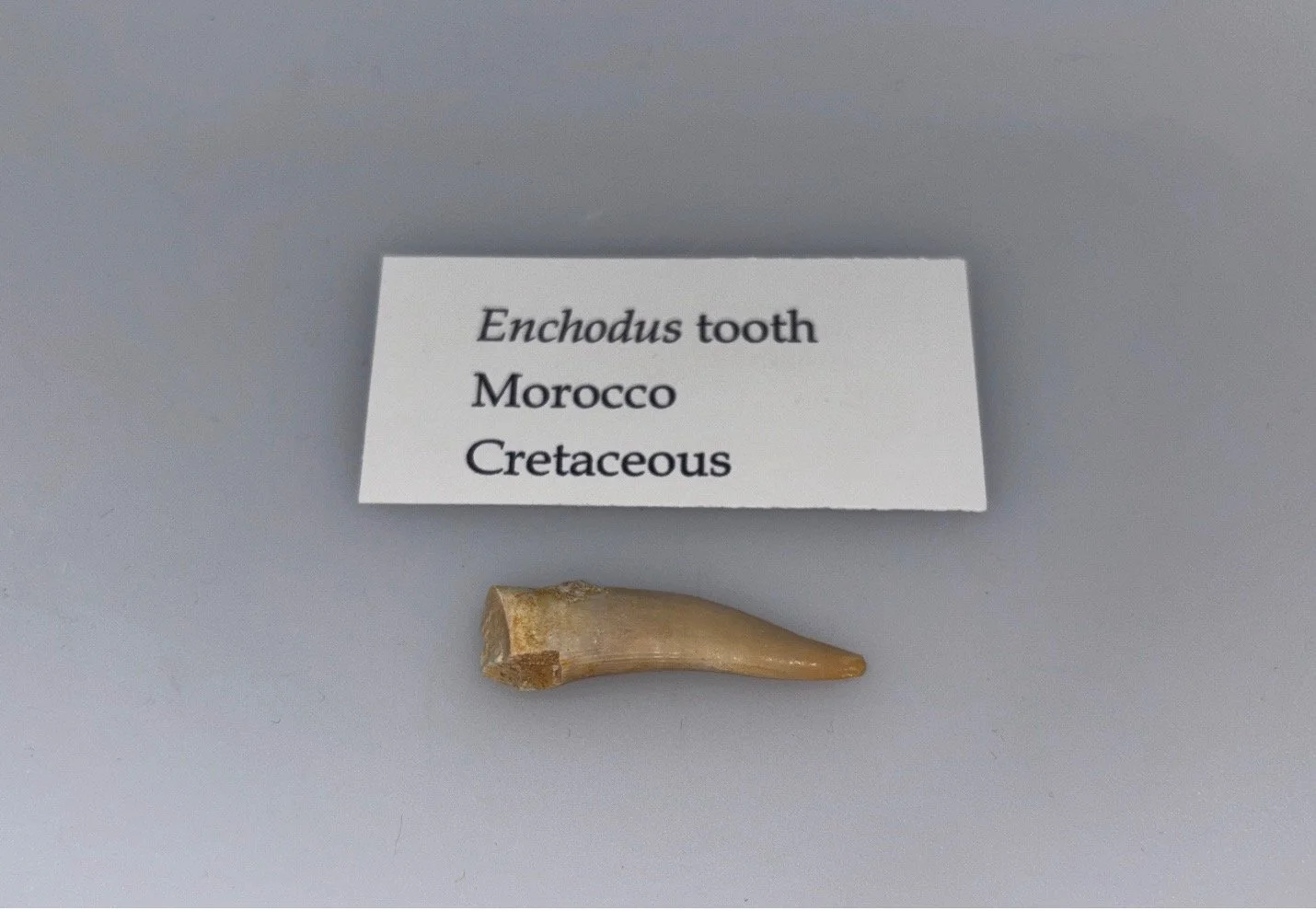
Enchodus was a genus of carnivorous fish that made the Cretaceous oceans their hunting ground. Different species in the Enchodus genus ranged in size, some adapting to hunt larger prey than other, but all had a mouth full of sharp teeth and a powerful bite. Enchoduspetrosus was the largest species of its kind, growing to about 5 feet in length. Its diet included smaller fish, cephalopods like squids and mollusks, and crustaceans.
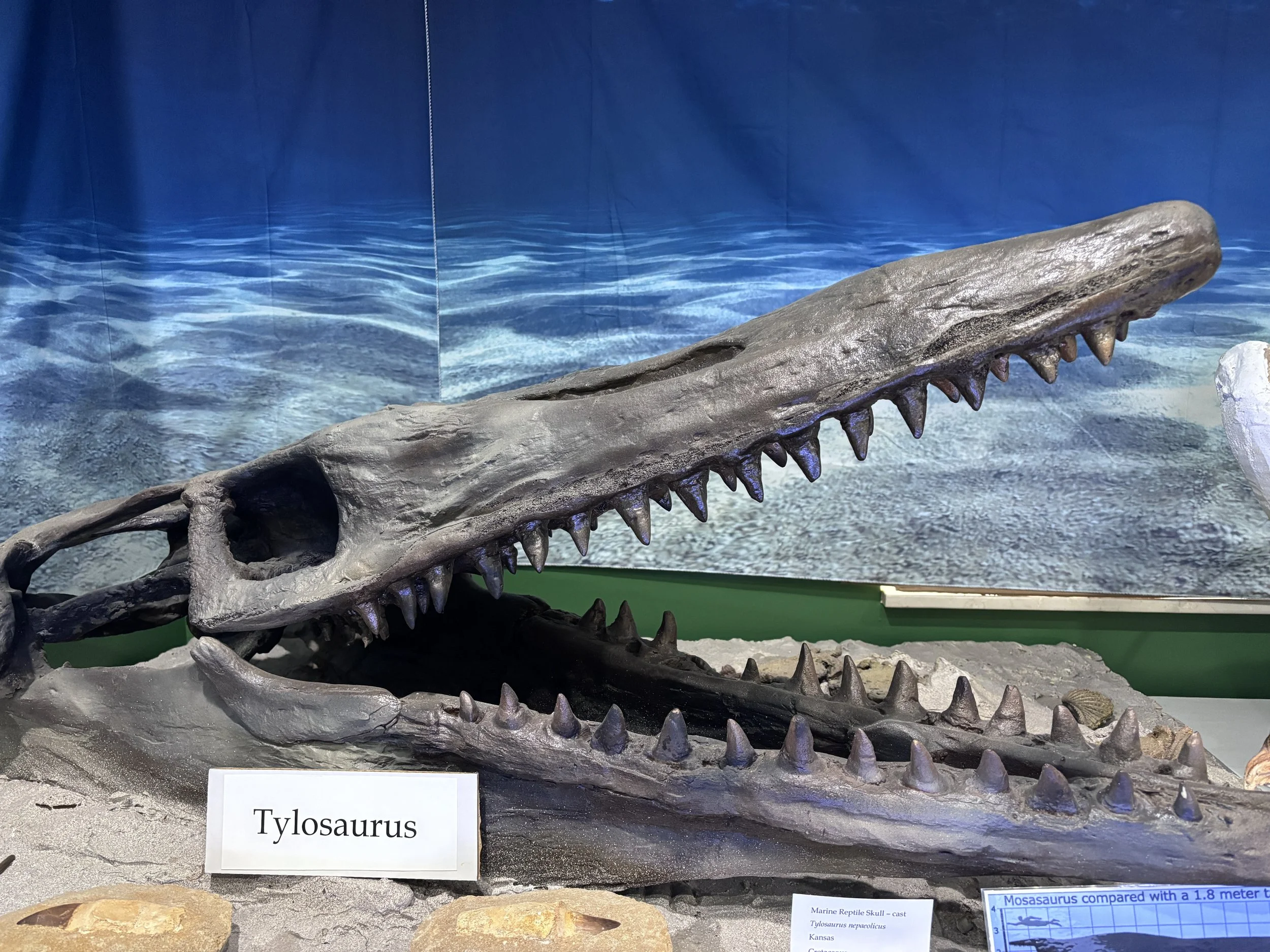
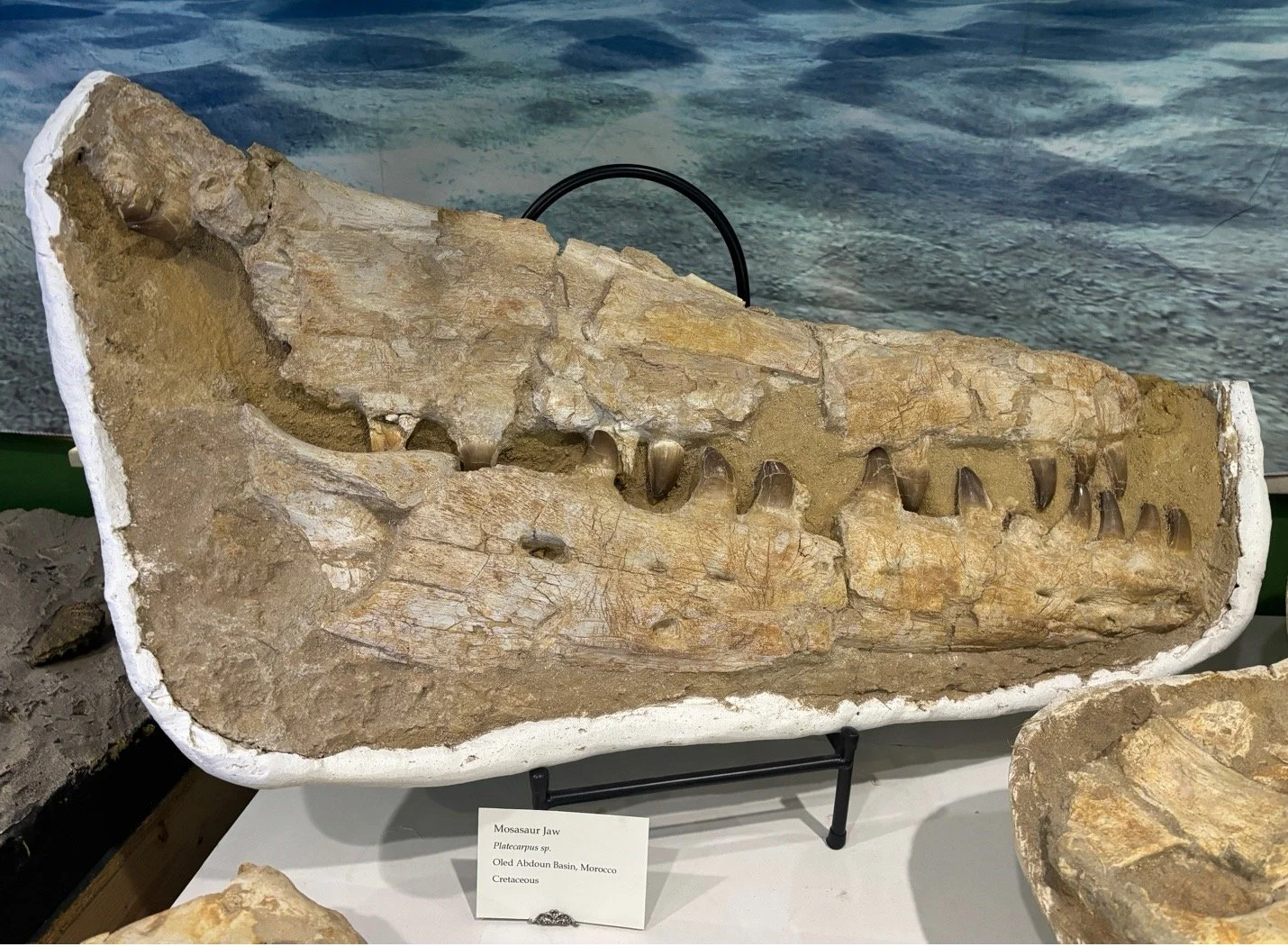
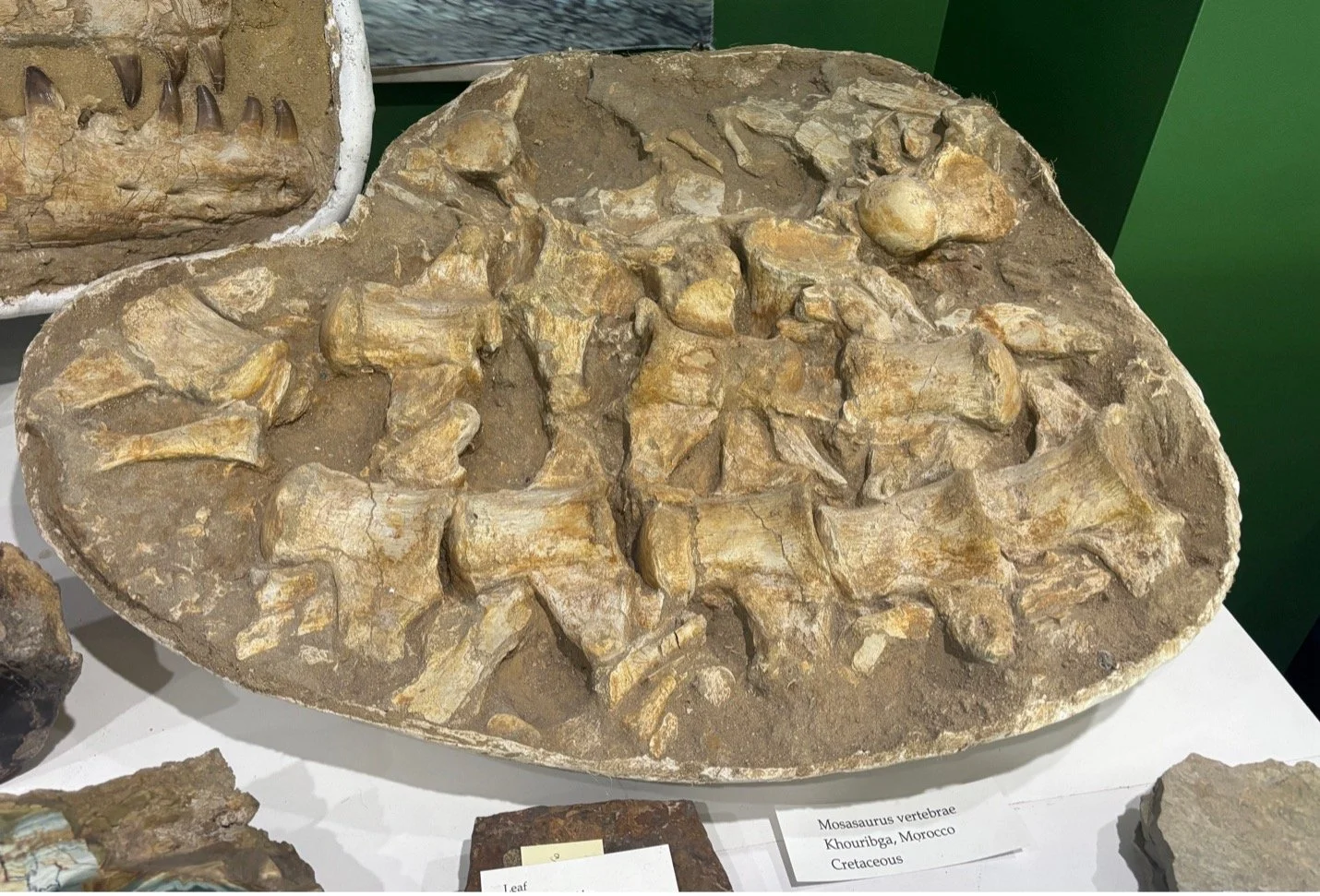
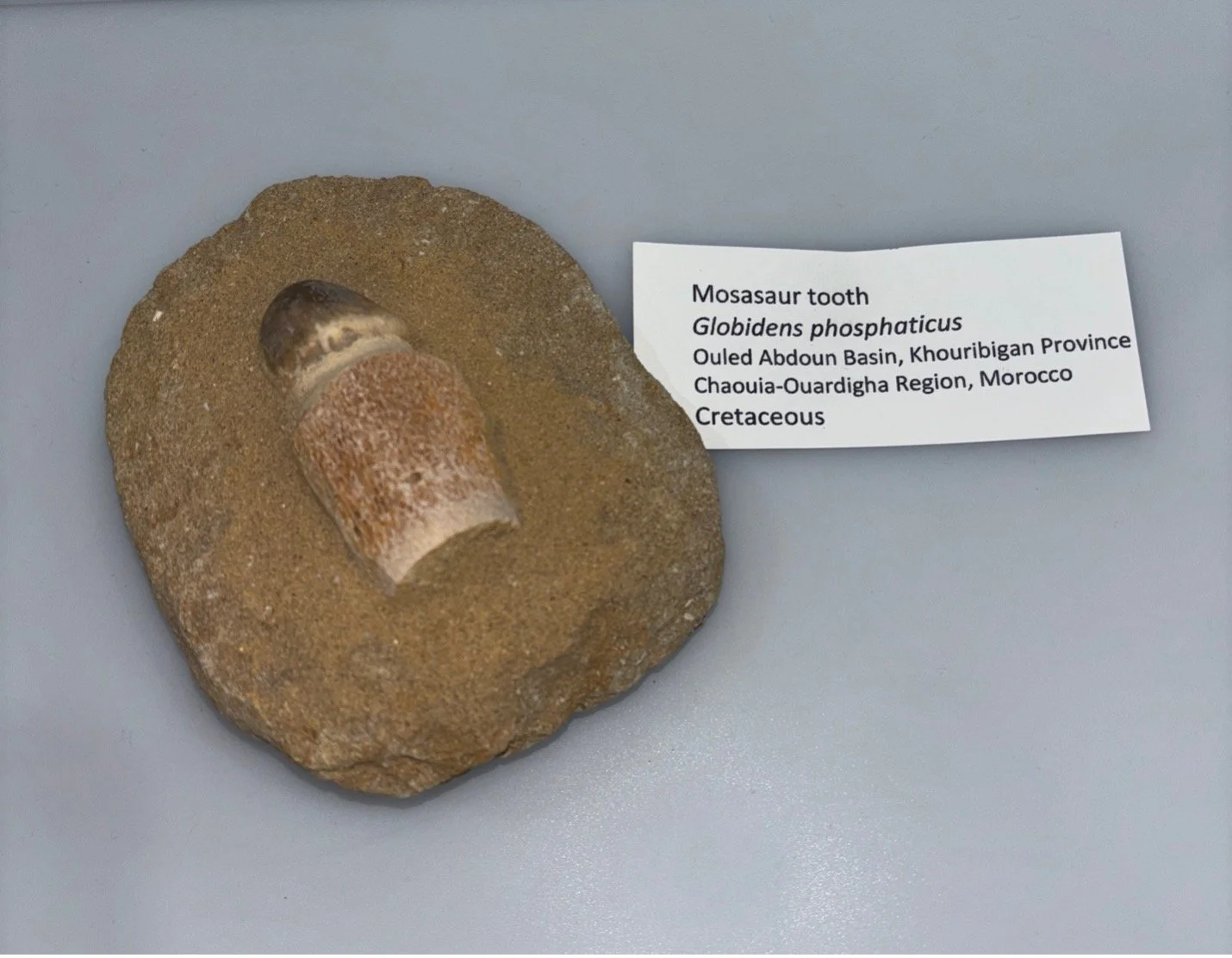
Mosasaurs were large marine reptiles that dominated the oceans of the Cretaceous period. Although they lived at the same time as many dinosaurs and have a name reminiscent of a dinosaur’s, Mosasaurs are not dinosaurs at all. In fact, their closest living relatives are monitor lizards and snakes. Mosasaurs gained popularity with the release of Jurassic World (2015), which depicts them as gargantuan, bulky-bodied giants. However, Mosasaurs in reality were sleeker and generally far smaller than the film’s depiction. The longest type of Mosasaur was the Tylosaurus, which reached up to 45-50 feet in length.
As ocean dwellers, Mosasaur fossils are found throughout the world. One freshwater variation was even found in Hungary. They were formidable predators whose diet included all types of smaller marine creatures like ammonites, fish, smaller mosasaurs, and even sea birds. While Mosasaurs stalked the ocean similar to modern sharks, as reptiles they still had to breach the surface for air like whales or sea turtles. Also similar to whales, it is likely that Mosasaurs gave live birth and did not lay eggs.
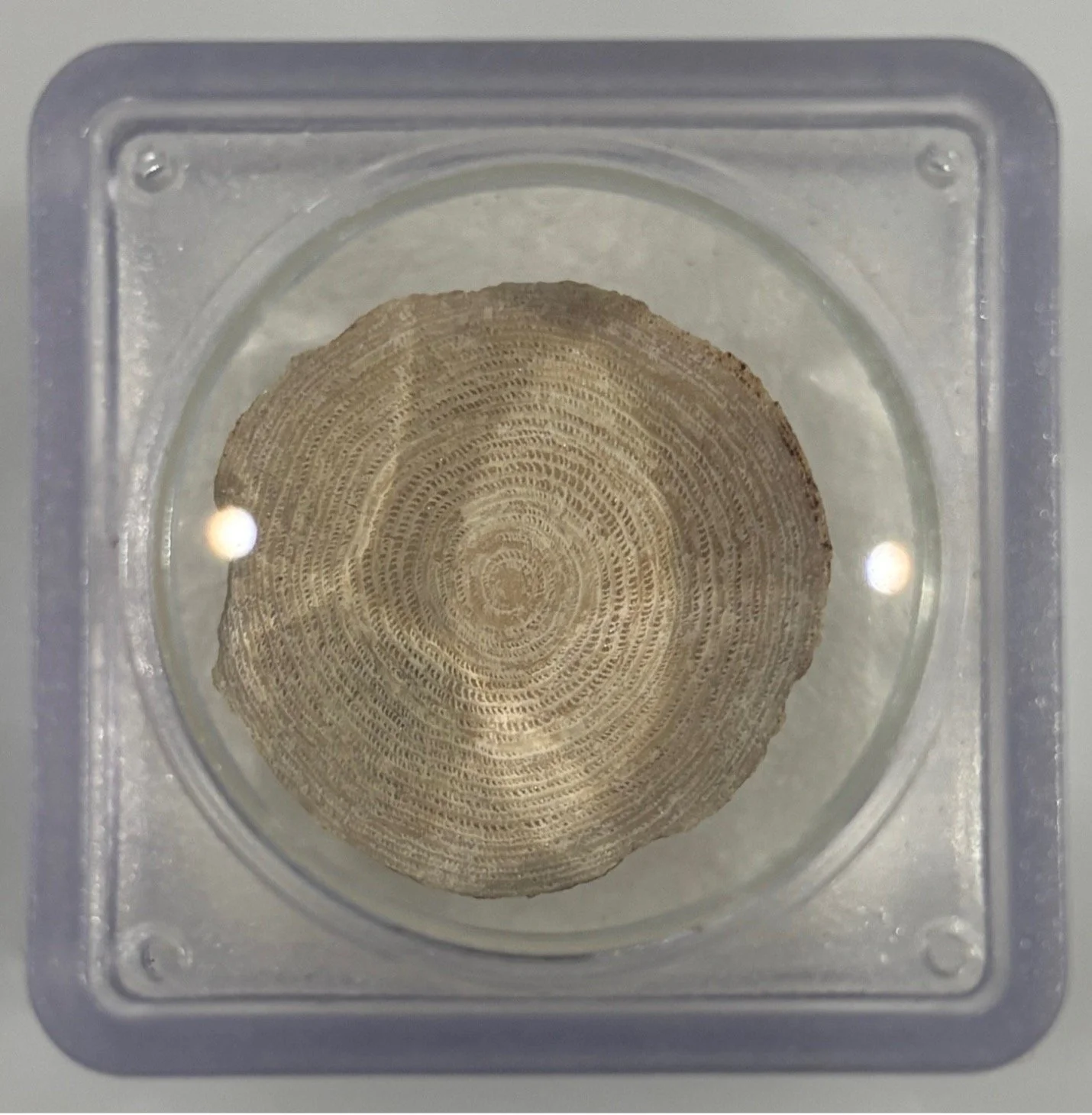
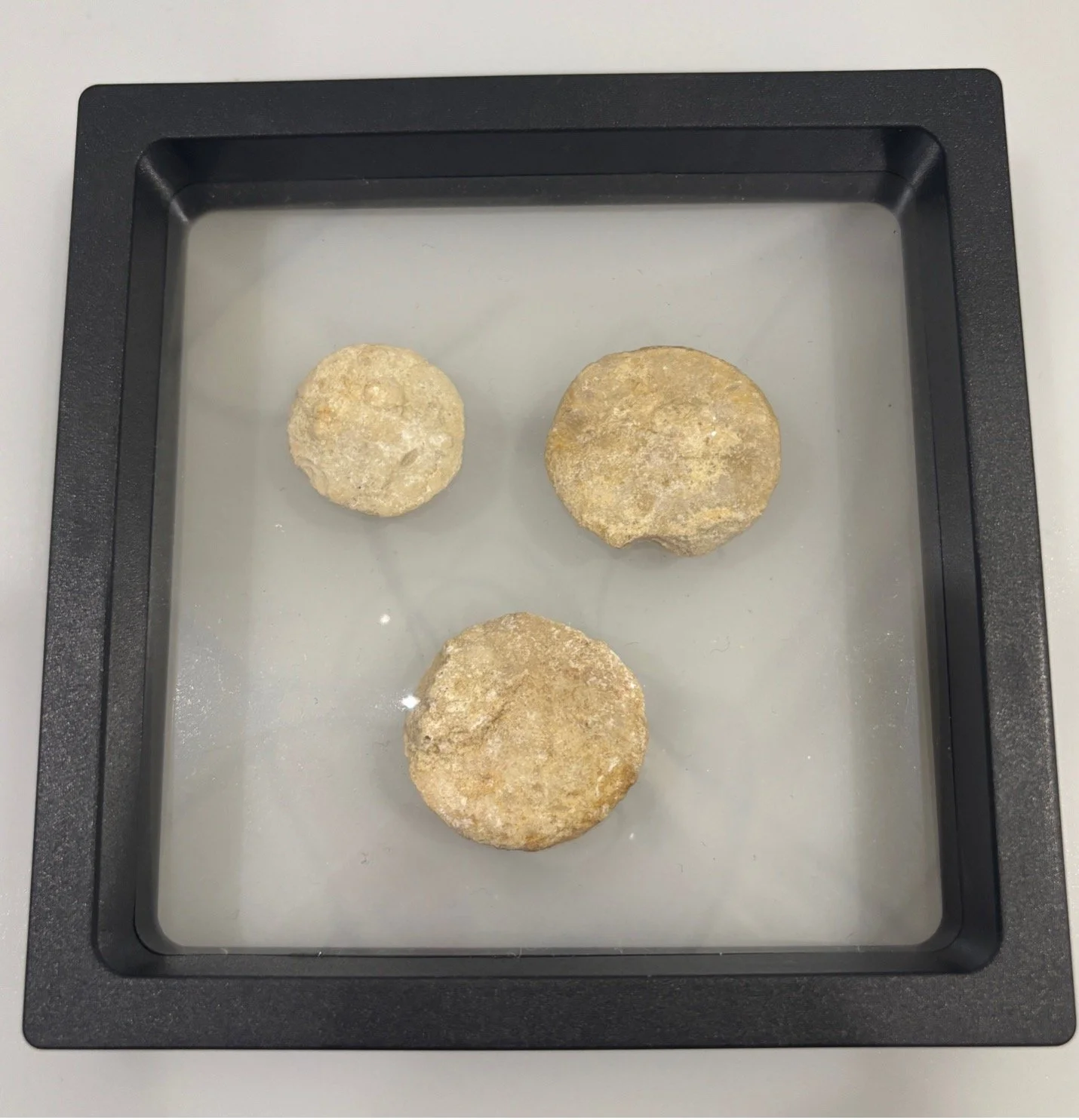
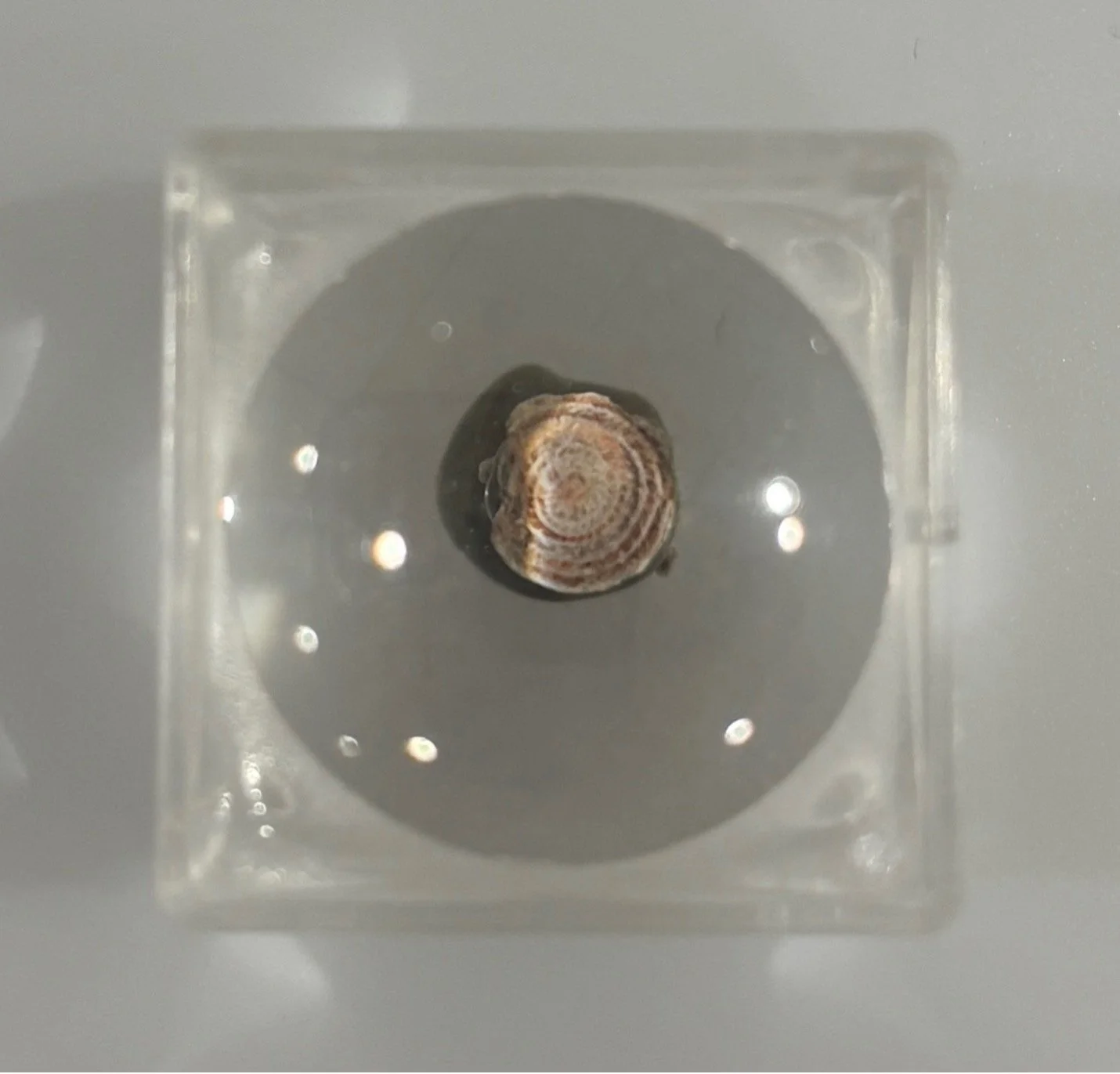
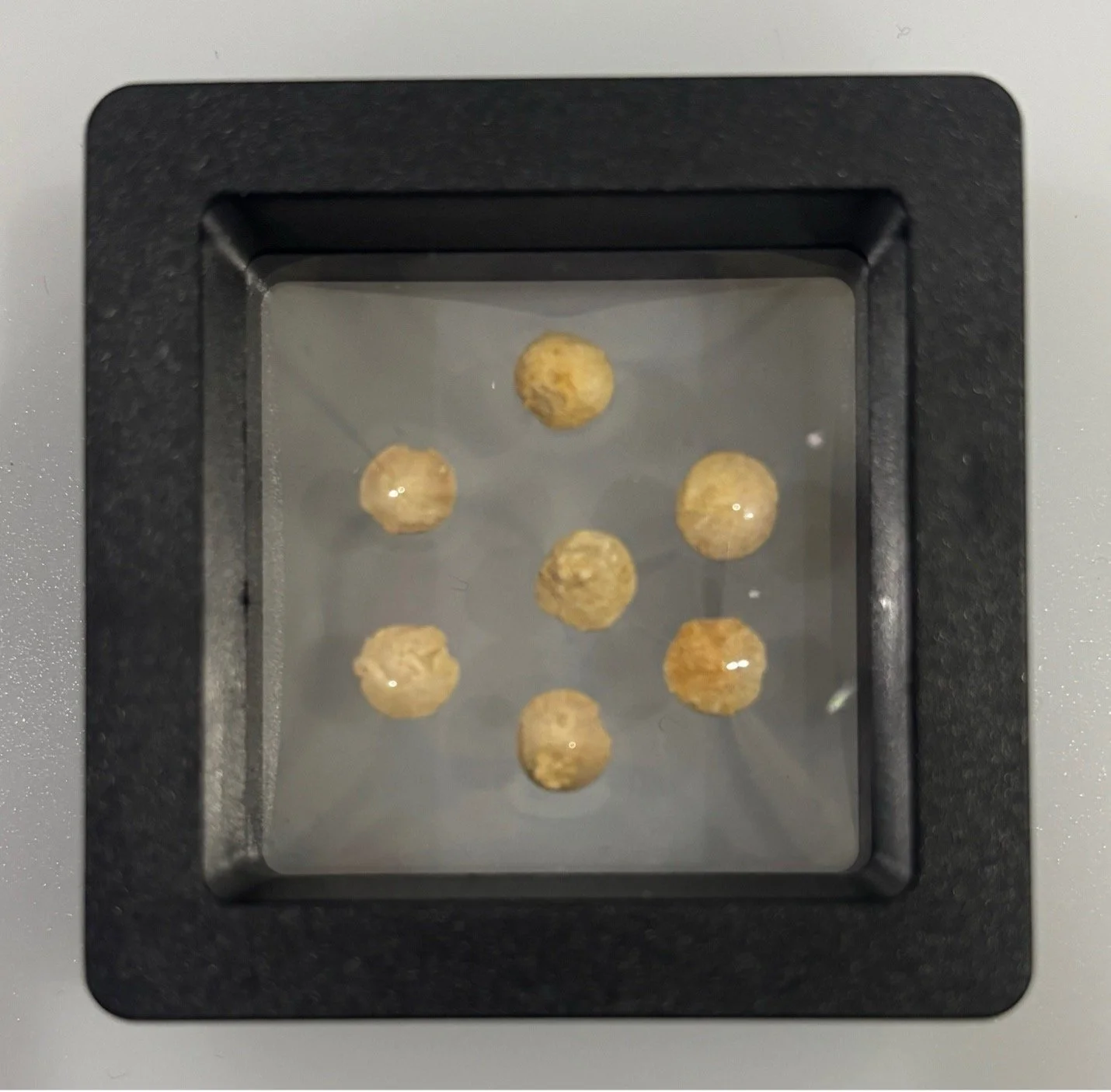
Nummulites are a type of foraminiferan (a type of single-celled organism) that develop disc shaped tests (shells) made up of connected chambers in a spiral arrangement. This species, Nummulites gizehensis, lived during the Eocene epoch and dwelled at the bottom of a shallow ocean around what is now Northern Africa and Southern Europe. The fossils of nummulites can be seen in the very stones that make up the Pyramids of Giza, hence their name.
Nummulites have an ‘alternation of generations’ life cycle, making both the large, coin shaped specimens, and the small, lentil shaped specimens, the same species. The large, coin shaped forms reproduced asexually after reaching maturity, producing the smaller form. The small, lentil shaped forms reproduced sexually after reaching maturity, producing the larger form.
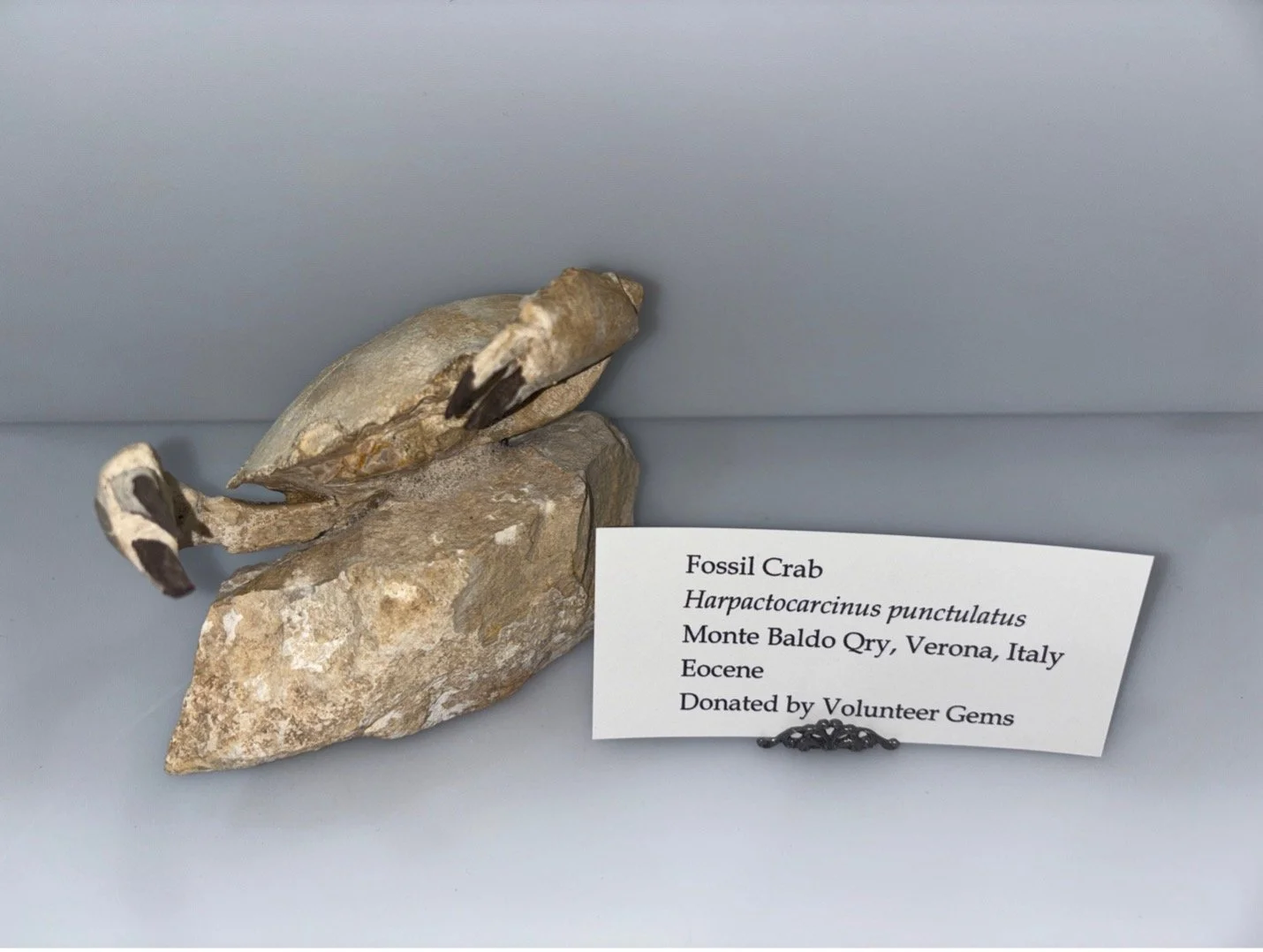
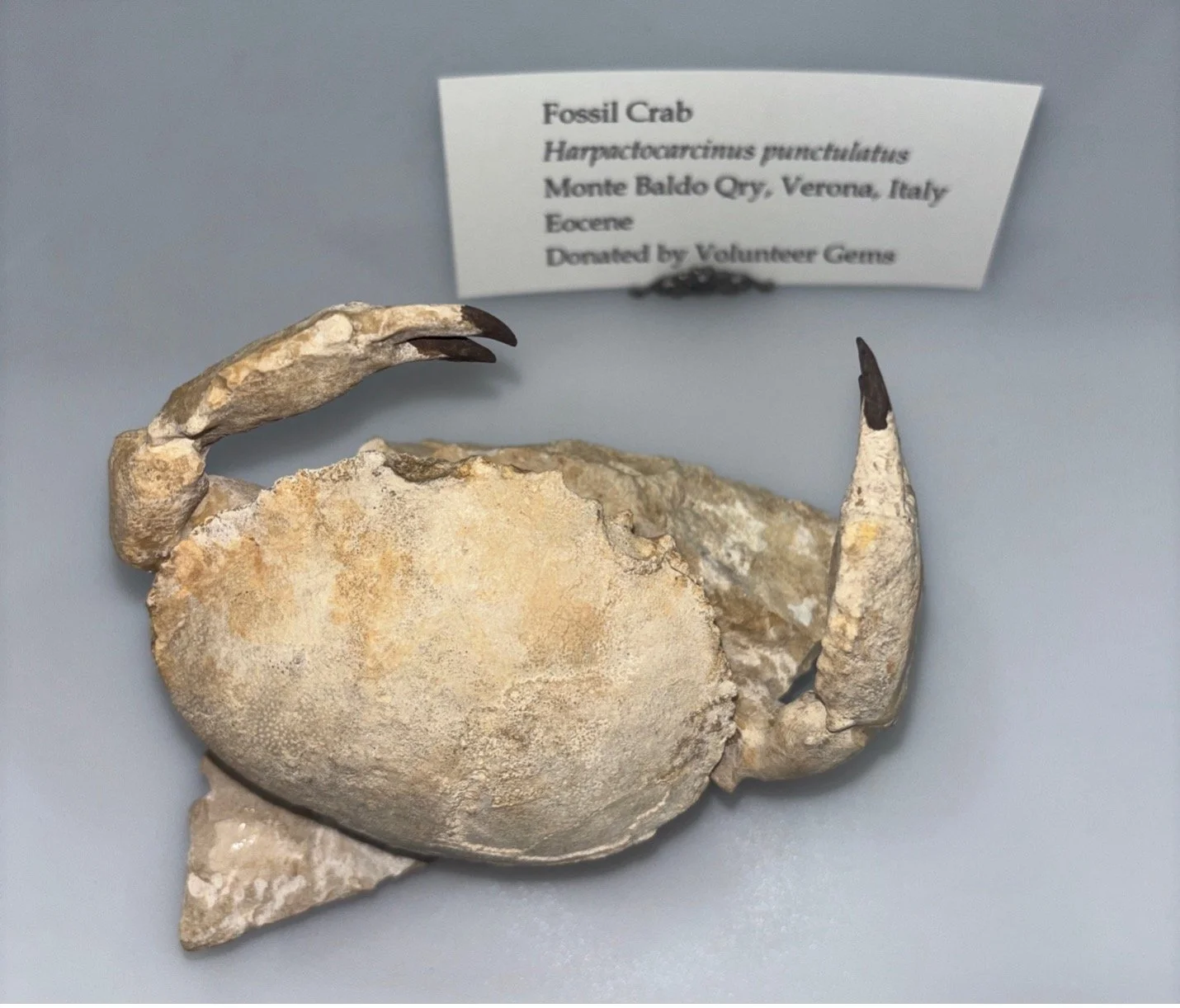
Harpactocarcinus punctulatus was a type of mud crab whose incredibly well-preserved fossils can be found in Europe and North America. These crabs fossilize astoundingly well because of their hard carapaces, which make their remains look a bit like statues instead of fossils.
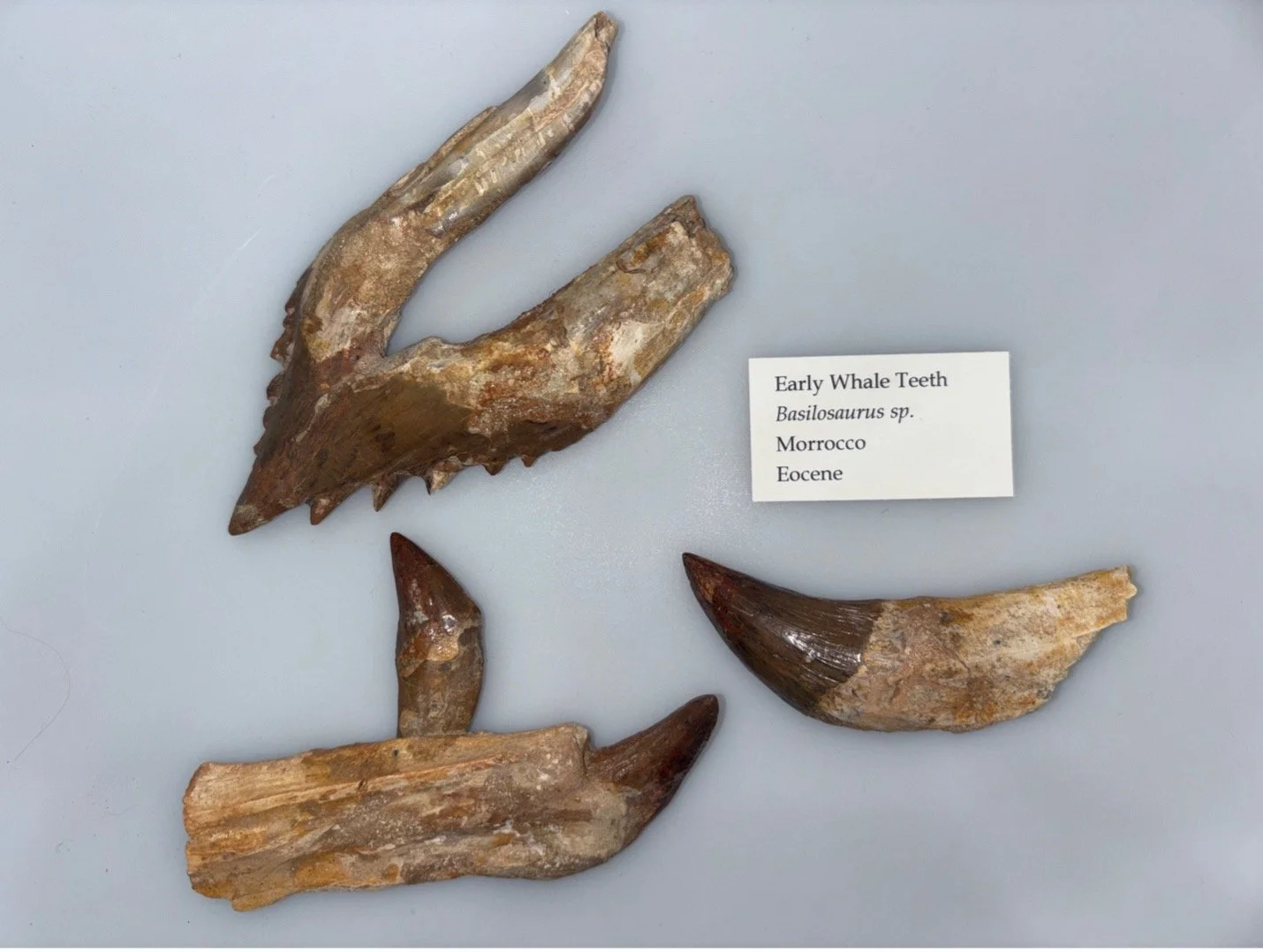
The Basilosaurus was an apex predator of the Eocene seas. Despite its reptilian name, they were marine mammals like whales. It is known for its prominent and intimidating teeth, which it used to hunt fish, sharks, and likely marine mammals. The Basilosaurus was long and slender, ranging between about 50-65 feet full grown. An interesting feature of their anatomy was their vestigial hind legs, which were not even attached to the skeleton and completely useless to the animal itself. Those legs do, however, tell paleontologists more about whale evolution, proving that whales’ ancestors once walked on land before returning to the water.
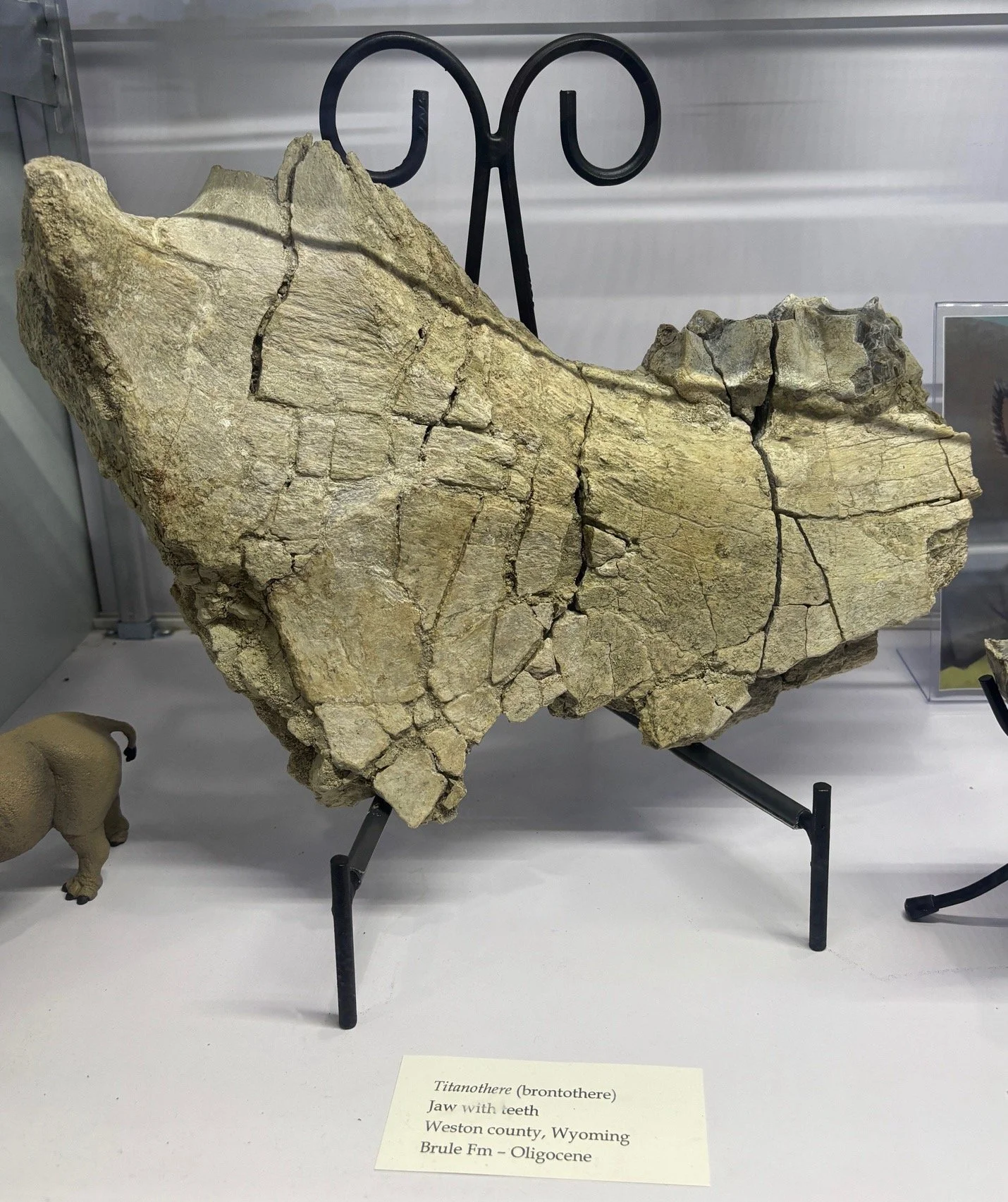
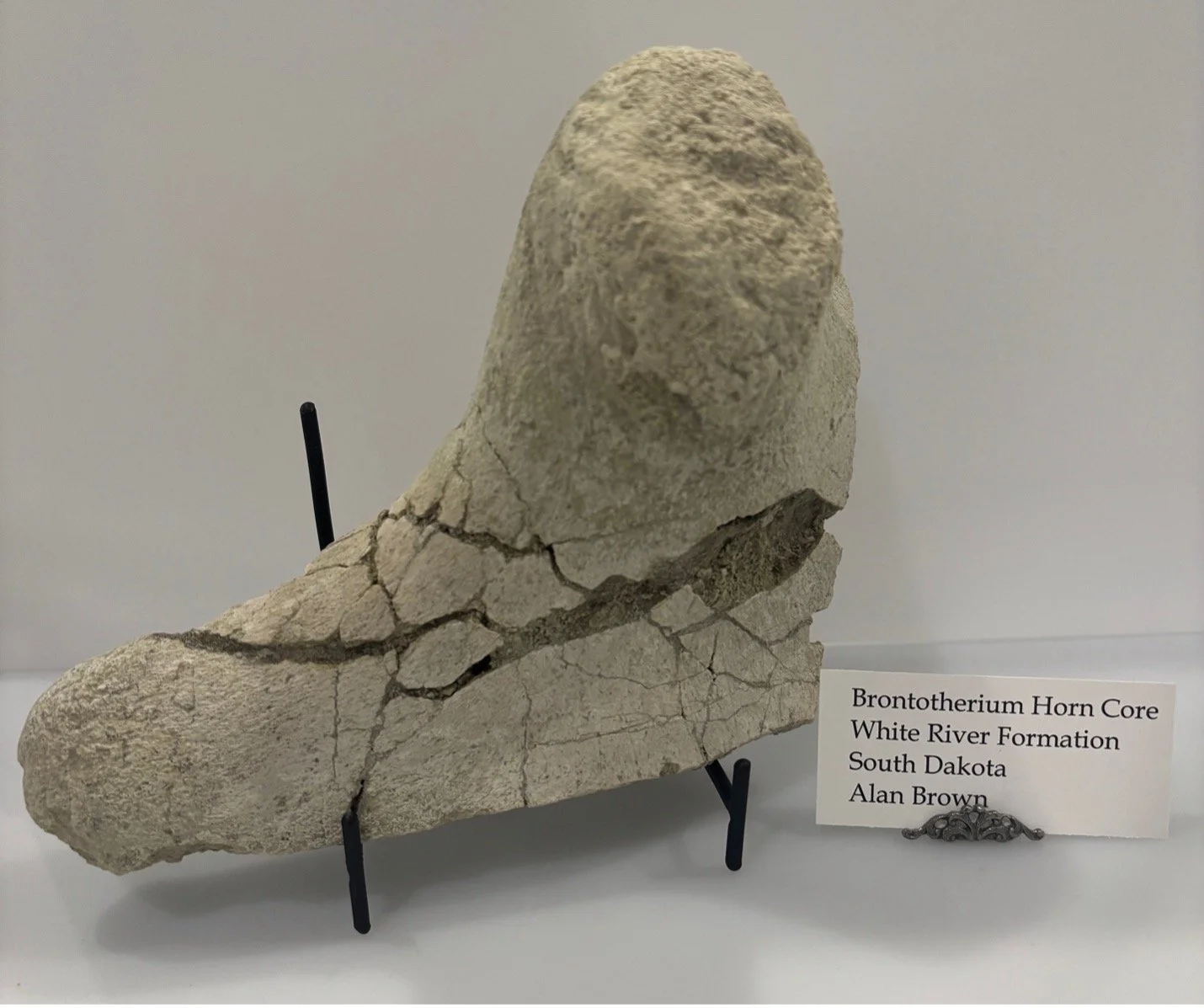
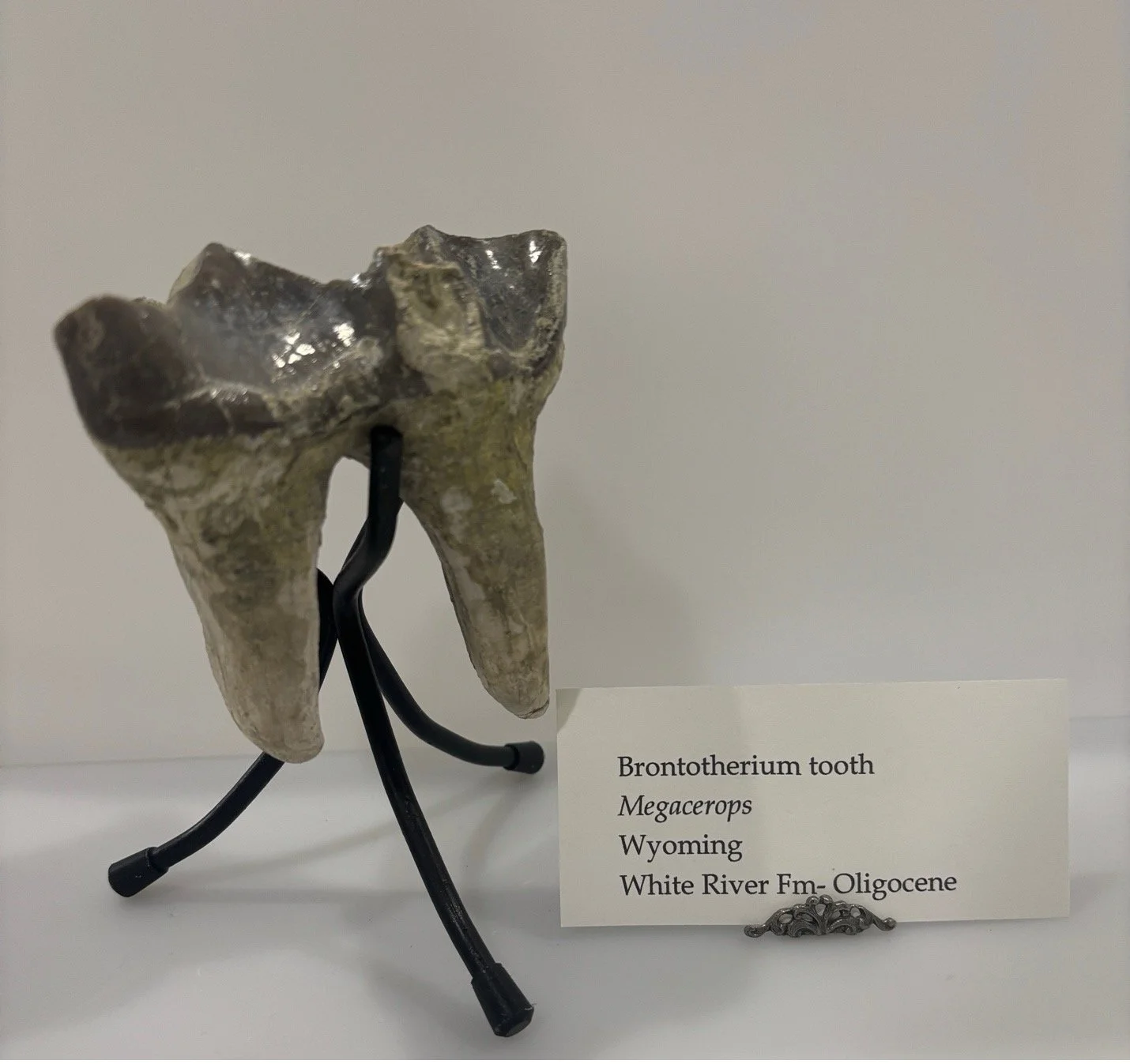
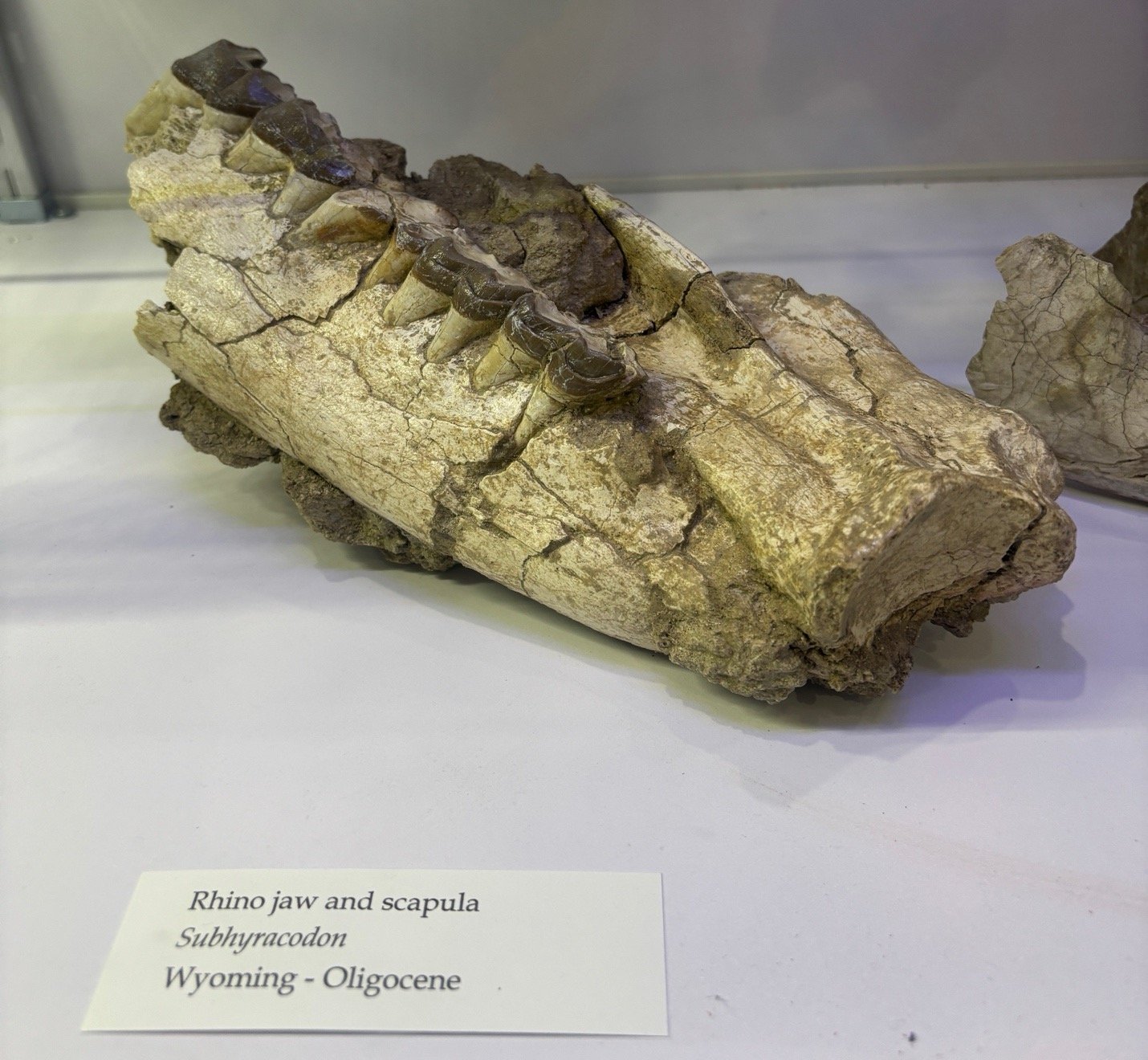
The group Brontotherium is a family of large megafauna of rhinoceros-like mammals. By the end of the Eocene, Brontotheres evolved to be very large (about 8 feet tall and 16 feet long) and would have traveled in herds. Like their distant relatives rhinoceroses, Brontotheres sported large horns; but unlike rhinos, their horns were made entirely of bone instead of keratin. They were herbivorous and grazed on soft vegetation, which ultimately lead to their extinction at the end of the Eocene. During a shift in climate, the warm and verdant lands of the Eocene dried out and became much colder, which effectively destroyed the Brontheres’ food source.
This group of animals goes by many names, but the two most popular are Brontothere which means “thunder beast” and Megacerops, meaning “large-horned face”.
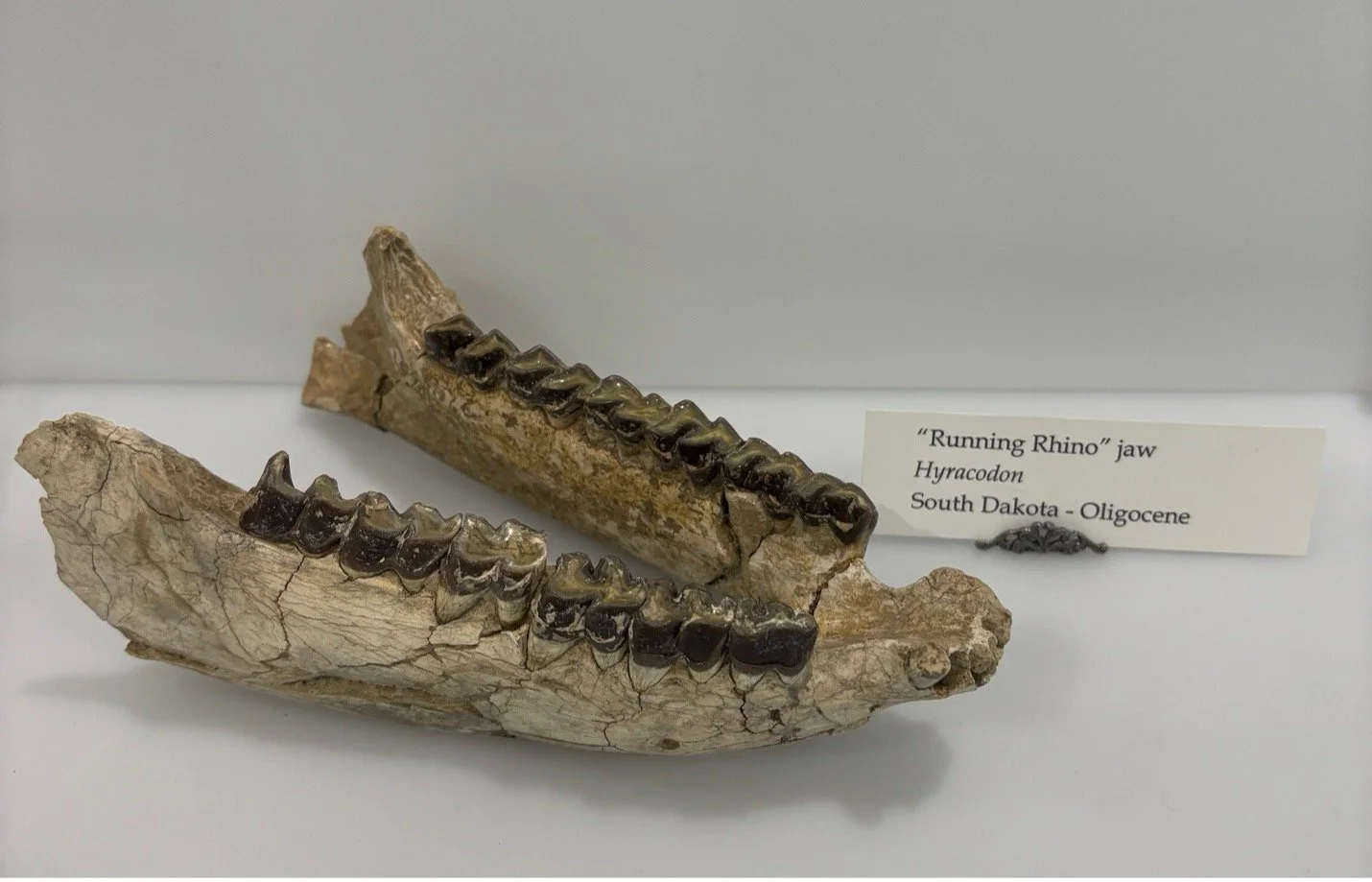
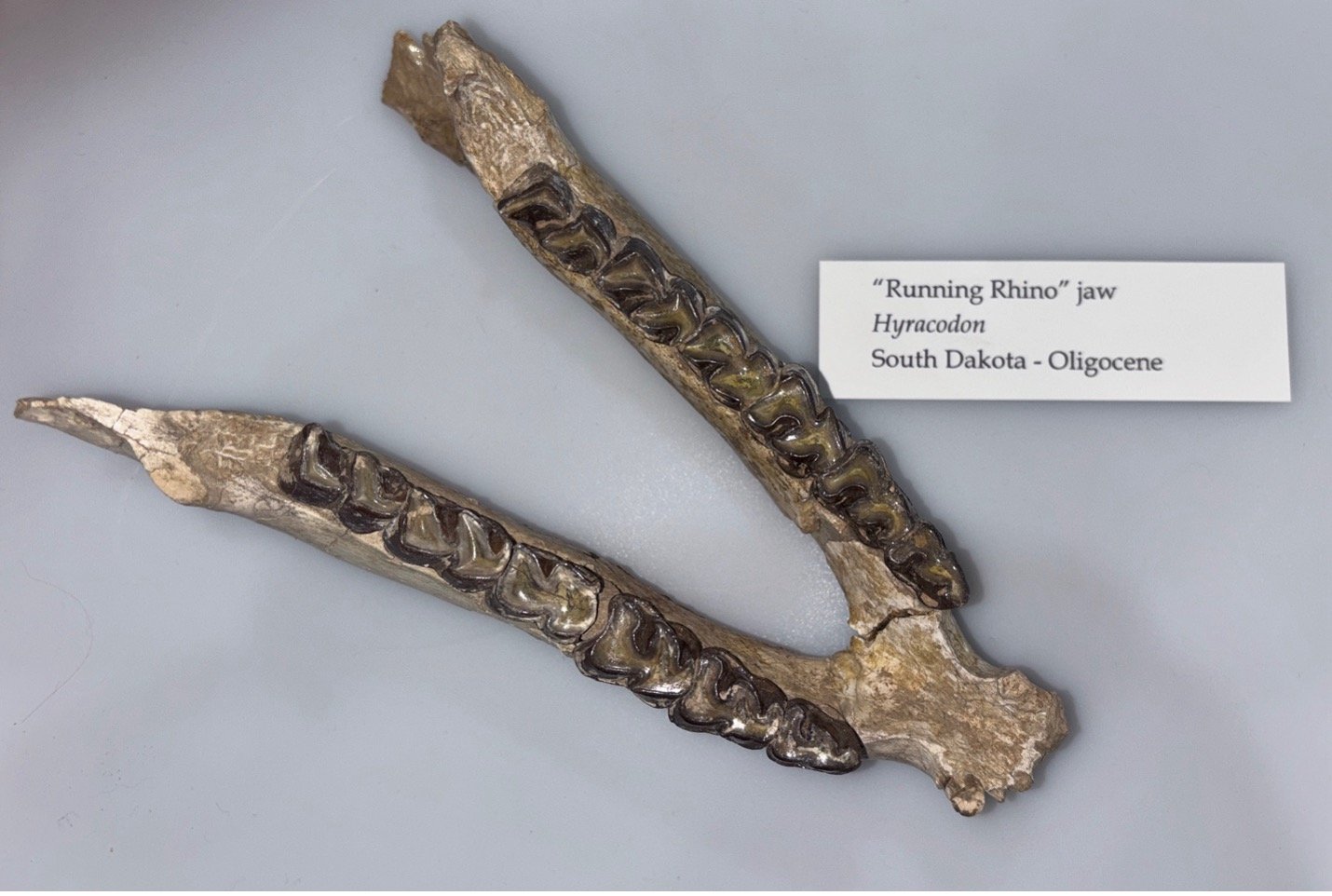
Hyracodon, or the Running Rhino, was a small and graceful member of the rhino family. They functioned more like horses than their modern rhino relatives, as they were hornless with long, slender legs. They were about the size of a pony, and likely used their agility to flee from predators rather than fight them. Hyracodon lived throughout North America and Asia, only going extinct from climate change and loss of habitat.
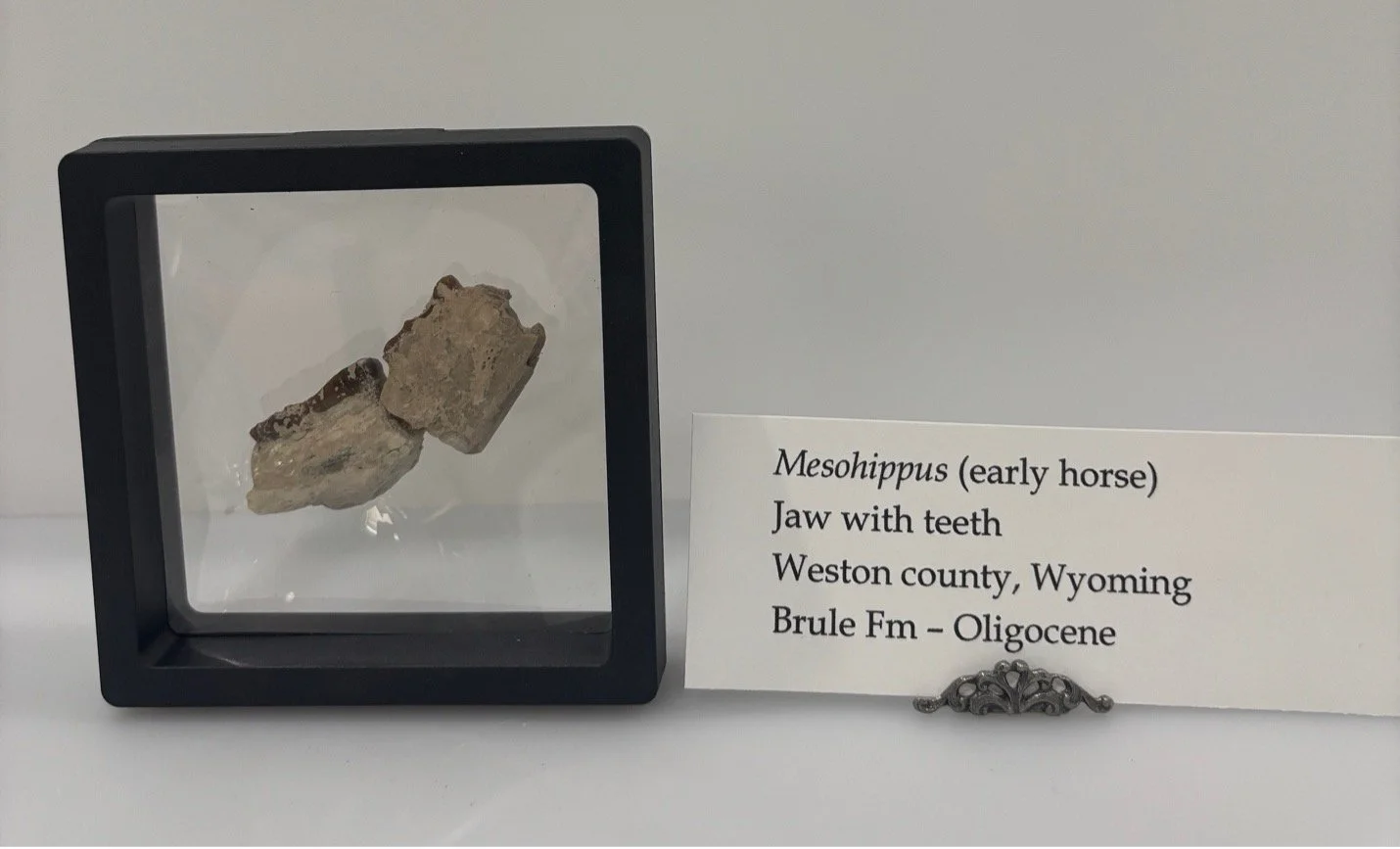
An ancestor of modern horses, Mesohippus was an important developmental stage in horses’ family line. They had not yet developed hooves and walked on three-toed feet. Mesohippus was a small, primitive horse that was about the size of a labrador retriever. These early horses were grazers that lived in North America and had to contend with predators like the cat-like nimvarids and other large carnivorous mammals called Hyenadons.
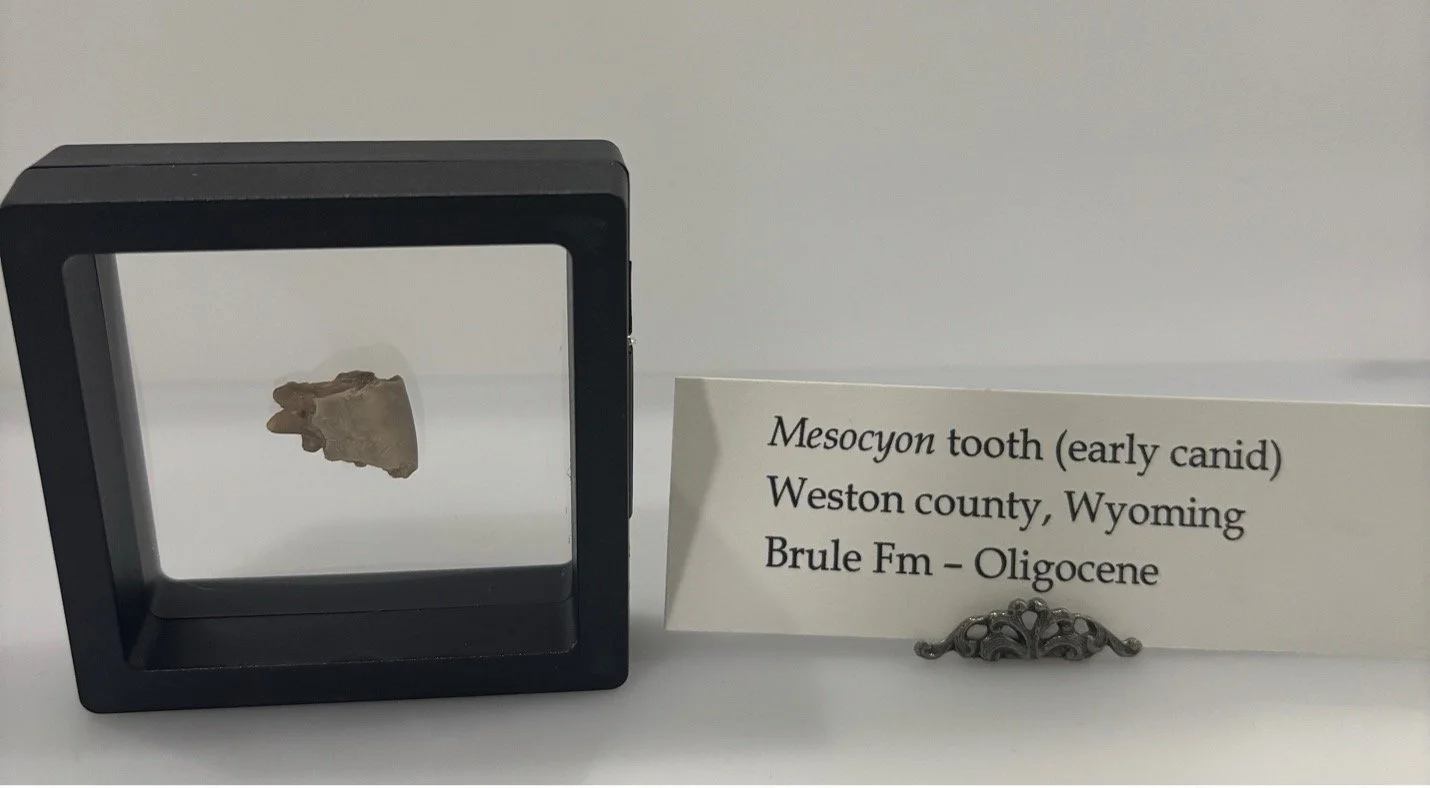
Canid species within the Mesocyon genus, sometimes called the “middle dog” or “short-faced dog”, were part of a now extinct genus of canids and are therefore not ancestors to modern dogs. However, it is believed the Mesocyon canids hunted in packs in open spaces like modern canids, likely relying on a strong sense of smell and sharp hearing and were about the size of a modern coyote. The major difference between Mesocyon lifestyle and modern canids is their diets: Mesocyons were carnivorous while modern dogs are omnivorous.
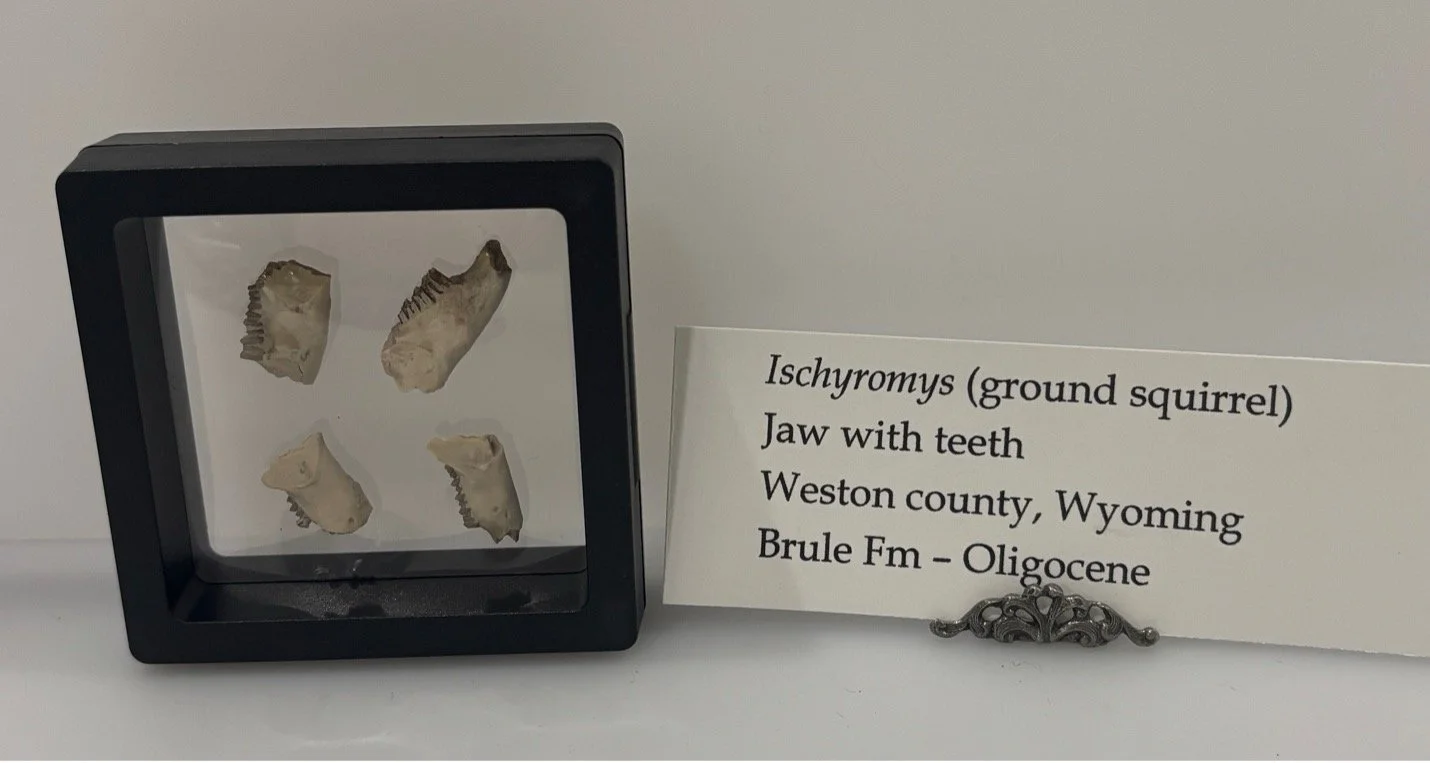
Ischyromys was a small, tree climbing mammal and was among the first true rodents to ever exist. It shared many visual traits with modern squirrels, like its long tail and long incisors, but is actually more closely related to the Mountain Beaver, a small rodent that lives in the Pacific Northwest.
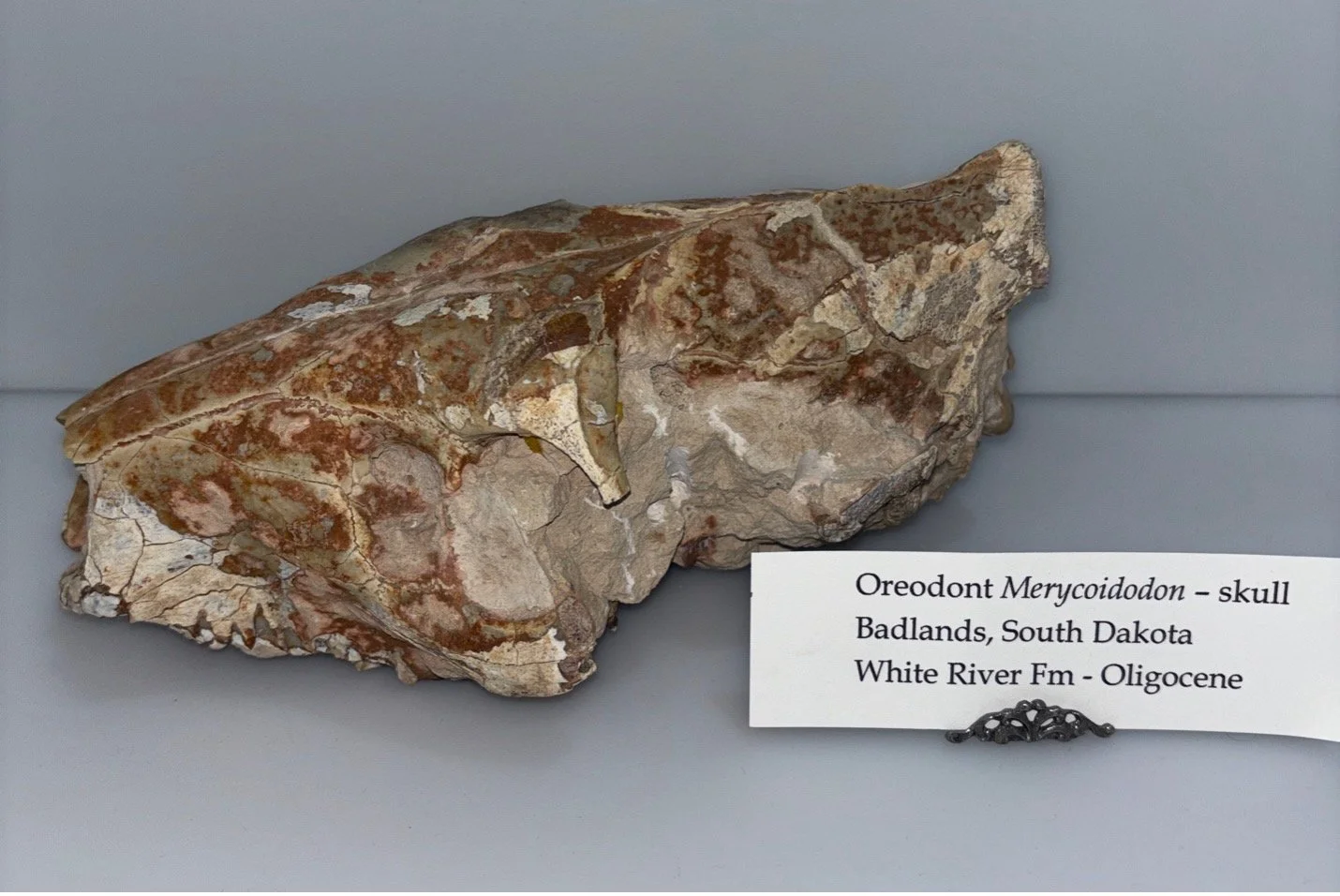
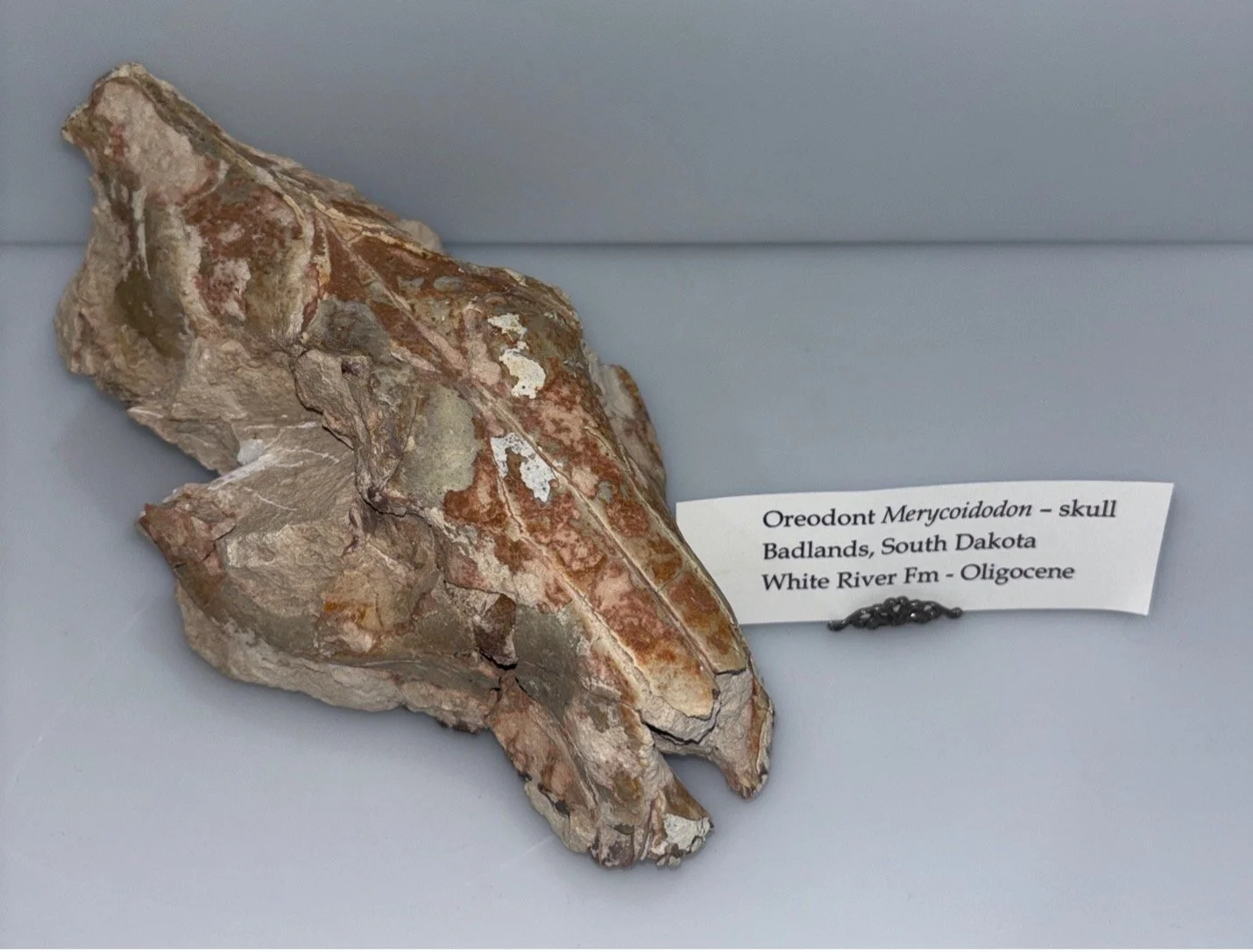
Merycoidodon, or more commonly known as Oreodonts, were grazing mammals that resembled pigs or sheep. They are famous both for their teeth (the name Oreodont translates to “mountain teeth”) and the sheer number of their fossils that people have found. Oreodont populations were outlandishly abundant, so much so that their fossils are a common find in places like Badlands National Park. They moved in herds, which protected them from predators like saber-tooth cats. Despite their numbers, they were not adaptable to changes in food availability and went extinct as a result of major climate change and being outcompeted by other foraging species.
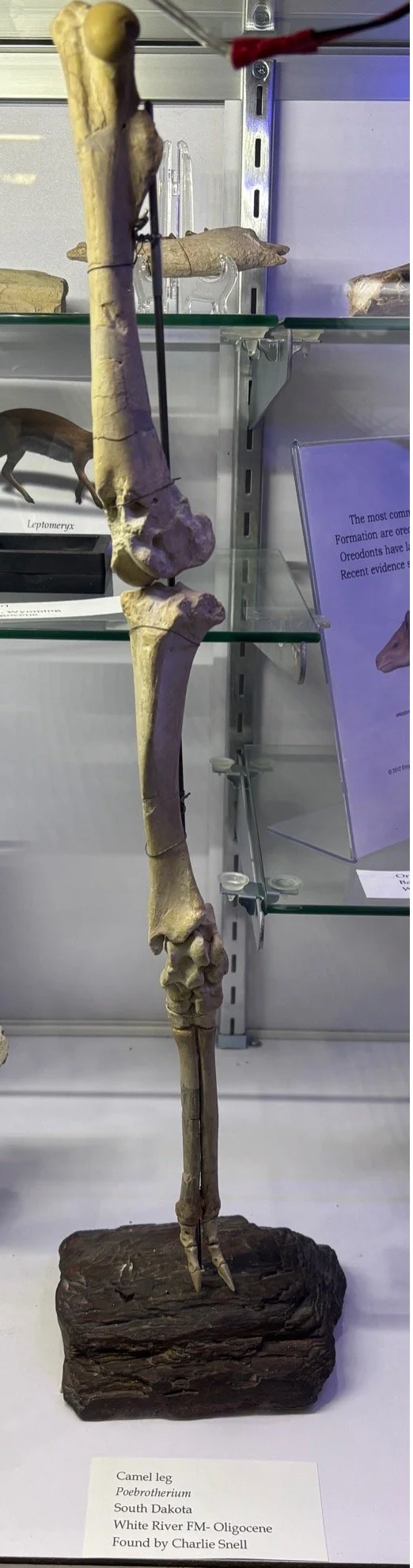
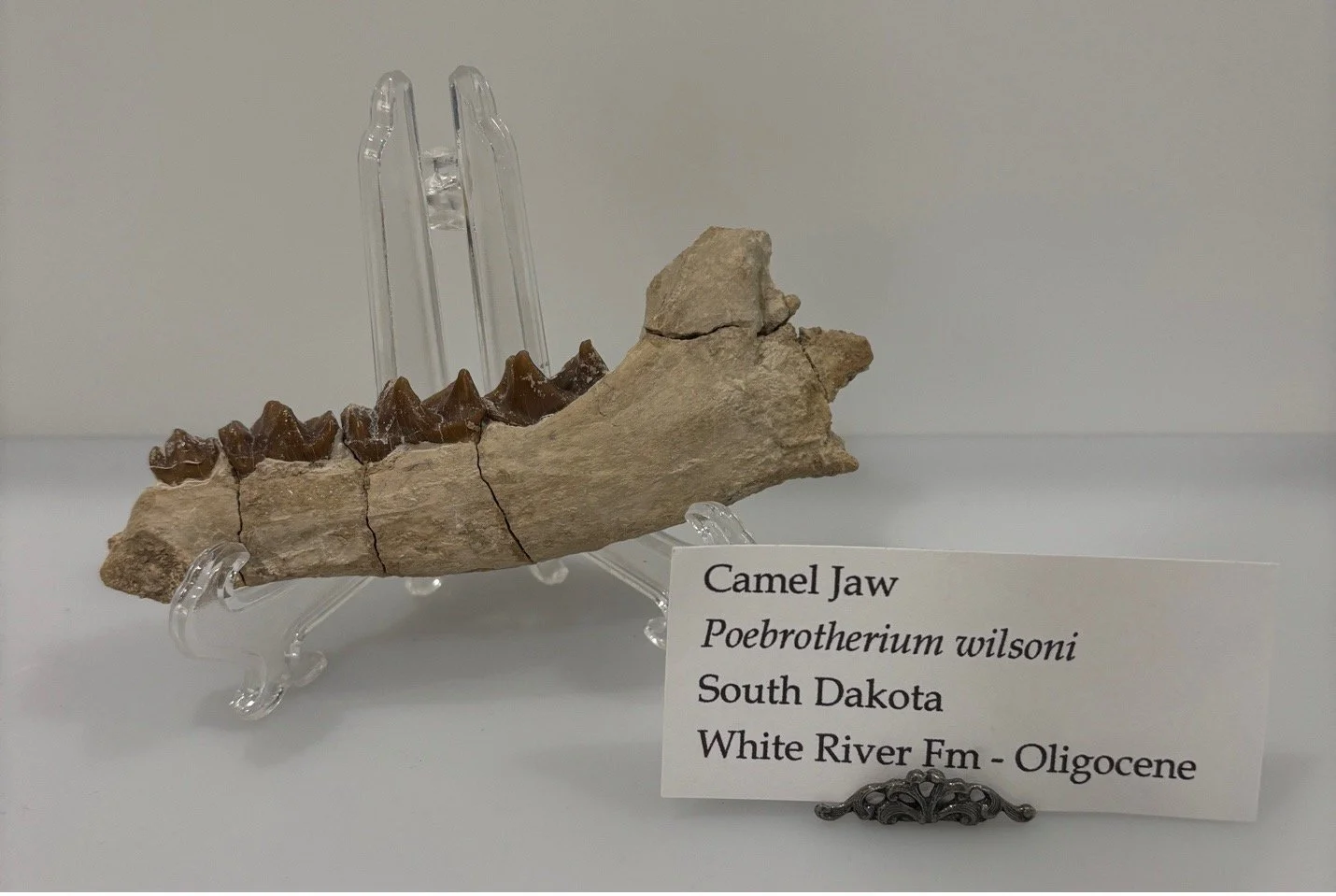
The ancestors of modern camels originated in North America during a dry period of Eocene epoch, yet Poebrotherium were visually distinct from their modern relatives. These early camels were small, standing at only two feet, and weighed about 50 lbs. Eventually, camels would spread to Asia and Africa, and the North American populations would go extinct (approx. 10,000 to 13,000 years ago).
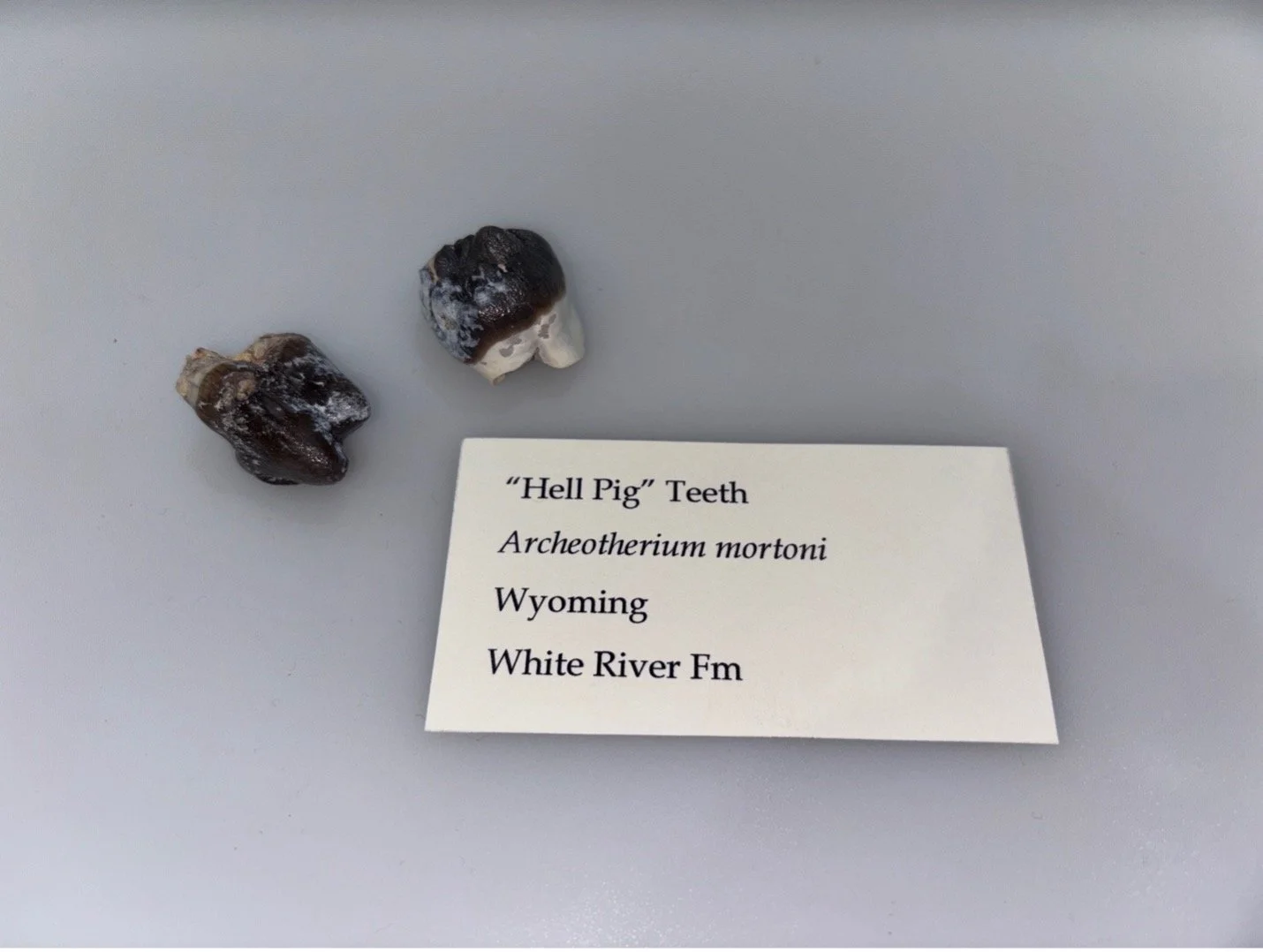
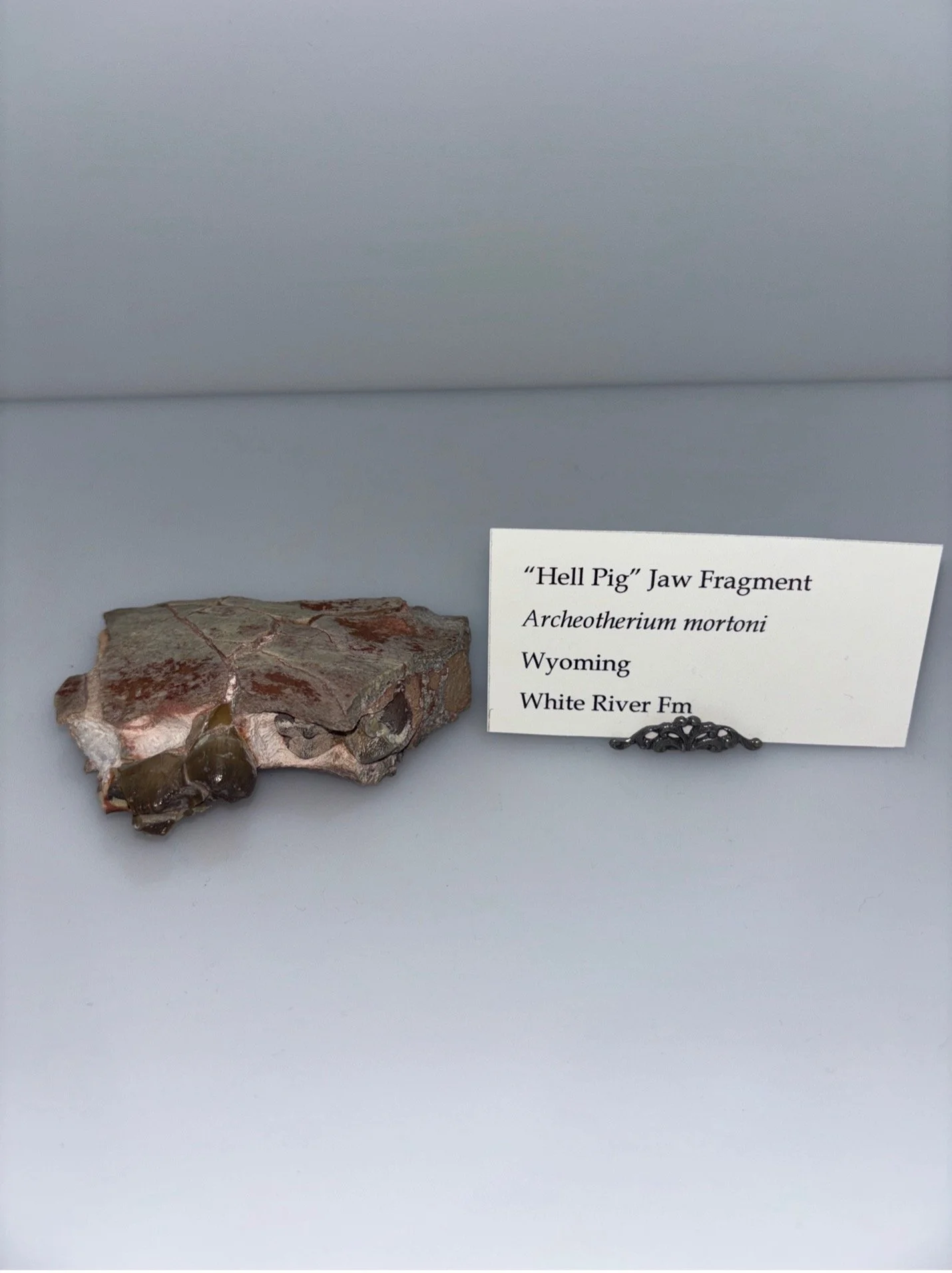
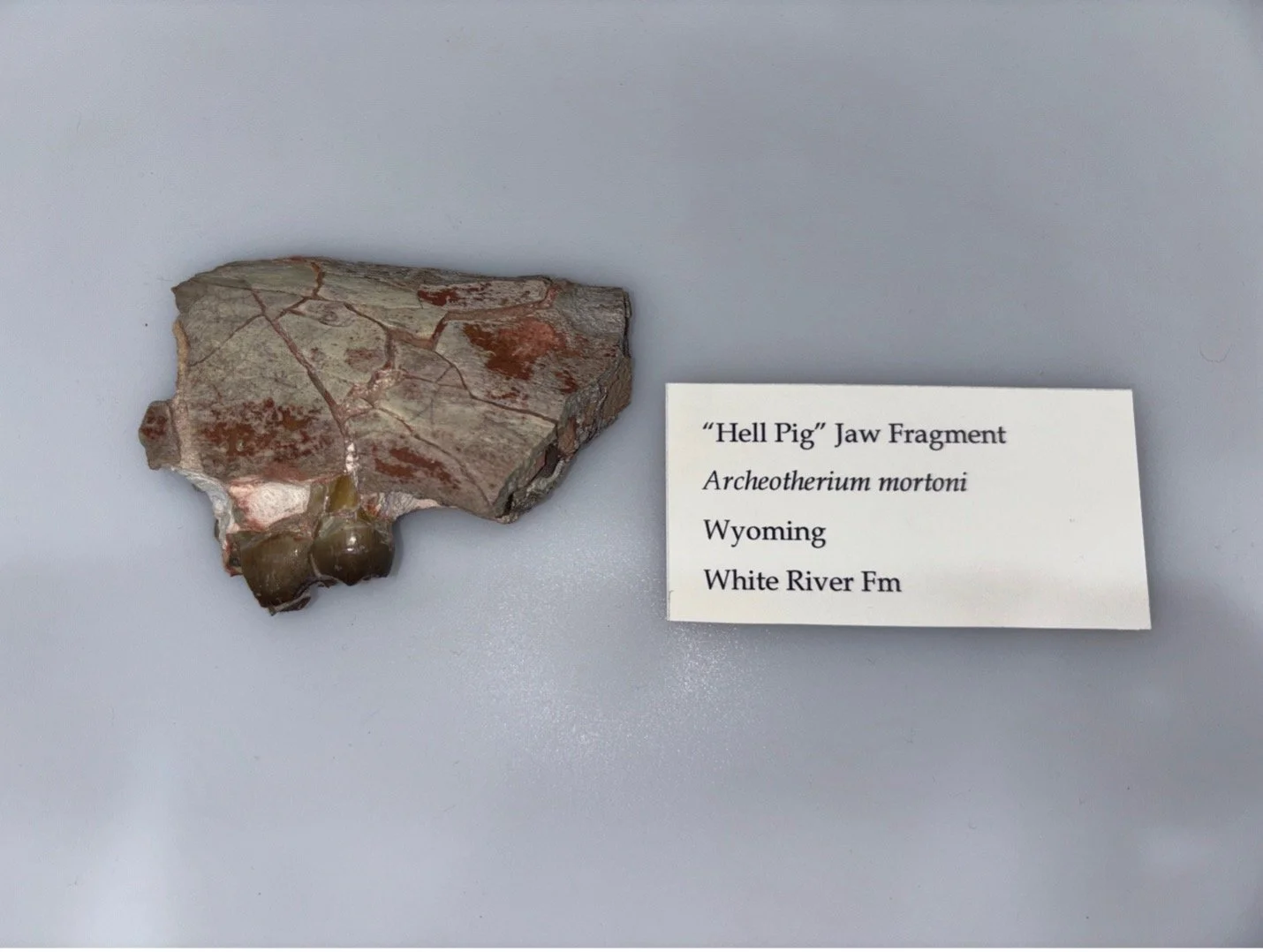
Archaeotherium were large, and likely aggressive beasts that once roamed North America and Eurasia. They stood about six foot tall and weighed around 2000 lbs. They had snouts and tusks, and fossil evidence suggests that they used these tusks to ram others of their species for dominance. Despite their common name and appearance, Hell Pigs were not true pigs but were more closely related to hippopotamuses and whales than modern pigs.
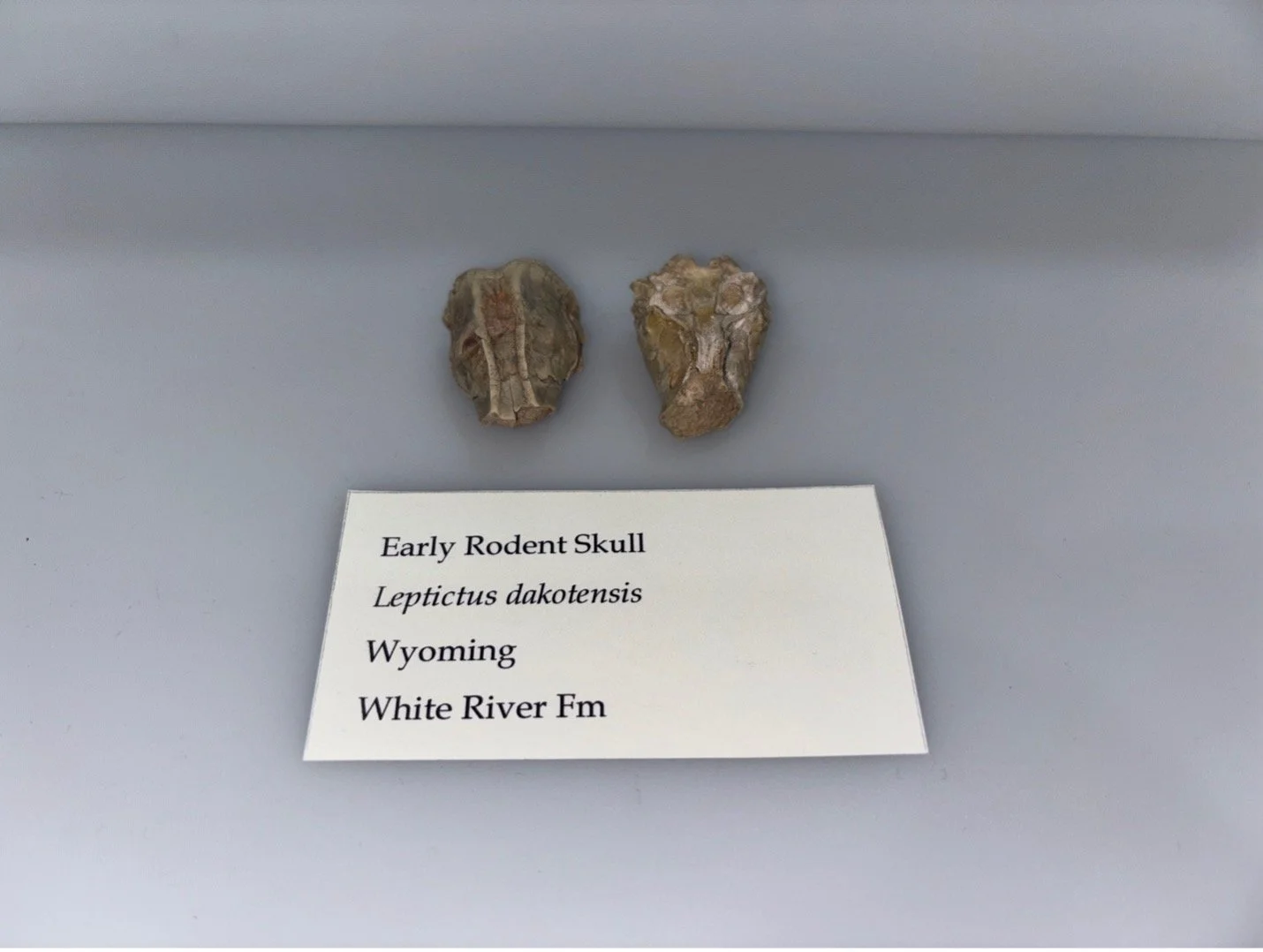
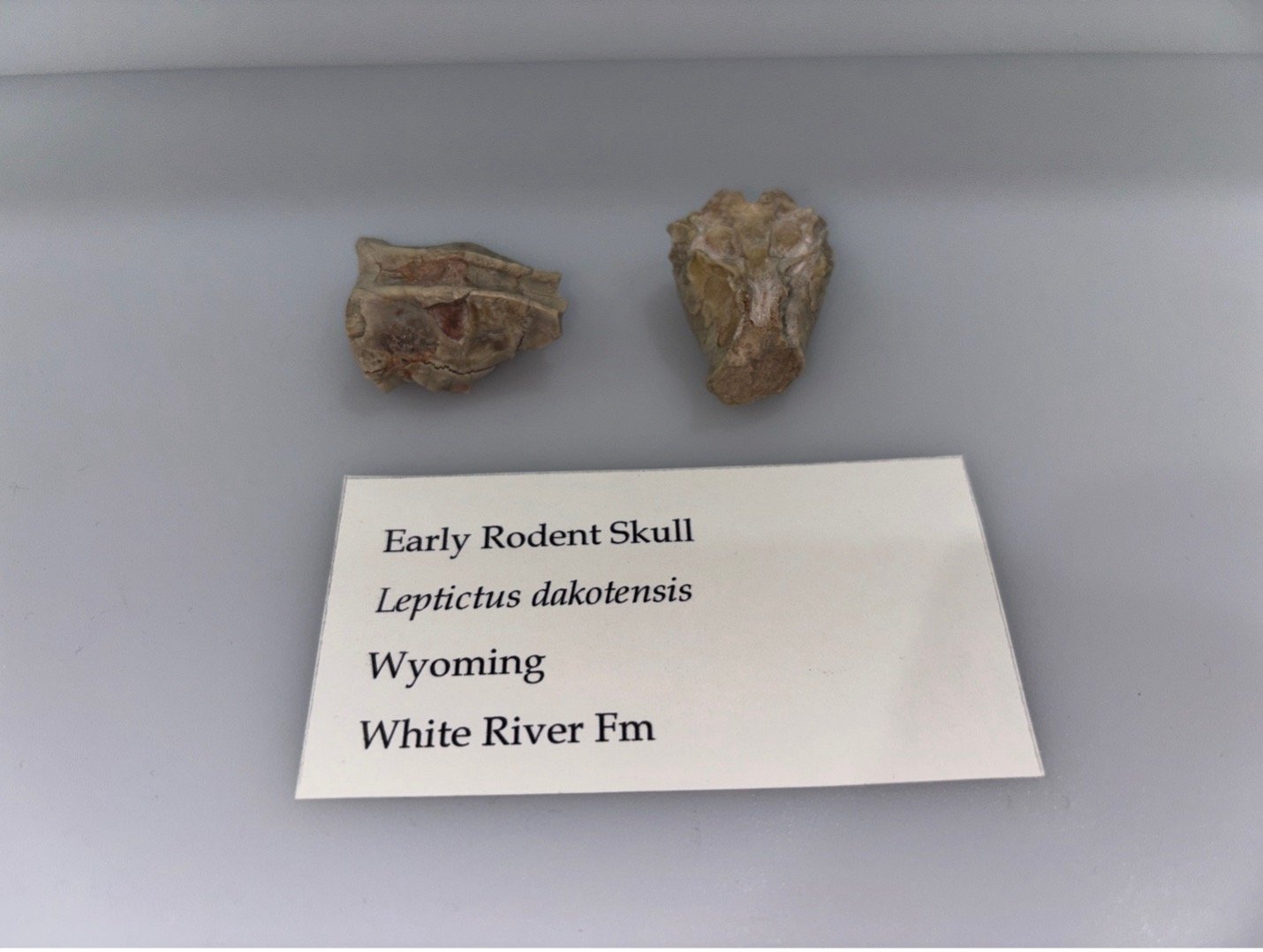
Leptictus dakotensis was a small omnivorous mammal that resembled a modern shrew, but it actually belonged to its own now extinct order called Leptictida. Leptictus dakotensis is a good example of convergent evolution in that it exhibited a rodent-like body plan despite not being a true rodent. Its fossils are found in North America, predominately the American West.
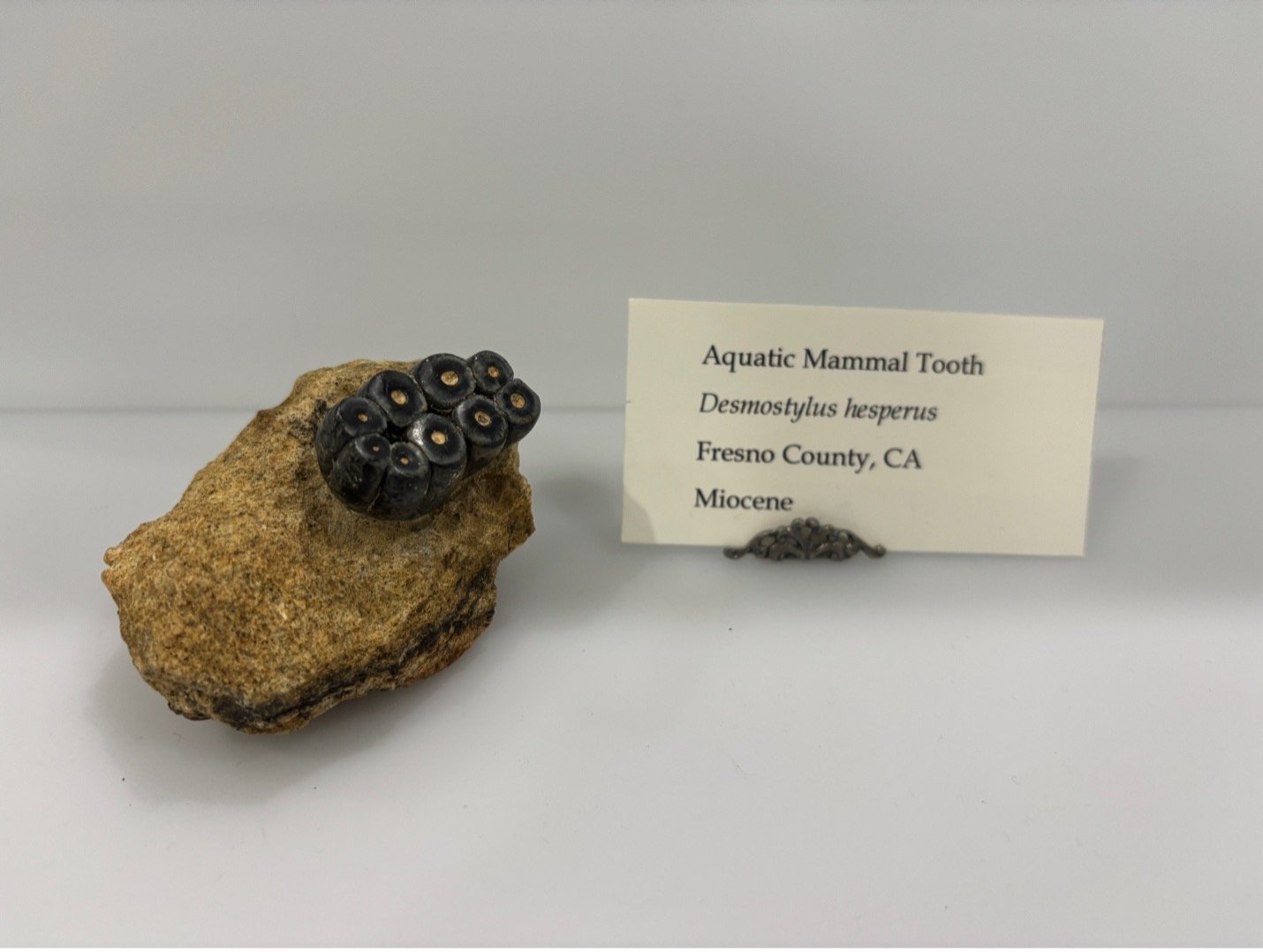
Desmostylus herspersus was bit like a hippopotamus, living all along the North Pacific Rim. They were herbivores who ate aquatic vegetation like seaweed. The Desmostylus is not a direct ancestor to any current living species, but they are distantly related to manatees, dugongs, and elephants.

Discovered at Tennessee’s Gray Fossil Site, the Teleoceras aepysoma was a stout and hornless species of rhinoceros. Despite its squat nature, other species in the Teloceras genus were even shorter limbed and are often described as “pot-bellied rhinos”. While Teloceras lived all across the Great Plains of North America, Teleoceras aepysoma is unique to the humid woodlands of ancient Appalachia. It was one of the last surviving species of rhinoceros that lived in North America approximately 4.5 million years ago.


Today, Red Pandas are only found in Asia, but their family lineage actually originated in North America. The cousin of the modern Red Panda, Pristinailurus bristoli, or more commonly known as Bristol’s Panda or Bristol’s Appalachian Panda were once part of the Tennessee ecosystem. The discovery of the Bristol’s Panda at Tennessee’s Gray Fossil Site has illuminated our understanding of this far-flung family tree. From the fossil evidence, we know that the ancestors of modern red pandas lived in North America before spreading to Asia and evolving into the Red Panda we know today. The Bristol’s Panda, however, went extinct approximately 5 million years ago, likely due to climate change and habitat loss.
The Bristol’s Panda was two to three times larger than their modern counterpart and likely had a weaker bite. Though it could likely climb trees, it was more suited for terrestrial movement. It was an agile predator who fed on small animals, fruits, eggs, and insects.
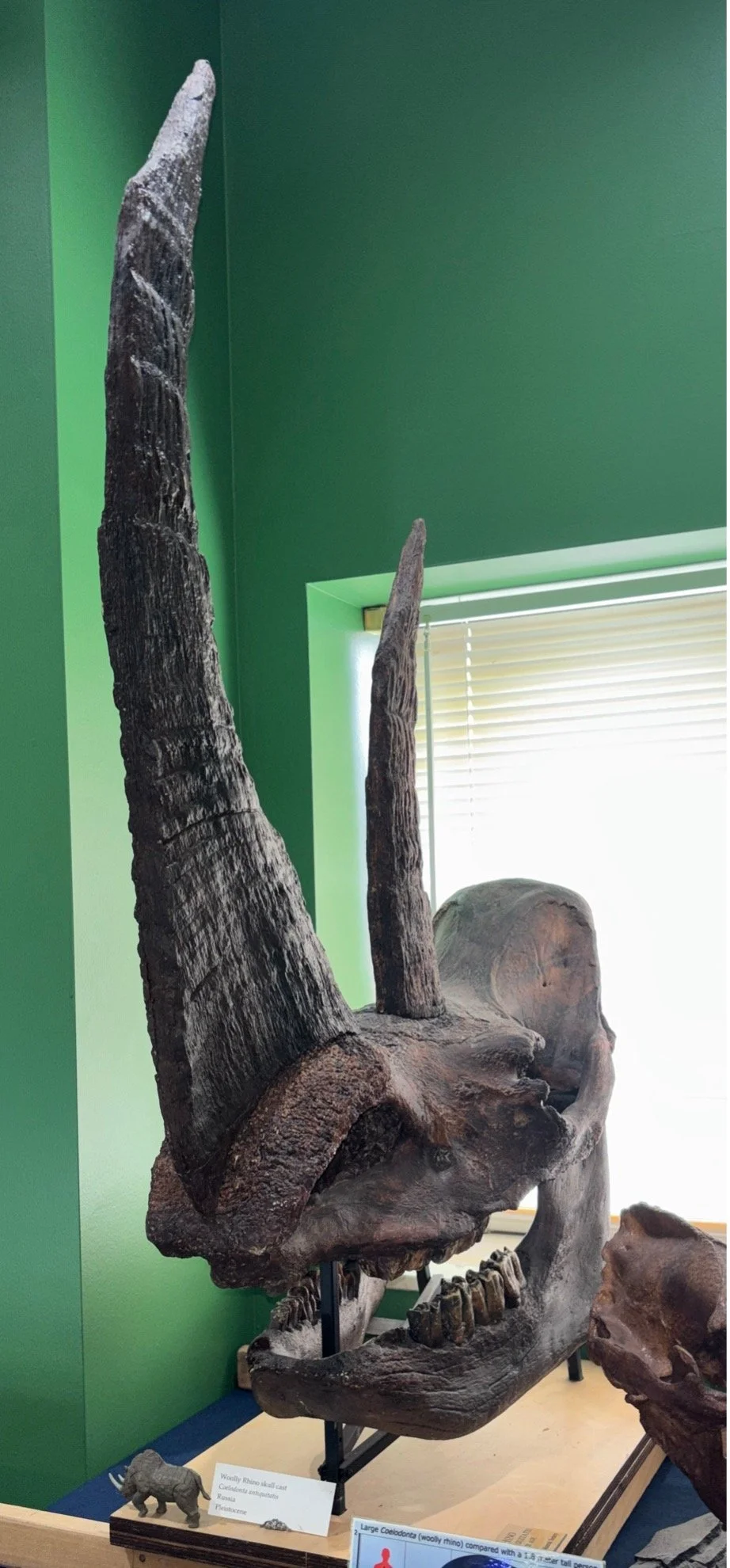
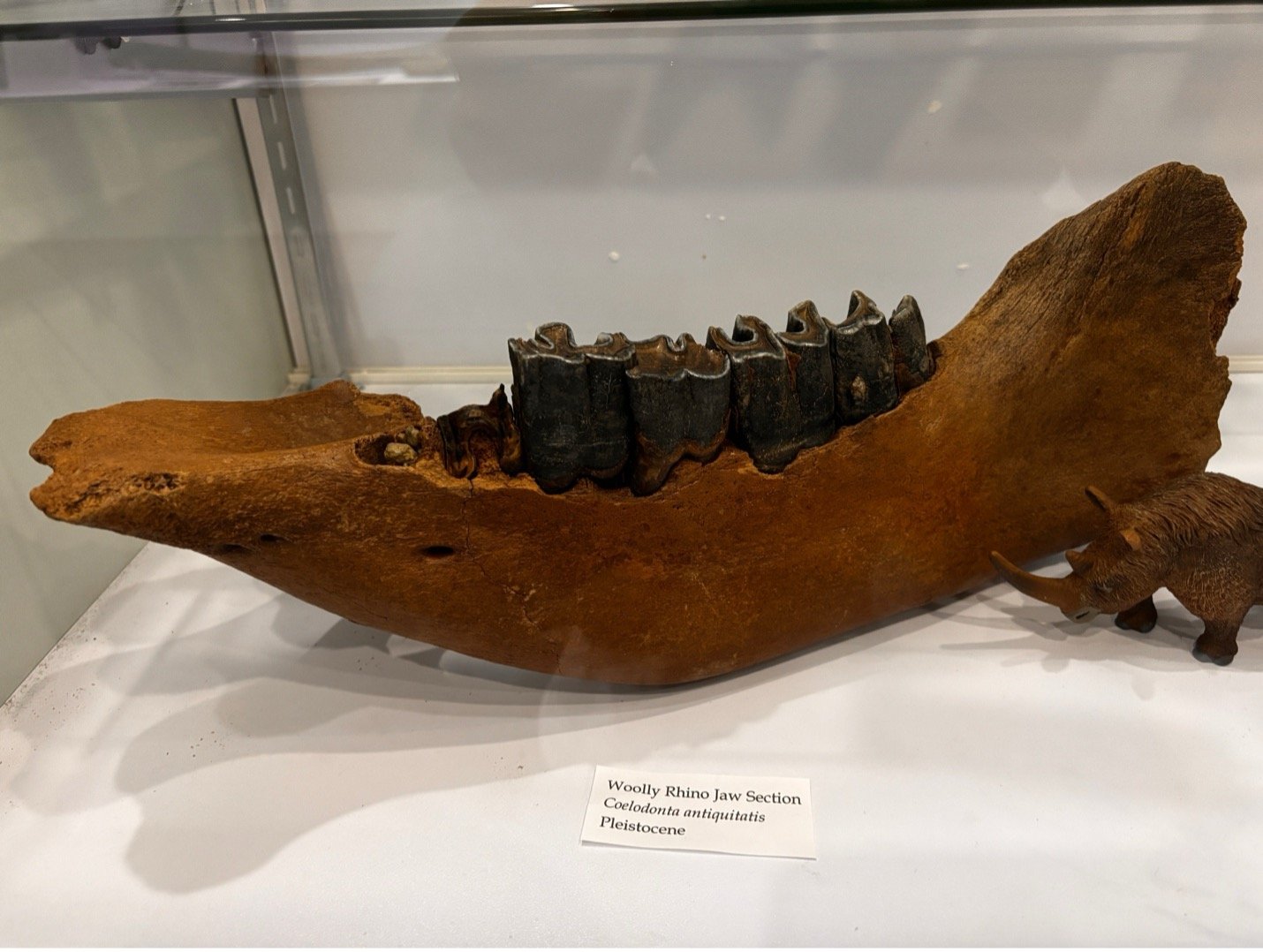
In the cold temperatures of the Pleistocene epoch, Woolly Rhinos kept warm with a layer of fur, similar to the Woolly Mammoth. The Woolly Rhinoceros lived in Eurasia, but unlike the Mammoth, never spread to the Americas. They had two horns, the foremost horn longer than the hindmost. They were similar in size to modern Rhinoceroses, and grazed on grasses and other plants.
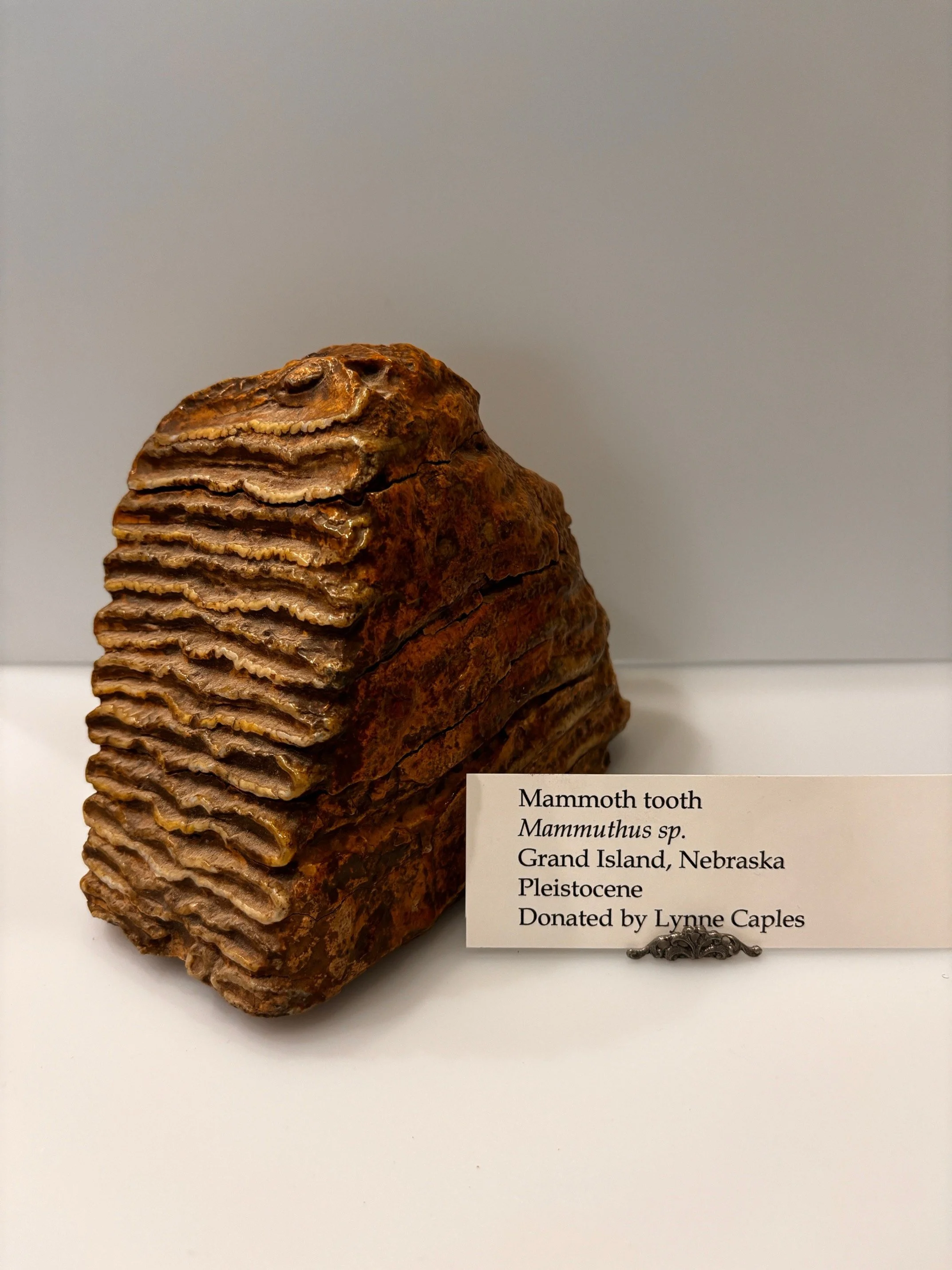
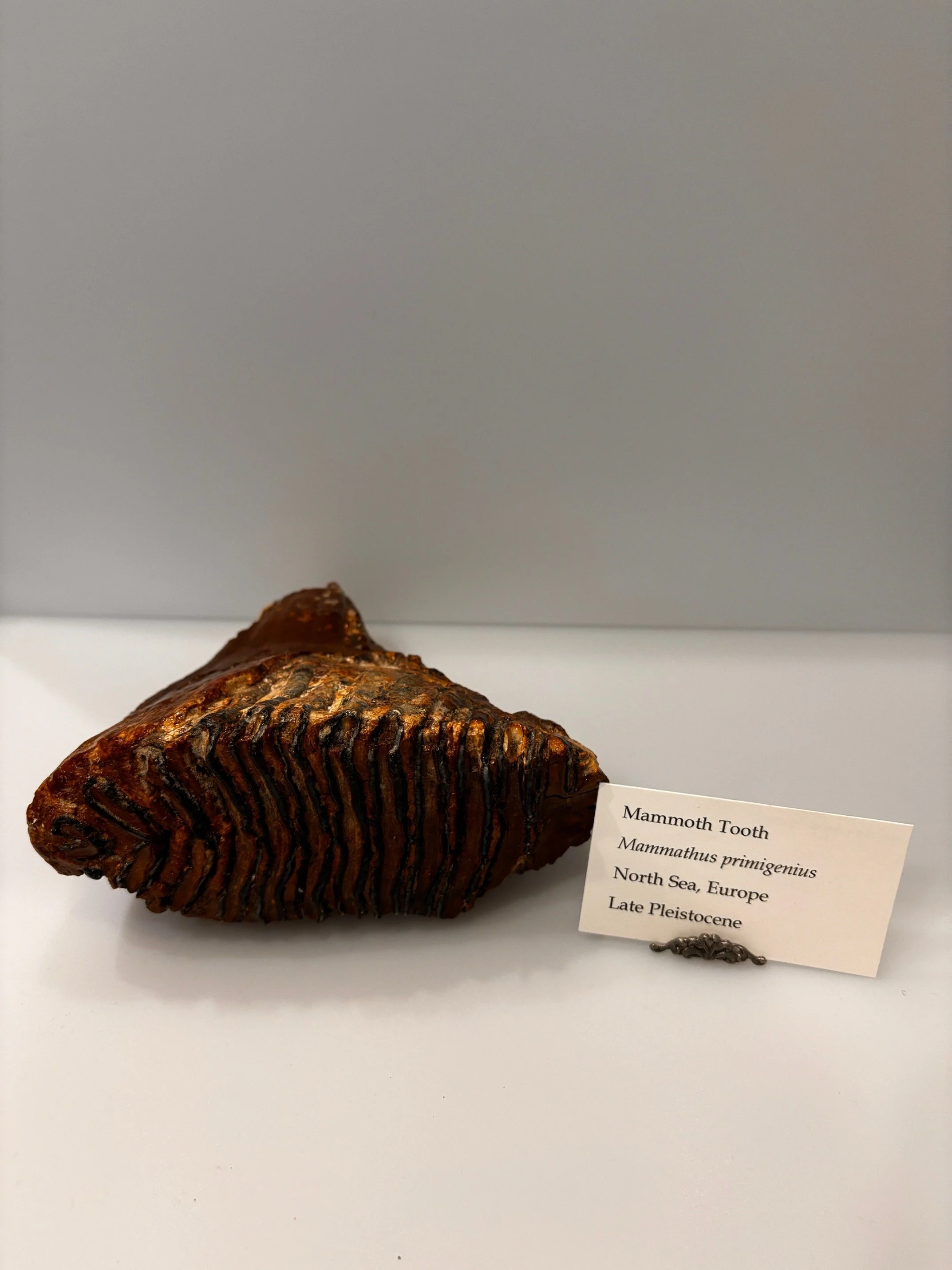
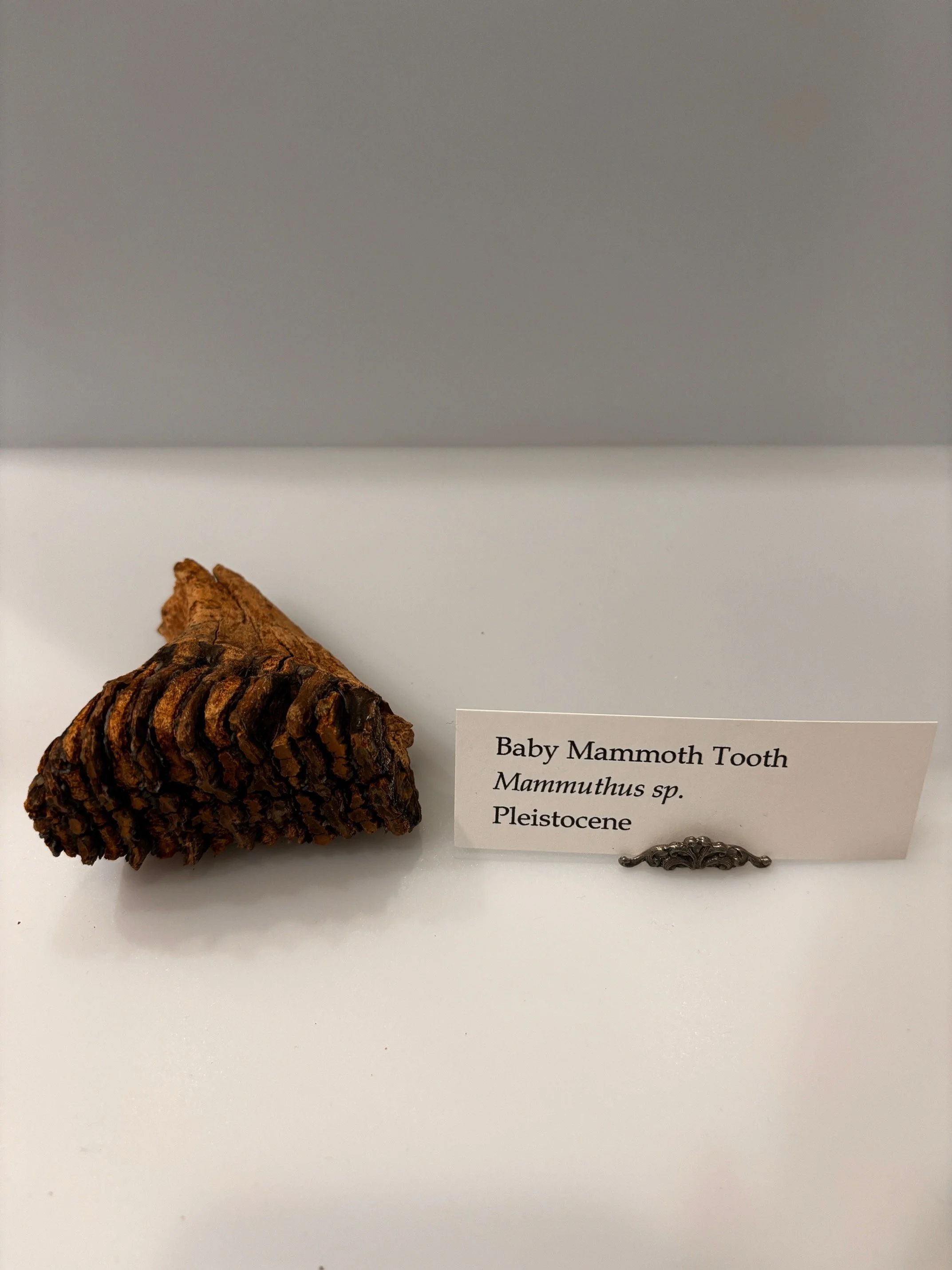
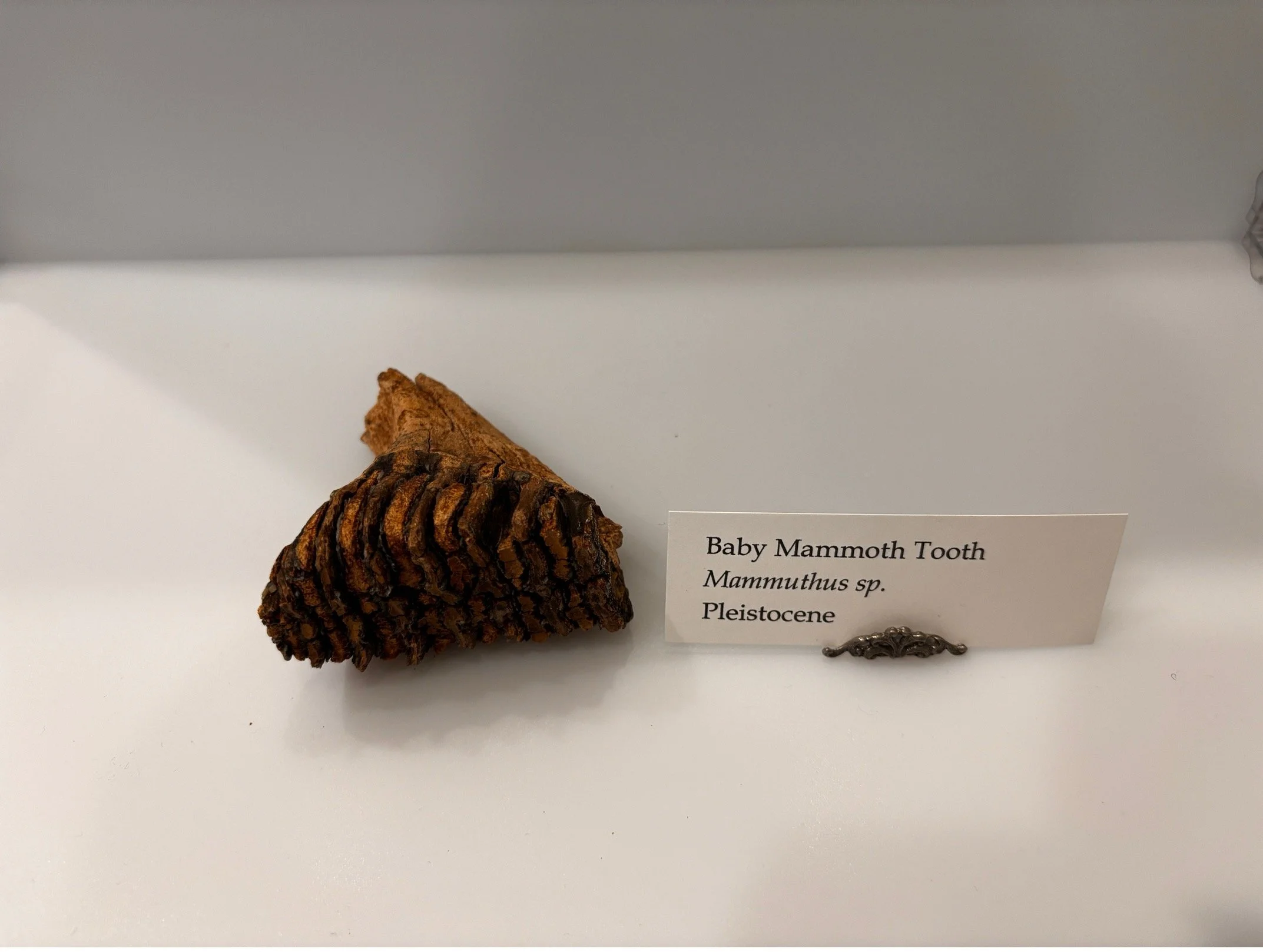
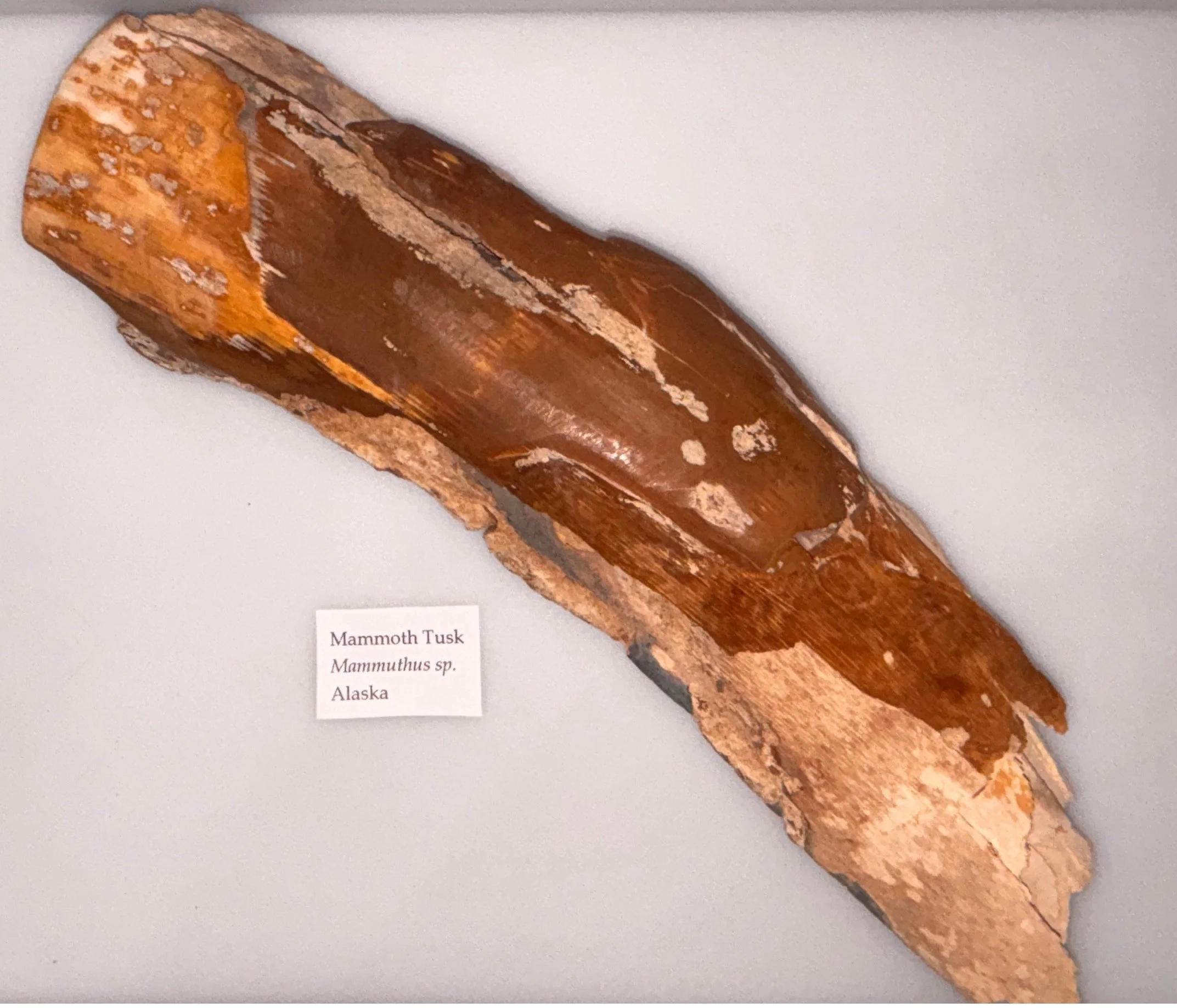
Woolly Mammoths were large, furry, herbivorous members of the family Elephantidae, and were relatives to Mastodons and the modern African and Asian Elephants. Their thick fur protected them from the extreme colds of the Ice Age, while modern elephants need to stay mostly naked to protect from high heat. Different species of Woolly Mammoths lived during the Pleistocene, making their homes in both Eurasia and the Americas. Mammoths went extinct from a combination of rising global temperatures and human hunting practices.
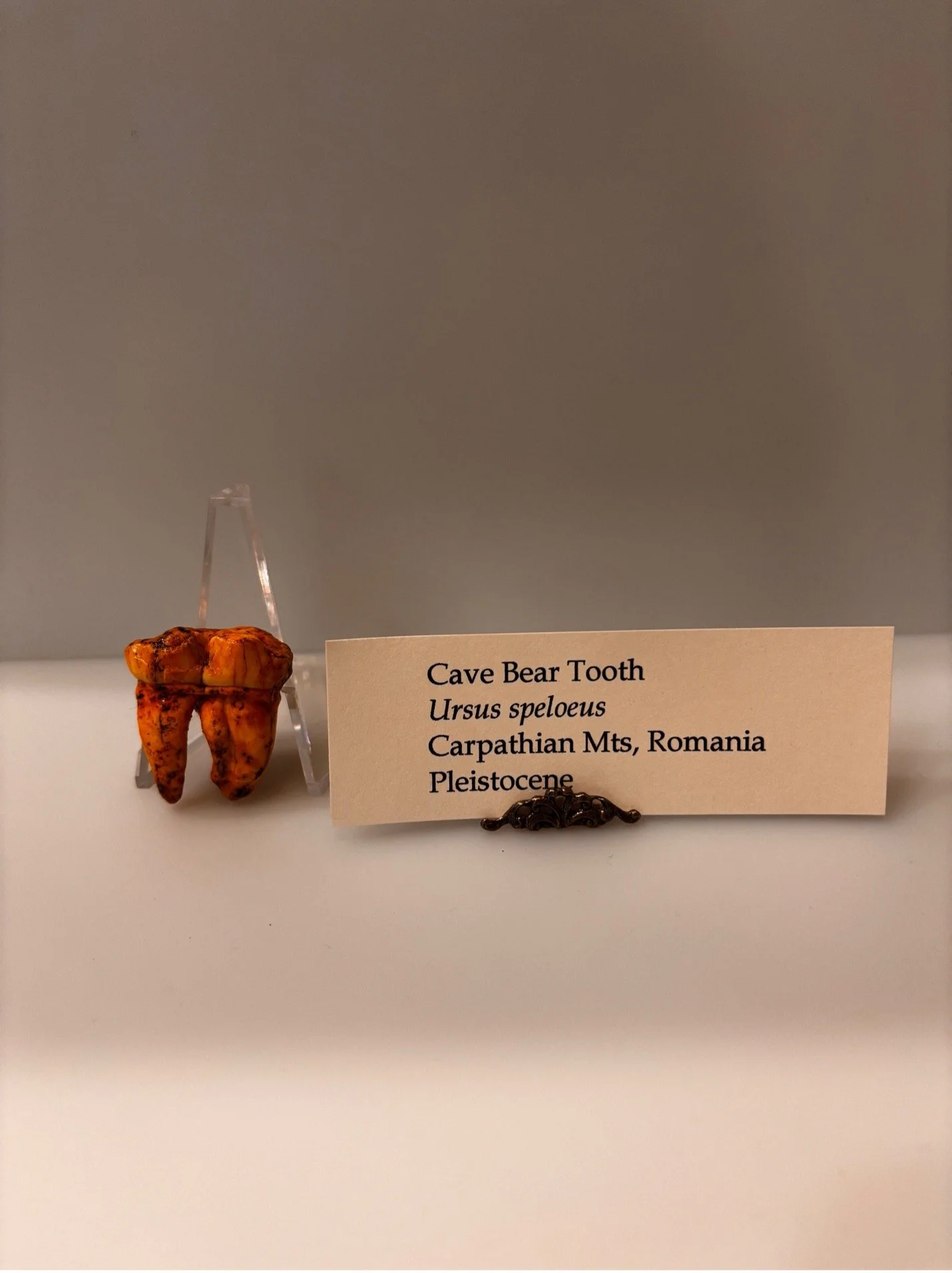
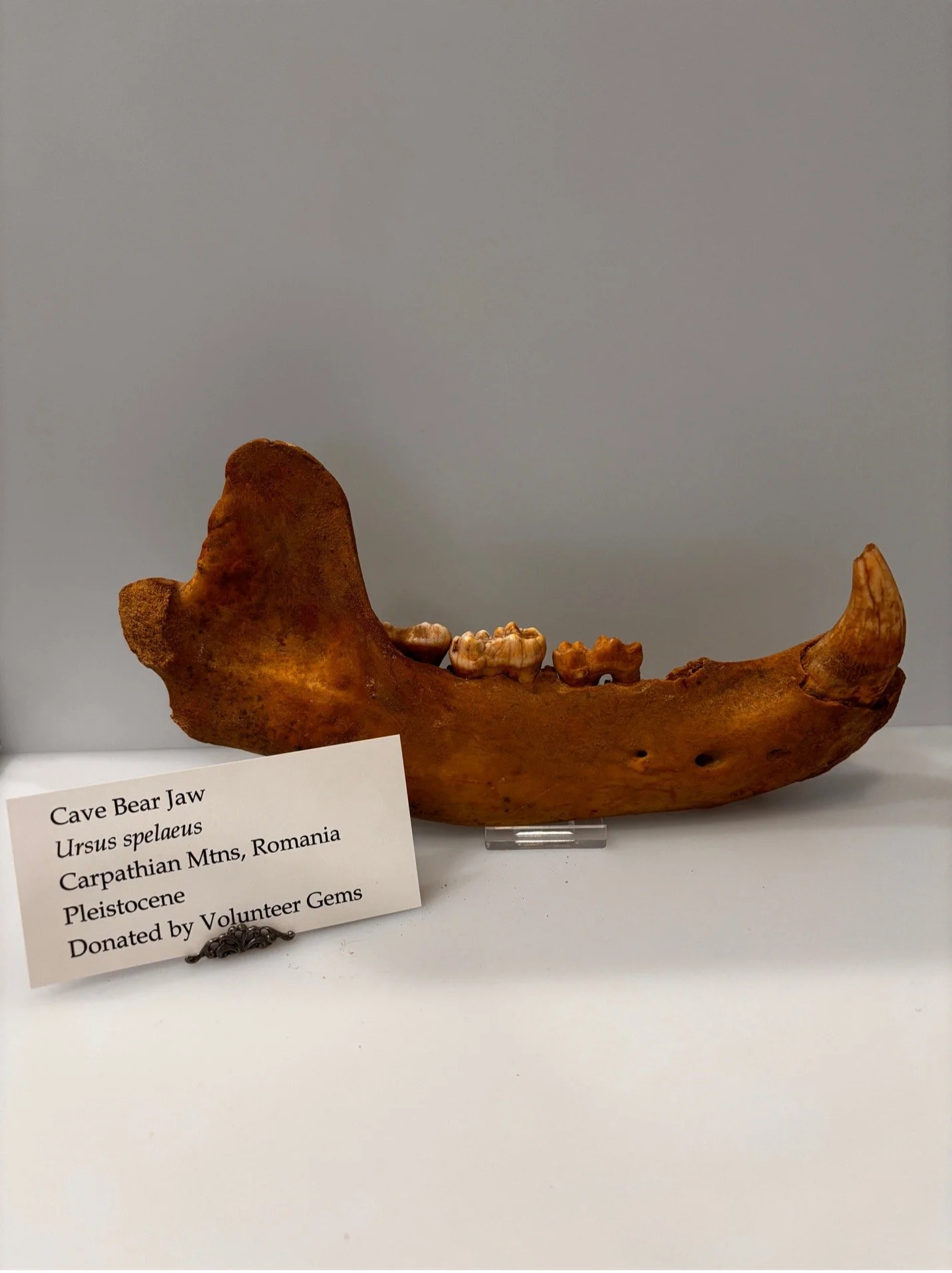
Cave Bears were largely herbivorous but were likely opportunistic omnivores. As megafauna, these bears were large, especially the males which grew almost 10 feet tall (which is about the same size as modern polar bears). Cave bear fossils are plentiful, as the environment of a cave is very good at preserving remains.
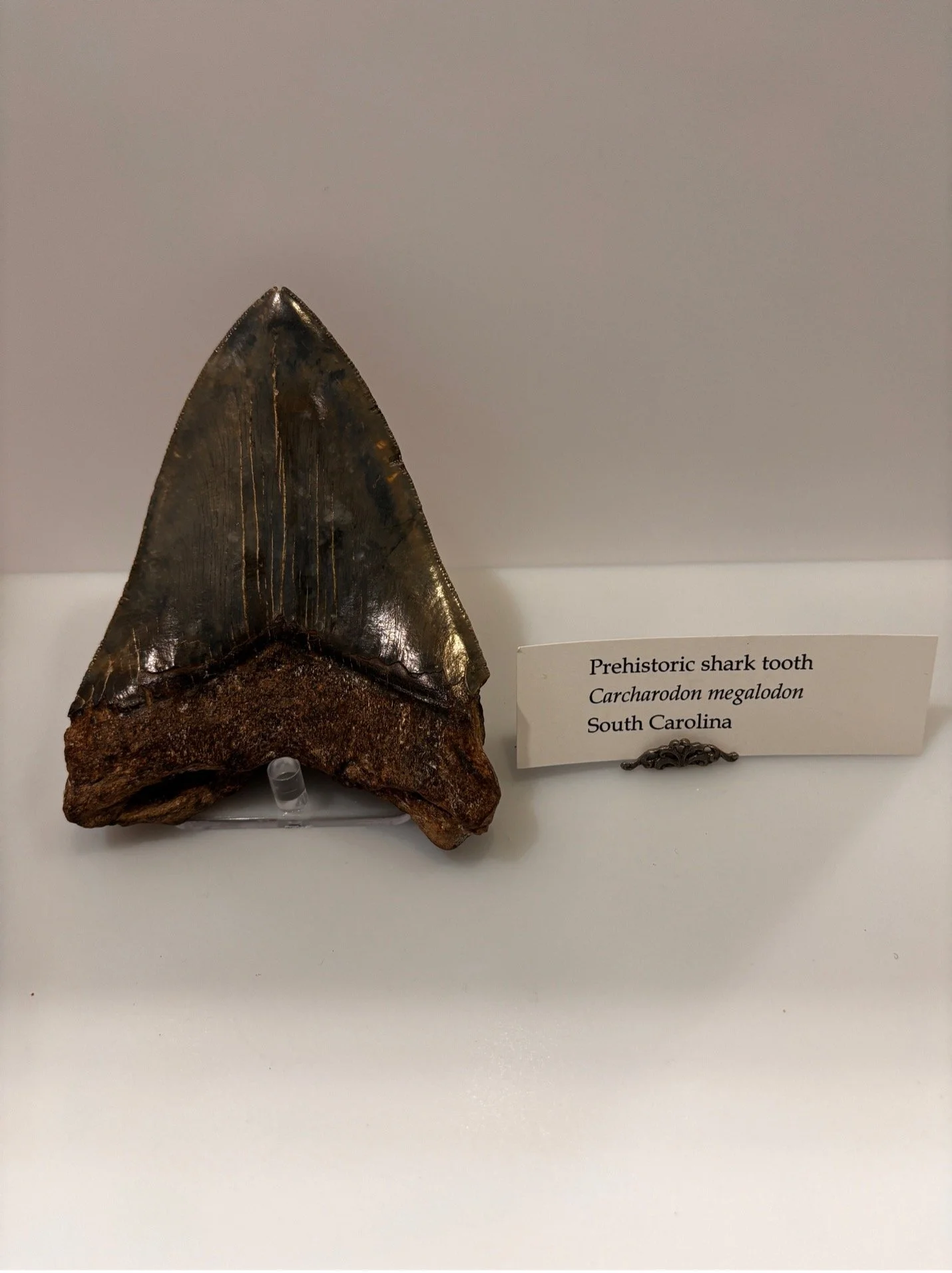
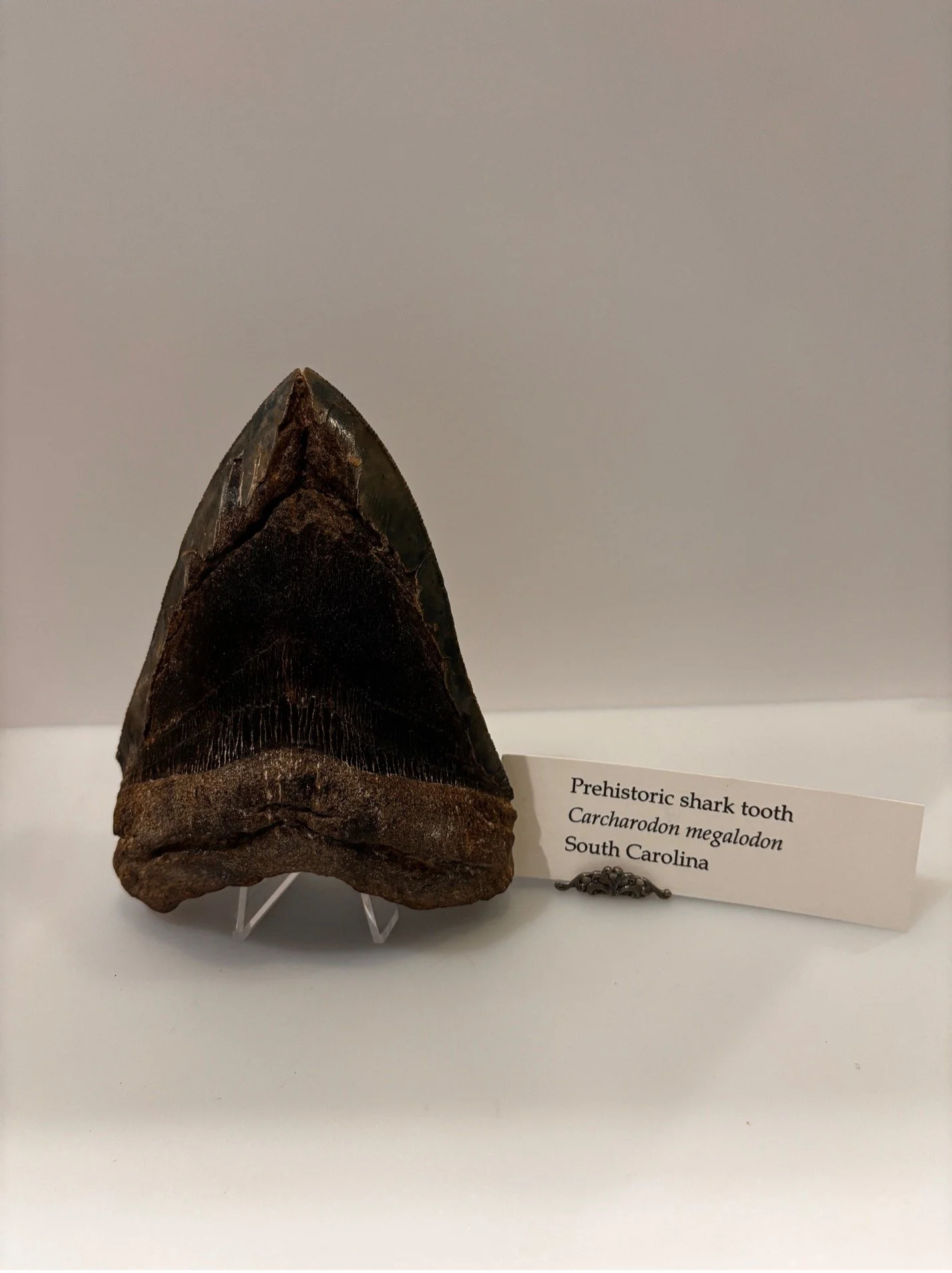
Megalodons were the largest shark to ever live, and one of the largest fishes. Our understanding of the Megalodon is limited, as most of its cartilaginous skeleton does not preserve like normal bone, therefore most size estimations come from comparing their tooth size with modern sharks. The current estimation places Megalodons at about 80 feet long (for reference, that’s about an entire lane at the bowling alley). Megalodons were wide spread across the planet’s oceans, and their teeth have been found washed up on every continent but Antarctica.
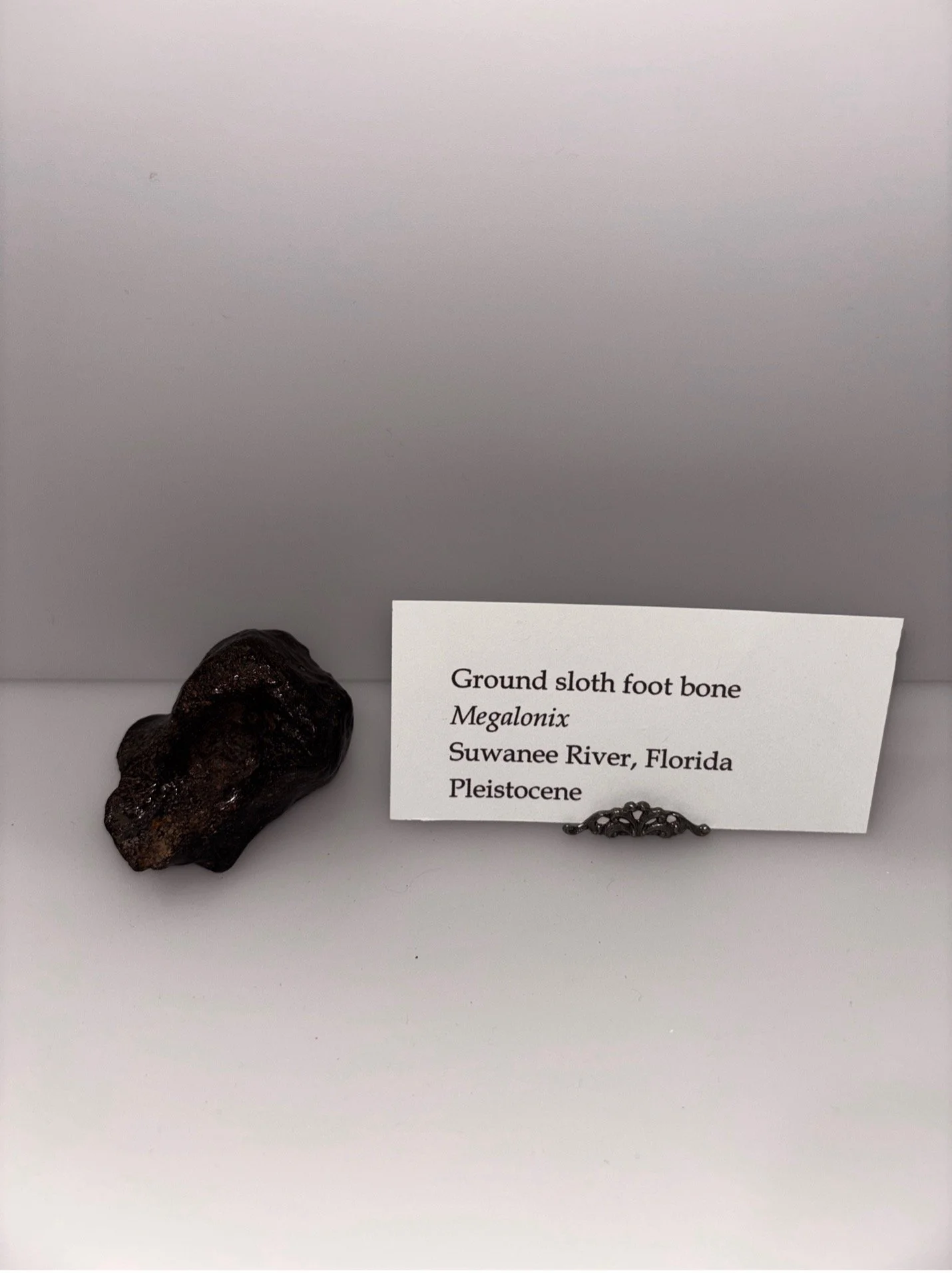
The Giant Ground Sloths lived across North and South America. Unlike their modern relatives, Giant Ground Sloths did not live in trees, and instead stuck mostly to grasslands where they ate plants like yucca and agave. There were many different species of the Giant Ground Sloths, the largest reaching up to 20 feet in length. Megalonyx jeffersoni was a smaller species, but still reached nearly 10 feet in length and weighed about 2200 lbs.
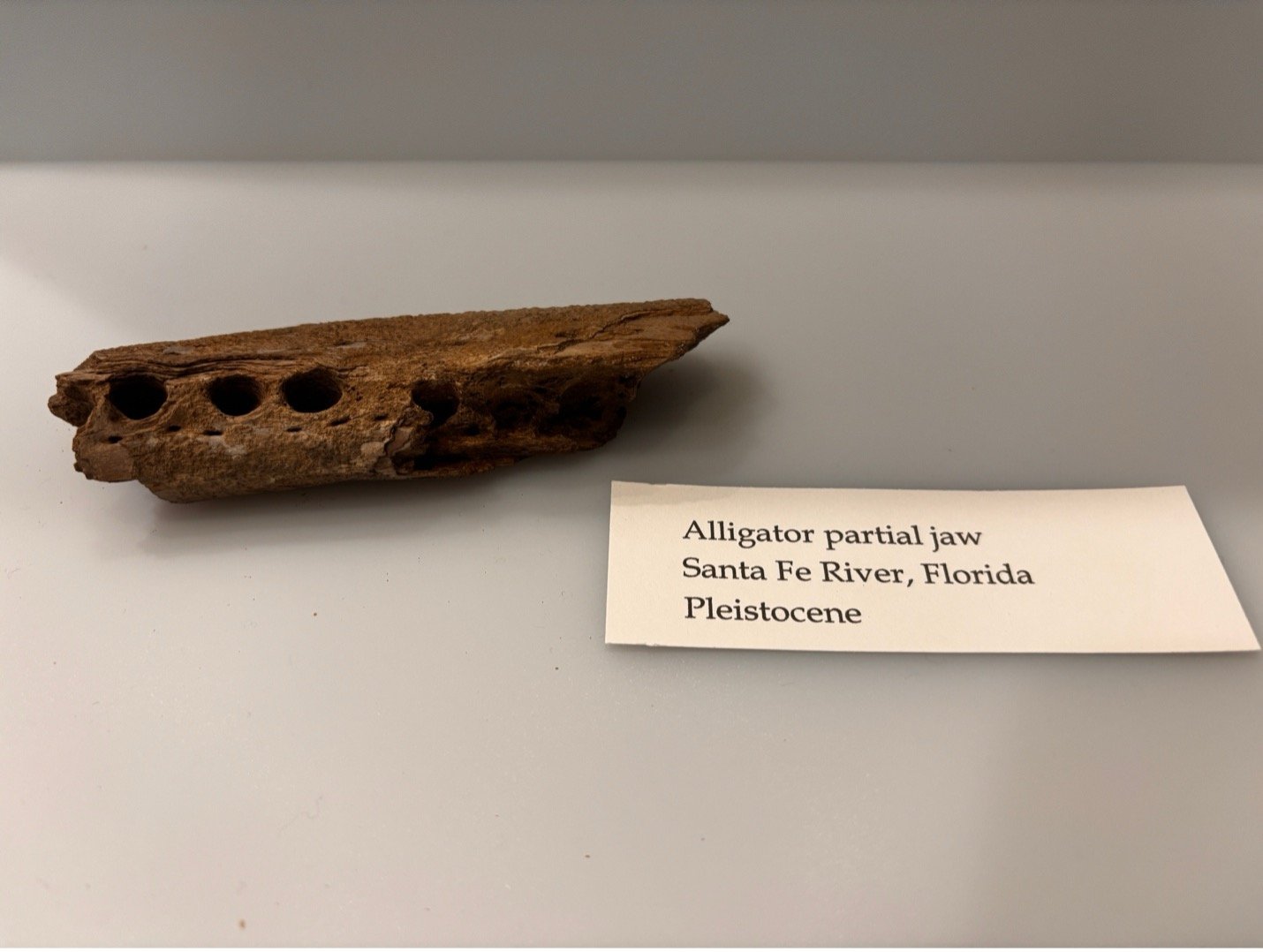
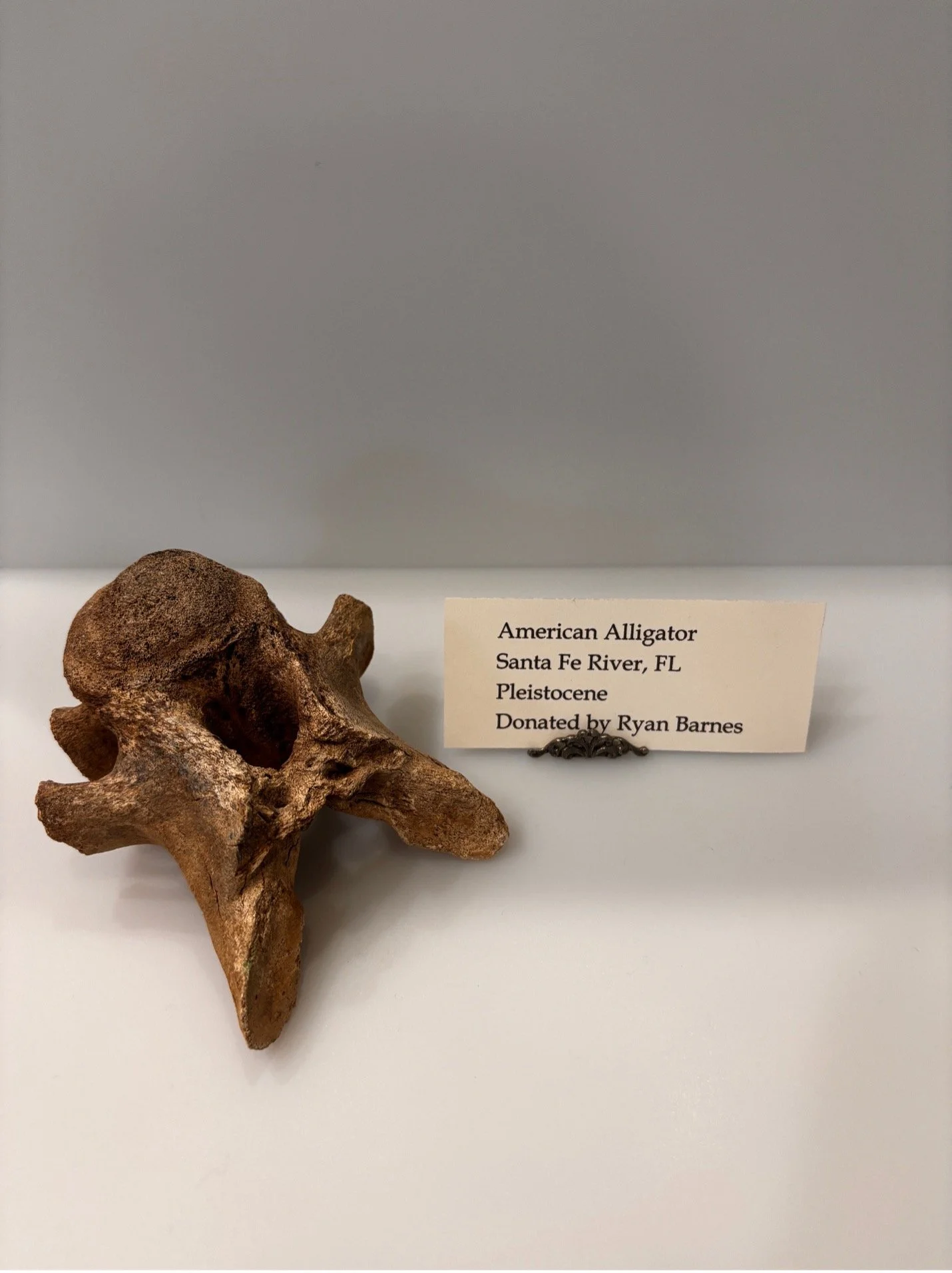
Crocodilians have been around for around 80 million years and have successfully survived several mass extinction events relatively unchanged. The modern American Alligator first developed during the Pliocene period (23-5 million years ago) and has changed very little since then. Their tough scales, efficient hunting techniques, and relatively low demand for food makes them incredibly good at surviving whatever comes their way. Today, American Alligators are found in the American Southeast, predominately in Florida and Louisiana.
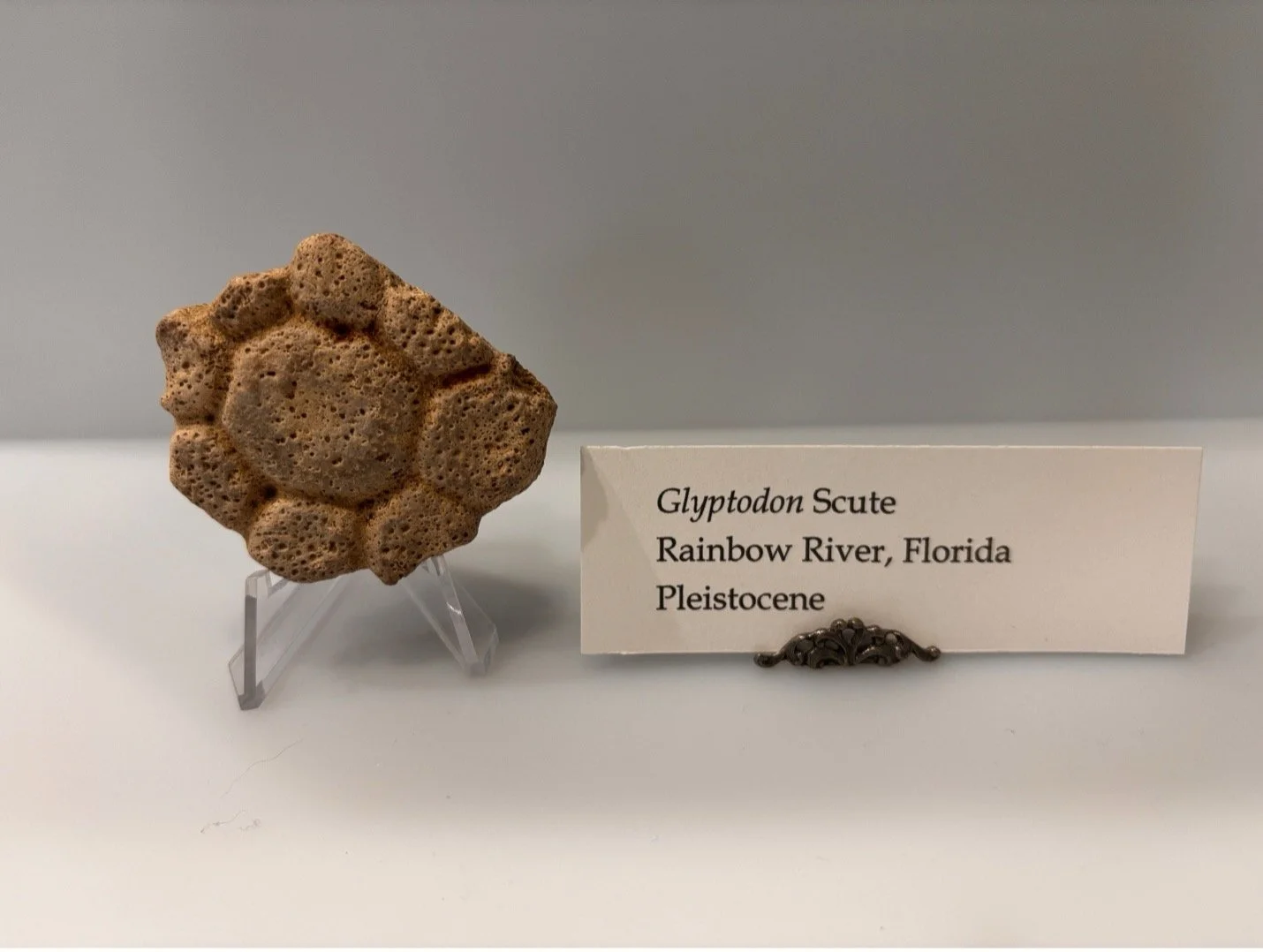
Glyptodons were herbivores who protected themselves with bony armor plating, similar to their modern relative, the armadillo. However, Glyptodons were much larger than armadillos (about the size of a small car) and defended themselves with their spiked club tails.
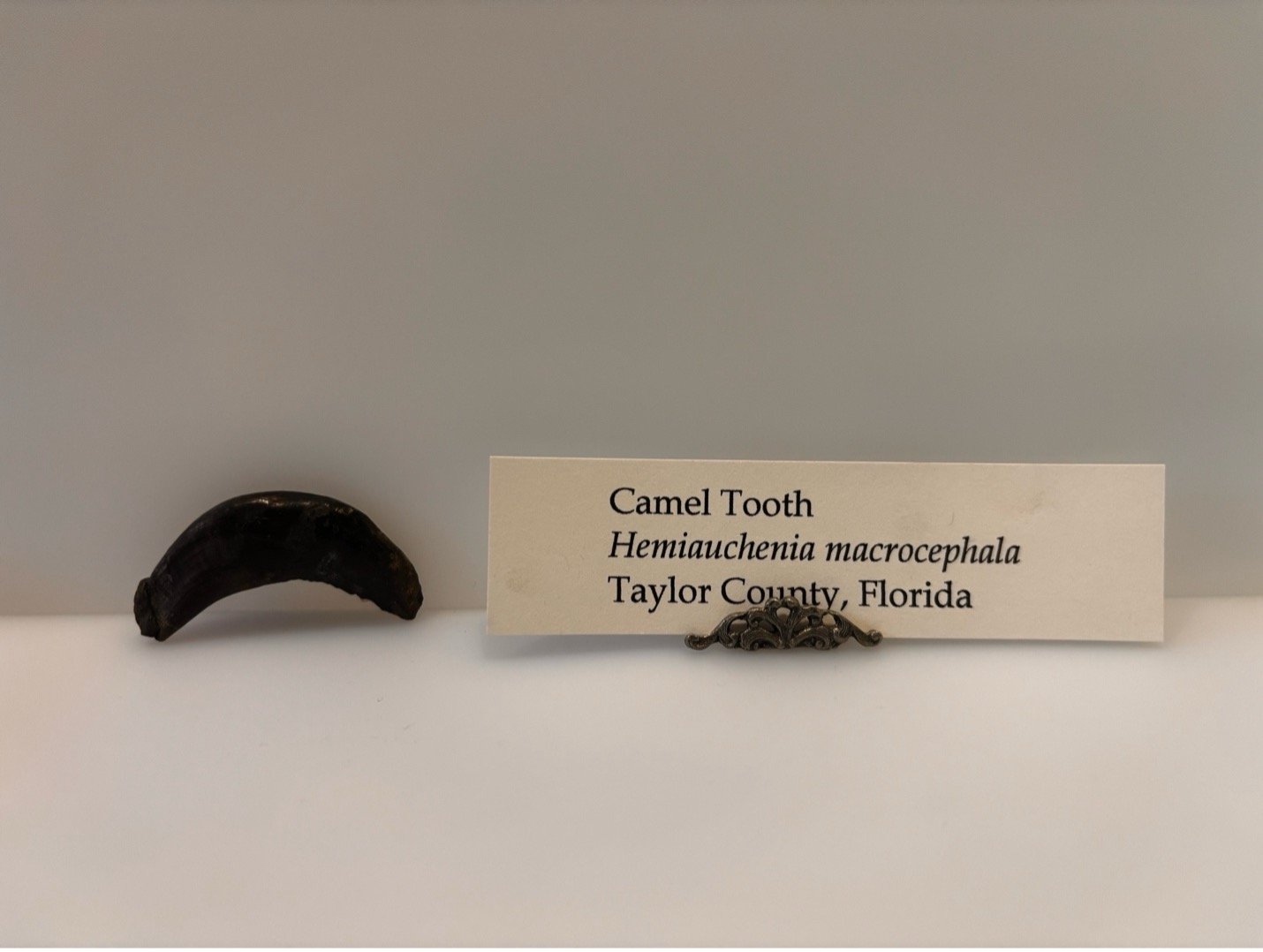
A small, sheep-sized member of the camelids family which contains modern camels, llamas, and alpacas. Like modern camels, Hemiauchenia macrocephalus was able to survive in dry conditions across the Great Plains region of the modern United States and some places in South America. Hemiauchenia macrocephalus was likely an ancestor to the modern South American llamas.
No results match your search. Try removing a few filters.