
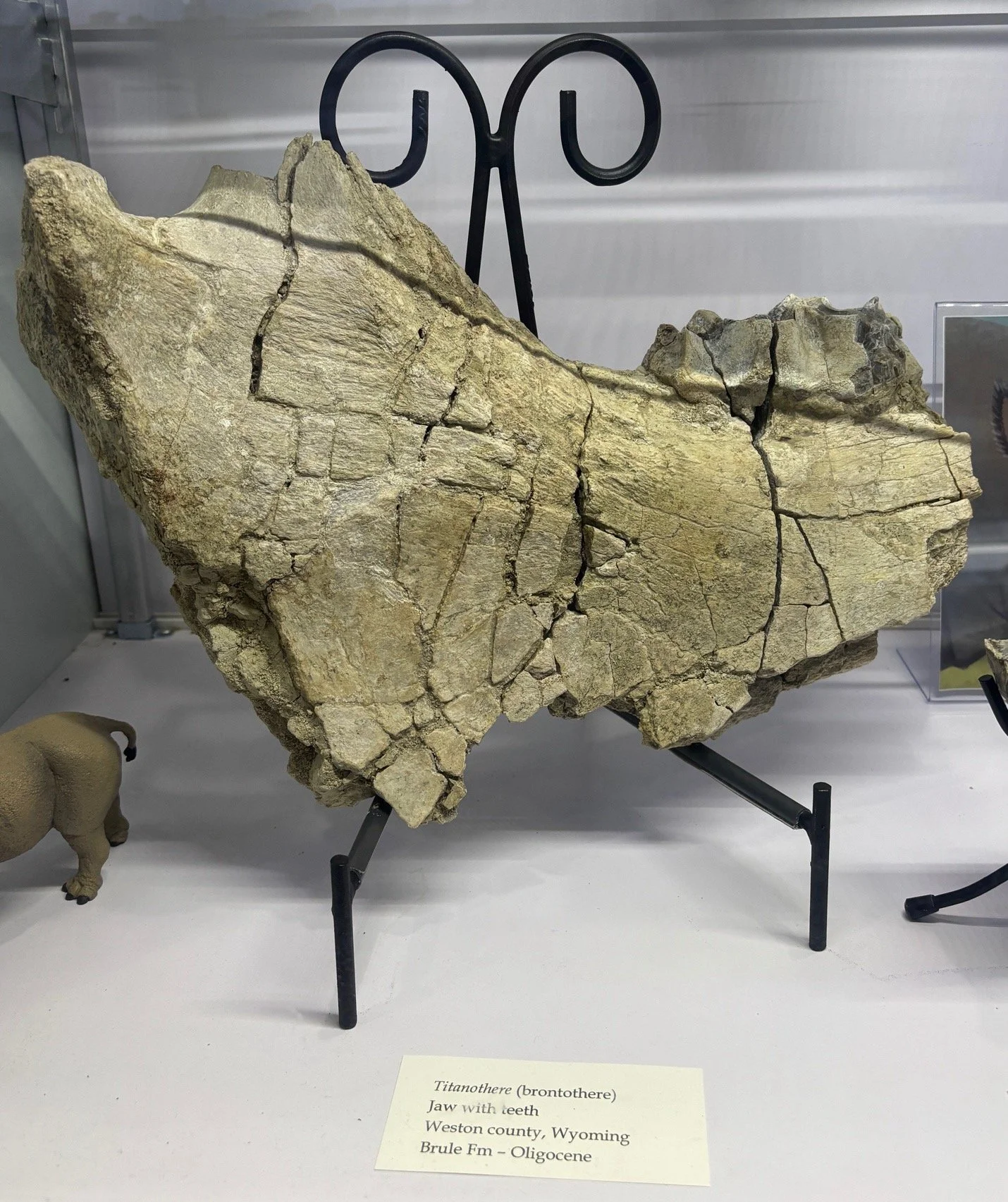
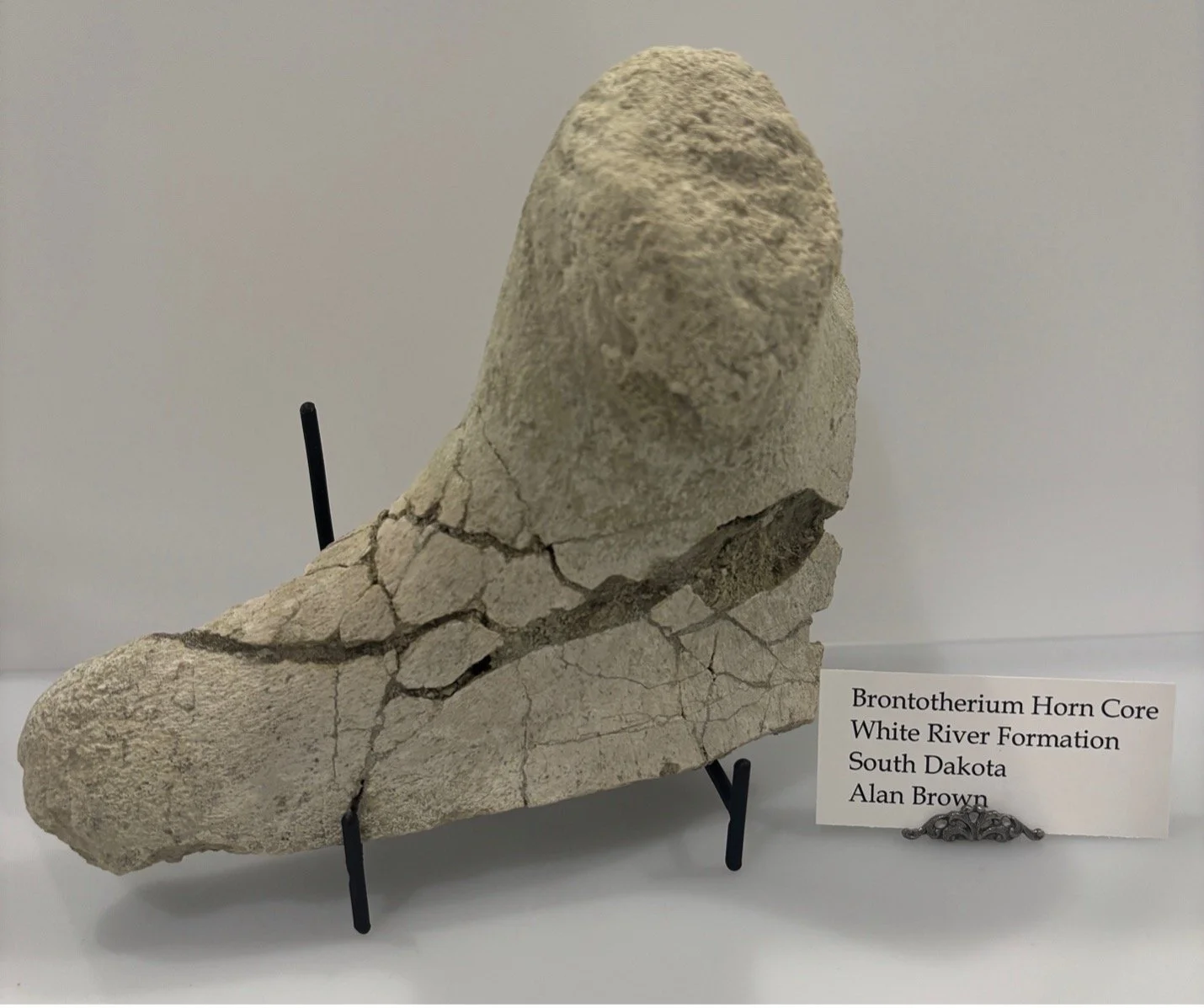
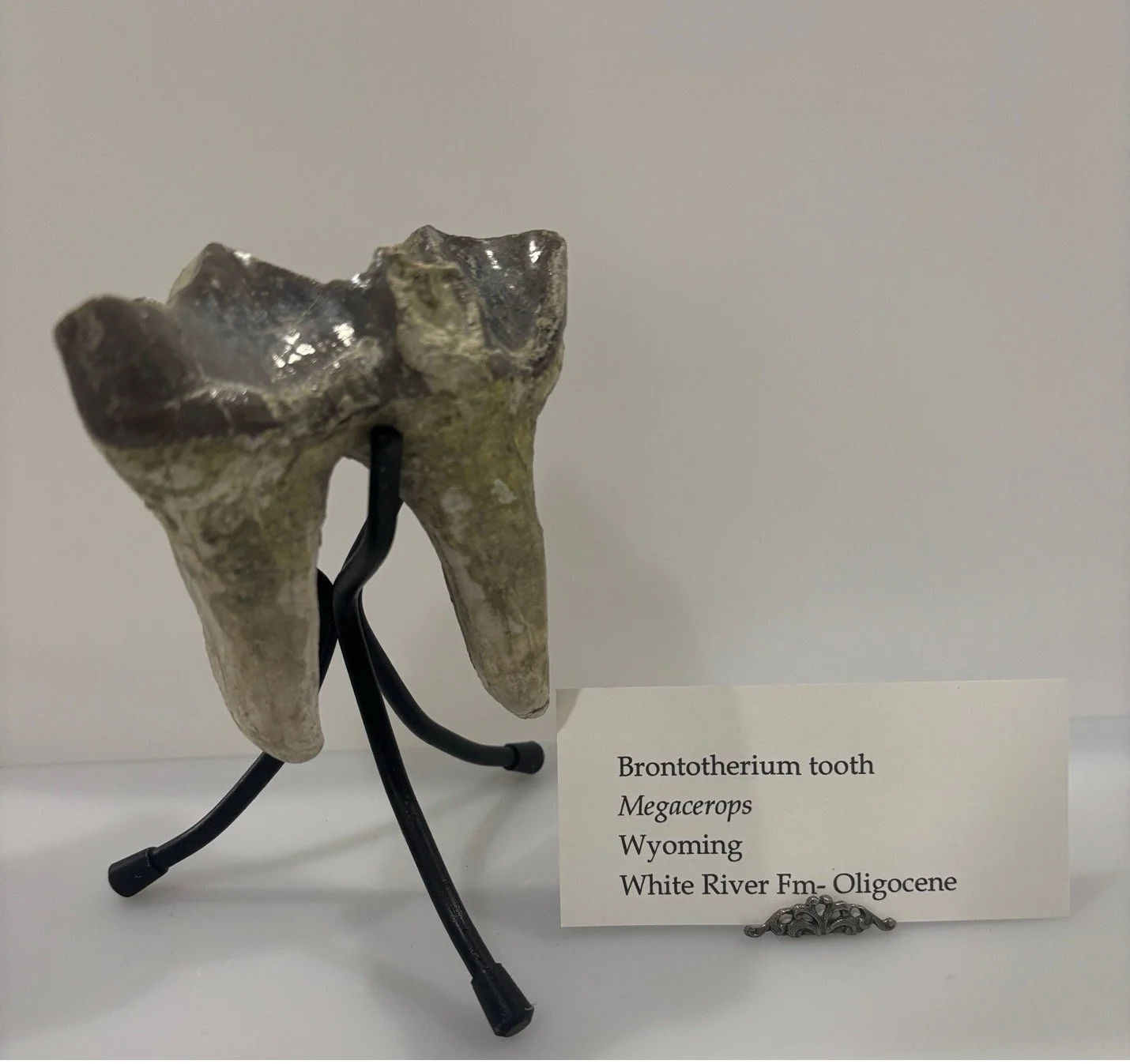
The group Brontotherium is a family of large megafauna of rhinoceros-like mammals. By the end of the Eocene, Brontotheres evolved to be very large (about 8 feet tall and 16 feet long) and would have traveled in herds. Like their distant relatives rhinoceroses, Brontotheres sported large horns; but unlike rhinos, their horns were made entirely of bone instead of keratin. They were herbivorous and grazed on soft vegetation, which ultimately lead to their extinction at the end of the Eocene. During a shift in climate, the warm and verdant lands of the Eocene dried out and became much colder, which effectively destroyed the Brontheres’ food source.
This group of animals goes by many names, but the two most popular are Brontothere which means “thunder beast” and Megacerops, meaning “large-horned face”.