Hell Creek Formation
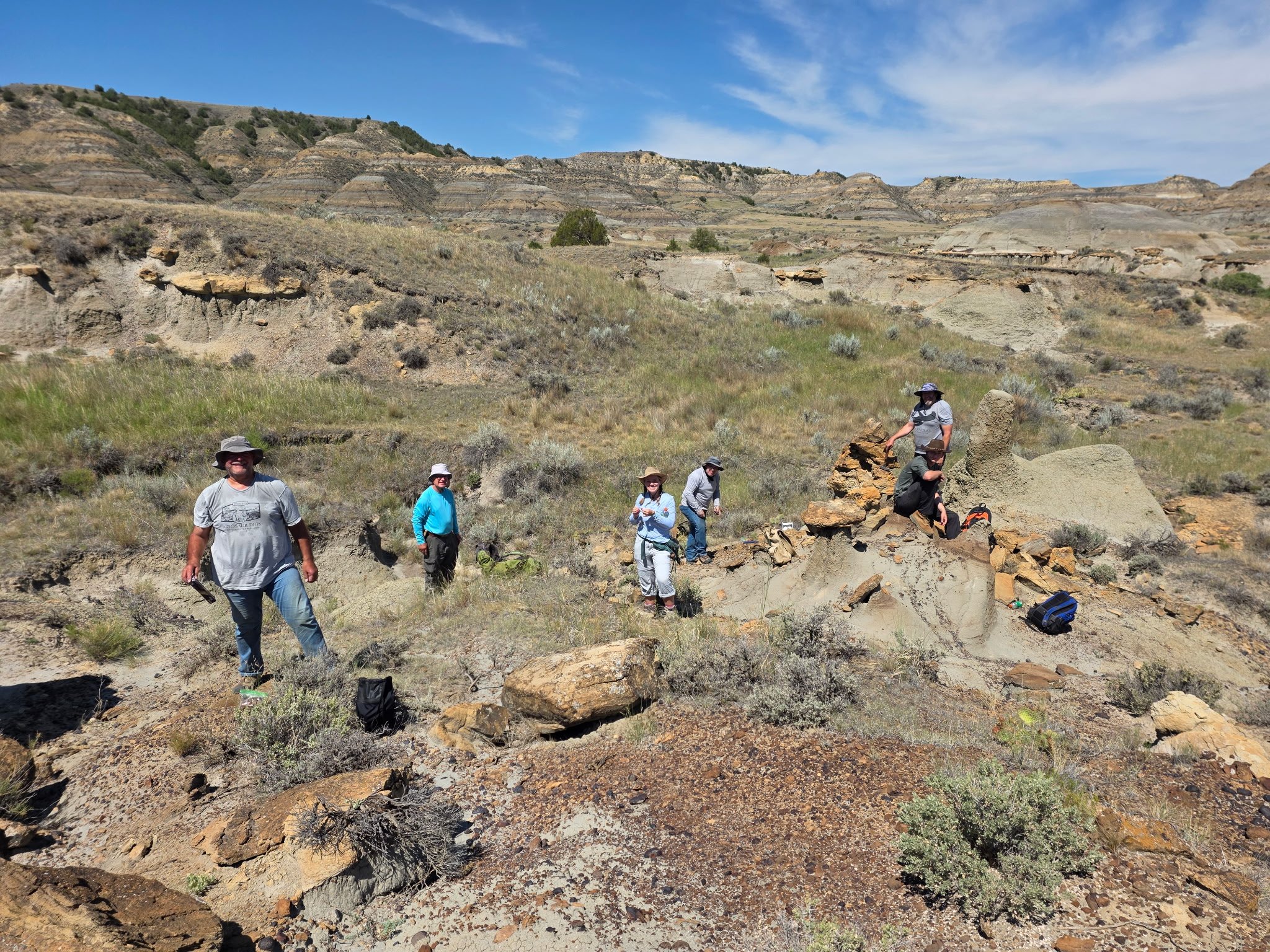
The Hell Creek Formation that covers parts of Montana, North and South Dakota, and Wyoming contains fossils from the Late Cretaceous period, and is one of the only places where the remains of the Tyrannosaurus rex is found. Back when dinosaurs still roamed the earth, this region was tropical and humid, with lush plant life, swamps, and a river delta that fed into the Western Interior Seaway. The river’s flood plain created a fantastic scenario for fossil preservation, as anything that fell in the water or the nearby sea was quickly buried in silt, increasing its chances of being fossilized. In the Hell Creek Formation, we find fossils of T. rex, Triceratops, hadrosaurs, ankylosaurs, pachycephalosaurs, and more. We also see fossils of palms and conifer trees, marine and aquatic animals like Champsosaurus, turtles, crocodilians, and fish.
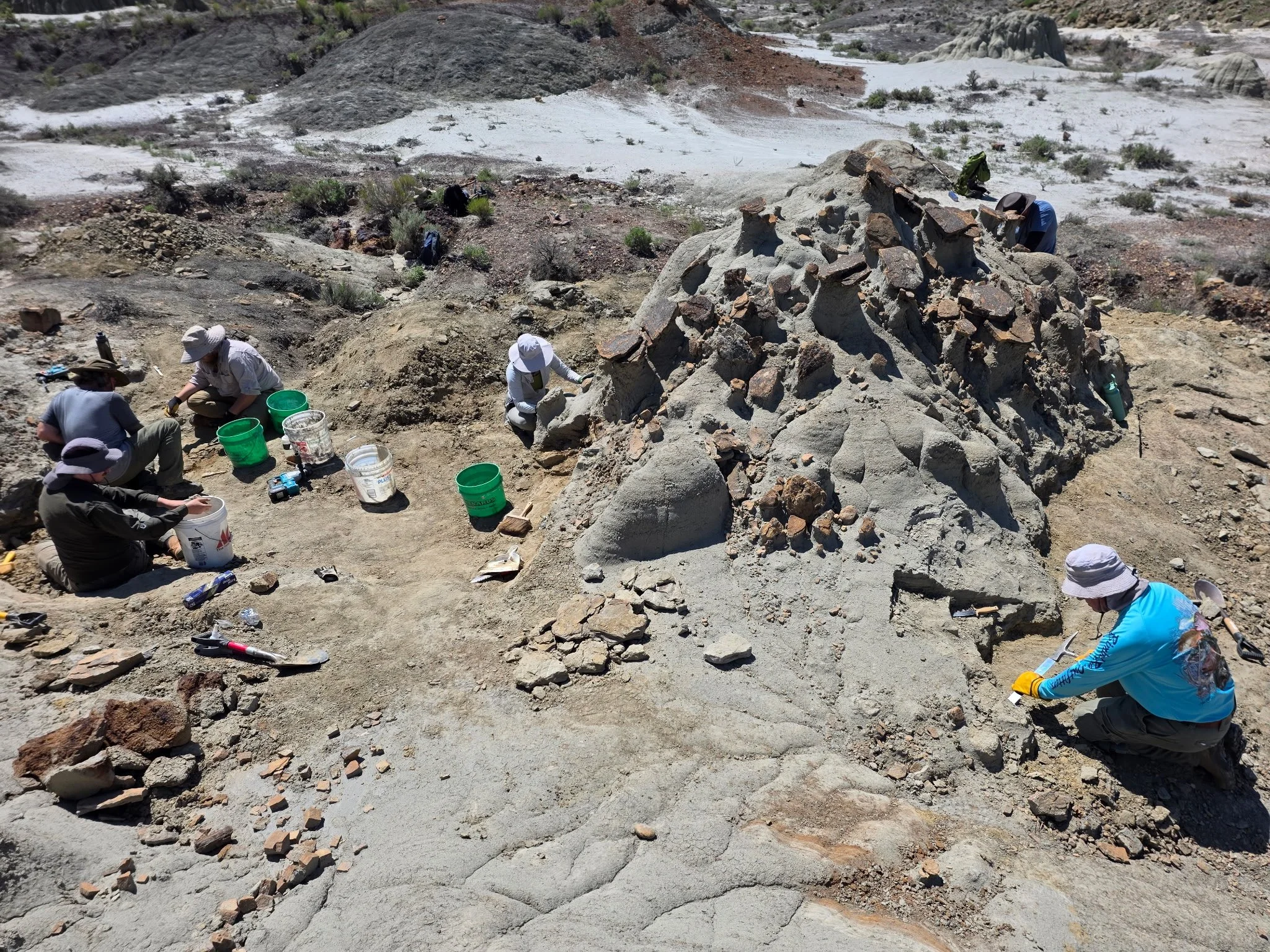
The Hell Creek Formation acts like a snapshot in time, capturing the environment shortly before the K-pg Extinction event and the end of the age of the dinosaurs. Earth Experience adds to its collection of Hell Creek fossils every year thanks to our annual digs. Currently, you can see us working on a Triceratops skull found in the Hell Creek at the museum!
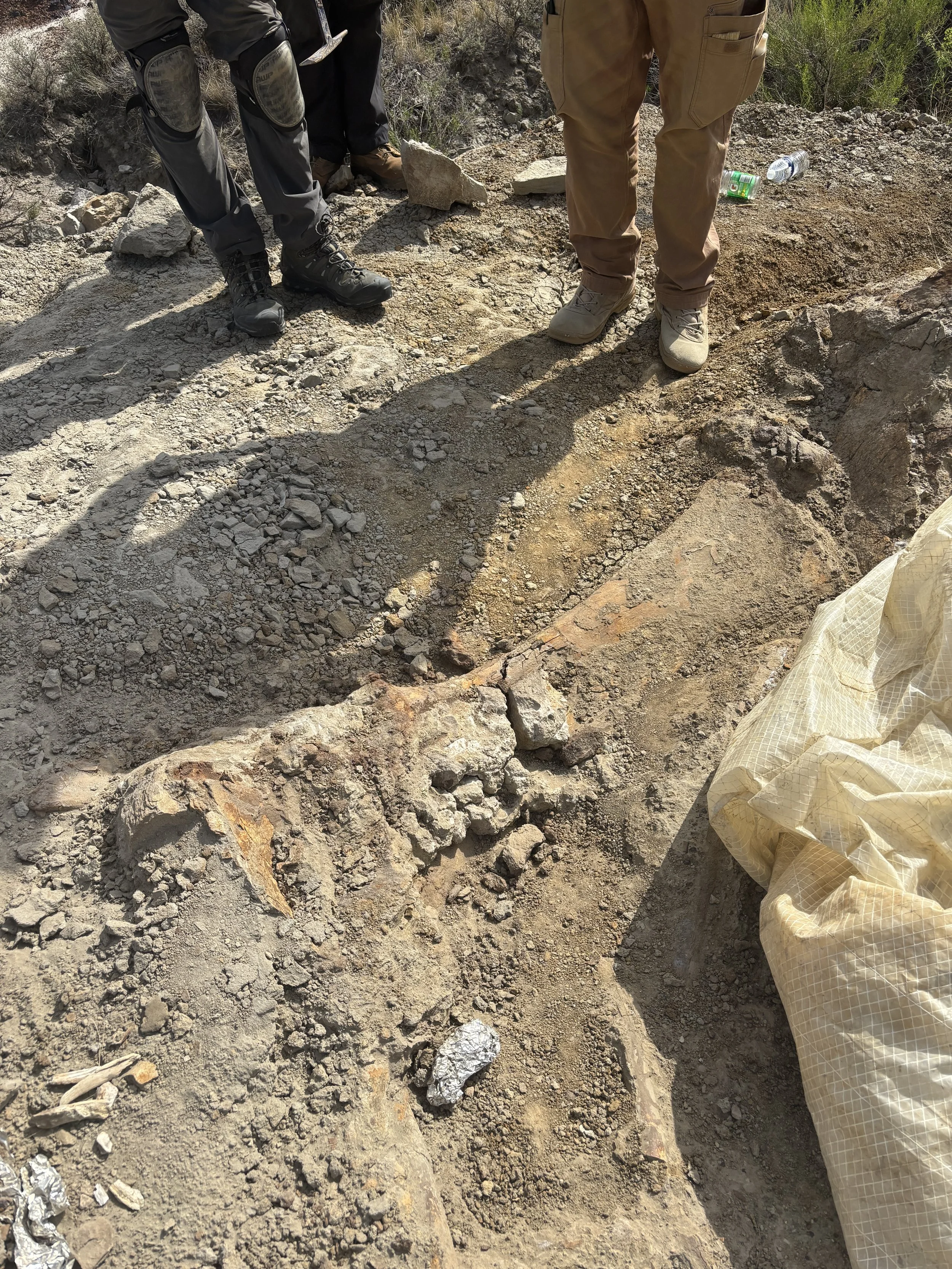
A triceratops limb bone still being dug out of the ground. Generally, only small parts of a big fossil like this will be visible at first, and it can take a trained eye to spot them. It takes many hours to carefully unearth the bone enough to transport it.
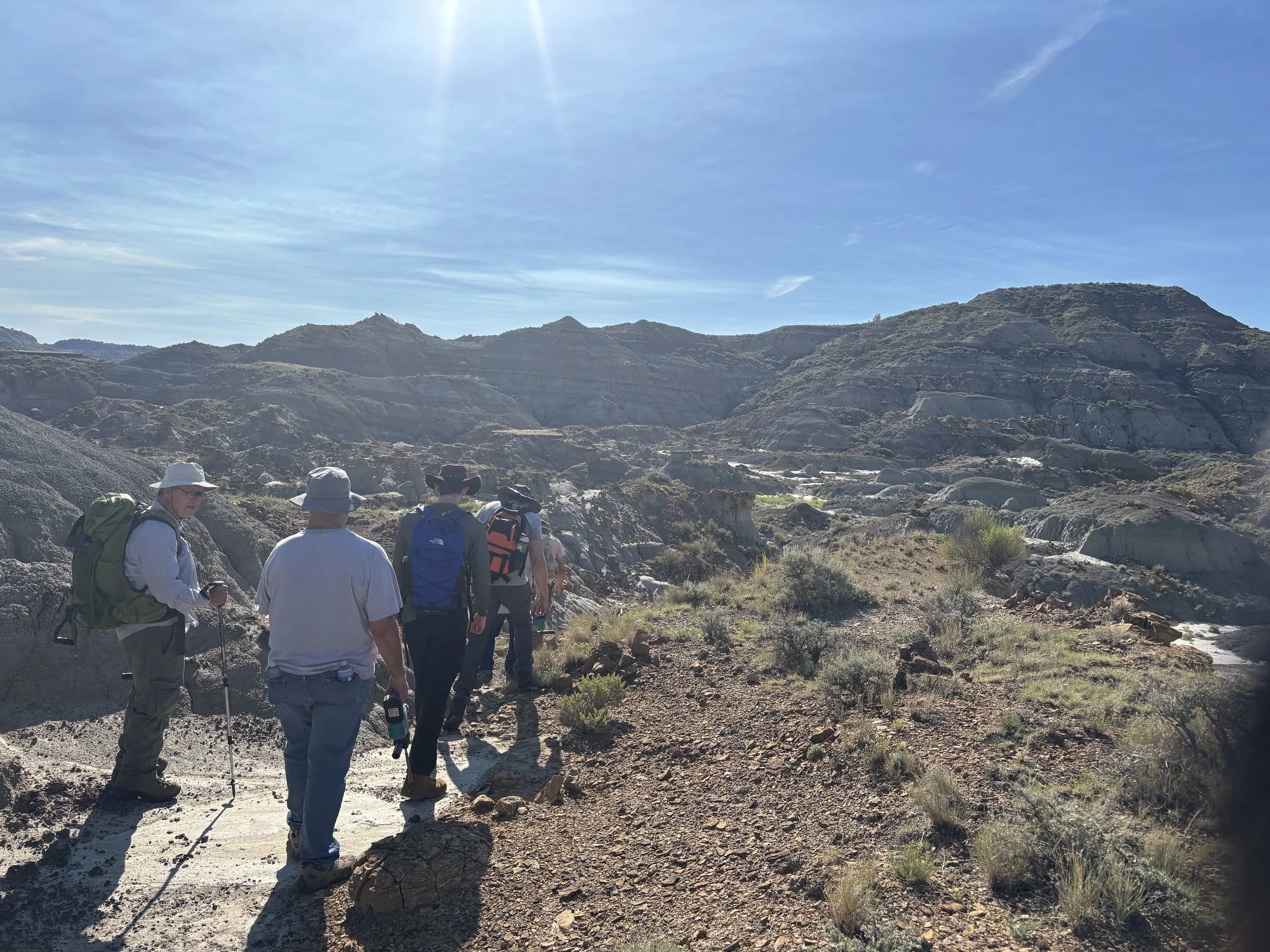
One our dig teams headed to a dig site in the Hell Creek Formation. The dry desert landscape allows for regular erosion from rain and wind. New fossils crop up year over year, and must be collected quickly before they are eroded away too.