0
Skip to Content
Earth Experience Museum
Home
About
Events
Contact
Bring a Group
Rocks and Minerals
Fossils by Time Period
Fossil Database
Solnhofen Limestone
Hell Creek Formation
Green River Formation
Coon Creek Formation
The Basics of Paleontology
History of Paleontology
Major Extinction Event Guide
Western Interior Seaway
DONATE
Home
About
Events
Contact
Bring a Group
Folder: Explore Our Collection
Back
Rocks and Minerals
Fossils by Time Period
Fossil Database
Folder: Formations on Display
Back
Solnhofen Limestone
Hell Creek Formation
Green River Formation
Coon Creek Formation
Folder: More to Explore
Back
The Basics of Paleontology
History of Paleontology
Major Extinction Event Guide
Western Interior Seaway
DONATE
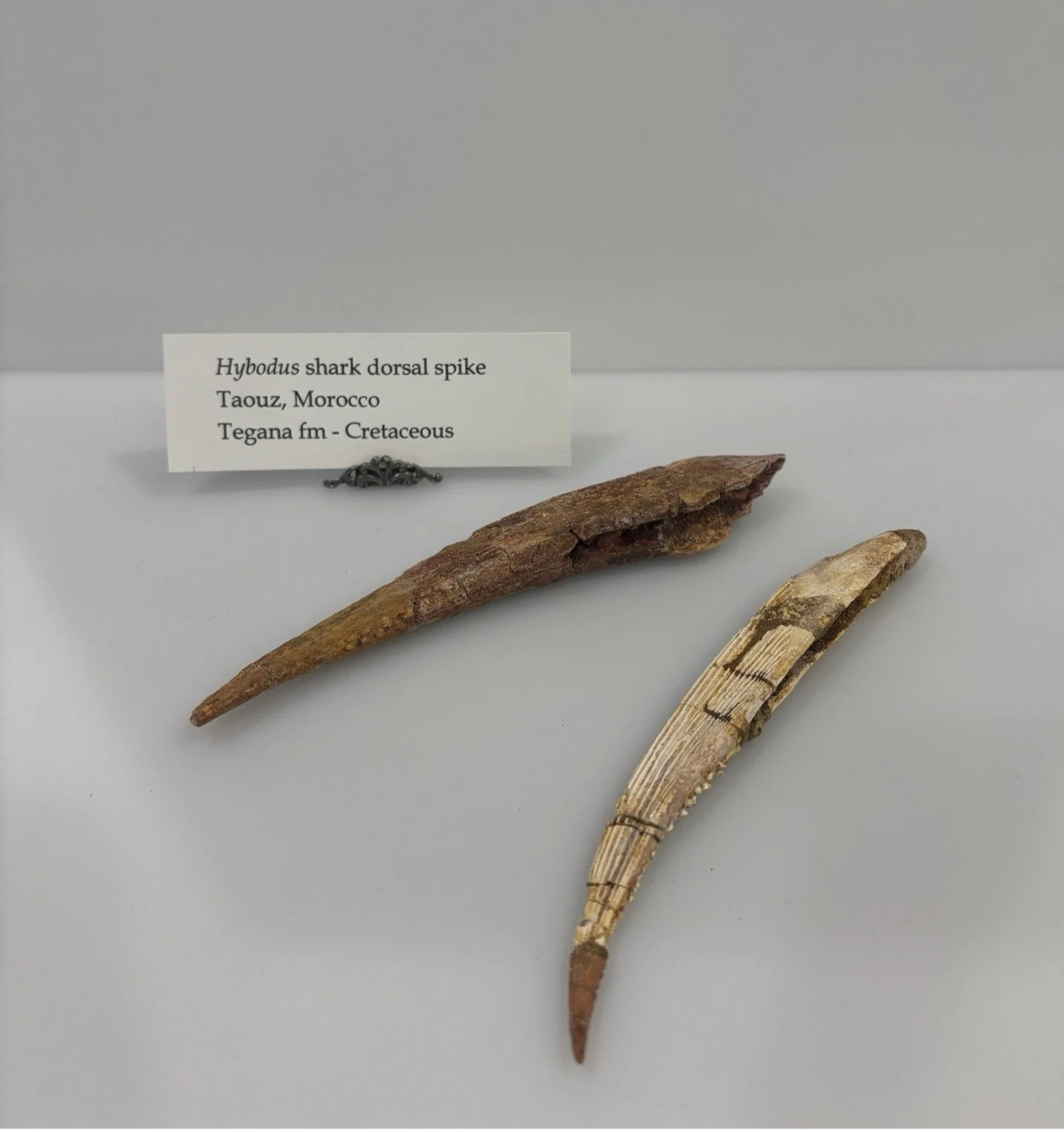
hybodus.jpg

Hybodus

$0.00

Ancient Shark (Permian – Cretaceous)

Hybodus was a genus of shark that had great success in the ancient oceans. It was about 6 feet long and had small crown of spikes on its head and two more larger spikes by its dorsal fins. These spikes would have protected the shark from bigger predators, which partly contributed to its success. Another trait Hybodus had was two types of teeth for two types of prey. The teeth at the front of its mouth were sharp, used to bite down on prey, while the teeth in the back of its mouth were flat and could crush and break down hard shells and bones—a little like your own molars.

Middle Tennessee Museum of Natural History

816 Old Salem Road
Murfreesboro, TN
(615) 900-8358

About
Contact
Events

© Earth Experience Museum 2020 - Designed by Fostered Designs