
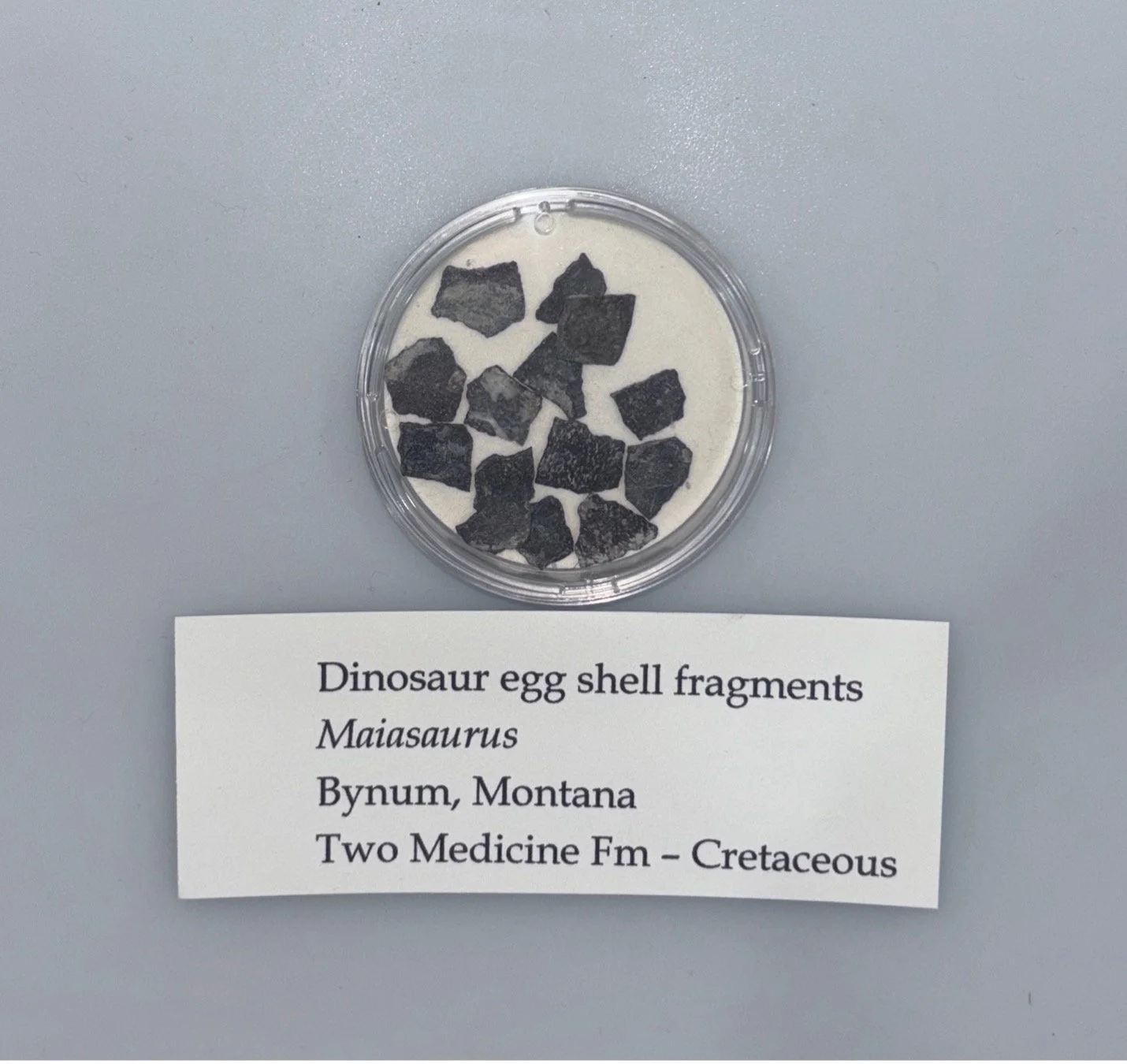
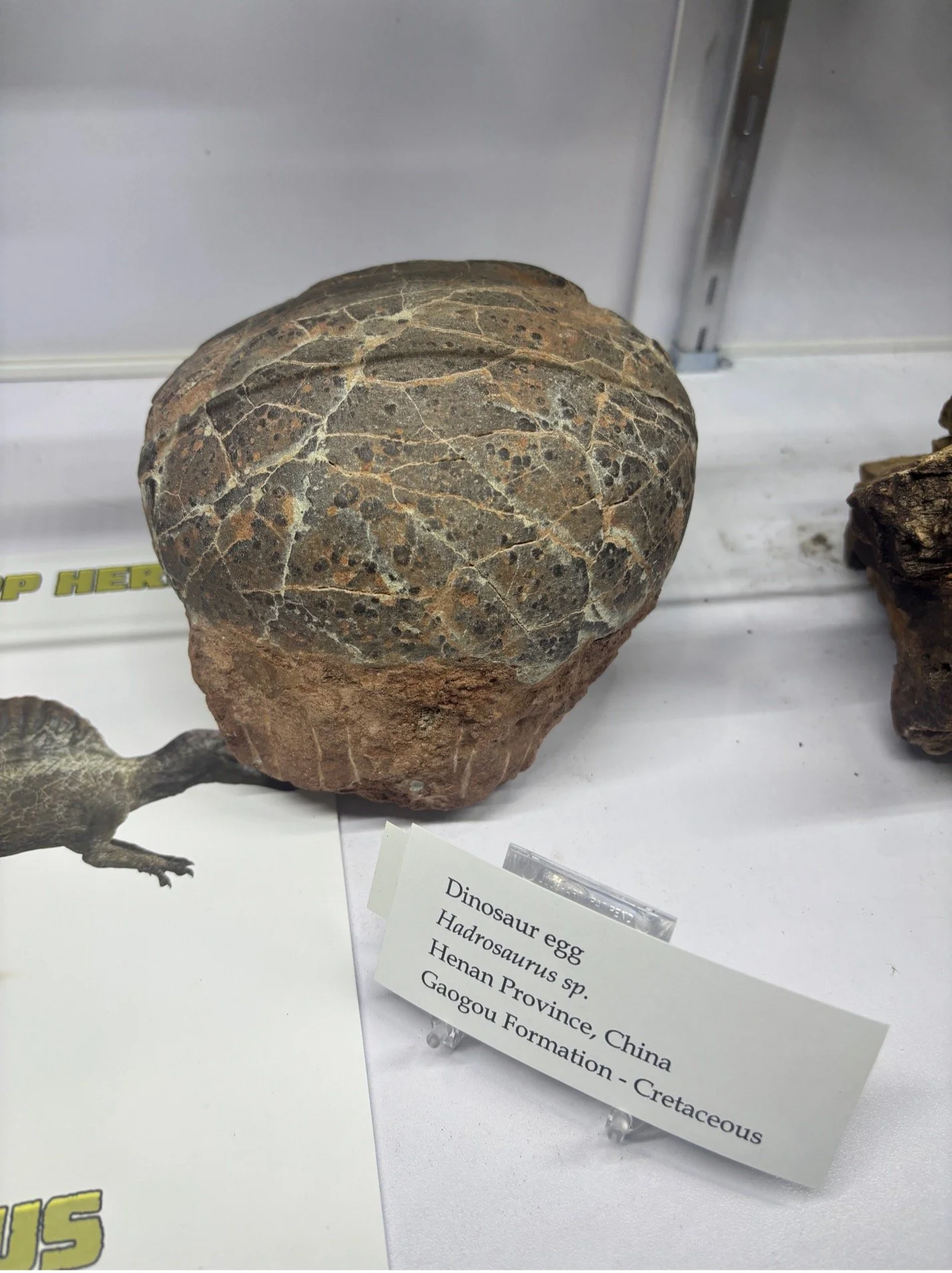
Amongst the fossil bones and teeth of dinosaurs, paleontologists occasionally find fossilized dinosaur egg material. As you might expect, dinosaur eggs are rarely found due to their delicate nature, and it is generally hard to determine what type of dinosaur may have once been inside. However, finding the eggs, or better yet, the nests tell us a lot about dinosaur behavior. Some fossils of Oviraptor dinosaurs have been found on top of their eggs, indicating that they cared for their eggs like modern birds. Other larger species buried their eggs rather than brood as their weight would have done more harm than good.
With modern technology, our understanding of dinosaur eggs has improved further. It is possible to perform a CT scan on dinosaur eggs, which makes it possible for scientists to learn more about dinosaur embryos and their development.