
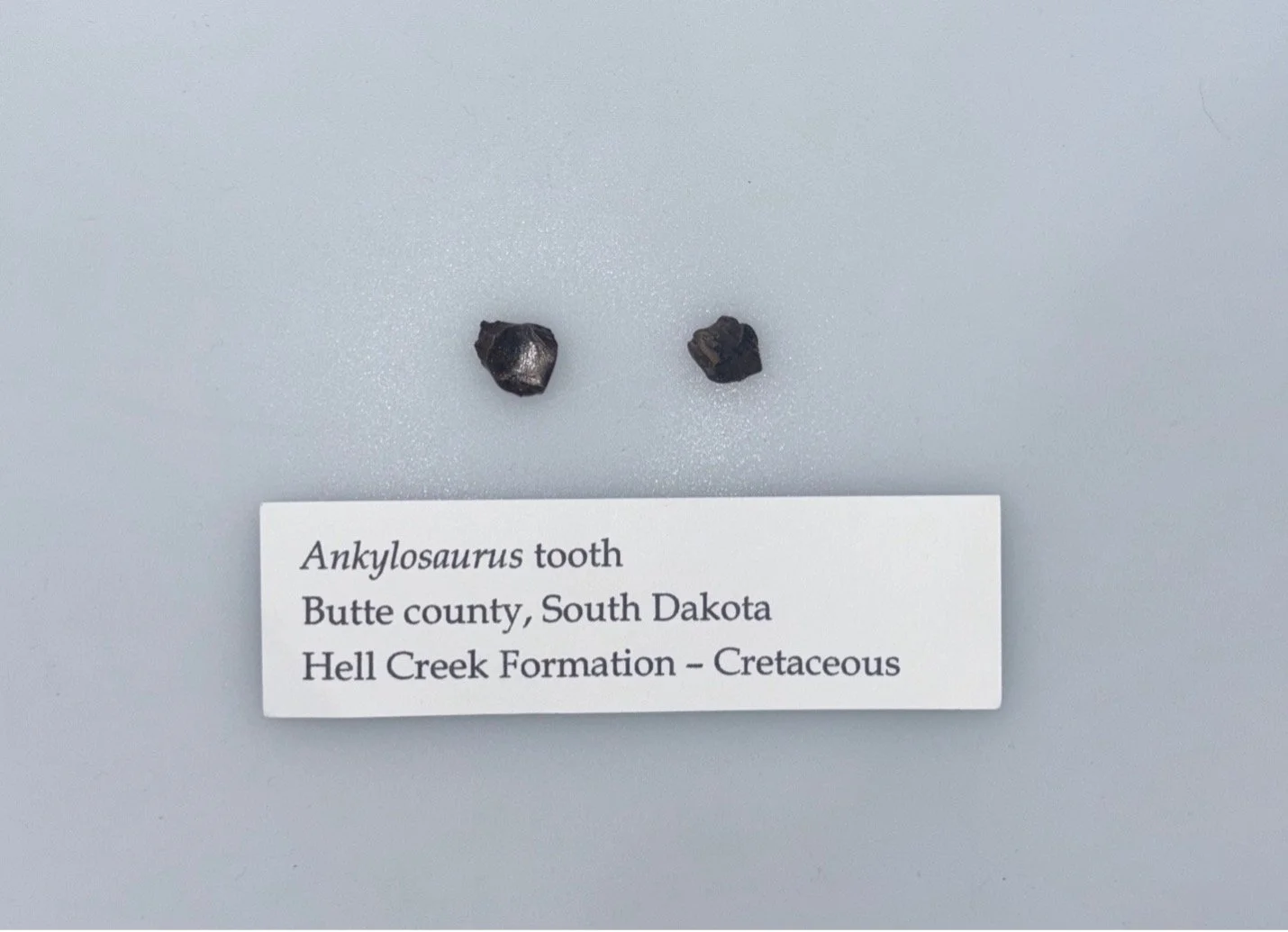
The Ankylosaurus was a large, armored dinosaur that lived in North American during the Cretaceous period. The Ankylosaurus was like a living tank, covered in spiky osteoderms (bony-plates) which protected it from large predators like the T. rex, and had a large club tail which they would use as a bone-cracking weapon against predators or fellow Ankylosaurus. Ankylosaurus were herbivores and ate low growing vegetation like ferns, horsetails, and fallen fruit.
One of the best-preserved dinosaur specimens ever found was a Borealopelta, another genus of Ankylosaur, which still has the osteoderms, some skin, and even the stomach contents of its last meal preserved. You can learn more about this specimen and even see it in person at the Royal Tyrell Museum in Alberta, Canada.