
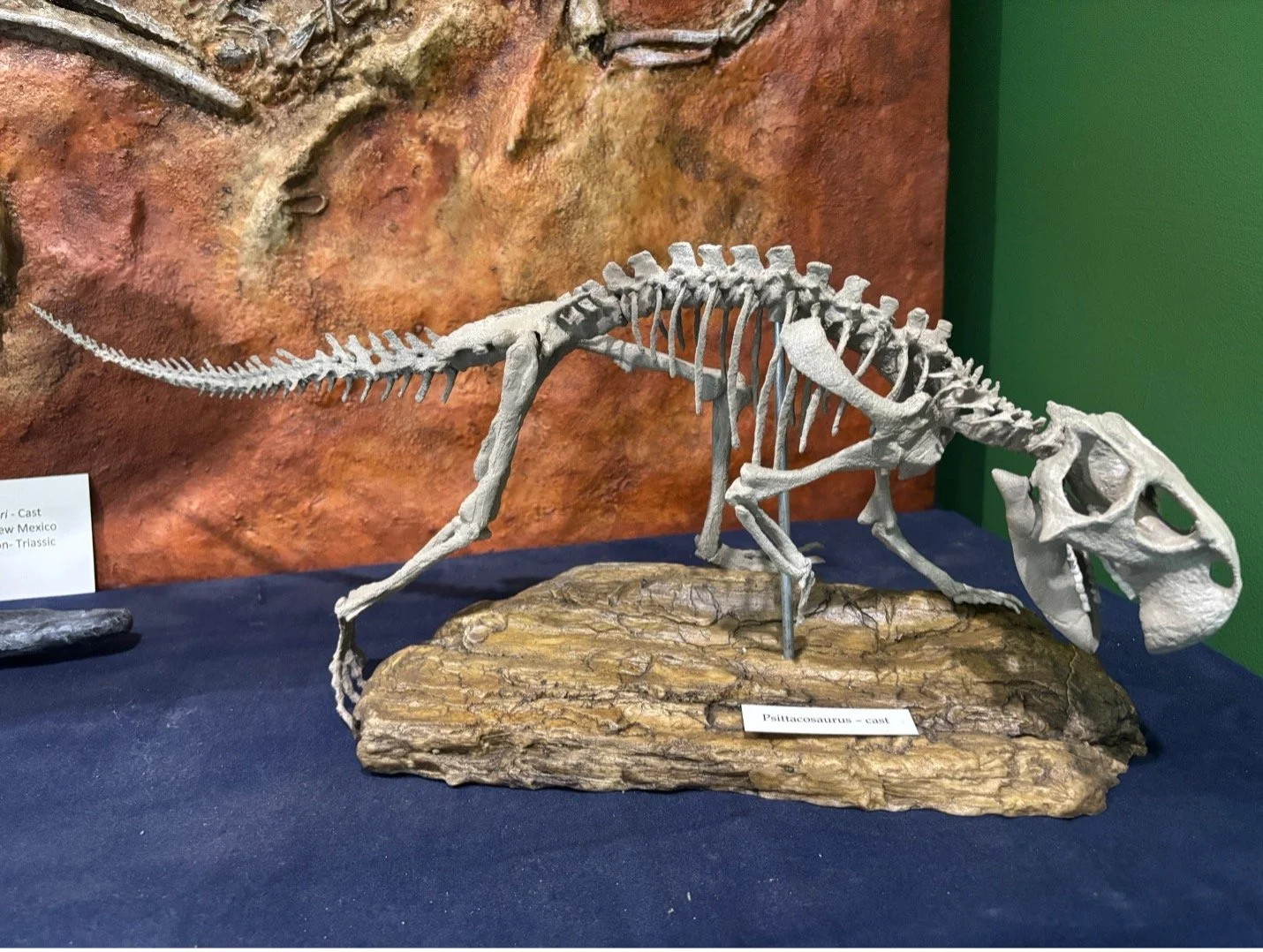
Psittacosaurus was a genus of small Ceratopsian dinosaurs from the Early Cretaceous. On average, members of the Psittacosaurus genus grew to about 6.5 feet long and walked on its hind legs similar to a Theropod dinosaur. The Psittacosaurus has been well preserved and studied, leading paleontologists to make conclusions about them and their behaviors. For example, fossils of congregated young Psittacosaurus hatchlings show that baby Psittacosaurus may have stayed in groups, similar to modern ducklings. One Psittacosaur specimen was so well preserved that it still possessed a cloaca, an anatomic structure shared by reptiles and birds which acts as the single opening for their urinary, digestion, and reproductive tracks. This same fossil also provided evidence for skin coloration and the presence of quills that ran along the base of their tails.
Psittacosaurus was a genus of small Ceratopsian dinosaurs from the Early Cretaceous. On average, members of the Psittacosaurus genus grew to about 6.5 feet long and walked on its hind legs similar to a Theropod dinosaur. The Psittacosaurus has been well preserved and studied, leading paleontologists to make conclusions about them and their behaviors. For example, fossils of congregated young Psittacosaurus hatchlings show that baby Psittacosaurus may have stayed in groups, similar to modern ducklings. One Psittacosaur specimen was so well preserved that it still possessed a cloaca, an anatomic structure shared by reptiles and birds which acts as the single opening for their urinary, digestion, and reproductive tracks. This same fossil also provided evidence for skin coloration and the presence of quills that ran along the base of their tails.