
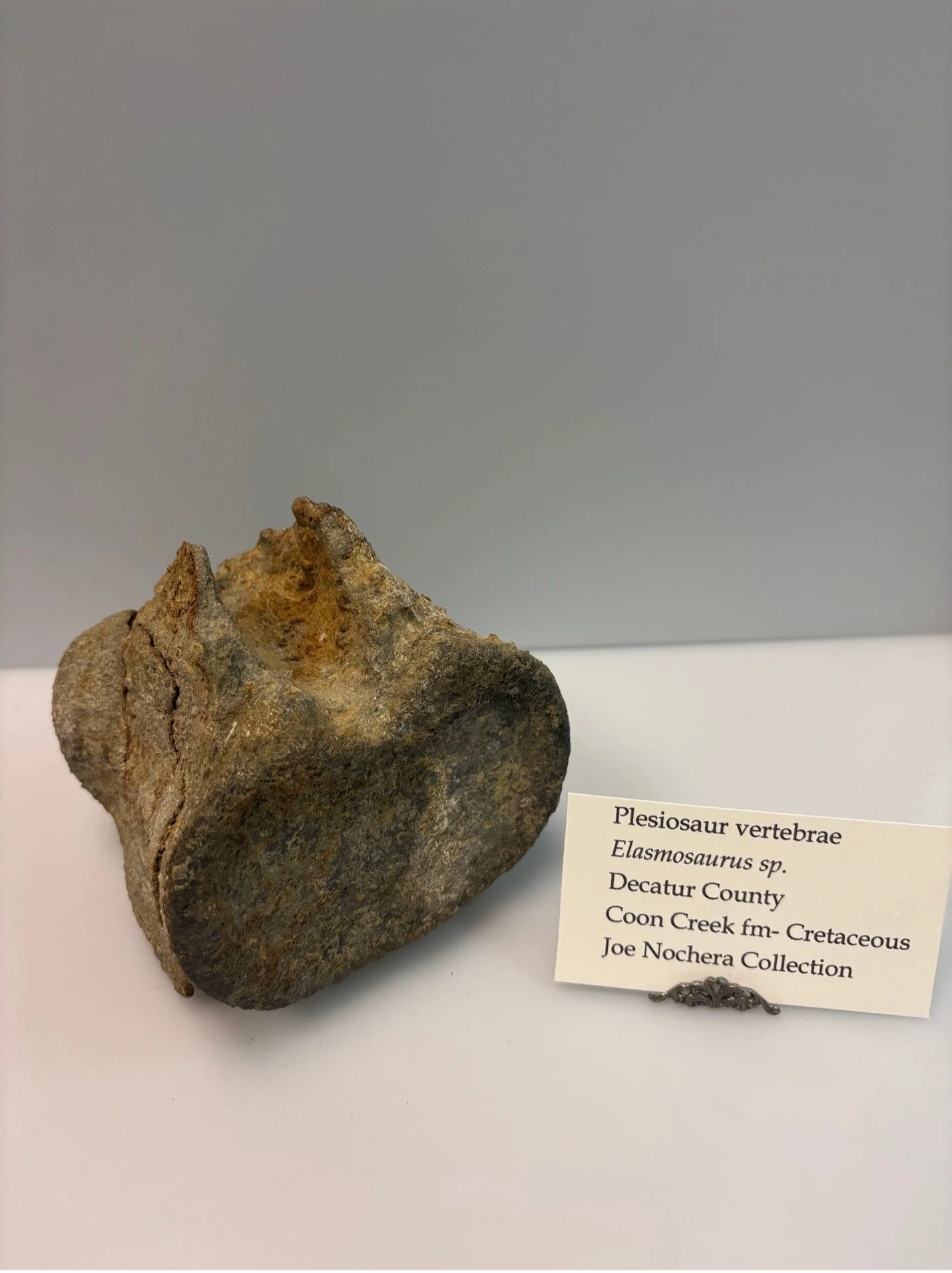
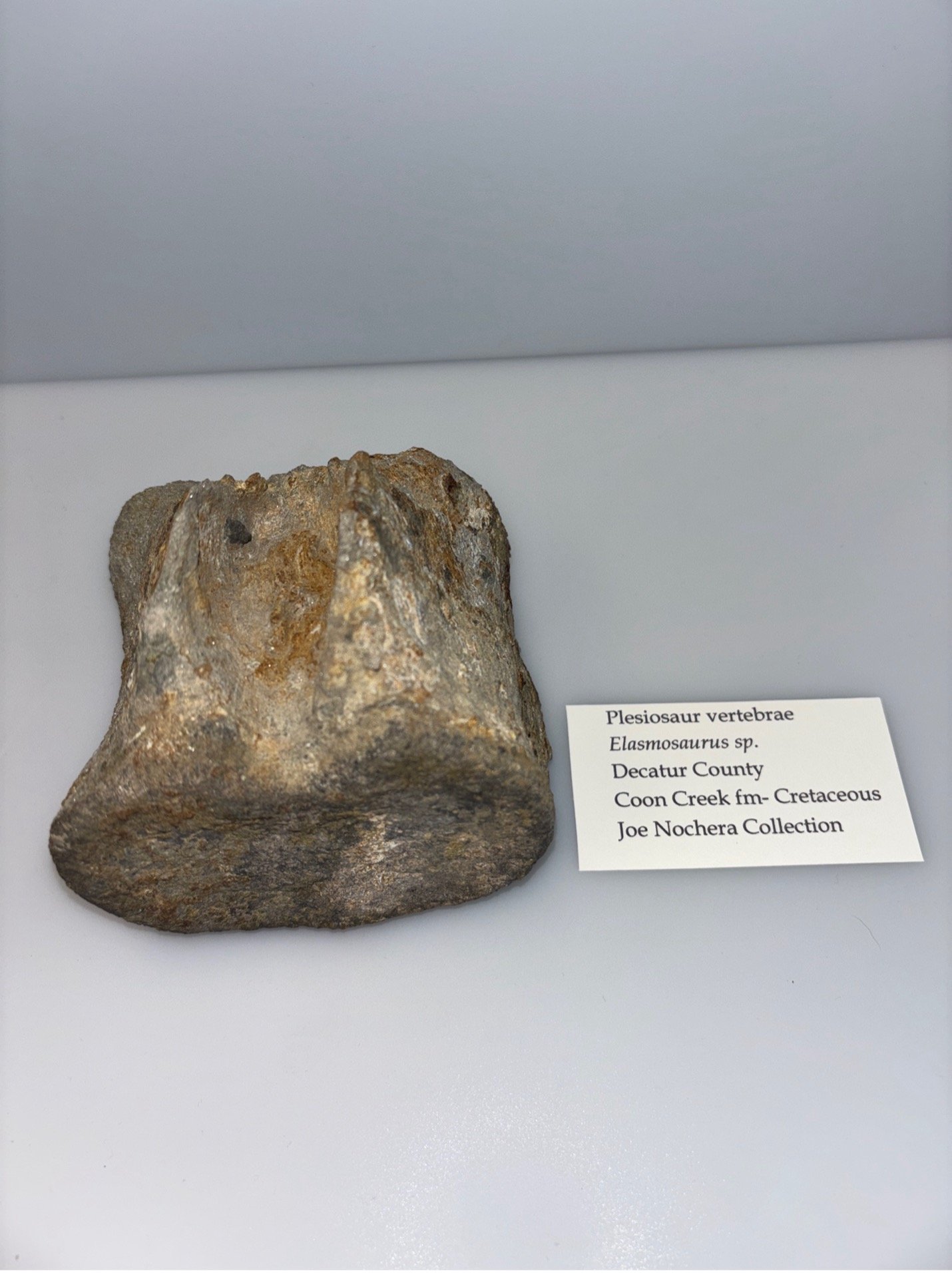
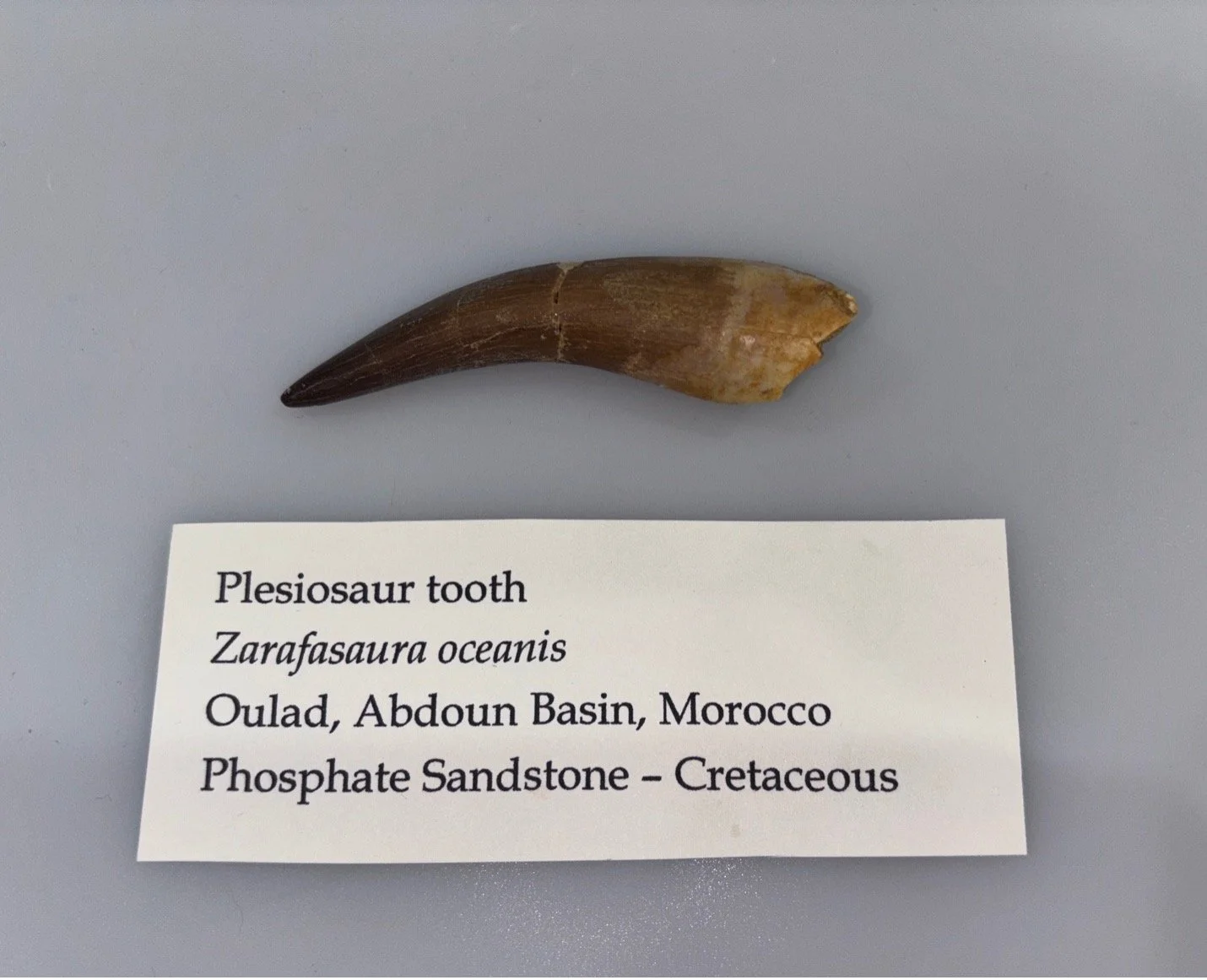
Plesiosaurs were marine reptiles that lived during the age of the dinosaurs. Though not dinosaurs themselves, Plesiosaurs are well-known for their distinctive body shape which inspired the famous cryptid, the Loch Ness Monster. While many believers argue that a Plesiosaur could still be in Loch Ness in Scotland, they all unfortunately went extinct at the same time at the non-avian dinosaurs following the K-Pg Impact. Their diet was comprised of fish and cephalopods. Plesiosaurs came in different shapes and sizes; some where large and long-necked like the Zarafasaura oceanis who had short faces with long necks, while some like the Pliosaurus had short necks and large heads.
The first complete Plesiosaur fossil was found by famous female paleontologist Mary Anning in 1823.