0
Skip to Content
Earth Experience Museum
Home
About
Events
Contact
Bring a Group
Rocks and Minerals
Fossils by Time Period
Fossil Database
Solnhofen Limestone
Hell Creek Formation
Green River Formation
Coon Creek Formation
The Basics of Paleontology
History of Paleontology
Major Extinction Event Guide
Western Interior Seaway
DONATE
Home
About
Events
Contact
Bring a Group
Folder: Explore Our Collection
Back
Rocks and Minerals
Fossils by Time Period
Fossil Database
Folder: Formations on Display
Back
Solnhofen Limestone
Hell Creek Formation
Green River Formation
Coon Creek Formation
Folder: More to Explore
Back
The Basics of Paleontology
History of Paleontology
Major Extinction Event Guide
Western Interior Seaway
DONATE
IMG_9338.JPG
IMG_9339.jpg
IMG_9340.jpg
IMG_9343.JPG
IMG_9349.jpg
IMG_9363.JPG

Trilobites

$0.00

(Cambrian – End Permian)

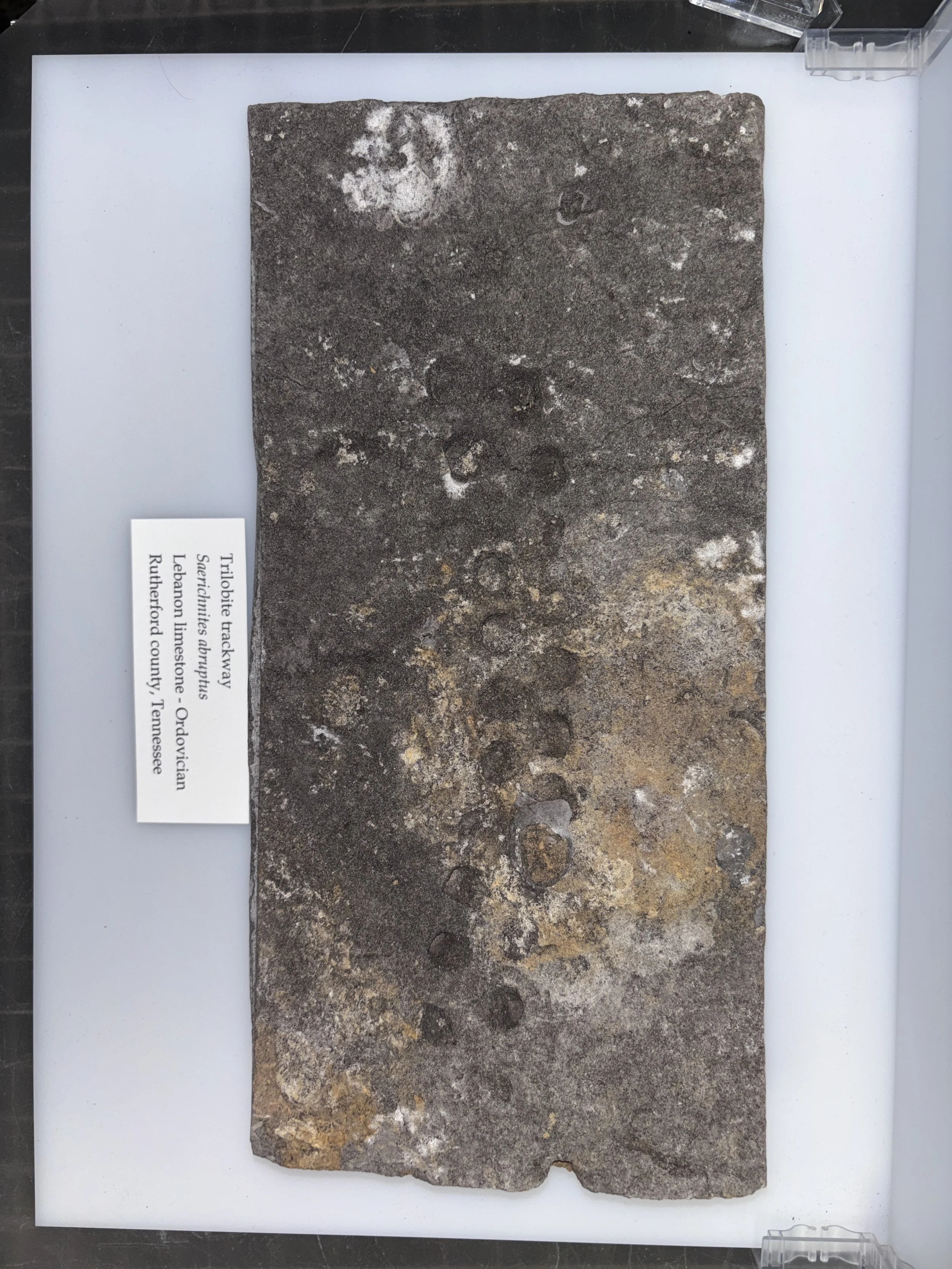
Trilobites were marine arthropods that lived on earth for 300 million years. They were generally small, had a segmented exoskeleton, and crawled around on the bottom of the oceans floor. Most Trilobites had eyes or eye-like structures that were positioned atop their heads and ate detritus that had settled into the sediment (a little like a living Roomba).

Because Trilobites were around for so long and were so prolific, their fossils are found all over the world. The smallest species were mere millimeters long, and the largest was almost 30 inches long. They often died in odd positions, similar to a bug, which you can see demonstrated here.

Middle Tennessee Museum of Natural History

816 Old Salem Road
Murfreesboro, TN
(615) 900-8358

About
Contact
Events

© Earth Experience Museum 2020 - Designed by Fostered Designs