Toxochelys was a genus of sea turtle that lived in the Western Interior Seaway, and its fossils are found in the United States and Canada. Toxochelys lived a similar life as modern sea turtles, feeding mostly on jellyfish, squids, mollusks, crustaceans, and marine vegetation. However, Toxochelys was larger than most modern sea turtles, growing up to 6 feet in length.
This specimen was found by museum staff in the Coon Creek Formation in Tennessee.


The Mesosaurus brasiliensis was a small aquatic reptile that lived during the early Permian.
The Mesosaurus was actually used as proof by Alfred Wegener in 1912 to argue his theory that the planet once had a supercontinent we call Pangea that split into the continents we know today. The fossils of the Mesosaurus brasiliensis are found in two places: the Irati Formation of Brazil in South America, and the Whitehill Formation of southern Africa. As you might have noticed, these two locations are separated by an entire ocean. The little Mesosaurus brasiliensis did not swim across an entire ocean, but instead, its old habitat was split in two due to continental drift.


(Early Permian)
Captorhinus was a genus of early reptiles that lived during the Early Permian period. They were omnivorous and similar in size to a bearded dragon. Though they may not look like much, Captorhinus is incredibly important to the fossil record. These excellently-preserved reptiles possess one of the earliest known rib-powered breathing systems. Unlike their predecessors who breathed by absorbing oxygen through their skin or by lowering their jaws (a bit like a frog breathes for visual reference), the Captorhinus’ ribs expanded with each breath. This new breathing system was better suited for more active lifestyles of these new land-dwelling animals and allowed for more diversification over time.
Captorhinus also had a parietal eye, or a third light-sensing structure on the top of their heads, which certain fish, amphibian, and reptile species also possess.


Phytosaurs were large crocodile-like reptiles from the Triassic period. Phytosaurs had a wide range of lengths, all the way from 6 feet to 40 feet depending on species, making the largest Phytosaurus the largest predators outside of the ocean during the Triassic. They ate fish and small reptiles in lakes and rivers, but also ambushed prey from the water’s edge, similar to a modern crocodile. While not a crocodilian, the Phytosaurs were part of the same larger group called Archosaurs, which includes crocodilians and dinosaurs.


Aetosaurs were herbivorous reptiles that lived during the Triassic period. There are 26 species within the genus Aetosaur, ranging from 3 feet long to 10 feet long. All of the Aetosaurs sported armored plating made of body plates called osteoderms, similar to a modern armadillo. Their body shape resembled crocodiles, but their skulls resemble a bird’s, which is why they were given the name Aetosaur (translation: “eagle lizard”). They also had a pig-like snout which probably functioned as a shovel for digging up tubers and roots.

Keichousaurus was a marine reptile who lived during the Triassic Period. This tiny reptile was a quick and agile swimmer who resided in swamps, lakes, and brackish water, sustaining itself on small fish. Fossils of the Keichousaurus are commonly found in modern day China and are also typically found complete and still articulated.


The Ichthyosaurus was a marine reptile known for its dolphin-like appearance and large eyes that lived during the early Jurassic through the early Cretaceous period. They were part of the larger Ichthyosaur family but were rather small compared to its relatives (its larger relative, Ichthyotitan could reach lengths up to 80 feet). Unlike most reptiles, the ichthyosaurus did not lay eggs and instead gave birth to live young. Evidence for this can be seen in the fossil record, as the bones of young have been found inside the body cavity.
The Ichthyosaurus was one of the first fossilized marine reptiles to be uncovered, and hundreds of remains have been found in England, Germany, Greenland, and Alberta. The earliest complete fossil was found by Mary Anning in 1811, though remains had been discovered as early as 1699.
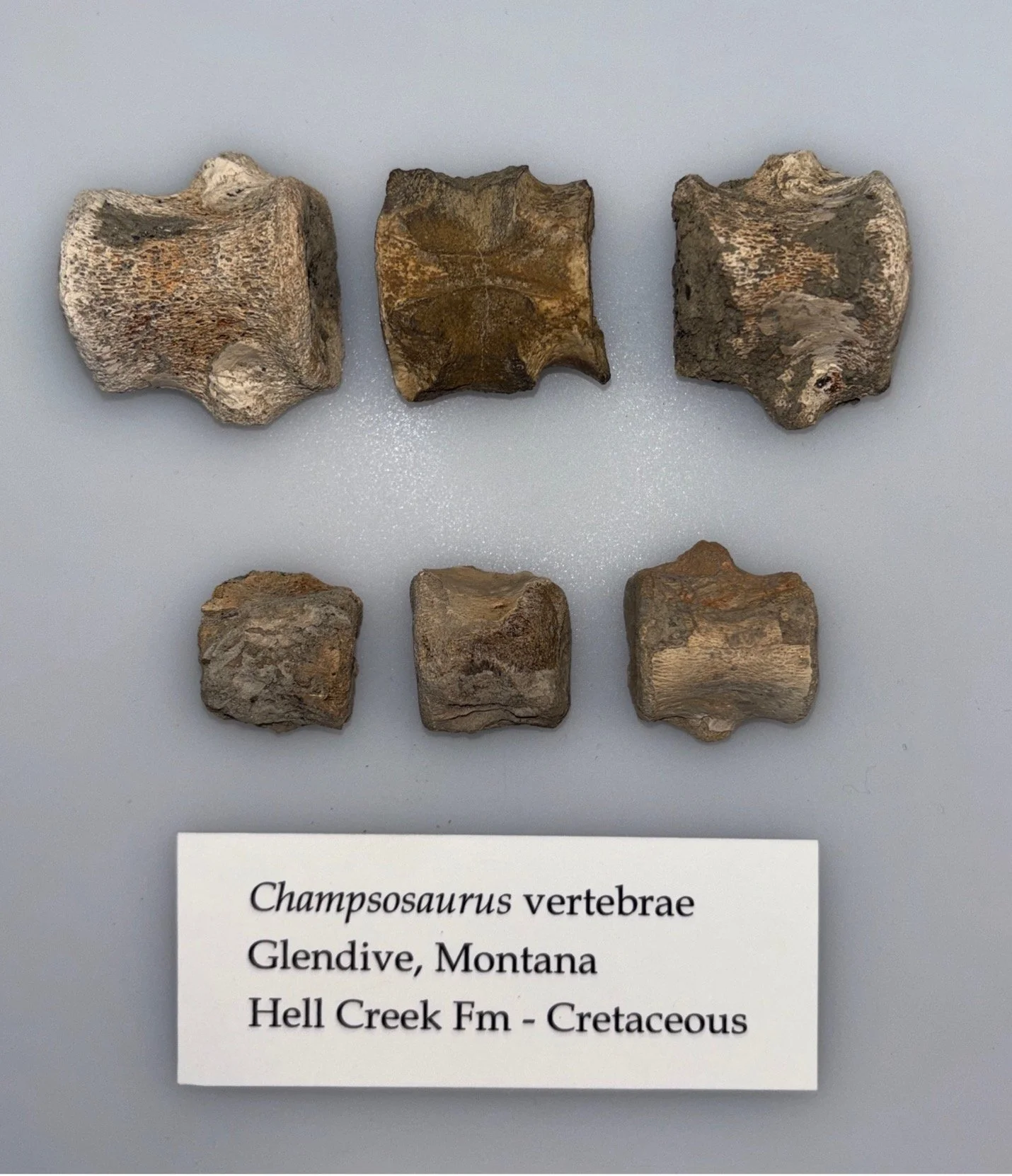
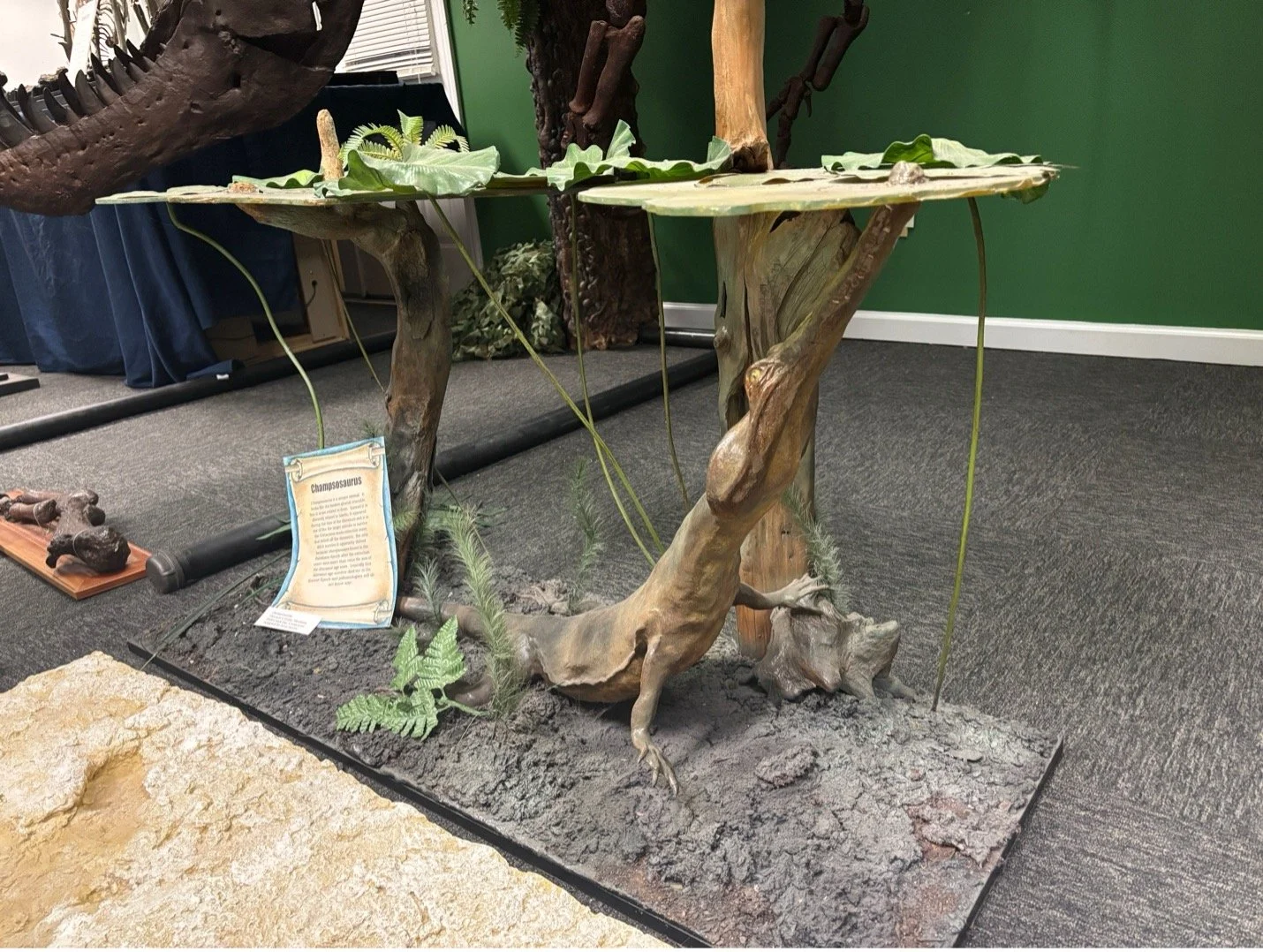
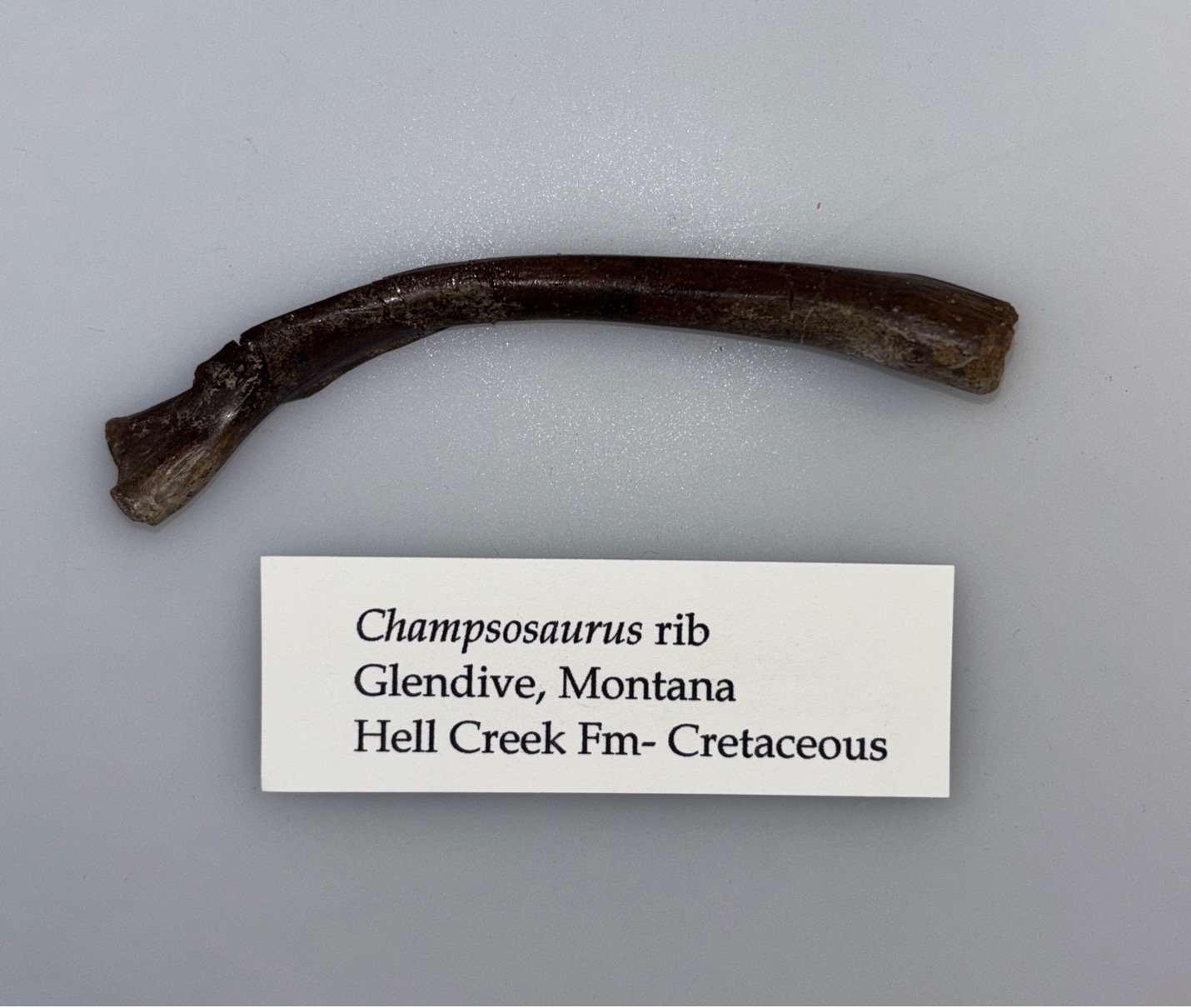
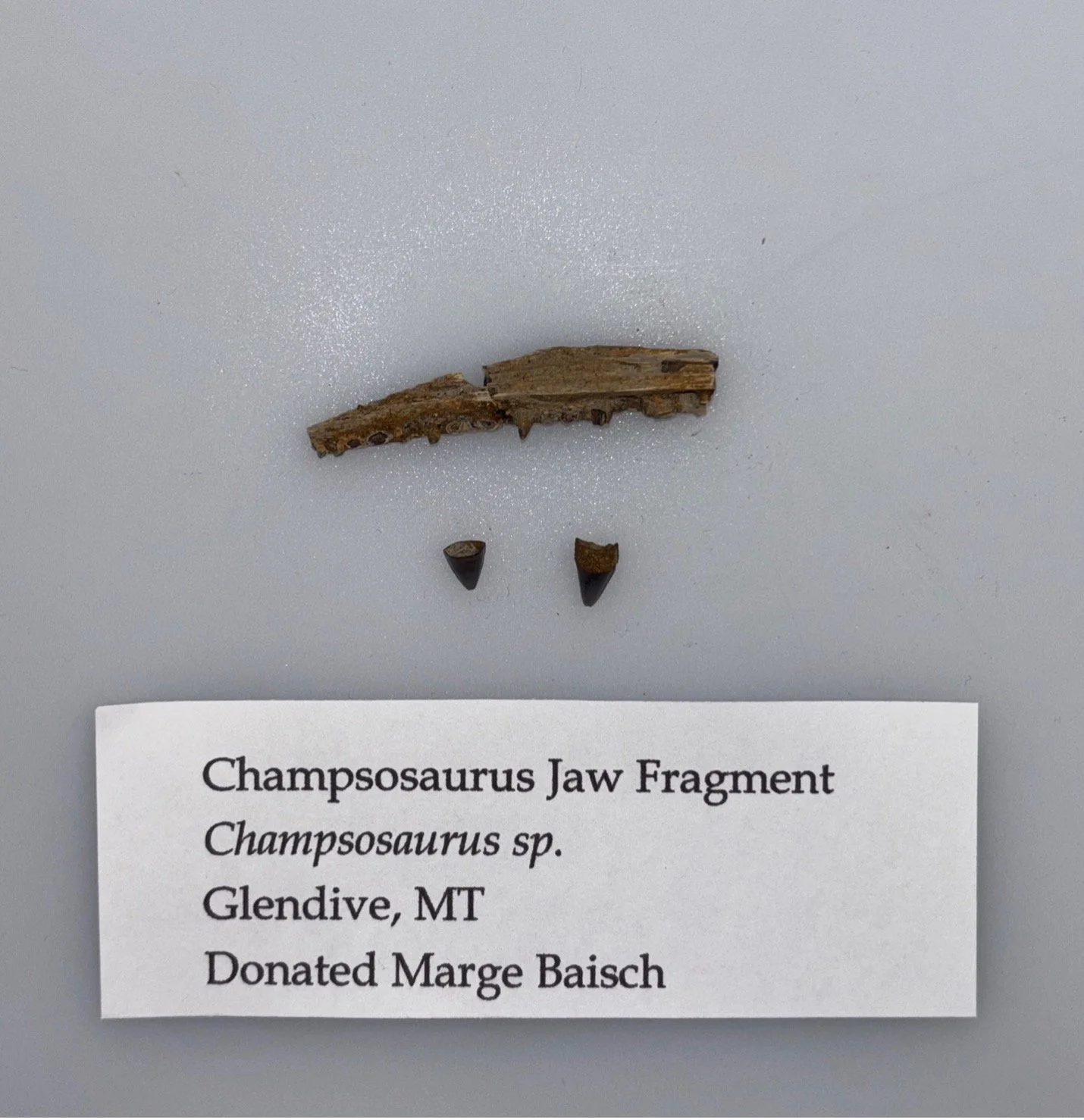
The Champsosaurus was a large aquatic reptile that lived in slow-moving freshwater rivers, swamps, and ponds during the Cretaceous period and into the Paleogene epoch. Champsosaurus was an odd-looking animal, with a crocodile-like body and an elongated snout which was useful in ambush hunting for fish. Despite their similarities to crocodilians, they are not closely related.
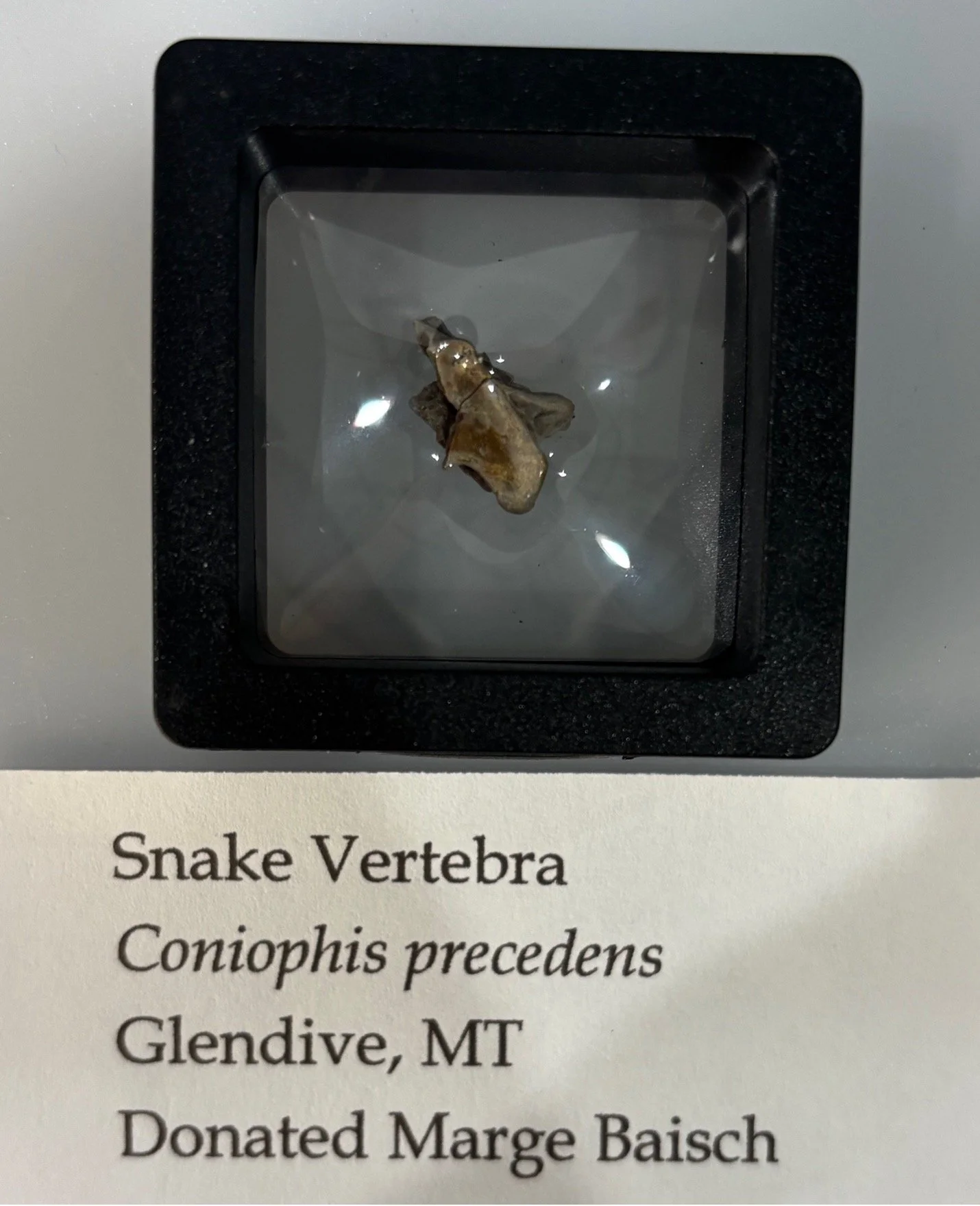
Coniophis precedens was roughly 7cm long and one of – if not the – first ever snake species. Coniophis precedens acts as a ‘missing-link’ species, demonstrating that snakes diverged from terrestrial lizards as opposed to marine reptiles. Like modern snakes, it had no limbs, but it had not yet developed the jaw structure found in modern snakes which allows them to eat larger prey. This means that Coniophis precedens would have had to eat smaller prey items like salamanders and lizards.
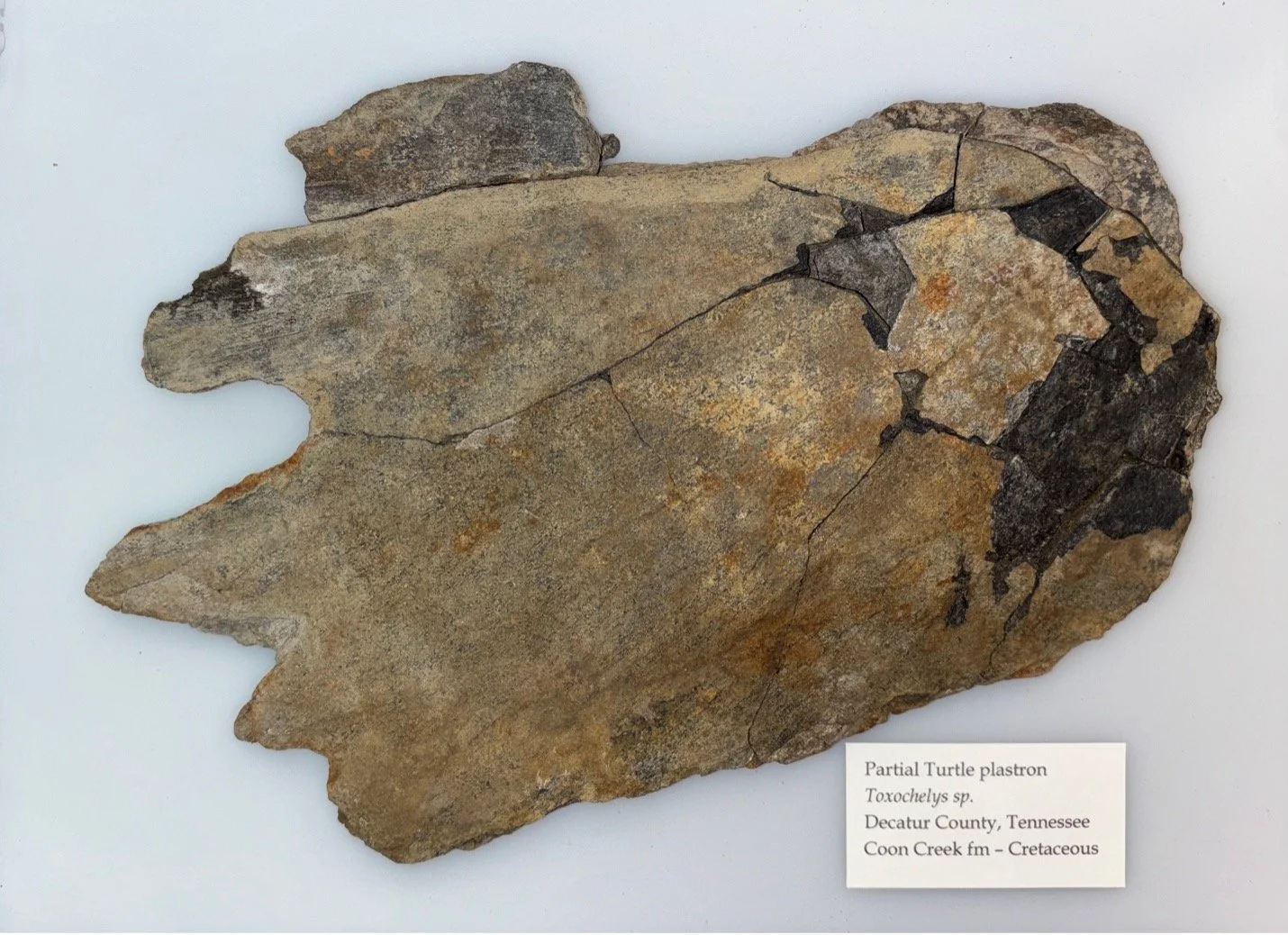
Toxochelys was a genus of sea turtle that live in the Western Interior Seaway, and its fossils are found in the United States and Canada. Toxochelys lived a similar life as modern sea turtles, feeding mostly on jellyfish, squids, mollusks, crustaceans, and marine vegetation. However, Toxochelys was larger, growing up to 6 feet in length.
This specimen was found by museum staff in the Coon Creek Formation in Tennessee.
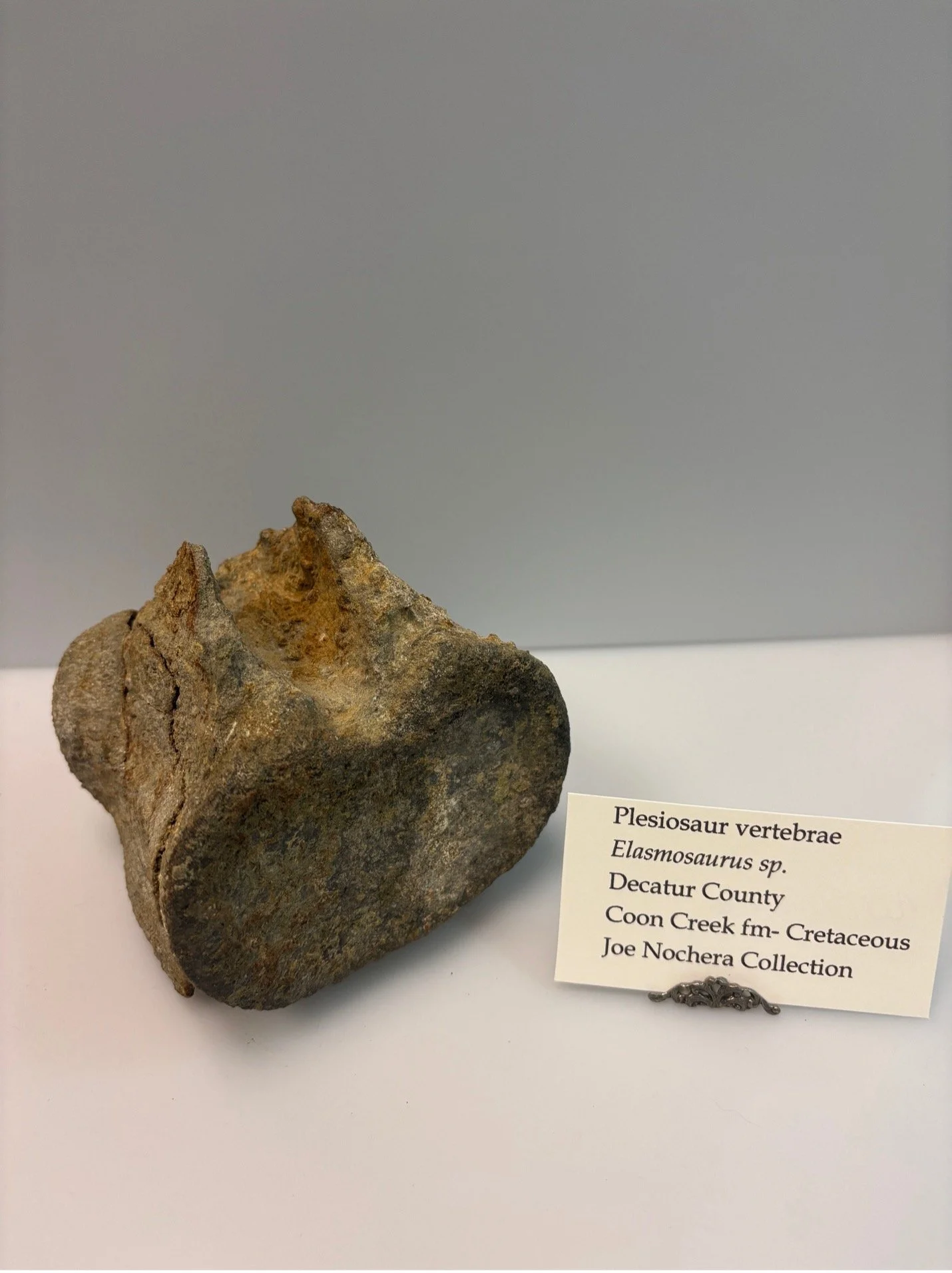
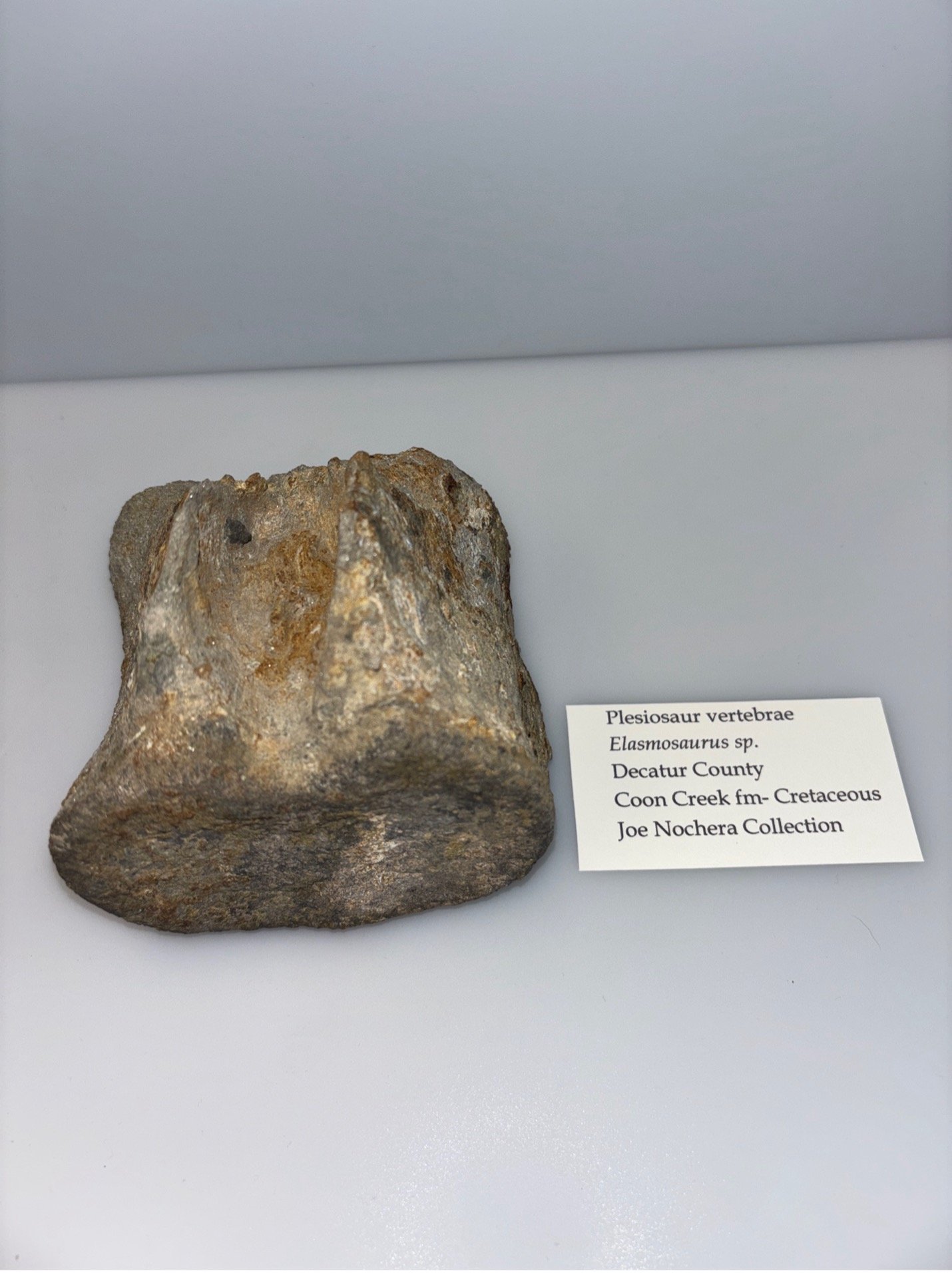
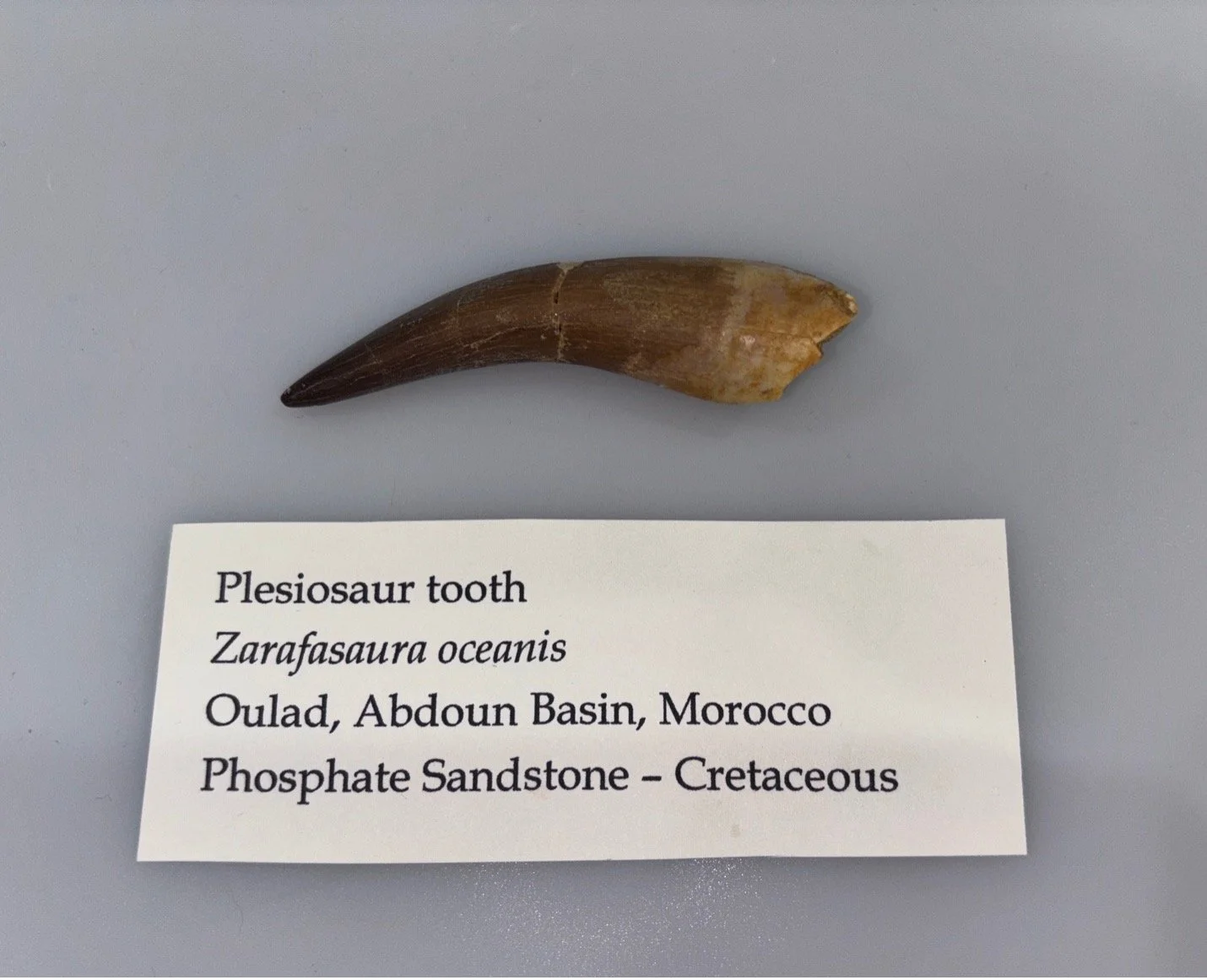
Plesiosaurs were marine reptiles that lived during the age of the dinosaurs. Though not dinosaurs themselves, Plesiosaurs are well-known for their distinctive body shape which inspired the famous cryptid, the Loch Ness Monster. While many believers argue that a Plesiosaur could still be in Loch Ness in Scotland, they all unfortunately went extinct at the same time at the non-avian dinosaurs following the K-Pg Impact. Their diet was comprised of fish and cephalopods. Plesiosaurs came in different shapes and sizes; some where large and long-necked like the Zarafasaura oceanis who had short faces with long necks, while some like the Pliosaurus had short necks and large heads.
The first complete Plesiosaur fossil was found by famous female paleontologist Mary Anning in 1823.
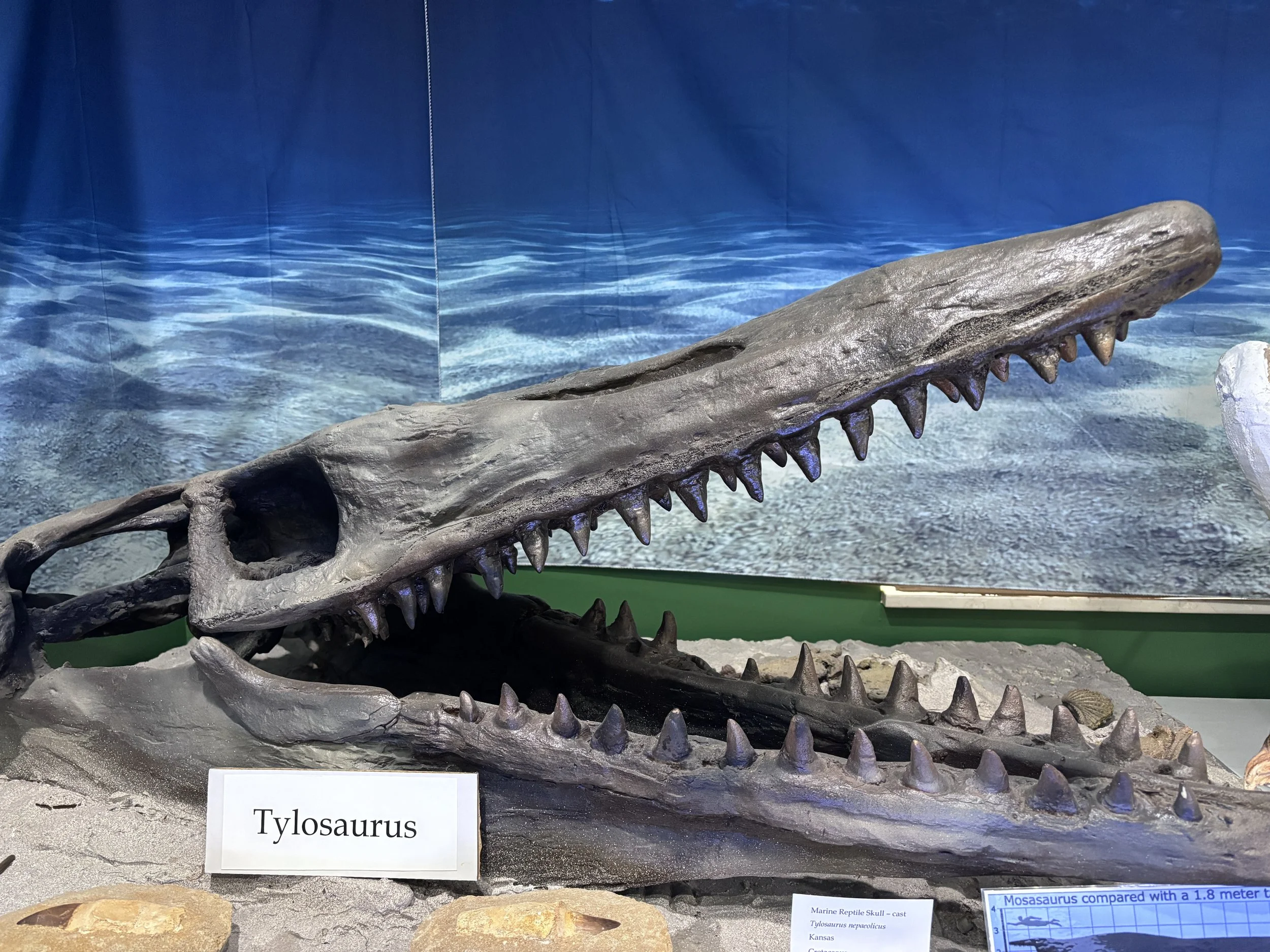
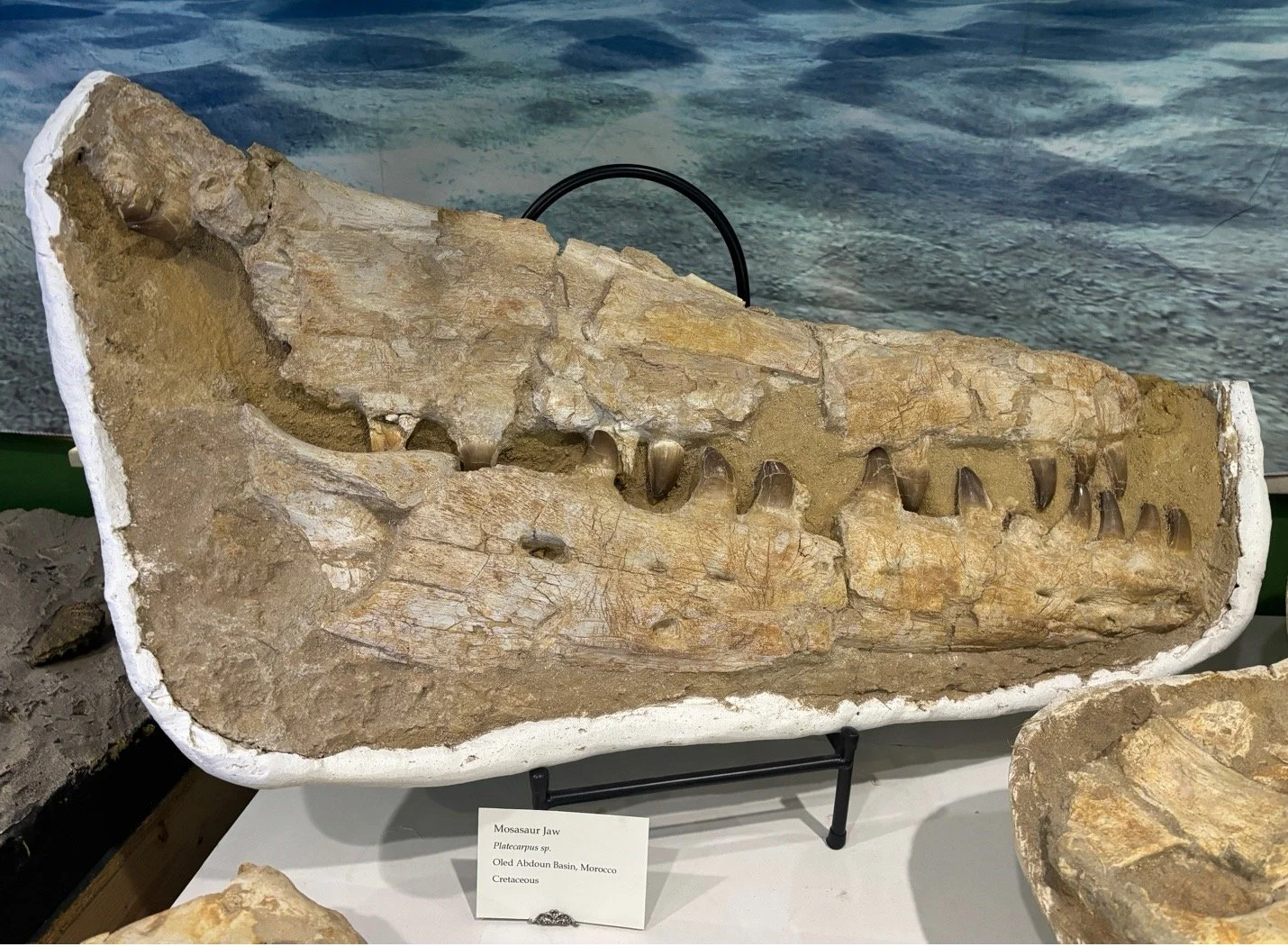
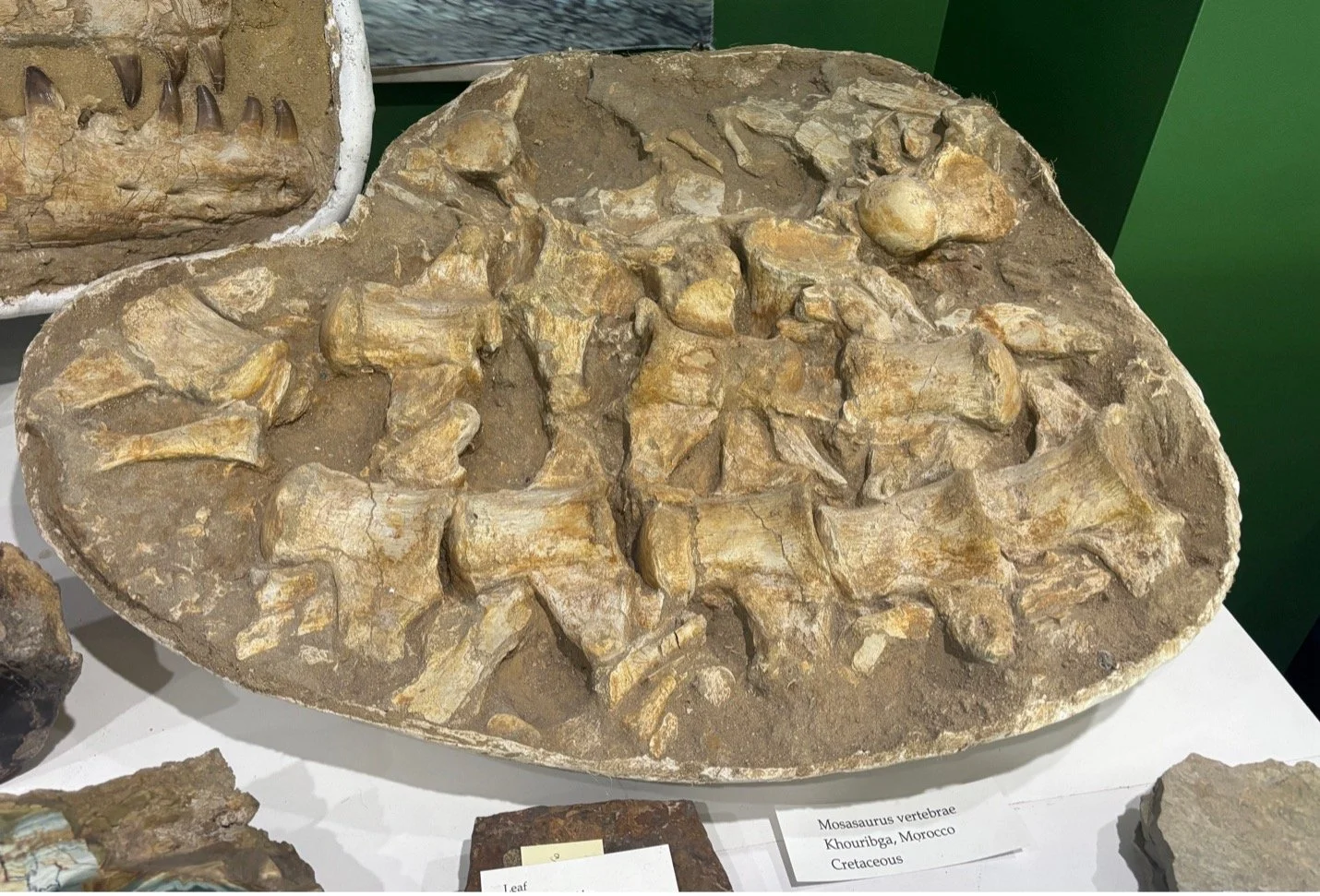
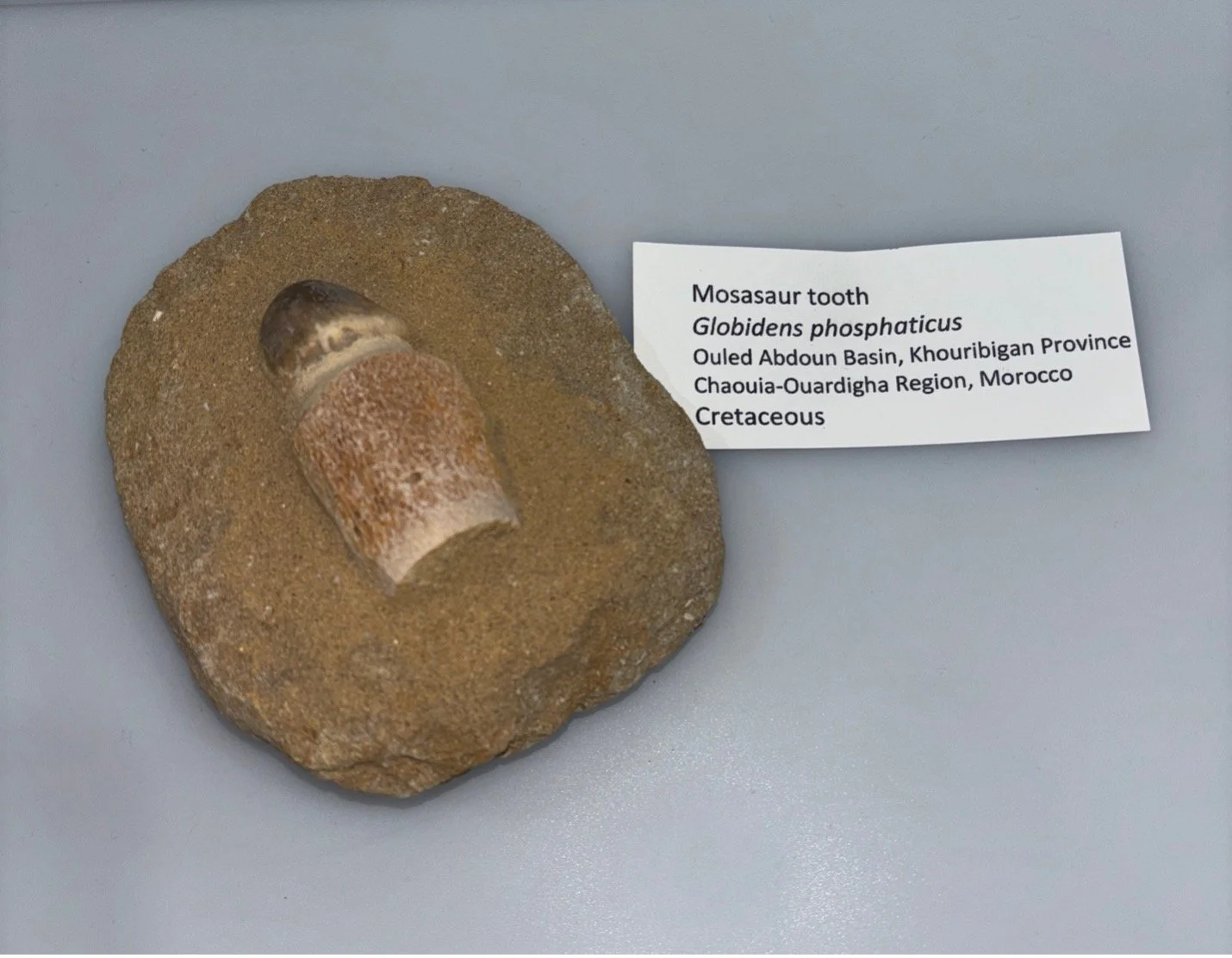
Mosasaurs were large marine reptiles that dominated the oceans of the Cretaceous period. Although they lived at the same time as many dinosaurs and have a name reminiscent of a dinosaur’s, Mosasaurs are not dinosaurs at all. In fact, their closest living relatives are monitor lizards and snakes. Mosasaurs gained popularity with the release of Jurassic World (2015), which depicts them as gargantuan, bulky-bodied giants. However, Mosasaurs in reality were sleeker and generally far smaller than the film’s depiction. The longest type of Mosasaur was the Tylosaurus, which reached up to 45-50 feet in length.
As ocean dwellers, Mosasaur fossils are found throughout the world. One freshwater variation was even found in Hungary. They were formidable predators whose diet included all types of smaller marine creatures like ammonites, fish, smaller mosasaurs, and even sea birds. While Mosasaurs stalked the ocean similar to modern sharks, as reptiles they still had to breach the surface for air like whales or sea turtles. Also similar to whales, it is likely that Mosasaurs gave live birth and did not lay eggs.
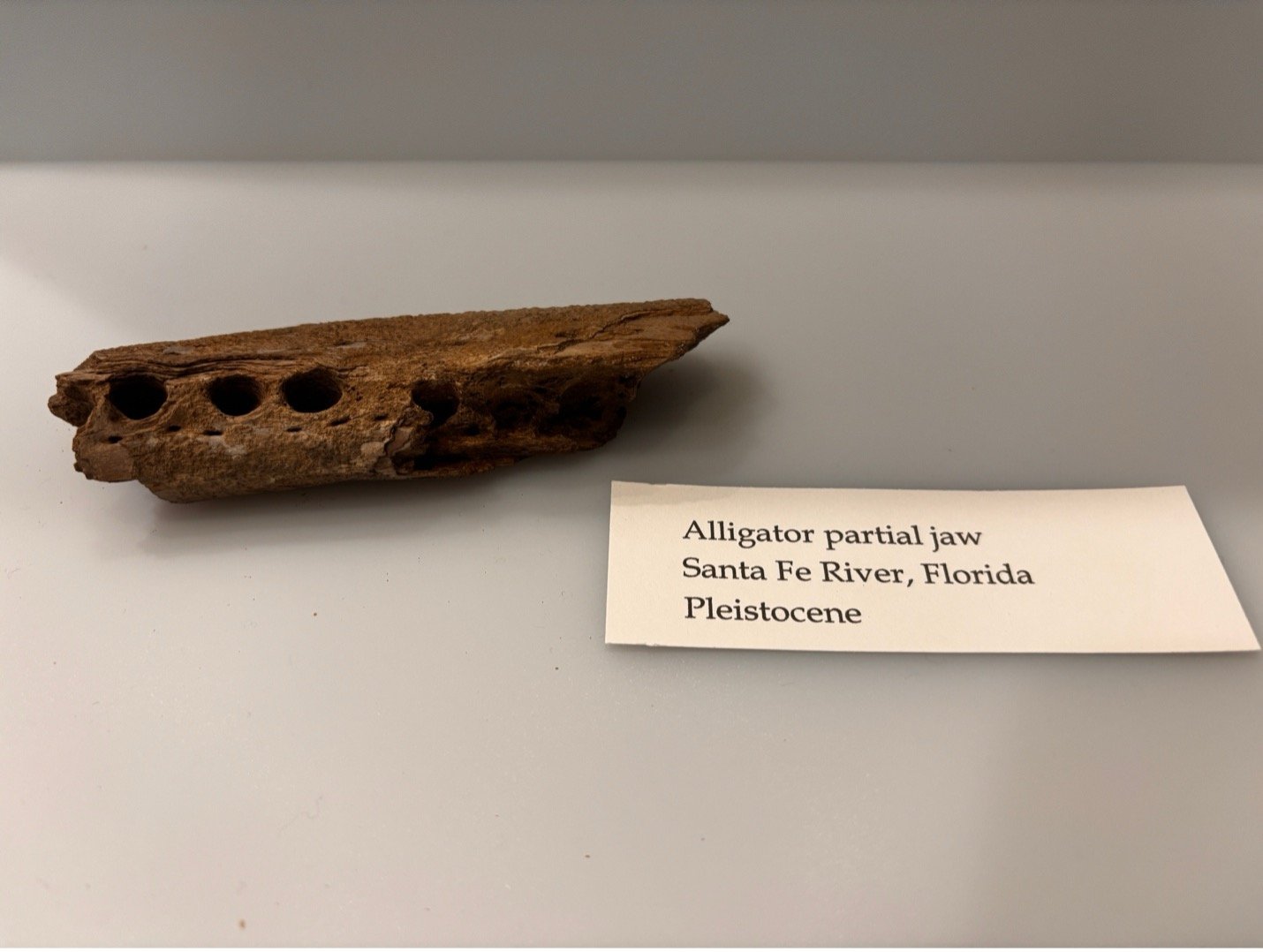
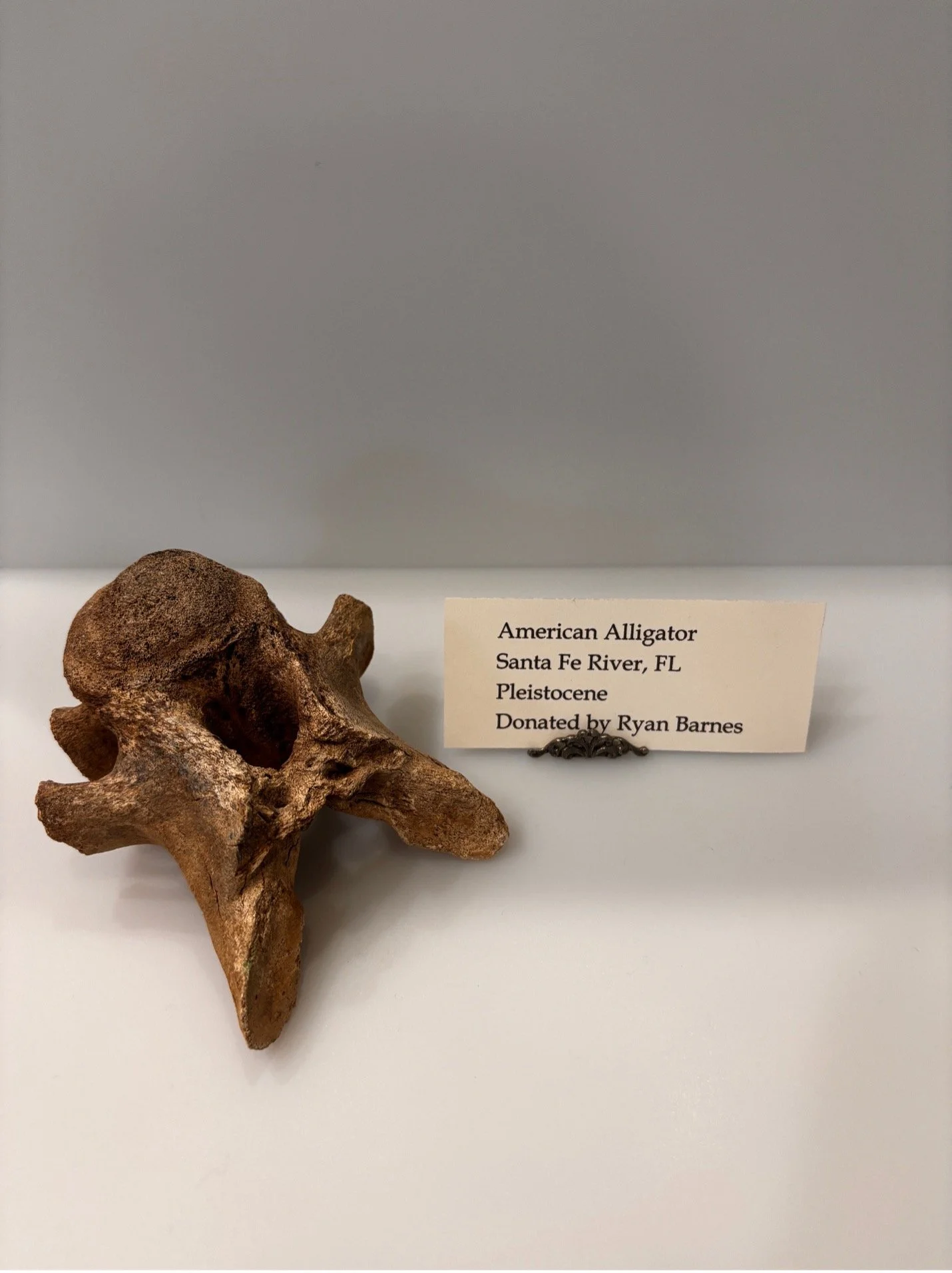
Crocodilians have been around for around 80 million years and have successfully survived several mass extinction events relatively unchanged. The modern American Alligator first developed during the Pliocene period (23-5 million years ago) and has changed very little since then. Their tough scales, efficient hunting techniques, and relatively low demand for food makes them incredibly good at surviving whatever comes their way. Today, American Alligators are found in the American Southeast, predominately in Florida and Louisiana.
No results match your search. Try removing a few filters.