The Squalicorax falcatus, or the Crow Shark, was a mid-sized predatorial shark species that lived during the Cretaceous period, whose fossil teeth are found in North America, Europe, and North Africa. It grew to be about 16 feet long and preyed on fish, mosasaurs, and sea turtles. A Crow Shark tooth was found imbedded in the foot bone of a hadrosaur, showing that they even scavenged land animals that were swept out to sea.
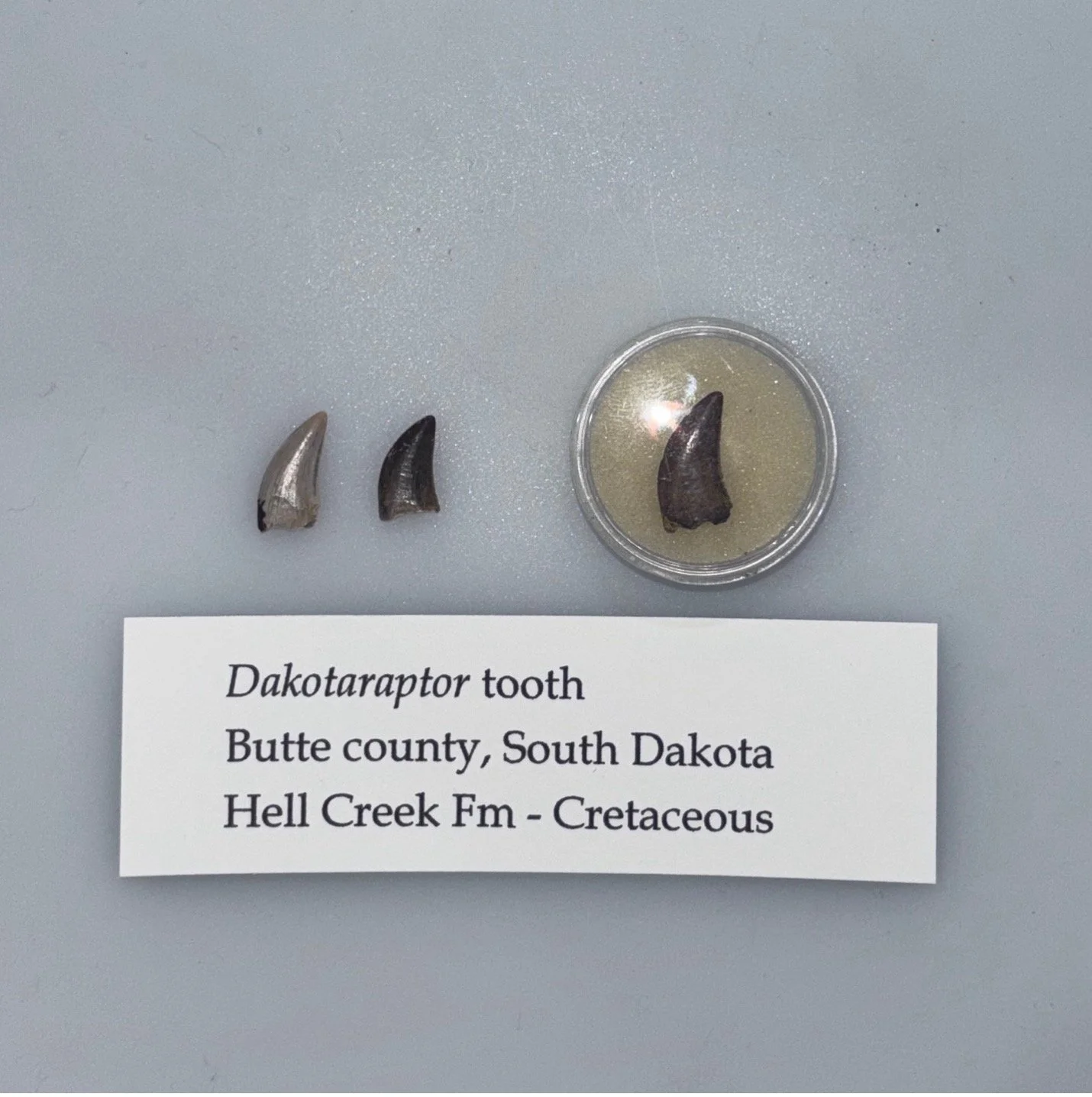
Dakotaraptor was a mid-sized carnivorous theropod dinosaur discovered in the South Dakota region of the Hell Creek Formation. At an estimated 16 feet in length from nose to long feathered tail, the Dakotaraptor bridges the gap between the gigantic tyrannosaurids like the Nanotyrannus and smaller theropods like the Pectinodon. The Dakotaraptor is the second largest raptor species discovered, only dwarfed by the Utahraptor. Most of fossils found of this animal are individual teeth.
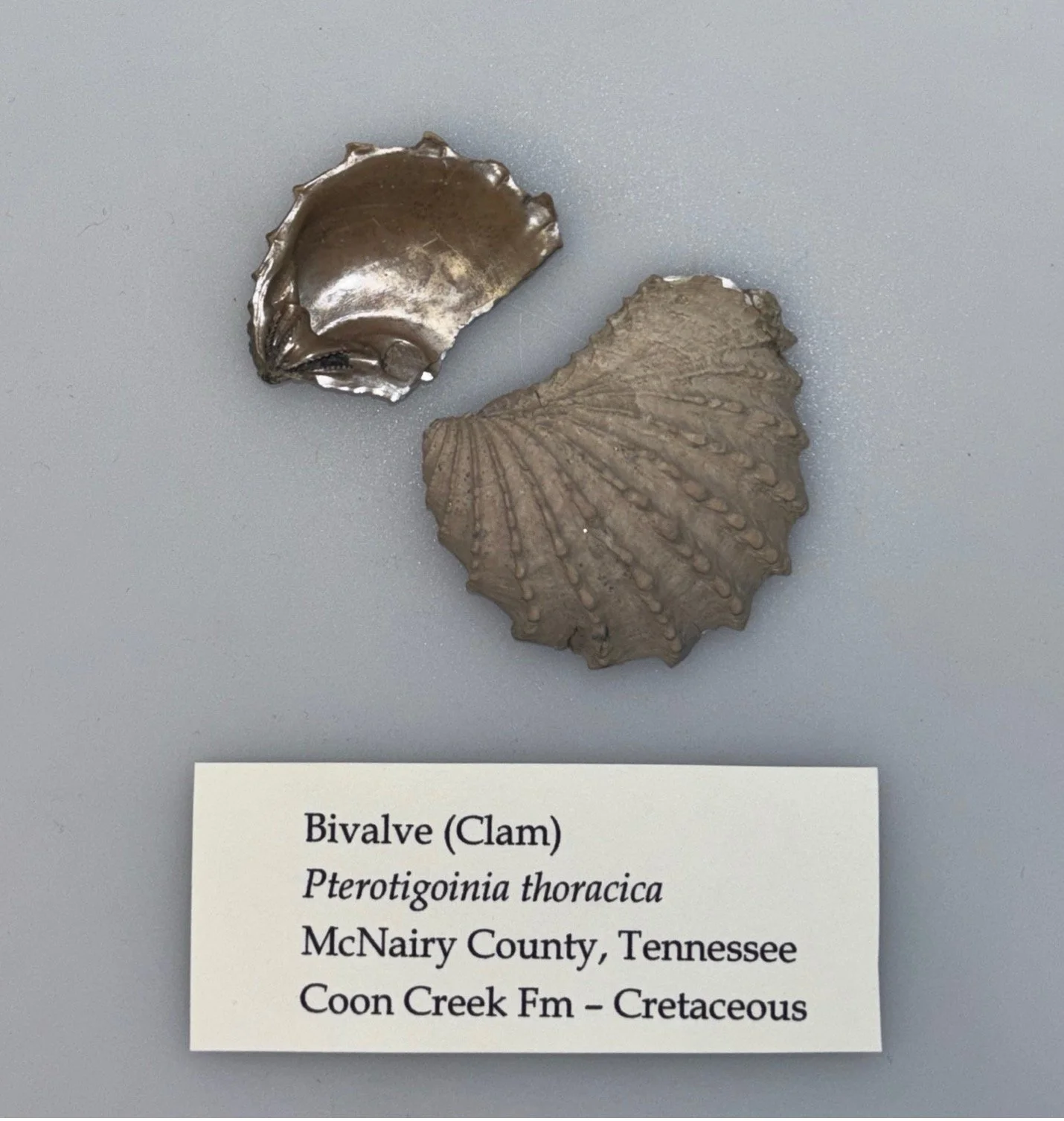
Did you know Tennessee has a state fossil? Pterotrigonia thoracica was a bivalve that lived in the shallow seas that covered much of the middle of North America during the Cretaceous (Western Interior Seaway). Pterotrigonia thoracica was chosen as the state fossil due to its abundant fossils found in the Coon Creek Formation in West Tennessee.
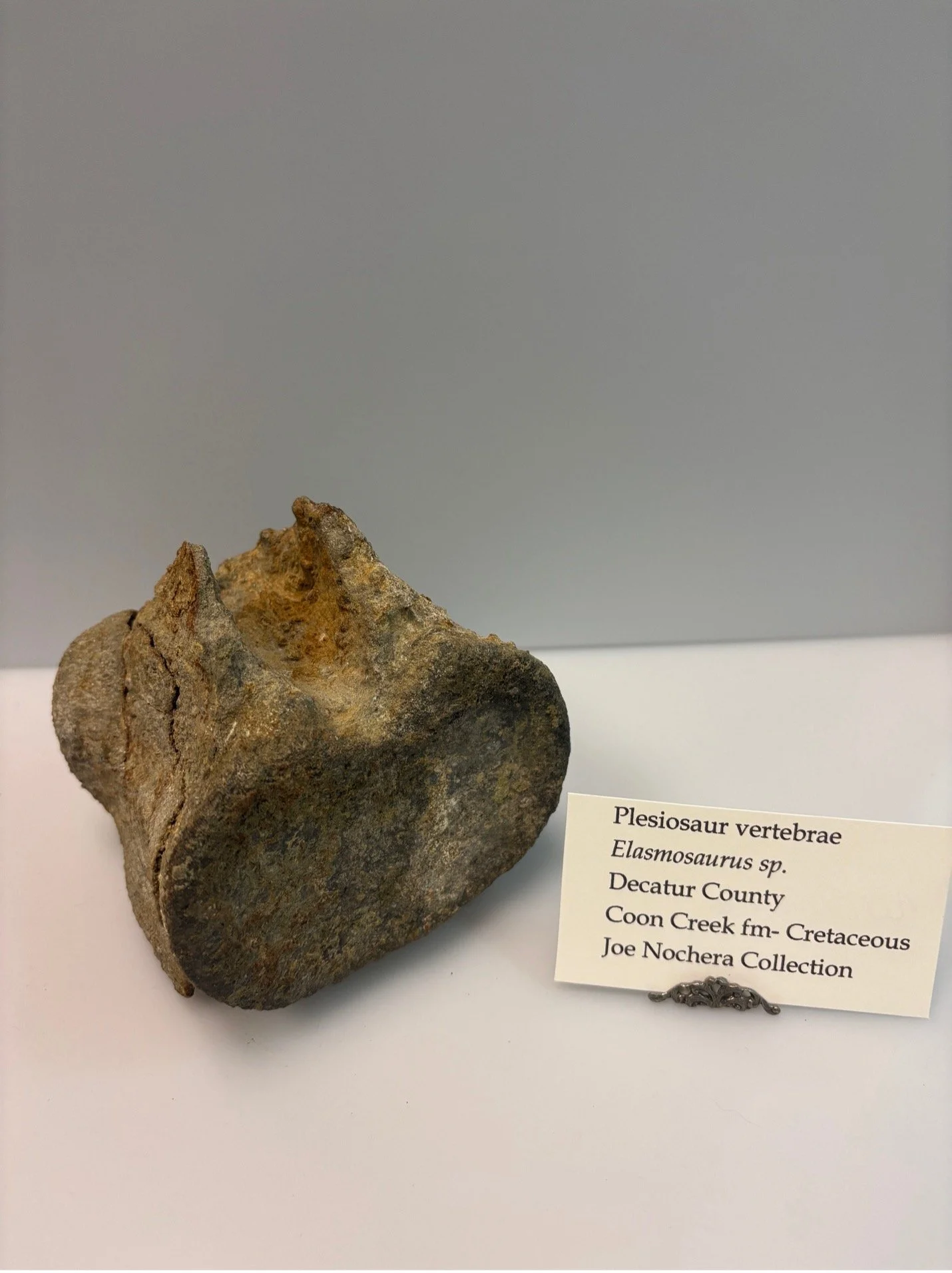
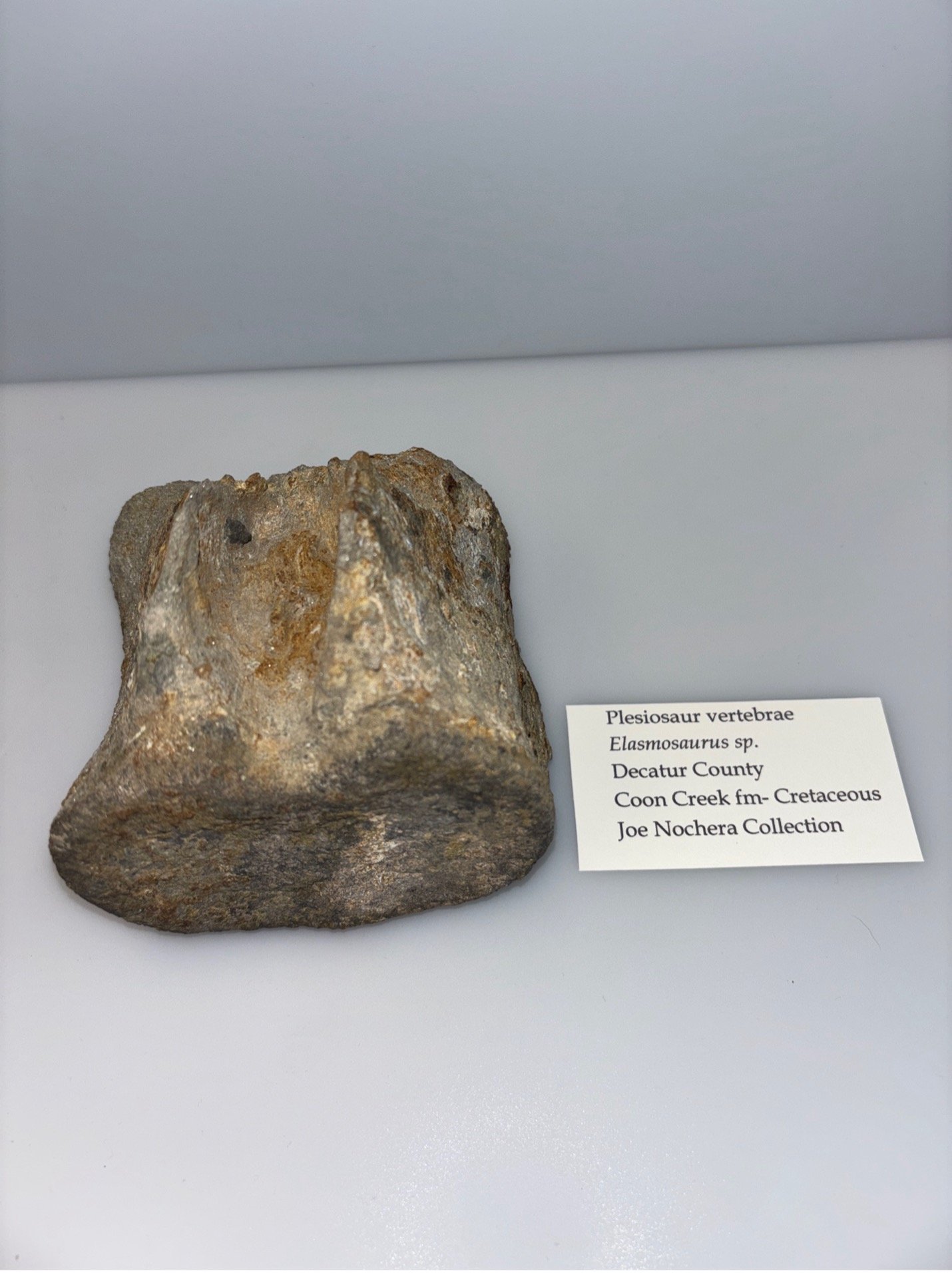
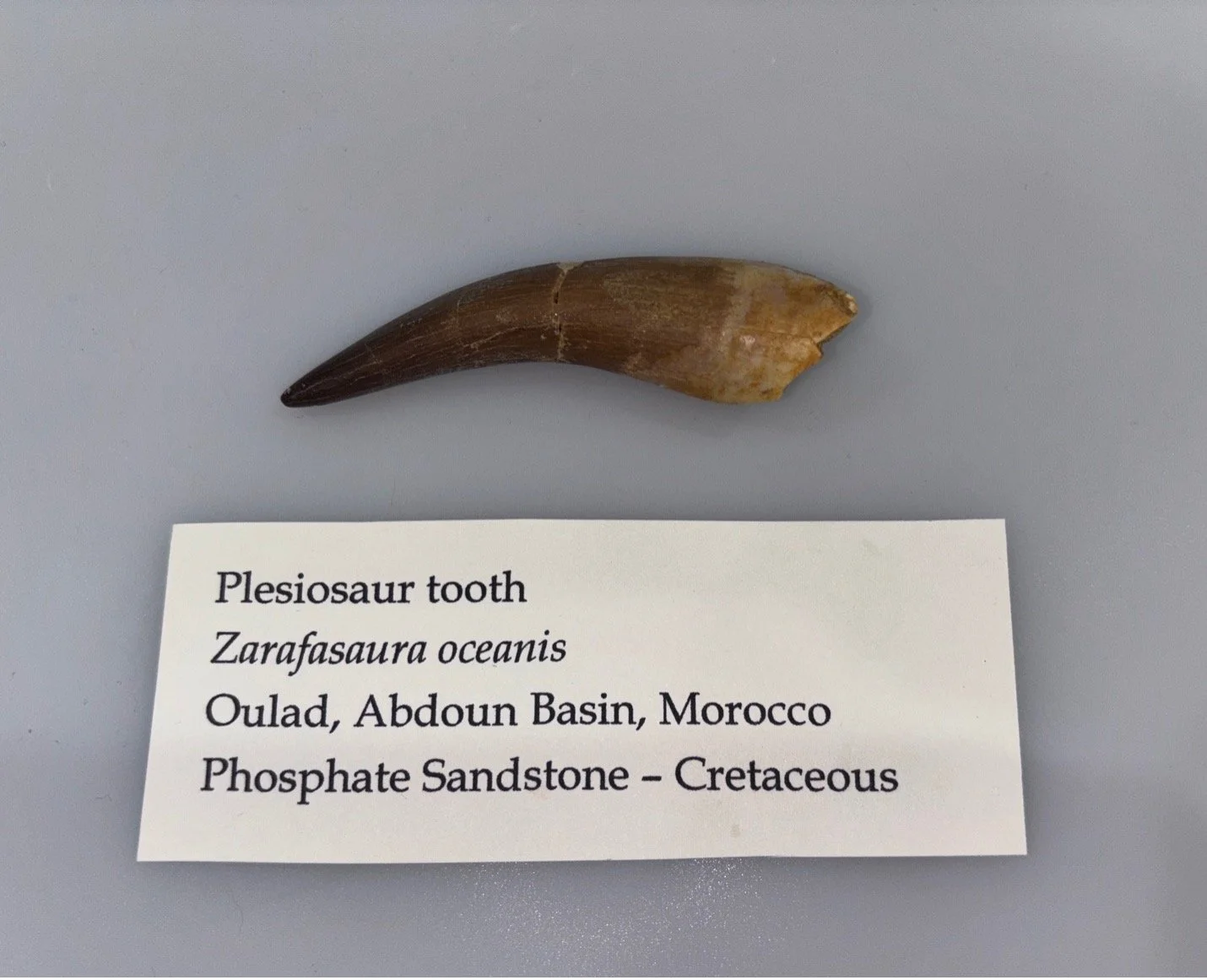
Plesiosaurs were marine reptiles that lived during the age of the dinosaurs. Though not dinosaurs themselves, Plesiosaurs are well-known for their distinctive body shape which inspired the famous cryptid, the Loch Ness Monster. While many believers argue that a Plesiosaur could still be in Loch Ness in Scotland, they all unfortunately went extinct at the same time at the non-avian dinosaurs following the K-Pg Impact. Their diet was comprised of fish and cephalopods. Plesiosaurs came in different shapes and sizes; some where large and long-necked like the Zarafasaura oceanis who had short faces with long necks, while some like the Pliosaurus had short necks and large heads.
The first complete Plesiosaur fossil was found by famous female paleontologist Mary Anning in 1823.
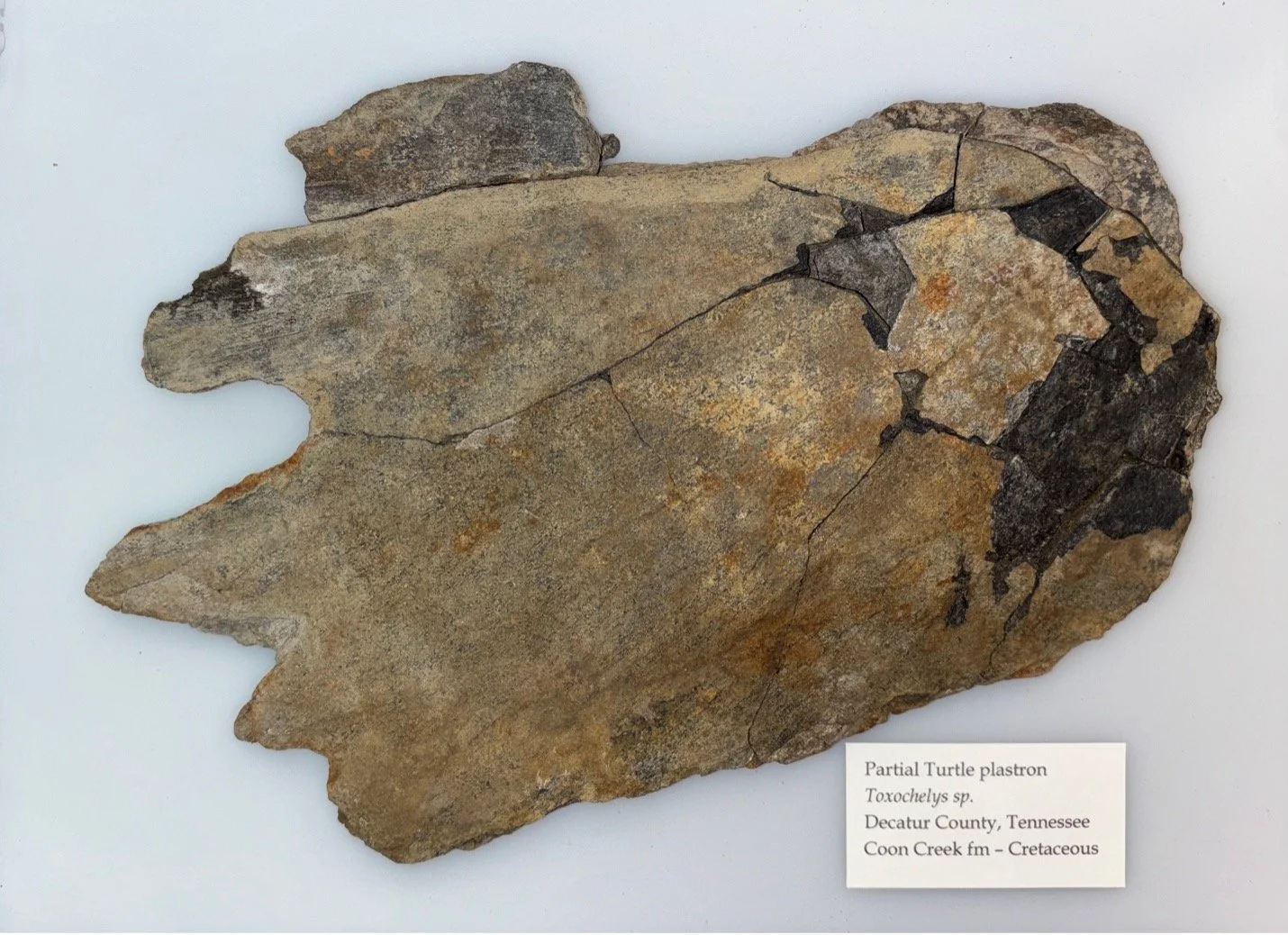
Toxochelys was a genus of sea turtle that live in the Western Interior Seaway, and its fossils are found in the United States and Canada. Toxochelys lived a similar life as modern sea turtles, feeding mostly on jellyfish, squids, mollusks, crustaceans, and marine vegetation. However, Toxochelys was larger, growing up to 6 feet in length.
This specimen was found by museum staff in the Coon Creek Formation in Tennessee.
No results match your search. Try removing a few filters.