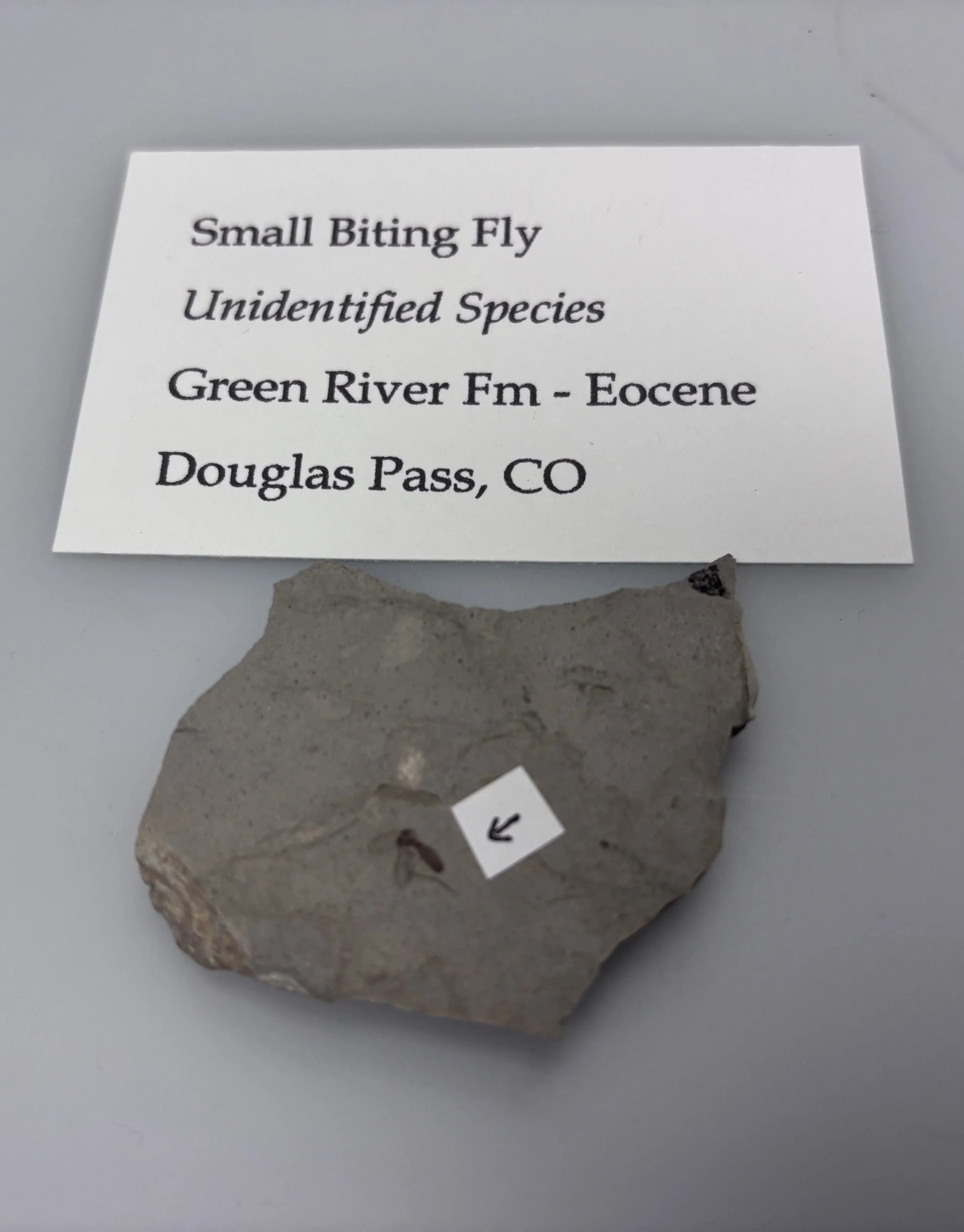
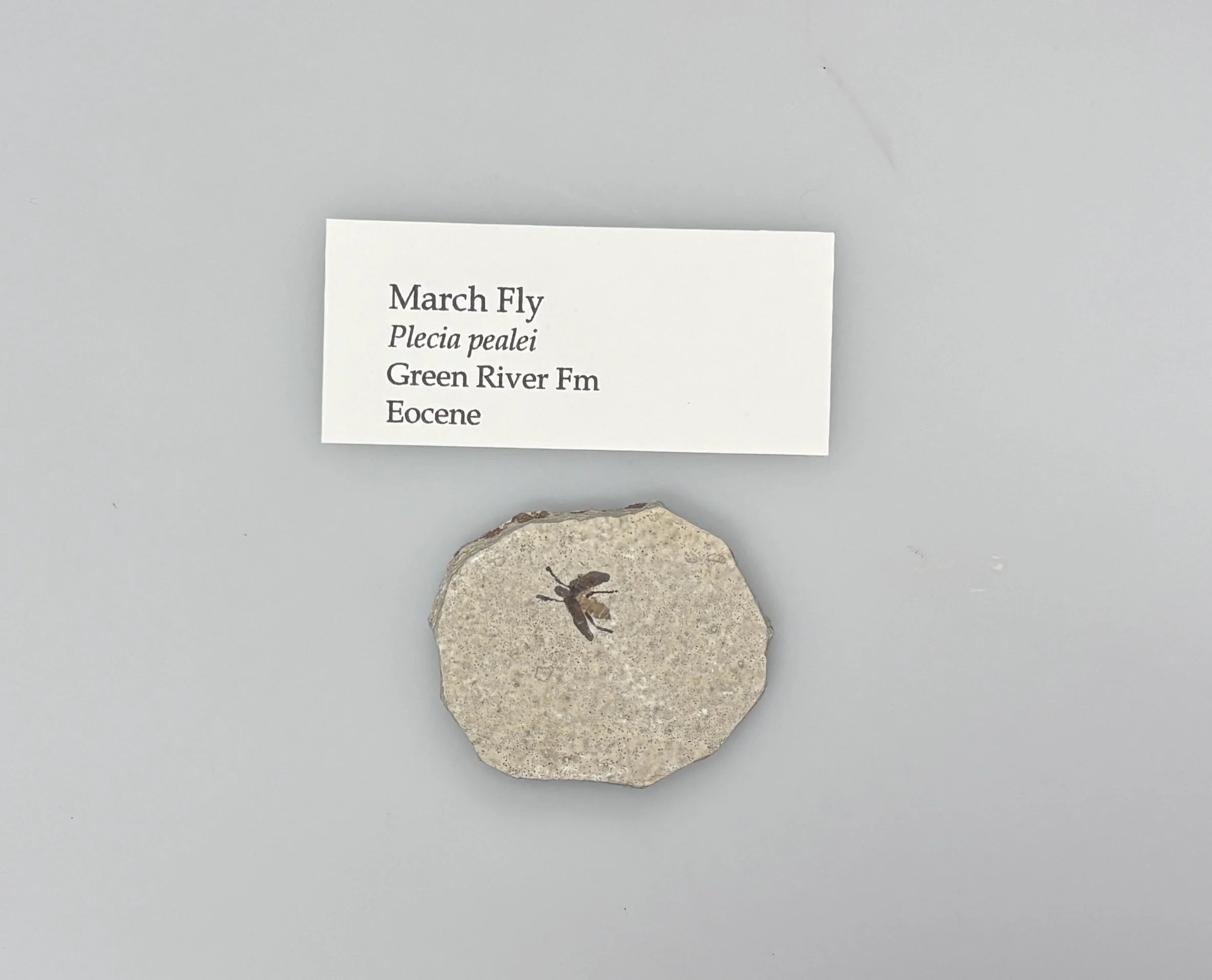
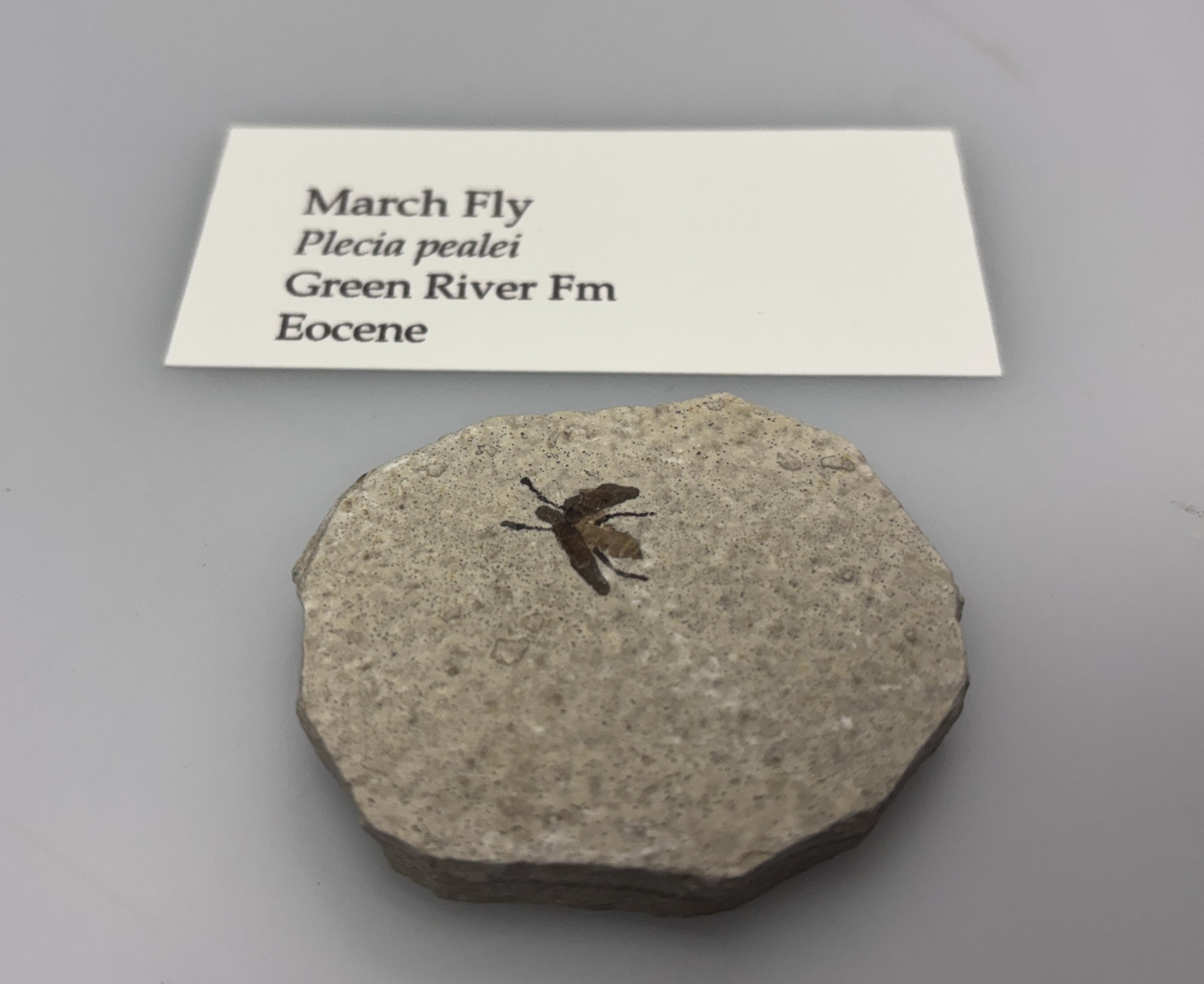
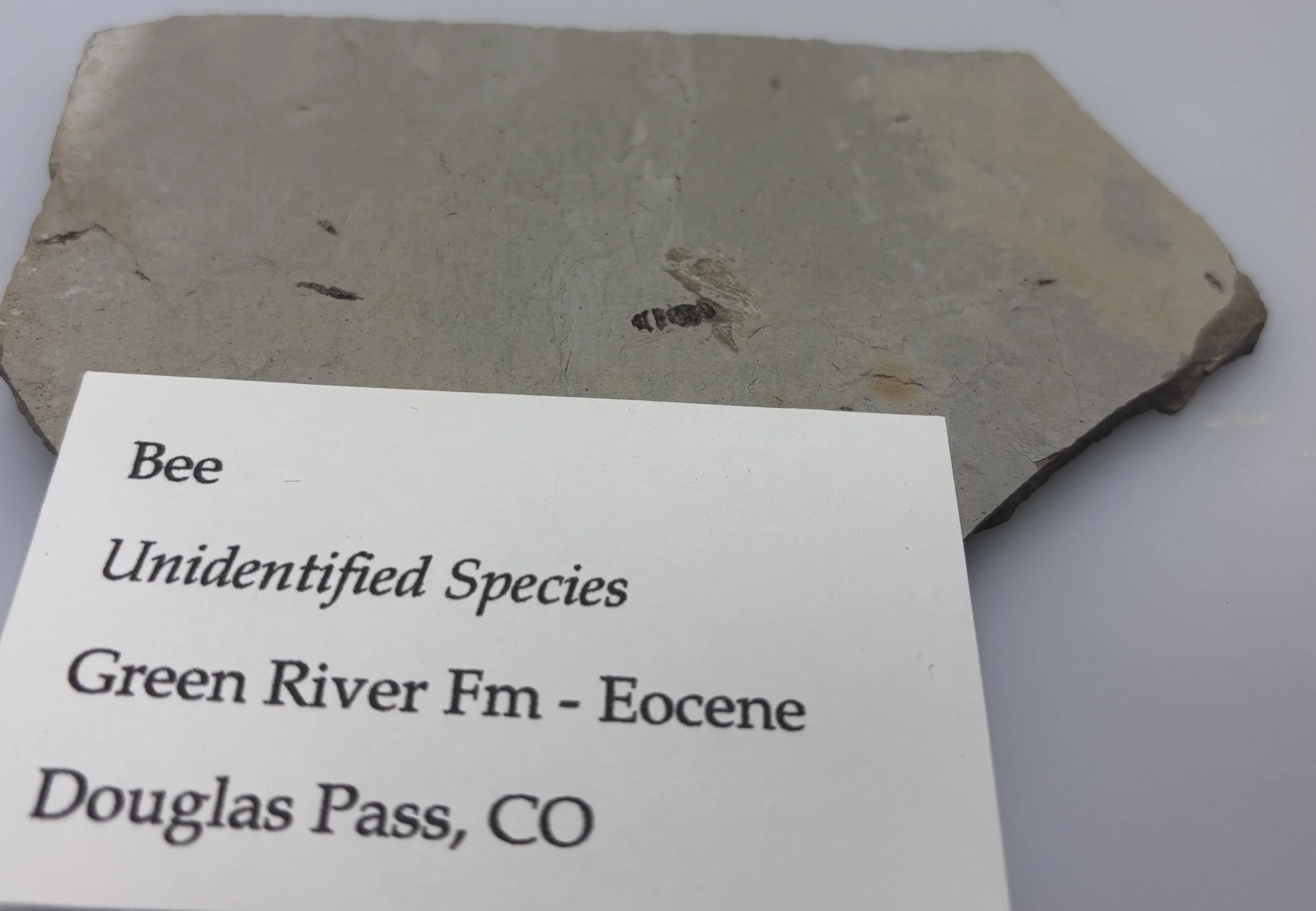
The Green River Formation is famous for the many fish, birds, and mammal species immaculately preserved in the fine lakebed sediment, but perhaps more impressively, that fine grain sediment was also perfect for preserving the many insects that made these ancient lakes their home. Among the insects found are flies, crickets, dragonflies, beetles, and more. Some of these specimens are so well preserved, patterns and pigments can be seen in the fossils themselves.
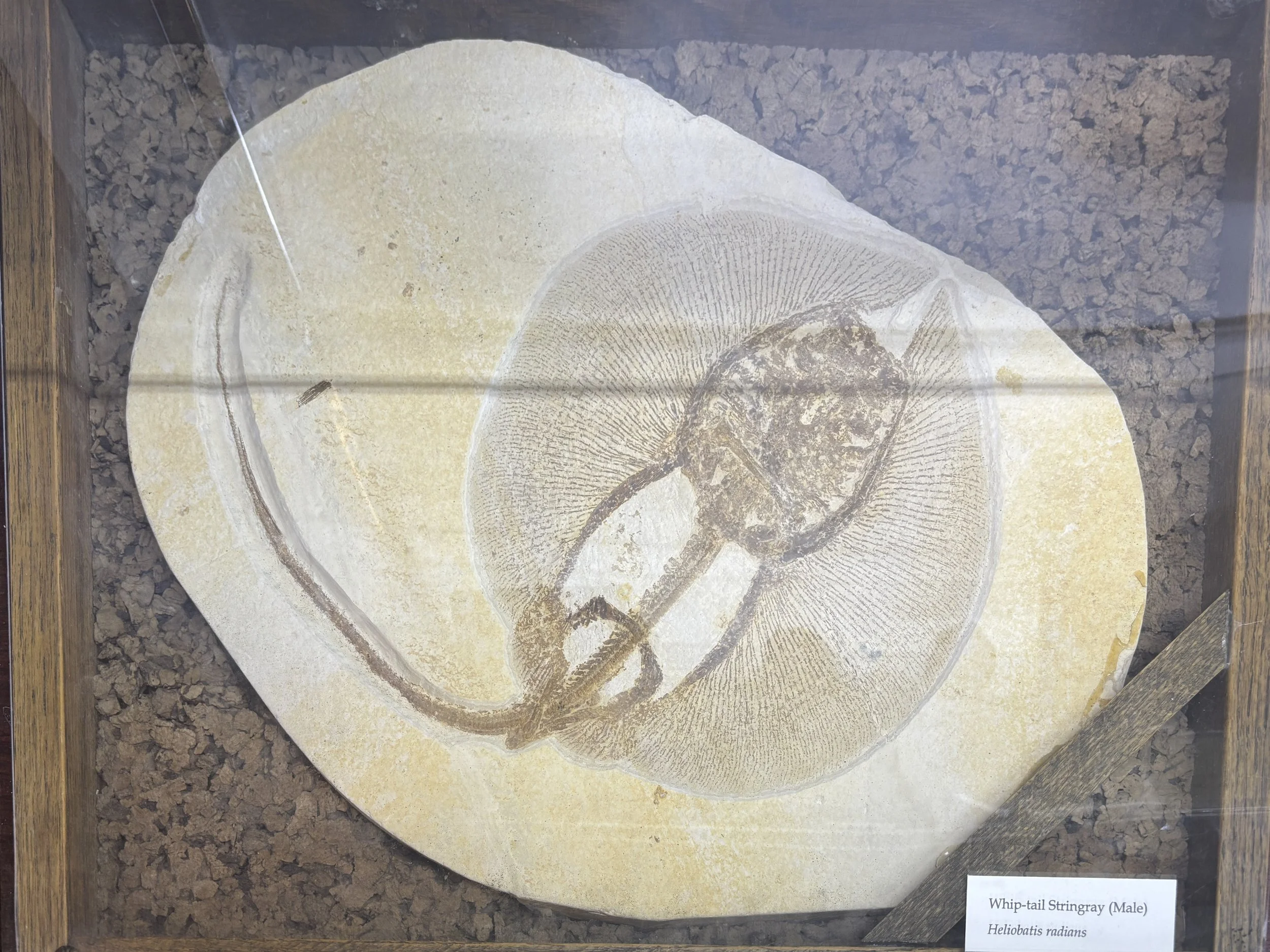
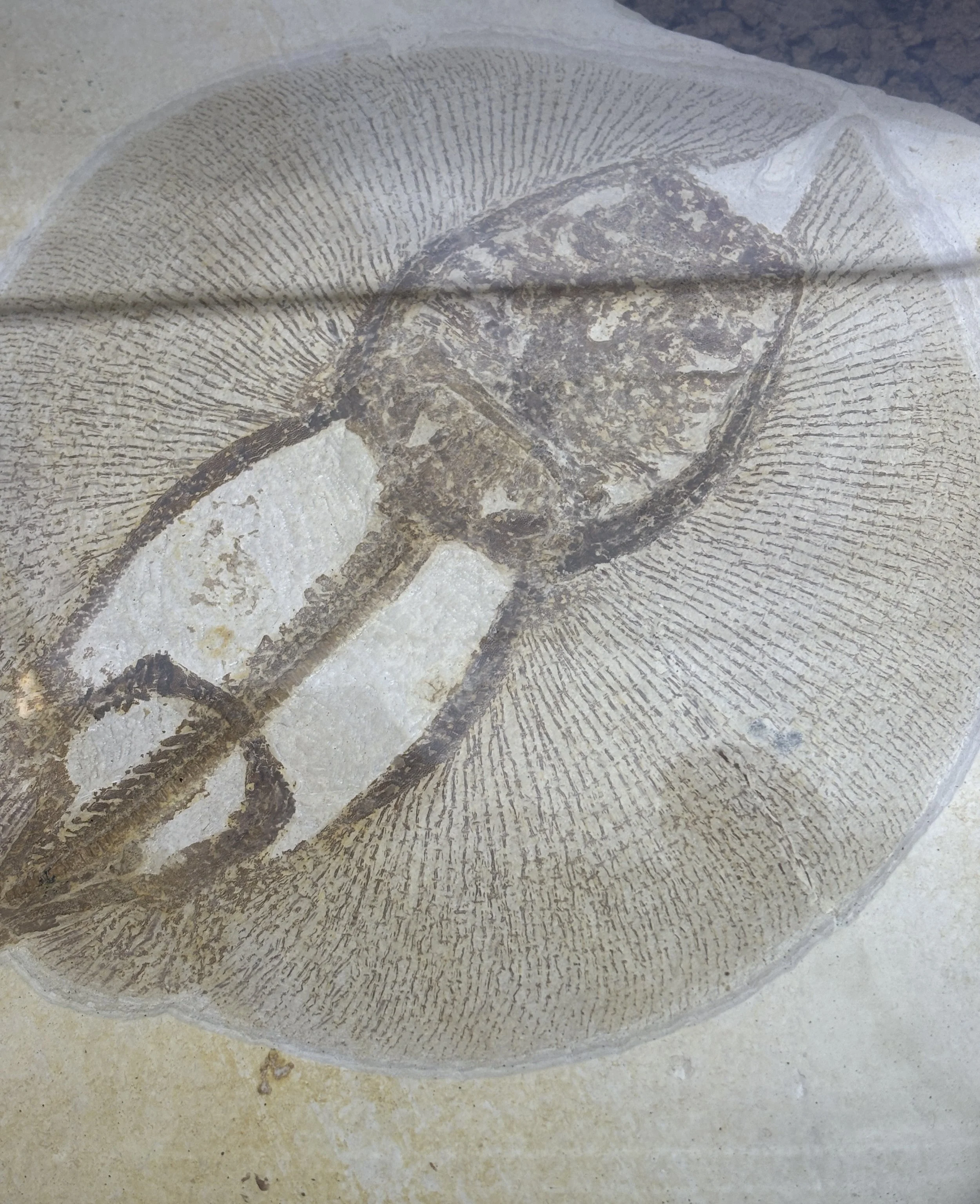
Whip-tail Stingray (Eocene)
Heliobatis radians was a freshwater stingray found exclusively in the fossil lakebeds of the Green River Formation in the Western United States. Like modern marine stingray species, Heliobatis radians has a flat body and barbed stingers on their long tails for defense. When not searching for food, these stingrays buried themselves in the fine-grained mud at the bottom of the lakes, which served to preserve a handful of these unique stingrays. The conditions for preservation were so optimal that even the radial pattern of their fin supports are sometimes present in the fossils. This striking pattern provided inspiration for their name, “Heliobatis”, which translates to “sun rays” in latin.
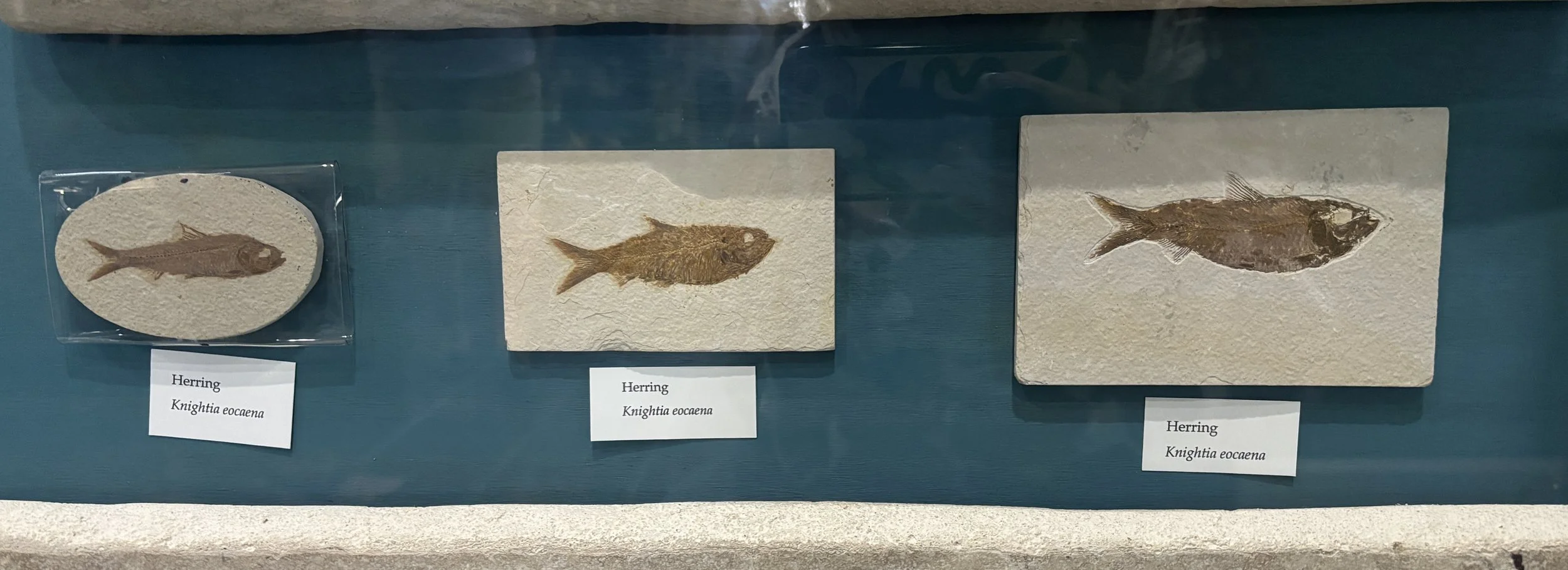
Knightia eocaena were small (typically 3 to 6 inches long) schooling fish whose fossils are largely found in the Green River Formation of the Western United States. Knightia eocaena were an integral part of the ecology of the region during the Eocene as they were the primary prey item for larger fish like Diplomystus dentatus as well as the various birds, snakes, and turtles that lived in or near the lakes. As such, their fossils are plentiful in the rock quarries of the Green River Formation and easily accessible for fossil collectors. Modern relatives of the Knightia eocaena like herring, sardines, and shads remain vital to commercial fish markets and marine food chains.
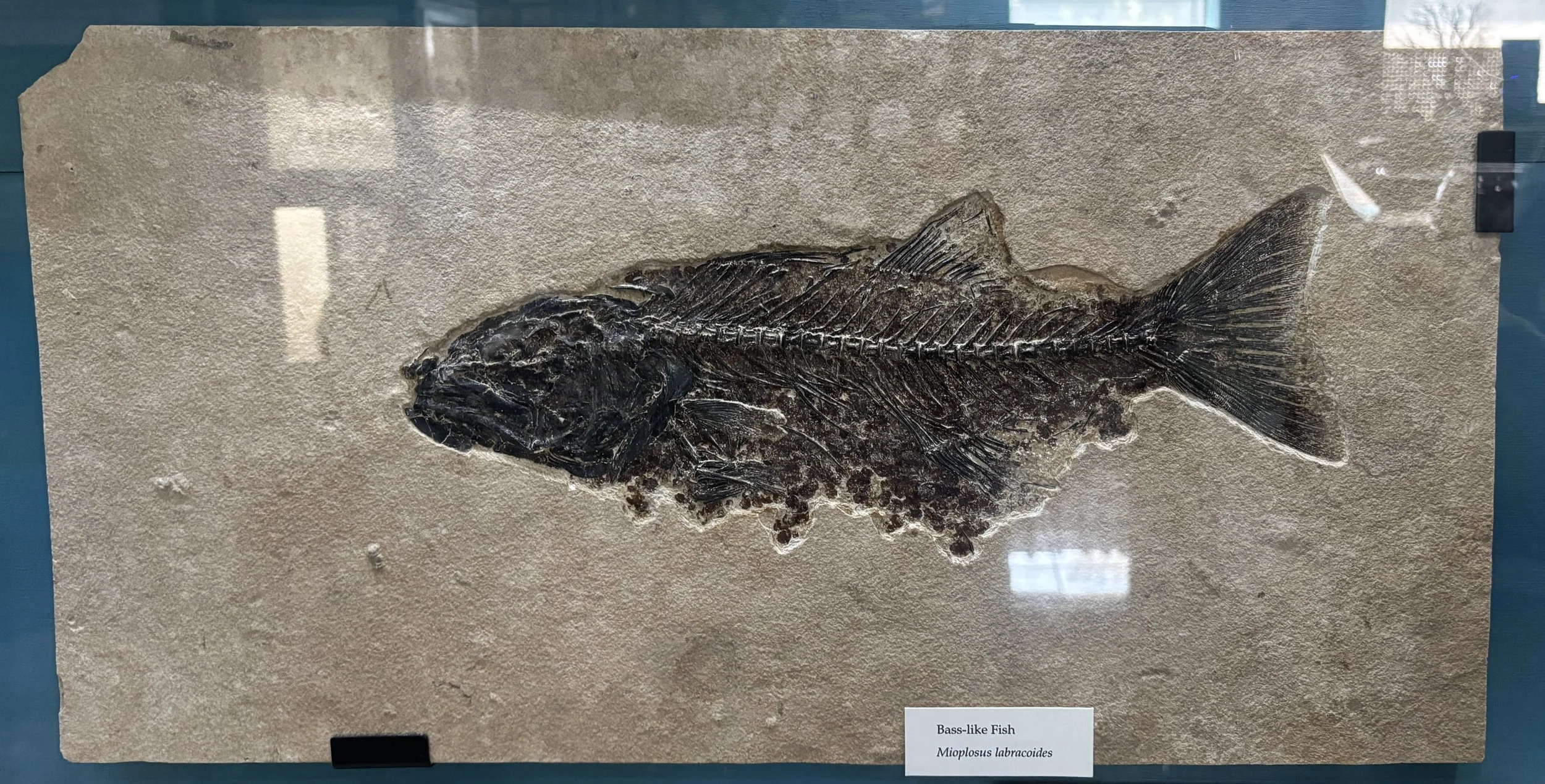
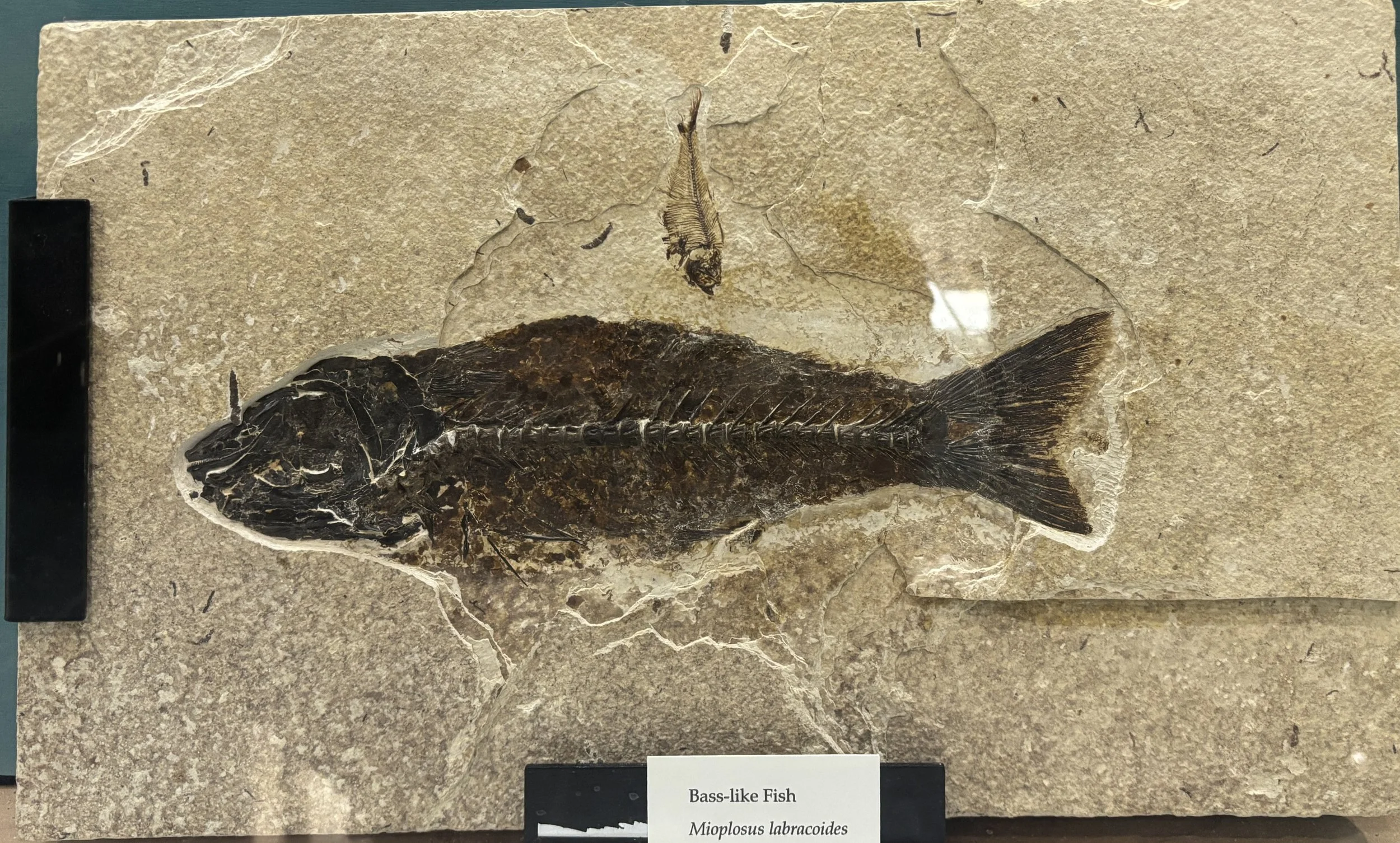
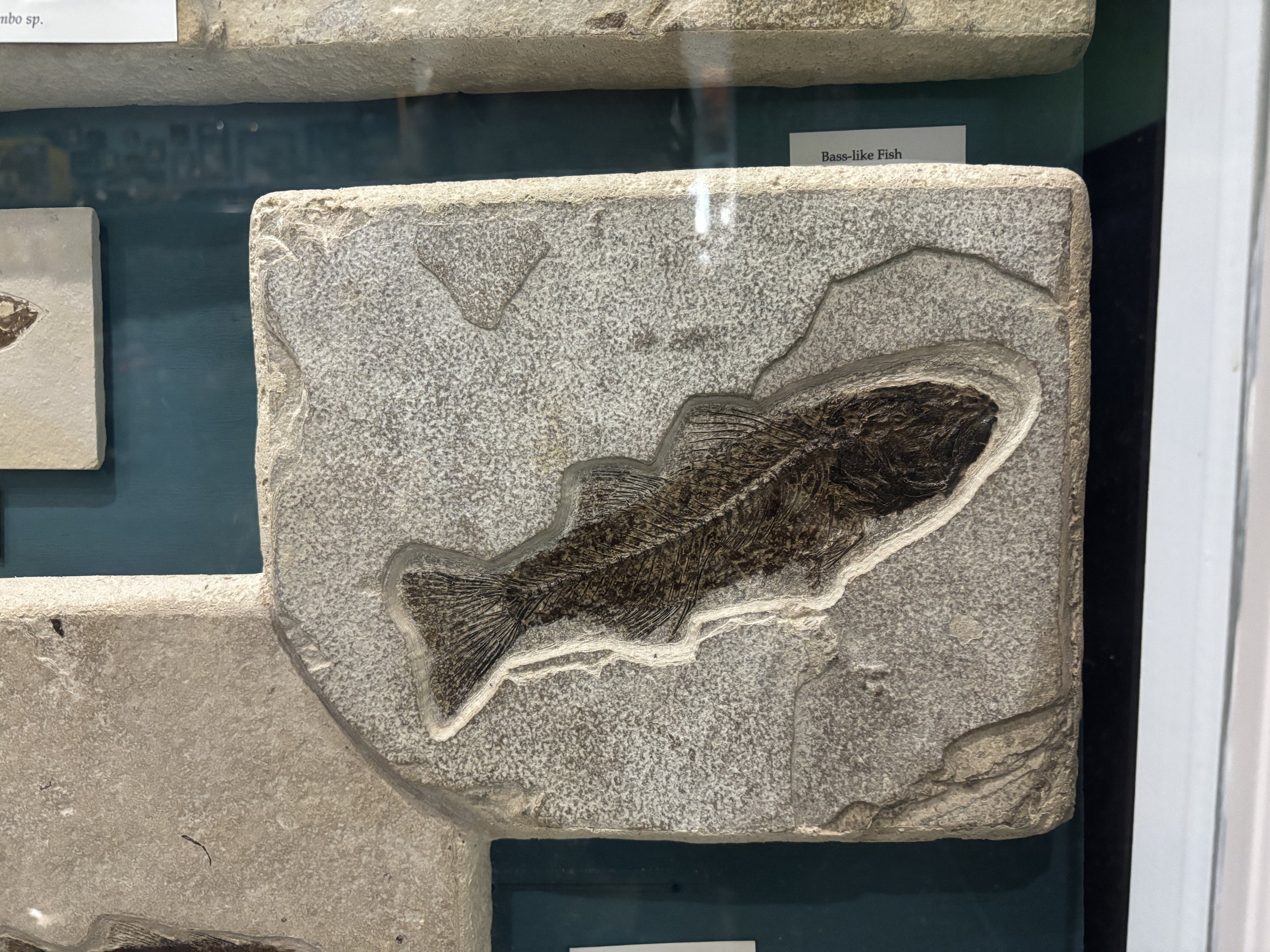
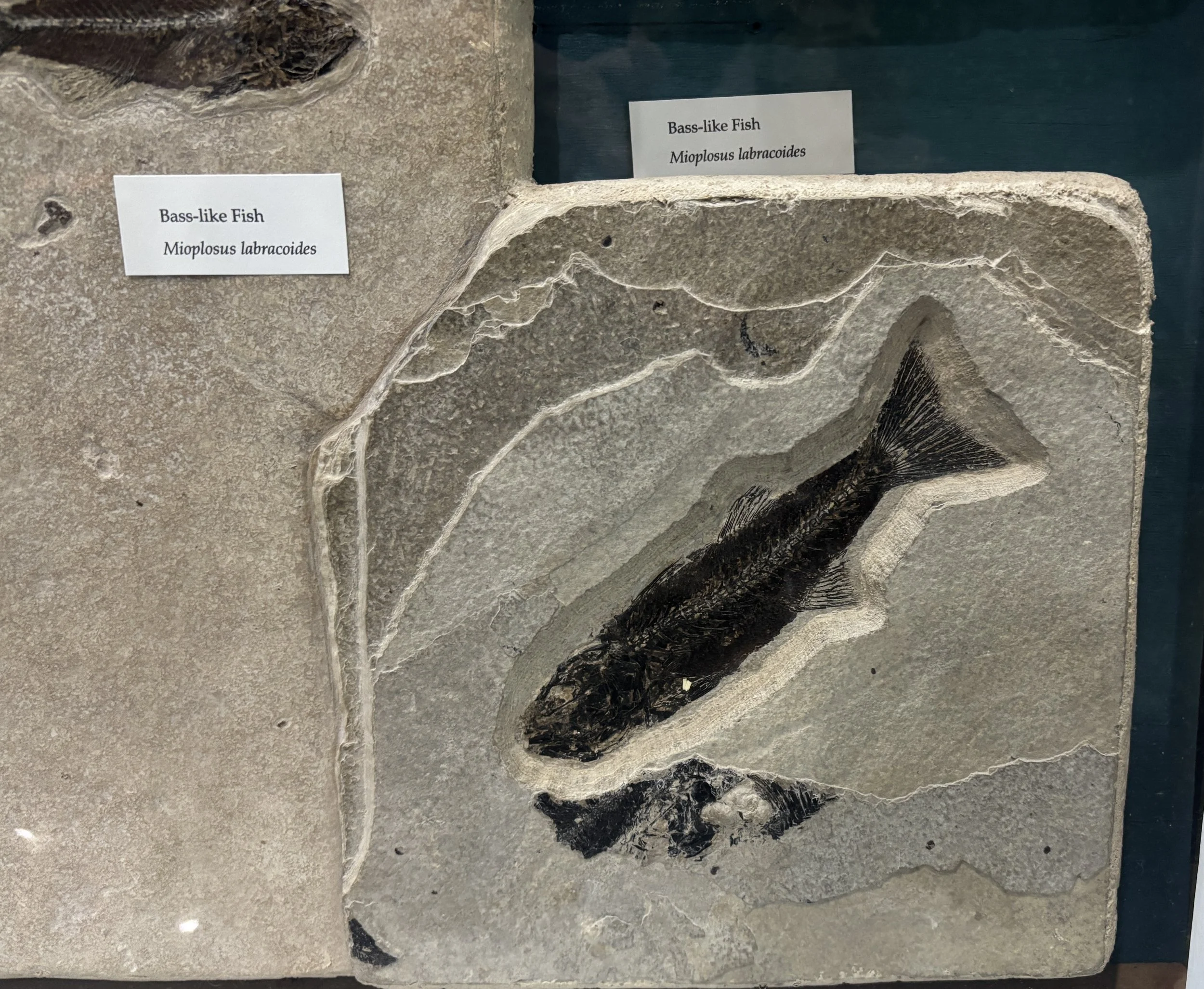
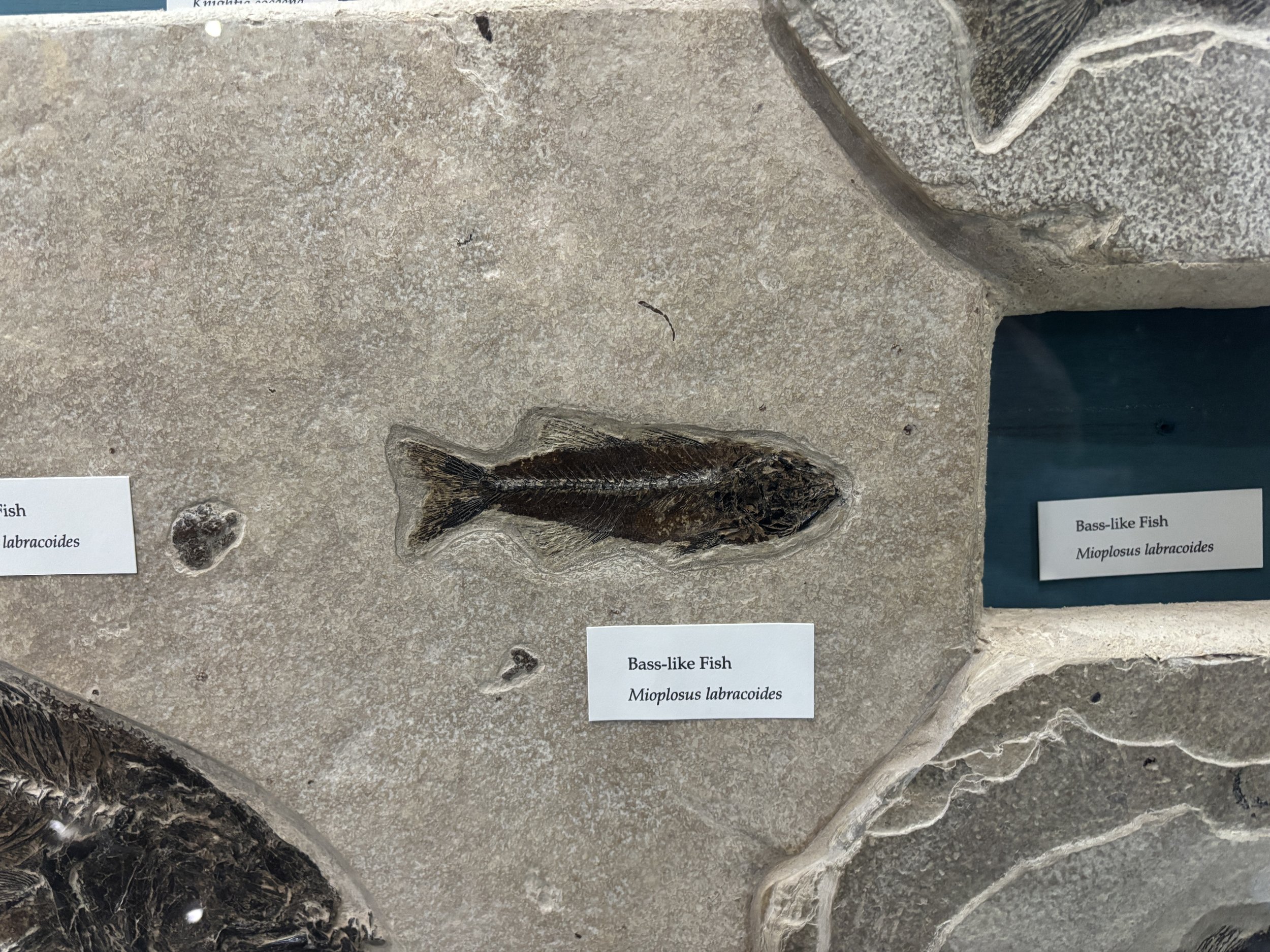
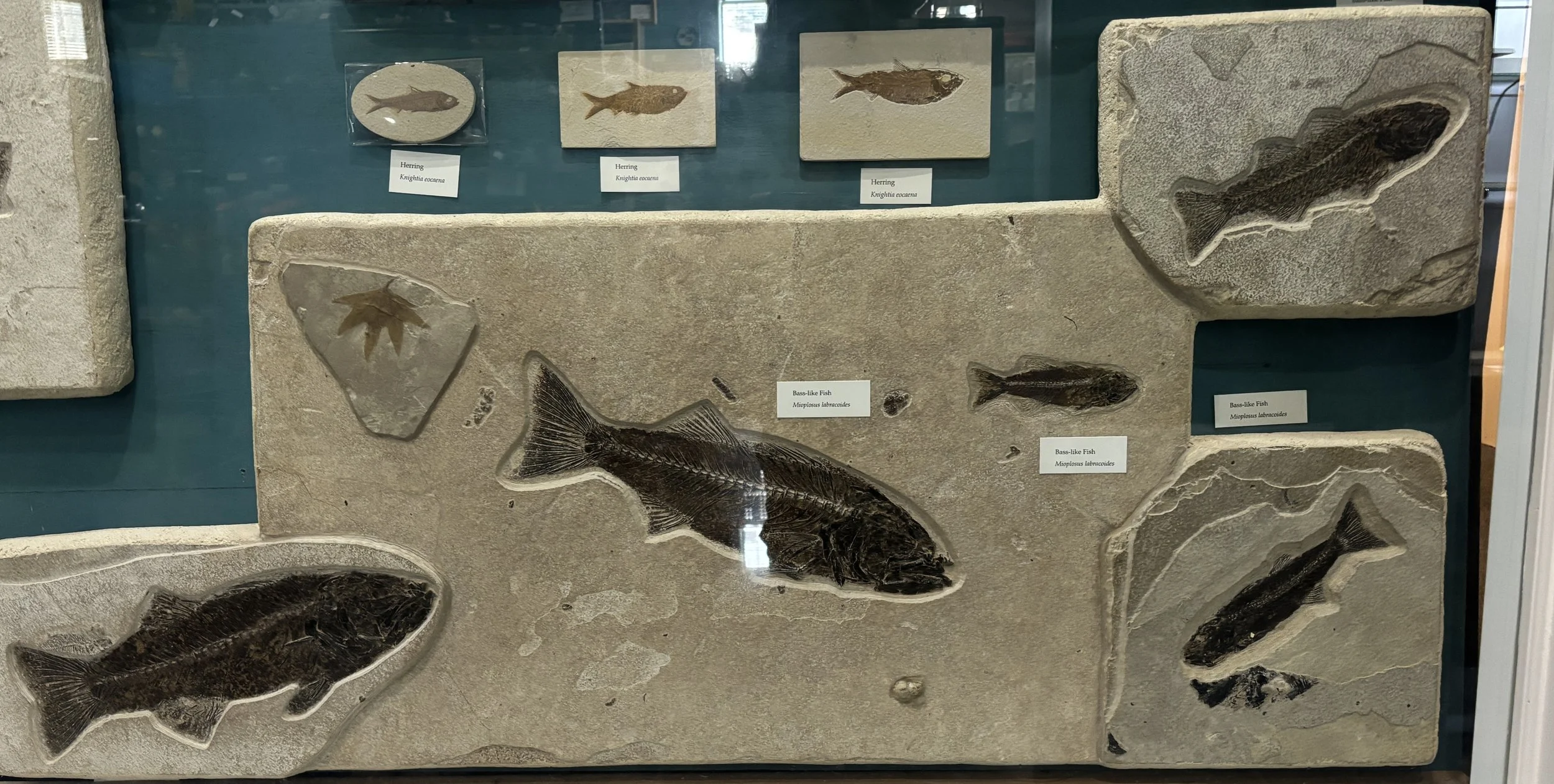
Mioplosus labracoides was a freshwater fish whose fossils are found almost exclusively in the ancient lakebeds of the Green River Formation. They grew to about 16 inches and are easily recognized by their elongated body shape and forked tailfins. Adult Mioplosus labracoides were likely solitary animals, as their fossils are not typically found near others of their species, but juvenile specimens of Mioplosus are often found within schools.
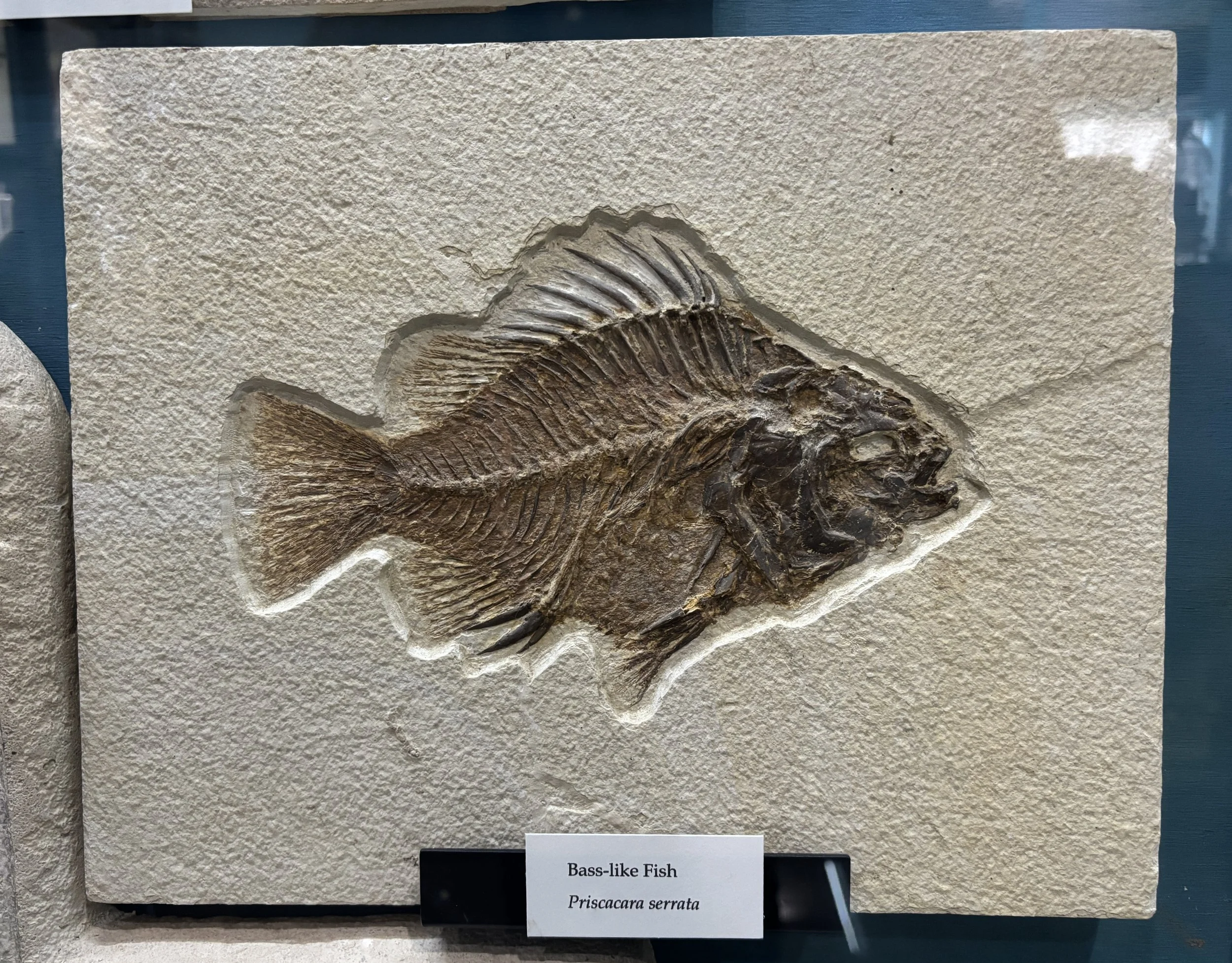
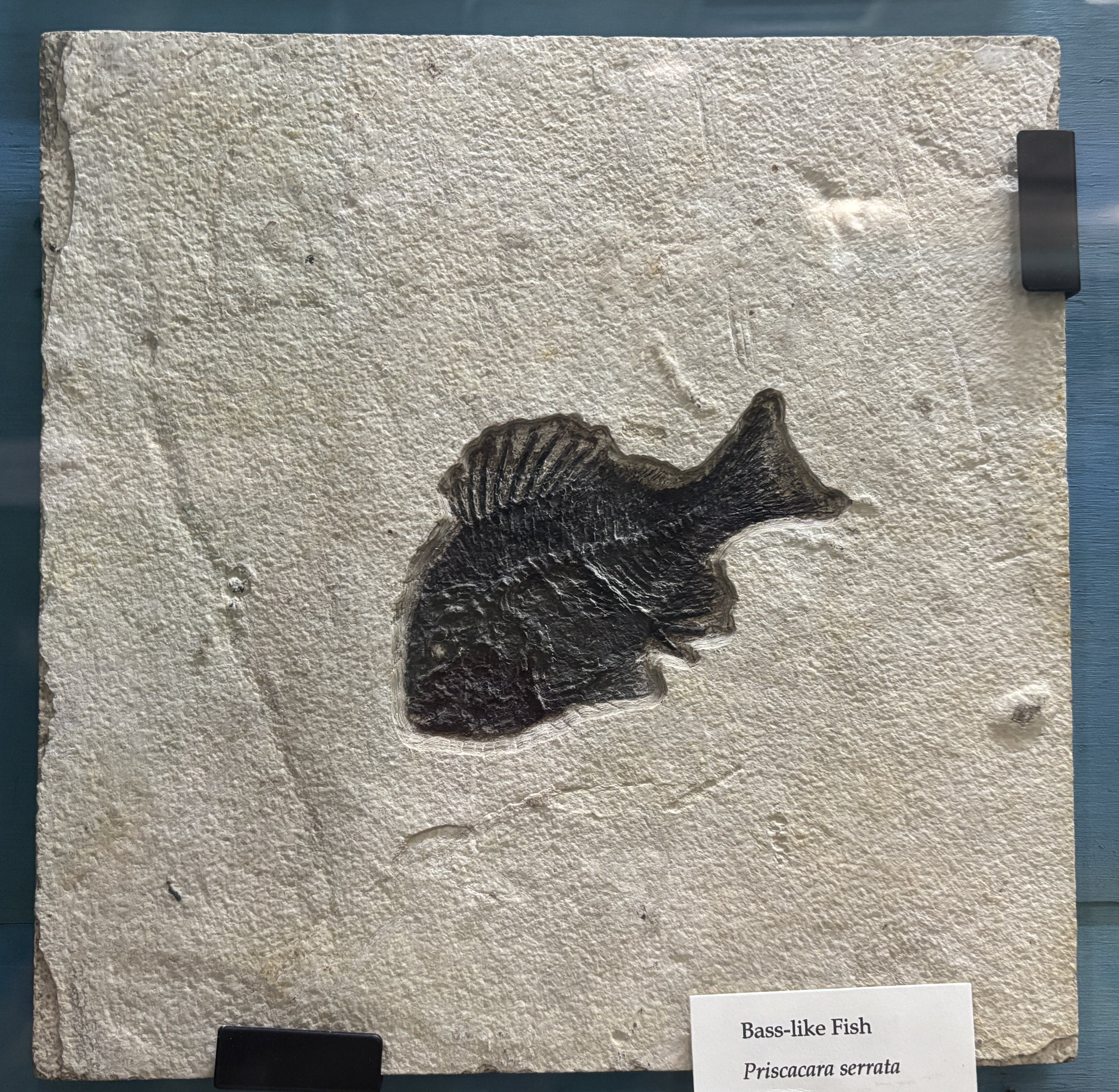
Priscacara serrata is an extinct species of bass-like fish whose fossils are found almost exclusively in the Green River Formation located in Western United States. These fish had striking dorsal spikes that make them a favorite among fossil collectors. They grew up to 16 inches and occasionally are found with smaller fish lodged in their mouth or throats, suggesting that they had a tendency to choke on larger food items. Their primary source of food was small arthropods and mollusks and possessed tooth-pads in their throats that helped grind up the hard components of their prey.
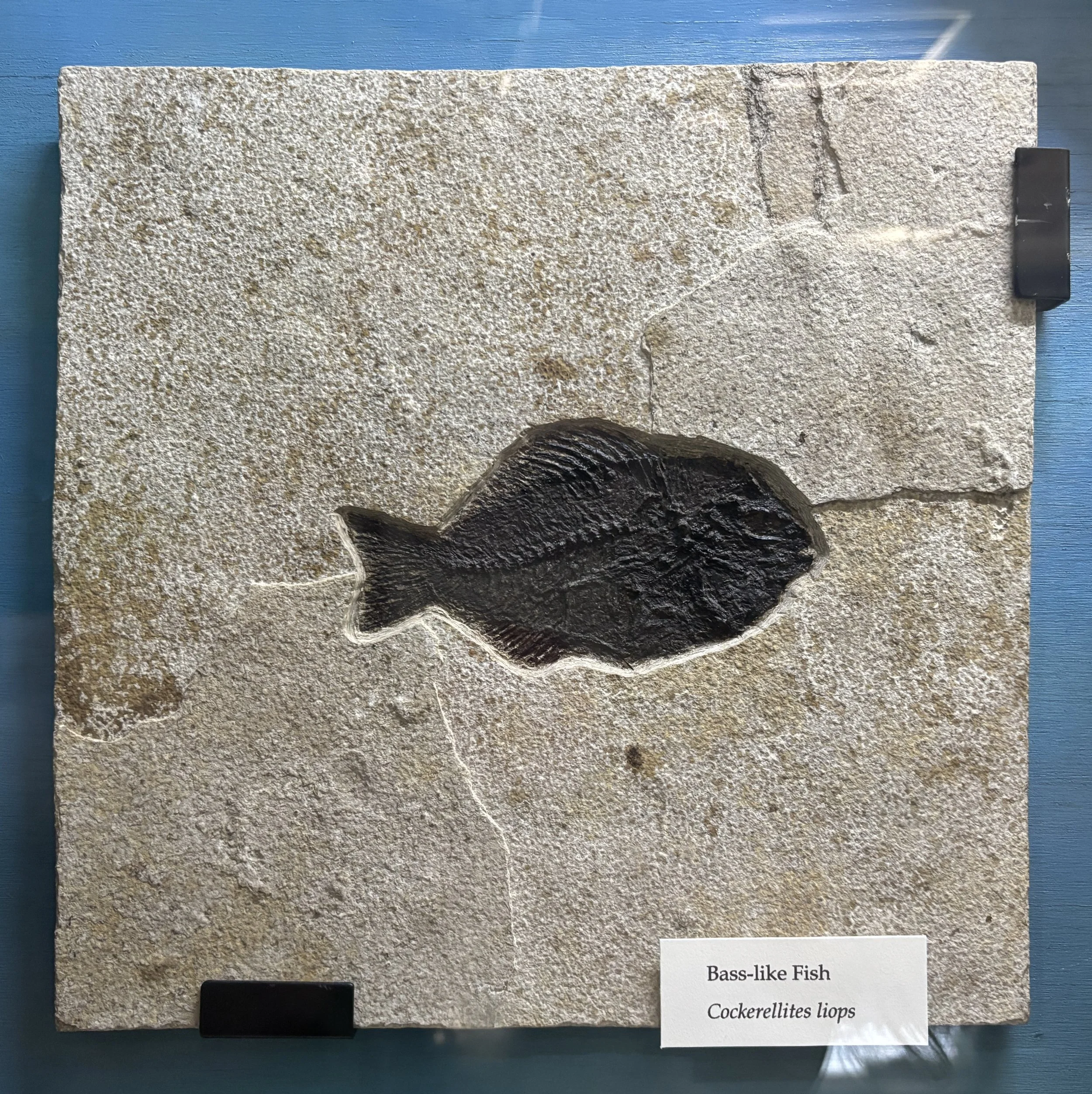
Cockerellites liops is an extinct species of schooling fish that lived in the lakes of the Green River Formation during the Eocene epoch. These fish were small with rounded, sunfish-like profiles, growing up to 6 inches in length. They had small mouths and are assumed to have fed on zooplankton and insects. They are known for their prominent spiny dorsal fins that were likely used both for defense and stabilization while swimming.
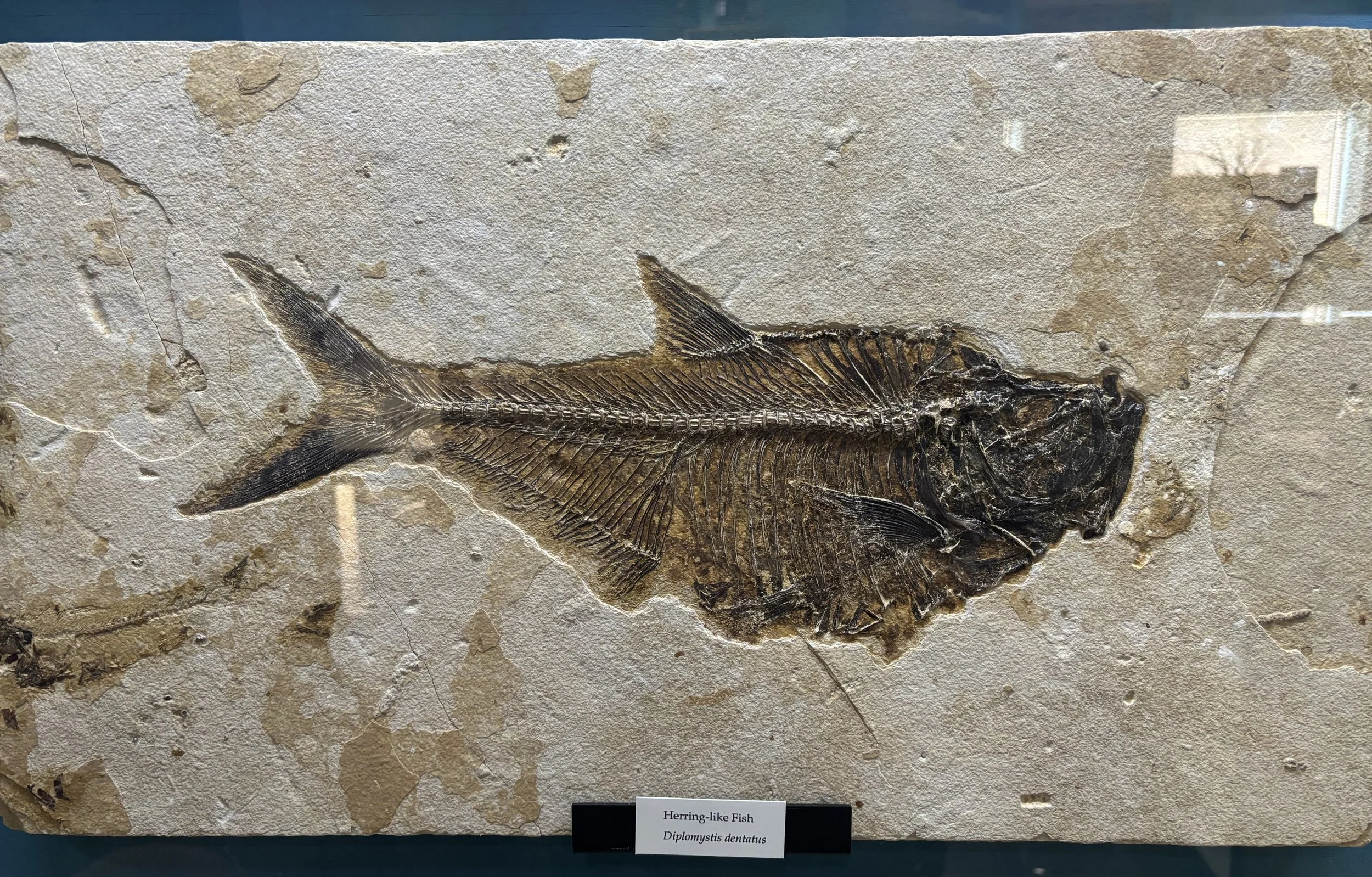
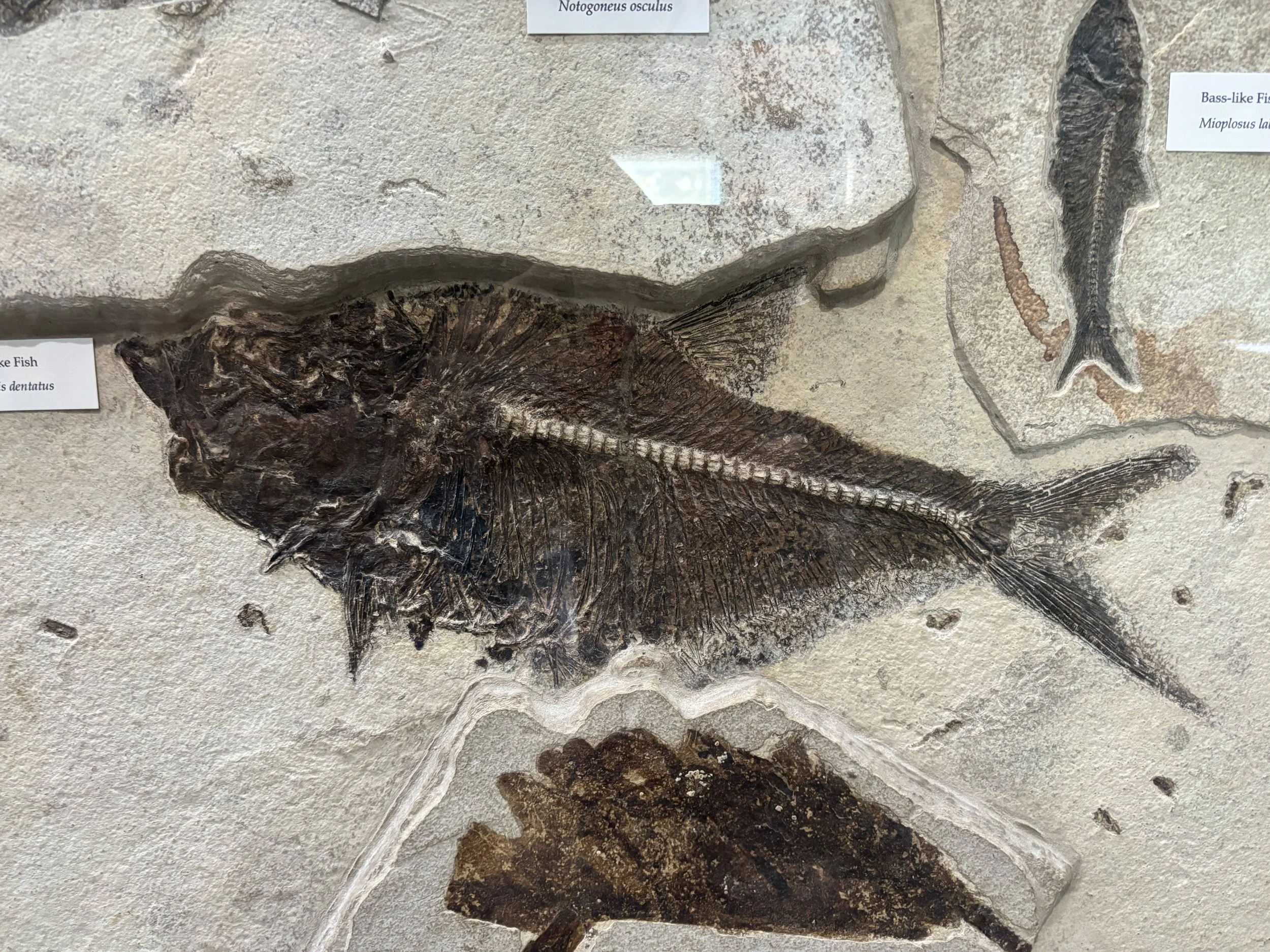
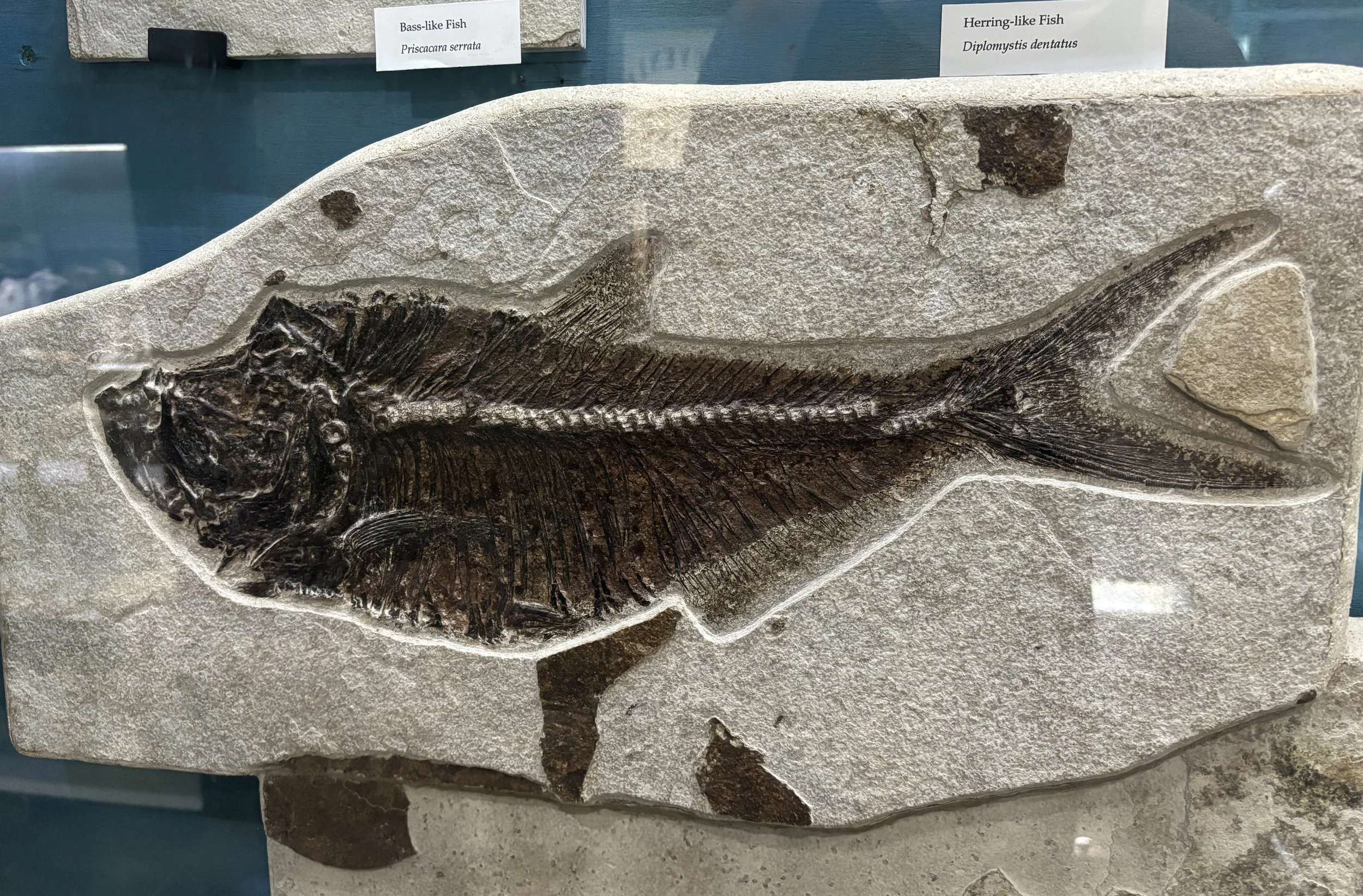
Diplomystus dentatus was a freshwater fish whose fossils are commonly found in the Green River Formation of the American West. It was distantly related to modern herrings, sardines, and anchovies. Their upturned mouths were perfectly shaped for feeding on smaller fish that congregated near the surface of the water from below. In fact, the fossils of Diplomystus dentatus are often found with Knightia eocaena fossils in their mouths, throats, and stomachs.
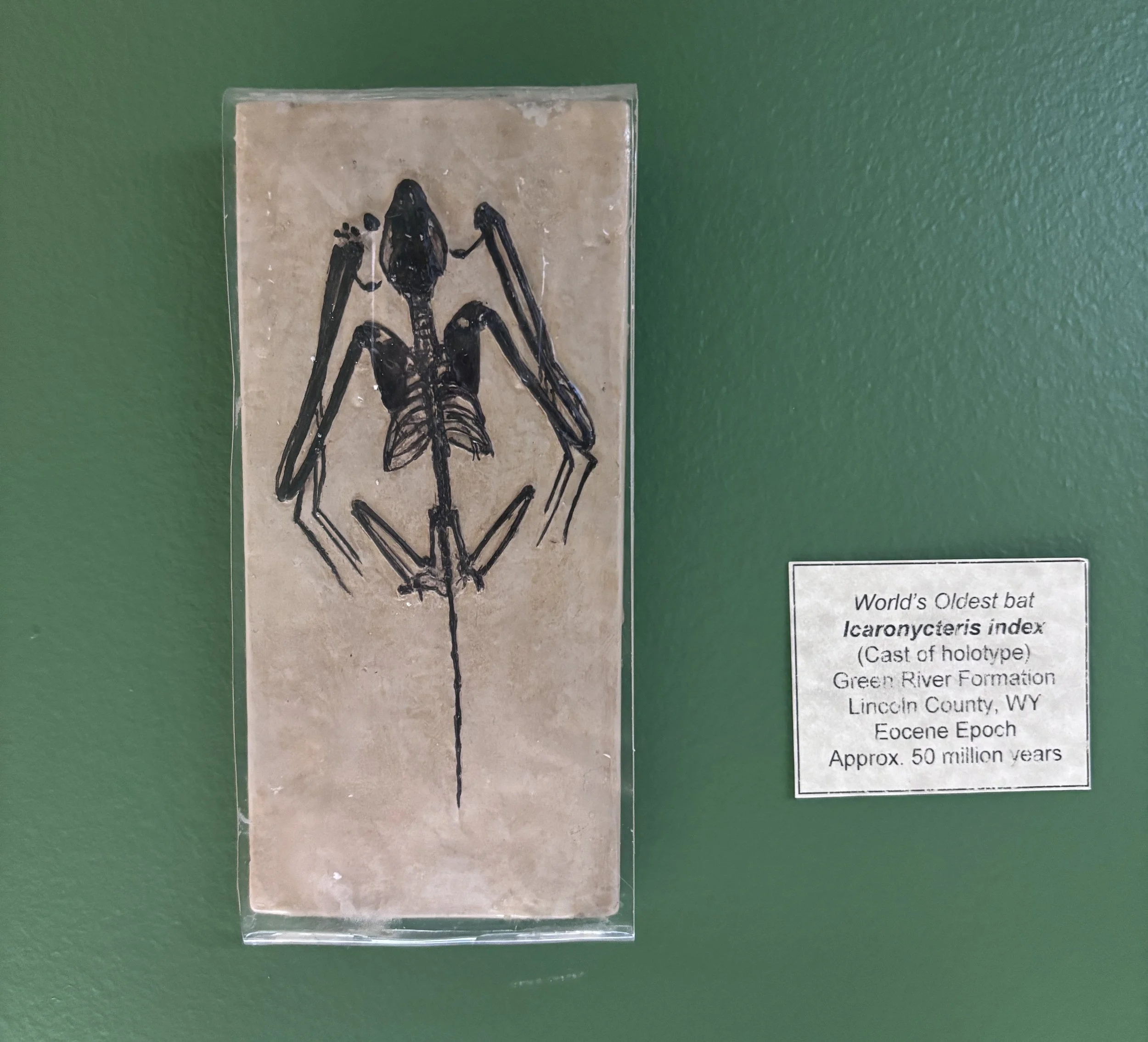
Icaronycteris index is an extinct species of bat that is found exclusively in the Green River Formation in the American West. The genus Icaronycteris contains the oldest species of bats ever found (about 50 million years old) and has been instrumental in teaching us about the evolution of bats. Because bat bones are lightweight and delicate, there are currently no complete specimens of older relatives of the Icaronycteris index (and the slightly older Icaronycteris gunnelli), which shrouds the bat lineage in mystery. The fine grain of the Green River Formation’s sediment has allowed for a few complete preserved skeletons of these early bats, and hopefully their prior lineage will be discovered in future excavations.
What is known is that these first true bats were small, used echolocation to hunt insects in midair, had long tails, a claw on their thumb and index ‘fingers’, and had membranous wings.
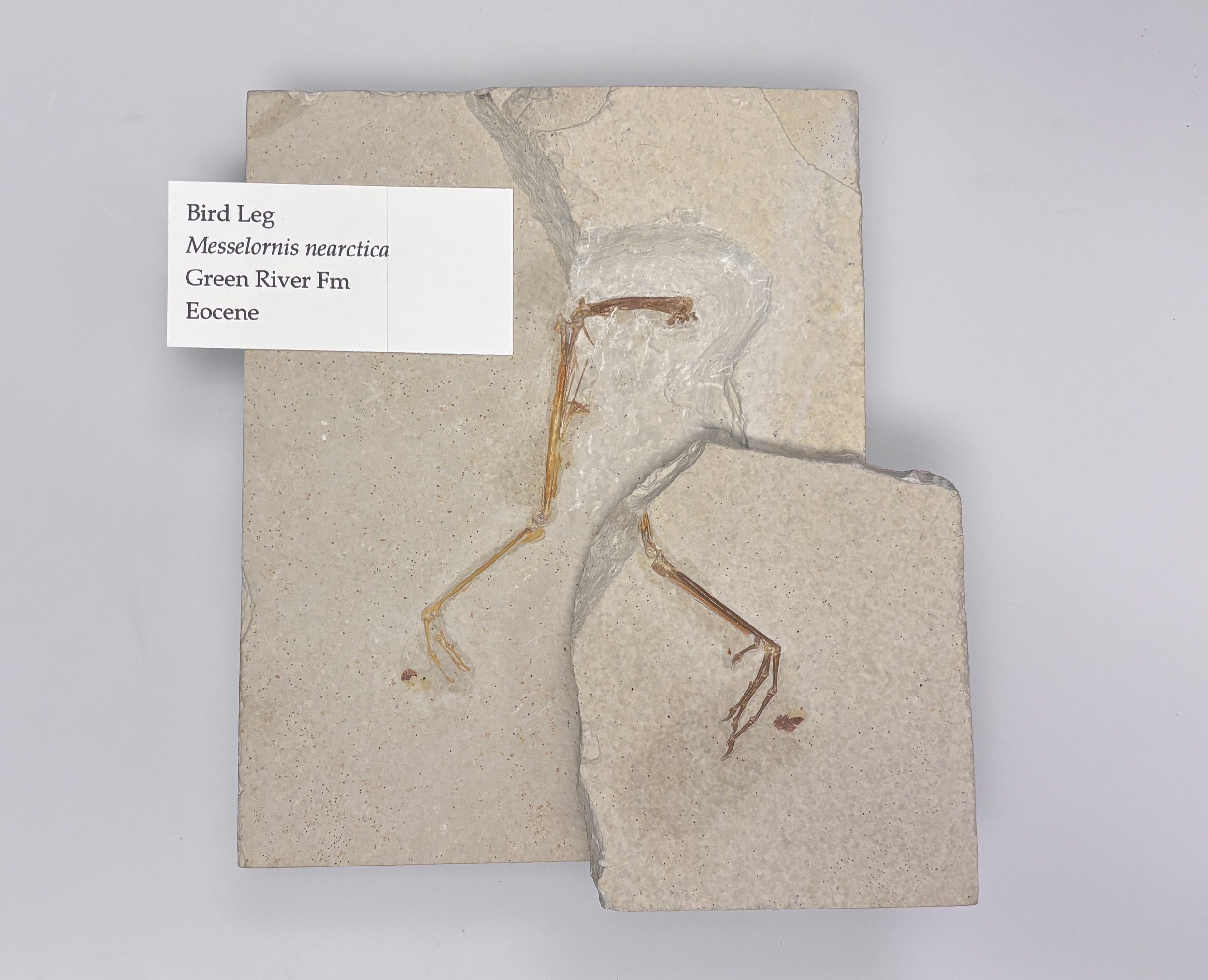
Messelornis nearctica was a terrestrial bird which was likely non-adept at flight. It was omnivorous and ate fish, fruits, and seeds. Messelornis nearctica is one of several bird species associated with in the Green River Formation in the American West.
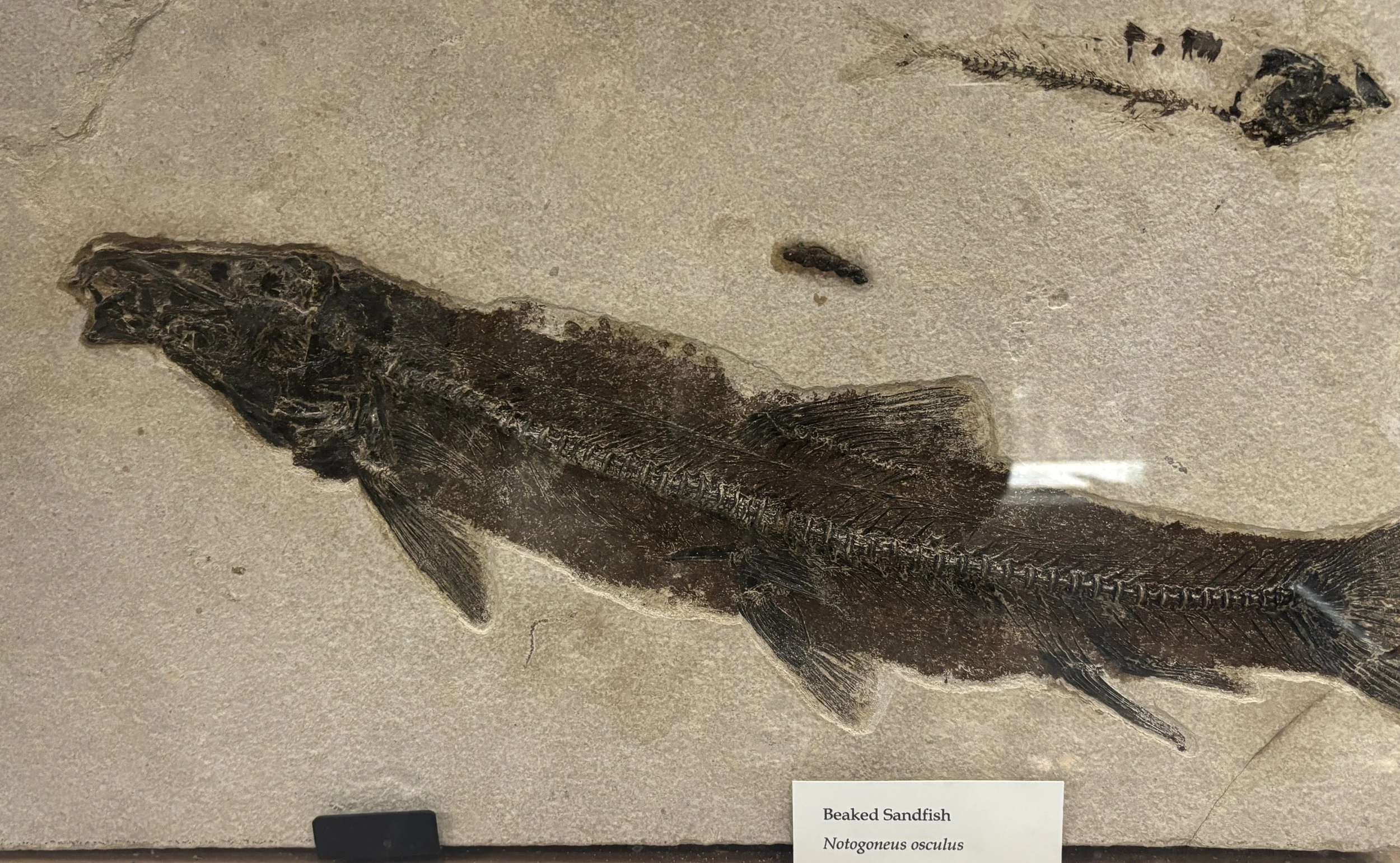
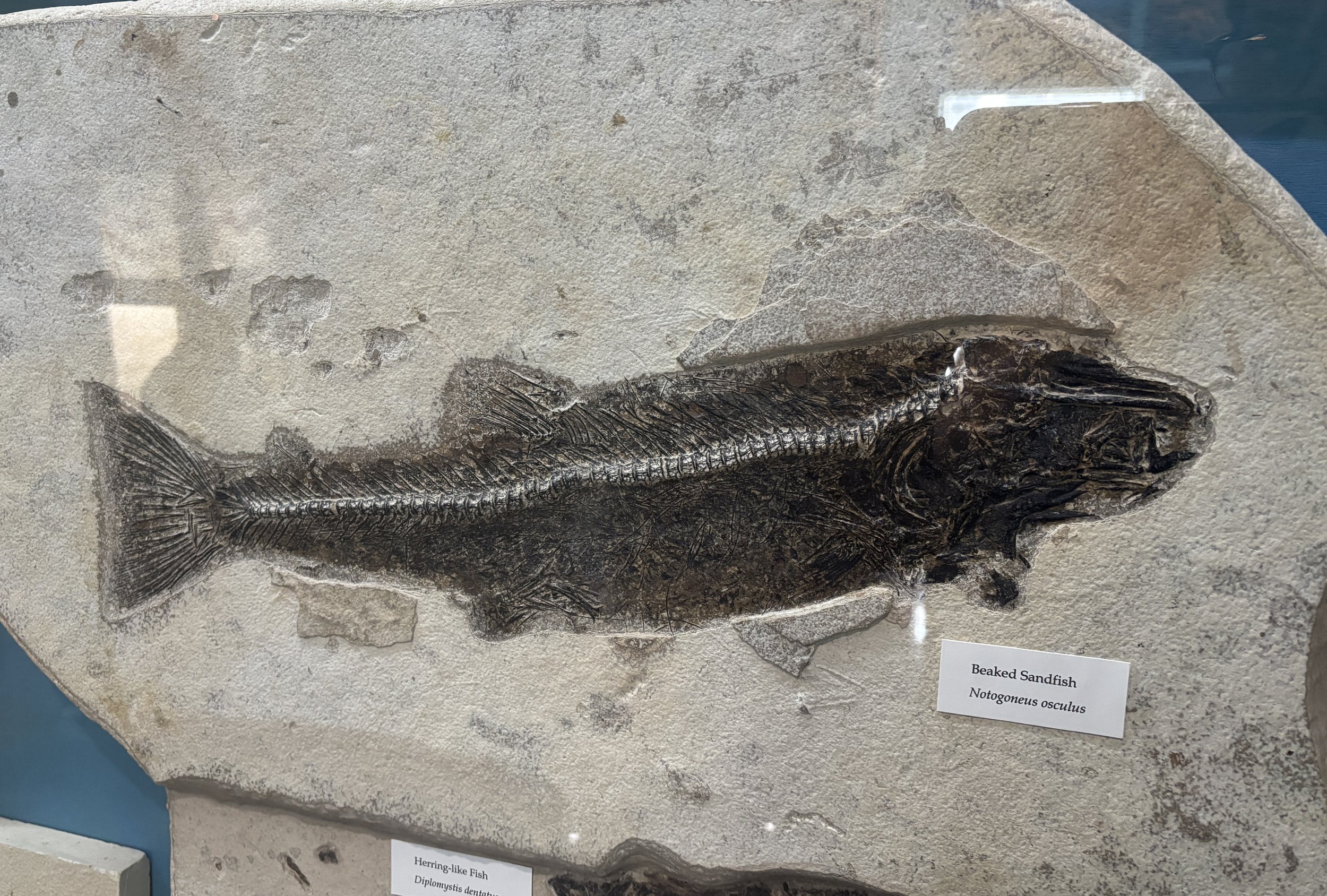
The Notogenus osculus was a bottom feeding fish found in the Green River Formation of the American West. It had a toothless mouth that essentially vacuumed detritus off the lake floors and grew up to about 35 inches long. The large quantity of sub adult fossils (about 18 inches long) of Notogenus osculus found in the ancient lakebeds of the Green River Formation suggest that these fish likely spawned in the lakes before continuing their journey down connecting streams and rivers for the rest of their life cycle.
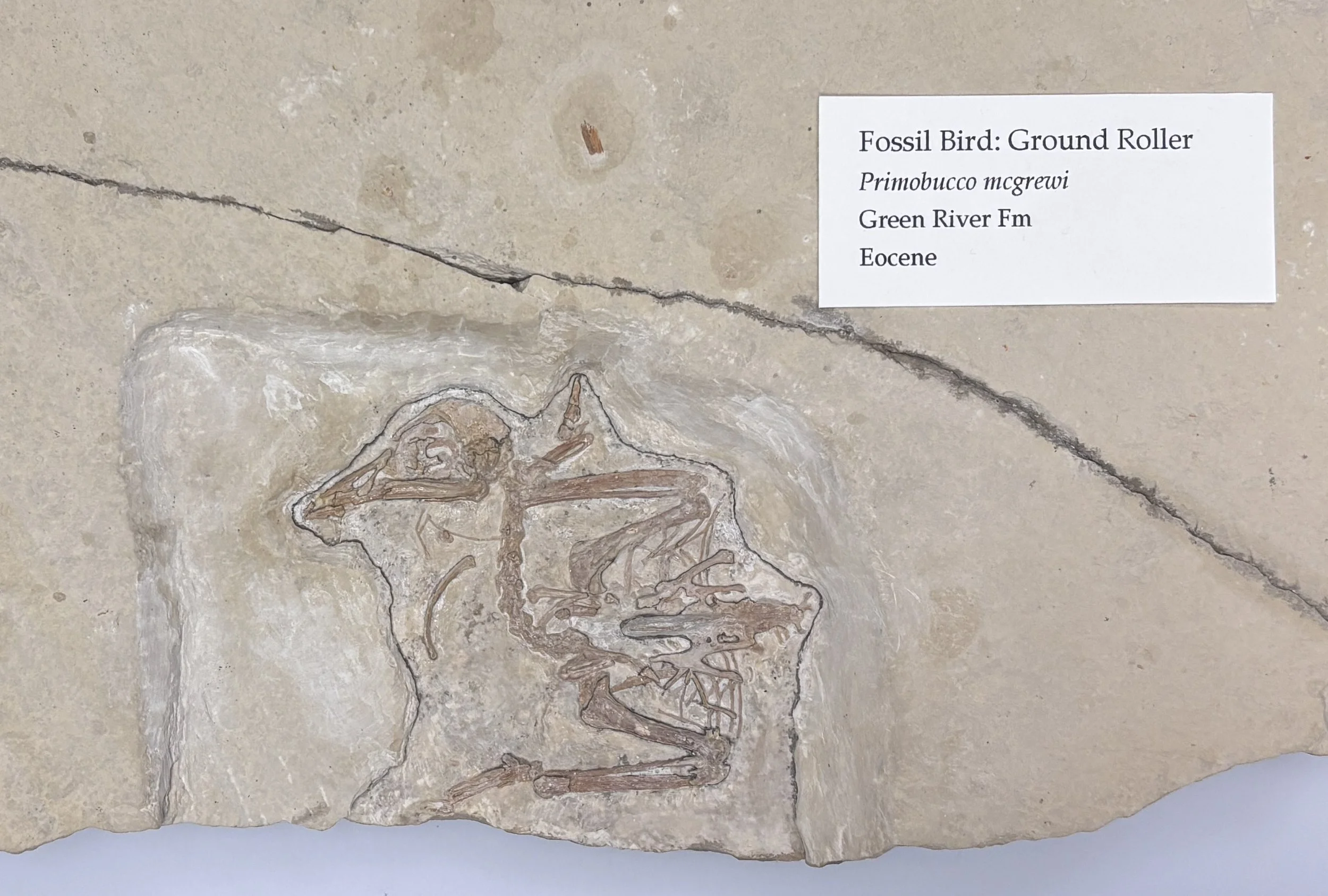
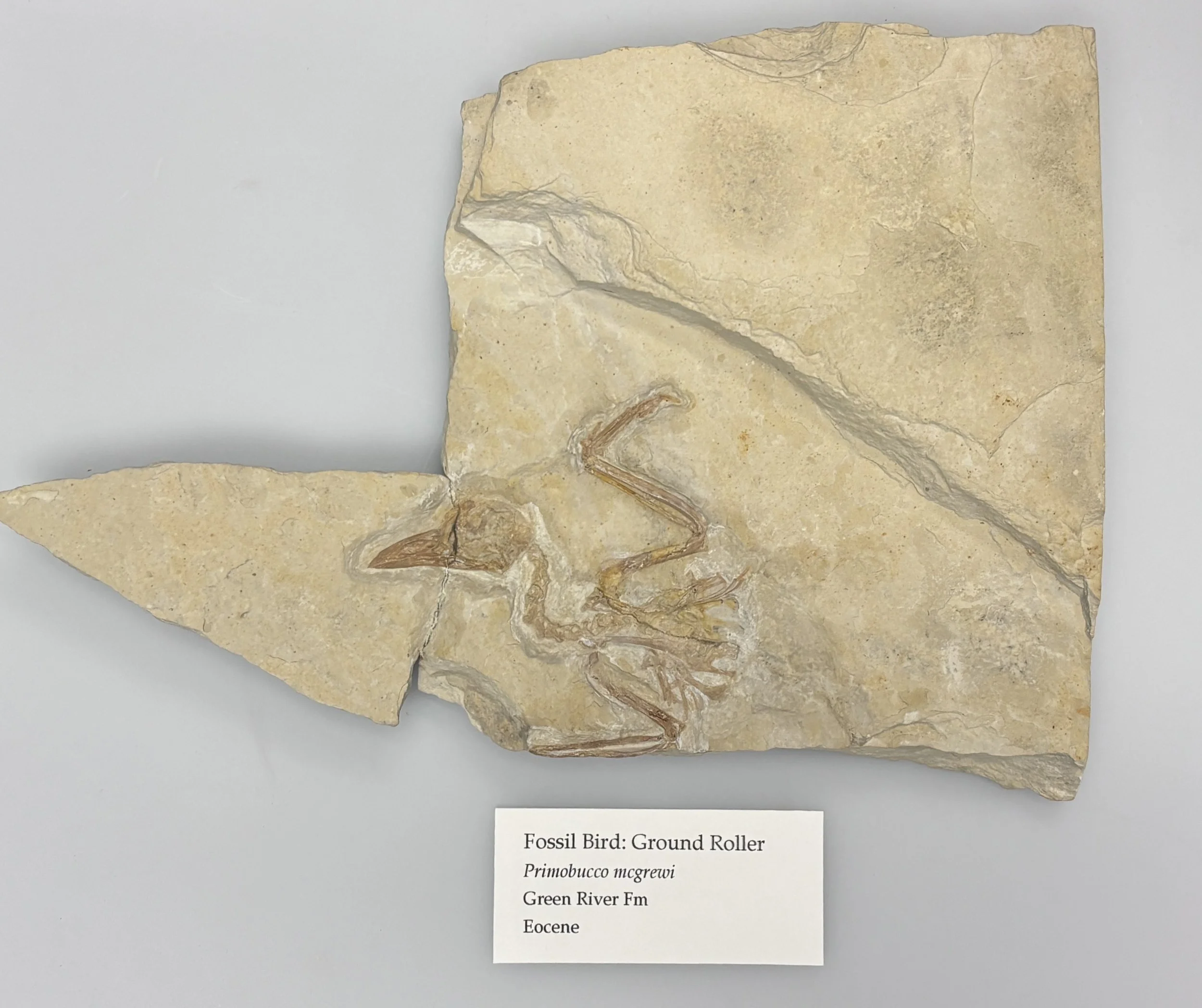
Primobucco mcgrewi was a small, long-legged roller (a bird group defined by their intricate arial maneuvers during courtship). Rollers like Primobucco hunt insects mid-flight, as well as small amphibians and snakes.
The specimens pictured here were prepared by hand in the Earth Experience Paleo Lab.
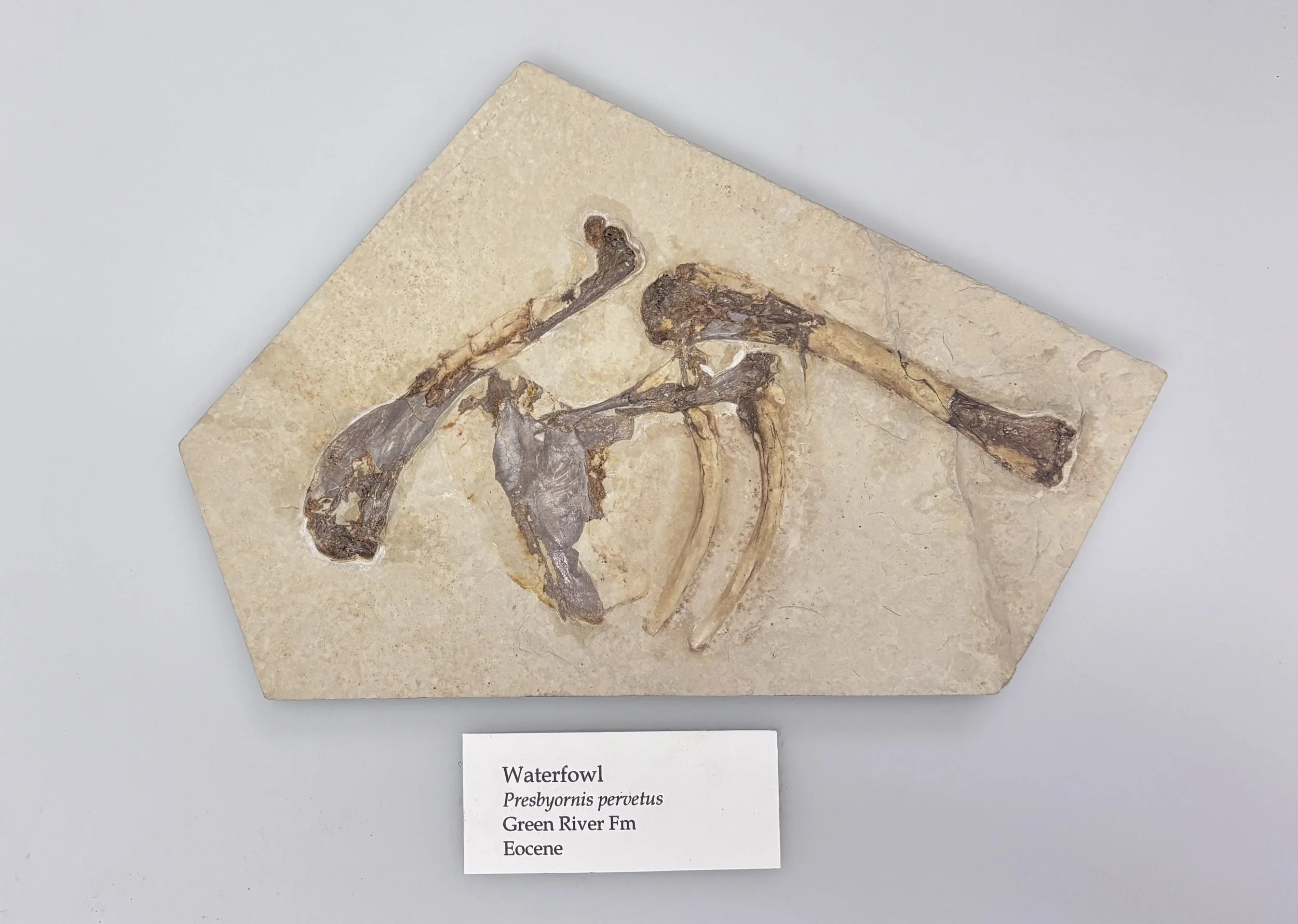
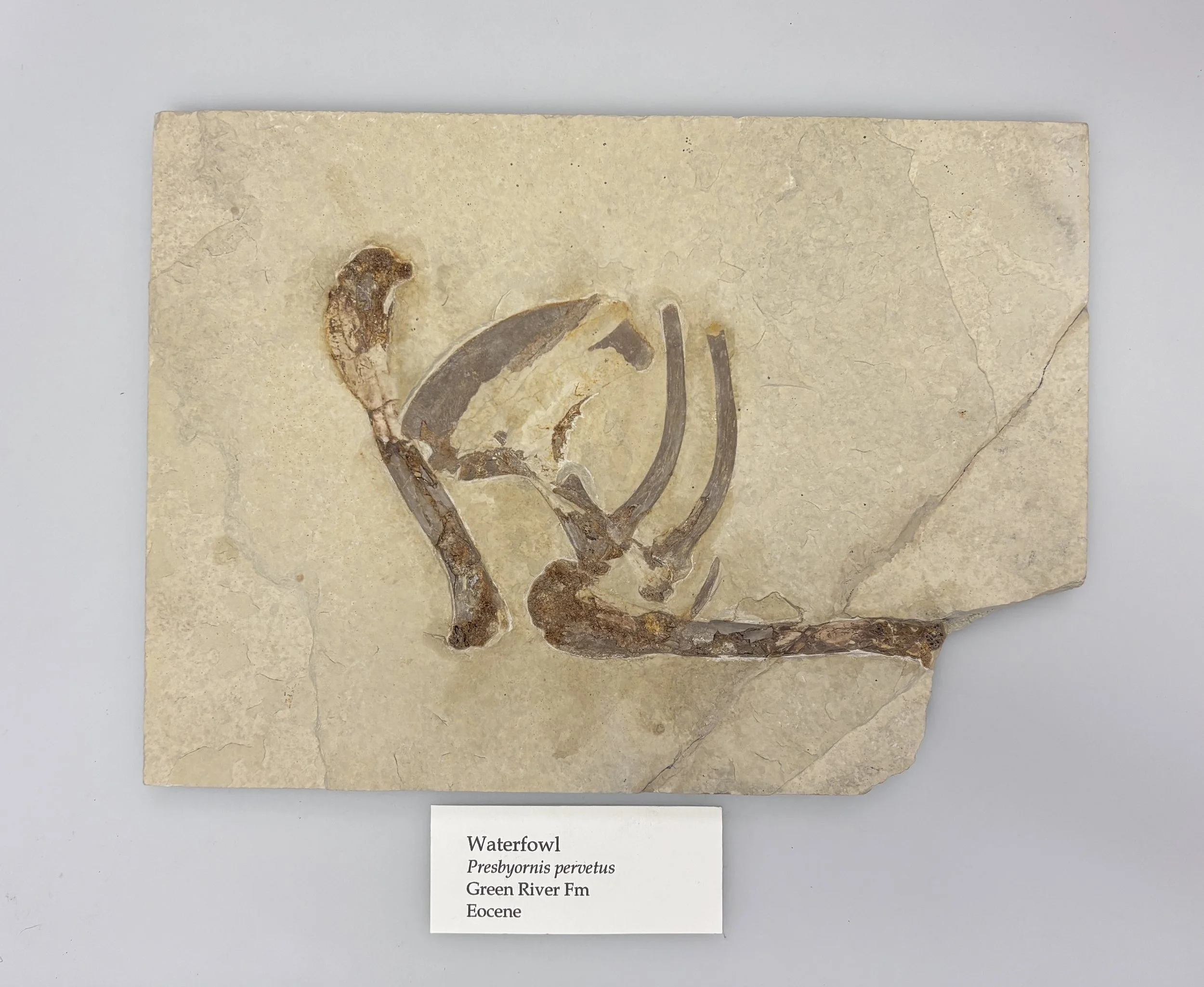
Presbyornis pervetus was a long-legged waterfowl that filter fed along the shorelines of the lakes that made up the Green River Formation environment with its duck-like beak. It was a member of the Anseriformes family, meaning it was related to modern ducks, geese, and swans.
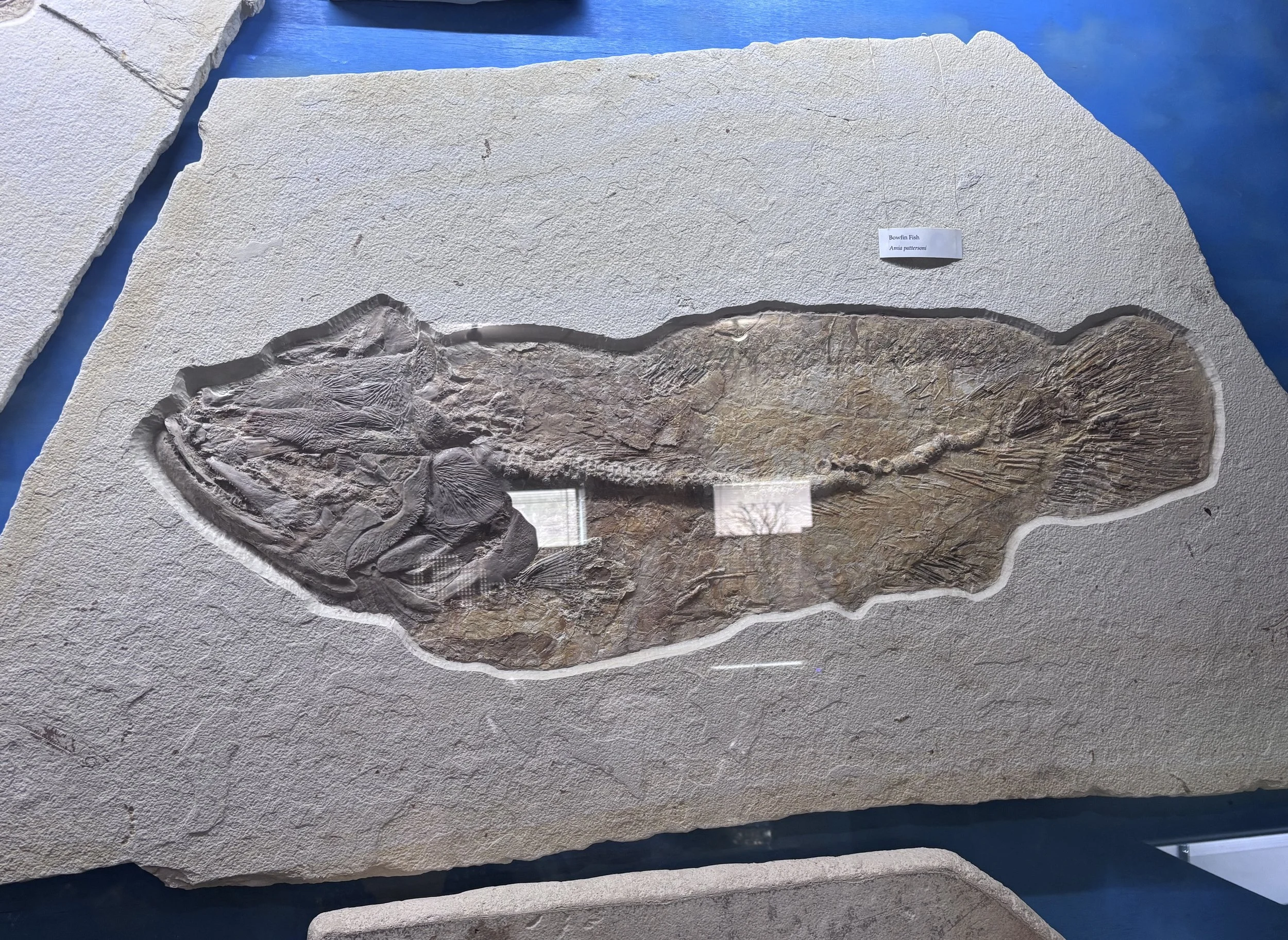
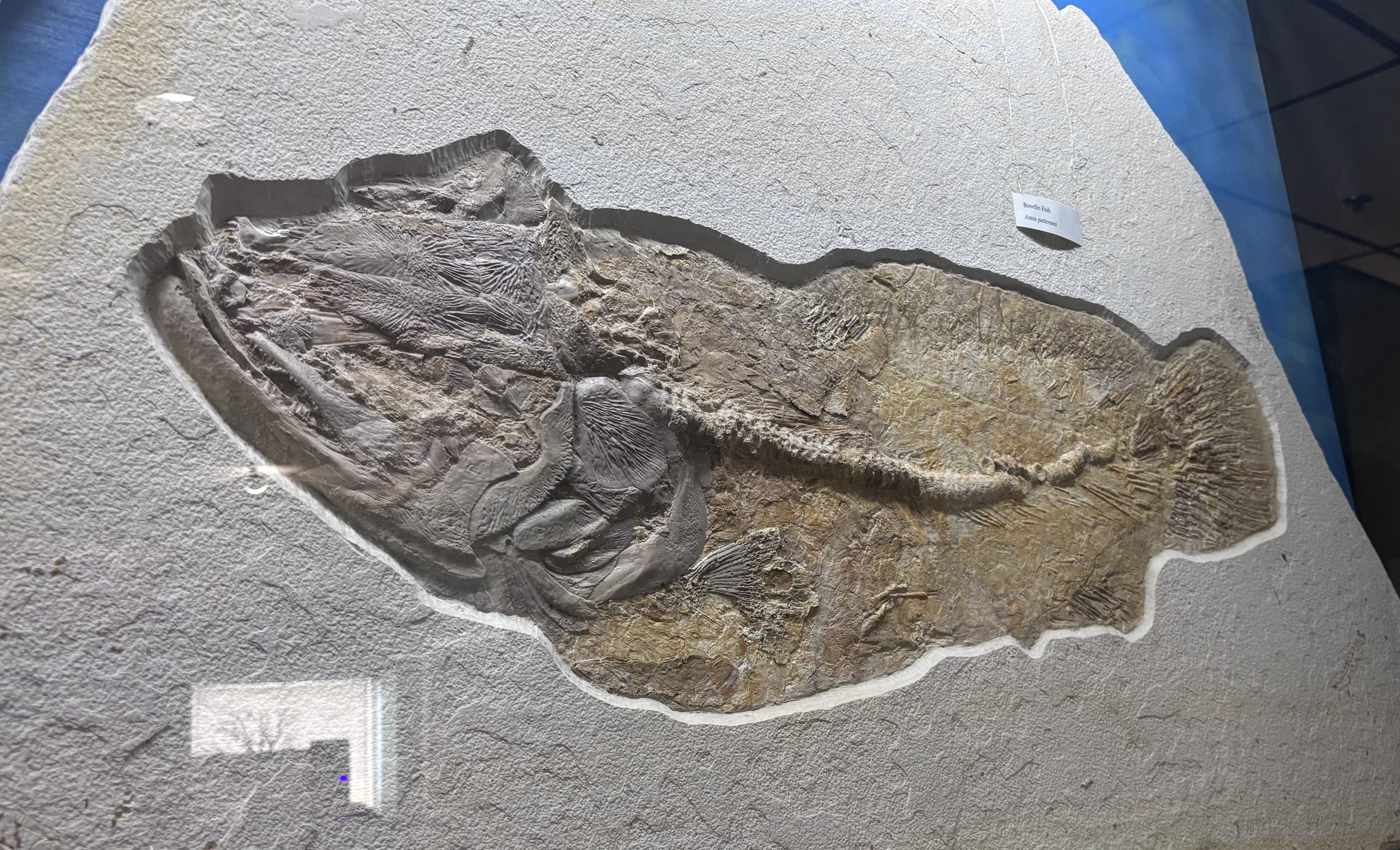
Amia pattersoni was a large bowfin fish–– so called because of the arcing curve of their dorsal fin –– that lived throughout North America, Asia, and Europe from the late Cretaceous to the early Eocene. They are one of several bowfin species found in the Green River Formation. They were predators of the freshwater environs of Green River and are often found fossilized with smaller fish in their mouths or stomachs.
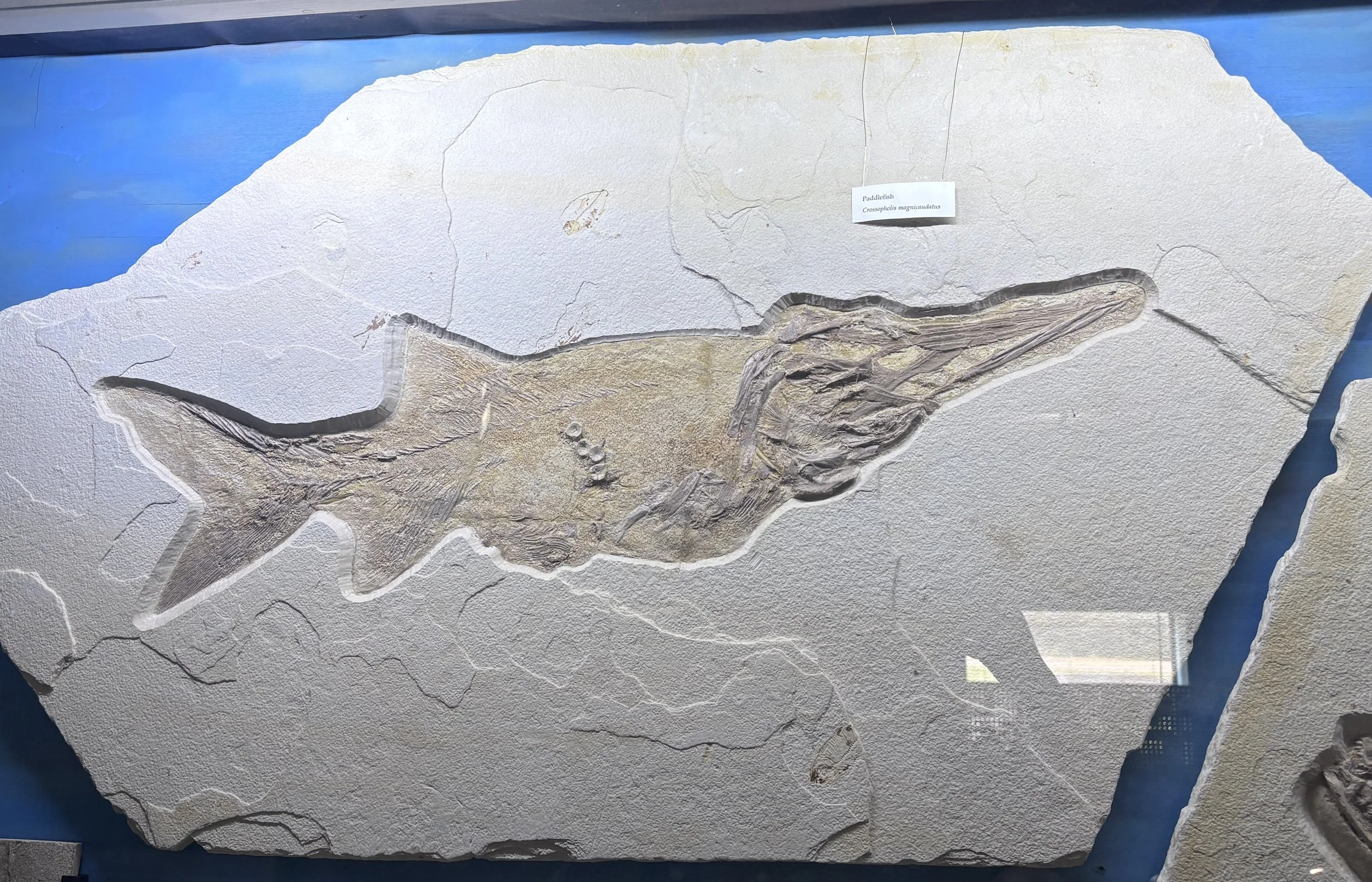
Paddlefish are a relatively rare find in the Green River Formation, making up only 0.02% of the fish fossils excavated there. Specimens of the Crossopholis magnicaudatus range from about 1 to 5 feet in length and had a bony protrusible jaw (jaws that lunge forward independently of the skull) used to hunt smaller fish, unlike its closest modern relative, the Polyodon, which exclusively filter feeds.
No results match your search. Try removing a few filters.