Pterodactylus kochi was a small pterosaur that lived in southern Germany during the Jurassic period. Often depicted as giant avian terror, pterodactyls in reality were a smaller variety of pterosaur, with a wingspan of 1 to 4 feet. The Pterodactylus kochi was particularly small with a 18 inch wingspan.
Pterodactylus kochi lived and hunted amongst the lagoons and archipelagos of ancient Germany. They ate small schooling fish, insects, crustaceans, and any other small animal they could catch. Much of what we know about this species is thanks to the incredibly well- preserved specimen from the Solnhofen Limestone.
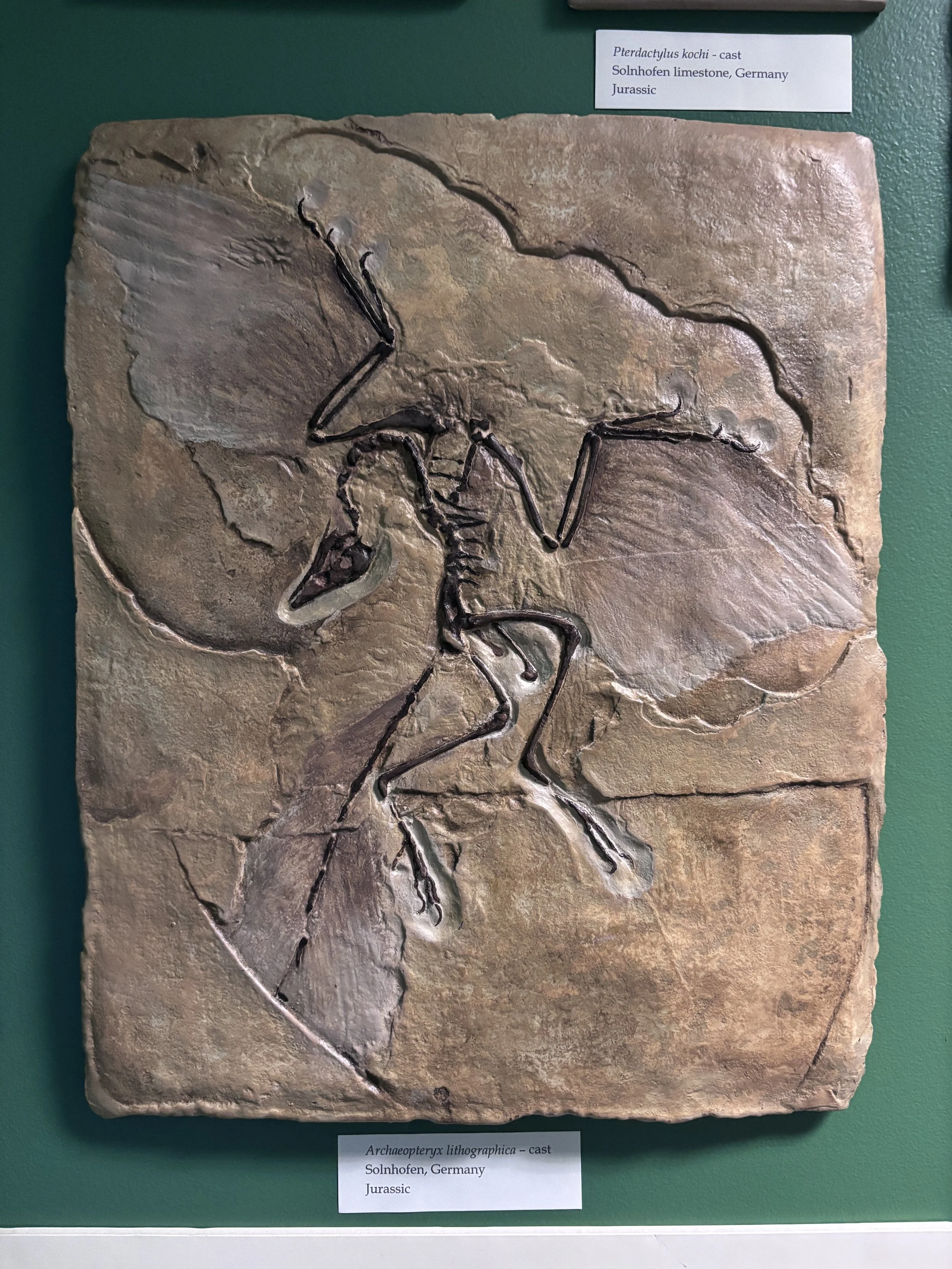
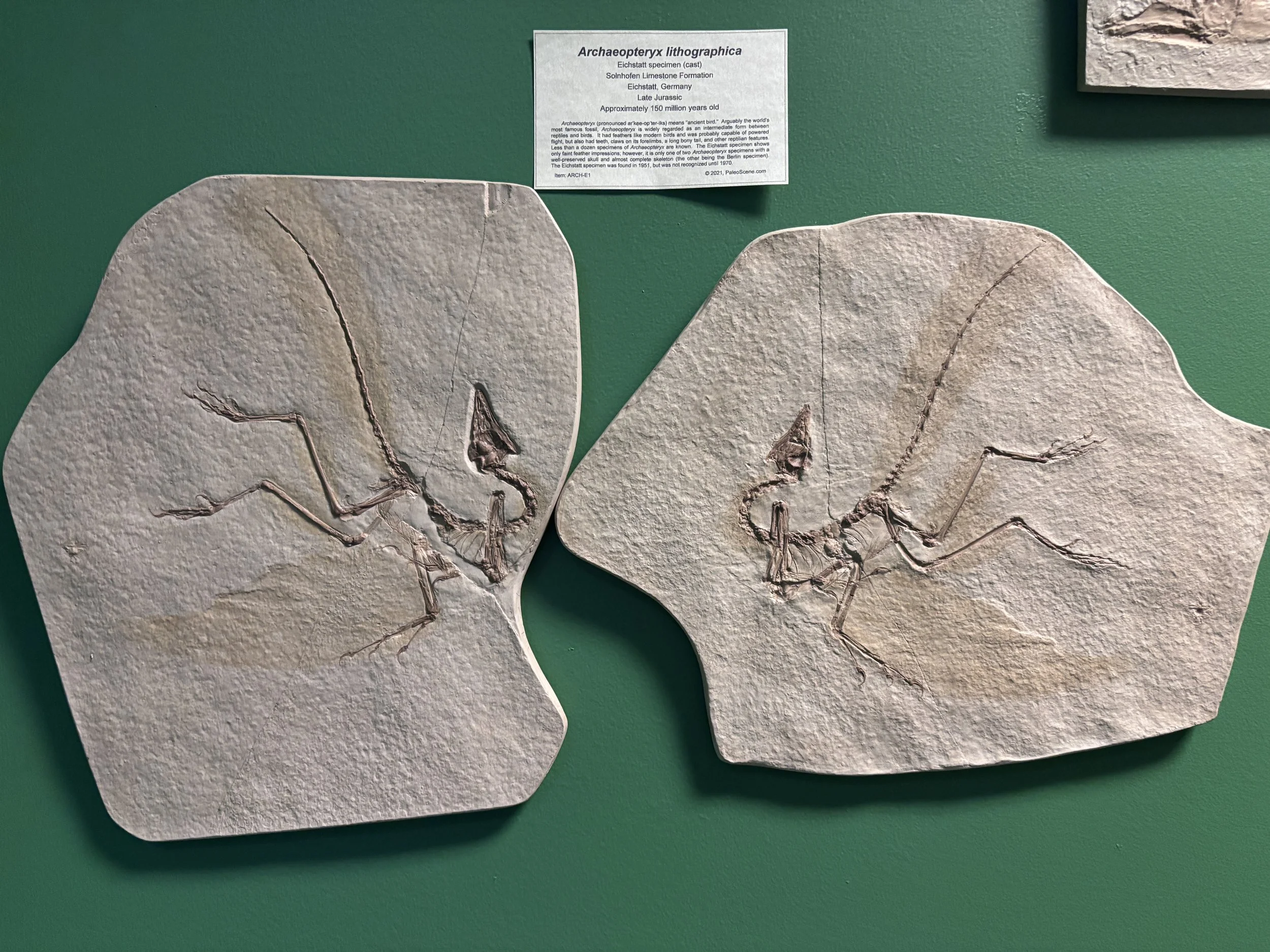
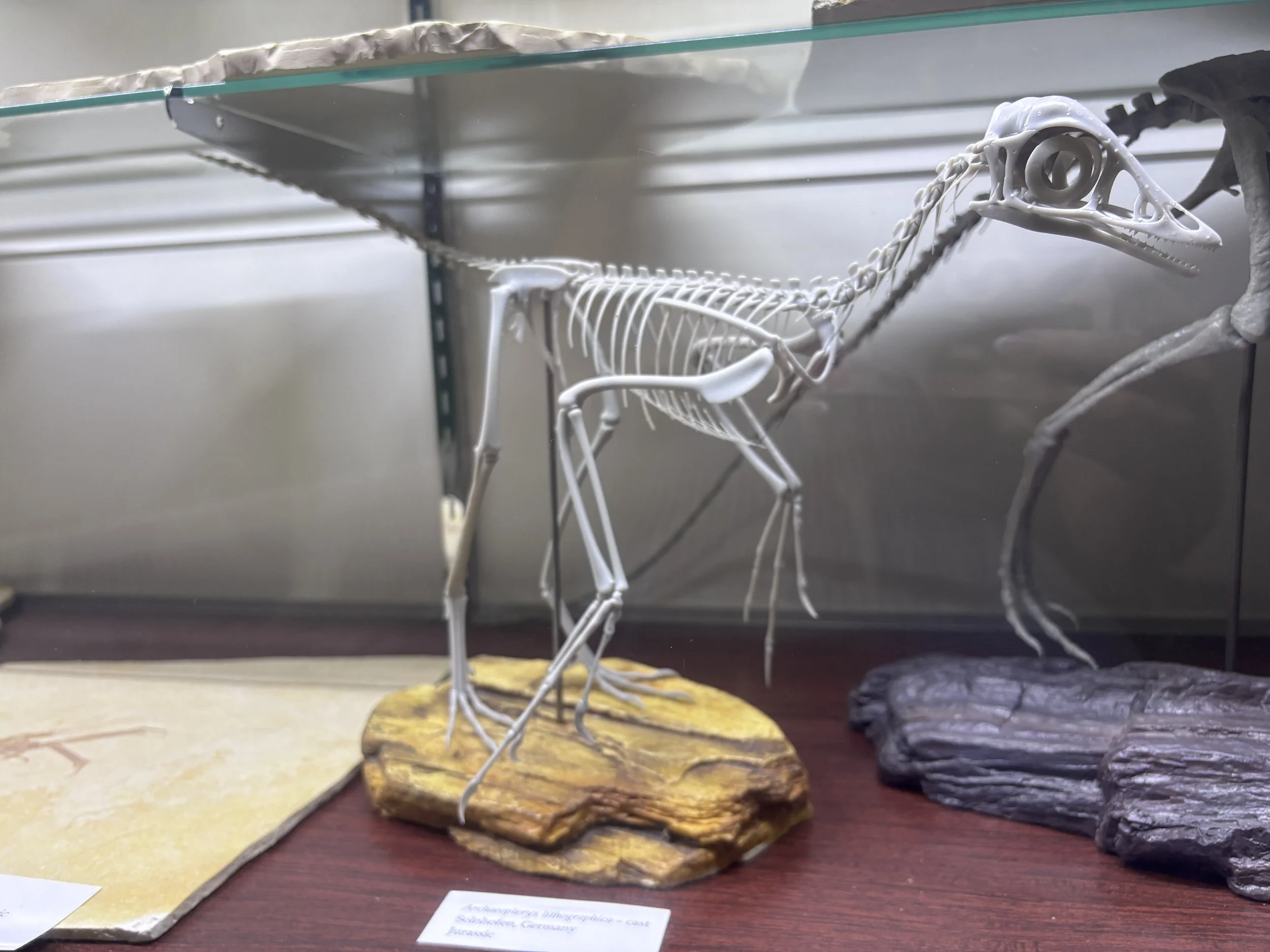
The idea that birds are dinosaurs is still relatively fresh in the general zeitgeist, but paleontologists have been investigating this connection since the discovery of the first fossils of Archaeopteryx lithographica were unearthed in 1861. Since then, more fossils have been found which further support the link between birds and theropod dinosaurs of old.
Like some modern birds, they ate small mammals, lizards, amphibians, and insects. Unlike modern birds, the Archaeopteryx had teeth instead of a hard beak. It also had claws at the bend of its wings that scientists think they used to grab onto trees as they glided through the canopy. As for flight, there is still a debate over whether they could truly take flight as easily as modern birds. It is possible that they relied on gliding from tree to tree like a sugar glider or required a running start with little hops to take off flying.


Compsognathus was a genus of small theropod dinosaur that lived in Europe during the Jurassic period. Compsognathus, sometimes nicknamed ‘Compie’, is among the smallest dinosaurs, not accounting for modern birds, growing anywhere between 2 and 3 feet in length and weighing up to 8 lbs. The Solnhofen specimen was even smaller, about 30 inches long from nose to tail and weighing between 1 and 3 lbs, but this specimen was later determined to be a juvenile. It is thought that the Compsognathus would use its speed, agility, and sharp teeth to ambush small prey like lizards, insects, and possibly even small pterosaurs. Unlike their depiction in popular media, it is unlikely that they hunted in socially active groups.

In the waters of old Baravia, Germany, the Tharsis dubius, a small carnivorous ray-finned fish made their home. These tiny fish fed by sucking plankton and other tiny prey items into their mouths. Fossils of the Tharsis have shown that they often choked on their prey and died of suffocation.


The Mecochirus longimanatus is an extinct species of lobster-like crustacean whose fossils can be found in the Solnhofen Limestone of Bavaria, Germany. It is named for its extra long appendages that were likely used for feeding.

Horseshoe crabs have been around for about 450 million years, surviving all five major extinction events. You may notice that this particular species found in the Solnhofen Limestone, Mesolimulus walchi, looks a lot like modern horseshoe crabs. Their body plan has been so successful that they have not had to change very much at all to survive into the modern era. While Mesolimulus walchi may be extinct, its modern relative still thrive in the oceans today.
The Solnhofen Limestone has not only preserved the bodies of the crabs, but also their footprints!

Aeger tipularius was a species of shrimp that lived in the waters of the archipelago of modern Bavaria Germany. These shrimps are very well preserved by the fine grain of the Solnhofen Limestone.

Unlike stalked crinoids, the Saccocoma pectinata was a free-floating species that fed on plankton. It is believed that the Saccocoma pectinata could swim using its feathered arms to propel itself through the water. These crinoids have been excellently preserved in the Solnhofen Limestone with some specimens even retaining their feathery arm structures.


The Solnhofen Limestone is responsible for some of the best-preserved insect fossils from the Mesozoic. The fine grained sediment allowed for immaculate preservation of wing structures, body segments, and even coloration patterns. The preservation of insect species tells us about the type of environment of ancient Germany. For example, the presence of dragonflies and water striders tells us that the area was had laden with lagoons and bodies of freshwater.
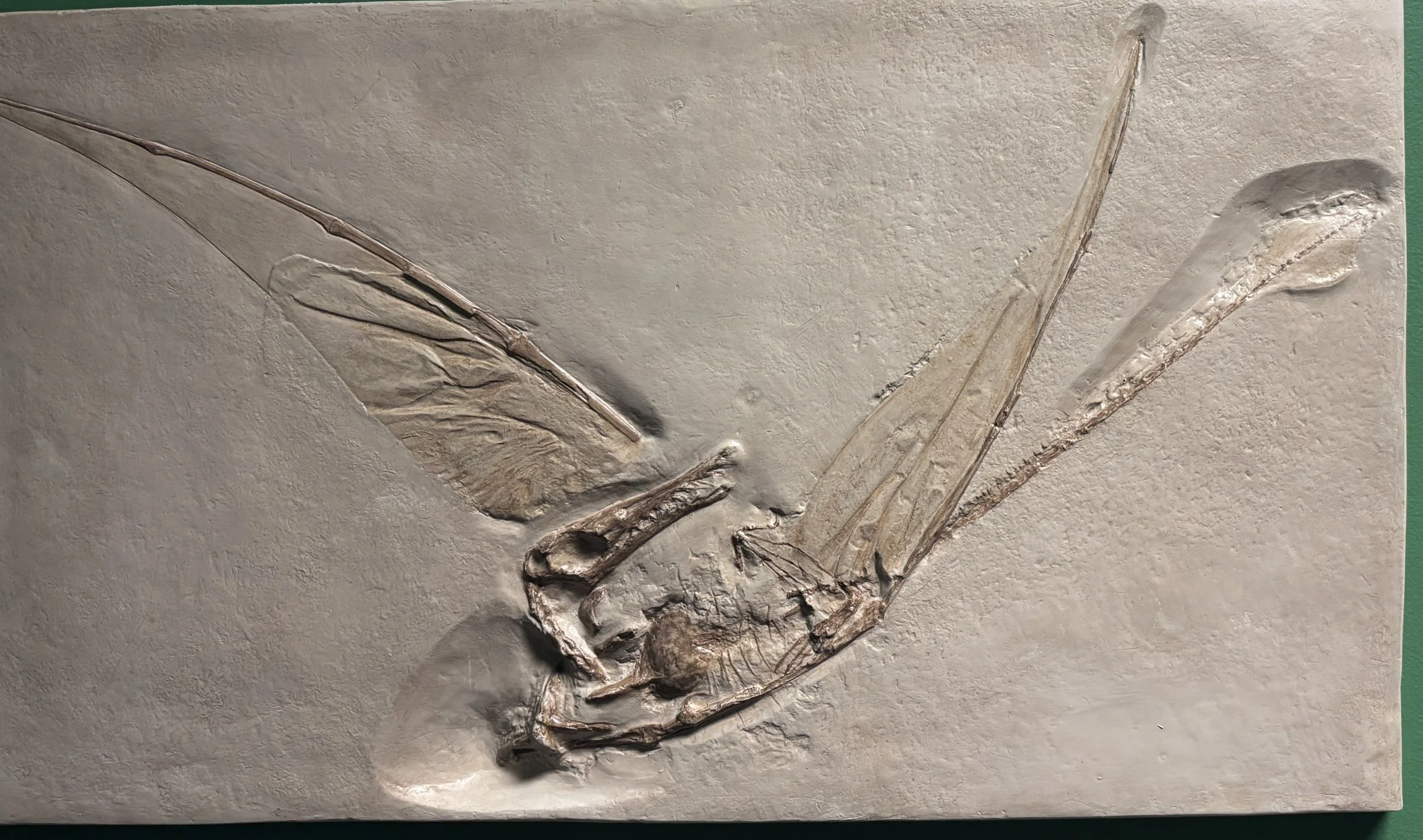


Rhamphorhynchus was a small pterosaur that lived in Europe during the Jurassic, most often found in the Solnhofen Limestone of Germany. Rhamphorhynchus is one of the best understood pterosaurs due to the excellent preservation in some of the fossils found, even including the wing membranes, skin, and stomach contents. Rhamphorhynchus had sharp teeth which it used to catch fish and other sea creatures and was an agile flier with an approximately 3-foot wingspan.
No results match your search. Try removing a few filters.