
Fossil Collection Search
Check out our collection! Filter through time period and other categories and click on entries to learn more about them.
Check out our collection! Filter through time period and other categories and click on entries to learn more about them.
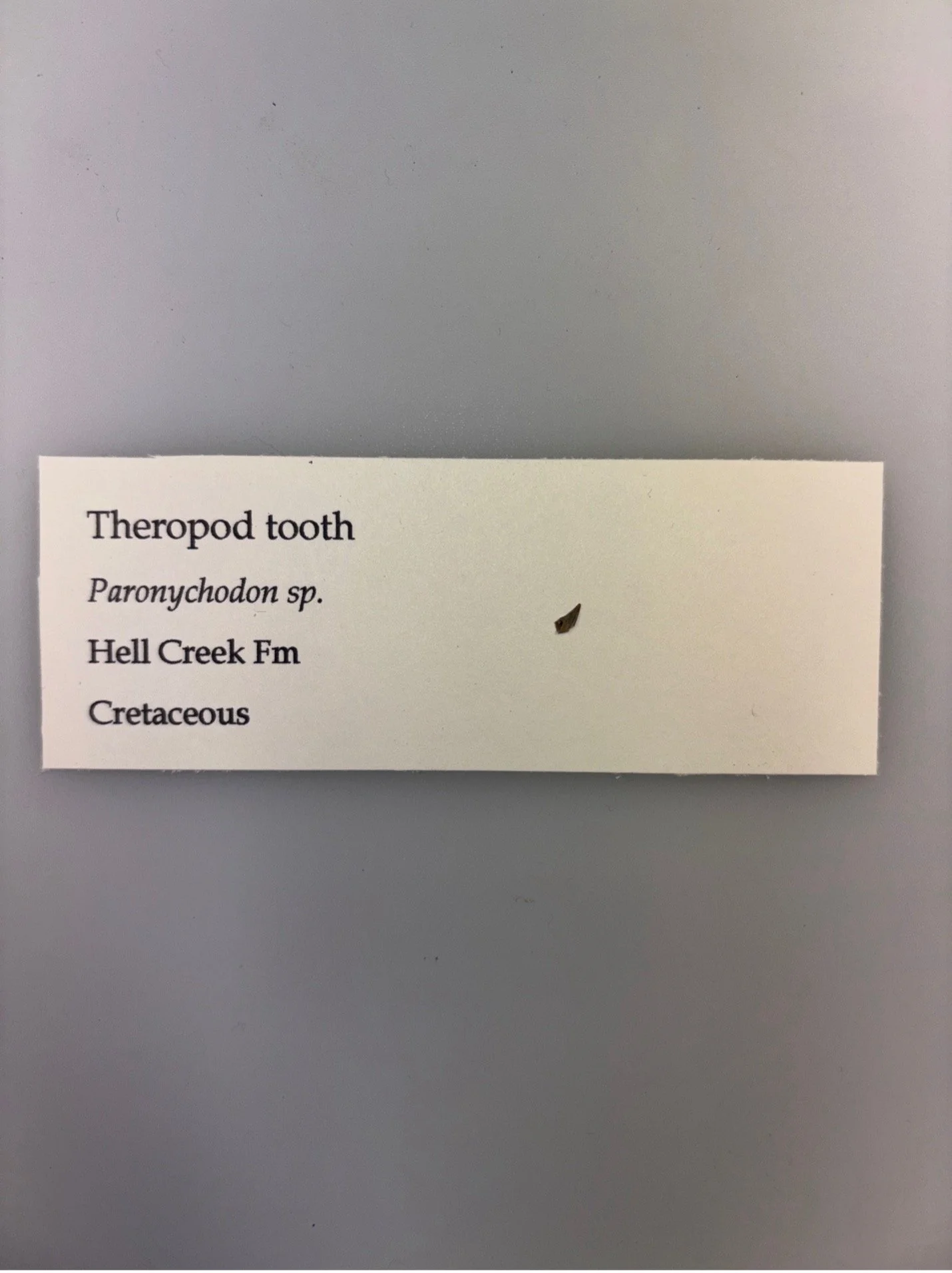
Little is known about the Paronychodon. The only fossils found as of yet of this group of theropds are teeth like the one pictured here. These mysterious carnivorous dinosaurs lived in North America during the late Cretaceous, and similar teeth have also been found in Eurasia, which may indicate that this genus could have been fairly far spread.
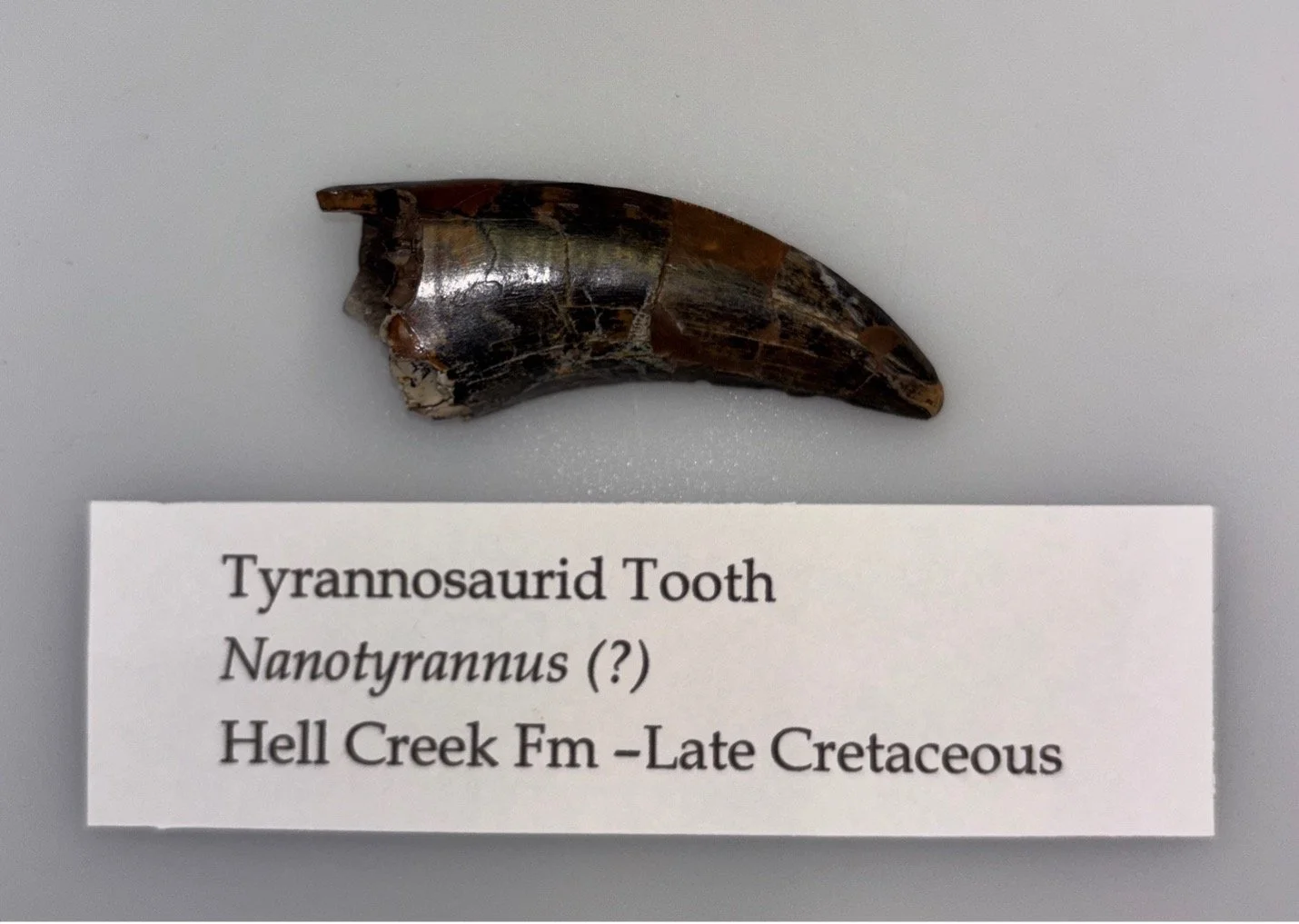
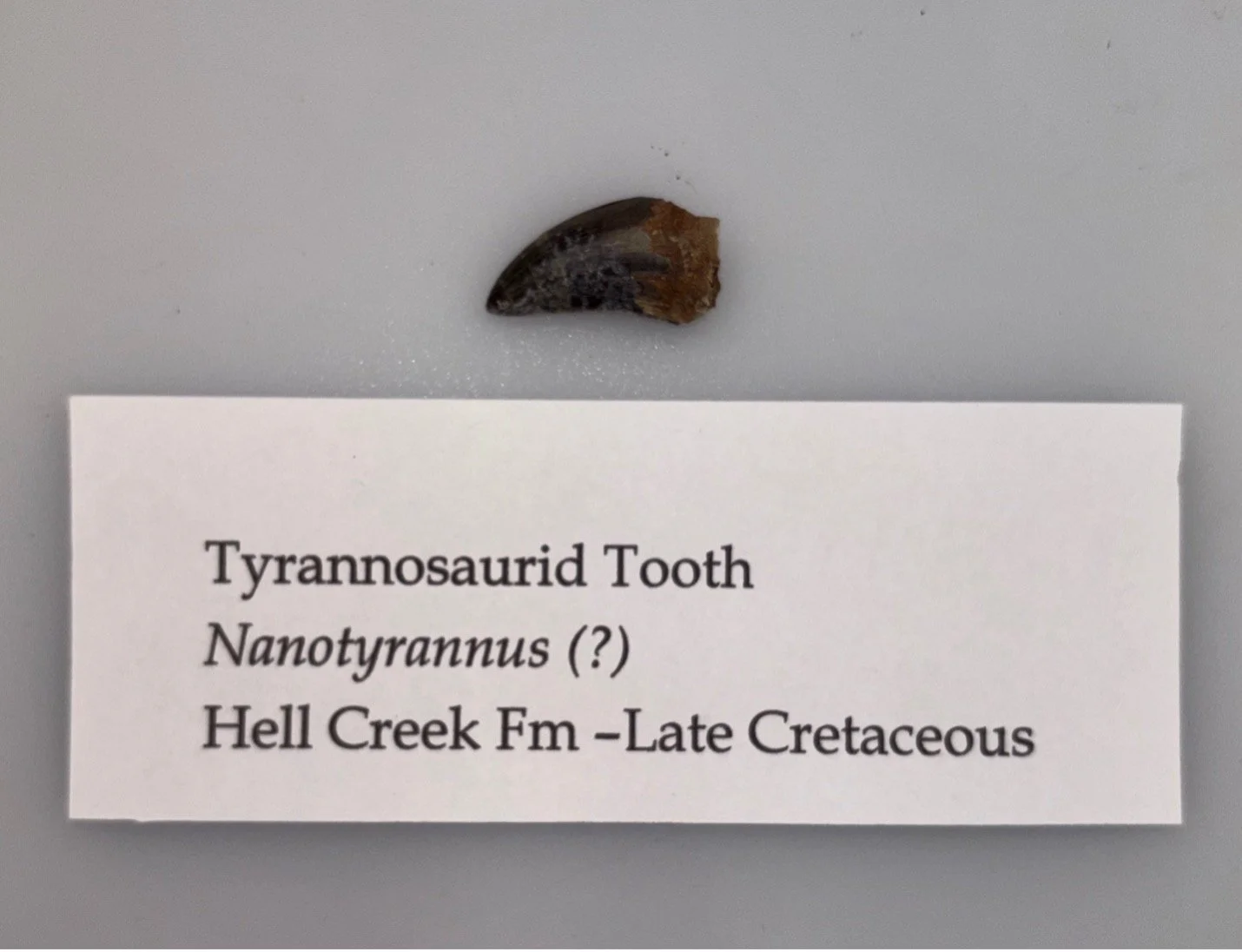
The Nanotyrannus is a newly confirmed genus of therapod dinosaur that lived alongside the Tyrannosaurus Rex at the end of the Cretaceous period. For years, scientists debated over whether this smaller was a teenage T. Rex or its own distinct species. In 2025, the researchers at North Carolina Museum of Natural Sciences determined that the theropod in their famous fossil “The Dueling Dinosaurs” was full grown at the time of death. This discovery settled the debate once and for all. Now that the two species are officially split, our understanding of both the Nanotyrannus and the T. Rex are forever changed.
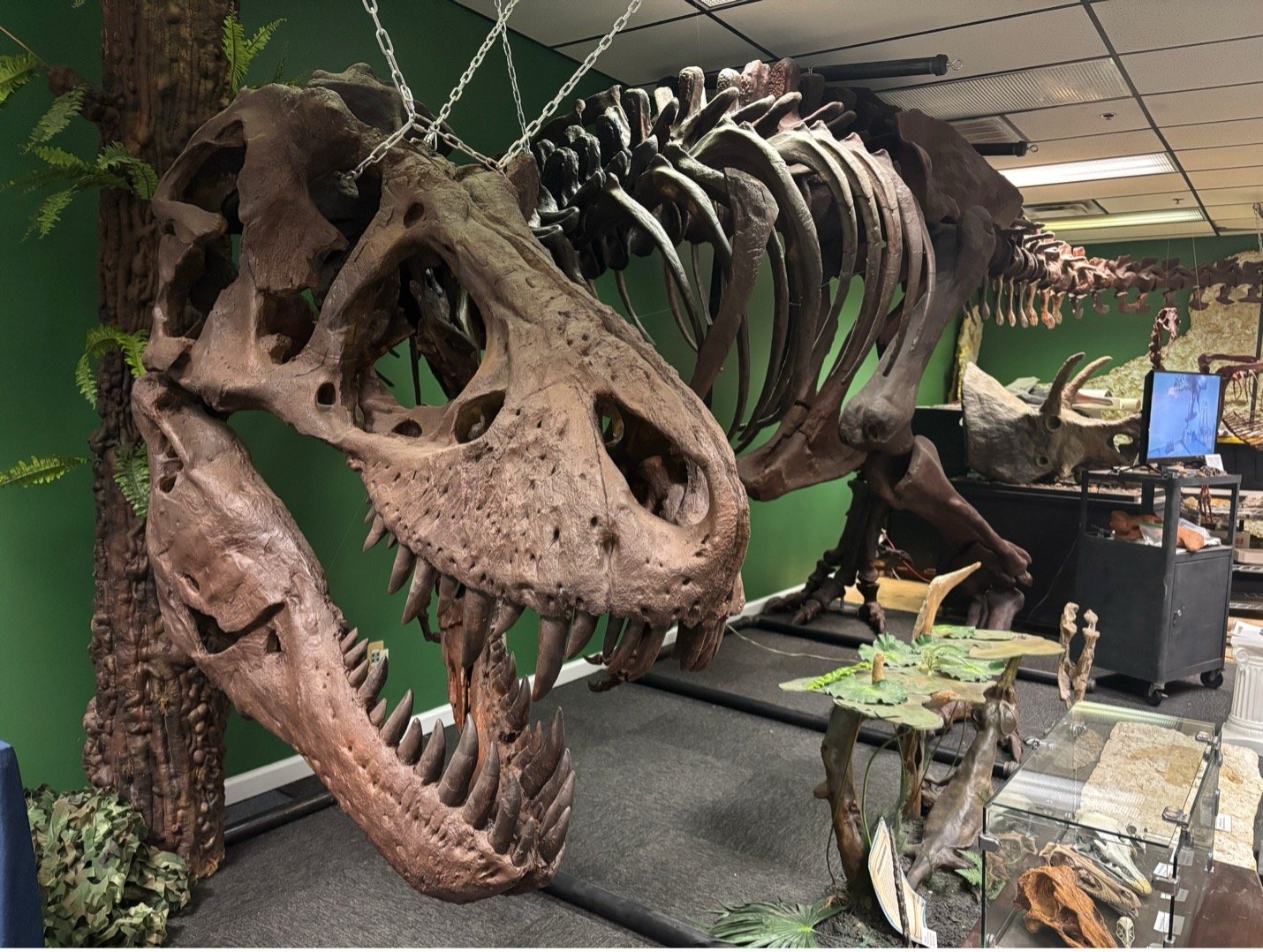
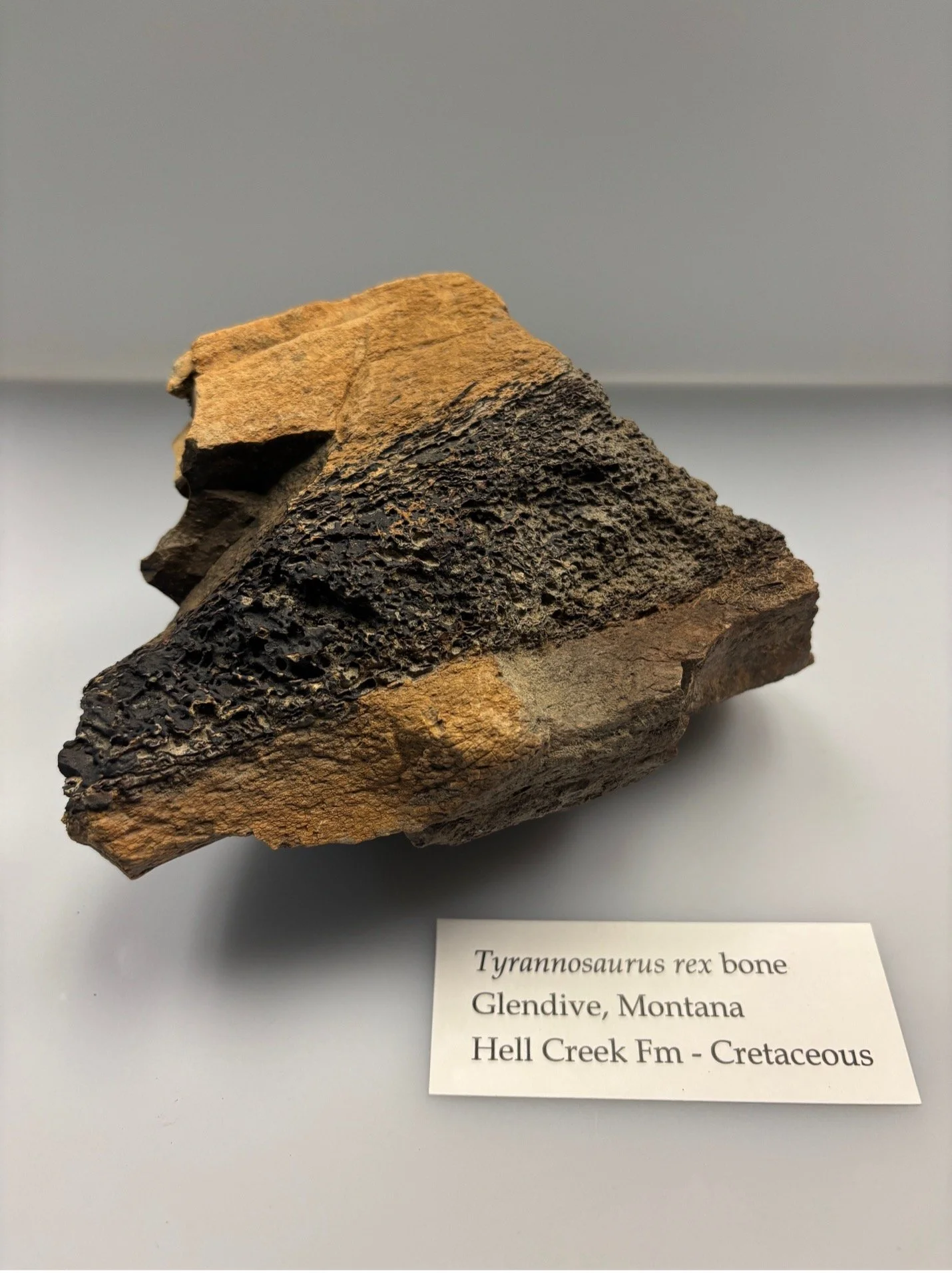
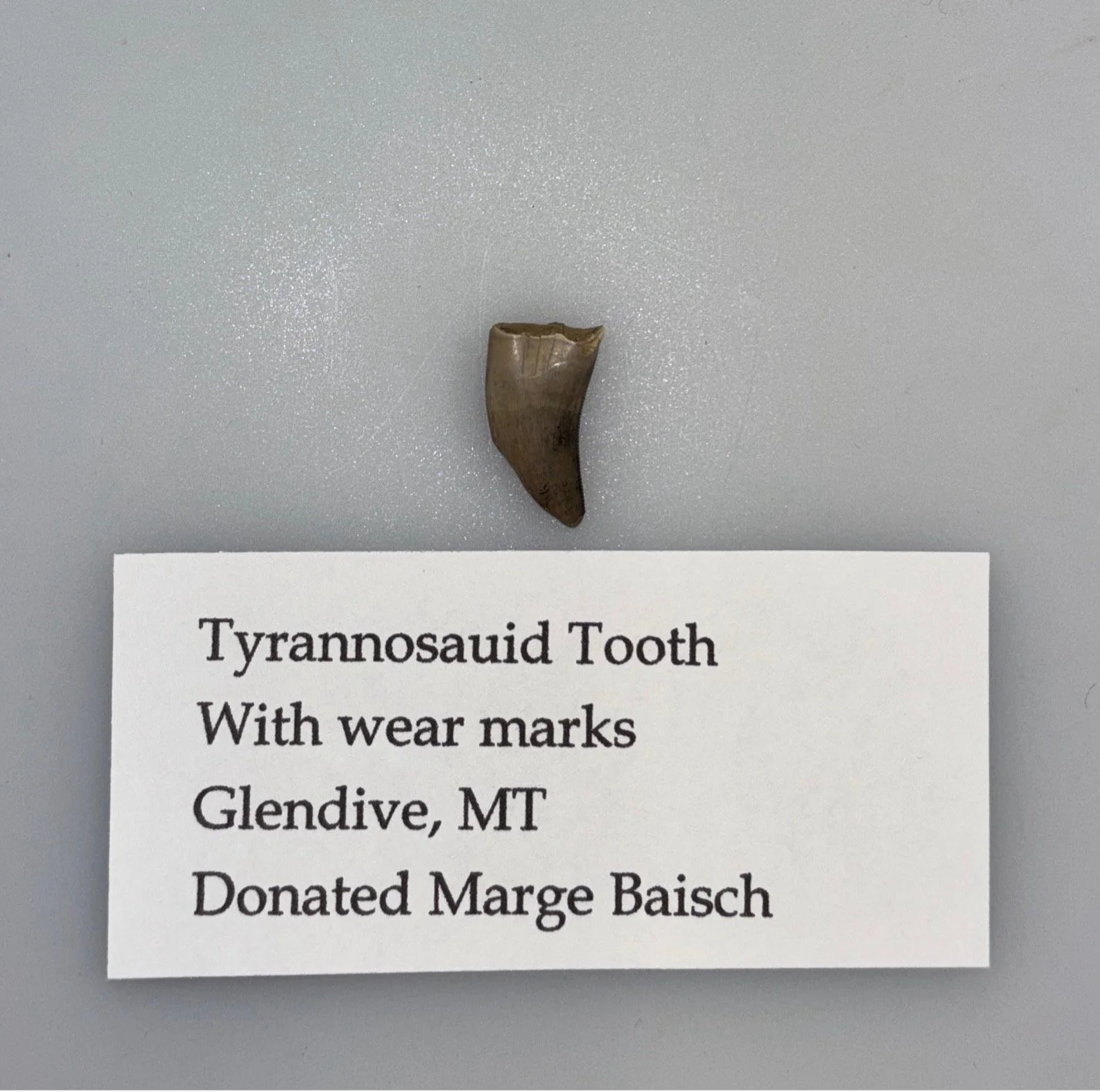
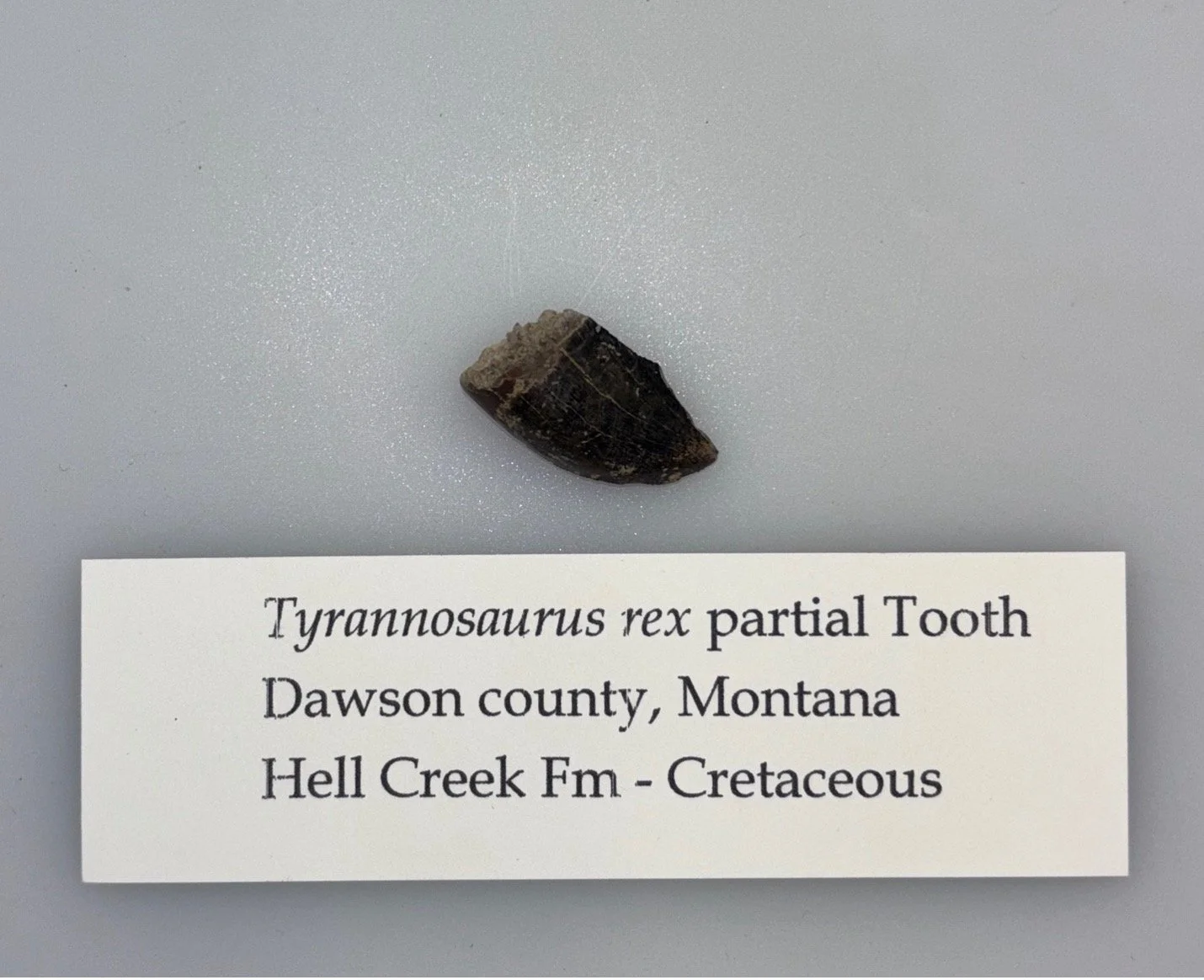
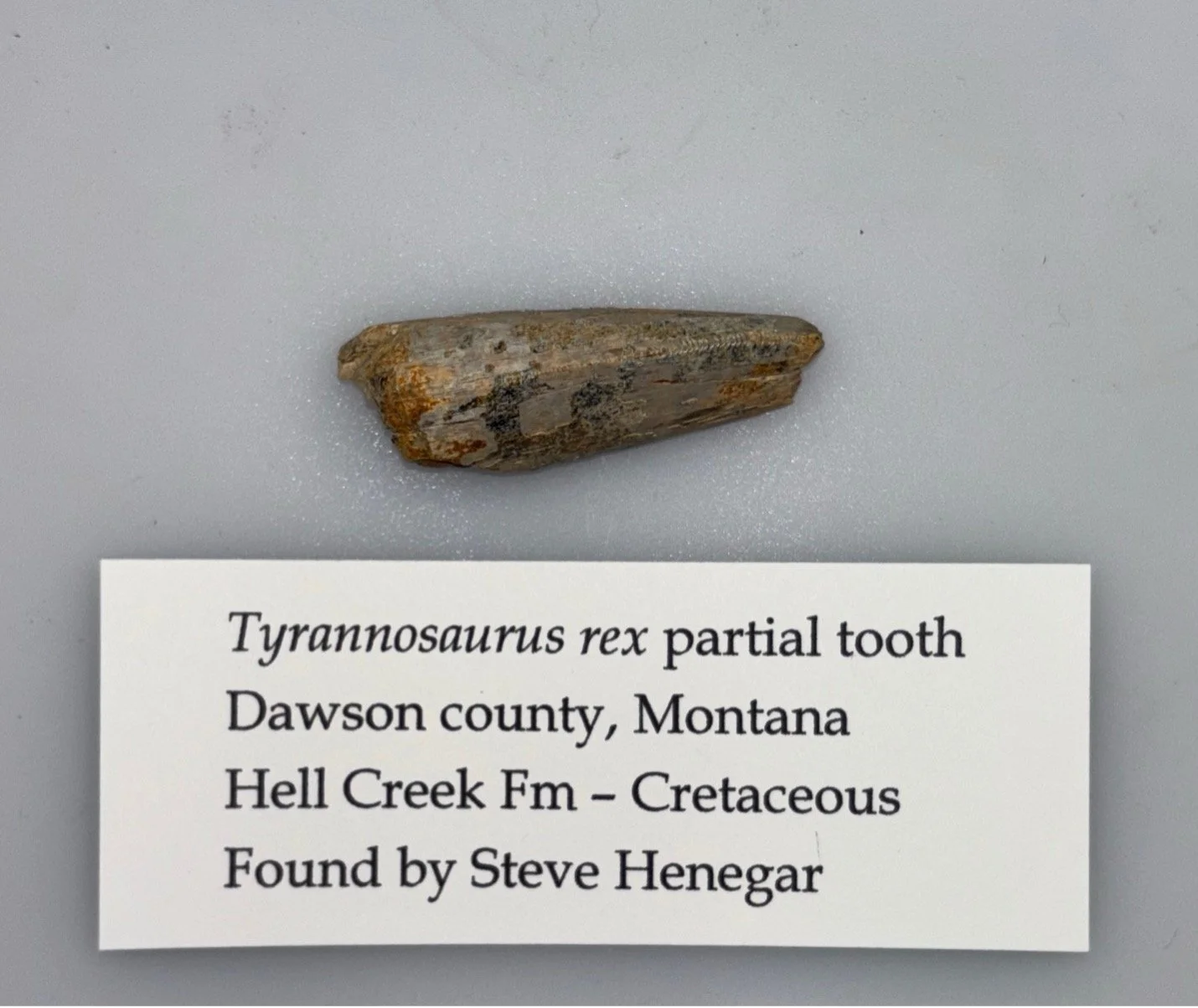
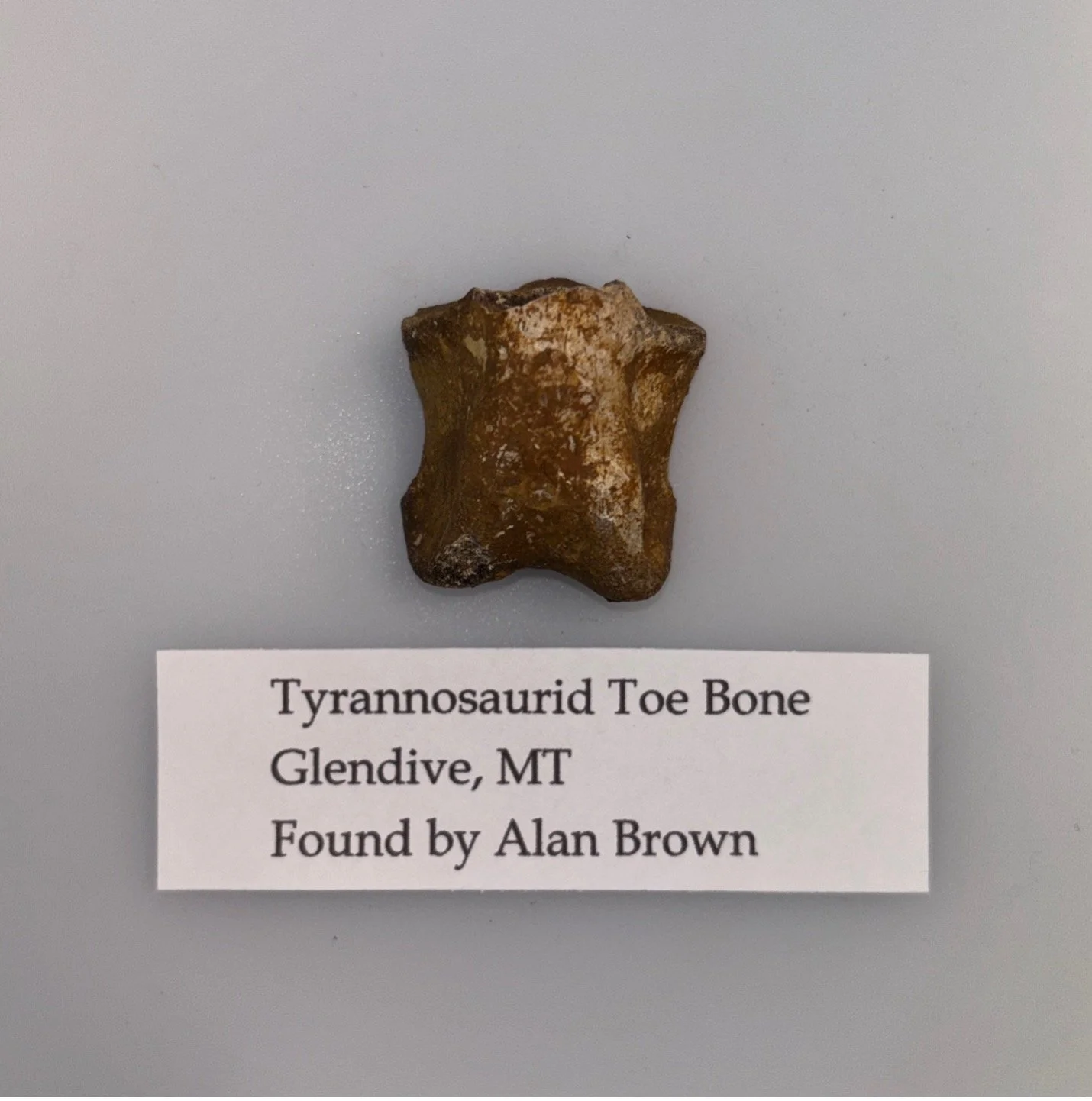
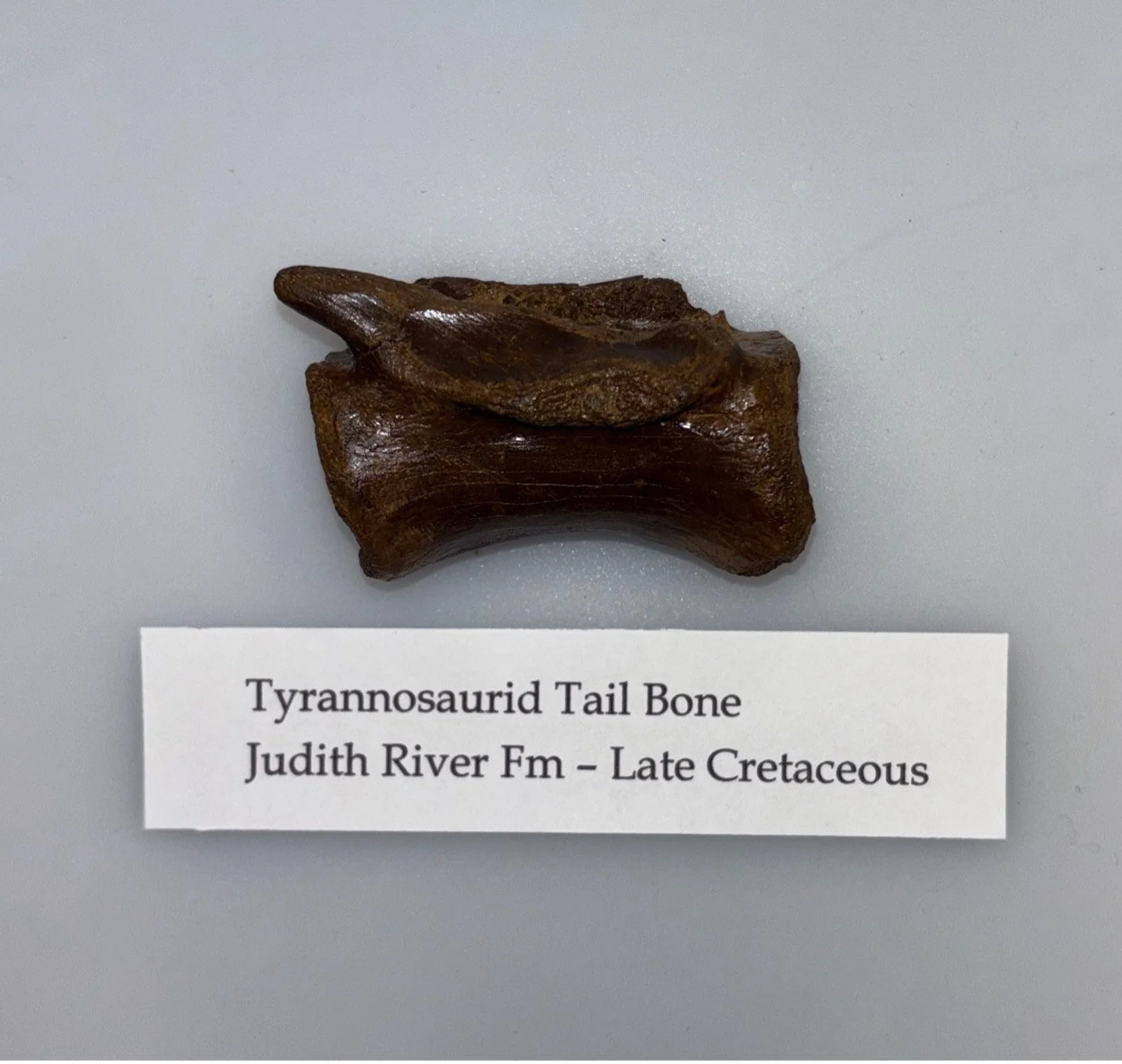
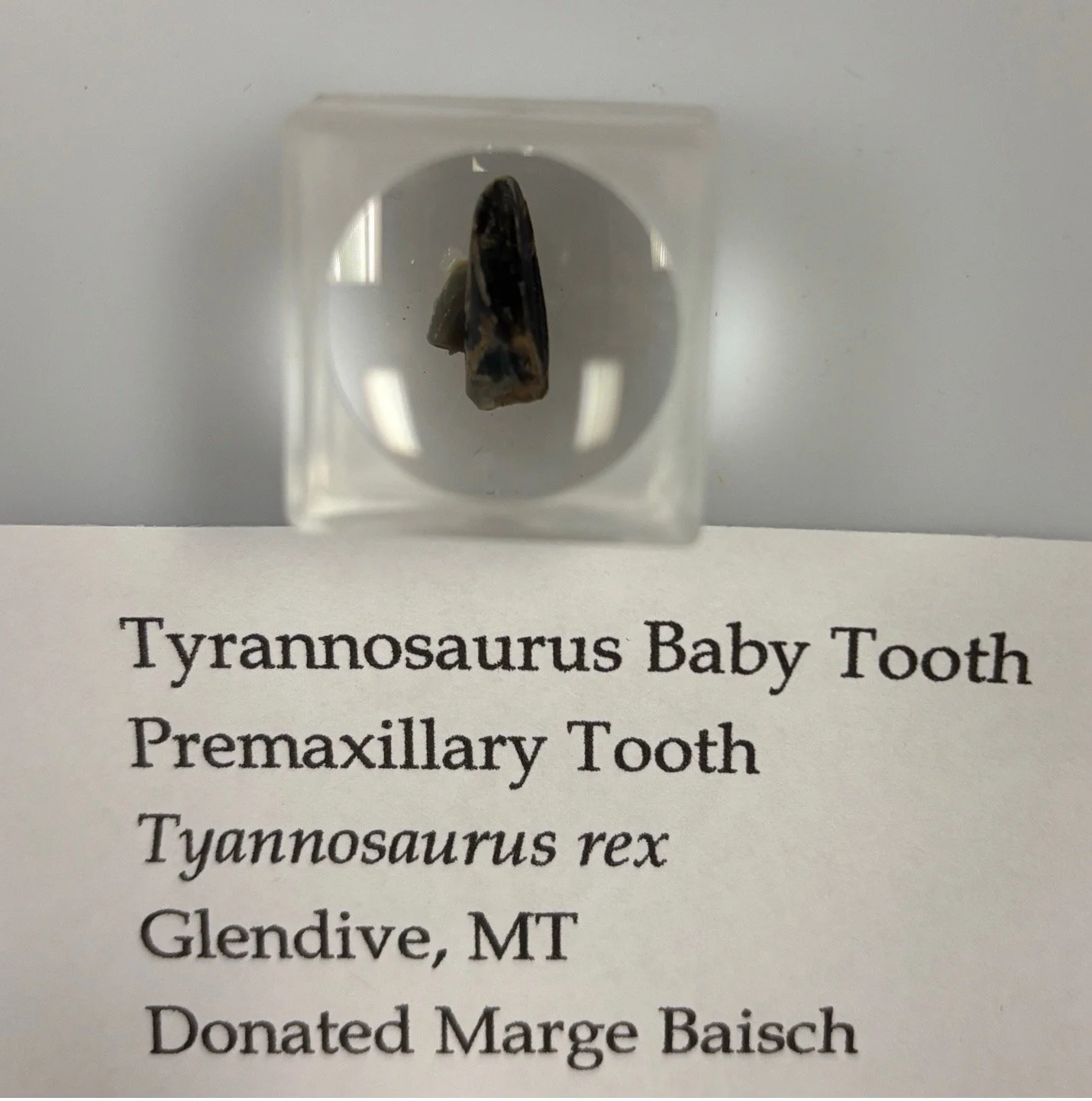
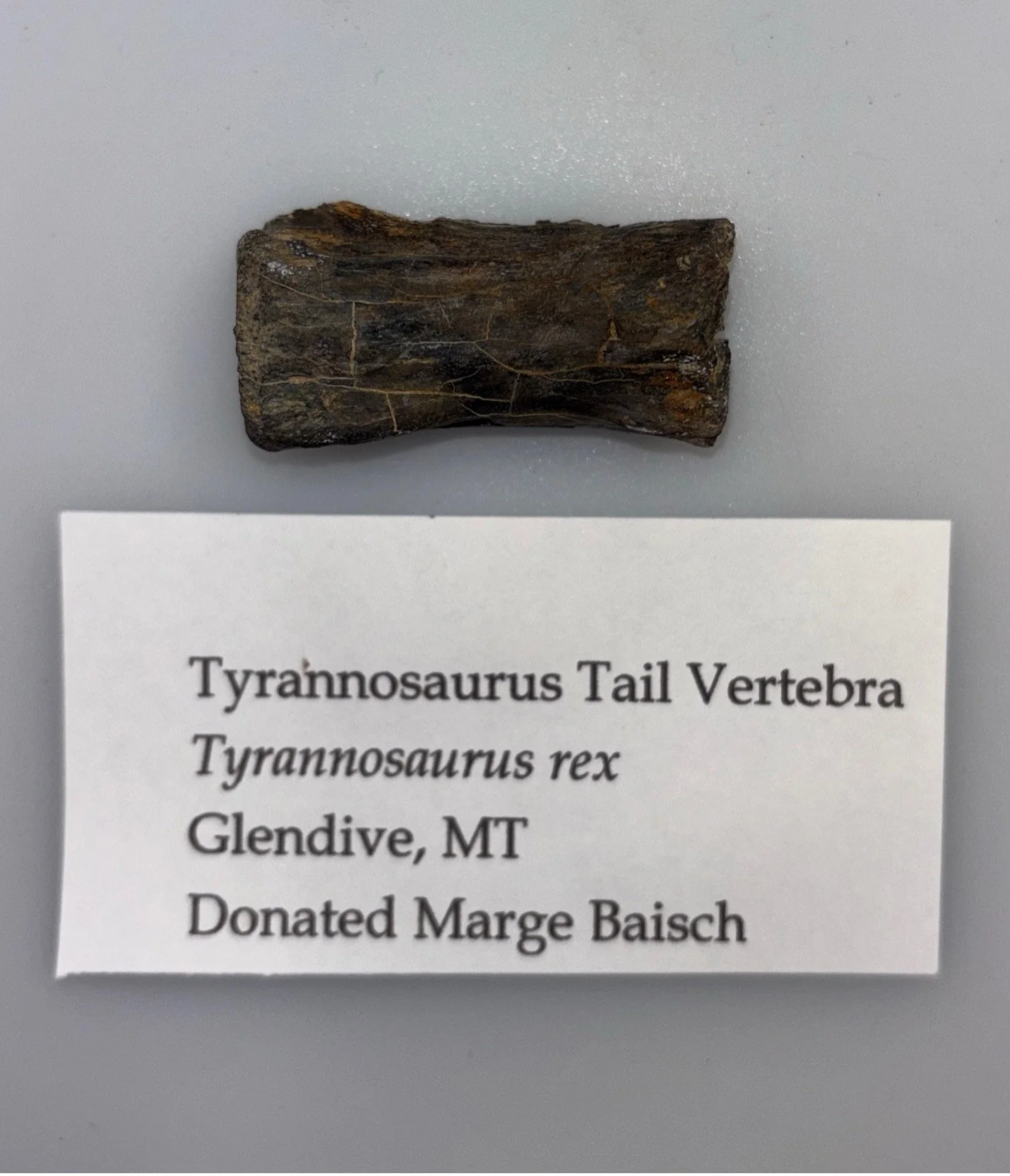
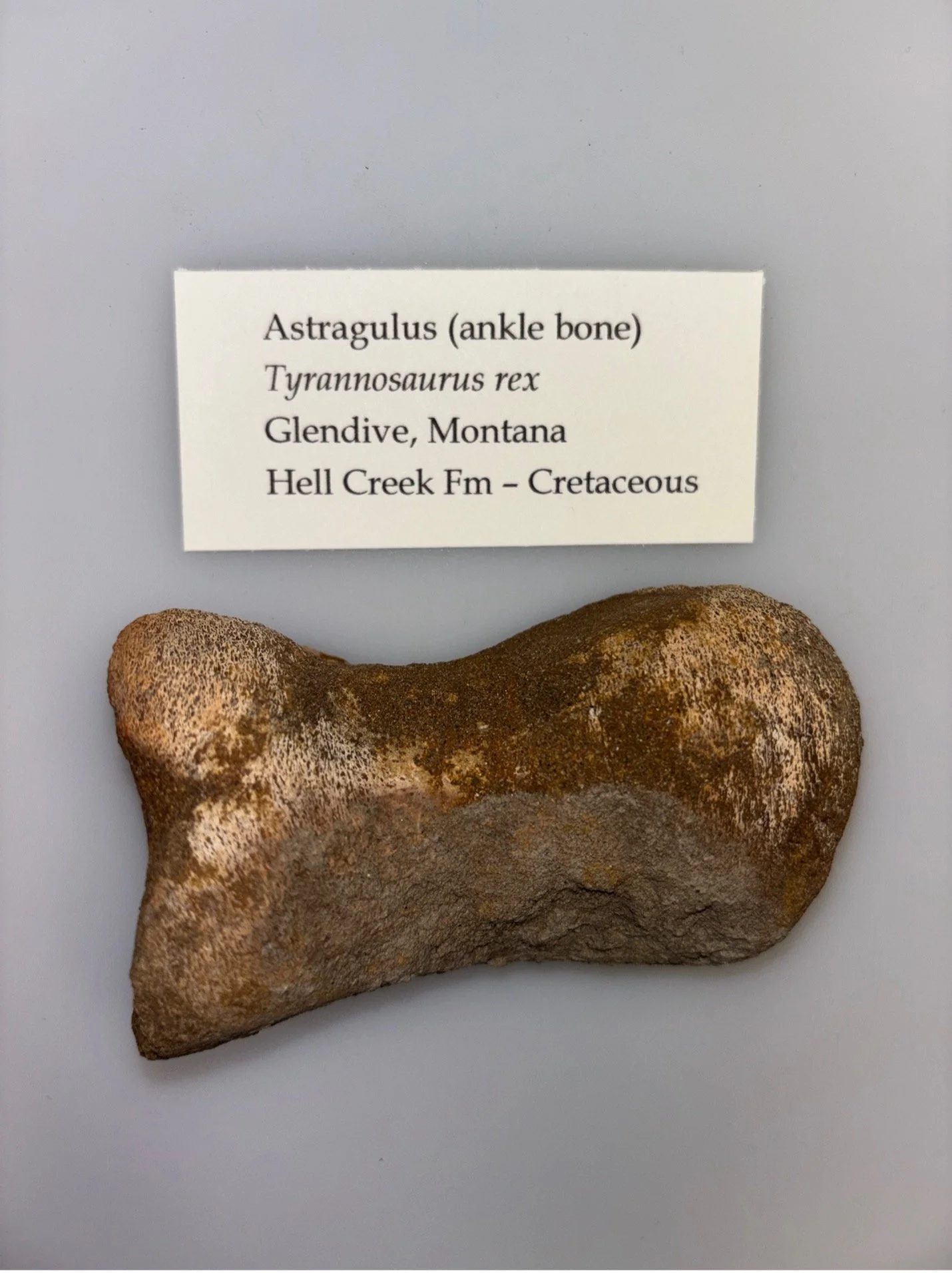
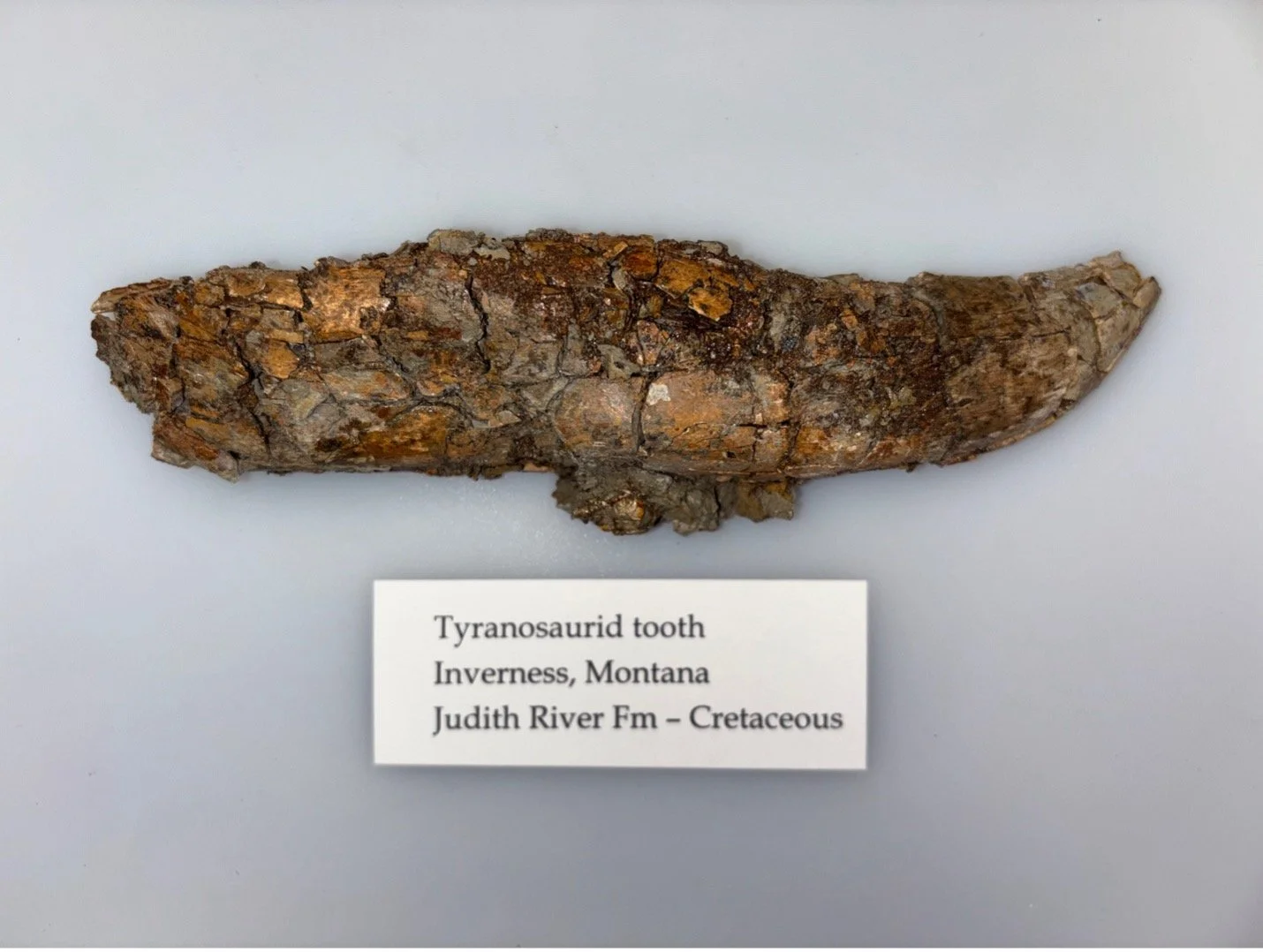
One of the most famous and beloved dinosaurs, the Tyrannosaurus Rex, was the king of Hell Creek back during the late Cretaceous. Its name translates to “king of the tyrant lizards”, which it earned by being the biggest theropod (12 feet tall and 40 feet long) and possessing the greatest bite force of any land animal ever (8,000 – 12,800 lbs. per square inch). The T. Rex is often noted for its large head full of long sharp teeth which was ideal for taking big bites out of its big prey like the Triceratops or Edmontosaurus. Its small arms are also cause for conversation; some scientists think their small (approx. 3 feet) arms were a trade off for its large head, which was much more useful than long arms would have been considering its very large prey items. It is also possible that T. Rexes simply ‘grew out’ of their arms, as younger T. Rex specimens have for more proportional limbs.
At Earth Experience, you can see a full-scale T. Rex model named Frank and get a feel for just how big these tyrants were.
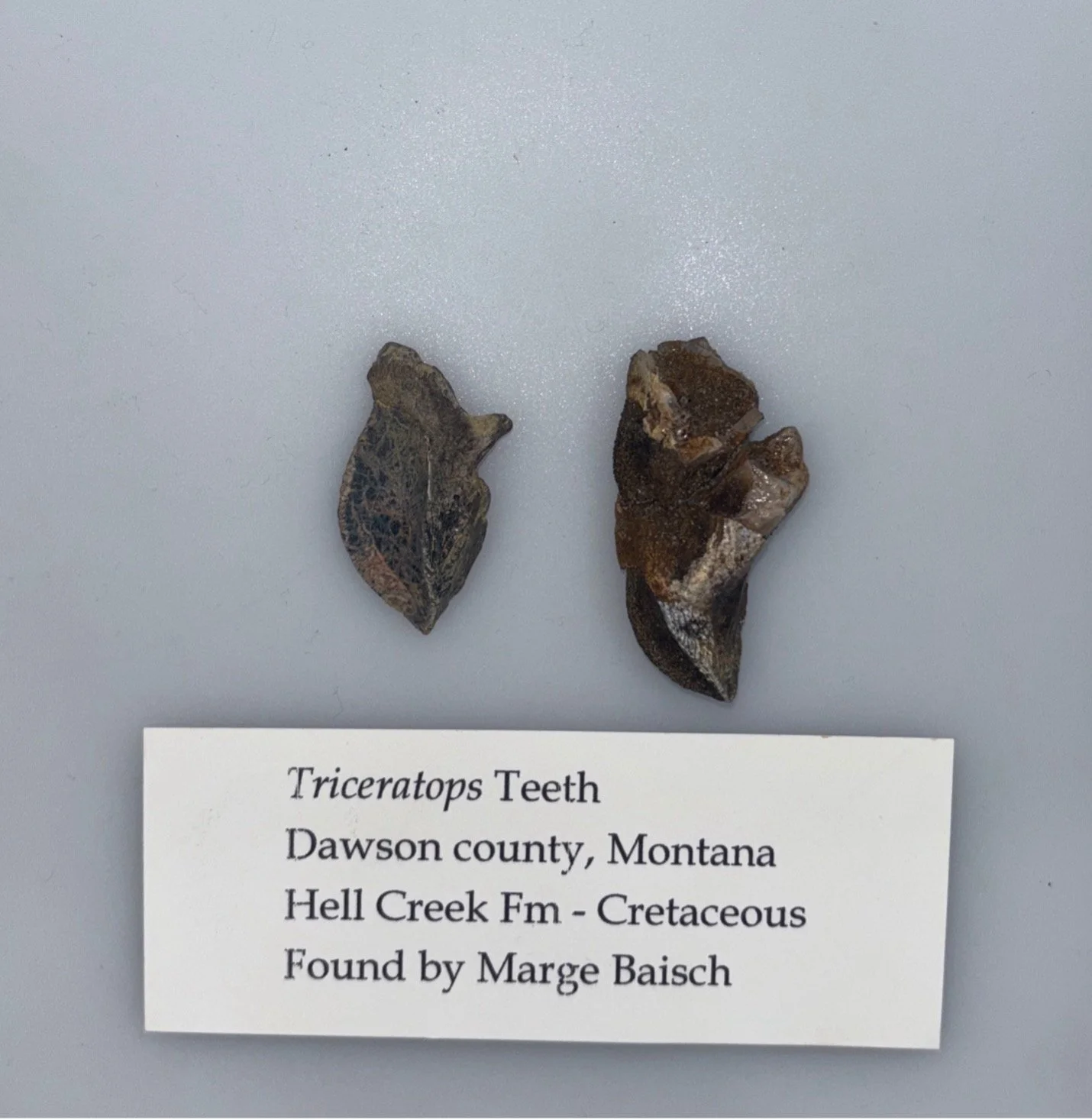
The Triceratops was a tank-sized herbivore that lived up to the end of the age of the dinosaurs. The Triceratops had several defining features like its three horns used to defend against T. Rex attacks and a beak it used to shear palm fronds to eat. The purpose of its large fan-like structure on the back of its head called the ‘frill’ is still a matter of debate. Some think the frill was a defensive measure to protect its neck from the devastating bite of a T.Rex, others think it likely displayed distinctive colors/patterns to attract mates or be recognizable to other Triceratops. There are even theories that it was used as thermoregulation, at the frill was full of veins that could have allowed the animal’s blood to cool.
At Earth Experience, we have been lucky enough to be able to work on a Triceratops skull from the Hell Creek Formation in Montana. Our specimen is likely a subadult, meaning that even with its size, full grown Triceratops would still be slightly bigger. Due to erosion, our skull is missing its horns, which is unfortunately common with Triceratops fossils. It does still have a lot of its frill still protected in its plaster jacket until more of the base skull is prepared and stabilized. Come see this work in progress in person!
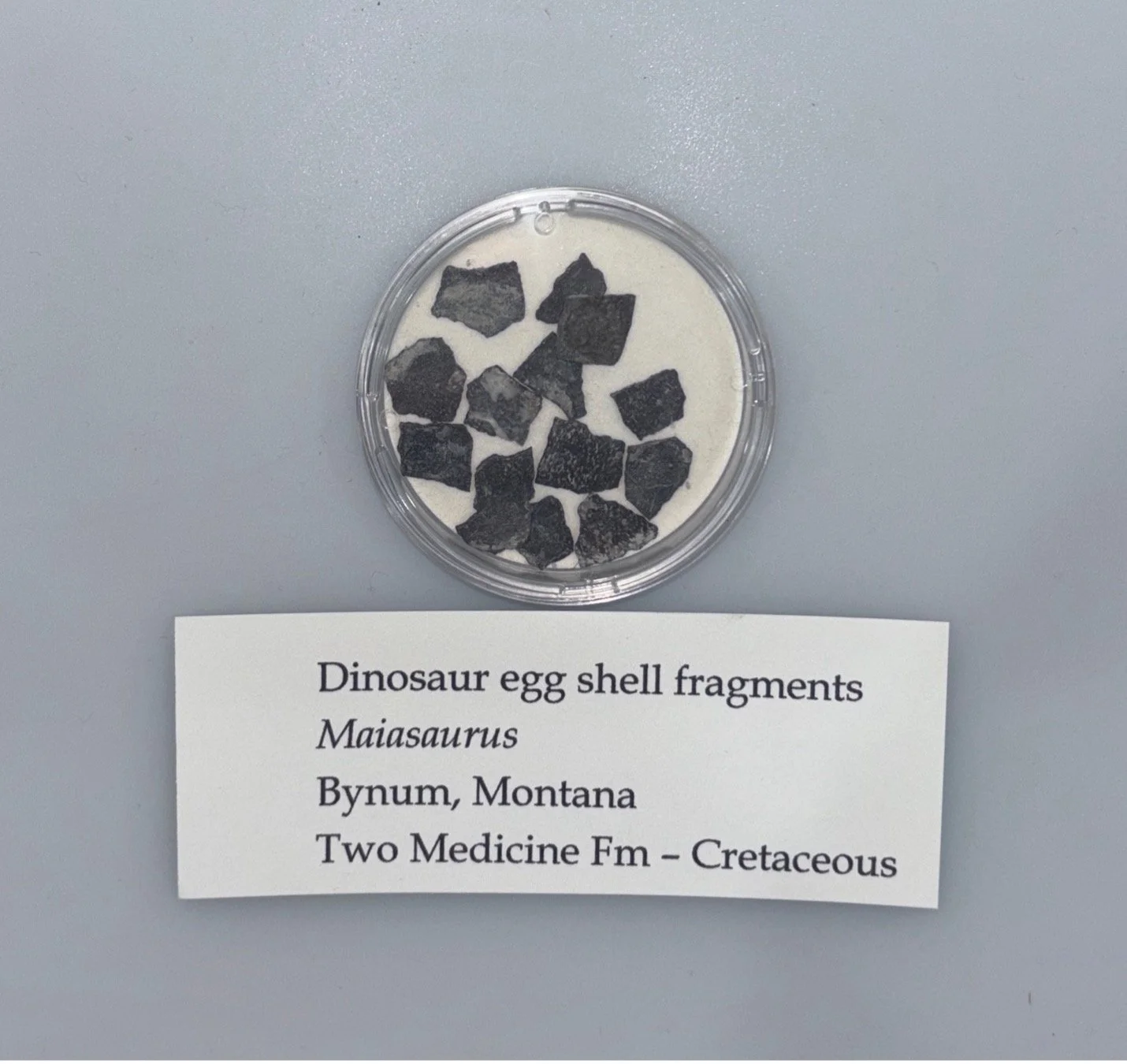
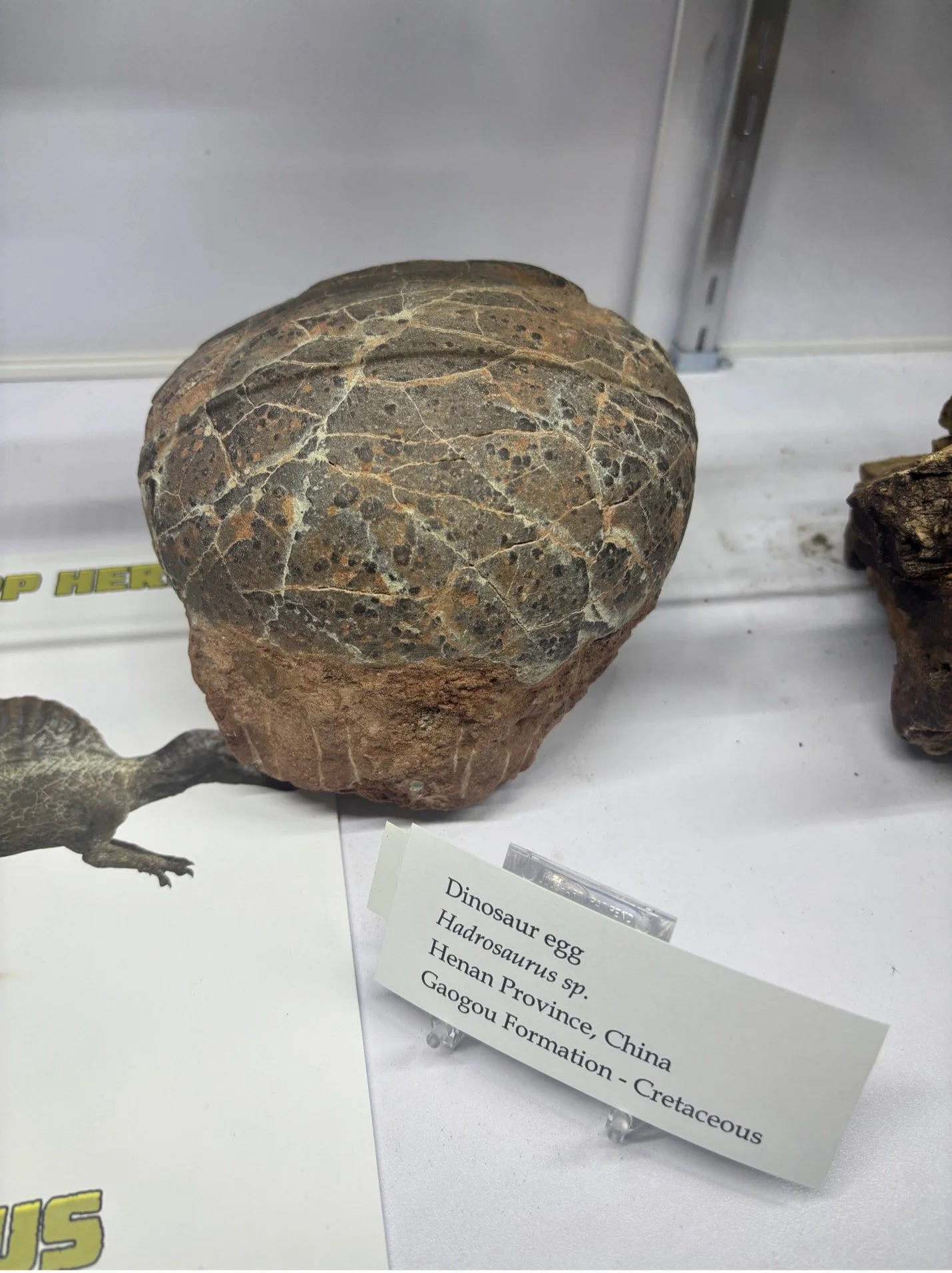
Amongst the fossil bones and teeth of dinosaurs, paleontologists occasionally find fossilized dinosaur egg material. As you might expect, dinosaur eggs are rarely found due to their delicate nature, and it is generally hard to determine what type of dinosaur may have once been inside. However, finding the eggs, or better yet, the nests tell us a lot about dinosaur behavior. Some fossils of Oviraptor dinosaurs have been found on top of their eggs, indicating that they cared for their eggs like modern birds. Other larger species buried their eggs rather than brood as their weight would have done more harm than good.
With modern technology, our understanding of dinosaur eggs has improved further. It is possible to perform a CT scan on dinosaur eggs, which makes it possible for scientists to learn more about dinosaur embryos and their development.
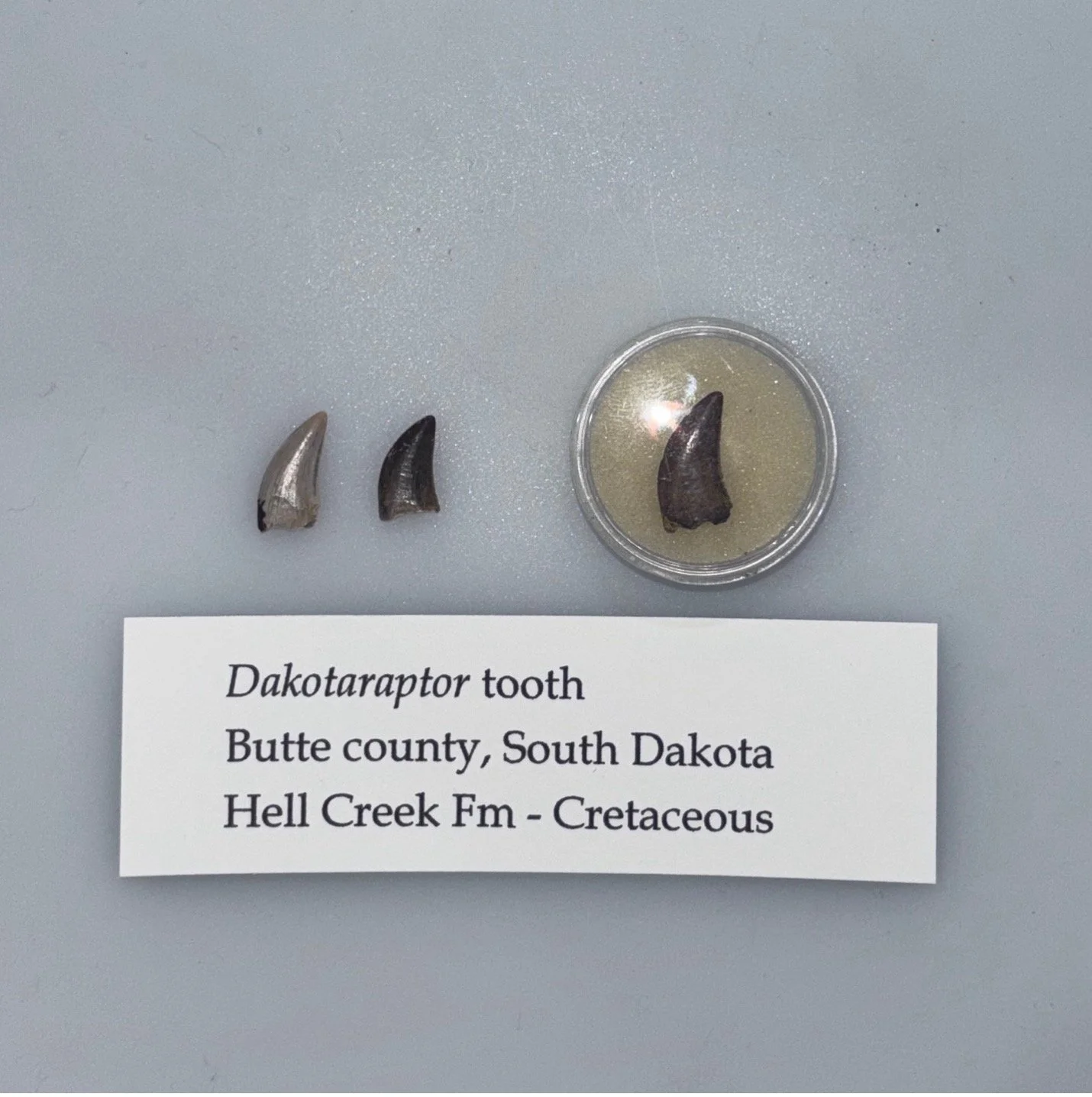
Dakotaraptor was a mid-sized carnivorous theropod dinosaur discovered in the South Dakota region of the Hell Creek Formation. At an estimated 16 feet in length from nose to long feathered tail, the Dakotaraptor bridges the gap between the gigantic tyrannosaurids like the T. Rex and smaller theropods like the Pectinodon. The Dakotaraptor is the second largest raptor species discovered, only dwarfed by the Utahraptor.
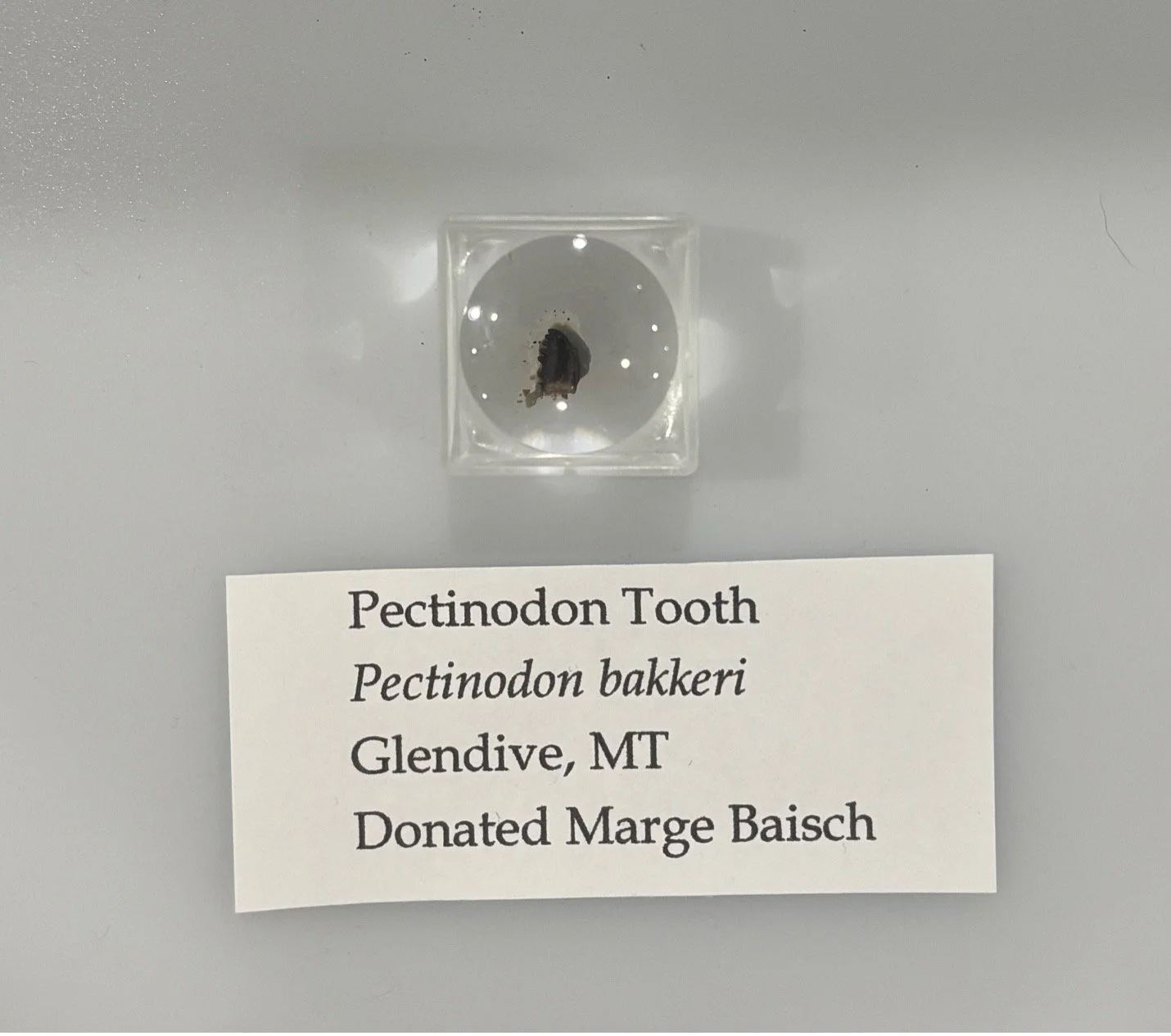
Pectinodon bakkeri was a small bird-like dinosaur in the theropod family. Little is known for certain about the Pectinodon due to scant fossil evidence aside from the animal’s comb-like teeth. By comparing the teeth to other small theropods, it is assumed that Pectinodons was a small, agile, feathered predator. Its few fossils have largely come from the Lance Formation in Wyoming.
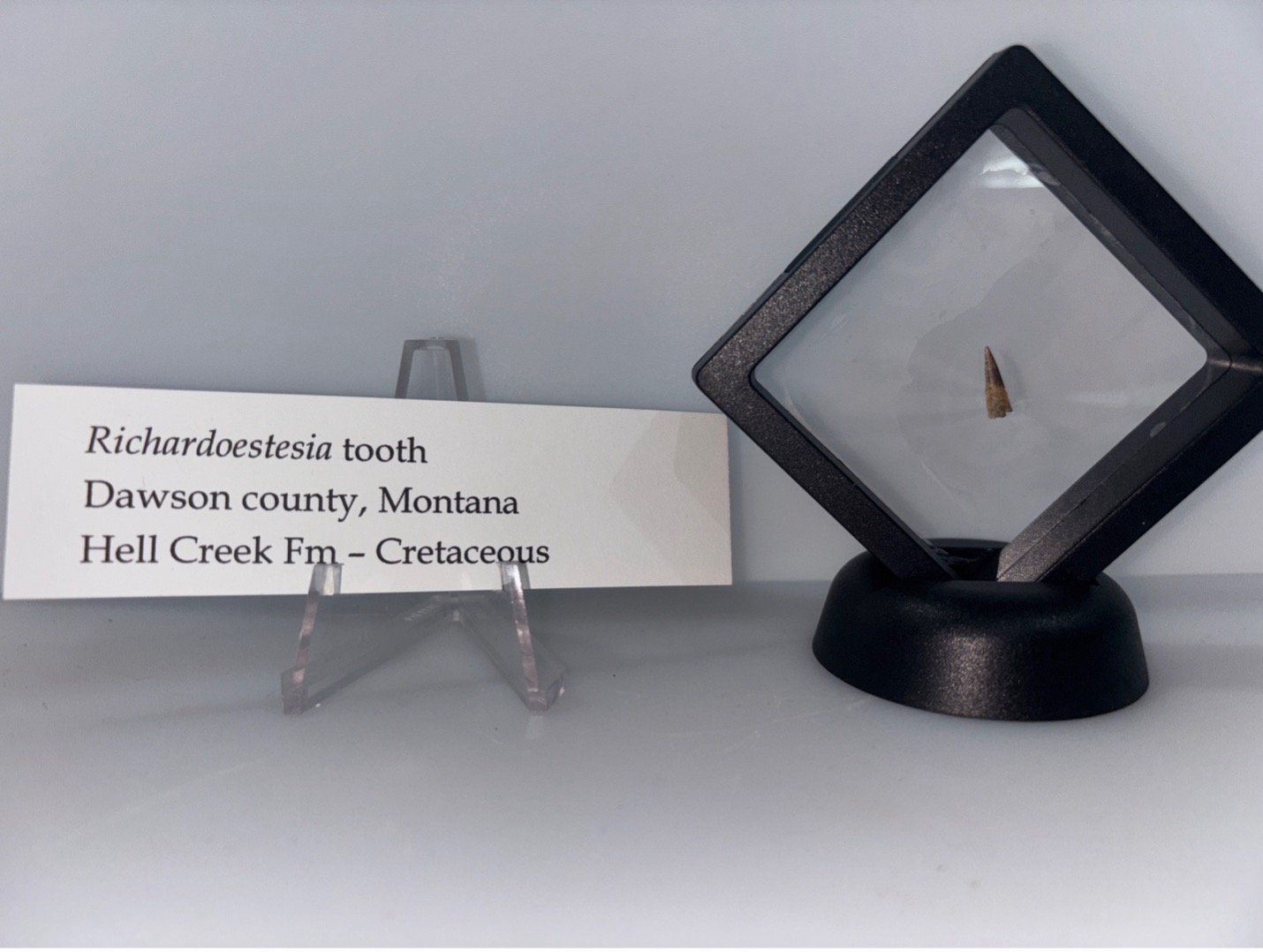
Little is known about the Richardoestesia because there has not been a lot of fossil evidence for this morphogenus. What is known about this group comes from fossil teeth like the one pictured here, which have been found in Southern Canada, Northwest United States, and even in some locations in Asia and Europe. From the teeth found, scientists believe this group of dinosaurs were therapods and carnivorous. More fossil evidence needs to be found before more conclusions can be drawn about this mysterious group.
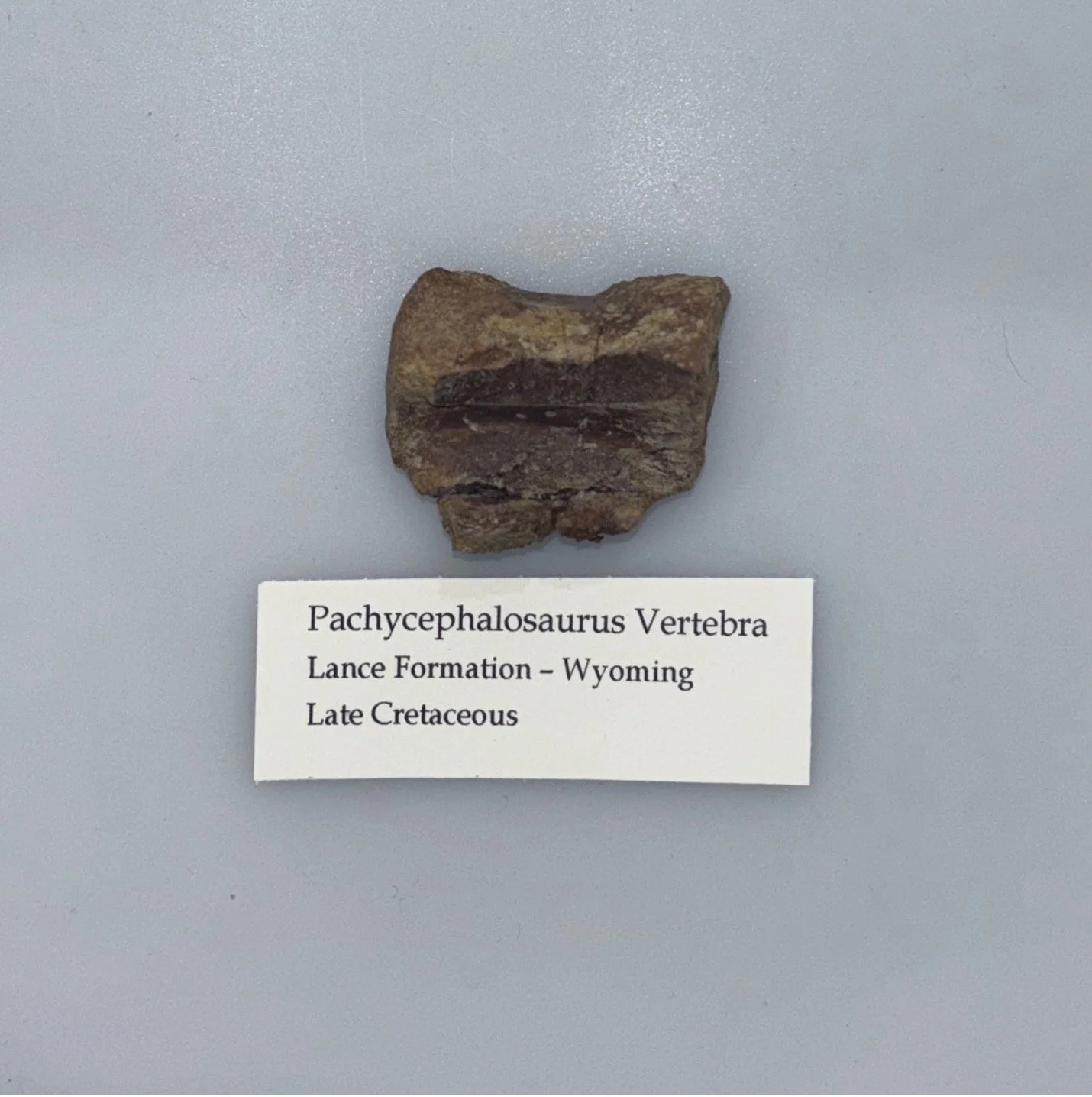
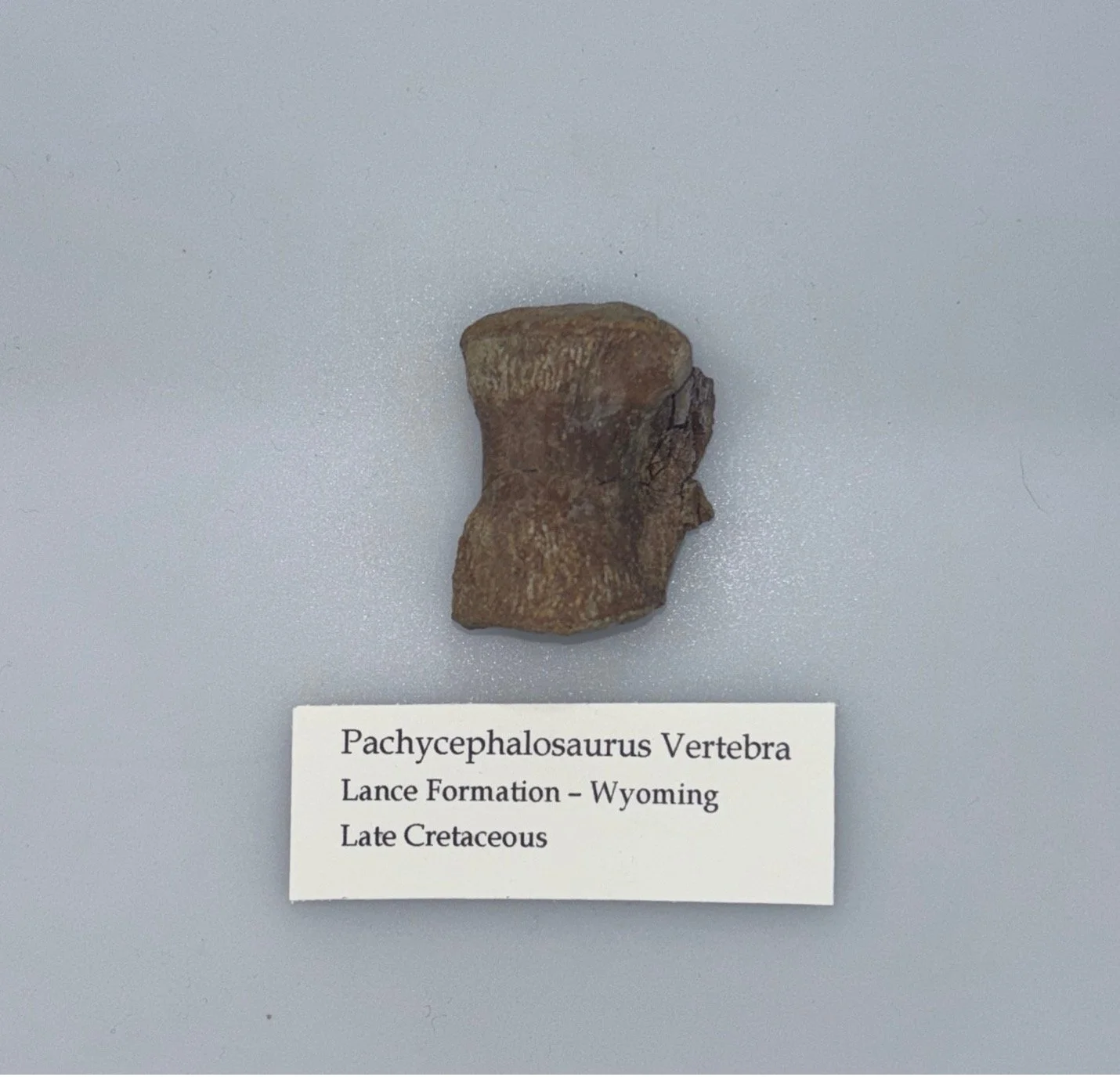
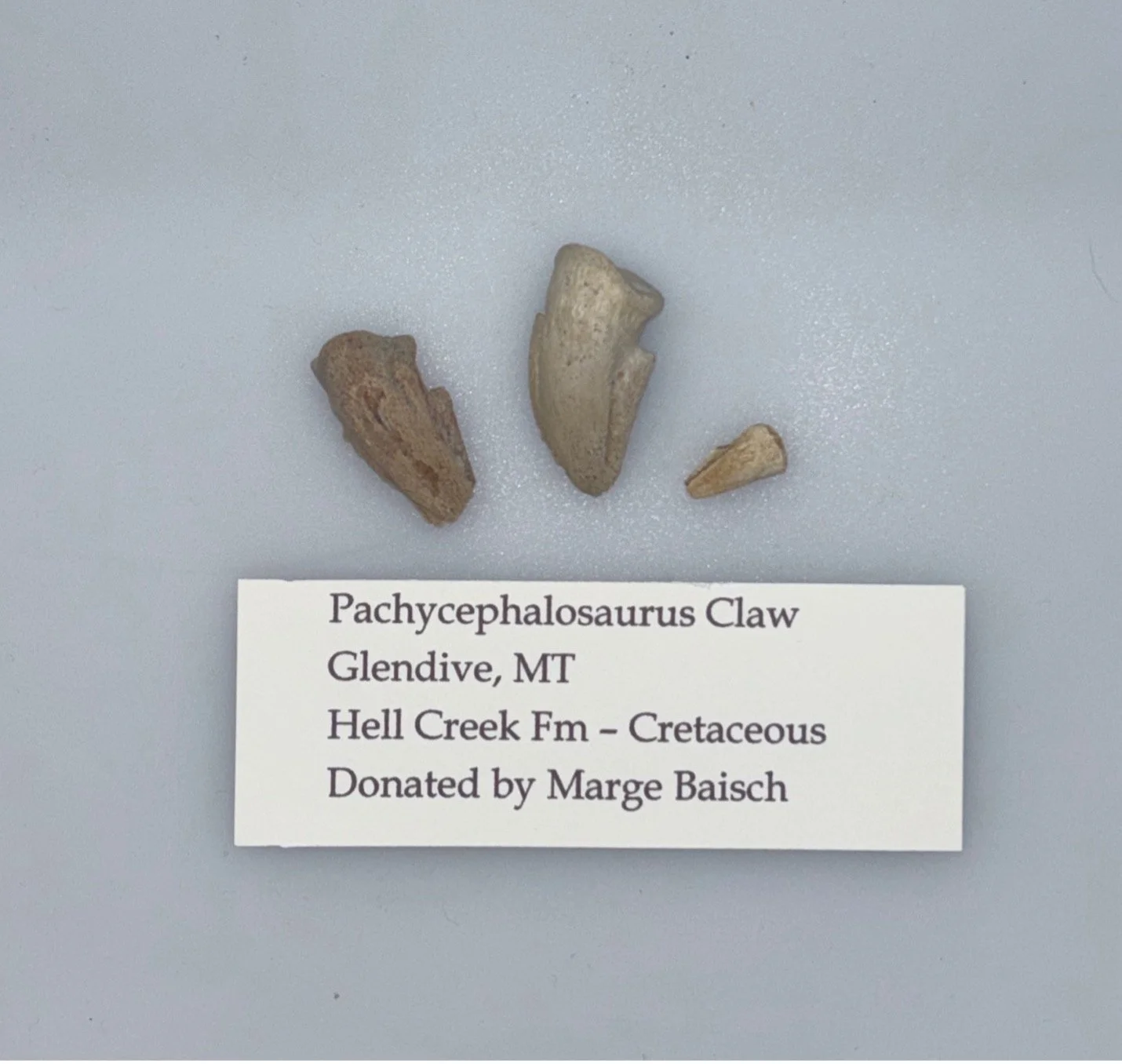
Pachycephalosaurus was a bipedal herbivorous dinosaur which is best known for its odd, dome-shaped plate on top of its head. Scientists have not yet come to an agreement on what their hard heads were used for; some think they may have used them to ram others of their species, while others think it was for display to impress potential mates. Others yet think their noggins were used for a combination of the two.
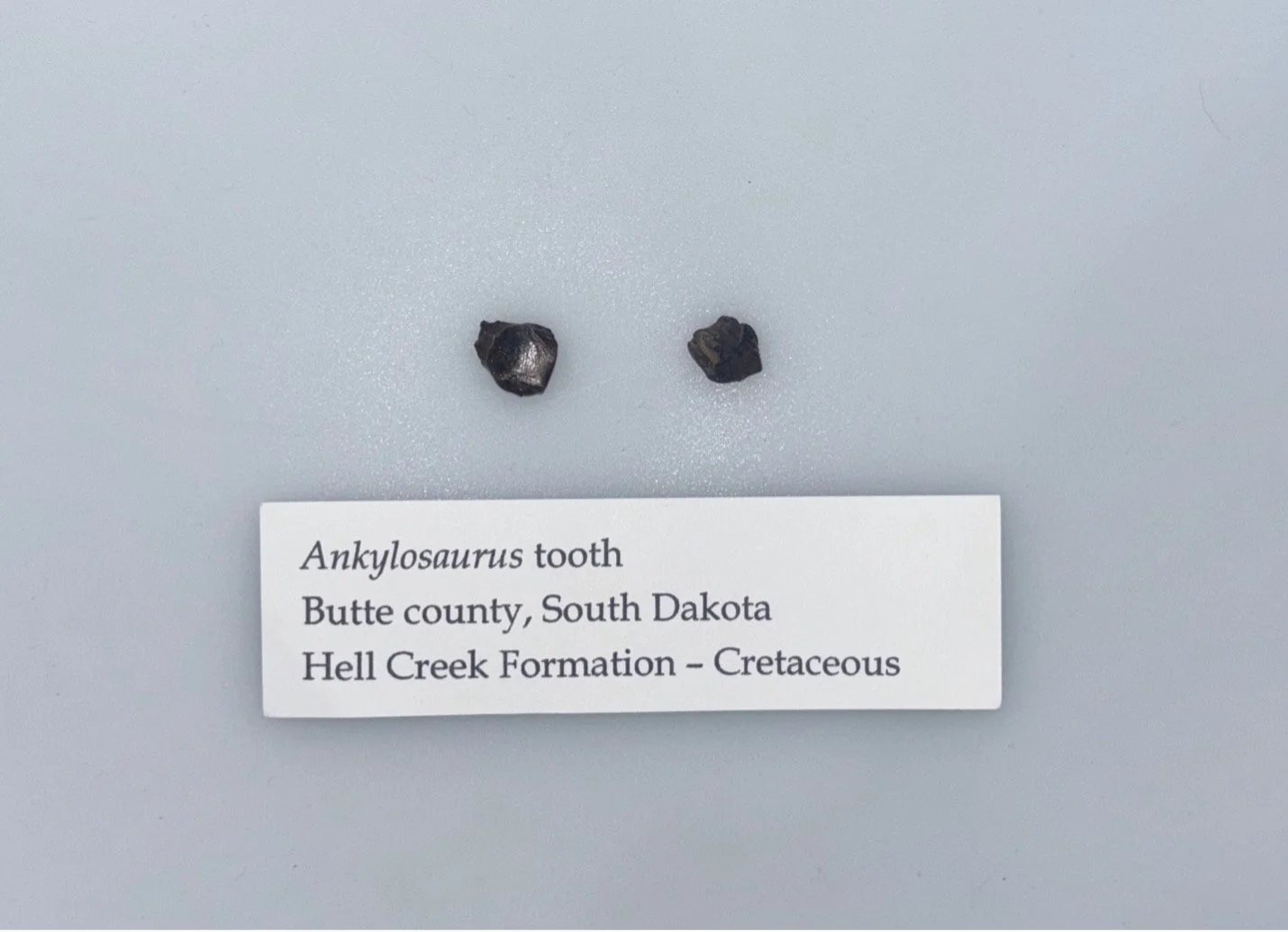
The Ankylosaurus was a large, armored dinosaur that lived in North American during the Cretaceous period. The Ankylosaurus was like a living tank, covered in spikey osteoderms (bony-plates) which protected it from large predators like the T. Rex, and had a large club tail which they would use as a weapon against predators or fellow Ankylosaurs. Ankylosaurs were herbivores and ate low growing vegetation like ferns, horsetails, and fallen fruit.
One of the best-preserved dinosaur specimens ever found was a Borealopelta, another genus of Ankylosaur, which still has the osteoderms, some skin, and even the stomach contents of its last meal preserved. You can learn more about this specimen and even see it in person at the Royal Tyrell Museum in Alberta, Canada.
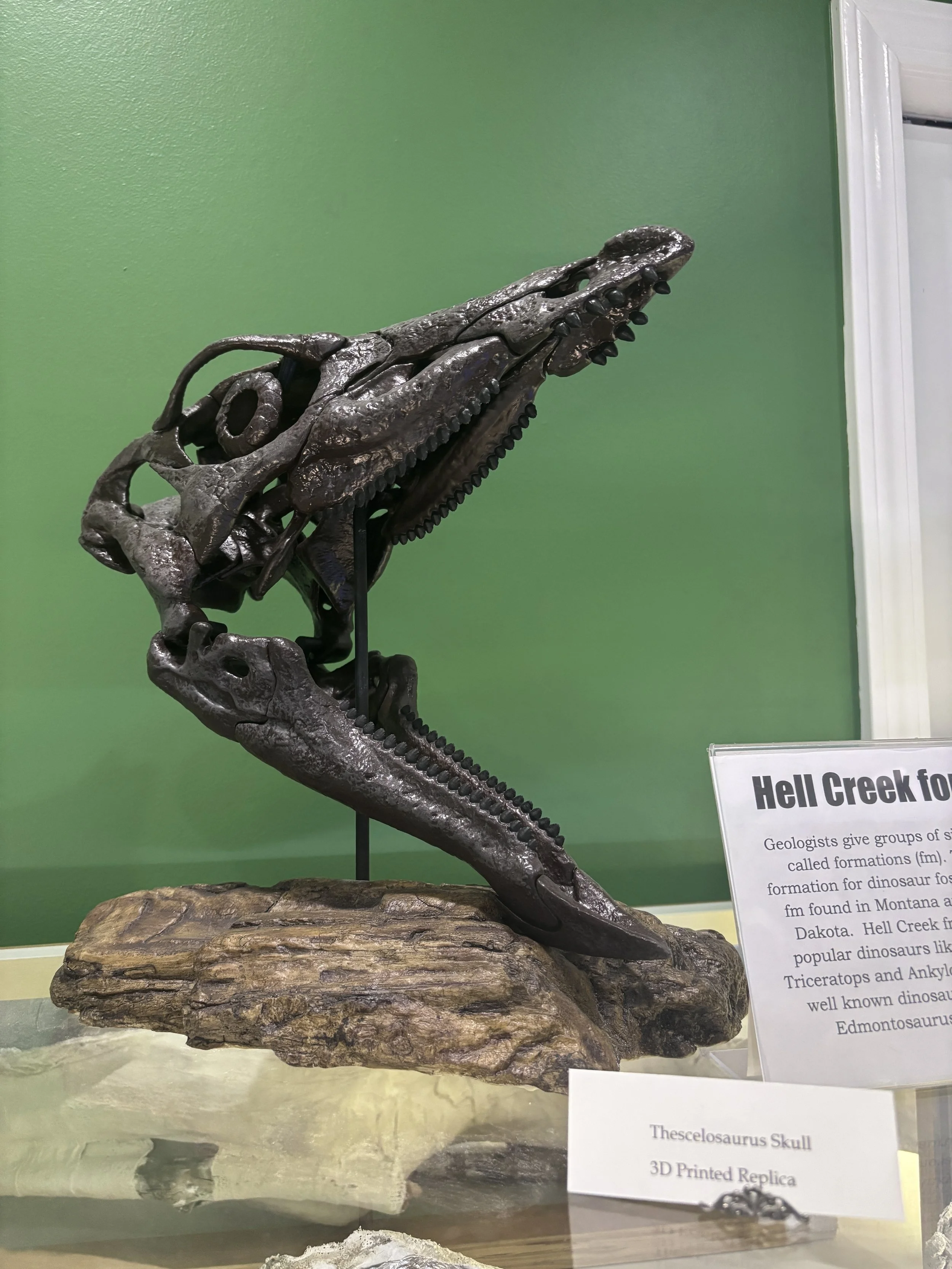
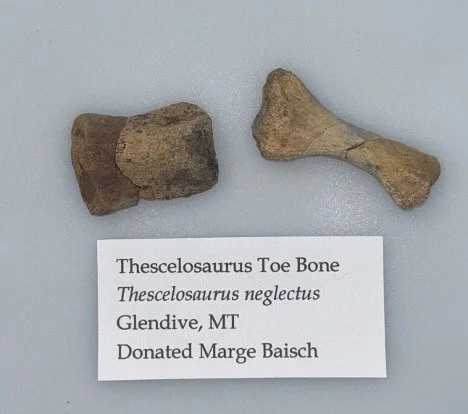
Thescelosaurus was a genus of ornithischian (bird-hipped) dinosaurs that made its home in North America. Thescelosaurs were beaked herbivores that grew to be 10-13 feet long. By studying its cranial structure, scientists have come to believe that the Thescelosaurus relied on a keen sense of smell to find buried roots and tubers to eat.
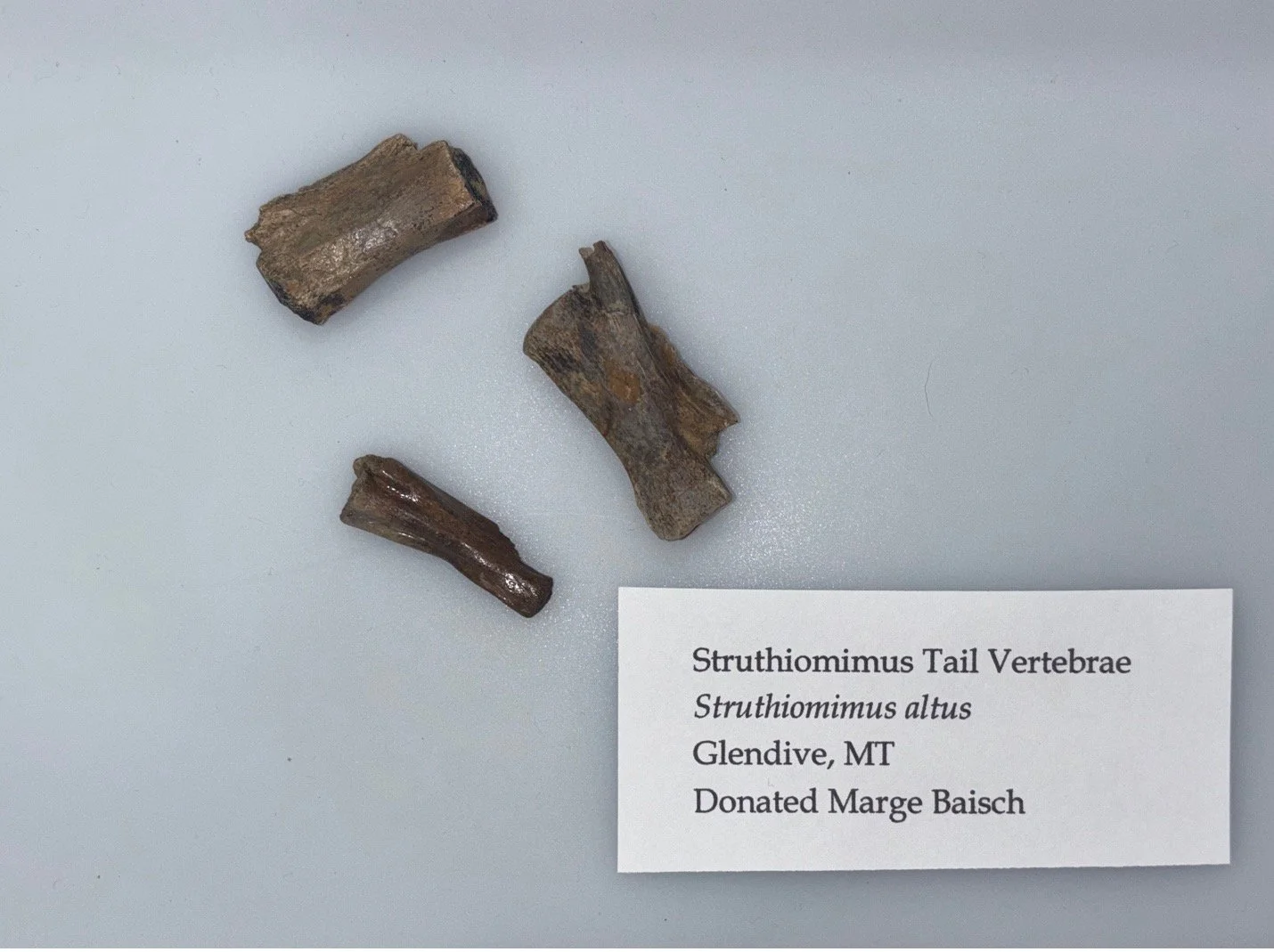
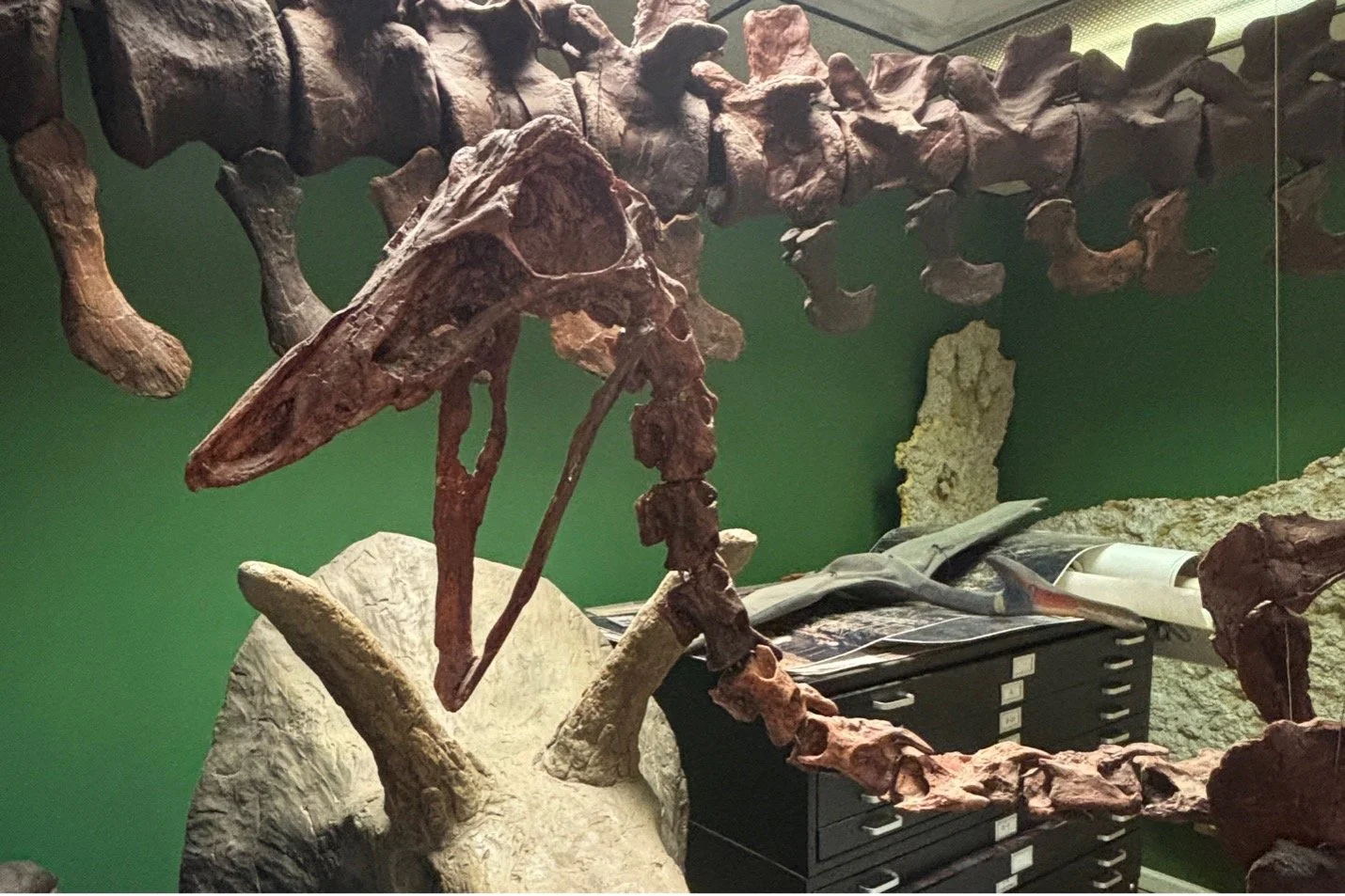
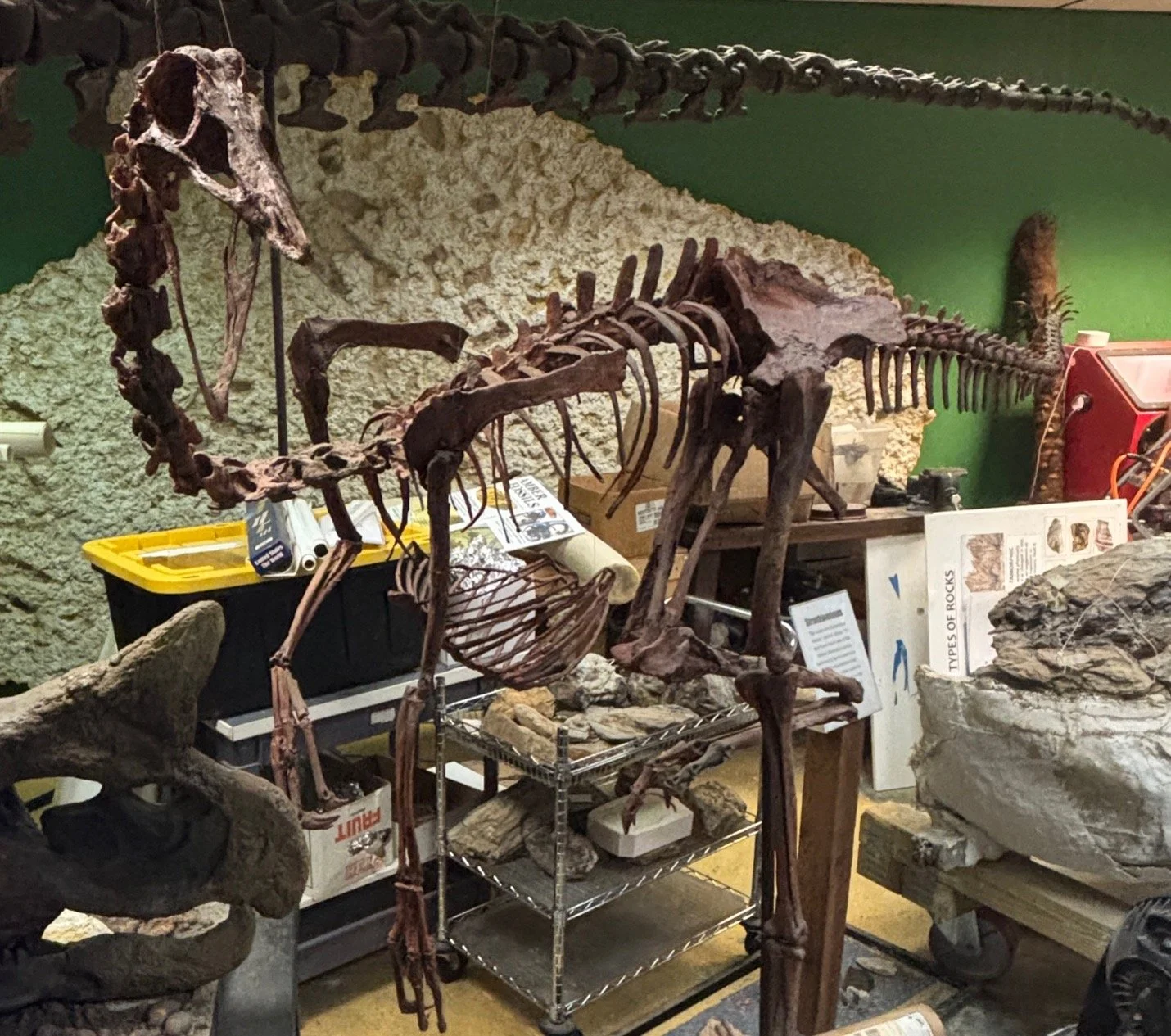
Struthiomimus was a mid-sized theropod dinosaur (about 13 feet from beak to tail). The name Struthiomimus literally translates to “ostrich mimic”, which is an apt name, as this dinosaur heavily resembles modern flightless birds. Besides its ostrich-like appearance, the Struthiomimus is perhaps best known for its estimated speed. Scientists think these animals could run 30-50 miles per hour, similar to modern Grizzly Bears, Lions, and conveniently, ostriches.
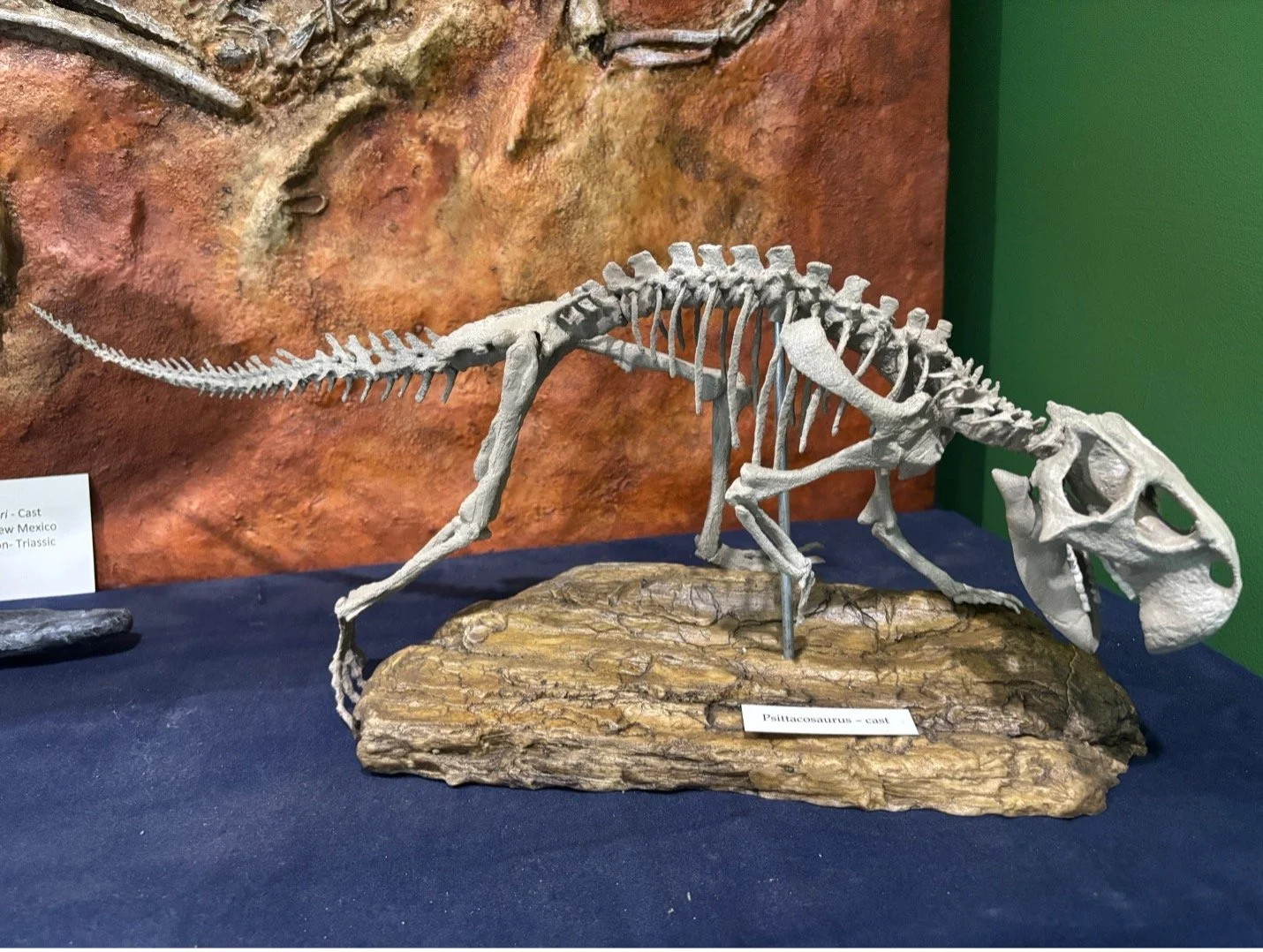
Psittacosaurus was a genus of small Ceratopsian dinosaurs from the Early Cretaceous. On average, members of the Psittacosaurus genus grew to about 6.5 feet long and walked on its hind legs similar to a Therapod dinosaur. The Psittacosaurus has been well preserved and studied, leading paleontologists to make conclusions about them and their behaviors. For example, fossils of congregated young Psittacosaurus hatchlings show that baby Psittacosaurs may have stayed in groups, similar to modern ducklings. One Psittacosaur specimen was so well preserved that it still possessed a cloaca, an anatomic structure shared by reptiles and birds which acts as the single opening for their urinary, digestion, and reproductive tracks.
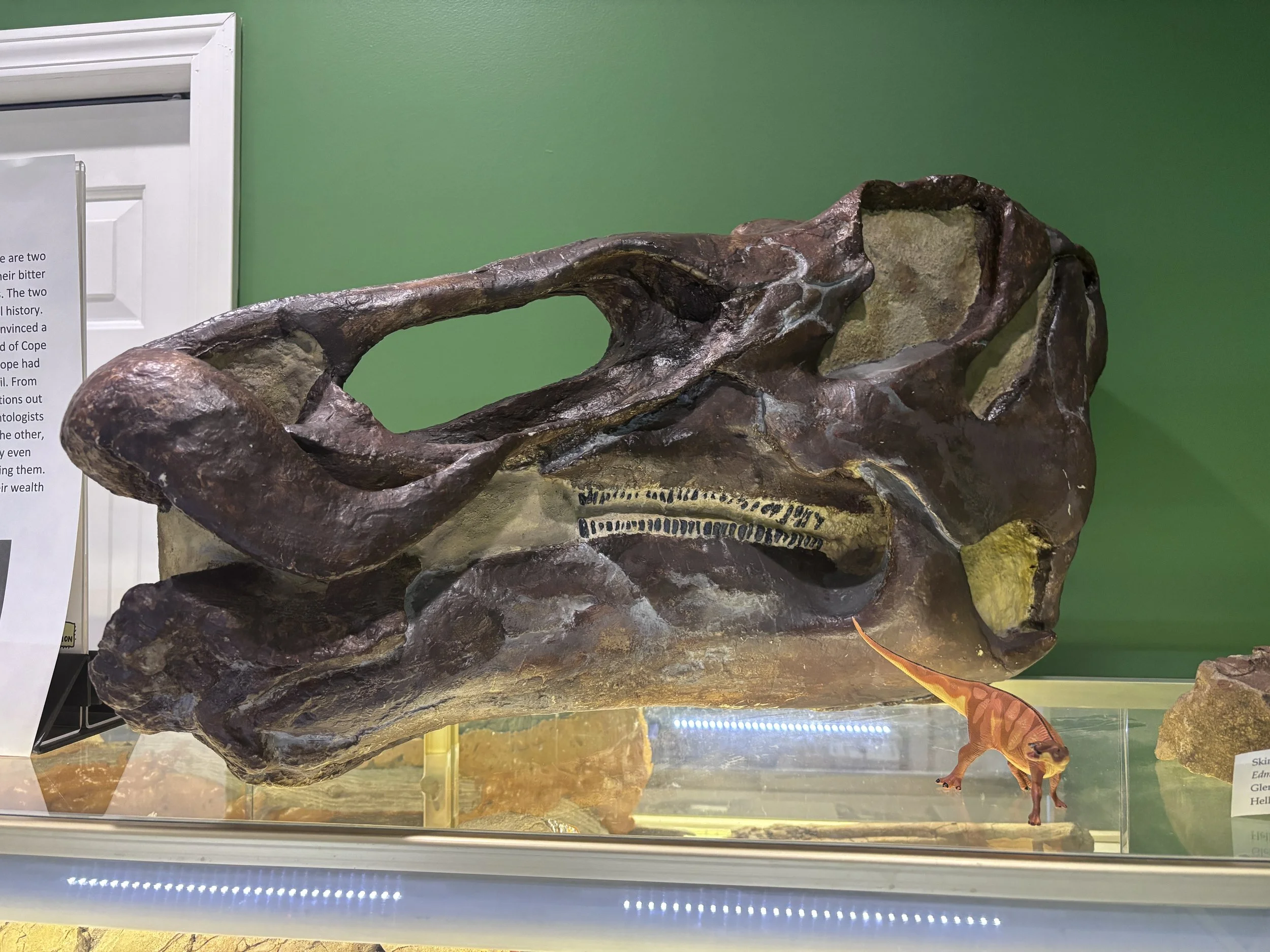
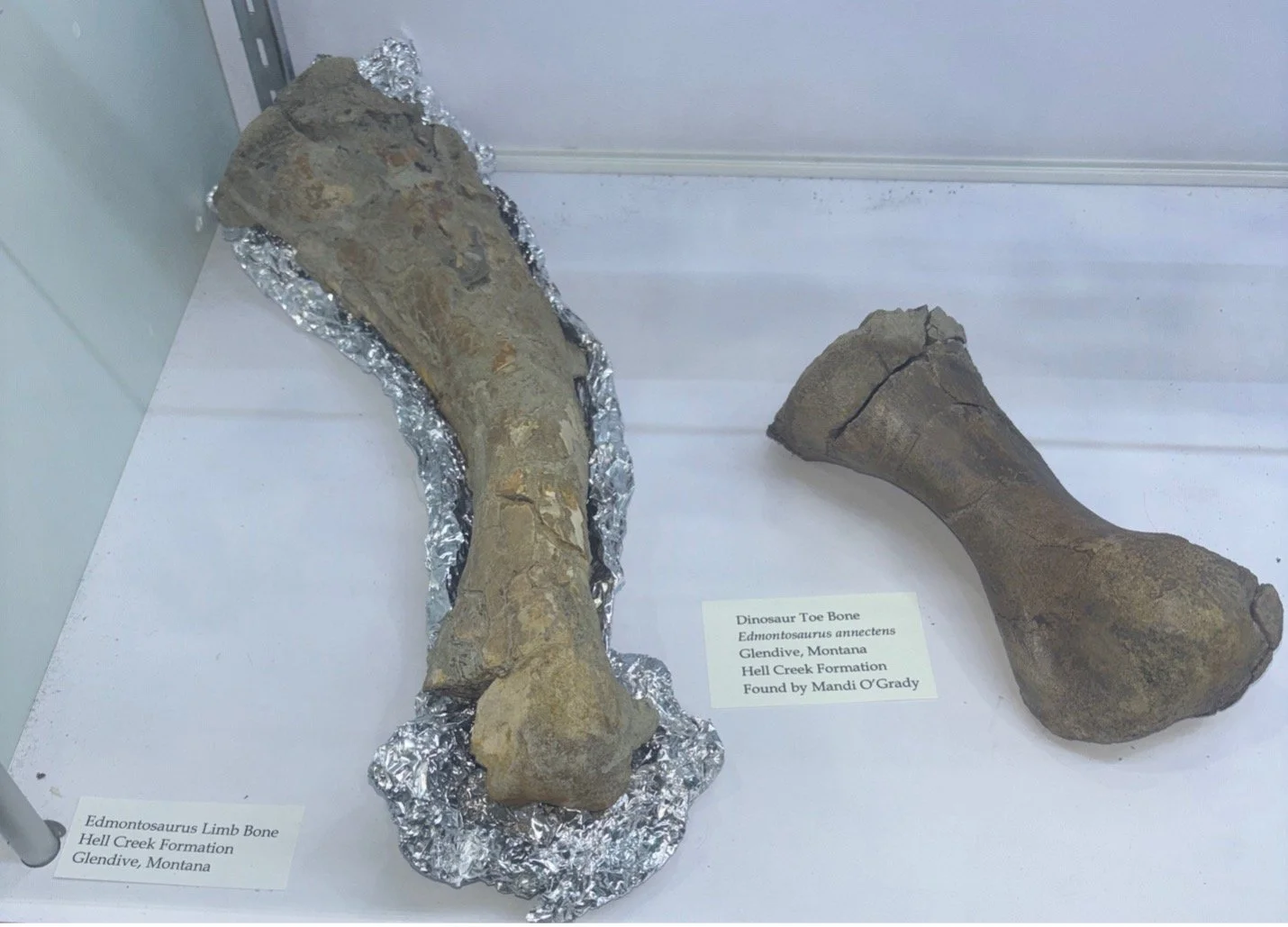
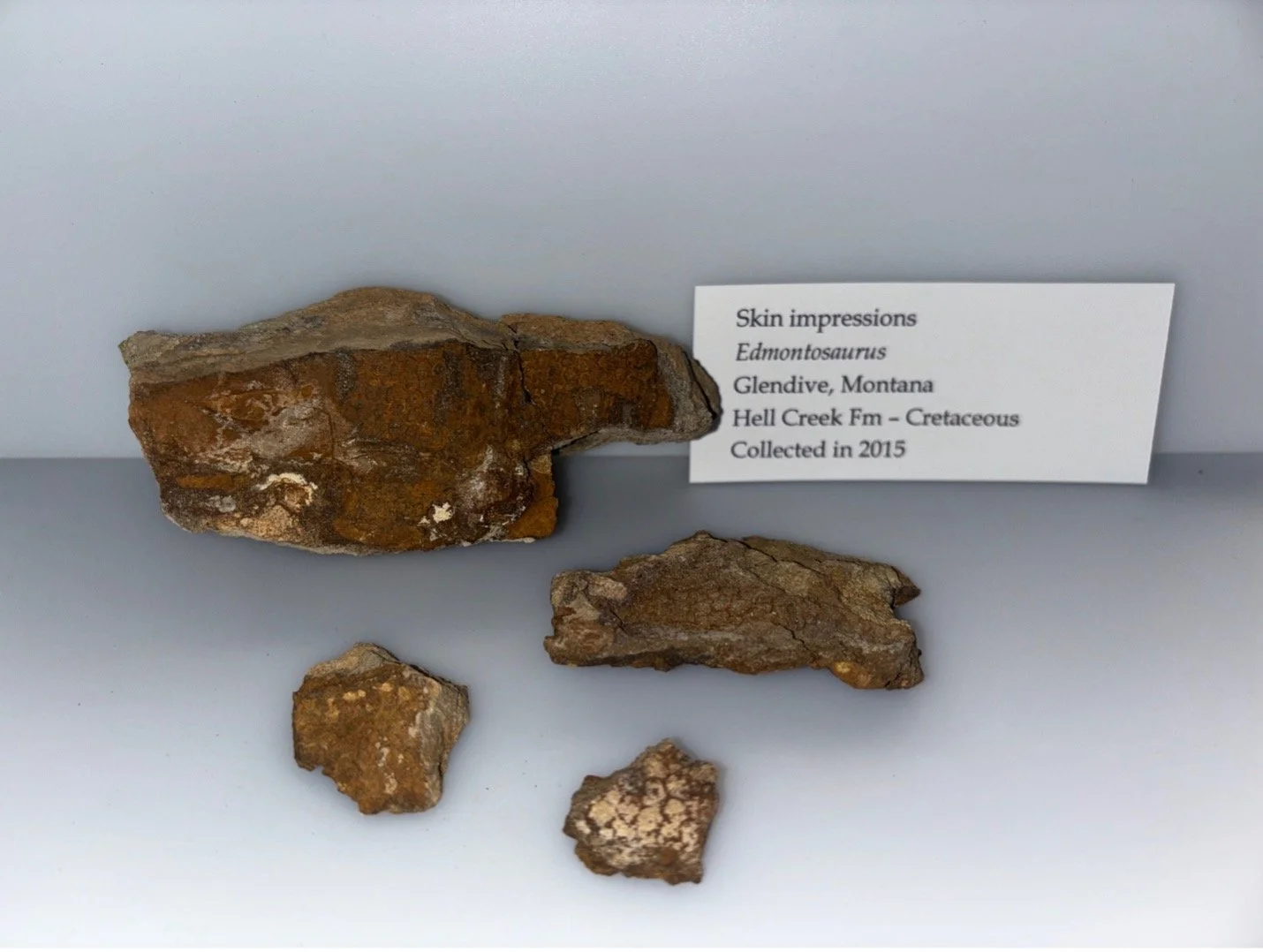
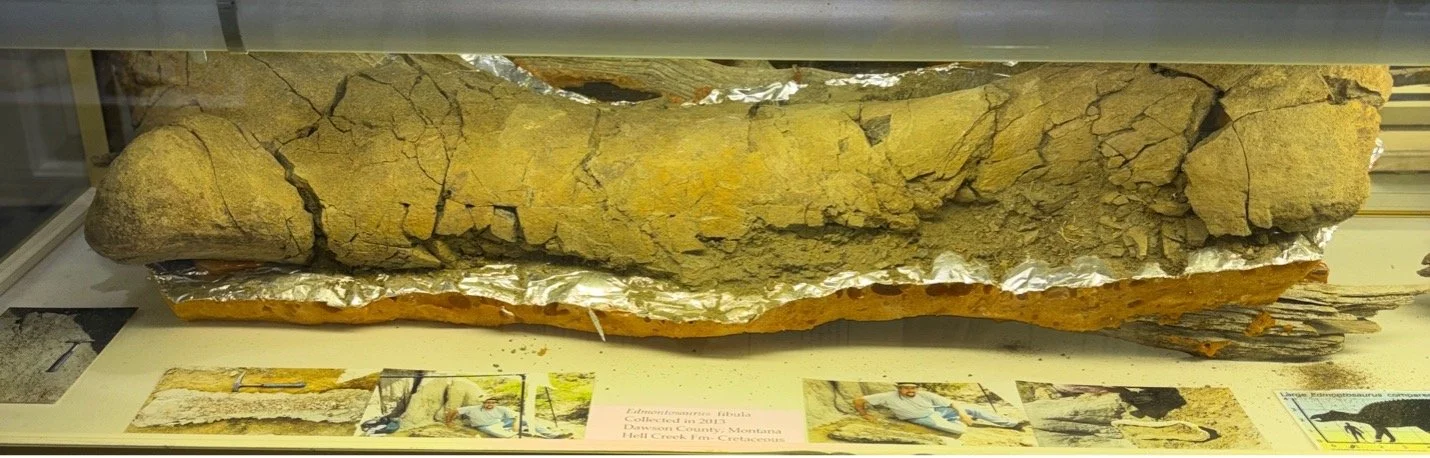
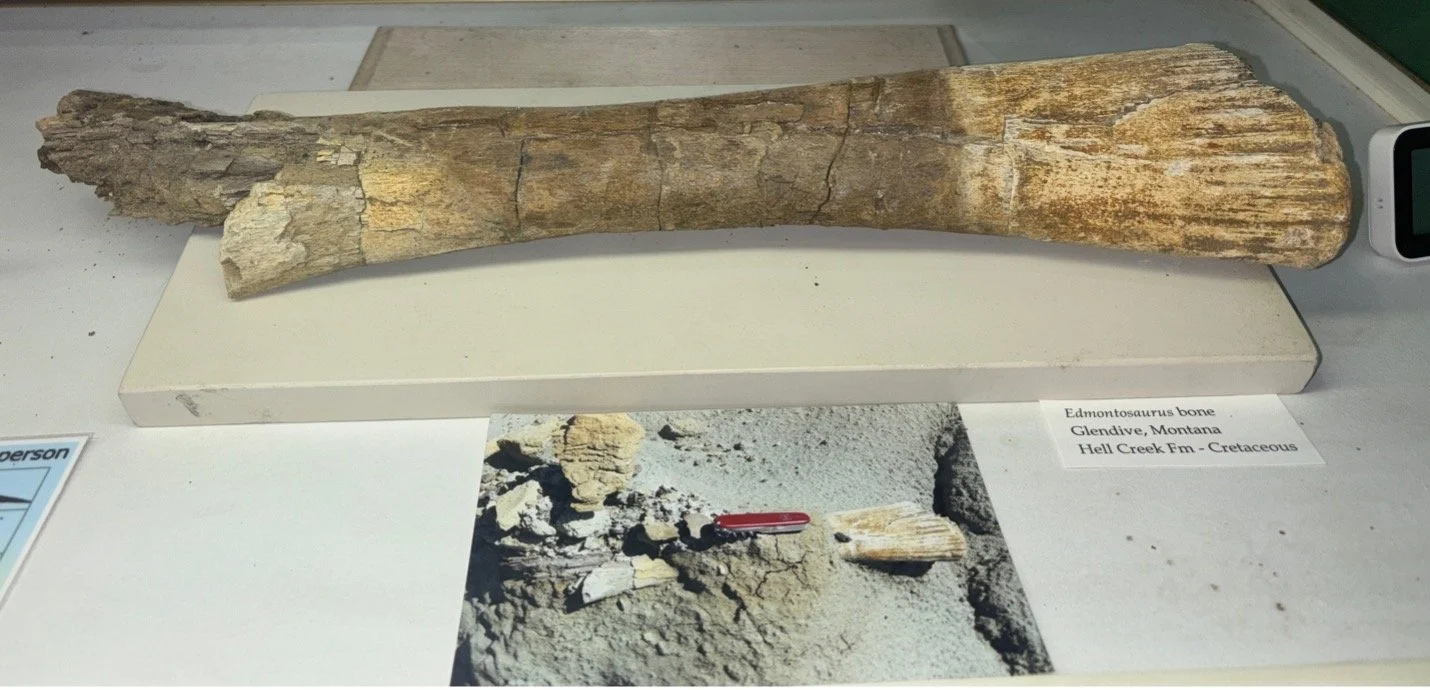
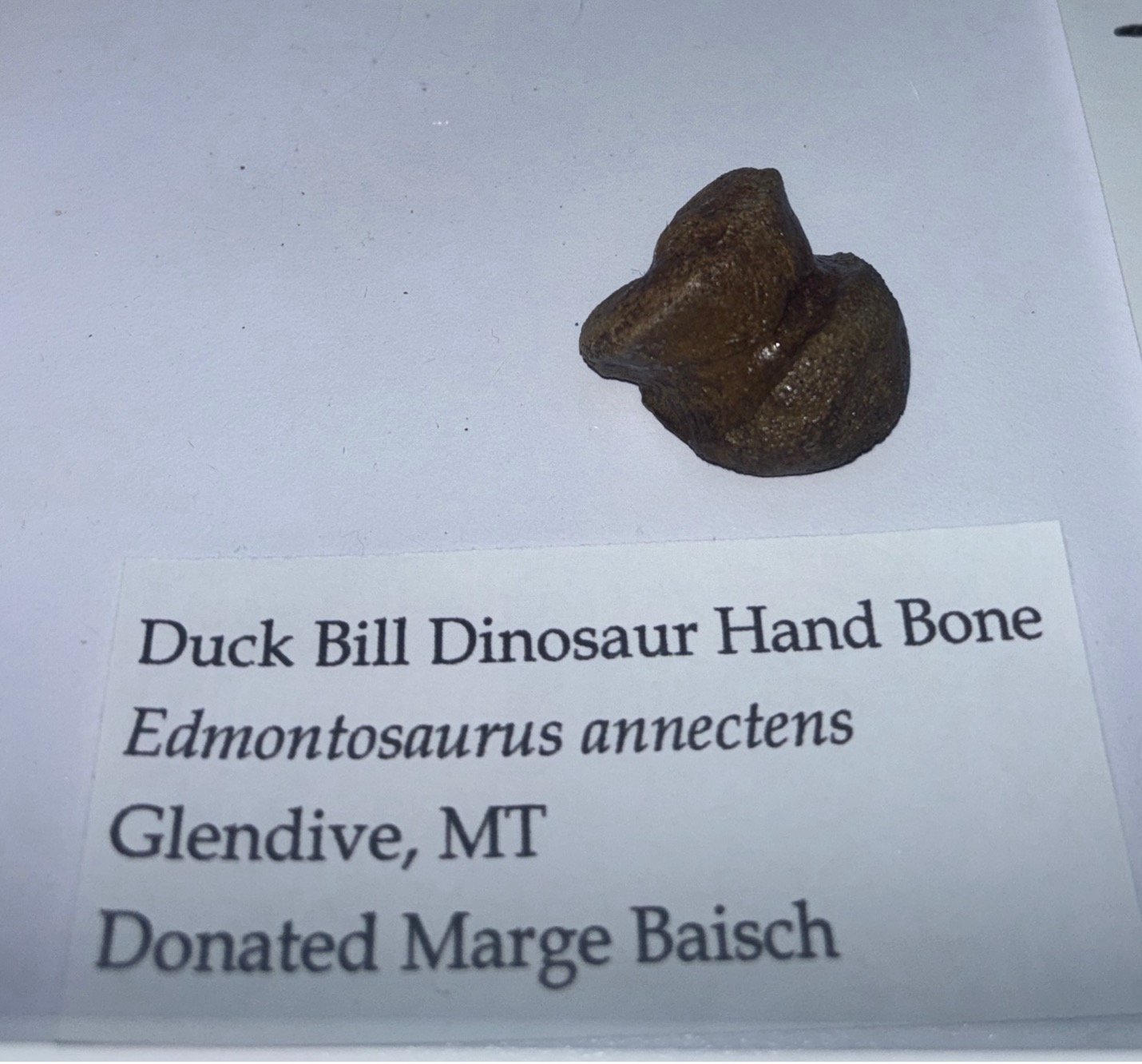
The Edmontosaurus annectens was a species of Hadrosaur that lived during the Cretaceous period in the modern US and Canada. Many Edmontosaurus annectens fossils come from the Hell Creek Formation, where they lived among Triceratops, T. Rexes, and other smaller ceratopsians and theropods.
One of the only dinosaur fossils ever found in Tennessee was a chevron (a part of the spine) from an Edmontosaurus annectens. It is thought that the animal had died near or in a river and was washed out into the Western Interior Seaway where it fossilized. You can see this chevron at Earth Experience Museum.
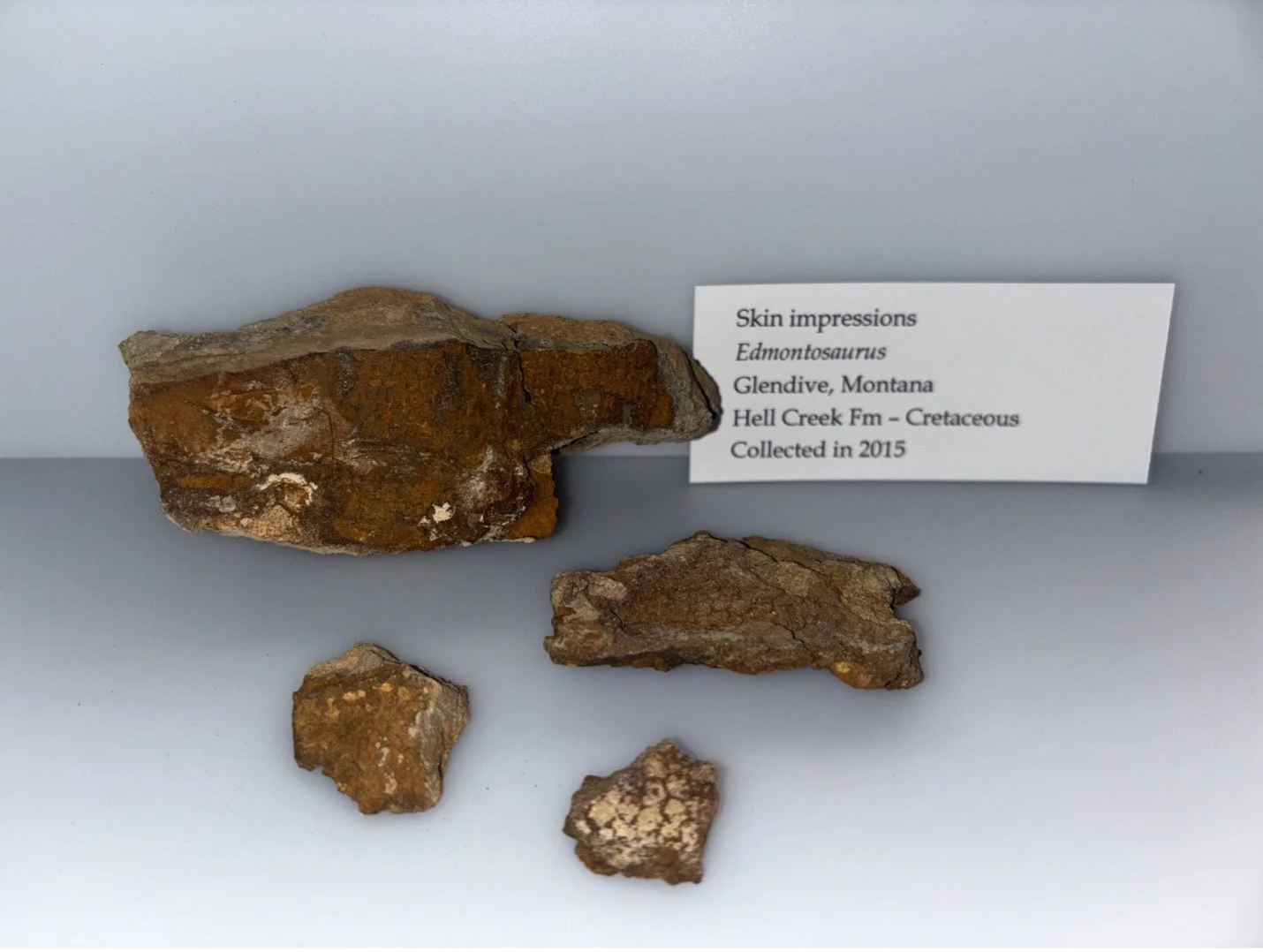
Hadrosaurs, often called “duck-billed dinosaurs”, were herbivorous herding dinosaurs that lived in North America, Europe, and Asia during the late Cretaceous period. Hadrosaurs were grazers and had ‘dental batteries’ or stores of new teeth that would replace the old ones as they wore down. Paleontologists have been able to study Hadrosaur skin impressions to descern that their skin was scaly and bumpy. Many hadrosaurs had large head crests, some of which having hollow chambers inside. Some scientists think that species like the Parasaurolophus used its hollow head crest to amplify verbalizations, creating a loud horn-like call. Hadrosaurs typically walked on all for legs, but they were able to stand up on the larger hind legs at will.
(Late Cretaceous)
Velociraptors have been heavily featured in the Jurassic Park and Jurassic World sagas and are depicted as scaly, mid-sized terrors of the dinosaur world. This depiction is not strictly accurate, at least in regard to appearance. Velociraptors were considerably smaller than you might think (3 feet tall and 5 feet long) and possessed feathers much like their modern bird relatives. Velociraptors, like all raptors, had a large specialized tow claw on each foot which they would have used to hold down prey, similar to modern predator birds.
No results match your search. Try removing a few filters.