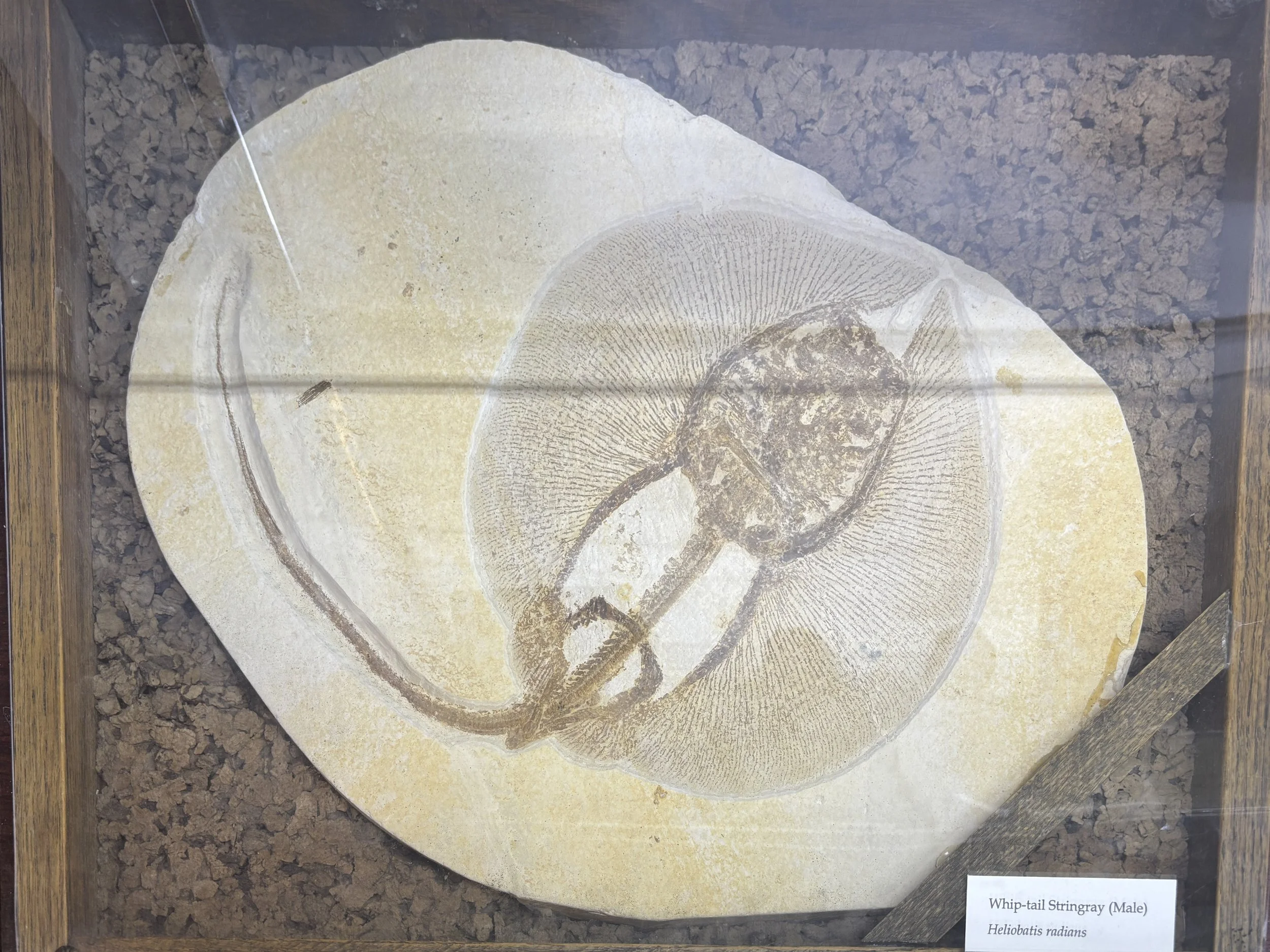
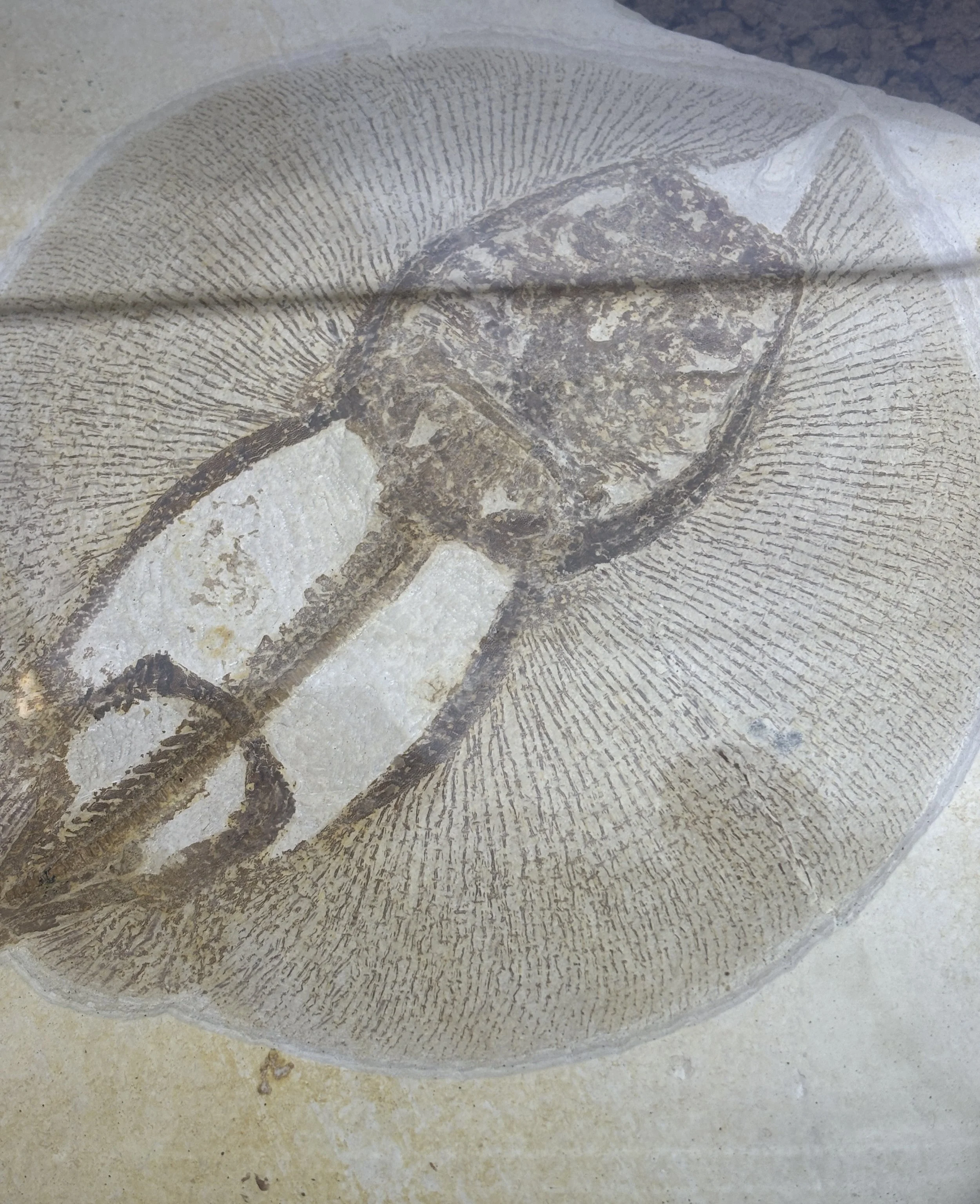
Whip-tail Stingray (Eocene)
Heliobatis radians was a freshwater stingray found exclusively in the fossil lakebeds of the Green River Formation in the Western United States. Like modern marine stingray species, Heliobatis radians has a flat body and barbed stingers on their long tails for defense. When not searching for food, these stingrays buried themselves in the fine-grained mud at the bottom of the lakes, which served to preserve a handful of these unique stingrays. The conditions for preservation were so optimal that even the radial pattern of their fin supports are sometimes present in the fossils. This striking pattern provided inspiration for their name, “Heliobatis”, which translates to “sun rays” in latin.
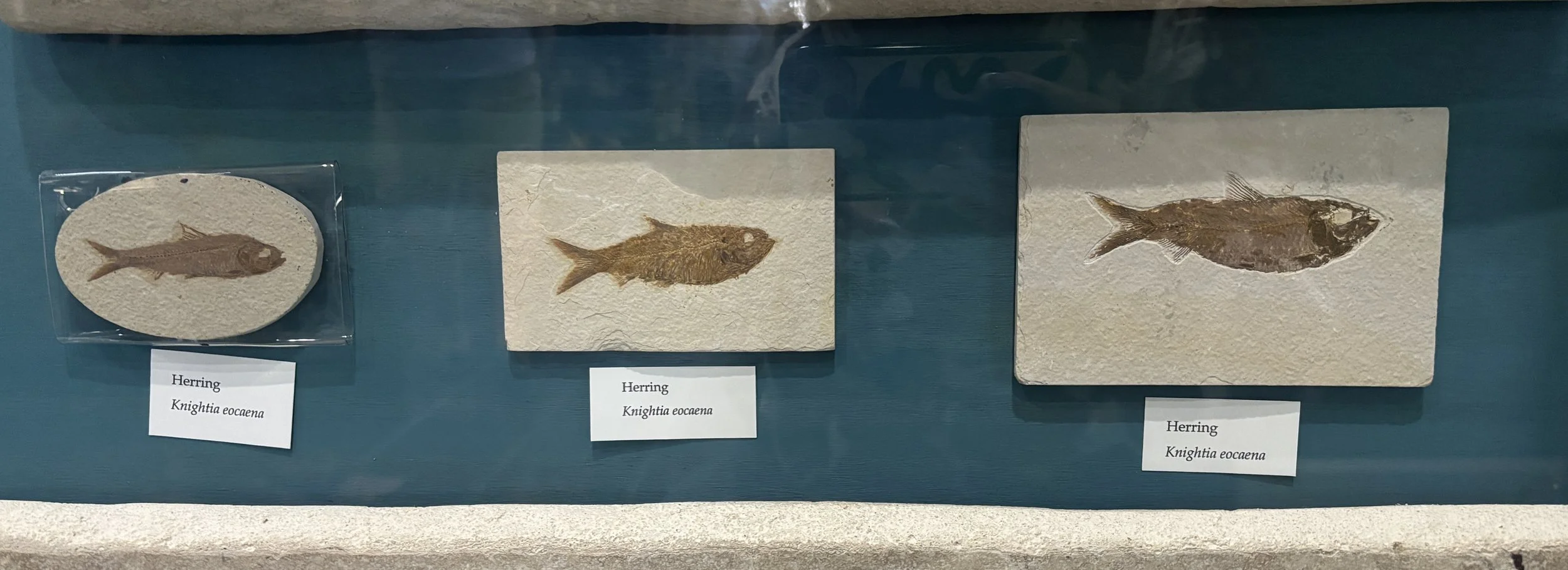
Knightia eocaena were small (typically 3 to 6 inches long) schooling fish whose fossils are largely found in the Green River Formation of the Western United States. Knightia eocaena were an integral part of the ecology of the region during the Eocene as they were the primary prey item for larger fish like Diplomystus dentatus as well as the various birds, snakes, and turtles that lived in or near the lakes. As such, their fossils are plentiful in the rock quarries of the Green River Formation and easily accessible for fossil collectors. Modern relatives of the Knightia eocaena like herring, sardines, and shads remain vital to commercial fish markets and marine food chains.
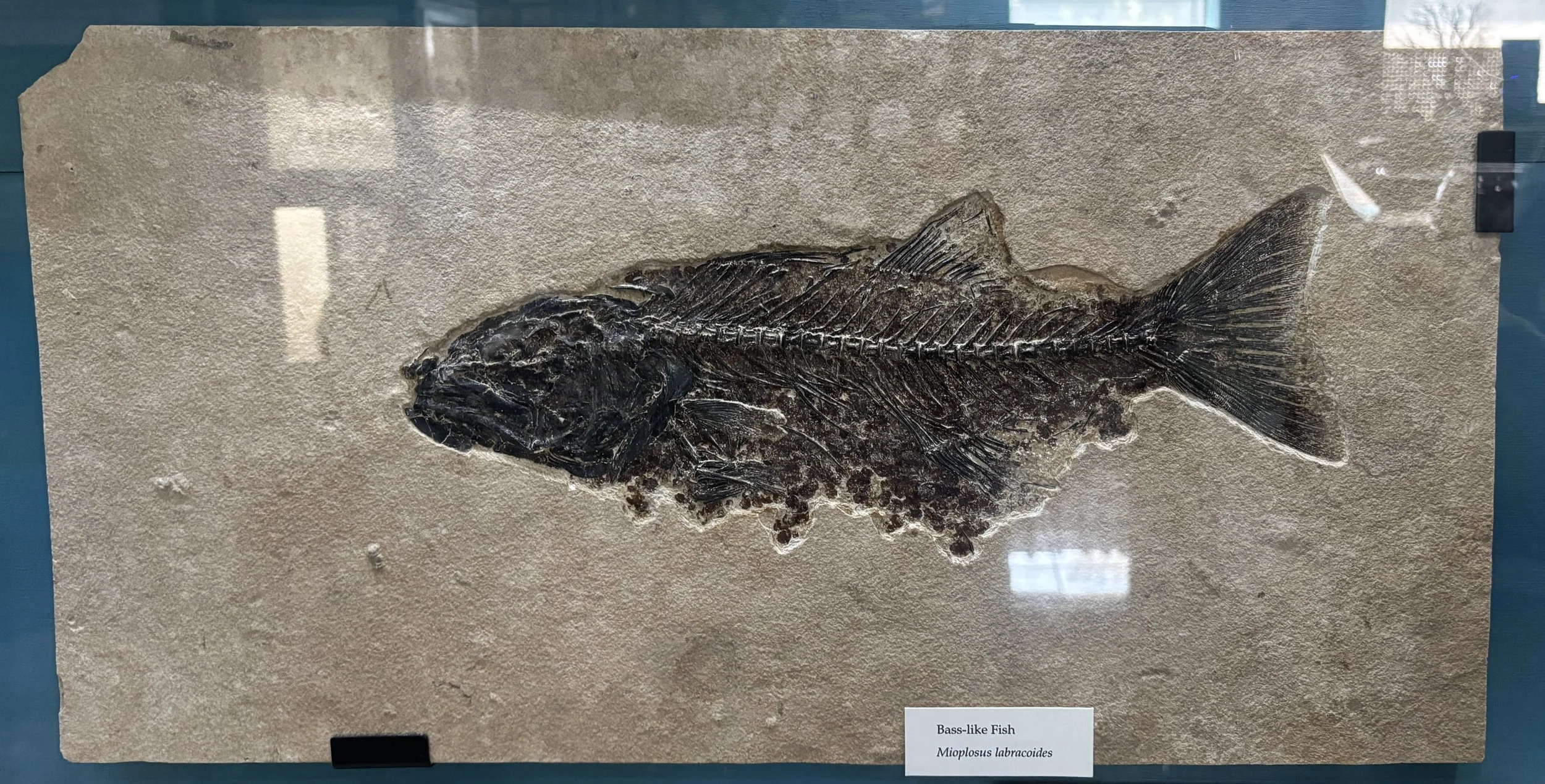
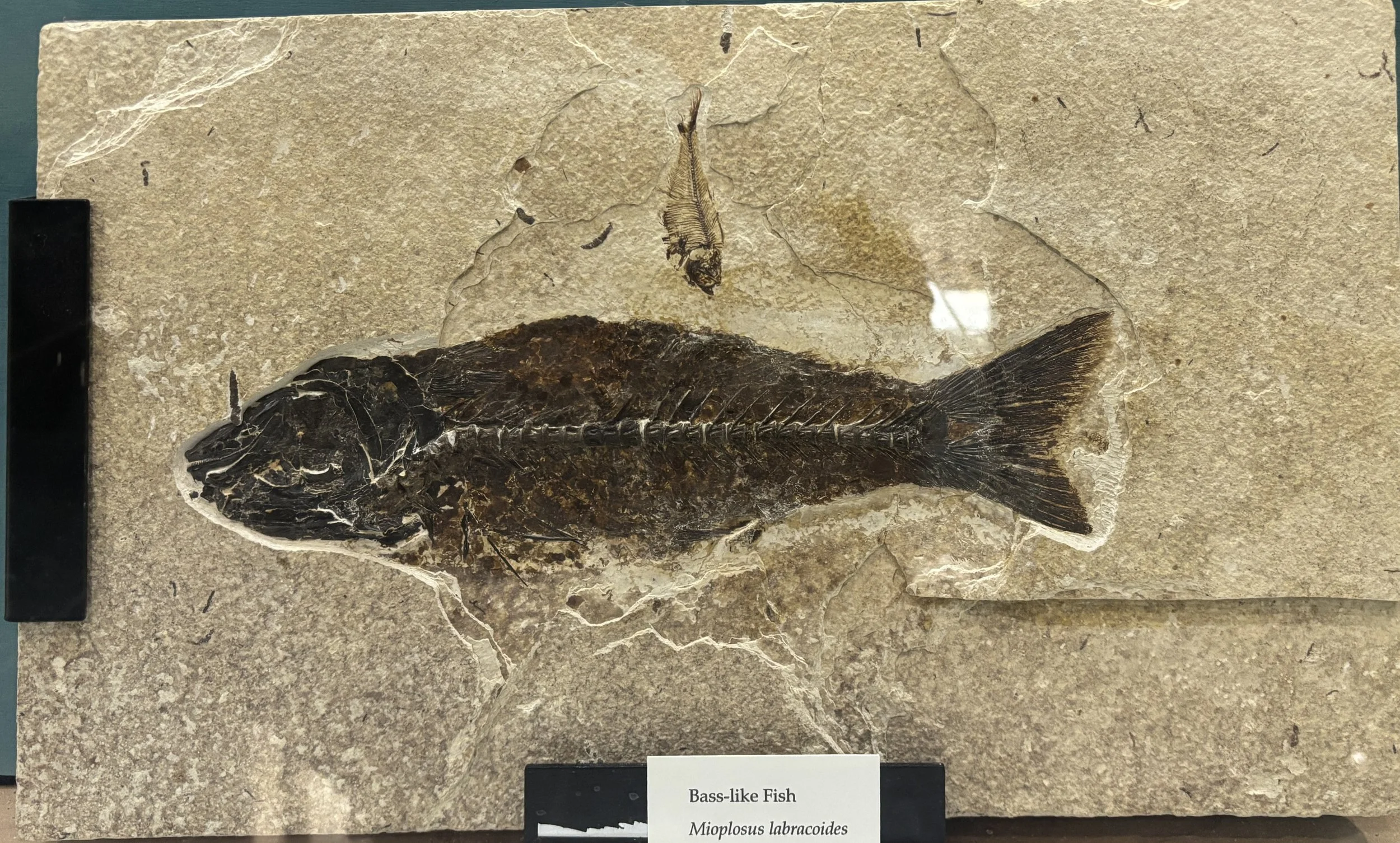
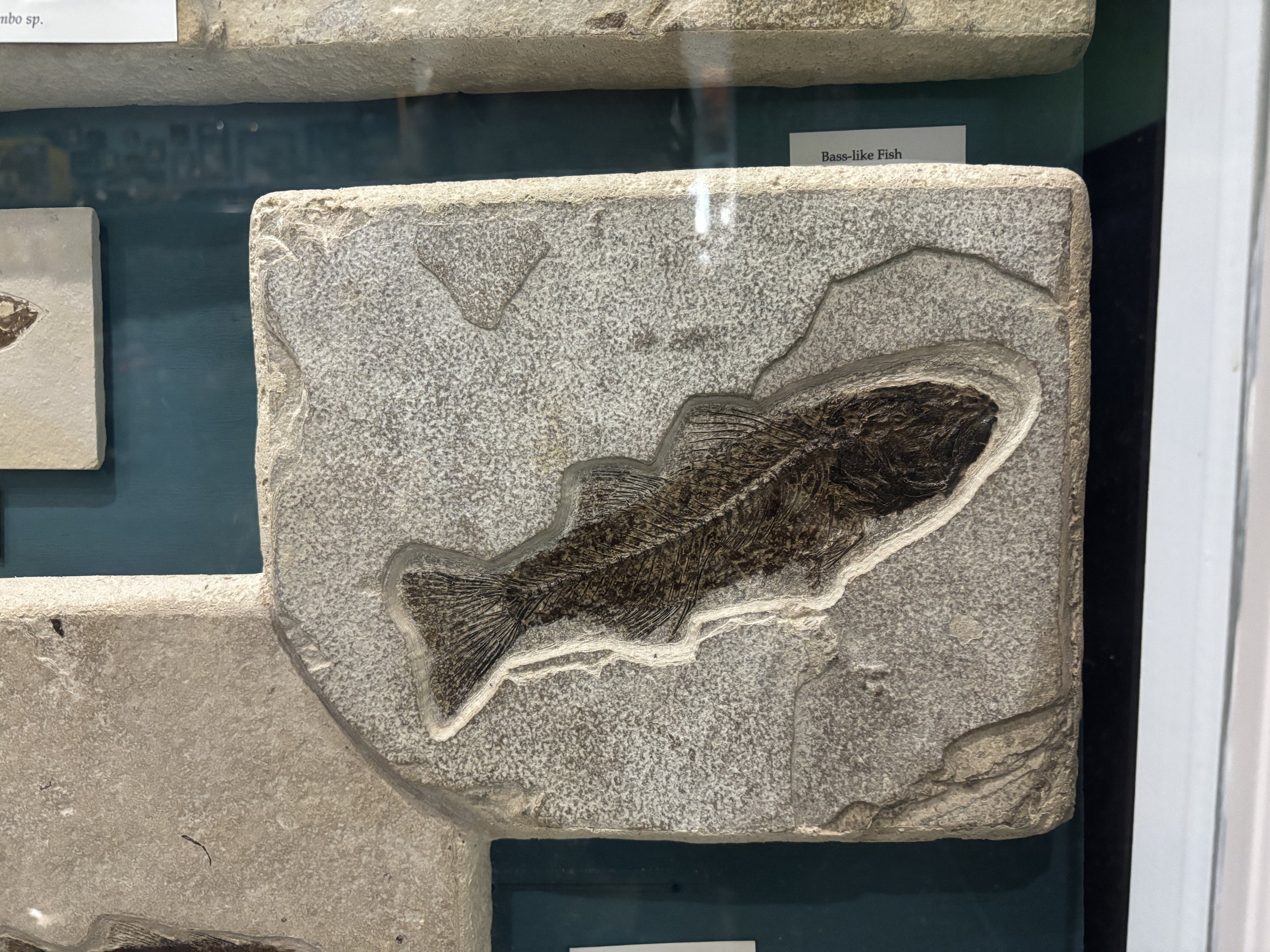
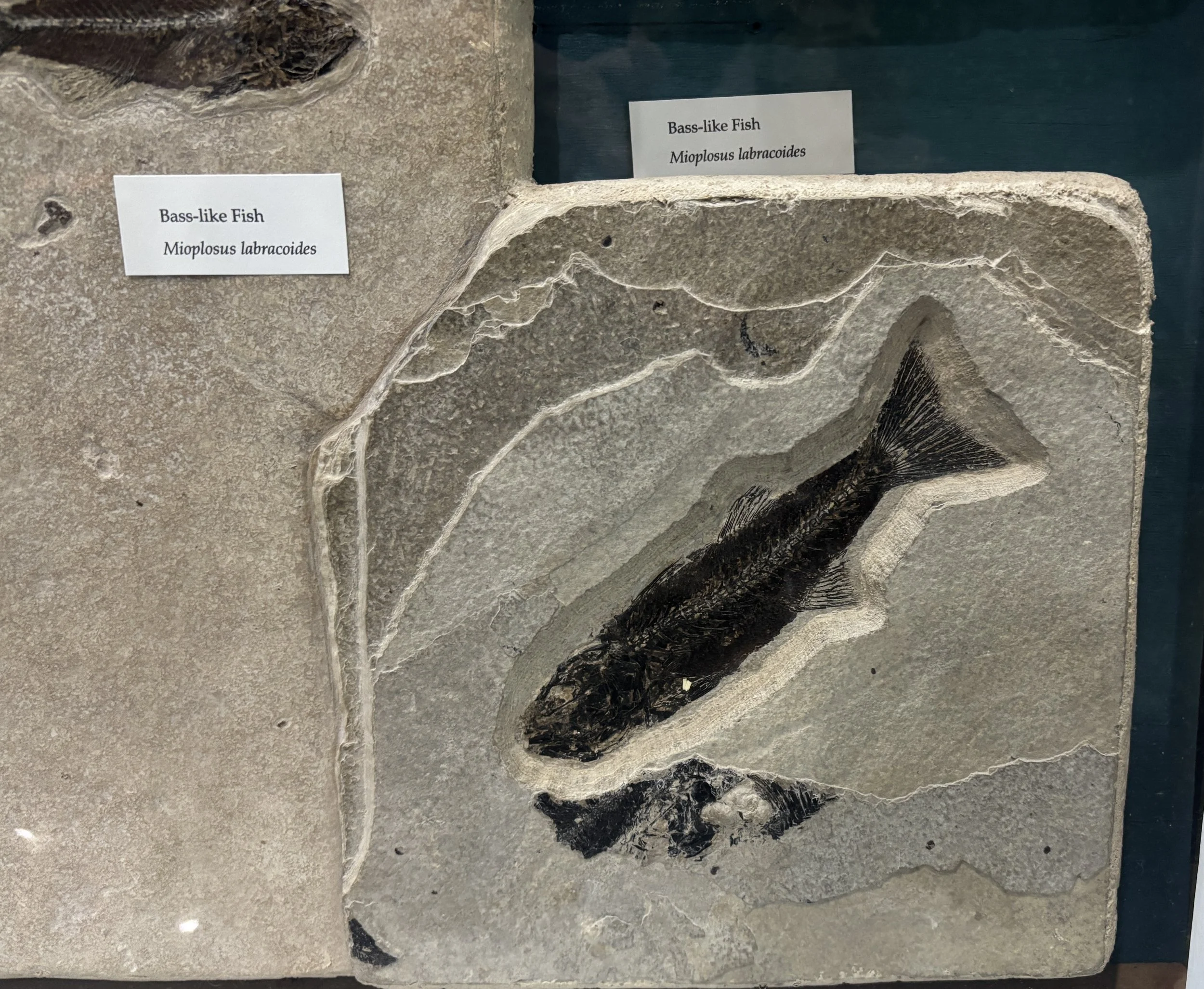
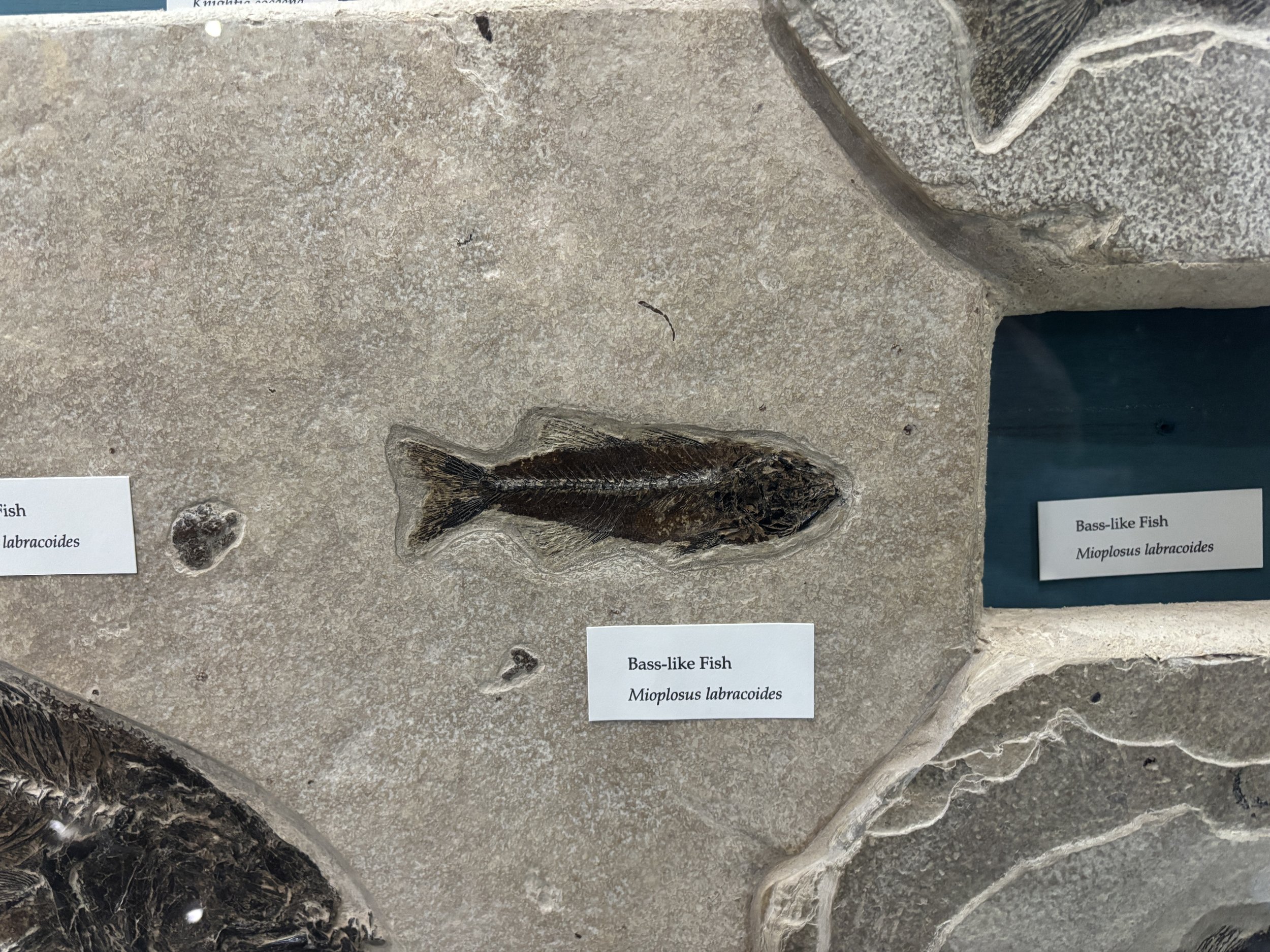
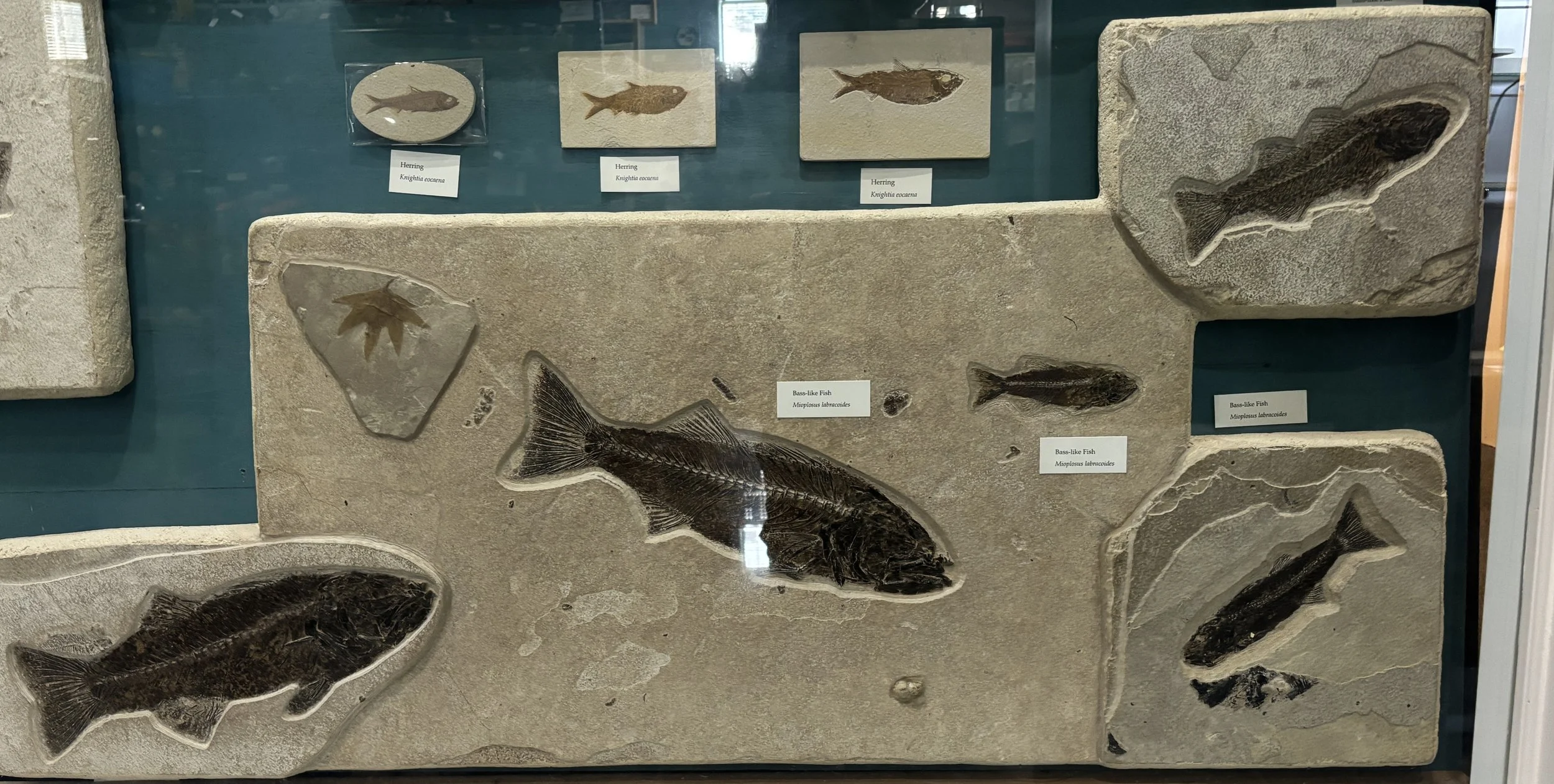
Mioplosus labracoides was a freshwater fish whose fossils are found almost exclusively in the ancient lakebeds of the Green River Formation. They grew to about 16 inches and are easily recognized by their elongated body shape and forked tailfins. Adult Mioplosus labracoides were likely solitary animals, as their fossils are not typically found near others of their species, but juvenile specimens of Mioplosus are often found within schools.
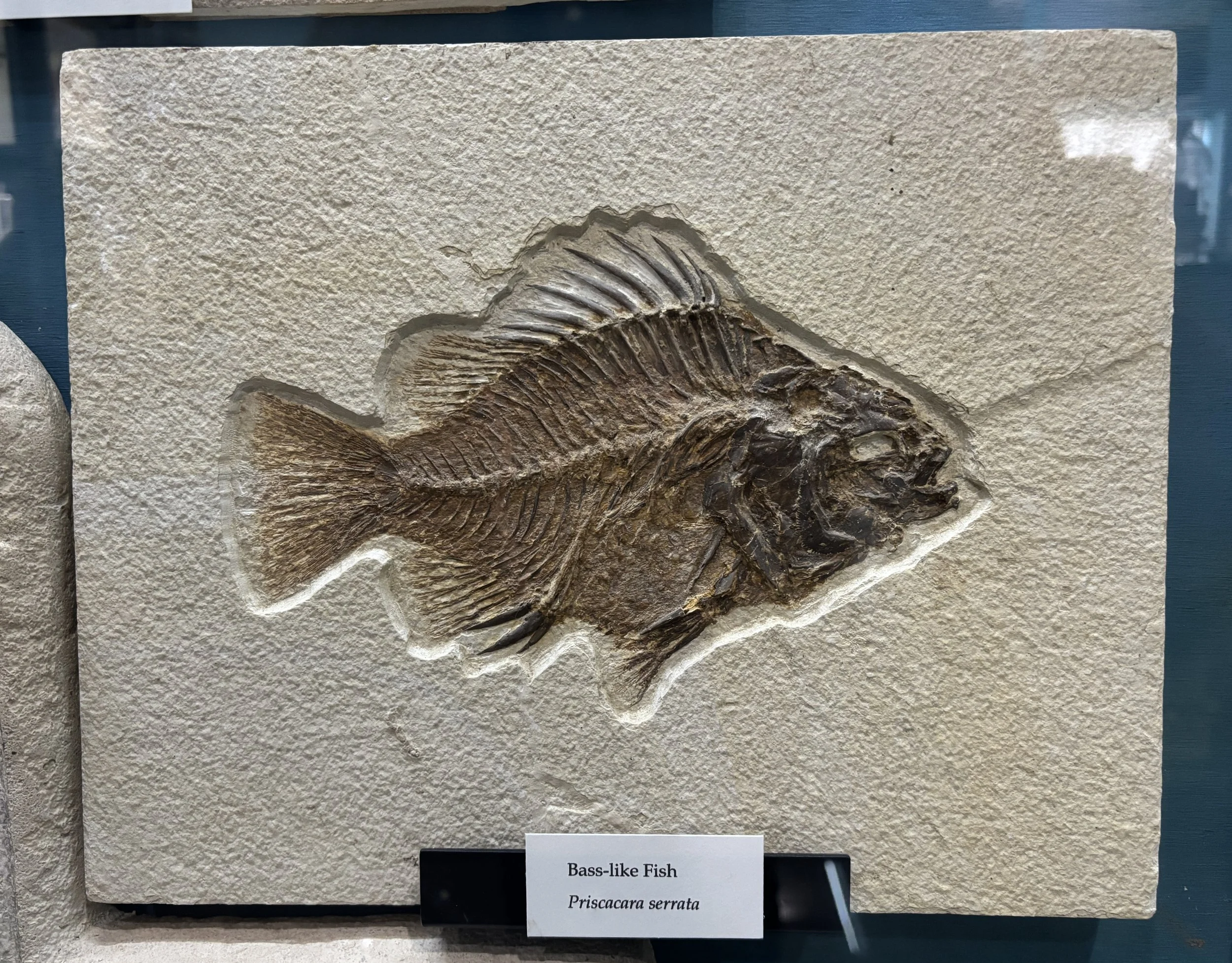
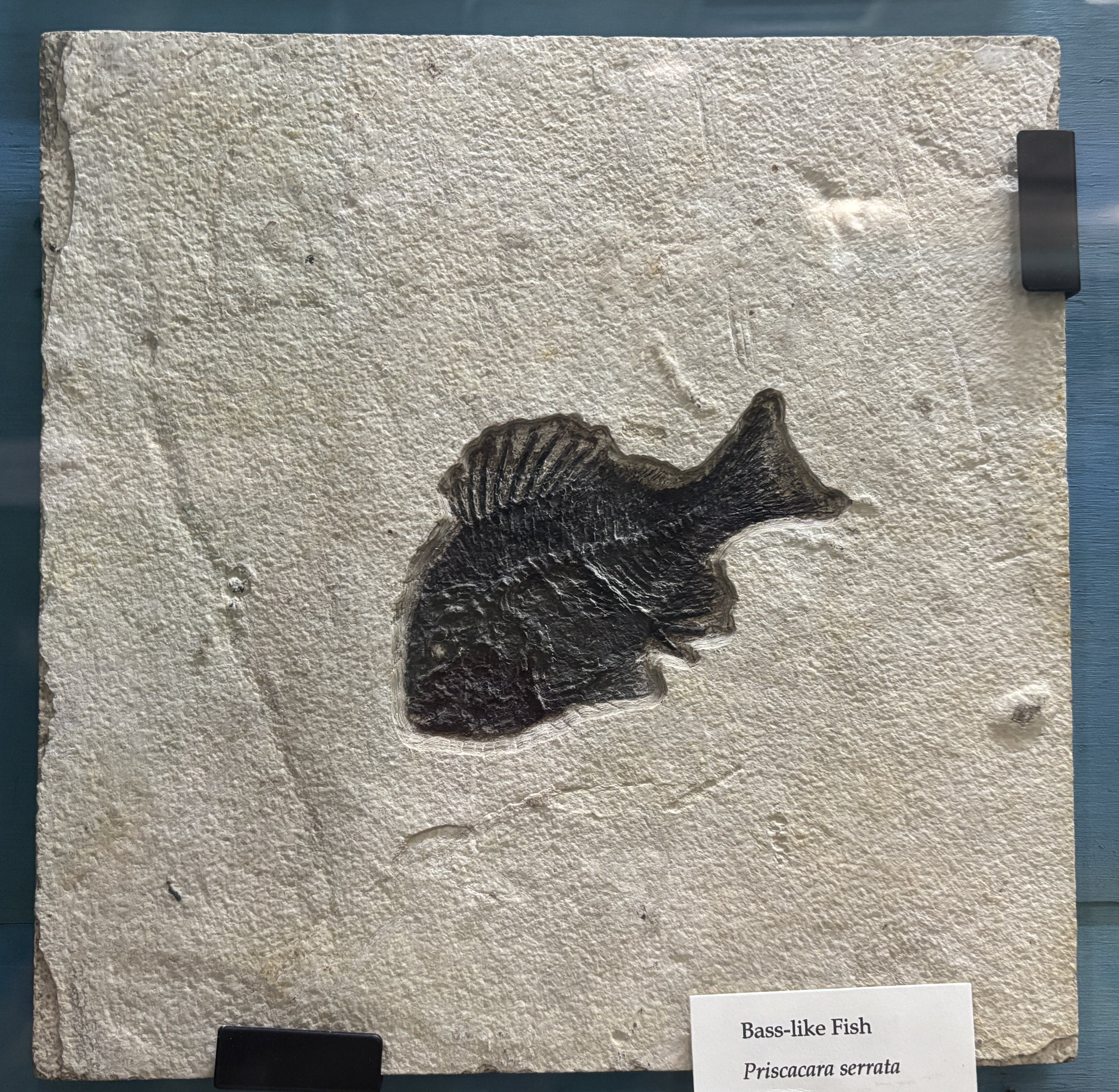
Priscacara serrata is an extinct species of bass-like fish whose fossils are found almost exclusively in the Green River Formation located in Western United States. These fish had striking dorsal spikes that make them a favorite among fossil collectors. They grew up to 16 inches and occasionally are found with smaller fish lodged in their mouth or throats, suggesting that they had a tendency to choke on larger food items. Their primary source of food was small arthropods and mollusks and possessed tooth-pads in their throats that helped grind up the hard components of their prey.
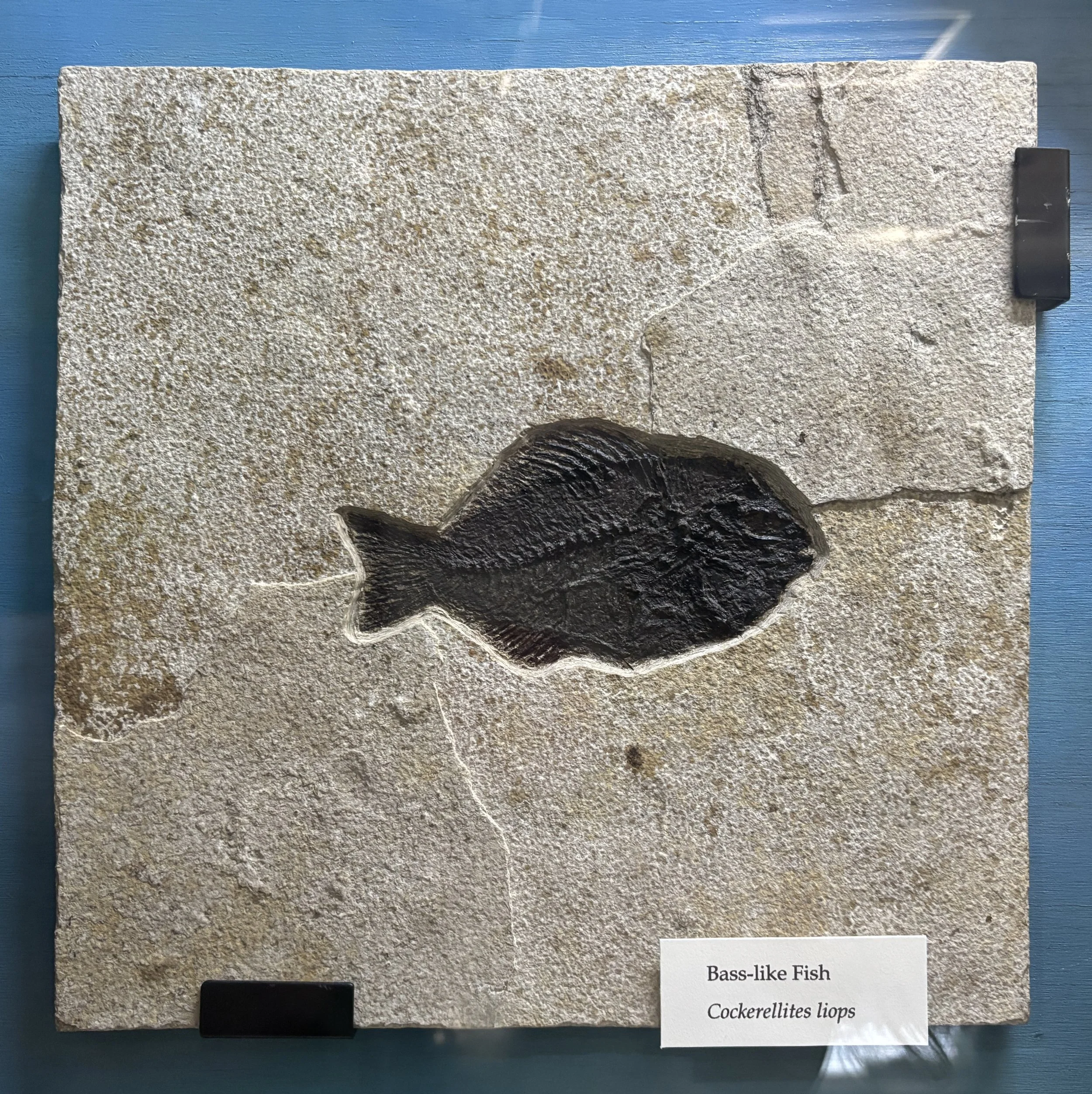
Cockerellites liops is an extinct species of schooling fish that lived in the lakes of the Green River Formation during the Eocene epoch. These fish were small with rounded, sunfish-like profiles, growing up to 6 inches in length. They had small mouths and are assumed to have fed on zooplankton and insects. They are known for their prominent spiny dorsal fins that were likely used both for defense and stabilization while swimming.
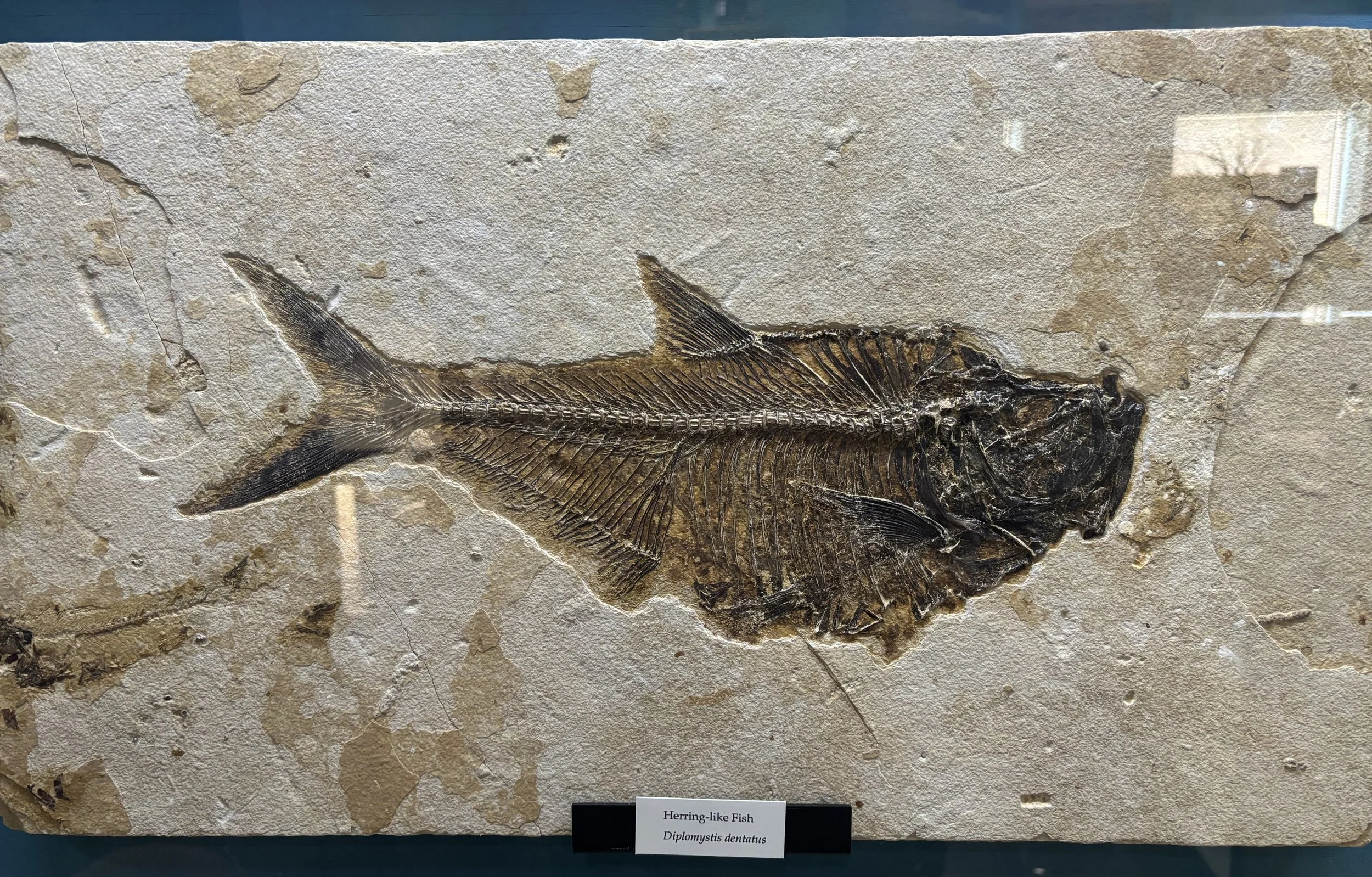
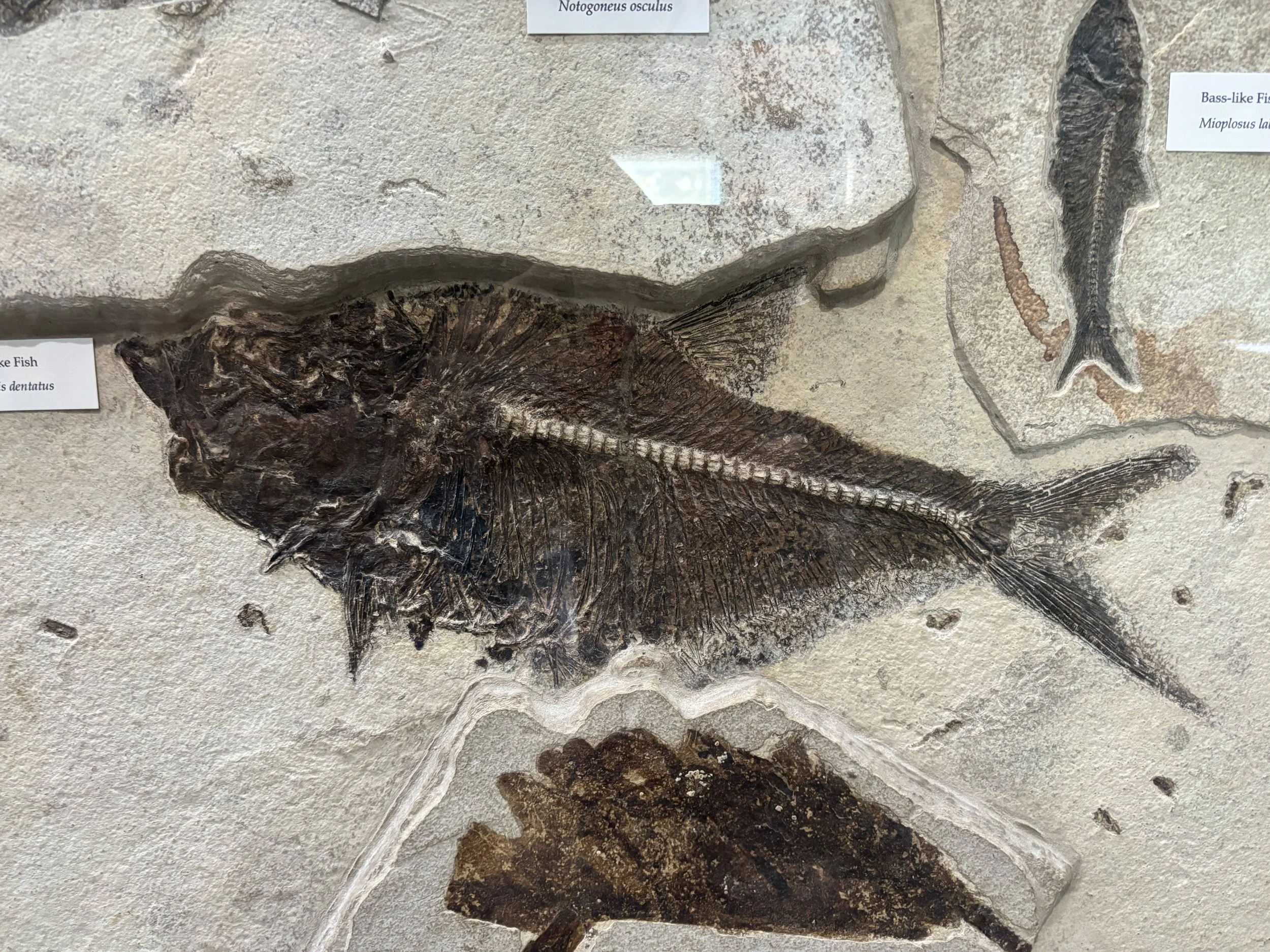
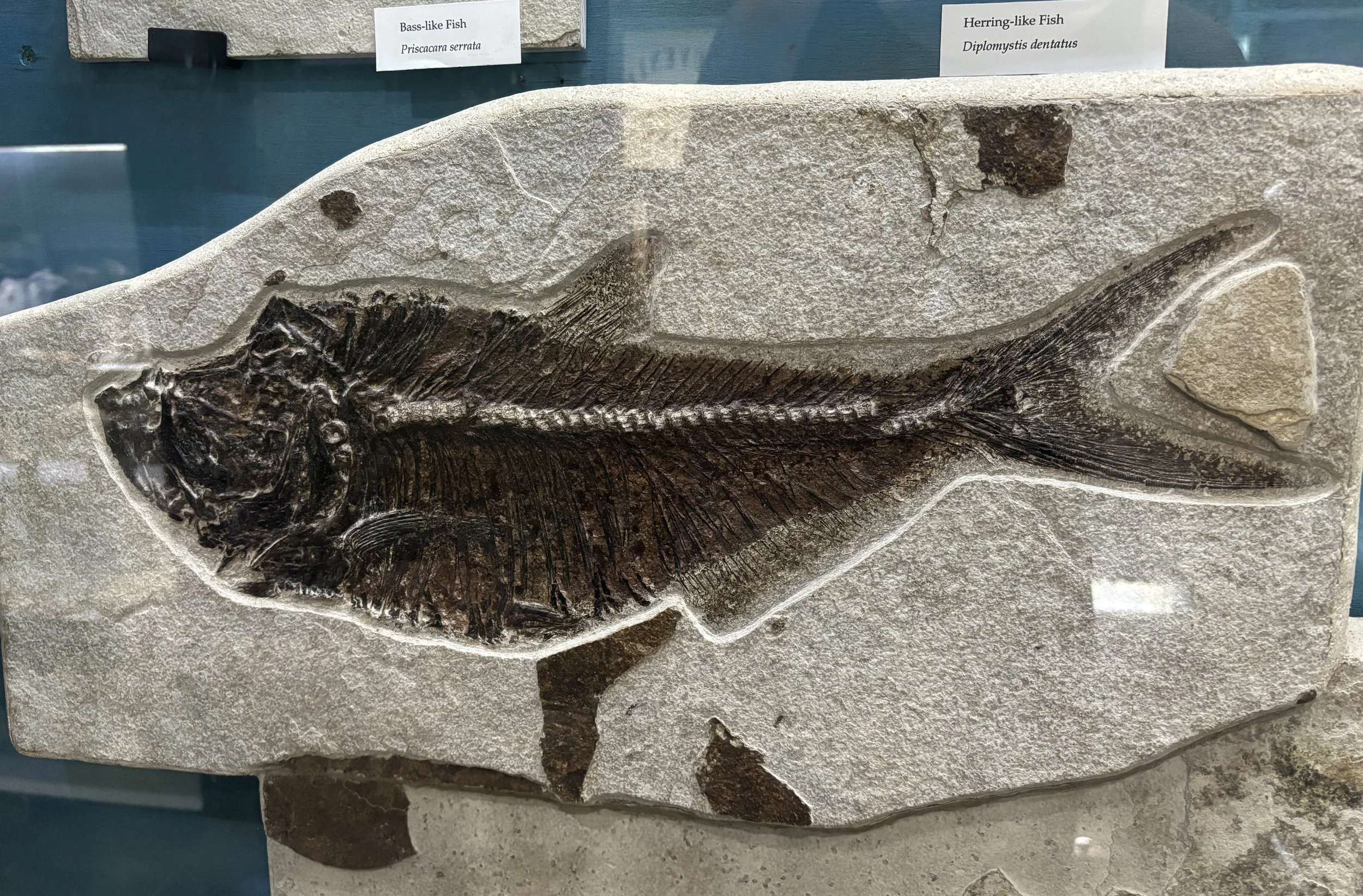
Diplomystus dentatus was a freshwater fish whose fossils are commonly found in the Green River Formation of the American West. It was distantly related to modern herrings, sardines, and anchovies. Their upturned mouths were perfectly shaped for feeding on smaller fish that congregated near the surface of the water from below. In fact, the fossils of Diplomystus dentatus are often found with Knightia eocaena fossils in their mouths, throats, and stomachs.
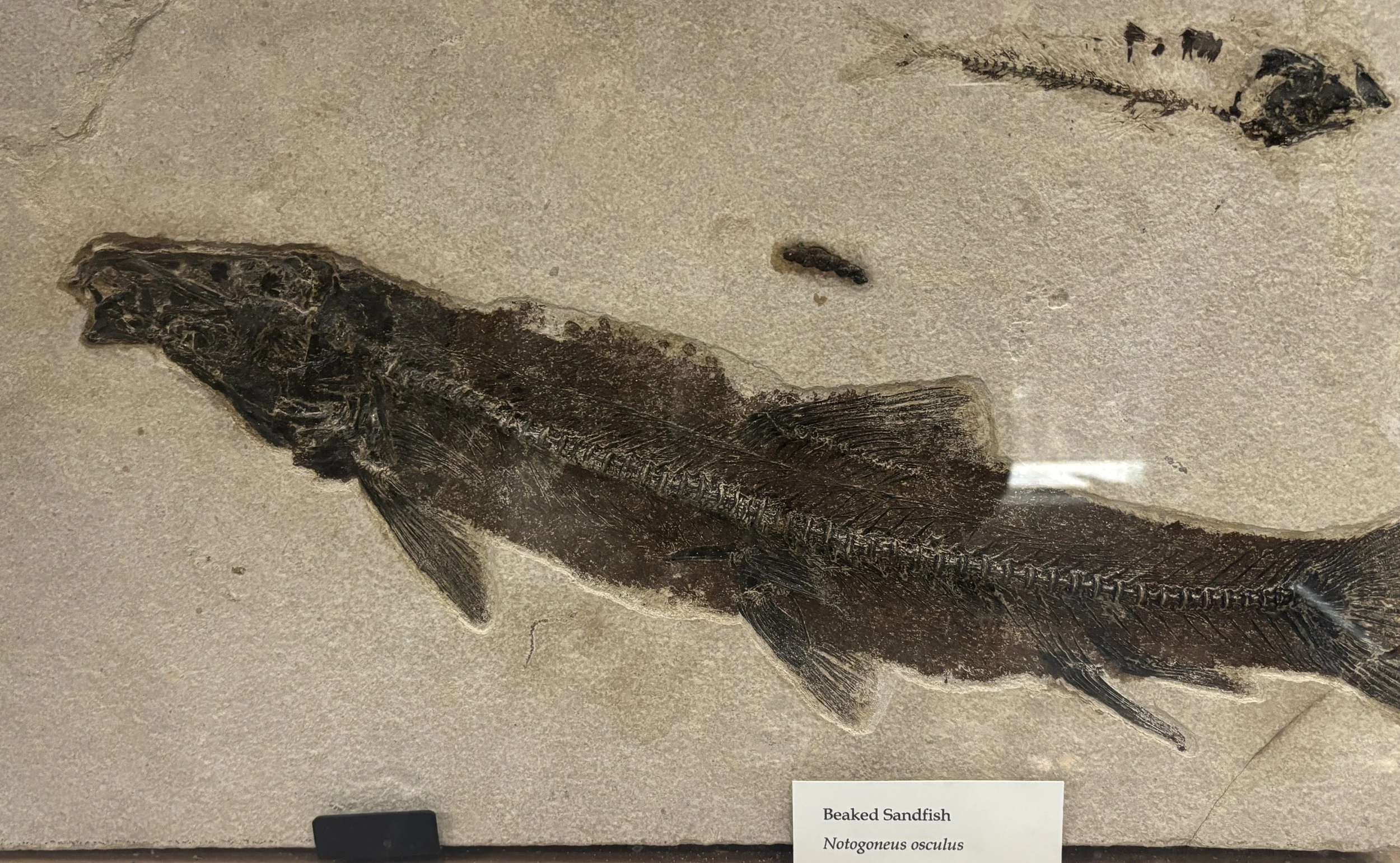
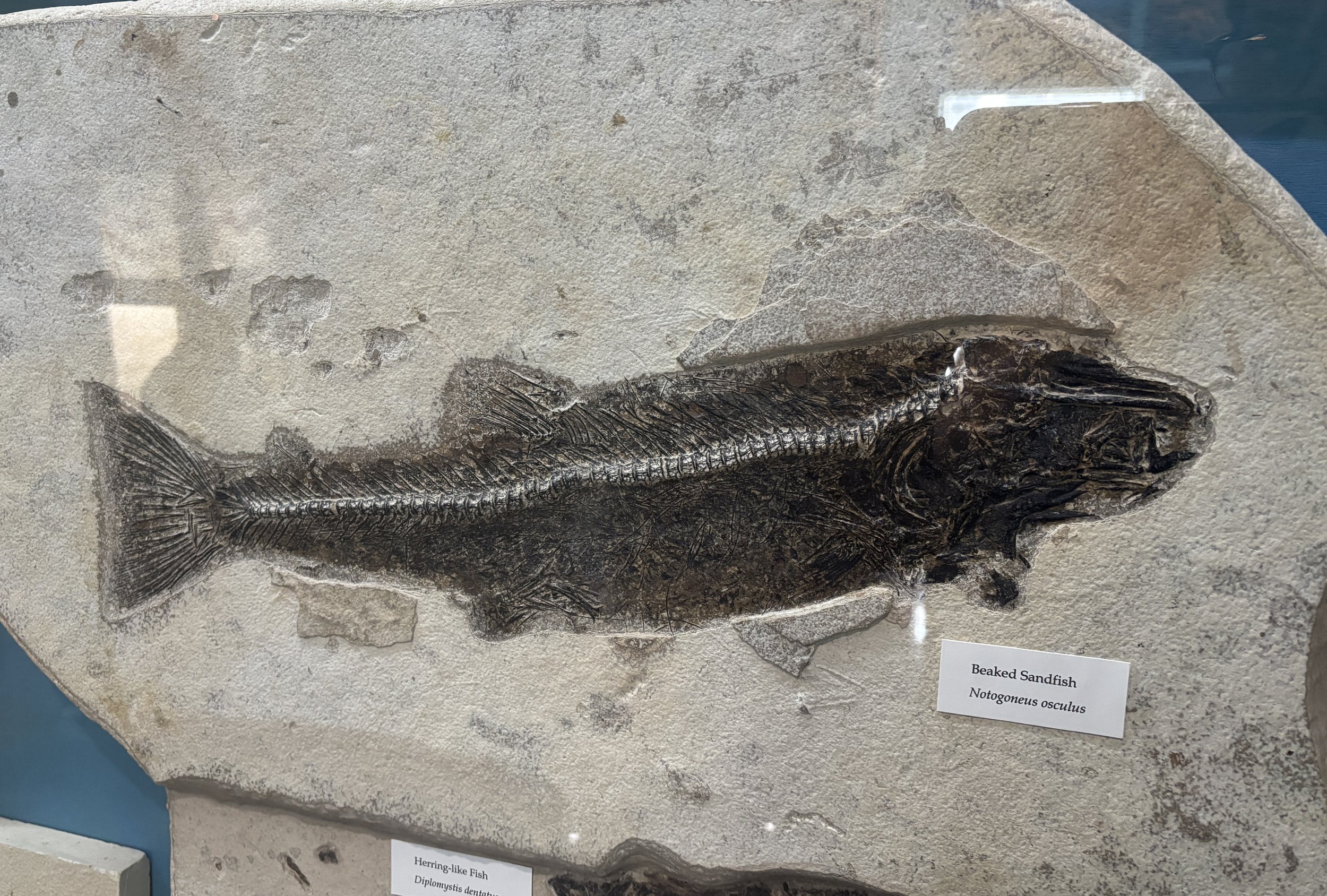
The Notogenus osculus was a bottom feeding fish found in the Green River Formation of the American West. It had a toothless mouth that essentially vacuumed detritus off the lake floors and grew up to about 35 inches long. The large quantity of sub adult fossils (about 18 inches long) of Notogenus osculus found in the ancient lakebeds of the Green River Formation suggest that these fish likely spawned in the lakes before continuing their journey down connecting streams and rivers for the rest of their life cycle.
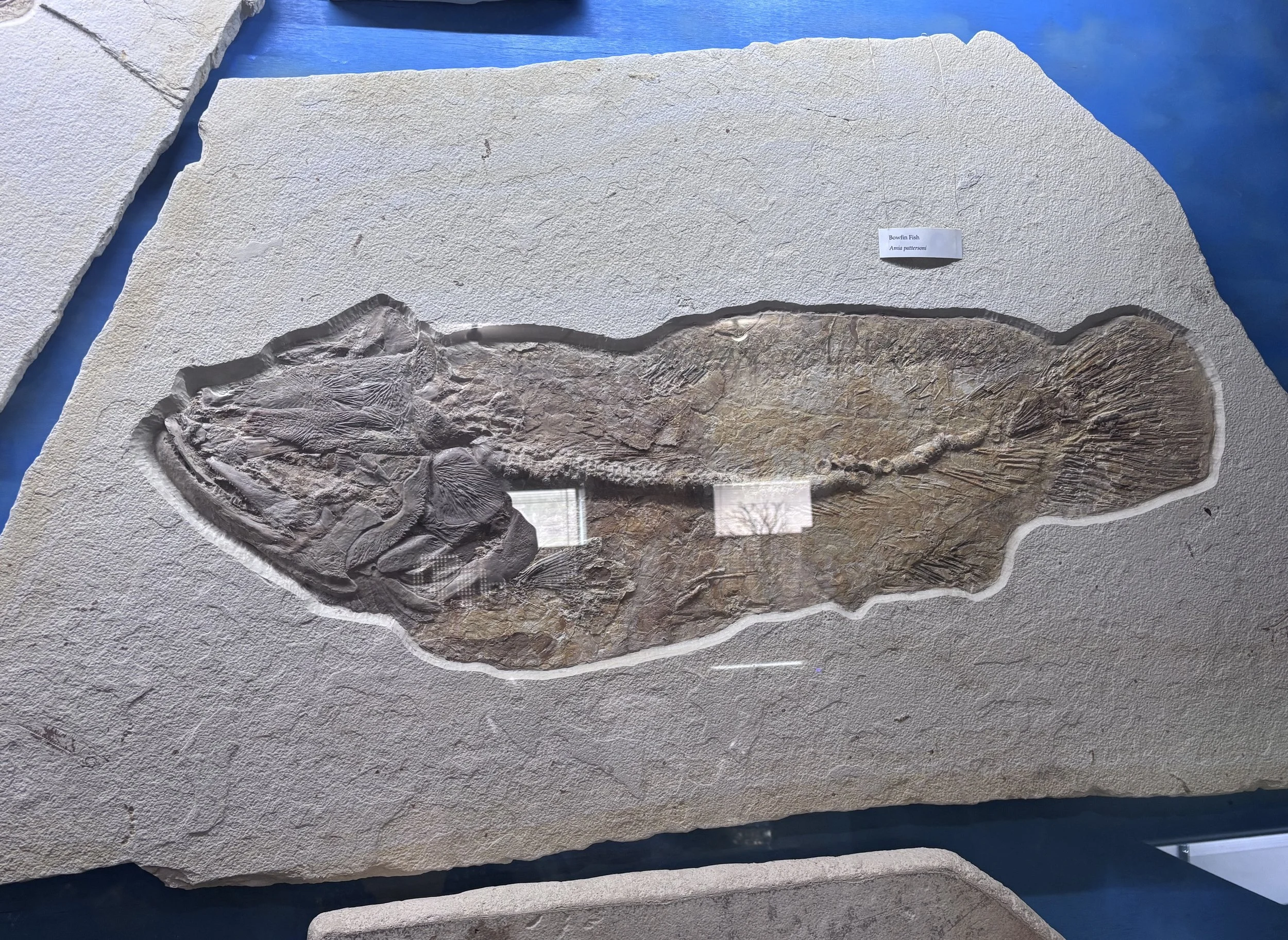
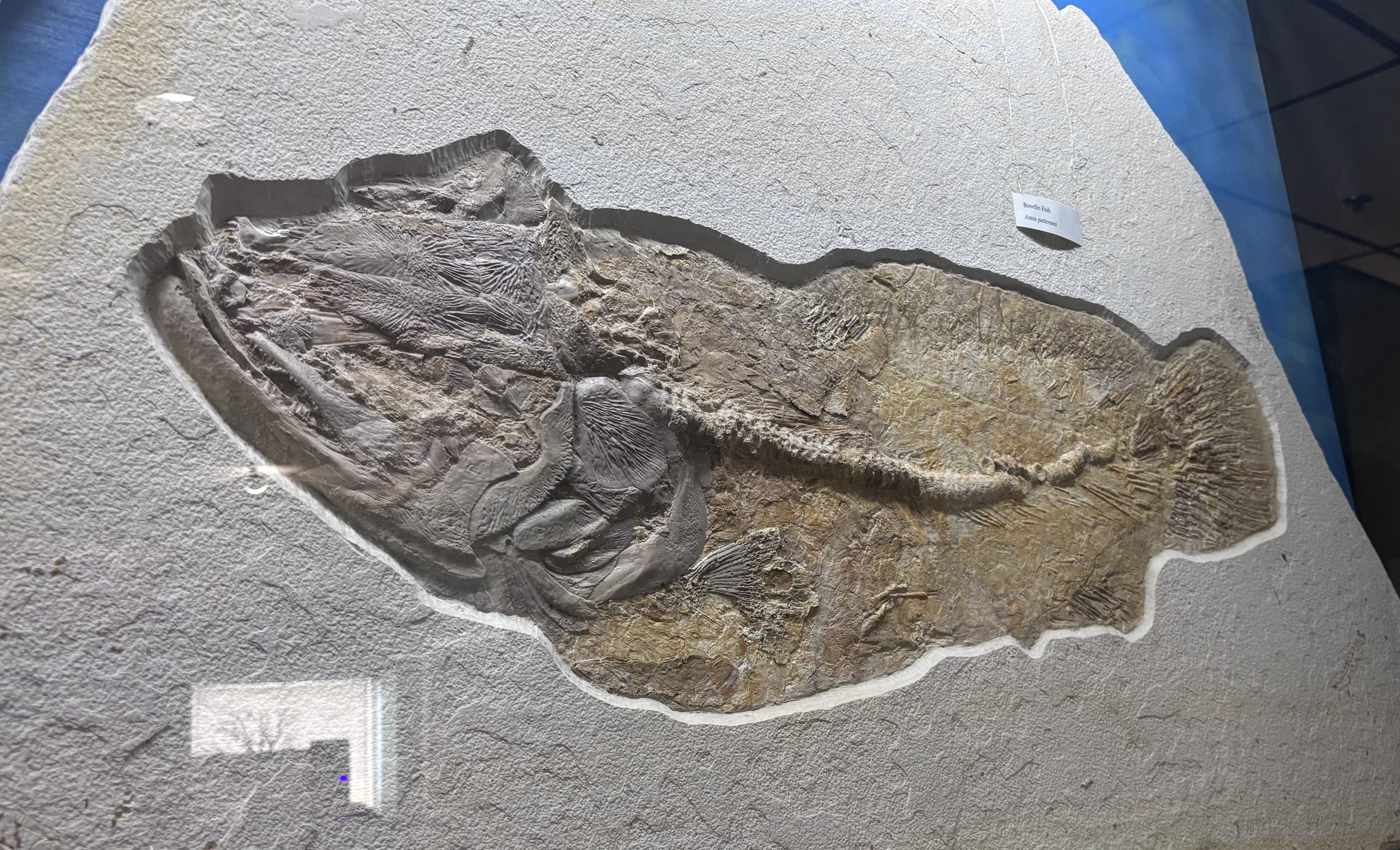
Amia pattersoni was a large bowfin fish–– so called because of the arcing curve of their dorsal fin –– that lived throughout North America, Asia, and Europe from the late Cretaceous to the early Eocene. They are one of several bowfin species found in the Green River Formation. They were predators of the freshwater environs of Green River and are often found fossilized with smaller fish in their mouths or stomachs.
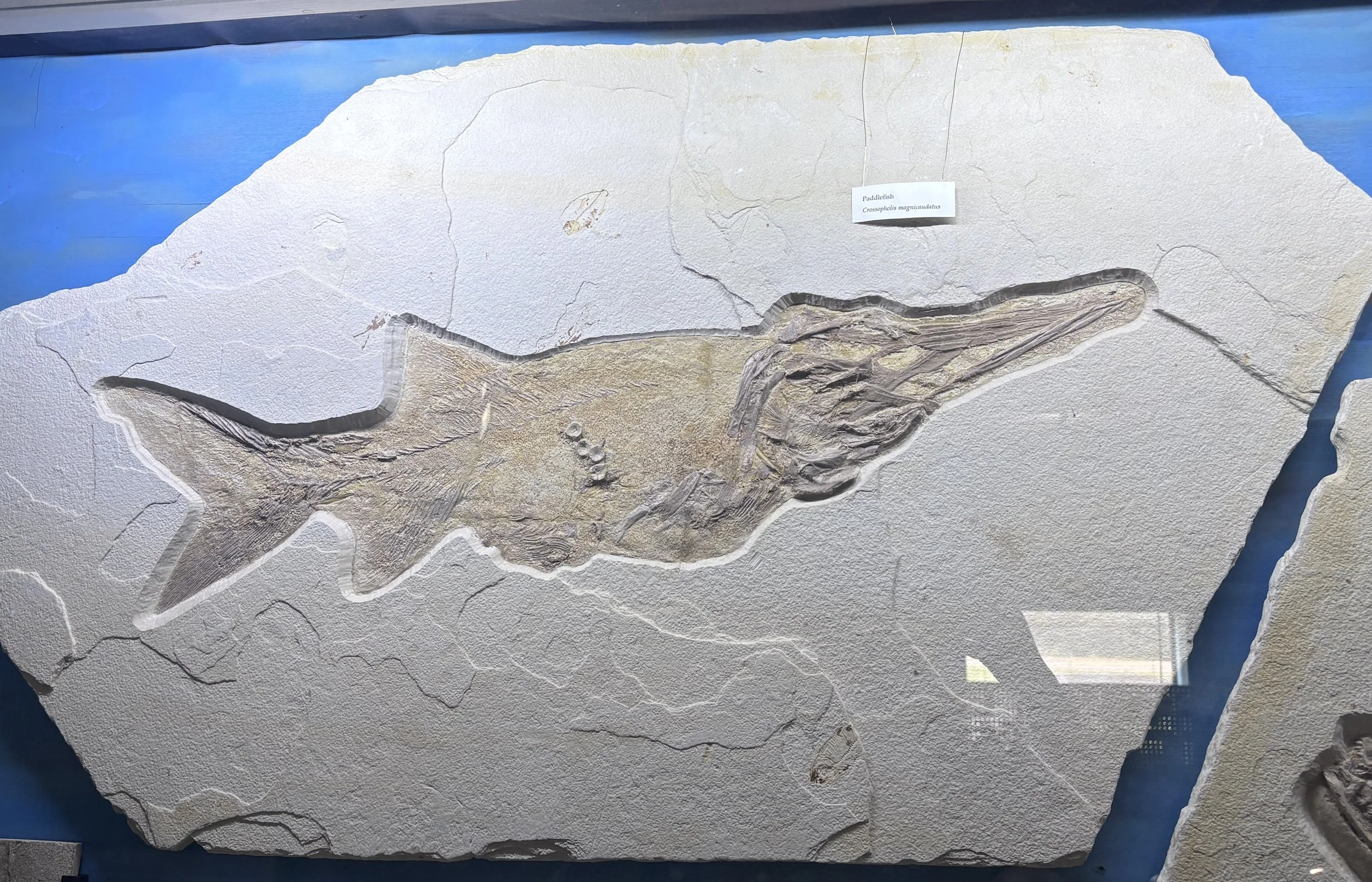
Paddlefish are a relatively rare find in the Green River Formation, making up only 0.02% of the fish fossils excavated there. Specimens of the Crossopholis magnicaudatus range from about 1 to 5 feet in length and had a bony protrusible jaw (jaws that lunge forward independently of the skull) used to hunt smaller fish, unlike its closest modern relative, the Polyodon, which exclusively filter feeds.

The most famous of the placoderms was the Dunkleosteus, one of the first apex predators of the ancient oceans. The Dunkleosteus did not have teeth, instead using its armored jaw pieces to slice into prey like a large, very powerful pair of scissors (jaw cast pictured here) . Like all placoderms, the fossil evidence for the Dunkleosteus is generally limited to the fossil armored plates, which has left the “Dunk”’s true size up for debate. The current consensus is that they were comparable in size to a modern Great White Shark with stout, chunky proportions. Ultimately, the Dunkleosteus went extinct at the end of the Devonian due to extreme climate change


Placoderms were a class of prehistoric fish which sported bony amor plating over their heads and chests. These plated fish dominated in the early oceans but were eventually out competed by sharks and other non-plated fish. While their plating offered protection, it also made their energy needs higher and their swimming less agile and quick. Eventually, the last of placoderms went extinct due to extreme climate change and lower oxygen levels in the oceans.

Edestus heinrichi was a large shark-like fish that lived in the shallow seas on the Pennsylvanian. They were formidable predators, growing up to 22 feet and had mouth full of bizarrely positioned teeth. The Edestus did not simply shed its teeth like more modern sharks, it instead had a ‘tooth whorl’ which acted a bit like a conveyer belt of teeth–– the old teeth would migrate forward to make room for new ones. Near the front of its mouth, its jaws curled outward, resulting in a strange but effective tool for catching prey.


Pleuracanthus robustus was a freshwater shark that lived during the Pennsylvanian period. They were eel-like in appearance and grew to be about 1.5 feet long. They are most famous for their long spine that protruded from their head and their two-pronged teeth that helped them grab and hold onto food.

In the waters of old Baravia, Germany, the Tharsis dubius, a small carnivorous ray-finned fish made their home. These tiny fish fed by sucking plankton and other tiny prey items into their mouths. Fossils of the Tharsis have shown that they often choked on their prey and died of suffocation.
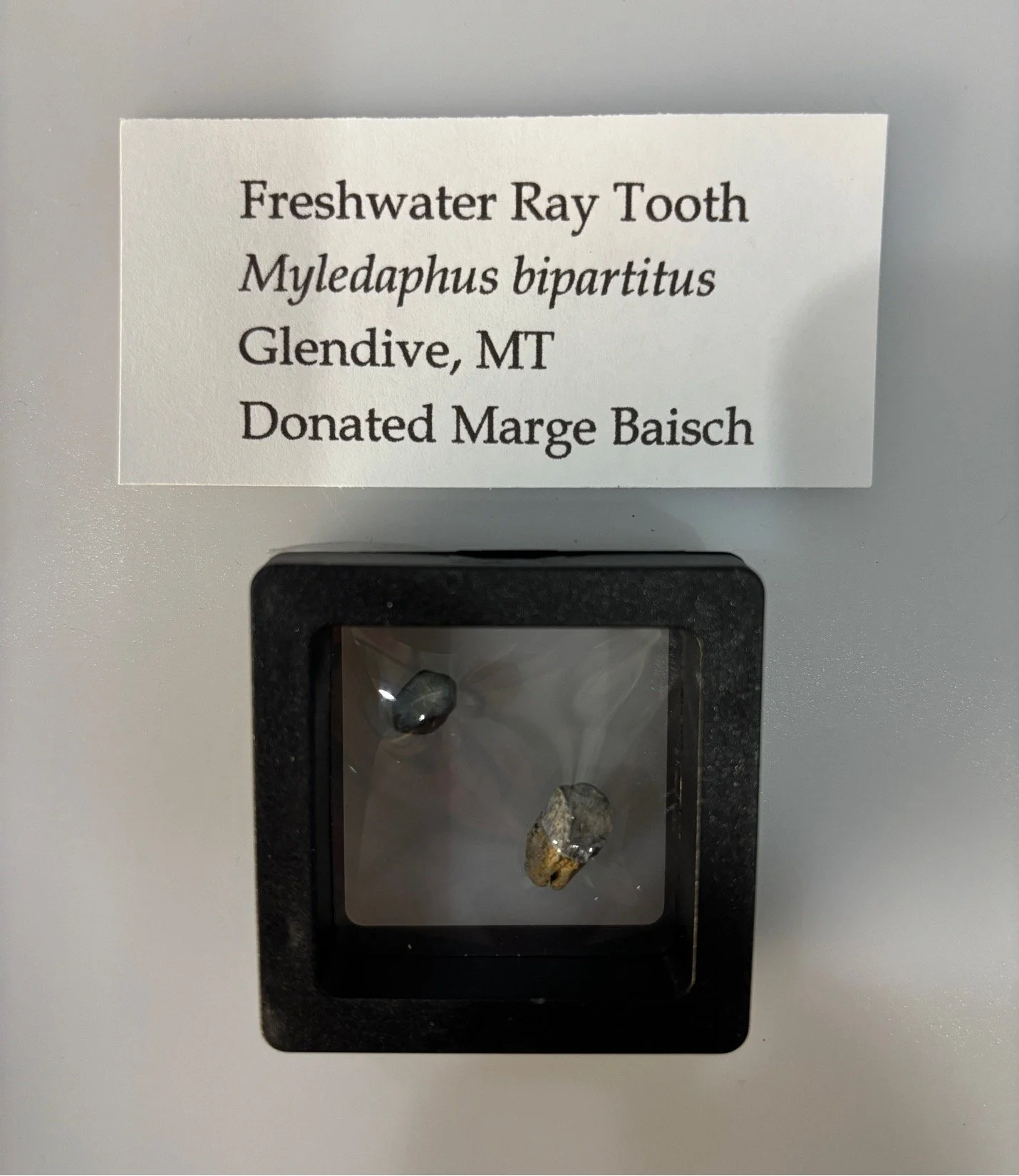
Myledaphus bipartitus was a freshwater ray whose fossils have been found in Western United States and Canada. Myledaphus bipartitus was related to modern rays and guitarfish. Most of the fossils found have been fossil teeth which were used to crush the shells of clams and other bivalves.
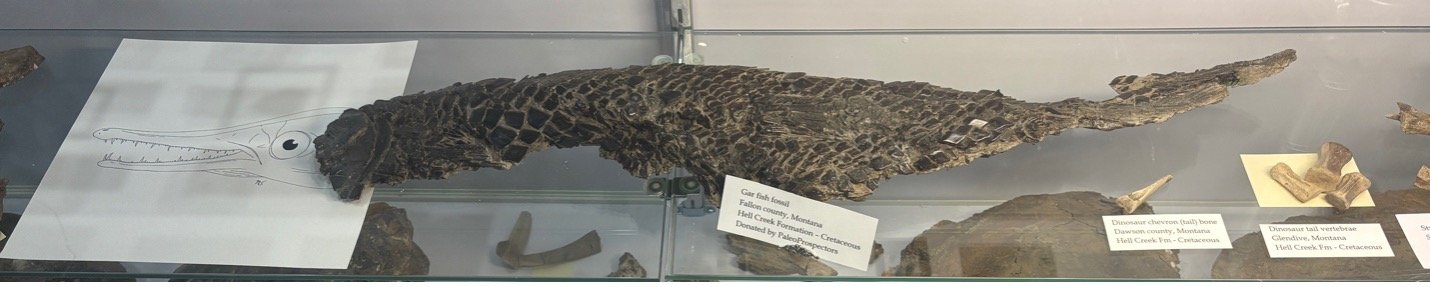
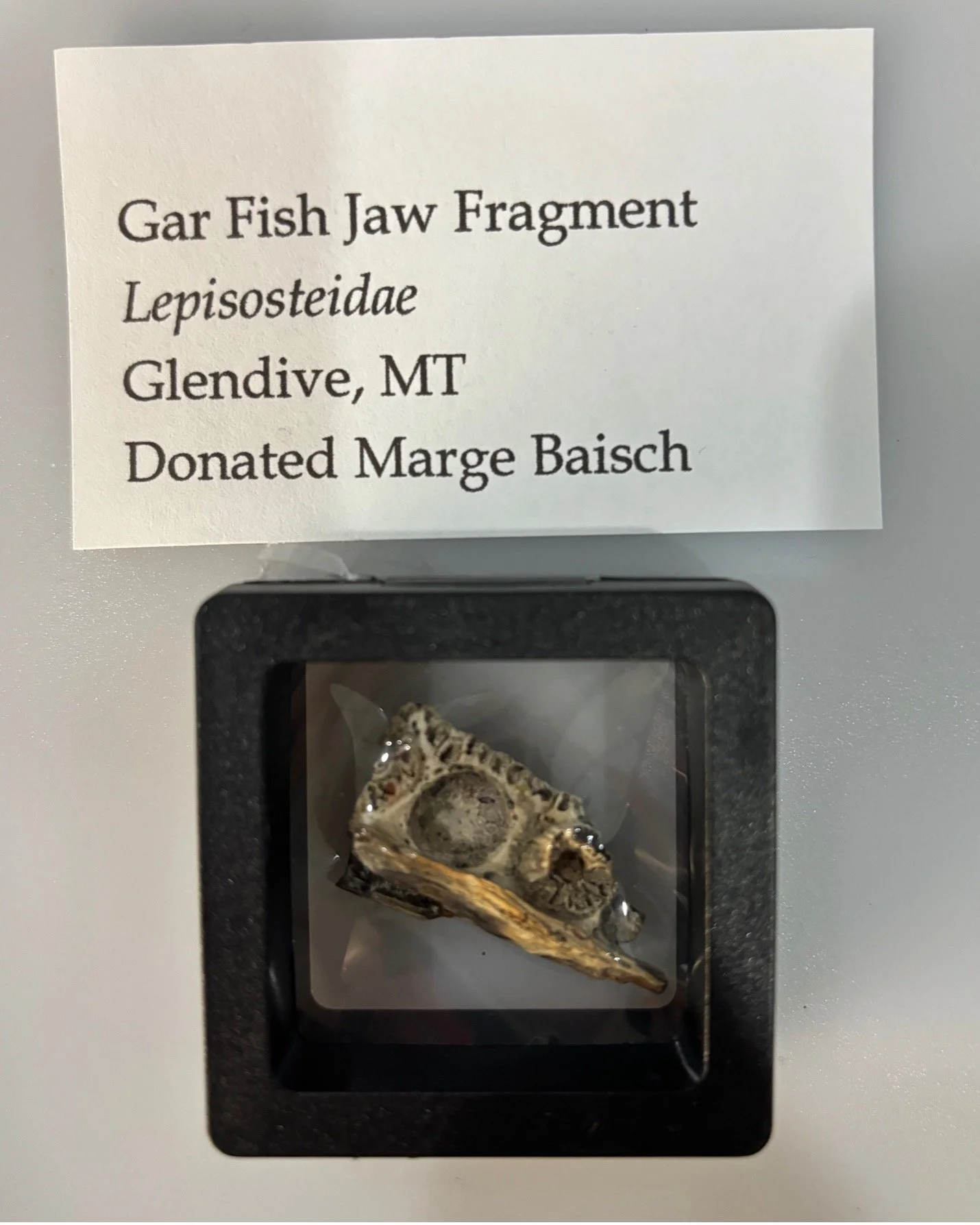
Gar fish are long-bodied freshwater fish who possess armored scales along their bodies. Gars belonging to Lepisosteidae first developed in the early Cretaceous, but ancestors to these Gar first show up in the fossil record during the Jurassic Period. Gars are often called ‘living fossils’ as they have gone virtually unchanged over the last 100 million years. There is plenty of fossil evidence for the Gar in the Hell Creek Formation; their armored scales fossilize very well and appear a bit like shards of obsidian among the dirt.
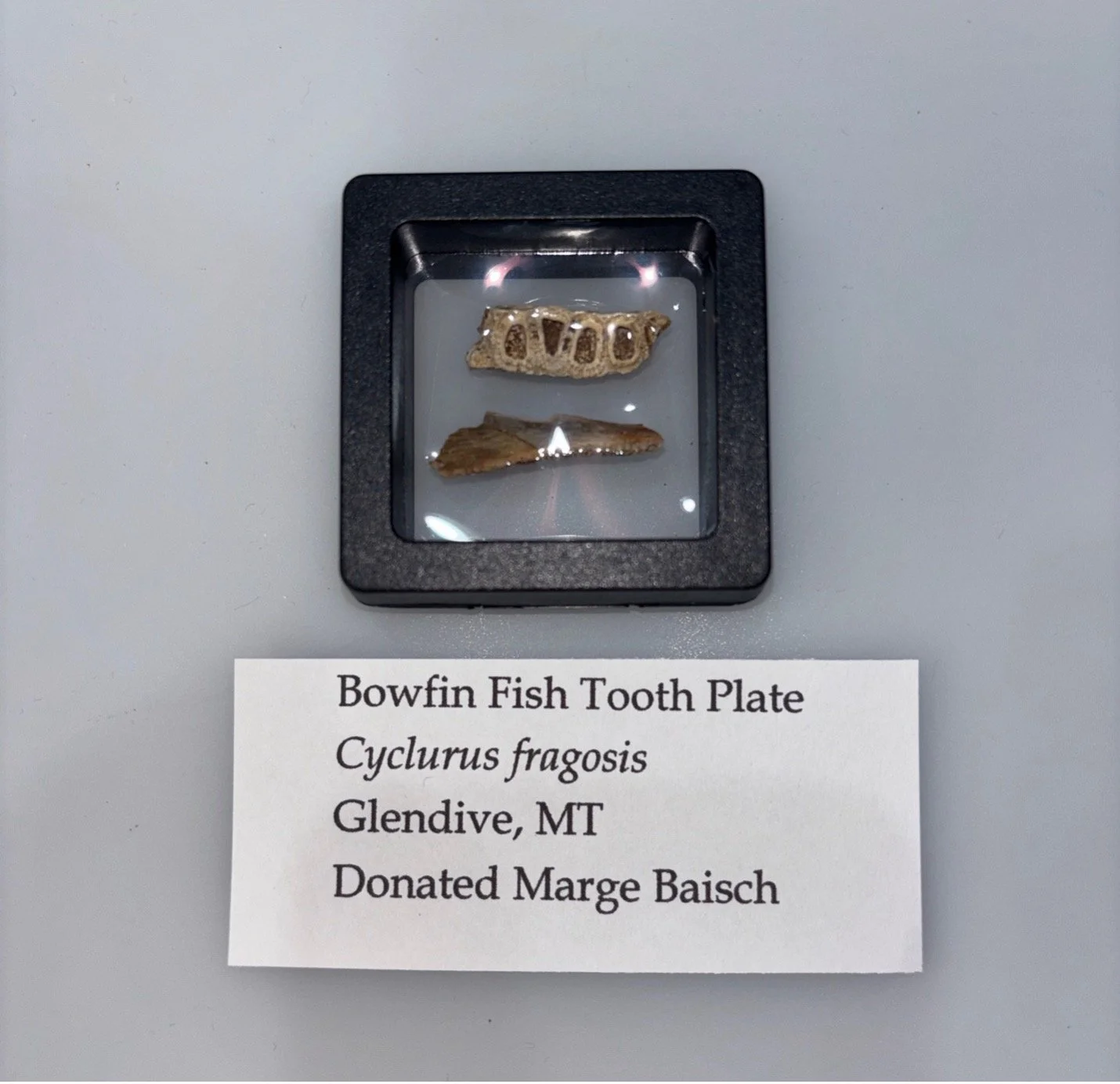
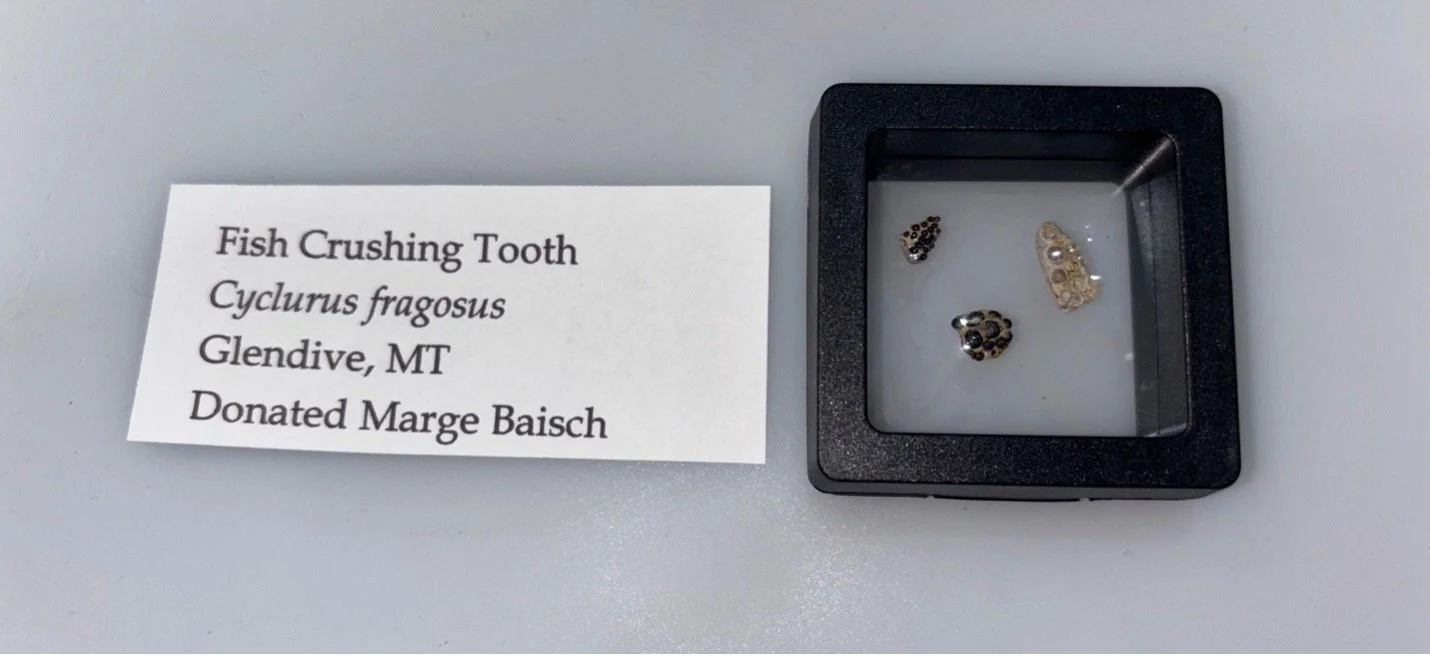
Cyclurus fragosus was a species of bowfin fish that is most often found in the Hell Creek Formation.Cyclurus are thought to be the closest relatives of modern bowfins, but much smaller than their extant counterparts, only growing between 4 and 12 inches long.
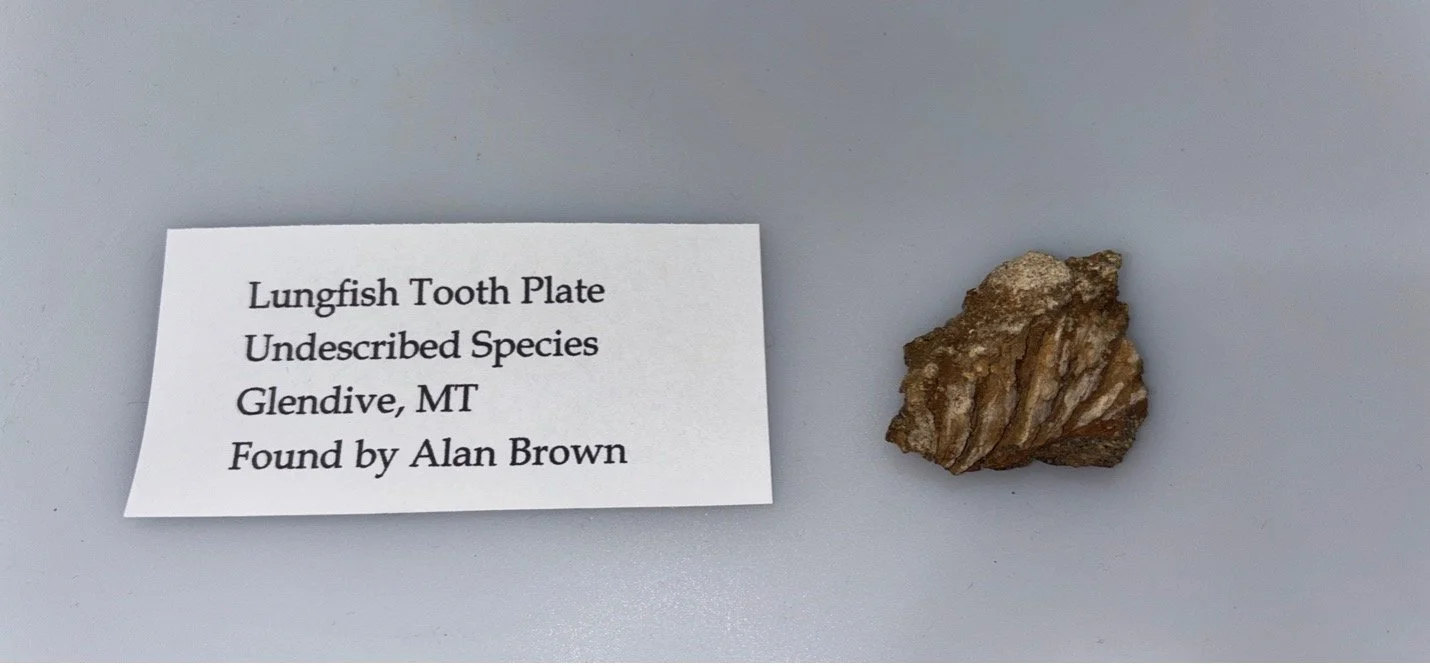
(Early Devonian – Present)
Lungfish are long, eel-shaped fish that can breathe air. While some species of lungfish possess both lungs and gills, they have an advantage over gill-exclusive fish types because they are able to survive in oxygen poor waters and withstand droughts, which may explain why they have managed to stay relatively unchanged over the last 400 million years. Lungfish are considered a “missing link” in the evolution of mammals, reptiles, amphibians, and birds as they are the closest relative to early tetrapods (or all vertebrate animals with four limbs).

The Squalicorax falcatus, or the Crow Shark, was a mid-sized predatorial shark species that lived during the Cretaceous period, whose fossil teeth are found in North America, Europe, and North Africa. It grew to be about 16 feet long and preyed on fish, mosasaurs, and sea turtles. A Crow Shark tooth was found imbedded in the foot bone of a hadrosaur, showing that they even scavenged land animals that were swept out to sea.
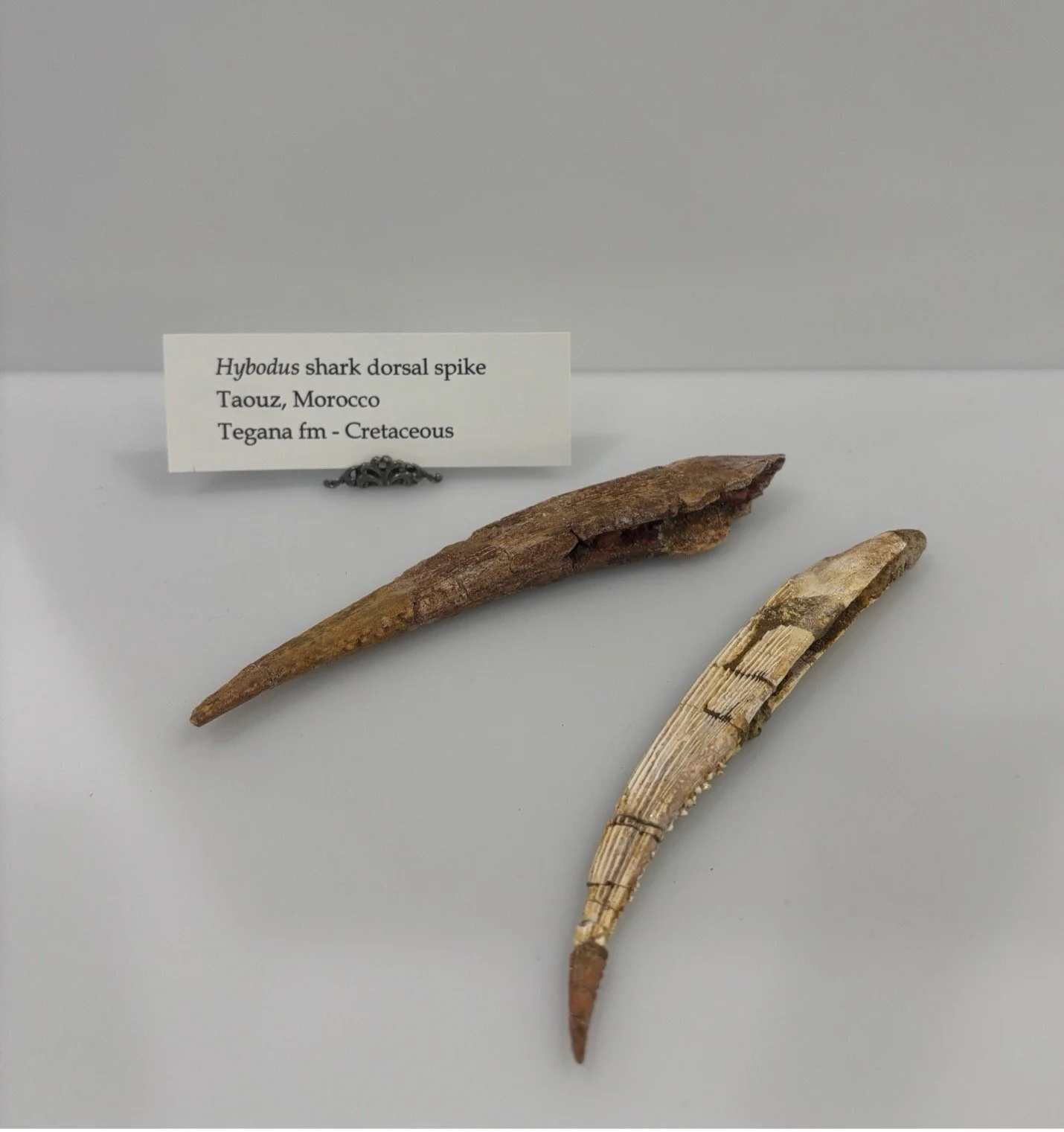
Ancient Shark (Permian – Cretaceous)
Hybodus was a genus of shark that had great success in the ancient oceans. It was about 6 feet long and had small crown of spikes on its head and two more larger spikes by its dorsal fins. These spikes would have protected the shark from bigger predators, which partly contributed to its success. Another trait Hybodus had was two types of teeth for two types of prey. The teeth at the front of its mouth were sharp, used to bite down on prey, while the teeth in the back of its mouth were flat and could crush and break down hard shells and bones—a little like your own molars.
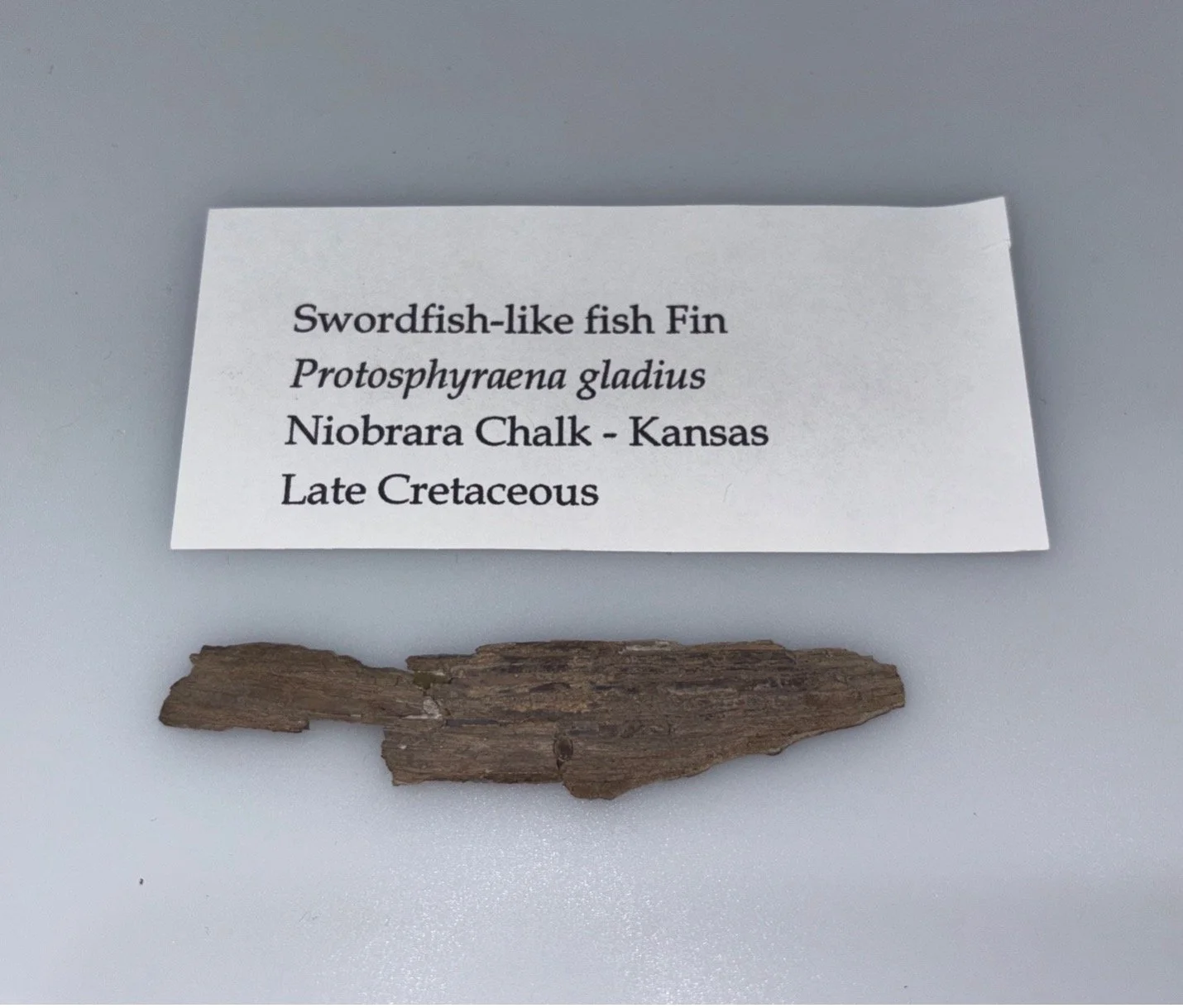
Swordfish-like Fish (Cretaceous)
Protosphyraena gladius was a giant, predatory fish that lived during the Cretaceous period. It grew to 6.5 to 10 feet in length and bore a resemblance to modern swordfish despite belonging to a different evolutionary lineage. The long rostrum (the sword-looking part) on its upper jaw was likely used to incapacitate prey.
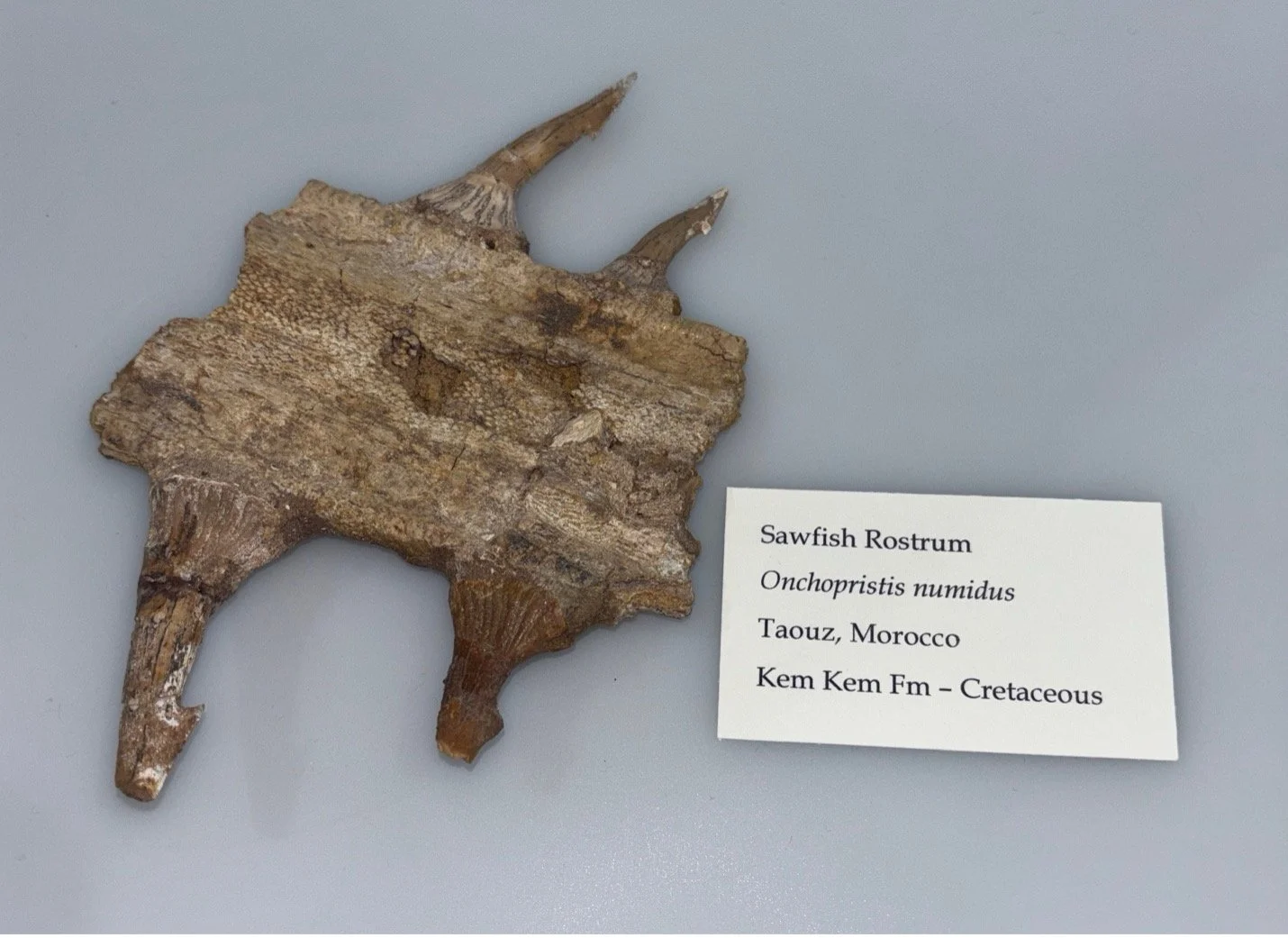
Onchopristis numidus, or the ancient sawfish, was a large, odd-looking fish with teeth all along their rostrum (or snout), resembling a chainsaw. To hunt, the sawfish would swipe its snout at prey, impaling fish along the bottom of the ocean floor. Though they resemble modern sawfish, they are not closely related. This is an example of convergent evolution, in which multiple animals adapt similar solutions to survive in their environment.
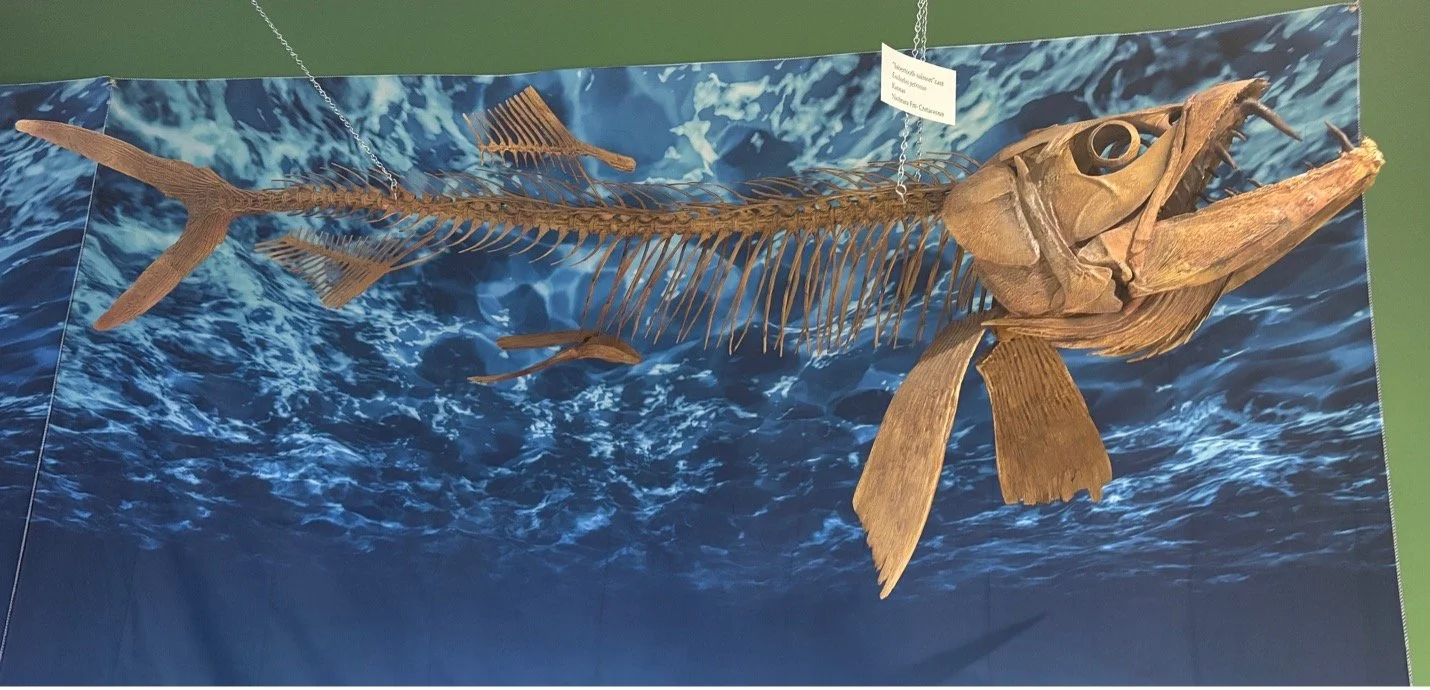
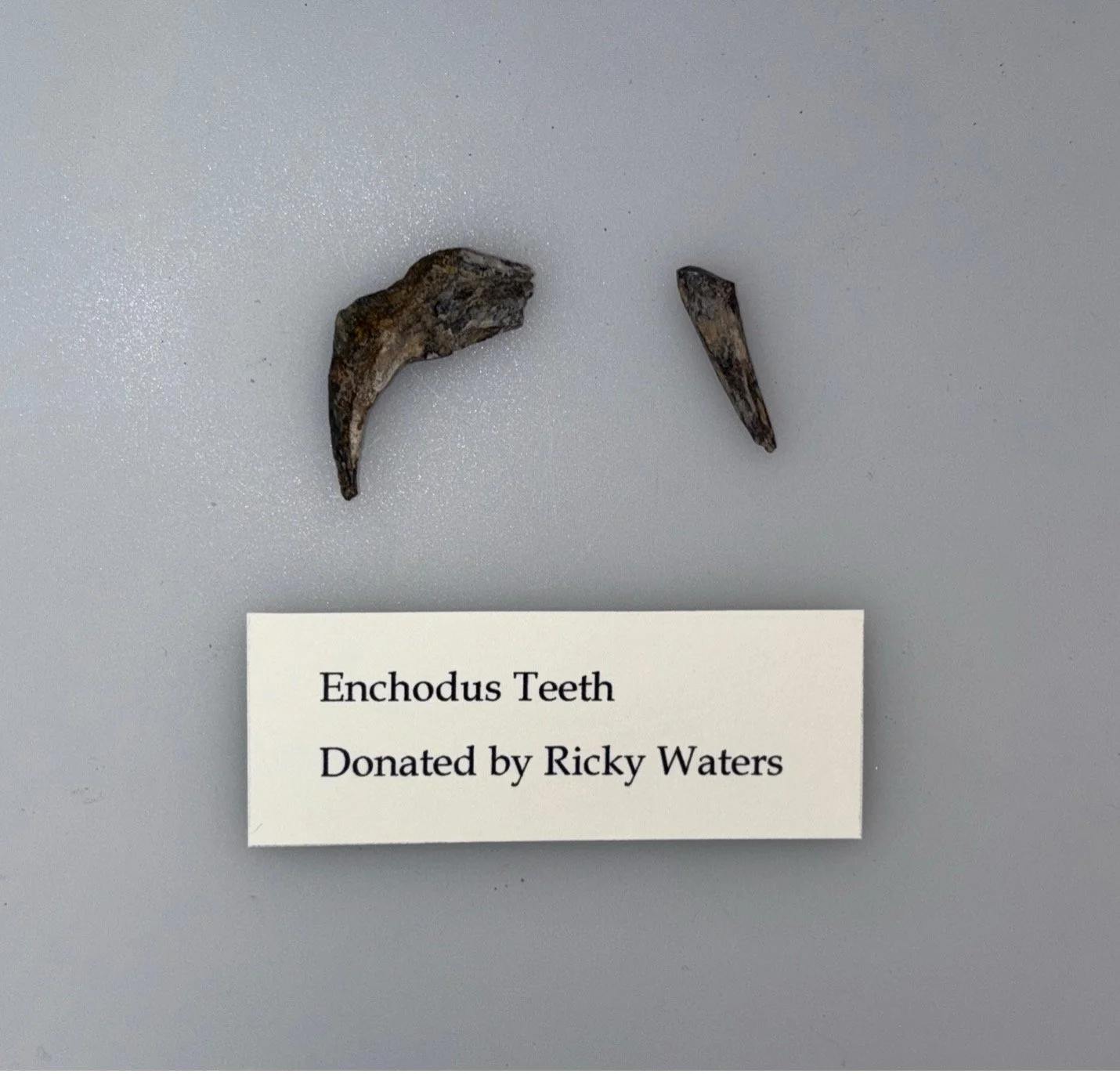
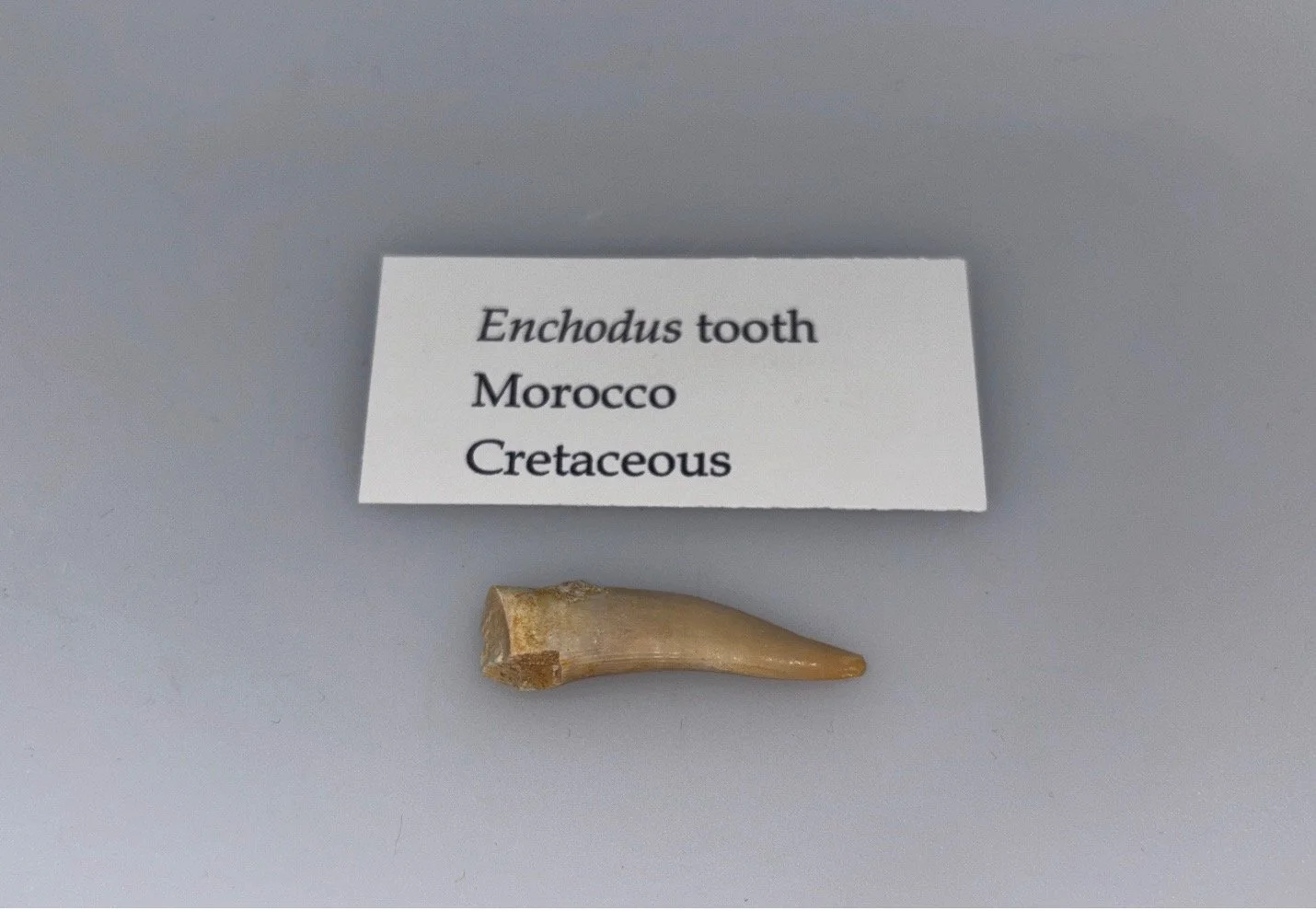
Enchodus was a genus of carnivorous fish that made the Cretaceous oceans their hunting ground. Different species in the Enchodus genus ranged in size, some adapting to hunt larger prey than other, but all had a mouth full of sharp teeth and a powerful bite. Enchoduspetrosus was the largest species of its kind, growing to about 5 feet in length. Its diet included smaller fish, cephalopods like squids and mollusks, and crustaceans.
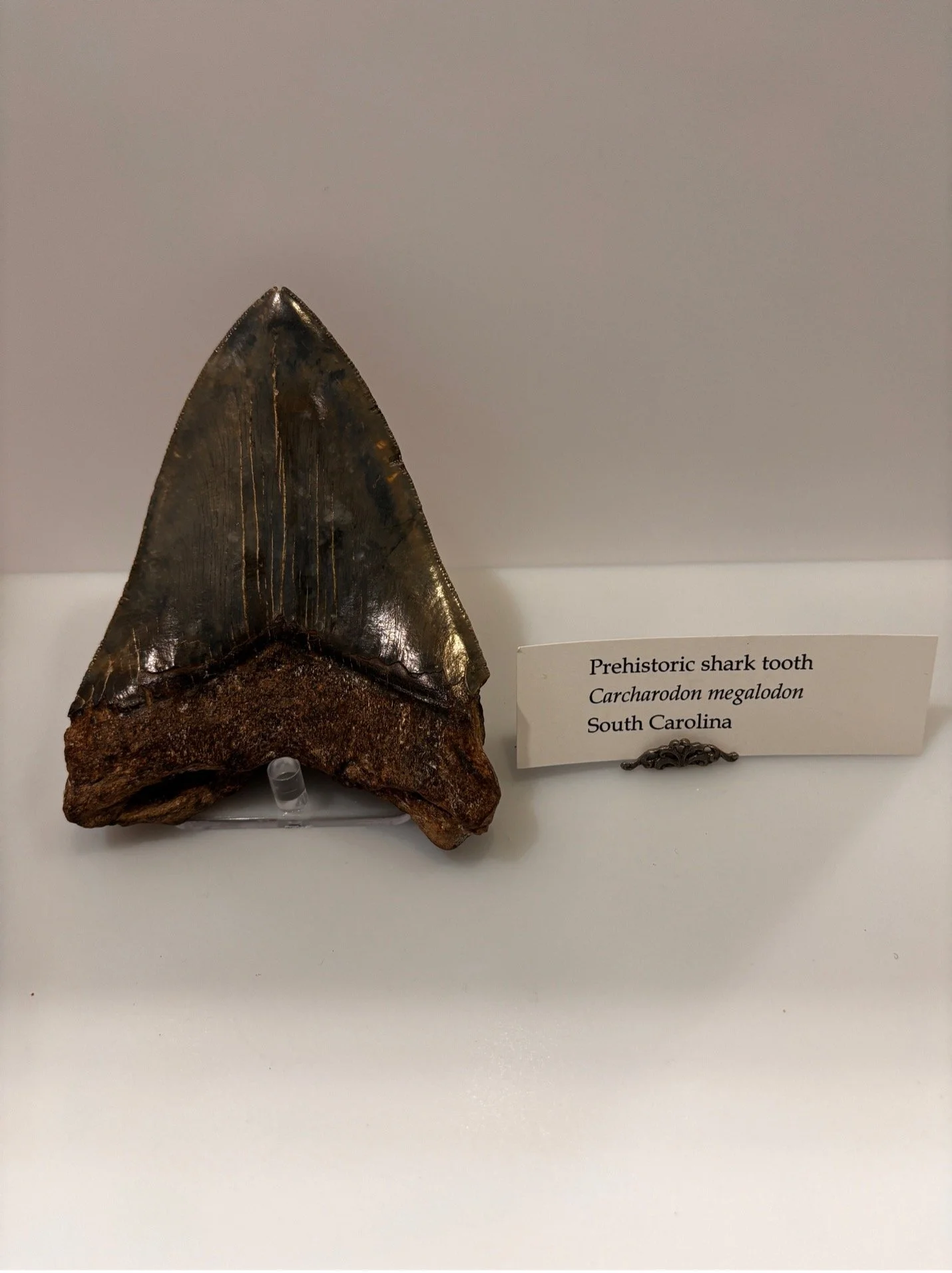
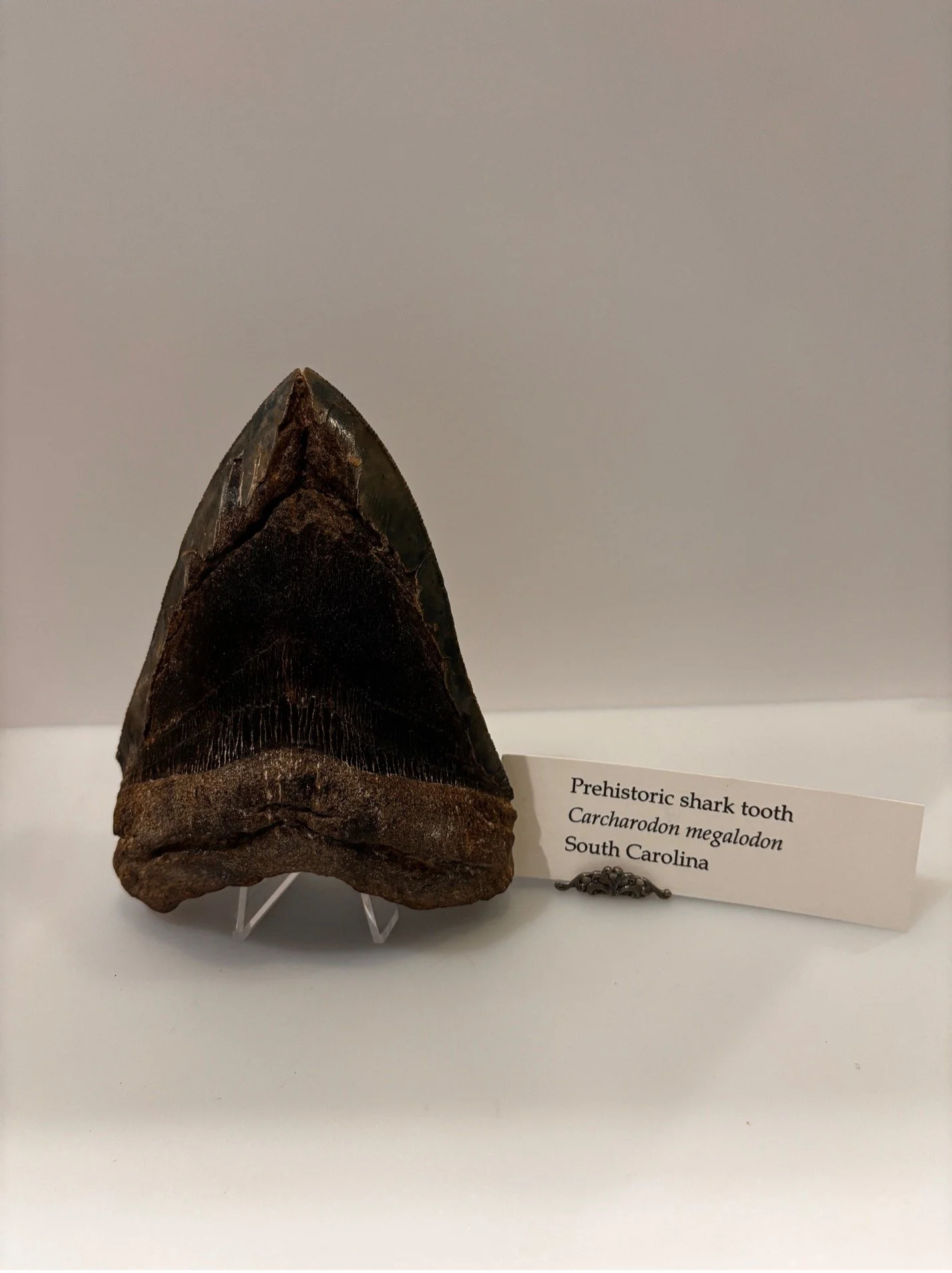
Megalodons were the largest shark to ever live, and one of the largest fishes. Our understanding of the Megalodon is limited, as most of its cartilaginous skeleton does not preserve like normal bone, therefore most size estimations come from comparing their tooth size with modern sharks. The current estimation places Megalodons at about 80 feet long (for reference, that’s about an entire lane at the bowling alley). Megalodons were wide spread across the planet’s oceans, and their teeth have been found washed up on every continent but Antarctica.
No results match your search. Try removing a few filters.