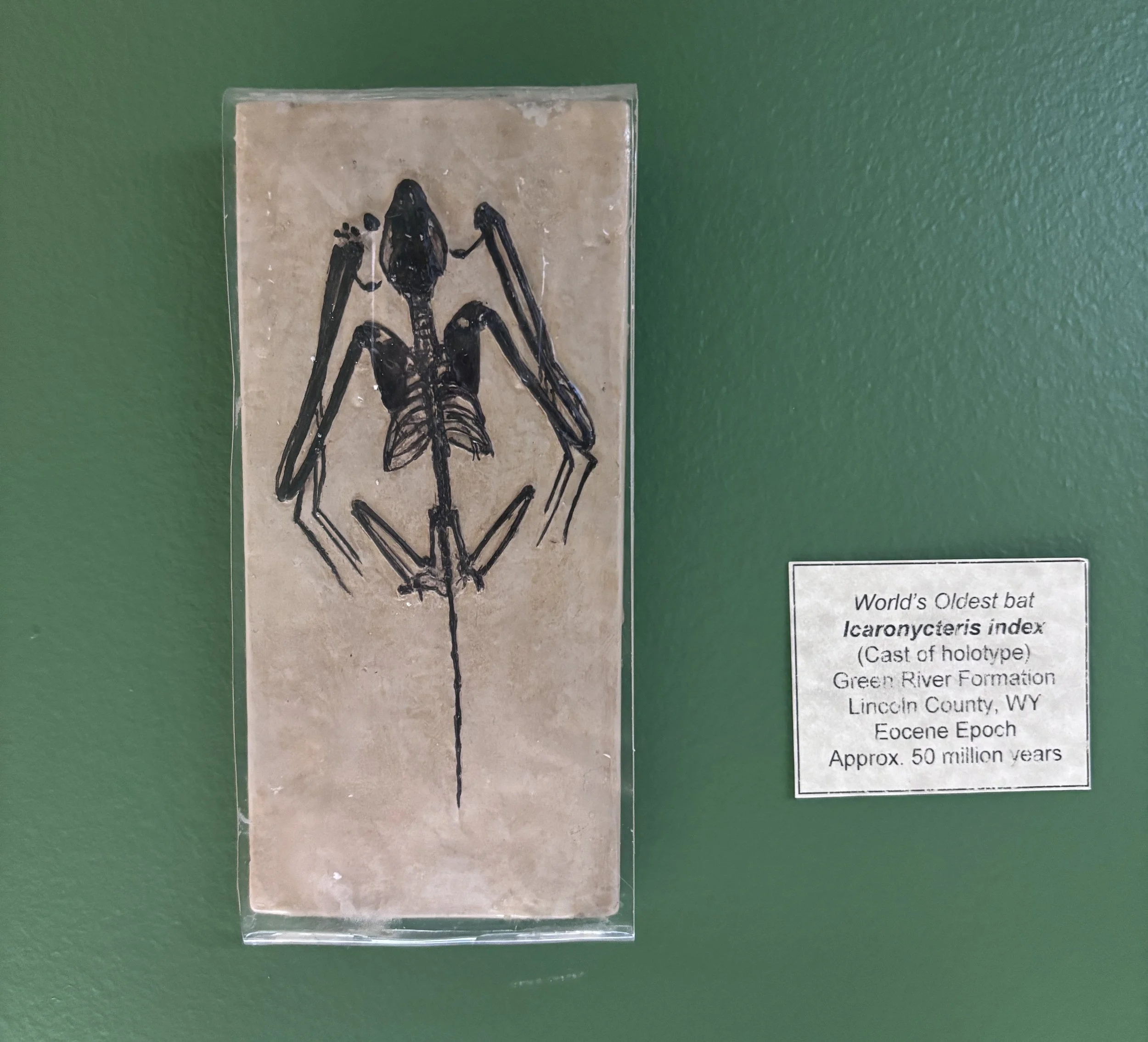
Icaronycteris index is an extinct species of bat that is found exclusively in the Green River Formation in the American West. The genus Icaronycteris contains the oldest species of bats ever found (about 50 million years old) and has been instrumental in teaching us about the evolution of bats. Because bat bones are lightweight and delicate, there are currently no complete specimens of older relatives of the Icaronycteris index (and the slightly older Icaronycteris gunnelli), which shrouds the bat lineage in mystery. The fine grain of the Green River Formation’s sediment has allowed for a few complete preserved skeletons of these early bats, and hopefully their prior lineage will be discovered in future excavations.
What is known is that these first true bats were small, used echolocation to hunt insects in midair, had long tails, a claw on their thumb and index ‘fingers’, and had membranous wings.
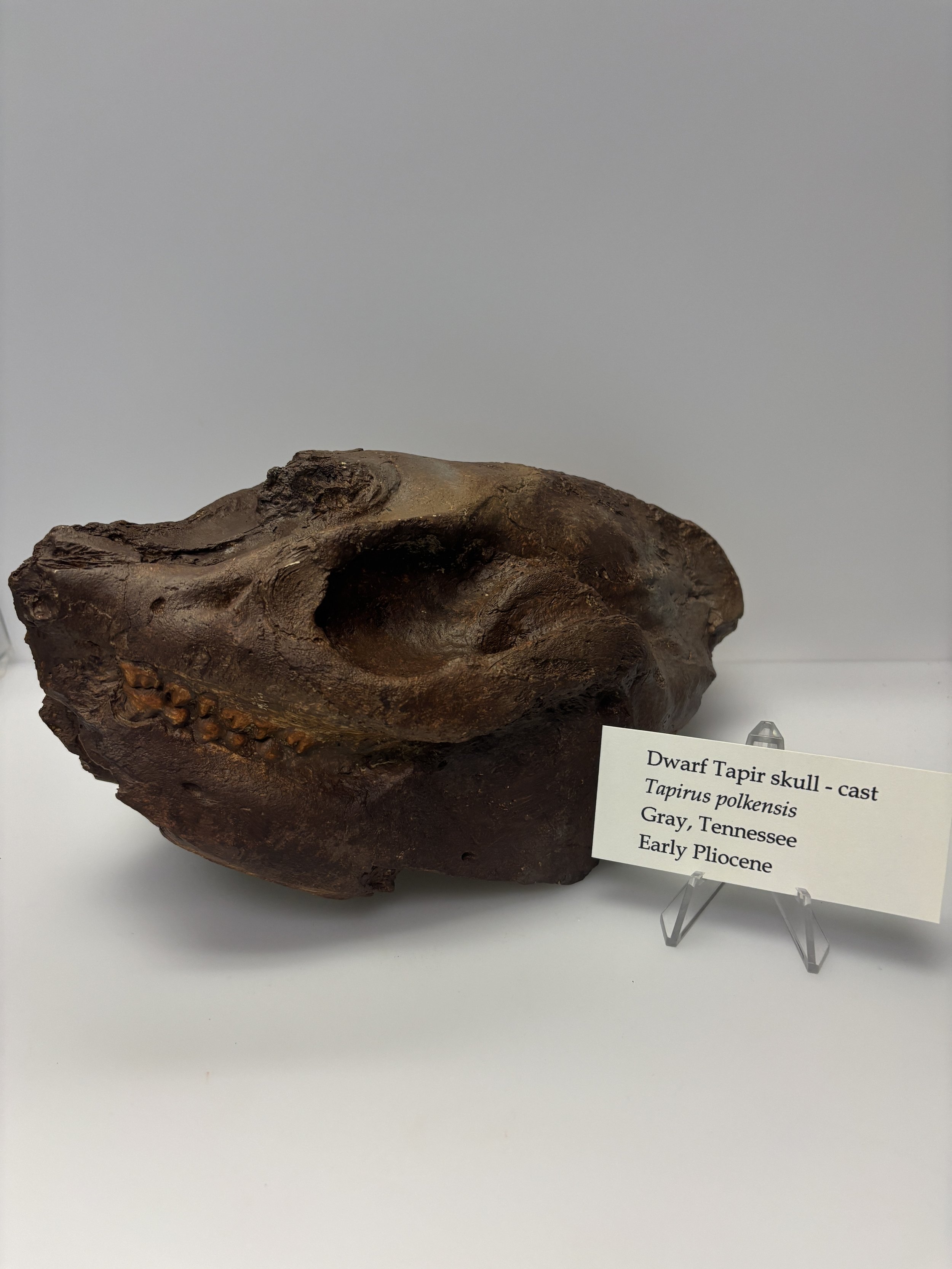
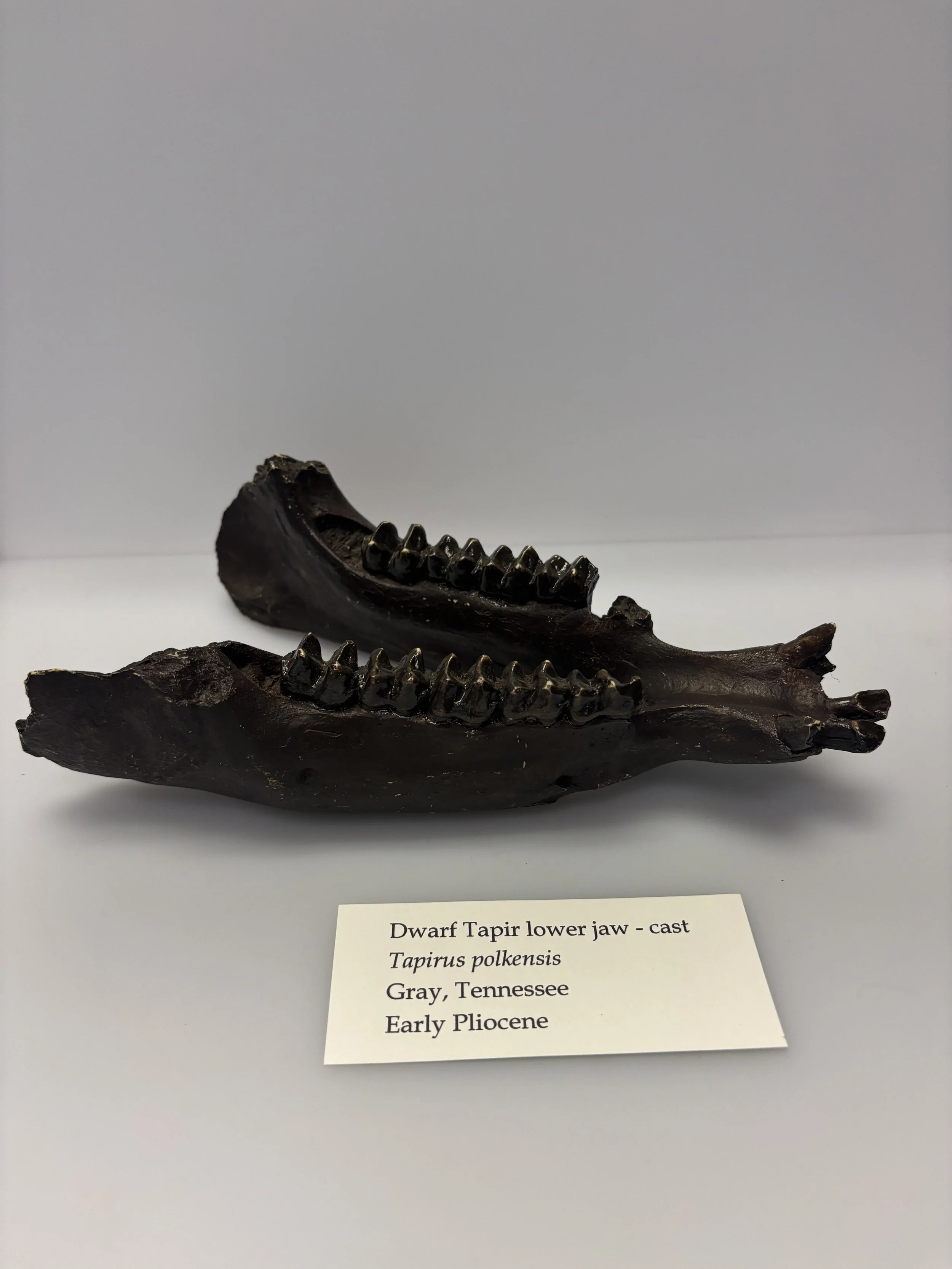
Tapirs are a type of animal that have gone largely unchanged over the years. Tapirus polkensis, an extinct species of tapirs whose fossils are regularly found at the Gray Fossil Site in Tennessee, are very similar to their modern relatives. These animals sported compact, sturdy bodies; hooved toes; and a proboscis or ‘trunk’ similar to an elephant’s. Tapirus polkensis, however, was much smaller than a modern tapir, the extinct species weighed around 276 lbs., as opposed to modern tapir species which can weigh anywhere between 330-880lbs.
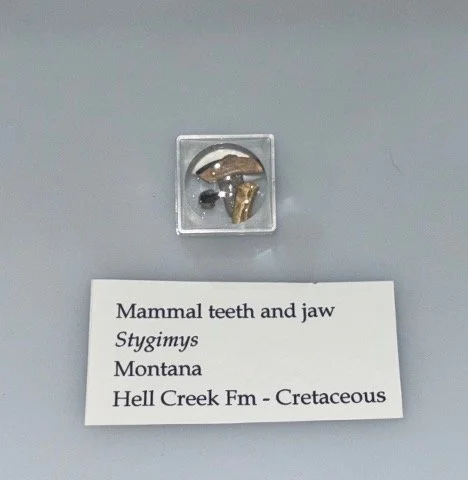
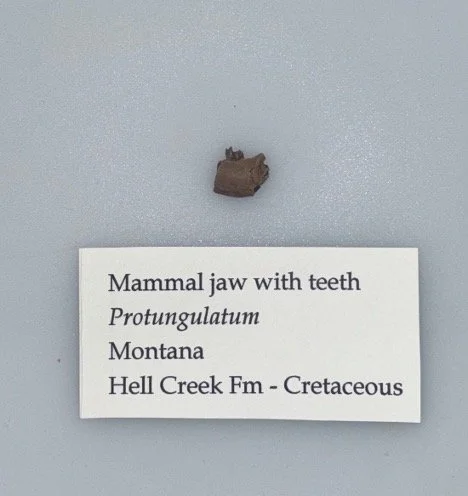
Stygimys is a genus of extinct mammals that originated in the Late-Cretaceous and lived in North America and Northeastern Asia. Like most mammals of the time, they were small and rodent-like in nature and belonged to the multituberculates, which is a now extinct order of mammals defined by their unique, knobby teeth.
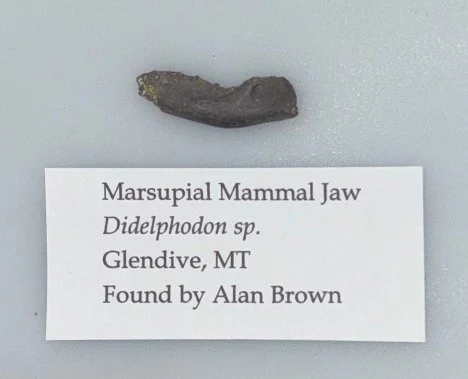
Didelphodon was an omnivorous and likely scavenging mammal that lived during the Cretaceous period. It was one of the largest mammals at the time, yet only grew about 3 feet long. It had sharp teeth and a strong bite force, which helped it crack the shells of turtles, clams, and snails. It also likely ate eggs, aquatic vegetation, and the carcasses of dinosaurs.
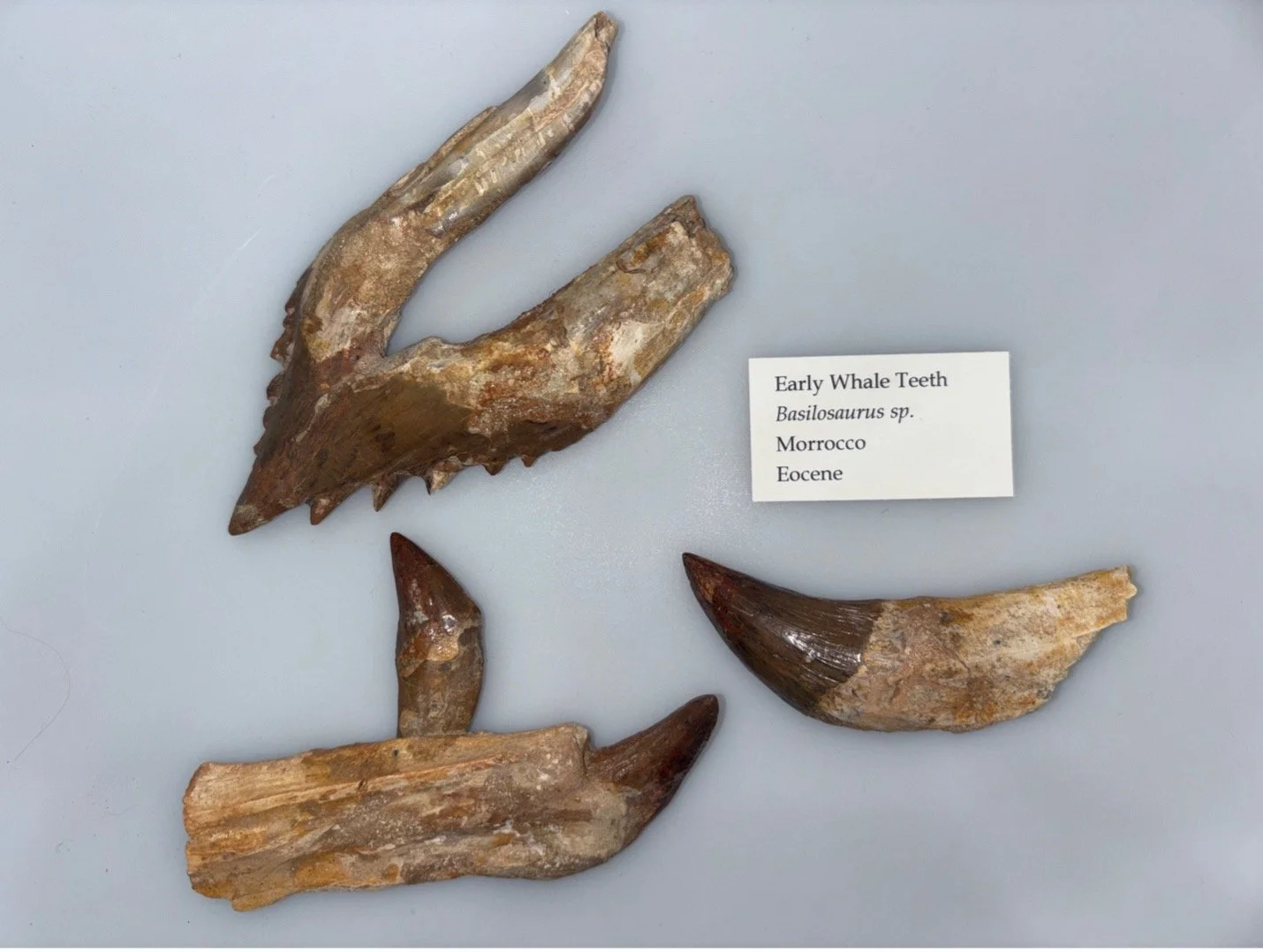
The Basilosaurus was an apex predator of the Eocene seas. Despite its reptilian name, they were marine mammals like whales. It is known for its prominent and intimidating teeth, which it used to hunt fish, sharks, and likely marine mammals. The Basilosaurus was long and slender, ranging between about 50-65 feet full grown. An interesting feature of their anatomy was their vestigial hind legs, which were not even attached to the skeleton and completely useless to the animal itself. Those legs do, however, tell paleontologists more about whale evolution, proving that whales’ ancestors once walked on land before returning to the water.
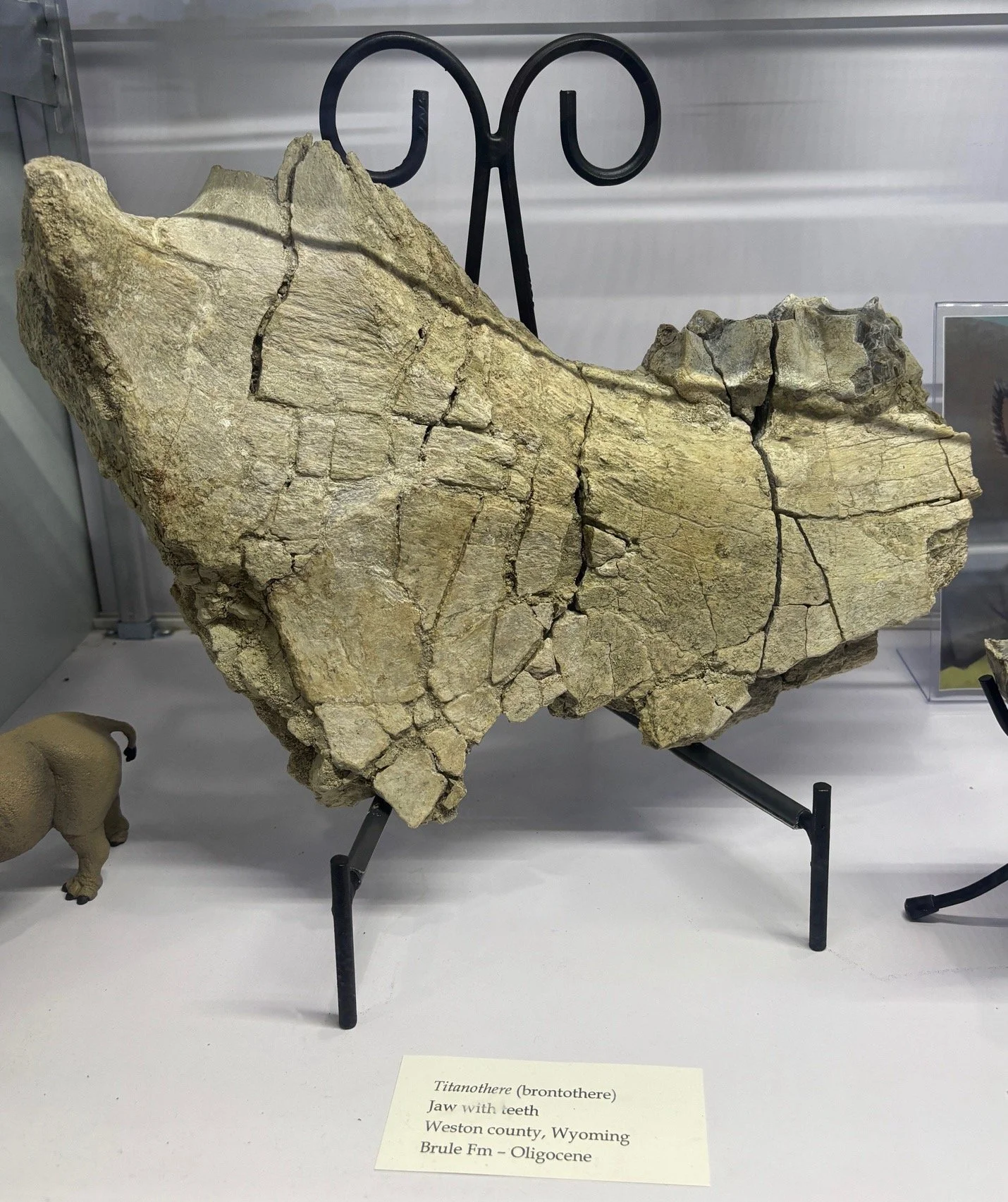
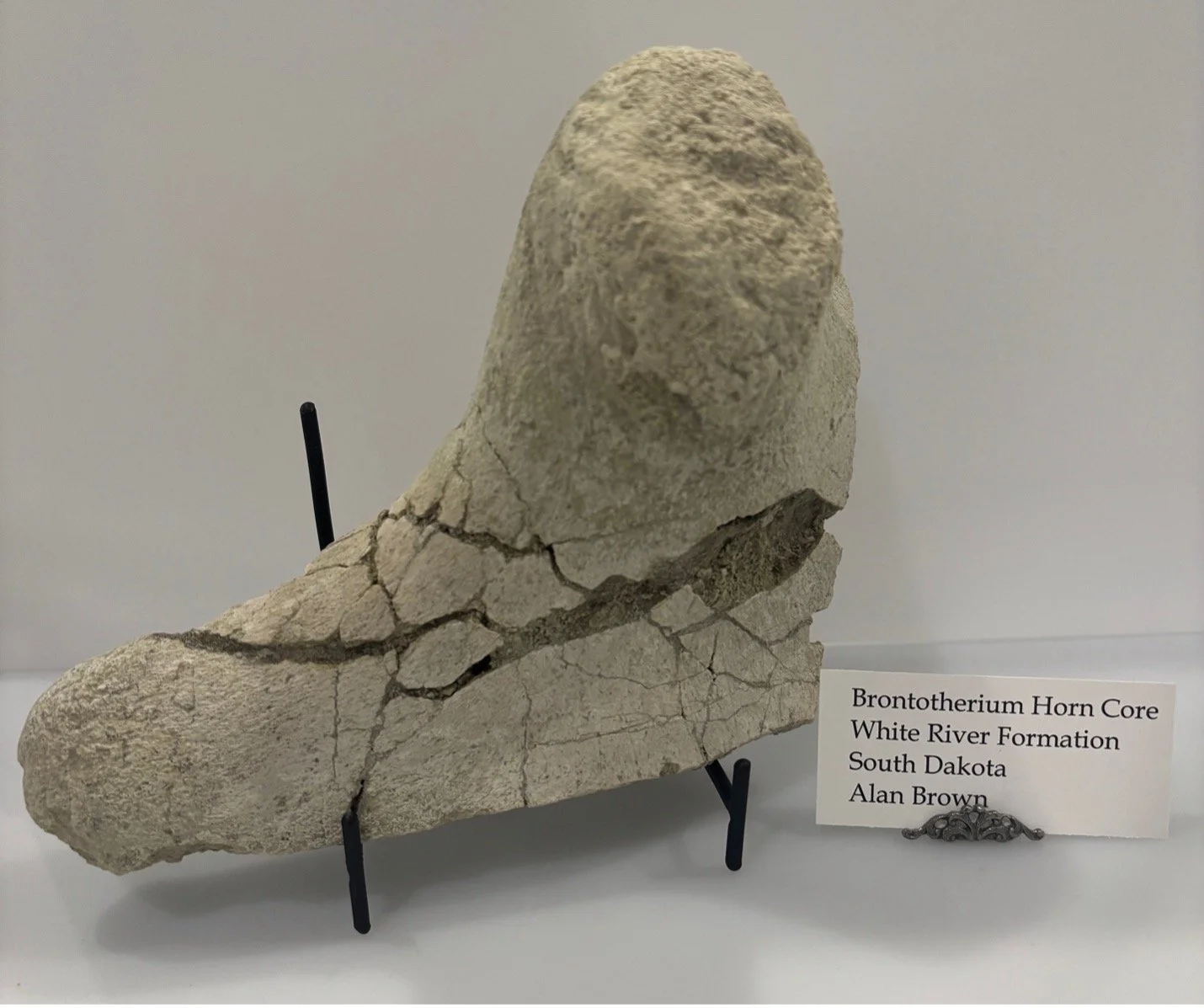
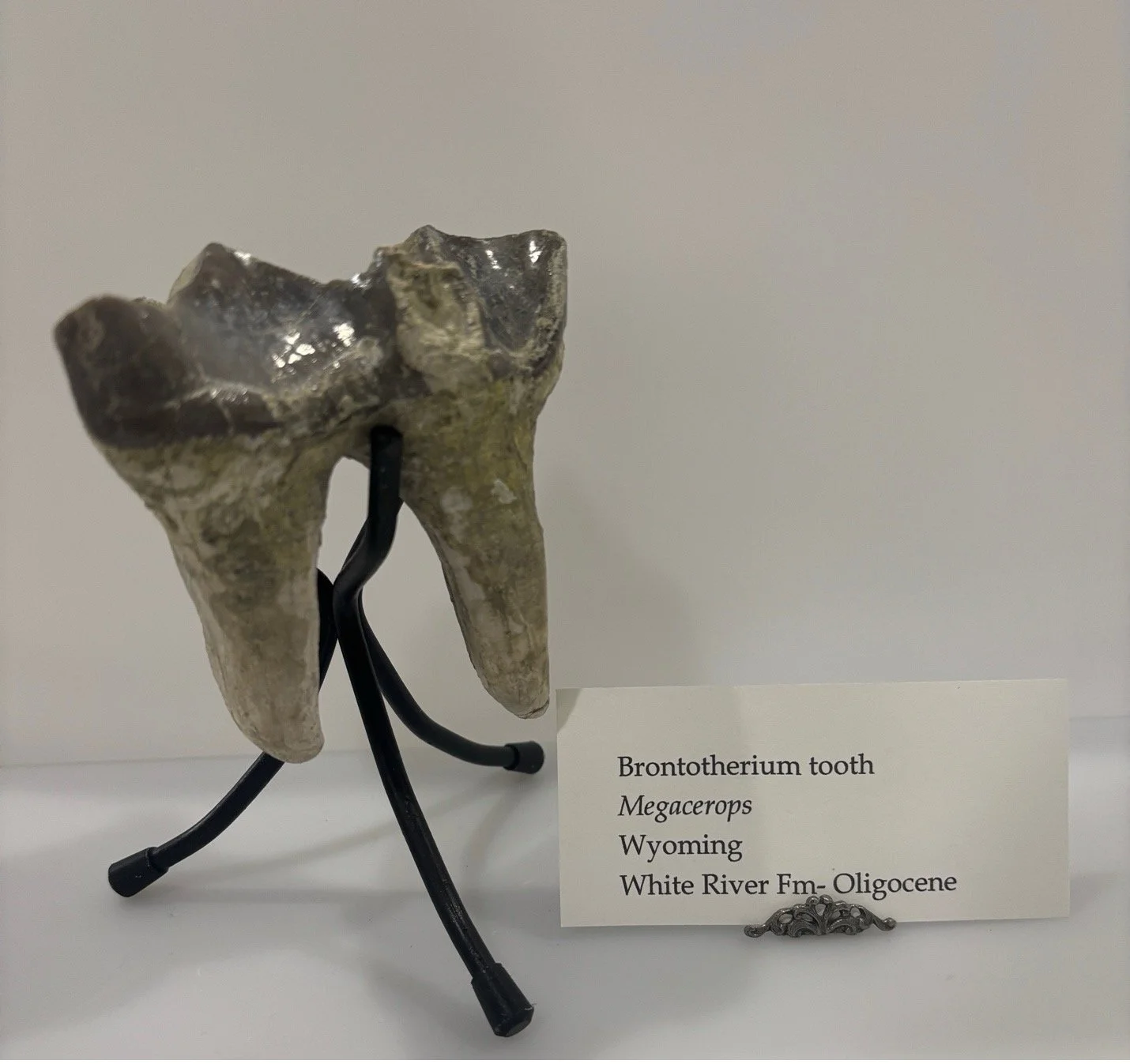
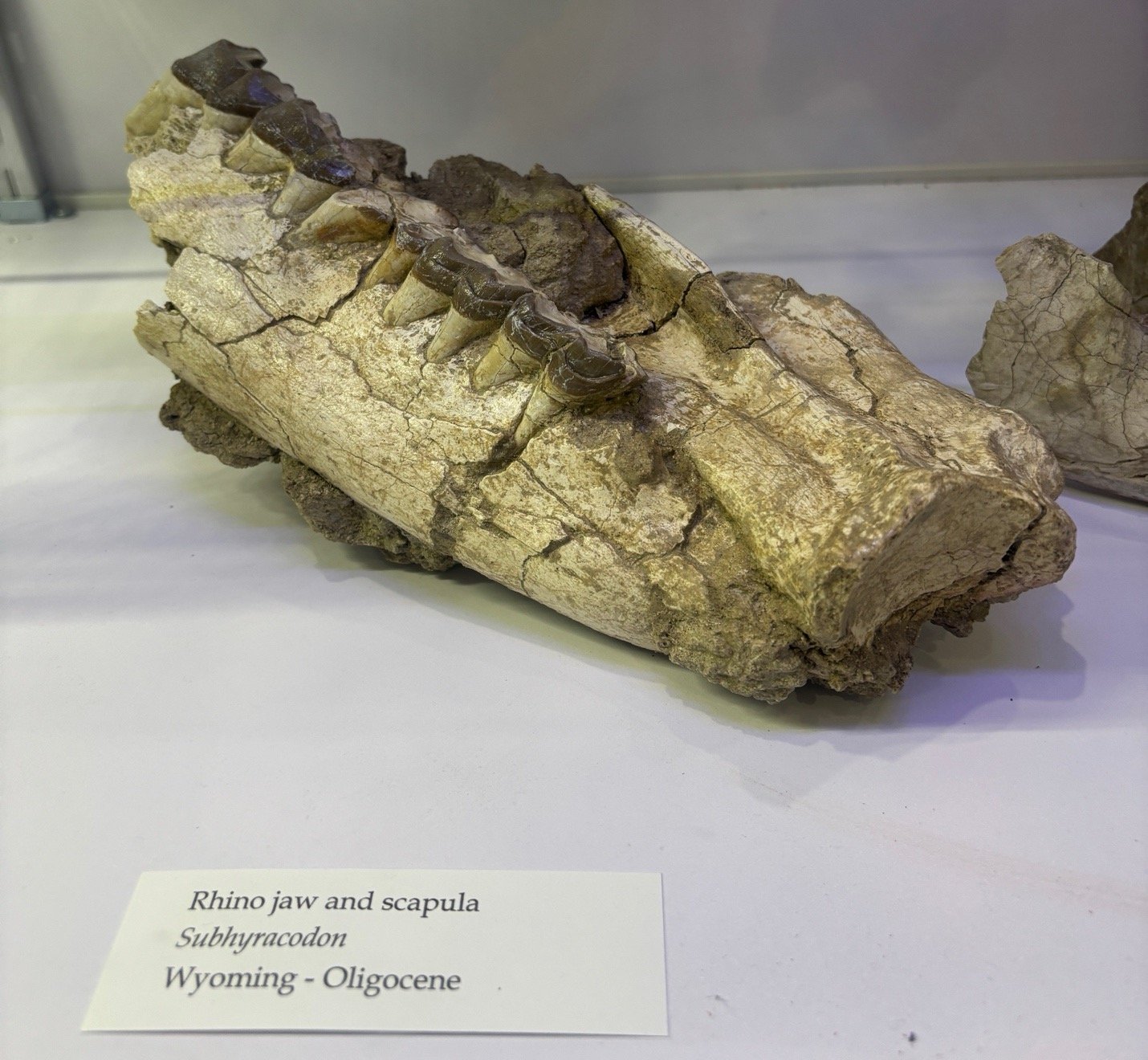
The group Brontotherium is a family of large megafauna of rhinoceros-like mammals. By the end of the Eocene, Brontotheres evolved to be very large (about 8 feet tall and 16 feet long) and would have traveled in herds. Like their distant relatives rhinoceroses, Brontotheres sported large horns; but unlike rhinos, their horns were made entirely of bone instead of keratin. They were herbivorous and grazed on soft vegetation, which ultimately lead to their extinction at the end of the Eocene. During a shift in climate, the warm and verdant lands of the Eocene dried out and became much colder, which effectively destroyed the Brontheres’ food source.
This group of animals goes by many names, but the two most popular are Brontothere which means “thunder beast” and Megacerops, meaning “large-horned face”.
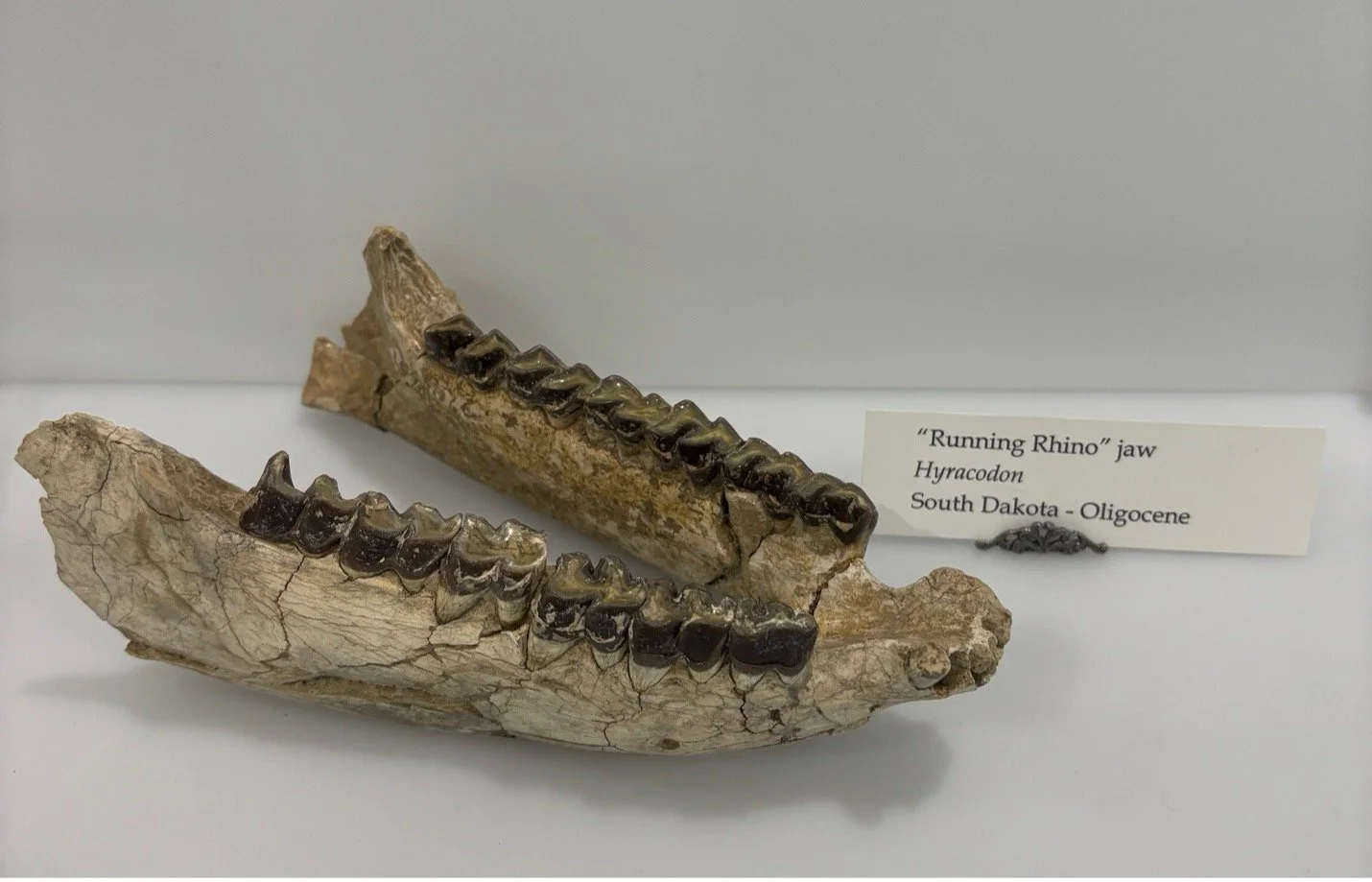
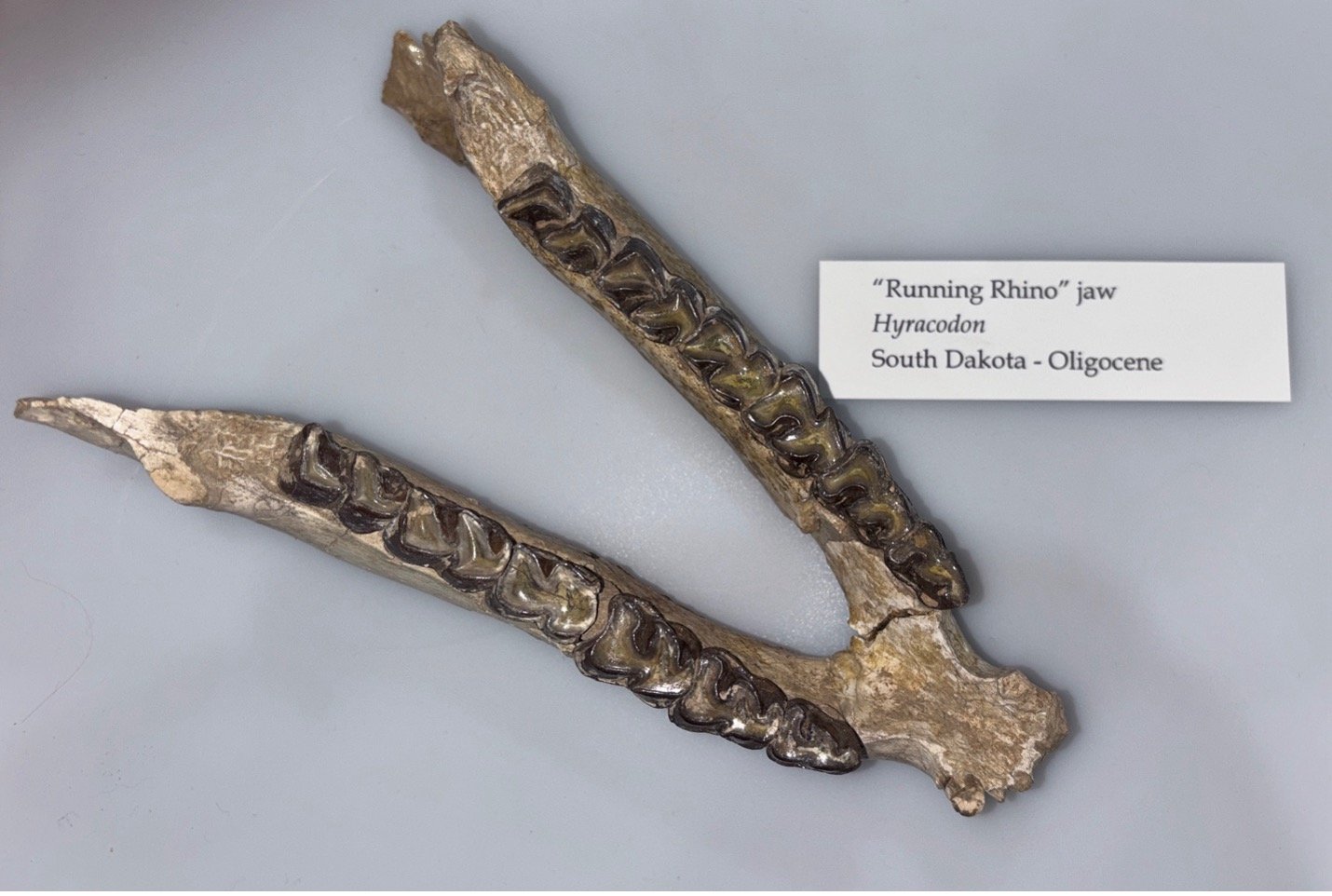
Hyracodon, or the Running Rhino, was a small and graceful member of the rhino family. They functioned more like horses than their modern rhino relatives, as they were hornless with long, slender legs. They were about the size of a pony, and likely used their agility to flee from predators rather than fight them. Hyracodon lived throughout North America and Asia, only going extinct from climate change and loss of habitat.
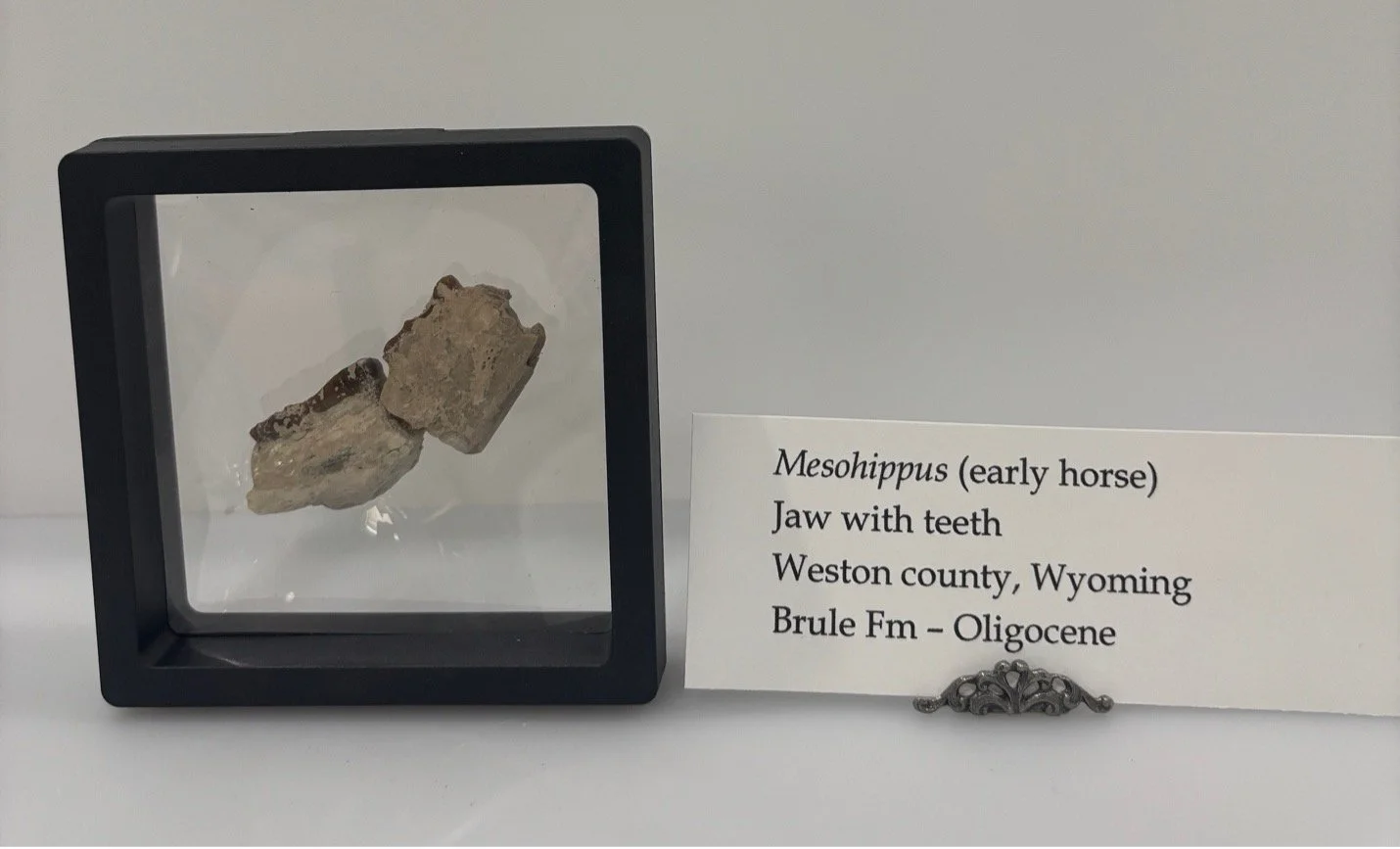
An ancestor of modern horses, Mesohippus was an important developmental stage in horses’ family line. They had not yet developed hooves and walked on three-toed feet. Mesohippus was a small, primitive horse that was about the size of a labrador retriever. These early horses were grazers that lived in North America and had to contend with predators like the cat-like nimvarids and other large carnivorous mammals called Hyenadons.
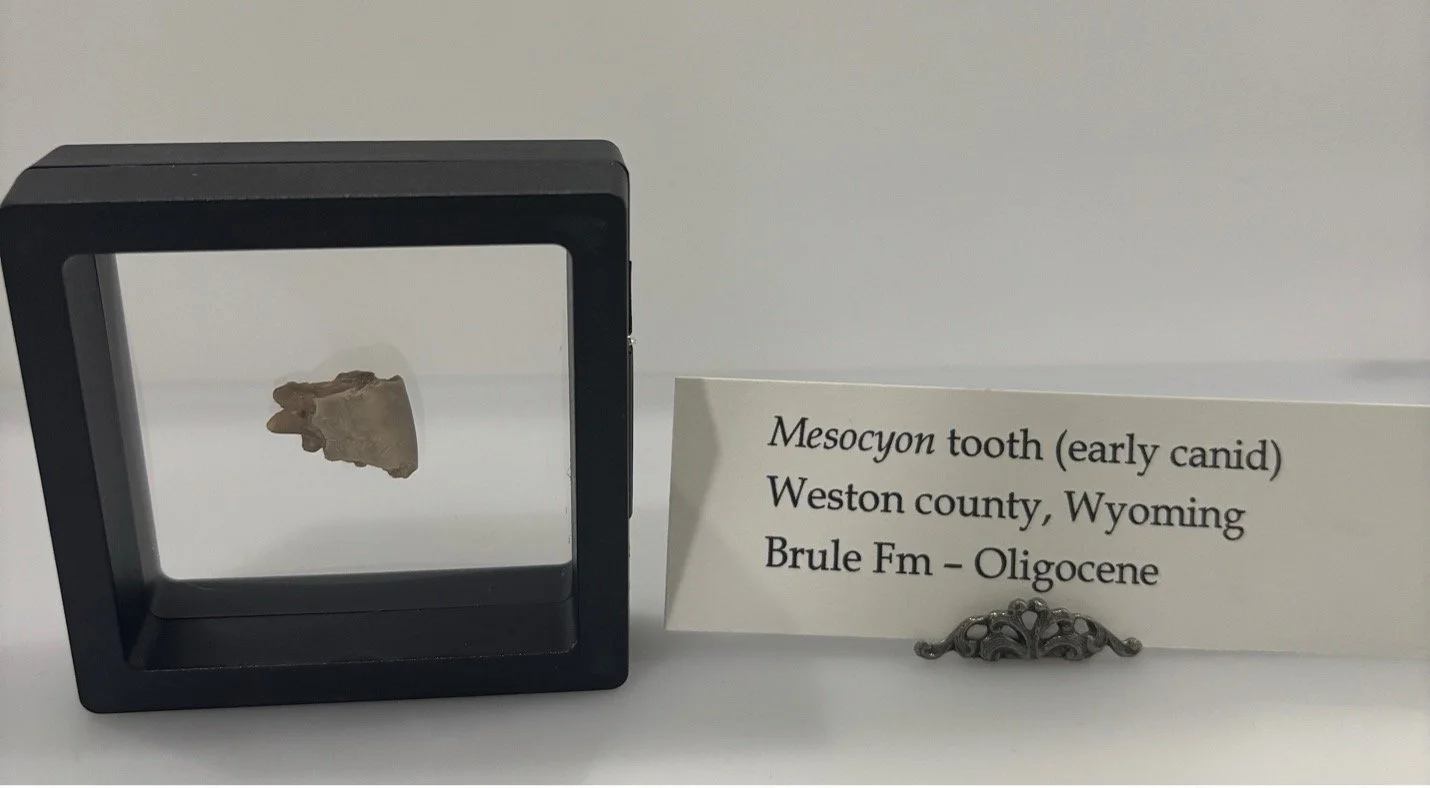
Canid species within the Mesocyon genus, sometimes called the “middle dog” or “short-faced dog”, were part of a now extinct genus of canids and are therefore not ancestors to modern dogs. However, it is believed the Mesocyon canids hunted in packs in open spaces like modern canids, likely relying on a strong sense of smell and sharp hearing and were about the size of a modern coyote. The major difference between Mesocyon lifestyle and modern canids is their diets: Mesocyons were carnivorous while modern dogs are omnivorous.
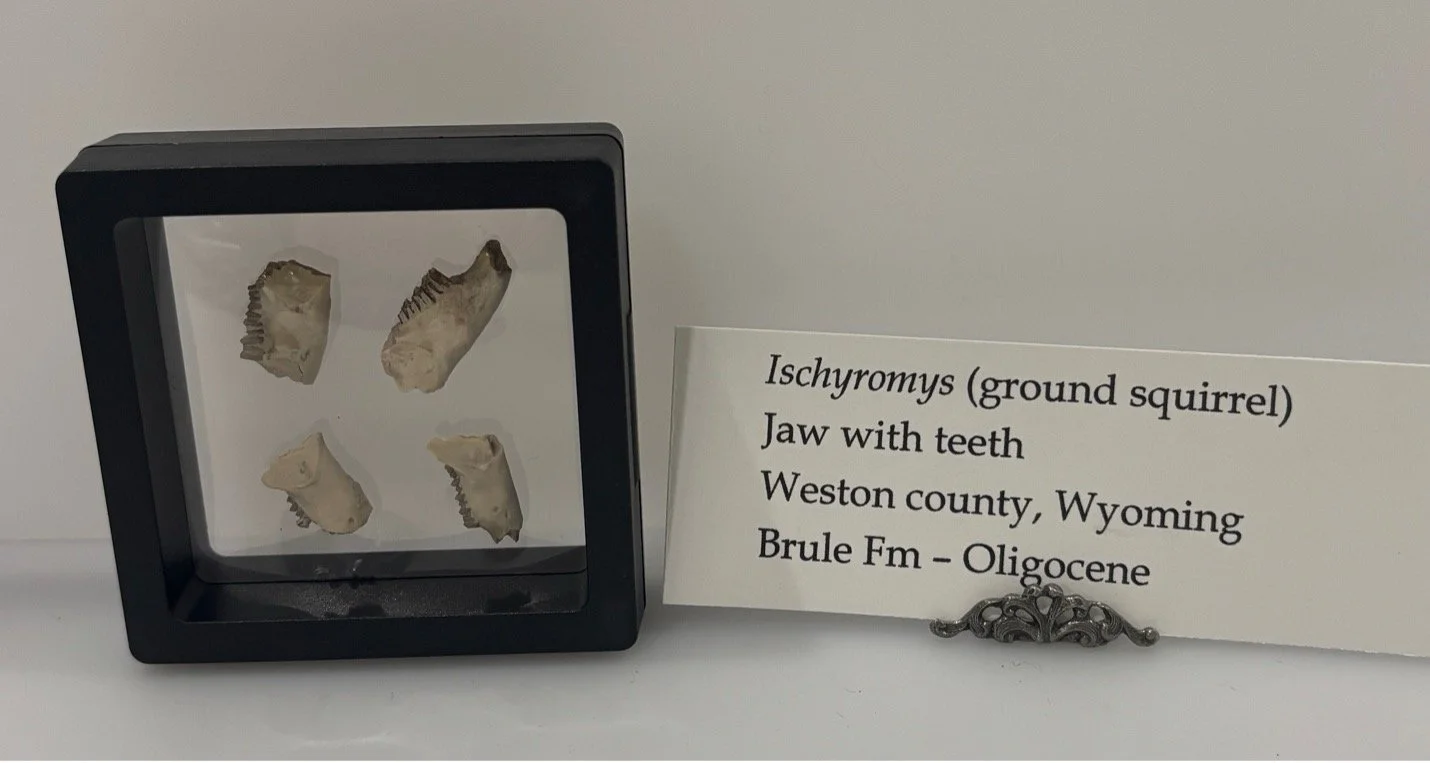
Ischyromys was a small, tree climbing mammal and was among the first true rodents to ever exist. It shared many visual traits with modern squirrels, like its long tail and long incisors, but is actually more closely related to the Mountain Beaver, a small rodent that lives in the Pacific Northwest.
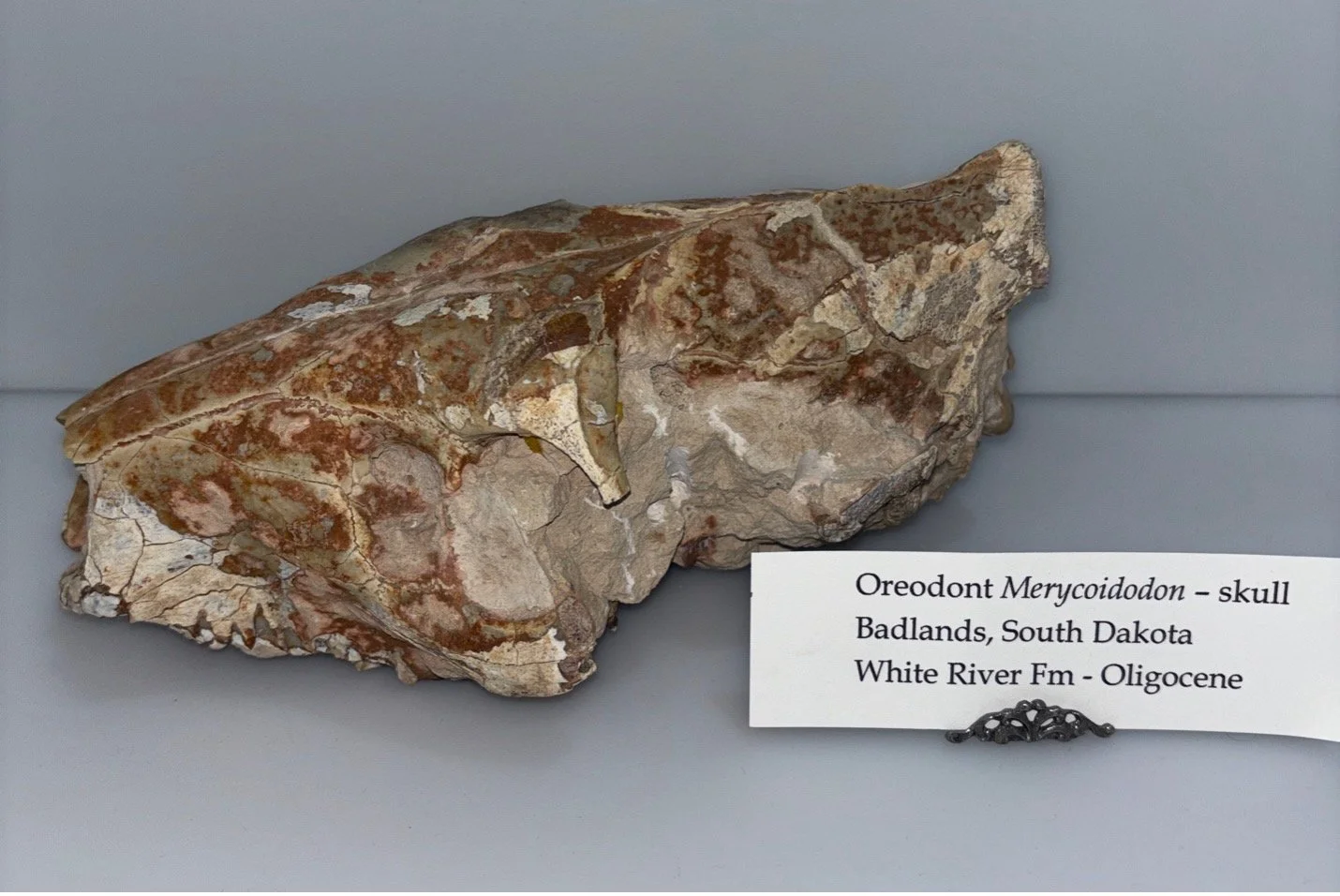
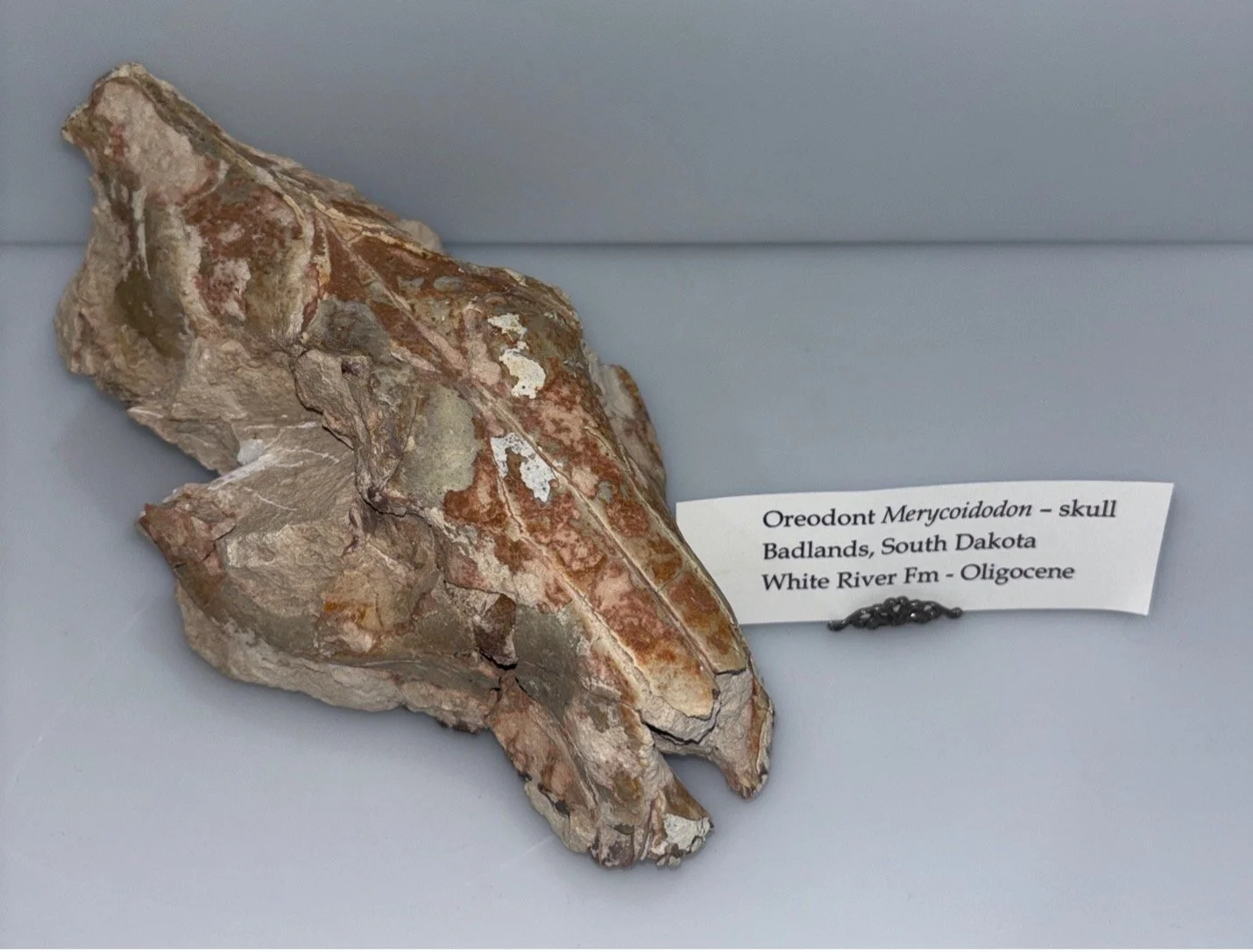
Merycoidodon, or more commonly known as Oreodonts, were grazing mammals that resembled pigs or sheep. They are famous both for their teeth (the name Oreodont translates to “mountain teeth”) and the sheer number of their fossils that people have found. Oreodont populations were outlandishly abundant, so much so that their fossils are a common find in places like Badlands National Park. They moved in herds, which protected them from predators like saber-tooth cats. Despite their numbers, they were not adaptable to changes in food availability and went extinct as a result of major climate change and being outcompeted by other foraging species.
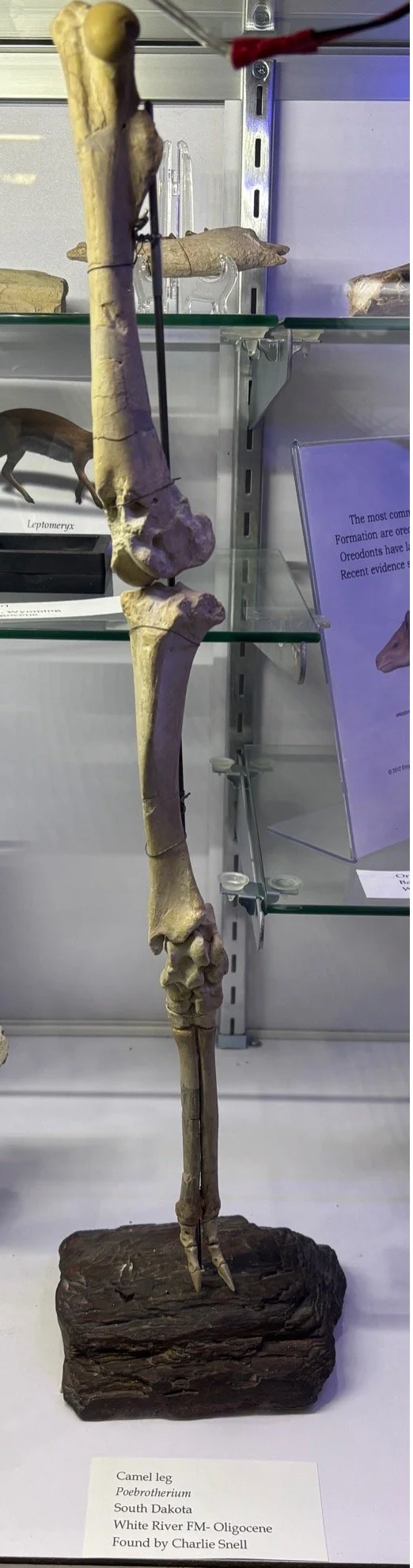
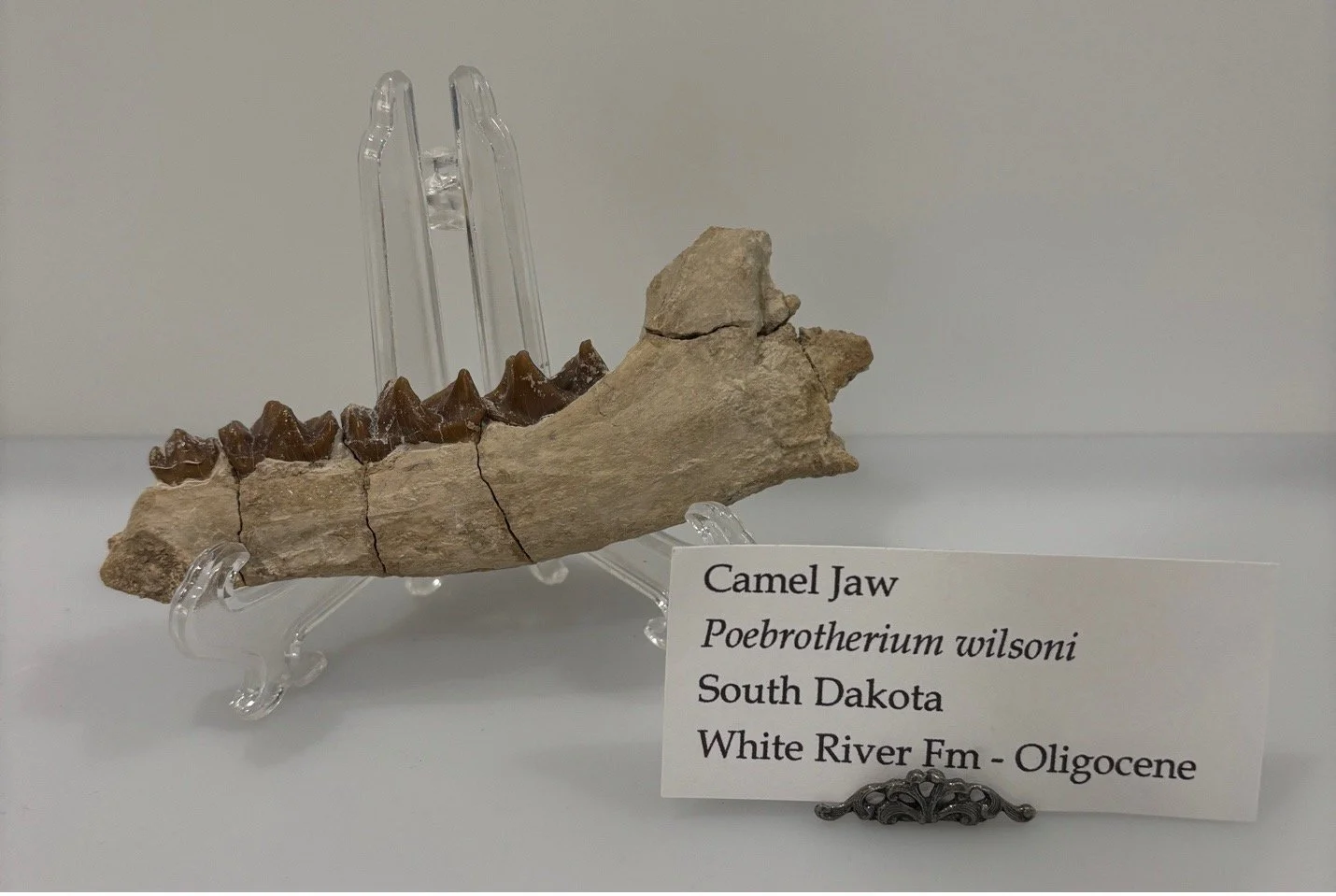
The ancestors of modern camels originated in North America during a dry period of Eocene epoch, yet Poebrotherium were visually distinct from their modern relatives. These early camels were small, standing at only two feet, and weighed about 50 lbs. Eventually, camels would spread to Asia and Africa, and the North American populations would go extinct (approx. 10,000 to 13,000 years ago).
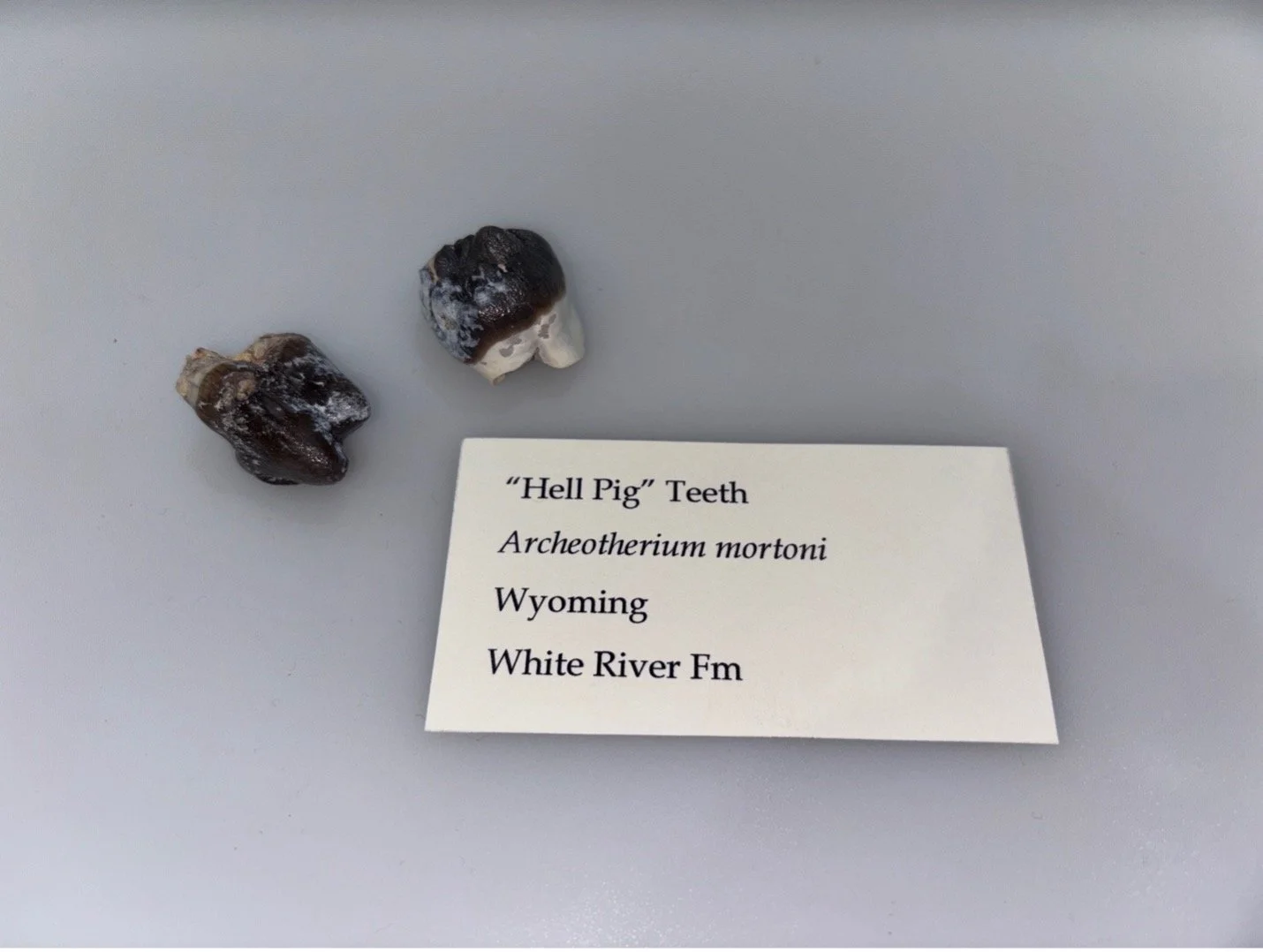
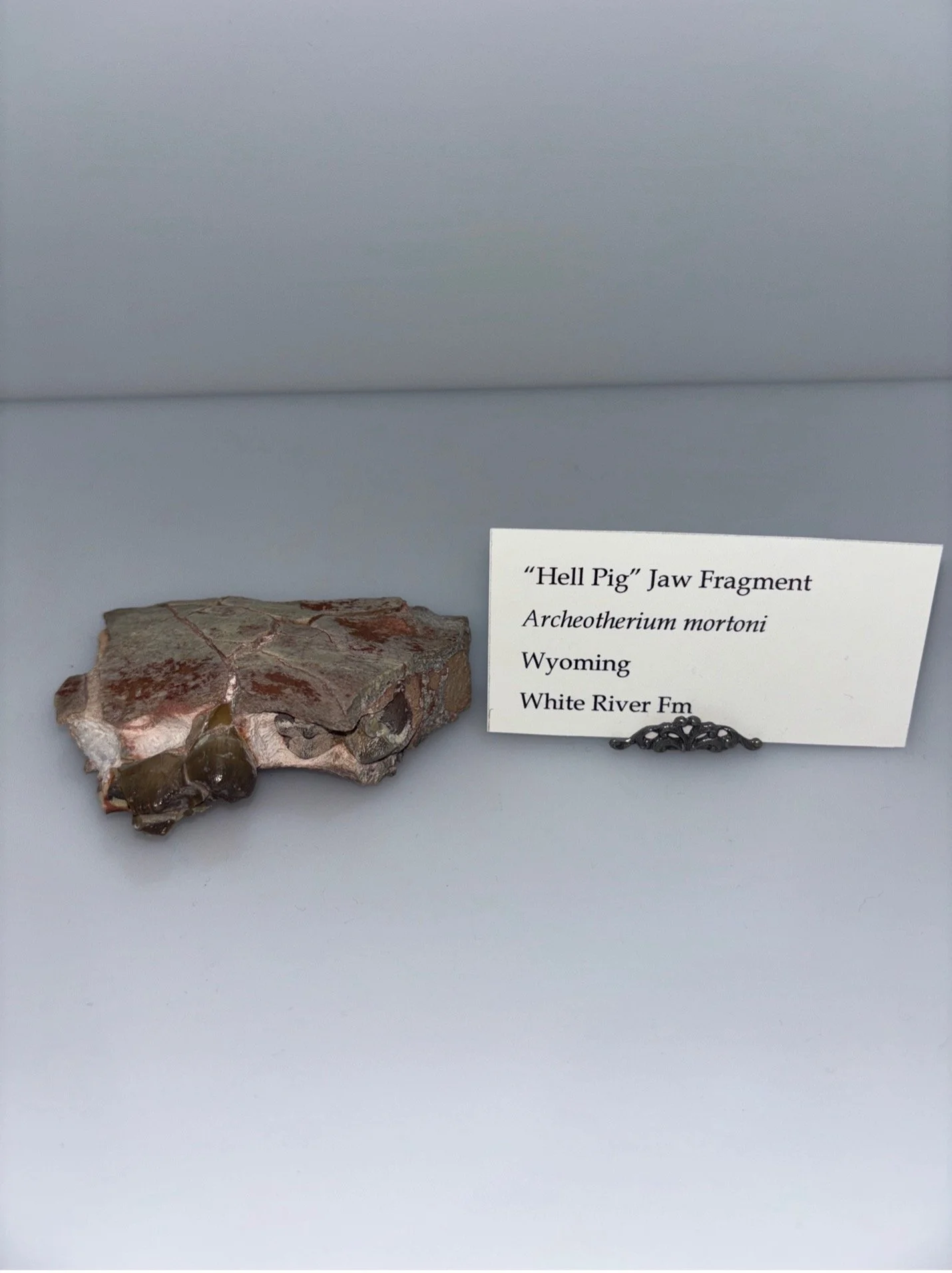
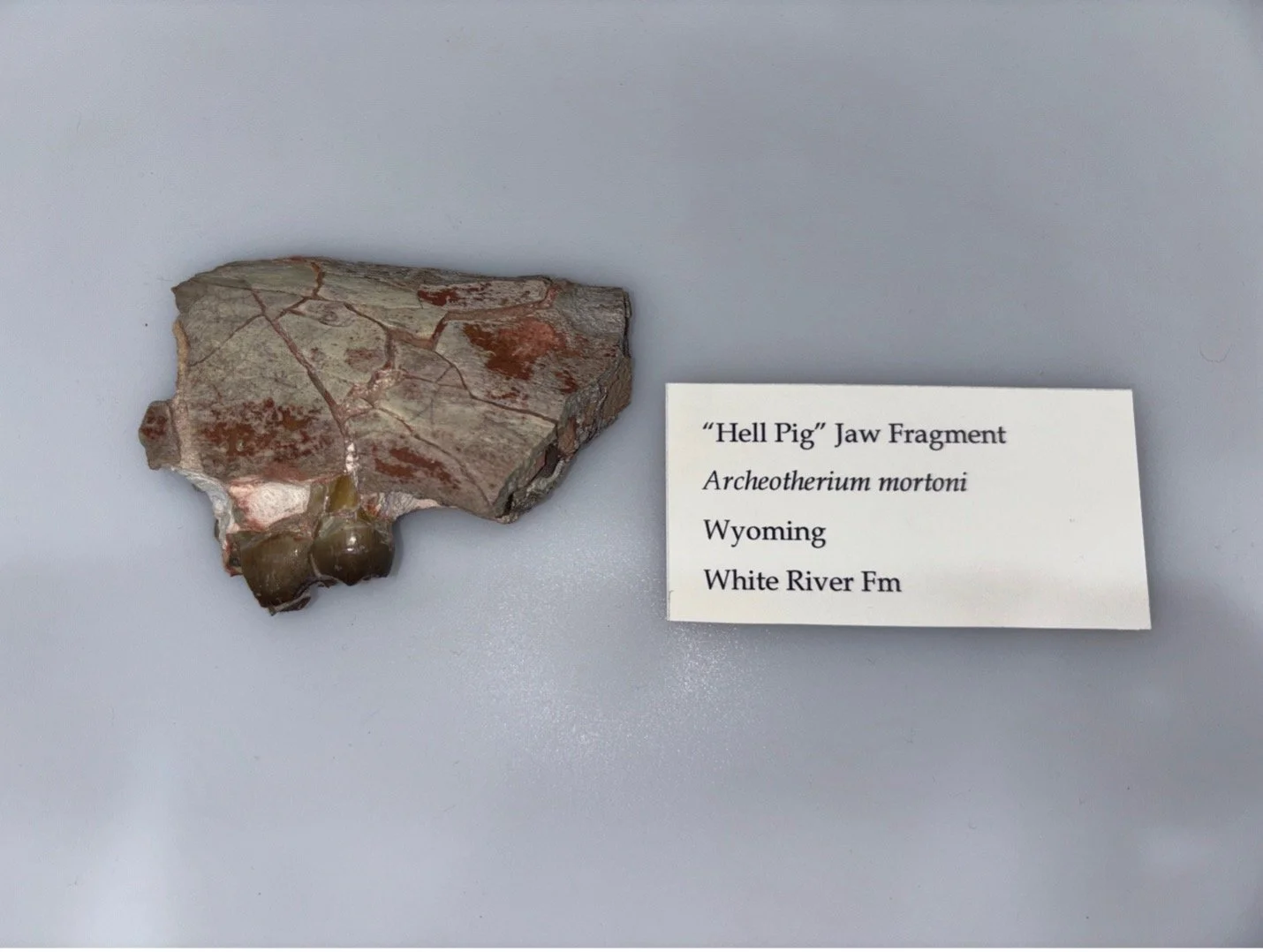
Archaeotherium were large, and likely aggressive beasts that once roamed North America and Eurasia. They stood about six foot tall and weighed around 2000 lbs. They had snouts and tusks, and fossil evidence suggests that they used these tusks to ram others of their species for dominance. Despite their common name and appearance, Hell Pigs were not true pigs but were more closely related to hippopotamuses and whales than modern pigs.
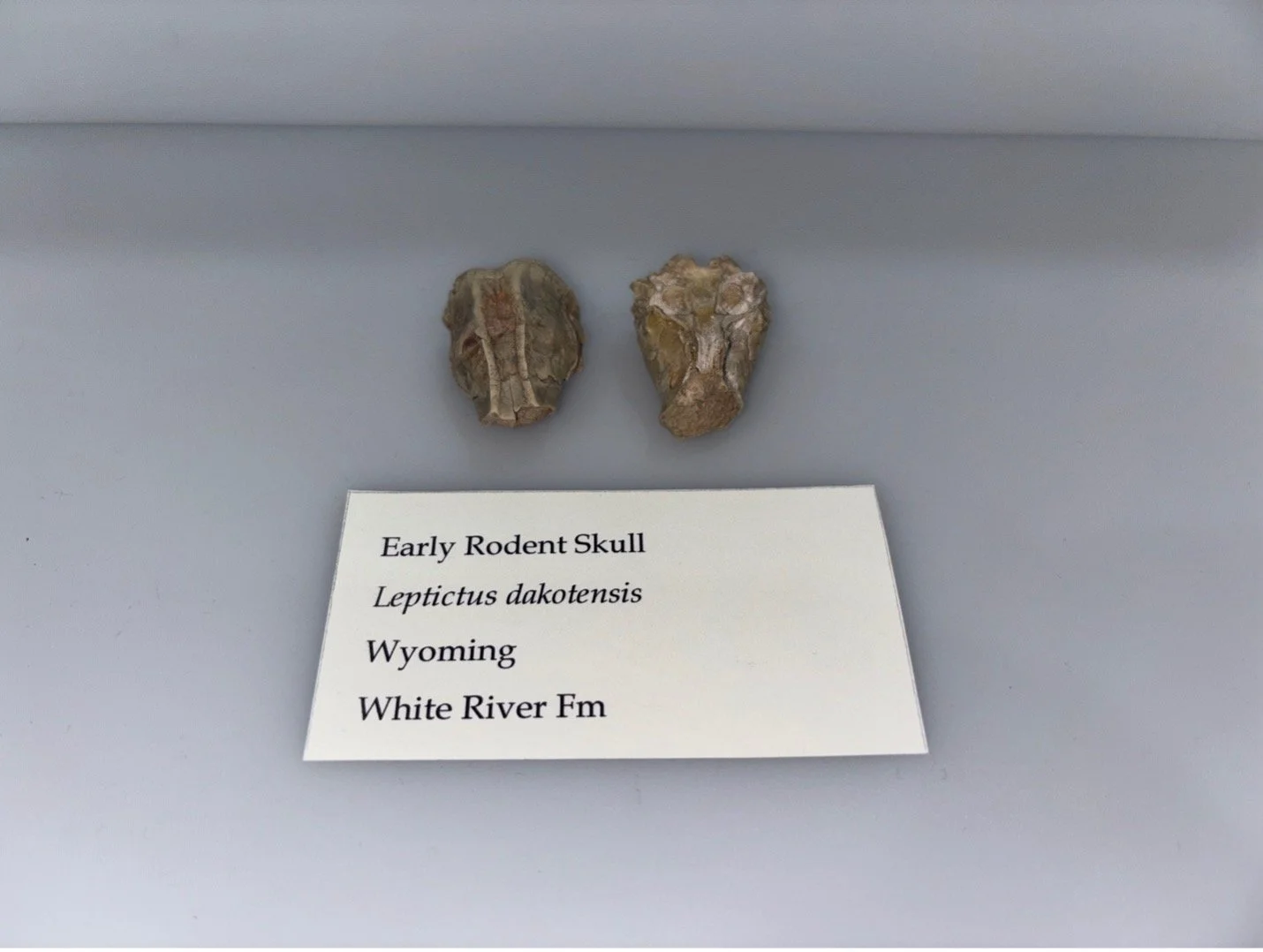
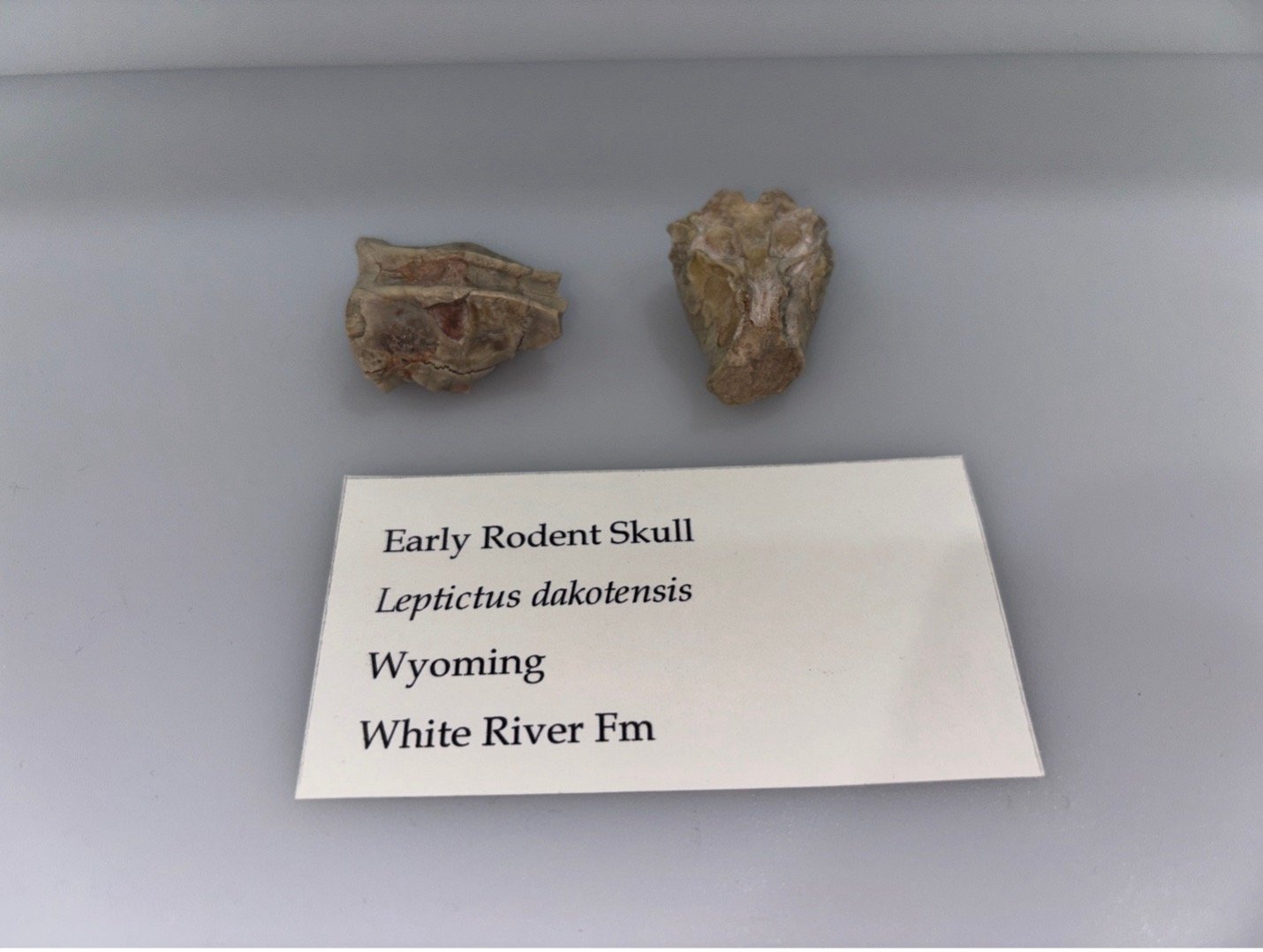
Leptictus dakotensis was a small omnivorous mammal that resembled a modern shrew, but it actually belonged to its own now extinct order called Leptictida. Leptictus dakotensis is a good example of convergent evolution in that it exhibited a rodent-like body plan despite not being a true rodent. Its fossils are found in North America, predominately the American West.
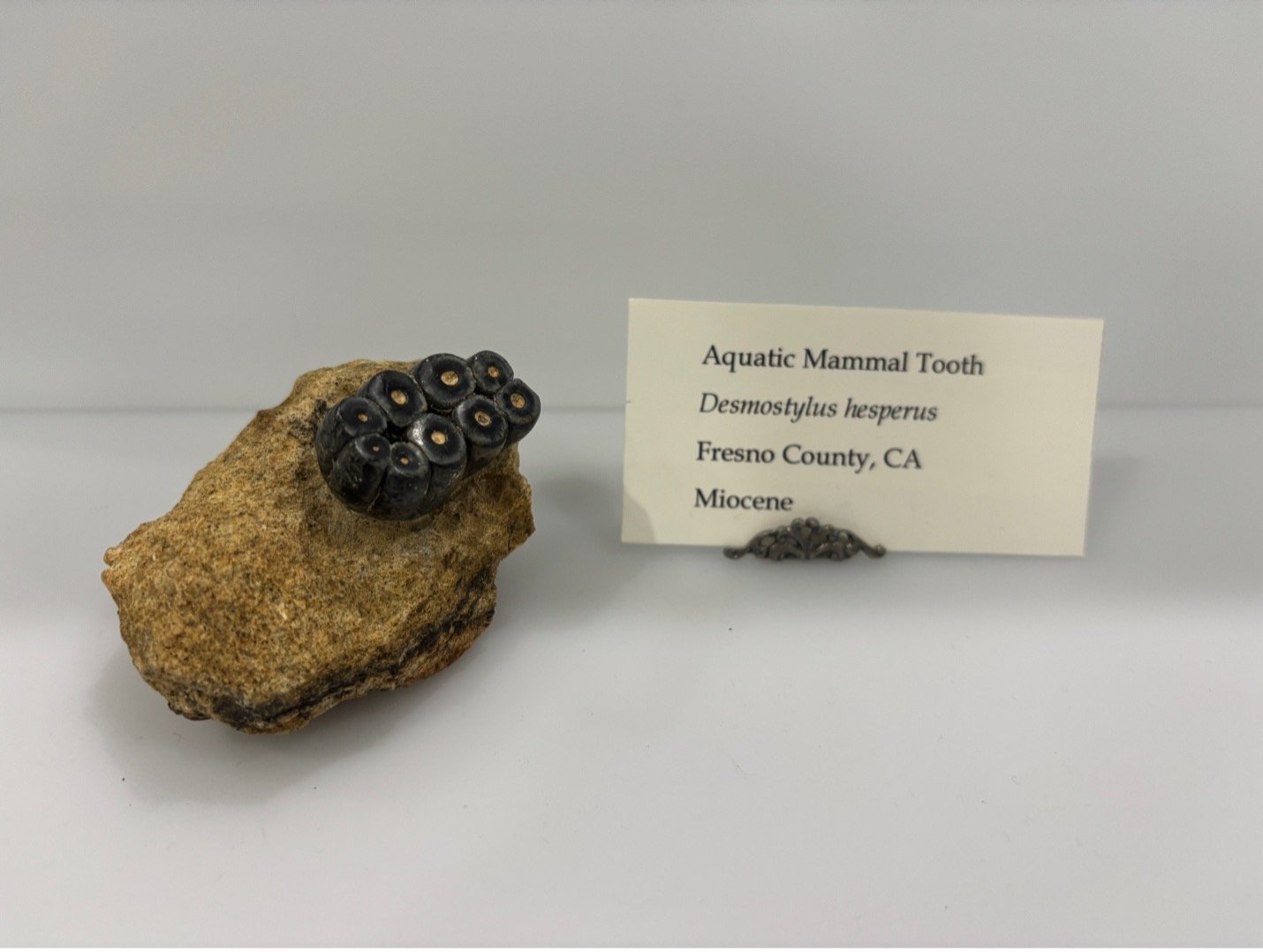
Desmostylus herspersus was bit like a hippopotamus, living all along the North Pacific Rim. They were herbivores who ate aquatic vegetation like seaweed. The Desmostylus is not a direct ancestor to any current living species, but they are distantly related to manatees, dugongs, and elephants.


Today, Red Pandas are only found in Asia, but their family lineage actually originated in North America. The cousin of the modern Red Panda, Pristinailurus bristoli, or more commonly known as Bristol’s Panda or Bristol’s Appalachian Panda were once part of the Tennessee ecosystem. The discovery of the Bristol’s Panda at Tennessee’s Gray Fossil Site has illuminated our understanding of this far-flung family tree. From the fossil evidence, we know that the ancestors of modern red pandas lived in North America before spreading to Asia and evolving into the Red Panda we know today. The Bristol’s Panda, however, went extinct approximately 5 million years ago, likely due to climate change and habitat loss.
The Bristol’s Panda was two to three times larger than their modern counterpart and likely had a weaker bite. Though it could likely climb trees, it was more suited for terrestrial movement. It was an agile predator who fed on small animals, fruits, eggs, and insects.

Discovered at Tennessee’s Gray Fossil Site, the Teleoceras aepysoma was a stout and hornless species of rhinoceros. Despite its squat nature, other species in the Teloceras genus were even shorter limbed and are often described as “pot-bellied rhinos”. While Teloceras lived all across the Great Plains of North America, Teleoceras aepysoma is unique to the humid woodlands of ancient Appalachia. It was one of the last surviving species of rhinoceros that lived in North America approximately 4.5 million years ago.
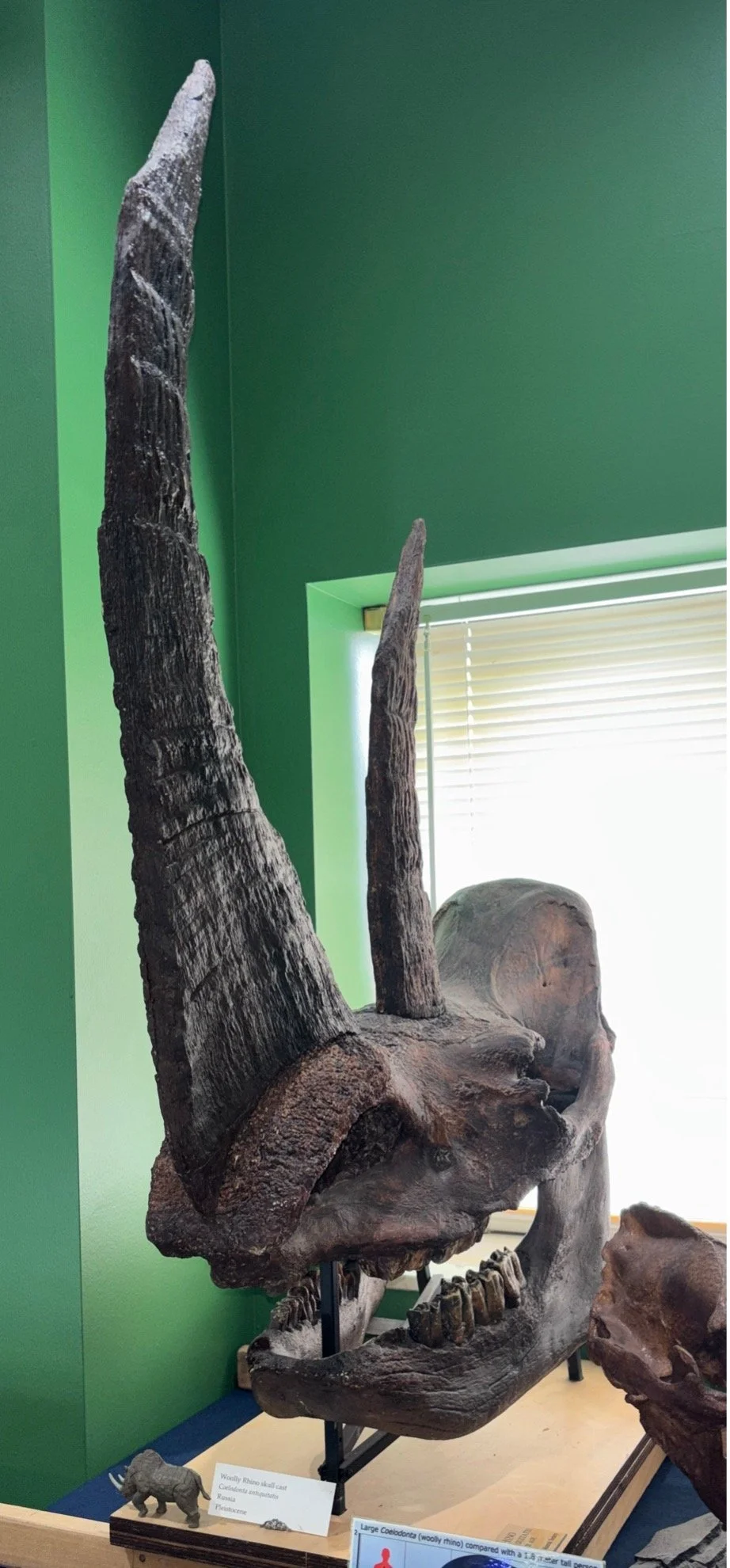
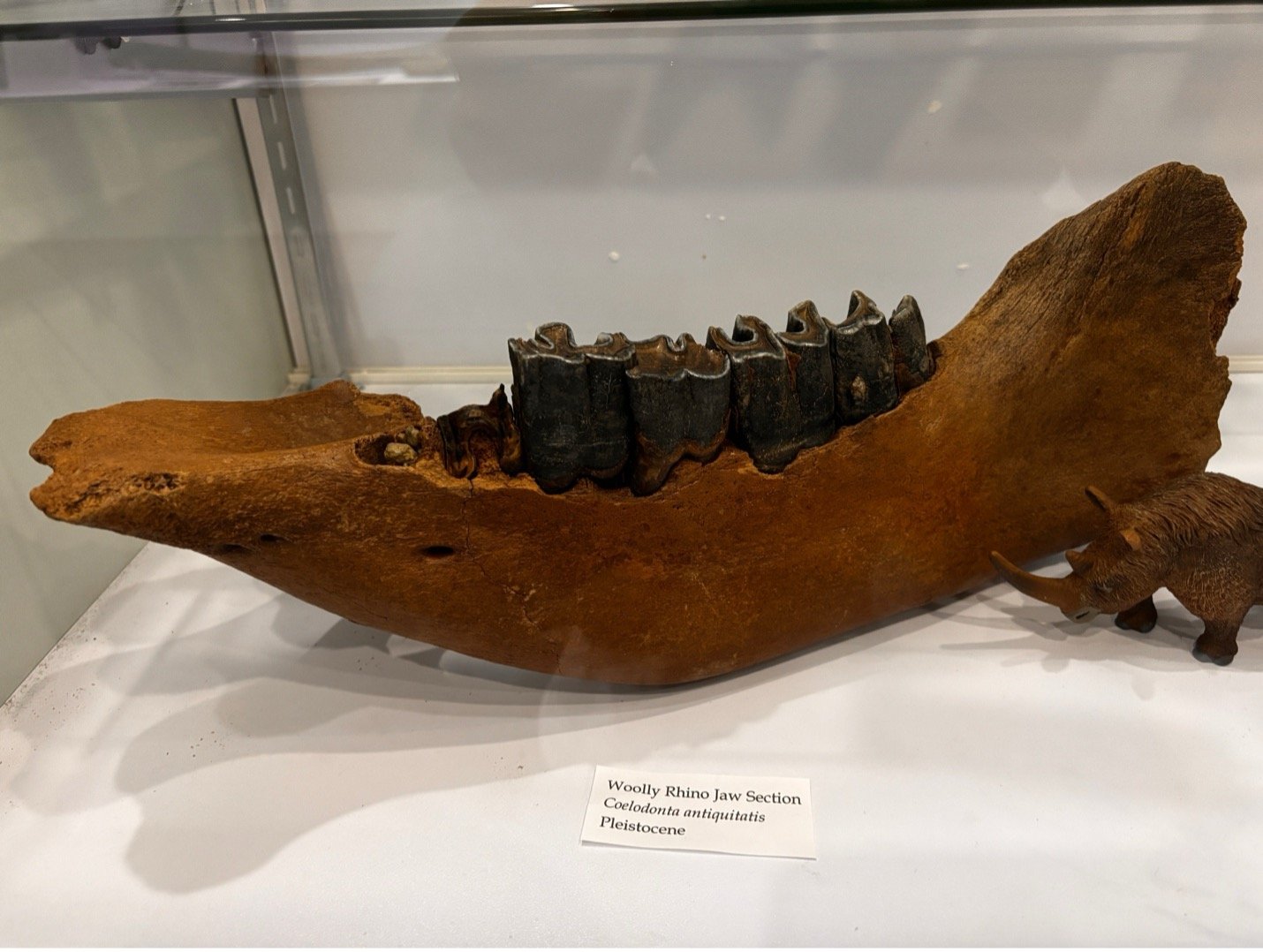
In the cold temperatures of the Pleistocene epoch, Woolly Rhinos kept warm with a layer of fur, similar to the Woolly Mammoth. The Woolly Rhinoceros lived in Eurasia, but unlike the Mammoth, never spread to the Americas. They had two horns, the foremost horn longer than the hindmost. They were similar in size to modern Rhinoceroses, and grazed on grasses and other plants.
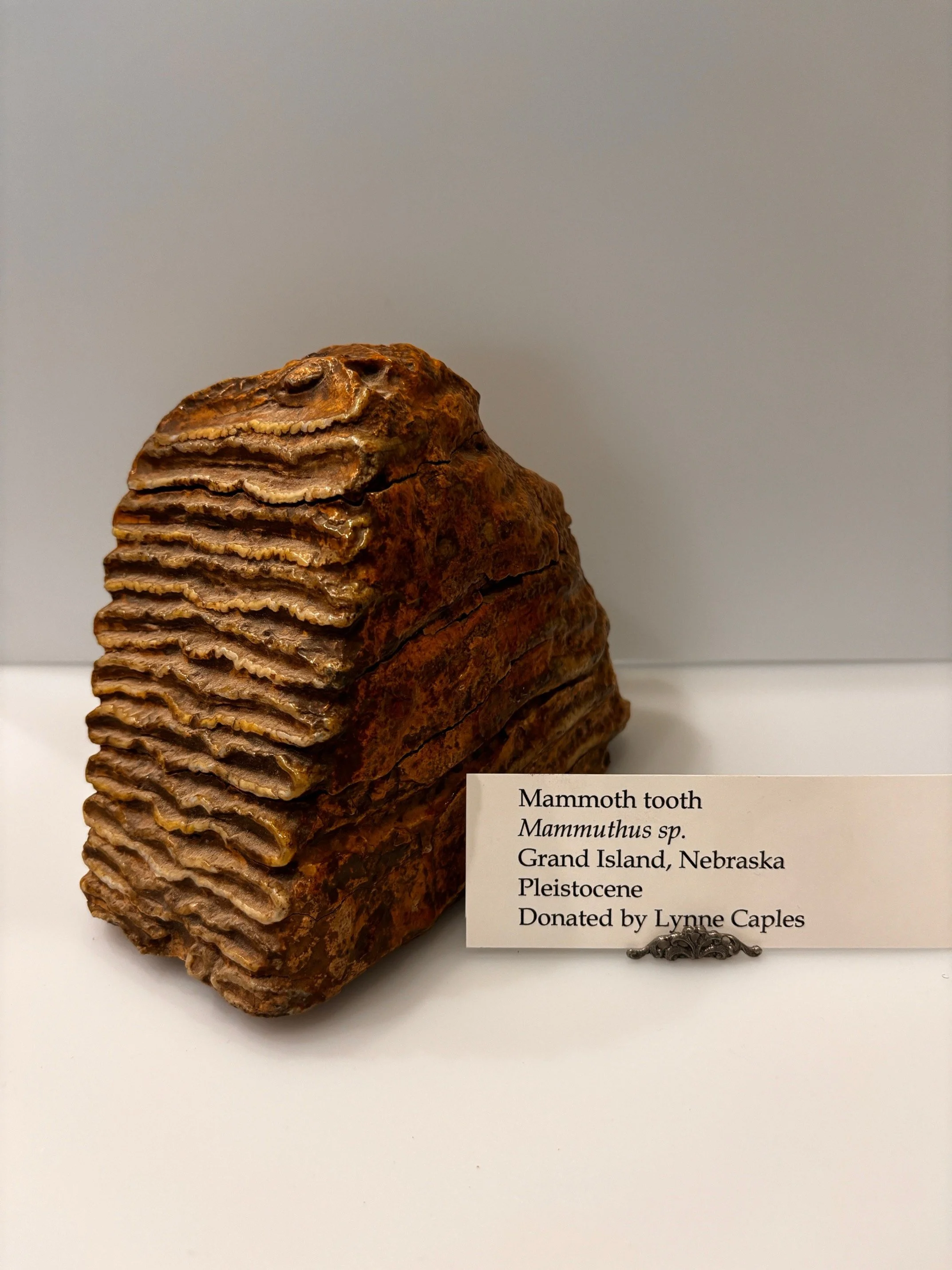
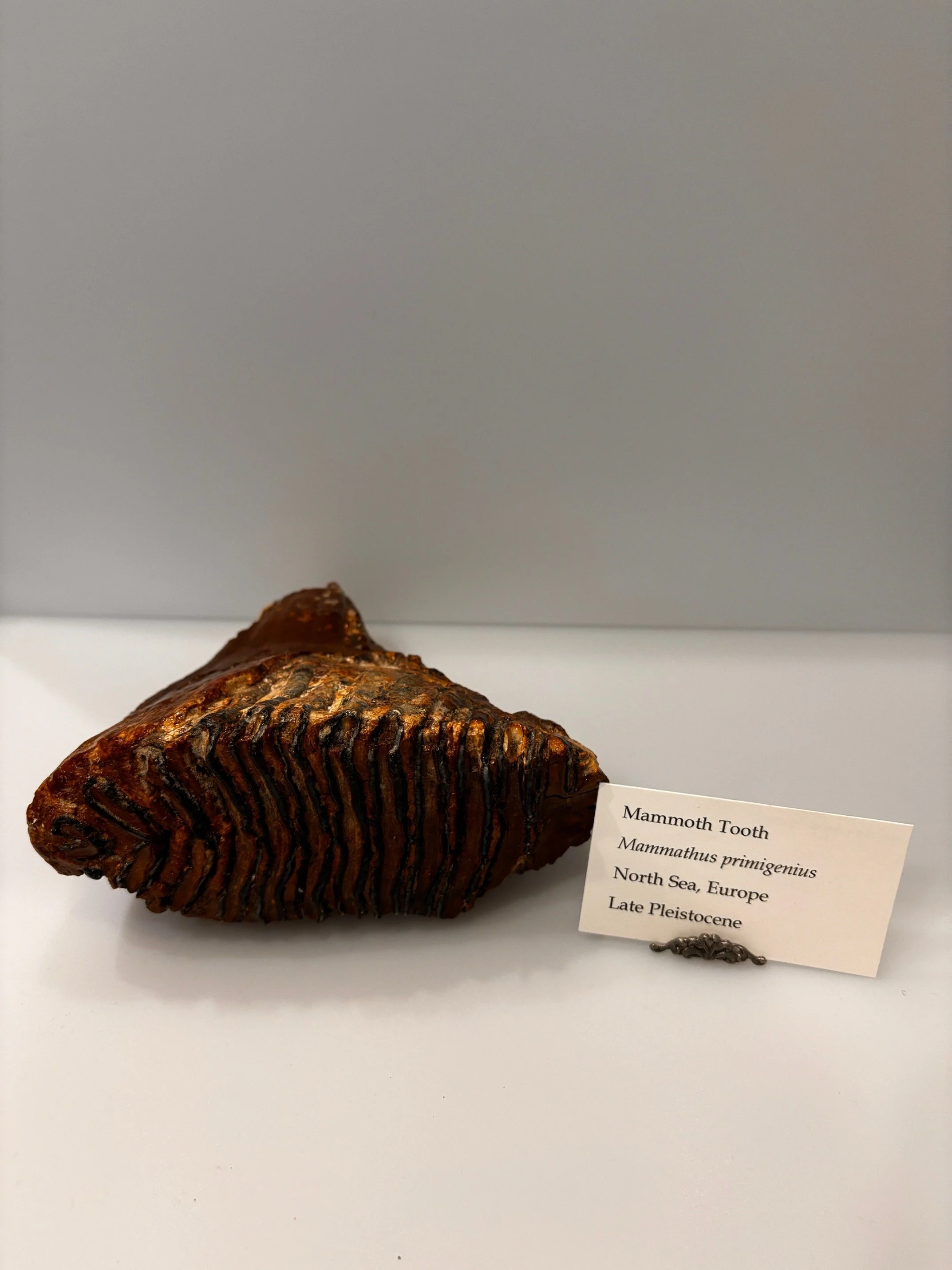
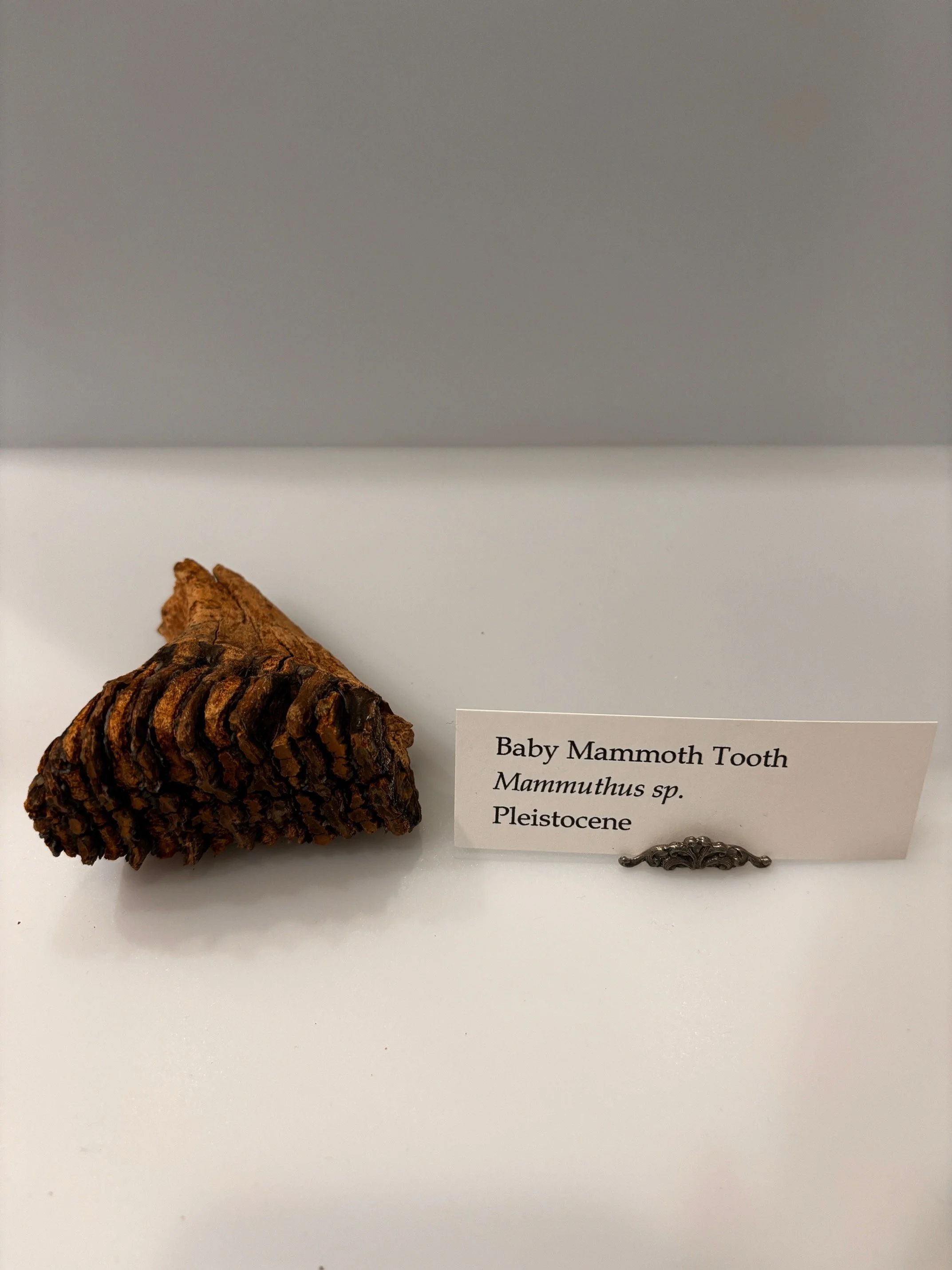
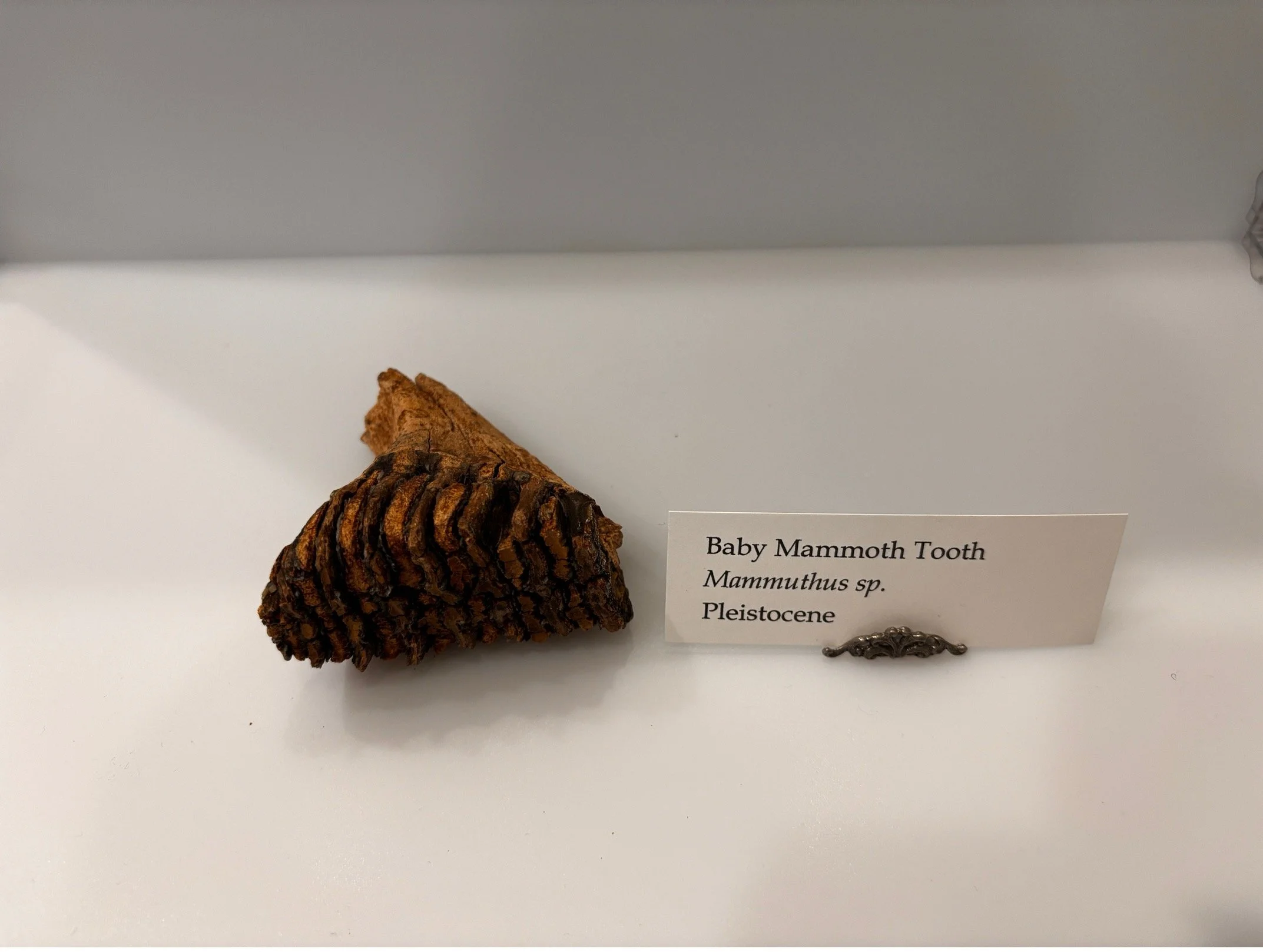
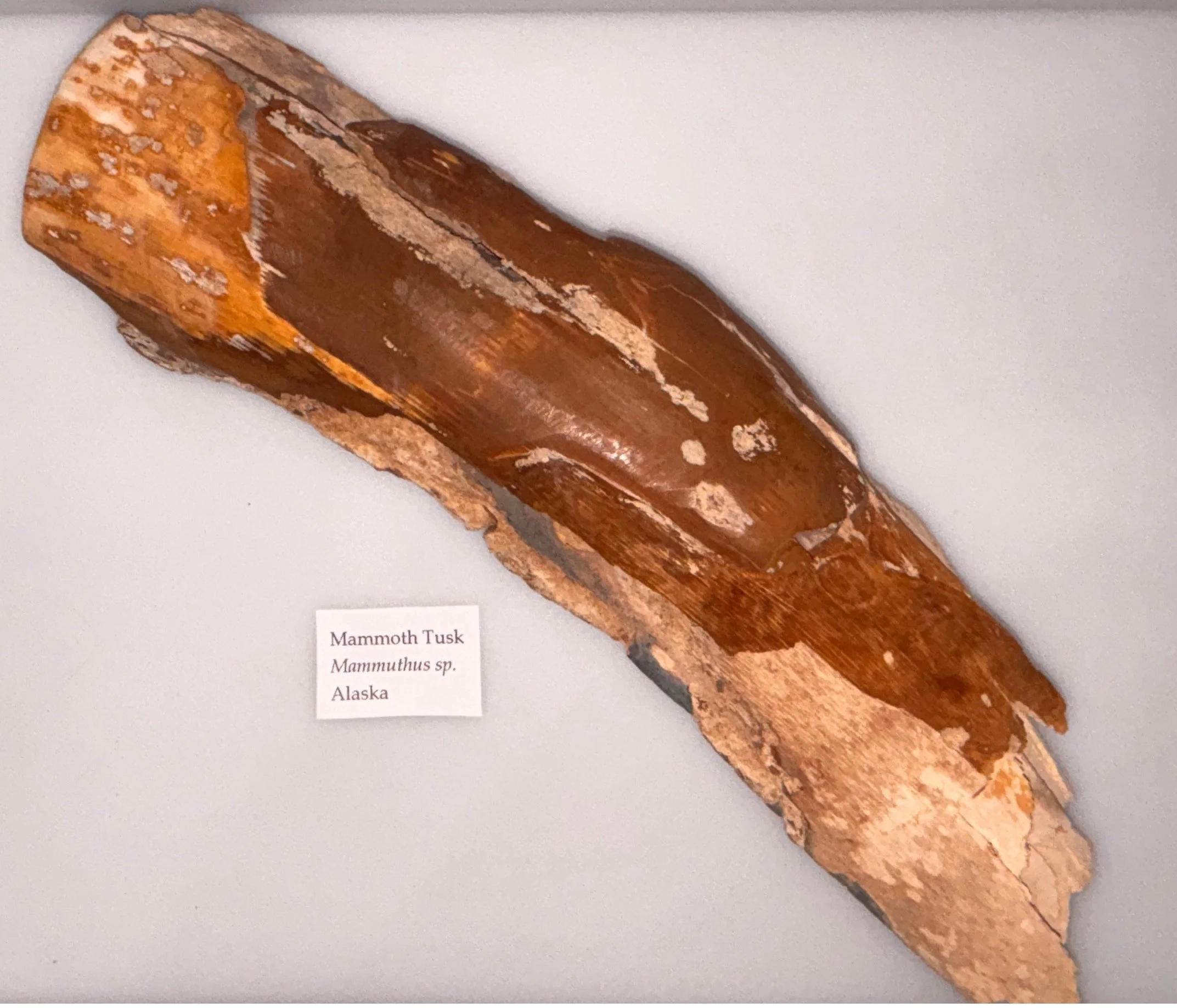
Woolly Mammoths were large, furry, herbivorous members of the family Elephantidae, and were relatives to Mastodons and the modern African and Asian Elephants. Their thick fur protected them from the extreme colds of the Ice Age, while modern elephants need to stay mostly naked to protect from high heat. Different species of Woolly Mammoths lived during the Pleistocene, making their homes in both Eurasia and the Americas. Mammoths went extinct from a combination of rising global temperatures and human hunting practices.
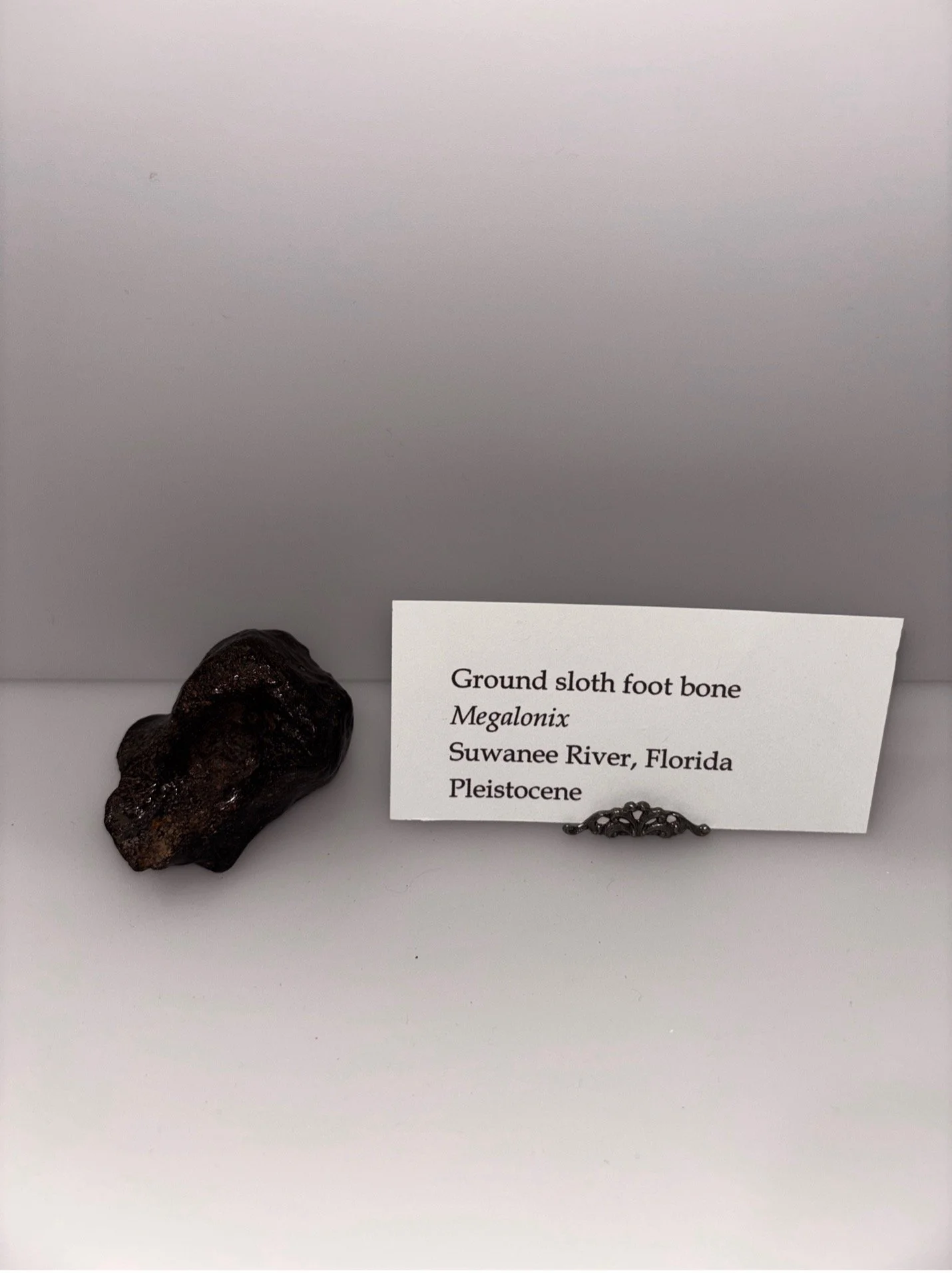
The Giant Ground Sloths lived across North and South America. Unlike their modern relatives, Giant Ground Sloths did not live in trees, and instead stuck mostly to grasslands where they ate plants like yucca and agave. There were many different species of the Giant Ground Sloths, the largest reaching up to 20 feet in length. Megalonyx jeffersoni was a smaller species, but still reached nearly 10 feet in length and weighed about 2200 lbs.
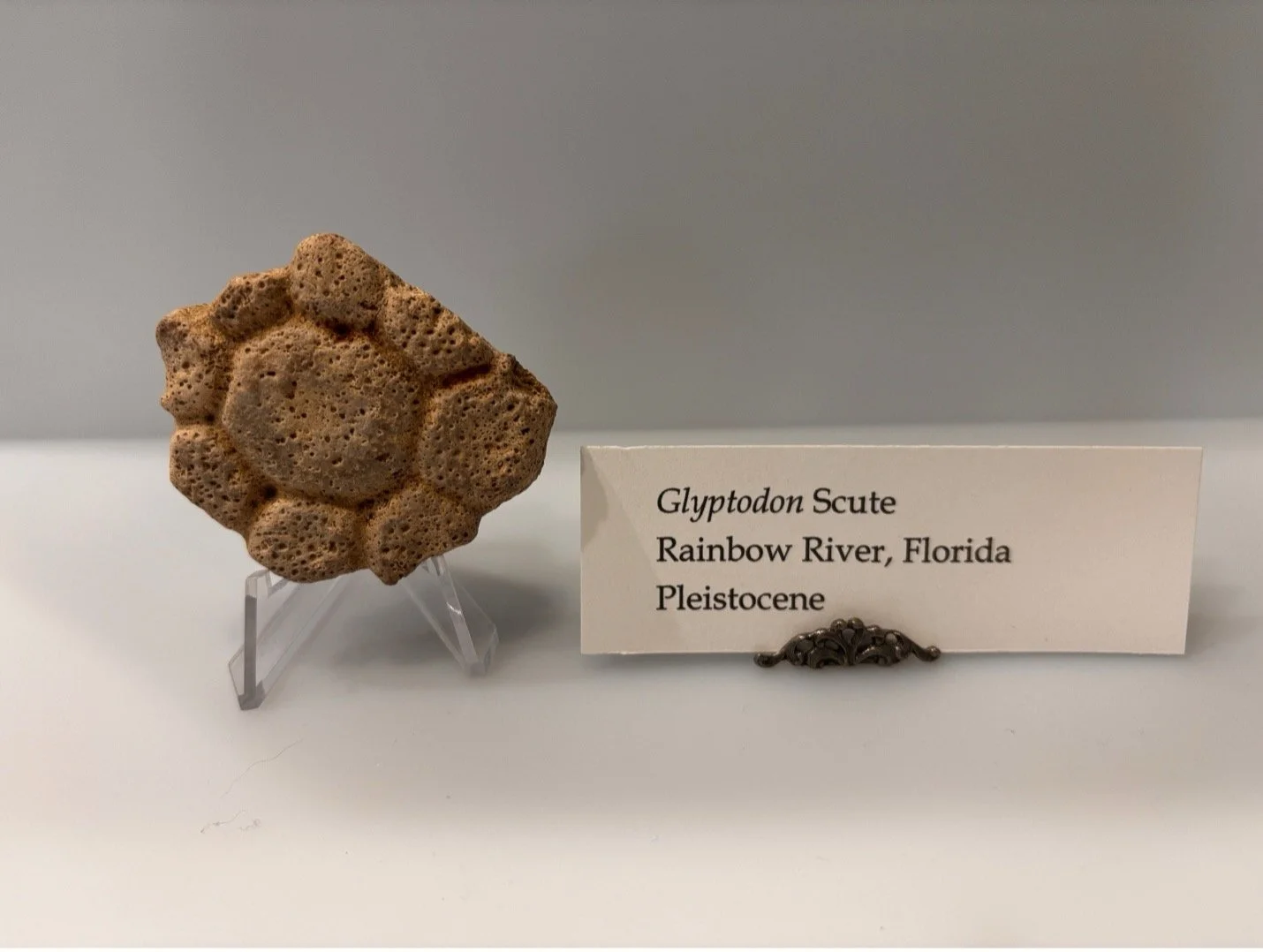
Glyptodons were herbivores who protected themselves with bony armor plating, similar to their modern relative, the armadillo. However, Glyptodons were much larger than armadillos (about the size of a small car) and defended themselves with their spiked club tails.
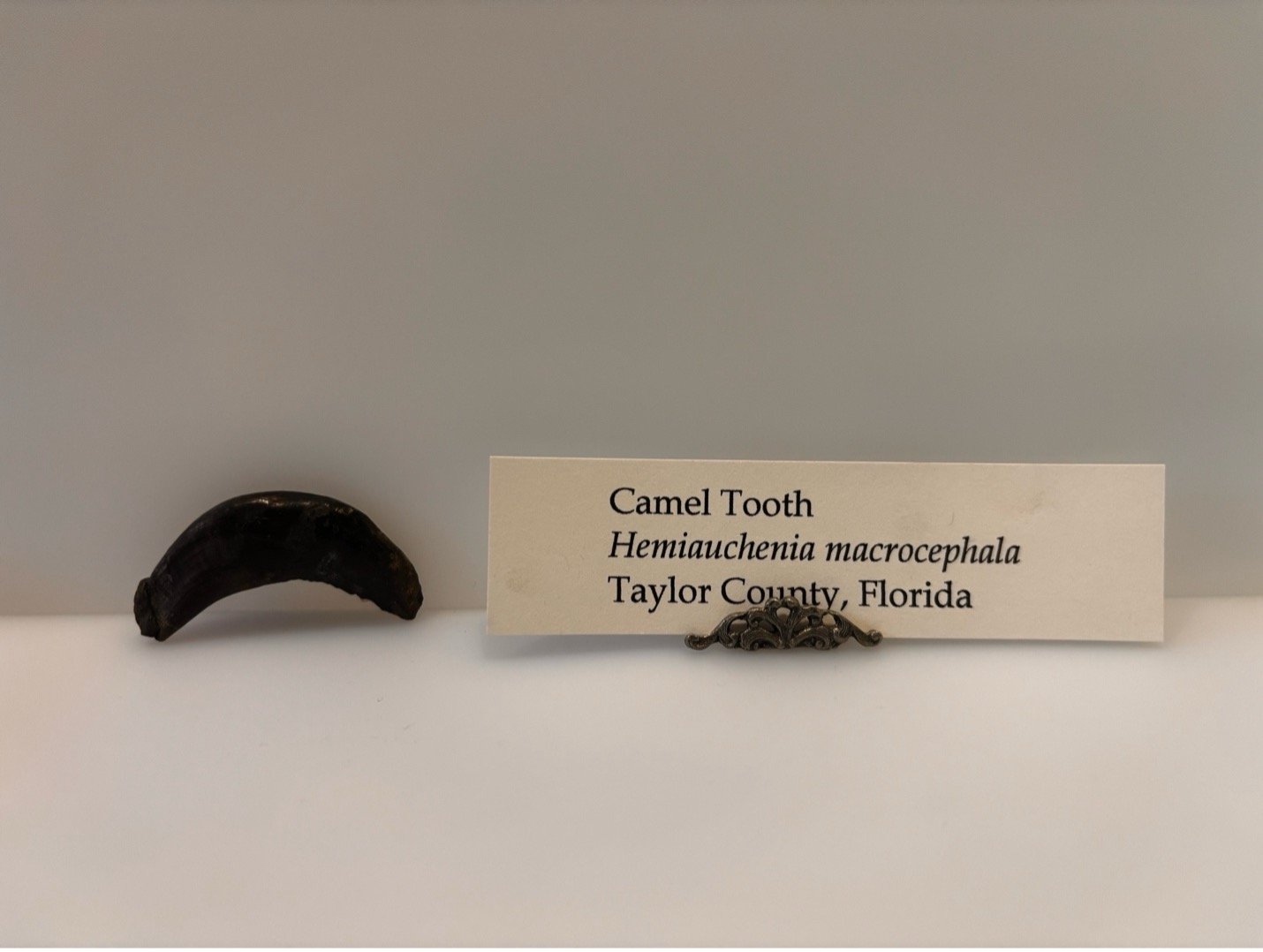
A small, sheep-sized member of the camelids family which contains modern camels, llamas, and alpacas. Like modern camels, Hemiauchenia macrocephalus was able to survive in dry conditions across the Great Plains region of the modern United States and some places in South America. Hemiauchenia macrocephalus was likely an ancestor to the modern South American llamas.
No results match your search. Try removing a few filters.