Toxochelys was a genus of sea turtle that lived in the Western Interior Seaway, and its fossils are found in the United States and Canada. Toxochelys lived a similar life as modern sea turtles, feeding mostly on jellyfish, squids, mollusks, crustaceans, and marine vegetation. However, Toxochelys was larger than most modern sea turtles, growing up to 6 feet in length.
This specimen was found by museum staff in the Coon Creek Formation in Tennessee.

Brittle Stars are echinoderms (related to sea stars, urchins, crinoids, etc.) which use their long, serpent-like arms to crawl across the ocean floor or swim through the water. They can look very similar to sea stars but can be differentiated by their distinct central body disk and thin flexible arms, which are often covered in spines. If attacked, Brittle Stars can defensively drop their arms to make their escape and live to regenerate them another day.

Blastoids were a type of echinoderm (relative to starfish and sea urchins) that lived on the bottom of the ancient ocean’s floors. The were close relatives to the crinoids and, like them, relied on filter feeding. Unlike crinoids, Blastoids went extinct at the end of the Permian period due to the ecologic fallout from extreme climate change.


Behold: the oldest animal ever (on record, at least)! The Dickinsonia may not look like much, but this little dollop of creature represents one of the first true animals to ever live on planet earth. The Dickinsonia lived before there was any need for defensive adaptations because it had no predators, resulting in this slow-moving, soft body plan. They ranged in size between a few millimeters to 4.5 feet in length, and it is believed that they lived a peaceful life creeping over the ocean floor and fed on algae and bacteria.


The Marrella splendens was a small arthropod that lived in the Cambrian oceans. The Marrella splendens had many thin appendages that served as both its means of movement and its means of respiration, as the upper section of its legs possessed gills. It also had two pairs of antennae, one set for helping maneuver around the bottom of the ocean floor and the other set to aid in propulsion.
Marrella splendens is heavily associated with the Burgess Shale fossil deposit in British Columbia, Canada as it is the most plentiful fossil found there.


Bryozoans are a type of filter-feeding colonial marine animal that has been living in the oceans since near the beginning of life on the planet. An individual Bryozoa is plant-like in appearance, but the colonies often form round, blobby masses that tether to various surfaces.
Bryozoan fossils can also look like tree branches and can be found all over the world, including here in Tennessee!

Anomalocaris, whose name means ‘weird shrimp’, were one of many odd marine species that came from the Cambrian Explosion. Anomalocaris species ranged in size, but the most famous Anomalocaris canadensis was about 2 feet long. They swam by propelling themselves with overlapping flaps running down either side of their bodies and latched onto prey with two barbed appendages by their mouths. The Anomalocaris is considered an apex predator of its time, largely feeding on soft-bodied animals like jellyfish and worms.
It was long believed that the Anomalocaris went extinct at the end of the Cambrian period, but some species like the one pictured here actually lasted into the Ordovician period.

The most famous of the placoderms was the Dunkleosteus, one of the first apex predators of the ancient oceans. The Dunkleosteus did not have teeth, instead using its armored jaw pieces to slice into prey like a large, very powerful pair of scissors (jaw cast pictured here) . Like all placoderms, the fossil evidence for the Dunkleosteus is generally limited to the fossil armored plates, which has left the “Dunk”’s true size up for debate. The current consensus is that they were comparable in size to a modern Great White Shark with stout, chunky proportions. Ultimately, the Dunkleosteus went extinct at the end of the Devonian due to extreme climate change


Placoderms were a class of prehistoric fish which sported bony amor plating over their heads and chests. These plated fish dominated in the early oceans but were eventually out competed by sharks and other non-plated fish. While their plating offered protection, it also made their energy needs higher and their swimming less agile and quick. Eventually, the last of placoderms went extinct due to extreme climate change and lower oxygen levels in the oceans.


Graptolites are a type of colonial marine animal that developed in the Cambrian oceans. A Graptolite colony is made of many singular zooids that asexually reproduce to make more zooids. The Graptolites of old formed somewhat complex structures that initially left paleontologists head scratching, as they often resembled a pair of thin saw blades connected at one end. They also often have a shiny appearance like graphite pencil markings (the name Graptolites means “writing in the rocks”). It was not until scientists were able to remove the fossil from the rock that they could learn more about its shape and what it was actually made of.

Also known as Sea Scorpions, Eurypterids were arthropods that first developed in the sea and later made their home in brackish and freshwater environments. Eurypterids get their nickname from their scorpion-like body shape, especially with their spiked tail. Despite some visual similarities, Eurypterids were more closely related to other ocean-dwelling arthropods like the horseshoe crab. Though most species of Eurypterid were small (under 8 inches long), the largest species Jaekelopterus rhenaniae grew up to 8 feet and somewhere between 440 and 660 lbs., making it the largest arthropod over discovered.


Nautiloids are an entire group of armored or shelled cephalopods that were prevalent during the Mesozoic Era, but still have some living members today. Many nautiloid species had long, conical shells that protected them from predators. Others resembled their cousins Ammonites with a curled, spiral shell. The only living members of the Nautiloid family are the nine living species of Nautiluses, which sport a spiral shell and live deep in the Pacific Ocean.

Also called Rugose Corals, Horn Corals were plentiful in the ancient oceans. At first glance, it is easy to mistake a horn coral for a horn or even a tooth, but that was simply how they were shaped. Horn corals were carnivorous and presumably had small tentacles that emerged from the larger end of its body that could sting and incapacitate microscopic prey. Solitary Horn Corals ranged in size; the small, common varieties were about 1-4 inches long, while larger species could reach up to 3 feet long.


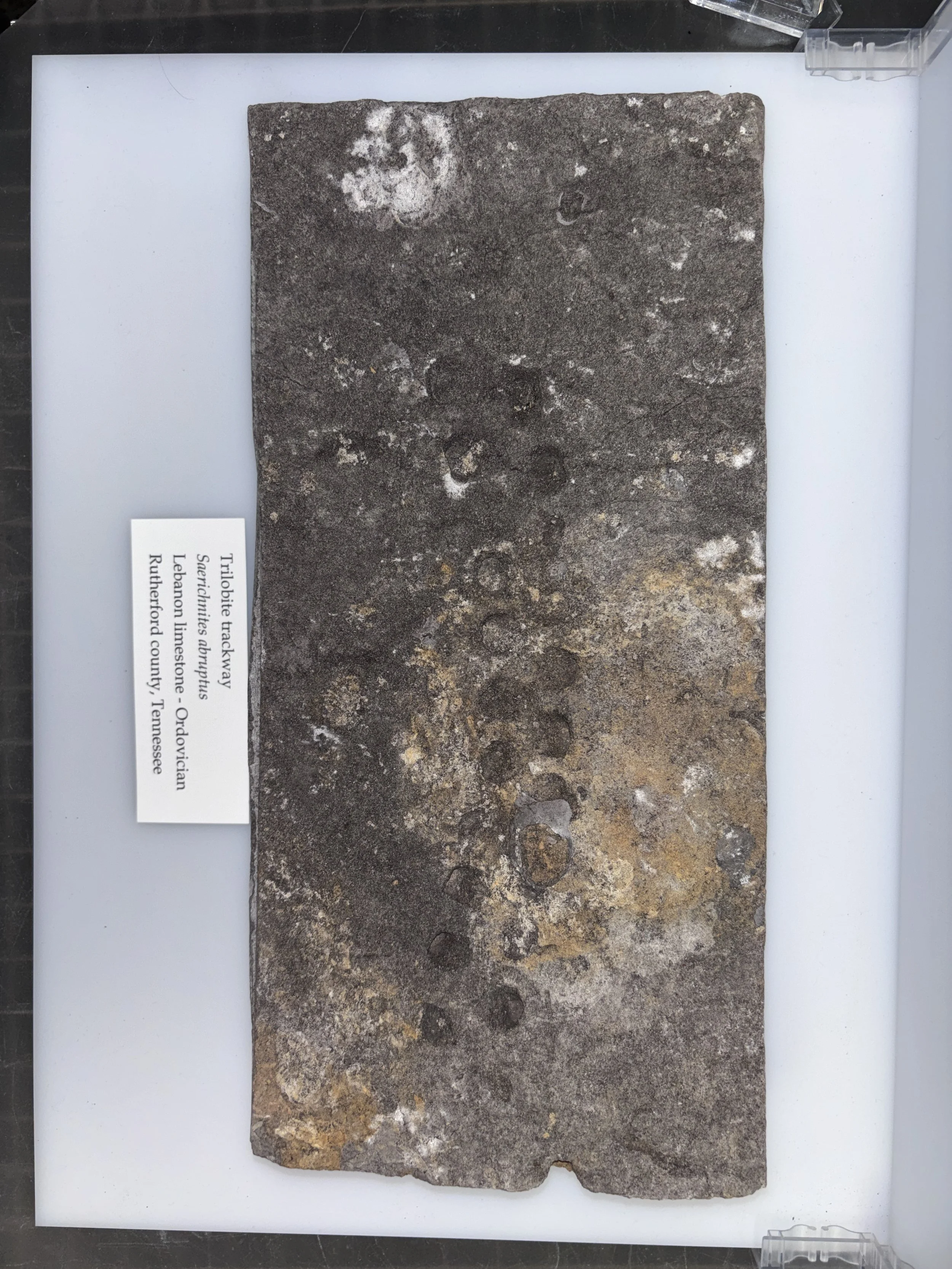
Trilobites were marine arthropods that lived on earth for 300 million years. They were generally small, had a segmented exoskeleton, and crawled around on the bottom of the oceans floor. Most Trilobites had eyes or eye-like structures that were positioned atop their heads and ate detritus that had settled into the sediment (a little like a living Roomba).
Because Trilobites were around for so long and were so prolific, their fossils are found all over the world. The smallest species were mere millimeters long, and the largest was almost 30 inches long. They often died in odd positions, similar to a bug, which you can see demonstrated here.


Crinoids are marine echinoderms (the group that contains urchins and starfish) that have been a part of Earth’s history for about 500 million years. They first developed during the Cambrian period, and some species still live in the oceans today. Despite appearing plant-like at times, crinoids are animals. Older crinoid species typically had a stem which anchored them to the ocean floor, a calyx or cup on top of that stem which contained its organs, and arms branching out from the calyx to help it filter feed. Crinoids have diversified a lot in the last half eon; some still anchor down in coral reefs, while some have evolved to swim around using their feathery arms for propulsion.
Fossils of crinoids can be found all over the world, even in Tennessee. Sometimes, you’ll hear these fossils called ‘Indian money’, and while Native Americans did not use crinoid fossils for currency, they were sometimes used as beads for jewelry. To find crinoid fossils, keep an eye out for something that looks like a stack of coins or a disk with the middle cut out –– that’s a fossil crinoid stem!

Edestus heinrichi was a large shark-like fish that lived in the shallow seas on the Pennsylvanian. They were formidable predators, growing up to 22 feet and had mouth full of bizarrely positioned teeth. The Edestus did not simply shed its teeth like more modern sharks, it instead had a ‘tooth whorl’ which acted a bit like a conveyer belt of teeth–– the old teeth would migrate forward to make room for new ones. Near the front of its mouth, its jaws curled outward, resulting in a strange but effective tool for catching prey.


Pleuracanthus robustus was a freshwater shark that lived during the Pennsylvanian period. They were eel-like in appearance and grew to be about 1.5 feet long. They are most famous for their long spine that protruded from their head and their two-pronged teeth that helped them grab and hold onto food.

Keichousaurus was a marine reptile who lived during the Triassic Period. This tiny reptile was a quick and agile swimmer who resided in swamps, lakes, and brackish water, sustaining itself on small fish. Fossils of the Keichousaurus are commonly found in modern day China and are also typically found complete and still articulated.

In the waters of old Baravia, Germany, the Tharsis dubius, a small carnivorous ray-finned fish made their home. These tiny fish fed by sucking plankton and other tiny prey items into their mouths. Fossils of the Tharsis have shown that they often choked on their prey and died of suffocation.

Horseshoe crabs have been around for about 450 million years, surviving all five major extinction events. You may notice that this particular species found in the Solnhofen Limestone, Mesolimulus walchi, looks a lot like modern horseshoe crabs. Their body plan has been so successful that they have not had to change very much at all to survive into the modern era. While Mesolimulus walchi may be extinct, its modern relative still thrive in the oceans today.
The Solnhofen Limestone has not only preserved the bodies of the crabs, but also their footprints!

Aeger tipularius was a species of shrimp that lived in the waters of the archipelago of modern Bavaria Germany. These shrimps are very well preserved by the fine grain of the Solnhofen Limestone.

Unlike stalked crinoids, the Saccocoma pectinata was a free-floating species that fed on plankton. It is believed that the Saccocoma pectinata could swim using its feathered arms to propel itself through the water. These crinoids have been excellently preserved in the Solnhofen Limestone with some specimens even retaining their feathery arm structures.


The Ichthyosaurus was a marine reptile known for its dolphin-like appearance and large eyes that lived during the early Jurassic through the early Cretaceous period. They were part of the larger Ichthyosaur family but were rather small compared to its relatives (its larger relative, Ichthyotitan could reach lengths up to 80 feet). Unlike most reptiles, the ichthyosaurus did not lay eggs and instead gave birth to live young. Evidence for this can be seen in the fossil record, as the bones of young have been found inside the body cavity.
The Ichthyosaurus was one of the first fossilized marine reptiles to be uncovered, and hundreds of remains have been found in England, Germany, Greenland, and Alberta. The earliest complete fossil was found by Mary Anning in 1811, though remains had been discovered as early as 1699.

Gymnocidaris was a spiny sea urchin that lived during the Jurassic period. They had distinctive club-shaped spines that were used to protect from predators and to help wedge themselves into tight spaces to hide. They fed on microalgae and small, slow moving invertebrates like sponges or bryozoans.
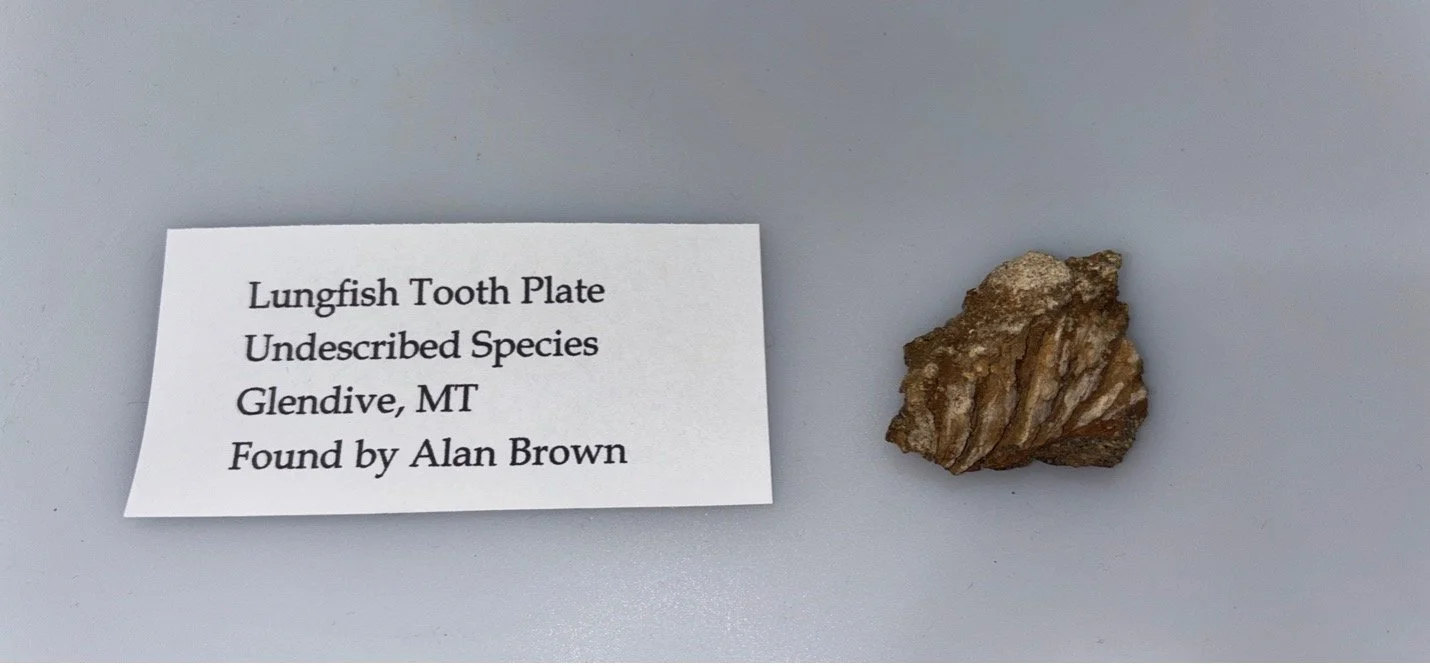
(Early Devonian – Present)
Lungfish are long, eel-shaped fish that can breathe air. While some species of lungfish possess both lungs and gills, they have an advantage over gill-exclusive fish types because they are able to survive in oxygen poor waters and withstand droughts, which may explain why they have managed to stay relatively unchanged over the last 400 million years. Lungfish are considered a “missing link” in the evolution of mammals, reptiles, amphibians, and birds as they are the closest relative to early tetrapods (or all vertebrate animals with four limbs).

The Squalicorax falcatus, or the Crow Shark, was a mid-sized predatorial shark species that lived during the Cretaceous period, whose fossil teeth are found in North America, Europe, and North Africa. It grew to be about 16 feet long and preyed on fish, mosasaurs, and sea turtles. A Crow Shark tooth was found imbedded in the foot bone of a hadrosaur, showing that they even scavenged land animals that were swept out to sea.
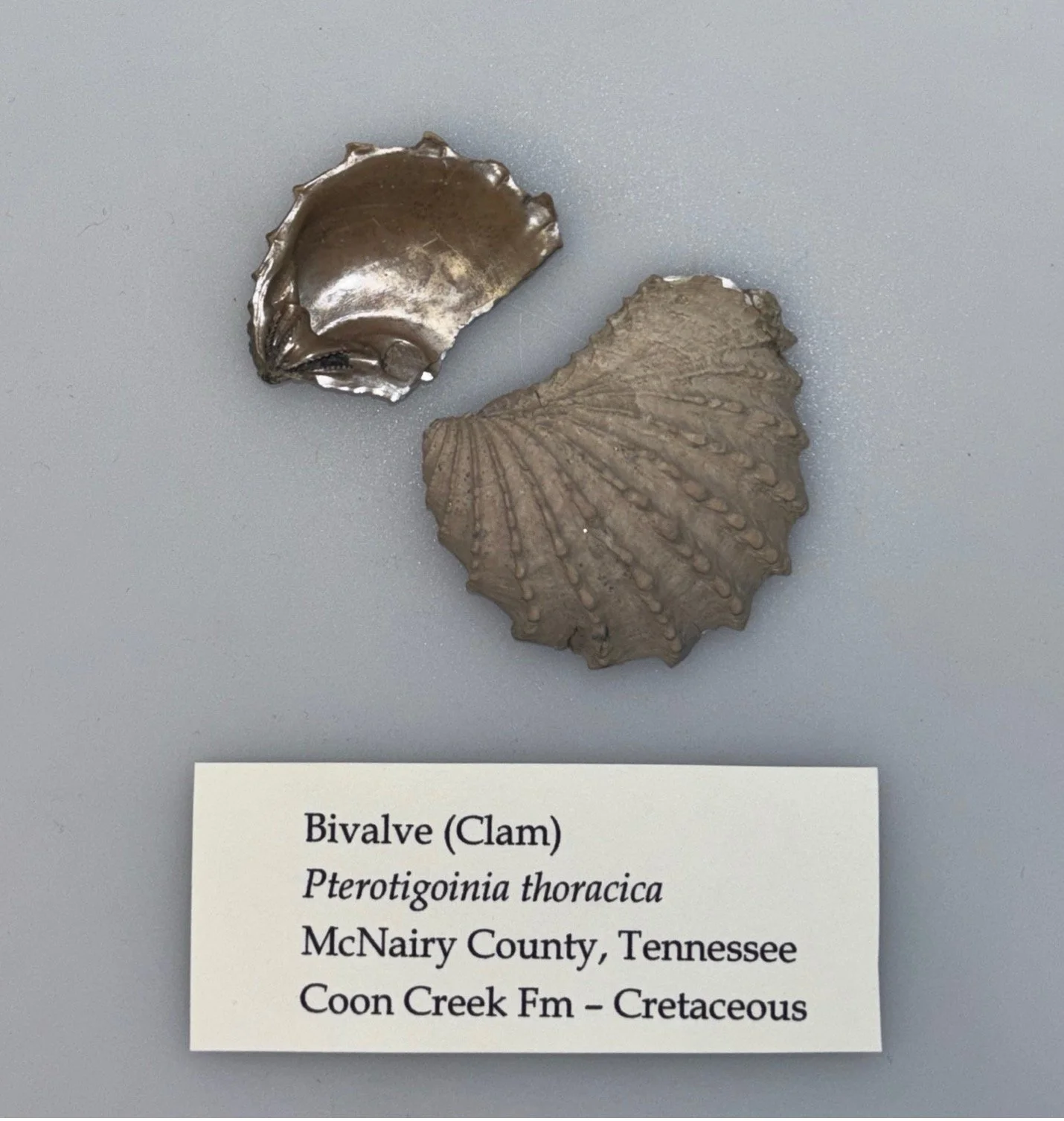
Did you know Tennessee has a state fossil? Pterotrigonia thoracica was a bivalve that lived in the shallow seas that covered much of the middle of North America during the Cretaceous (Western Interior Seaway). Pterotrigonia thoracica was chosen as the state fossil due to its abundant fossils found in the Coon Creek Formation in West Tennessee.
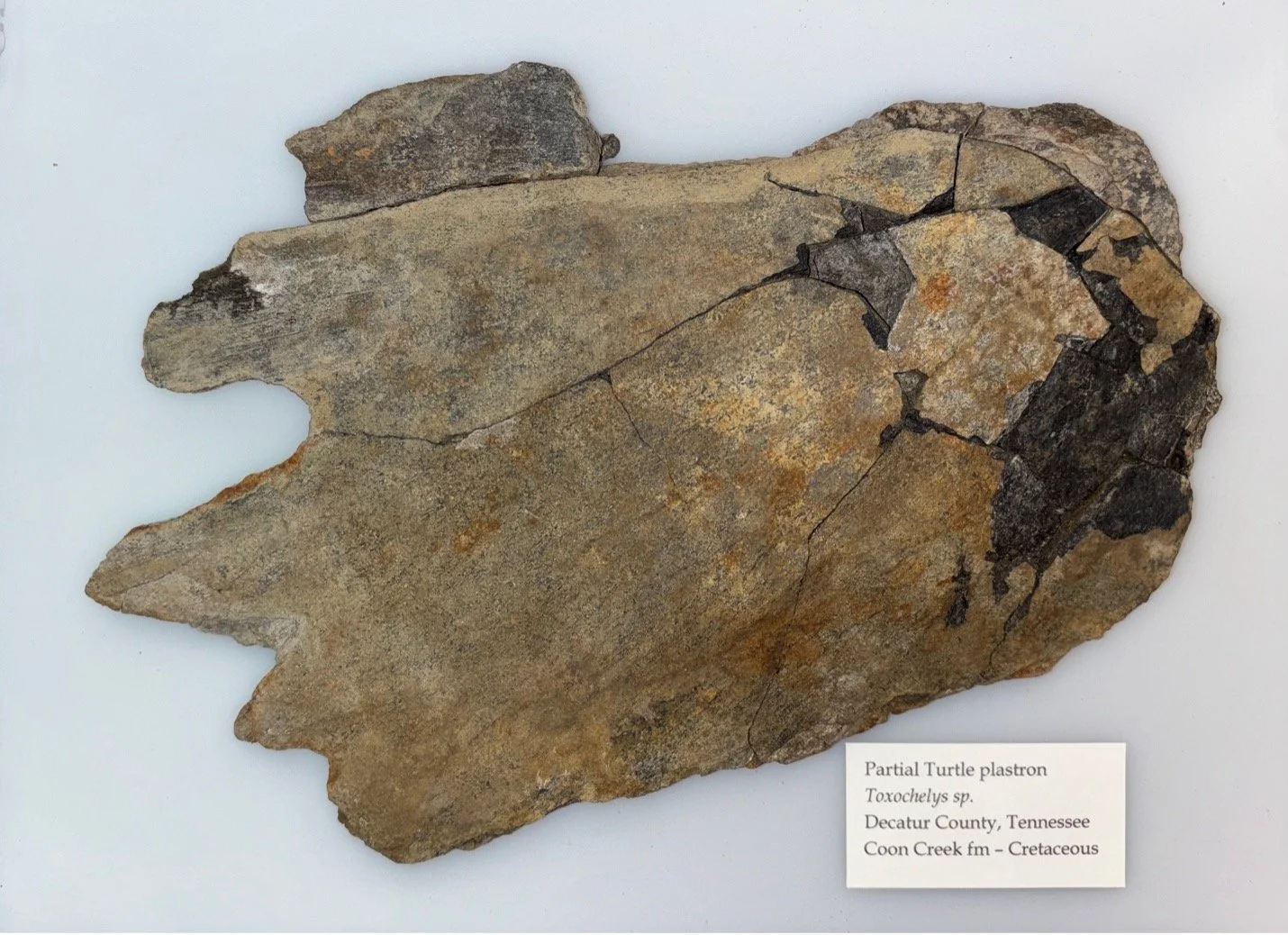
Toxochelys was a genus of sea turtle that live in the Western Interior Seaway, and its fossils are found in the United States and Canada. Toxochelys lived a similar life as modern sea turtles, feeding mostly on jellyfish, squids, mollusks, crustaceans, and marine vegetation. However, Toxochelys was larger, growing up to 6 feet in length.
This specimen was found by museum staff in the Coon Creek Formation in Tennessee.
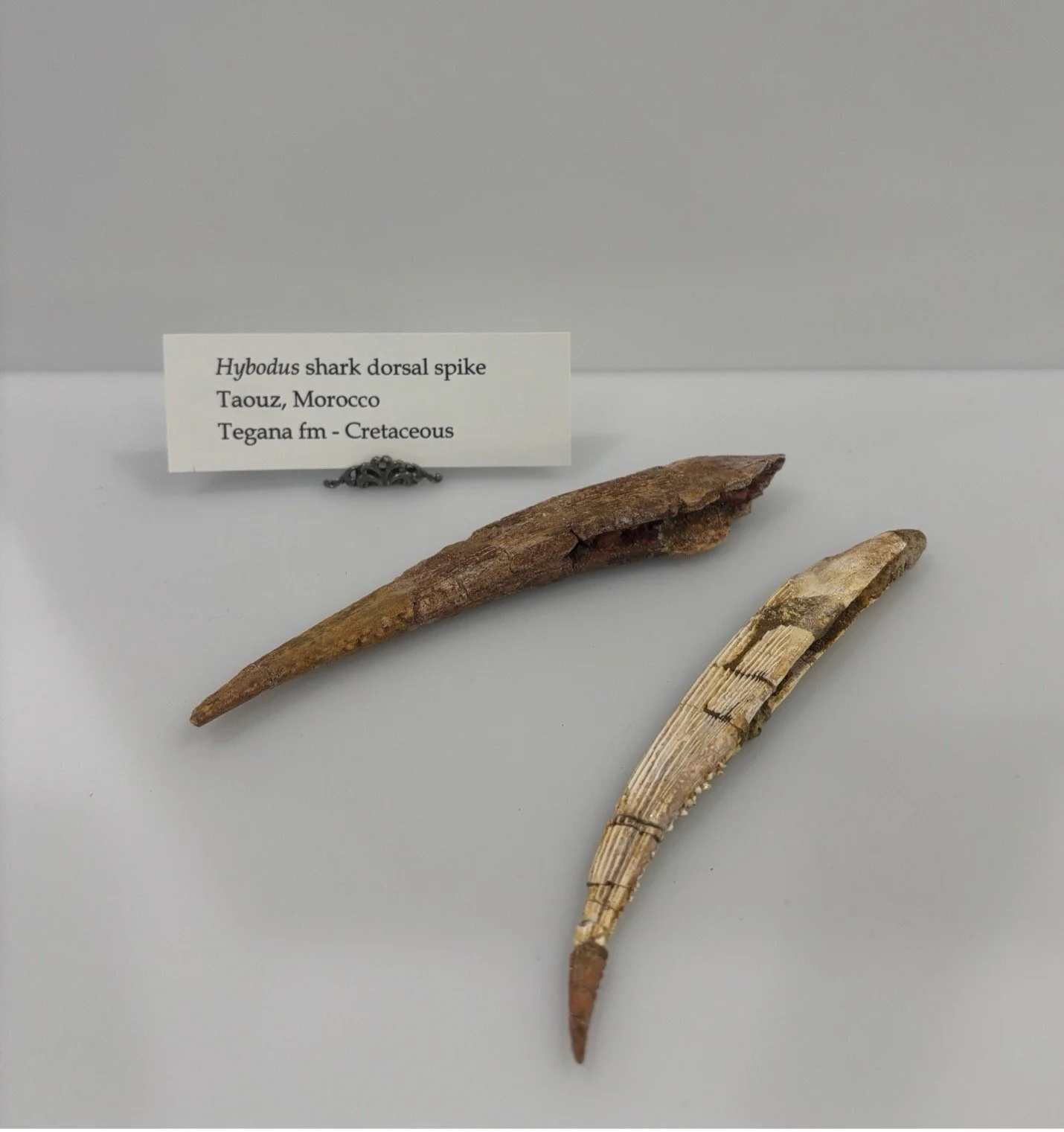
Ancient Shark (Permian – Cretaceous)
Hybodus was a genus of shark that had great success in the ancient oceans. It was about 6 feet long and had small crown of spikes on its head and two more larger spikes by its dorsal fins. These spikes would have protected the shark from bigger predators, which partly contributed to its success. Another trait Hybodus had was two types of teeth for two types of prey. The teeth at the front of its mouth were sharp, used to bite down on prey, while the teeth in the back of its mouth were flat and could crush and break down hard shells and bones—a little like your own molars.
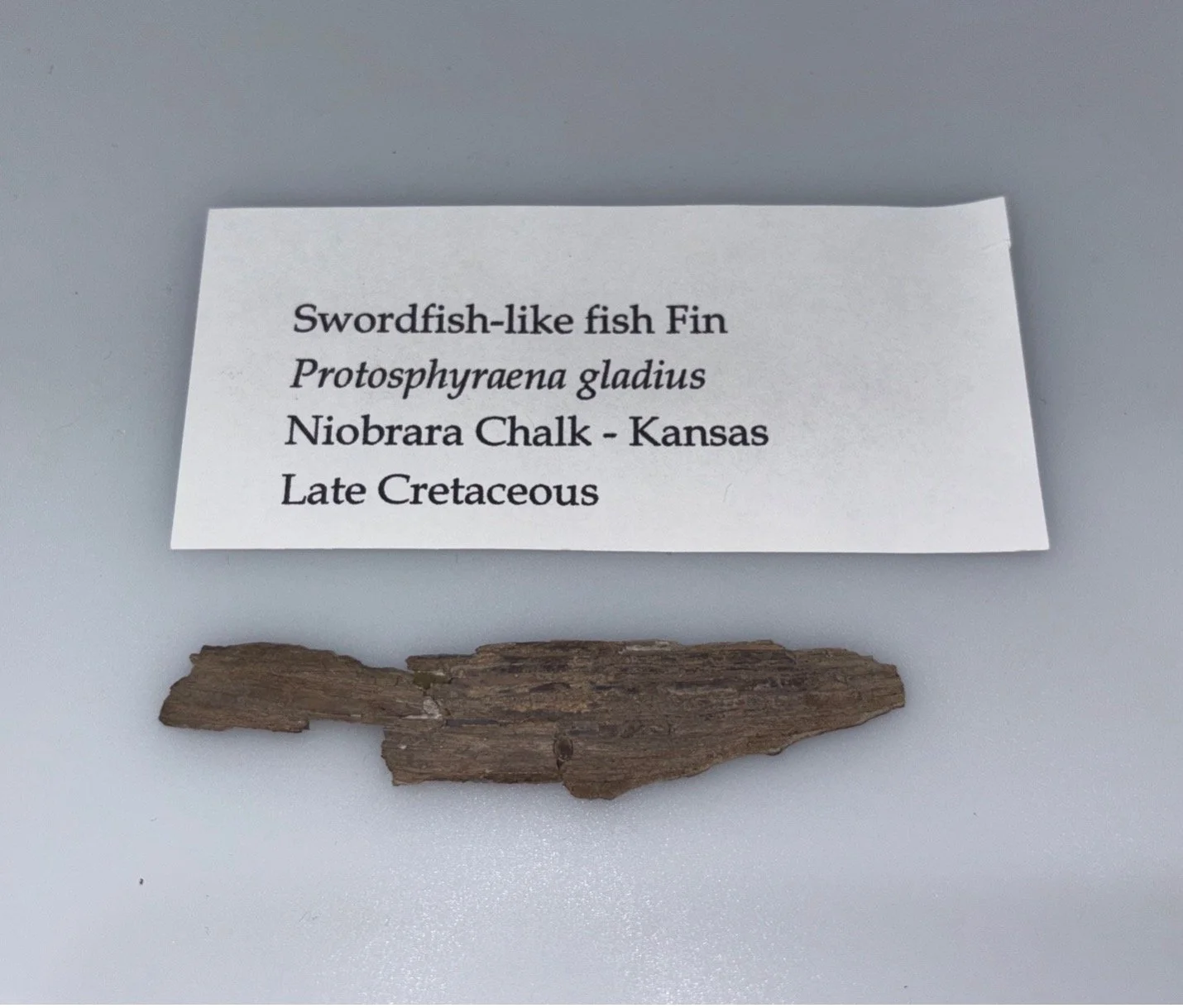
Swordfish-like Fish (Cretaceous)
Protosphyraena gladius was a giant, predatory fish that lived during the Cretaceous period. It grew to 6.5 to 10 feet in length and bore a resemblance to modern swordfish despite belonging to a different evolutionary lineage. The long rostrum (the sword-looking part) on its upper jaw was likely used to incapacitate prey.
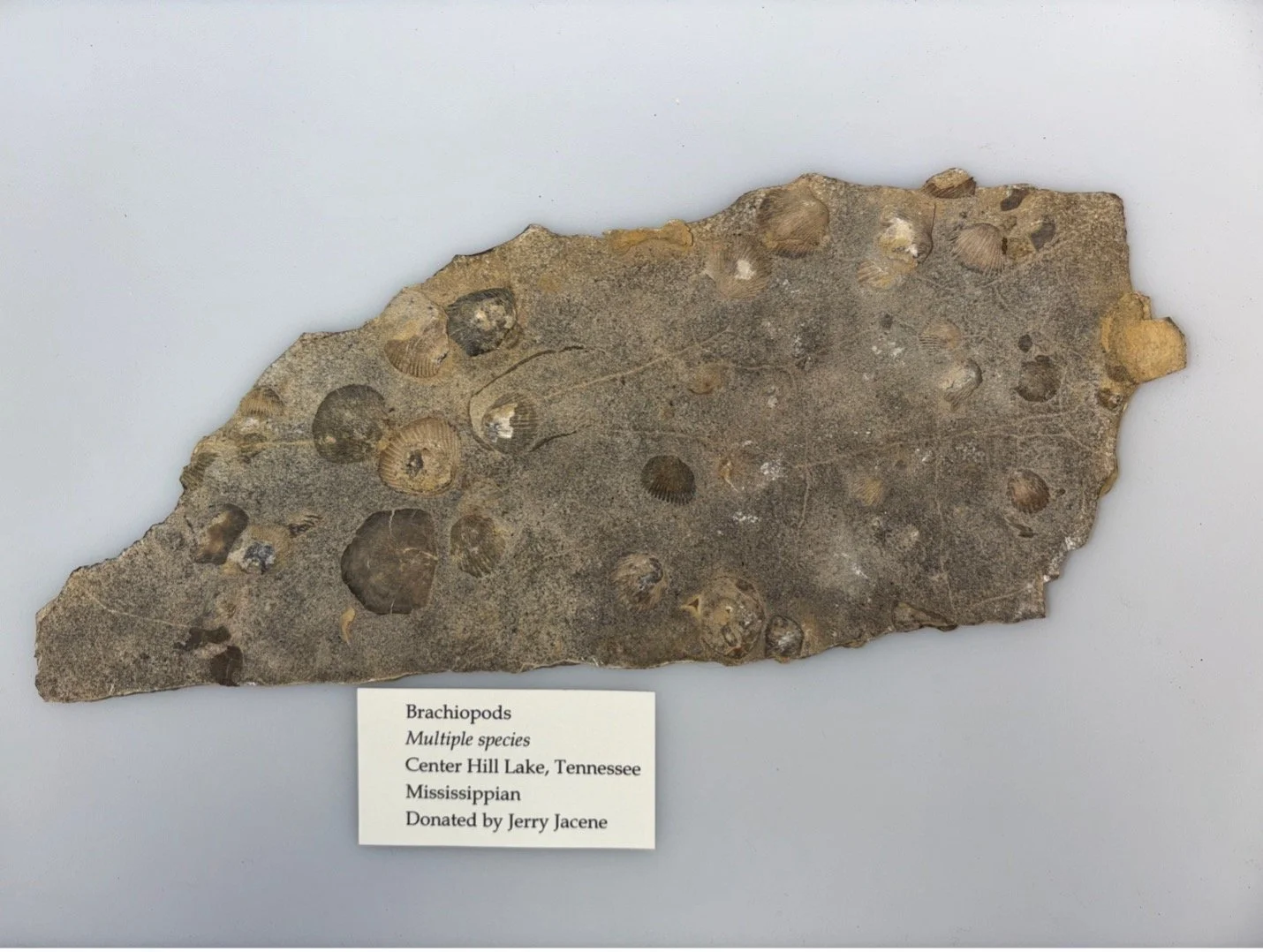
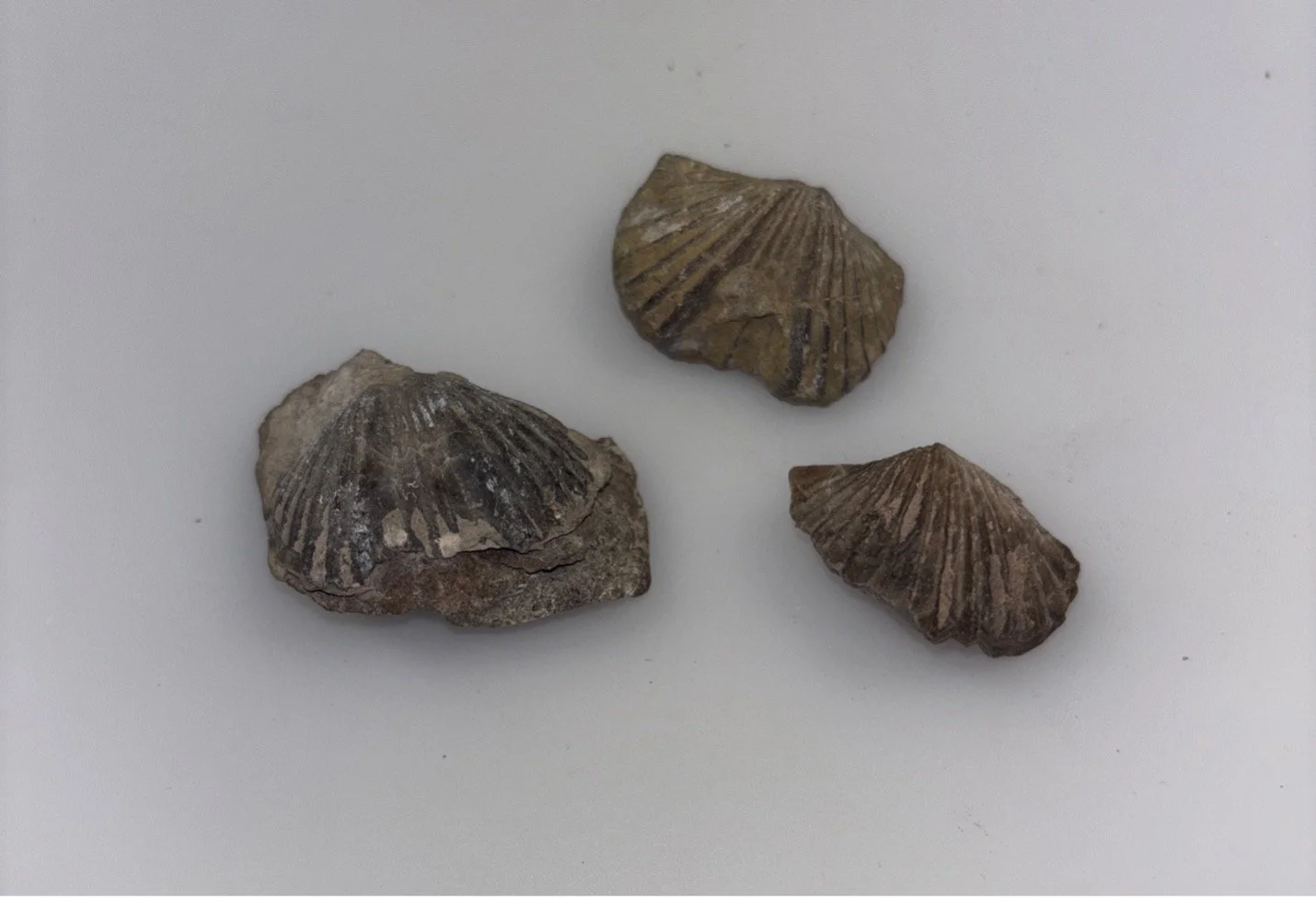
Brachiopods (Cambrian – Present)
Brachiopods are aquatic soft-bodied invertebrates who typically live inside a symmetrical two-halved shell. Though similar to bivalves in design, Brachiopods are deceptively unique, belonging to their own phylum, Brachiopoda. Brachiopods are generally stationary and are typically anchored in one spot, relying on filter feeding.
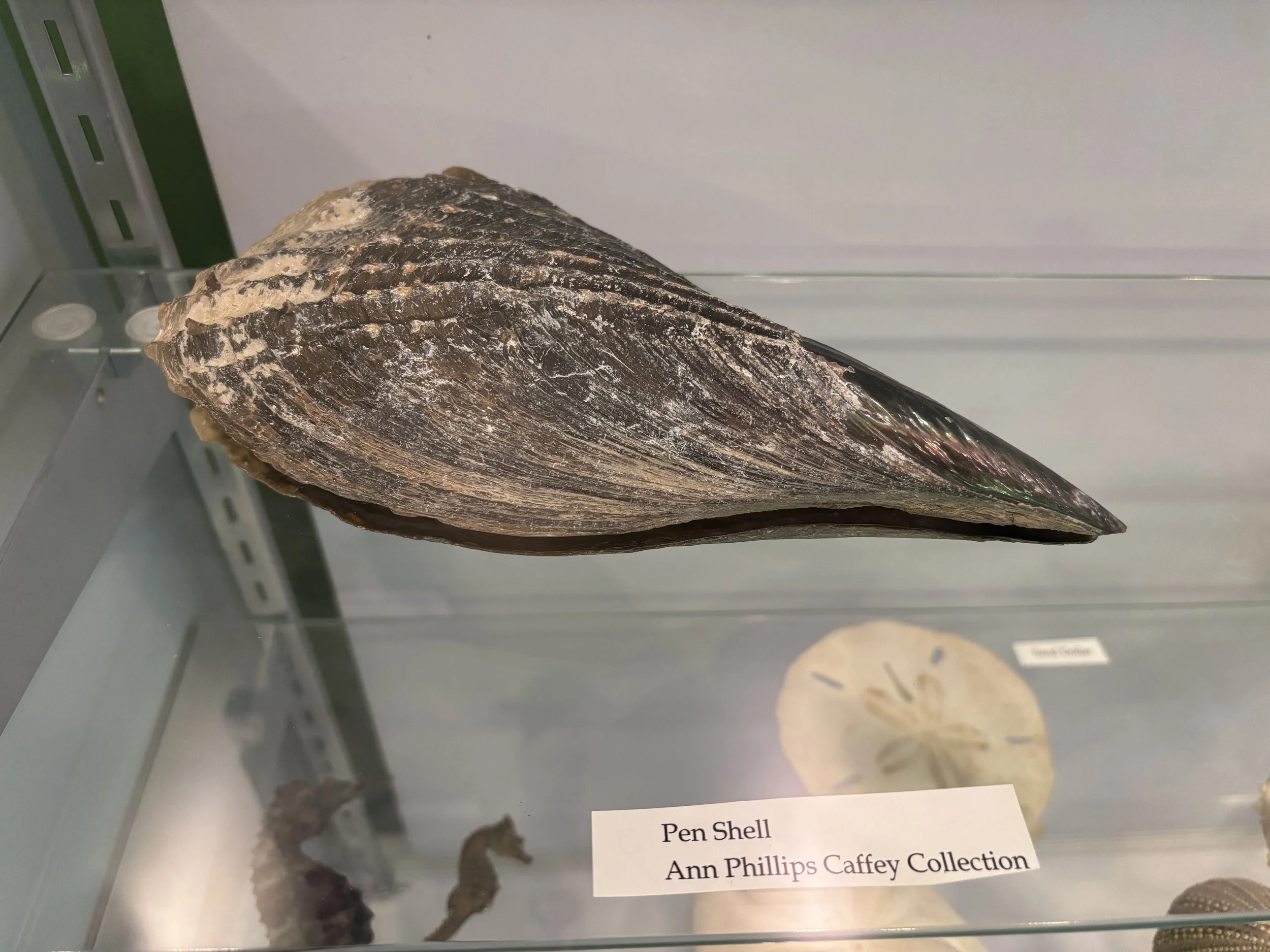
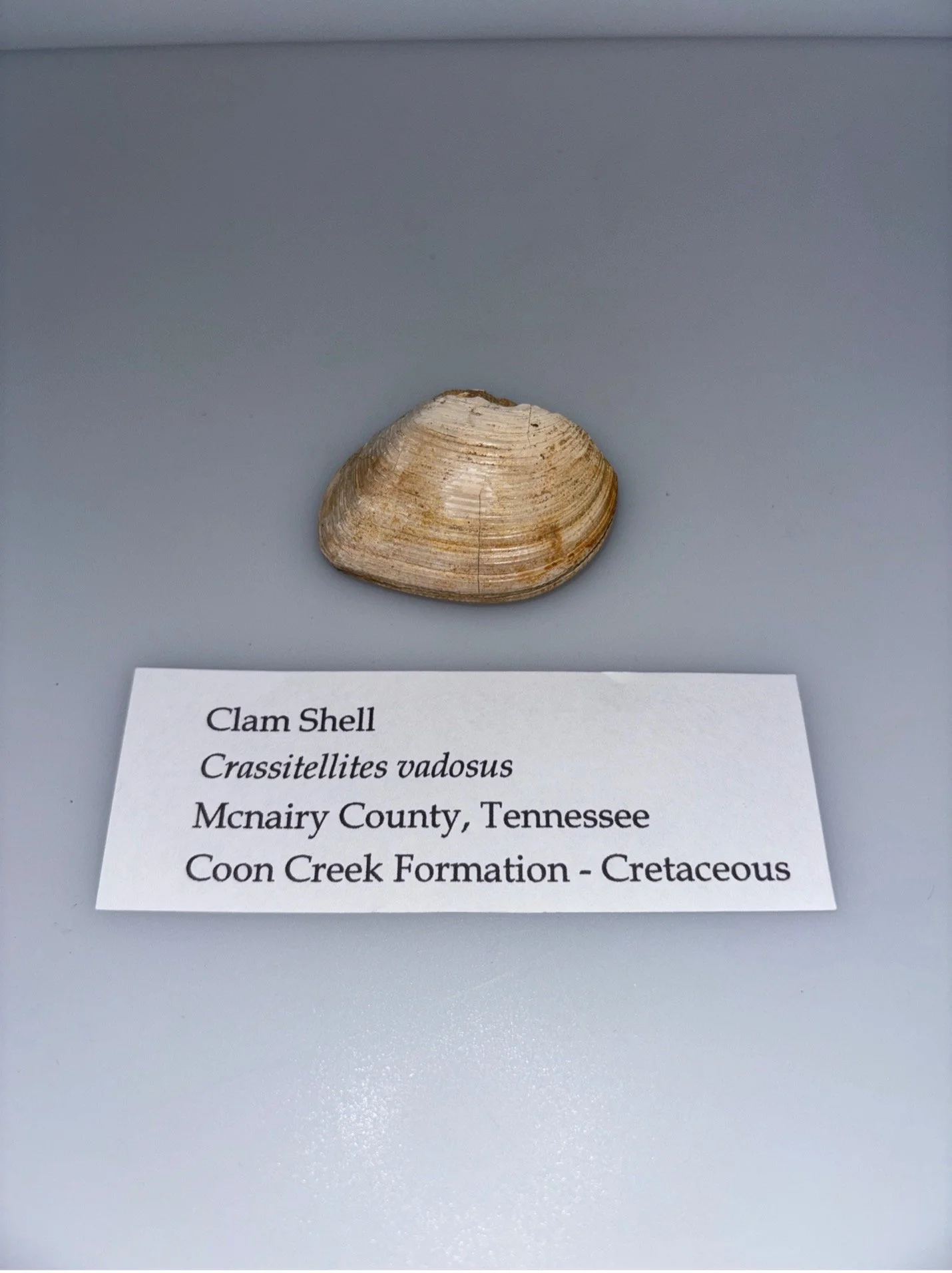
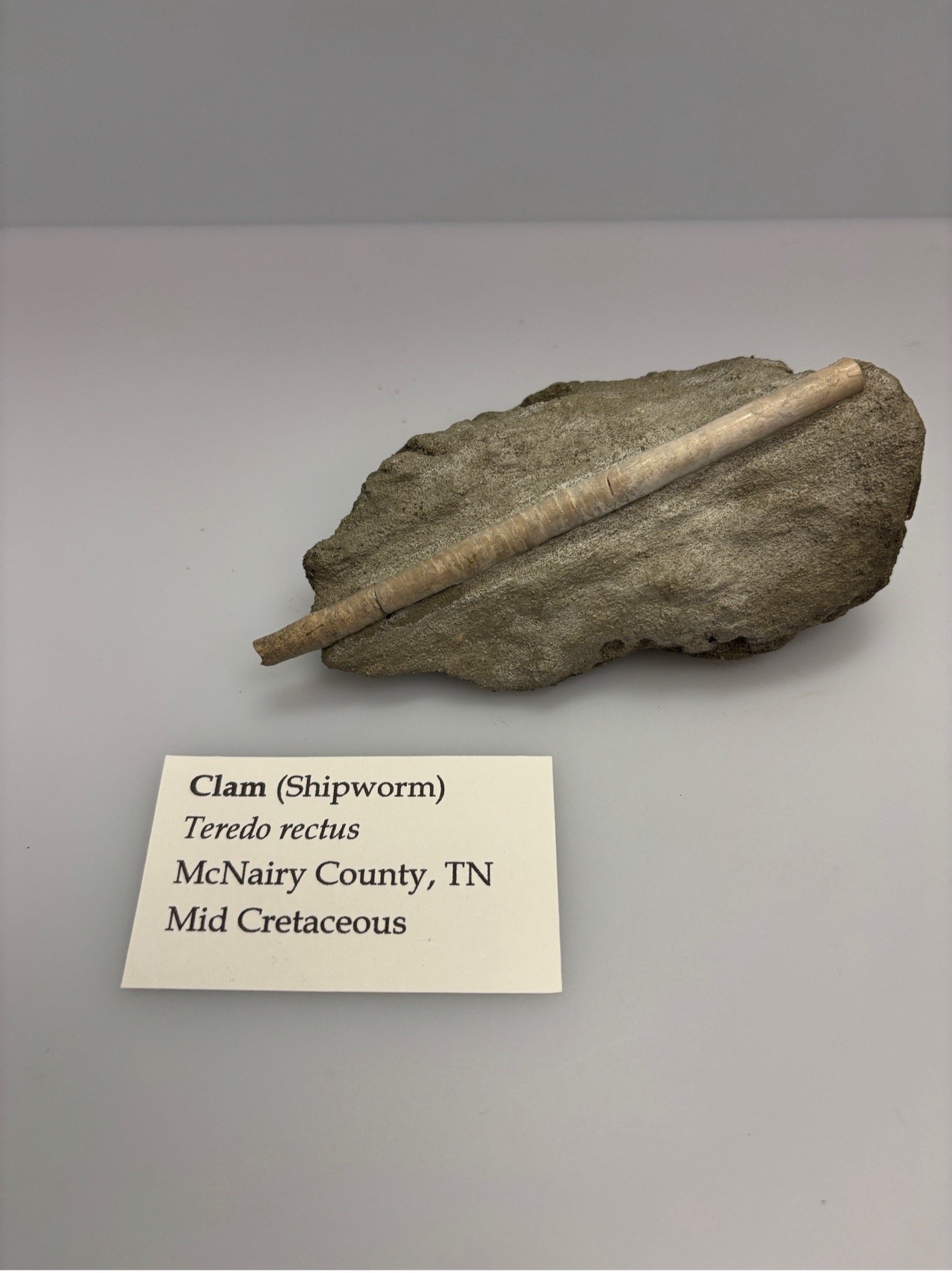
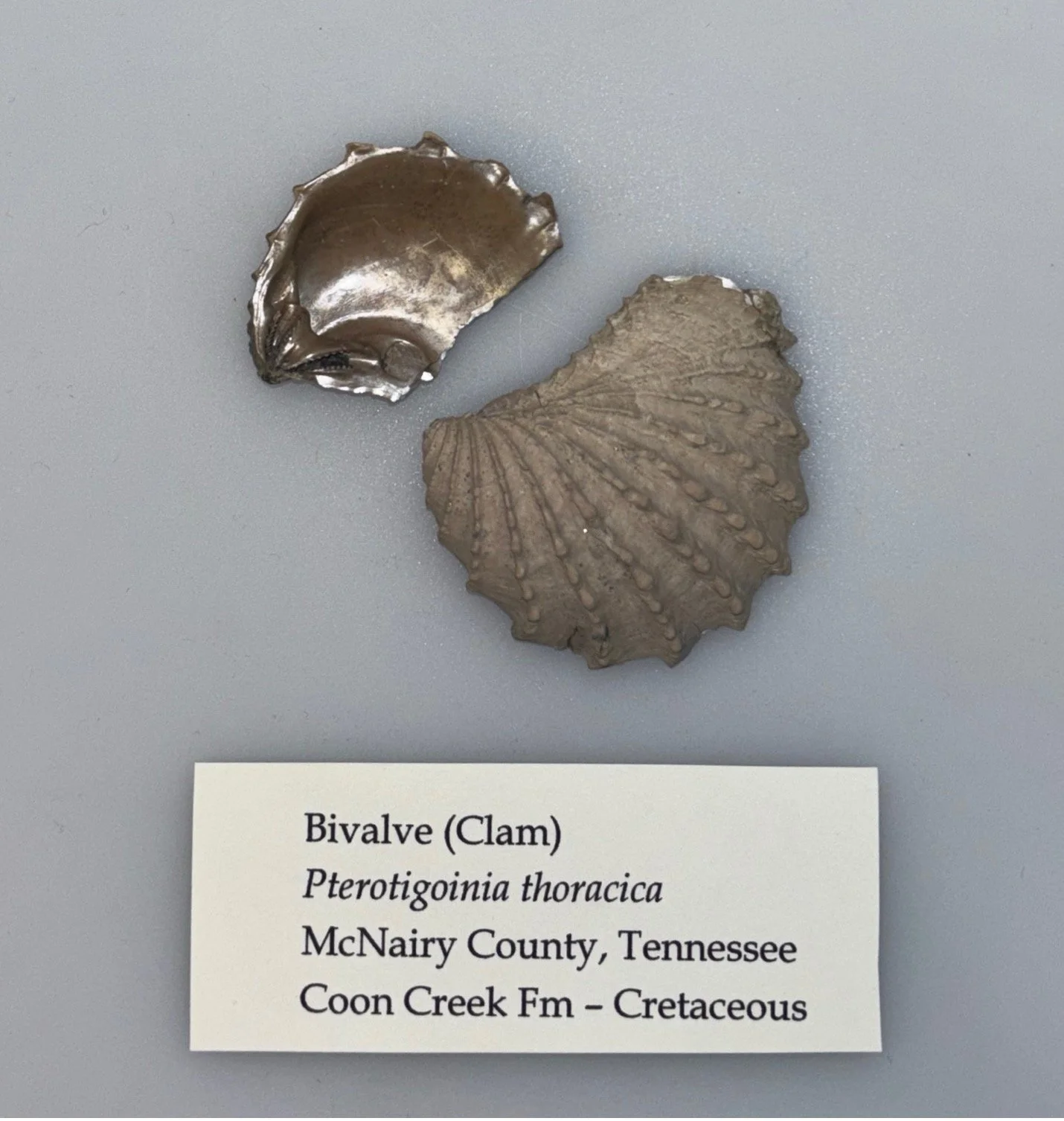
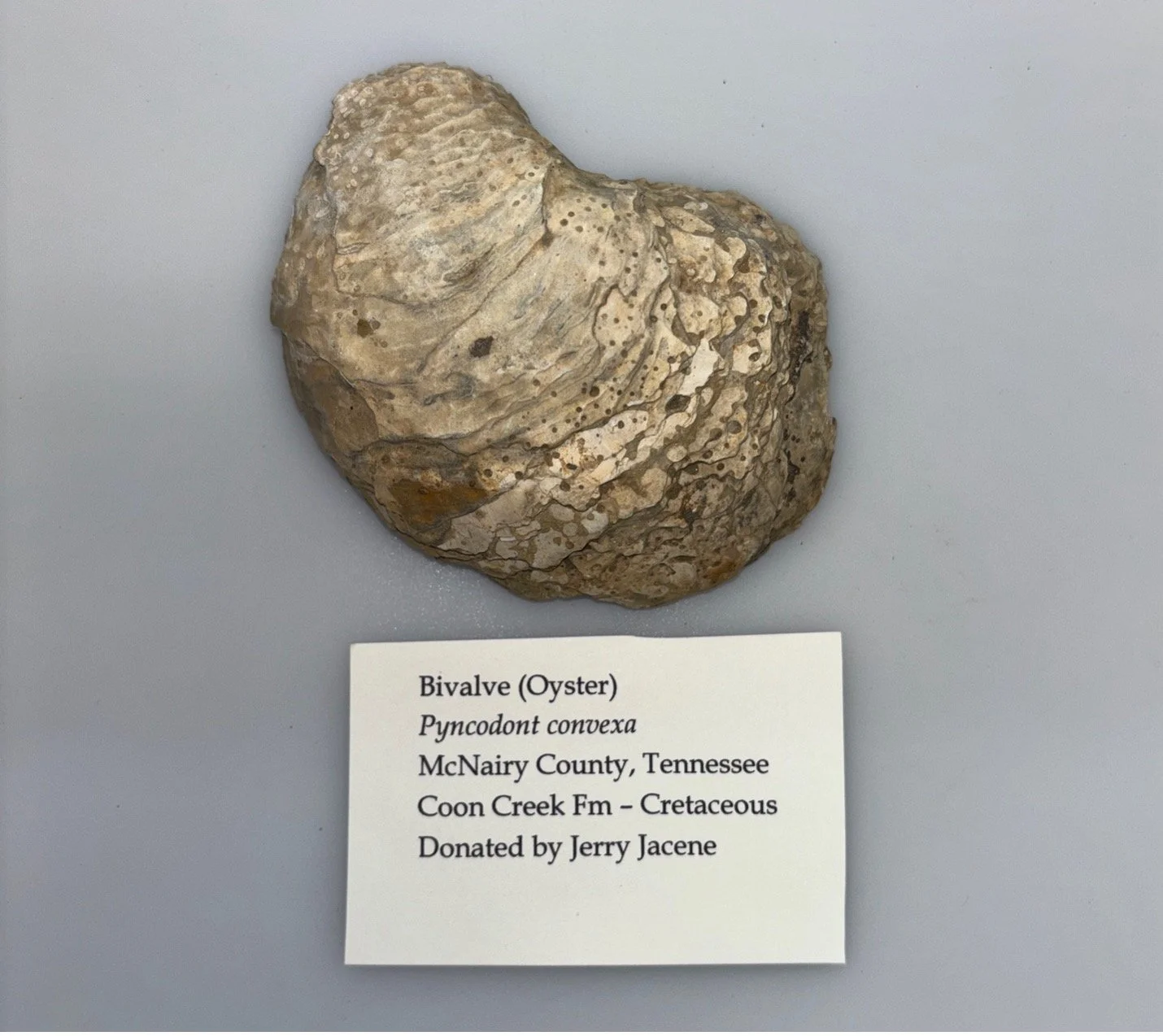
Bivalves are aquatic soft-bodied invertebrates who typically live inside a vertically symmetrical two-halved shell. They are similar to brachiopods, who are symmetrical both laterally and vertically, but the two are not actually very closely related. Today, bivalves vastly outnumber brachiopods, but during earlier periods, the inverse was true.
Bivalves are more mobile than they look, often burying themselves in sediment with the help of a muscular organ called a ‘foot’, and some can even swim by clapping their shell open and closed. Their shells have historically been used as jewelry, tools, and even money in certain cultures.


Ammonites (Devonian – Cretaceous)
At some point, most everyone has seen the fossil of an ammonite, perhaps thinking it was some kind of fossil snail shell. However, Ammonites were not gastropods, but cephalopods. Essentially a type of shelled squid, Ammonites and their cousins nautiloids populated the ancient seas eating small, slow moving organisms like plankton or jellyfish. Ammonites went extinct during the K-Pg extinction event, the same that killed the non-avian dinosaurs, alongside many other shallow water marine creatures due to chain reactions of the asteroid strike. The Ammonite’s still-living relative, the Nautilus, survived this extinction event thanks to its much deeper ocean habitat which was less effected by the issues on the surface.
Fossilization:
Ammonites are much beloved fossils for collectors, often cut down the middle and displayed in pairs as the empty chambers of the shell can fill with beautiful minerals. Ammonites can be mineralized with pyrite, agate, calcite, and even opal. Opalized Ammonites are nicknamed ‘Ammolites’.
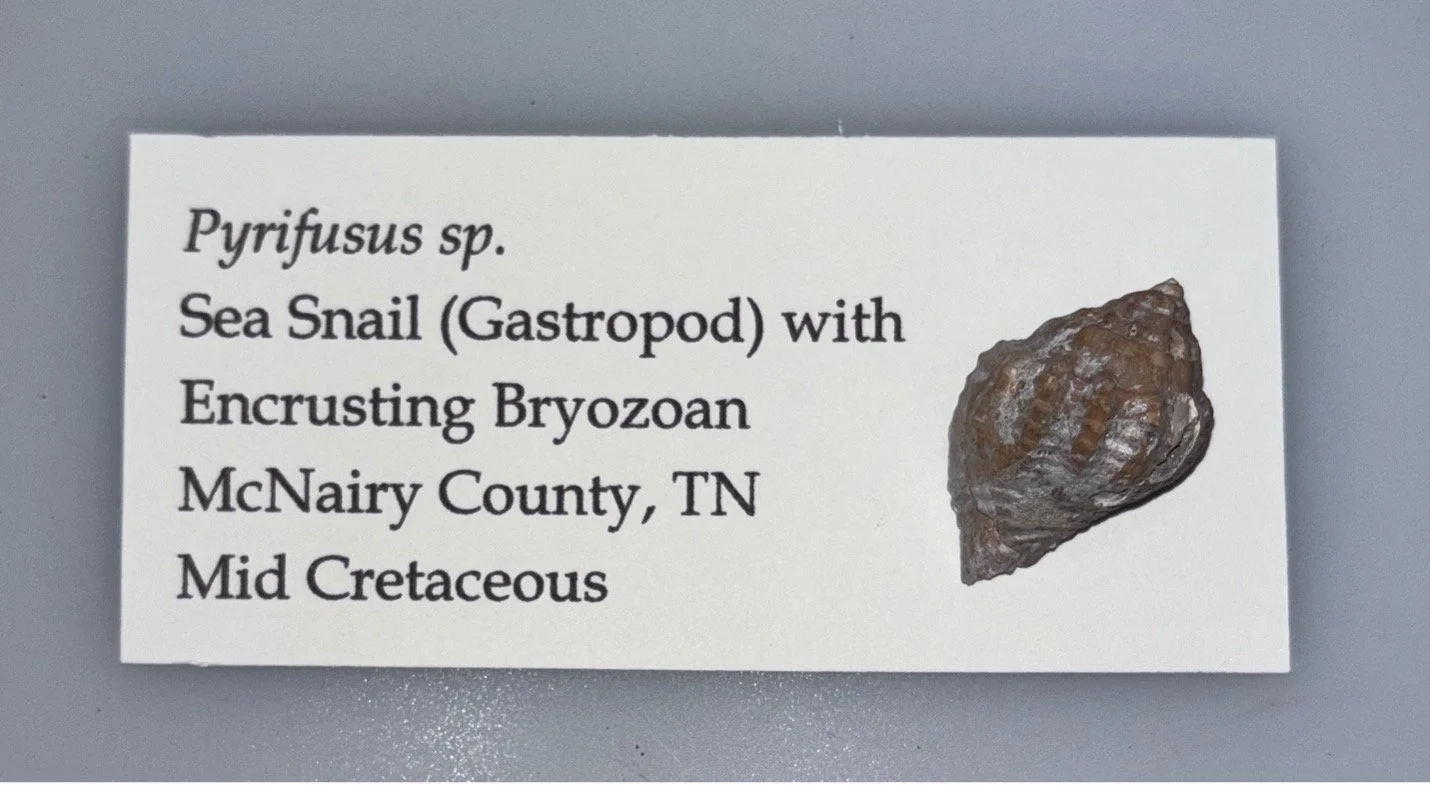
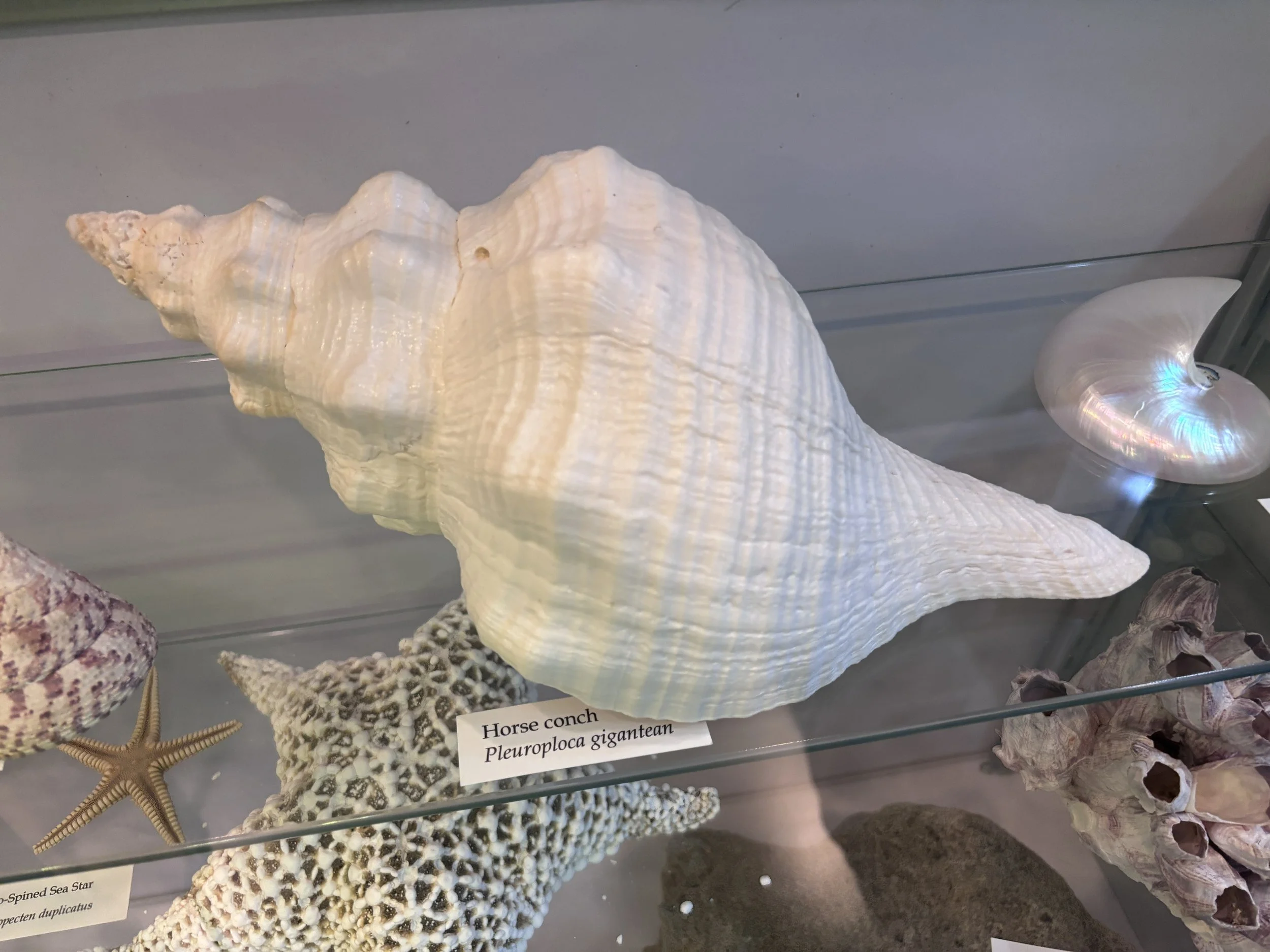
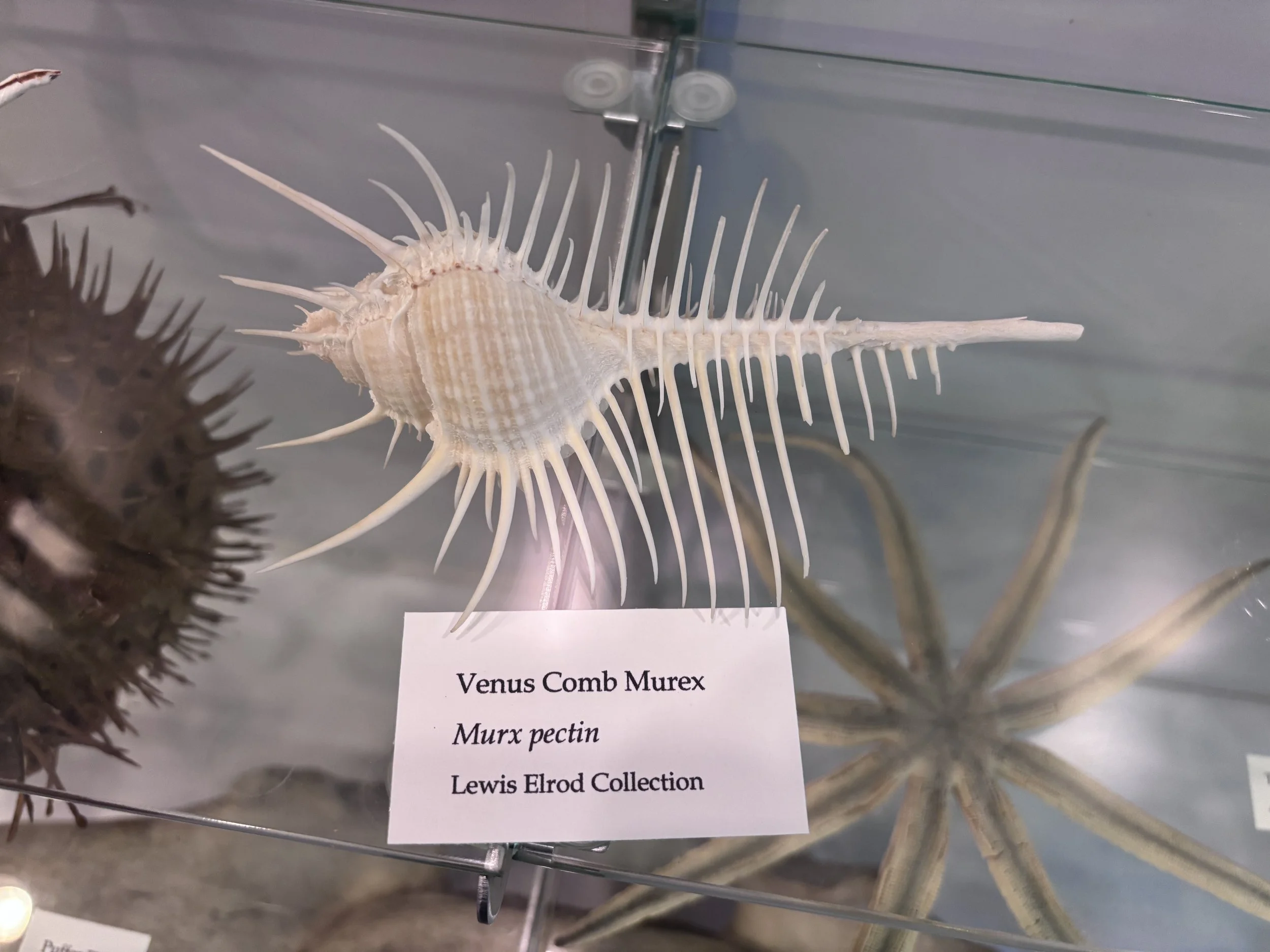
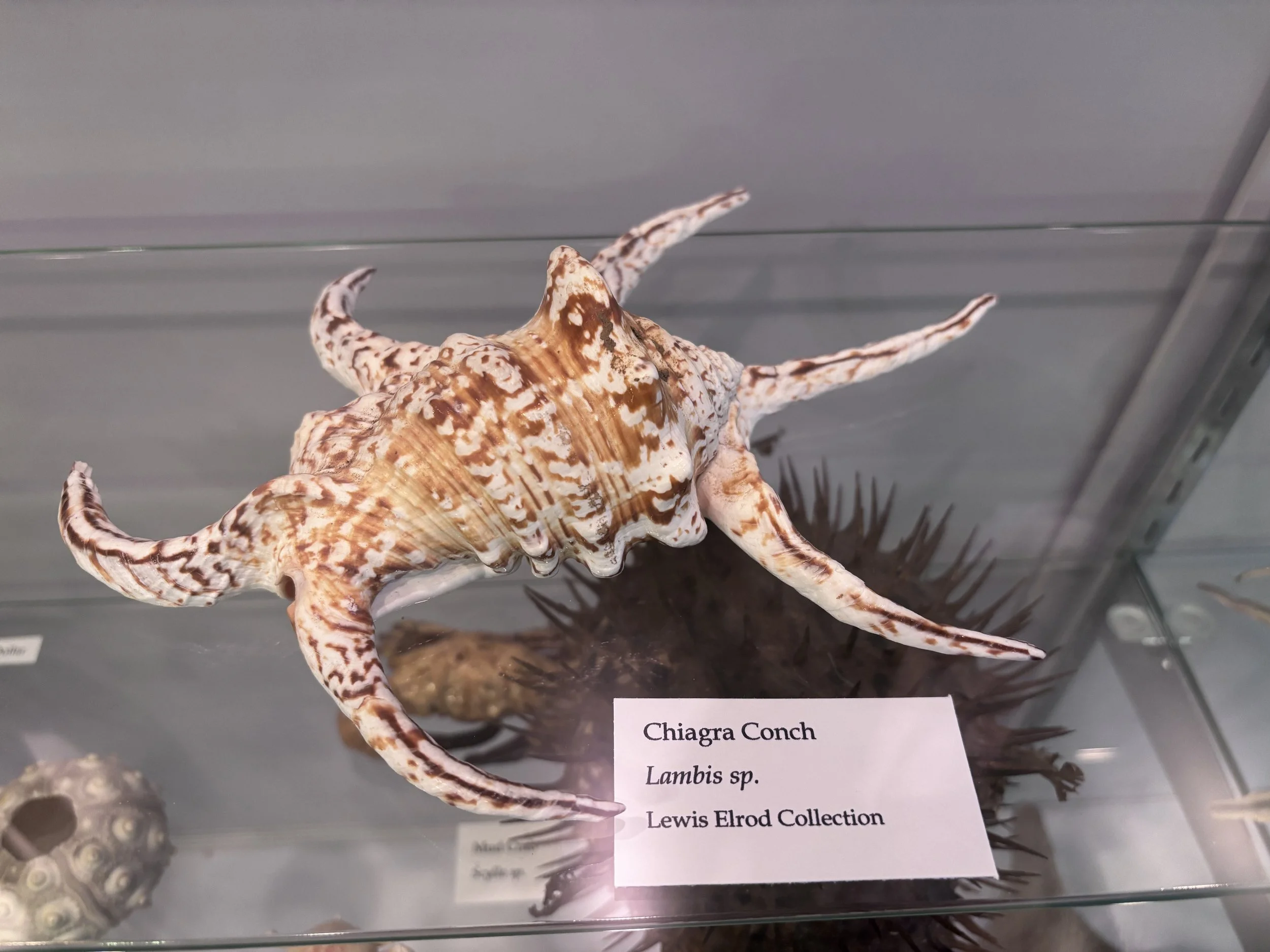
Gastropods (Late Cambrian – Present)
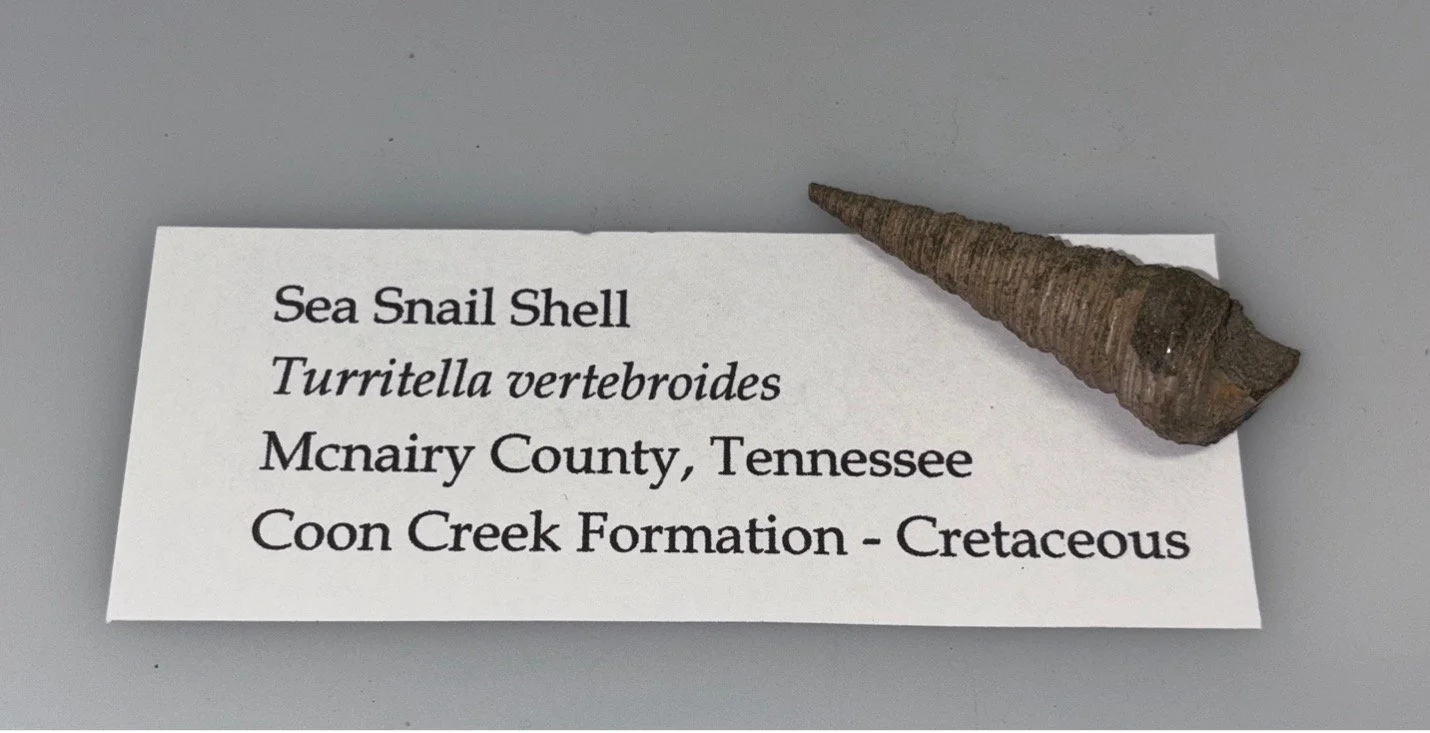
Gastropods are a class of soft-bodied invertebrates and are members of the phylum Mollusca, including things like snails and slugs. Gastropods have been around since almost the beginning of the fossil record, developing all the way back in the oceans of the Cambrian Period (485- 541 million years ago). Gastropod bodies are simple but highly adaptable, and have diversified far past marine living. Today there are species in the oceans, in rivers, on land, and even on hydrothermal vents.
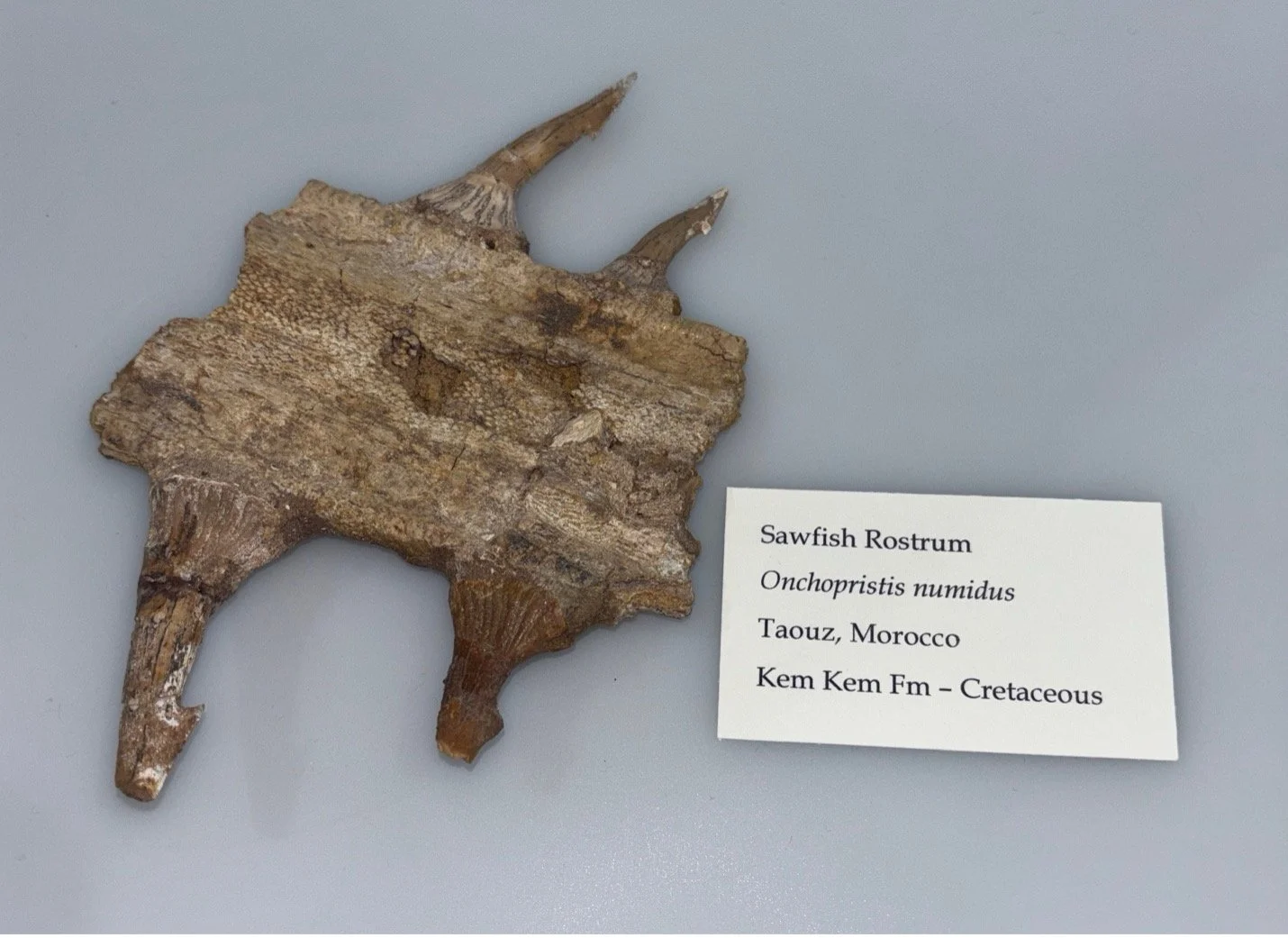
Onchopristis numidus, or the ancient sawfish, was a large, odd-looking fish with teeth all along their rostrum (or snout), resembling a chainsaw. To hunt, the sawfish would swipe its snout at prey, impaling fish along the bottom of the ocean floor. Though they resemble modern sawfish, they are not closely related. This is an example of convergent evolution, in which multiple animals adapt similar solutions to survive in their environment.
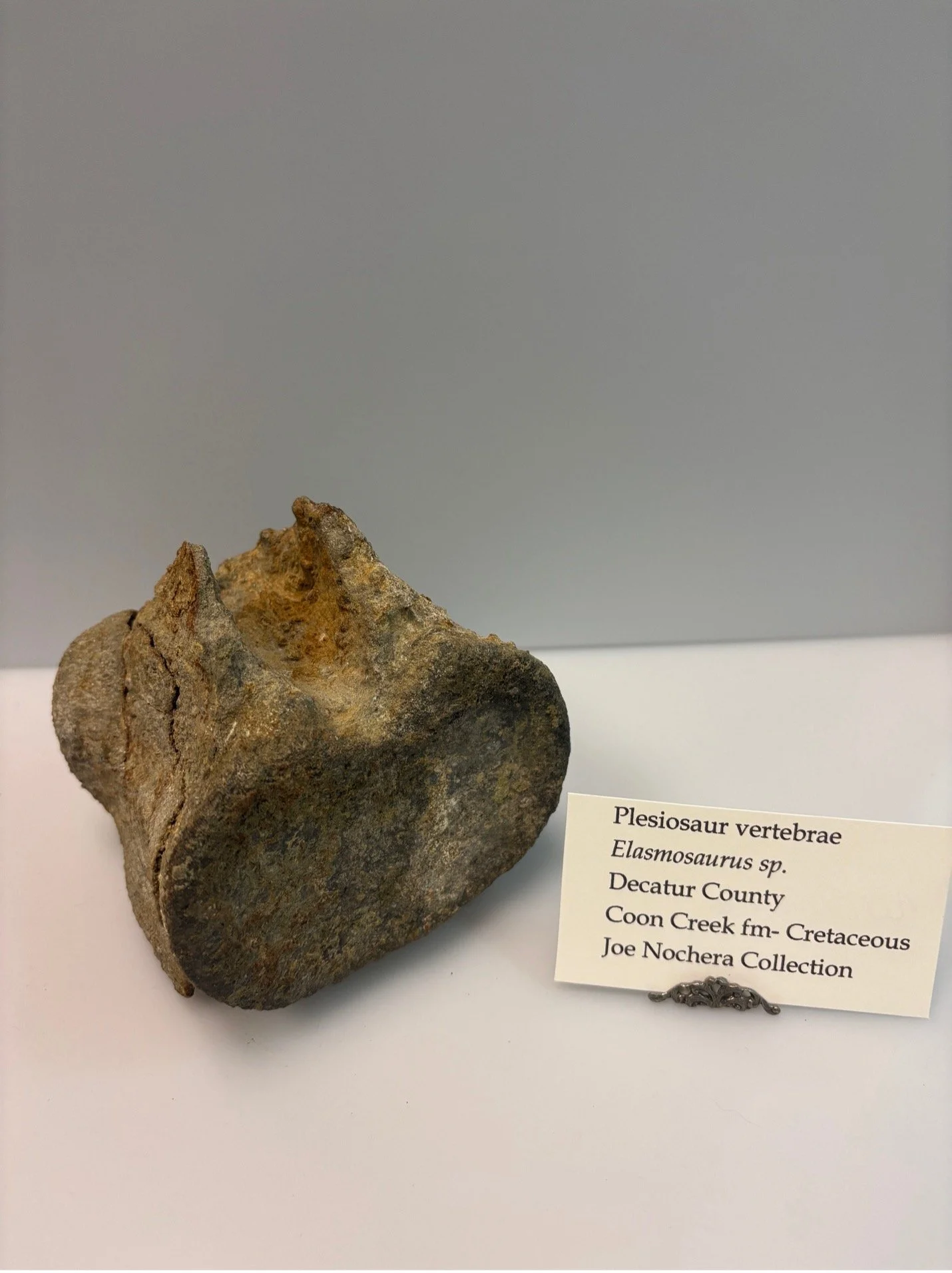
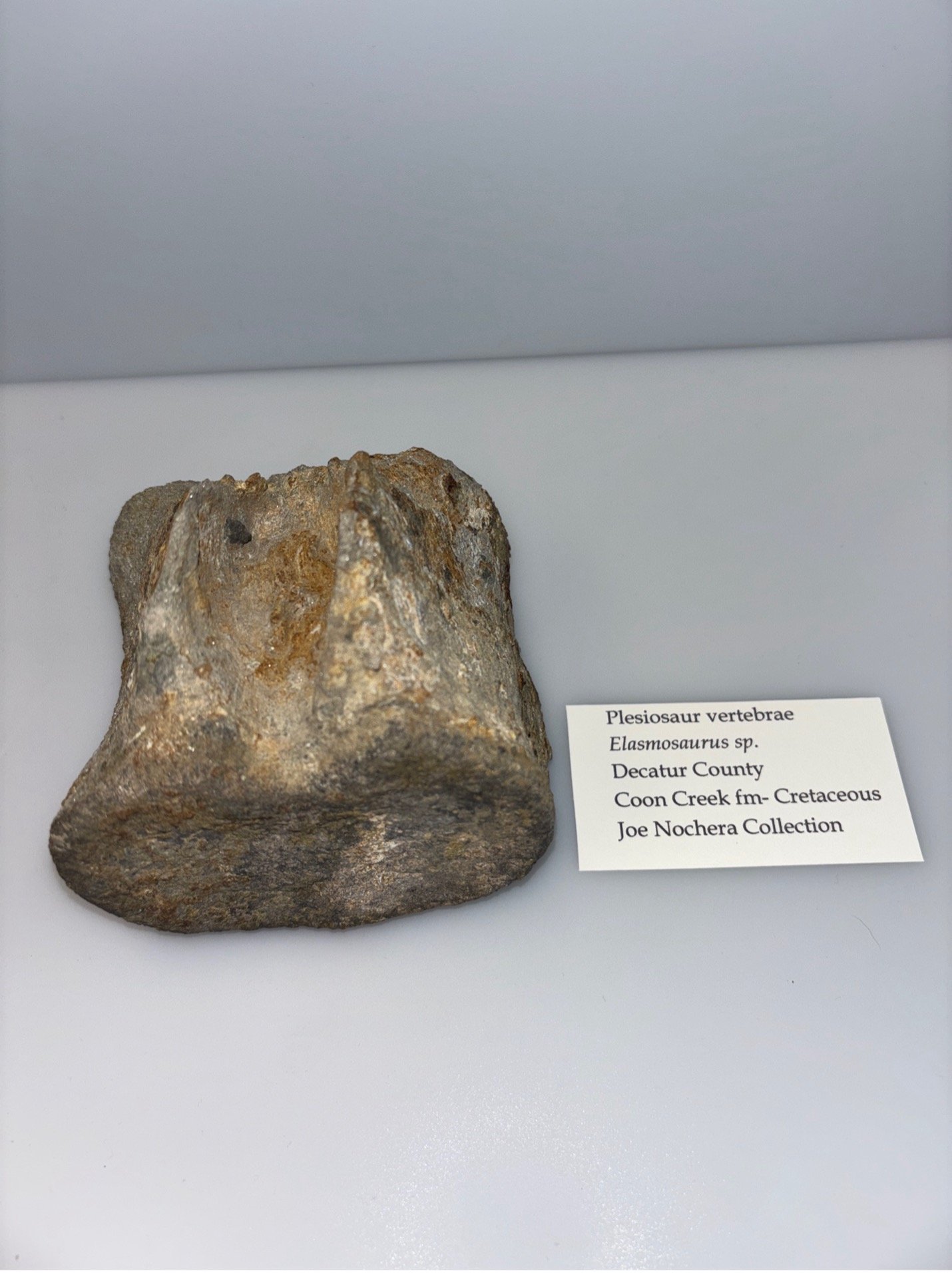
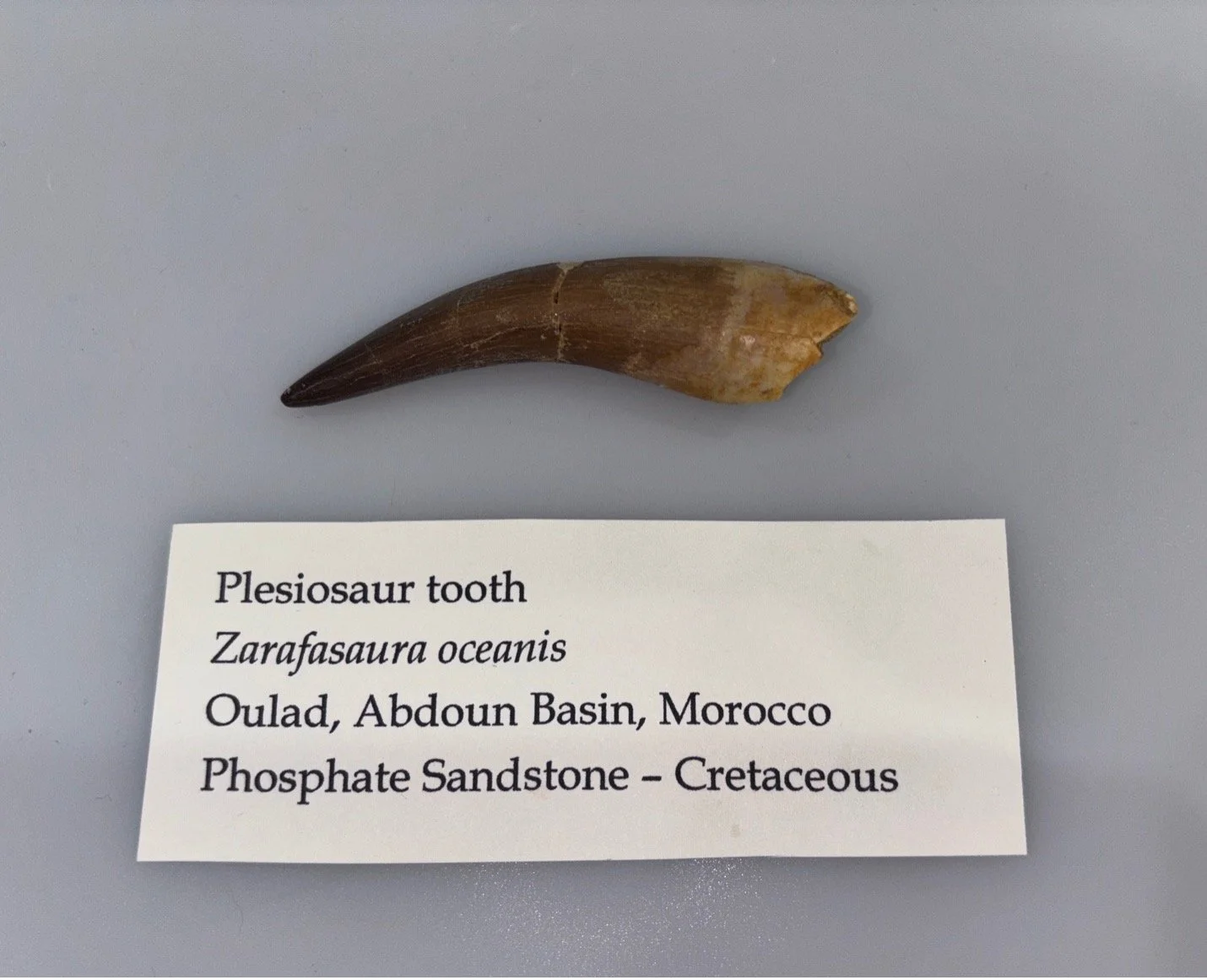
Plesiosaurs were marine reptiles that lived during the age of the dinosaurs. Though not dinosaurs themselves, Plesiosaurs are well-known for their distinctive body shape which inspired the famous cryptid, the Loch Ness Monster. While many believers argue that a Plesiosaur could still be in Loch Ness in Scotland, they all unfortunately went extinct at the same time at the non-avian dinosaurs following the K-Pg Impact. Their diet was comprised of fish and cephalopods. Plesiosaurs came in different shapes and sizes; some where large and long-necked like the Zarafasaura oceanis who had short faces with long necks, while some like the Pliosaurus had short necks and large heads.
The first complete Plesiosaur fossil was found by famous female paleontologist Mary Anning in 1823.
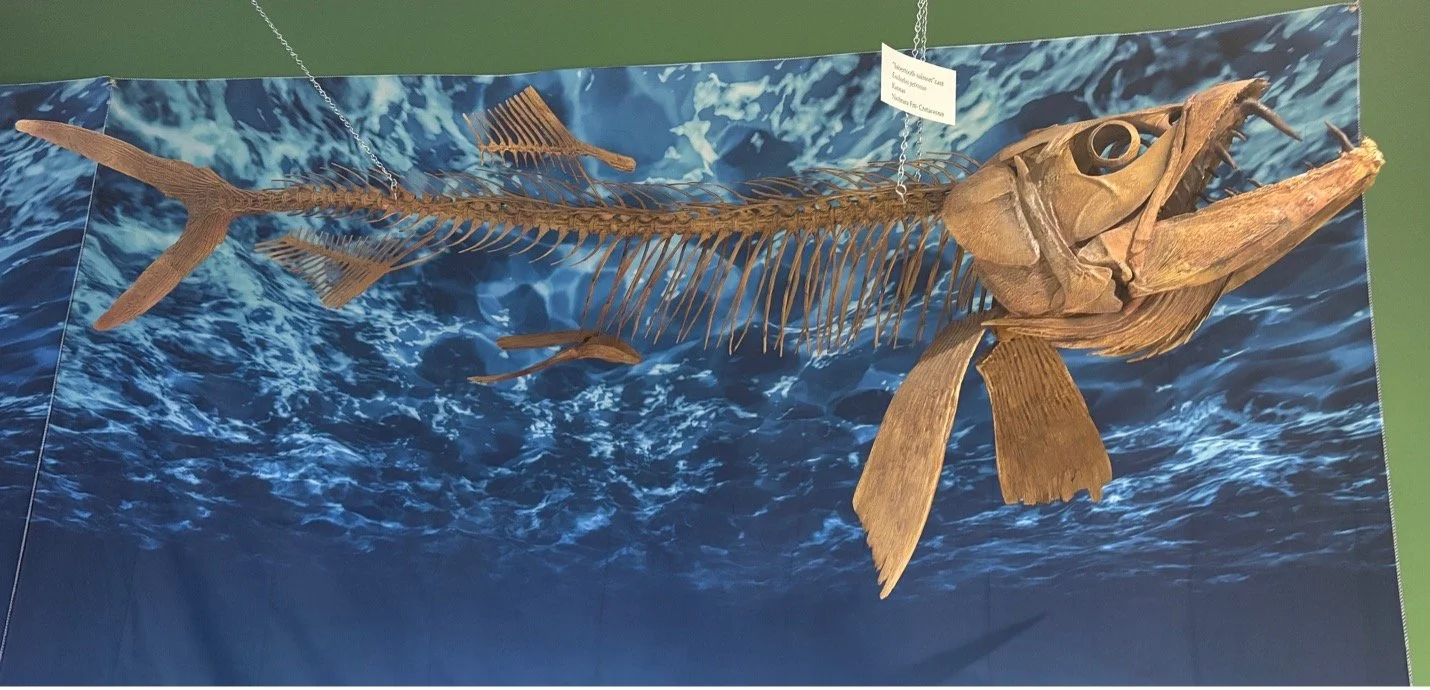
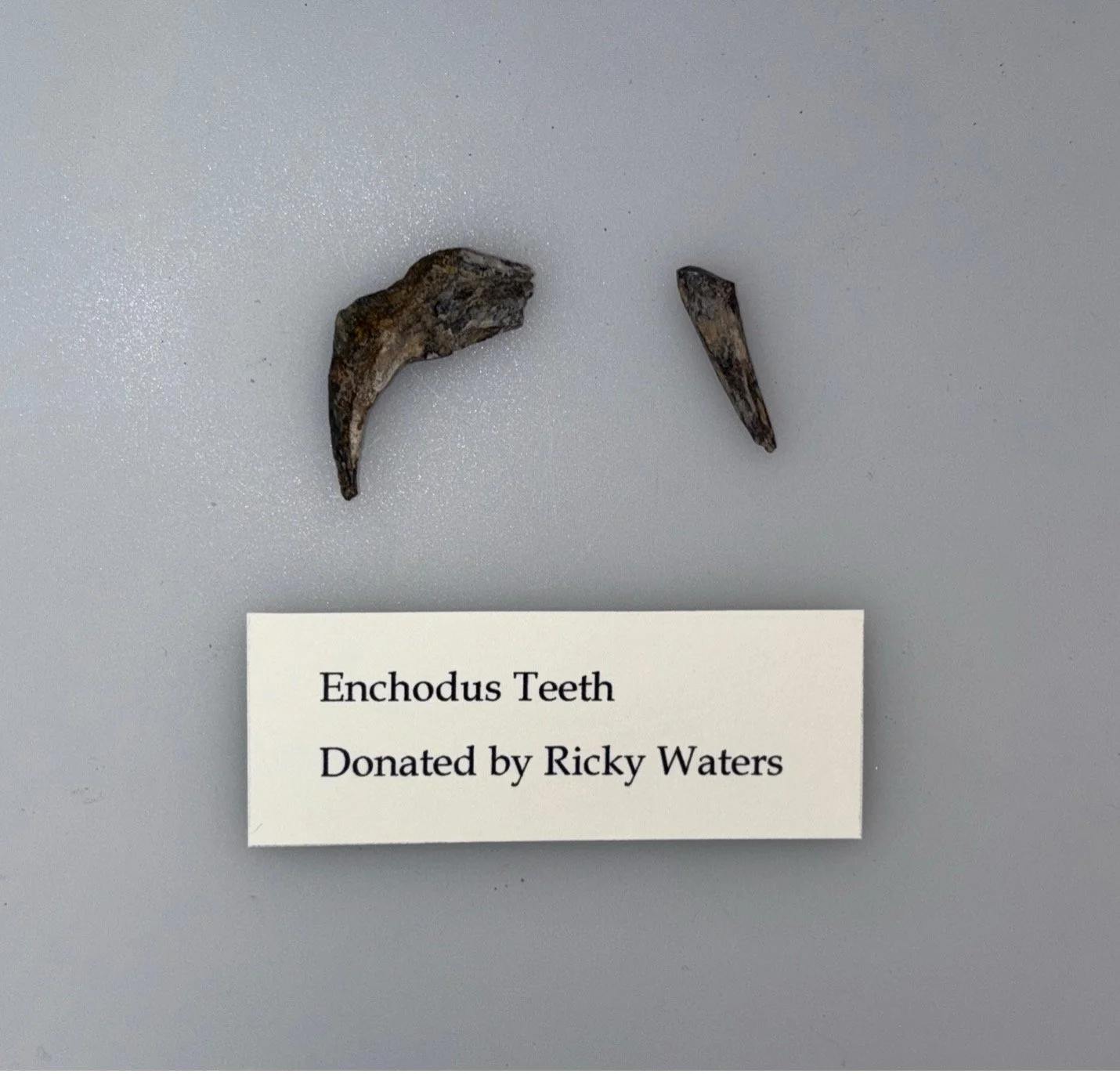
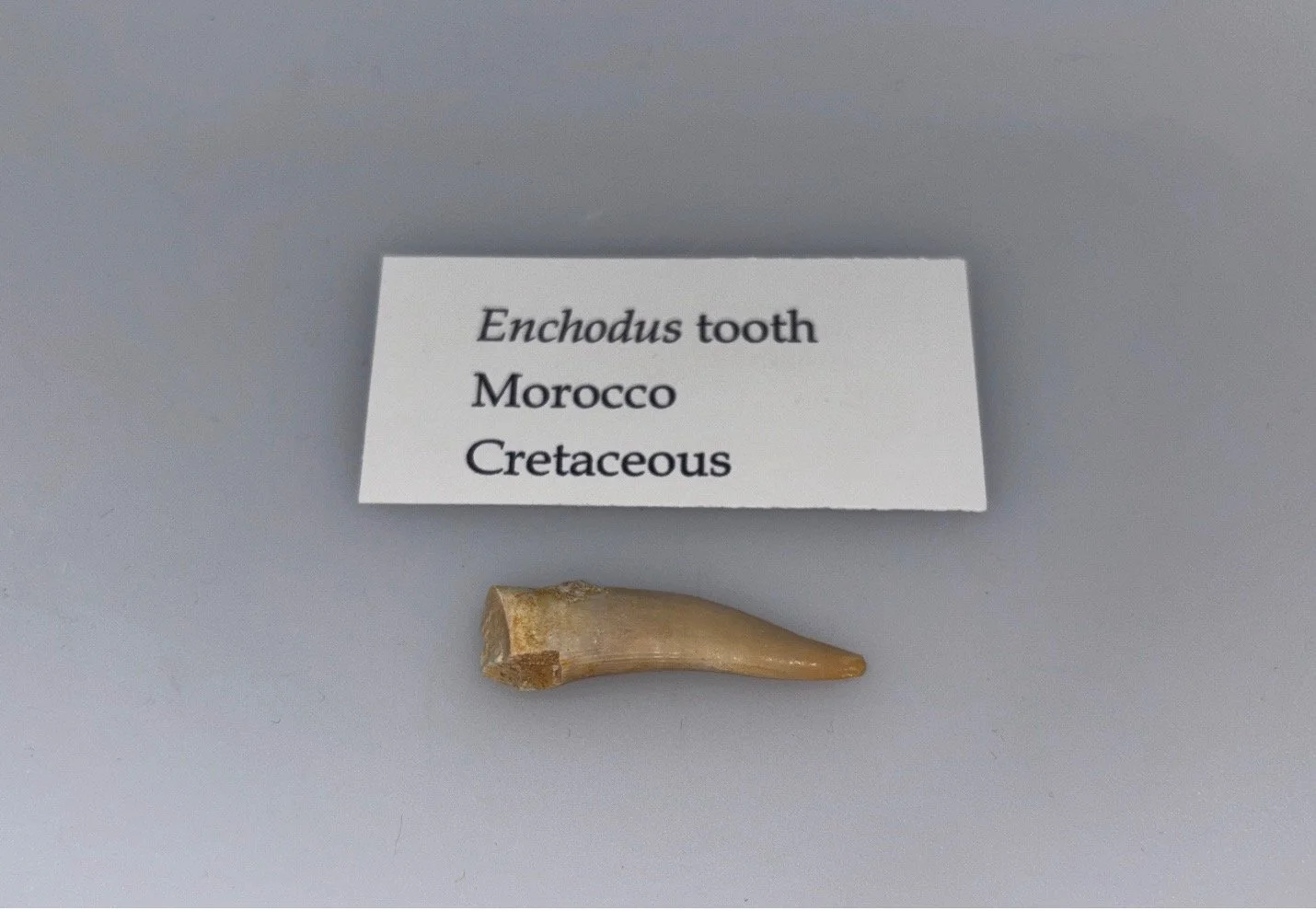
Enchodus was a genus of carnivorous fish that made the Cretaceous oceans their hunting ground. Different species in the Enchodus genus ranged in size, some adapting to hunt larger prey than other, but all had a mouth full of sharp teeth and a powerful bite. Enchoduspetrosus was the largest species of its kind, growing to about 5 feet in length. Its diet included smaller fish, cephalopods like squids and mollusks, and crustaceans.
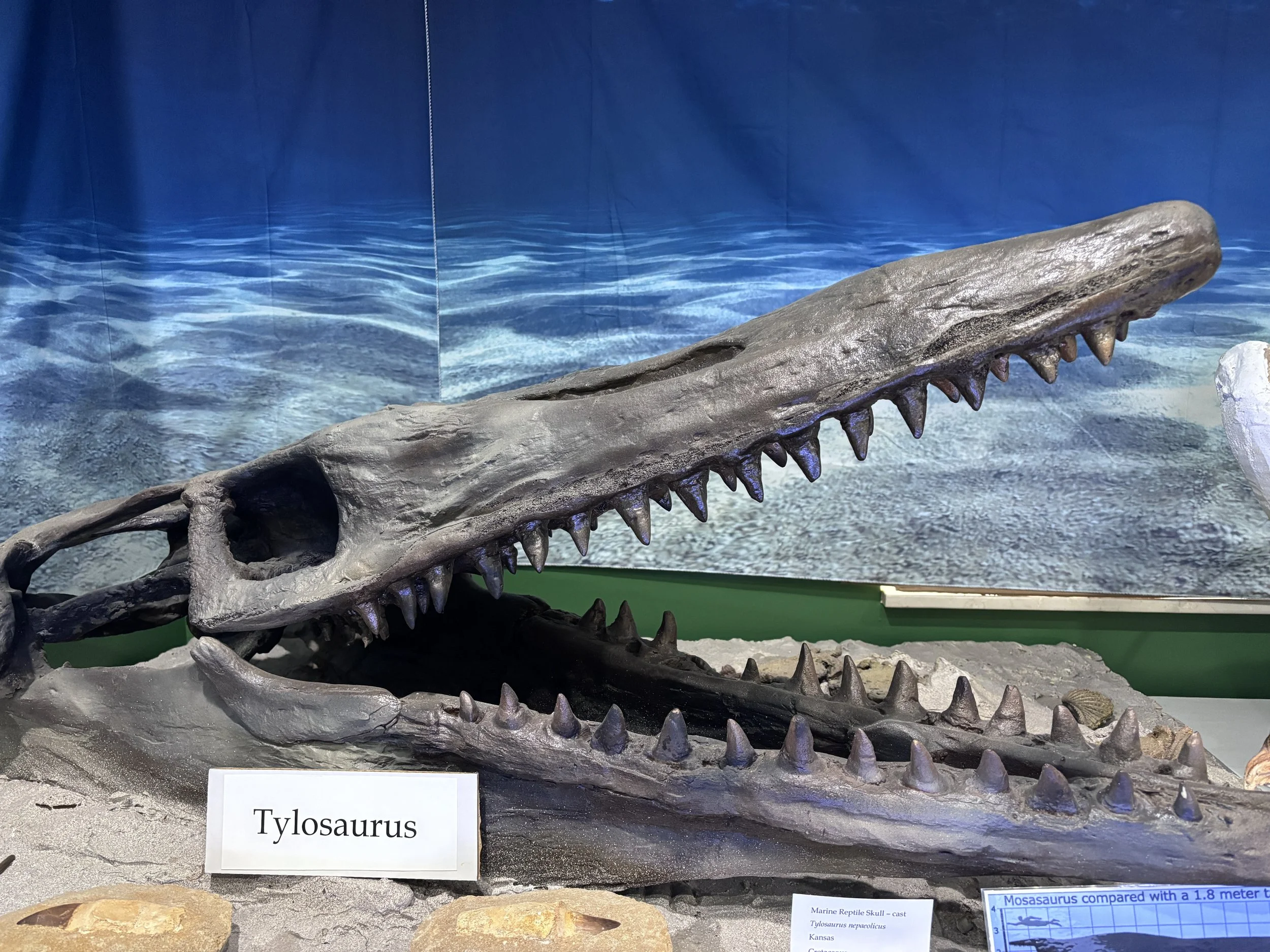
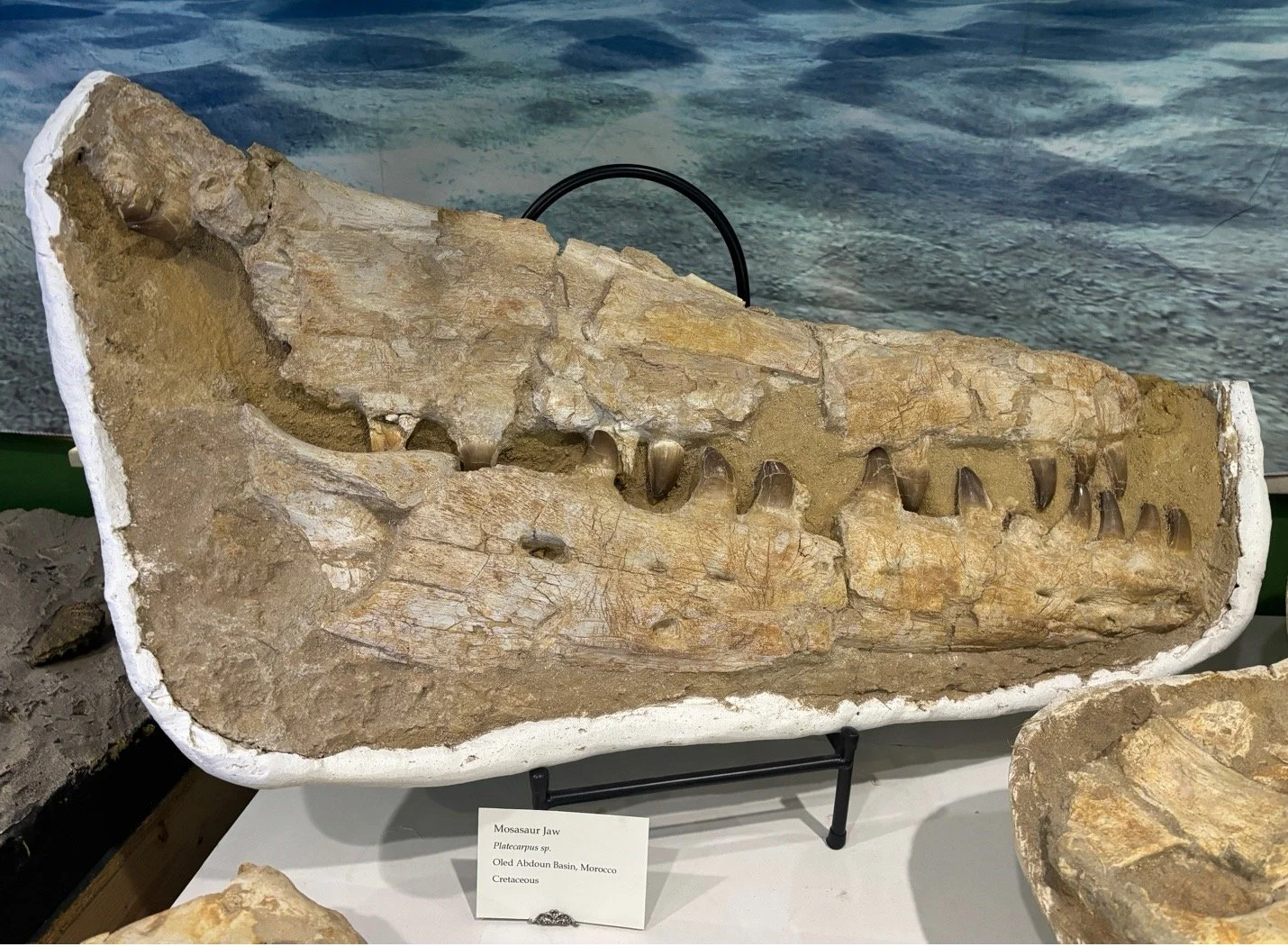
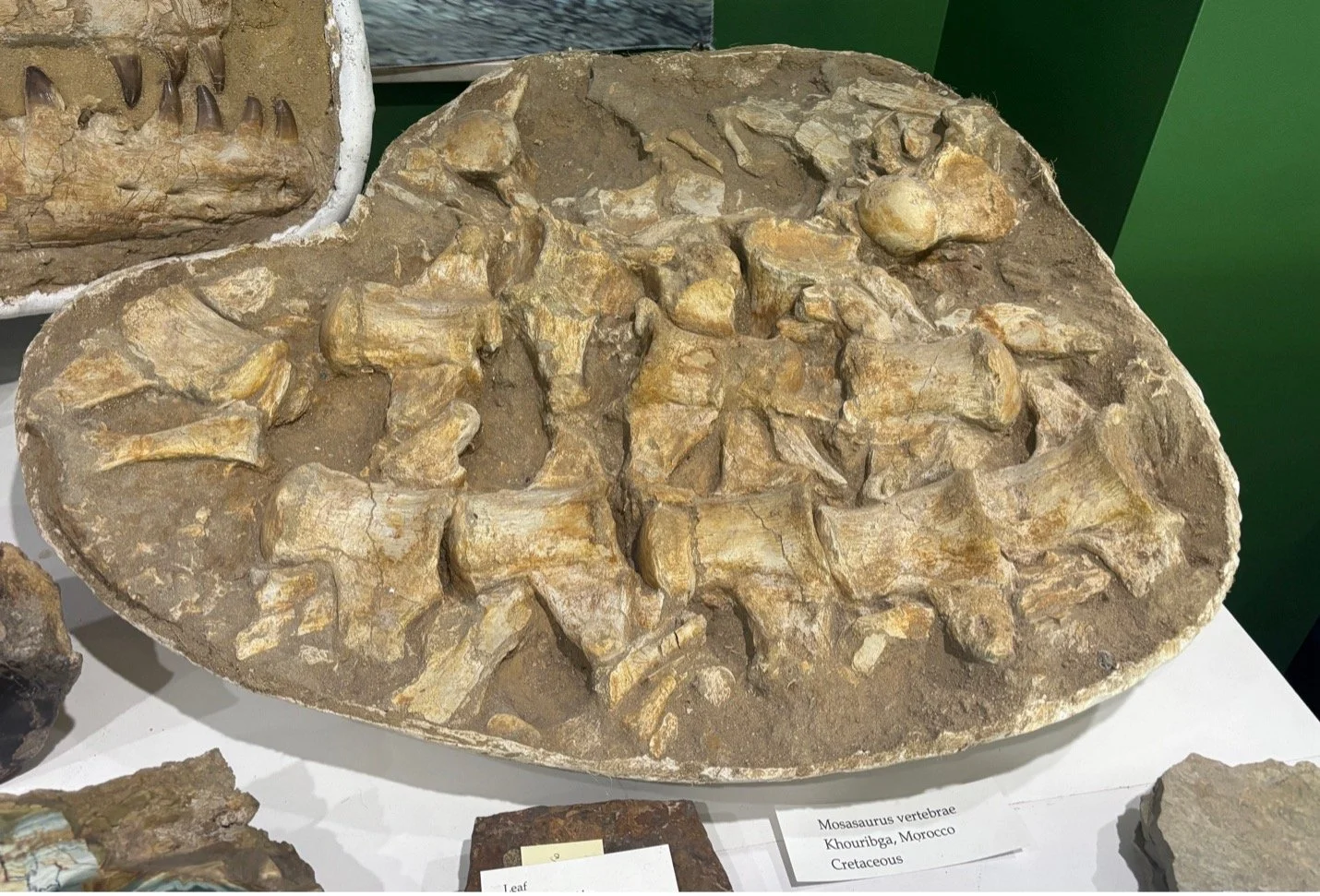
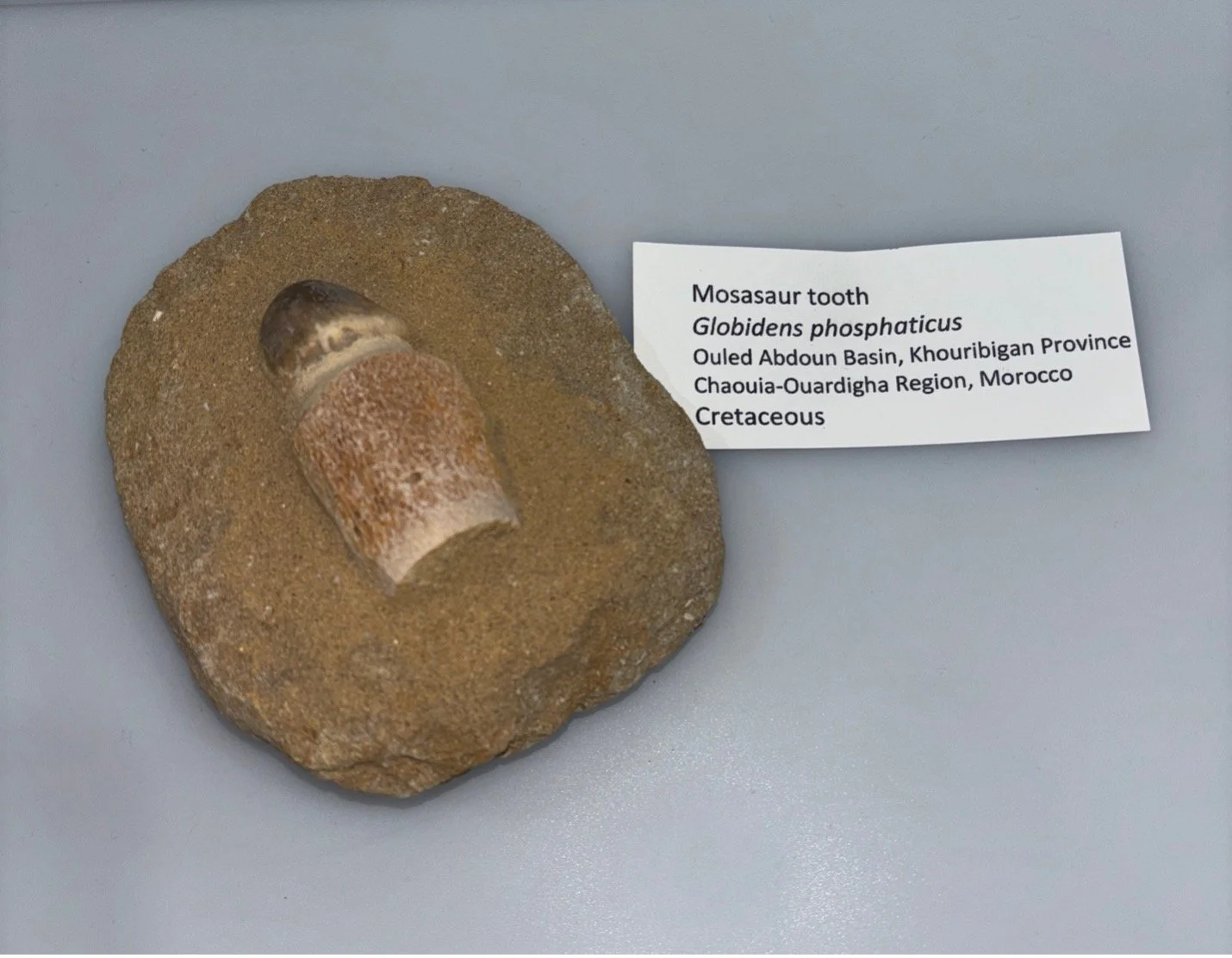
Mosasaurs were large marine reptiles that dominated the oceans of the Cretaceous period. Although they lived at the same time as many dinosaurs and have a name reminiscent of a dinosaur’s, Mosasaurs are not dinosaurs at all. In fact, their closest living relatives are monitor lizards and snakes. Mosasaurs gained popularity with the release of Jurassic World (2015), which depicts them as gargantuan, bulky-bodied giants. However, Mosasaurs in reality were sleeker and generally far smaller than the film’s depiction. The longest type of Mosasaur was the Tylosaurus, which reached up to 45-50 feet in length.
As ocean dwellers, Mosasaur fossils are found throughout the world. One freshwater variation was even found in Hungary. They were formidable predators whose diet included all types of smaller marine creatures like ammonites, fish, smaller mosasaurs, and even sea birds. While Mosasaurs stalked the ocean similar to modern sharks, as reptiles they still had to breach the surface for air like whales or sea turtles. Also similar to whales, it is likely that Mosasaurs gave live birth and did not lay eggs.
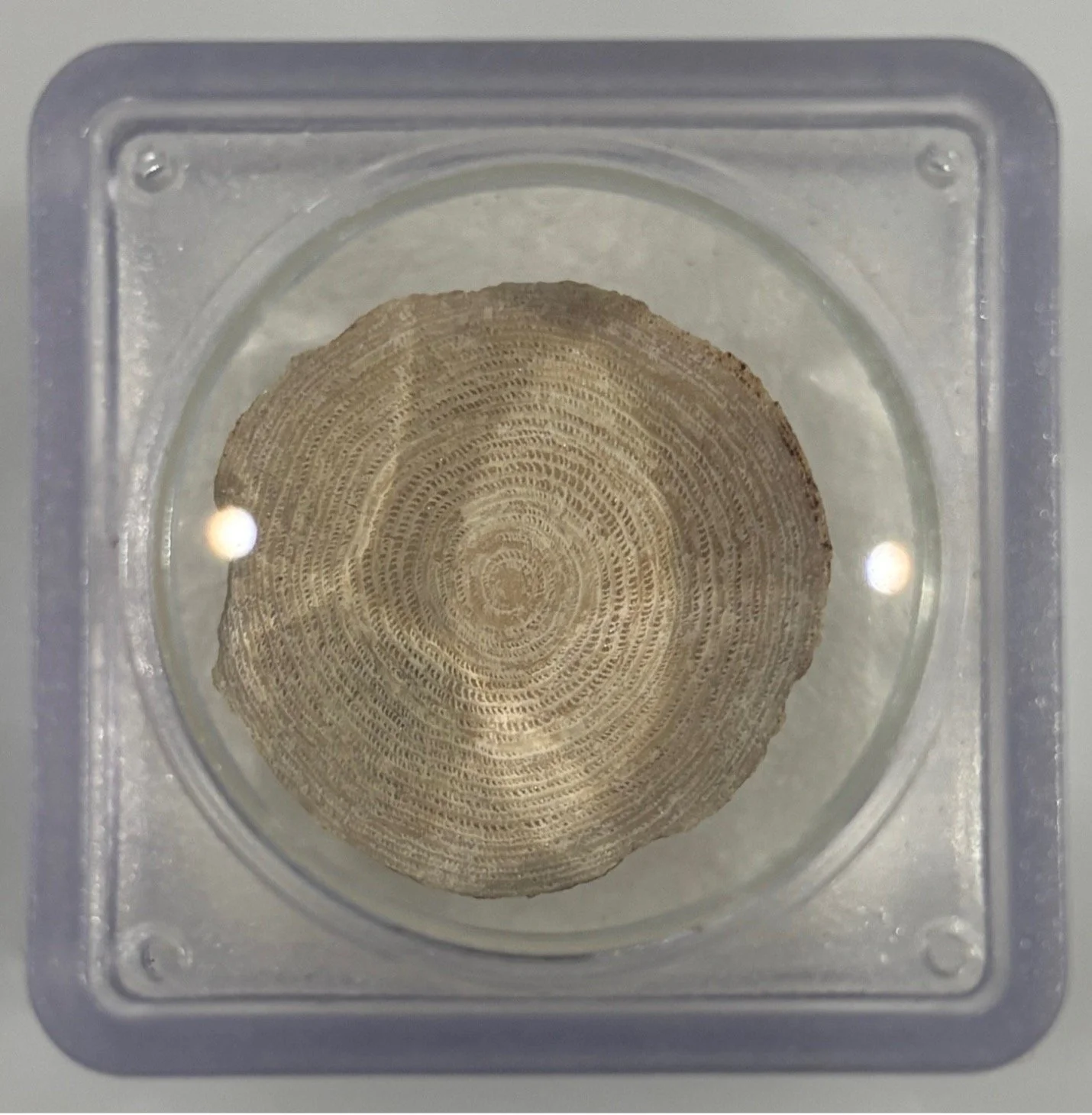
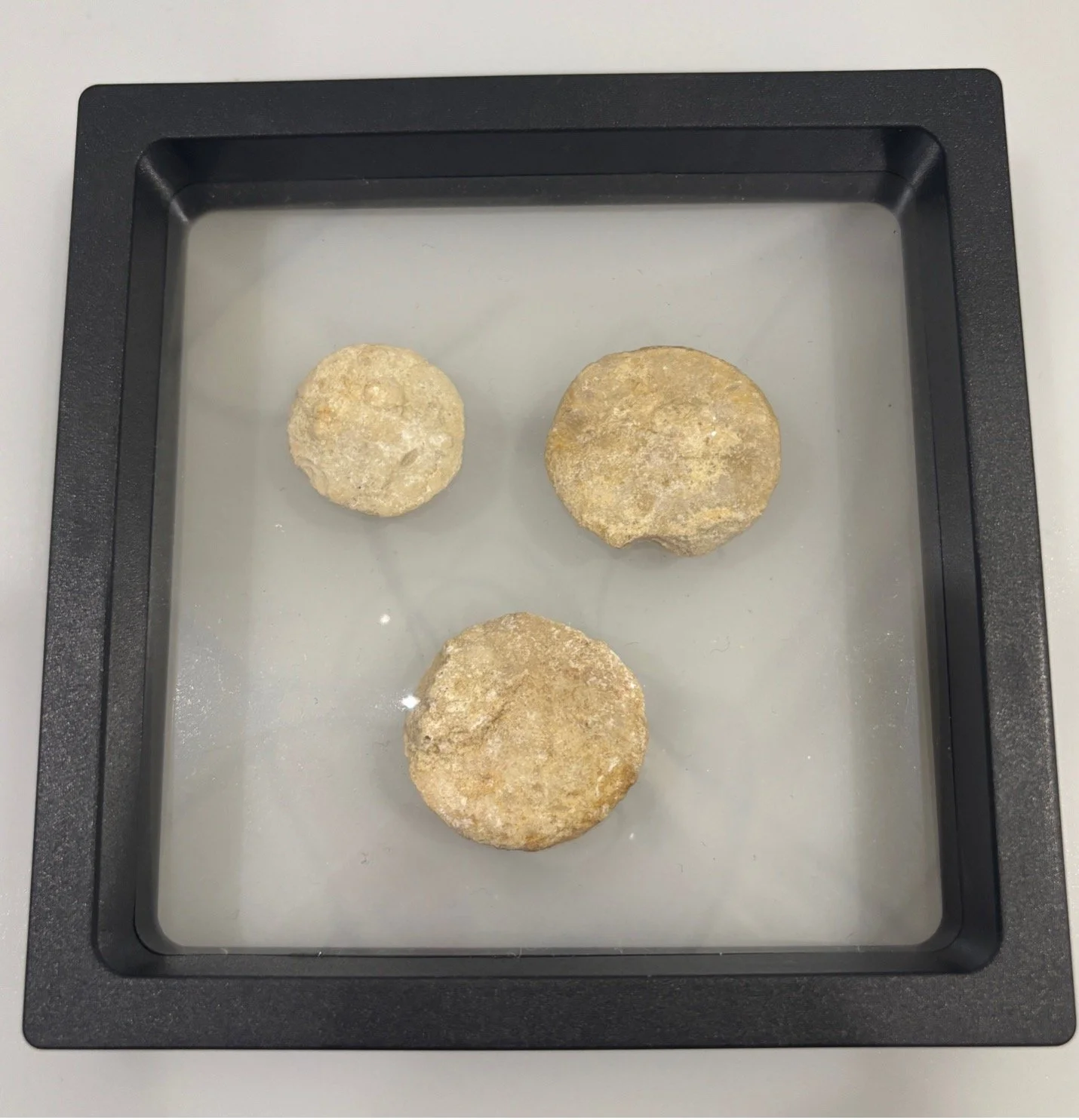
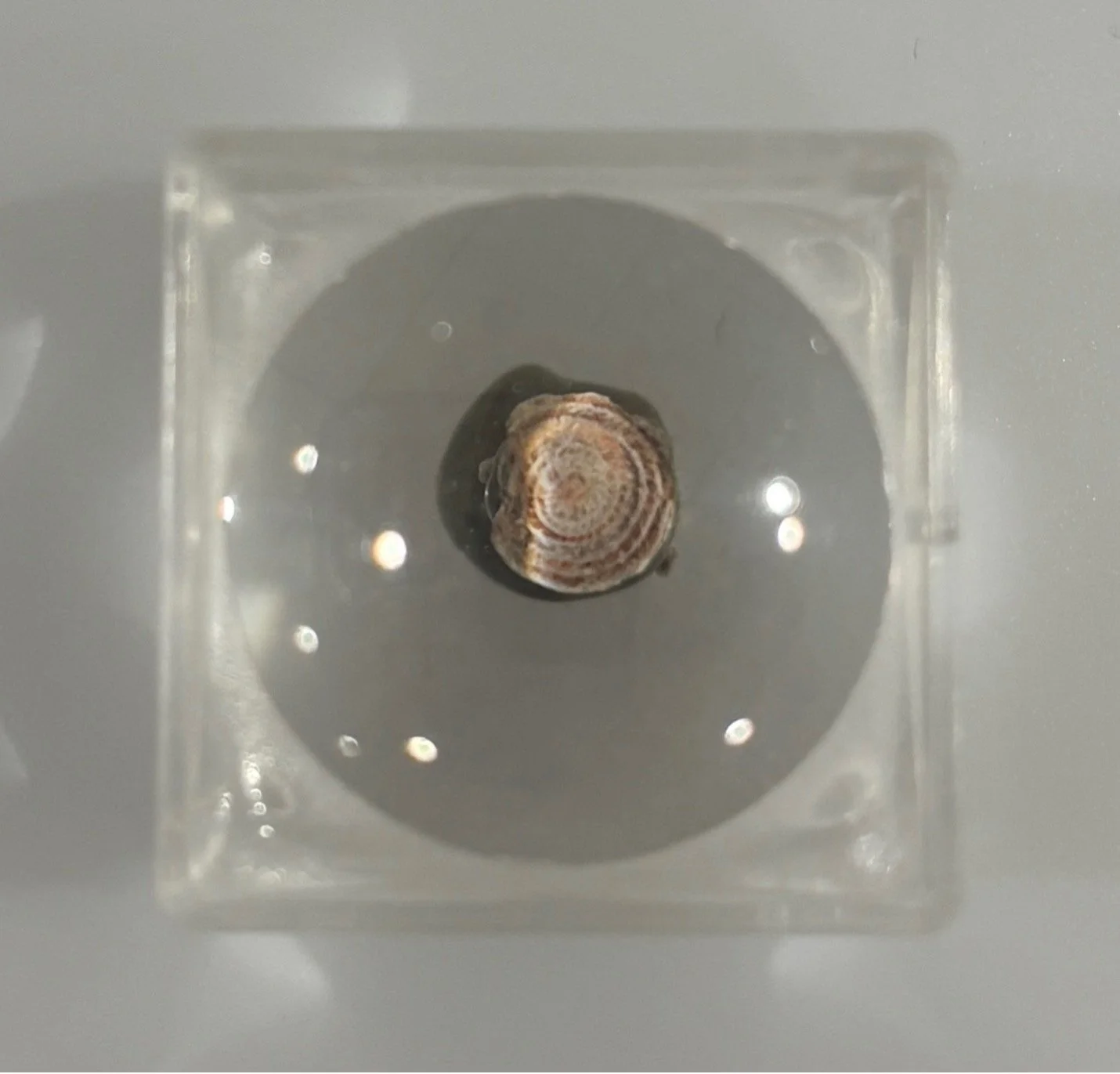
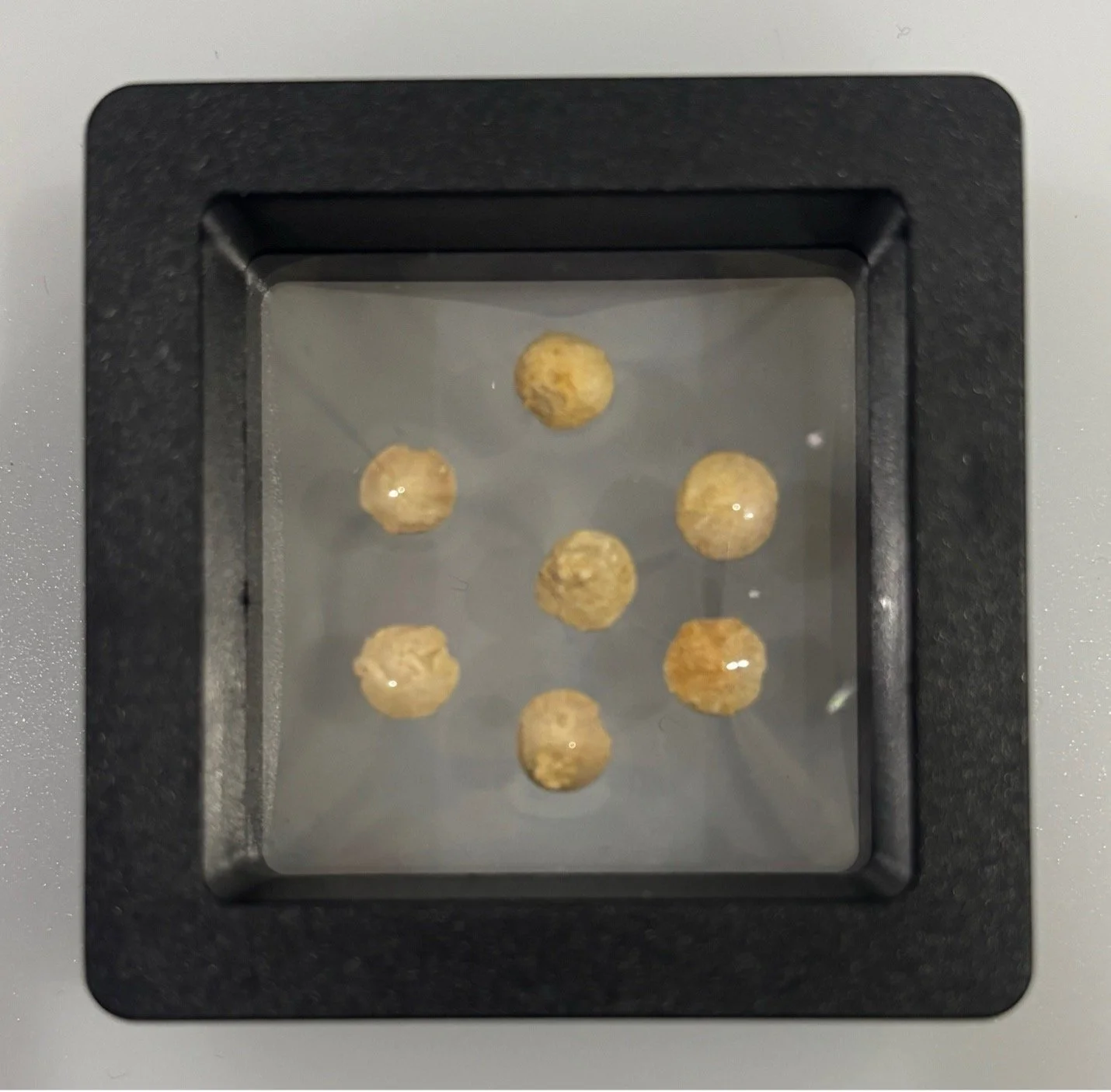
Nummulites are a type of foraminiferan (a type of single-celled organism) that develop disc shaped tests (shells) made up of connected chambers in a spiral arrangement. This species, Nummulites gizehensis, lived during the Eocene epoch and dwelled at the bottom of a shallow ocean around what is now Northern Africa and Southern Europe. The fossils of nummulites can be seen in the very stones that make up the Pyramids of Giza, hence their name.
Nummulites have an ‘alternation of generations’ life cycle, making both the large, coin shaped specimens, and the small, lentil shaped specimens, the same species. The large, coin shaped forms reproduced asexually after reaching maturity, producing the smaller form. The small, lentil shaped forms reproduced sexually after reaching maturity, producing the larger form.
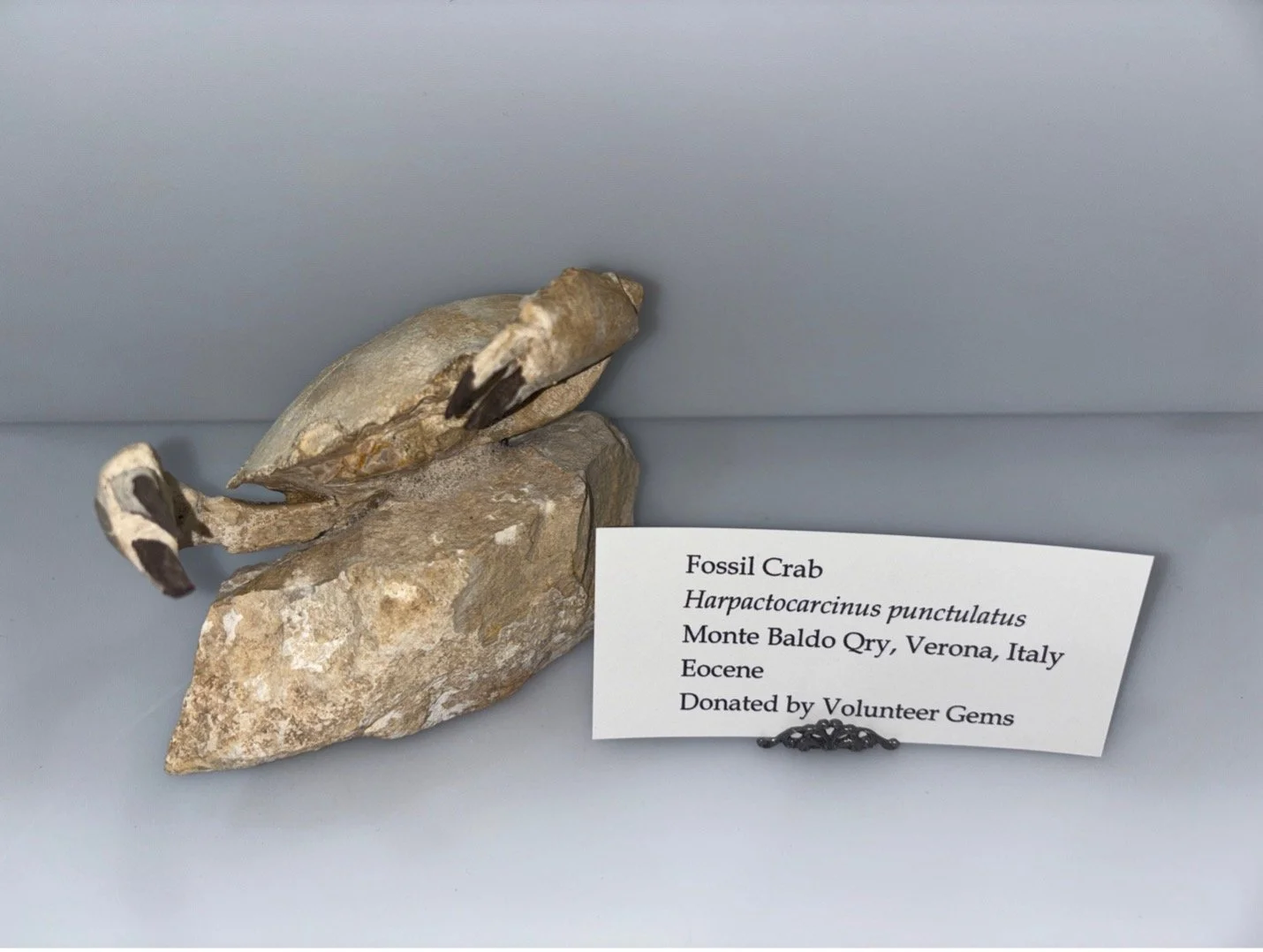
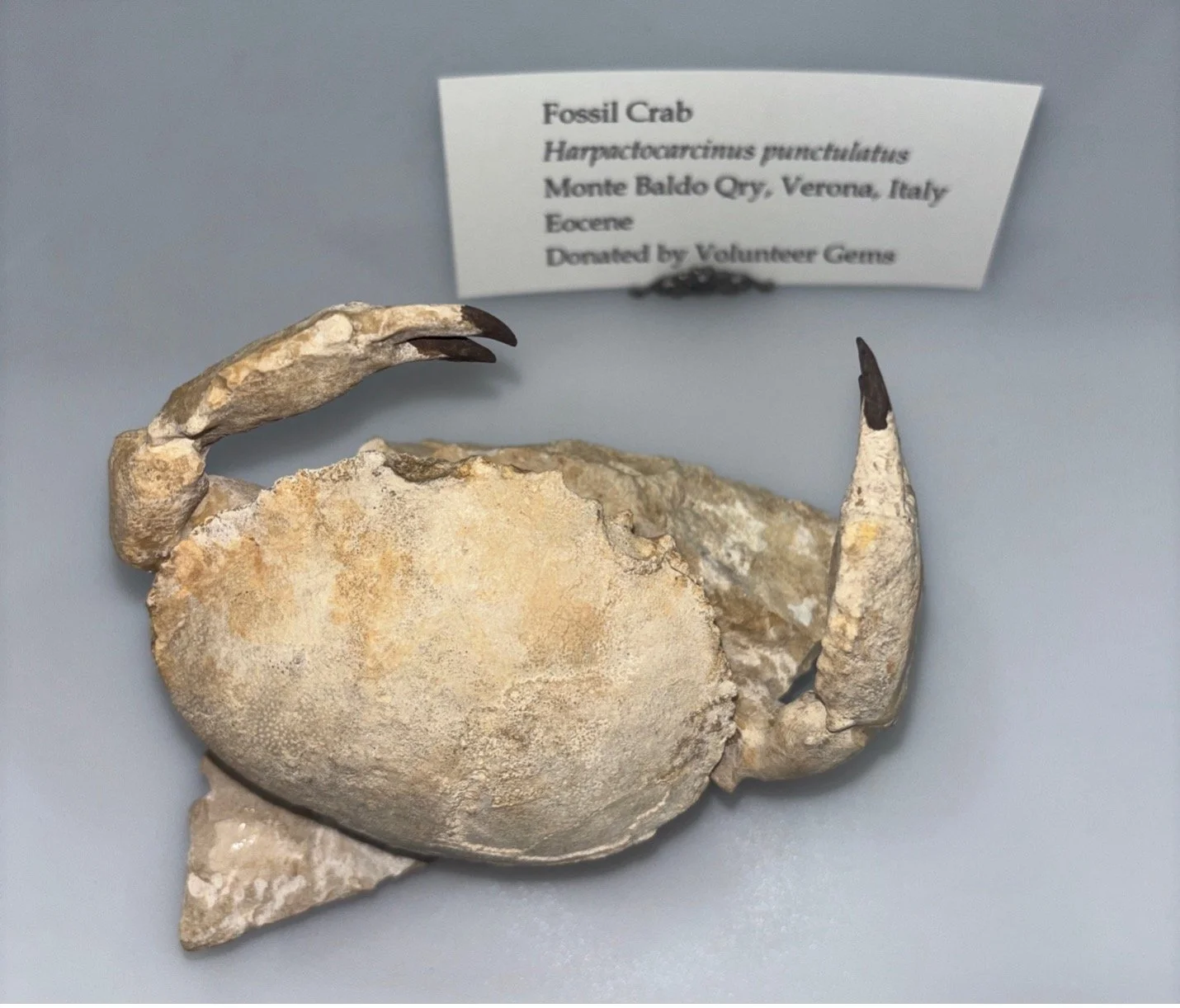
Harpactocarcinus punctulatus was a type of mud crab whose incredibly well-preserved fossils can be found in Europe and North America. These crabs fossilize astoundingly well because of their hard carapaces, which make their remains look a bit like statues instead of fossils.
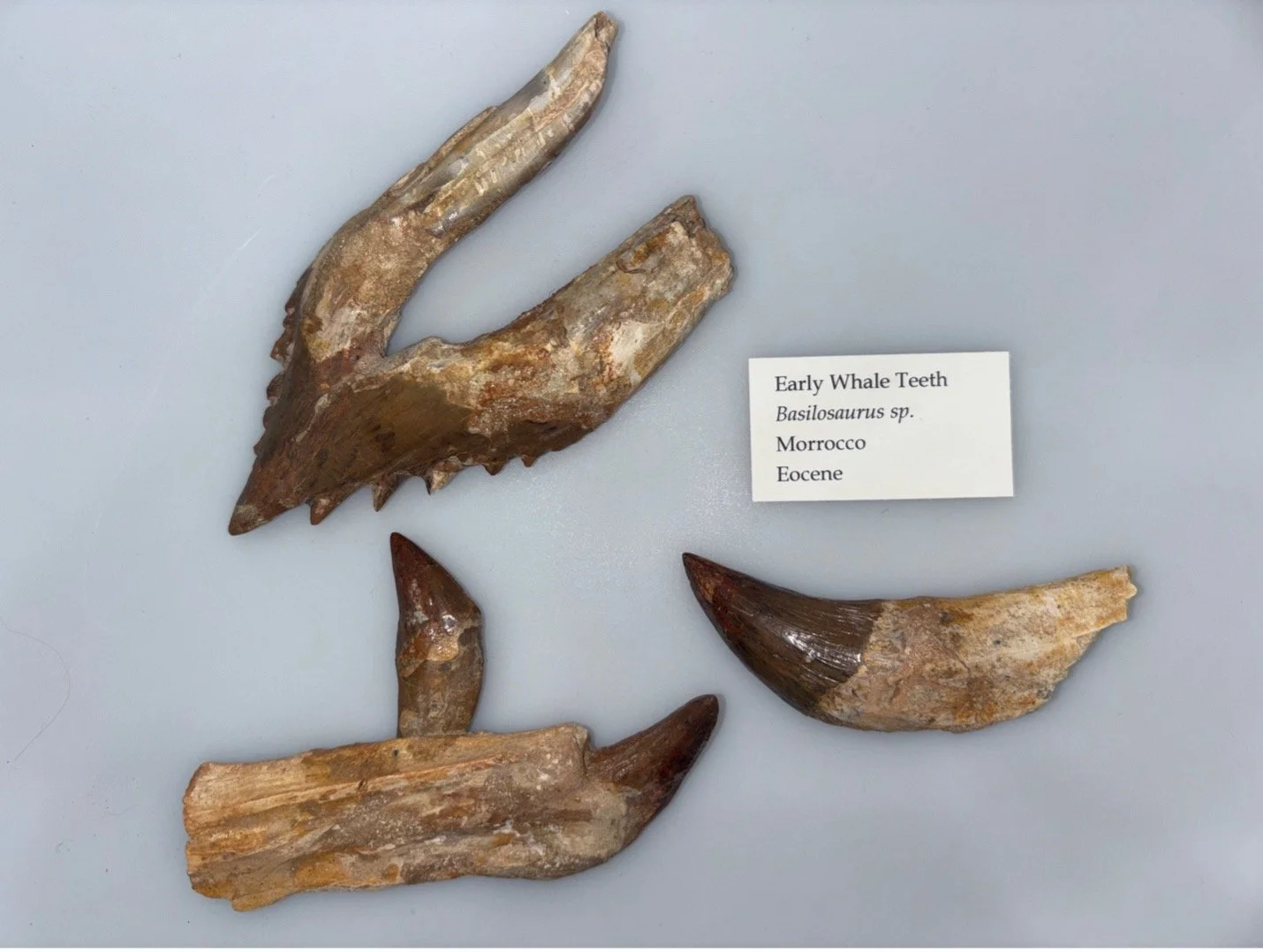
The Basilosaurus was an apex predator of the Eocene seas. Despite its reptilian name, they were marine mammals like whales. It is known for its prominent and intimidating teeth, which it used to hunt fish, sharks, and likely marine mammals. The Basilosaurus was long and slender, ranging between about 50-65 feet full grown. An interesting feature of their anatomy was their vestigial hind legs, which were not even attached to the skeleton and completely useless to the animal itself. Those legs do, however, tell paleontologists more about whale evolution, proving that whales’ ancestors once walked on land before returning to the water.
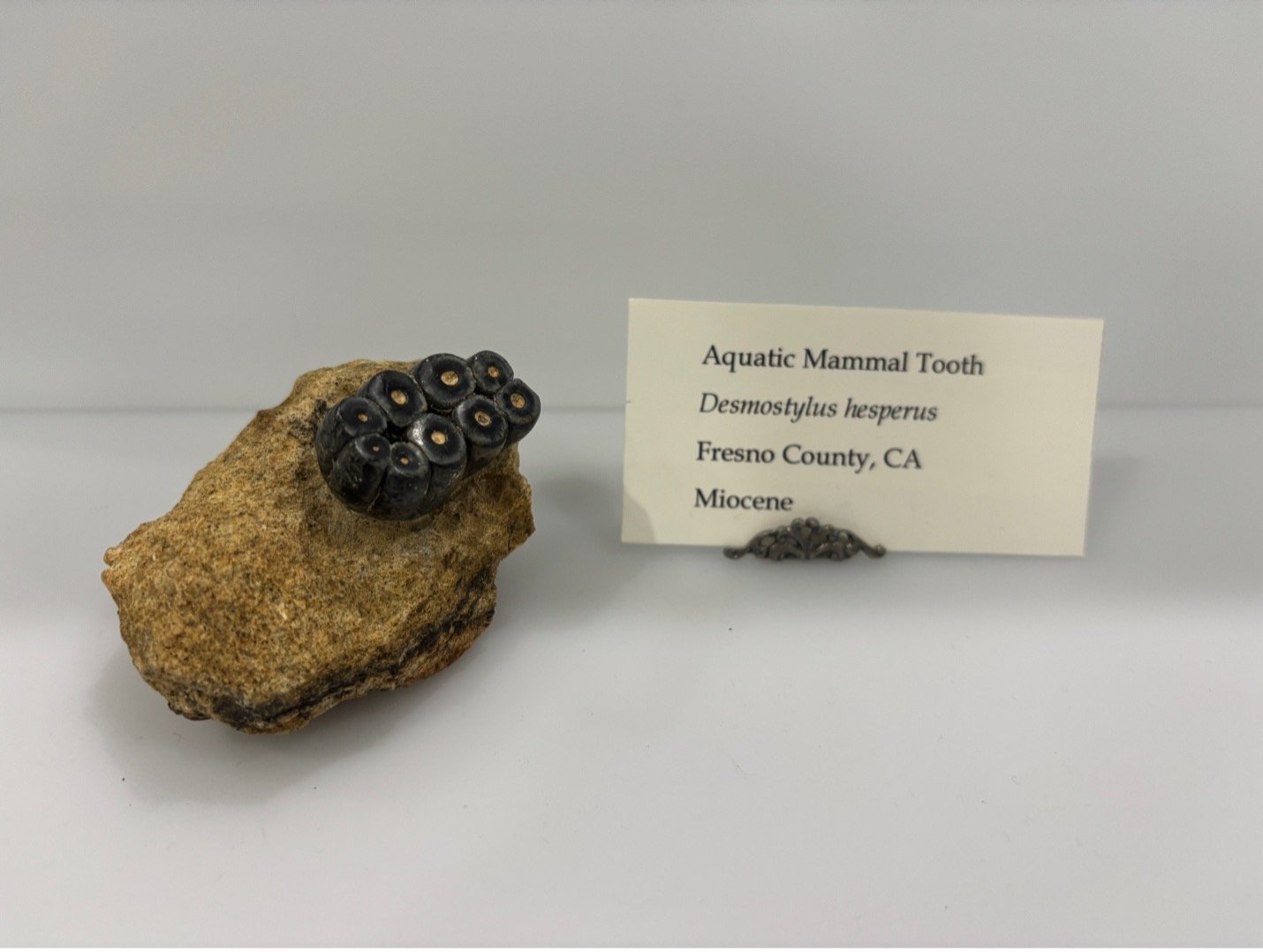
Desmostylus herspersus was bit like a hippopotamus, living all along the North Pacific Rim. They were herbivores who ate aquatic vegetation like seaweed. The Desmostylus is not a direct ancestor to any current living species, but they are distantly related to manatees, dugongs, and elephants.
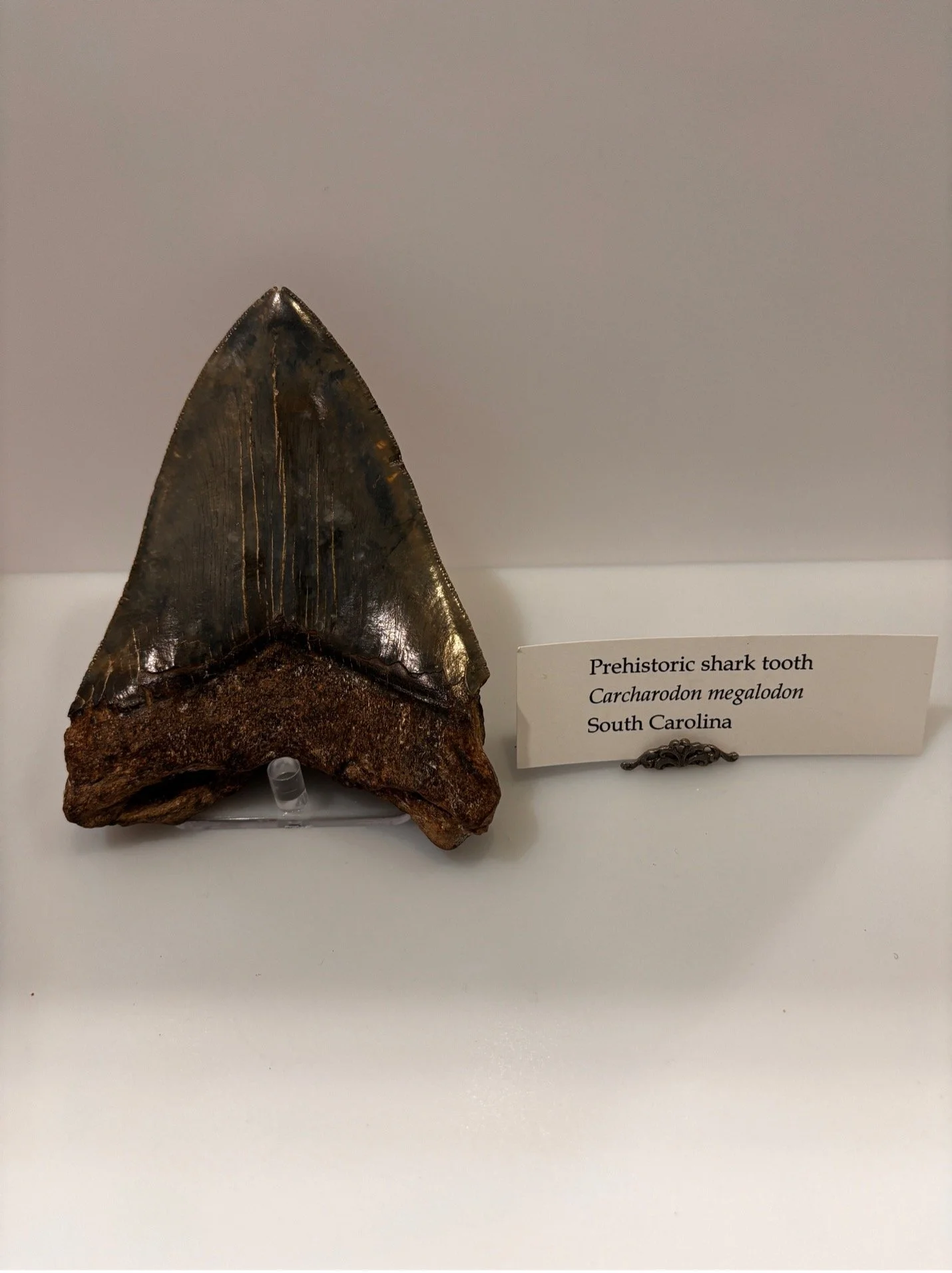
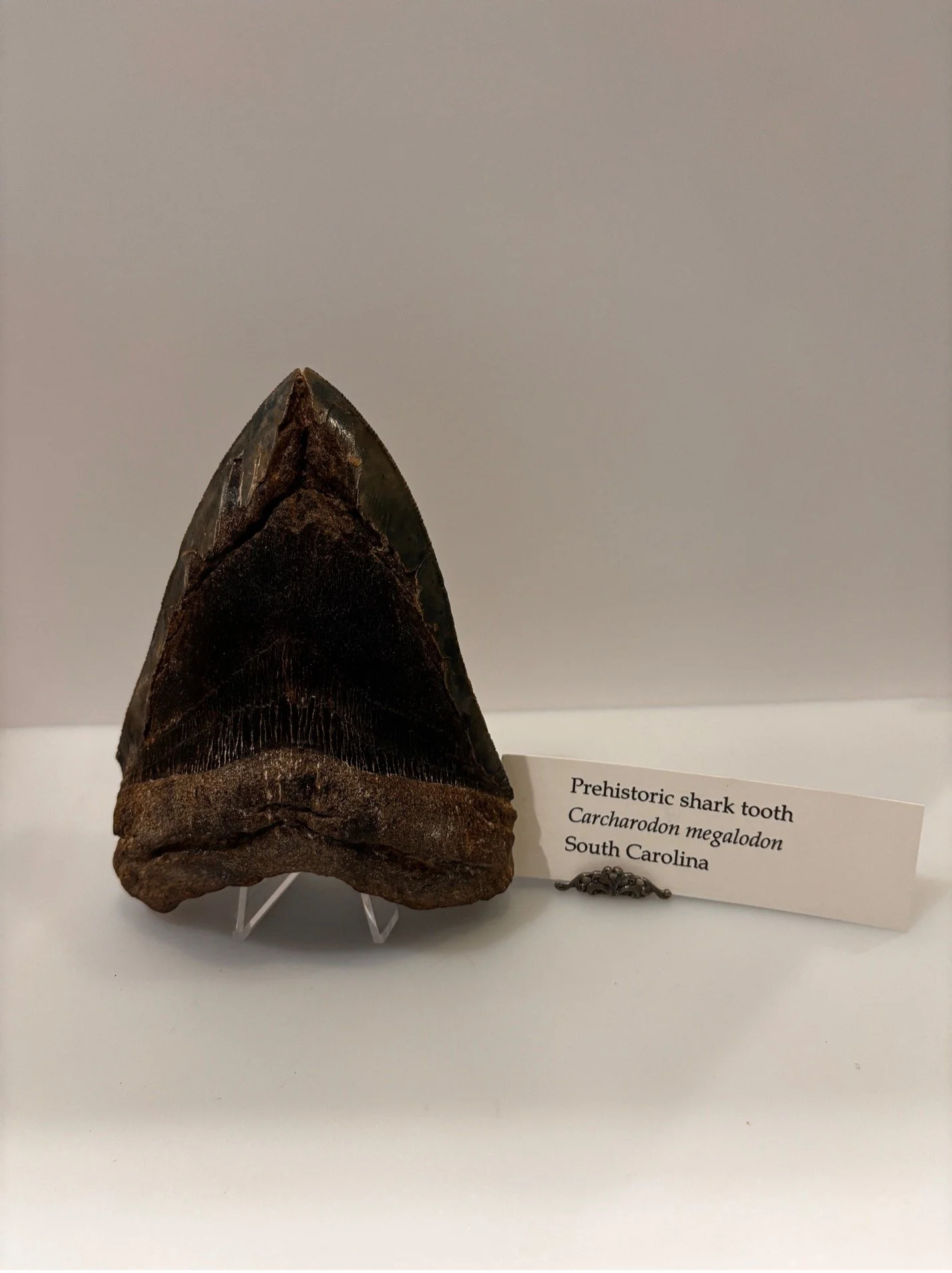
Megalodons were the largest shark to ever live, and one of the largest fishes. Our understanding of the Megalodon is limited, as most of its cartilaginous skeleton does not preserve like normal bone, therefore most size estimations come from comparing their tooth size with modern sharks. The current estimation places Megalodons at about 80 feet long (for reference, that’s about an entire lane at the bowling alley). Megalodons were wide spread across the planet’s oceans, and their teeth have been found washed up on every continent but Antarctica.
No results match your search. Try removing a few filters.