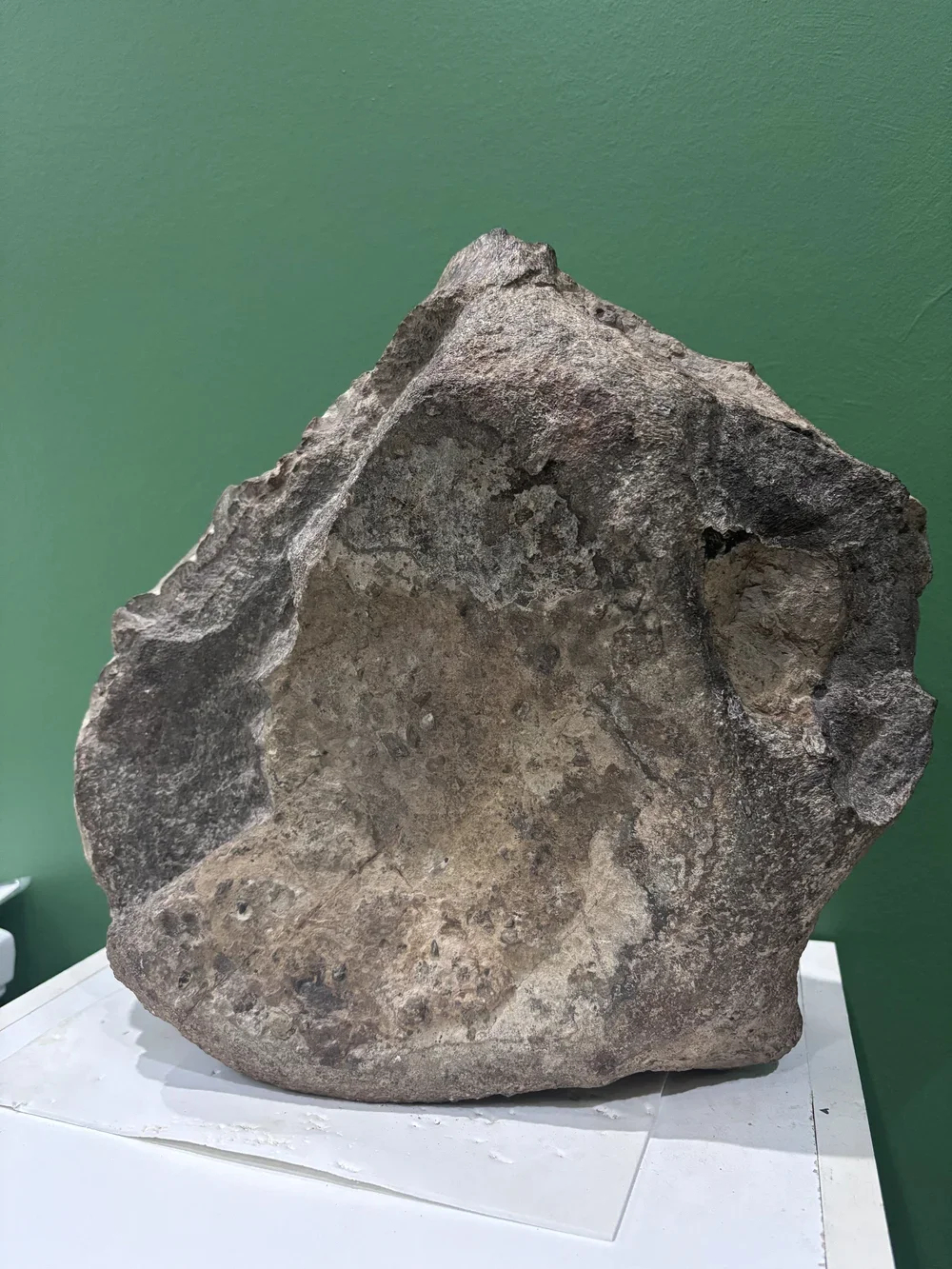
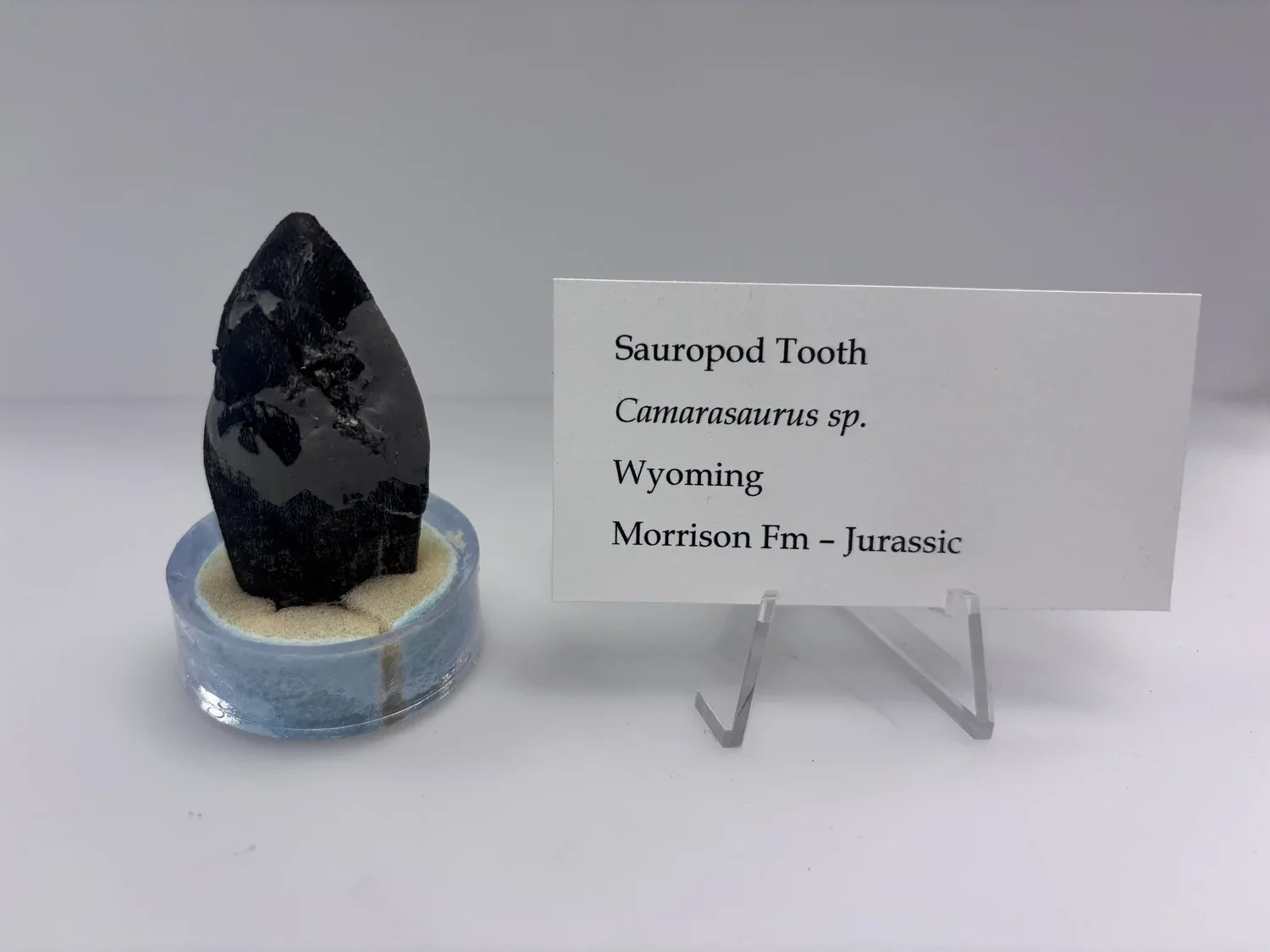
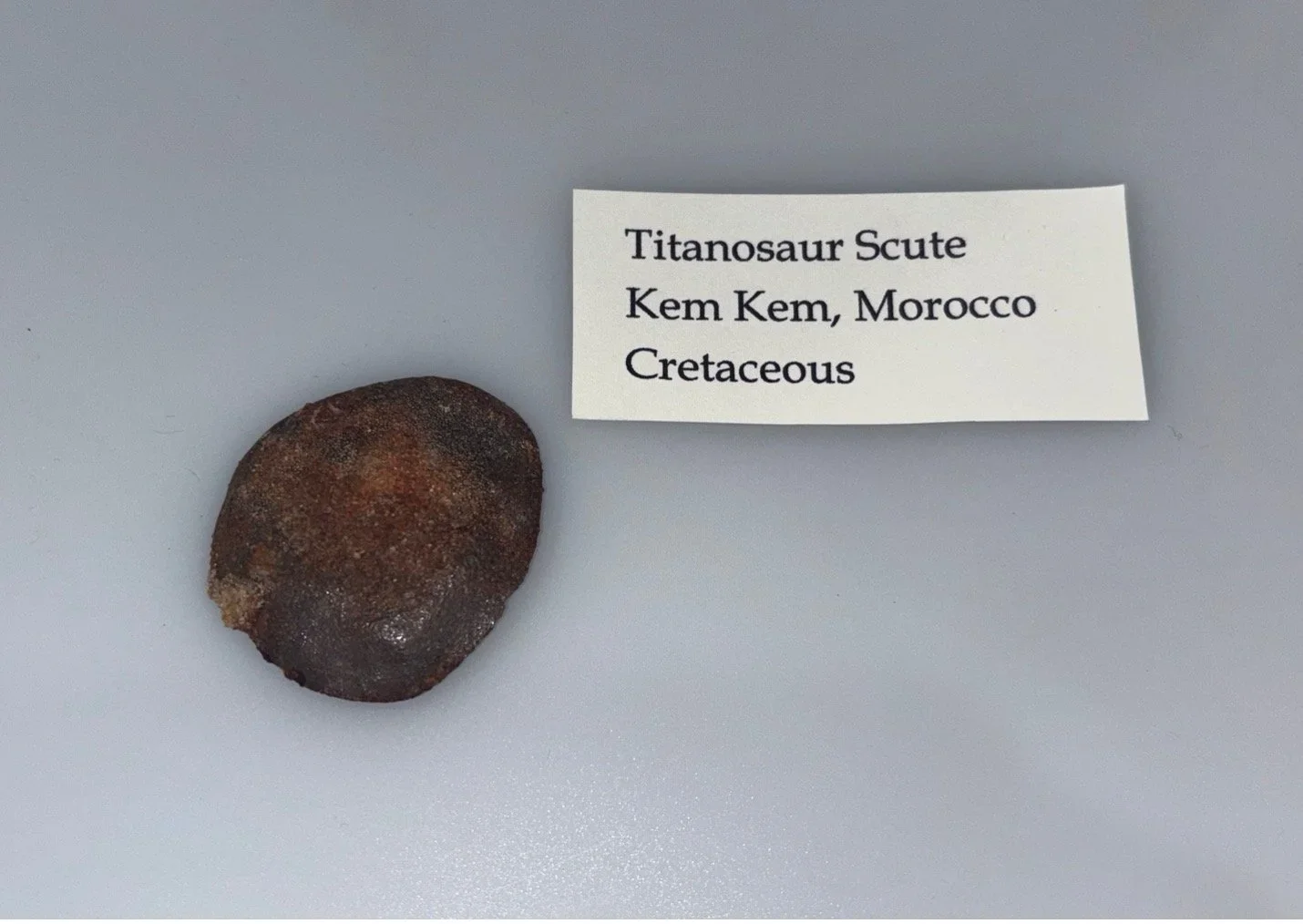
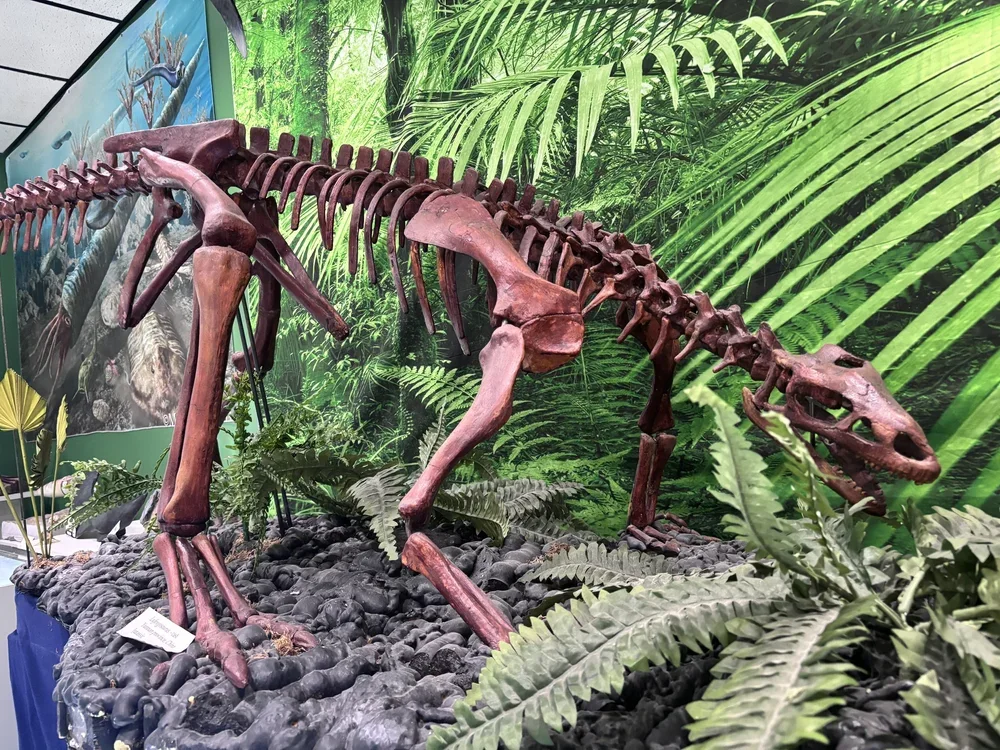
The Sauropod family is mainly comprised of quadrupedal (walking on four feet), slow moving, long-necked dinosaurs. Sauropods are known for their calm and generally pacifistic demeanor, and were generally herbivorous. Sauropods species came in a wide range of sizes from the diminutive Ohmdenosaurus, which only grew about 13 feet long to the biggest of the Titanosaurs like the Patagotitan mayorum which grew up to a whopping 121 feet long (that’s longer than a blue whale).
Sauropods were big eaters, requiring literal tons of fresh vegetation per day to survive. Their long necks allowed them to reach leaves from tall trees and low growing shrubbery before swallowing their food without stopping to chew it. Their long necks also helped them keep an eye out for predators. Fossil evidence also suggests that sauropods moved in herds and utilized a somewhat complex social structure arranged by age. A site of Mussaurus patagonicus fossils showed evidence of communal egg-laying grounds as well as proof that juveniles congregated into ‘schools’ while adults grazed near the herd alone or in pairs.

Brittle Stars are echinoderms (related to sea stars, urchins, crinoids, etc.) which use their long, serpent-like arms to crawl across the ocean floor or swim through the water. They can look very similar to sea stars but can be differentiated by their distinct central body disk and thin flexible arms, which are often covered in spines. If attacked, Brittle Stars can defensively drop their arms to make their escape and live to regenerate them another day.


Stromatolites form when carpets of microbial life (usually cyanobacteria) are covered with a layer of sediment. That layer is then repeatedly covered by more cyanobacteria, which is covered by more sediment, and so on and so forth. When this structure fossilizes, we can see the layers formed in stone. Stromatolites can have different colors due to the type of minerals that made up the sediment. Sometimes Stromatolites are cut into slices so that those layers are visible, as pictured here.
Stromatolites have been forming for as long as cyanobacteria have existed, which is a really long time (about 3.5 billion years ago), and continue to do so in certain marine environments today.


Bryozoans are a type of filter-feeding colonial marine animal that has been living in the oceans since near the beginning of life on the planet. An individual Bryozoa is plant-like in appearance, but the colonies often form round, blobby masses that tether to various surfaces.
Bryozoan fossils can also look like tree branches and can be found all over the world, including here in Tennessee!


Nautiloids are an entire group of armored or shelled cephalopods that were prevalent during the Mesozoic Era, but still have some living members today. Many nautiloid species had long, conical shells that protected them from predators. Others resembled their cousins Ammonites with a curled, spiral shell. The only living members of the Nautiloid family are the nine living species of Nautiluses, which sport a spiral shell and live deep in the Pacific Ocean.


Crinoids are marine echinoderms (the group that contains urchins and starfish) that have been a part of Earth’s history for about 500 million years. They first developed during the Cambrian period, and some species still live in the oceans today. Despite appearing plant-like at times, crinoids are animals. Older crinoid species typically had a stem which anchored them to the ocean floor, a calyx or cup on top of that stem which contained its organs, and arms branching out from the calyx to help it filter feed. Crinoids have diversified a lot in the last half eon; some still anchor down in coral reefs, while some have evolved to swim around using their feathery arms for propulsion.
Fossils of crinoids can be found all over the world, even in Tennessee. Sometimes, you’ll hear these fossils called ‘Indian money’, and while Native Americans did not use crinoid fossils for currency, they were sometimes used as beads for jewelry. To find crinoid fossils, keep an eye out for something that looks like a stack of coins or a disk with the middle cut out –– that’s a fossil crinoid stem!


Phytosaurs were large crocodile-like reptiles from the Triassic period. Phytosaurs had a wide range of lengths, all the way from 6 feet to 40 feet depending on species, making the largest Phytosaurus the largest predators outside of the ocean during the Triassic. They ate fish and small reptiles in lakes and rivers, but also ambushed prey from the water’s edge, similar to a modern crocodile. While not a crocodilian, the Phytosaurs were part of the same larger group called Archosaurs, which includes crocodilians and dinosaurs.


The Metaposaur was a large temnospondyl (precursors to modern amphibians) that lived across Pangaea during the Triassic period. The Metaposaur lived most of its life in water as it possessed small, weak limbs and a large, flat head with needle-like teeth perfect for catching fish. Fossils of Metaposaurs are sometimes found in groups, leading paleontologists to believe that they were gathered in lakebeds and died from the lakes drying out during drought.


Aetosaurs were herbivorous reptiles that lived during the Triassic period. There are 26 species within the genus Aetosaur, ranging from 3 feet long to 10 feet long. All of the Aetosaurs sported armored plating made of body plates called osteoderms, similar to a modern armadillo. Their body shape resembled crocodiles, but their skulls resemble a bird’s, which is why they were given the name Aetosaur (translation: “eagle lizard”). They also had a pig-like snout which probably functioned as a shovel for digging up tubers and roots.

Keichousaurus was a marine reptile who lived during the Triassic Period. This tiny reptile was a quick and agile swimmer who resided in swamps, lakes, and brackish water, sustaining itself on small fish. Fossils of the Keichousaurus are commonly found in modern day China and are also typically found complete and still articulated.
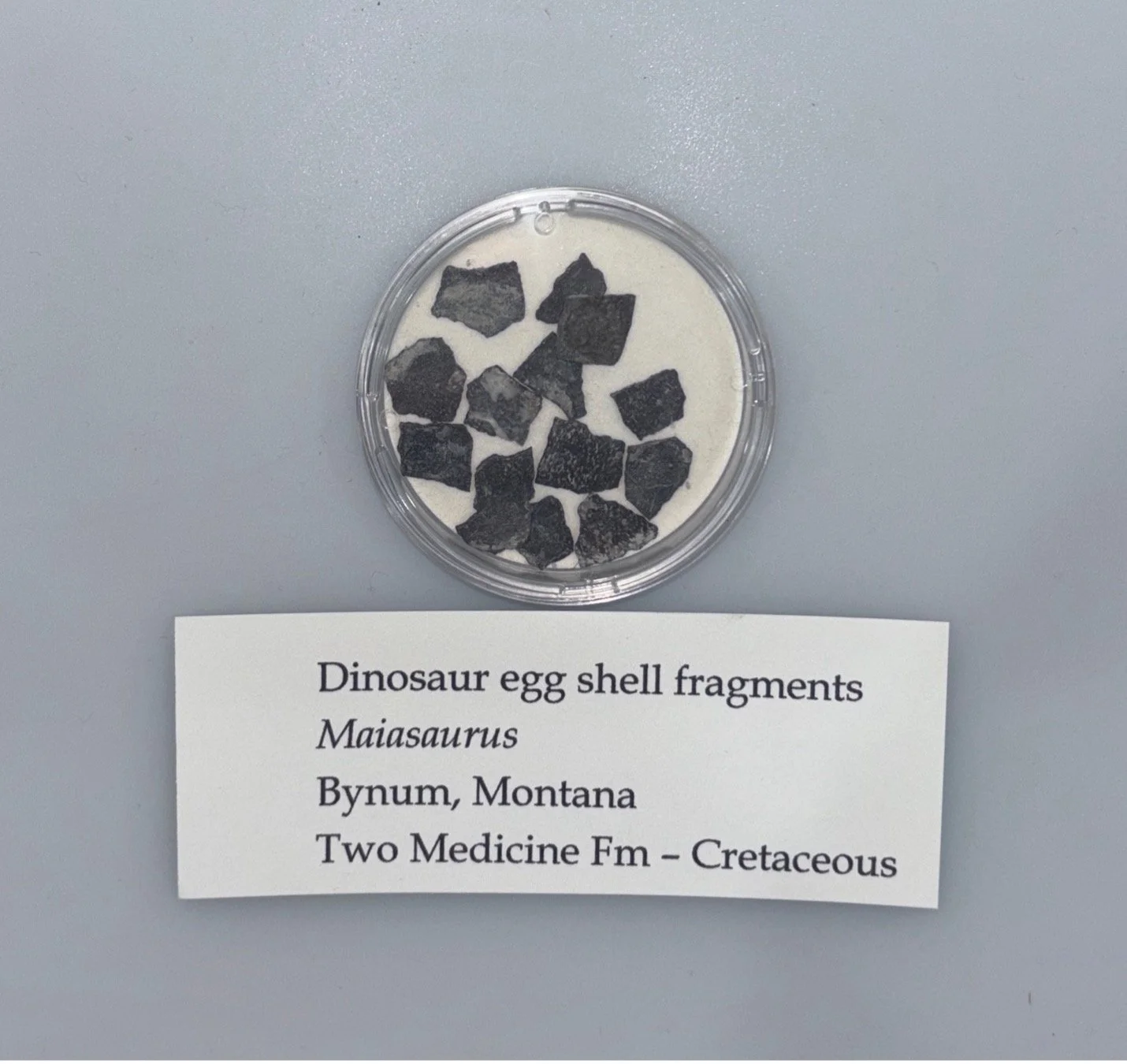
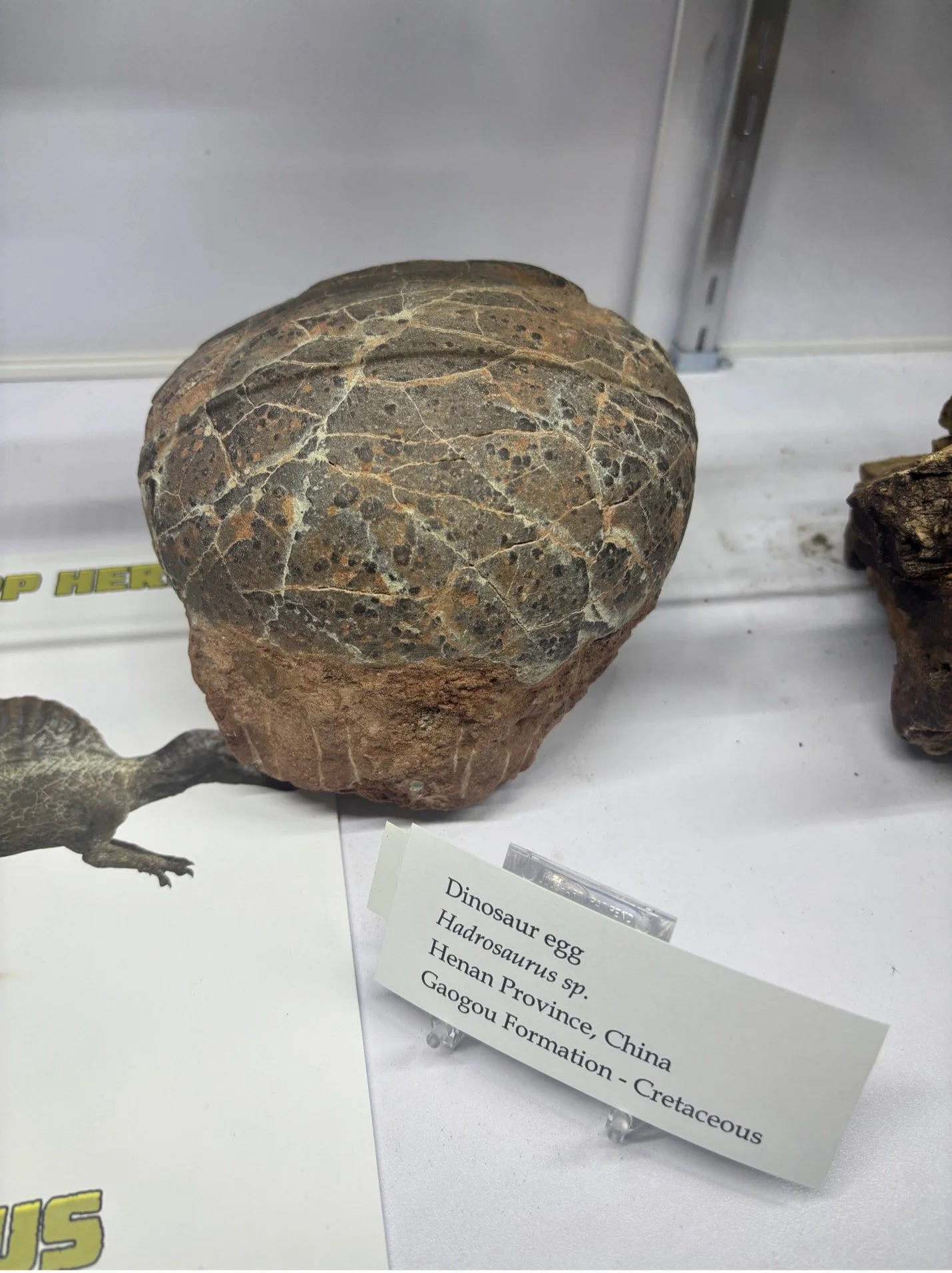
Amongst the fossil bones and teeth of dinosaurs, paleontologists occasionally find fossilized dinosaur egg material. As you might expect, dinosaur eggs are rarely found due to their delicate nature, and it is generally hard to determine what type of dinosaur may have once been inside. However, finding the eggs, or better yet, the nests tell us a lot about dinosaur behavior. Some fossils of Oviraptor dinosaurs have been found on top of their eggs, indicating that they cared for their eggs like modern birds. Other larger species buried their eggs rather than brood as their weight would have done more harm than good.
With modern technology, our understanding of dinosaur eggs has improved further. It is possible to perform a CT scan on dinosaur eggs, which makes it possible for scientists to learn more about dinosaur embryos and their development.
(Early Devonian – Present)
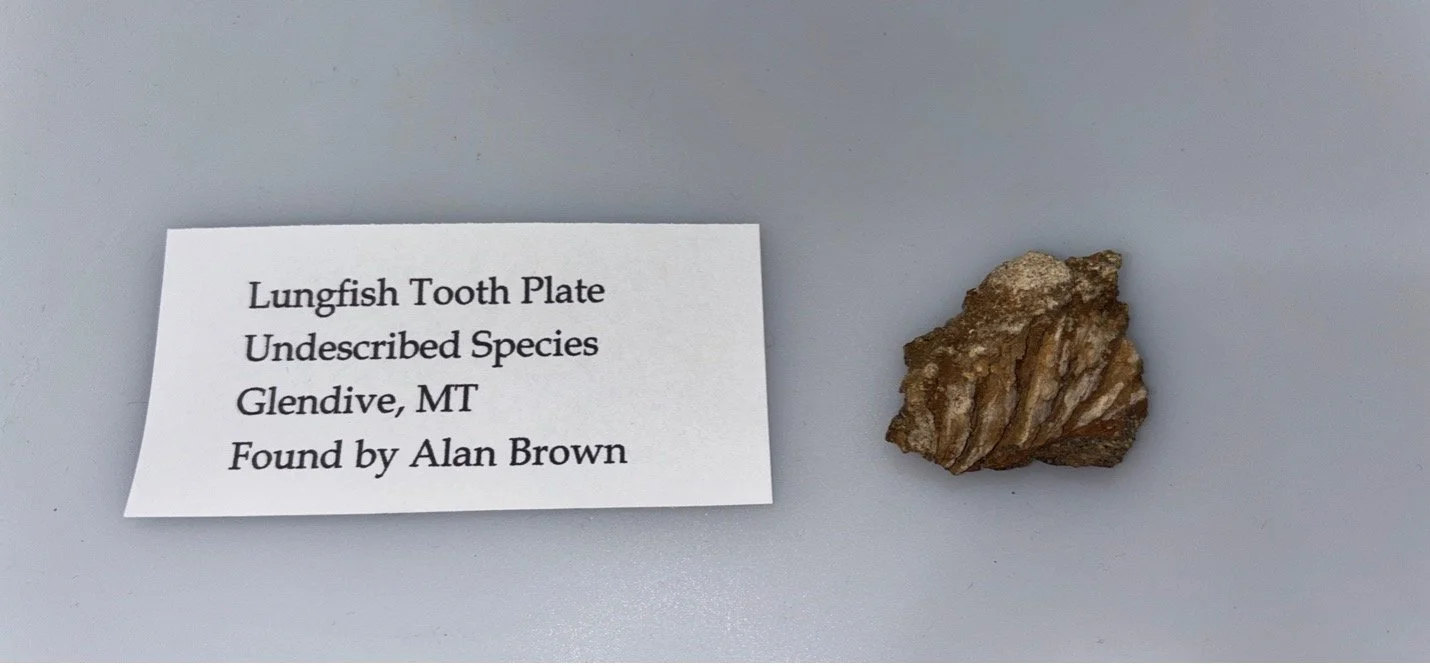
Lungfish are long, eel-shaped fish that can breathe air. While some species of lungfish possess both lungs and gills, they have an advantage over gill-exclusive fish types because they are able to survive in oxygen poor waters and withstand droughts, which may explain why they have managed to stay relatively unchanged over the last 400 million years. Lungfish are considered a “missing link” in the evolution of mammals, reptiles, amphibians, and birds as they are the closest relative to early tetrapods (or all vertebrate animals with four limbs).
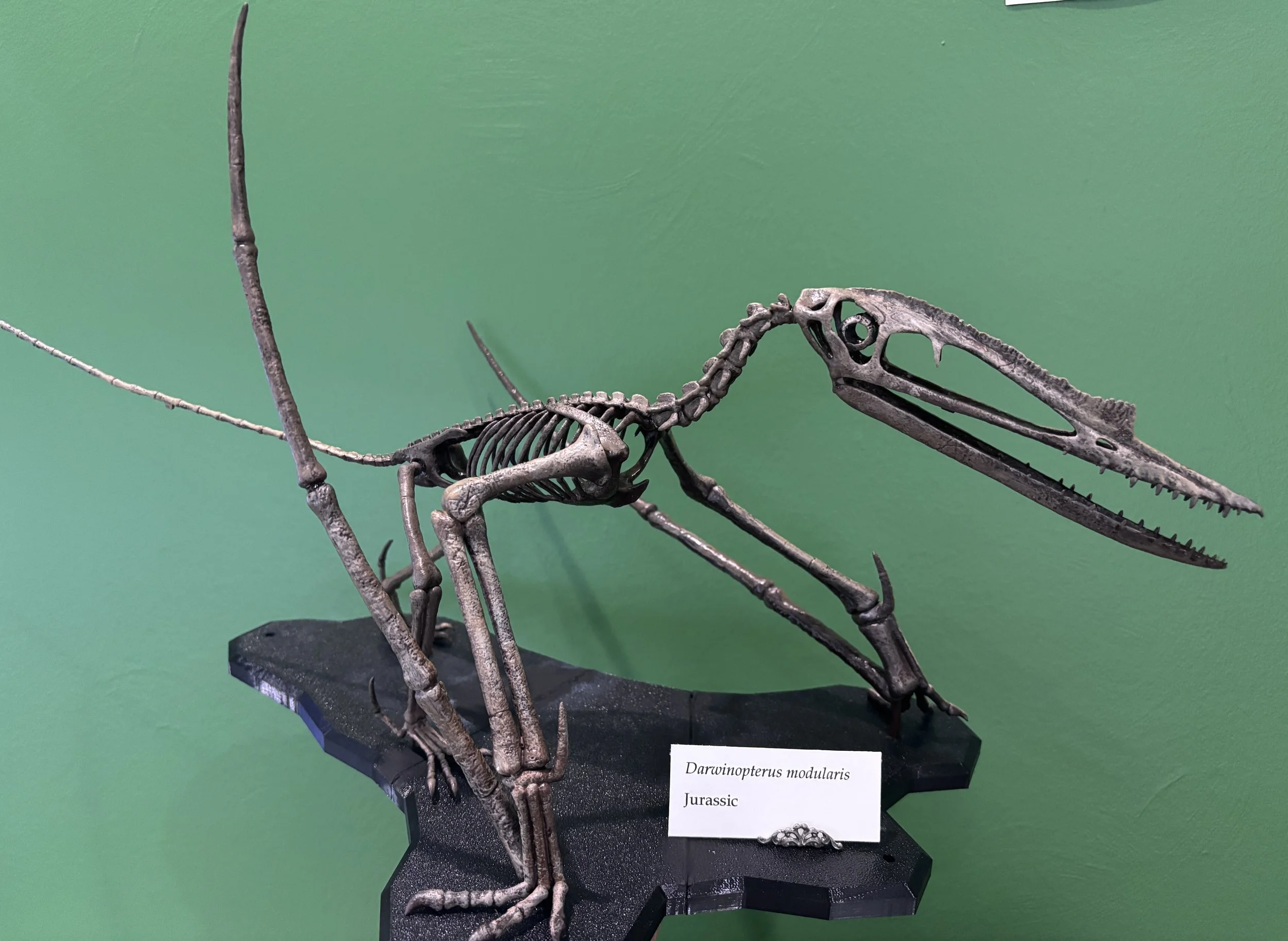
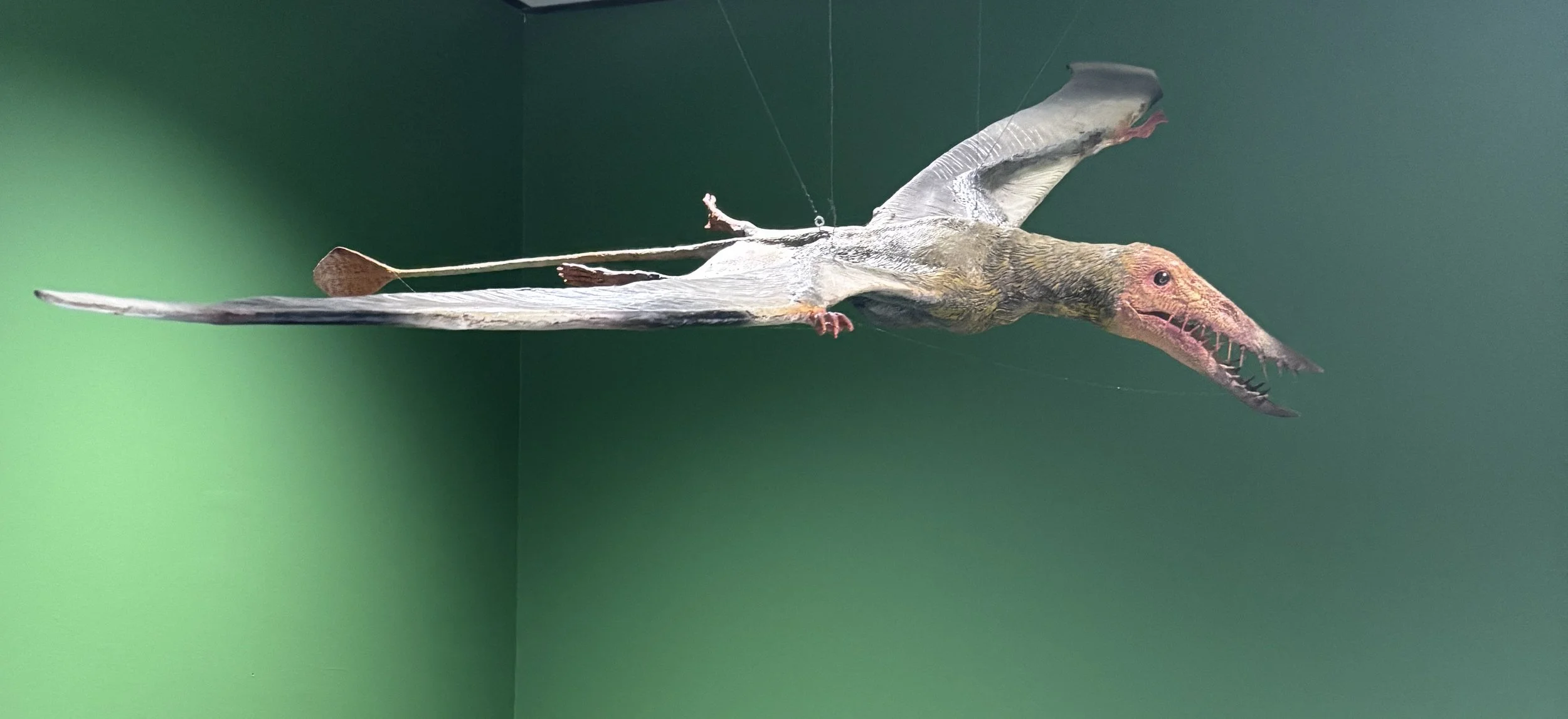
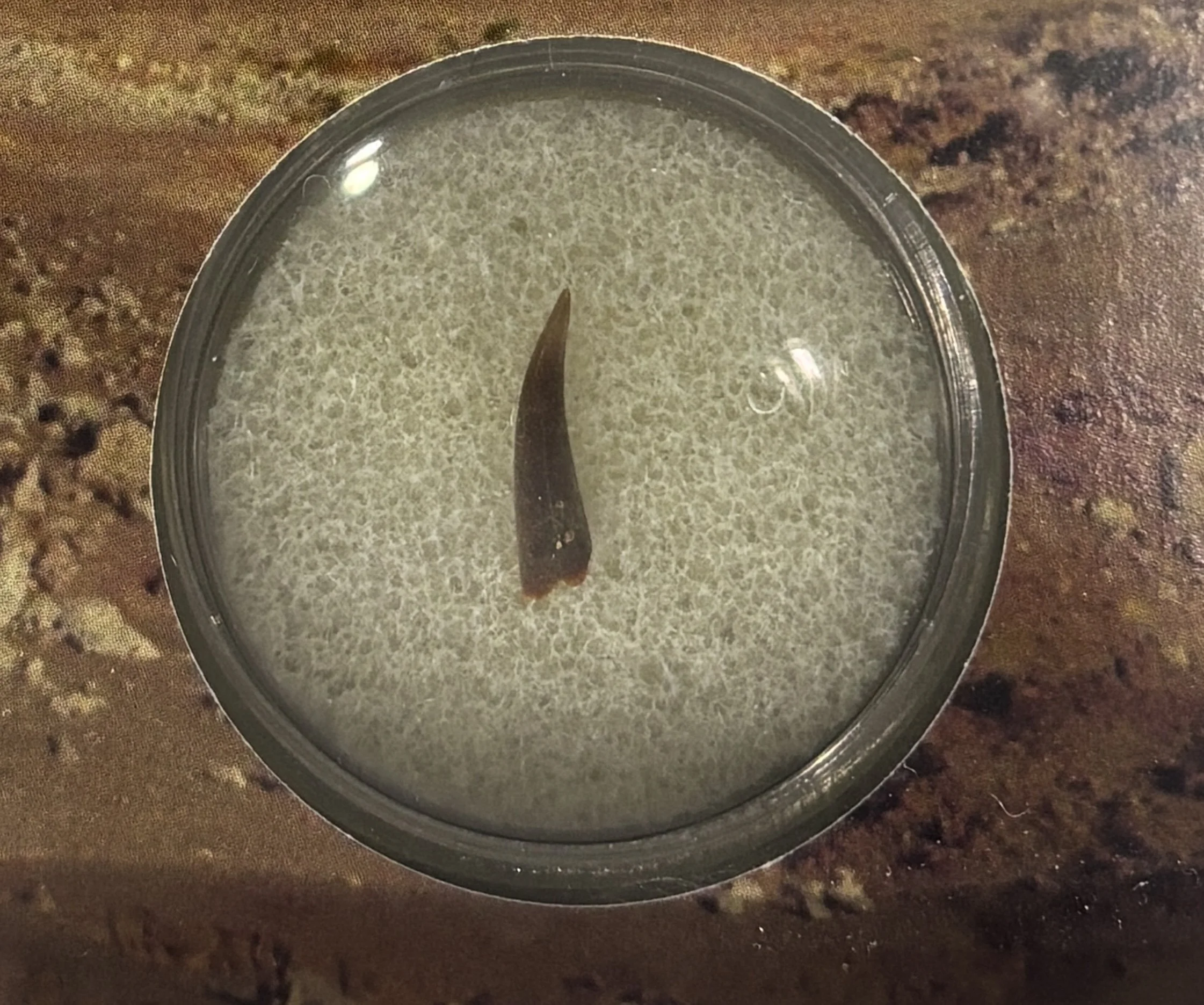
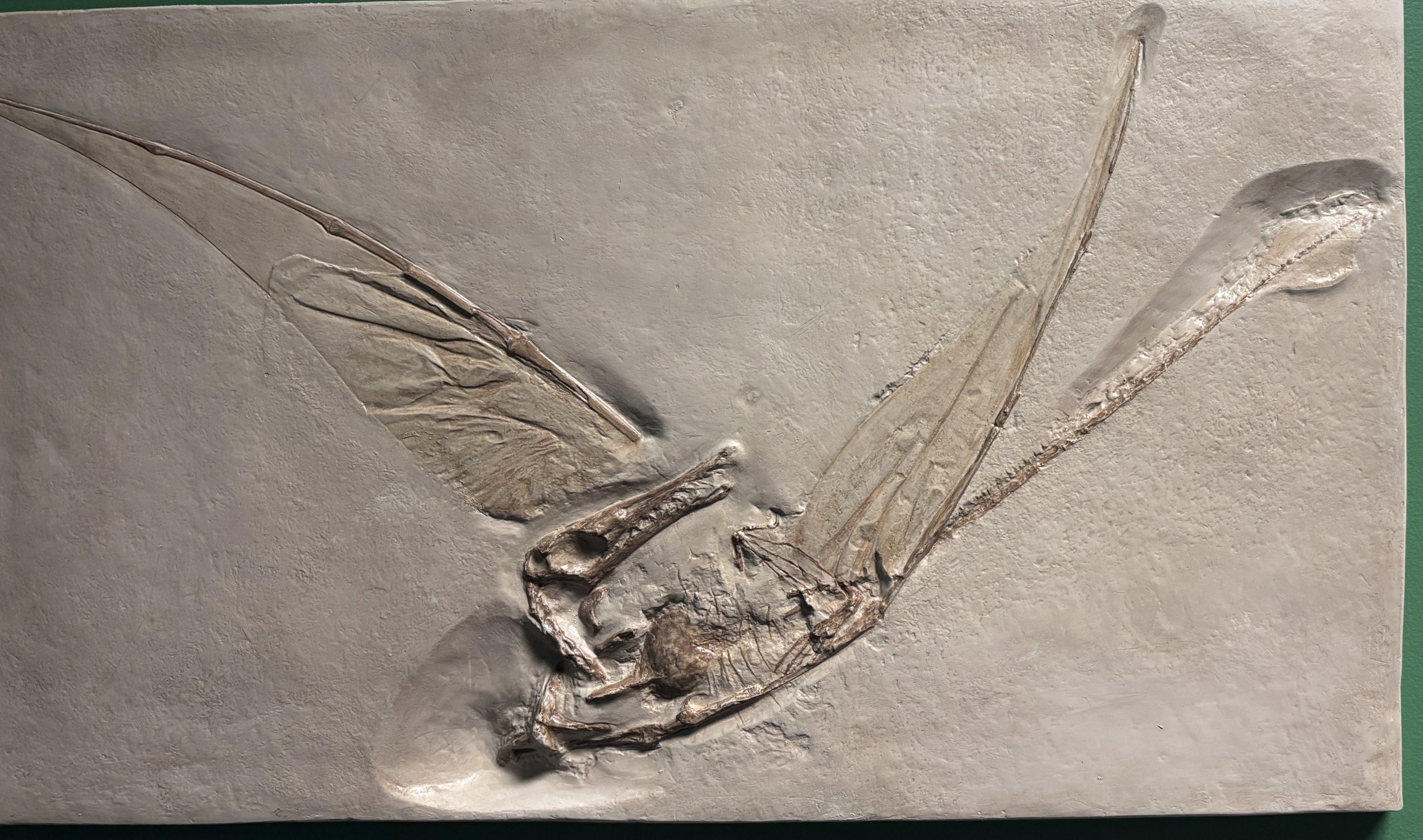
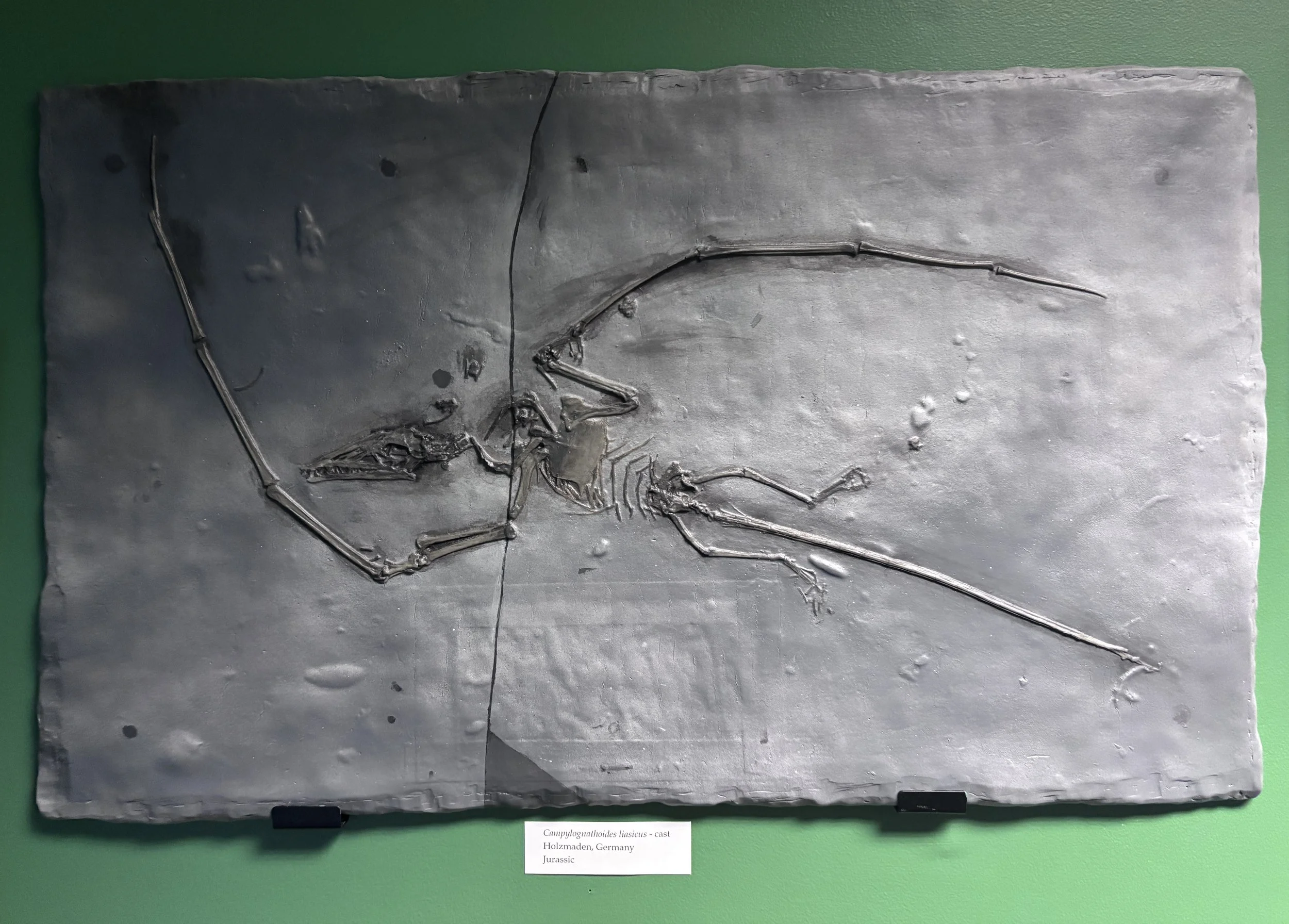
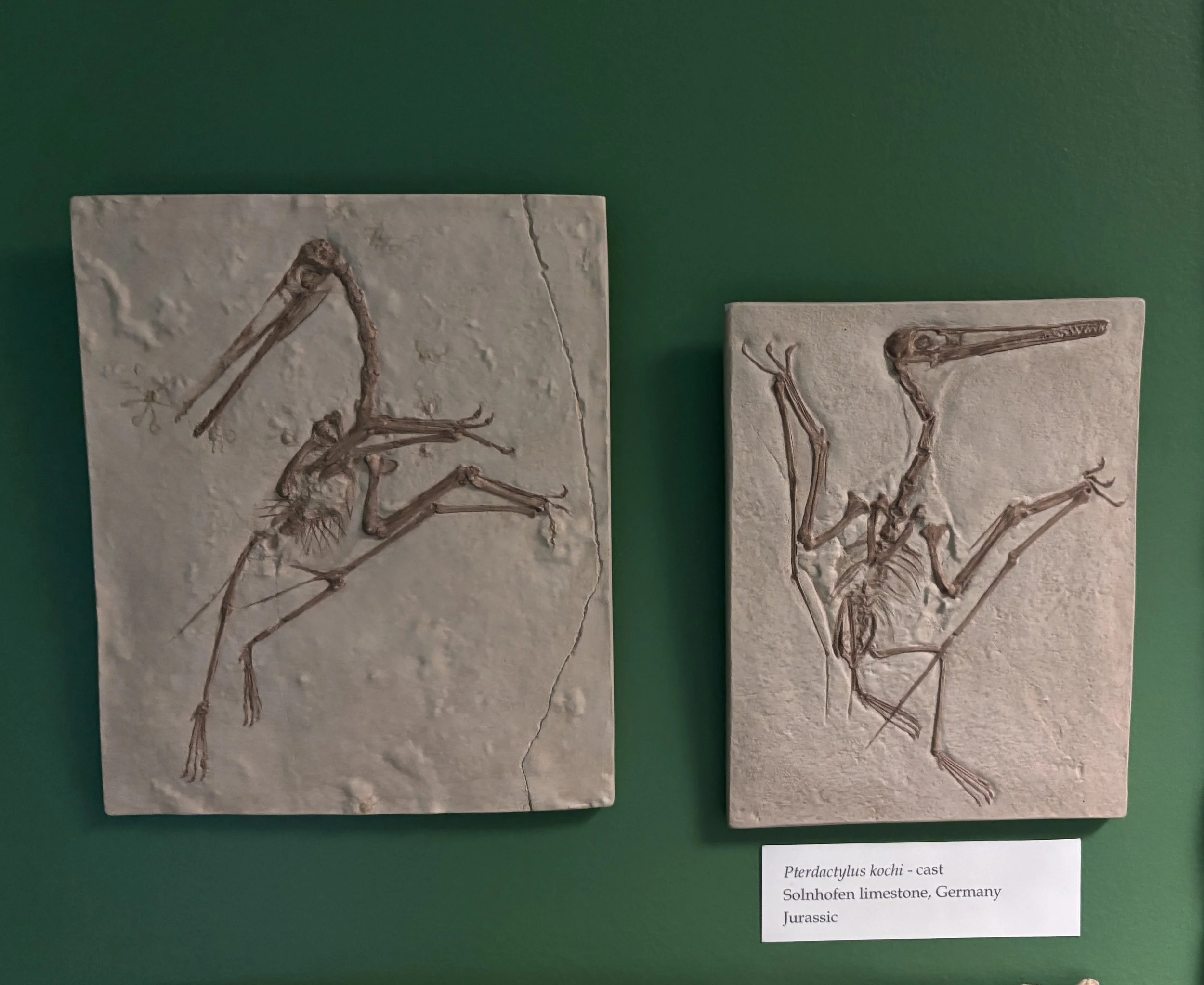
During the age of the dinosaurs, flying reptiles called Pterosaurs ruled skies. Some mistakenly lump pterosaurs like the famous Pterodactyl in with dinosaurs, but pterosaurs belonged to their own order Pterosauria. Pterosauria and Dinosauria belong to the same clade called Archosauria, whose only two groups still living are birds and crocodilians.
Pterosaurs came in a wide range of sizes. The smallest pterosaur species was Anurognathus ammoni, which was about the size of a songbird, and the largest was the colossal Quetzalcoatlus northropi, who was about as tall as a giraffe (but lot more vicous).
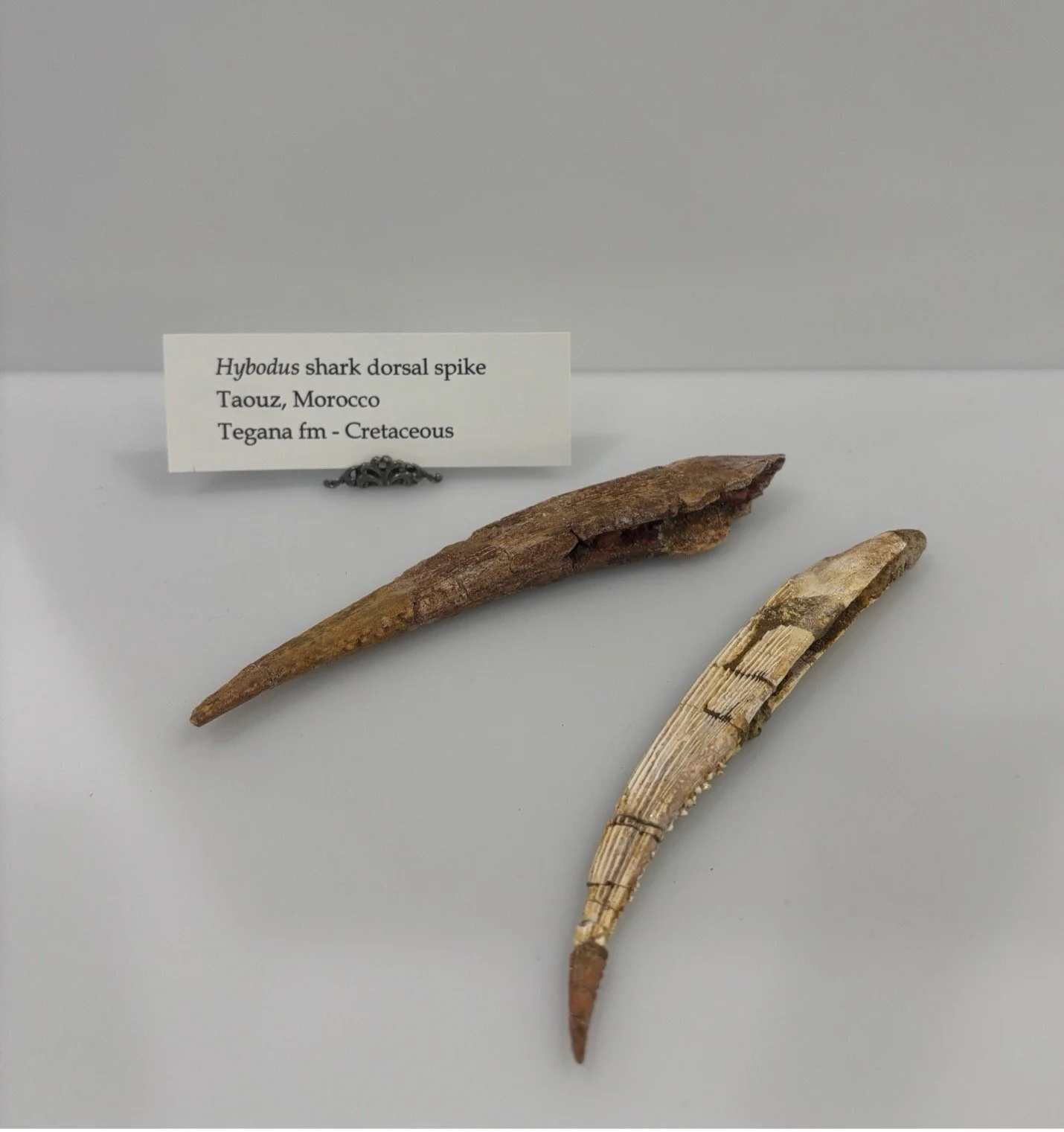
Ancient Shark (Permian – Cretaceous)
Hybodus was a genus of shark that had great success in the ancient oceans. It was about 6 feet long and had small crown of spikes on its head and two more larger spikes by its dorsal fins. These spikes would have protected the shark from bigger predators, which partly contributed to its success. Another trait Hybodus had was two types of teeth for two types of prey. The teeth at the front of its mouth were sharp, used to bite down on prey, while the teeth in the back of its mouth were flat and could crush and break down hard shells and bones—a little like your own molars.
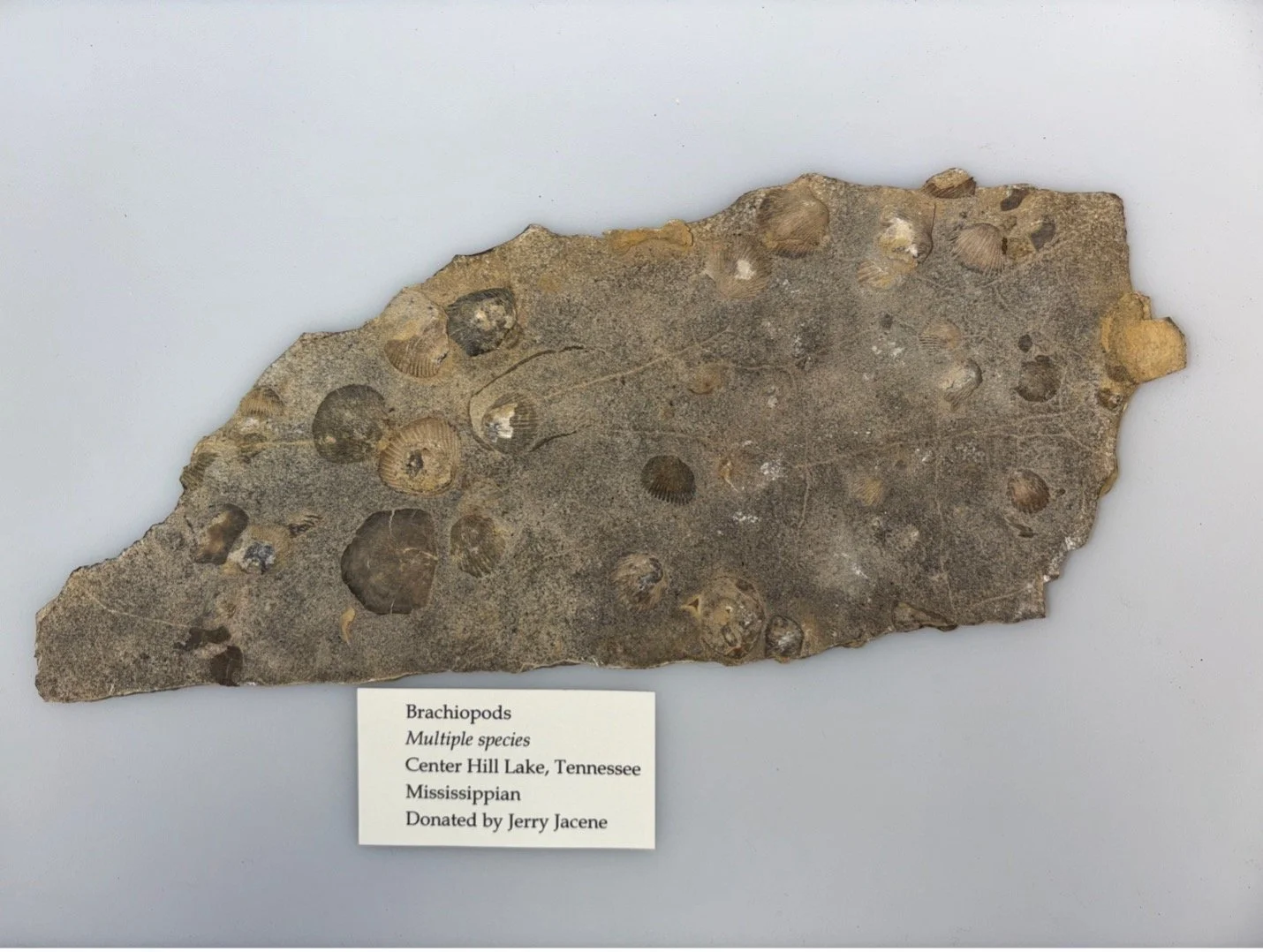
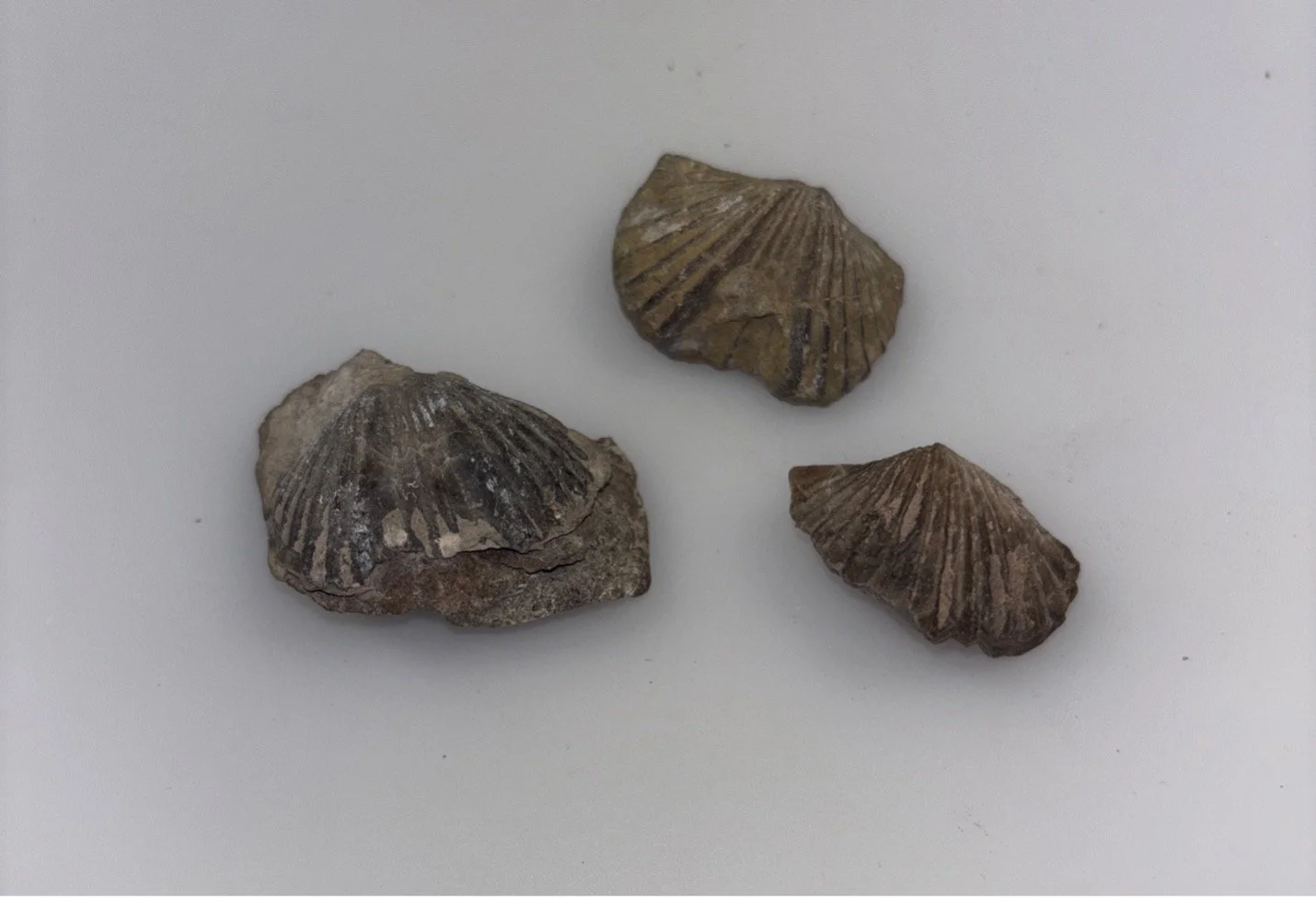
Brachiopods (Cambrian – Present)
Brachiopods are aquatic soft-bodied invertebrates who typically live inside a symmetrical two-halved shell. Though similar to bivalves in design, Brachiopods are deceptively unique, belonging to their own phylum, Brachiopoda. Brachiopods are generally stationary and are typically anchored in one spot, relying on filter feeding.
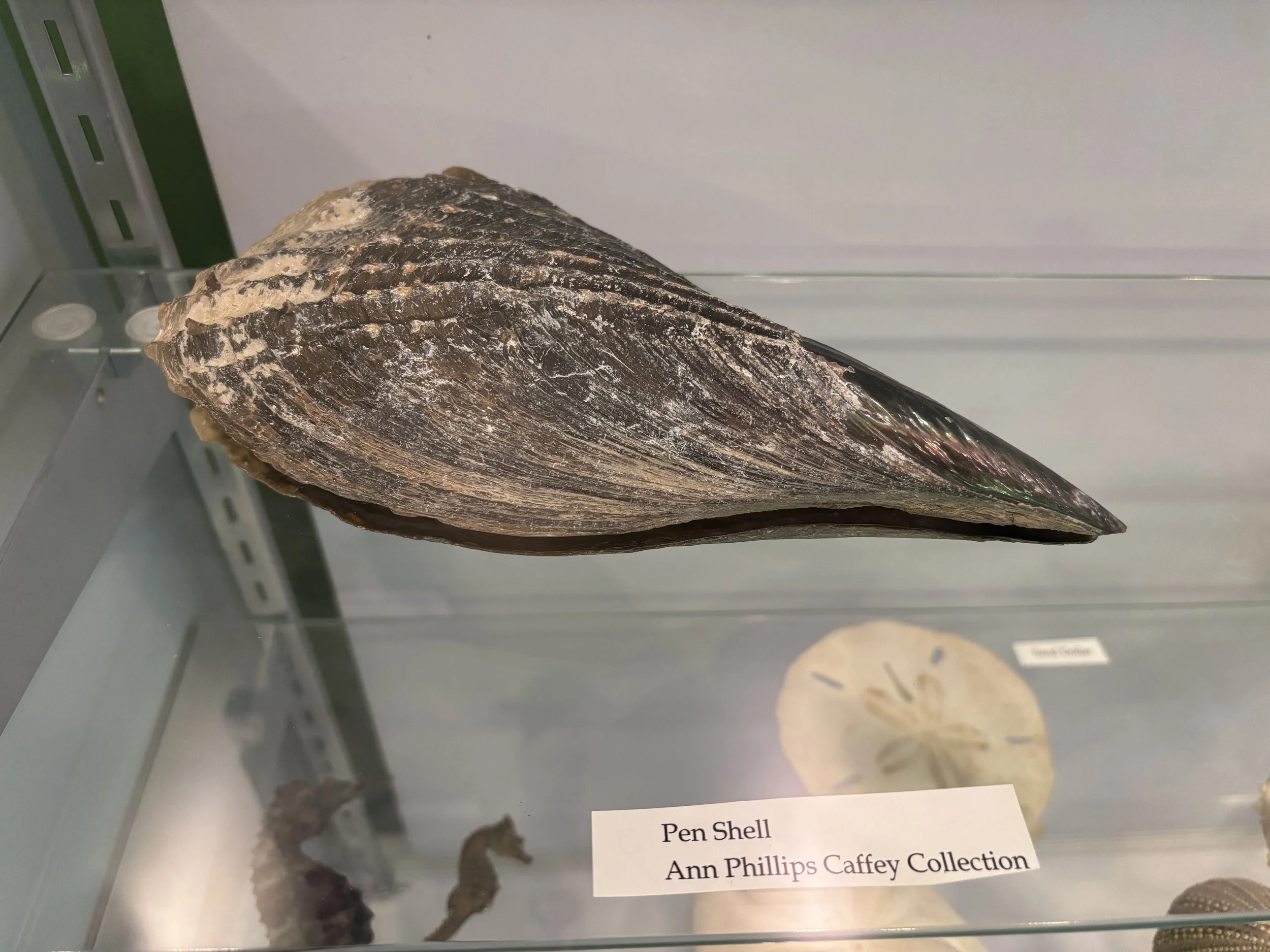
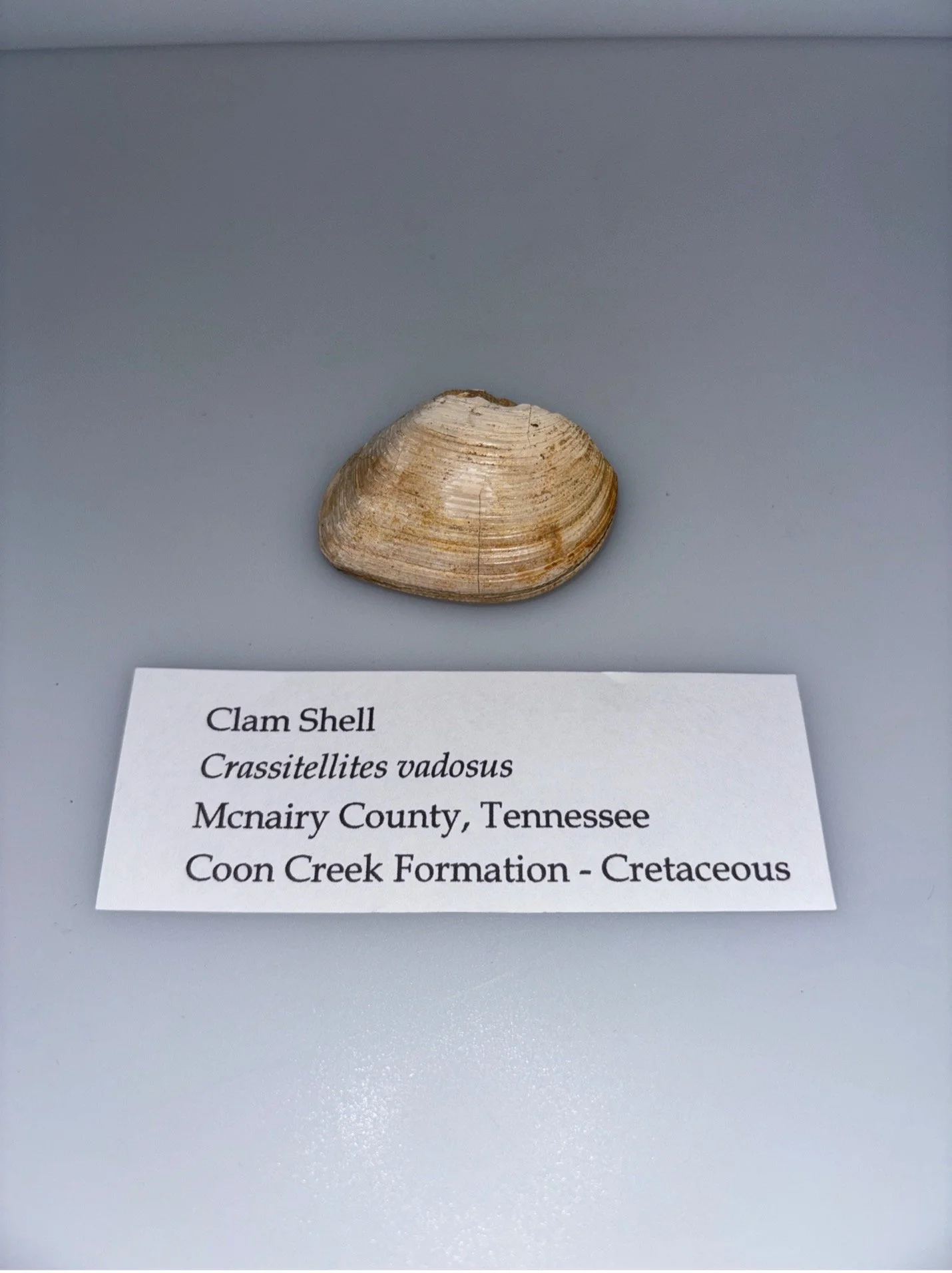
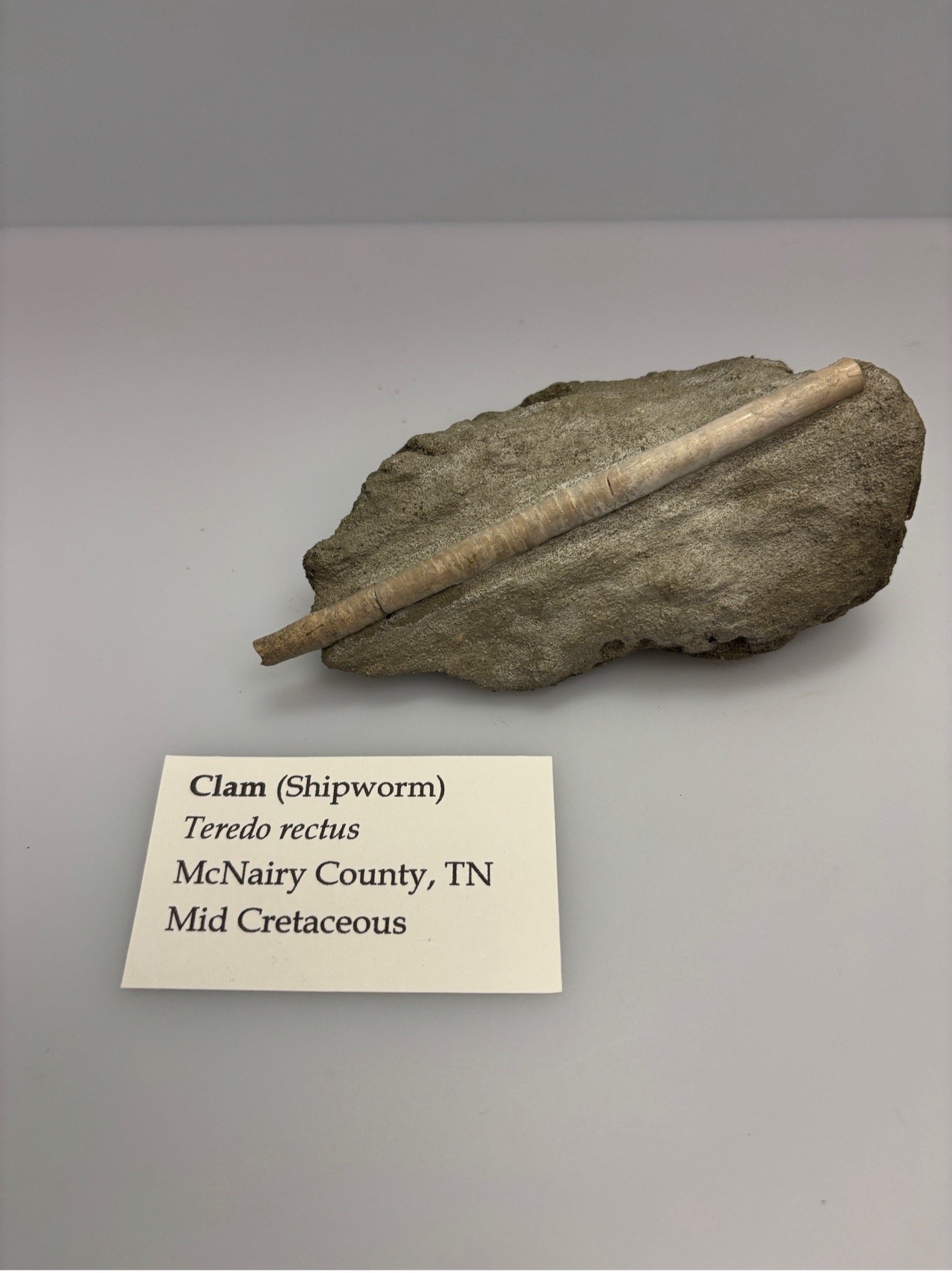
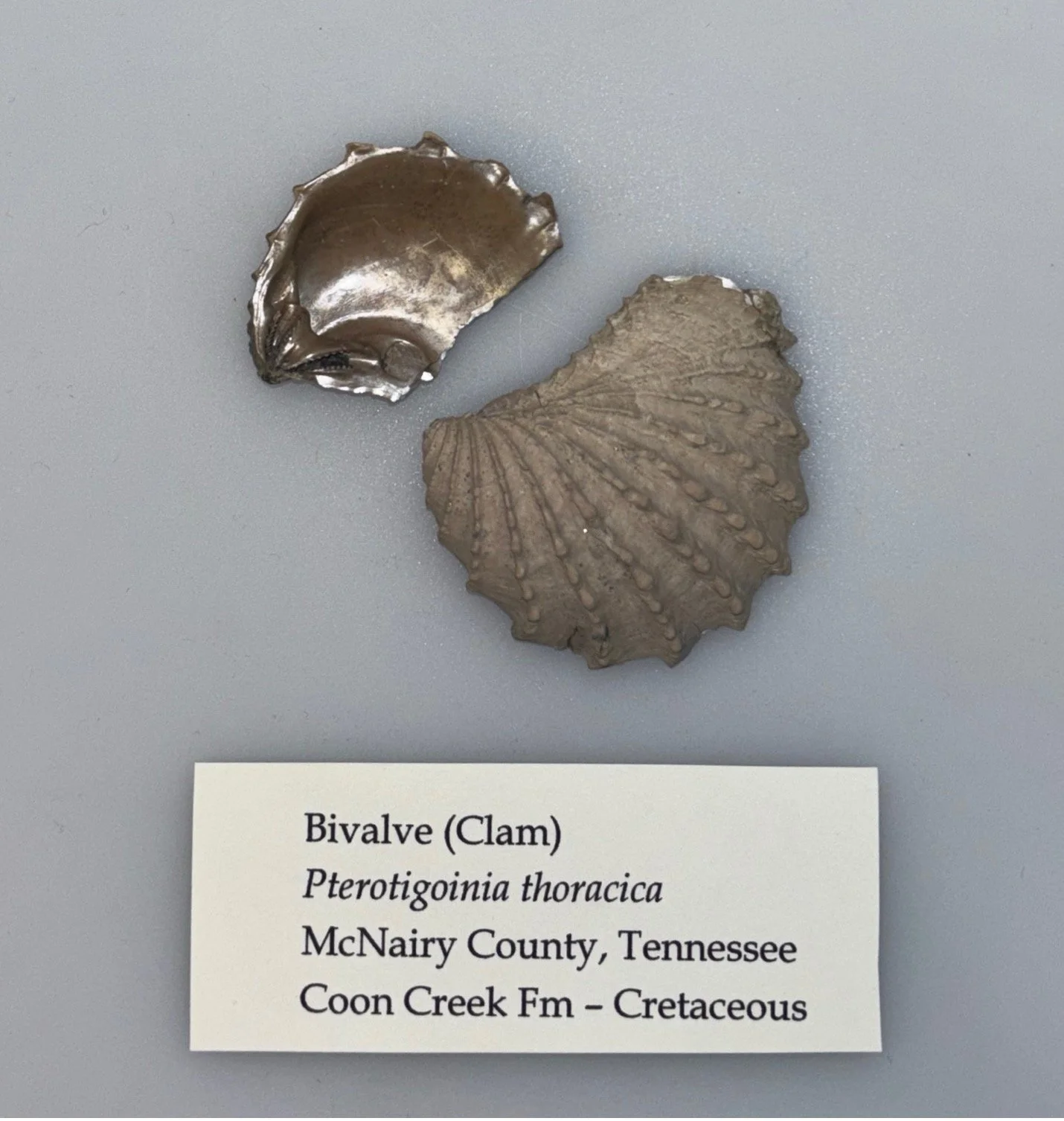
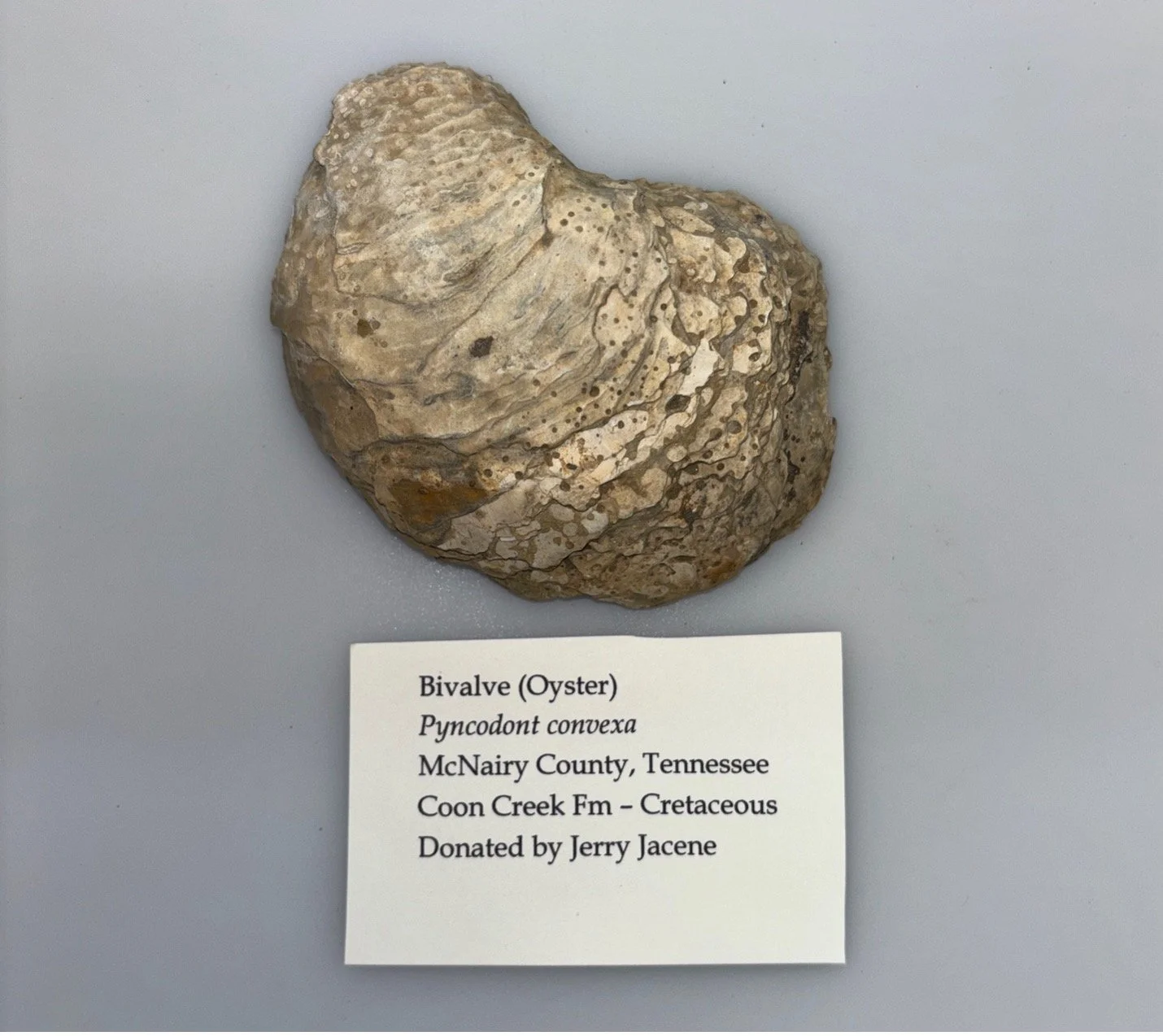
Bivalves are aquatic soft-bodied invertebrates who typically live inside a vertically symmetrical two-halved shell. They are similar to brachiopods, who are symmetrical both laterally and vertically, but the two are not actually very closely related. Today, bivalves vastly outnumber brachiopods, but during earlier periods, the inverse was true.
Bivalves are more mobile than they look, often burying themselves in sediment with the help of a muscular organ called a ‘foot’, and some can even swim by clapping their shell open and closed. Their shells have historically been used as jewelry, tools, and even money in certain cultures.


Ammonites (Devonian – Cretaceous)
At some point, most everyone has seen the fossil of an ammonite, perhaps thinking it was some kind of fossil snail shell. However, Ammonites were not gastropods, but cephalopods. Essentially a type of shelled squid, Ammonites and their cousins nautiloids populated the ancient seas eating small, slow moving organisms like plankton or jellyfish. Ammonites went extinct during the K-Pg extinction event, the same that killed the non-avian dinosaurs, alongside many other shallow water marine creatures due to chain reactions of the asteroid strike. The Ammonite’s still-living relative, the Nautilus, survived this extinction event thanks to its much deeper ocean habitat which was less effected by the issues on the surface.
Fossilization:
Ammonites are much beloved fossils for collectors, often cut down the middle and displayed in pairs as the empty chambers of the shell can fill with beautiful minerals. Ammonites can be mineralized with pyrite, agate, calcite, and even opal. Opalized Ammonites are nicknamed ‘Ammolites’.
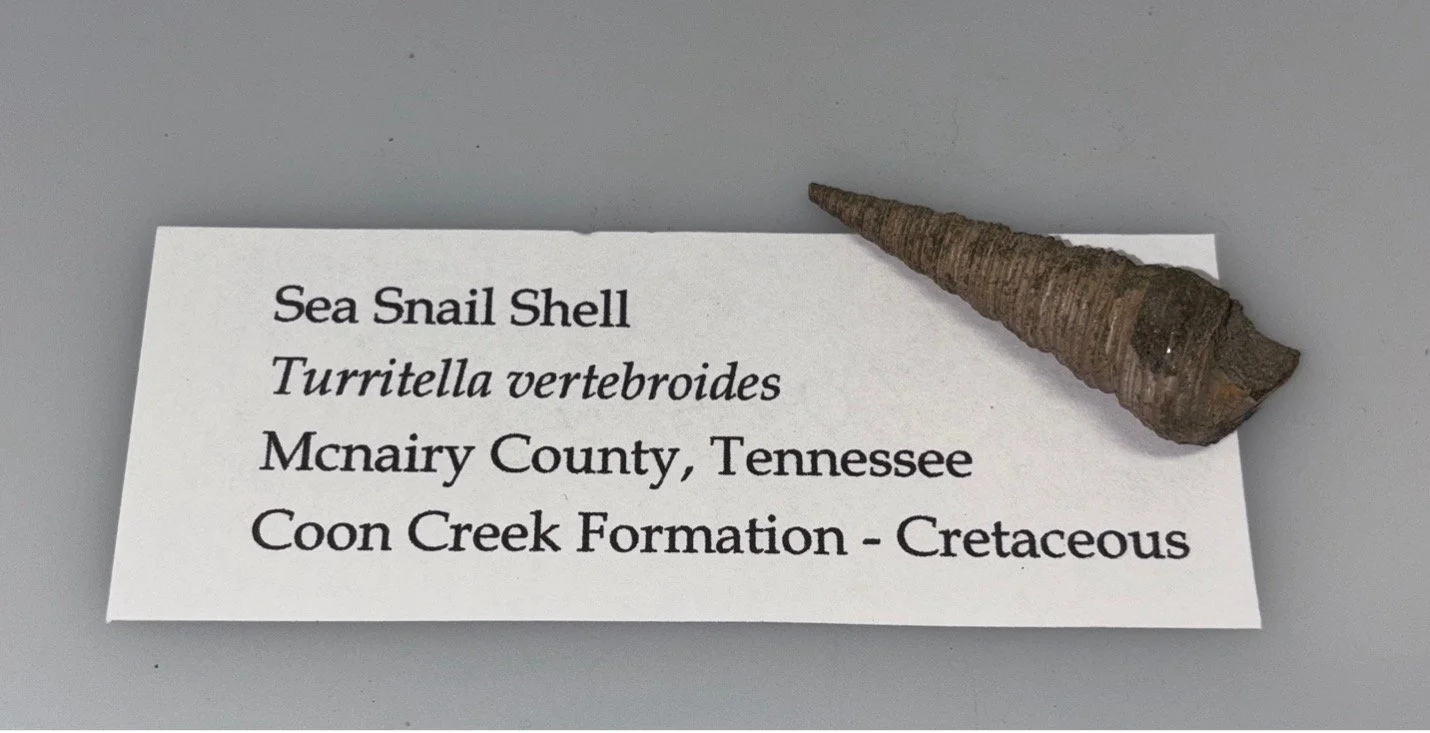
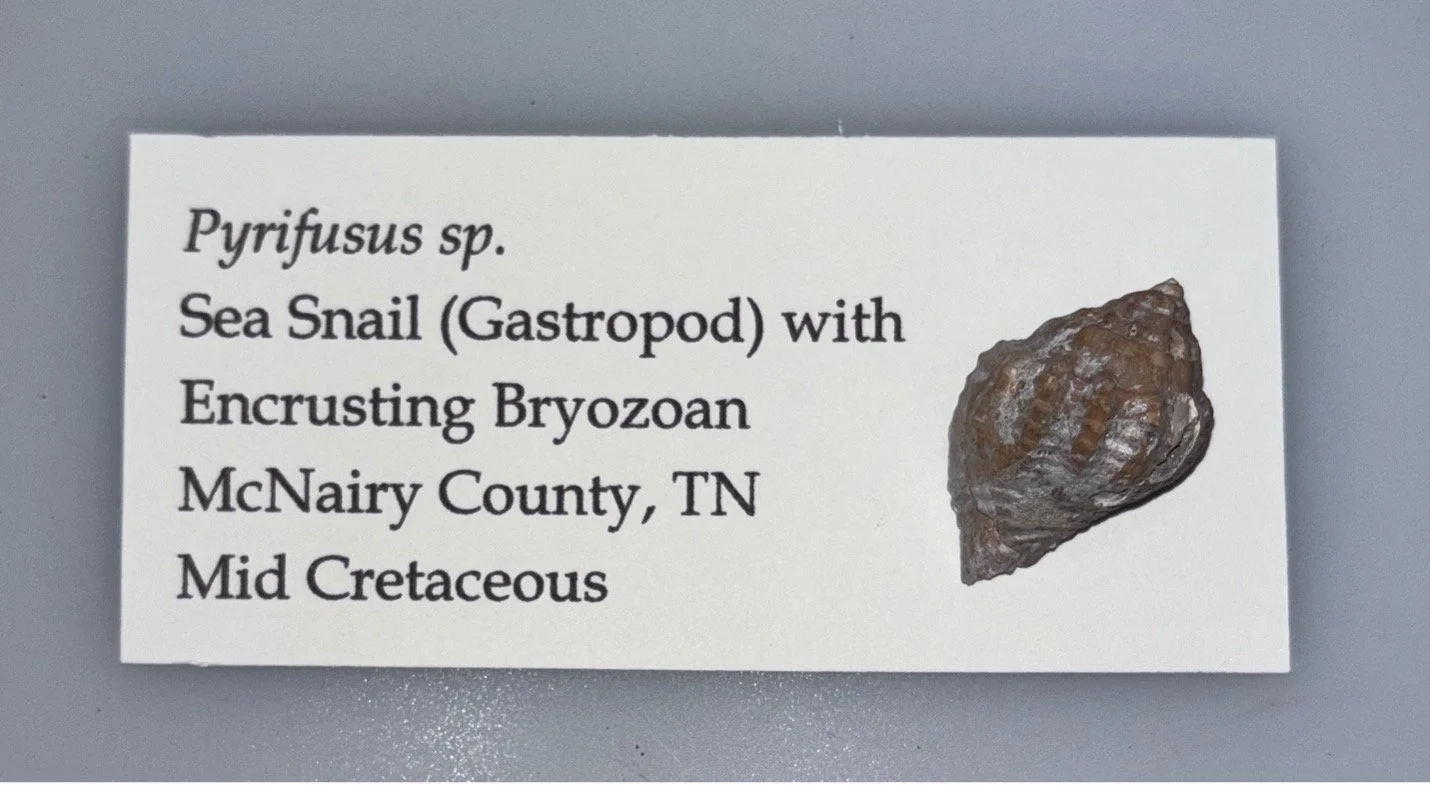
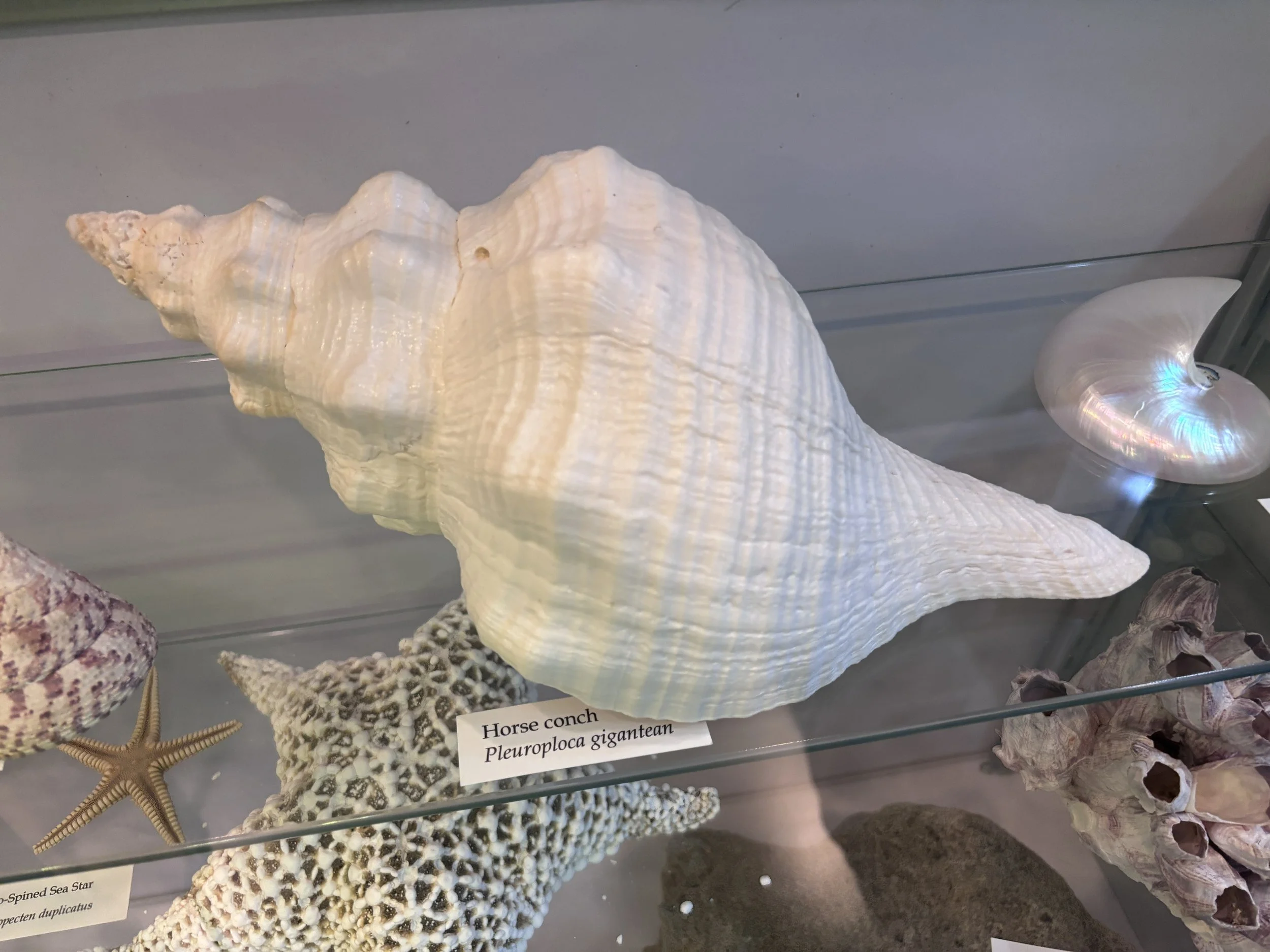
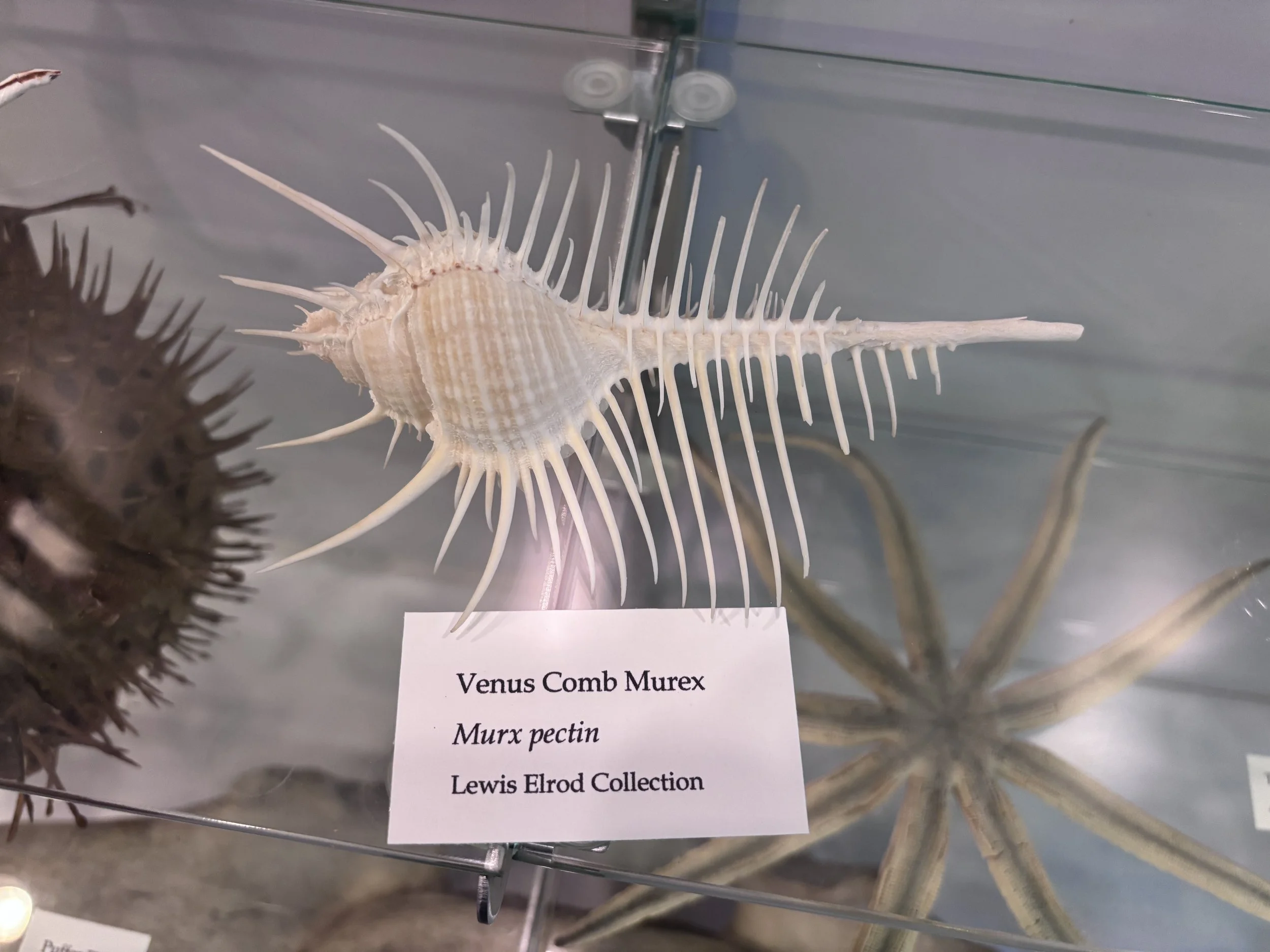
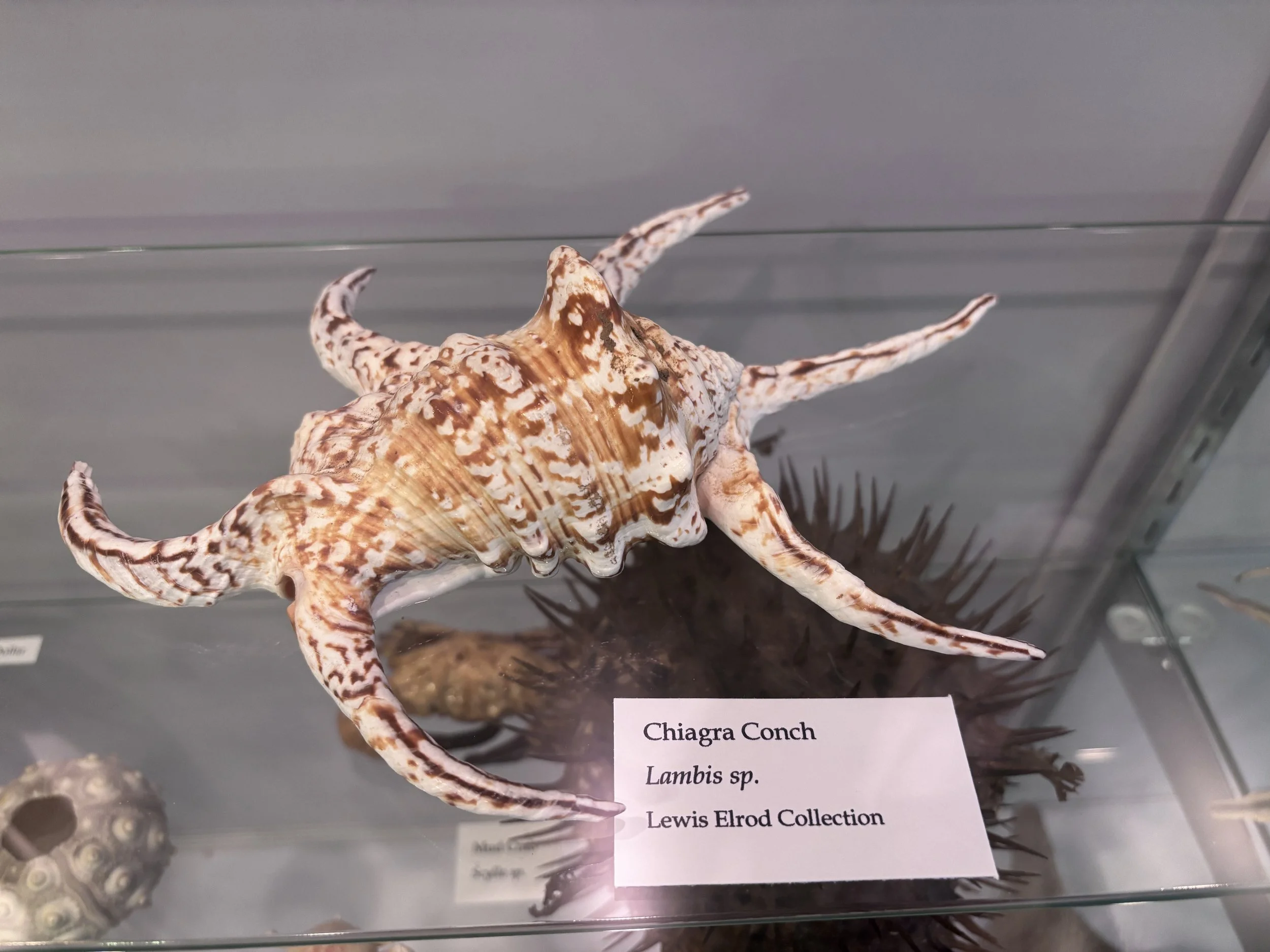
Gastropods (Late Cambrian – Present)
Gastropods are a class of soft-bodied invertebrates and are members of the phylum Mollusca, including things like snails and slugs. Gastropods have been around since almost the beginning of the fossil record, developing all the way back in the oceans of the Cambrian Period (485- 541 million years ago). Gastropod bodies are simple but highly adaptable, and have diversified far past marine living. Today there are species in the oceans, in rivers, on land, and even on hydrothermal vents.
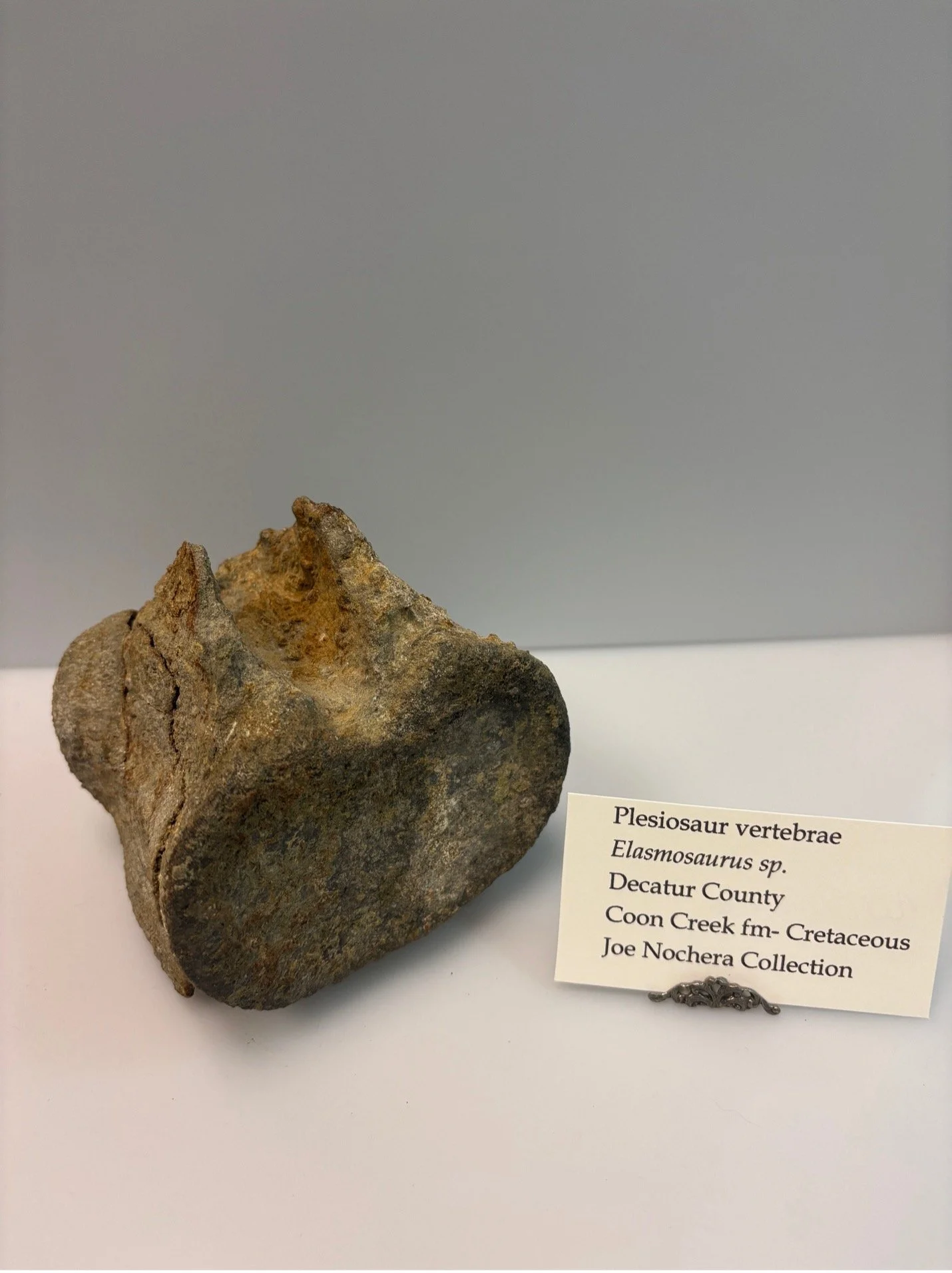
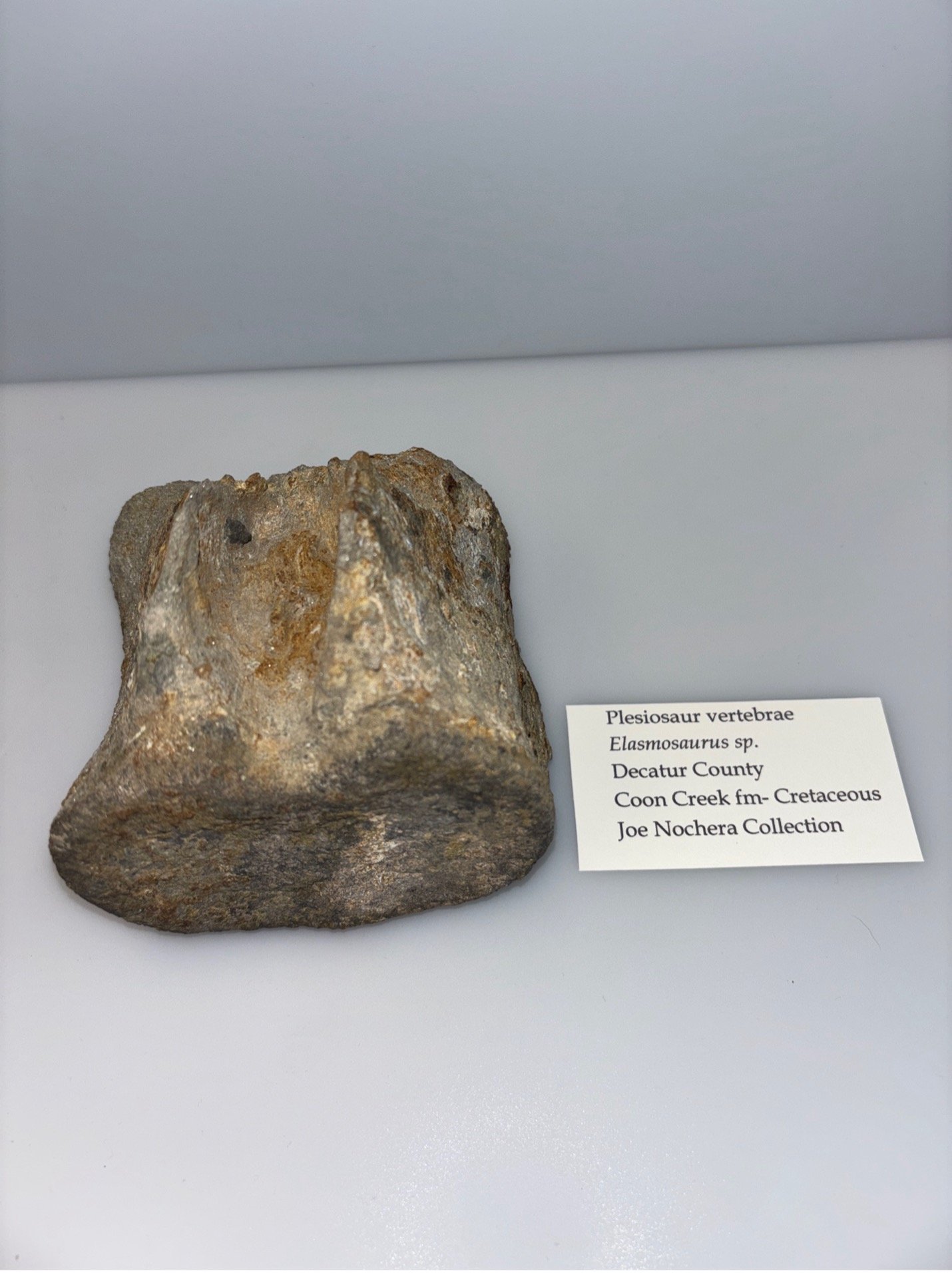
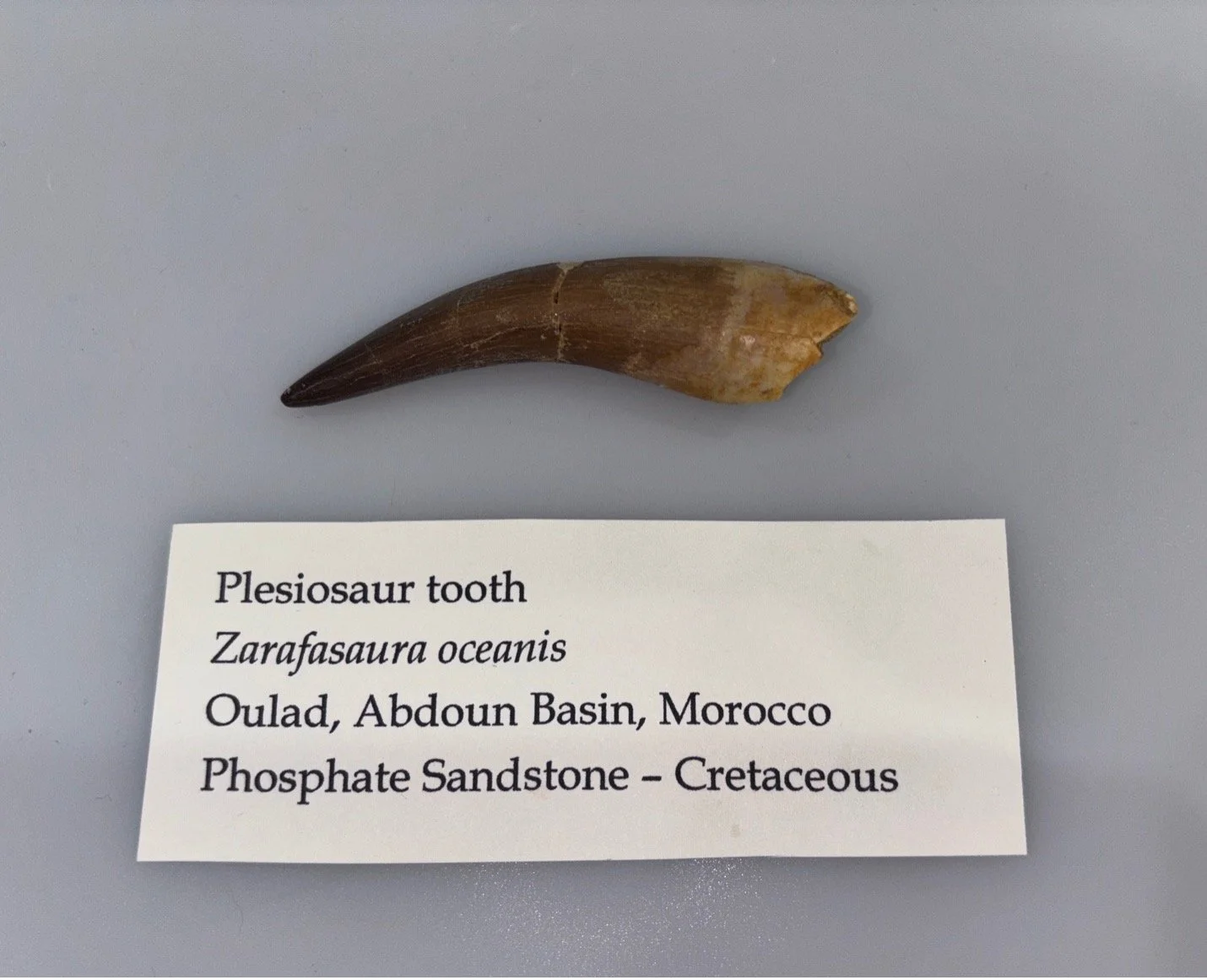
Plesiosaurs were marine reptiles that lived during the age of the dinosaurs. Though not dinosaurs themselves, Plesiosaurs are well-known for their distinctive body shape which inspired the famous cryptid, the Loch Ness Monster. While many believers argue that a Plesiosaur could still be in Loch Ness in Scotland, they all unfortunately went extinct at the same time at the non-avian dinosaurs following the K-Pg Impact. Their diet was comprised of fish and cephalopods. Plesiosaurs came in different shapes and sizes; some where large and long-necked like the Zarafasaura oceanis who had short faces with long necks, while some like the Pliosaurus had short necks and large heads.
The first complete Plesiosaur fossil was found by famous female paleontologist Mary Anning in 1823.
No results match your search. Try removing a few filters.