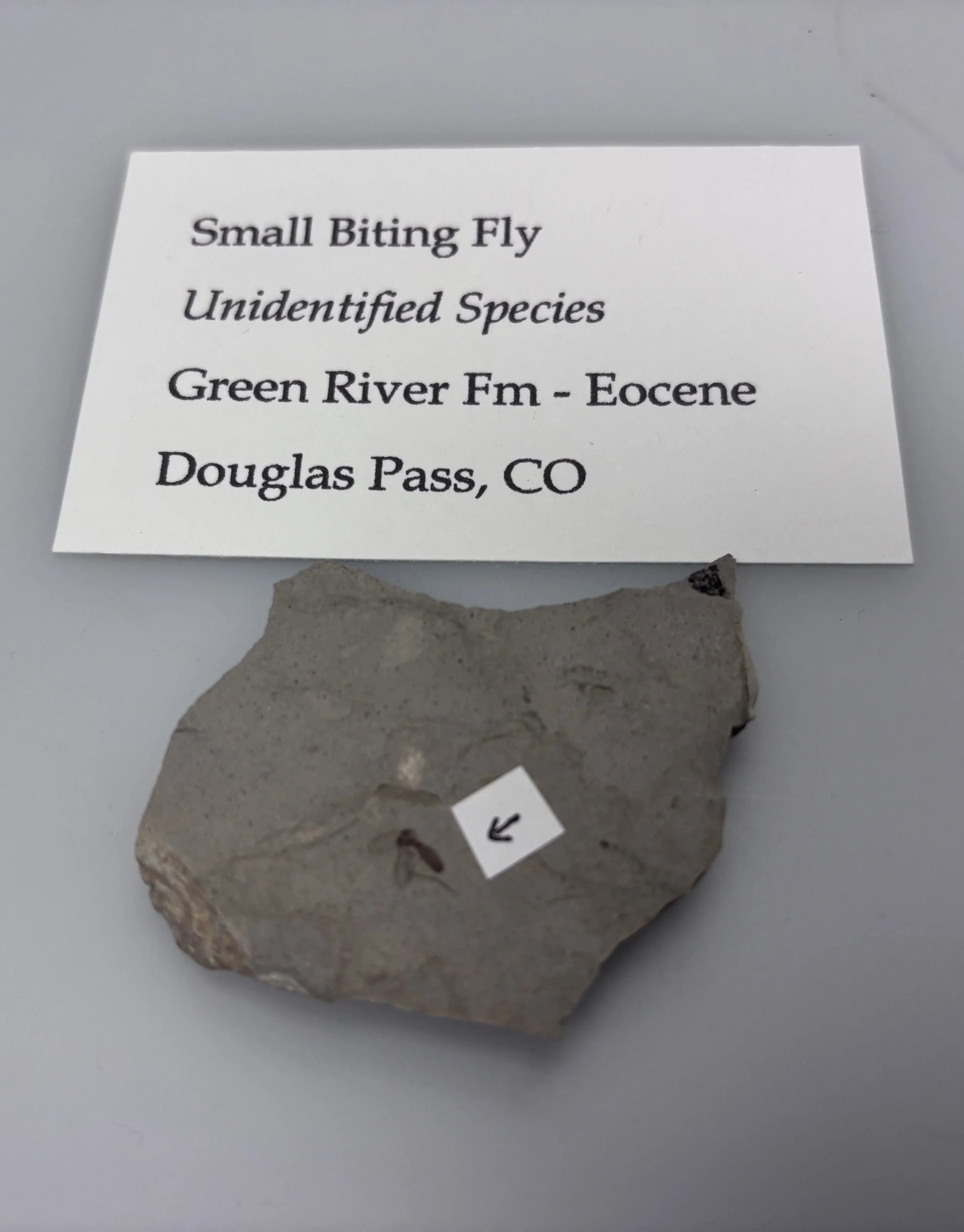
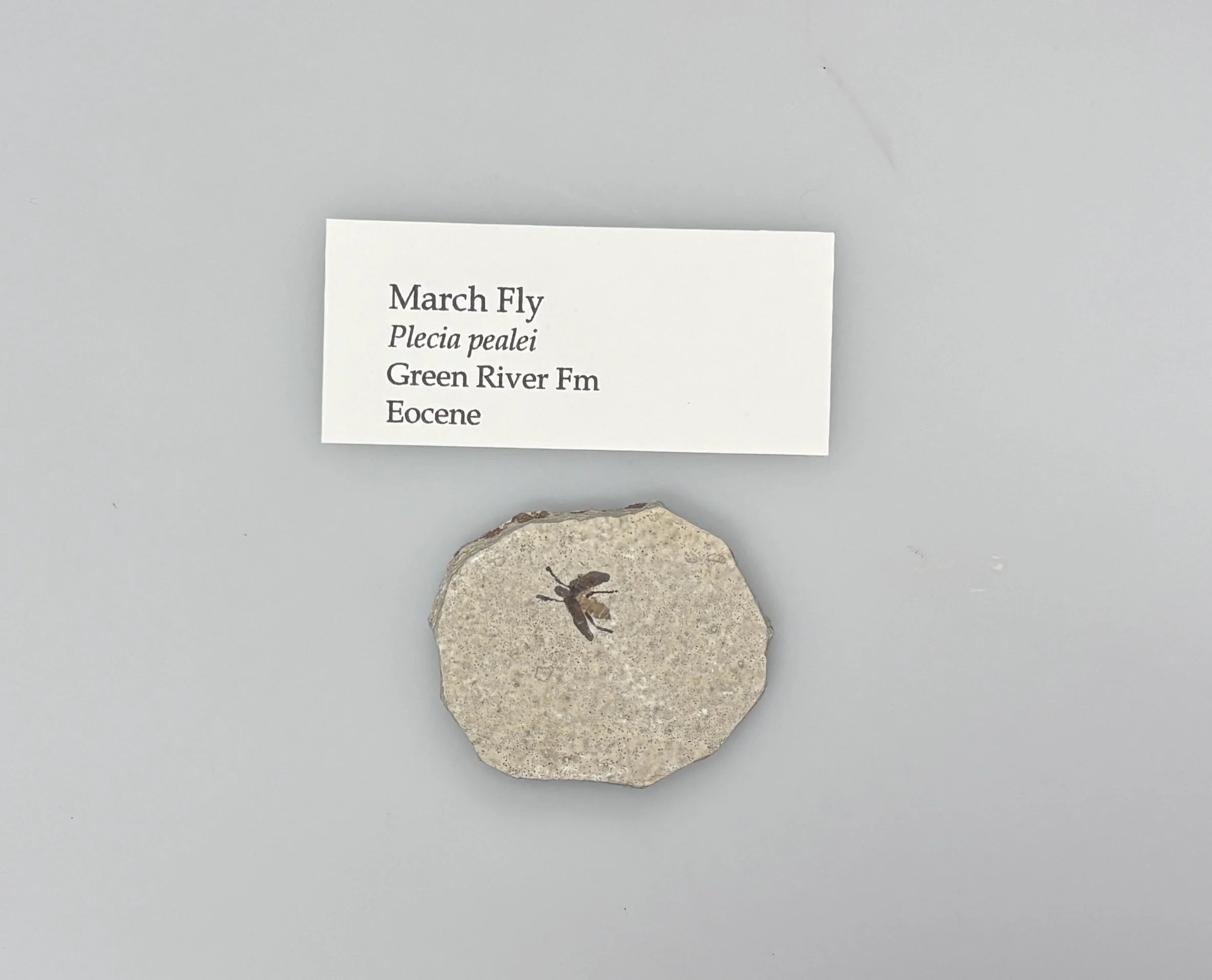
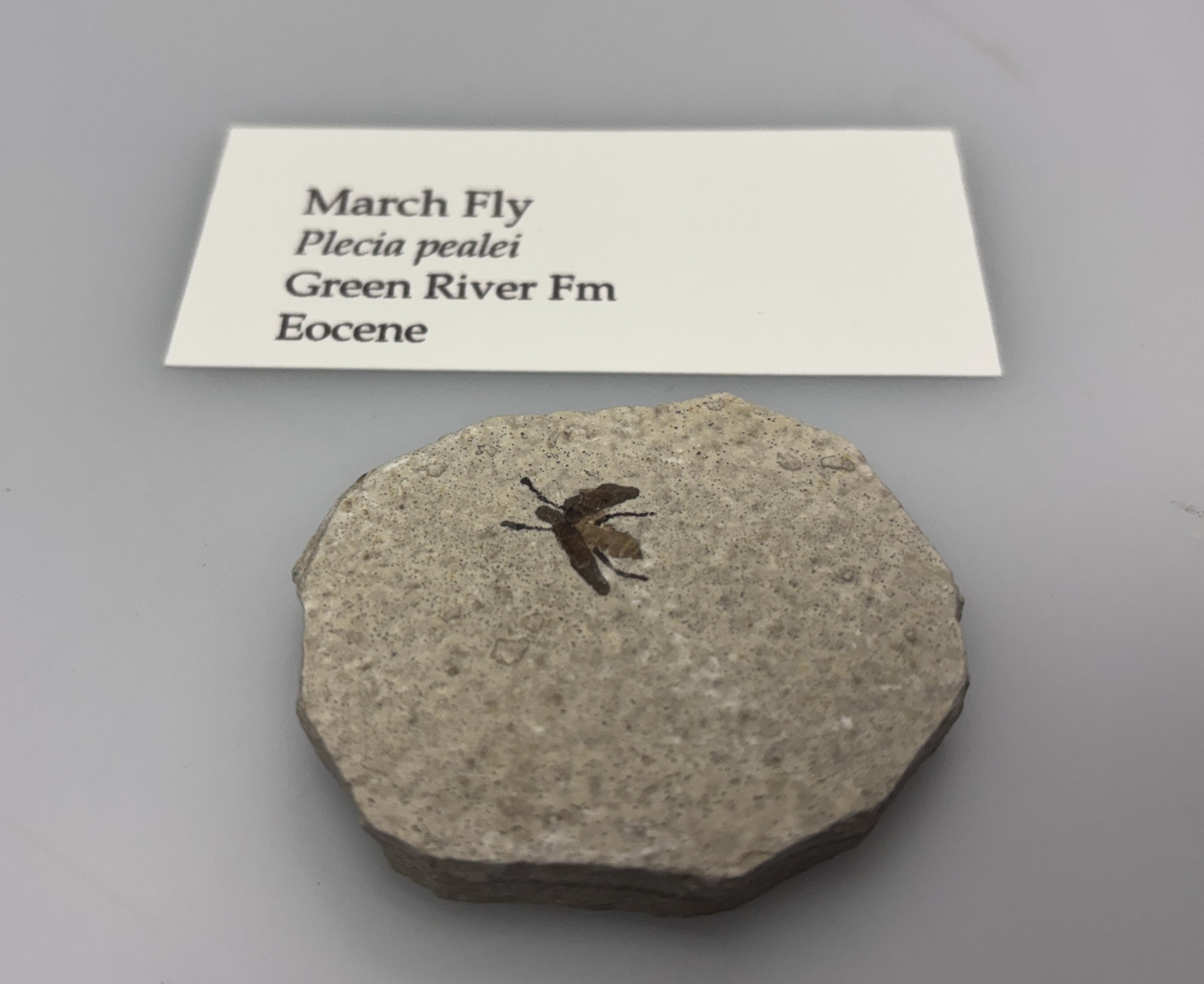
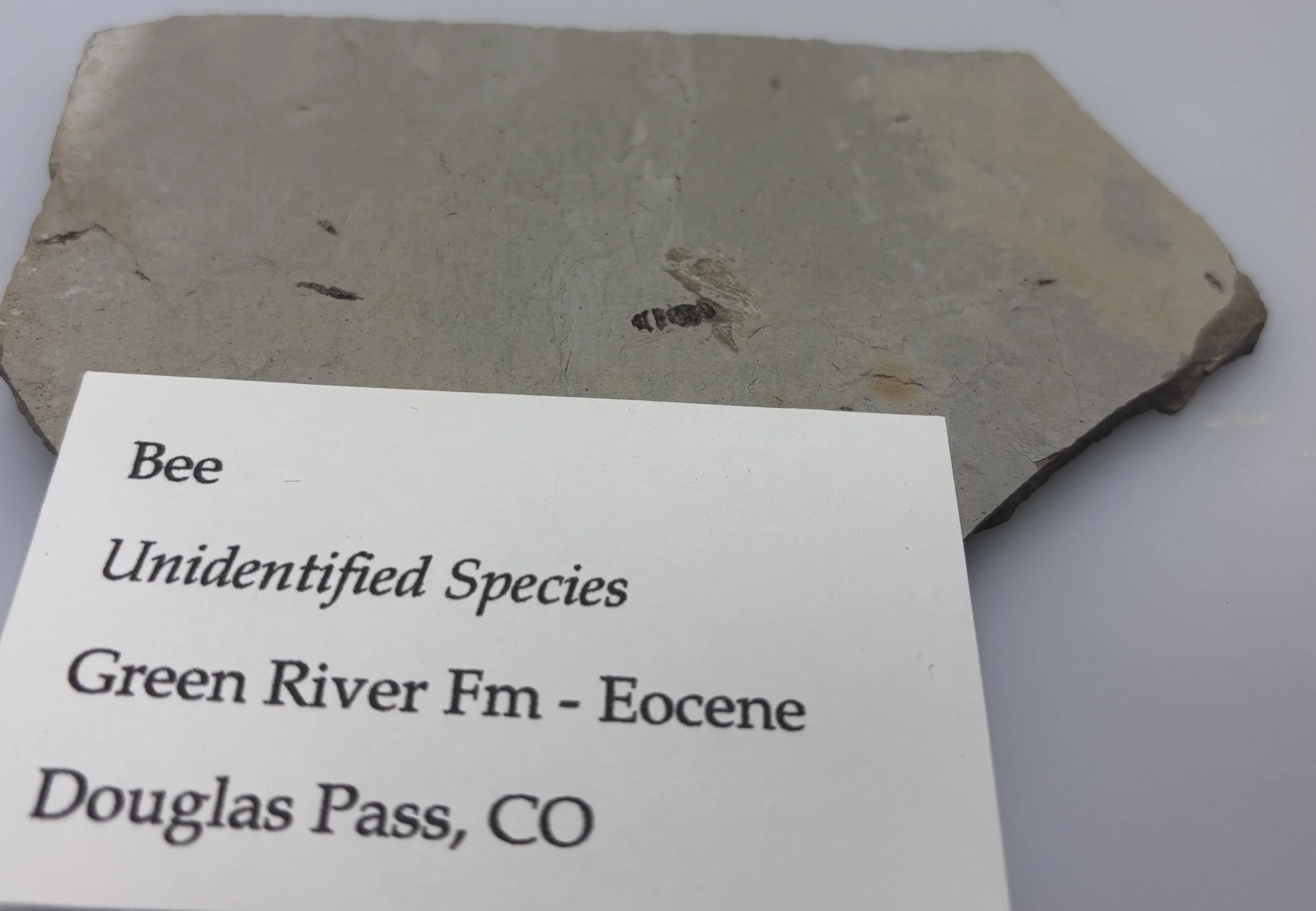
The Green River Formation is famous for the many fish, birds, and mammal species immaculately preserved in the fine lakebed sediment, but perhaps more impressively, that fine grain sediment was also perfect for preserving the many insects that made these ancient lakes their home. Among the insects found are flies, crickets, dragonflies, beetles, and more. Some of these specimens are so well preserved, patterns and pigments can be seen in the fossils themselves.
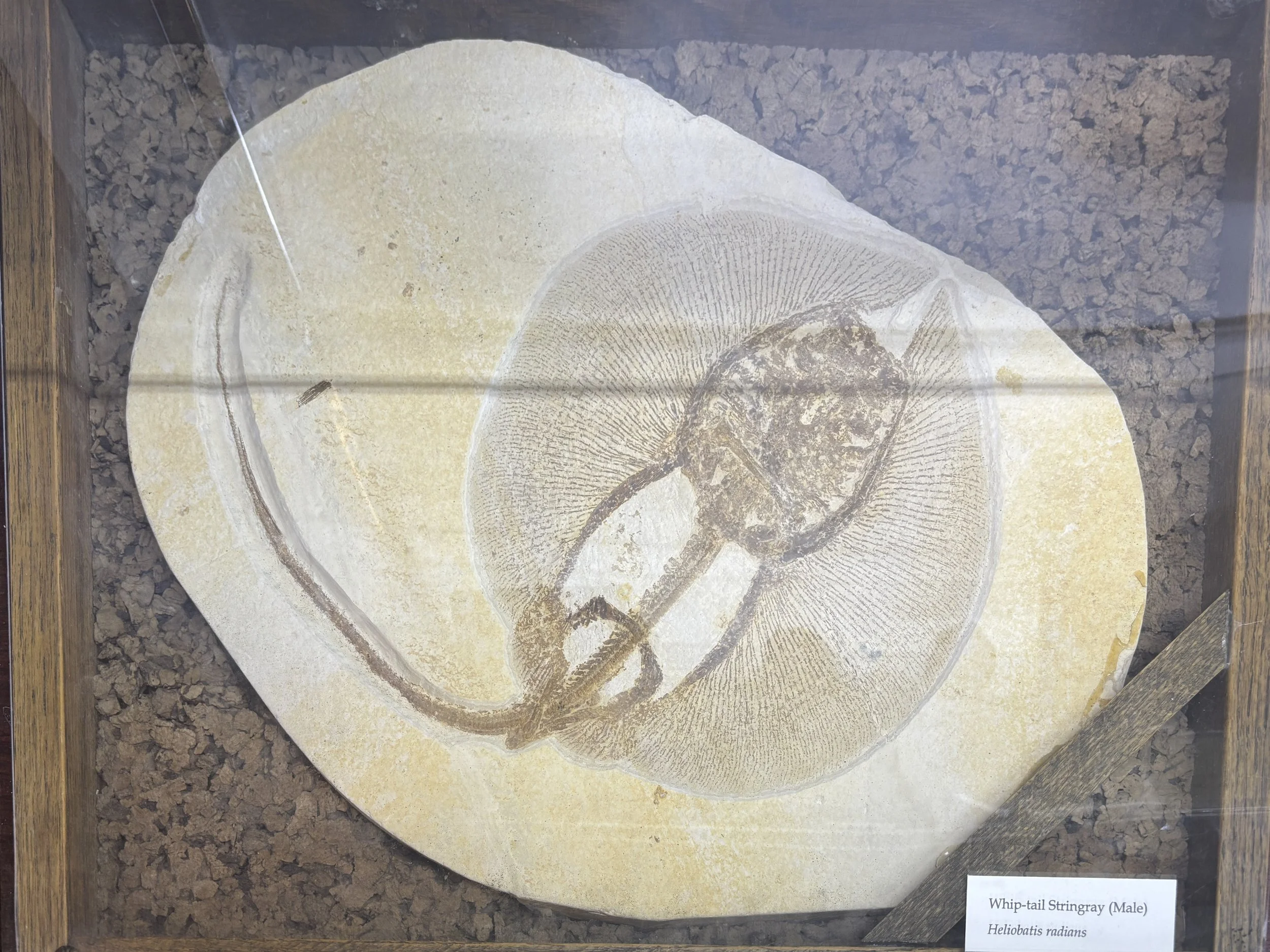
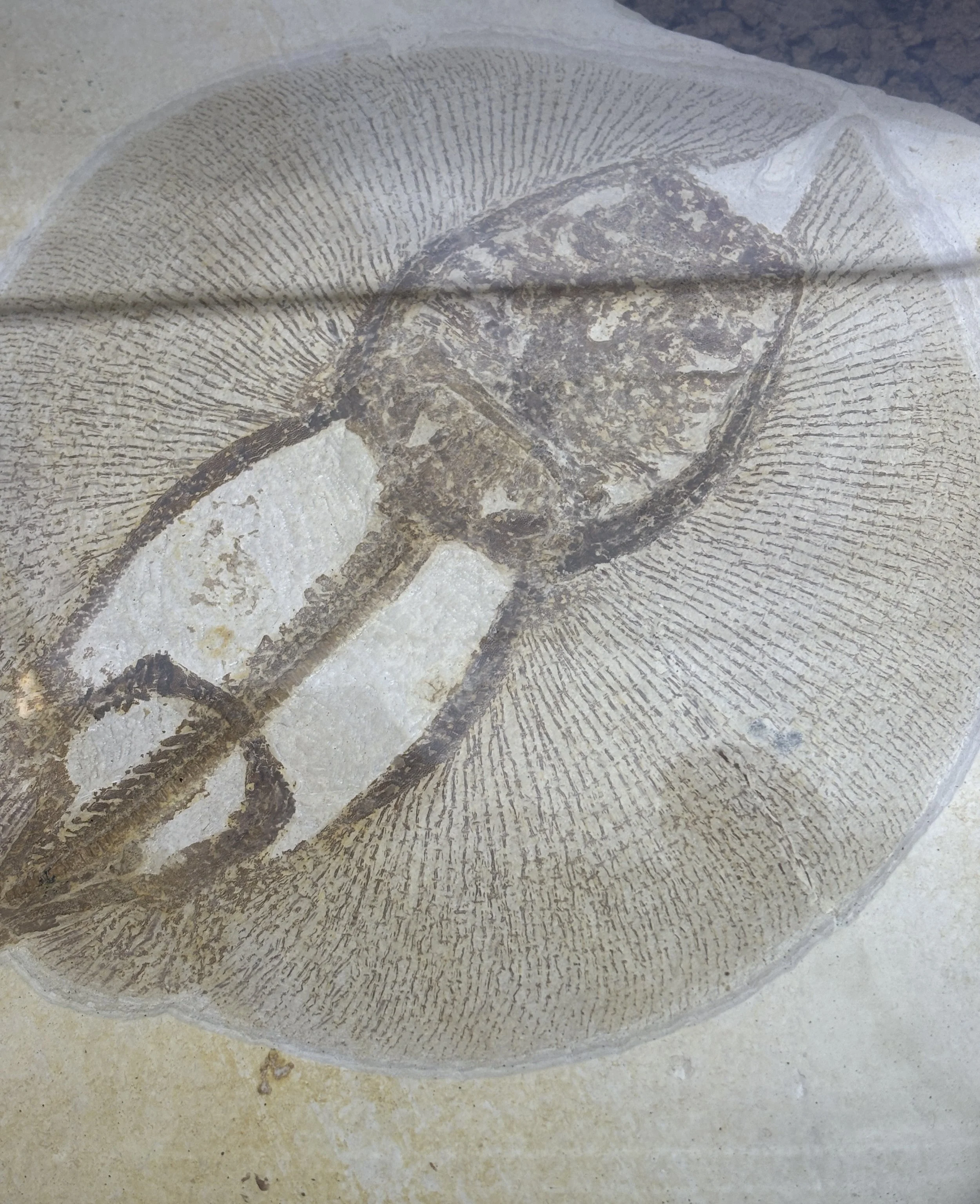
Whip-tail Stingray (Eocene)
Heliobatis radians was a freshwater stingray found exclusively in the fossil lakebeds of the Green River Formation in the Western United States. Like modern marine stingray species, Heliobatis radians has a flat body and barbed stingers on their long tails for defense. When not searching for food, these stingrays buried themselves in the fine-grained mud at the bottom of the lakes, which served to preserve a handful of these unique stingrays. The conditions for preservation were so optimal that even the radial pattern of their fin supports are sometimes present in the fossils. This striking pattern provided inspiration for their name, “Heliobatis”, which translates to “sun rays” in latin.
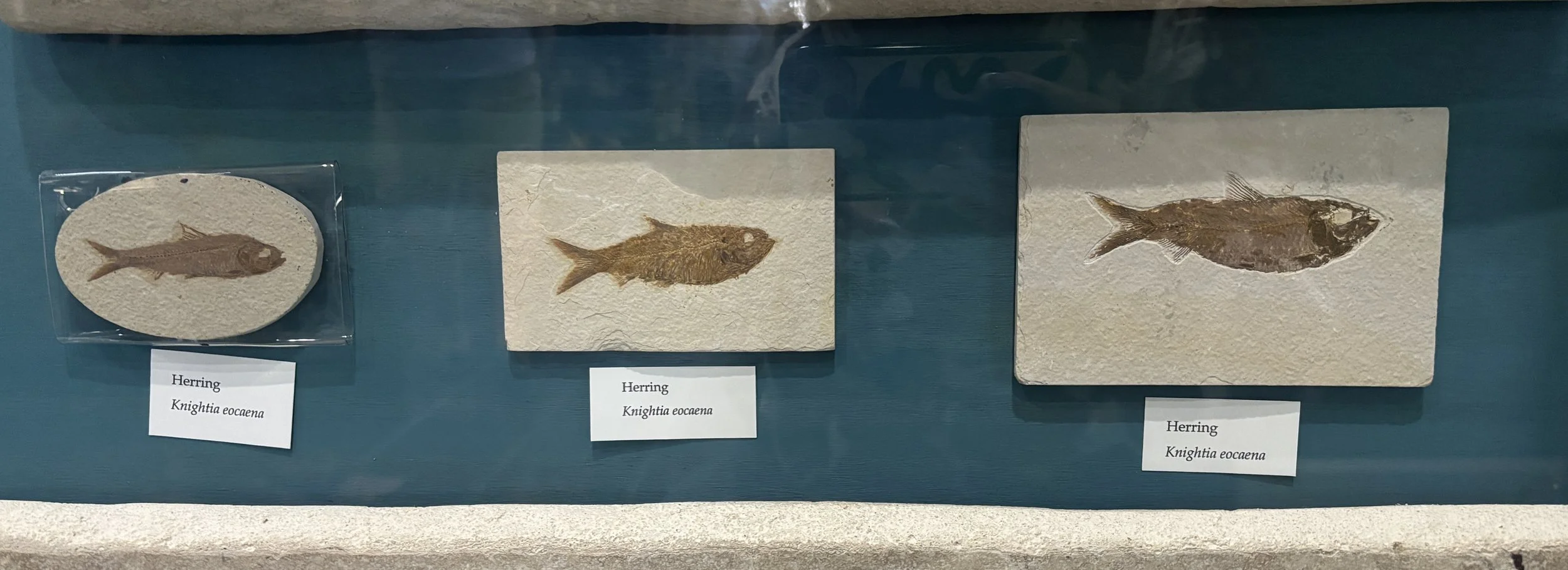
Knightia eocaena were small (typically 3 to 6 inches long) schooling fish whose fossils are largely found in the Green River Formation of the Western United States. Knightia eocaena were an integral part of the ecology of the region during the Eocene as they were the primary prey item for larger fish like Diplomystus dentatus as well as the various birds, snakes, and turtles that lived in or near the lakes. As such, their fossils are plentiful in the rock quarries of the Green River Formation and easily accessible for fossil collectors. Modern relatives of the Knightia eocaena like herring, sardines, and shads remain vital to commercial fish markets and marine food chains.
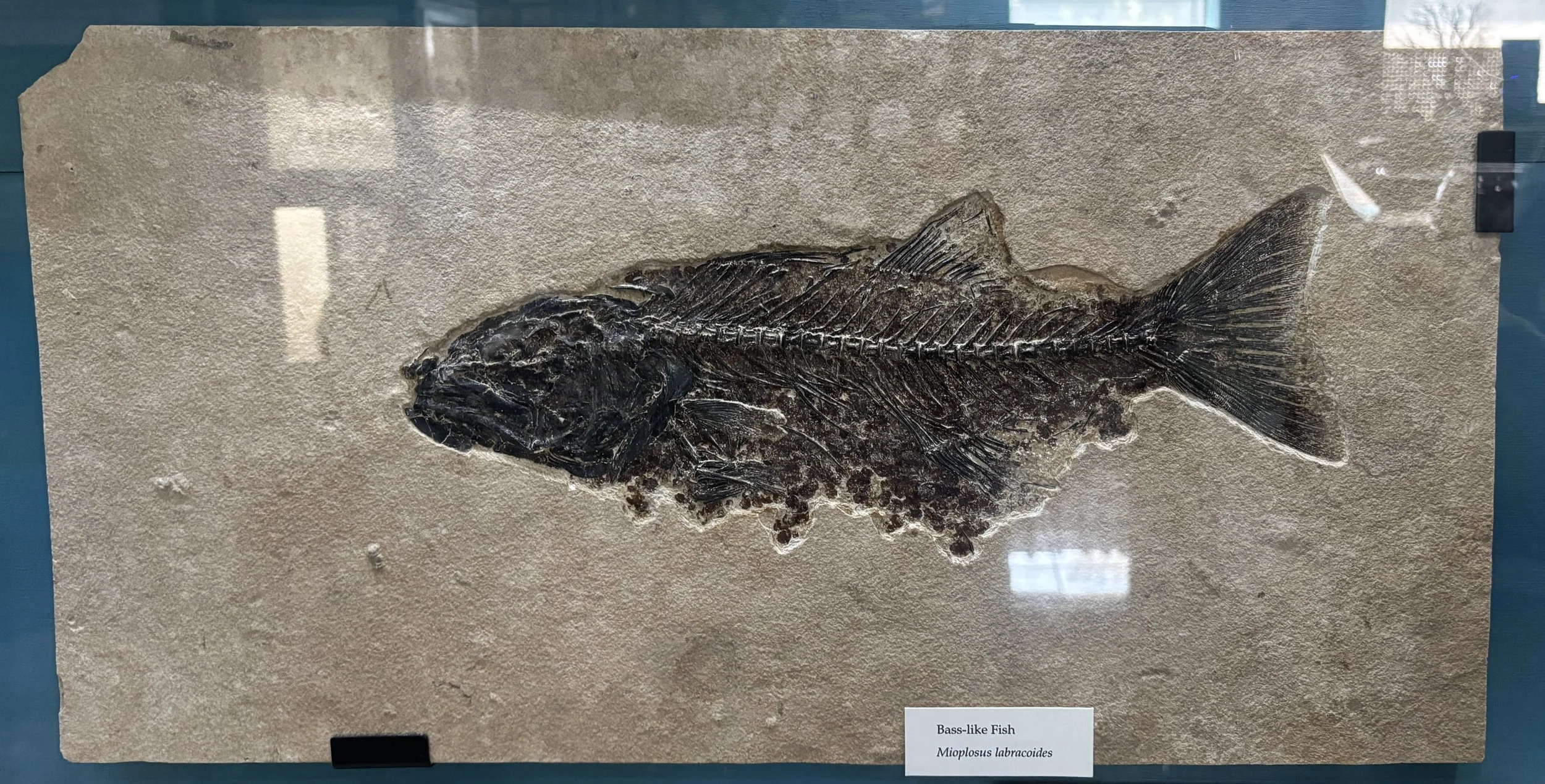
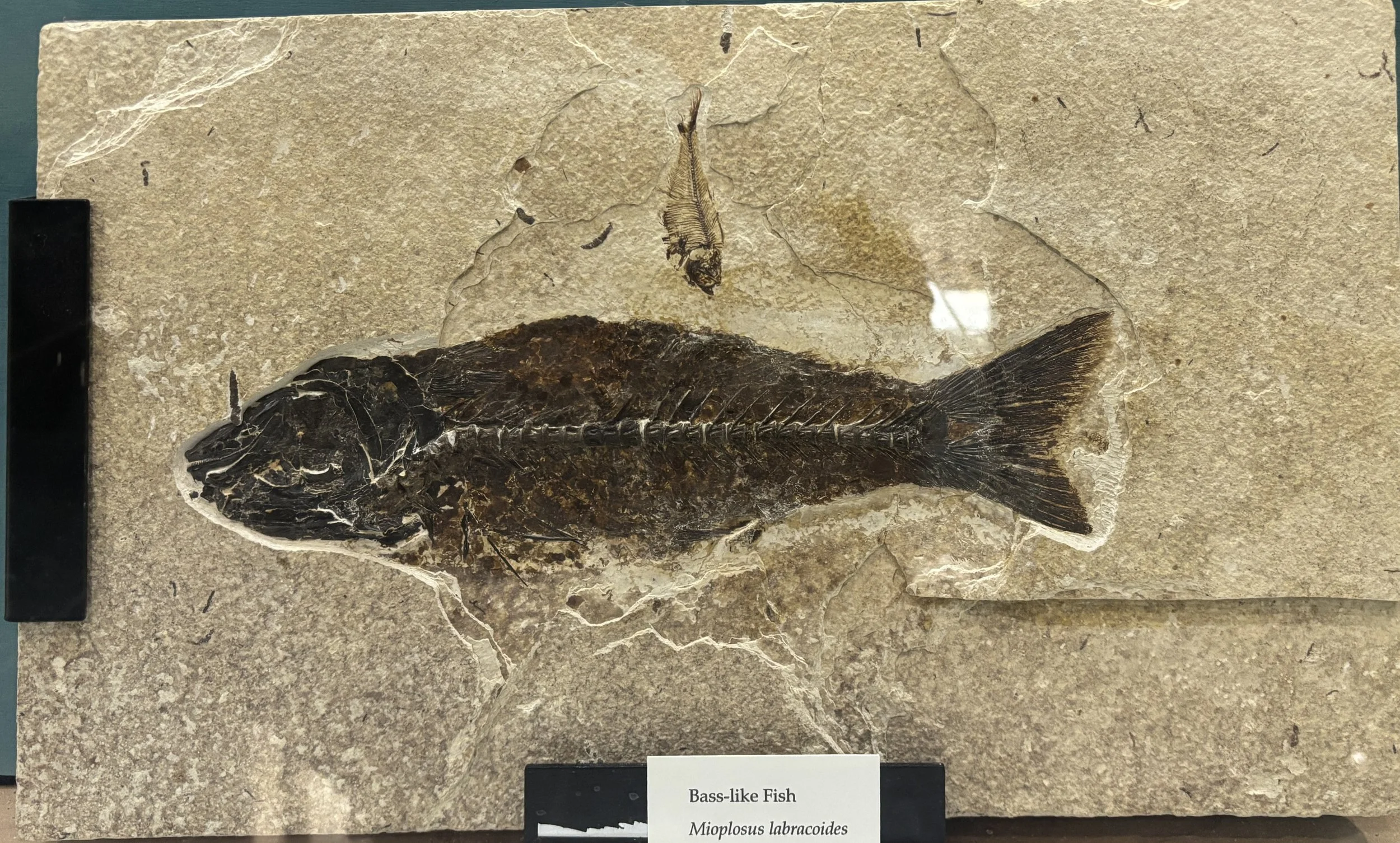
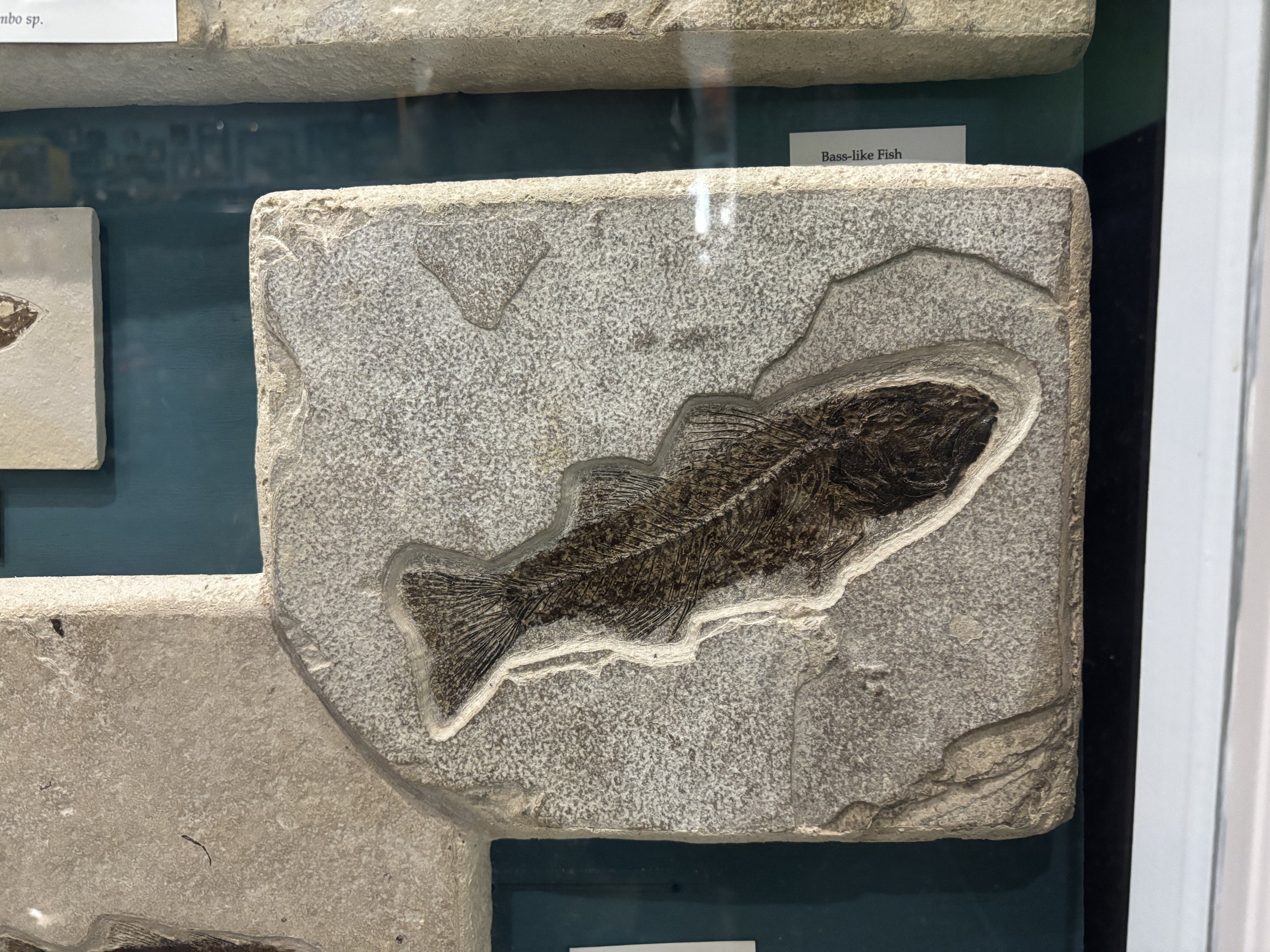
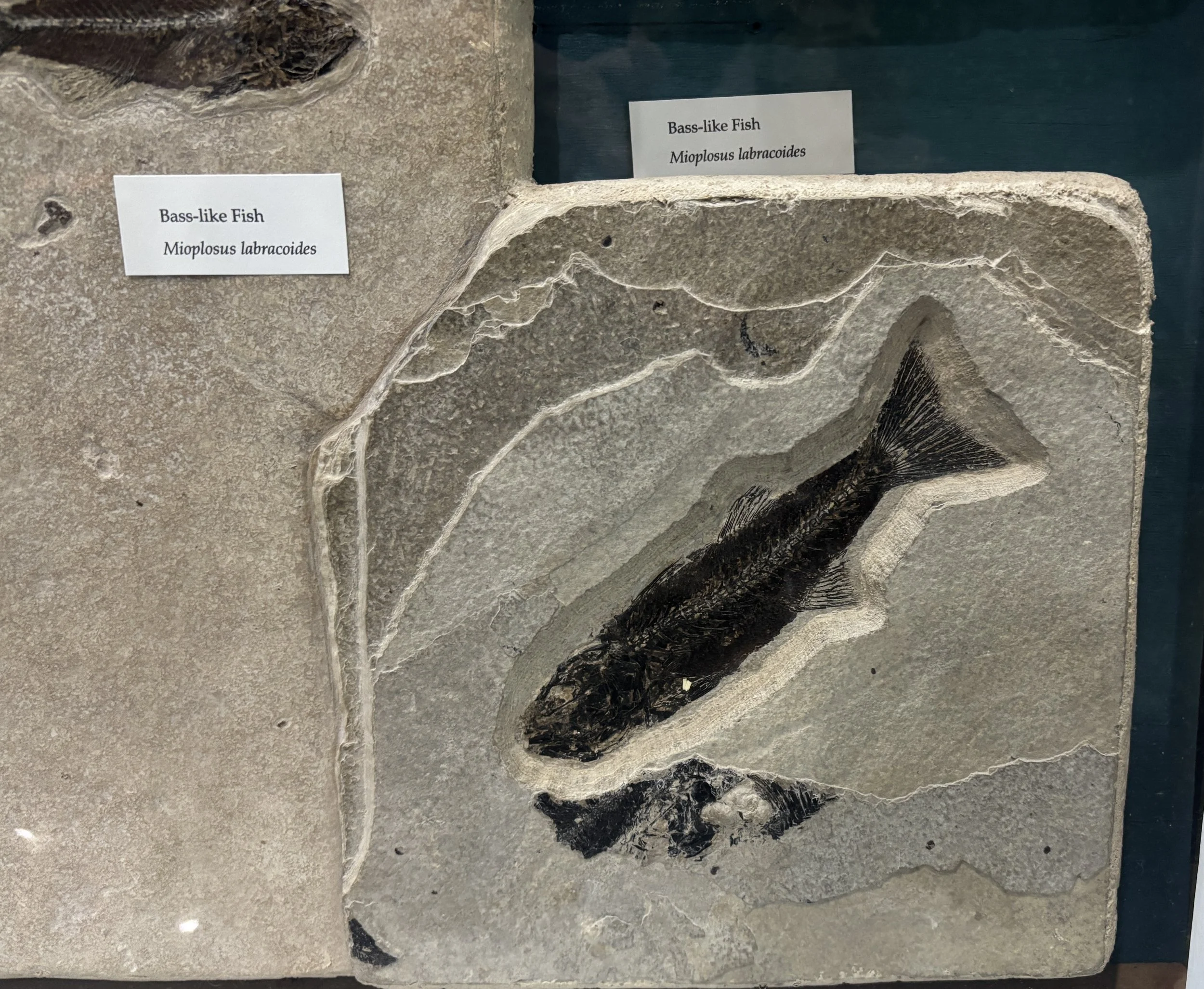
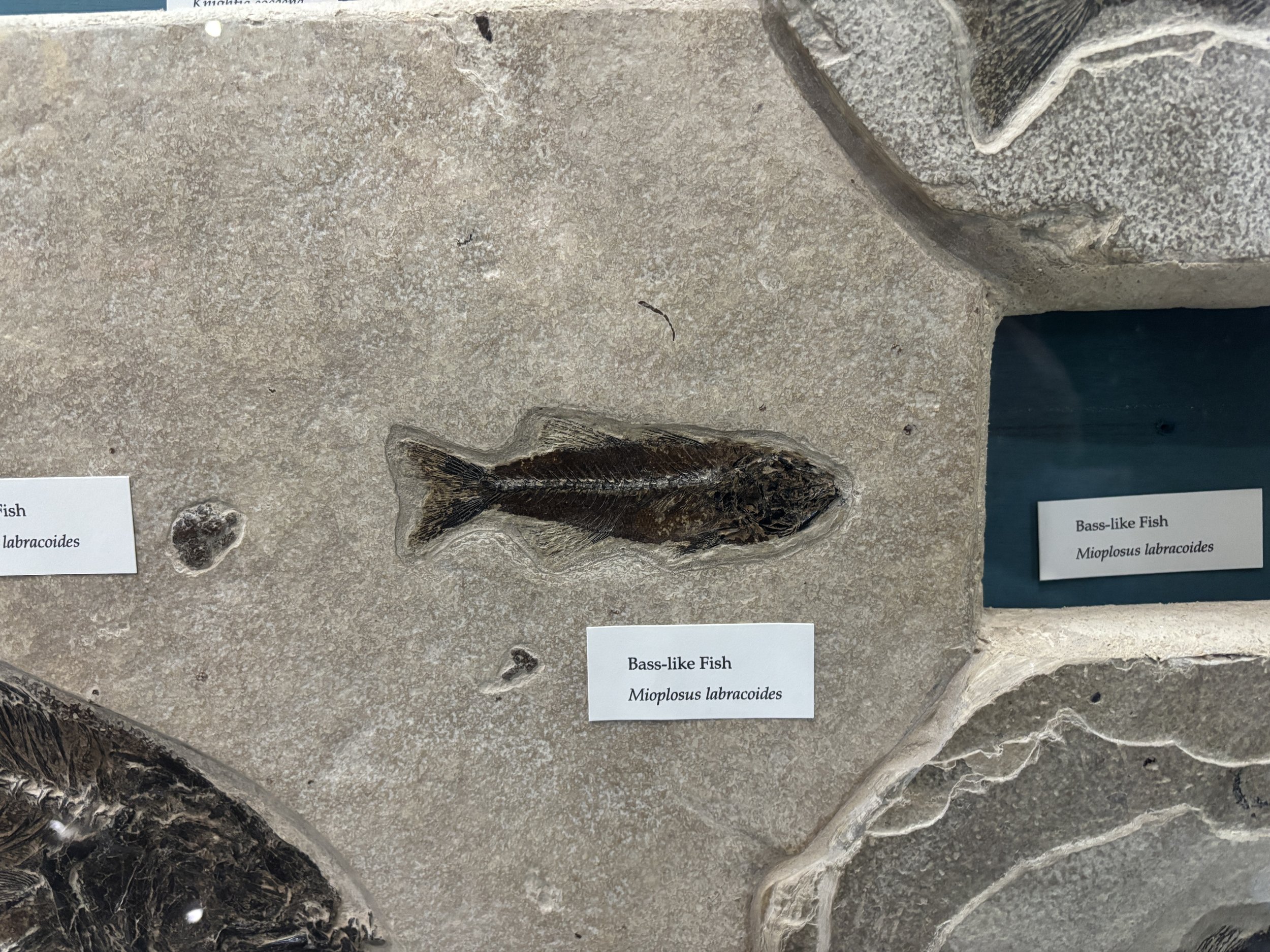
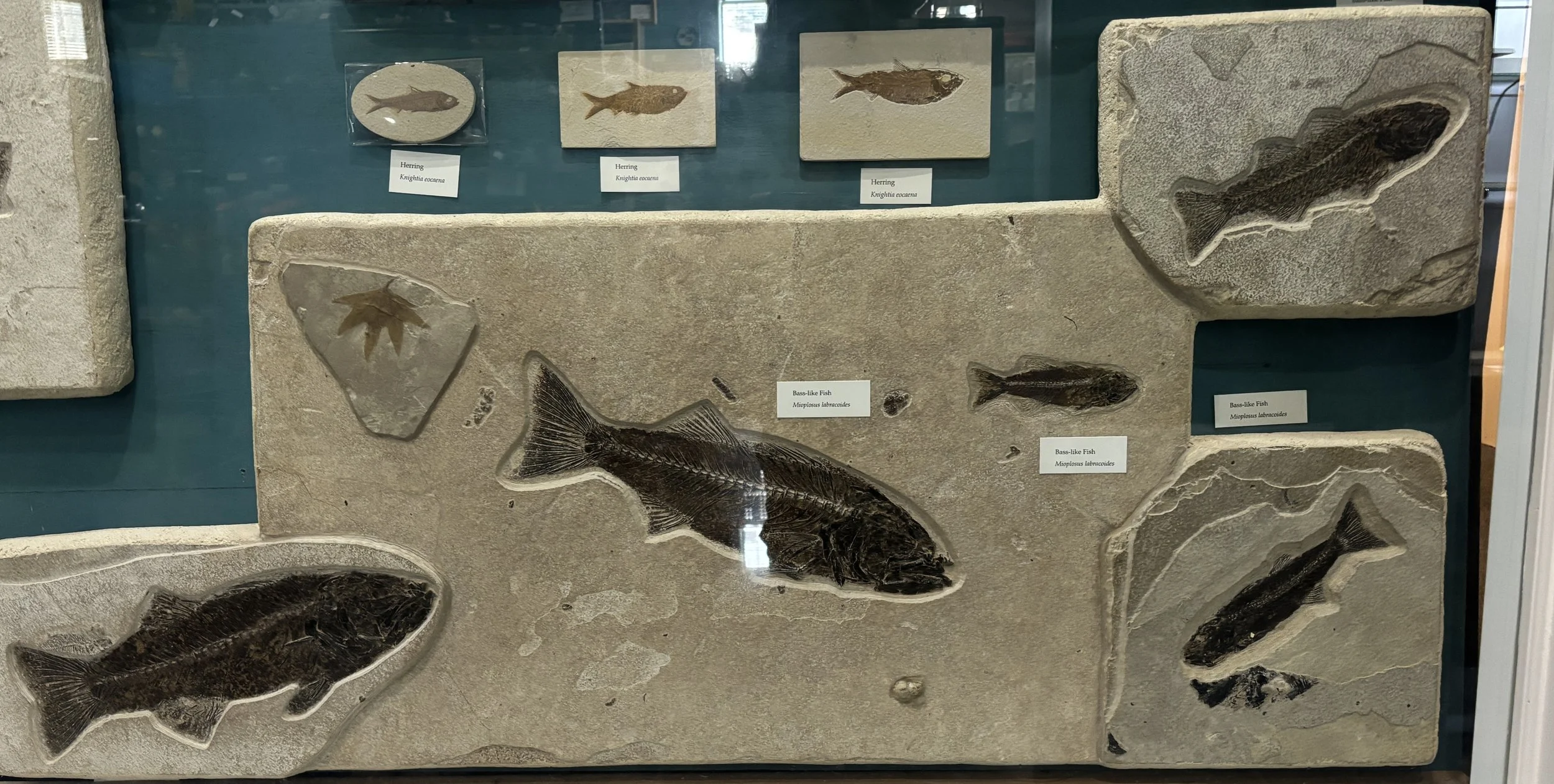
Mioplosus labracoides was a freshwater fish whose fossils are found almost exclusively in the ancient lakebeds of the Green River Formation. They grew to about 16 inches and are easily recognized by their elongated body shape and forked tailfins. Adult Mioplosus labracoides were likely solitary animals, as their fossils are not typically found near others of their species, but juvenile specimens of Mioplosus are often found within schools.
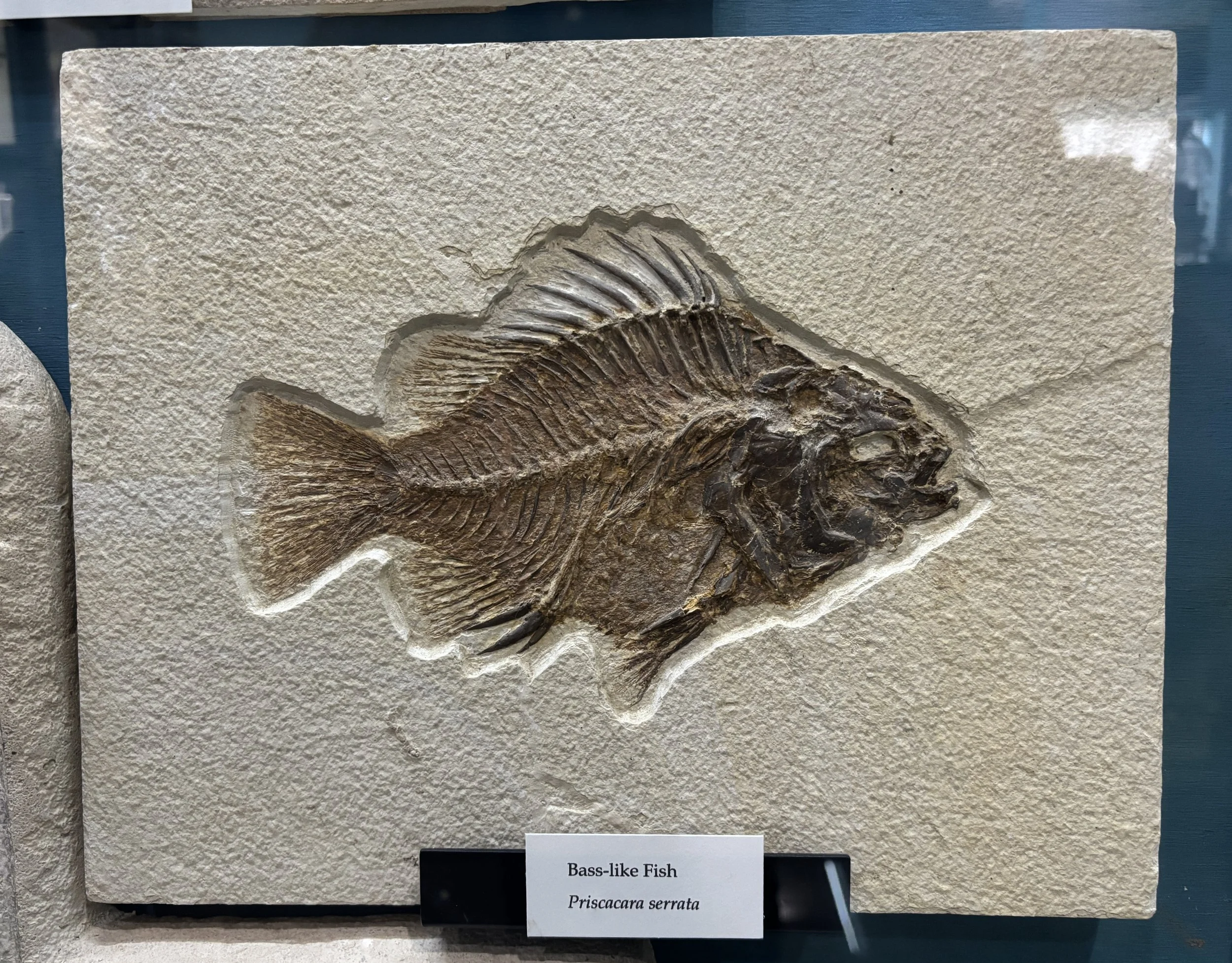
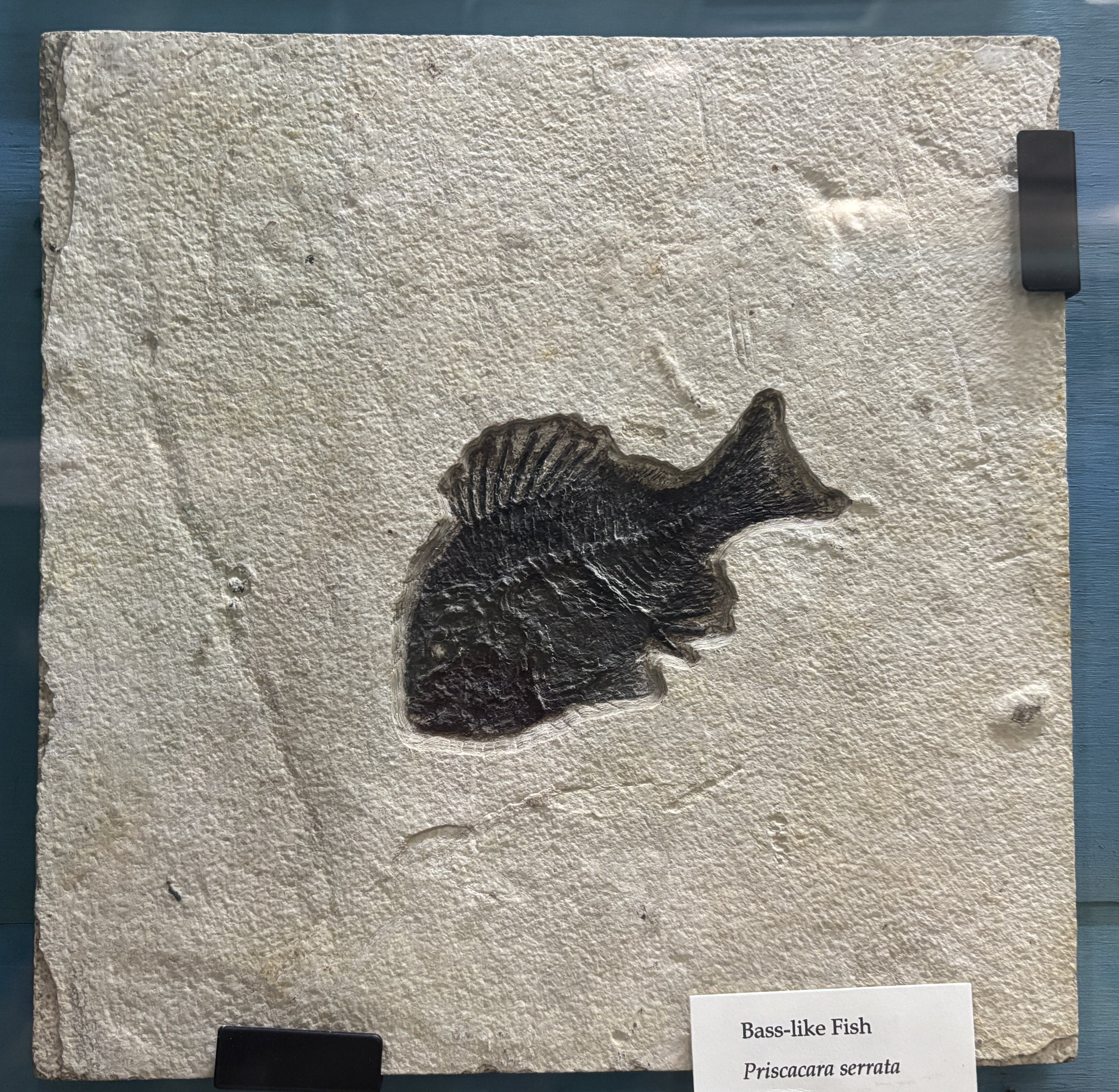
Priscacara serrata is an extinct species of bass-like fish whose fossils are found almost exclusively in the Green River Formation located in Western United States. These fish had striking dorsal spikes that make them a favorite among fossil collectors. They grew up to 16 inches and occasionally are found with smaller fish lodged in their mouth or throats, suggesting that they had a tendency to choke on larger food items. Their primary source of food was small arthropods and mollusks and possessed tooth-pads in their throats that helped grind up the hard components of their prey.
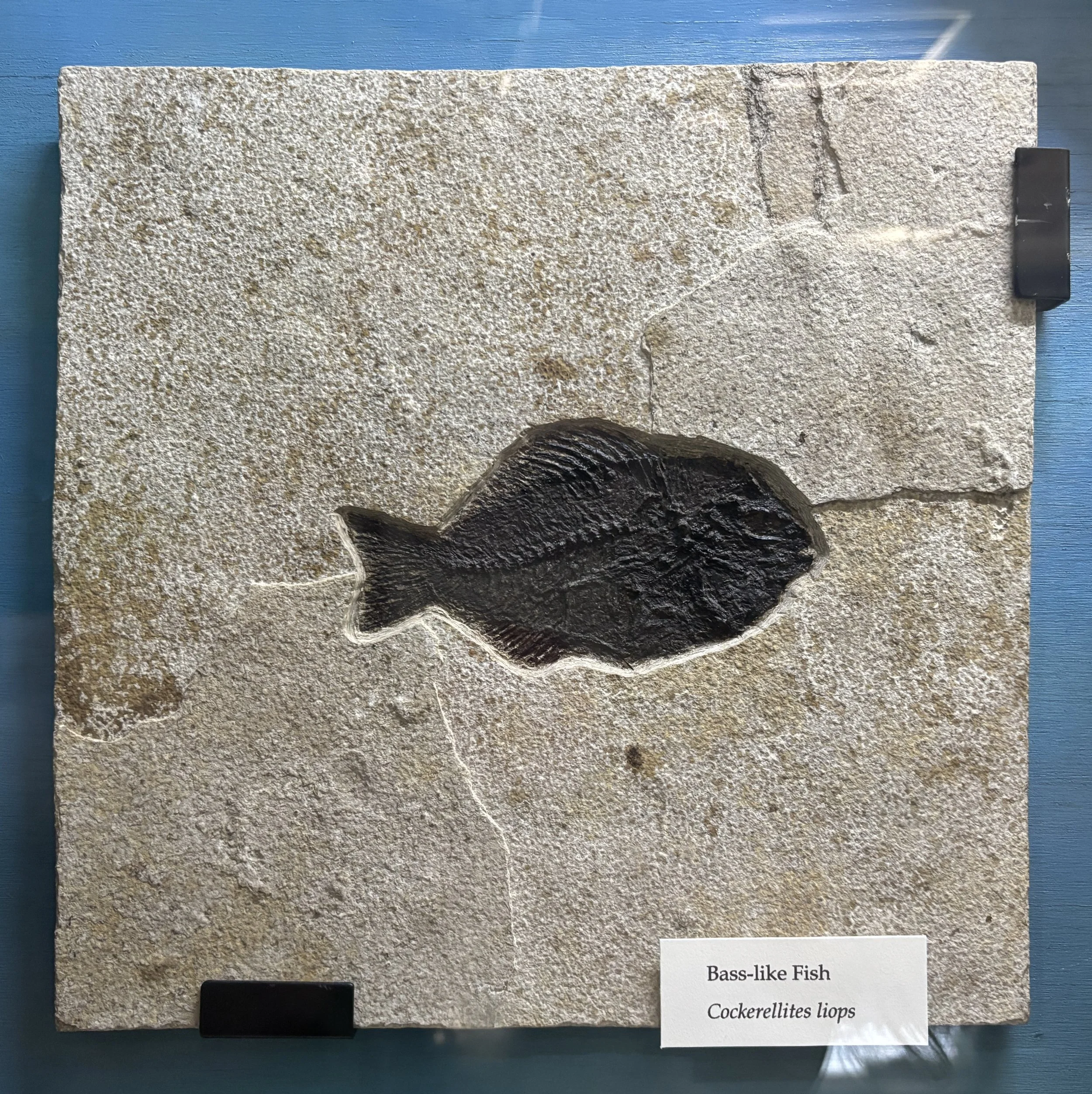
Cockerellites liops is an extinct species of schooling fish that lived in the lakes of the Green River Formation during the Eocene epoch. These fish were small with rounded, sunfish-like profiles, growing up to 6 inches in length. They had small mouths and are assumed to have fed on zooplankton and insects. They are known for their prominent spiny dorsal fins that were likely used both for defense and stabilization while swimming.
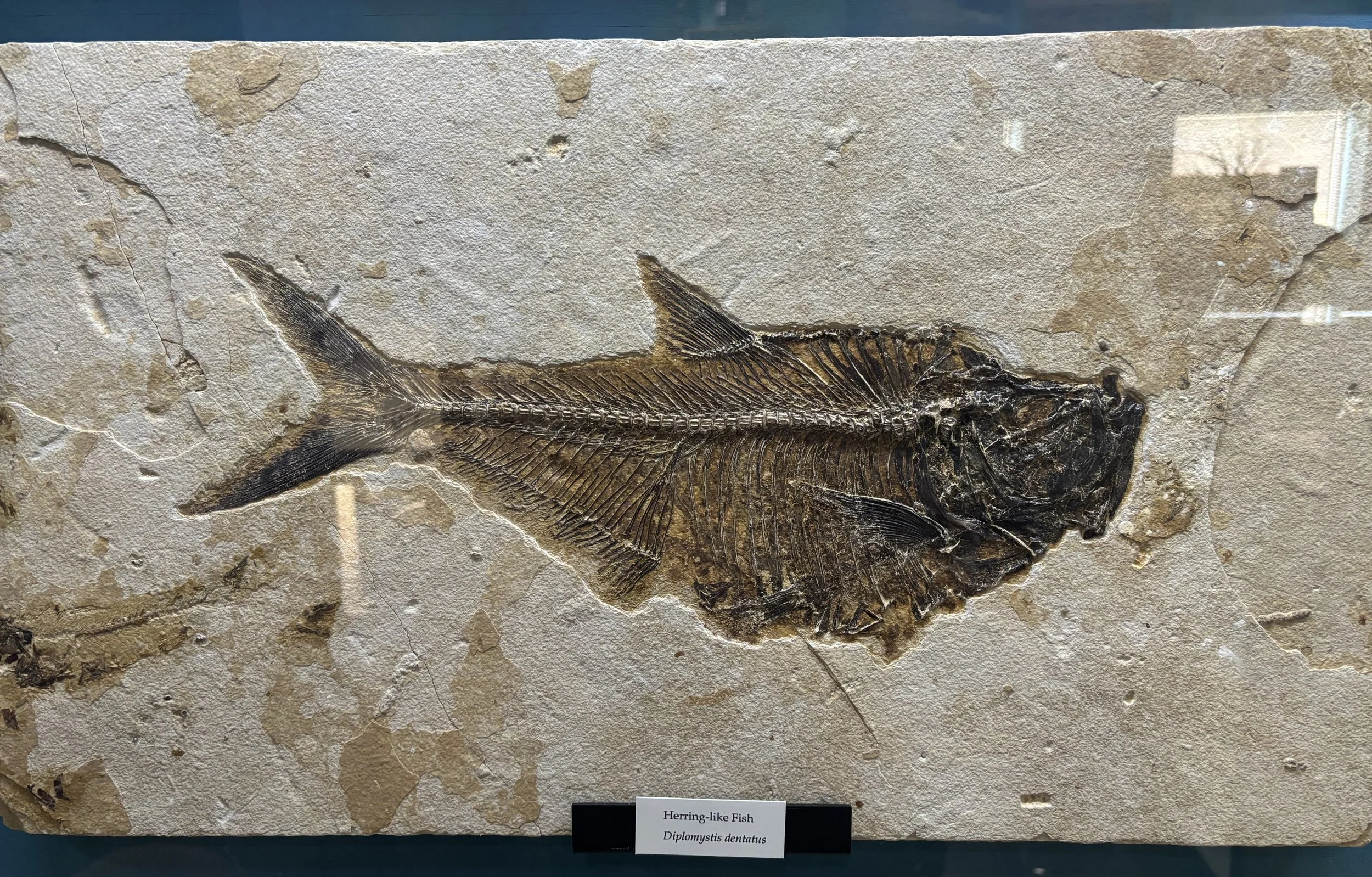
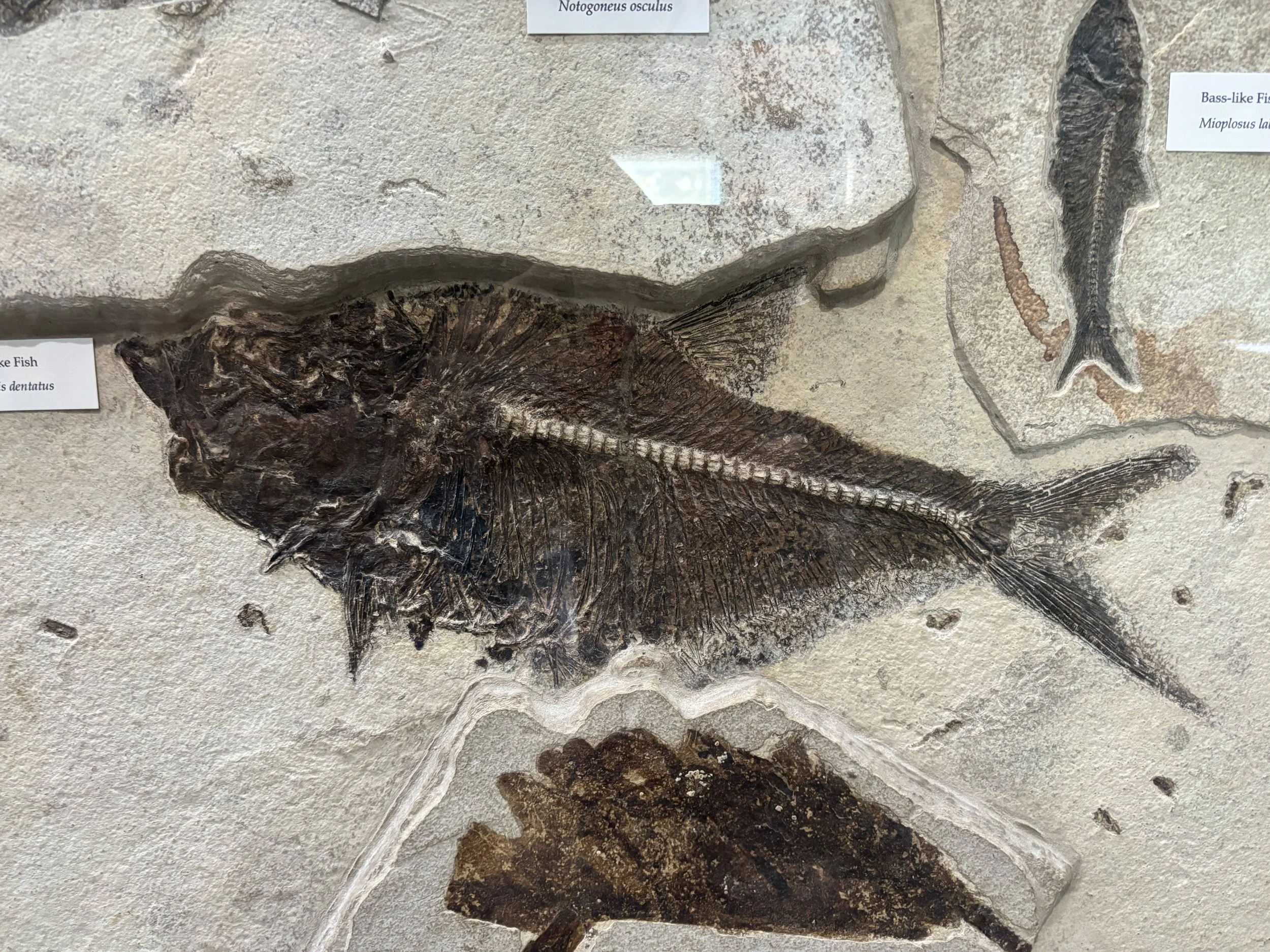
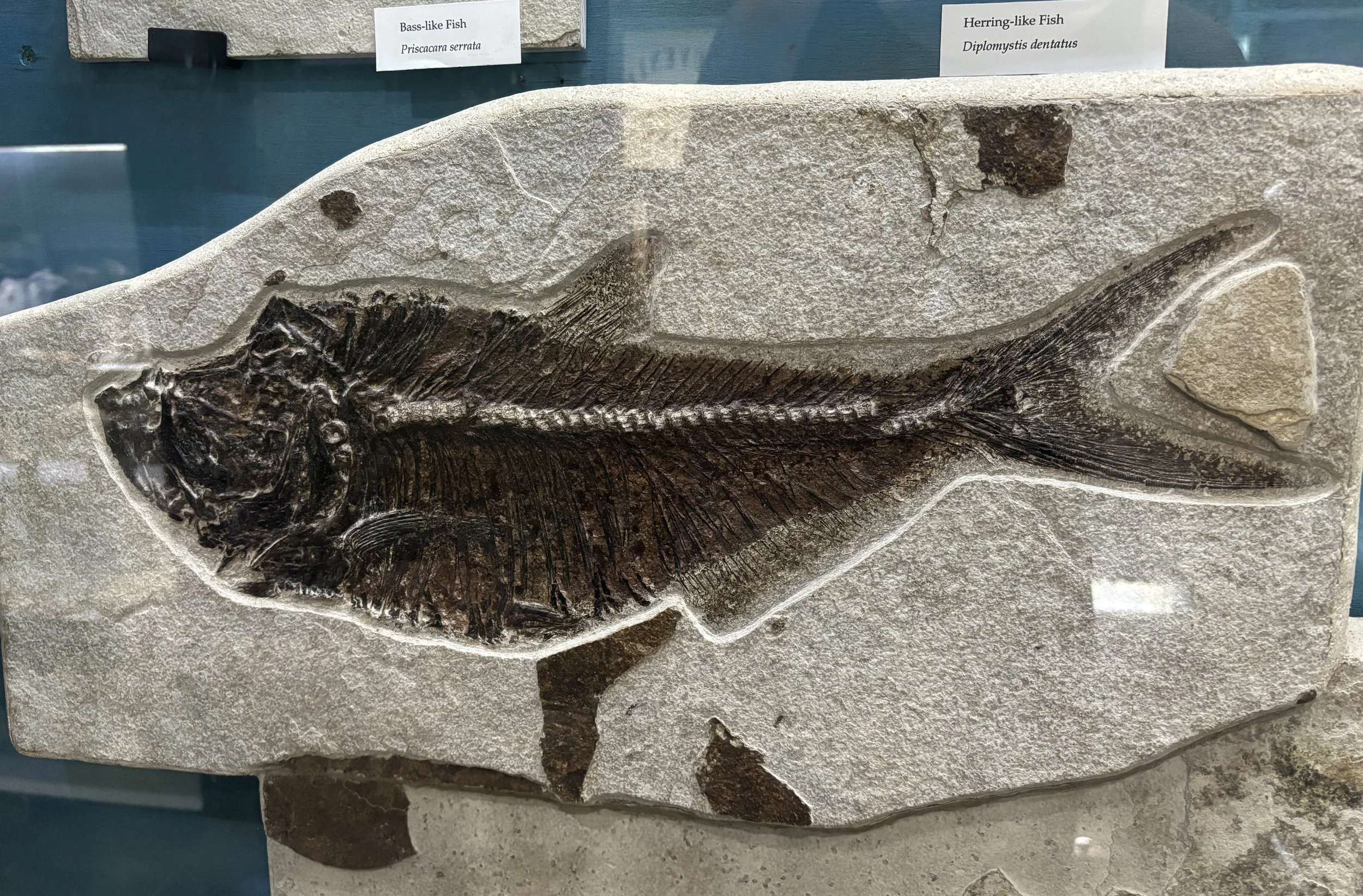
Diplomystus dentatus was a freshwater fish whose fossils are commonly found in the Green River Formation of the American West. It was distantly related to modern herrings, sardines, and anchovies. Their upturned mouths were perfectly shaped for feeding on smaller fish that congregated near the surface of the water from below. In fact, the fossils of Diplomystus dentatus are often found with Knightia eocaena fossils in their mouths, throats, and stomachs.
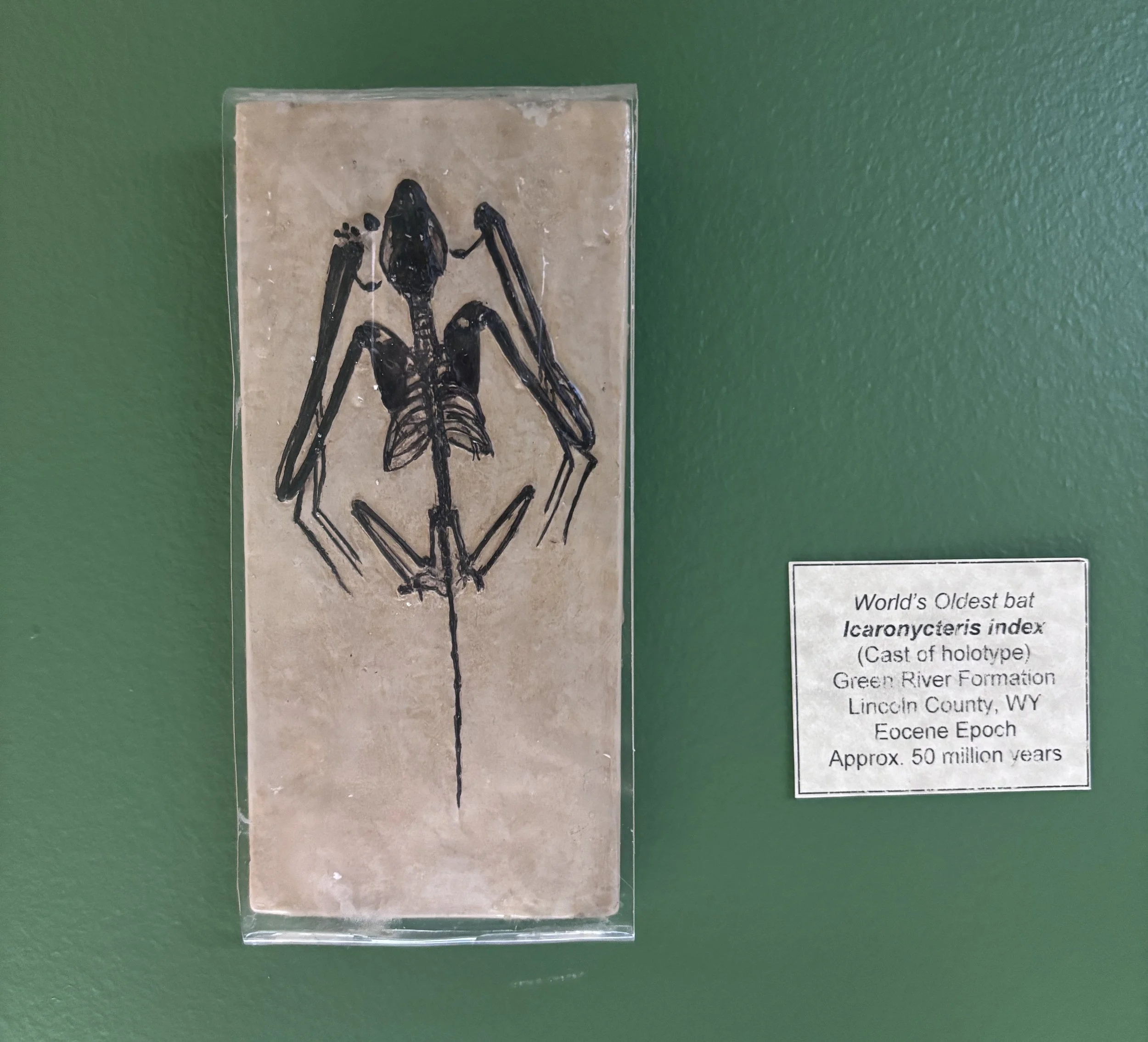
Icaronycteris index is an extinct species of bat that is found exclusively in the Green River Formation in the American West. The genus Icaronycteris contains the oldest species of bats ever found (about 50 million years old) and has been instrumental in teaching us about the evolution of bats. Because bat bones are lightweight and delicate, there are currently no complete specimens of older relatives of the Icaronycteris index (and the slightly older Icaronycteris gunnelli), which shrouds the bat lineage in mystery. The fine grain of the Green River Formation’s sediment has allowed for a few complete preserved skeletons of these early bats, and hopefully their prior lineage will be discovered in future excavations.
What is known is that these first true bats were small, used echolocation to hunt insects in midair, had long tails, a claw on their thumb and index ‘fingers’, and had membranous wings.
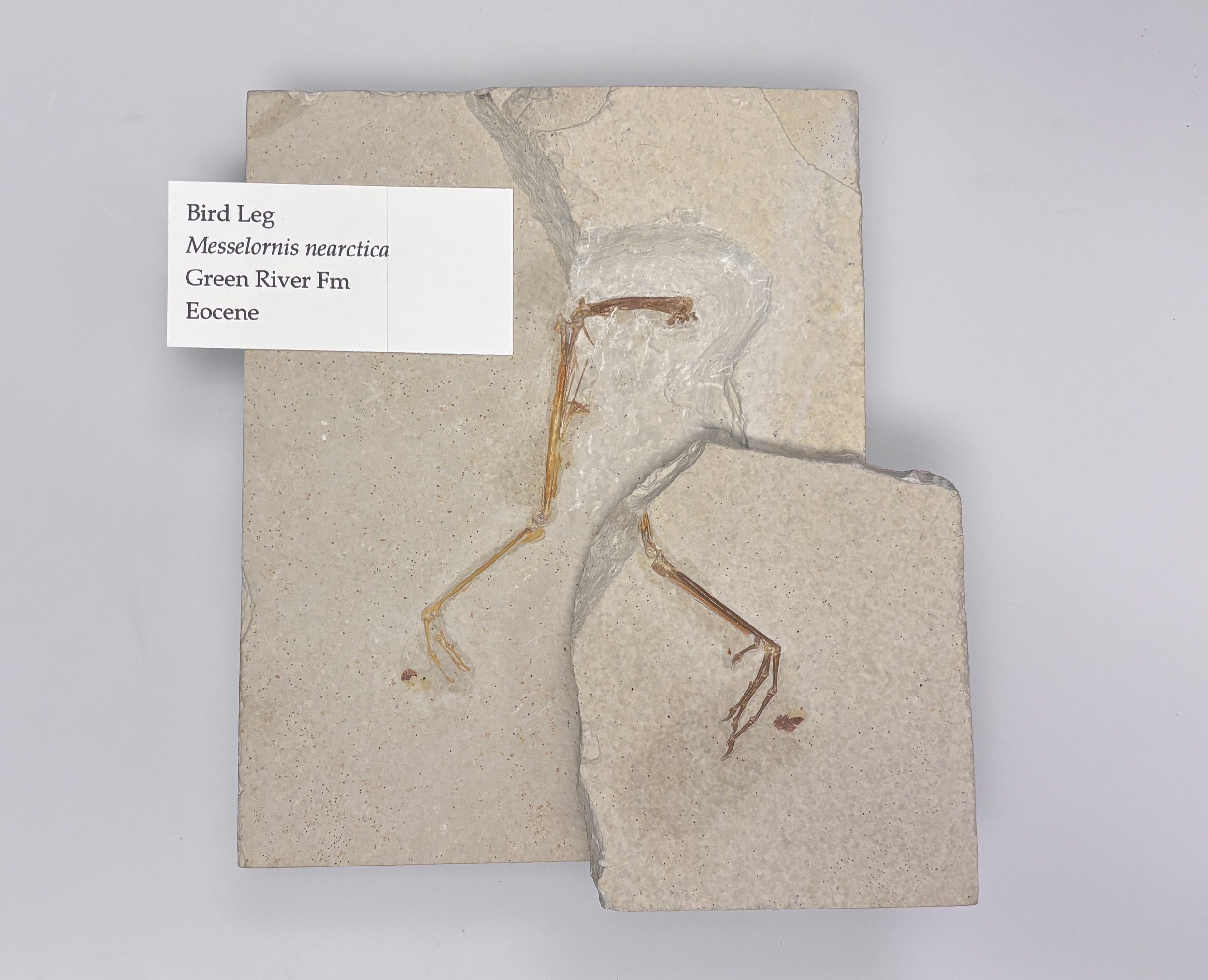
Messelornis nearctica was a terrestrial bird which was likely non-adept at flight. It was omnivorous and ate fish, fruits, and seeds. Messelornis nearctica is one of several bird species associated with in the Green River Formation in the American West.
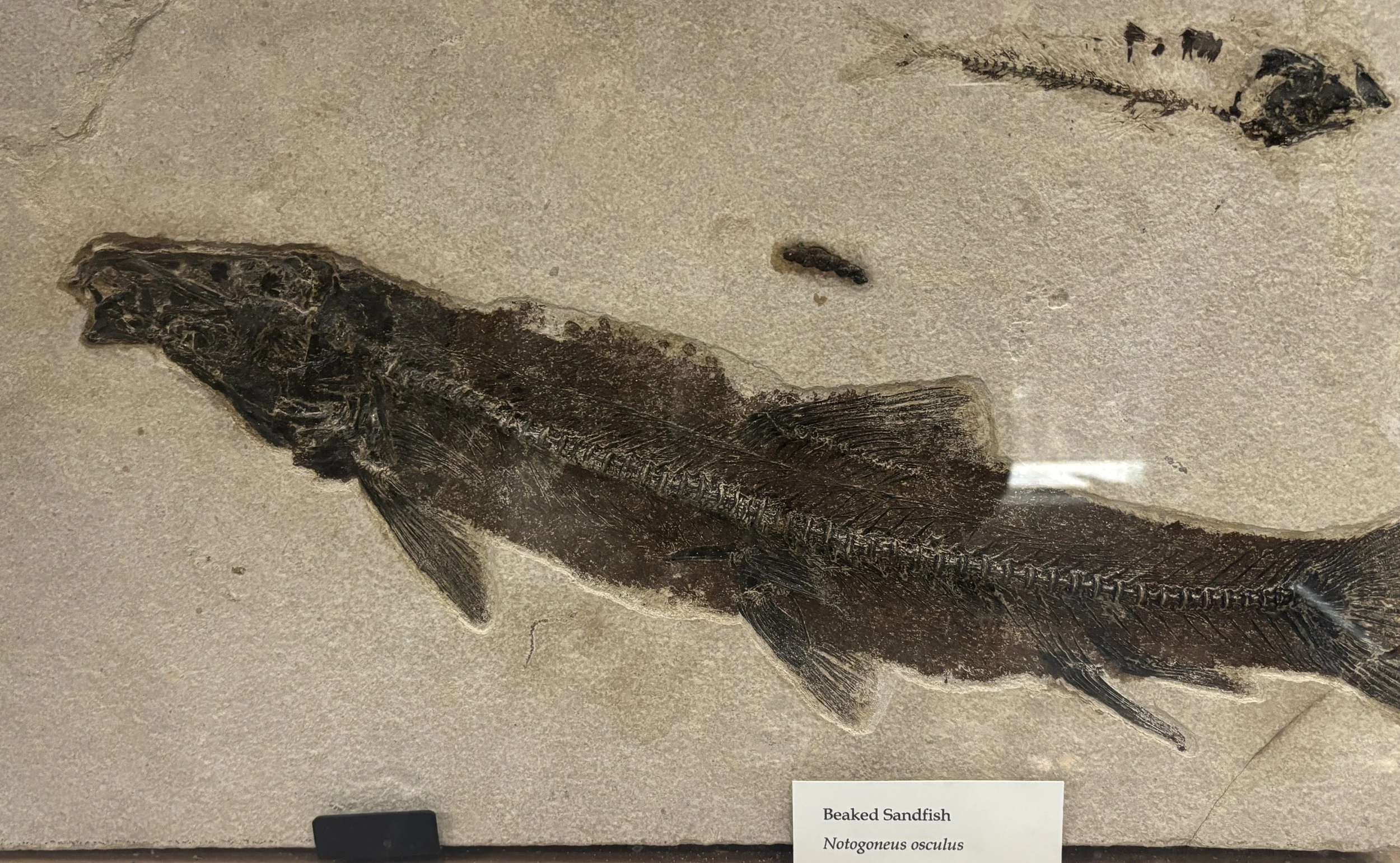
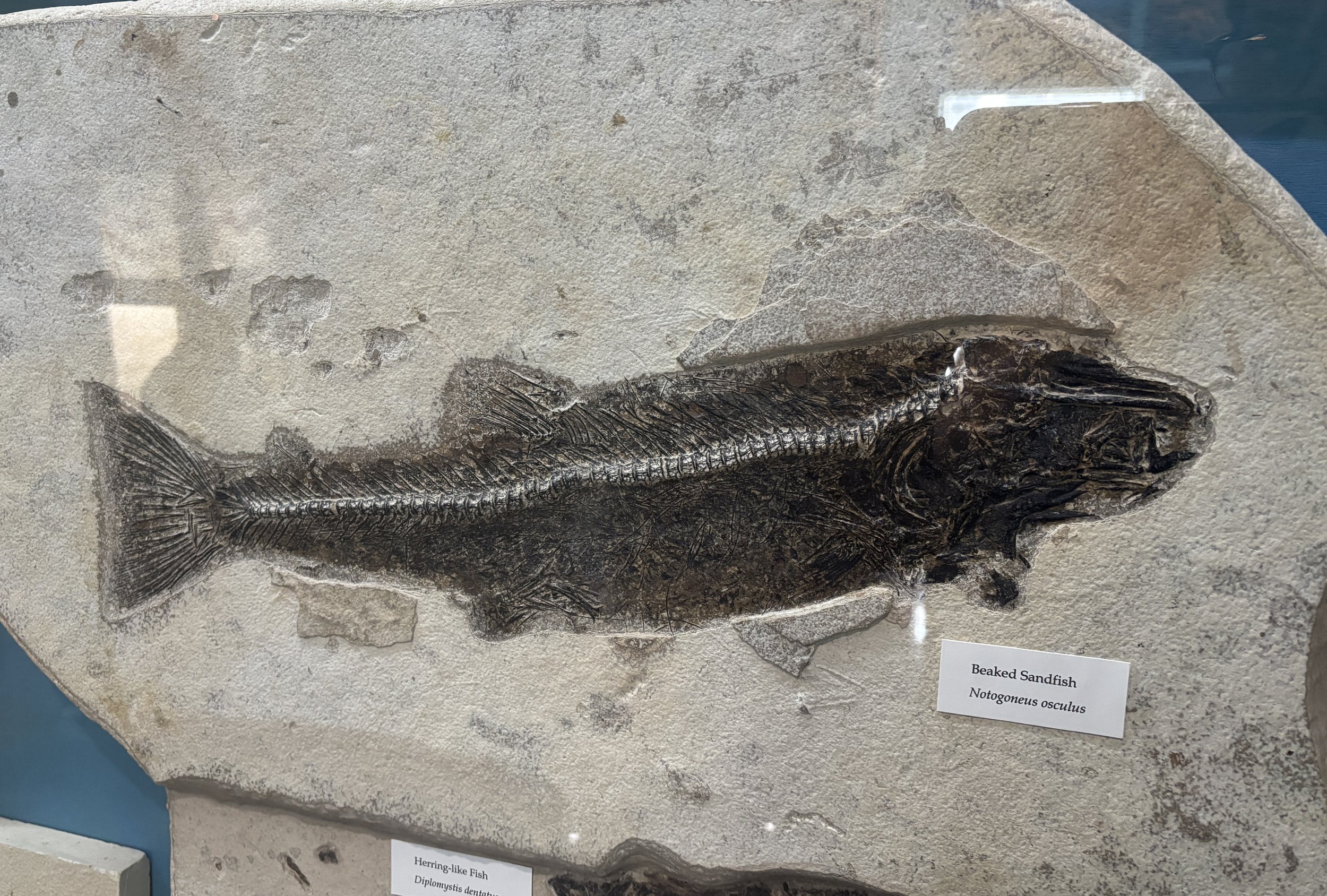
The Notogenus osculus was a bottom feeding fish found in the Green River Formation of the American West. It had a toothless mouth that essentially vacuumed detritus off the lake floors and grew up to about 35 inches long. The large quantity of sub adult fossils (about 18 inches long) of Notogenus osculus found in the ancient lakebeds of the Green River Formation suggest that these fish likely spawned in the lakes before continuing their journey down connecting streams and rivers for the rest of their life cycle.
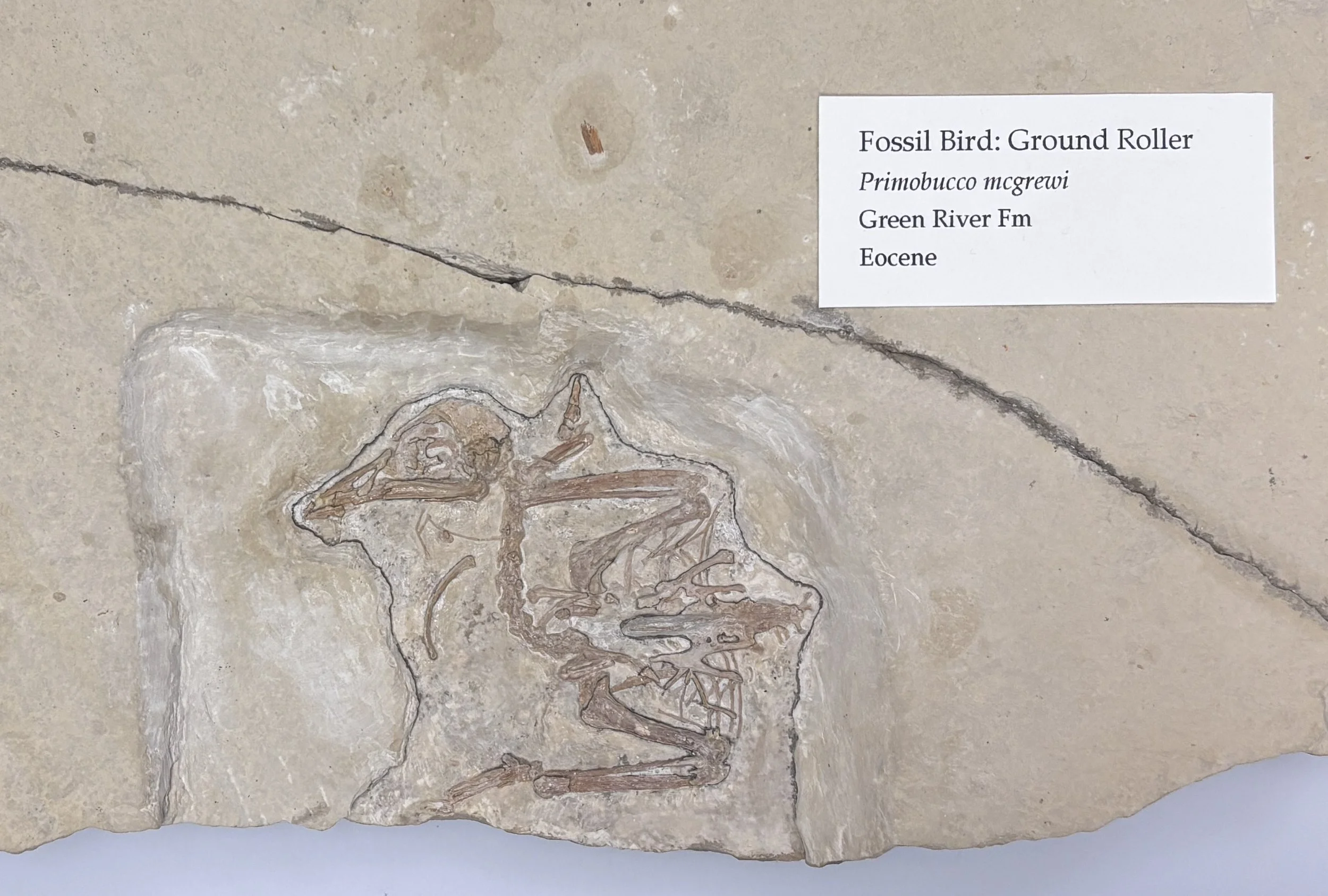
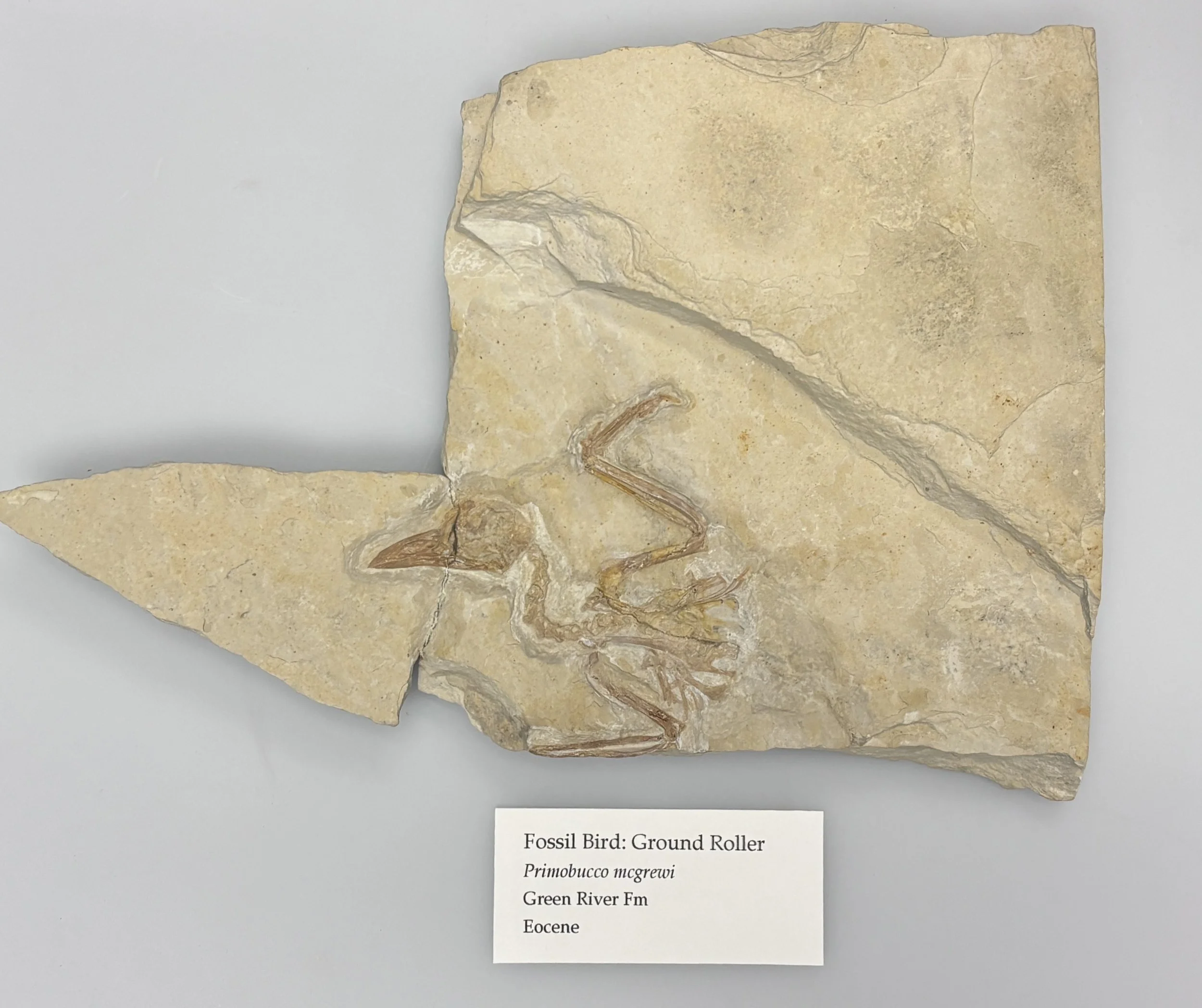
Primobucco mcgrewi was a small, long-legged roller (a bird group defined by their intricate arial maneuvers during courtship). Rollers like Primobucco hunt insects mid-flight, as well as small amphibians and snakes.
The specimens pictured here were prepared by hand in the Earth Experience Paleo Lab.
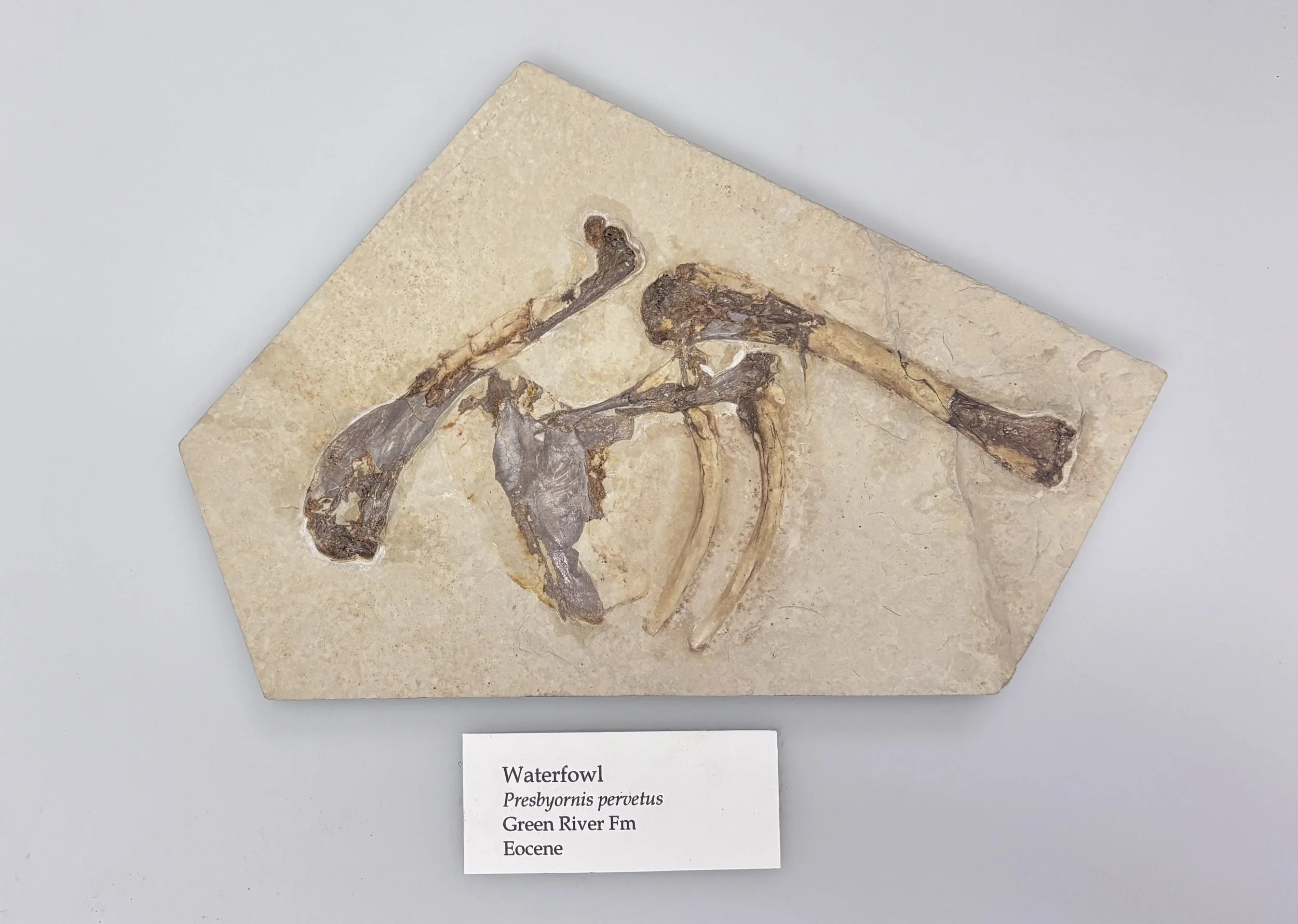
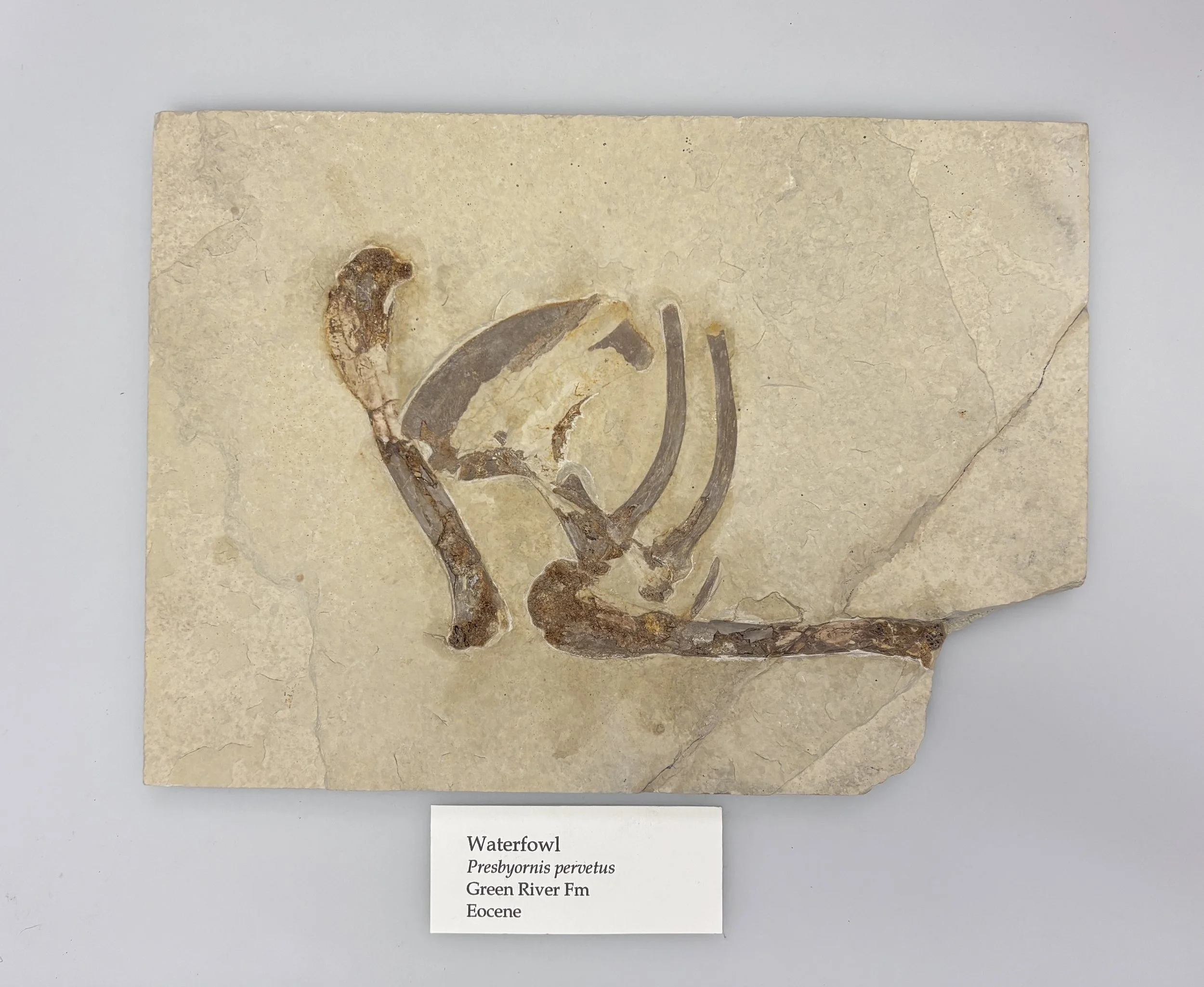
Presbyornis pervetus was a long-legged waterfowl that filter fed along the shorelines of the lakes that made up the Green River Formation environment with its duck-like beak. It was a member of the Anseriformes family, meaning it was related to modern ducks, geese, and swans.
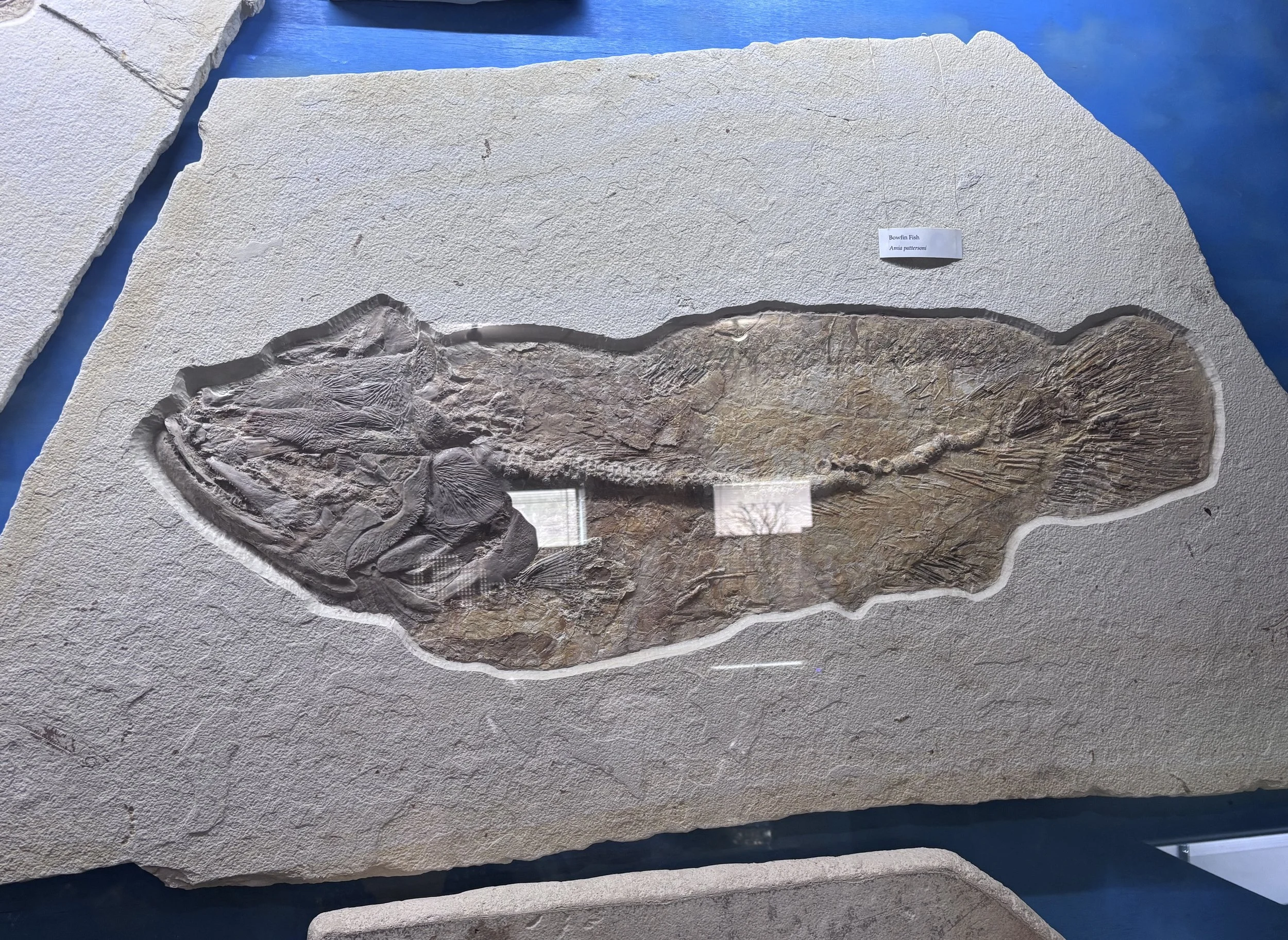
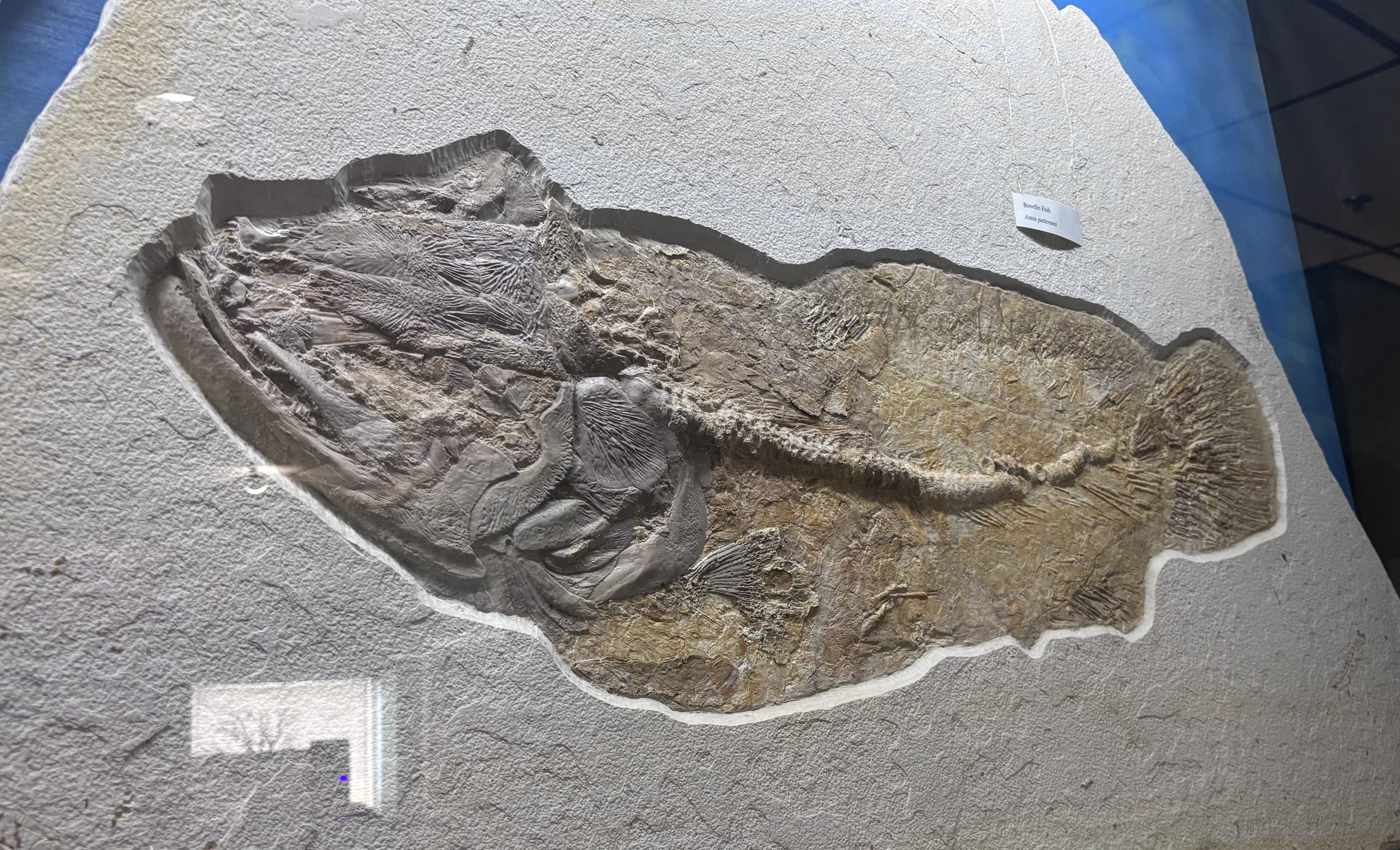
Amia pattersoni was a large bowfin fish–– so called because of the arcing curve of their dorsal fin –– that lived throughout North America, Asia, and Europe from the late Cretaceous to the early Eocene. They are one of several bowfin species found in the Green River Formation. They were predators of the freshwater environs of Green River and are often found fossilized with smaller fish in their mouths or stomachs.
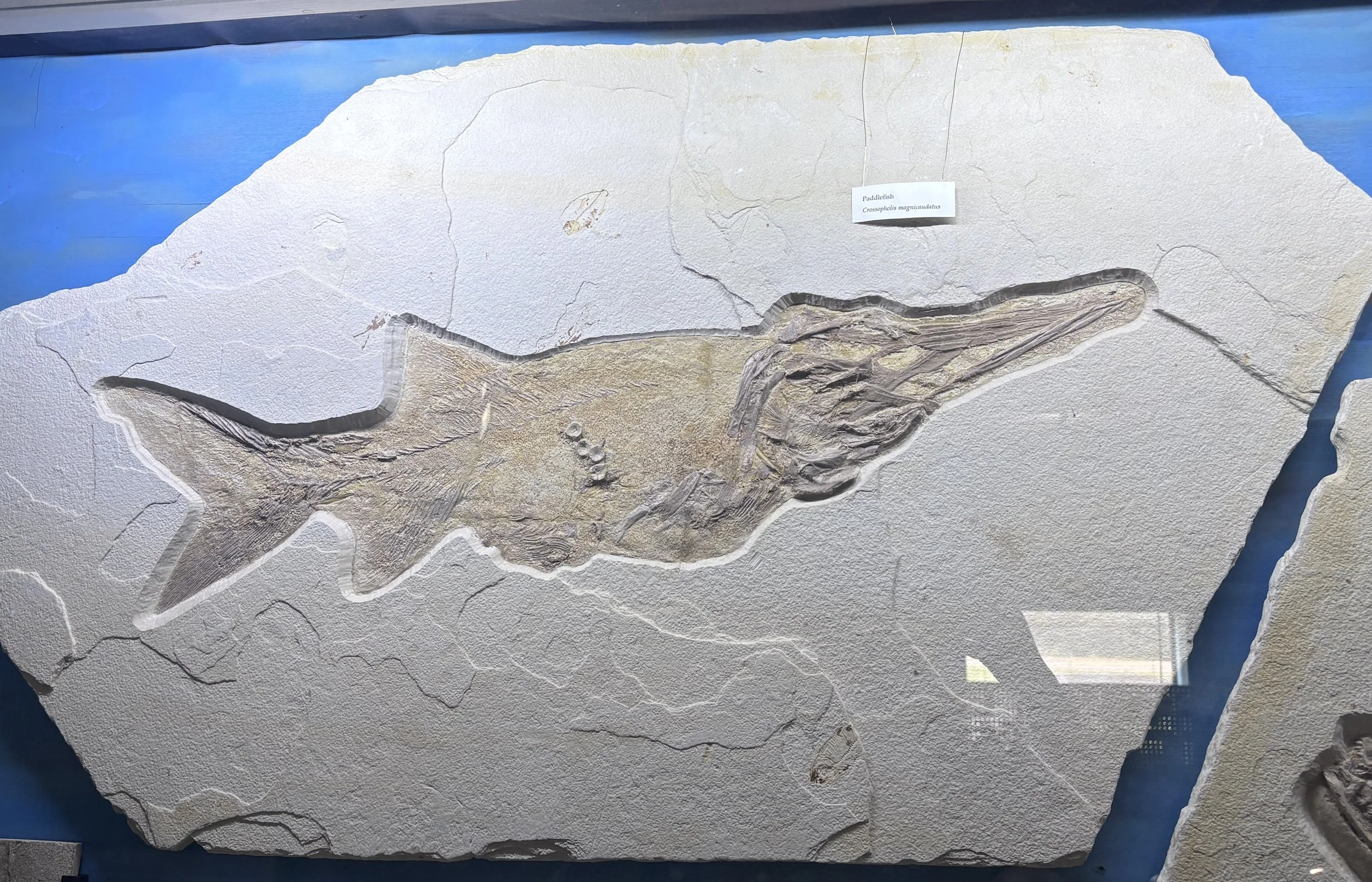
Paddlefish are a relatively rare find in the Green River Formation, making up only 0.02% of the fish fossils excavated there. Specimens of the Crossopholis magnicaudatus range from about 1 to 5 feet in length and had a bony protrusible jaw (jaws that lunge forward independently of the skull) used to hunt smaller fish, unlike its closest modern relative, the Polyodon, which exclusively filter feeds.

Brittle Stars are echinoderms (related to sea stars, urchins, crinoids, etc.) which use their long, serpent-like arms to crawl across the ocean floor or swim through the water. They can look very similar to sea stars but can be differentiated by their distinct central body disk and thin flexible arms, which are often covered in spines. If attacked, Brittle Stars can defensively drop their arms to make their escape and live to regenerate them another day.


Stromatolites form when carpets of microbial life (usually cyanobacteria) are covered with a layer of sediment. That layer is then repeatedly covered by more cyanobacteria, which is covered by more sediment, and so on and so forth. When this structure fossilizes, we can see the layers formed in stone. Stromatolites can have different colors due to the type of minerals that made up the sediment. Sometimes Stromatolites are cut into slices so that those layers are visible, as pictured here.
Stromatolites have been forming for as long as cyanobacteria have existed, which is a really long time (about 3.5 billion years ago), and continue to do so in certain marine environments today.


Bryozoans are a type of filter-feeding colonial marine animal that has been living in the oceans since near the beginning of life on the planet. An individual Bryozoa is plant-like in appearance, but the colonies often form round, blobby masses that tether to various surfaces.
Bryozoan fossils can also look like tree branches and can be found all over the world, including here in Tennessee!


Nautiloids are an entire group of armored or shelled cephalopods that were prevalent during the Mesozoic Era, but still have some living members today. Many nautiloid species had long, conical shells that protected them from predators. Others resembled their cousins Ammonites with a curled, spiral shell. The only living members of the Nautiloid family are the nine living species of Nautiluses, which sport a spiral shell and live deep in the Pacific Ocean.


Crinoids are marine echinoderms (the group that contains urchins and starfish) that have been a part of Earth’s history for about 500 million years. They first developed during the Cambrian period, and some species still live in the oceans today. Despite appearing plant-like at times, crinoids are animals. Older crinoid species typically had a stem which anchored them to the ocean floor, a calyx or cup on top of that stem which contained its organs, and arms branching out from the calyx to help it filter feed. Crinoids have diversified a lot in the last half eon; some still anchor down in coral reefs, while some have evolved to swim around using their feathery arms for propulsion.
Fossils of crinoids can be found all over the world, even in Tennessee. Sometimes, you’ll hear these fossils called ‘Indian money’, and while Native Americans did not use crinoid fossils for currency, they were sometimes used as beads for jewelry. To find crinoid fossils, keep an eye out for something that looks like a stack of coins or a disk with the middle cut out –– that’s a fossil crinoid stem!
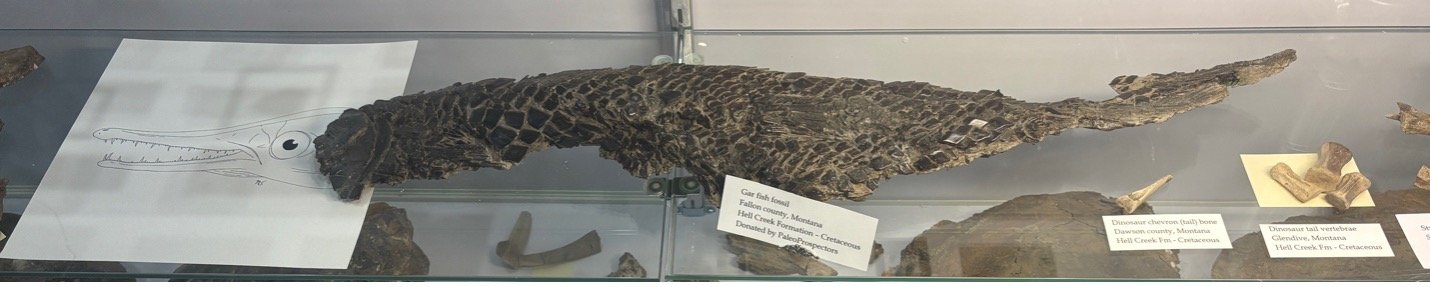
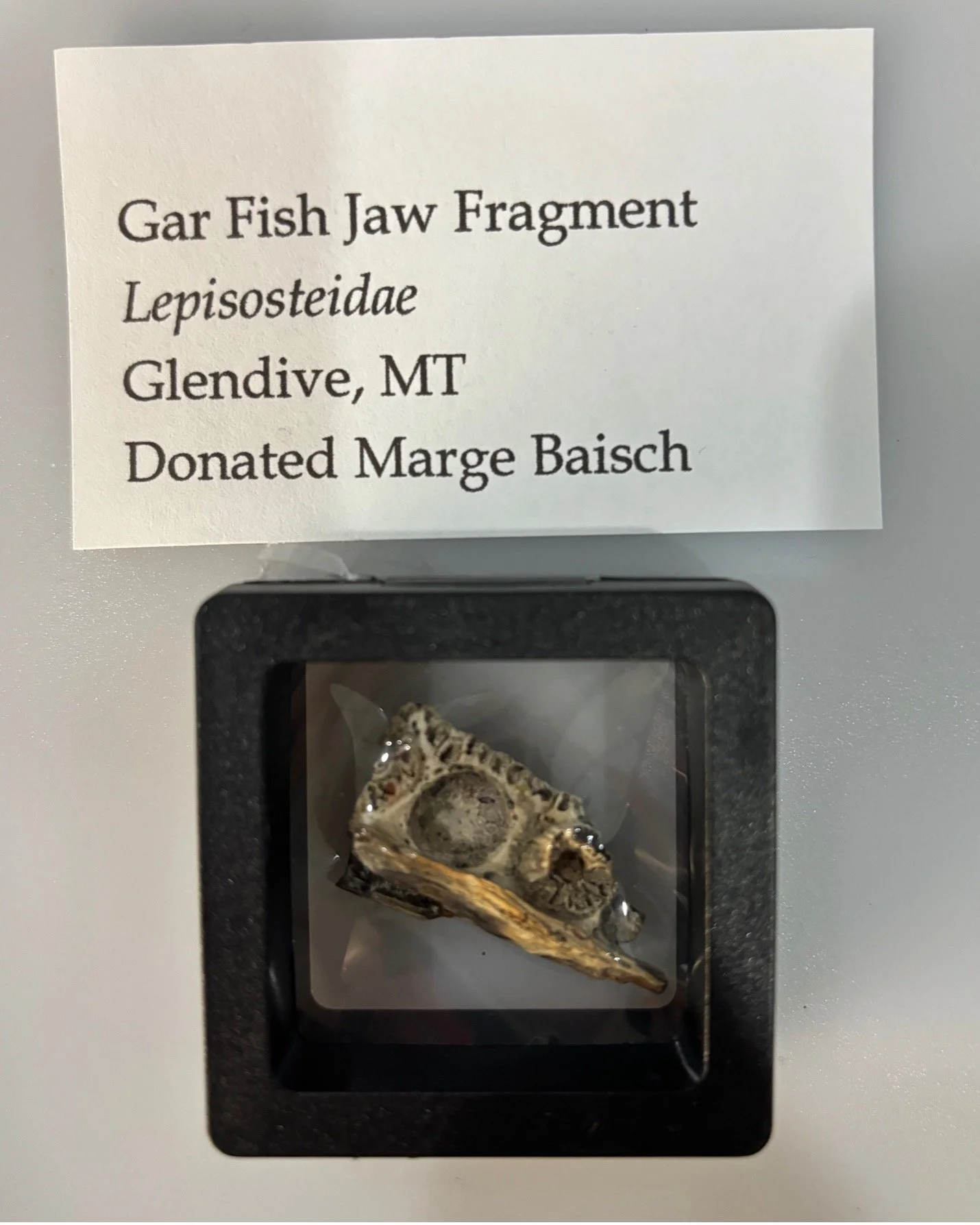
Gar fish are long-bodied freshwater fish who possess armored scales along their bodies. Gars belonging to Lepisosteidae first developed in the early Cretaceous, but ancestors to these Gar first show up in the fossil record during the Jurassic Period. Gars are often called ‘living fossils’ as they have gone virtually unchanged over the last 100 million years. There is plenty of fossil evidence for the Gar in the Hell Creek Formation; their armored scales fossilize very well and appear a bit like shards of obsidian among the dirt.
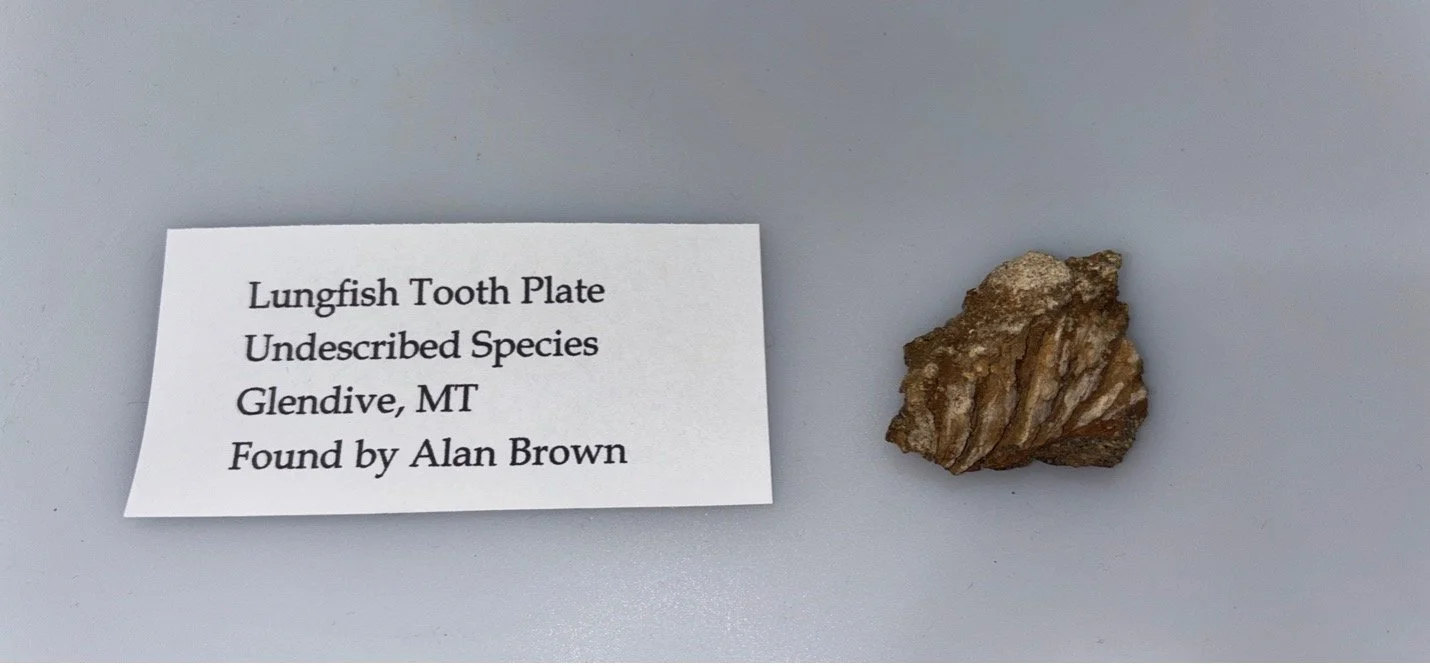
(Early Devonian – Present)
Lungfish are long, eel-shaped fish that can breathe air. While some species of lungfish possess both lungs and gills, they have an advantage over gill-exclusive fish types because they are able to survive in oxygen poor waters and withstand droughts, which may explain why they have managed to stay relatively unchanged over the last 400 million years. Lungfish are considered a “missing link” in the evolution of mammals, reptiles, amphibians, and birds as they are the closest relative to early tetrapods (or all vertebrate animals with four limbs).
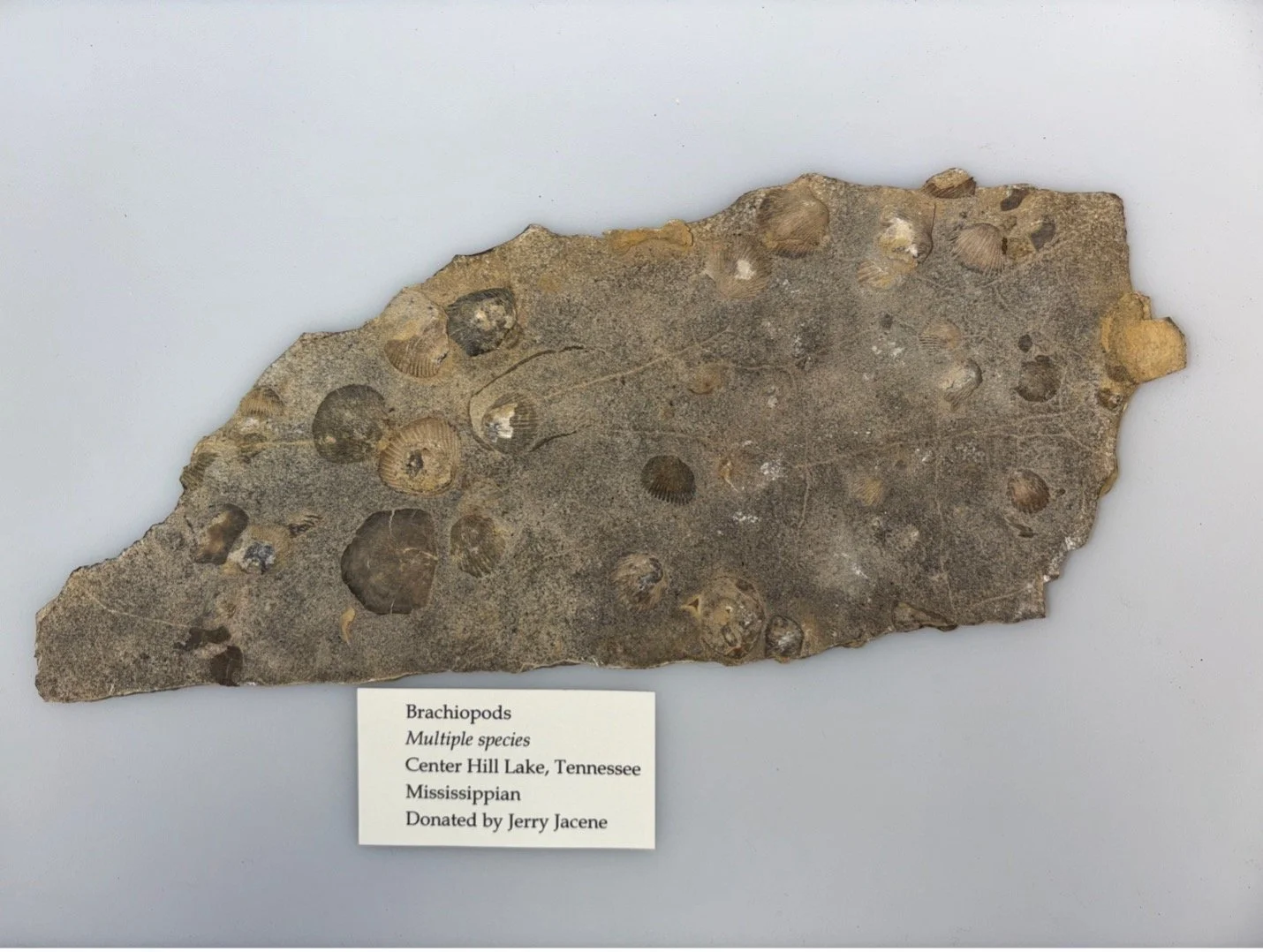
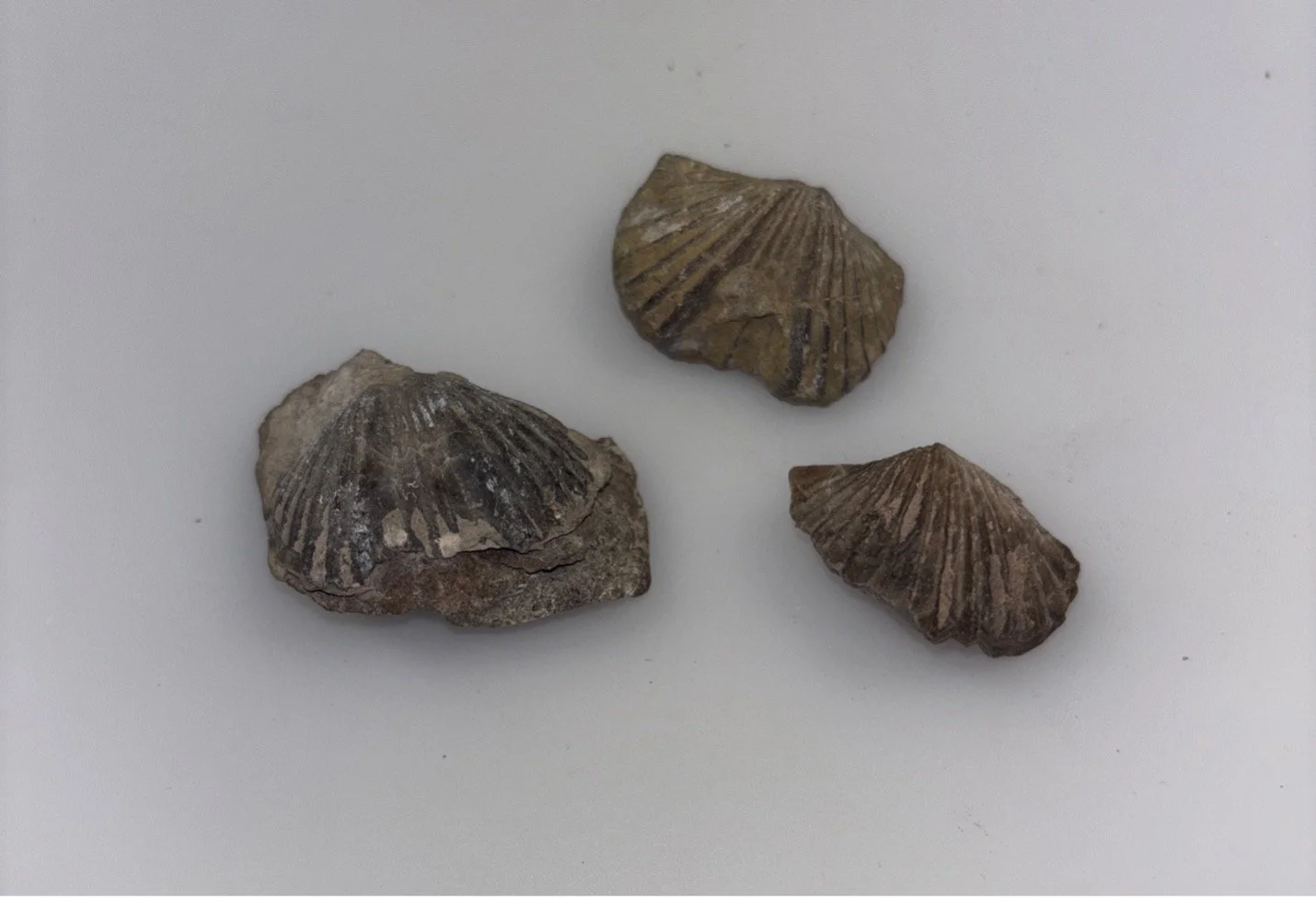
Brachiopods (Cambrian – Present)
Brachiopods are aquatic soft-bodied invertebrates who typically live inside a symmetrical two-halved shell. Though similar to bivalves in design, Brachiopods are deceptively unique, belonging to their own phylum, Brachiopoda. Brachiopods are generally stationary and are typically anchored in one spot, relying on filter feeding.
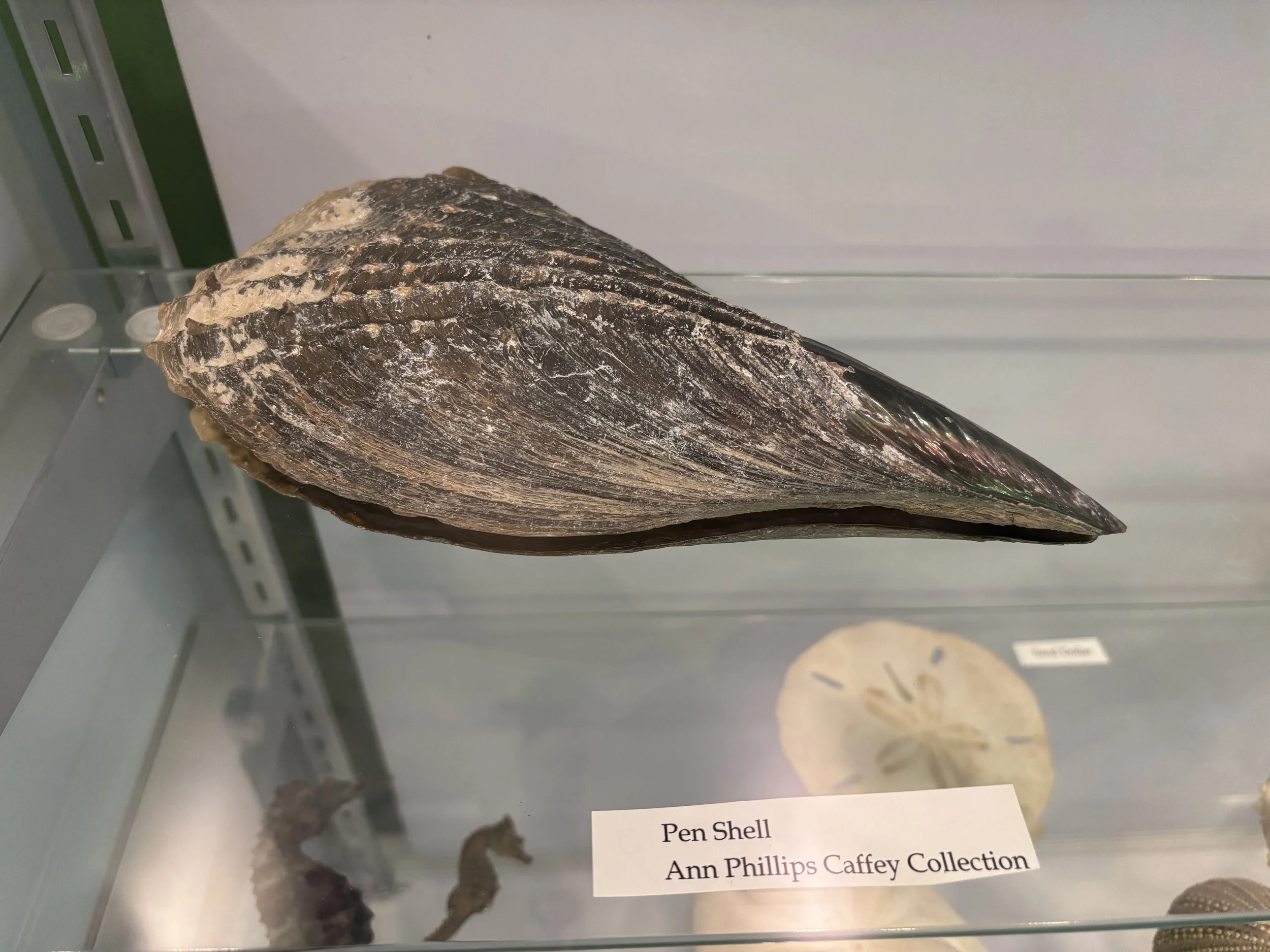
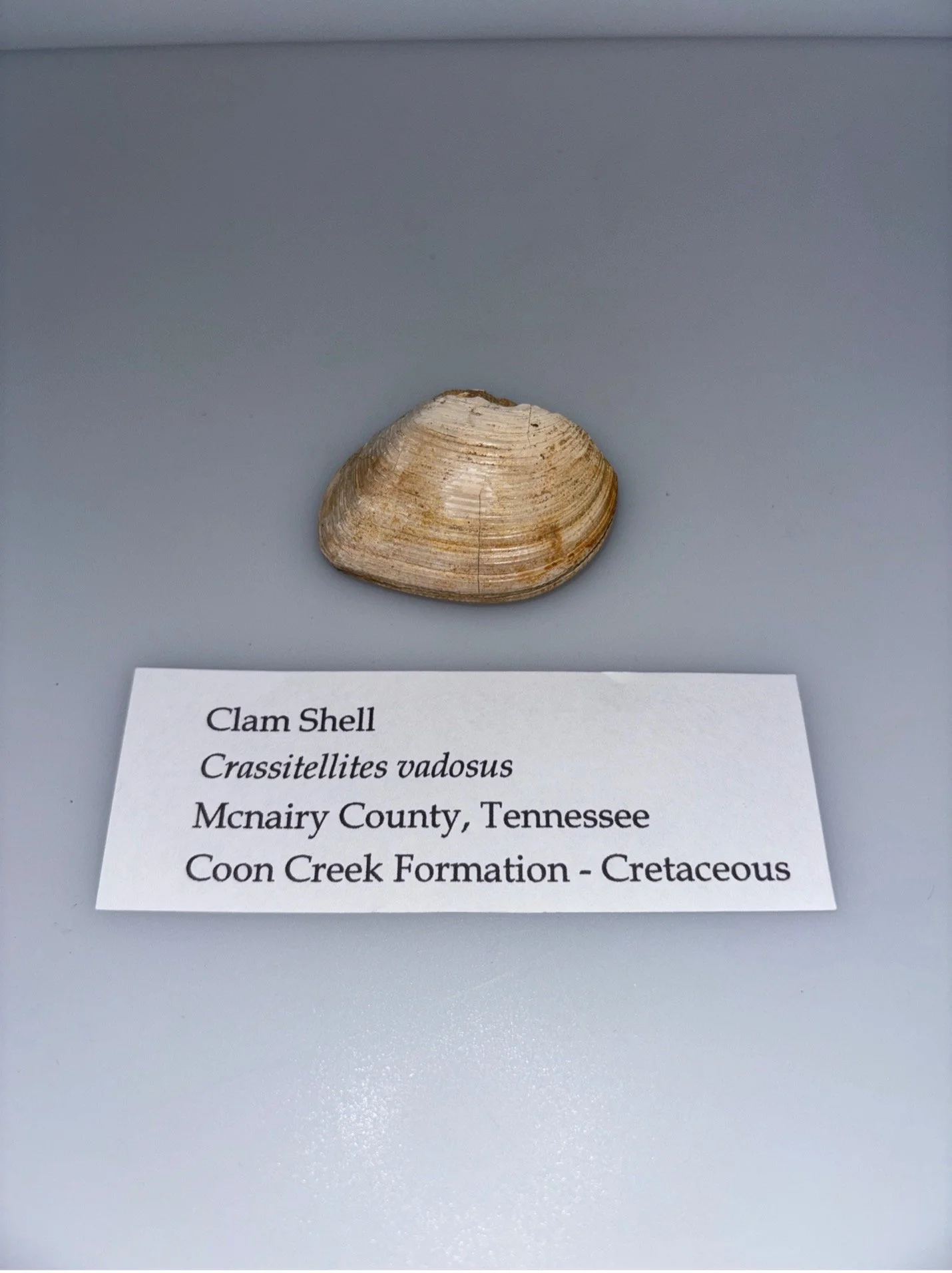
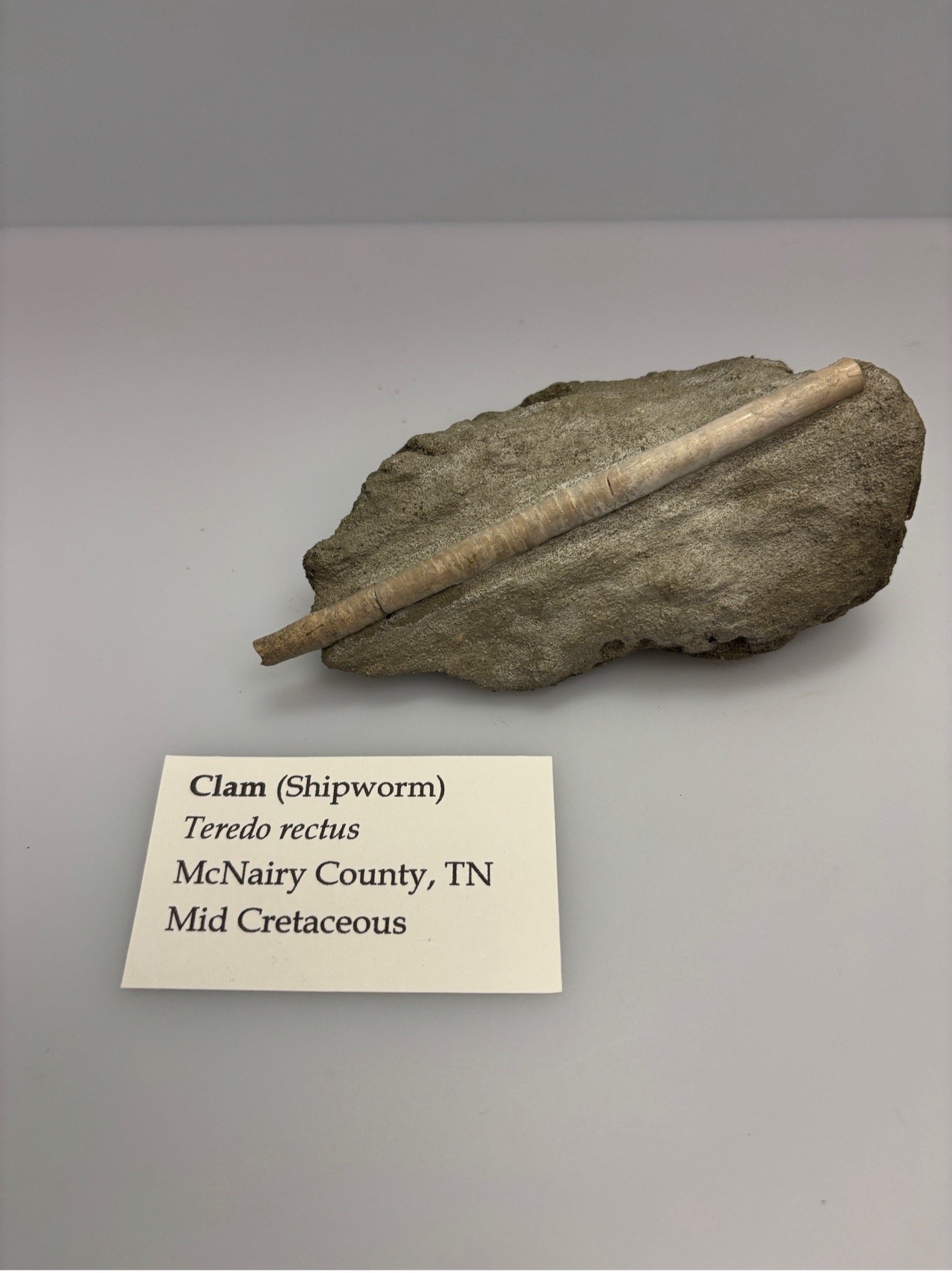
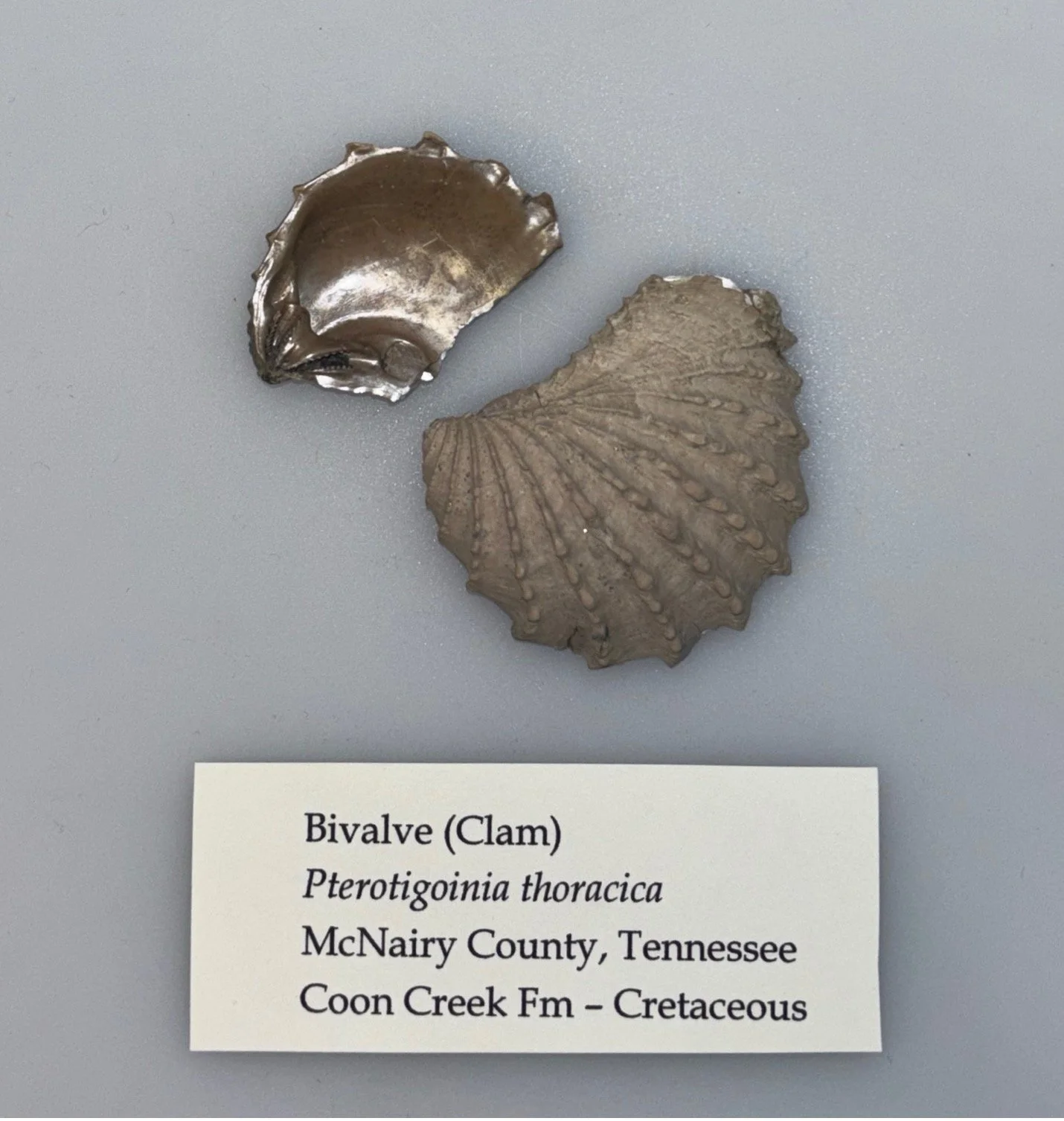
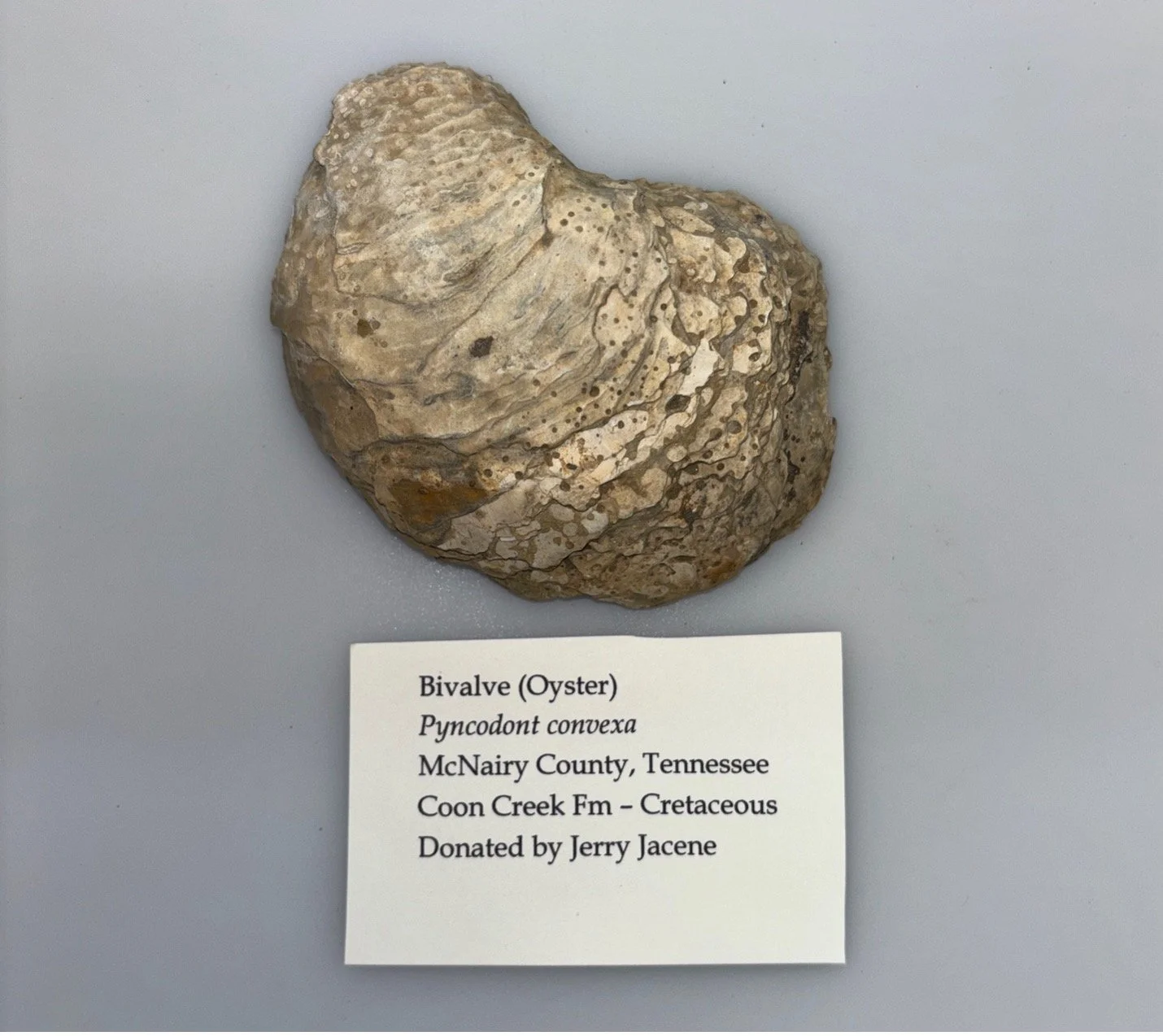
Bivalves are aquatic soft-bodied invertebrates who typically live inside a vertically symmetrical two-halved shell. They are similar to brachiopods, who are symmetrical both laterally and vertically, but the two are not actually very closely related. Today, bivalves vastly outnumber brachiopods, but during earlier periods, the inverse was true.
Bivalves are more mobile than they look, often burying themselves in sediment with the help of a muscular organ called a ‘foot’, and some can even swim by clapping their shell open and closed. Their shells have historically been used as jewelry, tools, and even money in certain cultures.
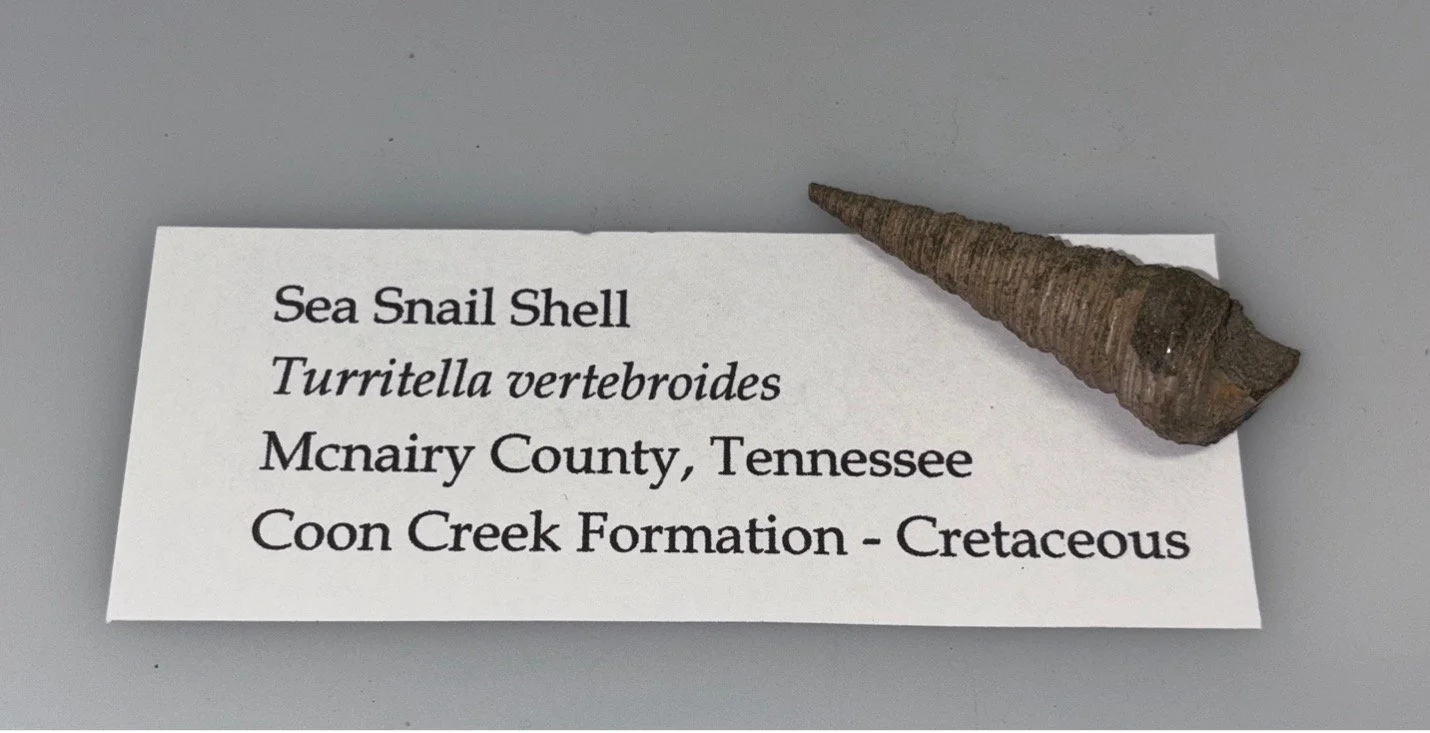
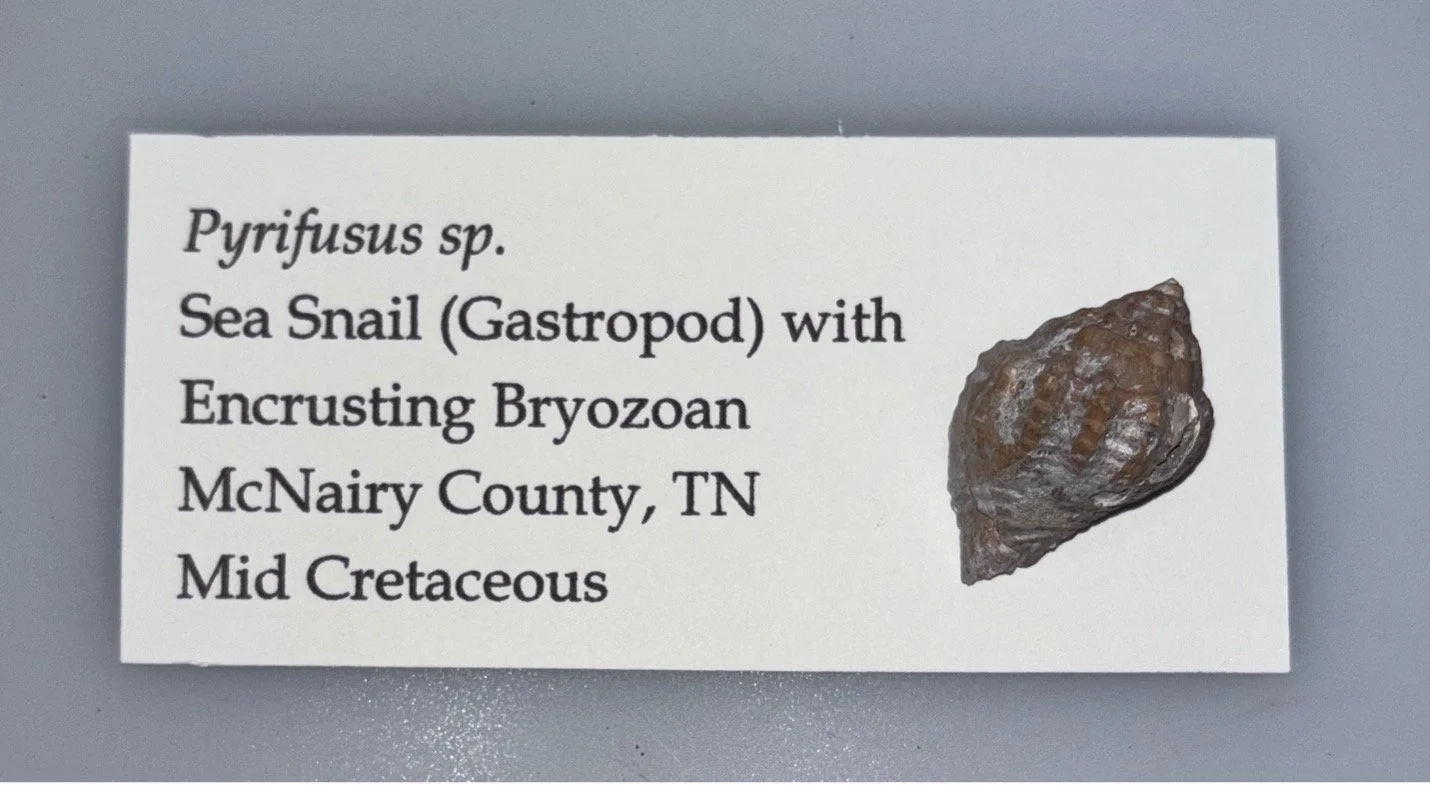
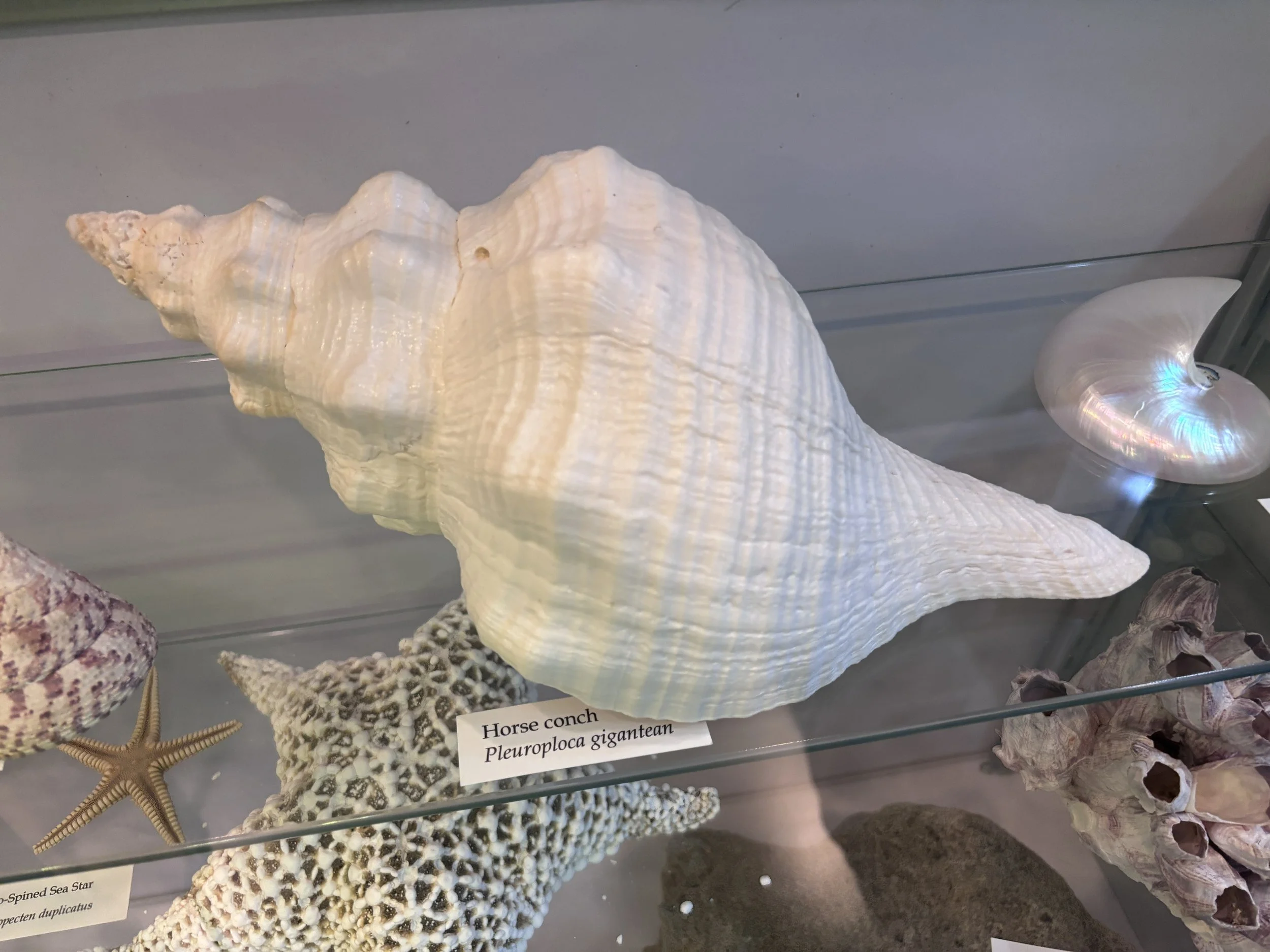
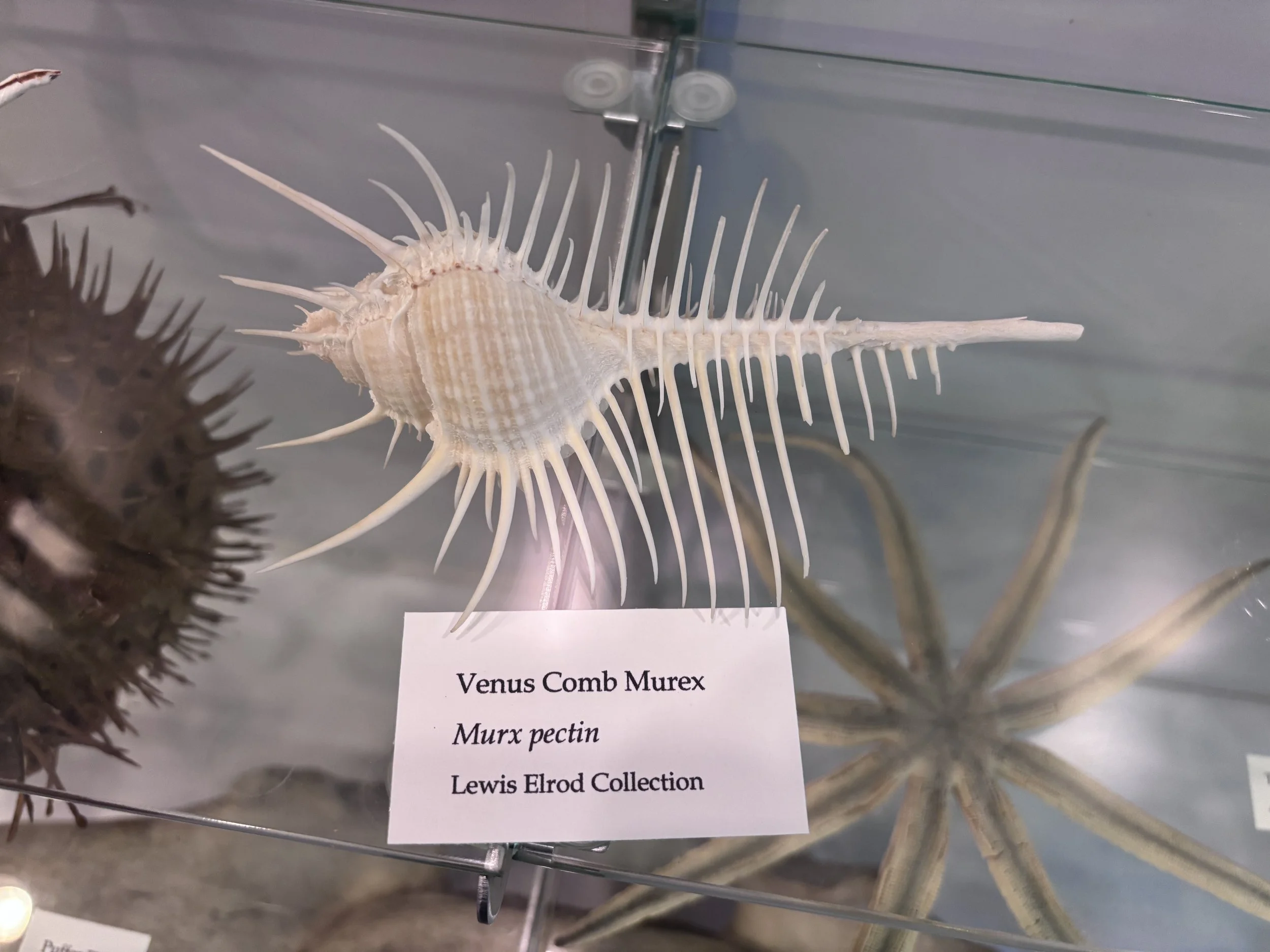
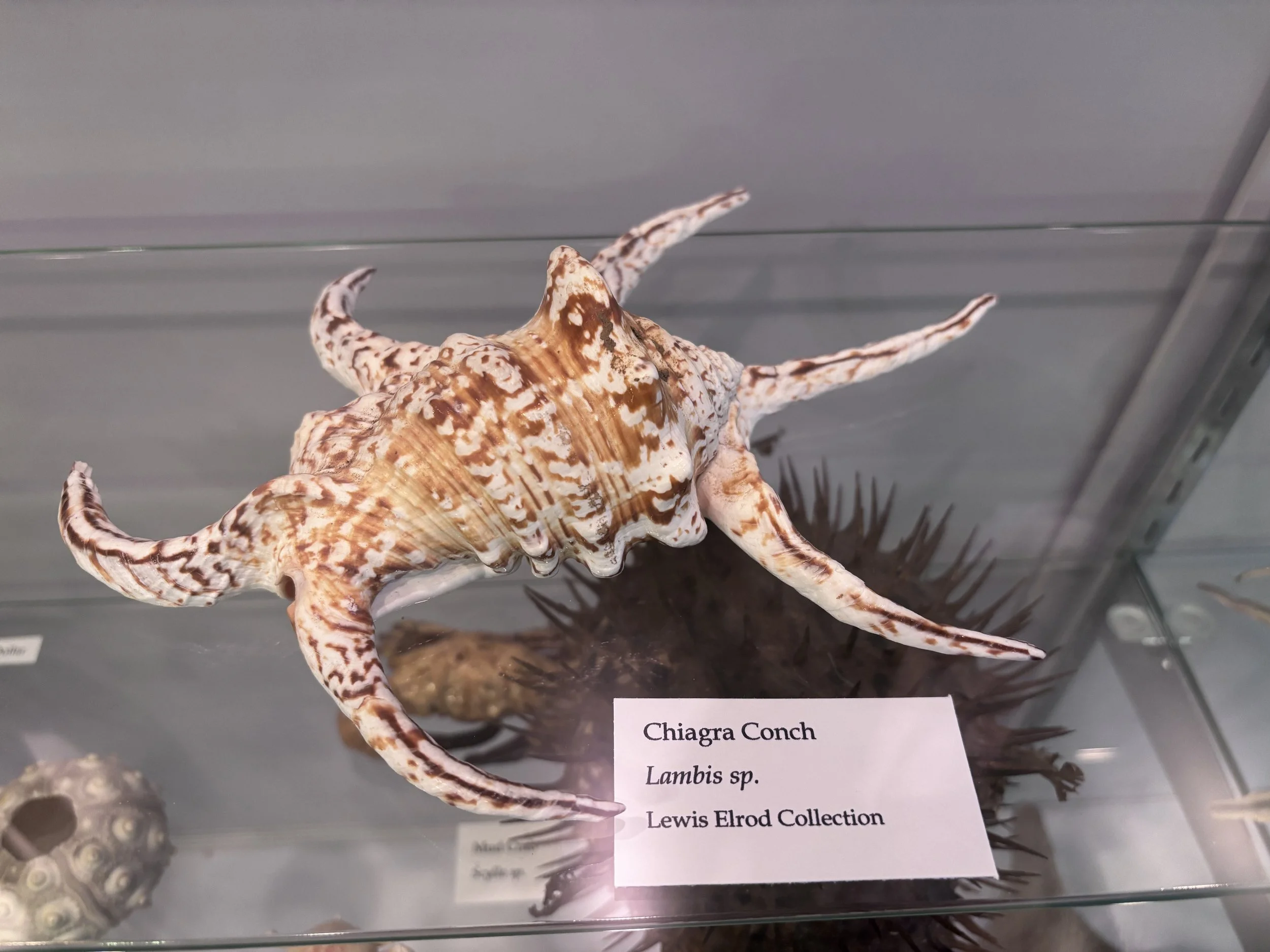
Gastropods (Late Cambrian – Present)
Gastropods are a class of soft-bodied invertebrates and are members of the phylum Mollusca, including things like snails and slugs. Gastropods have been around since almost the beginning of the fossil record, developing all the way back in the oceans of the Cambrian Period (485- 541 million years ago). Gastropod bodies are simple but highly adaptable, and have diversified far past marine living. Today there are species in the oceans, in rivers, on land, and even on hydrothermal vents.
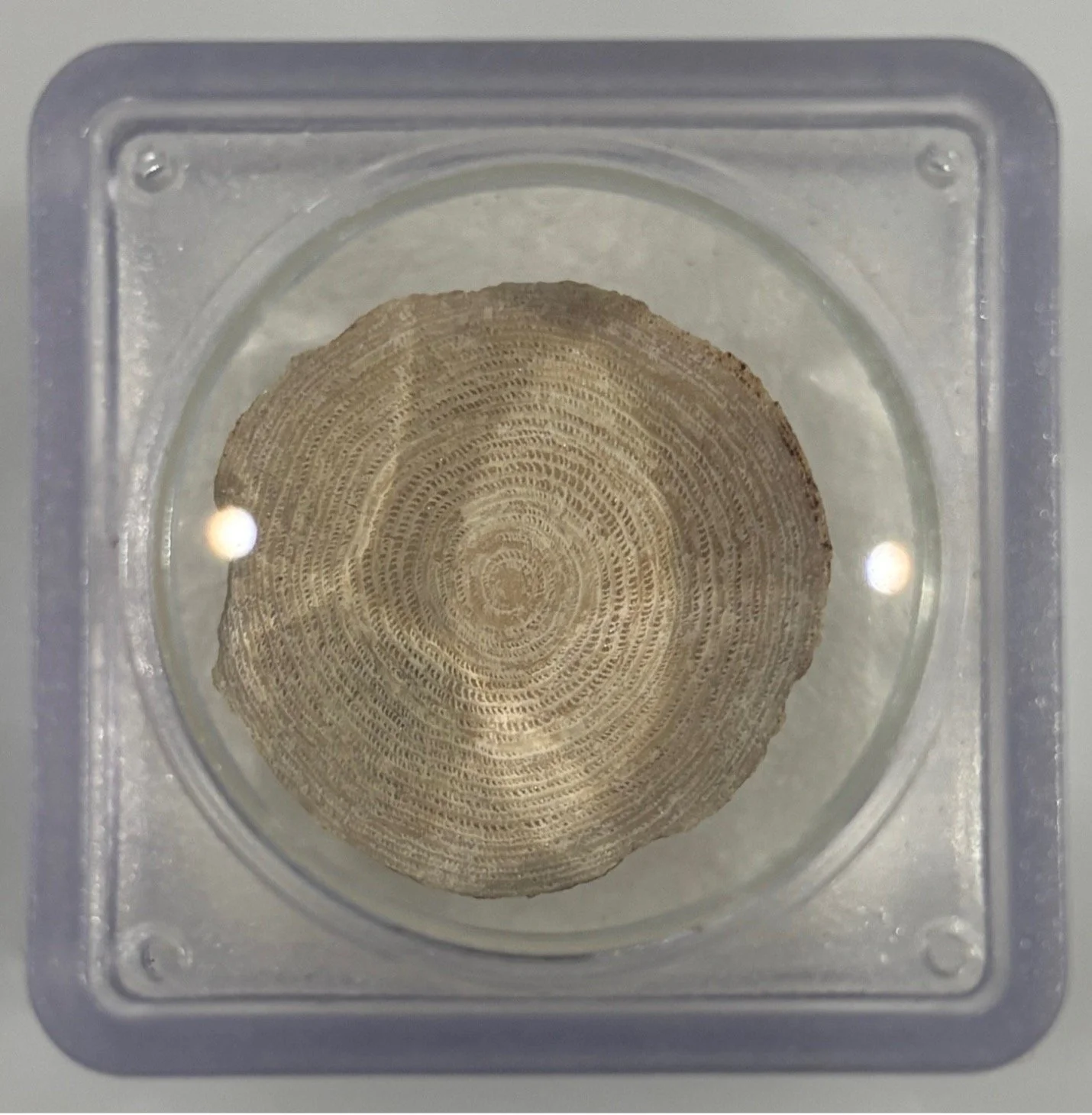
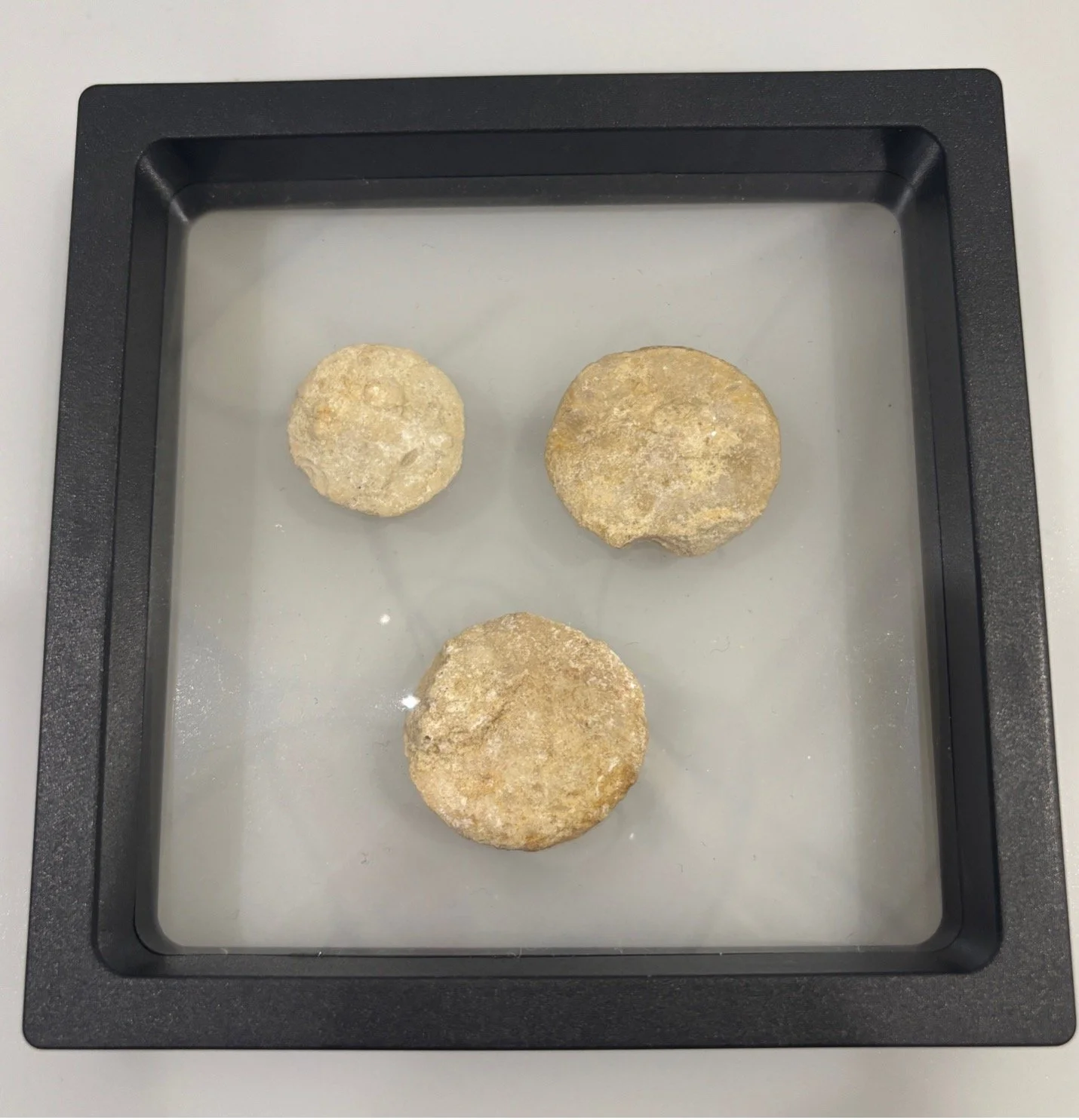
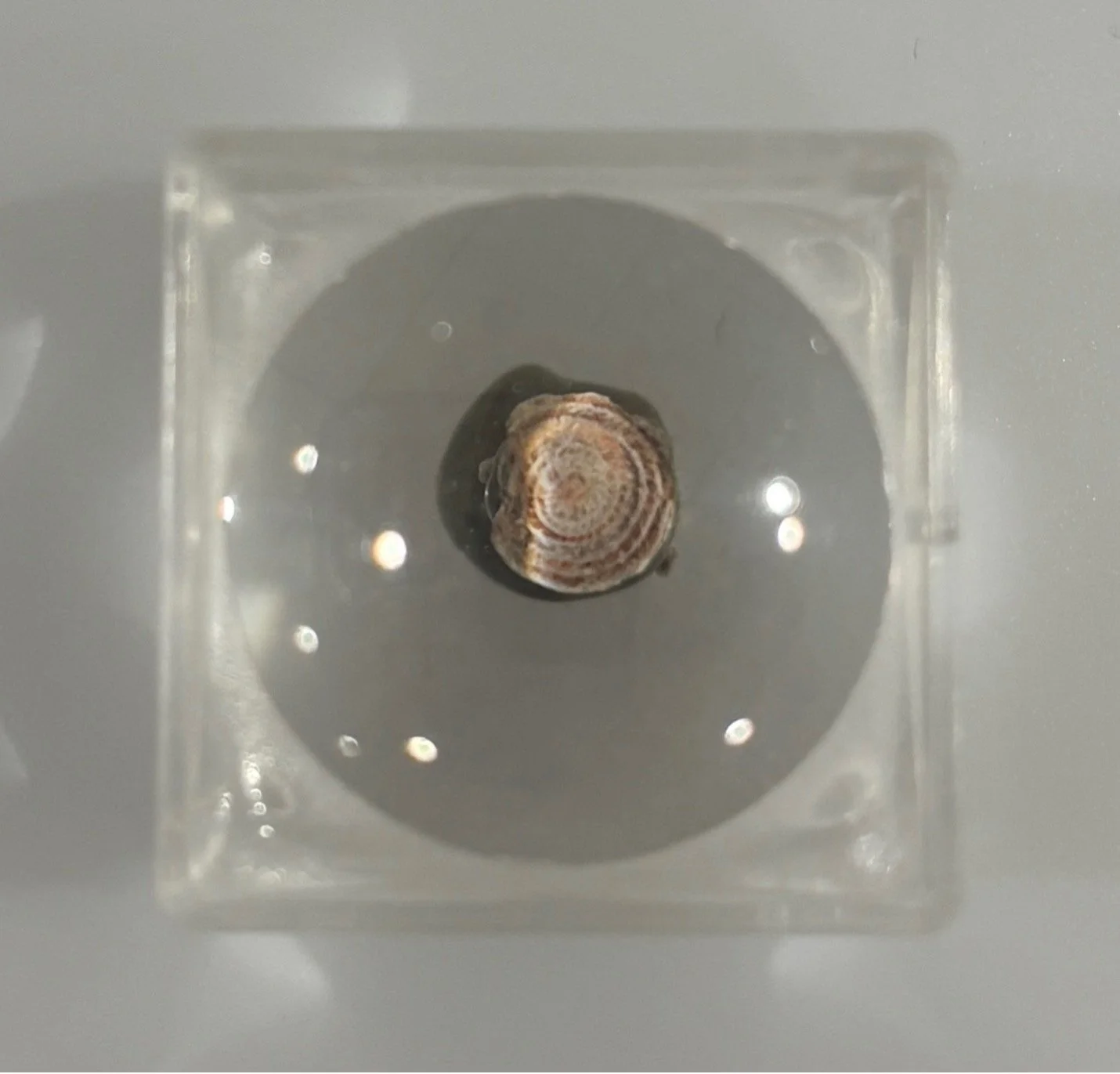
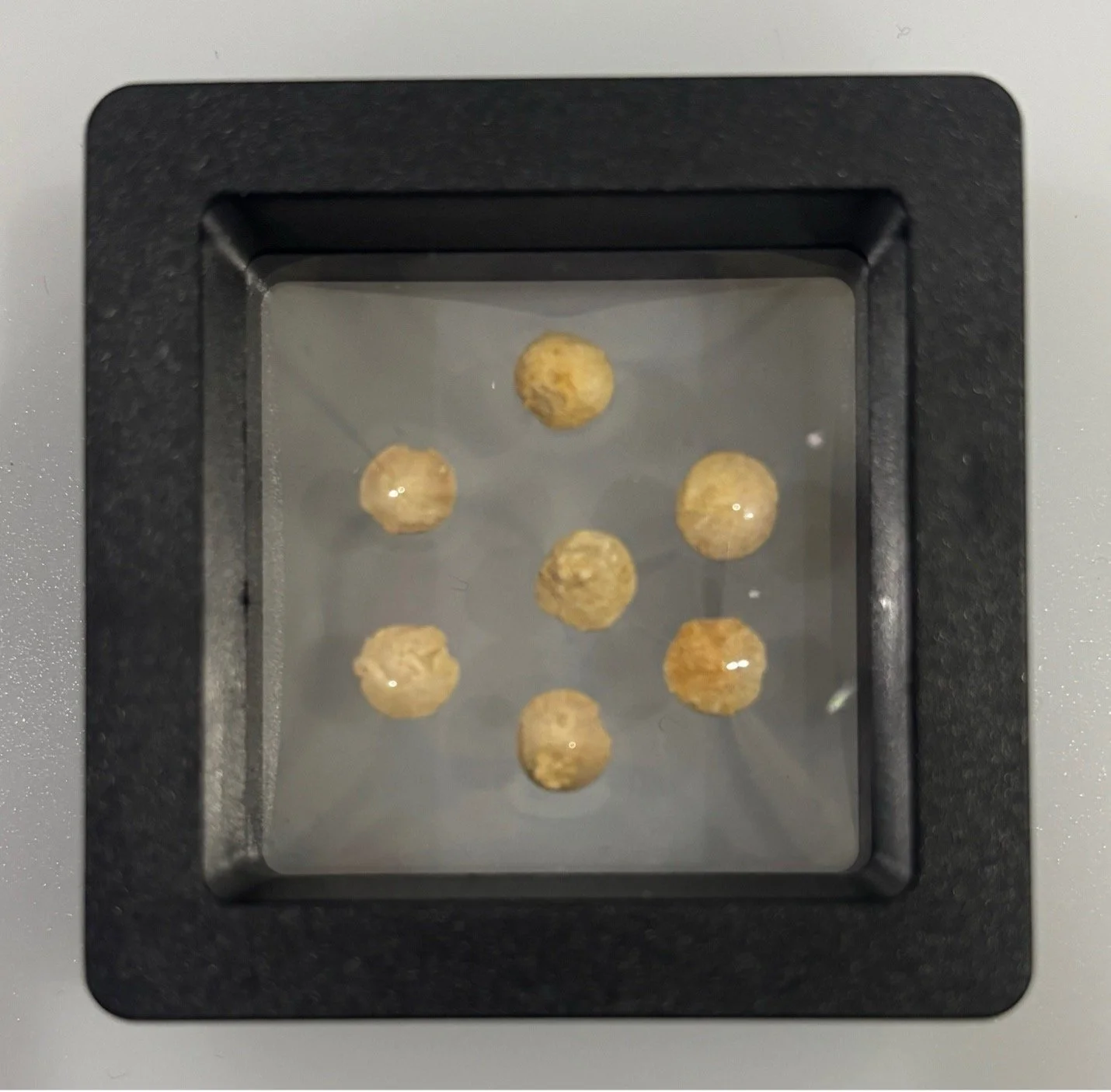
Nummulites are a type of foraminiferan (a type of single-celled organism) that develop disc shaped tests (shells) made up of connected chambers in a spiral arrangement. This species, Nummulites gizehensis, lived during the Eocene epoch and dwelled at the bottom of a shallow ocean around what is now Northern Africa and Southern Europe. The fossils of nummulites can be seen in the very stones that make up the Pyramids of Giza, hence their name.
Nummulites have an ‘alternation of generations’ life cycle, making both the large, coin shaped specimens, and the small, lentil shaped specimens, the same species. The large, coin shaped forms reproduced asexually after reaching maturity, producing the smaller form. The small, lentil shaped forms reproduced sexually after reaching maturity, producing the larger form.
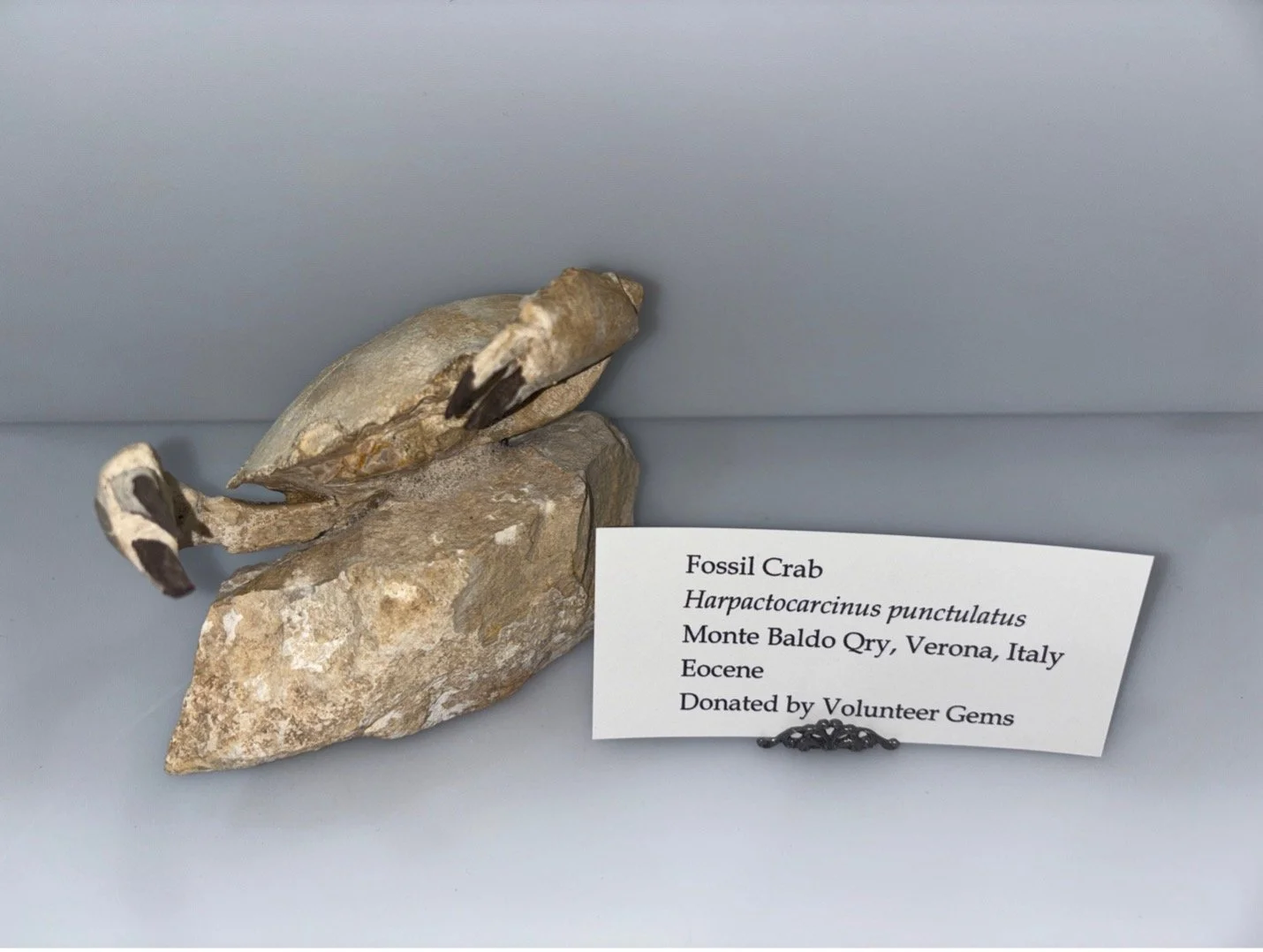
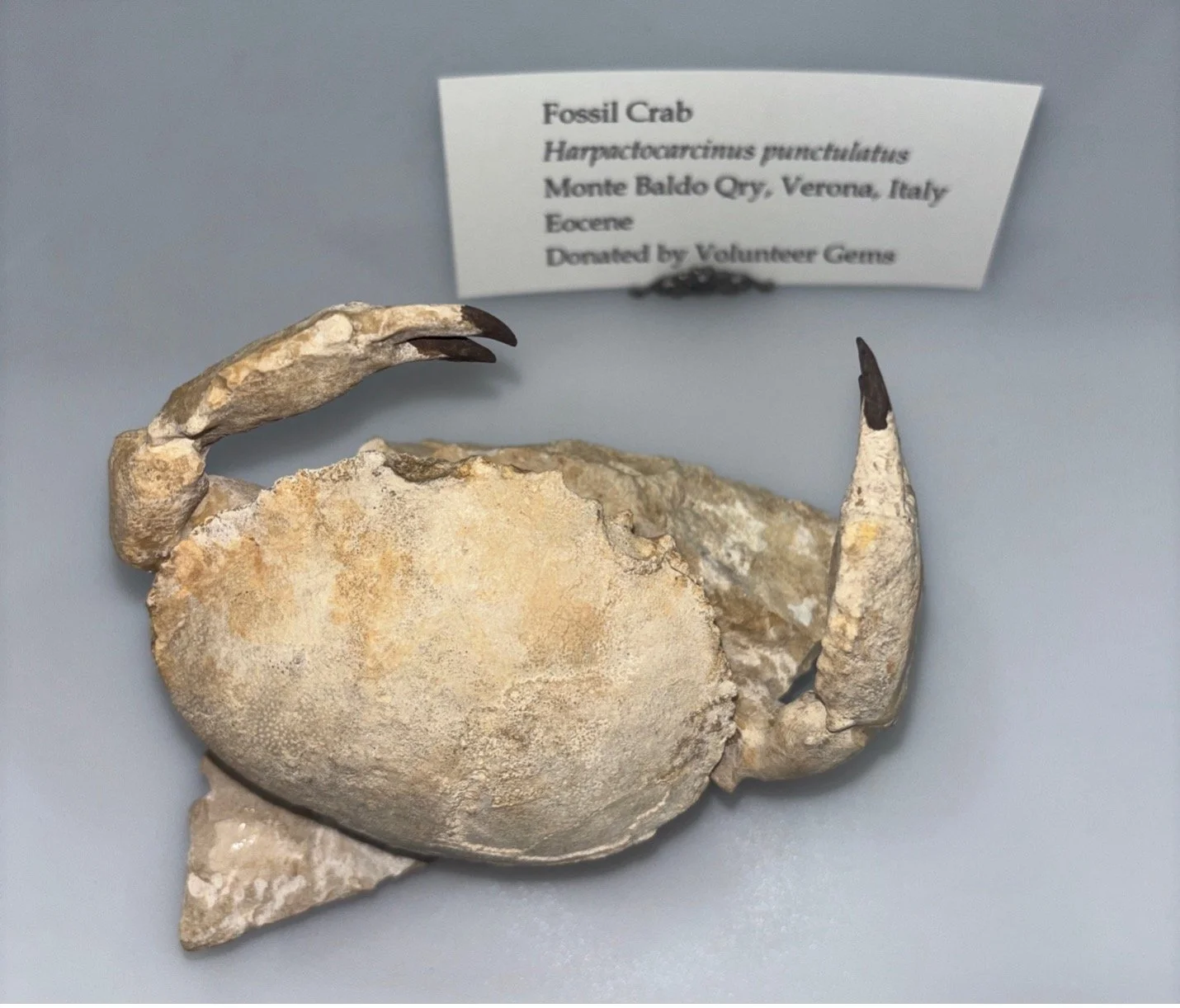
Harpactocarcinus punctulatus was a type of mud crab whose incredibly well-preserved fossils can be found in Europe and North America. These crabs fossilize astoundingly well because of their hard carapaces, which make their remains look a bit like statues instead of fossils.
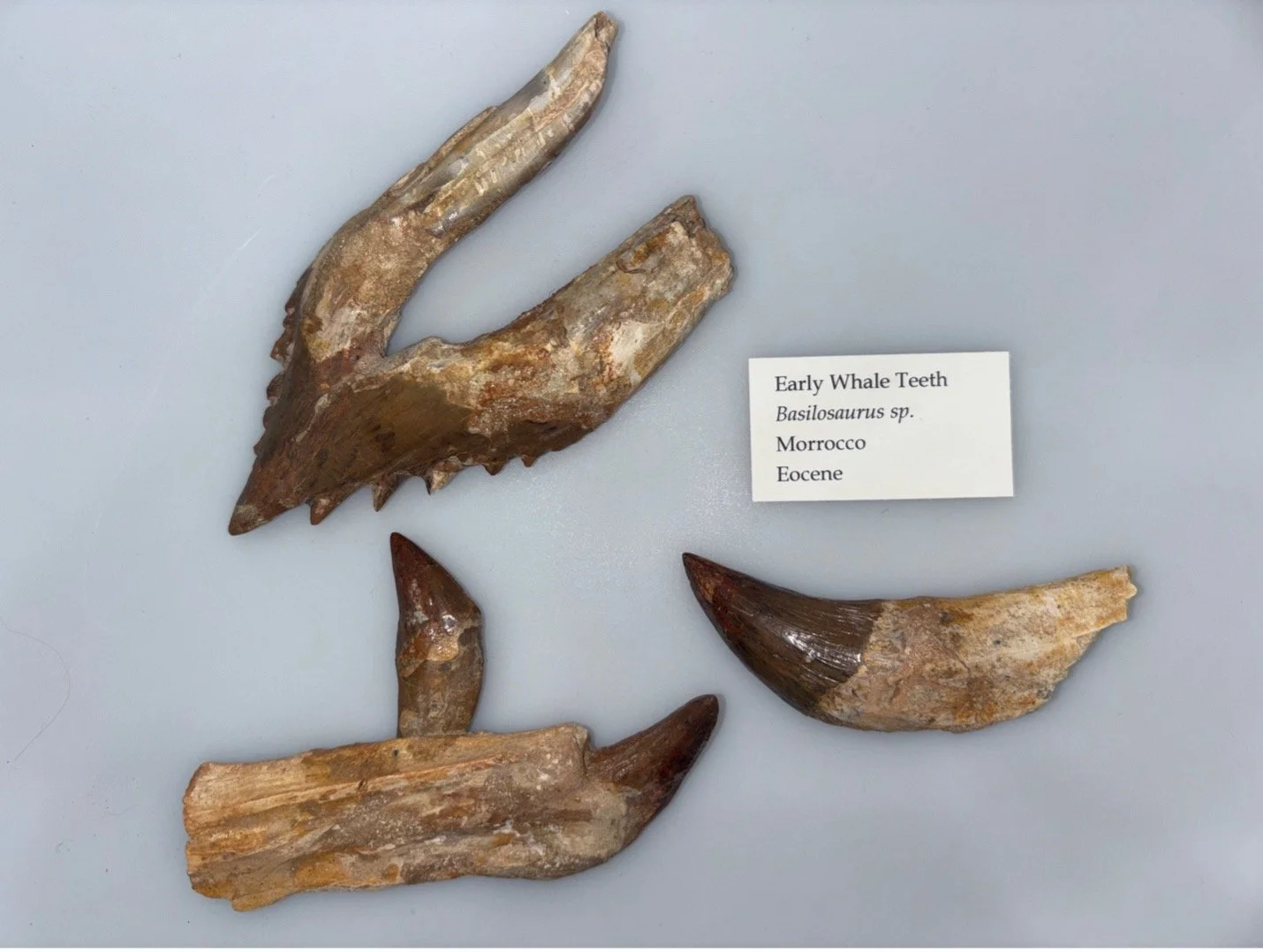
The Basilosaurus was an apex predator of the Eocene seas. Despite its reptilian name, they were marine mammals like whales. It is known for its prominent and intimidating teeth, which it used to hunt fish, sharks, and likely marine mammals. The Basilosaurus was long and slender, ranging between about 50-65 feet full grown. An interesting feature of their anatomy was their vestigial hind legs, which were not even attached to the skeleton and completely useless to the animal itself. Those legs do, however, tell paleontologists more about whale evolution, proving that whales’ ancestors once walked on land before returning to the water.
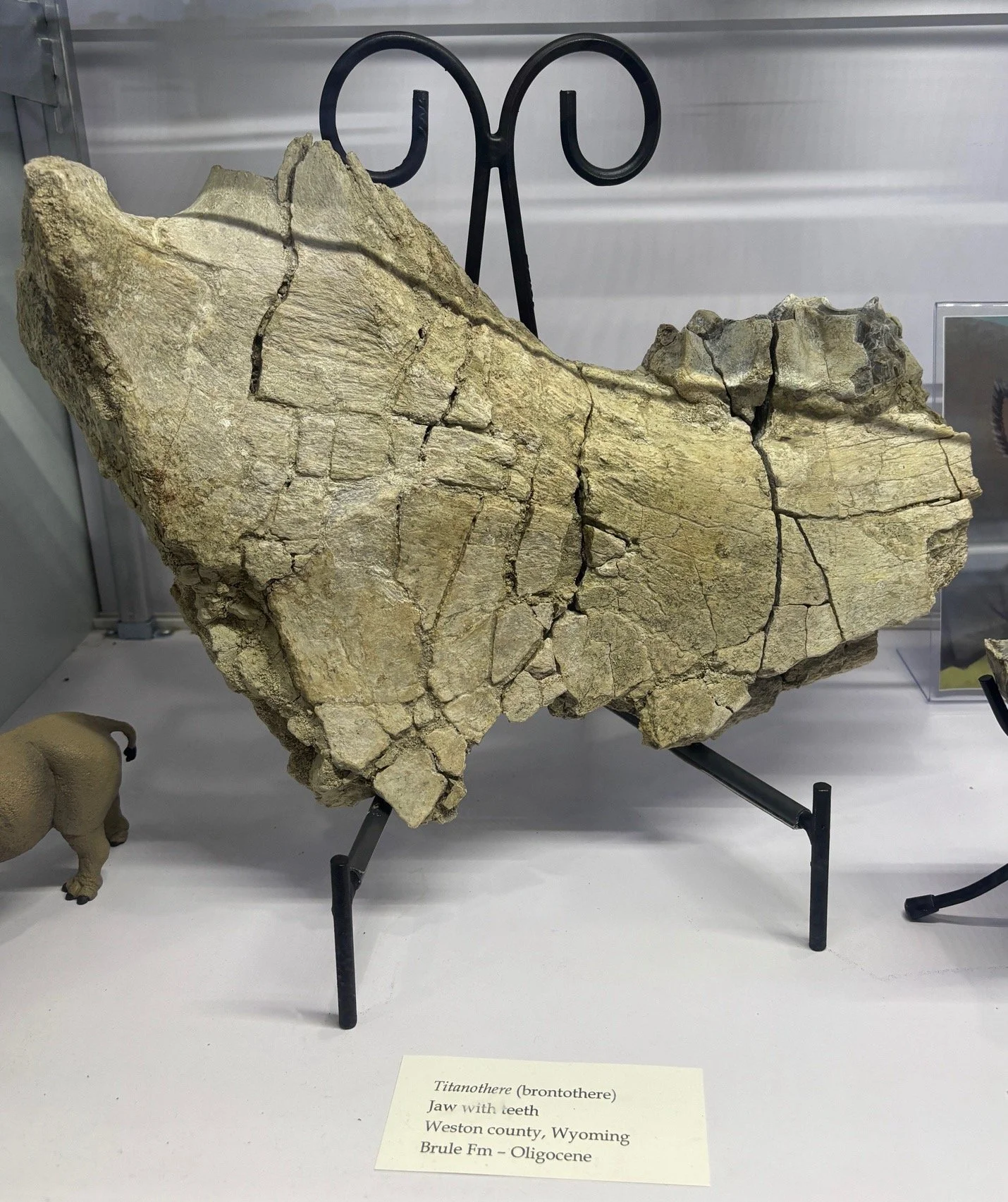
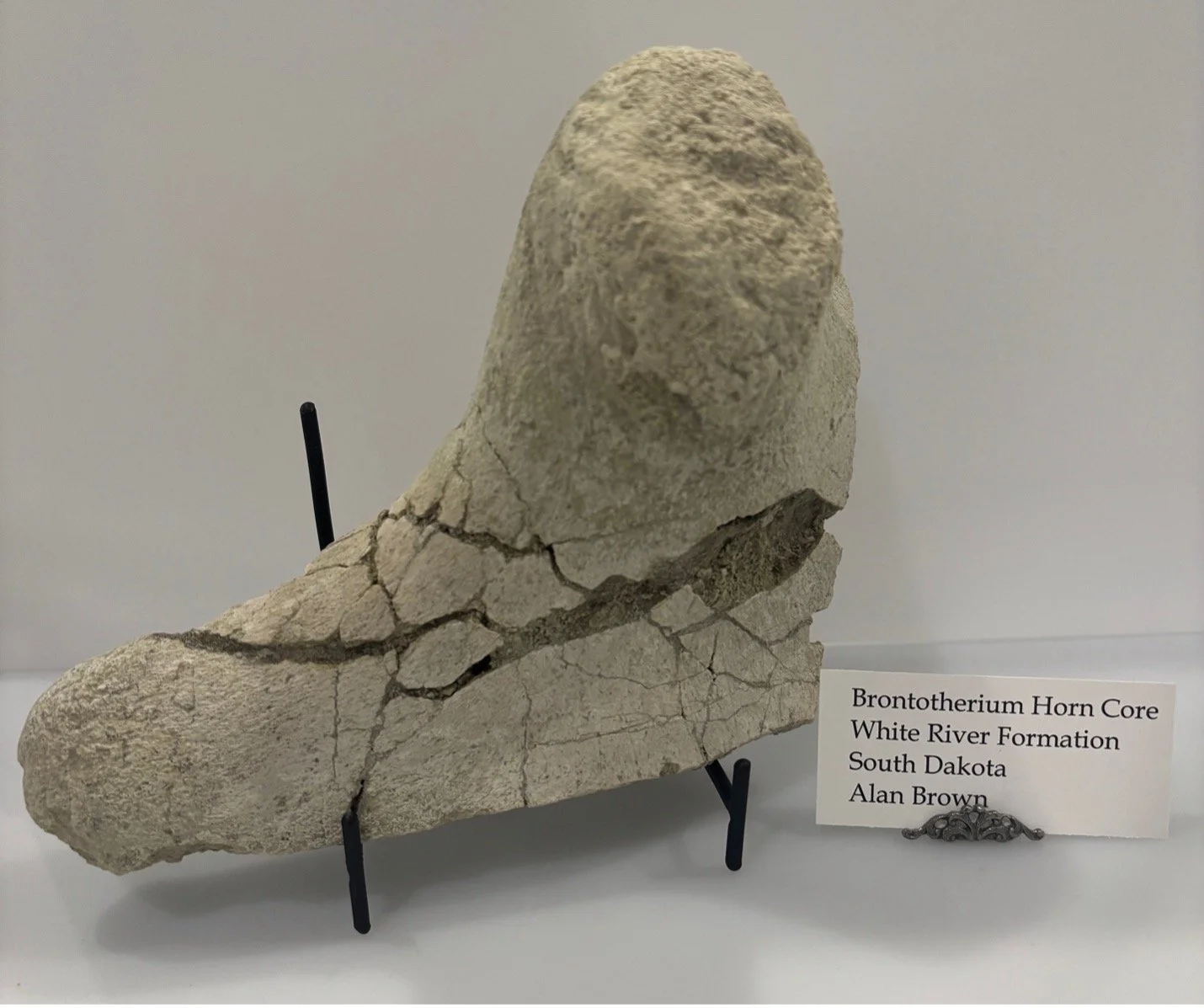
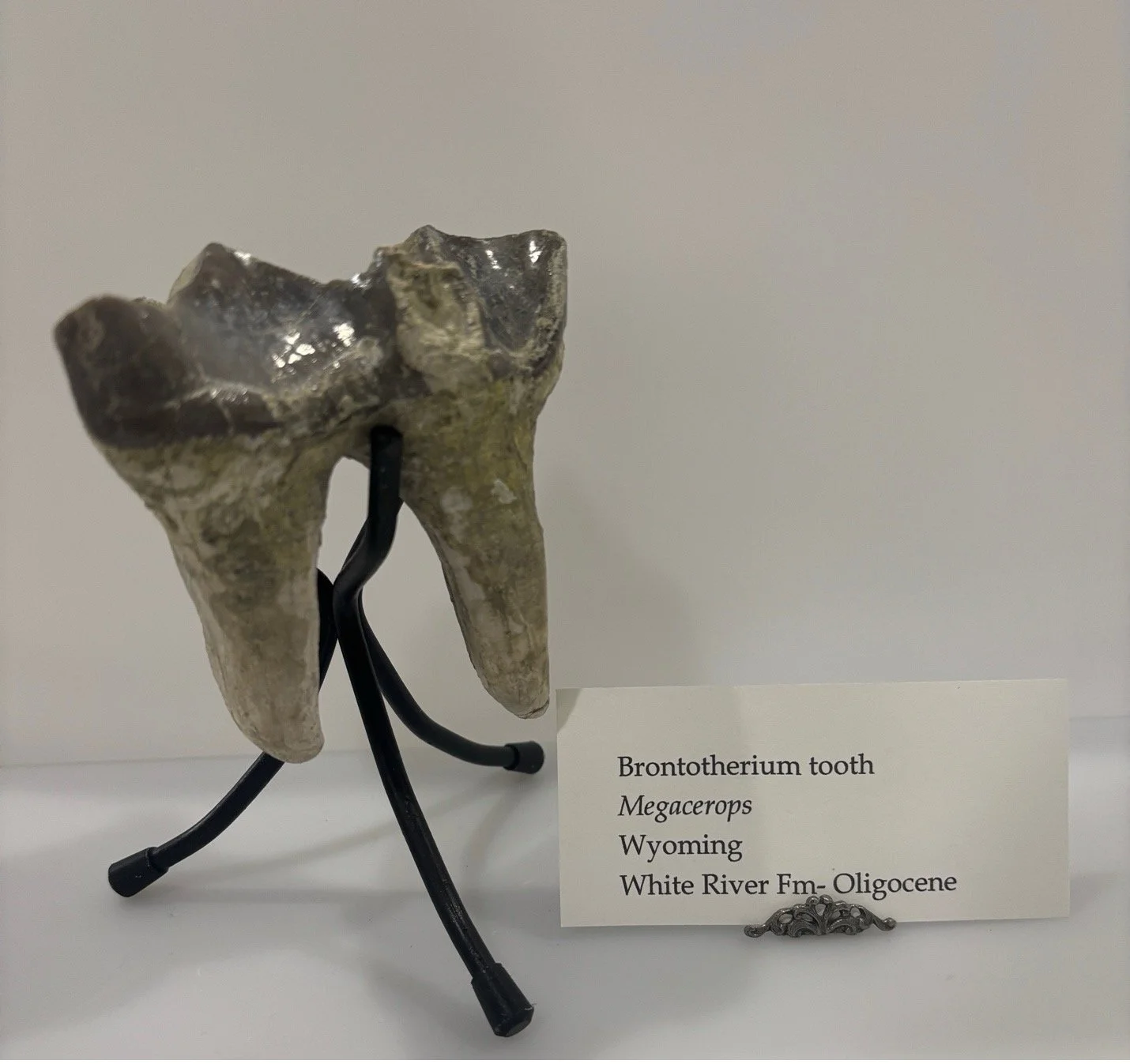
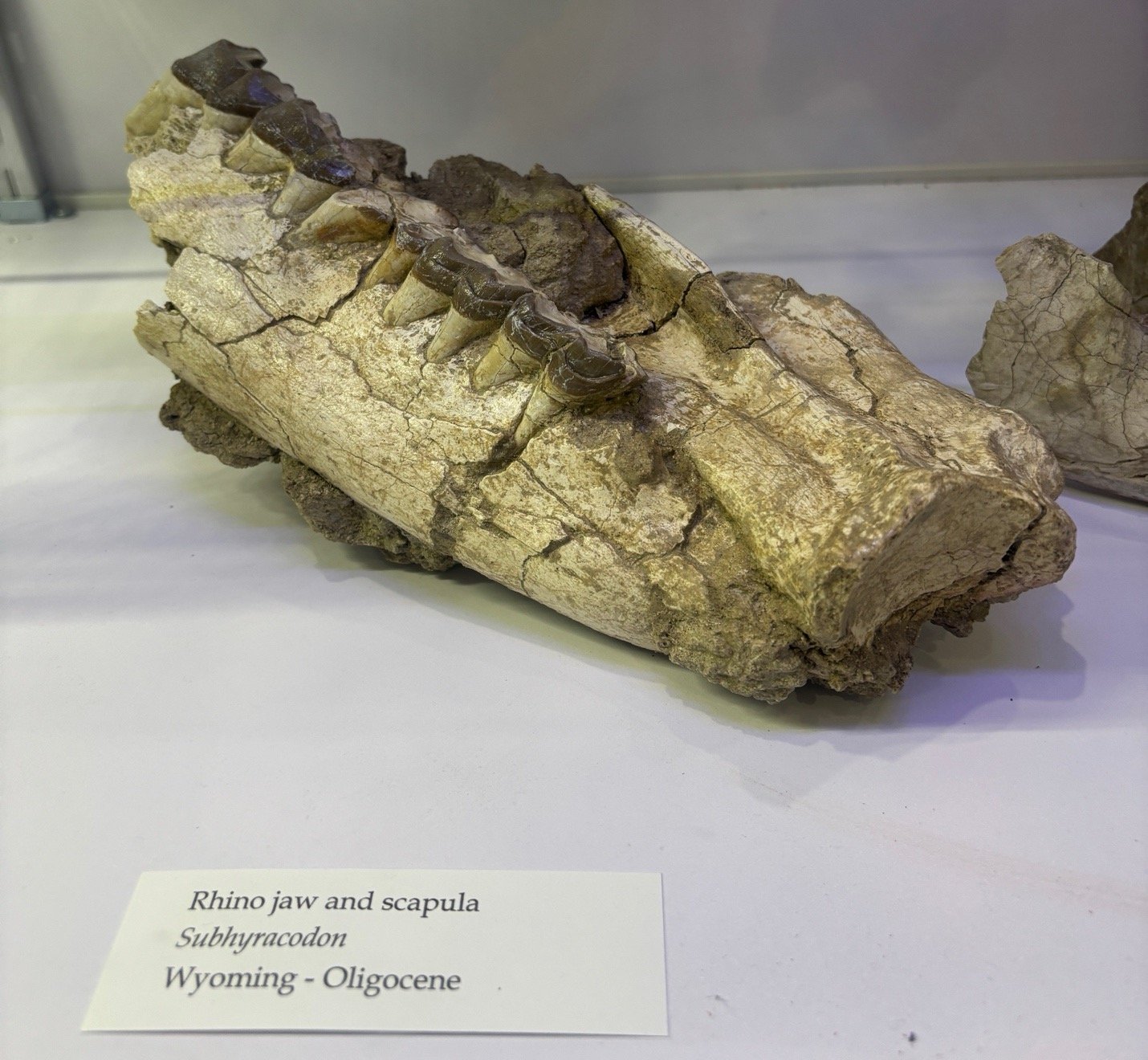
The group Brontotherium is a family of large megafauna of rhinoceros-like mammals. By the end of the Eocene, Brontotheres evolved to be very large (about 8 feet tall and 16 feet long) and would have traveled in herds. Like their distant relatives rhinoceroses, Brontotheres sported large horns; but unlike rhinos, their horns were made entirely of bone instead of keratin. They were herbivorous and grazed on soft vegetation, which ultimately lead to their extinction at the end of the Eocene. During a shift in climate, the warm and verdant lands of the Eocene dried out and became much colder, which effectively destroyed the Brontheres’ food source.
This group of animals goes by many names, but the two most popular are Brontothere which means “thunder beast” and Megacerops, meaning “large-horned face”.
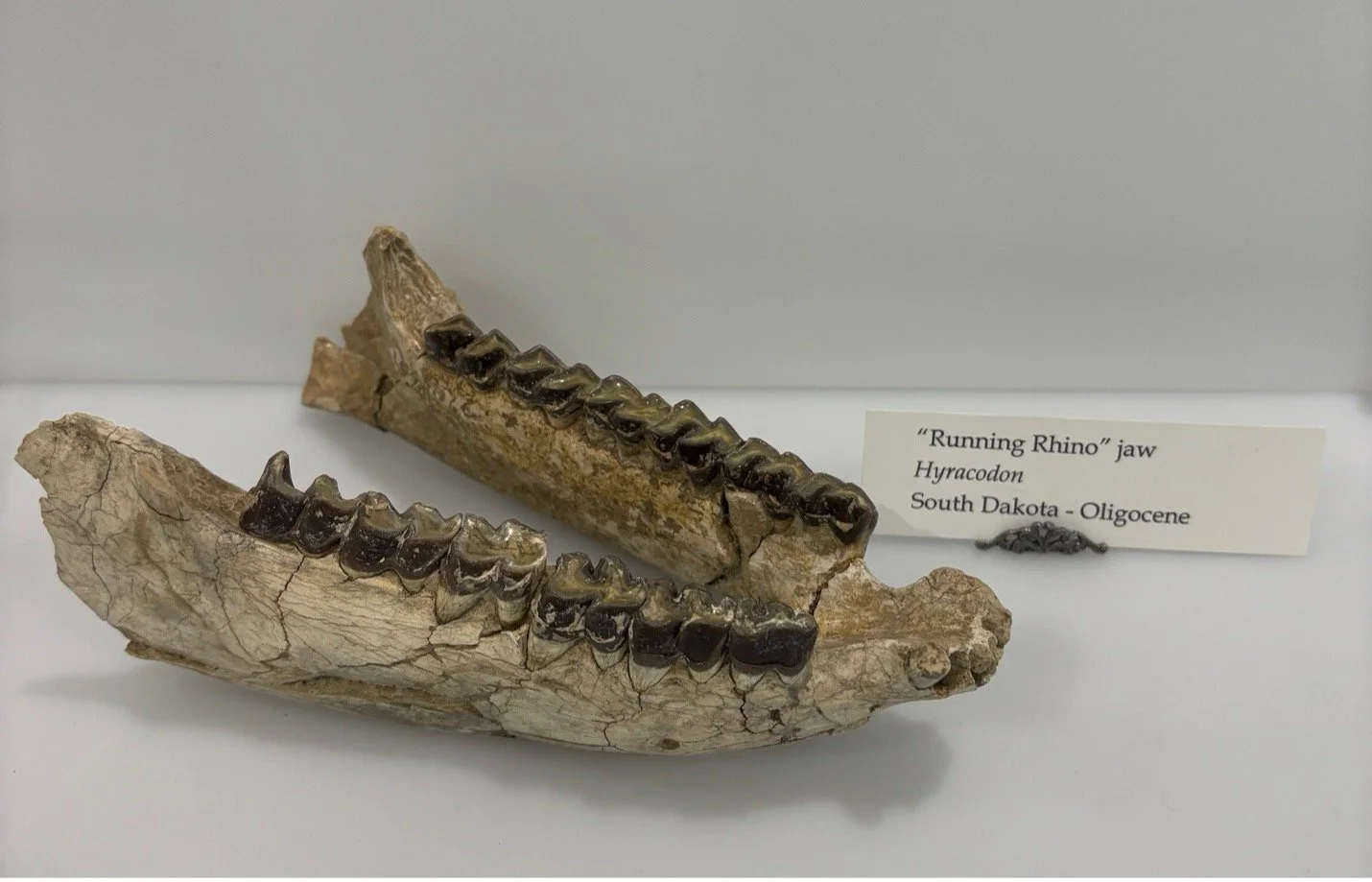
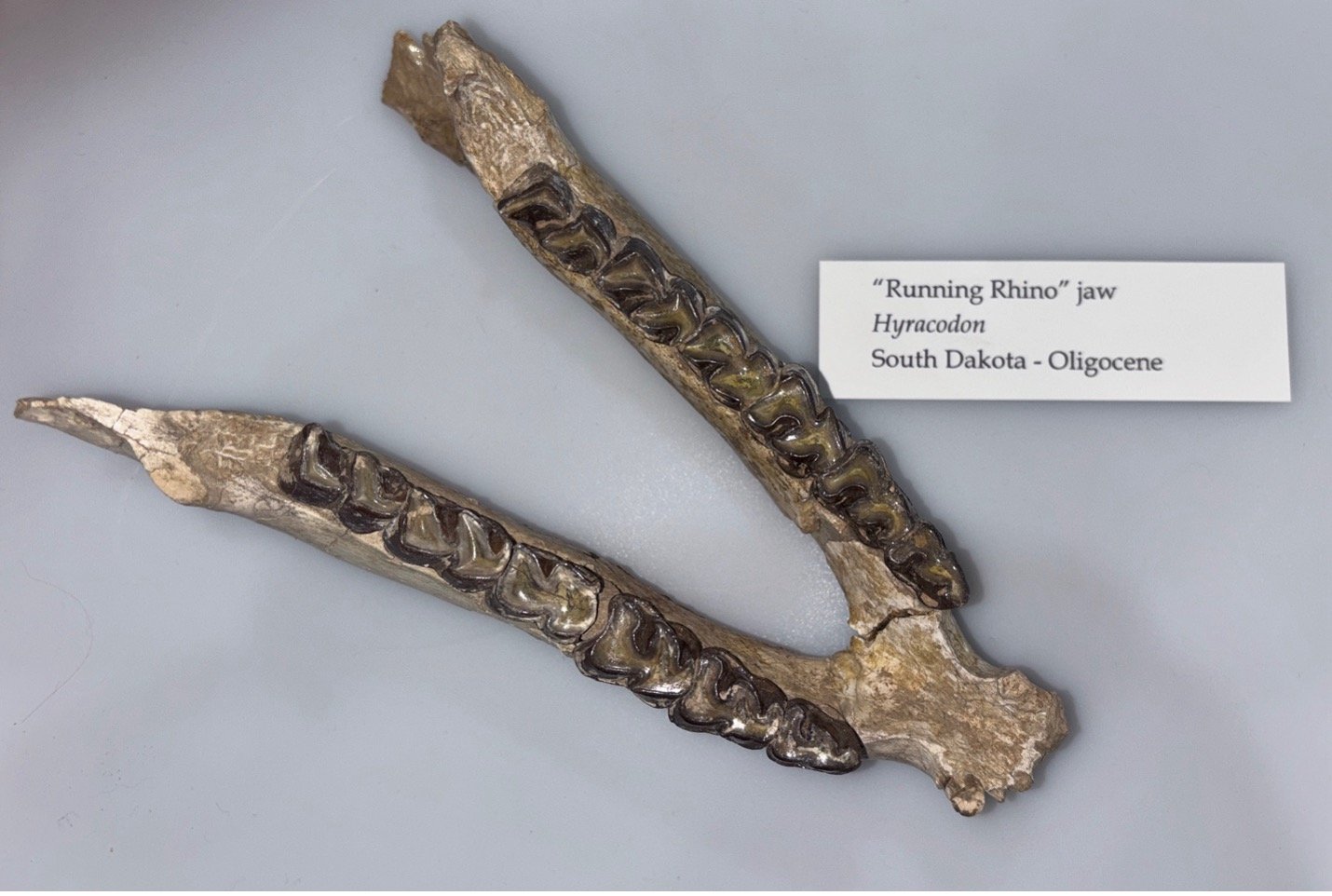
Hyracodon, or the Running Rhino, was a small and graceful member of the rhino family. They functioned more like horses than their modern rhino relatives, as they were hornless with long, slender legs. They were about the size of a pony, and likely used their agility to flee from predators rather than fight them. Hyracodon lived throughout North America and Asia, only going extinct from climate change and loss of habitat.
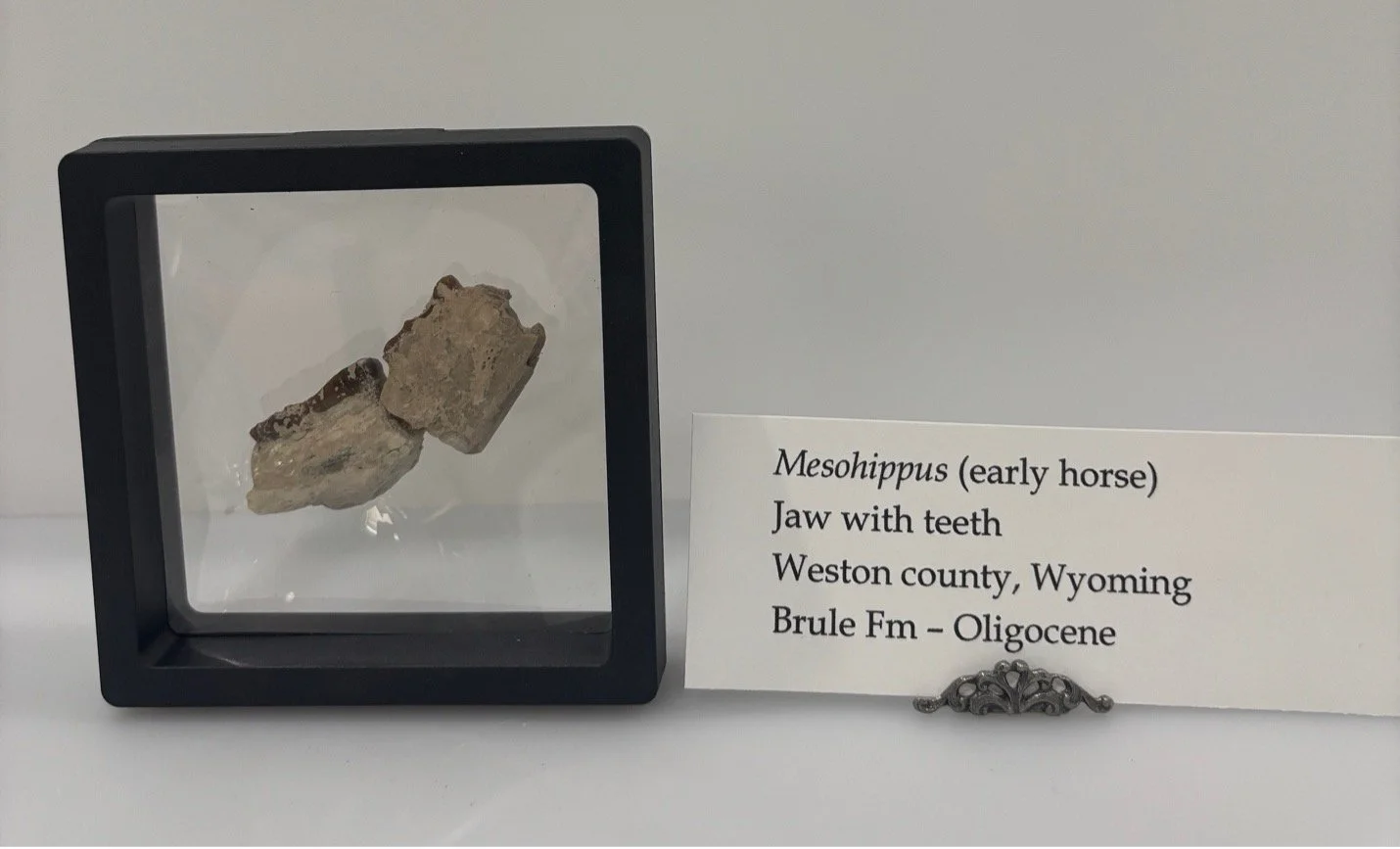
An ancestor of modern horses, Mesohippus was an important developmental stage in horses’ family line. They had not yet developed hooves and walked on three-toed feet. Mesohippus was a small, primitive horse that was about the size of a labrador retriever. These early horses were grazers that lived in North America and had to contend with predators like the cat-like nimvarids and other large carnivorous mammals called Hyenadons.
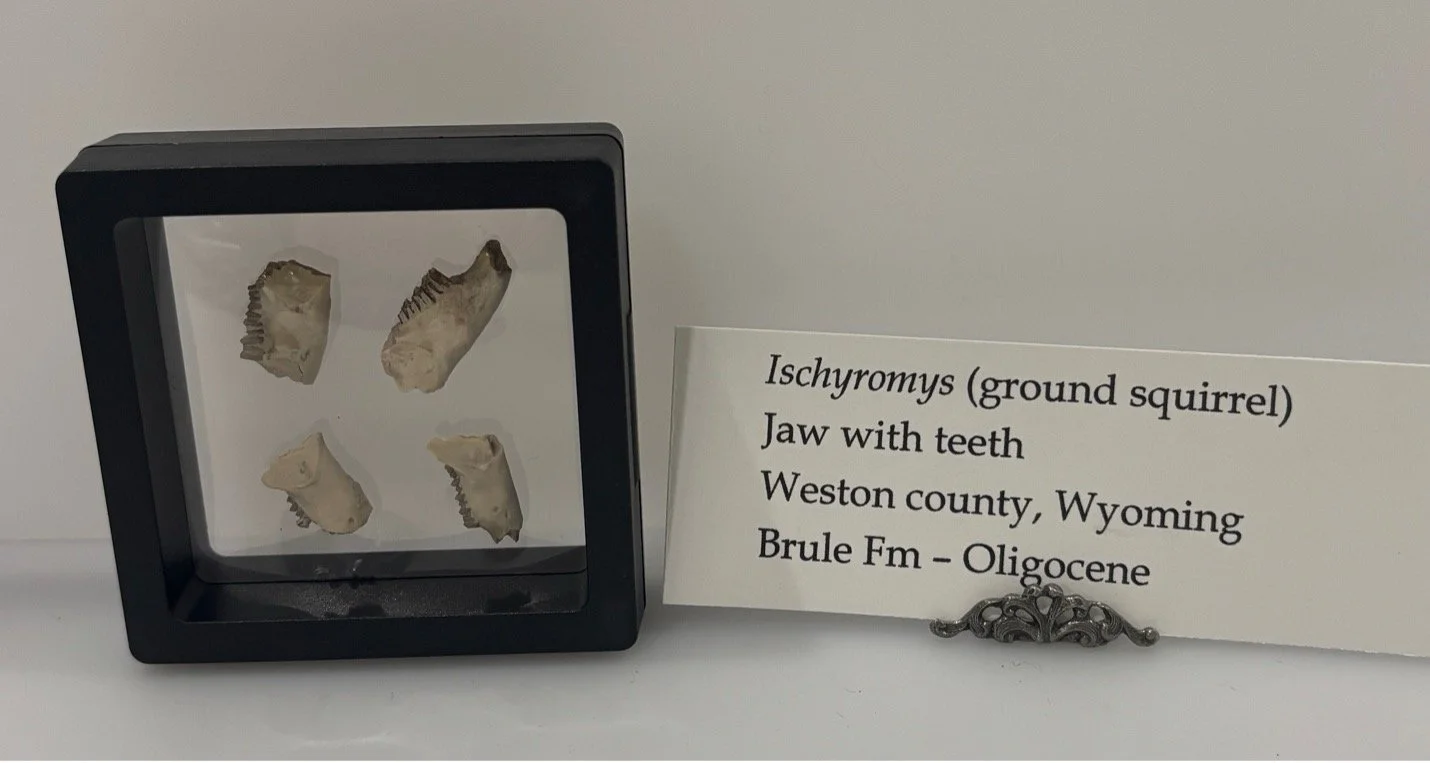
Ischyromys was a small, tree climbing mammal and was among the first true rodents to ever exist. It shared many visual traits with modern squirrels, like its long tail and long incisors, but is actually more closely related to the Mountain Beaver, a small rodent that lives in the Pacific Northwest.
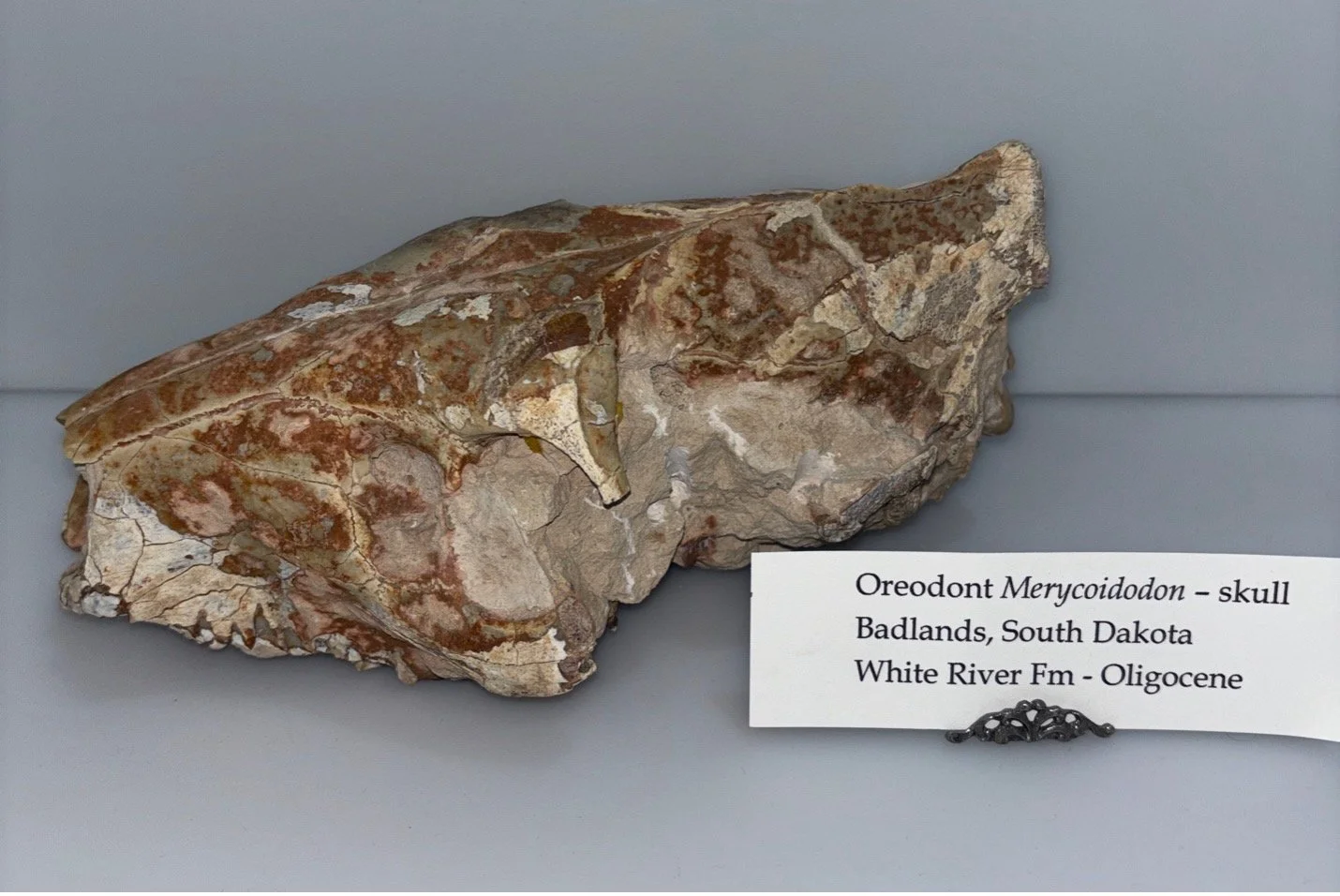
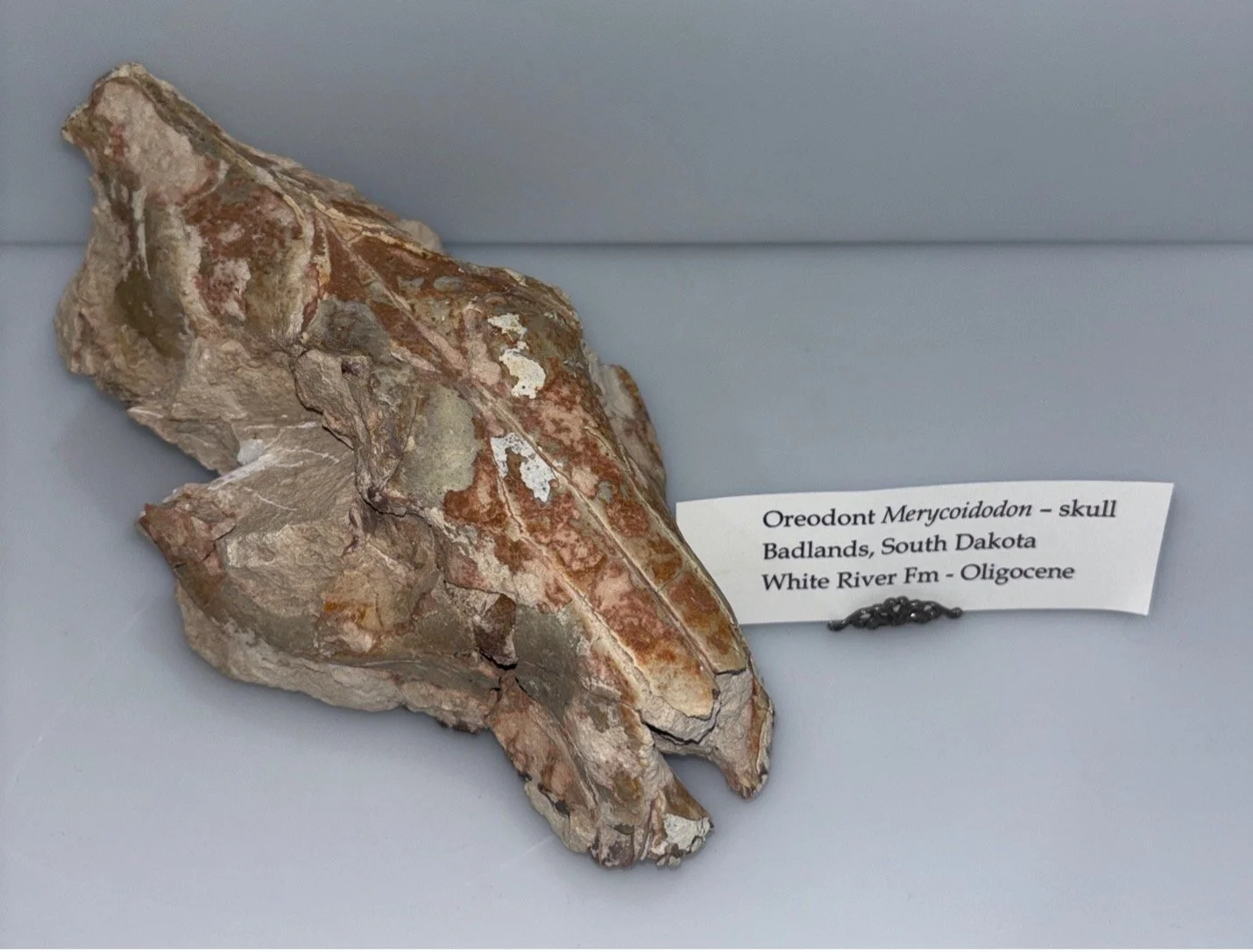
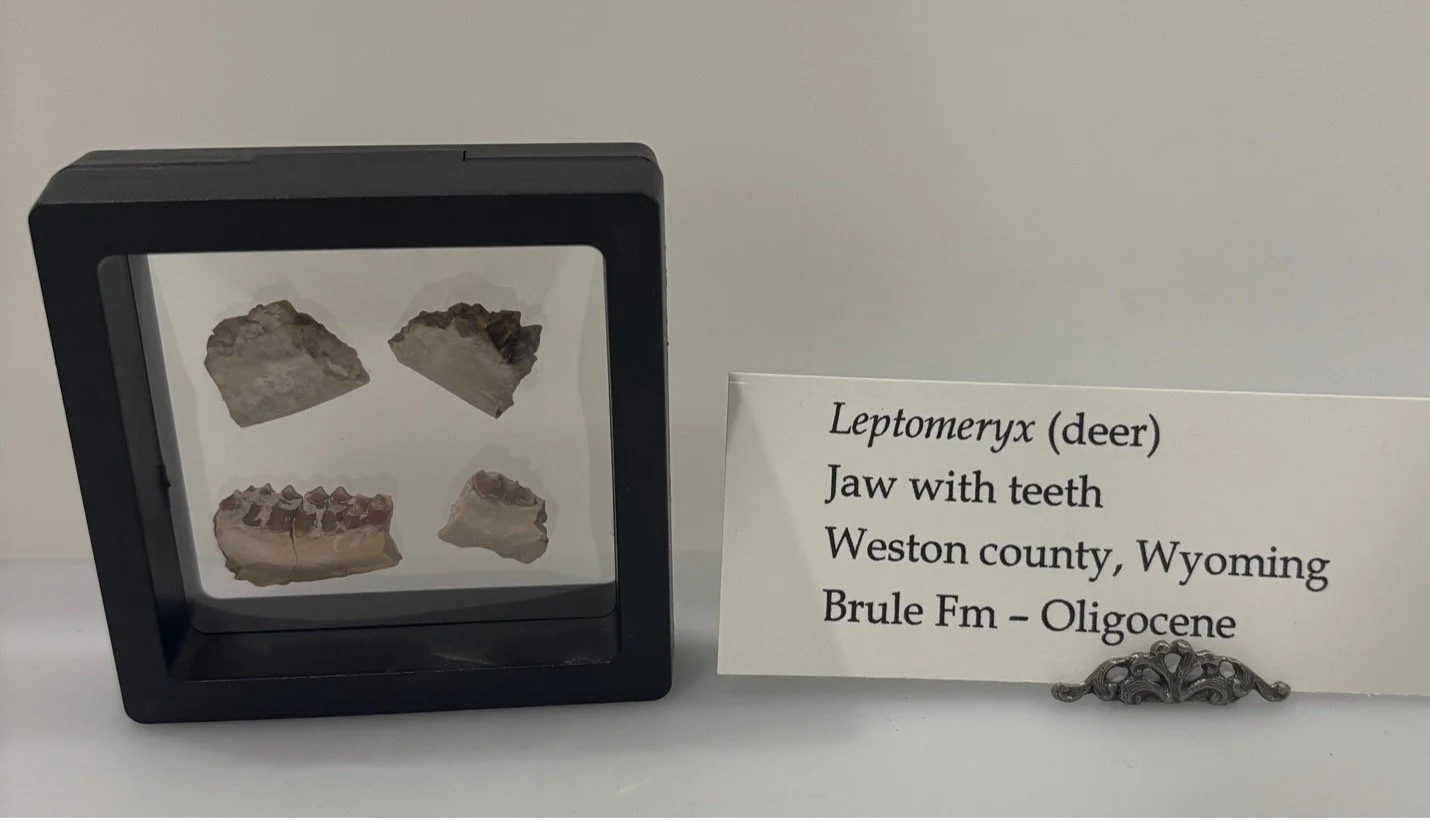
Merycoidodon, or more commonly known as Oreodonts, were grazing mammals that resembled pigs or sheep. They are famous both for their teeth (the name Oreodont translates to “mountain teeth”) and the sheer number of their fossils that people have found. Oreodont populations were outlandishly abundant, so much so that their fossils are a common find in places like Badlands National Park. They moved in herds, which protected them from predators like saber-tooth cats. Despite their numbers, they were not adaptable to changes in food availability and went extinct as a result of major climate change and being outcompeted by other foraging species.
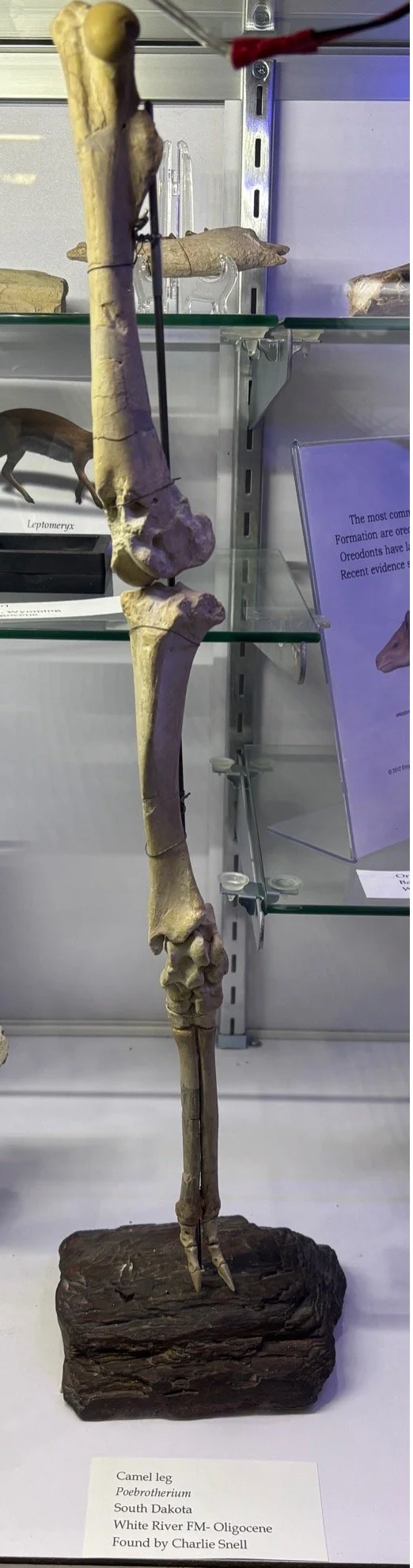
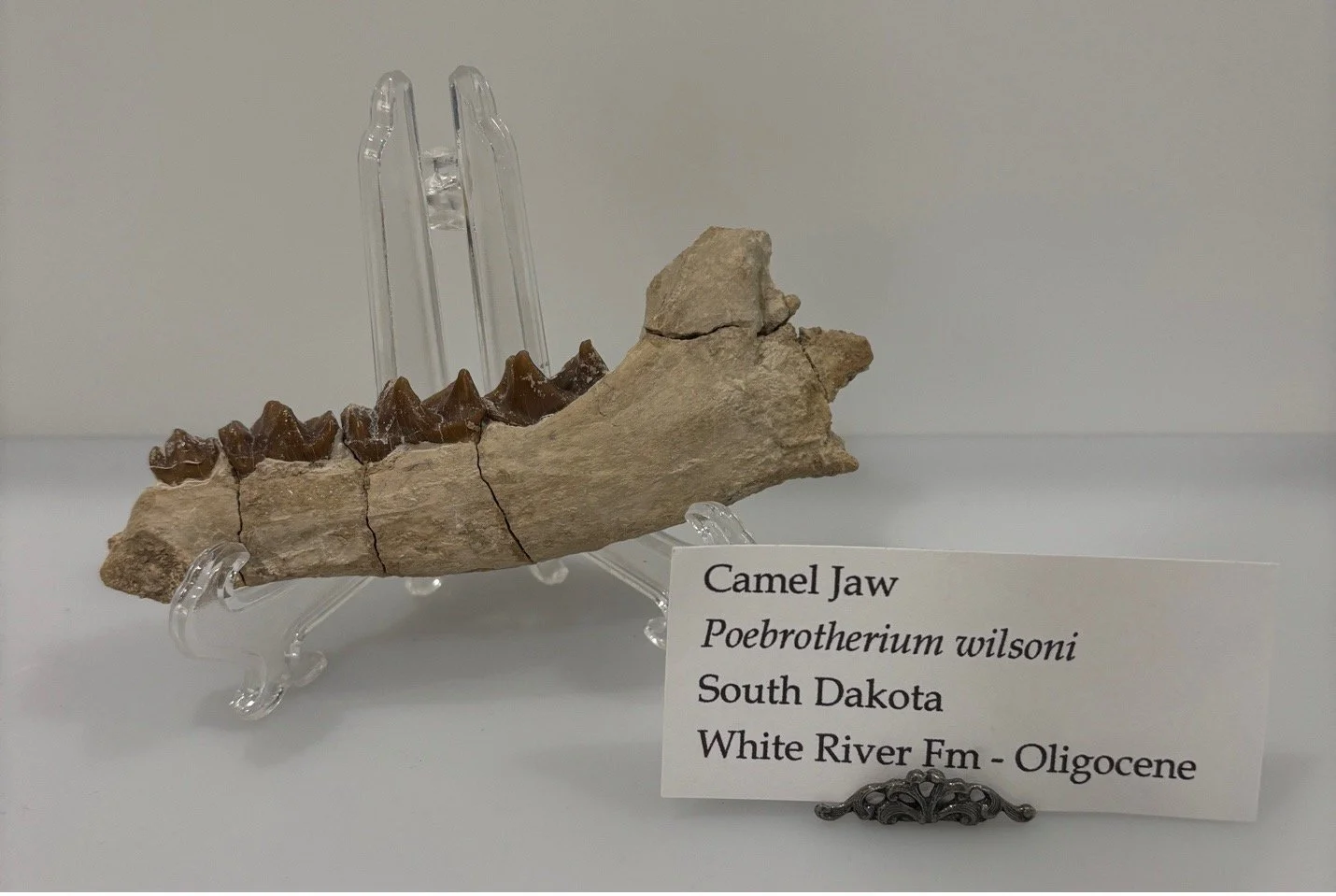
The ancestors of modern camels originated in North America during a dry period of Eocene epoch, yet Poebrotherium were visually distinct from their modern relatives. These early camels were small, standing at only two feet, and weighed about 50 lbs. Eventually, camels would spread to Asia and Africa, and the North American populations would go extinct (approx. 10,000 to 13,000 years ago).
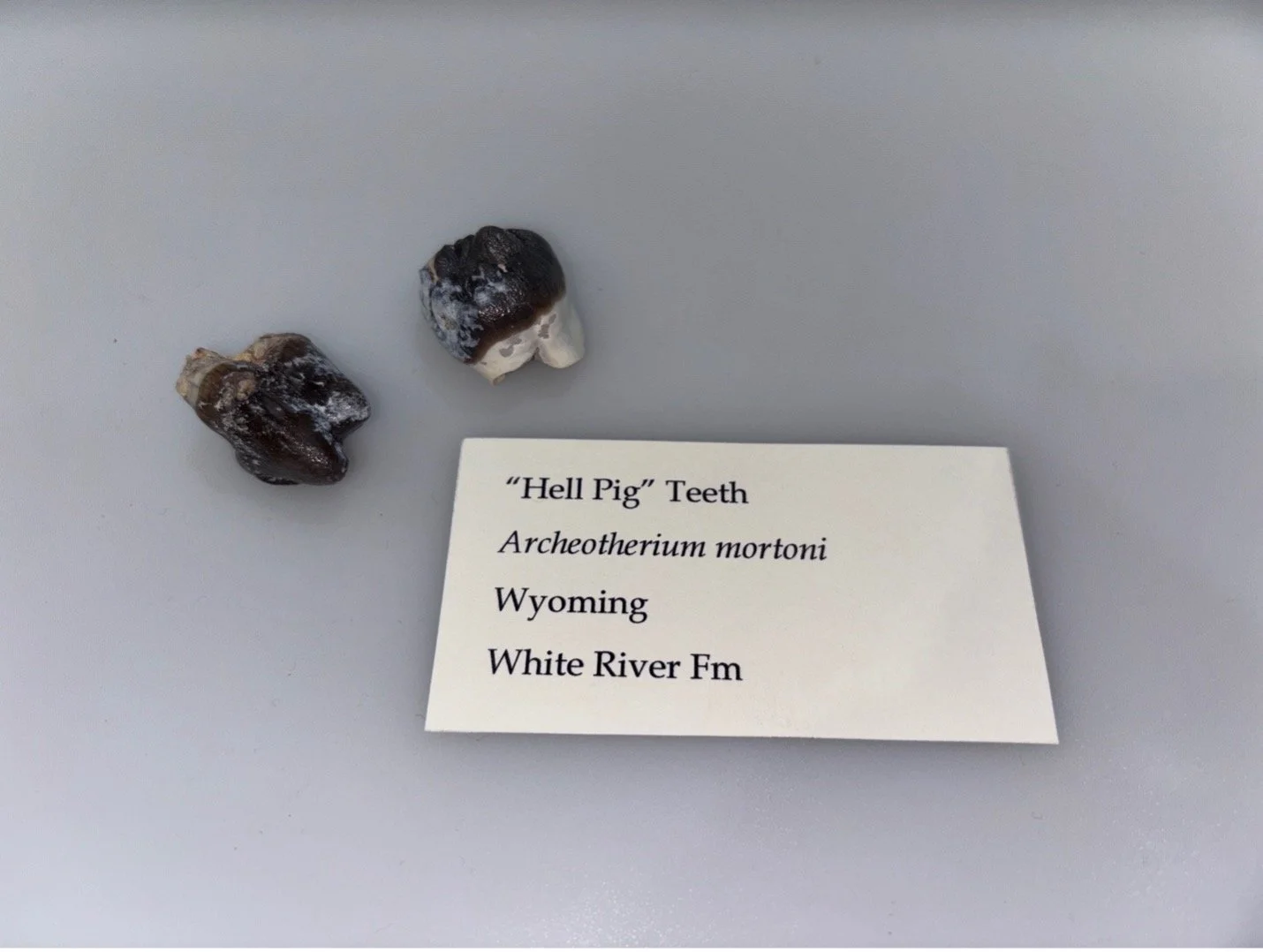
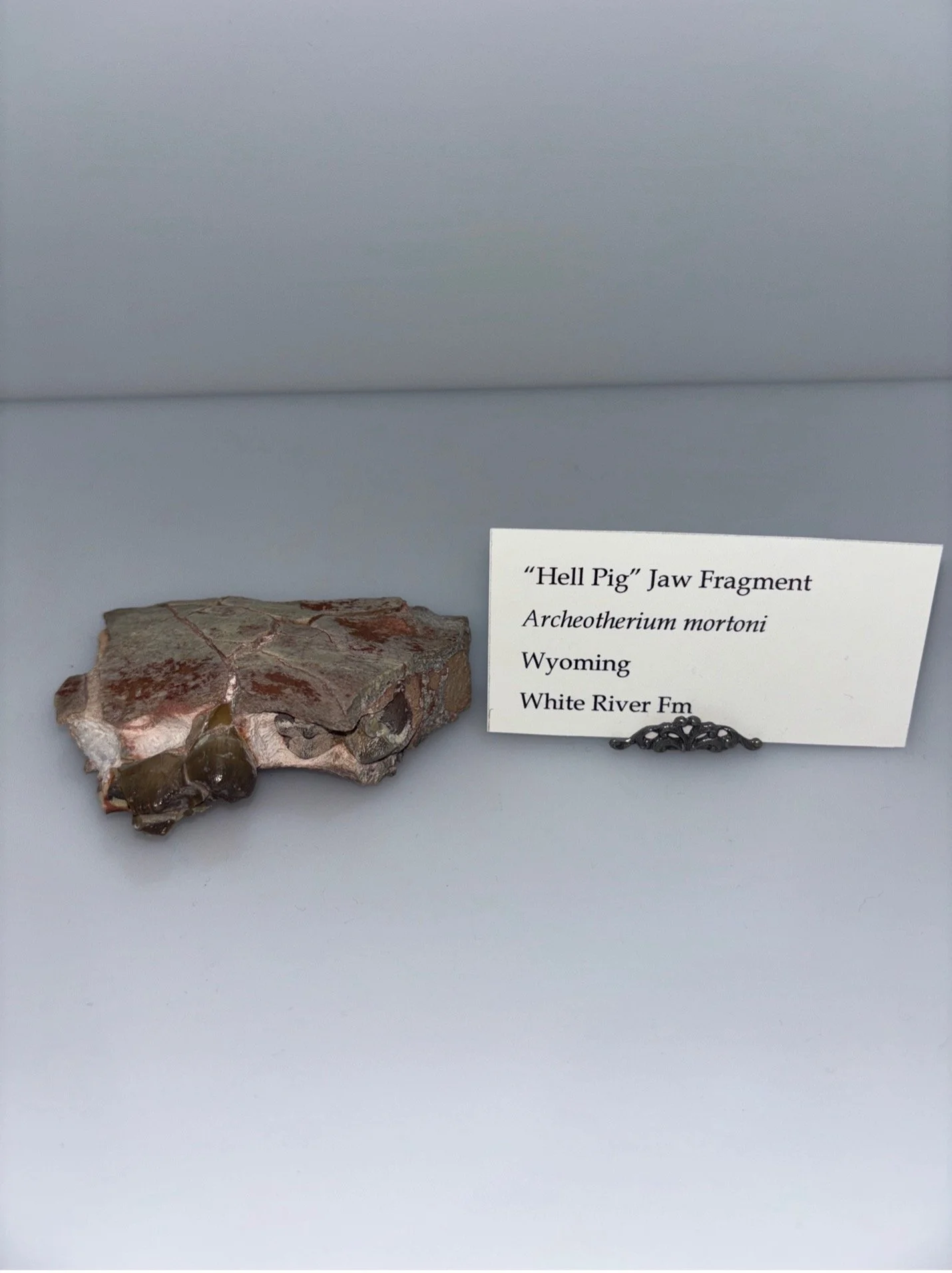
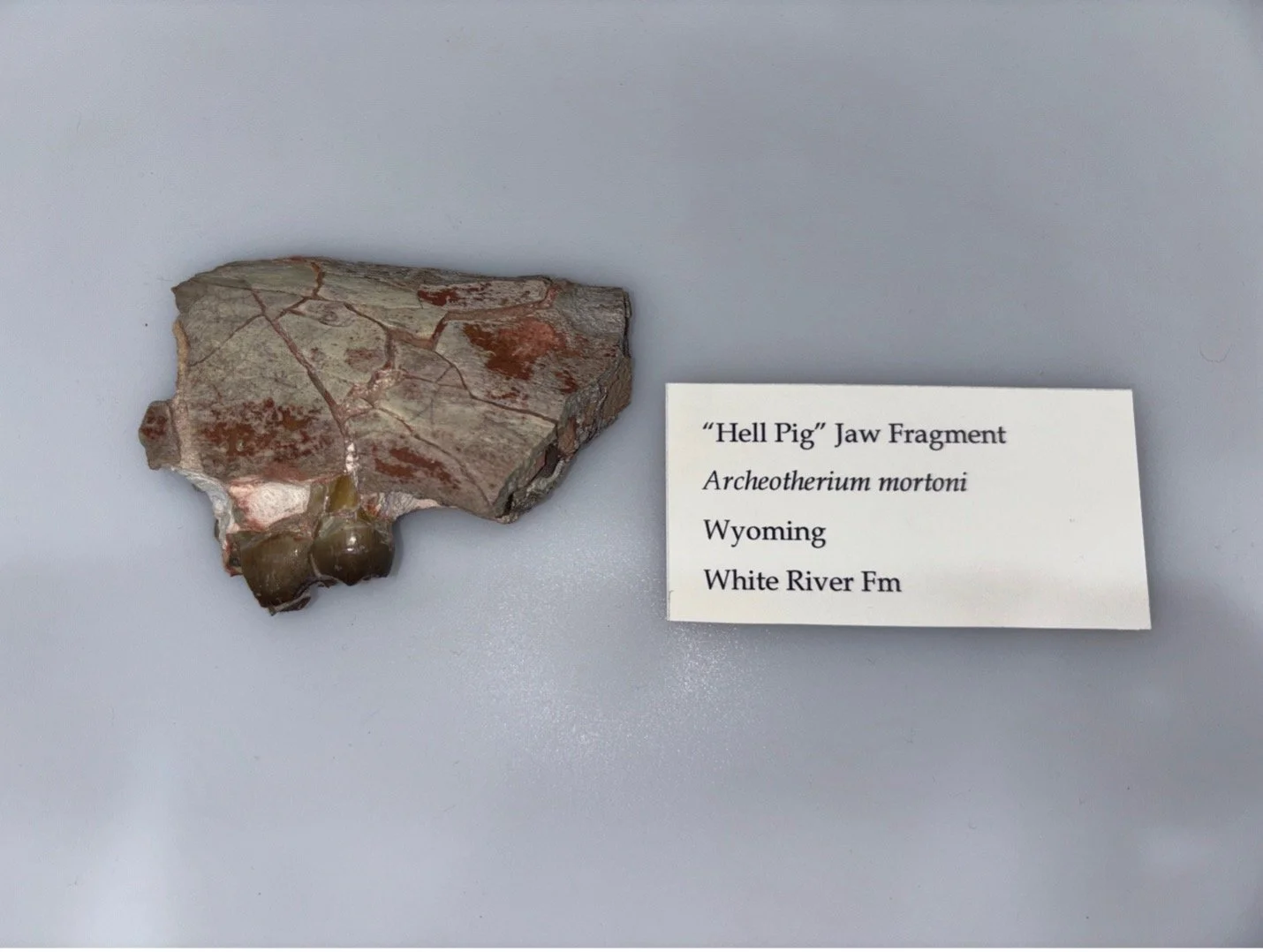
Archaeotherium were large, and likely aggressive beasts that once roamed North America and Eurasia. They stood about six foot tall and weighed around 2000 lbs. They had snouts and tusks, and fossil evidence suggests that they used these tusks to ram others of their species for dominance. Despite their common name and appearance, Hell Pigs were not true pigs but were more closely related to hippopotamuses and whales than modern pigs.
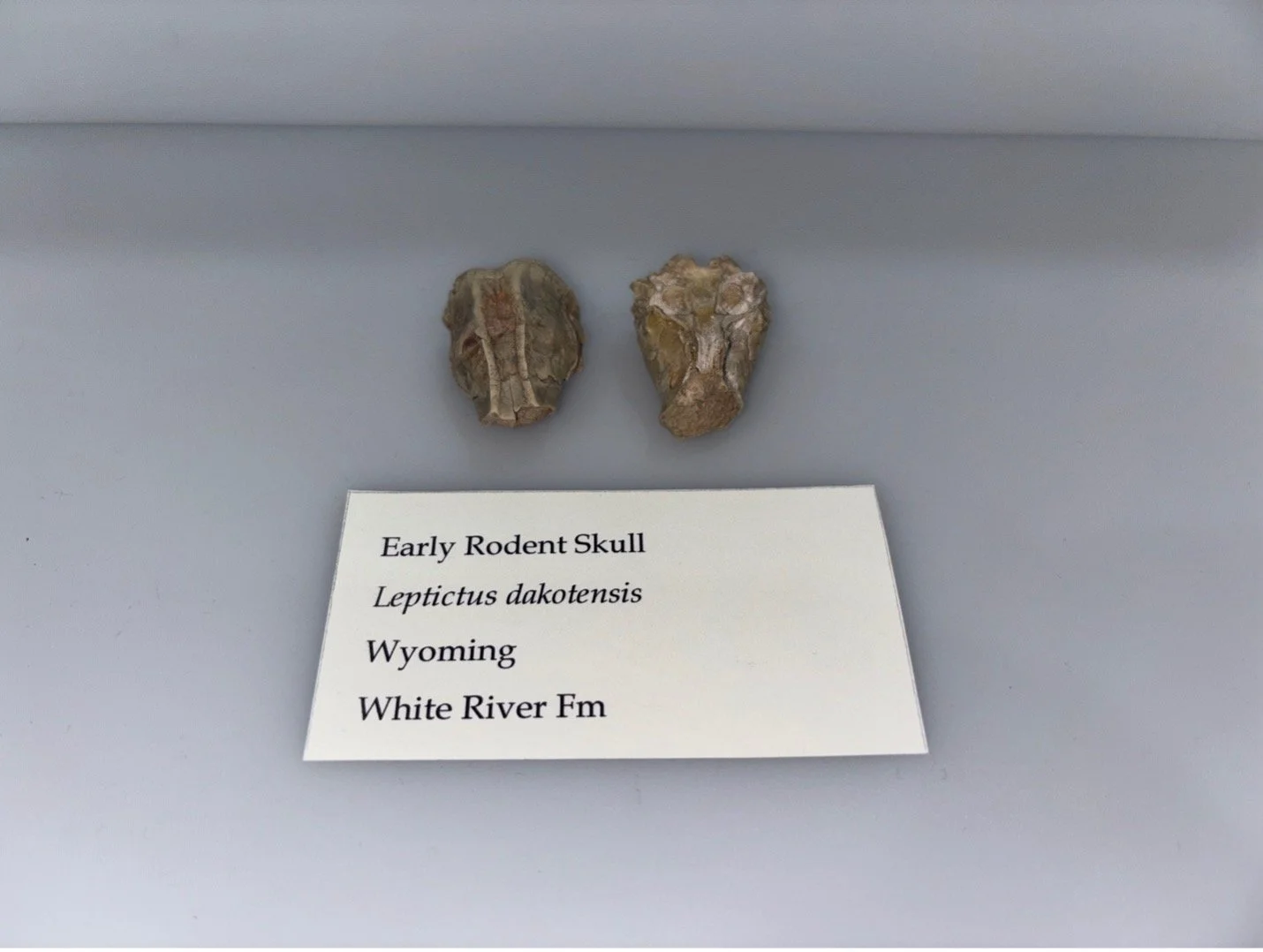
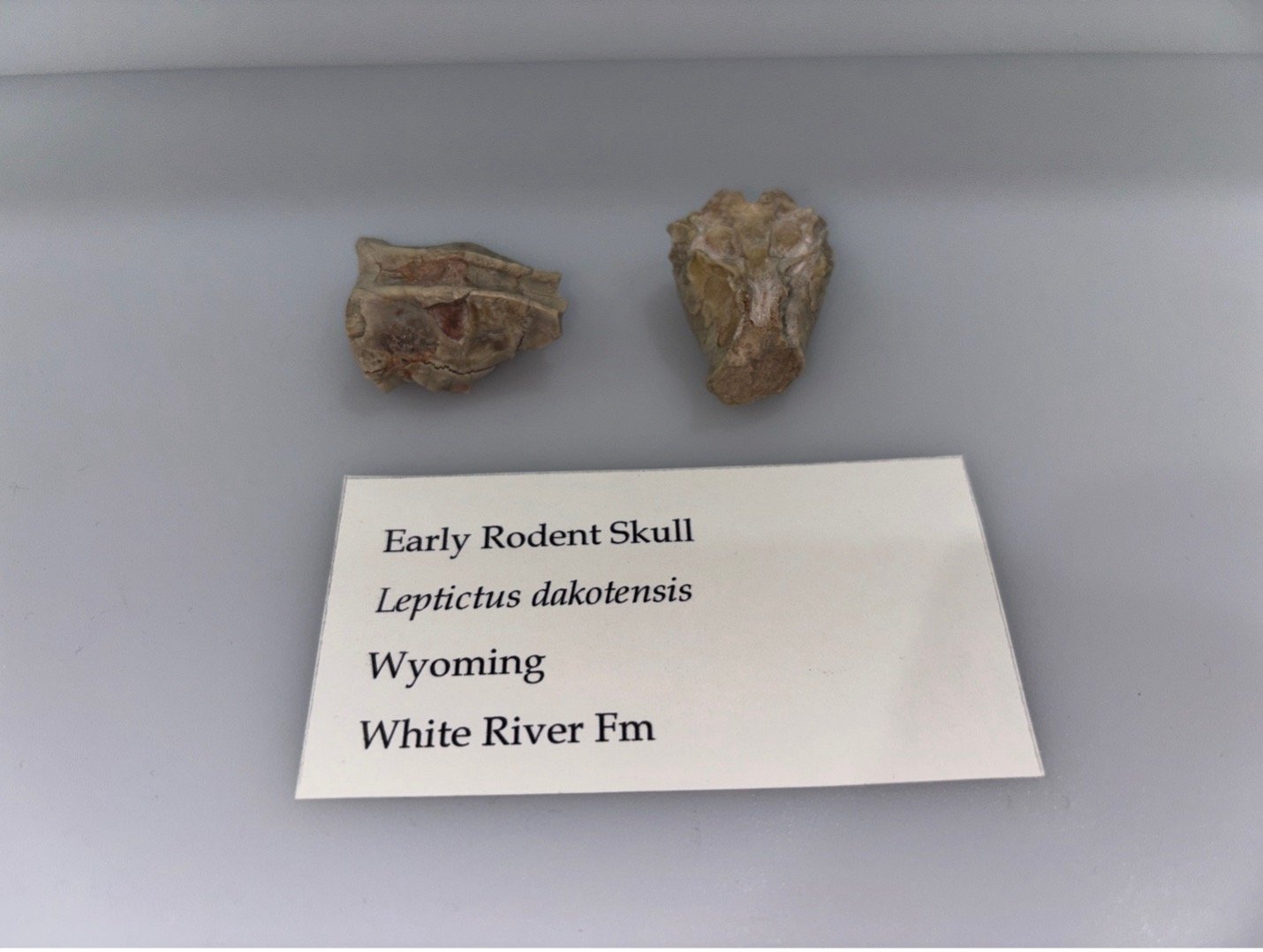
Leptictus dakotensis was a small omnivorous mammal that resembled a modern shrew, but it actually belonged to its own now extinct order called Leptictida. Leptictus dakotensis is a good example of convergent evolution in that it exhibited a rodent-like body plan despite not being a true rodent. Its fossils are found in North America, predominately the American West.
No results match your search. Try removing a few filters.